Spandidos Publications Logo
  • About
    • About Spandidos
    • Aims and Scopes
    • Abstracting and Indexing
    • Editorial Policies
    • Reprints and Permissions
    • Job Opportunities
    • Terms and Conditions
    • Contact
  • Journals
    • All Journals
    • Oncology Letters
      • Oncology Letters
      • Information for Authors
      • Editorial Policies
      • Editorial Board
      • Aims and Scope
      • Abstracting and Indexing
      • Bibliographic Information
      • Archive
    • International Journal of Oncology
      • International Journal of Oncology
      • Information for Authors
      • Editorial Policies
      • Editorial Board
      • Aims and Scope
      • Abstracting and Indexing
      • Bibliographic Information
      • Archive
    • Molecular and Clinical Oncology
      • Molecular and Clinical Oncology
      • Information for Authors
      • Editorial Policies
      • Editorial Board
      • Aims and Scope
      • Abstracting and Indexing
      • Bibliographic Information
      • Archive
    • Experimental and Therapeutic Medicine
      • Experimental and Therapeutic Medicine
      • Information for Authors
      • Editorial Policies
      • Editorial Board
      • Aims and Scope
      • Abstracting and Indexing
      • Bibliographic Information
      • Archive
    • International Journal of Molecular Medicine
      • International Journal of Molecular Medicine
      • Information for Authors
      • Editorial Policies
      • Editorial Board
      • Aims and Scope
      • Abstracting and Indexing
      • Bibliographic Information
      • Archive
    • Biomedical Reports
      • Biomedical Reports
      • Information for Authors
      • Editorial Policies
      • Editorial Board
      • Aims and Scope
      • Abstracting and Indexing
      • Bibliographic Information
      • Archive
    • Oncology Reports
      • Oncology Reports
      • Information for Authors
      • Editorial Policies
      • Editorial Board
      • Aims and Scope
      • Abstracting and Indexing
      • Bibliographic Information
      • Archive
    • Molecular Medicine Reports
      • Molecular Medicine Reports
      • Information for Authors
      • Editorial Policies
      • Editorial Board
      • Aims and Scope
      • Abstracting and Indexing
      • Bibliographic Information
      • Archive
    • World Academy of Sciences Journal
      • World Academy of Sciences Journal
      • Information for Authors
      • Editorial Policies
      • Editorial Board
      • Aims and Scope
      • Abstracting and Indexing
      • Bibliographic Information
      • Archive
    • International Journal of Functional Nutrition
      • International Journal of Functional Nutrition
      • Information for Authors
      • Editorial Policies
      • Editorial Board
      • Aims and Scope
      • Abstracting and Indexing
      • Bibliographic Information
      • Archive
    • International Journal of Epigenetics
      • International Journal of Epigenetics
      • Information for Authors
      • Editorial Policies
      • Editorial Board
      • Aims and Scope
      • Abstracting and Indexing
      • Bibliographic Information
      • Archive
    • Medicine International
      • Medicine International
      • Information for Authors
      • Editorial Policies
      • Editorial Board
      • Aims and Scope
      • Abstracting and Indexing
      • Bibliographic Information
      • Archive
  • Articles
  • Information
    • Information for Authors
    • Information for Reviewers
    • Information for Librarians
    • Information for Advertisers
    • Conferences
  • Language Editing
Spandidos Publications Logo
  • About
    • About Spandidos
    • Aims and Scopes
    • Abstracting and Indexing
    • Editorial Policies
    • Reprints and Permissions
    • Job Opportunities
    • Terms and Conditions
    • Contact
  • Journals
    • All Journals
    • Biomedical Reports
      • Information for Authors
      • Editorial Policies
      • Editorial Board
      • Aims and Scope
      • Abstracting and Indexing
      • Bibliographic Information
      • Archive
    • Experimental and Therapeutic Medicine
      • Information for Authors
      • Editorial Policies
      • Editorial Board
      • Aims and Scope
      • Abstracting and Indexing
      • Bibliographic Information
      • Archive
    • International Journal of Epigenetics
      • Information for Authors
      • Editorial Policies
      • Editorial Board
      • Aims and Scope
      • Abstracting and Indexing
      • Bibliographic Information
      • Archive
    • International Journal of Functional Nutrition
      • Information for Authors
      • Editorial Policies
      • Editorial Board
      • Aims and Scope
      • Abstracting and Indexing
      • Bibliographic Information
      • Archive
    • International Journal of Molecular Medicine
      • Information for Authors
      • Editorial Policies
      • Editorial Board
      • Aims and Scope
      • Abstracting and Indexing
      • Bibliographic Information
      • Archive
    • International Journal of Oncology
      • Information for Authors
      • Editorial Policies
      • Editorial Board
      • Aims and Scope
      • Abstracting and Indexing
      • Bibliographic Information
      • Archive
    • Medicine International
      • Information for Authors
      • Editorial Policies
      • Editorial Board
      • Aims and Scope
      • Abstracting and Indexing
      • Bibliographic Information
      • Archive
    • Molecular and Clinical Oncology
      • Information for Authors
      • Editorial Policies
      • Editorial Board
      • Aims and Scope
      • Abstracting and Indexing
      • Bibliographic Information
      • Archive
    • Molecular Medicine Reports
      • Information for Authors
      • Editorial Policies
      • Editorial Board
      • Aims and Scope
      • Abstracting and Indexing
      • Bibliographic Information
      • Archive
    • Oncology Letters
      • Information for Authors
      • Editorial Policies
      • Editorial Board
      • Aims and Scope
      • Abstracting and Indexing
      • Bibliographic Information
      • Archive
    • Oncology Reports
      • Information for Authors
      • Editorial Policies
      • Editorial Board
      • Aims and Scope
      • Abstracting and Indexing
      • Bibliographic Information
      • Archive
    • World Academy of Sciences Journal
      • Information for Authors
      • Editorial Policies
      • Editorial Board
      • Aims and Scope
      • Abstracting and Indexing
      • Bibliographic Information
      • Archive
  • Articles
  • Information
    • For Authors
    • For Reviewers
    • For Librarians
    • For Advertisers
    • Conferences
  • Language Editing
Login Register Submit
  • This site uses cookies
  • You can change your cookie settings at any time by following the instructions in our Cookie Policy. To find out more, you may read our Privacy Policy.

    I agree
Search articles by DOI, keyword, author or affiliation
Search
Advanced Search
presentation
International Journal of Molecular Medicine
Join Editorial Board Propose a Special Issue
Print ISSN: 1107-3756 Online ISSN: 1791-244X
Journal Cover
April-2025 Volume 55 Issue 4

Full Size Image

Sign up for eToc alerts
Recommend to Library

Journals

International Journal of Molecular Medicine

International Journal of Molecular Medicine

International Journal of Molecular Medicine is an international journal devoted to molecular mechanisms of human disease.

International Journal of Oncology

International Journal of Oncology

International Journal of Oncology is an international journal devoted to oncology research and cancer treatment.

Molecular Medicine Reports

Molecular Medicine Reports

Covers molecular medicine topics such as pharmacology, pathology, genetics, neuroscience, infectious diseases, molecular cardiology, and molecular surgery.

Oncology Reports

Oncology Reports

Oncology Reports is an international journal devoted to fundamental and applied research in Oncology.

Experimental and Therapeutic Medicine

Experimental and Therapeutic Medicine

Experimental and Therapeutic Medicine is an international journal devoted to laboratory and clinical medicine.

Oncology Letters

Oncology Letters

Oncology Letters is an international journal devoted to Experimental and Clinical Oncology.

Biomedical Reports

Biomedical Reports

Explores a wide range of biological and medical fields, including pharmacology, genetics, microbiology, neuroscience, and molecular cardiology.

Molecular and Clinical Oncology

Molecular and Clinical Oncology

International journal addressing all aspects of oncology research, from tumorigenesis and oncogenes to chemotherapy and metastasis.

World Academy of Sciences Journal

World Academy of Sciences Journal

Multidisciplinary open-access journal spanning biochemistry, genetics, neuroscience, environmental health, and synthetic biology.

International Journal of Functional Nutrition

International Journal of Functional Nutrition

Open-access journal combining biochemistry, pharmacology, immunology, and genetics to advance health through functional nutrition.

International Journal of Epigenetics

International Journal of Epigenetics

Publishes open-access research on using epigenetics to advance understanding and treatment of human disease.

Medicine International

Medicine International

An International Open Access Journal Devoted to General Medicine.

Journal Cover
April-2025 Volume 55 Issue 4

Full Size Image

Sign up for eToc alerts
Recommend to Library

  • Article
  • Citations
    • Cite This Article
    • Download Citation
    • Create Citation Alert
    • Remove Citation Alert
    • Cited By
  • Similar Articles
    • Related Articles (in Spandidos Publications)
    • Similar Articles (Google Scholar)
    • Similar Articles (PubMed)
  • Download PDF
  • Download XML
  • View XML

  • Supplementary Files
    • Supplementary_Data.pdf
Article Open Access

Thymoquinone mitigates cardiac hypertrophy by activating adaptive autophagy via the PPAR‑γ/14‑3‑3γ pathway

  • Authors:
    • Rong-Bin Qiu
    • Shi-Tao Zhao
    • Zhi-Qiang Xu
    • Li-Juan Hu
    • Rui-Yuan Zeng
    • Zhi-Cong Qiu
    • Han-Zhi Peng
    • Lian-Fen Zhou
    • Yuan-Ping Cao
    • Li Wan
  • View Affiliations / Copyright

    Affiliations: Department of Cardiovascular Surgery, The First Affiliated Hospital, Jiangxi Medical College, Nanchang University, Nanchang, Jiangxi 330006, P.R. China, Department of Cardiovascular Surgery, The First Affiliated Hospital, Jiangxi Medical College, Nanchang University, Nanchang, Jiangxi 330006, P.R. China, Department of Nursing, Gannan Health Vocational College, Ganzhou, Jiangxi 341000, P.R. China
    Copyright: © Qiu et al. This is an open access article distributed under the terms of Creative Commons Attribution License.
  • Article Number: 59
    |
    Published online on: February 7, 2025
       https://doi.org/10.3892/ijmm.2025.5500
  • Expand metrics +
Metrics: Total Views: 0 (Spandidos Publications: | PMC Statistics: )
Metrics: Total PDF Downloads: 0 (Spandidos Publications: | PMC Statistics: )
Cited By (CrossRef): 0 citations Loading Articles...

This article is mentioned in:


Abstract

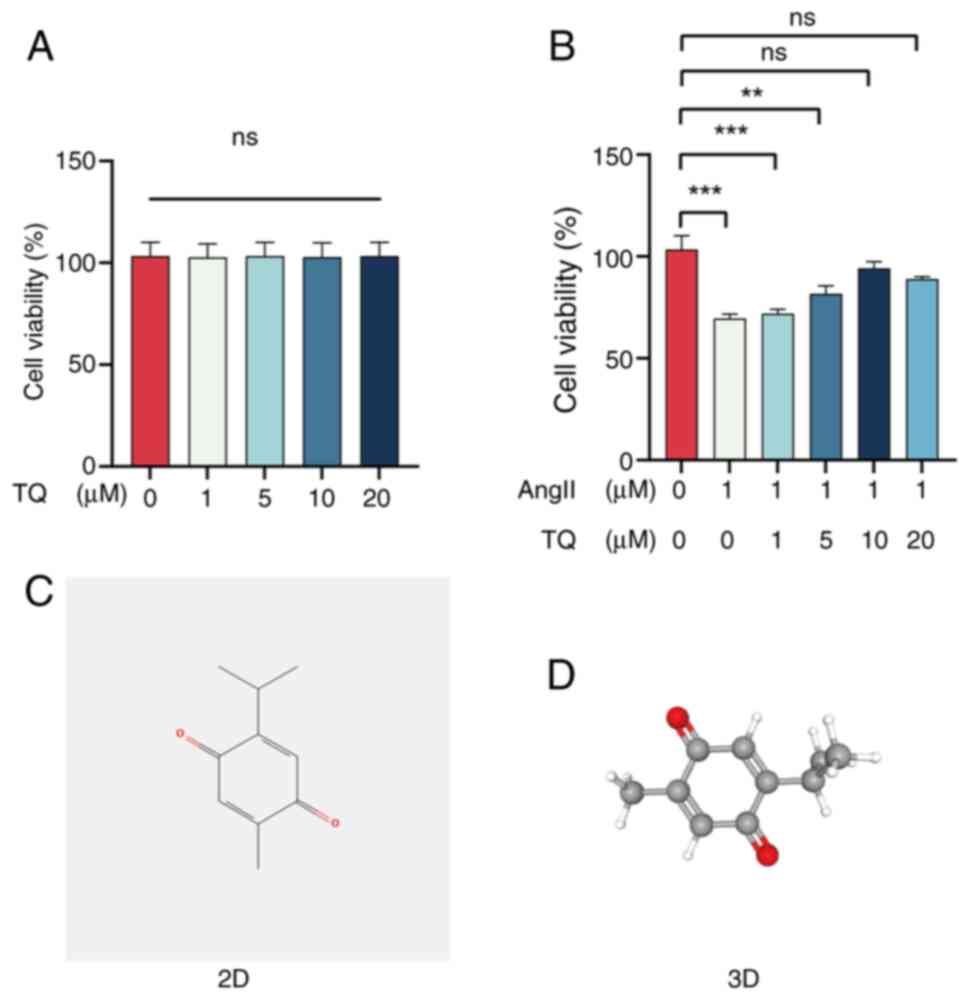
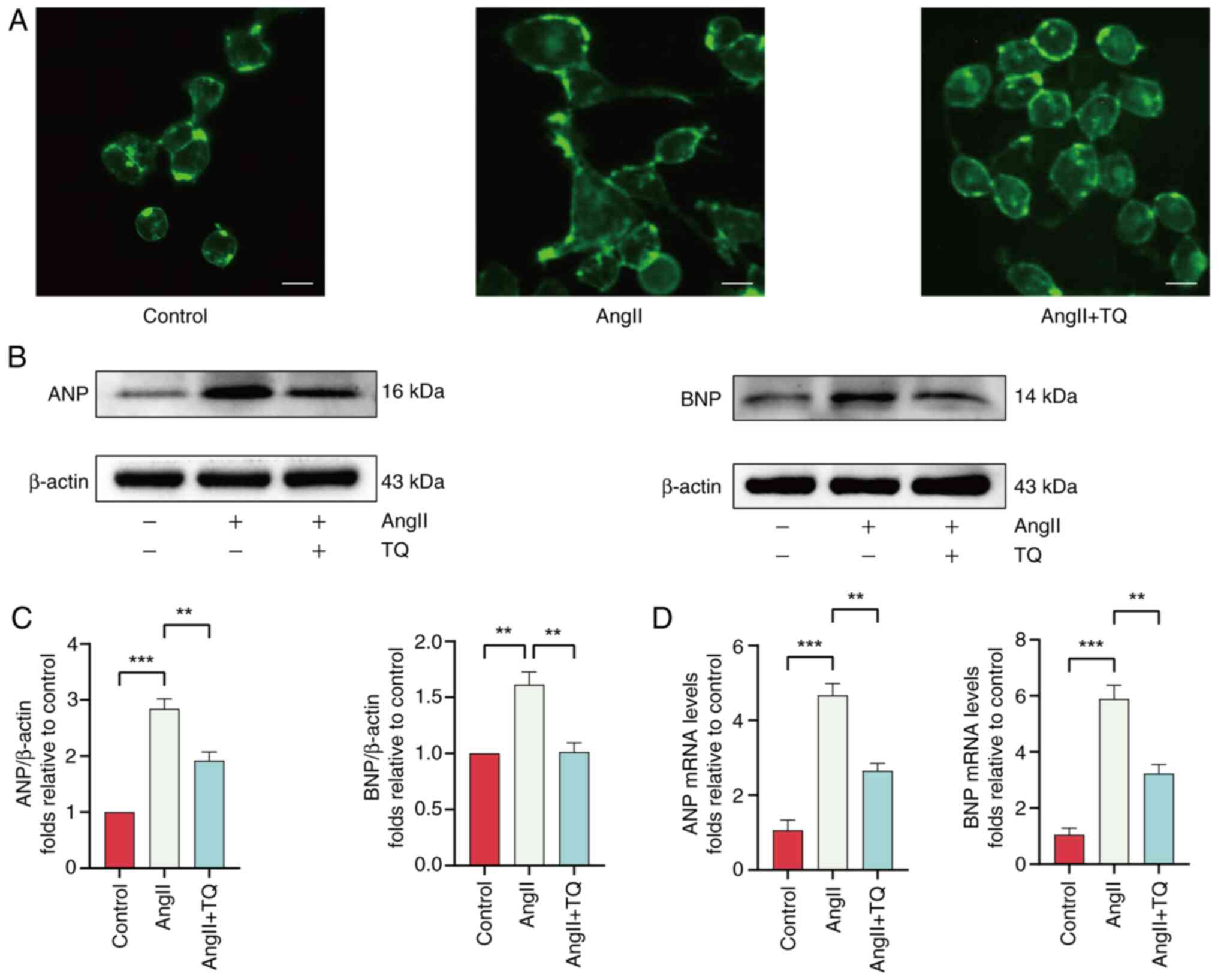
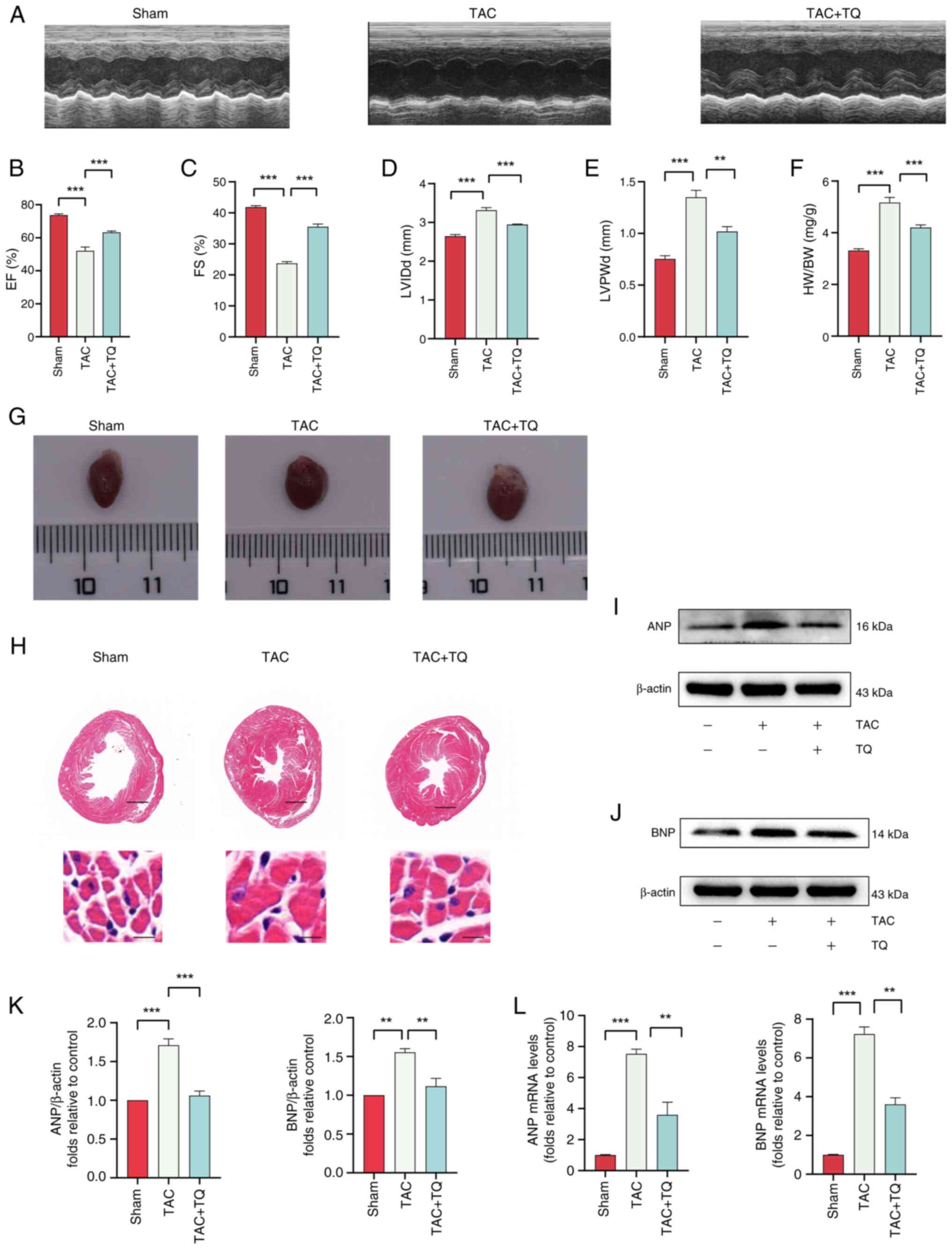
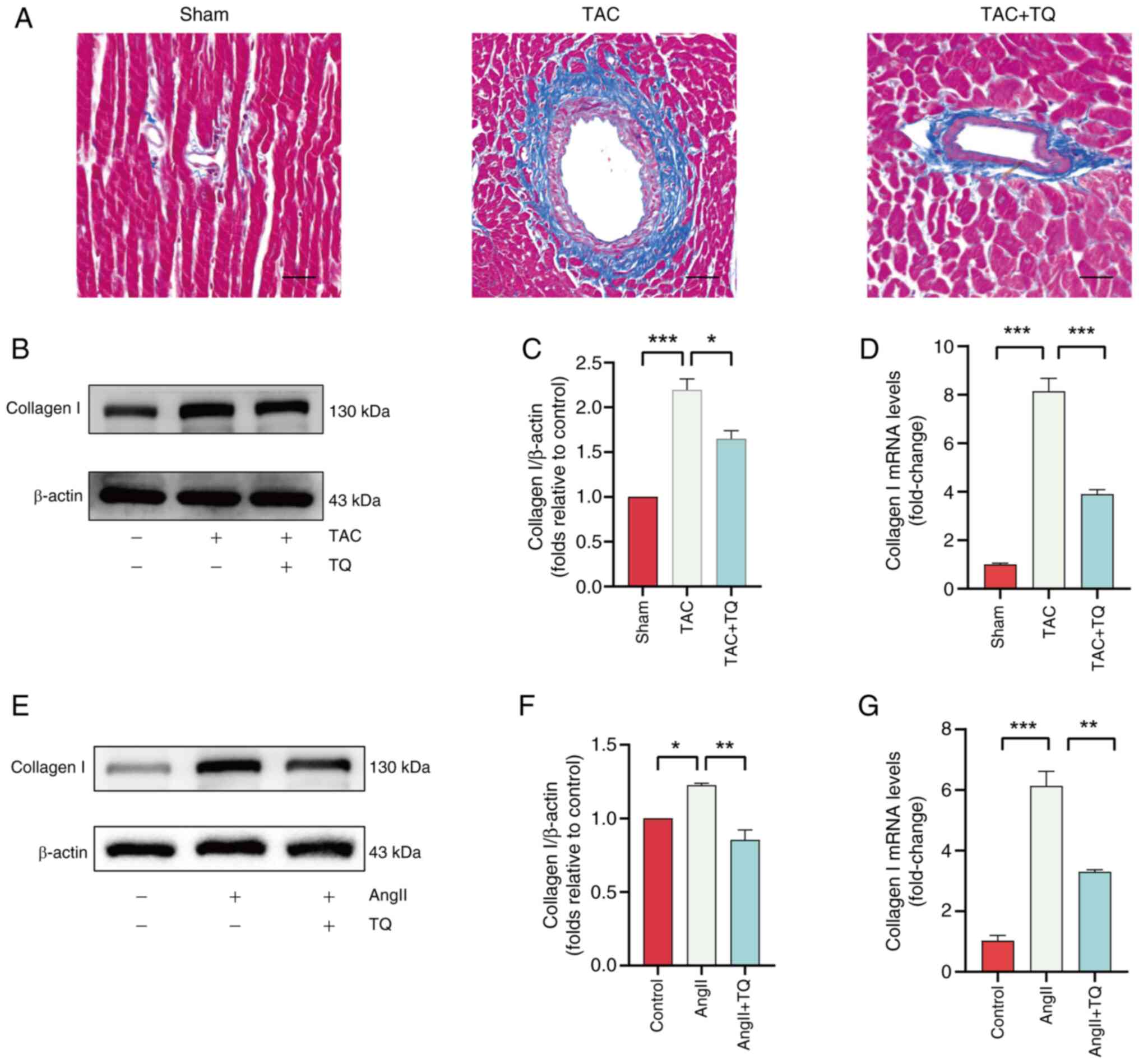
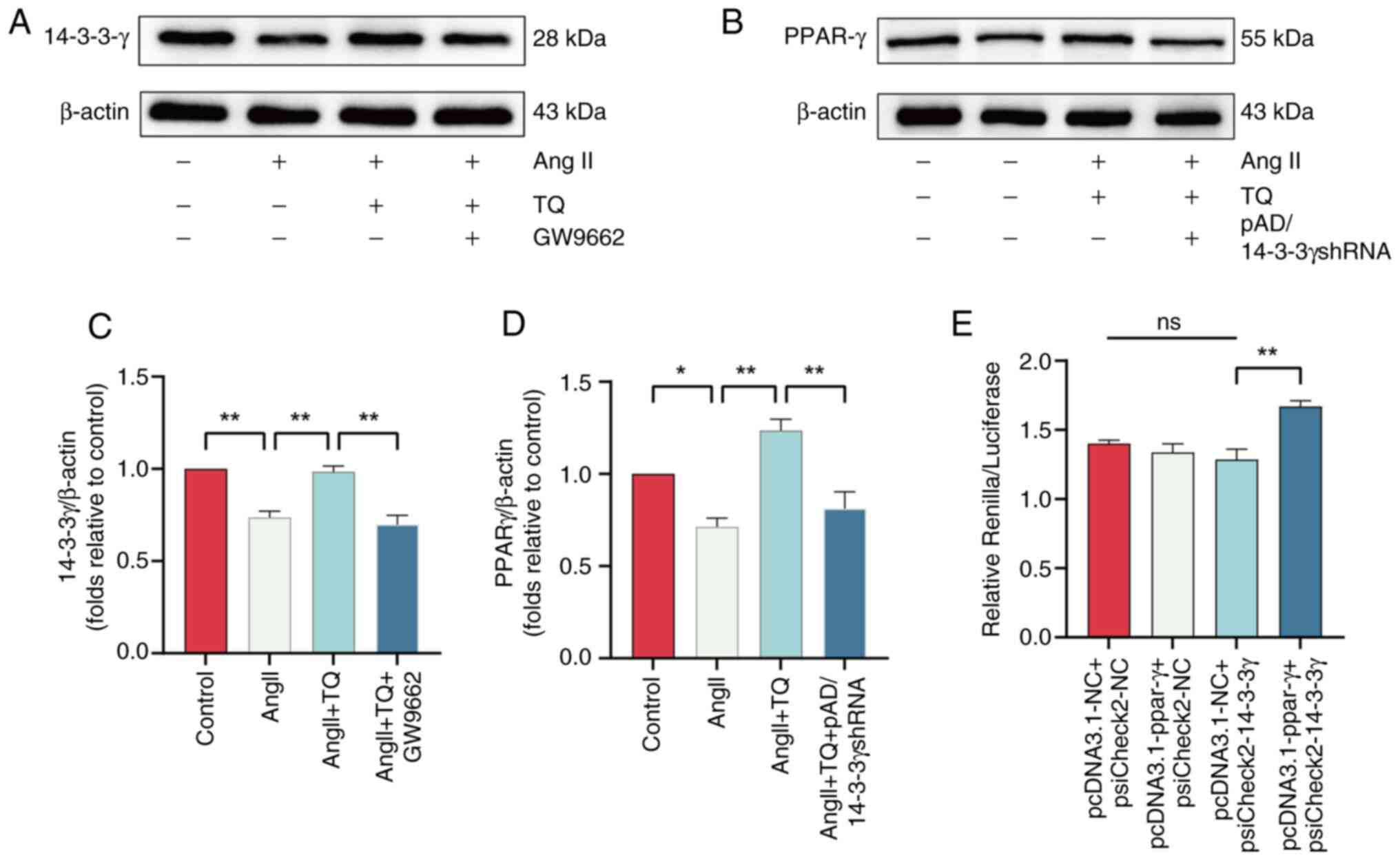
Thymoquinone (TQ), the principal active compound derived from the black seed plant, has been extensively utilized in traditional medicine for treating various ailments. Despite its widespread use, its therapeutic mechanisms in the context of cardiac hypertrophy remain insufficiently understood. The present study focused on assessing the efficacy of TQ in mitigating cardiac hypertrophy while identifying its specific protective pathways. Through a combination of in vivo experiments utilizing a mouse model of transverse aortic constriction (TAC) and in vitro studies utilizing an angiotensin II (AngII)‑induced hypertrophy model in H9C2 cells, the protective actions of TQ were comprehensively evaluated. The results revealed that TQ significantly attenuated TAC‑induced cardiac hypertrophy and improved overall cardiac function. In AngII‑induced H9C2 cells, pretreatment with TQ significantly reduced both cell hypertrophy and reactive oxygen species levels, while simultaneously promoting autophagy and limiting fibrosis. TQ was also found to increase the transcriptional activity of peroxisome proliferator‑activated receptor‑γ (PPAR‑γ), which interacted with 14‑3‑3γ protein, leading to autophagy activation and subsequent cellular protection. However, the protective autophagic effects were attenuated when PPAR‑γ activity was inhibited alongside pAD/14‑3‑3γ‑short hairpin RNA administration. The present findings demonstrate that TQ mitigates cardiac hypertrophy by modulating autophagy via the PPAR‑γ/14‑3‑3γ signaling axis, highlighting its therapeutic potential for cardiac hypertrophy treatment.
View Figures

Figure 1

Figure 2

Figure 3

Figure 4

Figure 5

Figure 6

Figure 7

Figure 8

Figure 9

View References

1 

Frey N and Olson EN: Cardiac hypertrophy: The good, the bad, and the ugly. Annu Rev Physiol. 65:45–79. 2003. View Article : Google Scholar : PubMed/NCBI

2 

Xu M, Wan CX, Huang SH, Wang HB, Fan D, Wu HM, Wu QQ, Ma ZG, Deng W and Tang QZ: Oridonin protects against cardiac hypertrophy by promoting P21-related autophagy. Cell Death Dis. 10:4032019. View Article : Google Scholar : PubMed/NCBI

3 

Nakai A, Yamaguchi O, Takeda T, Higuchi Y, Hikoso S, Taniike M, Omiya S, Mizote I, Matsumura Y, Asahi M, et al: The role of autophagy in cardiomyocytes in the basal state and in response to hemodynamic stress. Nat Med. 13:619–624. 2007. View Article : Google Scholar : PubMed/NCBI

4 

Ritterhoff J and Tian R: Metabolic mechanisms in physiological and pathological cardiac hypertrophy: New paradigms and challenges. Nat Rev Cardiol. 20:812–829. 2023. View Article : Google Scholar : PubMed/NCBI

5 

Nakamura M and Sadoshima J: Mechanisms of physiological and pathological cardiac hypertrophy. Nat Rev Cardiol. 15:387–407. 2018. View Article : Google Scholar : PubMed/NCBI

6 

Maillet M, Van Berlo JH and Molkentin JD: Molecular basis of physiological heart growth: Fundamental concepts and new players. Nat Rev Mol Cell Biol. 14:38–48. 2013. View Article : Google Scholar

7 

Gali-Muhtasib H, Roessner A and Schneider-Stock R: Thymoquinone: A promising anti-cancer drug from natural sources. Int J Biochem Cell Biol. 38:1249–1253. 2006. View Article : Google Scholar

8 

Darakhshan S, Bidmeshki Pour A, Hosseinzadeh Colagar A and Sisakhtnezhad S: Thymoquinone and its therapeutic potentials. Pharmacol Res. 95-96:138–158. 2015. View Article : Google Scholar : PubMed/NCBI

9 

Woo CC, Kumar AP, Sethi G and Tan KH: Thymoquinone: Potential cure for inflammatory disorders and cancer. Biochem Pharmacol. 83:443–451. 2012. View Article : Google Scholar

10 

Mialet-Perez J and Vindis C: Autophagy in health and disease: Focus on the cardiovascular system. Essays Biochem. 61:721–732. 2017. View Article : Google Scholar : PubMed/NCBI

11 

Xue R, Zeng J, Chen Y, Chen C, Tan W, Zhao J, Dong B, Sun Y, Dong Y and Liu C: Sestrin 1 ameliorates cardiac hypertrophy via autophagy activation. J Cell Mol Med. 21:1193–1205. 2017. View Article : Google Scholar : PubMed/NCBI

12 

Yang K, Long Q, Saja K, Huang F, Pogwizd SM, Zhou L, Yoshida M and Yang Q: Knockout of the ATPase inhibitory factor 1 protects the heart from pressure overload-induced cardiac hypertrophy. Sci Rep. 7:105012017. View Article : Google Scholar : PubMed/NCBI

13 

Kelly DP: PPARs of the heart: Three is a crowd. Circ Res. 92:482–484. 2003. View Article : Google Scholar : PubMed/NCBI

14 

Majdalawieh A and Ro HS: PPARgamma1 and LXRalpha face a new regulator of macrophage cholesterol homeostasis and inflammatory responsiveness, AEBP1. Nucl Recept Signal. 8:e0042010. View Article : Google Scholar : PubMed/NCBI

15 

Kung J and Henry RR: Thiazolidinedione safety. Expert Opin Drug Saf. 11:565–579. 2012. View Article : Google Scholar : PubMed/NCBI

16 

Peng Y, Wang L, Zhang Z, He X, Fan Q, Cheng X, Qiao Y, Huang H, Lai S, Wan Q, et al: Puerarin activates adaptive autophagy and protects the myocardium against doxorubicin-induced cardiotoxicity via the 14-3-3γ/PKCε pathway. Biomed Pharmacother. 153:1134032022. View Article : Google Scholar

17 

Cheng Y, Shen A, Wu X, Shen Z, Chen X, Li J, Liu L, Lin X, Wu M, Chen Y, et al: Qingda granule attenuates angiotensin II-induced cardiac hypertrophy and apoptosis and modulates the PI3K/AKT pathway. Biomed Pharmacother. 133:1110222021. View Article : Google Scholar : PubMed/NCBI

18 

He H, Wang L, Qiao Y, Yang B, Yin D and He M: Epigallocatechin-3-gallate pretreatment alleviates doxorubicin-induced ferroptosis and cardiotoxicity by upregulating AMPKα2 and activating adaptive autophagy. Redox Biol. 48:1021852021. View Article : Google Scholar

19 

Lu Q, Hu S, Guo P, Zhu X, Ren Z, Wu Q and Wang X: PPAR-γ with its anti-fibrotic action could serve as an effective therapeutic target in T-2 toxin-induced cardiac fibrosis of rats. Food Chem Toxicol. 152:1121832021. View Article : Google Scholar

20 

Livak KJ and Schmittgen TD: Analysis of relative gene expression data using real-time quantitative PCR and the 2(-Delta Delta C(T)) method. Methods. 25:402–408. 2001. View Article : Google Scholar

21 

Rockman HA, Ross RS, Harris AN, Knowlton KU, Steinhelper ME, Field LJ, Ross J Jr and Chien KR: Segregation of atrial-specific and inducible expression of an atrial natriuretic factor transgene in an in vivo murine model of cardiac hypertrophy. Proc Natl Acad Sci USA. 88:8277–8281. 1991. View Article : Google Scholar : PubMed/NCBI

22 

Chen H, Zhuo C, Zu A, Yuan S, Zhang H, Zhao J and Zheng L: Thymoquinone ameliorates pressure overload-induced cardiac hypertrophy by activating the AMPK signalling pathway. J Cell Mol Med. 26:855–867. 2022. View Article : Google Scholar

23 

Ji YX, Zhang P, Zhang XJ, Zhao YC, Deng KQ, Jiang X, Wang PX, Huang Z and Li H: The ubiquitin E3 ligase TRAF6 exacerbates pathological cardiac hypertrophy via TAK1-dependent signalling. Nat Commun. 7:112672016. View Article : Google Scholar : PubMed/NCBI

24 

Li HH, Kedar V, Zhang C, McDonough H, Arya R, Wang DZ and Patterson C: Atrogin-1/muscle atrophy F-box inhibits calcineurin-dependent cardiac hypertrophy by participating in an SCF ubiquitin ligase complex. J Clin Invest. 114:1058–1071. 2004. View Article : Google Scholar : PubMed/NCBI

25 

Xie X, Bi HL, Lai S, Zhang YL, Li N, Cao HJ, Han L, Wang HX and Li HH: The immunoproteasome catalytic β5i subunit regulates cardiac hypertrophy by targeting the autophagy protein ATG5 for degradation. Sci Adv. 5:eaau04952019. View Article : Google Scholar

26 

Gyöngyösi M, Winkler J, Ramos I, Do QT, Firat H, McDonald K, González A, Thum T, Díez J, Jaisser F, et al: Myocardial fibrosis: Biomedical research from bench to bedside. Eur J Heart Fail. 19:177–191. 2017. View Article : Google Scholar : PubMed/NCBI

27 

Bacmeister L, Schwarzl M, Warnke S, Stoffers B, Blankenberg S, Westermann D and Lindner D: Inflammation and fibrosis in murine models of heart failure. Basic Res Cardiol. 114:192019. View Article : Google Scholar : PubMed/NCBI

28 

Doroszko A, Dobrowolski P, Radziwon-Balicka A and Skomro R: New insights into the role of oxidative stress in onset of cardiovascular disease. Oxid Med Cell Longev. 2018:95638312018. View Article : Google Scholar : PubMed/NCBI

29 

Li Z, Song Y, Liu L, Hou N, An X, Zhan D, Li Y, Zhou L, Li P, Yu L, et al: miR-199a impairs autophagy and induces cardiac hypertrophy through mTOR activation. Cell Death Differ. 24:1205–1213. 2017. View Article : Google Scholar :

30 

Simonson B, Subramanya V, Chan MC, Zhang A, Franchino H, Ottaviano F, Mishra MK, Knight AC, Hunt D, Ghiran I, et al: DDiT4L promotes autophagy and inhibits pathological cardiac hypertrophy in response to stress. Sci Signal. 10:eaaf59672017. View Article : Google Scholar : PubMed/NCBI

31 

Obsil T and Obsilova V: Structural basis of 14-3-3 protein functions. Semin Cell Dev Biol. 22:663–672. 2011. View Article : Google Scholar : PubMed/NCBI

32 

Wu W, Yang B, Qiao Y, Zhou Q, He H and He M: Kaempferol protects mitochondria and alleviates damages against endotheliotoxicity induced by doxorubicin. Biomed Pharmacother. 126:1100402020. View Article : Google Scholar : PubMed/NCBI

33 

Diebold I, Hennigs JK, Miyagawa K, Li CG, Nickel NP, Kaschwich M, Cao A, Wang L, Reddy S, Chen PI, et al: BMPR2 preserves mitochondrial function and DNA during reoxygenation to promote endothelial cell survival and reverse pulmonary hypertension. Cell Metab. 21:596–608. 2015. View Article : Google Scholar : PubMed/NCBI

34 

Caglayan E, Stauber B, Collins AR, Lyon CJ, Yin F, Liu J, Rosenkranz S, Erdmann E, Peterson LE, Ross RS, et al: Differential roles of cardiomyocyte and macrophage peroxisome proliferator-activated receptor gamma in cardiac fibrosis. Diabetes. 57:2470–2479. 2008. View Article : Google Scholar : PubMed/NCBI

35 

Duan SZ, Ivashchenko CY, Russell MW, Milstone DS and Mortensen RM: Cardiomyocyte-specific knockout and agonist of peroxisome proliferator-activated receptor-gamma both induce cardiac hypertrophy in mice. Circ Res. 97:372–379. 2005. View Article : Google Scholar : PubMed/NCBI

36 

Li T, Guo R, Zong Q and Ling G: Application of molecular docking in elaborating molecular mechanisms and interactions of supramolecular cyclodextrin. Carbohydr Polym. 276:1186442022. View Article : Google Scholar

37 

Oka T, Akazawa H, Naito AT and Komuro I: Angiogenesis and cardiac hypertrophy: Maintenance of cardiac function and causative roles in heart failure. Circ Res. 114:565–571. 2014. View Article : Google Scholar : PubMed/NCBI

38 

Zhang C, Liu J, Pan H, Yang X and Bian K: Mitochondrial dysfunction induced by excessive ROS/RNS-metabolic cardiovascular disease and traditional Chinese medicines intervention. Zhongguo Zhong Yao Za Zhi. 36:2423–2428. 2011.In Chinese. PubMed/NCBI

39 

Liu BY, Li L, Liu GL, Ding W, Chang WG, Xu T, Ji XY, Zheng XX, Zhang J and Wang JX: Baicalein attenuates cardiac hypertrophy in mice via suppressing oxidative stress and activating autophagy in cardiomyocytes. Acta Pharmacol Sin. 42:701–714. 2021. View Article : Google Scholar :

40 

Gao M, Hu F, Hu M, Hu Y, Shi H, Zhao GJ, Jian C, Ji YX, Zhang XJ, She ZG, et al: Sophoricoside ameliorates cardiac hypertrophy by activating AMPK/mTORC1-mediated autophagy. Biosci Rep. 40:BSR202006612020. View Article : Google Scholar : PubMed/NCBI

41 

Li MH, Zhang YJ, Yu YH, Yang SH, Iqbal J, Mi QY, Li B, Wang ZM, Mao WX, Xie HG and Chen SL: Berberine improves pressure overload-induced cardiac hypertrophy and dysfunction through enhanced autophagy. Eur J Pharmacol. 728:67–76. 2014. View Article : Google Scholar : PubMed/NCBI

42 

Togliatto G, Lombardo G and Brizzi MF: The future challenge of reactive oxygen species (ROS) in hypertension: From bench to bed side. Int J Mol Sci. 18:19882017. View Article : Google Scholar : PubMed/NCBI

43 

Dhalla AK, Hill MF and Singal PK: Role of oxidative stress in transition of hypertrophy to heart failure. J Am Coll Cardiol. 28:506–514. 1996. View Article : Google Scholar : PubMed/NCBI

44 

Qin F, Lennon-Edwards S, Lancel S, Biolo A, Siwik DA, Pimentel DR, Dorn GW, Kang YJ and Colucci WS: Cardiac-specific overexpression of catalase identifies hydrogen peroxide-dependent and -independent phases of myocardial remodeling and prevents the progression to overt heart failure in G(alpha)q-overexpressing transgenic mice. Circ Heart Fail. 3:306–313. 2010. View Article : Google Scholar

45 

Liu C, Wu QQ, Cai ZL, Xie SY, Duan MX, Xie QW, Yuan Y, Deng W and Tang QZ: Zingerone attenuates aortic banding-induced cardiac remodelling via activating the eNOS/Nrf2 pathway. J Cell Mol Med. 23:6466–6478. 2019. View Article : Google Scholar : PubMed/NCBI

46 

Yang Z and Klionsky DJ: Eaten alive: A history of macroautophagy. Nat Cell Biol. 12:814–822. 2010. View Article : Google Scholar : PubMed/NCBI

47 

Hansen M, Rubinsztein DC and Walker DW: Autophagy as a promoter of longevity: Insights from model organisms. Nat Rev Mol Cell Biol. 19:579–593. 2018. View Article : Google Scholar : PubMed/NCBI

48 

Sun M, Ouzounian M, de Couto G, Chen M, Yan R, Fukuoka M, Li G, Moon M, Liu Y, Gramolini A, et al: Cathepsin-L ameliorates cardiac hypertrophy through activation of the autophagy-lysosomal dependent protein processing pathways. J Am Heart Assoc. 2:e0001912013. View Article : Google Scholar : PubMed/NCBI

49 

Kabeya Y, Mizushima N, Ueno T, Yamamoto A, Kirisako T, Noda T, Kominami E, Ohsumi Y and Yoshimori T: LC3, a mammalian homologue of yeast Apg8p, is localized in autophagosome membranes after processing. EMBO J. 19:5720–5728. 2000. View Article : Google Scholar : PubMed/NCBI

50 

Drosatos K, Khan RS, Trent CM, Jiang H, Son NH, Blaner WS, Homma S, Schulze PC and Goldberg IJ: Peroxisome proliferator-activated receptor-γ activation prevents sepsis-related cardiac dysfunction and mortality in mice. Circ Heart Fail. 6:550–562. 2013. View Article : Google Scholar : PubMed/NCBI

51 

Desvergne B and Wahli W: Peroxisome proliferator-activated receptors: Nuclear control of metabolism. Endocr Rev. 20:649–688. 1999.PubMed/NCBI

52 

Herrmann JE, Heale J, Bieraugel M, Ramos M, Fisher RL and Vickers AE: Isoproterenol effects evaluated in heart slices of human and rat in comparison to rat heart in vivo. Toxicol Appl Pharmacol. 274:302–312. 2014. View Article : Google Scholar

53 

Yang J, Liu Y, Fan X, Li Z and Cheng Y: A pathway and network review on beta-adrenoceptor signaling and beta blockers in cardiac remodeling. Heart Fail Rev. 19:799–814. 2014. View Article : Google Scholar

54 

Yamaguchi O: Autophagy in the heart. Circ J. 83:697–704. 2019. View Article : Google Scholar : PubMed/NCBI

55 

He H, Luo Y, Qiao Y, Zhang Z, Yin D, Yao J, You J and He M: Curcumin attenuates doxorubicin-induced cardiotoxicity via suppressing oxidative stress and preventing mitochondrial dysfunction mediated by 14-3-3γ. Food Funct. 9:4404–4418. 2018. View Article : Google Scholar : PubMed/NCBI

56 

Chen X, Peng X, Luo Y, You J, Yin D, Xu Q, He H and He M: Quercetin protects cardiomyocytes against doxorubicin-induced toxicity by suppressing oxidative stress and improving mitochondrial function via 14-3-3γ. Toxicol Mech Methods. 29:344–354. 2019. View Article : Google Scholar : PubMed/NCBI

57 

Chen H, Tan H, Wan J, Zeng Y, Wang J, Wang H and Lu X: PPAR-γ signaling in nonalcoholic fatty liver disease: Pathogenesis and therapeutic targets. Pharmacol Ther. 245:1083912023. View Article : Google Scholar

58 

Botta M, Audano M, Sahebkar A, Sirtori CR, Mitro N and Ruscica M: PPAR agonists and metabolic syndrome: An established role? Int J Mol Sci. 19:11972018. View Article : Google Scholar : PubMed/NCBI

59 

NiX X, Li XY, Wang Q and Hua J: Regulation of peroxisome proliferator-activated receptor-gamma activity affects the hepatic stellate cell activation and the progression of NASH via TGF-β1/Smad signaling pathway. J Physiol Biochem. 77:35–45. 2021. View Article : Google Scholar

60 

Deng W, Meng Z, Sun A and Yang Z: Pioglitazone suppresses inflammation and fibrosis in nonalcoholic fatty liver disease by down-regulating PDGF and TIMP-2: Evidence from in vitro study. Cancer Biomark. 20:411–415. 2017. View Article : Google Scholar

Related Articles

  • Abstract
  • View
  • Download
  • Twitter
Copy and paste a formatted citation
Spandidos Publications style
Qiu R, Zhao S, Xu Z, Hu L, Zeng R, Qiu Z, Peng H, Zhou L, Cao Y, Wan L, Wan L, et al: Thymoquinone mitigates cardiac hypertrophy by activating adaptive autophagy via the PPAR‑γ/14‑3‑3γ pathway. Int J Mol Med 55: 59, 2025.
APA
Qiu, R., Zhao, S., Xu, Z., Hu, L., Zeng, R., Qiu, Z. ... Wan, L. (2025). Thymoquinone mitigates cardiac hypertrophy by activating adaptive autophagy via the PPAR‑γ/14‑3‑3γ pathway. International Journal of Molecular Medicine, 55, 59. https://doi.org/10.3892/ijmm.2025.5500
MLA
Qiu, R., Zhao, S., Xu, Z., Hu, L., Zeng, R., Qiu, Z., Peng, H., Zhou, L., Cao, Y., Wan, L."Thymoquinone mitigates cardiac hypertrophy by activating adaptive autophagy via the PPAR‑γ/14‑3‑3γ pathway". International Journal of Molecular Medicine 55.4 (2025): 59.
Chicago
Qiu, R., Zhao, S., Xu, Z., Hu, L., Zeng, R., Qiu, Z., Peng, H., Zhou, L., Cao, Y., Wan, L."Thymoquinone mitigates cardiac hypertrophy by activating adaptive autophagy via the PPAR‑γ/14‑3‑3γ pathway". International Journal of Molecular Medicine 55, no. 4 (2025): 59. https://doi.org/10.3892/ijmm.2025.5500
Copy and paste a formatted citation
x
Spandidos Publications style
Qiu R, Zhao S, Xu Z, Hu L, Zeng R, Qiu Z, Peng H, Zhou L, Cao Y, Wan L, Wan L, et al: Thymoquinone mitigates cardiac hypertrophy by activating adaptive autophagy via the PPAR‑γ/14‑3‑3γ pathway. Int J Mol Med 55: 59, 2025.
APA
Qiu, R., Zhao, S., Xu, Z., Hu, L., Zeng, R., Qiu, Z. ... Wan, L. (2025). Thymoquinone mitigates cardiac hypertrophy by activating adaptive autophagy via the PPAR‑γ/14‑3‑3γ pathway. International Journal of Molecular Medicine, 55, 59. https://doi.org/10.3892/ijmm.2025.5500
MLA
Qiu, R., Zhao, S., Xu, Z., Hu, L., Zeng, R., Qiu, Z., Peng, H., Zhou, L., Cao, Y., Wan, L."Thymoquinone mitigates cardiac hypertrophy by activating adaptive autophagy via the PPAR‑γ/14‑3‑3γ pathway". International Journal of Molecular Medicine 55.4 (2025): 59.
Chicago
Qiu, R., Zhao, S., Xu, Z., Hu, L., Zeng, R., Qiu, Z., Peng, H., Zhou, L., Cao, Y., Wan, L."Thymoquinone mitigates cardiac hypertrophy by activating adaptive autophagy via the PPAR‑γ/14‑3‑3γ pathway". International Journal of Molecular Medicine 55, no. 4 (2025): 59. https://doi.org/10.3892/ijmm.2025.5500
Follow us
  • Twitter
  • LinkedIn
  • Facebook
About
  • Spandidos Publications
  • Careers
  • Cookie Policy
  • Privacy Policy
How can we help?
  • Help
  • Live Chat
  • Contact
  • Email to our Support Team