Spandidos Publications Logo
  • About
    • About Spandidos
    • Aims and Scopes
    • Abstracting and Indexing
    • Editorial Policies
    • Reprints and Permissions
    • Job Opportunities
    • Terms and Conditions
    • Contact
  • Journals
    • All Journals
    • Oncology Letters
      • Oncology Letters
      • Information for Authors
      • Editorial Policies
      • Editorial Board
      • Aims and Scope
      • Abstracting and Indexing
      • Bibliographic Information
      • Archive
    • International Journal of Oncology
      • International Journal of Oncology
      • Information for Authors
      • Editorial Policies
      • Editorial Board
      • Aims and Scope
      • Abstracting and Indexing
      • Bibliographic Information
      • Archive
    • Molecular and Clinical Oncology
      • Molecular and Clinical Oncology
      • Information for Authors
      • Editorial Policies
      • Editorial Board
      • Aims and Scope
      • Abstracting and Indexing
      • Bibliographic Information
      • Archive
    • Experimental and Therapeutic Medicine
      • Experimental and Therapeutic Medicine
      • Information for Authors
      • Editorial Policies
      • Editorial Board
      • Aims and Scope
      • Abstracting and Indexing
      • Bibliographic Information
      • Archive
    • International Journal of Molecular Medicine
      • International Journal of Molecular Medicine
      • Information for Authors
      • Editorial Policies
      • Editorial Board
      • Aims and Scope
      • Abstracting and Indexing
      • Bibliographic Information
      • Archive
    • Biomedical Reports
      • Biomedical Reports
      • Information for Authors
      • Editorial Policies
      • Editorial Board
      • Aims and Scope
      • Abstracting and Indexing
      • Bibliographic Information
      • Archive
    • Oncology Reports
      • Oncology Reports
      • Information for Authors
      • Editorial Policies
      • Editorial Board
      • Aims and Scope
      • Abstracting and Indexing
      • Bibliographic Information
      • Archive
    • Molecular Medicine Reports
      • Molecular Medicine Reports
      • Information for Authors
      • Editorial Policies
      • Editorial Board
      • Aims and Scope
      • Abstracting and Indexing
      • Bibliographic Information
      • Archive
    • World Academy of Sciences Journal
      • World Academy of Sciences Journal
      • Information for Authors
      • Editorial Policies
      • Editorial Board
      • Aims and Scope
      • Abstracting and Indexing
      • Bibliographic Information
      • Archive
    • International Journal of Functional Nutrition
      • International Journal of Functional Nutrition
      • Information for Authors
      • Editorial Policies
      • Editorial Board
      • Aims and Scope
      • Abstracting and Indexing
      • Bibliographic Information
      • Archive
    • International Journal of Epigenetics
      • International Journal of Epigenetics
      • Information for Authors
      • Editorial Policies
      • Editorial Board
      • Aims and Scope
      • Abstracting and Indexing
      • Bibliographic Information
      • Archive
    • Medicine International
      • Medicine International
      • Information for Authors
      • Editorial Policies
      • Editorial Board
      • Aims and Scope
      • Abstracting and Indexing
      • Bibliographic Information
      • Archive
  • Articles
  • Information
    • Information for Authors
    • Information for Reviewers
    • Information for Librarians
    • Information for Advertisers
    • Conferences
  • Language Editing
Spandidos Publications Logo
  • About
    • About Spandidos
    • Aims and Scopes
    • Abstracting and Indexing
    • Editorial Policies
    • Reprints and Permissions
    • Job Opportunities
    • Terms and Conditions
    • Contact
  • Journals
    • All Journals
    • Biomedical Reports
      • Information for Authors
      • Editorial Policies
      • Editorial Board
      • Aims and Scope
      • Abstracting and Indexing
      • Bibliographic Information
      • Archive
    • Experimental and Therapeutic Medicine
      • Information for Authors
      • Editorial Policies
      • Editorial Board
      • Aims and Scope
      • Abstracting and Indexing
      • Bibliographic Information
      • Archive
    • International Journal of Epigenetics
      • Information for Authors
      • Editorial Policies
      • Editorial Board
      • Aims and Scope
      • Abstracting and Indexing
      • Bibliographic Information
      • Archive
    • International Journal of Functional Nutrition
      • Information for Authors
      • Editorial Policies
      • Editorial Board
      • Aims and Scope
      • Abstracting and Indexing
      • Bibliographic Information
      • Archive
    • International Journal of Molecular Medicine
      • Information for Authors
      • Editorial Policies
      • Editorial Board
      • Aims and Scope
      • Abstracting and Indexing
      • Bibliographic Information
      • Archive
    • International Journal of Oncology
      • Information for Authors
      • Editorial Policies
      • Editorial Board
      • Aims and Scope
      • Abstracting and Indexing
      • Bibliographic Information
      • Archive
    • Medicine International
      • Information for Authors
      • Editorial Policies
      • Editorial Board
      • Aims and Scope
      • Abstracting and Indexing
      • Bibliographic Information
      • Archive
    • Molecular and Clinical Oncology
      • Information for Authors
      • Editorial Policies
      • Editorial Board
      • Aims and Scope
      • Abstracting and Indexing
      • Bibliographic Information
      • Archive
    • Molecular Medicine Reports
      • Information for Authors
      • Editorial Policies
      • Editorial Board
      • Aims and Scope
      • Abstracting and Indexing
      • Bibliographic Information
      • Archive
    • Oncology Letters
      • Information for Authors
      • Editorial Policies
      • Editorial Board
      • Aims and Scope
      • Abstracting and Indexing
      • Bibliographic Information
      • Archive
    • Oncology Reports
      • Information for Authors
      • Editorial Policies
      • Editorial Board
      • Aims and Scope
      • Abstracting and Indexing
      • Bibliographic Information
      • Archive
    • World Academy of Sciences Journal
      • Information for Authors
      • Editorial Policies
      • Editorial Board
      • Aims and Scope
      • Abstracting and Indexing
      • Bibliographic Information
      • Archive
  • Articles
  • Information
    • For Authors
    • For Reviewers
    • For Librarians
    • For Advertisers
    • Conferences
  • Language Editing
Login Register Submit
  • This site uses cookies
  • You can change your cookie settings at any time by following the instructions in our Cookie Policy. To find out more, you may read our Privacy Policy.

    I agree
Search articles by DOI, keyword, author or affiliation
Search
Advanced Search
presentation
International Journal of Molecular Medicine
Join Editorial Board Propose a Special Issue
Print ISSN: 1107-3756 Online ISSN: 1791-244X
Journal Cover
September-2025 Volume 56 Issue 3

Full Size Image

Sign up for eToc alerts
Recommend to Library

Journals

International Journal of Molecular Medicine

International Journal of Molecular Medicine

International Journal of Molecular Medicine is an international journal devoted to molecular mechanisms of human disease.

International Journal of Oncology

International Journal of Oncology

International Journal of Oncology is an international journal devoted to oncology research and cancer treatment.

Molecular Medicine Reports

Molecular Medicine Reports

Covers molecular medicine topics such as pharmacology, pathology, genetics, neuroscience, infectious diseases, molecular cardiology, and molecular surgery.

Oncology Reports

Oncology Reports

Oncology Reports is an international journal devoted to fundamental and applied research in Oncology.

Experimental and Therapeutic Medicine

Experimental and Therapeutic Medicine

Experimental and Therapeutic Medicine is an international journal devoted to laboratory and clinical medicine.

Oncology Letters

Oncology Letters

Oncology Letters is an international journal devoted to Experimental and Clinical Oncology.

Biomedical Reports

Biomedical Reports

Explores a wide range of biological and medical fields, including pharmacology, genetics, microbiology, neuroscience, and molecular cardiology.

Molecular and Clinical Oncology

Molecular and Clinical Oncology

International journal addressing all aspects of oncology research, from tumorigenesis and oncogenes to chemotherapy and metastasis.

World Academy of Sciences Journal

World Academy of Sciences Journal

Multidisciplinary open-access journal spanning biochemistry, genetics, neuroscience, environmental health, and synthetic biology.

International Journal of Functional Nutrition

International Journal of Functional Nutrition

Open-access journal combining biochemistry, pharmacology, immunology, and genetics to advance health through functional nutrition.

International Journal of Epigenetics

International Journal of Epigenetics

Publishes open-access research on using epigenetics to advance understanding and treatment of human disease.

Medicine International

Medicine International

An International Open Access Journal Devoted to General Medicine.

Journal Cover
September-2025 Volume 56 Issue 3

Full Size Image

Sign up for eToc alerts
Recommend to Library

  • Article
  • Citations
    • Cite This Article
    • Download Citation
    • Create Citation Alert
    • Remove Citation Alert
    • Cited By
  • Similar Articles
    • Related Articles (in Spandidos Publications)
    • Similar Articles (Google Scholar)
    • Similar Articles (PubMed)
  • Download PDF
  • Download XML
  • View XML

  • Supplementary Files
    • Supplementary_Data.pdf
Article Open Access

RBM8A promotes gastric cancer progression by binding with UPF3B to induce BBC3 mRNA degradation

  • Authors:
    • Hang Peng
    • Long Zhang
    • Fang Li
    • Xintao Jing
    • Jing Zhou
    • Li Cao
    • Cuixiang Xu
    • Jianhua Wang
    • Chen Huang
  • View Affiliations / Copyright

    Affiliations: Second Department of General Surgery, Shaanxi Provincial People's Hospital, Xi'an, Shaanxi 710068, P.R. China, Department of Respiratory and Critical Care Medicine, The Second Affiliated Hospital of Xi'an Jiaotong University, Xi'an, Shaanxi 710004, P.R. China, Department of Cell Biology and Genetics/Key Laboratory of Environment and Genes Related to Diseases, School of Basic Medical Sciences, Xi'an Jiaotong University Health Science Center, Xi'an, Shaanxi 710061, P.R. China, Shaanxi Provincial Key Laboratory of Infection and Immune Diseases, Shaanxi Provincial People's Hospital, Xi'an, Shaanxi 710068, P.R. China
    Copyright: © Peng et al. This is an open access article distributed under the terms of Creative Commons Attribution License.
  • Article Number: 131
    |
    Published online on: June 30, 2025
       https://doi.org/10.3892/ijmm.2025.5572
  • Expand metrics +
Metrics: Total Views: 0 (Spandidos Publications: | PMC Statistics: )
Metrics: Total PDF Downloads: 0 (Spandidos Publications: | PMC Statistics: )
Cited By (CrossRef): 0 citations Loading Articles...

This article is mentioned in:


Abstract

 RNA metabolism is an important post‑transcriptional regulatory mode in organisms, and its process is cooperatively regulated by a variety of RNA‑binding proteins. RNA binding motif protein 8A (RBM8A), a regulator of mRNA stability that is implicated in cancer progression, serves an important role in processes such as RNA splicing, transport, translation and decay. However, to the best of our knowledge, its role in the occurrence and development of gastric cancer (GC), as well as its biological functions and molecular mechanisms remain unclear. In the present study, RBM8A expression was on average 1.4‑fold higher (P<0.05), with a maximum log2 fold change of 1.4 (2.6‑fold increase), in GC tissues compared with adjacent normal tissues, as determined by multiplex immunohistochemical analysis of tissue microarrays. In vitro, transfection of RBM8A small interfering RNAs significantly suppressed the proliferation of AGS and HGC27 cells and enhanced apoptosis. Specifically, annexin V‑positive AGS cells exhibited a 2.9‑fold increase with siRBM8A‑1 transfection and a 1.9‑fold increase with siRBM8A‑2 transfection, while annexin V‑positive HGC27 cells exhibited a 2.3‑fold increase with siRBM8A‑1 transfection and a 1.8‑fold increase with siRBM8A‑2 transfection (P<0.05). Using MKN45 cell lines and subcutaneous xenograft models, the present study revealed that RBM8A knockdown reduced subcutaneous tumor growth in nude mice by 51.5% in terms of volume and 62.4% in terms of weight (P<0.05). In terms of the mechanism, integrated mRNA‑sequencing (seq) and RNA immunoprecipitation (RIP)‑seq identified BCL2 binding component 3 (BBC3), a well‑characterized pro‑apoptotic gene, as a direct target of RBM8A. Further results of RIP‑quantitative PCR, fluorescence in situ hybridization‑immunofluorescence and RNA pulldown indicated the direct interaction between RBM8A and BBC3 mRNA. Actinomycin D assays demonstrated that RBM8A promoted BBC3 mRNA degradation. Subsequently, the co‑immunoprecipitation assay showed that RBM8A interacted with UPF3B to jointly regulate the stability of BBC3 mRNA. In conclusion, RBM8A inhibited apoptosis and promoted GC progression by interacting with UPF3B, leading to degradation of the pro‑apoptotic gene BBC3 mRNA. These findings highlighted that interfering with RBM8A expression, or disrupting the interactions between RBM8A and BBC3 mRNA or between RBM8A and UPF3B could serve as potential therapeutic strategies for GC.
View Figures

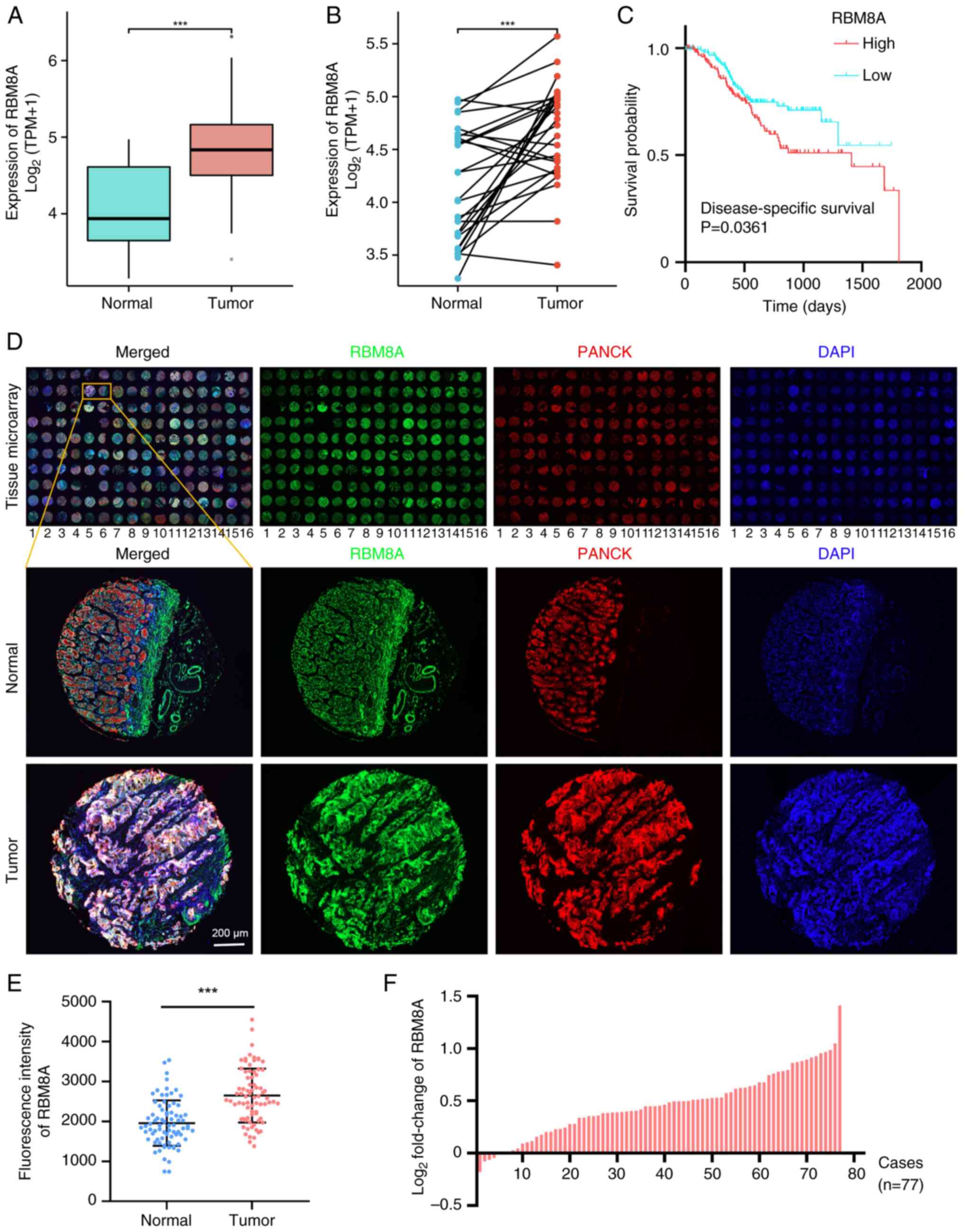
Figure 1

RBM8A expression is upregulated in
GC. (A) mRNA expression levels of RBM8A in GC and normal tissues
from TCGA. An unpaired t-test was used for statistical analysis.
(B) RBM8A expression levels in GC and adjacent normal tissues in
TCGA. A paired t-test was used for statistical analysis. (C)
Disease-specific survival curves. The survival probability was
analyzed, and the log-rank test showed P=0.0361. (D) RBM8A and
PANCK were detected by multiplex immunohistochemistry in the GC
tissue microarray. The odd-numbered columns represent GC tissues,
and the even-numbered columns represent adjacent non-cancerous
tissues. Scale bar, 200 μm. (E) Statistical analysis of the
fluorescence intensity of RBM8A staining in the epithelial cells of
GC and adjacent non-cancerous tissues. A paired t-test was used for
statistical analysis. (F) Bar chart showing the log-transformed
fold change in RBM8A expression between GC tissues and adjacent
non-cancerous tissues. ***P<0.001. GC, gastric
cancer; PANCK, pan-cytokeratin; RBM8A, RNA binding motif protein
8A; TCGA, The Cancer Genome Atlas; TPM, transcripts per
million.

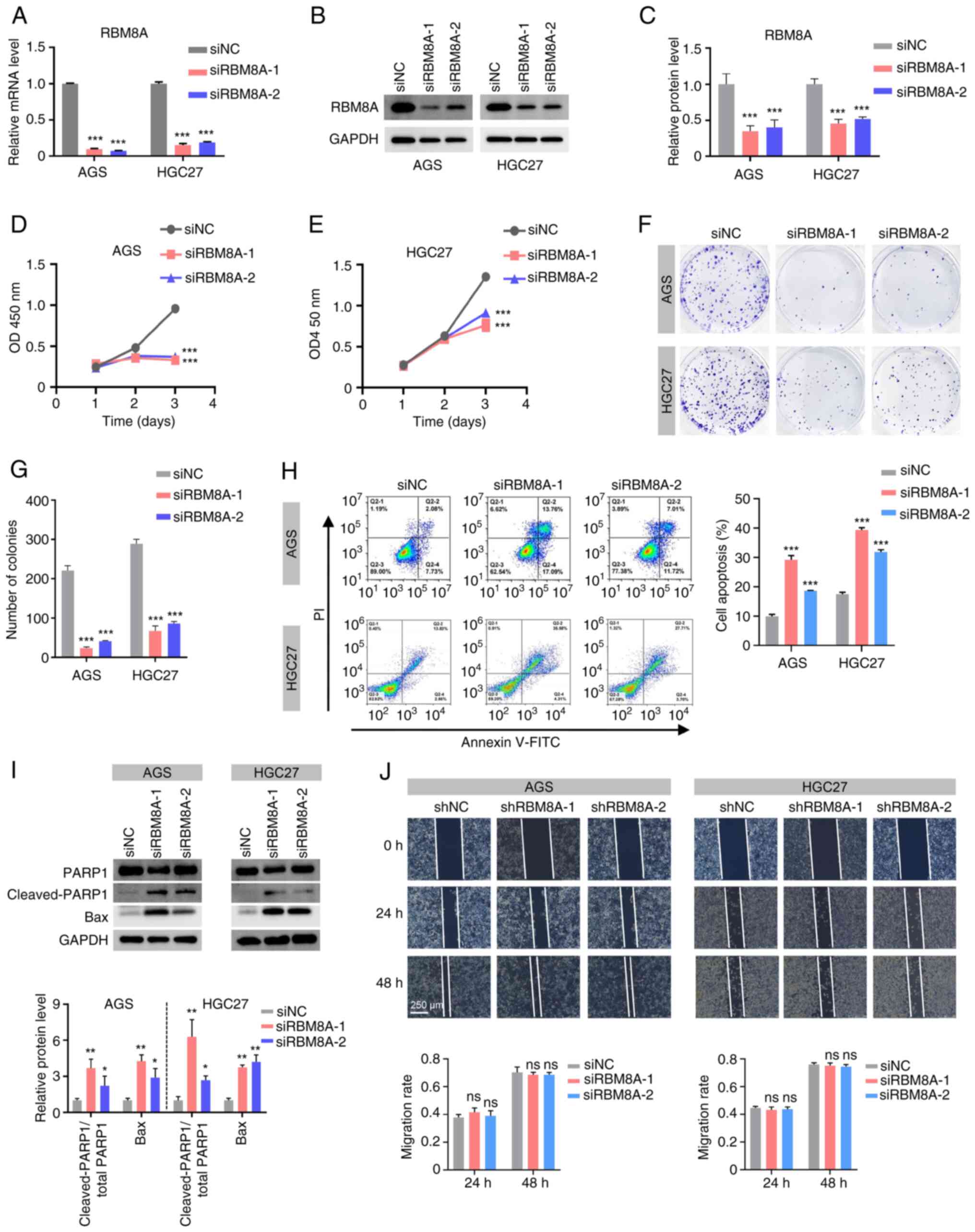
Figure 2

Knockdown of RBM8A inhibits gastric
cancer cell proliferation. (A) Reverse transcription-quantitative
PCR confirmed that siRBM8A was capable of effectively reducing the
RBM8A mRNA level. One-way ANOVA with Dunnett's multiple comparisons
test was used for statistical analysis. (B) Western blot analysis
of RBM8A protein levels in AGS and HGC27 cells transfected with
siRBM8A or siNC (negative control). (C) Densitometric
semi-quantification of RBM8A protein levels from the western blot
analysis in (B), normalized to GAPDH. One-way ANOVA with Dunnett's
multiple comparisons test was used for statistical analysis. (D)
CCK8 assay indicating that knockdown of RBM8A significantly
suppressed the proliferation of AGS cell at 72 h post-transfection.
Statistical analysis at the 72-h timepoint was performed using
one-way ANOVA with Dunnett's multiple comparisons test comparing
the siRBM8A-1 and siRBM8A-2 groups with the siNC group. (E) CCK8
assay showing that knockdown of RBM8A significantly suppressed
HGC27 cell proliferation at 72 h post-transfection. Statistical
analysis at the 72-h timepoint was performed using one-way ANOVA
with Dunnett's multiple comparisons test comparing the siRBM8A-1
and siRBM8A-2 groups with the siNC group. (F) Colony formation
assays revealed that knockdown of RBM8A significantly impaired the
colony formation of AGS and HGC27 cells. (G) Statistical analysis
of colony numbers in (F). One-way ANOVA with Dunnett's multiple
comparisons test was used for statistical analysis. (H) Flow
cytometry showed that knockdown of RBM8A significantly enhanced
apoptosis in AGS and HGC27 cells. One-way ANOVA with Dunnett's
multiple comparisons test was used for statistical analysis. (I)
Western blotting indicated that knockdown of RBM8A led to
upregulation of the protein levels of cleaved PARP1 and Bax.
Statistical analysis of the relative expression levels of cleaved
PARP1 and Bax is shown at the bottom. One-way ANOVA with Dunnett's
multiple comparisons test was used for statistical analysis. (J)
Knockdown of RBM8A had no marked effect on the migration of AGS and
HGC27 cells. One-way ANOVA with Dunnett's multiple comparisons test
was used for statistical analysis. Scale bar, 250 μm. Data
are presented as the mean ± SD. *P<0.05,
**P<0.01, ***P<0.001 vs. siNC. CCK8,
Cell Counting Kit-8; NC, negative control; ns, not significant; OD,
optical density; PARP1, poly(ADP-ribose) polymerase 1; RBM8A, RNA
binding motif protein 8A; sh, short hairpin RNA; si, small
interfering RNA.

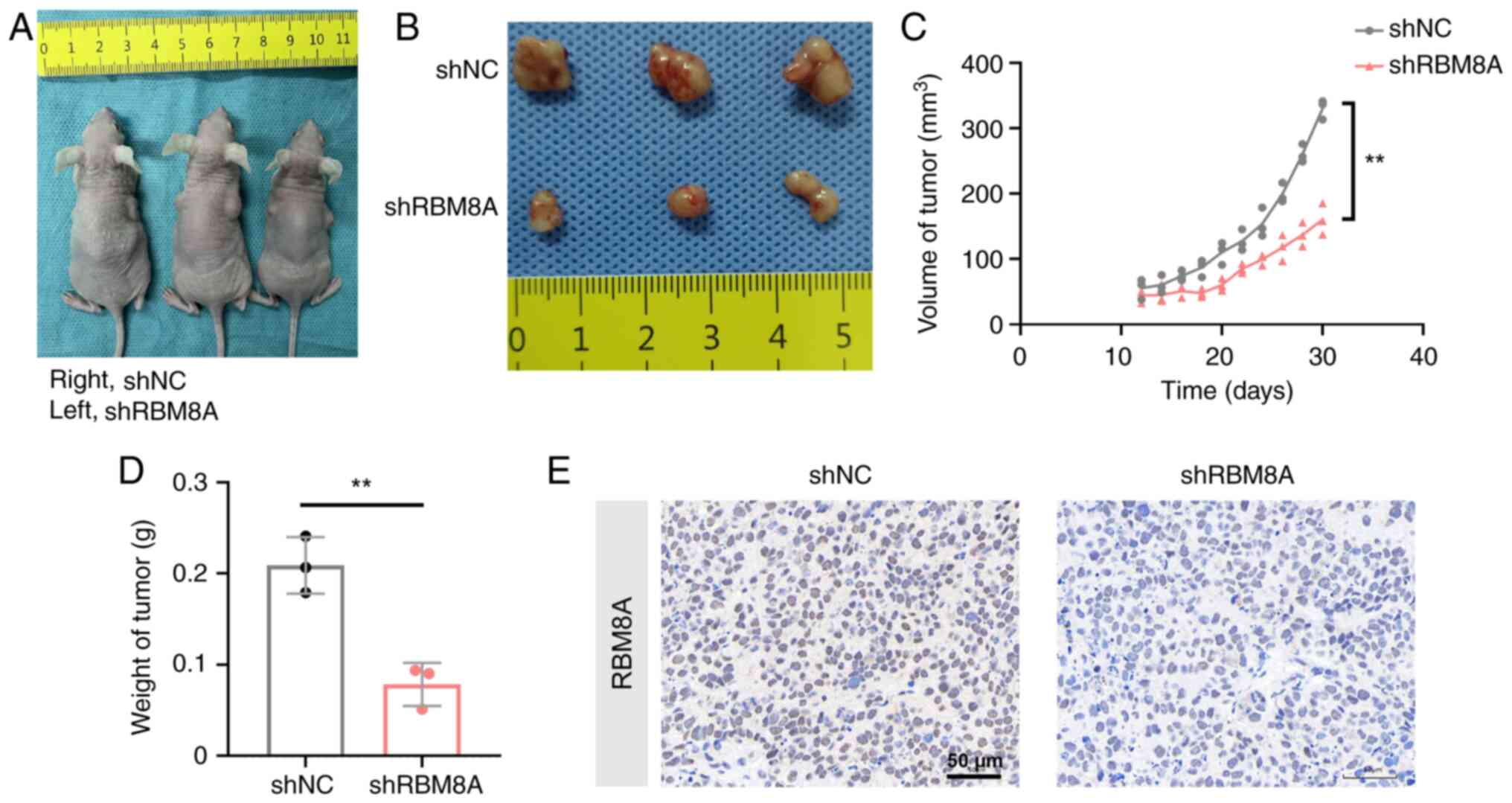
Figure 3

RBM8A promotes gastric cancer cell
proliferation in vivo. (A) Nude mice 32 days after
inoculation with gastric cancer cells. Left, shRBM8A group; right,
shNC group. (B) Subcutaneous tumors in nude mice (n=3). (C) Volume
of the xenograft tumors following RBM8A knockdown. The volume of
tumors were estimated by measuring sizes every other day. A paired
t-test was used for statistical analysis. (D) Weight of harvested
xenograft tumors. A paired t-test was used for statistical
analysis. (E) Immunohistochemistry staining of xenograft tumors
showing that the protein levels of RBM8A were decreased in RBM8A
knockdown tumor tissues. Scale bar, 50 μm. Data are
presented as the mean ± SD. **P<0.01. NC, negative
control; RBM8A, RNA binding motif protein 8A; sh, short hairpin
RNA.

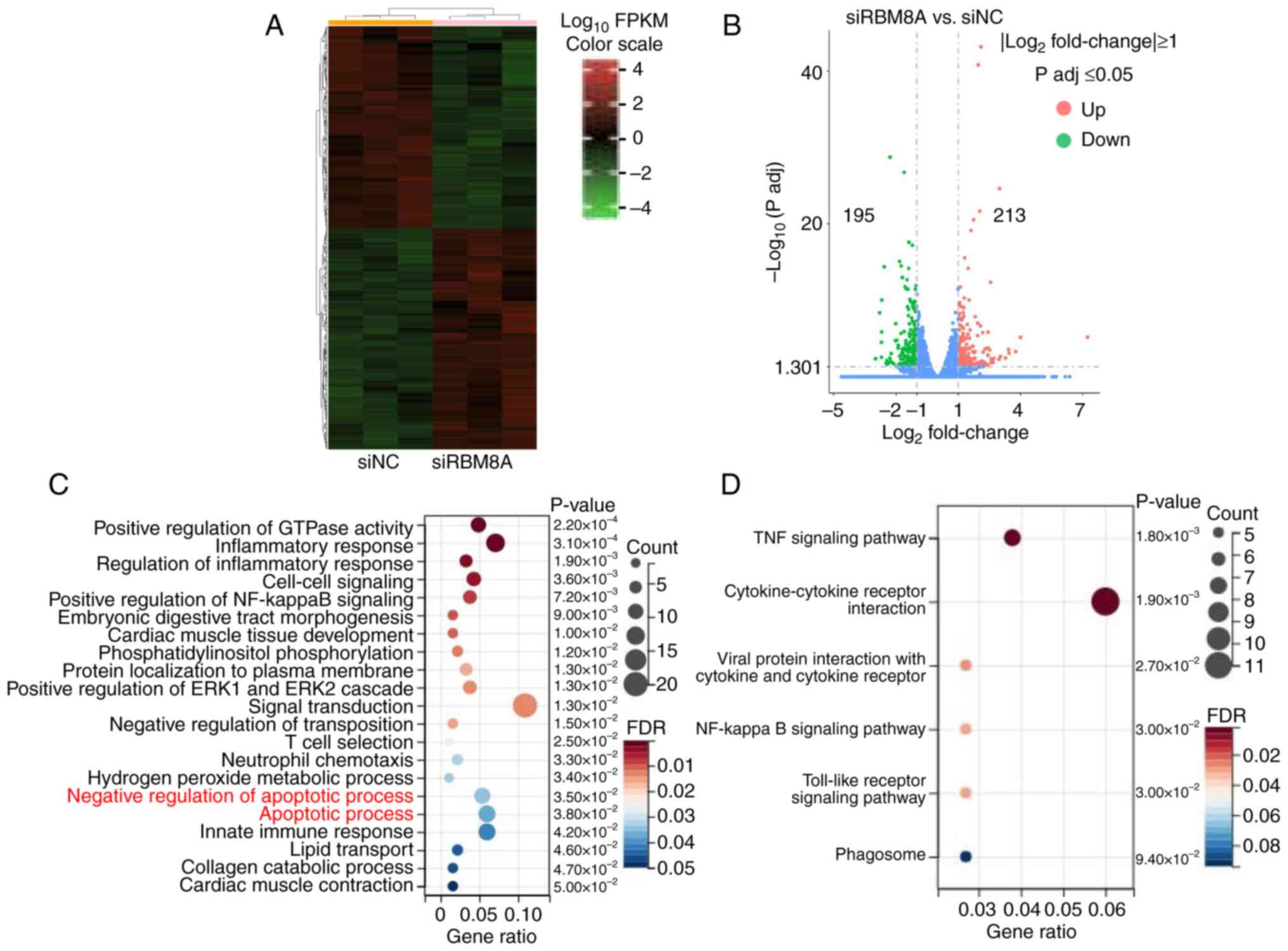
Figure 4

Analysis of mRNA expression profiles
after knockdown of RBM8A in AGS cells. (A) Heat map of DEGs. (B)
Volcano plot of mRNA expression profiles. (C) Gene Ontology
analysis of DEGs. A hypergeometric test with FDR correction was
used for statistical analysis. (D) Kyoto Encyclopedia of Genes and
Genomes analysis of DEGs. A hypergeometric test with FDR correction
was used for statistical analysis. DEG, differentially expressed
gene; FDR, false discovery rate; NC, negative control; p adj,
adjusted P-value; RBM8A, RNA binding motif protein 8A; si, small
interfering RNA.

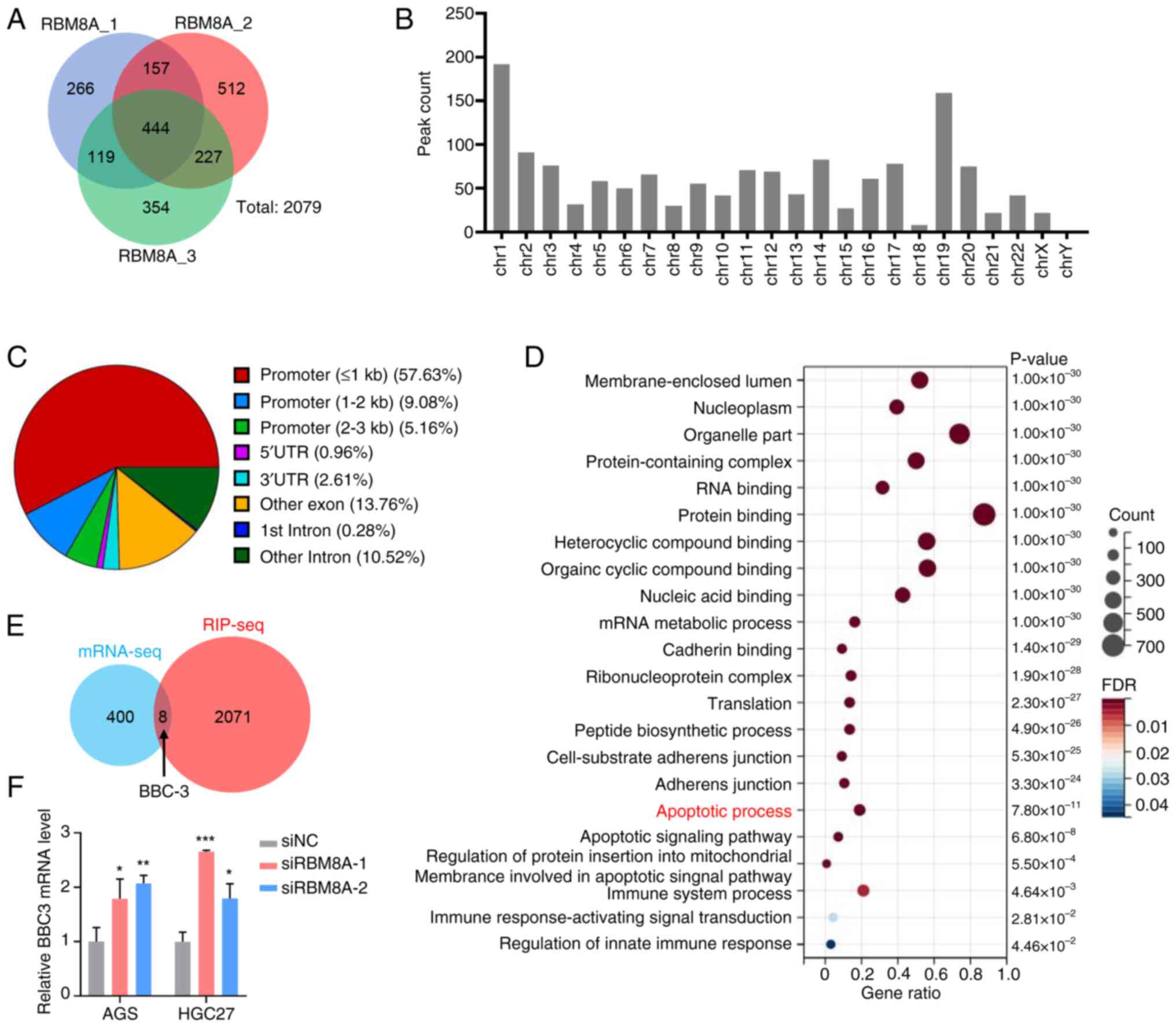
Figure 5

RIP-seq identifying mRNAs that
directly bind with RBM8A. (A) RIP experiments with three biological
replicates (RBM8A 1, 2 and 3) identified mRNAs from 2,079 genes
that bind to RBM8A. (B) These genes are distributed across various
chromosomes. (C) Binding modes of RBM8A to mRNA and the proportion
of each mode. (D) Gene Ontology analysis of genes corresponding to
mRNAs that bind directly to RBM8A. A hypergeometric test with FDR
correction was used for statistical analysis. (E) Combined analysis
of mRNA-seq and RIP-seq to screen for target genes of RBM8A that
are related to cell apoptosis. (F) BBC3 mRNA expression levels were
significantly upregulated following knockdown of RBM8A. One-way
ANOVA with Dunnett's multiple comparisons test was used for
statistical analysis. Data are presented as the mean±SD.
*P<0.05, **P<0.01,
***P<0.001 vs. siNC. BBC3, BCL2 binding component 3;
chr, chromosome; FDR, false discovery rate; NC, negative control;
RBM8A, RNA binding motif protein 8A; RIP, RNA immunoprecipitation;
seq, sequencing; si, small interfering RNA; UTR, untranslated
region.

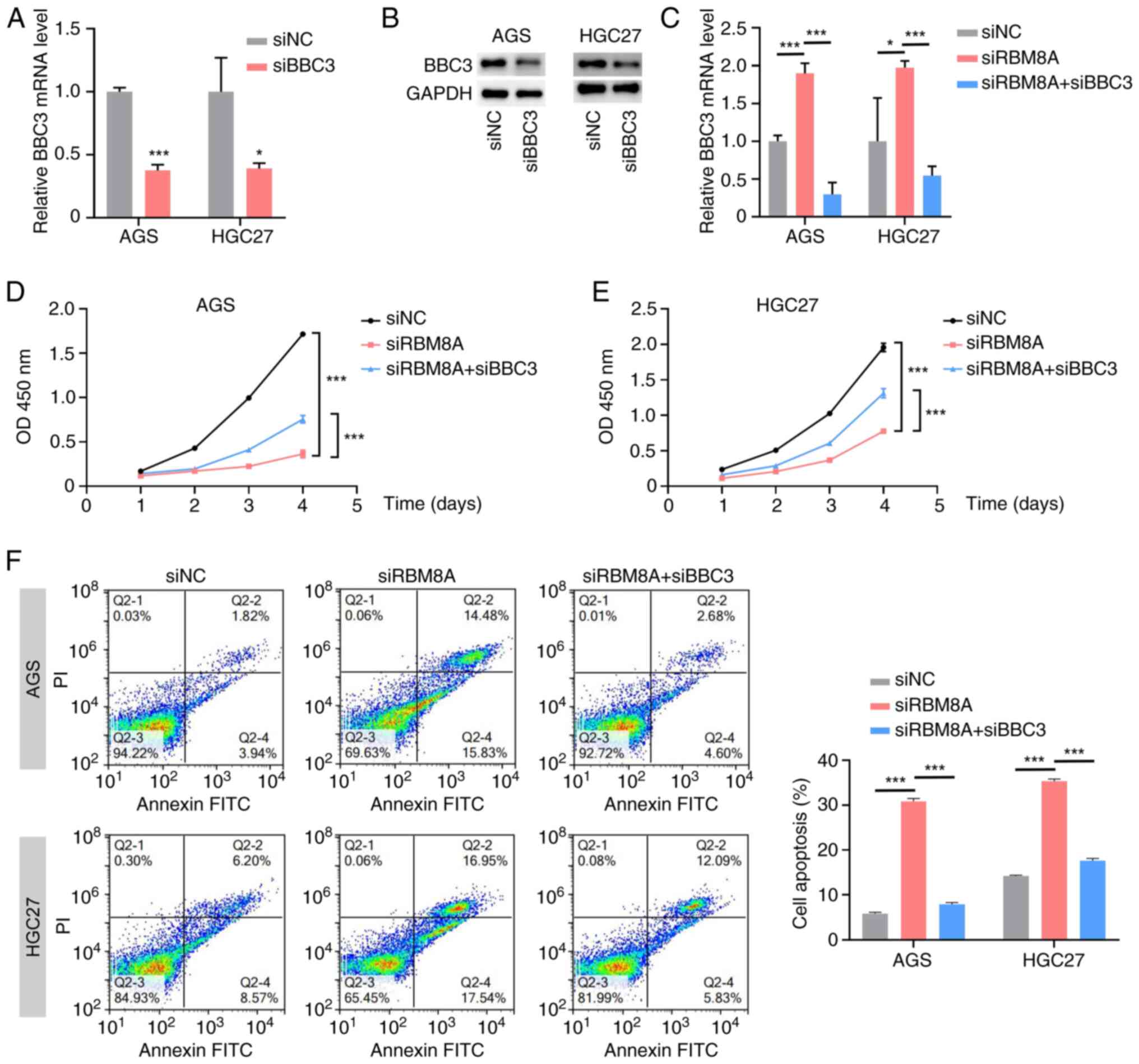
Figure 6

BBC3 mediates the inhibition of
apoptosis in GC cells by RBM8A. (A) siBBC3 knockdown efficiency
detected by reverse transcription-quantitative PCR. An unpaired
t-test was used for statistical analysis. (B) siBBC3 knockdown
efficiency detected by western blotting. (C) BBC3 mRNA expression
levels were measured after co-transfecting siRBM8A and siBBC3 into
AGS and HGC27 cells. One-way ANOVA with Tukey's Honestly
Significant Difference test was used for statistical analysis. (D)
CCK8 assay indicating that knockdown of BBC3 partially reversed the
inhibition of AGS cell proliferation caused by knockdown of RBM8A.
Statistical analysis at the 96-h timepoint included comparisons
between siRBM8A vs. siNC groups and siRBM8A+siBBC3 vs. siRBM8A
groups, performed using one-way ANOVA with Tukey's Honestly
Significant Difference test. (E) CCK8 assay indicating that
knockdown of BBC3 partially reversed the inhibition of HGC27 cell
proliferation caused by knockdown of RBM8A. Statistical analysis at
the 96-h timepoint included comparisons between siRBM8A vs. siNC
groups and siRBM8A+siBBC3 vs. siRBM8A groups, performed using
one-way ANOVA with Tukey's Honestly Significant Difference test.
(F) Flow cytometry showing that knockdown of BBC3 partially
reversed the promoting effect of RBM8A knockdown on the apoptosis
of GC cells. One-way ANOVA with Tukey's Honestly Significant
Difference test was used for statistical analysis. Data are
presented as the mean ± SD. *P<0.05,
***P<0.001. BBC3, BCL2 binding component 3; CCK8,
Cell Counting Kit-8; GC, gastric cancer; NC, negative control; OD,
optical density; RBM8A, RNA binding motif protein 8A; si, small
interfering RNA.

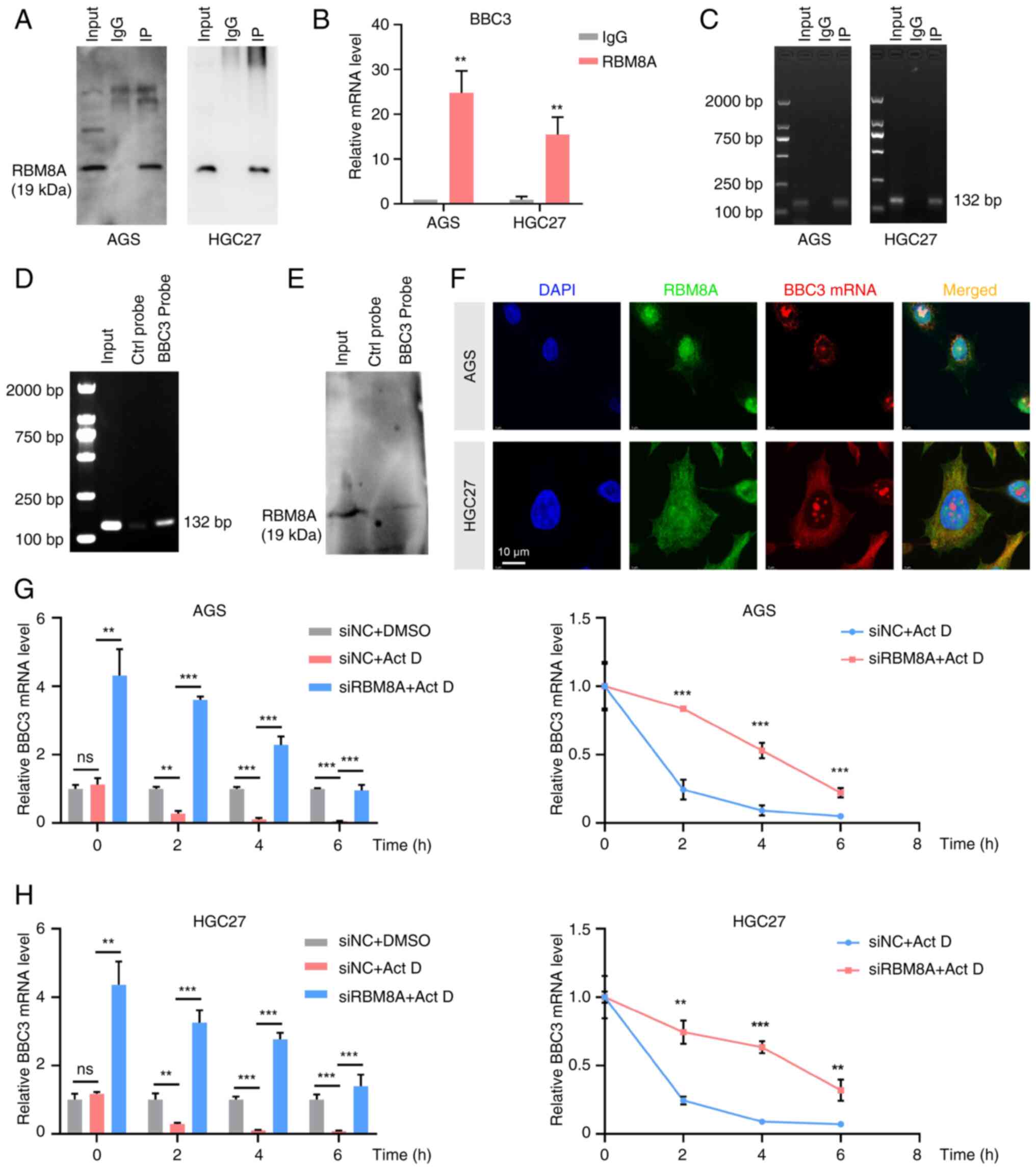
Figure 7

RBM8A interacts with BBC3 mRNA and
promotes its degradation. (A) Western blotting showed that RBM8A
antibody could effectively enrich RBM8A. (B) Quantitative PCR
showed that RBM8A antibody significantly enriched BBC3 mRNA in
gastric cancer cells. An unpaired t-test was used for statistical
analysis. (C) Agarose gel electrophoresis results showed that RBM8A
antibody enriched BBC3 mRNA. (D) RNA pulldown assay demonstrating
that the BBC3 mRNA probe enriched BBC3 mRNA. (E) RNA pulldown assay
showing that the BBC3 mRNA probe enriched RBM8A. (F) Fluorescence
in situ hybridization-immunofluorescence showed that there
was co-localization of RBM8A and BBC3 mRNA. Scale bar, 10
μm. (G) Act D assay showing that knockdown of RBM8A
inhibited BBC3 mRNA degradation in AGS cells. Statistical analysis
for all panels was performed using one-way ANOVA with Tukey's
Honestly Significant Difference test. For the right panel,
statistical analysis compared the fold change of BBC3 expression
post-Act D treatment relative to the pre-Act D treatment baseline
between the siNC and siRBM8A groups at multiple time points (2, 4
and 6 h). (H) Act D assay showing that knockdown of RBM8A inhibited
BBC3 mRNA degradation in HGC27 cells. Statistical analysis for all
panels was performed using one-way ANOVA with Tukey's Honestly
Significant Difference test. For the right panel, statistical
analysis compared the fold change of BBC3 expression post-Act D
treatment relative to the pre-Act D treatment baseline between the
siNC and siRBM8A groups at multiple time points (2, 4 and 6 h).
Data are presented as the mean ± SD. **P<0.01,
***P<0.001 vs. siNC or IgG. Act D, actinomycin D;
BBC3, BCL2 binding component 3; ctrl, control; IP,
immunoprecipitation; NC, negative control; RBM8A, RNA binding motif
protein 8A; si, small interfering RNA.

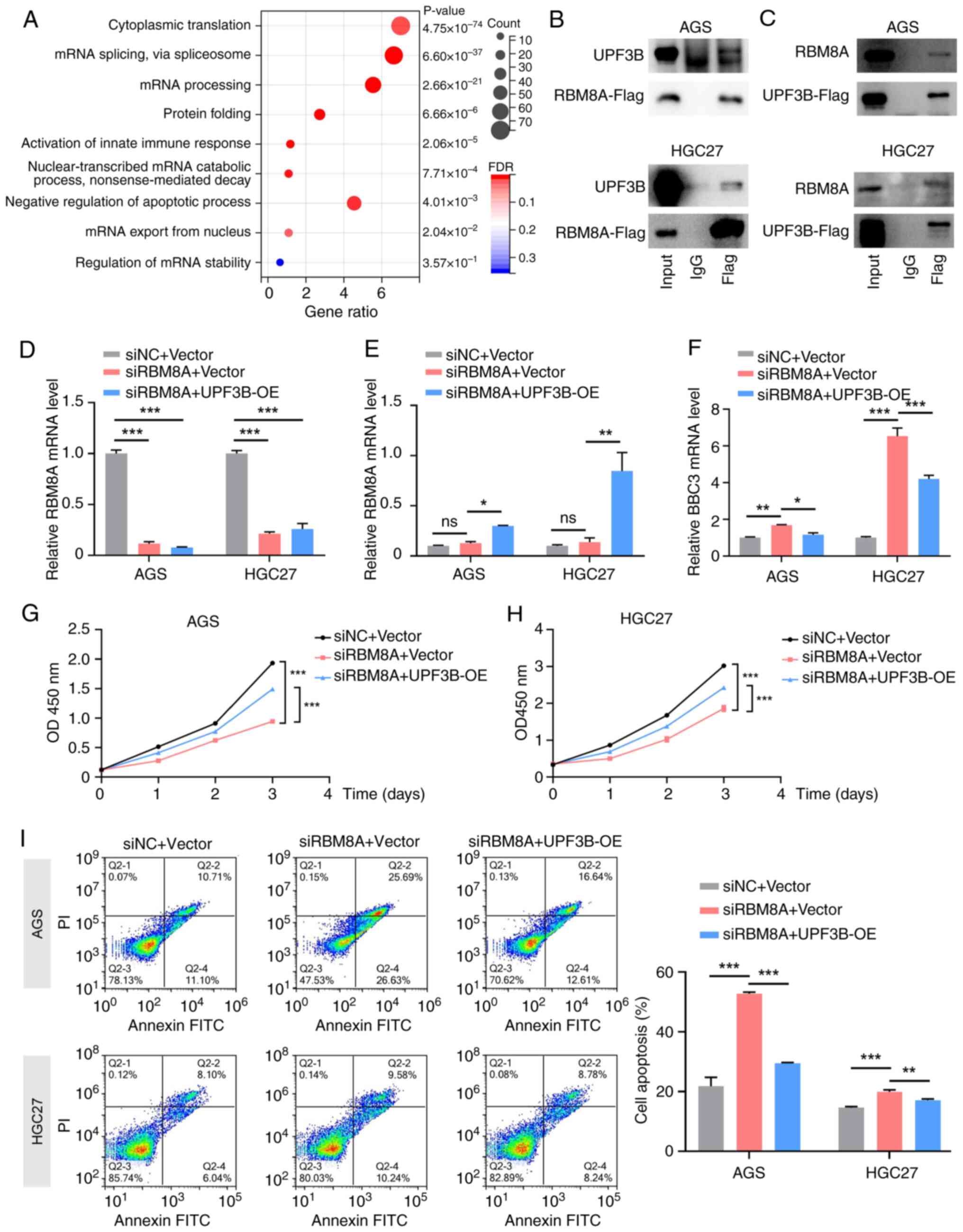
Figure 8

RBM8A regulates cell apoptosis by
interacting with UPF3B to modulate BBC3 mRNA levels. (A) Gene
Ontology analysis of RBM8A-interacting proteins detected by
CoIP-mass spectrometry. A hypergeometric test with FDR correction
was used for statistical analysis. (B) CoIP-western blotting
experiments showed that Flag antibody enriched RBM8A-3X Flag and
UPF3B in RBM8A-3X Flag-overexpressing AGS and HGC27 cells. (C)
CoIP-western blotting experiments showed that Flag antibody
enriched UPF3B-3X Flag and RBM8A in UPF3B-3X Flag-overexpressing
AGS and HGC27 cells. (D) qPCR examining the mRNA levels of RBM8A
following co-transfection with siRBM8A and UPF3B-OE. One-way ANOVA
with Tukey's Honestly Significant Difference test was used for
statistical analysis. (E) qPCR examining the mRNA levels of UPF3B
following co-transfection with siRBM8A and UPF3B-OE. One-way ANOVA
with Tukey's Honestly Significant Difference test was used for
statistical analysis. (F) qPCR results demonstrated that UPF3B
overexpression rescued the upregulation of BBC3 mRNA induced by
RBM8A knockdown in AGS and HGC27 cells. One-way ANOVA with Tukey's
Honestly Significant Difference test was used for statistical
analysis. (G) CCK8 assay indicating that UPF3B overexpression
partially reversed the inhibition of AGS cell proliferation caused
by knockdown of RBM8A. Statistical analysis at the 72-h timepoint
included comparisons between the siRBM8A + vector vs. siNC + vector
groups and siRBM8A+UPF3B-OE vs. siRBM8A + vector groups, performed
using one-way ANOVA with Tukey's Honestly Significant Difference
test. (H) CCK8 assay indicating that UPF3B overexpression partially
reversed the inhibition of HGC27 cell proliferation caused by
knockdown of RBM8A. Statistical analysis at the 72-h timepoint
included comparisons between the siRBM8A + vector vs. siNC + vector
groups and siRBM8A + UPF3B-OE vs. siRBM8A + vector groups,
performed using one-way ANOVA with Tukey's Honestly Significant
Difference test. (I) Flow cytometry results showed that UPF3B
overexpression partially reversed the promoting effect of RBM8A
knockdown on the apoptosis of gastric cancer cells. One-way ANOVA
with Tukey's Honestly Significant Difference test was used for
statistical analysis. Data are presented as the mean ± SD.
*P<0.05, **P<0.01,
***P<0.001. BBC3, BCL2 binding component 3; CCK8,
Cell Counting Kit-8; CoIP, co-immunoprecipitation; FDR, false
discovery rate; NC, negative control; ns, not significant; OD,
optical density; OE, overexpression plasmid; qPCR, quantitative
PCR; RBM8A, RNA binding motif protein 8A; si, small interfering
RNA.
View References

1 

Bray F, Laversanne M, Sung H, Ferlay J, Siegel RL, Soerjomataram I and Jemal A: Global cancer statistics 2022: GLOBOCAN estimates of incidence and mortality worldwide for 36 cancers in 185 countries. CA Cancer J Clin. 74:229–263. 2024. View Article : Google Scholar : PubMed/NCBI

2 

Guan WL, He Y and Xu RH: Gastric cancer treatment: Recent progress and future perspectives. J Hematol Oncol. 16:572023. View Article : Google Scholar : PubMed/NCBI

3 

Joshi SS and Badgwell BD: Current treatment and recent progress in gastric cancer. CA Cancer J Clin. 71:264–279. 2021. View Article : Google Scholar : PubMed/NCBI

4 

Chuang TW, Lee KM and Tarn WY: Function and pathological implications of exon junction complex factor Y14. Biomolecules. 5:343–355. 2015. View Article : Google Scholar : PubMed/NCBI

5 

Bai R, Wan R, Wang L, Xu K, Zhang Q, Lei J and Shi Y: Structure of the activated human minor spliceosome. Science. 371:eabg08792021. View Article : Google Scholar : PubMed/NCBI

6 

Zhan X, Yan C, Zhang X, Lei J and Shi Y: Structure of a human catalytic step I spliceosome. Science. 359:537–545. 2018. View Article : Google Scholar : PubMed/NCBI

7 

Noble CG and Song H: mlN51 stimulates the RNA-helicase activity of eIF4AIII. PLoS One. 2:e3032007. View Article : Google Scholar : PubMed/NCBI

8 

Hosoda N, Kim YK, Lejeune F and Maquat LE: CBP80 promotes interaction of Upf1 with Upf2 during nonsense-mediated mRNA decay in mammalian cells. Nat Struct Mol Biol. 12:893–901. 2005. View Article : Google Scholar : PubMed/NCBI

9 

Isken O and Maquat LE: The multiple lives of nMD factors: Balancing roles in gene and genome regulation. Nat Rev Genet. 9:699–712. 2008. View Article : Google Scholar : PubMed/NCBI

10 

Woeller CF, Gaspari M, Isken O and Maquat LE: nMD resulting from encephalomyocarditis virus IRES-directed translation initiation seems to be restricted to CBP80/20-bound mRNA. EMBO Rep. 9:446–451. 2008. View Article : Google Scholar : PubMed/NCBI

11 

Kashima I, Yamashita A, Izumi N, Kataoka N, Morishita R, Hoshino S, Ohno M, Dreyfuss G and Ohno S: Binding of a novel SMG-1-Upf1-eRF1-eRF3 complex (SURF) to the exon junction complex triggers Upf1 phosphorylation and nonsense-mediated mRNA decay. Genes Dev. 20:355–367. 2006. View Article : Google Scholar : PubMed/NCBI

12 

López-Perrote A, Castaño R, Melero R, Zamarro T, Kurosawa H, Ohnishi T, Uchiyama A, Aoyagi K, Buchwald G, Kataoka N, et al: Human nonsense-mediated mRNA decay factor UPF2 interacts directly with eRF3 and the SURF complex. Nucleic Acids Res. 44:1909–1923. 2016. View Article : Google Scholar : PubMed/NCBI

13 

Behm-Ansmant I and Izaurralde E: Quality control of gene expression: A stepwise assembly pathway for the surveillance complex that triggers nonsense-mediated mRNA decay. Genes Dev. 20:391–398. 2006. View Article : Google Scholar : PubMed/NCBI

14 

Kervestin S and Jacobson A: nMD: A multifaceted response to premature translational termination. Nat Rev Mol Cell Biol. 13:700–712. 2012. View Article : Google Scholar : PubMed/NCBI

15 

Mei N, Chen H, Zhao N, Yi Y and Li C: A comprehensive pan-cancer analysis of RBM8A based on data mining. J Oncol. 2021:99833542021. View Article : Google Scholar : PubMed/NCBI

16 

Lin Y, Wei L, Hu B, Zhang J, Wei J, Qian Z and Zou D: RBM8A promotes glioblastoma growth and invasion through the notch/STAT3 pathway. Front Oncol. 11:7369412021. View Article : Google Scholar : PubMed/NCBI

17 

Li F, Wang X, Zhang J, Zhang J, Jing X, Jiang Q, Zhou J, Cao L, Peng H, Tong D and Huang C: RBM8A, a new target of TEAD4, promotes breast cancer progression by regulating IGF1R and IRS-2. J Transl Med. 22:8232024. View Article : Google Scholar : PubMed/NCBI

18 

Liang R, Lin Y, Ye JZ, Yan XX, Liu ZH, Li YQ, Luo XL and Ye HH: High expression of RBM8A predicts poor patient prognosis and promotes tumor progression in hepatocellular carcinoma. Oncol Rep. 37:2167–2176. 2017. View Article : Google Scholar : PubMed/NCBI

19 

Song T and Zhang H: RBM8A depletion decreases the cisplatin resistance and represses the proliferation and metastasis of breast cancer cells via AKT/mTOR pathway. Breast J. 2022:45767892022. View Article : Google Scholar : PubMed/NCBI

20 

Gao J, Senthil M, Ren B, Yan J, Xing Q, Yu J, Zhang L and Yim JH: IRF-1 transcriptionally upregulates PUMA, which mediates the mitochondrial apoptotic pathway in IRF-1-induced apoptosis in cancer cells. Cell Death Differ. 17:699–709. 2010. View Article : Google Scholar

21 

Livak KJ and Schmittgen TD: Analysis of relative gene expression data using real-time quantitative PCR and the 2(-Delta Delta C(T)) method. Methods. 25:402–408. 2001. View Article : Google Scholar

22 

Peng H, Zhang W, Dong H, Yuan J, Li Y, Li F, Yu D, Guan Y and Zhang F: CircFAT1 promotes lung adenocarcinoma progression by sequestering miR-7 from repressing IRS2-ERK-mediated CCND1 expression. Int J Biol Sci. 18:3944–3960. 2022. View Article : Google Scholar : PubMed/NCBI

23 

Lv X and Cheng H: Prognostic value of increased expression of RBM8A in gastric cancer. Braz J Med Biol Res. 53:e92902020. View Article : Google Scholar : PubMed/NCBI

24 

Yu J and Zhang L: No PUMA, no death: Implications for p53-dependent apoptosis. Cancer Cell. 4:248–249. 2003. View Article : Google Scholar : PubMed/NCBI

25 

Li M: The role of P53 up-regulated modulator of apoptosis (PUMA) in ovarian development, cardiovascular and neurodegenerative diseases. Apoptosis. 26:235–247. 2021. View Article : Google Scholar : PubMed/NCBI

26 

Qiu L, Yao L, Hu P and He T: Analysis of the detection rate and clinical characteristics of early gastric cancer by painless gastroscopy and ordinary gastroscopy. Medicine (Baltimore). 103:e381202024. View Article : Google Scholar : PubMed/NCBI

27 

Obeng EA, Stewart C and Abdel-Wahab O: Altered RNA processing in cancer pathogenesis and therapy. Cancer Discov. 9:1493–1510. 2019. View Article : Google Scholar : PubMed/NCBI

28 

Yin S, Liu H, Zhou Z, Xu X, Wang P, Chen W, Deng G, Wang H, Yu H, Gu L, et al: PUM1 promotes tumor progression by activating DEPTOR-meditated glycolysis in gastric cancer. Adv Sci (Weinh). 10:e23011902023. View Article : Google Scholar : PubMed/NCBI

29 

Li C, Yin Y, Tao R, Lin Y, Wang T, Shen Q, Li R, Tao K and Liu W: ESRP1-driven alternative splicing of CLSTN1 inhibits the metastasis of gastric cancer. Cell Death Discov. 9:4642023. View Article : Google Scholar : PubMed/NCBI

30 

Chen X, Wei H, Yue A, Zhang H, Zheng Y, Sun W, Zhou Y and Wang Y: KPNA2 promotes the progression of gastric cancer by regulating the alternative splicing of related genes. Sci Rep. 14:171402024. View Article : Google Scholar : PubMed/NCBI

31 

Chen L, Willis SN, Wei A, Smith BJ, Fletcher JI, Hinds MG, Colman pM, Day CL, Adams JM and Huang DC: Differential targeting of prosurvival Bcl-2 proteins by their BH3-only ligands allows complementary apoptotic function. Mol Cell. 17:393–403. 2005. View Article : Google Scholar : PubMed/NCBI

32 

Kuwana T, Bouchier-Hayes L, Chipuk JE, Bonzon C, Sullivan BA, Green DR and Newmeyer DD: BH3 domains of BH3-only proteins differentially regulate Bax-mediated mitochondrial membrane permeabilization both directly and indirectly. Mol Cell. 17:525–535. 2005. View Article : Google Scholar : PubMed/NCBI

33 

Letai A, Bassik MC, Walensky LD, Sorcinelli MD, Weiler S and Korsmeyer SJ: Distinct BH3 domains either sensitize or activate mitochondrial apoptosis, serving as prototype cancer therapeutics. Cancer Cell. 2:183–192. 2002. View Article : Google Scholar : PubMed/NCBI

34 

Mérino D, Giam M, Hughes PD, Siggs OM, Heger K, O'Reilly LA, Adams JM, Strasser A, Lee EF, Fairlie WD and Bouillet P: The role of BH3-only protein Bim extends beyond inhibiting Bcl-2-like prosurvival proteins. J Cell Biol. 186:355–362. 2009. View Article : Google Scholar : PubMed/NCBI

35 

Liu Z, Sun J, Liu B, Zhao M, Xing E and Dang C: miRNA-222 promotes liver cancer cell proliferation, migration and invasion and inhibits apoptosis by targeting BBC3. Int J Mol Med. 42:141–148. 2018.PubMed/NCBI

36 

Buchwald G, Ebert J, Basquin C, Sauliere J, Jayachandran U, Bono F, Le Hir H and Conti E: Insights into the recruitment of the nMD machinery from the crystal structure of a core EJC-UPF3b complex. Proc Natl Acad Sci USA. 107:10050–10055. 2010. View Article : Google Scholar : PubMed/NCBI

37 

Celik A, Kervestin S and Jacobson A: nMD: At the crossroads between translation termination and ribosome recycling. Biochimie. 114:2–9. 2015. View Article : Google Scholar :

38 

Chan WK, Huang L, Gudikote JP, Chang YF, Imam JS, MacLean JA II and Wilkinson MF: An alternative branch of the nonsense-mediated decay pathway. EMBO J. 26:1820–1830. 2007. View Article : Google Scholar : PubMed/NCBI

39 

Chamieh H, Ballut L, Bonneau F and Le Hir H: nMD factors UPF2 and UPF3 bridge UPF1 to the exon junction complex and stimulate its RNA helicase activity. Nat Struct Mol Biol. 15:85–93. 2008. View Article : Google Scholar

40 

Jones SH and Wilkinson M: RNA decay, evolution, and the testis. RNA Biol. 14:146–155. 2017. View Article : Google Scholar :

41 

Karam R, Wengrod J, Gardner LB and Wilkinson MF: Regulation of nonsense-mediated mRNA decay: Implications for physiology and disease. Biochim Biophys Acta. 1829:624–633. 2013. View Article : Google Scholar : PubMed/NCBI

42 

Lykke-Andersen S and Jensen TH: Nonsense-mediated mRNA decay: An intricate machinery that shapes transcriptomes. Nat Rev Mol Cell Biol. 16:665–677. 2015. View Article : Google Scholar : PubMed/NCBI

43 

Goetz AE and Wilkinson M: Stress and the nonsense-mediated RNA decay pathway. Cell Mol Life Sci. 74:3509–3531. 2017. View Article : Google Scholar : PubMed/NCBI

44 

Hou B, Shu M, Liu C, Du Y, Xu C, Jiang H, Hou J, Chen X, Wang L and Wu X: Unveiling the role of UPF3B in hepatocellular carcinoma: Potential therapeutic target. Cancer Sci. 115:2646–2658. 2024. View Article : Google Scholar : PubMed/NCBI

45 

Wang H, Qian D, Wang J, Liu Y, Luo W, Zhang H, Cheng J, Li H, Wu Y, Li W, et al: HnRNPR-mediated UPF3B mRNA splicing drives hepatocellular carcinoma metastasis. J Adv Res. 68:257–270. 2025. View Article : Google Scholar :

46 

Ma J, Chen T, Wu S, Yang C, Bai M, Shu K, Li K, Zhang G, Jin Z, He F, et al: iProX: An integrated proteome resource. Nucleic Acids Res. 47:D1211–D121. 2019. View Article : Google Scholar :

47 

Chen T, Ma J, Liu Y, Chen Z, Xiao N, Lu Y, Fu Y, Yang C, Li M, Wu S, et al: iProX in 2021: Connecting proteomics data sharing with big data. Nucleic Acids Res. 50:D1522–D1527. 2022. View Article : Google Scholar :

Related Articles

  • Abstract
  • View
  • Download
  • Twitter
Copy and paste a formatted citation
Spandidos Publications style
Peng H, Zhang L, Li F, Jing X, Zhou J, Cao L, Xu C, Wang J and Huang C: RBM8A promotes gastric cancer progression by binding with UPF3B to induce BBC3 mRNA degradation. Int J Mol Med 56: 131, 2025.
APA
Peng, H., Zhang, L., Li, F., Jing, X., Zhou, J., Cao, L. ... Huang, C. (2025). RBM8A promotes gastric cancer progression by binding with UPF3B to induce BBC3 mRNA degradation. International Journal of Molecular Medicine, 56, 131. https://doi.org/10.3892/ijmm.2025.5572
MLA
Peng, H., Zhang, L., Li, F., Jing, X., Zhou, J., Cao, L., Xu, C., Wang, J., Huang, C."RBM8A promotes gastric cancer progression by binding with UPF3B to induce BBC3 mRNA degradation". International Journal of Molecular Medicine 56.3 (2025): 131.
Chicago
Peng, H., Zhang, L., Li, F., Jing, X., Zhou, J., Cao, L., Xu, C., Wang, J., Huang, C."RBM8A promotes gastric cancer progression by binding with UPF3B to induce BBC3 mRNA degradation". International Journal of Molecular Medicine 56, no. 3 (2025): 131. https://doi.org/10.3892/ijmm.2025.5572
Copy and paste a formatted citation
x
Spandidos Publications style
Peng H, Zhang L, Li F, Jing X, Zhou J, Cao L, Xu C, Wang J and Huang C: RBM8A promotes gastric cancer progression by binding with UPF3B to induce BBC3 mRNA degradation. Int J Mol Med 56: 131, 2025.
APA
Peng, H., Zhang, L., Li, F., Jing, X., Zhou, J., Cao, L. ... Huang, C. (2025). RBM8A promotes gastric cancer progression by binding with UPF3B to induce BBC3 mRNA degradation. International Journal of Molecular Medicine, 56, 131. https://doi.org/10.3892/ijmm.2025.5572
MLA
Peng, H., Zhang, L., Li, F., Jing, X., Zhou, J., Cao, L., Xu, C., Wang, J., Huang, C."RBM8A promotes gastric cancer progression by binding with UPF3B to induce BBC3 mRNA degradation". International Journal of Molecular Medicine 56.3 (2025): 131.
Chicago
Peng, H., Zhang, L., Li, F., Jing, X., Zhou, J., Cao, L., Xu, C., Wang, J., Huang, C."RBM8A promotes gastric cancer progression by binding with UPF3B to induce BBC3 mRNA degradation". International Journal of Molecular Medicine 56, no. 3 (2025): 131. https://doi.org/10.3892/ijmm.2025.5572
Follow us
  • Twitter
  • LinkedIn
  • Facebook
About
  • Spandidos Publications
  • Careers
  • Cookie Policy
  • Privacy Policy
How can we help?
  • Help
  • Live Chat
  • Contact
  • Email to our Support Team