Spandidos Publications Logo
  • About
    • About Spandidos
    • Aims and Scopes
    • Abstracting and Indexing
    • Editorial Policies
    • Reprints and Permissions
    • Job Opportunities
    • Terms and Conditions
    • Contact
  • Journals
    • All Journals
    • Oncology Letters
      • Oncology Letters
      • Information for Authors
      • Editorial Policies
      • Editorial Board
      • Aims and Scope
      • Abstracting and Indexing
      • Bibliographic Information
      • Archive
    • International Journal of Oncology
      • International Journal of Oncology
      • Information for Authors
      • Editorial Policies
      • Editorial Board
      • Aims and Scope
      • Abstracting and Indexing
      • Bibliographic Information
      • Archive
    • Molecular and Clinical Oncology
      • Molecular and Clinical Oncology
      • Information for Authors
      • Editorial Policies
      • Editorial Board
      • Aims and Scope
      • Abstracting and Indexing
      • Bibliographic Information
      • Archive
    • Experimental and Therapeutic Medicine
      • Experimental and Therapeutic Medicine
      • Information for Authors
      • Editorial Policies
      • Editorial Board
      • Aims and Scope
      • Abstracting and Indexing
      • Bibliographic Information
      • Archive
    • International Journal of Molecular Medicine
      • International Journal of Molecular Medicine
      • Information for Authors
      • Editorial Policies
      • Editorial Board
      • Aims and Scope
      • Abstracting and Indexing
      • Bibliographic Information
      • Archive
    • Biomedical Reports
      • Biomedical Reports
      • Information for Authors
      • Editorial Policies
      • Editorial Board
      • Aims and Scope
      • Abstracting and Indexing
      • Bibliographic Information
      • Archive
    • Oncology Reports
      • Oncology Reports
      • Information for Authors
      • Editorial Policies
      • Editorial Board
      • Aims and Scope
      • Abstracting and Indexing
      • Bibliographic Information
      • Archive
    • Molecular Medicine Reports
      • Molecular Medicine Reports
      • Information for Authors
      • Editorial Policies
      • Editorial Board
      • Aims and Scope
      • Abstracting and Indexing
      • Bibliographic Information
      • Archive
    • World Academy of Sciences Journal
      • World Academy of Sciences Journal
      • Information for Authors
      • Editorial Policies
      • Editorial Board
      • Aims and Scope
      • Abstracting and Indexing
      • Bibliographic Information
      • Archive
    • International Journal of Functional Nutrition
      • International Journal of Functional Nutrition
      • Information for Authors
      • Editorial Policies
      • Editorial Board
      • Aims and Scope
      • Abstracting and Indexing
      • Bibliographic Information
      • Archive
    • International Journal of Epigenetics
      • International Journal of Epigenetics
      • Information for Authors
      • Editorial Policies
      • Editorial Board
      • Aims and Scope
      • Abstracting and Indexing
      • Bibliographic Information
      • Archive
    • Medicine International
      • Medicine International
      • Information for Authors
      • Editorial Policies
      • Editorial Board
      • Aims and Scope
      • Abstracting and Indexing
      • Bibliographic Information
      • Archive
  • Articles
  • Information
    • Information for Authors
    • Information for Reviewers
    • Information for Librarians
    • Information for Advertisers
    • Conferences
  • Language Editing
Spandidos Publications Logo
  • About
    • About Spandidos
    • Aims and Scopes
    • Abstracting and Indexing
    • Editorial Policies
    • Reprints and Permissions
    • Job Opportunities
    • Terms and Conditions
    • Contact
  • Journals
    • All Journals
    • Biomedical Reports
      • Information for Authors
      • Editorial Policies
      • Editorial Board
      • Aims and Scope
      • Abstracting and Indexing
      • Bibliographic Information
      • Archive
    • Experimental and Therapeutic Medicine
      • Information for Authors
      • Editorial Policies
      • Editorial Board
      • Aims and Scope
      • Abstracting and Indexing
      • Bibliographic Information
      • Archive
    • International Journal of Epigenetics
      • Information for Authors
      • Editorial Policies
      • Editorial Board
      • Aims and Scope
      • Abstracting and Indexing
      • Bibliographic Information
      • Archive
    • International Journal of Functional Nutrition
      • Information for Authors
      • Editorial Policies
      • Editorial Board
      • Aims and Scope
      • Abstracting and Indexing
      • Bibliographic Information
      • Archive
    • International Journal of Molecular Medicine
      • Information for Authors
      • Editorial Policies
      • Editorial Board
      • Aims and Scope
      • Abstracting and Indexing
      • Bibliographic Information
      • Archive
    • International Journal of Oncology
      • Information for Authors
      • Editorial Policies
      • Editorial Board
      • Aims and Scope
      • Abstracting and Indexing
      • Bibliographic Information
      • Archive
    • Medicine International
      • Information for Authors
      • Editorial Policies
      • Editorial Board
      • Aims and Scope
      • Abstracting and Indexing
      • Bibliographic Information
      • Archive
    • Molecular and Clinical Oncology
      • Information for Authors
      • Editorial Policies
      • Editorial Board
      • Aims and Scope
      • Abstracting and Indexing
      • Bibliographic Information
      • Archive
    • Molecular Medicine Reports
      • Information for Authors
      • Editorial Policies
      • Editorial Board
      • Aims and Scope
      • Abstracting and Indexing
      • Bibliographic Information
      • Archive
    • Oncology Letters
      • Information for Authors
      • Editorial Policies
      • Editorial Board
      • Aims and Scope
      • Abstracting and Indexing
      • Bibliographic Information
      • Archive
    • Oncology Reports
      • Information for Authors
      • Editorial Policies
      • Editorial Board
      • Aims and Scope
      • Abstracting and Indexing
      • Bibliographic Information
      • Archive
    • World Academy of Sciences Journal
      • Information for Authors
      • Editorial Policies
      • Editorial Board
      • Aims and Scope
      • Abstracting and Indexing
      • Bibliographic Information
      • Archive
  • Articles
  • Information
    • For Authors
    • For Reviewers
    • For Librarians
    • For Advertisers
    • Conferences
  • Language Editing
Login Register Submit
  • This site uses cookies
  • You can change your cookie settings at any time by following the instructions in our Cookie Policy. To find out more, you may read our Privacy Policy.

    I agree
Search articles by DOI, keyword, author or affiliation
Search
Advanced Search
presentation
International Journal of Molecular Medicine
Join Editorial Board Propose a Special Issue
Print ISSN: 1107-3756 Online ISSN: 1791-244X
Journal Cover
October-2025 Volume 56 Issue 4

Full Size Image

Sign up for eToc alerts
Recommend to Library

Journals

International Journal of Molecular Medicine

International Journal of Molecular Medicine

International Journal of Molecular Medicine is an international journal devoted to molecular mechanisms of human disease.

International Journal of Oncology

International Journal of Oncology

International Journal of Oncology is an international journal devoted to oncology research and cancer treatment.

Molecular Medicine Reports

Molecular Medicine Reports

Covers molecular medicine topics such as pharmacology, pathology, genetics, neuroscience, infectious diseases, molecular cardiology, and molecular surgery.

Oncology Reports

Oncology Reports

Oncology Reports is an international journal devoted to fundamental and applied research in Oncology.

Experimental and Therapeutic Medicine

Experimental and Therapeutic Medicine

Experimental and Therapeutic Medicine is an international journal devoted to laboratory and clinical medicine.

Oncology Letters

Oncology Letters

Oncology Letters is an international journal devoted to Experimental and Clinical Oncology.

Biomedical Reports

Biomedical Reports

Explores a wide range of biological and medical fields, including pharmacology, genetics, microbiology, neuroscience, and molecular cardiology.

Molecular and Clinical Oncology

Molecular and Clinical Oncology

International journal addressing all aspects of oncology research, from tumorigenesis and oncogenes to chemotherapy and metastasis.

World Academy of Sciences Journal

World Academy of Sciences Journal

Multidisciplinary open-access journal spanning biochemistry, genetics, neuroscience, environmental health, and synthetic biology.

International Journal of Functional Nutrition

International Journal of Functional Nutrition

Open-access journal combining biochemistry, pharmacology, immunology, and genetics to advance health through functional nutrition.

International Journal of Epigenetics

International Journal of Epigenetics

Publishes open-access research on using epigenetics to advance understanding and treatment of human disease.

Medicine International

Medicine International

An International Open Access Journal Devoted to General Medicine.

Journal Cover
October-2025 Volume 56 Issue 4

Full Size Image

Sign up for eToc alerts
Recommend to Library

  • Article
  • Citations
    • Cite This Article
    • Download Citation
    • Create Citation Alert
    • Remove Citation Alert
    • Cited By
  • Similar Articles
    • Related Articles (in Spandidos Publications)
    • Similar Articles (Google Scholar)
    • Similar Articles (PubMed)
  • Download PDF
  • Download XML
  • View XML

  • Supplementary Files
    • Supplementary_Data.pdf
Article Open Access

Dulaglutide markedly prevents peritoneal fibrosis in a rodent model of chronic kidney disease: Insights into the pathogenesis

  • Authors:
    • Chih-Chao Yang
    • Ya Yue
    • Yi-Ting Wang
    • John Y. Chiang
    • Ben-Chung Cheng
    • Tsuen-Wei Hsu
    • Yi-Ling Chen
    • Yi-Chen Li
    • Hon-Kan Yip
  • View Affiliations / Copyright

    Affiliations: Division of Nephrology, Department of Internal Medicine, Kaohsiung Chang Gung Memorial Hospital and College of Medicine, Chang Gung University, Kaohsiung 83301, Taiwan, R.O.C., Institute of Nephrology and Blood Purification, The First Affiliated Hospital of Jinan University, Jinan University, Guangzhou, Guangdong 510632, P.R. China, Institute for Translational Research in Biomedicine, Kaohsiung Chang Gung Memorial Hospital, Kaohsiung 83301, Taiwan, R.O.C., Department of Computer Science and Engineering, National Sun Yat-Sen University, Kaohsiung 804201, Taiwan, R.O.C., Clinical Medicine Research Center, National Cheng Kung University Hospital, College of Medicine, National Cheng Kung University, Tainan 701401, Taiwan, R.O.C.
    Copyright: © Yang et al. This is an open access article distributed under the terms of Creative Commons Attribution License.
  • Article Number: 151
    |
    Published online on: July 21, 2025
       https://doi.org/10.3892/ijmm.2025.5592
  • Expand metrics +
Metrics: Total Views: 0 (Spandidos Publications: | PMC Statistics: )
Metrics: Total PDF Downloads: 0 (Spandidos Publications: | PMC Statistics: )
Cited By (CrossRef): 0 citations Loading Articles...

This article is mentioned in:


Abstract

Peritoneal fibrosis (PF) is a major complication of long-term peritoneal dialysis, leading to ultrafiltration failure and technique dropout, highlighting the urgent need for therapies that can preserve peritoneal membrane function and longevity. The present study evaluated the effectiveness of dulaglutide in preserving the functional integrity and durability of the peritoneum while inhibiting PF. In vitro Met-5A cells showed significant upregulation of inflammatory, oxidative stress, intracellular and mitochondrial reactive oxygen species (ROS), fibrotic, intracellular cytoskeletal, apoptotic and epithelial-mesenchymal transition (EMT) biomarkers, and dipeptidyl peptidase 4 (DPP4), following stimulation with a uremic toxin (p-Cresol), PF inducer [chlorhexidine gluconate (CG)] or endotoxin [lipopolysaccharide (LPS)]. Notably, these effects were significantly suppressed by dulaglutide or TGF-β/DPP4 double silencing. Furthermore, cell viability and glucagon-like peptide 1 (GLP-1) expression displayed an opposite pattern to ROS among the groups. Sprague-Dawley rats were divided into the following groups: i) Sham control (SC); ii) chronic kidney disease (CKD); iii) CKD + CG (mimicking renal failure and PF); and iv) CKD + CG + dulaglutide, and were euthanized by day 42. At this time point, the highest levels of peritoneal protein expression levels of oxidative stress (NOX-1, NOX-2 and DPP4), inflammation (NF-κB and TNF-α), angiogenesis (CD31 and von Willebrand factor) and EMT (TGF-β, Snail, β-catenin, vimentin, phosphorylated-Smad3, α-smooth muscle actin, collagen I, N-cadherin and fibronectin) factors; and cellular expression levels of fibrosis and inflammation markers, were observed in the CKD + CG group, the lowest were detected in the SC group, and the levels were significantly reduced in the CKD + CG + dulaglutide group compared with those in the CKD group. Furthermore, the expression levels of antioxidant proteins (nuclear factor erythroid 2-related factor 2, NAD(P)H quinone oxidoreductase 1 and GLP-1 receptor) exhibited an opposite trend to ROS-associated proteins among the groups. Additional Sprague-Dawley rats were categorized into the following groups: i) SC; ii) LPS-induced peritonitis; iii) LPS-induced peritonitis + dulaglutide, and were euthanized by day 5 after peritonitis induction. At this time point, flow cytometry revealed significantly increased levels of inflammatory cells (CD11b/c+, myeloperoxidase+ and Ly6G+ cells) in the circulation and abdominal fluid, and increased peritoneal permeability in the LPS-induced peritonitis group compared with those in the SC group; these levels were significantly reversed in the LPS-induced peritonitis + dulaglutide group. In conclusion, dulaglutide may effectively maintain peritoneal integrity primarily by suppressing inflammation, oxidative stress, EMT and fibrosis.
View Figures

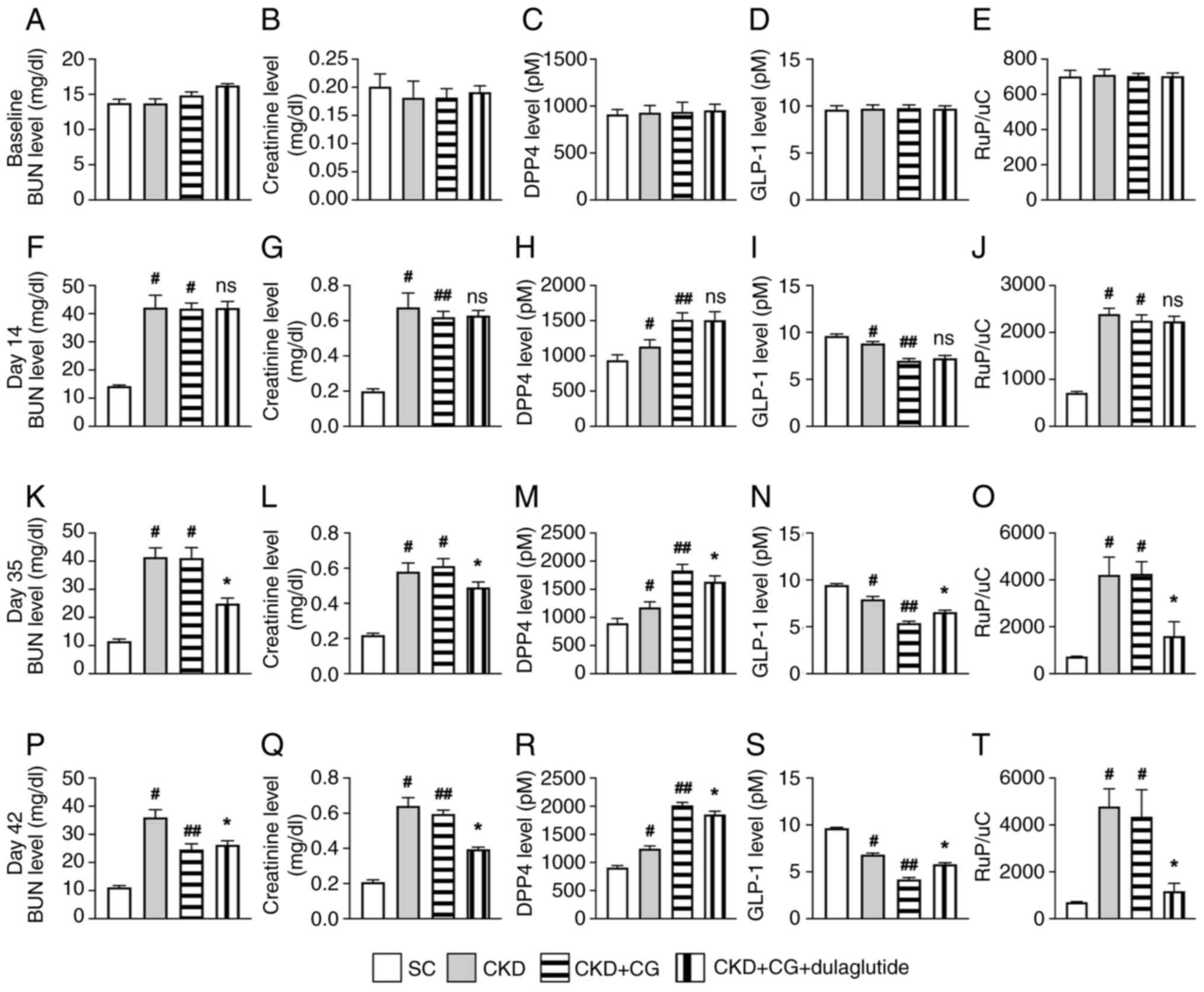
Figure 1

Serial changes of serum levels of
BUN, creatinine, DPP4 and GLP-1 and RUp/c. Circulating
levels of (A) BUN, (B) creatinine, (C) DPP4 and (D) GLP-1, and (E)
RUp/c at baseline. Circulating levels of (F) BUN, (G)
creatinine, (H) DPP4 and (I) GLP-1, and (J) RUp/c at day
14 after CKD induction. Circulating levels of (K) BUN, (L)
creatinine, (M) DPP4 and (N) GLP-1, and (O) RUp/c at day
35 after CKD induction. Circulating levels of (P) BUN, (Q)
creatinine, (R) DPP4 and (S) GLP-1, and (T) RUp/c at day
42 after CKD induction. All statistical analyses were performed by
one-way ANOVA, followed by Bonferroni's multiple comparisons post
hoc test (n=6/group). #P<0.05, ##P<0.01
vs. SC; *P<0.05 vs. CKD; ns, not significant. BUN,
blood urea nitrogen; CG, chlorhexidine gluconate; CKD, chronic
kidney disease; DPP4, dipeptidyl peptidase 4; GLP-1, glucagon-like
peptide 1; RuP/uC, ratio of urine protein/urine
creatinine; SC, sham control.

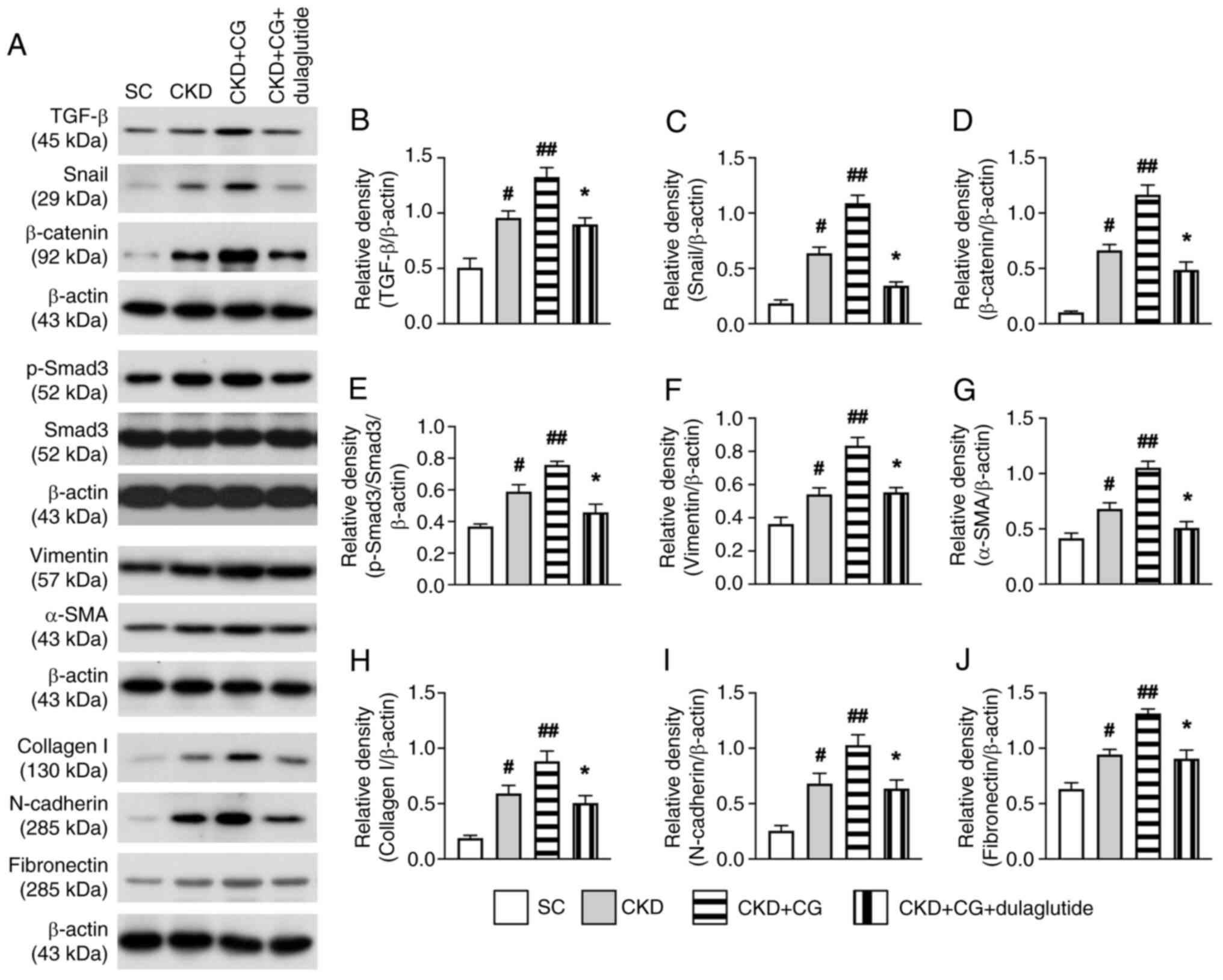
Figure 2

Protein expression levels of
epithelial-mesenchymal transistion biomarkers in the peritonium by
day 42 after CKD induction. (A) Protein expression levels were
detected by western blot analysis. Semi-quantification of (B)
TGF-β, (C) Snail, (D) β-catenin, (E) p-Smad3/Smad3, (F) vimentin,
(G) α-SMA, (H) collagen I, (I) N-cadherin and (J) fibronectin. All
statistical analyses were performed by one-way ANOVA, followed by
Bonferroni's multiple comparisons post hoc test (n=6/group).
#P<0.05, ##P<0.01 vs. SC;
*P<0.05 vs. CKD. α-SMA, α-smooth actin, CKD, chronic
kidney disease; CG, chlorhexidine gluconate; p-, phosphorylated;
SC, sham control.

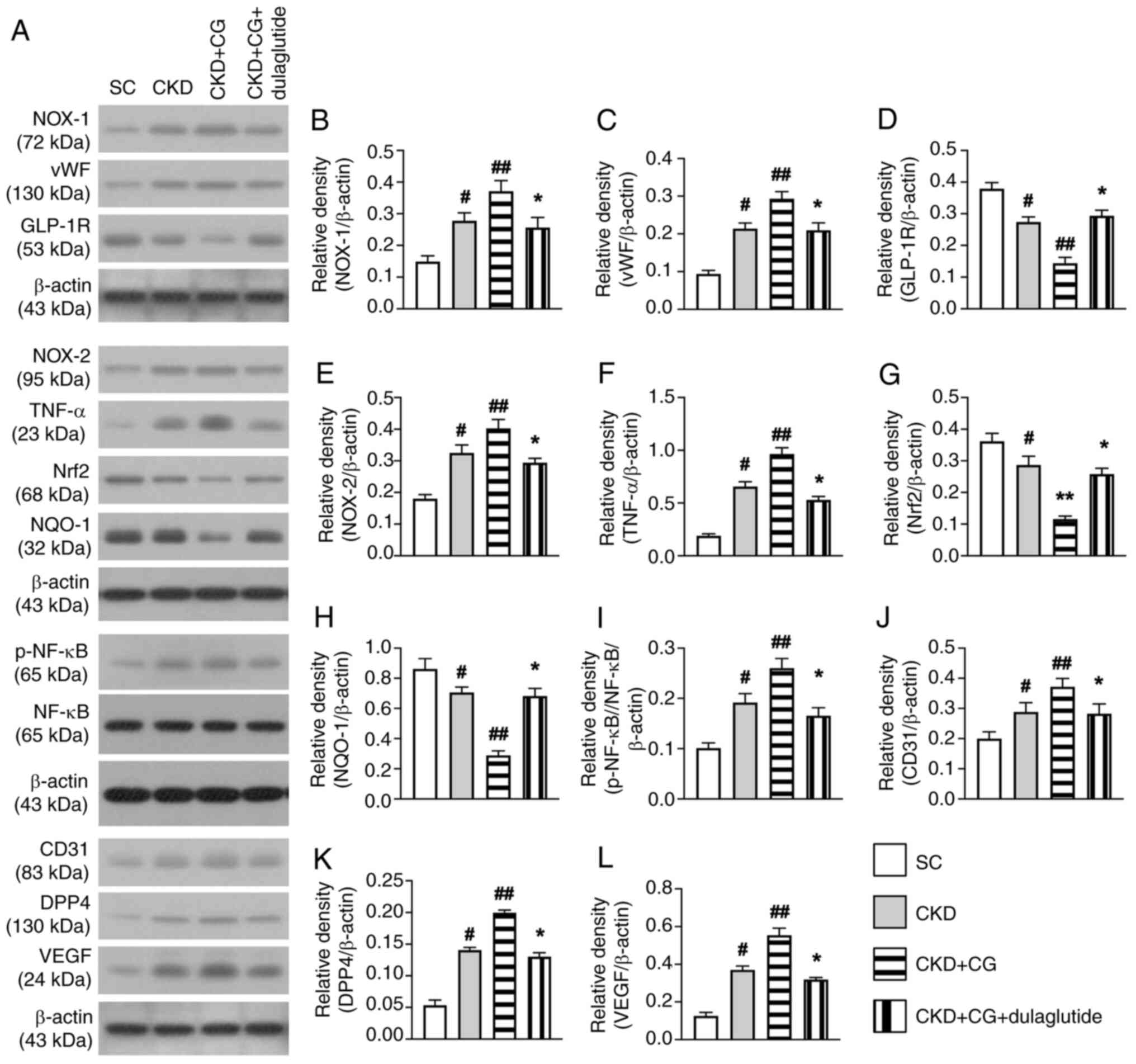
Figure 3

Protein expression levels of
biomarkers of oxidative stress, inflammation and angiogenesis, as
well as DPP4, GLP-1R and antioxidants in the peritonium by day 42
after CKD induction. (A) Protein expression levels were detected by
western blot analysis. Semi-quantification of (B) NOX-1, (C) vWF,
(D) GLP-1R, (E) NOX-2, (F) TNF-α, (G) Nrf2, (H) NQO-1, (I)
p-NF-κB/NF-κB, (J) CD31, (K) DPP4 and (L) VEGF. All statistical
analyses were performed by one-way ANOVA, followed by Bonferroni's
multiple comparisons post hoc test (n=6/group).
#P<0.05, ##P<0.01 vs. SC;
*P<0.05 vs. CKD. CG, chlorhexidine gluconate; CKD,
chronic kidney disease; DPP4, dipeptidyl peptidase 4; GLP-1R,
glucagon-like peptide 1 receptor; NQO-1, NAD(P)H-quinone
oxidoreduc-tase 1; Nrf2, nuclear factor erythroid 2-related factor
2; p-, phosphorylated; SC, sham control; vWF, von Willebrand
factor.

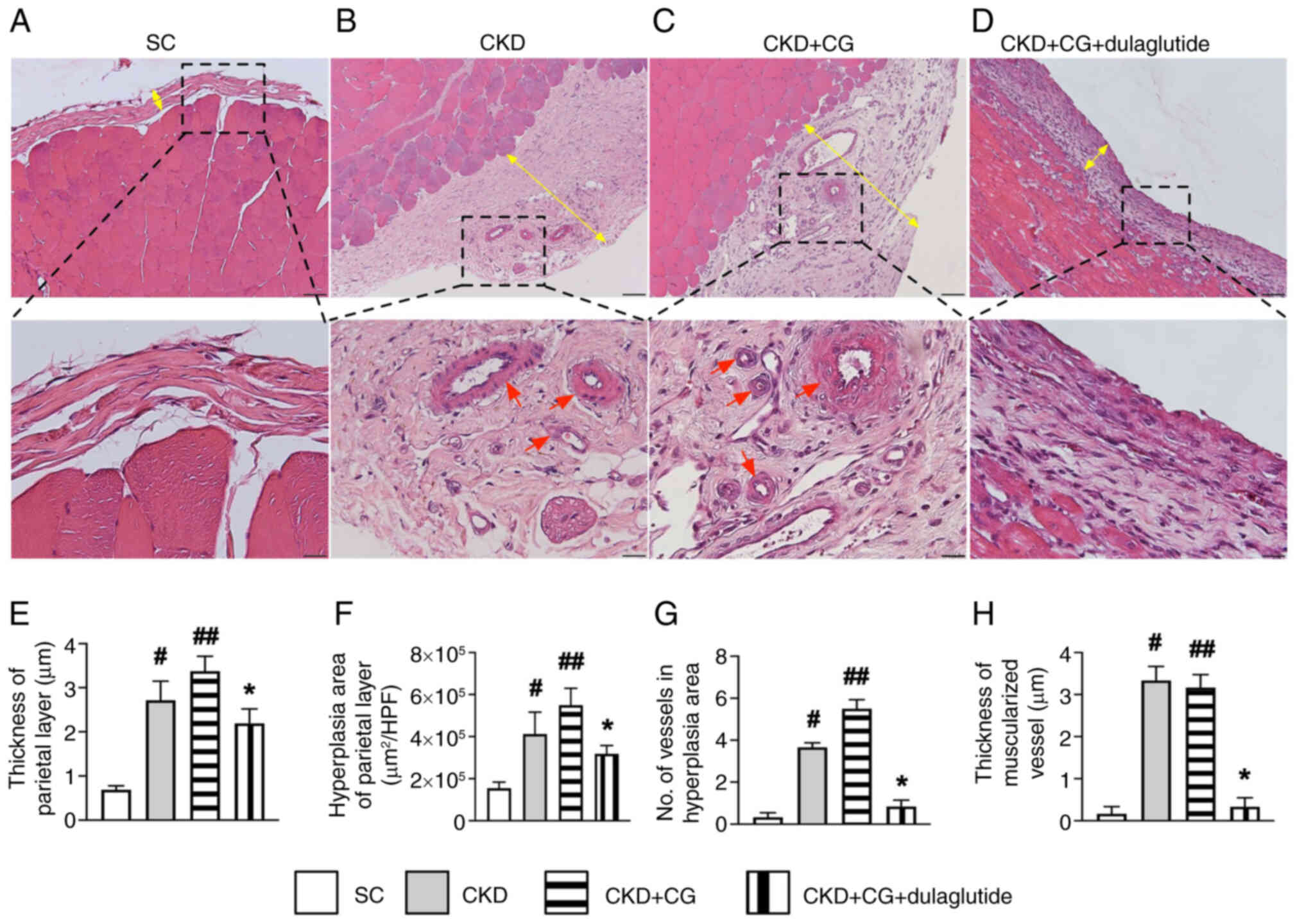
Figure 4

Histopathological findings in the rat
peritonium by day 42 after CKD induction. Light microsope findings
(magnification, ×400) of hematoxylin and eosin staining for the
detection of thickness and hyperplasia (double yellow arrows), as
well as the number of small vessels and muscularized vessels (red
arrows) in the intimmal layer of the peritoneum. Scale bar, 20
µm. Histological images of the (A) SC group, (B) CKD group,
(C) CKD + CG group and (D) CKD + CG + dulaglutide group. (E)
Thickness of the parietal layer of the peritoneum. (F) Hyperplasia
area of parietal layer of peritoneum. (G) Number of small vessels
(defined as ≤25 µm). (H) Thickness of muscularized vessels;
defined as vessels exhibiting medial layer hyperplasia resulting in
thickness being increased >50% of internal lumen diameter. All
statistical analyses were performed by one-way ANOVA, followed by
Bonferroni's multiple comparisons post hoc test (n=6/group).
#P<0.05, ##P<0.01 vs. SC;
*P<0.05 vs. CKD. CG, chlorhexidine gluconate; CKD,
chronic kidney disease; SC, sham control. Figure 4. Histopathological findings in
the rat peritonium by day 42 after CKD induction. Light microsope
findings (magnification, ×400) of hematoxylin and eosin staining
for the detection of thickness and hyperplasia (double yellow
arrows), as well as the number of small vessels and muscularized
vessels (red arrows) in the intimmal layer of the peritoneum. Scale
bar, 20 µm. Histological images of the (A) SC group, (B) CKD
group, (C) CKD + CG group and (D) CKD + CG + dulaglutide group. (E)
Thickness of the parietal layer of the peritoneum. (F) Hyperplasia
area of parietal layer of peritoneum. (G) Number of small vessels
(defined as ≤25 µm). (H) Thickness of muscularized vessels;
defined as vessels exhibiting medial layer hyperplasia resulting in
thickness being increased >50% of internal lumen diameter. All
statistical analyses were performed by one-way ANOVA, followed by
Bonferroni's multiple comparisons post hoc test (n=6/group).
#P<0.05, ##P<0.01 vs. SC;
*P<0.05 vs. CKD. CG, chlorhexidine gluconate; CKD,
chronic kidney disease; SC, sham control.

Figure 5

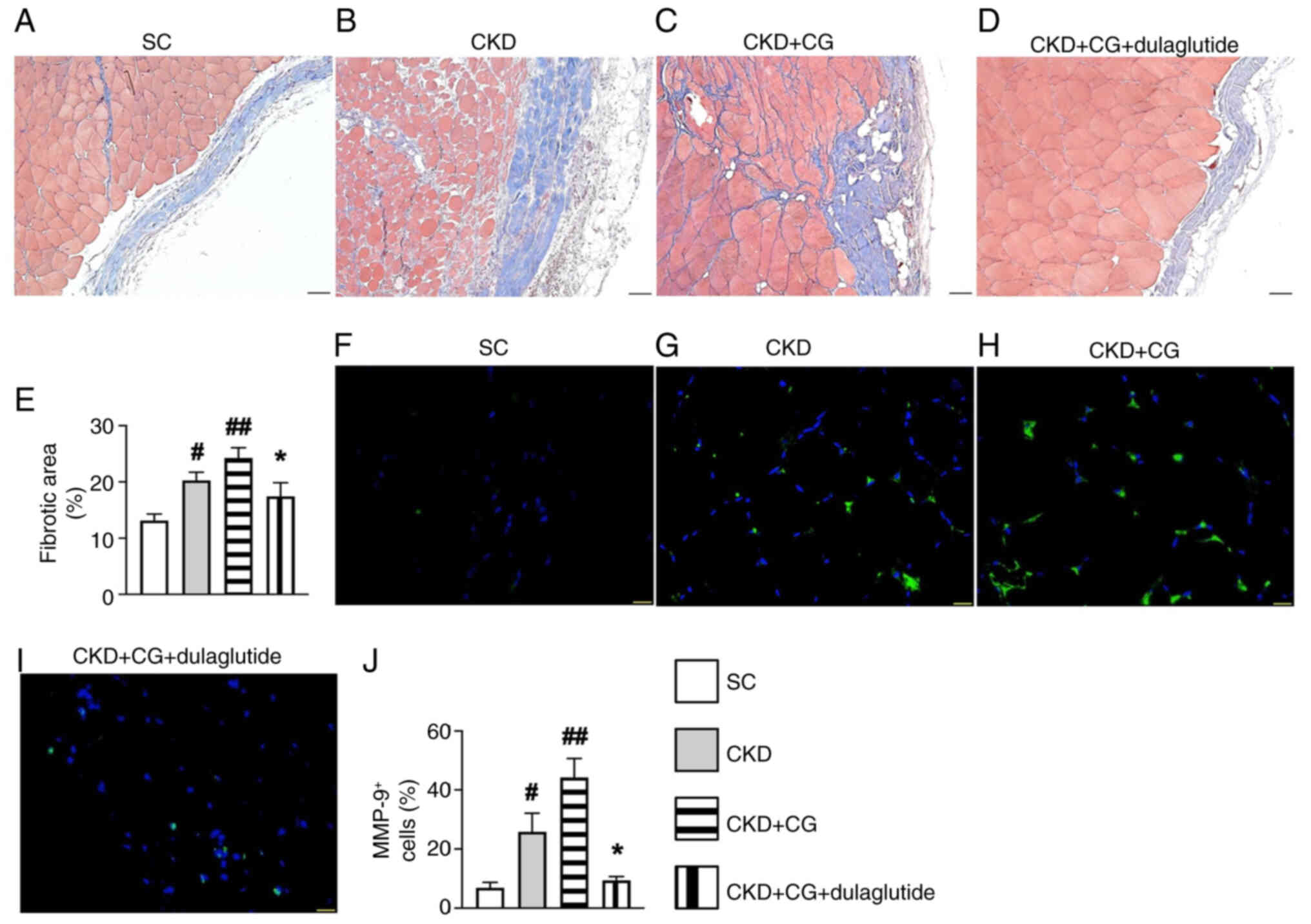
Fibrosis and inflamamotry cell
infiltration in the rat peritoneum by day 42 after CKD induction.
Microscopic findings (magnification, ×400) of Masson's trichrome
staining, which was used to identify the fibrotic area (blue), in
the (A) SC group, (B) CKD group, (C) CKD + CG group and (D) CKD +
CG + dulaglutide group. (E) Percentage of fibrotic area.
Microscopic findings (magnification, ×400) of immunohistochemistry,
which was performed to detect the expression levels of MMP-9
(green), in the (F) SC group, (G) CKD group, (H) CKD + CG group and
(I) CKD + CG + dulaglutide group. (J) Number of positively stained
MMP-9 cells. Scale bar, 20 µm. All statistical analyses were
performed by one-way ANOVA, followed by Bonferroni's multiple
comparisons post hoc test (n=6/group). #P<0.05,
##P<0.01 vs. SC; *P<0.05 vs. CKD. CG,
chlorhexidine gluconate; CKD, chronic kidney disease; SC, sham
control.

Figure 6

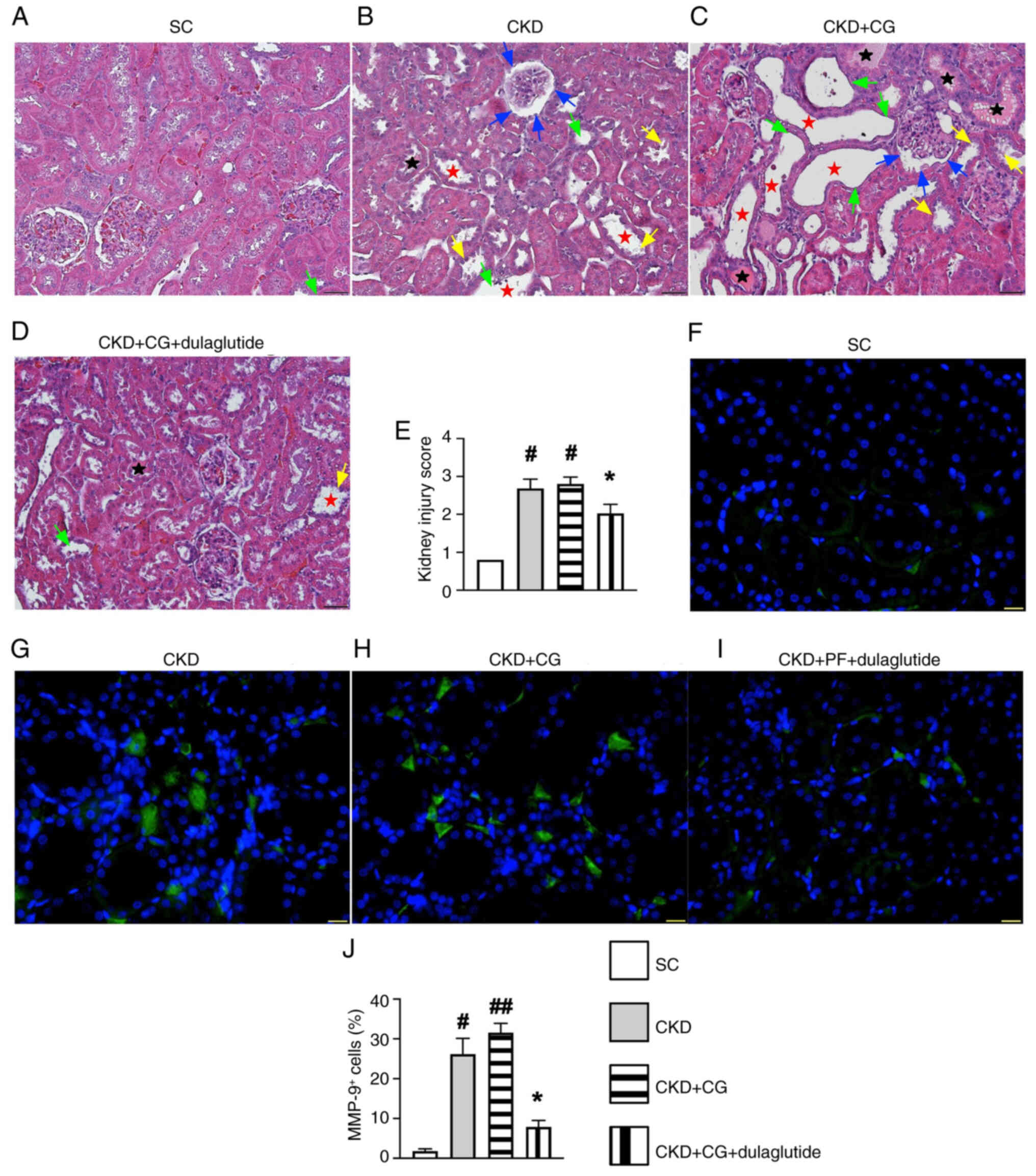
Quantitative evaluation of kidney
injury score and inflammatory cell infiltration in the kidney
parenchyma by day 42 after CKD induction. Microscopic examination
(magnification, ×200x; hematoxylin and eosin staining)
demonstrating an increased loss of brush border in renal tubules
(yellow arrows), tubular necrosis (green arrows), tubular
dilatation (red asterisk), protein cast formation (black asterisk)
and dilatation of Bowman's capsule (blue arrows) in the CKD group
than in the other groups. Scale bar, 50 µm. Images from the
(A) SC group, (B) CKD group, (C) CKD + CG group and (D) CKD + CG +
dulaglutide group. (E) Kidney injury scores. Microscopic findings
(magnification, ×400) of immunofluorescence staining, which was
performed to assess the cellualr expression of MMP-9 (green). Scale
bar, 20 µm. Images of the (F) SC group, (G) CKD group, (H)
CKD + CG group and (I) CKD + CG + dulaglutide group. (J) Number of
MMP-9+ cells. Statistical analyses were performed by (E)
Kruskal-Wallis's test and Dunn's post hoc test or (J) one-way
ANOVA, followed by Bonferroni's multiple comparisons post hoc test
(n=6/group). #P<0.05, ##P<0.01 vs. SC;
*P<0.05 vs. CKD. CG, chlorhexidine gluconate; CKD,
chronic kidney disease; PF, peritoneal fibrosis; SC, sham
control.

Figure 7

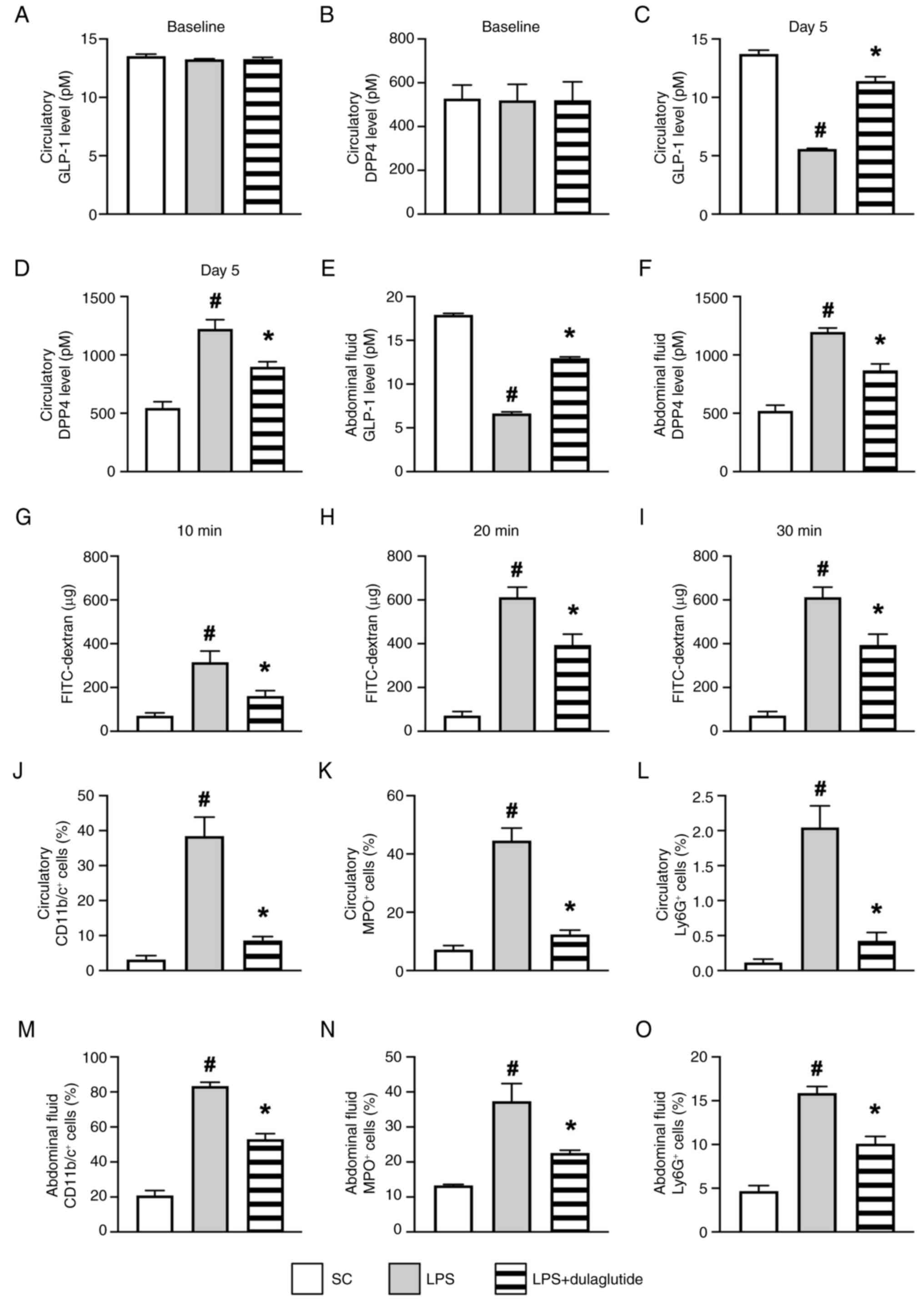
LPS induces peritoneal damaged by day
5 of treatment. Circulating levels of (A) GLP-1 and (B) DPP4 at
baseline. Circulating levels of (C) GLP-1 and (D) DPP4 at day 5.
Abdominal levels of (E) GLP-1 and (F) DPP4 at day 5. Circulating
levels of the indicator of peritoneal permeability FITC-dextran (G)
10, (H) 20 and (I) 30 min after LPS treatment. Flow cytometric
analysis of the number of (J) CD11b/c+, (K)
MPO+ anf (L) Ly6G+ cells in circulation. Flow
cytometric analysis of the number of (M) CD11b/c+, (N)
MPO+ cells and (O) Ly6G+ cells in the
abdominal fluid. All statistical analyses were performed by one-way
ANOVA, followed by Bonferroni's multiple comparisons post hoc test
(n=6/group). #P<0.05 vs. SC; *P<0.05
vs. LPS. DPP4, dipeptidyl peptidase 4; GLP-1, glucagon-like peptide
1; LPS, lipopolysaccharide; MPO, myeloperoxidase; SC, sham
control.

Figure 8

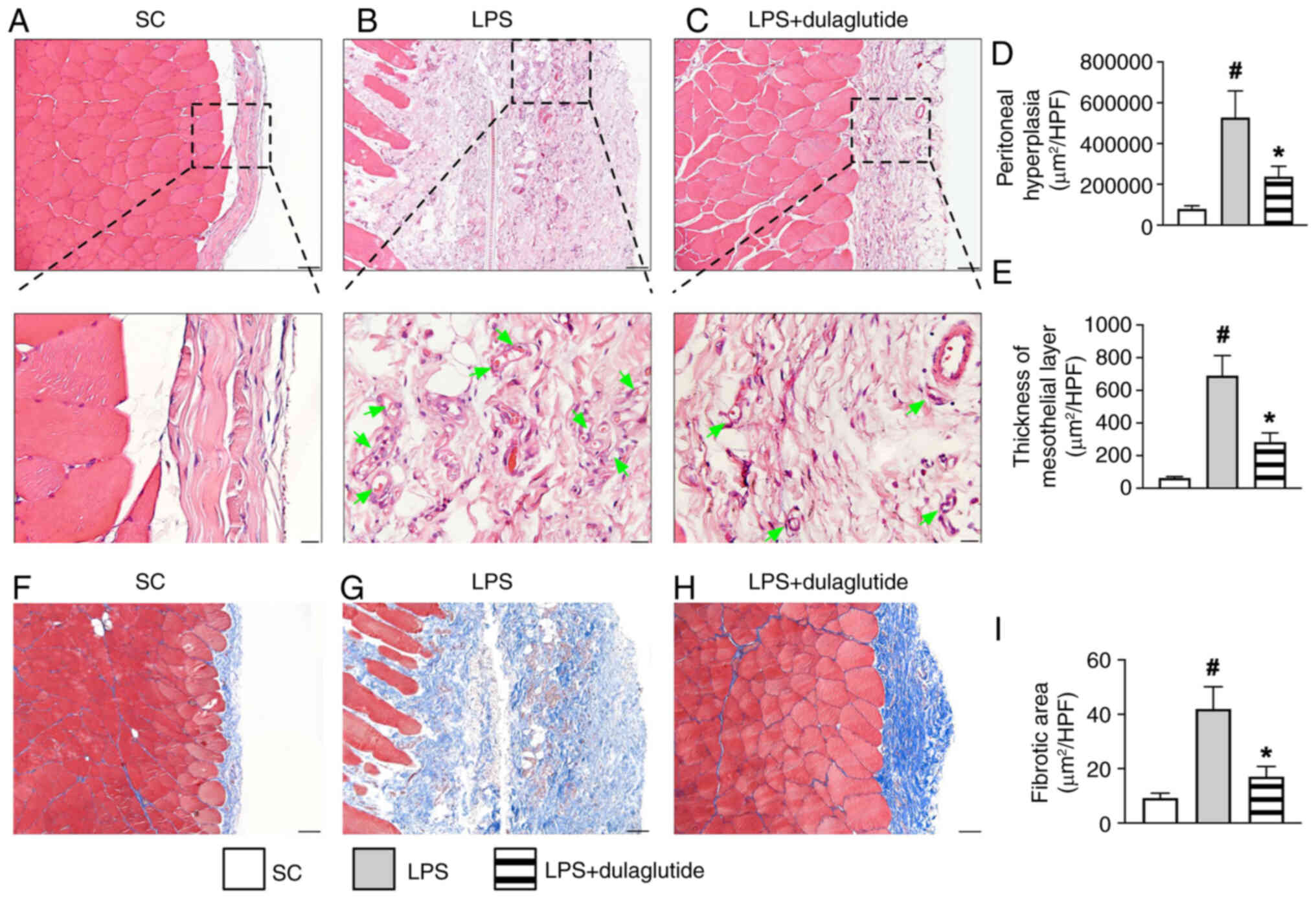
Identification of histopathological
changes in the mesothelial layer of the peritoneum by day 5 of LPS
treatment. Light microscopic examination (magnification, ×100) of
peritoneal hyperplasia and thickness (white) by hematoxylin and
eosin staining in the (A) SC group, (B) LPS group and (C) LPS +
dulaglutide group. Scale bars, 100 µm. Increased
magnification (magnification, ×400) of images in SC, LPS and LPS +
dulaglutide groups. Scale bars, 20 µm. Condensed collagen
fiber deposition (pink color) and neovascularization (green arrows)
were notably increased in LPS group and more substantially
increased in LPS + dulaglutide group than in SC group. (D) Levels
of peritoneal hyperplasia. (E) Thickness of the mesothelial layer
in the peritoneum. Microscopic findings (magnification, ×200) of
Masson's trichrome staining, which was used to identify peritoneal
fibrosis (blue color), in the (F) SC group, (G) LPS group and (H)
LPS + dulaglutide group. (I) Fibrotic area. All statistical
analyses were performed by one-way ANOVA, followed by Bonferroni's
multiple comparisons post hoc test (n=6/group).
#P<0.05 vs. SC; *P<0.05 vs. LPS. LPS,
lipopolysaccharide; SC, sham control.

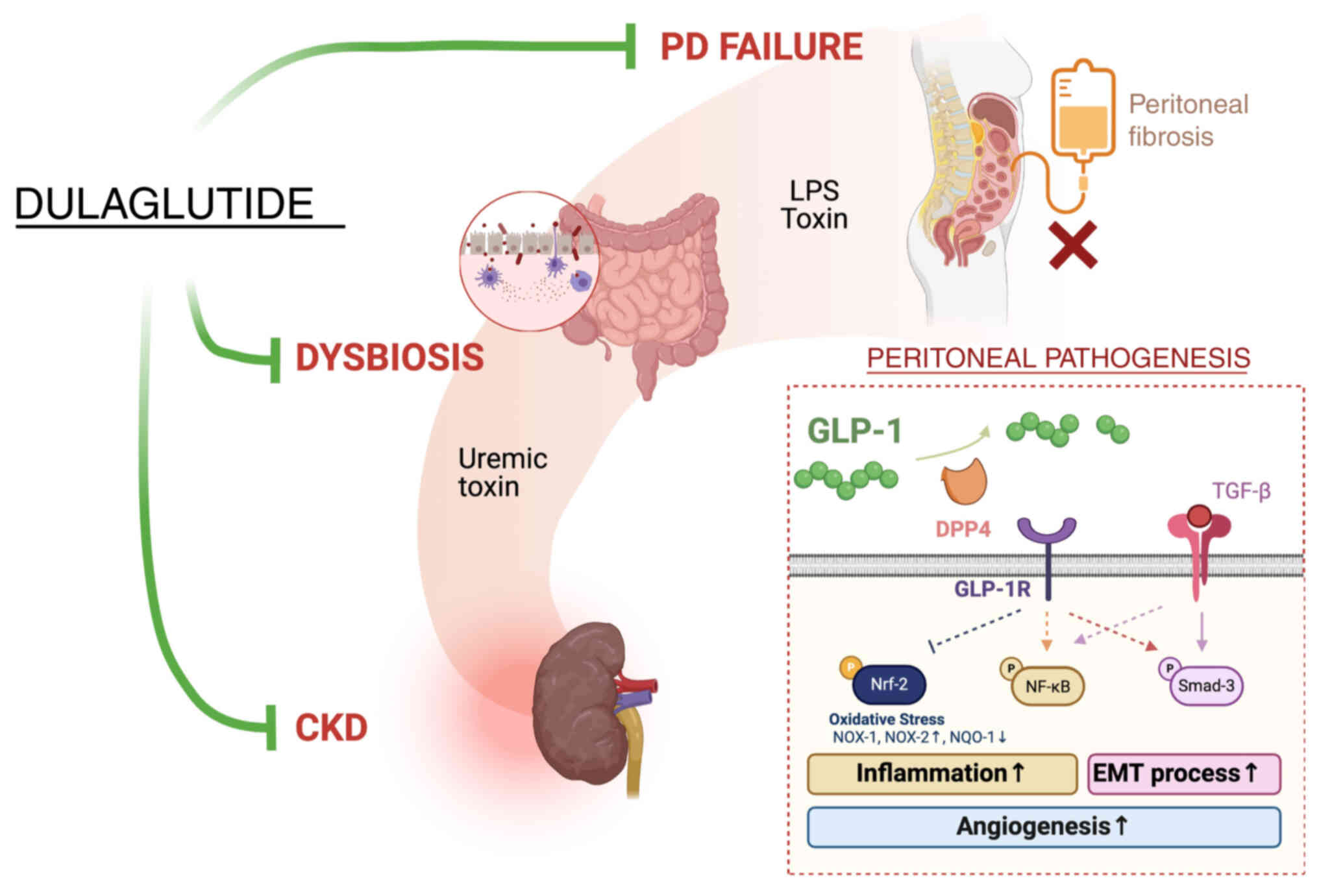
Figure 9

Schematic diagram of the proposed
underlying mechanims of dulaglutide treatment of peritoneal
fibrosis and PD failure. CKD, chronic kidney disease; DPP4,
dipeptidyl peptidase 4; EMT, epithelial-mesenchymal transion;
GLP-1, glucagon-like peptide 1; GLP-1R, GLP-1 receptor; LPS,
lipopolysac-charide; NQO-1, NAD(P)H-quinone oxidoreductase 1; Nrf2,
nuclear factor erythroid 2-related factor 2; PD, pertoneal
dialysis.
View References

1 

Saran R, Robinson B, Abbott KC, Bragg-Gresham J, Chen X, Gipson D, Gu H, Hirth RA, Hutton D, Jin Y, et al: US renal data system 2019 annual data report: Epidemiology of kidney disease in the United States. Am J Kidney Dis. 75(Suppl): A6–A7. 2020. View Article : Google Scholar

2 

McCullough KP, Morgenstern H, Saran R, Herman WH and Robinson BM: Projecting ESRD incidence and prevalence in the United States through 2030. J Am Soc Nephrol. 30:127–135. 2019. View Article : Google Scholar :

3 

Pozzoni P, Del Vecchio L, Pontoriero G, Di Filippo S and Locatelli F: Long-term outcome in hemodialysis: Morbidity and mortality. J Nephrol. 17:S87–S95. 2004.PubMed/NCBI

4 

Deb S, Wijeysundera HC, Ko DT, Tsubota H, Hill S and Fremes SE: Coronary artery bypass graft surgery vs percutaneous interventions in coronary revascularization: A systematic review. JAMA. 310:2086–2095. 2013. View Article : Google Scholar : PubMed/NCBI

5 

Hori D, Yamaguchi A and Adachi H: Coronary artery bypass surgery in end-stage renal disease patients. Ann Vasc Dis. 10:79–87. 2017. View Article : Google Scholar : PubMed/NCBI

6 

Pang PYK, Teow CKJ, Huang MJ, Naik MJ, Lim SL, Chao VTT, Tan TE, Chua YL and Sin YK: Long-term prognosis in patients with end-stage renal disease after coronary artery bypass grafting. J Thorac Dis. 12:6722–6730. 2020. View Article : Google Scholar : PubMed/NCBI

7 

Serafinceanu C, Neculaescu C, Cimponeriu D, Timar R and Covic AC: Impact of gender and dialysis modality on early mortality risk in diabetic ESRD patients: Data from a large single center cohort. Int Urol Nephrol. 46:607–614. 2014. View Article : Google Scholar

8 

Tsur N, Menashe I and Haviv YS: Risk factors before dialysis predominate as mortality predictors in diabetic maintenance dialysis patients. Sci Rep. 9:106332019. View Article : Google Scholar : PubMed/NCBI

9 

Schena FP: Epidemiology of end-stage renal disease: International comparisons of renal replacement therapy. Kidney Int. 57:S39–S45. 2000. View Article : Google Scholar

10 

Vaios V, Georgianos PI, Liakopoulos V and Agarwal R: Assessment and management of hypertension among patients on peritoneal dialysis. Clin J Am Soc Nephrol. 14:297–305. 2019. View Article : Google Scholar :

11 

McKane W, Chandna SM, Tattersall JE, Greenwood RN and Farrington K: Identical decline of residual renal function in high-flux biocompatible hemodialysis and CAPD. Kidney Int. 61:256–265. 2002. View Article : Google Scholar : PubMed/NCBI

12 

Coentrão L, Van Biesen W, Nistor I, Tordoir J, Gallieni M, Marti Monros A and Bolignano D: Preferred haemodialysis vascular access for diabetic chronic kidney disease patients: A systematic literature review. J Vasc Access. 16:259–264. 2015. View Article : Google Scholar : PubMed/NCBI

13 

Almasri J, Alsawas M, Mainou M, Mustafa RA, Wang Z, Woo K, Cull DL and Murad MH: Outcomes of vascular access for hemodialysis: A systematic review and meta-analysis. J Vasc Surg. 64:236–243. 2016. View Article : Google Scholar : PubMed/NCBI

14 

Arhuidese IJ, Orandi BJ, Nejim B and Malas M: Utilization, patency, and complications associated with vascular access for hemodialysis in the United States. J Vasc Surg. 68:1166–1174. 2018. View Article : Google Scholar : PubMed/NCBI

15 

Arhuidese IJ, Purohit A, Elemuo C, Parkerson GR, Shames ML and Malas MB: Outcomes of autogenous fistulas and prosthetic grafts for hemodialysis access in diabetic and nondiabetic patients. J Vasc Surg. 72:2088–2096. 2020. View Article : Google Scholar : PubMed/NCBI

16 

Li YC, Sung PH, Yang YH, Chiang JY, Yip HK and Yang CC: Dipeptidyl peptidase 4 promotes peritoneal fibrosis and its inhibitions prevent failure of peritoneal dialysis. Commun Biol. 4:1442021. View Article : Google Scholar : PubMed/NCBI

17 

Williams JD, Craig KJ, Topley N, Von Ruhland C, Fallon M, Newman GR, Mackenzie RK and Williams GT: Morphologic changes in the peritoneal membrane of patients with renal disease. J Am Soc Nephrol. 13:470–479. 2002. View Article : Google Scholar : PubMed/NCBI

18 

Williams JD, Craig KJ, von Ruhland C, Topley N and Williams GT; Biopsy Registry Study Group: The natural course of peritoneal membrane biology during peritoneal dialysis. Kidney Int. (Suppl): S43–S49. 2003. View Article : Google Scholar

19 

Mutsaers SE, Birnie K, Lansley S, Herrick SE, Lim CB and Prêle CM: Mesothelial cells in tissue repair and fibrosis. Front Pharmacol. 6:1132015. View Article : Google Scholar : PubMed/NCBI

20 

Di Paolo N and Sacchi G: Atlas of peritoneal histology. Perit Dial Int. 20:S5–S96. 2000.PubMed/NCBI

21 

Yung S and Chan TM: Pathophysiological changes to the peritoneal membrane during PD-related peritonitis: The role of mesothelial cells. Mediators Inflamm. 2012:4841672012. View Article : Google Scholar : PubMed/NCBI

22 

Terri M, Trionfetti F, Montaldo C, Cordani M, Tripodi M, Lopez-Cabrera M and Strippoli R: Mechanisms of peritoneal fibrosis: Focus on immune cells-peritoneal stroma interactions. Front Immunol. 12:6072042021. View Article : Google Scholar : PubMed/NCBI

23 

Stone RC, Pastar I, Ojeh N, Chen V, Liu S, Garzon KI and Tomic-Canic M: Epithelial-mesenchymal transition in tissue repair and fibrosis. Cell Tissue Res. 365:495–506. 2016. View Article : Google Scholar : PubMed/NCBI

24 

Li M, Luan F, Zhao Y, Hao H, Zhou Y, Han W and Fu X: Epithelial-mesenchymal transition: An emerging target in tissue fibrosis. Exp Biol Med (Maywood). 241:1–13. 2016. View Article : Google Scholar

25 

Milan Manani S, Virzi GM, Giuliani A, Baretta M, Corradi V, De Cal M, Biasi C, Crepaldi C and Ronco C: Lipopolysaccharide evaluation in peritoneal dialysis patients with peritonitis. Blood Purif. 49:434–439. 2020. View Article : Google Scholar : PubMed/NCBI

26 

Knapp S, de Vos AF, Florquin S, Golenbock DT and van der Poll T: Lipopolysaccharide binding protein is an essential component of the innate immune response to escherichia coli peritonitis in mice. Infect Immun. 71:6747–6753. 2003. View Article : Google Scholar : PubMed/NCBI

27 

Shen WR, Kimura K, Ishida M, Sugisawa H, Kishikawa A, Shima K, Ogawa S, Qi J and Kitaura H: The glucagon-like peptide-1 receptor agonist exendin-4 inhibits lipopolysaccharide-induced osteoclast formation and bone resorption via inhibition of TNF-α expression in macrophages. J Immunol Res. 2018:57836392018. View Article : Google Scholar

28 

Mehdi SF, Pusapati S, Anwar MS, Lohana D, Kumar P, Nandula SA, Nawaz FK, Tracey K, Yang H, LeRoith D, et al: Glucagon-like peptide-1: A multi-faceted anti-inflammatory agent. Front Immunol. 14:11482092023. View Article : Google Scholar : PubMed/NCBI

29 

Zheng Z, Zong Y, Ma Y, Tian Y, Pang Y, Zhang C and Gao J: Glucagon-like peptide-1 receptor: Mechanisms and advances in therapy. Signal Transduct Target Ther. 9:2342024. View Article : Google Scholar : PubMed/NCBI

30 

Chen YT, Tsai TH, Yang CC, Sun CK, Chang LT, Chen HH, Chang CL, Sung PH, Zhen YY, Leu S, et al: Exendin-4 and sitagliptin protect kidney from ischemia-reperfusion injury through suppressing oxidative stress and inflammatory reaction. J Transl Med. 11:2702013. View Article : Google Scholar : PubMed/NCBI

31 

Yip HK, Yang CC, Chen KH, Huang TH, Chen YL, Zhen YY, Sung PH, Chiang HJ, Sheu JJ, Chang CL, et al: Combined melatonin and exendin-4 therapy preserves renal ultrastructural integrity after ischemia-reperfusion injury in the male rat. J Pineal Res. 59:434–447. 2015. View Article : Google Scholar : PubMed/NCBI

32 

Chang YC, Hsu SY, Yang CC, Sung PH, Chen YL, Huang TH, Kao GS, Chen SY, Chen KH, Chiang HJ, et al: Enhanced protection against renal ischemia-reperfusion injury with combined melatonin and exendin-4 in a rodent model. Exp Biol Med (Maywood). 241:1588–1602. 2016. View Article : Google Scholar : PubMed/NCBI

33 

Zhen YY, Yang CC, Hung CC, Lee CC, Lee CC, Wu CH, Chen YT, Chen WY, Chen KH, Yip HK and Ko SF: Extendin-4 protects kidney from acute ischemia-reperfusion injury through upregulation of NRF2 signaling. Am J Transl Res. 9:4756–4771. 2017.PubMed/NCBI

34 

Sung PH, Chiang HJ, Wallace CG, Yang CC, Chen YT, Chen KH, Chen CH, Shao PL, Chen YL, Chua S, et al: Exendin-4-assisted adipose derived mesenchymal stem cell therapy protects renal function against co-existing acute kidney ischemia-reperfusion injury and severe sepsis syndrome in rat. Am J Transl Res. 9:3167–3183. 2017.PubMed/NCBI

35 

Yang CC, Chen YT, Wallace CG, Chen KH, Cheng BC, Sung PH, Li YC, Ko SF, Chang HW and Yip HK: Early administration of empagliflozin preserved heart function in cardiorenal syndrome in rat. Biomed Pharmacother. 109:658–670. 2019. View Article : Google Scholar

36 

Yin TC, Sung PH, Chen KH, Li YC, Luo CW, Huang CR, Sheu JJ, Chiang JY, Lee MS and Yip HK: Extracorporeal shock wave-assisted adipose-derived fresh stromal vascular fraction restores the blood flow of critical limb ischemia in rat. Vascul Pharmacol. 113:57–69. 2019. View Article : Google Scholar : PubMed/NCBI

37 

National Research Council (US) Committee for the Update of the Guide for the Care and Use of Laboratory Animals: Guide for the care and use of laboratory animals: Eighth edition. The National Academies Press; Washington, DC: 2011

38 

Huang TH, Chen YT, Sung PH, Chiang HJ, Chen YL, Chai HT, Chung SY, Tsai TH, Yang CC, Chen CH, et al: Peripheral blood-derived endothelial progenitor cell therapy prevented deterioration of chronic kidney disease in rats. Am J Transl Res. 7:804–824. 2015.PubMed/NCBI

39 

Chang CL, Sung PH, Sun CK, Chen CH, Chiang HJ, Huang TH, Chen YL, Zhen YY, Chai HT, Chung SY, et al: Protective effect of melatonin-supported adipose-derived mesenchymal stem cells against small bowel ischemia-reperfusion injury in rat. J Pineal Res. 59:206–220. 2015. View Article : Google Scholar : PubMed/NCBI

40 

Yue Y, Yeh JN, Chiang JY, Sung PH, Chen YL, Liu F and Yip HK: Intrarenal arterial administration of human umbilical cord-derived mesenchymal stem cells effectively preserved the residual renal function of diabetic kidney disease in rat. Stem Cell Res Ther. 13:1862022. View Article : Google Scholar : PubMed/NCBI

41 

Lin KC, Yeh JN, Shao PL, Chiang JY, Sung PH, Huang CR, Chen YL, Yip HK and Guo J: Jagged/Notch proteins promote endothelial-mesenchymal transition-mediated pulmonary arterial hypertension via upregulation of the expression of GATAs. J Cell Mol Med. 27:1110–1130. 2023. View Article : Google Scholar : PubMed/NCBI

42 

Sung PH, Cheng BC, Hsu TW, Chiang JY, Chiang HJ, Chen YL, Yang CC and Yip HK: Oxidized-LDL deteriorated the renal residual function and parenchyma in CKD rat through upregulating epithelial mesenchymal transition and extracellular matrix-mediated tubulointerstitial fibrosis-pharmacomodulation of rosuvastatin. Antioxidants (Basel). 11:24652022. View Article : Google Scholar : PubMed/NCBI

43 

Sung PH, Sun CK, Ko SF, Chang LT, Sheu JJ, Lee FY, Wu CJ, Chua S and Yip HK: Impact of hyperglycemic control on left ventricular myocardium. A molecular and cellular basic study in a diabetic rat model. Int Heart J. 50:191–206. 2009. View Article : Google Scholar : PubMed/NCBI

44 

Sheu JJ, Yang CC, Wallace CG, Chen KH, Shao PL, Sung PH, Li YC, Chu YC, Guo J and Yip HK: Uremic toxic substances are essential elements for enhancing carotid artery stenosis after balloon-induced endothelial denudation: Worsening role of the adventitial layer. Am J Transl Res. 12:7144–7159. 2020.PubMed/NCBI

45 

Yip HK, Lee MS, Li YC, Shao PL, Chiang JY, Sung PH, Yang CH and Chen KH: Dipeptidyl peptidase-4 deficiency effectively protects the brain and neurological function in rodent after acute hemorrhagic stroke. Int J Biol Sci. 16:3116–3132. 2020. View Article : Google Scholar : PubMed/NCBI

46 

Ko SF, Chen KH, Wallace CG, Yang CC, Sung PH, Shao PL, Li YC, Chen YT and Yip HK: Protective effect of combined therapy with hyperbaric oxygen and autologous adipose-derived mesenchymal stem cells on renal function in rodent after acute ischemia-reperfusion injury. Am J Transl Res. 12:3272–3287. 2020.PubMed/NCBI

47 

Vanholder R, Pletinck A, Schepers E and Glorieux G: Biochemical and clinical impact of organic uremic retention solutes: A comprehensive update. Toxins (Basel). 10:332018. View Article : Google Scholar : PubMed/NCBI

48 

Chen YT, Wallace CG, Yang CC, Chen CH, Chen KH, Sung PH, Chen YL, Chai HT, Chung SY, Chua S, et al: DPP-4 enzyme deficiency protects kidney from acute ischemia-reperfusion injury: Role for remote intermittent bowel ischemia-reperfusion preconditioning. Oncotarget. 8:54821–54837. 2017. View Article : Google Scholar : PubMed/NCBI

49 

Chang MW, Chen CH, Chen YC, Wu YC, Zhen YY, Leu S, Tsai TH, Ko SF, Sung PH, Yang CC, et al: Sitagliptin protects rat kidneys from acute ischemia-reperfusion injury via upregulation of GLP-1 and GLP-1 receptors. Acta Pharmacol Sin. 36:119–130. 2015. View Article : Google Scholar :

Related Articles

  • Abstract
  • View
  • Download
  • Twitter
Copy and paste a formatted citation
Spandidos Publications style
Yang C, Yue Y, Wang Y, Chiang JY, Cheng B, Hsu T, Chen Y, Li Y and Yip H: Dulaglutide markedly prevents peritoneal fibrosis in a rodent model of chronic kidney disease: Insights into the pathogenesis. Int J Mol Med 56: 151, 2025.
APA
Yang, C., Yue, Y., Wang, Y., Chiang, J.Y., Cheng, B., Hsu, T. ... Yip, H. (2025). Dulaglutide markedly prevents peritoneal fibrosis in a rodent model of chronic kidney disease: Insights into the pathogenesis. International Journal of Molecular Medicine, 56, 151. https://doi.org/10.3892/ijmm.2025.5592
MLA
Yang, C., Yue, Y., Wang, Y., Chiang, J. Y., Cheng, B., Hsu, T., Chen, Y., Li, Y., Yip, H."Dulaglutide markedly prevents peritoneal fibrosis in a rodent model of chronic kidney disease: Insights into the pathogenesis". International Journal of Molecular Medicine 56.4 (2025): 151.
Chicago
Yang, C., Yue, Y., Wang, Y., Chiang, J. Y., Cheng, B., Hsu, T., Chen, Y., Li, Y., Yip, H."Dulaglutide markedly prevents peritoneal fibrosis in a rodent model of chronic kidney disease: Insights into the pathogenesis". International Journal of Molecular Medicine 56, no. 4 (2025): 151. https://doi.org/10.3892/ijmm.2025.5592
Copy and paste a formatted citation
x
Spandidos Publications style
Yang C, Yue Y, Wang Y, Chiang JY, Cheng B, Hsu T, Chen Y, Li Y and Yip H: Dulaglutide markedly prevents peritoneal fibrosis in a rodent model of chronic kidney disease: Insights into the pathogenesis. Int J Mol Med 56: 151, 2025.
APA
Yang, C., Yue, Y., Wang, Y., Chiang, J.Y., Cheng, B., Hsu, T. ... Yip, H. (2025). Dulaglutide markedly prevents peritoneal fibrosis in a rodent model of chronic kidney disease: Insights into the pathogenesis. International Journal of Molecular Medicine, 56, 151. https://doi.org/10.3892/ijmm.2025.5592
MLA
Yang, C., Yue, Y., Wang, Y., Chiang, J. Y., Cheng, B., Hsu, T., Chen, Y., Li, Y., Yip, H."Dulaglutide markedly prevents peritoneal fibrosis in a rodent model of chronic kidney disease: Insights into the pathogenesis". International Journal of Molecular Medicine 56.4 (2025): 151.
Chicago
Yang, C., Yue, Y., Wang, Y., Chiang, J. Y., Cheng, B., Hsu, T., Chen, Y., Li, Y., Yip, H."Dulaglutide markedly prevents peritoneal fibrosis in a rodent model of chronic kidney disease: Insights into the pathogenesis". International Journal of Molecular Medicine 56, no. 4 (2025): 151. https://doi.org/10.3892/ijmm.2025.5592
Follow us
  • Twitter
  • LinkedIn
  • Facebook
About
  • Spandidos Publications
  • Careers
  • Cookie Policy
  • Privacy Policy
How can we help?
  • Help
  • Live Chat
  • Contact
  • Email to our Support Team