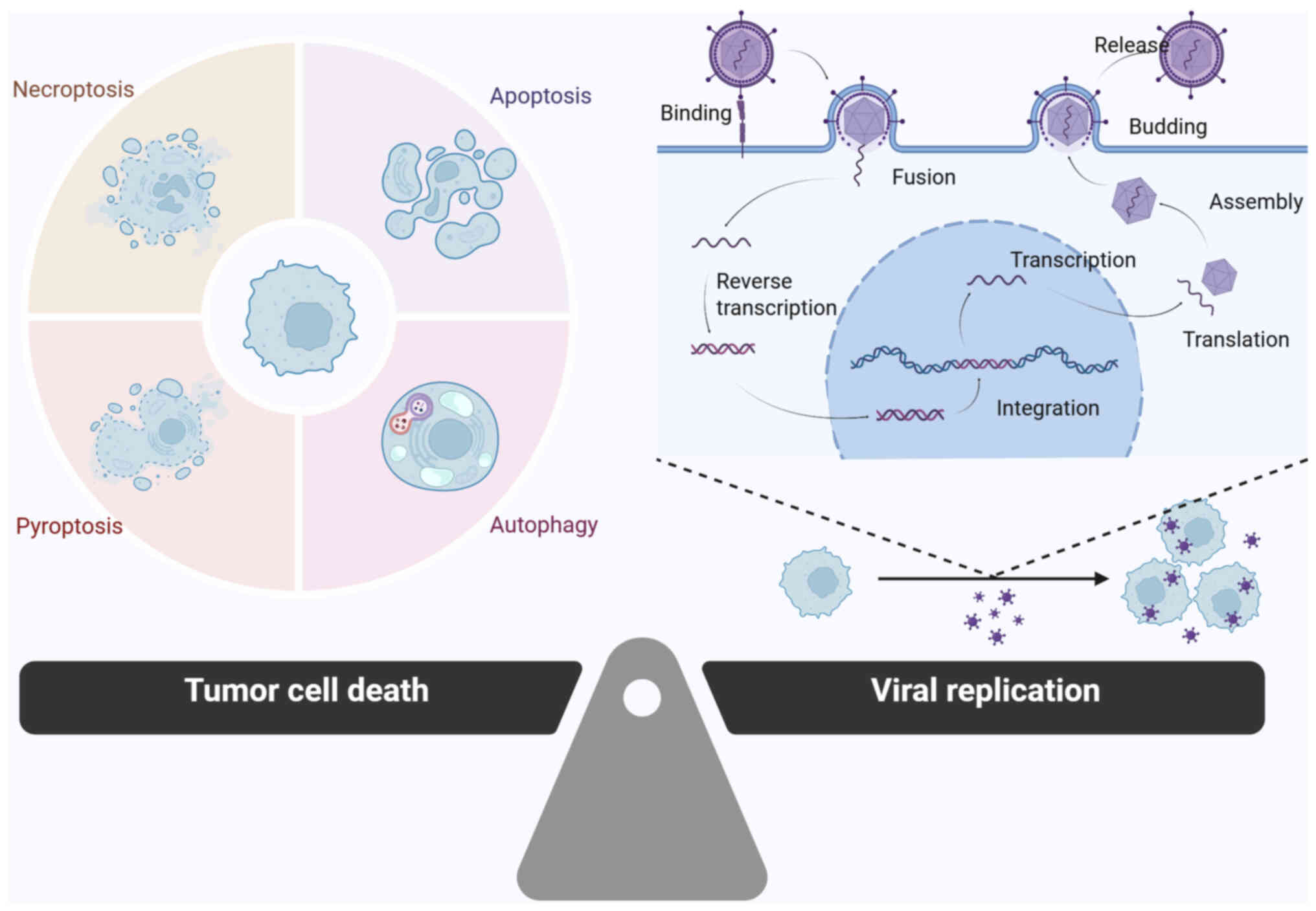
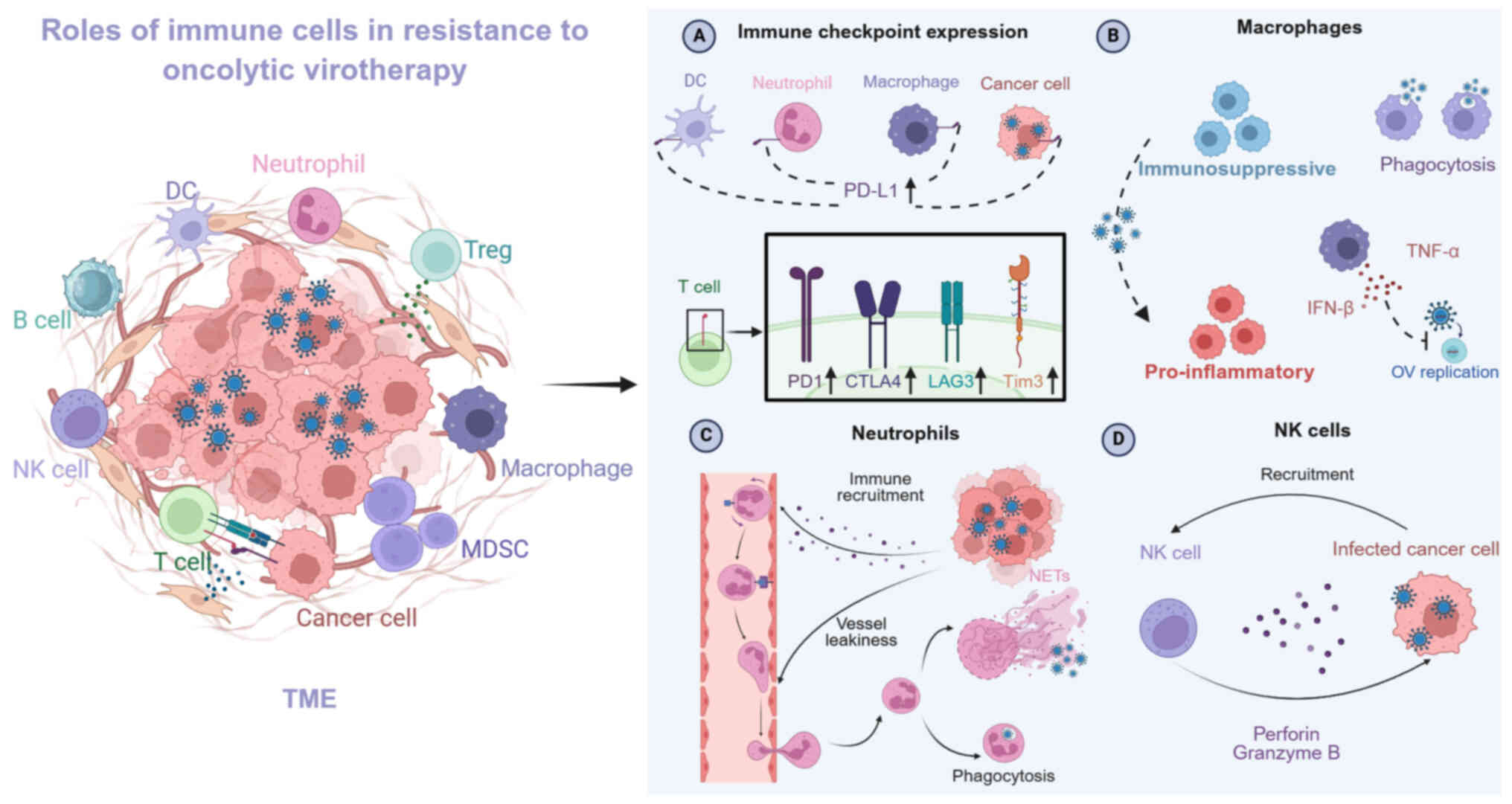
|
1
|
Siegel RL, Kratzer TB, Giaquinto AN, Sung
H and Jemal A: Cancer statistics, 2025. CA Cancer J Clin. 75:10–45.
2025.PubMed/NCBI
|
|
2
|
Pol J, Buqué A, Aranda F, Bloy N, Cremer
I, Eggermont A, Erbs P, Fucikova J, Galon J, Limacher JM, et al:
Trial watch-oncolytic viruses and cancer therapy. Oncoimmunology.
5:e11177402016. View Article : Google Scholar : PubMed/NCBI
|
|
3
|
Dagogo-Jack I and Shaw AT: Tumour
heterogeneity and resistance to cancer therapies. Nat Rev Clin
Oncol. 15:81–94. 2018. View Article : Google Scholar
|
|
4
|
Ma R, Li Z, Chiocca EA, Caligiuri MA and
Yu J: The emerging field of oncolytic virus-based cancer
immunotherapy. Trends Cancer. 9:122–139. 2023. View Article : Google Scholar :
|
|
5
|
Nandi SS, Gohil T, Sawant SA, Lambe UP,
Ghosh S and Jana S: CD155: A key receptor playing diversified
roles. Curr Mol Med. 22:594–607. 2022. View Article : Google Scholar
|
|
6
|
Kučan Brlić P, Lenac Roviš T, Cinamon G,
Tsukerman P, Mandelboim O and Jonjić S: Targeting PVR (CD155) and
its receptors in anti-tumor therapy. Cell Mol Immunol. 16:40–52.
2019. View Article : Google Scholar
|
|
7
|
Yang M, Yang CS, Guo W, Tang J, Huang Q,
Feng S, Jiang A, Xu X, Jiang G and Liu YQ: A novel fiber chimeric
conditionally replicative adenovirus-Ad5/F35 for tumor therapy.
Cancer Biol Ther. 18:833–840. 2017. View Article : Google Scholar : PubMed/NCBI
|
|
8
|
Phung AT, Shah JR, Dong T, Reid T, Larson
C, Sanchez AB, Oronsky B, Trogler WC, Kummel AC, Aisagbonhi O and
Blair SL: CAR expression in invasive breast carcinoma and its
effect on adenovirus transduction efficiency. Breast Cancer Res.
26:1312024. View Article : Google Scholar : PubMed/NCBI
|
|
9
|
Scheicher NV, Berchtold S, Beil J, Smirnow
I, Schenk A and Lauer UM: In vitro sensitivity of neuroendocrine
neoplasms to an armed oncolytic measles vaccine virus. Cancers
(Basel). 16:4882024. View Article : Google Scholar : PubMed/NCBI
|
|
10
|
Cao W, Tian J, Li C, Gao Y, Liu X, Lu J,
Wang Y, Wang Z, Svatek RS and Rodriguez R: A novel bladder
cancer-specific oncolytic adenovirus by CD46 and its effect
combined with cisplatin against cancer cells of CAR negative
expression. Virol J. 14:1492017. View Article : Google Scholar
|
|
11
|
Lipatova AV, Le TH, Sosnovtseva AO,
Babaeva FE, Kochetkov DV and Chumakov PM: Relationship between cell
receptors and tumor cell sensitivity to oncolytic enteroviruses.
Bull Exp Biol Med. 166:58–62. 2018. View Article : Google Scholar : PubMed/NCBI
|
|
12
|
Schäfer TE, Knol LI, Haas FV, Hartley A,
Pernickel SCS, Jády A, Finkbeiner MSC, Achberger J, Arelaki S,
Modic Ž, et al: Biomarker screen for efficacy of oncolytic
virotherapy in patient-derived pancreatic cancer cultures.
EBioMedicine. 105:1052192024. View Article : Google Scholar : PubMed/NCBI
|
|
13
|
Felt SA, Droby GN and Grdzelishvili VZ:
Ruxolitinib and polycation combination treatment overcomes multiple
mechanisms of resistance of pancreatic cancer cells to oncolytic
vesicular stomatitis virus. J Virol. 91:e00461–17. 2017. View Article : Google Scholar : PubMed/NCBI
|
|
14
|
Yaiw KC, Miest TS, Frenzke M, Timm M,
Johnston PB and Cattaneo R: CD20-targeted measles virus shows high
oncolytic specificity in clinical samples from lymphoma patients
independent of prior rituximab therapy. Gene Ther. 18:313–317.
2011. View Article : Google Scholar
|
|
15
|
Ingusci S, Hall BL, Cohen JB and Glorioso
JC: Oncolytic herpes simplex viruses designed for targeted
treatment of EGFR-bearing tumors. Mol Ther Oncol. 32:2007612024.
View Article : Google Scholar : PubMed/NCBI
|
|
16
|
Leoni V, Vannini A, Gatta V, Rambaldi J,
Sanapo M, Barboni C, Zaghini A, Nanni P, Lollini PL, Casiraghi C
and Campadelli-Fiume G: A fully-virulent retargeted oncolytic HSV
armed with IL-12 elicits local immunity and vaccine therapy towards
distant tumors. PLoS Pathog. 14:e10072092018. View Article : Google Scholar : PubMed/NCBI
|
|
17
|
Shiao SL, Gouin KH III, Ing N, Ho A, Basho
R, Shah A, Mebane RH, Zitser D, Martinez A, Mevises NY, et al:
Single-cell and spatial profiling identify three response
trajectories to pembrolizumab and radiation therapy in triple
negative breast cancer. Cancer Cell. 42:70–84.e8. 2024. View Article : Google Scholar : PubMed/NCBI
|
|
18
|
MacLeod DT, Nakatsuji T, Yamasaki K,
Kobzik L and Gallo RL: HSV-1 exploits the innate immune scavenger
receptor MARCO to enhance epithelial adsorption and infection. Nat
Commun. 4:19632013. View Article : Google Scholar : PubMed/NCBI
|
|
19
|
MacLeod DT, Nakatsuji T, Wang Z, di Nardo
A and Gallo RL: Vaccinia virus binds to the scavenger receptor
MARCO on the surface of keratinocytes. J Invest Dermatol.
135:142–150. 2015. View Article : Google Scholar
|
|
20
|
Stichling N, Suomalainen M, Flatt JW,
Schmid M, Pacesa M, Hemmi S, Jungraithmayr W, Maler MD, Freudenberg
MA, Plückthun A, et al: Lung macrophage scavenger receptor SR-A6
(MARCO) is an adenovirus type-specific virus entry receptor. PLoS
Pathog. 14:e10069142018. View Article : Google Scholar : PubMed/NCBI
|
|
21
|
Ghosh S, Gregory D, Smith A and Kobzik L:
MARCO regulates early inflammatory responses against influenza: A
useful macrophage function with adverse outcome. Am J Respir Cell
Mol Biol. 45:1036–1044. 2011. View Article : Google Scholar : PubMed/NCBI
|
|
22
|
Carpentier KS, Sheridan RM, Lucas CJ,
Davenport BJ, Li FS, Lucas ED, McCarthy MK, Reynoso GV, May NA,
Tamburini BAJ, et al: MARCO(+) lymphatic endothelial cells
sequester arthritogenic alphaviruses to limit viremia and viral
dissemination. EMBO J. 40:e1089662021. View Article : Google Scholar : PubMed/NCBI
|
|
23
|
High M, Cho HY, Marzec J, Wiltshire T,
Verhein KC, Caballero MT, Caballero MT, Acosta PL, Ciencewicki J,
McCaw ZR, et al: Determinants of host susceptibility to murine
respiratory syncytial virus (RSV) disease identify a role for the
innate immunity scavenger receptor MARCO gene in human infants.
EBioMedicine. 11:73–84. 2016. View Article : Google Scholar : PubMed/NCBI
|
|
24
|
Ayala-Breton C, Barber GN, Russell SJ and
Peng KW: Retargeting vesicular stomatitis virus using measles virus
envelope glycoproteins. Hum Gene Ther. 23:484–491. 2012. View Article : Google Scholar :
|
|
25
|
Dan J, Cai J, Zhong Y, Wang C, Huang S,
Zeng Y, Fan Z, Xu C, Hu L, Zhang J, et al: Oncolytic virus M1
functions as a bifunctional checkpoint inhibitor to enhance the
antitumor activity of DC vaccine. Cell Rep Med. 4:1012292023.
View Article : Google Scholar : PubMed/NCBI
|
|
26
|
Dong B, Tang N, Guan Y, Qu G, Miao L, Han
W and Shen Z: Type and abundance of sialic acid receptors on host
cell membrane affect infectivity and viral titer of different
strains of Newcastle disease virus. J Virol Methods.
302:1144882022. View Article : Google Scholar : PubMed/NCBI
|
|
27
|
Haisma HJ, Grill J, Curiel DT, Hoogeland
S, van Beusechem VW, Pinedo HM and Gerritsen WR: Targeting of
adenoviral vectors through a bispecific single-chain antibody.
Cancer Gene Ther. 7:901–904. 2000. View Article : Google Scholar : PubMed/NCBI
|
|
28
|
Hall BL, Leronni D, Miyagawa Y, Goins WF,
Glorioso JC and Cohen JB: Generation of an oncolytic herpes simplex
viral vector completely retargeted to the GDNF receptor GFRα1 for
specific infection of breast cancer cells. Int J Mol Sci.
21:88152020. View Article : Google Scholar
|
|
29
|
Menotti L, Avitabile E, Gatta V, Malatesta
P, Petrovic B and Campadelli-Fiume G: HSV as a platform for the
generation of retargeted, armed, and reporter-expressing oncolytic
viruses. Viruses. 10:3522018. View Article : Google Scholar : PubMed/NCBI
|
|
30
|
Merrill MK, Bernhardt G, Sampson JH,
Wikstrand CJ, Bigner DD and Gromeier M: Poliovirus receptor
CD155-targeted oncolysis of glioma. Neuro Oncol. 6:208–217. 2004.
View Article : Google Scholar : PubMed/NCBI
|
|
31
|
O'Bryan SM and Mathis JM: CXCL12
retargeting of an oncolytic adenovirus vector to the chemokine
CXCR4 and CXCR7 receptors in breast cancer. J Cancer Ther.
12:311–336. 2021. View Article : Google Scholar : PubMed/NCBI
|
|
32
|
Shibata T, Uchida H, Shiroyama T, Okubo Y,
Suzuki T, Ikeda H, Yamaguchi M, Miyagawa Y, Fukuhara T, Cohen JB,
et al: Development of an oncolytic HSV vector fully retargeted
specifically to cellular EpCAM for virus entry and cell-to-cell
spread. Gene Ther. 23:479–488. 2016. View Article : Google Scholar : PubMed/NCBI
|
|
33
|
Tian L, Xu B, Chen Y, Li Z, Wang J, Zhang
J, Ma R, Cao S, Hu W, Chiocca EA, et al: Specific targeting of
glioblastoma with an oncolytic virus expressing a cetuximab-CCL5
fusion protein via innate and adaptive immunity. Nat Cancer.
3:1318–1335. 2022. View Article : Google Scholar : PubMed/NCBI
|
|
34
|
Choi AH, O'Leary MP, Lu J, Kim SI, Fong Y
and Chen NG: Endogenous akt activity promotes virus entry and
predicts efficacy of novel chimeric orthopoxvirus in
triple-negative breast cancer. Mol Ther Oncolytics. 9:22–29. 2018.
View Article : Google Scholar : PubMed/NCBI
|
|
35
|
Yi KH and Lauring J: Recurrent AKT
mutations in human cancers: Functional consequences and effects on
drug sensitivity. Oncotarget. 7:4241–4251. 2016. View Article : Google Scholar :
|
|
36
|
Pelin A, Boulton S, Tamming LA, Bell JC
and Singaravelu R: Engineering vaccinia virus as an
immunotherapeutic battleship to overcome tumor heterogeneity.
Expert Opin Biol Ther. 20:1083–1097. 2020. View Article : Google Scholar : PubMed/NCBI
|
|
37
|
Zeng M, Zhang W, Li Y and Yu L: Harnessing
adenovirus in cancer immunotherapy: Evoking cellular immunity and
targeting delivery in cell-specific manner. Biomark Res. 12:362024.
View Article : Google Scholar : PubMed/NCBI
|
|
38
|
Garber K: China approves world's first
oncolytic virus therapy for cancer treatment. J Natl Cancer Inst.
98:298–300. 2006. View Article : Google Scholar : PubMed/NCBI
|
|
39
|
Cheng PH, Wechman SL, McMasters KM and
Zhou HS: Oncolytic replication of E1b-deleted adenoviruses.
Viruses. 7:5767–5779. 2015. View Article : Google Scholar : PubMed/NCBI
|
|
40
|
Goradel NH, Mohajel N, Malekshahi ZV,
Jahangiri S, Najafi M, Farhood B, Mortezaee K, Negahdari B and
Arashkia A: Oncolytic adenovirus: A tool for cancer therapy in
combination with other therapeutic approaches. J Cell Physiol.
234:8636–8646. 2019. View Article : Google Scholar
|
|
41
|
Abudoureyimu M, Lai Y, Tian C, Wang T,
Wang R and Chu X: Oncolytic Adenovirus-A nova for gene-targeted
oncolytic viral therapy in HCC. Front Oncol. 9:11822019. View Article : Google Scholar : PubMed/NCBI
|
|
42
|
Jakubczak JL, Ryan P, Gorziglia M, Clarke
L, Hawkins LK, Hay C, Huang Y, Kaloss M, Marinov A, Phipps S, et
al: An oncolytic adenovirus selective for retinoblastoma tumor
suppressor protein pathway-defective tumors: dependence on E1A, the
E2F-1 promoter, and viral replication for selectivity and efficacy.
Cancer Res. 63:1490–1499. 2003.PubMed/NCBI
|
|
43
|
Ortega S, Malumbres M and Barbacid M:
Cyclin D-dependent kinases, INK4 inhibitors and cancer. Biochim
Biophys Acta. 1602:73–87. 2002.PubMed/NCBI
|
|
44
|
Bracken AP, Ciro M, Cocito A and Helin K:
E2F target genes: Unraveling the biology. Trends Biochem Sci.
29:409–417. 2004. View Article : Google Scholar : PubMed/NCBI
|
|
45
|
Kent LN and G: The broken cycle: E2F
dysfunction in cancer. Nat Rev Cancer. 19:326–338. 2019. View Article : Google Scholar : PubMed/NCBI
|
|
46
|
Shay JW: Role of telomeres and telomerase
in aging and cancer. Cancer Discov. 6:584–593. 2016. View Article : Google Scholar : PubMed/NCBI
|
|
47
|
Boccardi V and Marano L: Aging, cancer,
and inflammation: The telomerase connection. Int J Mol Sci.
25:85422024. View Article : Google Scholar : PubMed/NCBI
|
|
48
|
Alfano A, Cafferata EGA, Gangemi M, Nicola
Candia A, Malnero CM, Bermudez I, Lopez MV, Ríos GD, Rotondaro C,
Cuneo N, et al: In vitro and in vivo efficacy of a stroma-targeted,
tumor microenviron ment responsive oncolytic adenovirus in
different preclinical models of cancer. Int J Mol Sci. 24:99922023.
View Article : Google Scholar
|
|
49
|
Oh E, Hong J, Kwon OJ and Yun CO: A
hypoxia- and telomerase-responsive oncolytic adenovirus expressing
secretable trimeric TRAIL triggers tumour-specific apoptosis and
promotes viral dispersion in TRAIL-resistant glioblastoma. Sci Rep.
8:14202018. View Article : Google Scholar : PubMed/NCBI
|
|
50
|
Xu C, Sun Y, Wang Y, Yan Y, Shi Z, Chen L,
Lin H, Lü S, Zhu M, Su C and Li Z: CEA promoter-regulated oncolytic
adenovirus-mediated Hsp70 expression in immune gene therapy for
pancreatic cancer. Cancer Lett. 319:154–163. 2012. View Article : Google Scholar : PubMed/NCBI
|
|
51
|
Chouljenko DV, Murad YM, Lee IF, Delwar Z,
Ding J, Liu G, Liu X, Bu X, Sun Y, Samudio I and Jia WW: Targeting
carcinoembryonic antigen-expressing tumors using a novel
transcriptional and translational dual-regulated oncolytic herpes
simplex virus type 1. Mol Ther Oncolytics. 28:334–348. 2023.
View Article : Google Scholar : PubMed/NCBI
|
|
52
|
Cho WK, Choi DH, Park HC, Park W, Yu JI,
Park YS, Park JO, Lim HY, Kang WK, Kim HC, et al: Elevated CEA is
associated with worse survival in recurrent rectal cancer.
Oncotarget. 8:105936–105941. 2017. View Article : Google Scholar : PubMed/NCBI
|
|
53
|
Saretzki G: The telomerase connection of
the brain and its implications for neurod egenerative diseases.
Stem Cells. 41:233–241. 2023. View Article : Google Scholar
|
|
54
|
Aquino A, Formica V, Prete SP, Correale
PP, Massara MC, Turriziani M, De Vecchis L and Bonmassar E:
Drug-induced increase of carcinoembryonic antigen expression in
cancer cells. Pharmacol Res. 49:383–396. 2004. View Article : Google Scholar : PubMed/NCBI
|
|
55
|
DeWeese TL, van der Poel H, Li S, Mikhak
B, Drew R, Goemann M, Hamper U, DeJong R, Detorie N, Rodriguez R,
et al: A phase I trial of CV706, a replication-competent, PSA
selective oncolytic adenovirus, for the treatment of locally
recurrent prostate cancer following radiation therapy. Cancer Res.
61:7464–7472. 2001.PubMed/NCBI
|
|
56
|
Robert S, Roman Ortiz NI, LaRocca CJ,
Ostrander JH and Davydova J: Oncolytic adenovirus for the targeting
of paclitaxel-resistant breast cancer stem cells. Viruses.
16:5672024. View Article : Google Scholar : PubMed/NCBI
|
|
57
|
Denkert C, Winzer KJ, Müller BM, Weichert
W, Pest S, Köbel M, Kristiansen G, Reles A, Siegert A, Guski H and
Hauptmann S: Elevated expression of cyclooxygenase-2 is a negative
prognostic factor for disease free survival and overall survival in
patients with breast carcinoma. Cancer. 97:2978–2987. 2003.
View Article : Google Scholar : PubMed/NCBI
|
|
58
|
Hugosson J, Godtman RA, Wallstrom J,
Axcrona U, Bergh A, Egevad L, Geterud K, Khatami A, Socratous A,
Spyratou V, et al: Results after four years of screening for
prostate cancer with PSA and MRI. N Engl J Med. 391:1083–1095.
2024. View Article : Google Scholar : PubMed/NCBI
|
|
59
|
Del Papa J, Petryk J, Bell JC and Parks
RJ: An oncolytic adenovirus vector expressing p14 FAST protein
induces widespread syncytium formation and reduces tumor growth
rate in vivo. Mol Ther Oncolytics. 14:107–120. 2019. View Article : Google Scholar : PubMed/NCBI
|
|
60
|
Lin D, Shen Y and Liang T: Oncolytic
virotherapy: Basic principles, recent advances and future
directions. Signal Transduct Target Ther. 8:1562023. View Article : Google Scholar : PubMed/NCBI
|
|
61
|
Weibel S, Raab V, Yu YA, Worschech A, Wang
E, Marincola FM and Szalay AA: Viral-mediated oncolysis is the most
critical factor in the late-phase of the tumor regression process
upon vaccinia virus infection. BMC Cancer. 11:682011. View Article : Google Scholar : PubMed/NCBI
|
|
62
|
Li W, Turaga RC, Li X, Sharma M, Enadi Z,
Dunham Tompkins SN, Hardy KC, Mishra F, Tsao J, Liu ZR, et al:
Overexpression of Smac by an armed vesicular stomatitis virus
overcomes tumor resistance. Mol Ther Oncolytics. 14:188–195. 2019.
View Article : Google Scholar : PubMed/NCBI
|
|
63
|
Dobson CC, Naing T, Beug ST, Faye MD,
Chabot J, St-Jean M, Walker DE, LaCasse EC, Stojdl DF, Korneluk RG
and Holcik M: Oncolytic virus synergizes with Smac mimetic
compounds to induce rhabdomyosarcoma cell death in a syngeneic
murine model. Oncotarget. 8:3495–3508. 2017. View Article : Google Scholar :
|
|
64
|
Zhou H, Zhang Y, Wang J, Yan Y, Liu Y, Shi
X, Zhang Q and Xu X: The CREB and AP-1-dependent cell communication
network factor 1 regulates porcine epidemic diarrhea virus-induced
cell apoptosis inhibiting virus replication through the p53
pathway. Front Microbiol. 13:8318522022. View Article : Google Scholar : PubMed/NCBI
|
|
65
|
Mansour M, Palese P and Zamarin D:
Oncolytic specificity of Newcastle disease virus is mediated by
selectivity for apoptosis-resistant cells. J Virol. 85:6015–6023.
2011. View Article : Google Scholar : PubMed/NCBI
|
|
66
|
Stanziale SF, Petrowsky H, Adusumilli PS,
Ben-Porat L, Gonen M and Fong Y: Infection with oncolytic herpes
simplex virus-1 induces apoptosis in neighboring human cancer
cells: A potential target to increase anticancer activity. Clin
Cancer Res. 10:3225–3232. 2004. View Article : Google Scholar : PubMed/NCBI
|
|
67
|
Grootjans S, Vanden Berghe T and
Vandenabeele P: Initiation and execution mechanisms of necroptosis:
An overview. Cell Death Differ. 24:1184–1195. 2017. View Article : Google Scholar : PubMed/NCBI
|
|
68
|
Suzuki T and Uchida H: Induction of
necroptosis in multinucleated giant cells induced by conditionally
replicating syncytial oHSV in co-cultures of cancer cells and
non-cancerous cells. Mol Ther Oncol. 32:2008032024. View Article : Google Scholar : PubMed/NCBI
|
|
69
|
Okamura K, Inoue H, Tanaka K, Ikematsu Y,
Furukawa R, Ota K, Yoneshima Y, Iwama E and Okamoto I:
Immunostimulatory oncolytic activity of coxsackievirus A11 in human
malignant pleural mesothelioma. Cancer Sci. 114:1095–1107. 2023.
View Article : Google Scholar :
|
|
70
|
Zhang J, Liu Y, Tan J, Zhang Y, Wong CW,
Lin Z, Liu X, Sander M, Yang X, Liang L, et al: Necroptotic
virotherapy of oncolytic alphavirus M1 cooperated with Doxorubicin
displays promising therapeutic efficacy in TNBC. Oncogene.
40:4783–4795. 2021. View Article : Google Scholar : PubMed/NCBI
|
|
71
|
Van Hoecke L, Riederer S, Saelens X,
Sutter G and Rojas JJ: Recombinant viruses delivering the
necroptosis mediator MLKL induce a potent antitumor immunity in
mice. Oncoimmunology. 9:18029682020. View Article : Google Scholar : PubMed/NCBI
|
|
72
|
Wen C, Yu Y, Gao C, Qi X, Cardona CJ and
Xing Z: RIPK3-dependent necroptosis Is induced and restricts viral
replication in human astrocytes infected with zika virus. Front
Cell Infect Microbiol. 11:6377102021. View Article : Google Scholar : PubMed/NCBI
|
|
73
|
Gou H, Bian Z, Cai R, Chu P, Song S, Li Y,
Jiang Z, Zhang K, Yang D and Li C: RIPK3-dependent necroptosis
limits PRV replication in PK-15 cells. Front Microbiol.
12:6643532021. View Article : Google Scholar : PubMed/NCBI
|
|
74
|
Hu Y, Deng X, Lv Y, Liu C, Chen J, Song J
and Zhang Y: Coxsackievirus-A10 induced RIPK3-driven necroptosis to
promote the formation of inflammatory response and enhance virus
production via being recognized by TLR3. Mol Immunol. 178:107–116.
2025. View Article : Google Scholar : PubMed/NCBI
|
|
75
|
Petrie EJ, Sandow JJ, Lehmann WIL, Liang
LY, Coursier D, Young SN, Kersten WJA, Fitzgibbon C, Samson AL,
Jacobsen AV, et al: Viral MLKL homologs subvert necroptotic cell
death by sequestering cellular RIPK3. Cell Rep. 28:3309–3319.e5.
2019. View Article : Google Scholar : PubMed/NCBI
|
|
76
|
Deng Y, Águeda-Pinto A and Brune W: No
time to die: How cytomegaloviruses suppress apoptosis, necroptosis,
and pyroptosis. Viruses. 16:12722024. View Article : Google Scholar : PubMed/NCBI
|
|
77
|
van den Wollenberg DJM, Kemp V, Rabelink
MJWE and Hoeben RC: Reovirus type 3 dearing variants do not induce
necroptosis in RIPK3-expressing human tumor cell lines. Int J Mol
Sci. 24:23202023. View Article : Google Scholar : PubMed/NCBI
|
|
78
|
Panganiban RA, Nadeau KC and Lu Q:
Pyroptosis, gasdermins and allergic diseases. Allergy.
79:2380–2395. 2024. View Article : Google Scholar : PubMed/NCBI
|
|
79
|
Lin J, Sun S, Zhao K, Gao F, Wang R, Li Q,
Zhou Y, Zhang J, Li Y, Wang X, et al: Oncolytic parapoxvirus
induces gasdermin E-mediated pyroptosis and activates antitumor
immunity. Nat Commun. 14:2242023. View Article : Google Scholar : PubMed/NCBI
|
|
80
|
Wu A, Li Z, Wang Y, Chen Y, Peng J, Zhu M,
Li Y, Song H, Zhou D, Zhang C, et al: Recombinant measles virus
vaccine rMV-Hu191 exerts an oncolytic effect on esophageal squamous
cell carcinoma via caspase-3/GSDME-mediated pyroptosis. Cell Death
Discov. 9:1712023. View Article : Google Scholar : PubMed/NCBI
|
|
81
|
Liu Z, Li Y, Zhu Y, Li N, Li W, Shang C,
Song G, Li S, Cong J, Li T, et al: Apoptin induces pyroptosis of
colorectal cancer cells via the GSDME-dependent pathway. Int J Biol
Sci. 18:717–730. 2022. View Article : Google Scholar : PubMed/NCBI
|
|
82
|
Chen XY, Liu Y, Zhu WB, Li SH, Wei S, Cai
J, Lin Y, Liang JK, Yan GM, Guo L and Hu C: Arming oncolytic M1
virus with gasdermin E enhances antitumor efficacy in breast
cancer. iScience. 27:1111482024. View Article : Google Scholar : PubMed/NCBI
|
|
83
|
Wang YY, Wang J, Wang S, Yang QC, Song A,
Zhang MJ, Wang WD, Liu YT, Zhang J, Wang WM, et al: Dual-responsive
epigenetic inhibitor nanoprodrug combined with oncolytic virus
synergistically boost cancer immunotherapy by igniting gasdermin
E-mediated pyroptosis. ACS Nano. Jul 22–2024.Epub ahead of
print.
|
|
84
|
Deng Y, Ostermann E and Brune W: A
cytomegalovirus inflammasome inhibitor reduces proinflammatory
cytokine release and pyroptosis. Nat Commun. 15:7862024. View Article : Google Scholar : PubMed/NCBI
|
|
85
|
Huang Y, Ma D, Huang H, Lu Y, Liao Y, Liu
L, Liu X and Fang F: Interaction between HCMV pUL83 and human AIM2
disrupts the activation of the AIM2 inflammasome. Virol J.
14:342017. View Article : Google Scholar : PubMed/NCBI
|
|
86
|
Wang Y, Qin Y, Wang T, Chen Y, Lang X,
Zheng J, Gao S, Chen S, Zhong X, Mu Y, et al: Pyroptosis induced by
enterovirus 71 and coxsackievirus B3 infection affects viral
replication and host response. Sci Rep. 8:28872018. View Article : Google Scholar : PubMed/NCBI
|
|
87
|
Hu Y, Zhao W, Lv Y, Li H, Li J, Zhong M,
Pu D, Jian F, Song J and Zhang Y: NLRP3-dependent pyroptosis
exacerbates coxsackievirus A16 and coxsackievirus A10-induced
inflammatory response and viral replication in SH-SY5Y cells. Virus
Res. 345:1993862024. View Article : Google Scholar : PubMed/NCBI
|
|
88
|
Jiang R, Chen D, Zhang Y, Zhou L, Ge X,
Han J, Guo X and Yang H: PRRSV infection inhibits CSFV C-strain
replication via GSDMD-mediated pyroptosis. Vet Microbiol.
298:1102432024. View Article : Google Scholar : PubMed/NCBI
|
|
89
|
Jiang J, Shen W, He Y, Liu J, Ouyang J,
Zhang C and Hu K: Overexpression of NLRP12 enhances antiviral
immunity and alleviates herpes simplex keratitis via
pyroptosis/IL-18/IFN-γ signaling. Int Immunopharmacol.
137:1124282024. View Article : Google Scholar
|
|
90
|
Zhang Z, Zhang Y and Lieberman J: Lighting
a fire: Can we harness pyroptosis to ignite antitumor immunity?
Cancer Immunol Res. 9:2–7. 2021. View Article : Google Scholar : PubMed/NCBI
|
|
91
|
Guo ZS, Liu Z and Bartlett DL: Oncolytic
immunotherapy: Dying the right way is a key to eliciting potent
antitumor immunity. Front Oncol. 4:742014. View Article : Google Scholar : PubMed/NCBI
|
|
92
|
Debnath J, Gammoh N and Ryan KM: Autophagy
and autophagy-related pathways in cancer. Nat Rev Mol Cell Biol.
24:560–575. 2023. View Article : Google Scholar : PubMed/NCBI
|
|
93
|
Lei W, Wang S, Xu N, Chen Y, Wu G, Zhang
A, Chen X, Tong Y and Qian W: Enhancing therapeutic efficacy of
oncolytic vaccinia virus armed with Beclin-1, an autophagic Gene in
leukemia and myeloma. Biomed Pharmacother. 125:1100302020.
View Article : Google Scholar : PubMed/NCBI
|
|
94
|
Li K, Hu C, Xing F, Gao M, Liang J, Xiao
X, Cai J, Tan Y, Hu J, Zhu W, et al: Deficiency of the
IRE1α-autophagy axis enhances the antitumor effects of the
oncolytic virus M1. J Virol. 92:e01331–17. 2018. View Article : Google Scholar :
|
|
95
|
Xu Y, Chu L, Yuan S, Yang Y, Yang Y, Xu B,
Zhang K, Liu XY, Wang R, Fang L, et al: RGD-modified oncolytic
adenovirus-harboring shPKM2 exhibits a potent cytotoxic effect in
pancreatic cancer via autophagy inhibition and apoptosis promotion.
Cell Death Dis. 8:e28352017. View Article : Google Scholar : PubMed/NCBI
|
|
96
|
Botta G, Passaro C, Libertini S, Abagnale
A, Barbato S, Maione AS, Hallden G, Beguinot F, Formisano P and
Portella G: Inhibition of autophagy enhances the effects of
E1A-defective oncolytic adenovirus dl922-947 against glioma cells
in vitro and in vivo. Hum Gene Ther. 23:623–634. 2012. View Article : Google Scholar : PubMed/NCBI
|
|
97
|
Chen F, Lang L, Yang J, Yang F, Tang S, Fu
Z, Saba NF, Luo M and Teng Y: SMAC-armed oncolytic virotherapy
enhances the anticancer activity of PD1 blockade by modulating
PANoptosis. Biomark Res. 13:82025. View Article : Google Scholar : PubMed/NCBI
|
|
98
|
Chen WY, Chen YL, Lin HW, Chang CF, Huang
BS, Sun WZ and Cheng WF: Stereotactic body radiation combined with
oncolytic vaccinia virus induces potent anti-tumor effect by
triggering tumor cell necroptosis and DAMPs. Cancer Lett.
523:149–161. 2021. View Article : Google Scholar : PubMed/NCBI
|
|
99
|
Cui B, Song L, Wang Q, Li K, He Q, Wu X,
Gao F, Liu M, An C, Gao Q, et al: Non-small cell lung cancers
(NSCLCs) oncolysis using coxsackievirus B5 and synergistic
DNA-damage response inhibitors. Signal Transduct Target Ther.
8:3662023. View Article : Google Scholar : PubMed/NCBI
|
|
100
|
Ding J, Su R, Yang R, Xu J, Liu X, Yao T,
Li S, Wang C, Zhang H, Yue Q, et al: Enhancing the antitumor
efficacy of oncolytic adenovirus through sonodynamic
therapy-augmented virus replication. ACS Nano. 18:18282–18298.
2024. View Article : Google Scholar : PubMed/NCBI
|
|
101
|
Kan X, Yin Y, Song C, Tan L, Qiu X, Liao
Y, Liu W, Meng S, Sun Y and Ding C: Newcastle-disease-virus-induced
ferroptosis through nutrient deprivation and ferritinophagy in
tumor cells. iScience. 24:1028372021. View Article : Google Scholar : PubMed/NCBI
|
|
102
|
Koks CA, Garg AD, Ehrhardt M, Riva M,
Vandenberk L, Boon L, De Vleeschouwer S, Agostinis P, Graf N and
Van Gool SW: Newcastle disease virotherapy induces long-term
survival and tumor-specific immune memory in orthotopic glioma
through the induction of immunogenic cell death. Int J Cancer.
136:E313–E325. 2015. View Article : Google Scholar
|
|
103
|
Li W, Ji T, Ye J, Xiong S, Si Y, Sun X, Li
F and Dai Z: Ferroptosis enhances the therapeutic potential of
oncolytic adenoviruses KD01 against cancer. Cancer Gene Ther.
32:403–417. 2025. View Article : Google Scholar : PubMed/NCBI
|
|
104
|
Liu W, Chen H, Zhu Z, Liu Z, Ma C, Lee YJ,
Bartlett DL and Guo ZS: Ferroptosis inducer improves the efficacy
of oncolytic virus-mediated cancer immunotherapy. Biomedicines.
10:14252022. View Article : Google Scholar : PubMed/NCBI
|
|
105
|
Rozilah MI, Yusoff K, Chia SL and Ismail
S: Autophagy inhibition suppresses Newcastle disease virus-induced
cell death by inhibiting viral replication in human breast cancer
cells. Virology. 590:1099572024. View Article : Google Scholar
|
|
106
|
Su W, Qiu W, Li SJ, Wang S, Xie J, Yang
QC, Xu J, Zhang J, Xu Z and Sun ZJ: A dual-responsive STAT3
inhibitor nanoprodrug combined with oncolytic virus elicits
synergistic antitumor immune responses by igniting pyroptosis. Adv
Mater. 35:e22093792023. View Article : Google Scholar
|
|
107
|
Sun Y, Tang L, Kan X, Tan L, Song C, Qiu
X, Liao Y, Nair V, Ding C, Liu X and Sun Y: Oncolytic Newcastle
disease virus induced degradation of YAP through E3 ubiquitin
ligase PRKN to exacerbate ferroptosis in tumor cells. J Virol.
98:e01897232024. View Article : Google Scholar : PubMed/NCBI
|
|
108
|
Tamura S, Tazawa H, Hori N, Li Y, Yamada
M, Kikuchi S, Kuroda S, Urata Y, Kagawa S and Fujiwara T: p53-armed
oncolytic adenovirus induces autophagy and apoptosis in KRAS and
BRAF-mutant colorectal cancer cells. PLoS One. 18:e02944912023.
View Article : Google Scholar : PubMed/NCBI
|
|
109
|
Wang ZM, Li MK, Yang QL, Duan SX, Lou XY,
Yang XY, Liu Y, Zhong YW, Qiao Y, Wang ZS, et al: Recombinant human
adenovirus type 5 promotes anti-tumor immunity via inducing
pyroptosis in tumor endothelial cells. Acta Pharmacol Sin.
45:2646–2656. 2024. View Article : Google Scholar : PubMed/NCBI
|
|
110
|
Zhang CD, Wang YL, Zhou DM, Zhu MY, Lv Y,
Hao XQ, Qu CF, Chen Y, Gu WZ, Wu BQ, et al: A recombinant Chinese
measles virus vaccine strain rMV-Hu191 inhibits human colorectal
cancer growth through inducing autophagy and apoptosis regulating
by PI3K/AKT pathway. Transl Oncol. 14:1010912021. View Article : Google Scholar : PubMed/NCBI
|
|
111
|
Zhang Y, Xu T, Tian H, Wu J, Yu X, Zeng L,
Liu F, Liu Q and Huang X: Coxsackievirus group B3 has oncolytic
activity against colon cancer through gasdermin E-mediated
pyroptosis. Cancers (Basel). 14:62062022. View Article : Google Scholar : PubMed/NCBI
|
|
112
|
Crow YJ and Casanova JL: Human life within
a narrow range: The lethal ups and downs of type I interferons. Sci
Immunol. 9:eadm81852024. View Article : Google Scholar : PubMed/NCBI
|
|
113
|
Mesev EV, LeDesma RA and Ploss A: Decoding
type I and III interferon signalling during viral infection. Nat
Microbiol. 4:914–924. 2019. View Article : Google Scholar : PubMed/NCBI
|
|
114
|
Guo YY, Gao Y, Zhao YL, Xie C, Gan H,
Cheng X, Yang LP, Hu J, Shu HB, Zhong B, et al: Viral infection and
spread are inhibited by the polyubiquitination and downregulation
of TRPV2 channel by the interferon-stimulated gene TRIM21. Cell
Rep. 43:1140952024. View Article : Google Scholar : PubMed/NCBI
|
|
115
|
Guo YY, Gao Y, Hu YR, Zhao Y, Jiang D,
Wang Y, Zhang Y, Gan H, Xie C, Liu Z, et al: The transient receptor
potential vanilloid 2 (TRPV2) channel facilitates virus infection
through the Ca(2+) -LRMDA axis in myeloid cells. Adv Sci (Weinh).
9:e22028572022. View Article : Google Scholar : PubMed/NCBI
|
|
116
|
Ebrahimi S, Ghorbani E, Khazaei M, Avan A,
Ryzhikov M, Azadmanesh K and Hassanian SM: Interferon-mediated
tumor resistance to oncolytic virotherapy. J Cell Biochem.
118:1994–1999. 2017. View Article : Google Scholar : PubMed/NCBI
|
|
117
|
Michalska A, Blaszczyk K, Wesoly J and
Bluyssen HAR: A positive feedback amplifier circuit that regulates
interferon (IFN)-stimulated gene expression and controls type I and
II IFN responses. Front Immunol. 9:11352018. View Article : Google Scholar
|
|
118
|
Sobol PT, Hummel JL, Rodrigues RM and
Mossman KL: PML has a predictive role in tumor cell permissiveness
to interferon-sensitive oncolytic viruses. Gene Ther. 16:1077–1087.
2009. View Article : Google Scholar : PubMed/NCBI
|
|
119
|
Sun B, Sundström KB, Chew JJ, Bist P, Gan
ES, Tan HC, Goh KC, Chawla T, Tang CK and Ooi EE: Dengue virus
activates cGAS through the release of mitochondrial DNA. Sci Rep.
7:35942017. View Article : Google Scholar : PubMed/NCBI
|
|
120
|
Aguirre S, Luthra P, Sanchez-Aparicio MT,
Maestre AM, Patel J, Lamothe F, Fredericks AC, Tripathi S, Zhu T,
Pintado-Silva J, et al: Dengue virus NS2B protein targets cGAS for
degradation and prevents mitochondrial DNA sensing during
infection. Nat Microbiol. 2:170372017. View Article : Google Scholar : PubMed/NCBI
|
|
121
|
Liikanen I, Monsurrò V, Ahtiainen L, Raki
M, Hakkarainen T, Diaconu I, Escutenaire S, Hemminki O, Dias JD,
Cerullo V, et al: Induction of interferon pathways mediates in vivo
resistance to oncolytic adenovirus. Mol Ther. 19:1858–1866. 2011.
View Article : Google Scholar : PubMed/NCBI
|
|
122
|
Li S, Zhu M, Pan R, Fang T, Cao YY, Chen
S, Zhao X, Lei CQ, Guo L, Chen Y, et al: The tumor suppressor PTEN
has a critical role in antiviral innate immunity. Nat Immunol.
17:241–249. 2016. View Article : Google Scholar
|
|
123
|
Pikor LA, Bell JC and Diallo JS: Oncolytic
viruses: Exploiting cancer's deal with the devil. Trends Cancer.
1:266–277. 2015. View Article : Google Scholar : PubMed/NCBI
|
|
124
|
Delaunay T, Achard C, Boisgerault N, Grard
M, Petithomme T, Chatelain C, Dutoit S, Blanquart C, Royer PJ,
Minvielle S, et al: Frequent homozygous deletions of type I
interferon genes in pleural mesothelioma confer sensitivity to
oncolytic measles virus. J Thorac Oncol. 15:827–842. 2020.
View Article : Google Scholar : PubMed/NCBI
|
|
125
|
Lipatova AV, Soboleva AV, Gorshkov VA,
Bubis JA, Solovyeva EM, Krasnov GS, Kochetkov DV, Vorobyev PO,
Ilina IY, Moshkovskii SA, et al: Multi-omics analysis of
glioblastoma cells' sensitivity to oncolytic viruses. Cancers
(Basel). 13:52682021. View Article : Google Scholar : PubMed/NCBI
|
|
126
|
Speer SD, Li Z, Buta S, Payelle-Brogard B,
Qian L, Vigant F, Rubino E, Gardner TJ, Wedeking T, Hermann M, et
al: ISG15 deficiency and increased viral resistance in humans but
not mice. Nat Commun. 7:114962016. View Article : Google Scholar : PubMed/NCBI
|
|
127
|
Friedman GK, Bernstock JD, Chen D, Nan L,
Moore BP, Kelly VM, Youngblood SL, Langford CP, Han X, Ring EK, et
al: Enhanced sensitivity of patient-derived pediatric high-grade
brain tumor xenografts to oncolytic HSV-1 virotherapy correlates
with nectin-1 expression. Sci Rep. 8:139302018. View Article : Google Scholar : PubMed/NCBI
|
|
128
|
Song D, Jia X, Liu X, Hu L, Lin K, Xiao T,
Qiao Y, Zhang J, Dan J, Wong C, et al: Identification of the
receptor of oncolytic virus M1 as a therapeutic predictor for
multiple solid tumors. Signal Transduct Target Ther. 7:1002022.
View Article : Google Scholar : PubMed/NCBI
|
|
129
|
Höti N, Johnson TJ, Chowdhury WH and
Rodriguez R: Loss of cyclin-dependent kinase inhibitor alters
oncolytic adenovirus replication and promotes more efficient virus
production. Cancers (Basel). 10:2022018. View Article : Google Scholar : PubMed/NCBI
|
|
130
|
Matveeva OV and Chumakov PM: Defects in
interferon pathways as potential biomarkers of sensitivity to
oncolytic viruses. Rev Med Virol. 28:e20082018. View Article : Google Scholar : PubMed/NCBI
|
|
131
|
Kedarinath K, Fox CR, Crowgey E, Mazar J,
Phelan P, Westmoreland TJ, Alexander KA and Parks GD: CD24
Expression dampens the basal antiviral state in human neuroblastoma
cells and enhances permissivity to zika virus infection. Viruses.
14:17352022. View Article : Google Scholar : PubMed/NCBI
|
|
132
|
Chen X, Liu J, Li Y, Zeng Y, Wang F, Cheng
Z, Duan H, Pan G, Yang S, Chen Y, et al: IDH1 mutation impairs
antiviral response and potentiates oncolytic virotherapy in glioma.
Nat Commun. 14:67812023. View Article : Google Scholar : PubMed/NCBI
|
|
133
|
Stavrakaki E, Dirven CMF and Lamfers MLM:
Personalizing oncolytic virotherapy for glioblastoma: In search of
biomarkers for response. Cancers (Basel). 13:6142021. View Article : Google Scholar : PubMed/NCBI
|
|
134
|
Vasilevska J, De Souza GA, Stensland M,
Skrastina D, Zhulenvovs D, Paplausks R, Kurena B, Kozlovska T and
Zajakina A: Comparative protein profiling of B16 mouse melanoma
cells susceptible and non-susceptible to alphavirus infection:
Effect of the tumor microenvironment. Cancer Biol Ther.
17:1035–1050. 2016. View Article : Google Scholar : PubMed/NCBI
|
|
135
|
Qian ZY, Pan YQ, Li XX, Chen YX, Wu HX,
Liu ZX, Kosar M, Bartek J, Wang ZX and Xu RH: Modulator of
TMB-associated immune infiltration (MOTIF) predicts immunotherapy
response and guides combination therapy. Sci Bull (Beijing).
69:803–822. 2024. View Article : Google Scholar : PubMed/NCBI
|
|
136
|
Cheng Y, Bu D, Zhang Q, Sun R, Lyle S,
Zhao G, Dong L, Li H, Zhao Y, Yu J and Hao X: Genomic and
transcriptomic profiling indicates the prognosis significance of
mutational signature for TMB-high subtype in Chinese patients with
gastric cancer. J Adv Res. 51:121–134. 2023. View Article : Google Scholar :
|
|
137
|
Wilbur HC, Le DT and Agarwal P:
Immunotherapy of MSI cancer: Facts and hopes. Clin Cancer Res.
30:1438–1447. 2024. View Article : Google Scholar
|
|
138
|
Patel AP, Tirosh I, Trombetta JJ, Shalek
AK, Gillespie SM, Wakimoto H, Cahill DP, Nahed BV, Curry WT,
Martuza RL, et al: Single-cell RNA-seq highlights intratumoral
heterogeneity in primary glioblastoma. Science. 344:1396–1401.
2014. View Article : Google Scholar : PubMed/NCBI
|
|
139
|
Bieler A, Mantwill K, Dravits T,
Bernshausen A, Glockzin G, Köhler-Vargas N, Lage H, Gansbacher B
and Holm PS: Novel three-pronged strategy to enhance cancer cell
killing in glioblastoma cell lines: Histone deacetylase inhibitor,
chemotherapy, and oncolytic adenovirus dl520. Hum Gene Ther.
17:55–70. 2009. View Article : Google Scholar
|
|
140
|
Kitazono M, Goldsmith ME, Aikou T, Bates S
and Fojo T: Enhanced adenovirus transgene expression in malignant
cells treated with the histone deacetylase inhibitor FR901228.
Cancer Res. 61:6328–6330. 2001.PubMed/NCBI
|
|
141
|
Chang HG, Choi YH, Hong J, Choi JW, Yoon
AR and Yun CO: GM101 in combination with histone deacetylase
inhibitor enhances anti-tumor effects in desmoplastic
microenvironment. Cells. 10:28112021. View Article : Google Scholar : PubMed/NCBI
|
|
142
|
Jaime-Ramirez AC, Yu JG, Caserta E, Yoo
JY, Zhang J, Lee TJ, Hofmeister C, Lee JH, Kumar B, Pan Q, et al:
Reolysin and histone deacetylase inhibition in the treatment of
head and neck squamous cell carcinoma. Mol Ther Oncolytics.
5:87–96. 2017. View Article : Google Scholar : PubMed/NCBI
|
|
143
|
Tong Y, Zhu W, Huang X, You L, Han X, Yang
C and Qian W: PI3K inhibitor LY294002 inhibits activation of the
Akt/mTOR pathway induced by an oncolytic adenovirus expressing
TRAIL and sensitizes multiple myeloma cells to the oncolytic virus.
Oncol Rep. 31:1581–1588. 2014. View Article : Google Scholar : PubMed/NCBI
|
|
144
|
Wang L, Ning J, Wakimoto H, Wu S, Wu CL,
Humphrey MR, Rabkin SD and Martuza RL: Oncolytic herpes simplex
virus and PI3K inhibitor BKM120 synergize to promote killing of
prostate cancer stem-like cells. Mol Ther Oncolytics. 13:58–66.
2019. View Article : Google Scholar : PubMed/NCBI
|
|
145
|
Hsu WH, LaBella KA, Lin Y, Xu P, Lee R,
Hsieh CE, Yang L, Zhou A, Blecher JM, Wu CJ, et al: Oncogenic KRAS
drives lipofibrogenesis to promote angiogenesis and colon cancer
progression. Cancer Discov. 13:2652–2673. 2023. View Article : Google Scholar : PubMed/NCBI
|
|
146
|
Mahller YY, Vaikunth SS, Currier MA,
Miller SJ, Ripberger MC, Hsu YH, Mehrian-Shai R, Collins MH,
Crombleholme TM, Ratner N and Cripe TP: Oncolytic HSV and erlotinib
inhibit tumor growth and angiogenesis in a novel malignant
peripheral nerve sheath tumor xenograft model. Mol Ther.
15:279–286. 2007. View Article : Google Scholar : PubMed/NCBI
|
|
147
|
Wu Z, Ichinose T, Naoe Y, Matsumura S,
Villalobos IB, Eissa IR, Yamada S, Miyajima N, Morimoto D, Mukoyama
N, et al: Combination of cetuximab and oncolytic virus canerpaturev
synergistically inhibits human colorectal cancer growth. Mol Ther
Oncolytics. 13:107–115. 2019. View Article : Google Scholar : PubMed/NCBI
|
|
148
|
Yamamura K, Kasuya H, Sahin TT, Tan G,
Hotta Y, Tsurumaru N, Fukuda S, Kanda M, Kobayashi D, Tanaka C, et
al: Combination treatment of human pancreatic cancer xenograft
models with the epidermal growth factor receptor tyrosine kinase
inhibitor erlotinib and oncolytic herpes simplex virus HF10. Ann
Surg Oncol. 21:691–698. 2014. View Article : Google Scholar
|
|
149
|
Jha BK, Dong B, Nguyen CT, Polyakova I and
Silverman RH: Suppression of antiviral innate immunity by sunitinib
enhances oncolytic virotherapy. Mol Ther. 21:1749–1757. 2013.
View Article : Google Scholar : PubMed/NCBI
|
|
150
|
Coffey MC, Strong JE, Forsyth PA and Lee
PW: Reovirus therapy of tumors with activated Ras pathway. Science.
282:1332–1334. 1998. View Article : Google Scholar : PubMed/NCBI
|
|
151
|
Gong J and Mita MM: Activated ras
signaling pathways and reovirus oncolysis: An update on the
mechanism of preferential reovirus replication in cancer cells.
Front Oncol. 4:1672014. View Article : Google Scholar : PubMed/NCBI
|
|
152
|
Cai J, Lin K, Cai W, Lin Y, Liu X, Guo L,
Zhang J, Xu W, Lin Z, Wong CW, et al: Tumors driven by RAS
signaling harbor a natural vulnerability to oncolytic virus M1. Mol
Oncol. 14:3153–3168. 2020. View Article : Google Scholar : PubMed/NCBI
|
|
153
|
Zhu Z, McGray AJR, Jiang W, Lu B, Kalinski
P and Guo ZS: Improving cancer immunotherapy by rationally
combining oncolytic virus with modulators targeting key signaling
pathways. Mol Cancer. 21:1962022. View Article : Google Scholar : PubMed/NCBI
|
|
154
|
Hingorani SR: Epithelial and stromal
co-evolution and complicity in pancreatic cancer. Nat Rev Cancer.
23:57–77. 2023. View Article : Google Scholar :
|
|
155
|
Dalin S, Sullivan MR, Lau AN, Grauman-Boss
B, Mueller HS, Kreidl E, Fenoglio S, Luengo A, Lees JA, Vander
Heiden MG, et al: Deoxycytidine release from pancreatic stellate
cells promotes gemcitabine resistance. Cancer Res. 79:5723–5733.
2019. View Article : Google Scholar : PubMed/NCBI
|
|
156
|
Fischer A and Alsina-Sanchis E: Disturbed
endothelial cell signaling in tumor progression and therapy
resistance. Curr Opin Cell Biol. 86:1022872024. View Article : Google Scholar
|
|
157
|
Sun Y: Tumor microenvironment and cancer
therapy resistance. Cancer Lett. 380:205–215. 2016. View Article : Google Scholar
|
|
158
|
Chen L, Xu YX, Wang YS, Ren YY, Dong XM,
Wu P, Xie T, Zhang Q and Zhou JL: Prostate cancer microenvironment:
Multidimensional regulation of immune cells, vascular system,
stromal cells, and microbiota. Mol Cancer. 23:2292024. View Article : Google Scholar : PubMed/NCBI
|
|
159
|
Zheng Y, Zhou R, Cai J, Yang N, Wen Z,
Zhang Z, Sun H, Huang G, Guan Y, Huang N, et al: Matrix stiffness
triggers lipid metabolic cross-talk between tumor and stromal cells
to mediate bevacizumab resistance in colorectal cancer liver
metastases. Cancer Res. 83:3577–3592. 2023. View Article : Google Scholar : PubMed/NCBI
|
|
160
|
Cescon M, Rampazzo E, Bresolin S, Da Ros
F, Manfreda L, Cani A, Della Puppa A, Braghetta P, Bonaldo P and
Persano L: Collagen VI sustains cell stemness and chemotherapy
resistance in glioblastoma. Cell Mol Life Sci. 80:2332023.
View Article : Google Scholar : PubMed/NCBI
|
|
161
|
Zhu J, Ma J, Huang M, Deng H and Shi G:
Emerging delivery strategy for oncolytic virotherapy. Mol Ther
Oncol. 32:2008092024. View Article : Google Scholar : PubMed/NCBI
|
|
162
|
Guelfi S, Hodivala-Dilke K and Bergers G:
Targeting the tumour vasculature: From vessel destruction to
promotion. Nat Rev Cancer. 24:655–675. 2024. View Article : Google Scholar : PubMed/NCBI
|
|
163
|
Wan PK, Ryan AJ and Seymour LW: Beyond
cancer cells: Targeting the tumor microenvironment with gene
therapy and armed oncolytic virus. Mol Ther. 29:1668–1682. 2021.
View Article : Google Scholar : PubMed/NCBI
|
|
164
|
Miller A, Nace R, Ayala-Breton CC, Steele
M, Bailey K, Peng KW and Russell SJ: Perfusion pressure is a
critical determinant of the intratumoral extravasation of oncolytic
viruses. Mol Ther. 24:306–317. 2016. View Article : Google Scholar :
|
|
165
|
Hong B, Muili K, Bolyard C, Russell L, Lee
TJ, Banasavadi-Siddegowda Y, Yoo JY, Yan Y, Ballester LY, Bockhorst
KH and Kaur B: Suppression of HMGB1 released in the glioblastoma
tumor microenvironment reduces tumoral edema. Mol Ther Oncolytics.
12:93–102. 2018. View Article : Google Scholar
|
|
166
|
Tseng JC, Granot T, DiGiacomo V, Levin B
and Meruelo D: Enhanced specific delivery and targeting of
oncolytic Sindbis viral vectors by modulating vascular leakiness in
tumor. Cancer Gene Ther. 17:244–255. 2010. View Article : Google Scholar :
|
|
167
|
Kurozumi K, Hardcastle J, Thakur R, Yang
M, Christoforidis G, Fulci G, Hochberg FH, Weissleder R, Carson W,
Chiocca EA and Kaur B: Effect of tumor microenvironment modulation
on the efficacy of oncolytic virus therapy. J Natl Cancer Inst.
99:1768–1781. 2007. View Article : Google Scholar : PubMed/NCBI
|
|
168
|
Liu ZL, Chen HH, Zheng LL, Sun LP and Shi
L: Angiogenic signaling pathways and anti-angiogenic therapy for
cancer. Signal Transduct Target Ther. 8:1982023. View Article : Google Scholar : PubMed/NCBI
|
|
169
|
Yousaf I, Kaeppler J, Frost S, Seymour LW
and Jacobus EJ: Attenuation of the Hypoxia inducible factor pathway
after oncolytic adenovirus infection coincides with decreased
vessel perfusion. Cancers (Basel). 12:8512020. View Article : Google Scholar : PubMed/NCBI
|
|
170
|
Breitbach CJ, De Silva NS, Falls TJ, Aladl
U, Evgin L, Paterson J, Sun YY, Roy DG, Rintoul JL, Daneshmand M,
et al: Targeting tumor vasculature with an oncolytic virus. Mol
Ther. 19:886–894. 2011. View Article : Google Scholar : PubMed/NCBI
|
|
171
|
Kim M, Nitschké M, Sennino B, Murer P,
Schriver BJ, Bell A, Subramanian A, McDonald CE, Wang J, Cha H, et
al: Amplification of oncolytic vaccinia virus widespread tumor cell
killing by sunitinib through multiple mechanisms. Cancer Res.
78:922–937. 2018. View Article : Google Scholar
|
|
172
|
Hou W, Chen H, Rojas J, Sampath P and
Thorne SH: Oncolytic vaccinia virus demonstrates antiangiogenic
effects mediated by targeting of VEGF. Int J Cancer. 135:1238–1246.
2014. View Article : Google Scholar : PubMed/NCBI
|
|
173
|
Rizzo R, D'Accolti M, Bortolotti D,
Caccuri F, Caruso A, Di Luca D and Caselli E: Human Herpesvirus 6A
and 6B inhibit in vitro angiogenesis by induction of Human
Leukocyte Antigen G. Sci Rep. 8:176832018. View Article : Google Scholar : PubMed/NCBI
|
|
174
|
Naumenko VA, Stepanenko AA, Lipatova AV,
Vishnevskiy DA and Chekhonin VP: Infection of non-cancer cells: A
barrier or support for oncolytic virotherapy? Mol Ther Oncolytics.
24:663–682. 2022. View Article : Google Scholar : PubMed/NCBI
|
|
175
|
Nair M, Khosla M, Otani Y, Yeh M, Park F,
Shimizu T, Kang JM, Bolyard C, Yu JG, Kumar Banasavadi-Siddegowda
Y, et al: Enhancing antitumor efficacy of heavily vascularized
tumors by RAMBO virus through decreased tumor endothelial cell
activation. Cancers (Basel). 12:10402020. View Article : Google Scholar : PubMed/NCBI
|
|
176
|
Aghi M, Rabkin SD and Martuza RL:
Angiogenic response caused by oncolytic herpes simplex
virus-induced reduced thrombospondin expression can be prevented by
specific viral mutations or by administering a
thrombospondin-derived peptide. Cancer Res. 67:440–444. 2007.
View Article : Google Scholar : PubMed/NCBI
|
|
177
|
Kurozumi K, Hardcastle J, Thakur R, Shroll
J, Nowicki M, Otsuki A, Chiocca EA and Kaur B: Oncolytic HSV-1
infection of tumors induces angiogenesis and upregulates CYR61. Mol
Ther. 16:1382–1391. 2008. View Article : Google Scholar : PubMed/NCBI
|
|
178
|
Hassan M, Selimovic D, El-Khattouti A,
Soell M, Ghozlan H, Haikel Y, Abdelkader O and Megahed M: Hepatitis
C virus-mediated angiogenesis: Molecular mechanisms and therapeutic
strategies. World J Gastroenterol. 20:15467–15475. 2014. View Article : Google Scholar : PubMed/NCBI
|
|
179
|
Wigner-Jeziorska P, Janik-Karpińska E,
Niwald M, Saluk J and Miller E: Effect of SARS-CoV-2 infection and
BNT162b2 vaccination on the mRNA expression of genes associated
with angiogenesis. Int J Mol Sci. 24:160942023. View Article : Google Scholar : PubMed/NCBI
|
|
180
|
Arulanandam R, Batenchuk C, Angarita FA,
Ottolino-Perry K, Cousineau S, Mottashed A, Burgess E, Falls TJ, De
Silva N, Tsang J, et al: VEGF-mediated induction of PRD1-BF1/Blimp1
expression sensitizes tumor vasculature to oncolytic virus
infection. Cancer Cell. 28:210–224. 2015. View Article : Google Scholar : PubMed/NCBI
|
|
181
|
Cords L, Engler S, Haberecker M, Rüschoff
JH, Moch H, de Souza N and Bodenmiller B: Cancer-associated
fibroblast phenotypes are associated with patient outcome in
non-small cell lung cancer. Cancer Cell. 42:396–412.e5. 2024.
View Article : Google Scholar : PubMed/NCBI
|
|
182
|
Wang H, Li N, Liu Q, Guo J, Pan Q, Cheng
B, Xu J, Dong B, Yang G, Yang B, et al: Antiandrogen treatment
induces stromal cell reprogramming to promote castration resistance
in prostate cancer. Cancer Cell. 41:1345–1362.e9. 2023. View Article : Google Scholar : PubMed/NCBI
|
|
183
|
Qi R, Bai Y, Li K, Liu N, Xu Y, Dal E,
Wang Y, Lin R, Wang H, Liu Z, et al: Cancer-associated fibroblasts
suppress ferroptosis and induce gemcitabine resistance in
pancreatic cancer cells by secreting exosome-derived
ACSL4-targeting miRNAs. Drug Resist Updat. 68:1009602023.
View Article : Google Scholar : PubMed/NCBI
|
|
184
|
Vähä-Koskela MJ, Kallio JP, Jansson LC,
Heikkilä JE, Zakhartchenko VA, Kallajoki MA, Kähäri VM and
Hinkkanen AE: Oncolytic capacity of attenuated replicative semliki
forest virus in human melanoma xenografts in severe combined
immunodeficient mice. Cancer Res. 66:7185–7194. 2066. View Article : Google Scholar
|
|
185
|
Arwert EN, Milford EL, Rullan A, Derzsi S,
Hooper S, Kato T, Mansfield D, Melcher A, Harrington KJ and Sahai
E: STING and IRF3 in stromal fibroblasts enable sensing of genomic
stress in cancer cells to undermine oncolytic viral therapy. Nat
Cell Biol. 22:758–766. 2020. View Article : Google Scholar : PubMed/NCBI
|
|
186
|
Yasui T, Ohuchida K, Zhao M, Onimaru M,
Egami T, Fujita H, Ohtsuka T, Mizumoto K and Tanaka M: Tumor-stroma
interactions reduce the efficacy of adenoviral therapy through the
HGF-MET pathway. Cancer Sci. 102:484–491. 2011. View Article : Google Scholar
|
|
187
|
van Asten SD, Raaben M, Nota B and Spaapen
RM: Secretome screening reveals fibroblast growth factors as novel
inhibitors of viral replication. J Virol. 92:e00260–18. 2018.
View Article : Google Scholar : PubMed/NCBI
|
|
188
|
Hiller BE, Yin Y, Perng YC, de Araujo
Castro Í, Fox LE, Locke MC, Monte KJ, López CB, Ornitz DM and
Lenschow DJ: Fibroblast growth factor-9 expression in airway
epithelial cells amplifies the type I interferon response and
alters influenza A virus pathogenesis. PLoS Pathog.
18:e10102282022. View Article : Google Scholar : PubMed/NCBI
|
|
189
|
Maddaluno L, Urwyler C, Rauschendorfer T,
Meyer M, Stefanova D, Spörri R, Wietecha M, Ferrarese L, Stoycheva
D, Bender D, et al: Antagonism of interferon signaling by
fibroblast growth factors promotes viral replication. EMBO Mol Med.
12:e117932020. View Article : Google Scholar : PubMed/NCBI
|
|
190
|
Puig-Saus C, Gros A, Alemany R and
Cascalló M: Adenovirus i-leader truncation bioselected against
cancer-associated fibroblasts to overcome tumor stromal barriers.
Mol Ther. 20:54–62. 2012. View Article : Google Scholar :
|
|
191
|
Kurisu N, Kaminade T, Eguchi M, Ishigami
I, Mizuguchi H and Sakurai F: Oncolytic reovirus-mediated killing
of mouse cancer-associated fibroblasts. Int J Pharm.
610:1212692021. View Article : Google Scholar : PubMed/NCBI
|
|
192
|
de Sostoa J, Fajardo CA, Moreno R, Ramos
MD, Farrera-Sal M and Alemany R: Targeting the tumor stroma with an
oncolytic adenovirus secreting a fibroblast activation
protein-targeted bispecific T-cell engager. J Immunother Cancer.
7:192019. View Article : Google Scholar : PubMed/NCBI
|
|
193
|
Harryvan TJ, Golo M, Dam N, Schoonderwoerd
MJA, Farshadi EA, Hornsveld M, Hoeben RC, Hawinkels LJAC and Kemp
V: Gastrointestinal cancer-associated fibroblasts expressing
Junctional Adhesion Molecule-A are amenable to infection by
oncolytic reovirus. Cancer Gene Ther. 29:1918–1929. 2022.
View Article : Google Scholar : PubMed/NCBI
|
|
194
|
Jing Y, Chavez V, Ban Y, Acquavella N,
El-Ashry D, Pronin A, Chen X and Merchan JR: Molecular effects of
stromal-selective targeting by uPAR-retargeted oncolytic virus in
breast cancer. Mol Cancer Res. 15:1410–1420. 2017. View Article : Google Scholar : PubMed/NCBI
|
|
195
|
Shahvali S, Rahiman N, Jaafari MR and
Arabi L: Targeting fibroblast activation protein (FAP): Advances in
CAR-T cell, antibody, and vaccine in cancer immunotherapy. Drug
Deliv Transl Res. 13:2041–2056. 2023. View Article : Google Scholar : PubMed/NCBI
|
|
196
|
Al-Obaidi I, Sandhu C, Qureshi B and
Seymour LW: The implications of oncolytic viruses targeting
fibroblasts in enhancing the antitumoural immune response. Heliyon.
10:e392042024. View Article : Google Scholar : PubMed/NCBI
|
|
197
|
Chen X and Song E: Turning foes to
friends: Targeting cancer-associated fibroblasts. Nat Rev Drug
Discov. 18:99–115. 2019. View Article : Google Scholar
|
|
198
|
Long F, Zhong W, Zhao F, Xu Y, Hu X, Jia
G, Huang L, Yi K, Wang N, Si H, et al: DAB2 (+) macrophages support
FAP (+) fibroblasts in shaping tumor barrier and inducing poor
clinical outcomes in liver cancer. Theranostics. 14:4822–4843.
2024. View Article : Google Scholar : PubMed/NCBI
|
|
199
|
Yashaswini CN, Qin T, Bhattacharya D, Amor
C, Lowe S, Lujambio A, Wang S and Friedman SL: Phenotypes and
ontogeny of senescent hepatic stellate cells in metabolic
dysfunction-associated steatohepatitis. J Hepatol. 81:207–217.
2024. View Article : Google Scholar : PubMed/NCBI
|
|
200
|
Yang T, Zhai J, Hu D, Yang R, Wang G, Li Y
and Liang G: 'Targeting Design' of nanoparticles in tumor therapy.
Pharmaceutics. 14:19192022. View Article : Google Scholar
|
|
201
|
Guedan S, Rojas JJ, Gros A, Mercade E,
Cascallo M and Alemany R: Hyaluronidase expression by an oncolytic
adenovirus enhances its intratumoral spread and suppresses tumor
growth. Mol Ther. 18:1275–1283. 2010. View Article : Google Scholar : PubMed/NCBI
|
|
202
|
Fang L, Kong SS, Zhong LK, Wang CM, Liu
YJ, Ding HY, Sun J, Zhang YW, Li FZ and Huang P: Asiatic acid
enhances intratumor delivery and the antitumor effect of pegylated
liposomal doxorubicin by reducing tumor-stroma collagen. Acta
Pharmacol Sin. 40:539–545. 2019. View Article : Google Scholar :
|
|
203
|
Haseley A, Boone S, Wojton J, Yu L, Yoo
JY, Yu J, Kurozumi K, Glorioso JC, Caligiuri MA and Kaur B:
Extracellular matrix protein CCN1 limits oncolytic efficacy in
glioma. Cancer Res. 72:1353–1362. 2012. View Article : Google Scholar : PubMed/NCBI
|
|
204
|
Maillard L, Ziol M, Tahlil O, Le Feuvre C,
Feldman LJ, Branellec D, Bruneval P and Steg P: Pre-treatment with
elastase improves the efficiency of percutaneous
adenovirus-mediated gene transfer to the arterial media. Gene Ther.
5:1023–1030. 1998. View Article : Google Scholar
|
|
205
|
Kuriyama N, Kuriyama H, Julin CM, Lamborn
KR and Israel MA: Protease pretreatment increases the efficacy of
adenovirus-mediated gene therapy for the treatment of an
experimental glioblastoma model. Cancer Res. 61:1805–1809.
2001.PubMed/NCBI
|
|
206
|
Kuriyama N, Kuriyama H, Julin CM, Lamborn
K and Israel MA: Pretreatment with protease is a useful
experimental strategy for enhancing adenovirus-mediated cancer gene
therapy. Hum Gene Ther. 11:2219–2230. 2000. View Article : Google Scholar : PubMed/NCBI
|
|
207
|
McKee TD, Grandi P, Mok W, Alexandrakis G,
Insin N, Zimmer JP, Bawendi MG, Boucher Y, Breakefield XO and Jain
RK: Degradation of fibrillar collagen in a human melanoma xenograft
improves the efficacy of an oncolytic herpes simplex virus vector.
Cancer Res. 66:2509–2513. 2006. View Article : Google Scholar : PubMed/NCBI
|
|
208
|
Bhattacharyya M, Jariyal H and Srivastava
A: Hyaluronic acid: More than a carrier, having an overpowering
extracellular and intracellular impact on cancer. Carbohydr Polym.
317:1210812023. View Article : Google Scholar : PubMed/NCBI
|
|
209
|
Ganesh S, Gonzalez-Edick M, Gibbons D, Van
Roey M and Jooss K: Intratumoral coadministration of hyaluronidase
enzyme and oncolytic adenoviruses enhances virus potency in
metastatic tumor models. Clin Cancer Res. 14:3933–3941. 2008.
View Article : Google Scholar : PubMed/NCBI
|
|
210
|
Samuel CS, Hewitson TD, Unemori EN and
Tang ML: Drugs of the future: the hormone relaxin. Cell Mol Life
Sci. 64:1539–1557. 2007. View Article : Google Scholar : PubMed/NCBI
|
|
211
|
Perentes JY, McKee TD, Ley CD, Mathiew H,
Dawson M, Padera TP, Munn LL, Jain RK and Boucher Y: In vivo
imaging of extracellular matrix remodeling by tumor-associated
fibroblasts. Nat Methods. 6:143–145. 2009. View Article : Google Scholar : PubMed/NCBI
|
|
212
|
Kim JH, Lee YS, Kim H, Huang JH, Yoon AR
and Yun CO: Relaxin expression from tumor-targeting adenoviruses
and its intratumoral spread, apoptosis induction, and efficacy. J
Natl Cancer Inst. 98:1482–1493. 2006. View Article : Google Scholar : PubMed/NCBI
|
|
213
|
Kim Y, Lee HG, Dmitrieva N, Kim J, Kaur B
and Friedman A: Choindroitinase ABC I-mediated enhancement of
oncolytic virus spread and anti tumor efficacy: A mathematical
model. PLoS One. 9:e1024992014. View Article : Google Scholar : PubMed/NCBI
|
|
214
|
Mok W, Boucher Y and Jain RK: Matrix
metalloproteinases-1 and -8 improve the distribution and efficacy
of an oncolytic virus. Cancer Res. 67:10664–10668. 2007. View Article : Google Scholar : PubMed/NCBI
|
|
215
|
Hong CS, Fellows W, Niranjan A, Alber S,
Watkins S, Cohen JB, Glorioso JC and Grandi P: Ectopic matrix
metalloproteinase-9 expression in human brain tumor cells enhances
oncolytic HSV vector infection. Gene Ther. 17:1200–1205. 2010.
View Article : Google Scholar : PubMed/NCBI
|
|
216
|
Yumul R, Richter M, Lu ZZ, Saydaminova K,
Wang H, Wang CH, Carter D and Lieber A: Epithelial junction opener
improves oncolytic adenovirus therapy in mouse tumor models. Hum
Gene Ther. 27:325–337. 2016. View Article : Google Scholar : PubMed/NCBI
|
|
217
|
Binder C, Simon A, Binder L, Hagemann T,
Schulz M, Emons G, Trümper L and Einspanier A: Elevated
concentrations of serum relaxin are associated with metastatic
disease in breast cancer patients. Breast Cancer Res Treat.
87:157–166. 2004. View Article : Google Scholar : PubMed/NCBI
|
|
218
|
Daginakatte GC and Gutmann DH:
Neurofibromatosis-1 (Nf1) heterozygous brain microglia elaborate
paracrine factors that promote Nf1-deficient astrocyte and glioma
growth. Hum Mol Genet. 16:1098–1112. 2007. View Article : Google Scholar : PubMed/NCBI
|
|
219
|
Dmitrieva N, Yu L, Viapiano M, Cripe TP,
Chiocca EA, Glorioso JC and Kaur B: Chondroitinase ABC I-mediated
enhancement of oncolytic virus spread and antitumor efficacy. Clin
Cancer Res. 17:1362–1372. 2011. View Article : Google Scholar
|
|
220
|
Kanzaki A, Kasuya H, Yamamura K, Sahin TT,
Nomura N, Shikano T, Shirota T, Tan G, Fukuda S, Misawa M, et al:
Antitumor efficacy of oncolytic herpes simplex virus adsorbed onto
antigen-specific lymphocytes. Cancer Gene Ther. 19:292–298. 2012.
View Article : Google Scholar : PubMed/NCBI
|
|
221
|
Netti PA, Berk DA, Swartz MA, Grodzinsky
AJ and Jain RK: Role of extracellular matrix assembly in
interstitial transport in solid tumors. Cancer Res. 60:2497–2503.
2000.PubMed/NCBI
|
|
222
|
Yokoda R, Nagalo BM, Vernon B, Oklu R,
Albadawi H, DeLeon TT, Zhou Y, Egan JB, Duda DG and Borad MJ:
Oncolytic virus delivery: From nano-pharmacodynamics to enhanced
oncolytic effect. Oncolytic Virother. 6:39–49. 2017. View Article : Google Scholar : PubMed/NCBI
|
|
223
|
Kwan A, Winder N and Muthana M: Oncolytic
virotherapy treatment of breast cancer: Barriers and recent
advances. Viruses. 13:11282021. View Article : Google Scholar : PubMed/NCBI
|
|
224
|
Fisher KD, Stallwood Y, Green NK, Ulbrich
K, Mautner V and Seymour LW: Polymer-coated adenovirus permits
efficient retargeting and evades neutralising antibodies. Gene
Ther. 8:341–348. 2001. View Article : Google Scholar : PubMed/NCBI
|
|
225
|
Wang J, Guo C, Wang XY and Yang H:
'Double-punch' strategy for delivery of viral immunotherapy with
prolonged tumor retention and enhanced transfection efficacy. J
Control Release. 329:328–336. 2021. View Article : Google Scholar
|
|
226
|
Thambi T, Hong J, Yoon AR and Yun CO:
Challenges and progress toward tumor-targeted therapy by systemic
delivery of polymer-complexed oncolytic adenoviruses. Cancer Gene
Ther. 29:1321–1331. 2022. View Article : Google Scholar : PubMed/NCBI
|
|
227
|
Kim J, Kim PH, Kim SW and Yun CO:
Enhancing the therapeutic efficacy of adenovirus in combination
with biomaterials. Biomaterials. 33:1838–1850. 2012. View Article : Google Scholar
|
|
228
|
Howard F and Muthana M: Designer
nanocarriers for navigating the systemic delivery of oncolytic
viruses. Nanomedicine (Lond). 15:93–110. 2020. View Article : Google Scholar
|
|
229
|
Almstätter I, Mykhaylyk O, Settles M,
Altomonte J, Aichler M, Walch A, Rummeny EJ, Ebert O, Plank C and
Braren R: Characterization of magnetic viral complexes for targeted
delivery in oncology. Theranostics. 5:667–685. 2015. View Article : Google Scholar : PubMed/NCBI
|
|
230
|
Lara HH, Ayala-Nuñez NV, Ixtepan-Turrent L
and Rodriguez-Padilla C: Mode of antiviral action of silver
nanoparticles against HIV-1. J Nanobiotechnology. 8:12010.
View Article : Google Scholar : PubMed/NCBI
|
|
231
|
Ran L, Tan X, Li Y, Zhang H, Ma R, Ji T,
Dong W, Tong T, Liu Y, Chen D, et al: Delivery of oncolytic
adenovirus into the nucleus of tumorigenic cells by tumor
microparticles for virotherapy. Biomaterials. 89:56–66. 2016.
View Article : Google Scholar : PubMed/NCBI
|
|
232
|
Hong Y, Kim YK, Kim GB, Nam GH, Kim SA,
Park Y, Yang Y and Kim IS: Degradation of tumour stromal hyaluronan
by small extracellular vesicle-PH20 stimulates CD103(+) dendritic
cells and in combination with PD-L1 blockade boosts anti-tumour
immunity. J Extracell Vesicles. 8:16708932019. View Article : Google Scholar : PubMed/NCBI
|
|
233
|
Liu L, Liu W, Han Z, Shan Y, Xie Y, Wang
J, Qi H and Xu Q: Extracellular Vesicles-in-Hydrogel (EViH)
targeting pathophysiology for tissue repair. Bioact Mater.
44:283–318. 2024.PubMed/NCBI
|
|
234
|
Jung BK, Ko HY, Kang H, Hong J, Ahn HM, Na
Y, Kim H, Kim JS and Yun CO: Relaxin-expressing oncolytic
adenovirus induces remodeling of physical and immunological aspects
of cold tumor to potentiate PD-1 blockade. J Immunother Cancer.
8:e0007632020. View Article : Google Scholar : PubMed/NCBI
|
|
235
|
Wang S, Li Y, Xu C, Dong J and Wei J: An
oncolytic vaccinia virus encoding hyaluronidase reshapes the
extracellular matrix to enhance cancer chemotherapy and
immunotherapy. J Immunother Cancer. 12:e0084312024. View Article : Google Scholar : PubMed/NCBI
|
|
236
|
Farrera-Sal M, Moreno R, Mato-Berciano A,
Maliandi MV, Bazan-Peregrino M and Alemany R: Hyaluronidase
expression within tumors increases virotherapy efficacy and T cell
accumulation. Mol Ther Oncolytics. 22:27–35. 2021. View Article : Google Scholar : PubMed/NCBI
|
|
237
|
Schäfer S, Weibel S, Donat U, Zhang Q,
Aguilar RJ, Chen NG and Szalay AA: Vaccinia virus-mediated
intra-tumoral expression of matrix metalloproteinase 9 enhances
oncolysis of PC-3 xenograft tumors. BMC Cancer. 12:3662012.
View Article : Google Scholar : PubMed/NCBI
|
|
238
|
Swanner J, Shim JS, Rivera-Caraballo KA,
Vázquez-Arreguín K, Hong B, Bueso-Perez AJ, Lee TJ,
Banasavadi-Siddegowda YK, Kaur B and Yoo JY: esRAGE-expressing oHSV
enhances anti-tumor efficacy by inhibition of endothelial cell
activation. Mol Ther Oncolytics. 28:171–181. 2023. View Article : Google Scholar : PubMed/NCBI
|
|
239
|
Jeong SN and Yoo SY: Novel oncolytic virus
armed with cancer suicide gene and normal vasculogenic gene for
improved anti-tumor activity. Cancers (Basel). 12:10702020.
View Article : Google Scholar : PubMed/NCBI
|
|
240
|
Al-Zaher AA, Moreno R, Fajardo CA,
Arias-Badia M, Farrera M, de Sostoa J, Rojas LA and Alemany R:
Evidence of anti-tumoral efficacy in an immune competent setting
with an iRGD-Modified hyaluronidase-armed oncolytic adenovirus. Mol
Ther Oncolytics. 8:62–70. 2018. View Article : Google Scholar : PubMed/NCBI
|
|
241
|
Puig-Saus C, Rojas LA, Laborda E, Figueras
A, Alba R, Fillat C and Alemany R: iRGD tumor-penetrating
peptide-modified oncolytic adenovirus shows enhanced tumor
transduction, intratumoral dissemination and antitumor efficacy.
Gene Ther. 21:767–774. 2014. View Article : Google Scholar : PubMed/NCBI
|
|
242
|
Everts A, Bergeman M, McFadden G and Kemp
V: Simultaneous tumor and stroma targeting by oncolytic viruses.
Biomedicines. 8:4742020. View Article : Google Scholar : PubMed/NCBI
|
|
243
|
Lavilla-Alonso S, Bauer MM, Abo-Ramadan U,
Ristimäki A, Halavaara J, Desmond RA, Wang D, Escutenaire S,
Ahtiainen L, Saksela K, et al: Macrophage metalloelastase (MME) as
adjuvant for intra-tumoral injection of oncolytic adenovirus and
its influence on metastases development. Cancer Gene Ther.
19:126–134. 2012. View Article : Google Scholar
|
|
244
|
Hu J, Chen C, Lu R, Zhang Y, Wang Y, Hu Q,
Li W, Wang S, Jing O, Yi H, et al: β-adrenergic receptor inhibitor
and oncolytic herpesvirus combination therapy shows enhanced
antitumoral and antiangiogenic effects on colorectal cancer. Front
Pharmacol. 12:7352782021. View Article : Google Scholar
|
|
245
|
Thaci B, Ulasov IV, Ahmed AU, Ferguson SD,
Han Y and Lesniak MS: Anti-angiogenic therapy increases
intratumoral adenovirus distribution by inducing collagen
degradation. Gene Ther. 20:318–327. 2013. View Article : Google Scholar
|
|
246
|
Ikeda K, Ichikawa T, Wakimoto H, Silver
JS, Deisboeck TS, Finkelstein D, Harsh GR IV, Louis DN, Bartus RT,
Hochberg FH and Chiocca EA: Oncolytic virus therapy of multiple
tumors in the brain requires suppression of innate and elicited
antiviral responses. Nat Med. 5:881–887. 1999. View Article : Google Scholar : PubMed/NCBI
|
|
247
|
Ikeda K, Wakimoto H, Ichikawa T, Jhung S,
Hochberg FH, Louis DN and Chiocca EA: Complement depletion
facilitates the infection of multiple brain tumors by an
intravascular, replication-conditional herpes simplex virus mutant.
J Virol. 74:4765–4775. 2000. View Article : Google Scholar : PubMed/NCBI
|
|
248
|
Carlisle R, Choi J, Bazan-Peregrino M,
Laga R, Subr V, Kostka L, Ulbrich K, Coussios CC and Seymour LW:
Enhanced tumor uptake and penetration of virotherapy using polymer
stealthing and focused ultrasound. J Natl Cancer Inst.
105:1701–1710. 2013. View Article : Google Scholar : PubMed/NCBI
|
|
249
|
Bazan-Peregrino M, Arvanitis CD, Rifai B,
Seymour LW and Coussios CC: Ultrasound-induced cavitation enhances
the delivery and therapeutic efficacy of an oncolytic virus in an
in vitro model. J Control Release. 157:235–242. 2012. View Article : Google Scholar
|
|
250
|
Sun S, Liu Y, He C, Hu W, Liu W, Huang X,
Wu J, Xie F, Chen C, Wang J, et al: Combining NanoKnife with M1
oncolytic virus enhances anticancer activity in pancreatic cancer.
Cancer Lett. 502:9–24. 2021. View Article : Google Scholar : PubMed/NCBI
|
|
251
|
Otani Y, Yoo JY, Shimizu T, Kurozumi K,
Date I and Kaur B: Implications of immune cells in oncolytic herpes
simplex virotherapy for glioma. Brain Tumor Pathol. 39:57–64. 2022.
View Article : Google Scholar : PubMed/NCBI
|
|
252
|
Donat U, Weibel S, Hess M, Stritzker J,
Härtl B, Sturm JB, Chen NG, Gentschev I and Szalay AA: Preferential
colonization of metastases by oncolytic vaccinia virus strain
GLV-1h68 in a human PC-3 prostate cancer model in nude mice. PLoS
One. 7:e459422012. View Article : Google Scholar : PubMed/NCBI
|
|
253
|
Lynch C, Pitroda SP and Weichselbaum RR:
Radiotherapy, immunity, and immune checkpoint inhibitors. Lancet
Oncol. 25:e352–e362. 2024. View Article : Google Scholar : PubMed/NCBI
|
|
254
|
Munir AZ, Gutierrez A, Qin J, Lichtman AH
and Moslehi JJ: Immune-checkpoint inhibitor-mediated myocarditis:
CTLA4, PD1 and LAG3 in the heart. Nat Rev Cancer. 24:540–553. 2024.
View Article : Google Scholar : PubMed/NCBI
|
|
255
|
Kwan A, Winder N, Atkinson E, Al-Janabi H,
Allen RJ, Hughes R, Moamin M, Louie R, Evans D, Hutchinson M, et
al: Macrophages Mediate the Antitumor Effects of the Oncolytic
Virus HSV1716 in Mammary Tumors. Mol Cancer Ther. 20:589–601. 2021.
View Article : Google Scholar
|
|
256
|
Bommareddy PK, Aspromonte S, Zloza A,
Rabkin SD and Kaufman HL: MEK inhibition enhances oncolytic virus
immunotherapy through increased tumor cell killing and T cell
activation. Sci Transl Med. 10:eaau04172018. View Article : Google Scholar : PubMed/NCBI
|
|
257
|
Mostafa AA, Meyers DE, Thirukkumaran CM,
Liu PJ, Gratton K, Spurrell J, Shi Q, Thakur S and Morris DG:
Oncolytic reovirus and immune checkpoint inhibition as a novel
immunotherapeutic strategy for breast cancer. Cancers (Basel).
10:2052018. View Article : Google Scholar : PubMed/NCBI
|
|
258
|
Burke S, Shergold A, Elder MJ, Whitworth
J, Cheng X, Jin H, Wilkinson RW, Harper J and Carroll DK: Oncolytic
Newcastle disease virus activation of the innate immune response
and priming of antitumor adaptive responses in vitro. Cancer
Immunol Immunother. 69:1015–1027. 2020. View Article : Google Scholar : PubMed/NCBI
|
|
259
|
Chon HJ, Lee WS, Yang H, Kong SJ, Lee NK,
Moon ES, Choi J, Han EC, Kim JH, Ahn JB, et al: Tumor
microenvironment remodeling by intratumoral oncolytic vaccinia
virus enhances the efficacy of immune-checkpoint blockade. Clin
Cancer Res. 25:1612–1623. 2019. View Article : Google Scholar
|
|
260
|
Lovatt C and Parker AL: Oncolytic viruses
and immune checkpoint inhibitors: The 'Hot' new power couple.
Cancers (Basel). 15:41782023. View Article : Google Scholar
|
|
261
|
Bernstock JD, Vicario N, Rong L, Valdes
PA, Choi BD, Chen JA, DiToro D, Osorio DS, Kachurak K, Gessler F,
et al: A novel in situ multiplex immunofluorescence panel for the
assessment of tumor immunopathology and response to virotherapy in
pediatric glioblastoma reveals a role for checkpoint protein
inhibition. Oncoimmunology. 8:e16789212019. View Article : Google Scholar : PubMed/NCBI
|
|
262
|
Annels NE, Mansfield D, Arif M,
Ballesteros-Merino C, Simpson GR, Denyer M, Sandhu SS, Melcher AA,
Harrington KJ, Davies B, et al: Phase I Trial of an ICAM-1-targeted
immunotherapeutic-coxsackievirus A21 (CVA21) as an oncolytic agent
against non muscle-invasive bladder cancer. Clin Cancer Res.
25:5818–5831. 2019. View Article : Google Scholar : PubMed/NCBI
|
|
263
|
Zhang B, Huang J, Tang J, Hu S, Luo S, Luo
Z, Zhou F, Tan S, Ying J, Chang Q, et al: Intratumoral OH2, an
oncolytic herpes simplex virus 2, in patients with advanced solid
tumors: A multicenter, phase I/II clinical trial. J Immunother
Cancer. 9:e0022242021. View Article : Google Scholar : PubMed/NCBI
|
|
264
|
Saha D, Martuza RL and Rabkin SD:
Macrophage polarization contributes to glioblastoma eradication by
combination immunovirotherapy and immune checkpoint blockade.
Cancer Cell. 32:253–267.e5. 2017. View Article : Google Scholar : PubMed/NCBI
|
|
265
|
Liang Y, Wang B, Chen Q, Fu X, Jiang C,
Lin Z, Zhuang Q, Zeng Y, Liu X and Zhang D: Systemic delivery of
glycosylated-PEG-masked oncolytic virus enhances targeting of
antitumor immuno-virotherapy and modulates T and NK cell
infiltration. Theranostics. 13:5452–5468. 2023. View Article : Google Scholar : PubMed/NCBI
|
|
266
|
Patel MR, Dash A, Jacobson BA, Ji Y,
Baumann D, Ismail K and Kratzke RA: JAK/STAT inhibition with
ruxolitinib enhances oncolytic virotherapy in non-small cell lung
cancer models. Cancer Gene Ther. 26:411–418. 2019. View Article : Google Scholar : PubMed/NCBI
|
|
267
|
Nguyen TT, Ramsay L, Ahanfeshar-Adams M,
Lajoie M, Schadendorf D, Alain T and Watson IR: Mutations in the
IFNγ-JAK-STAT pathway causing resistance to immune checkpoint
inhibitors in melanoma increase sensitivity to oncolytic virus
treatment. Clin Cancer Res. 27:3432–3442. 2021. View Article : Google Scholar : PubMed/NCBI
|
|
268
|
Lecoultre M, Walker PR and El Helali A:
Oncolytic virus and tumor-associated macrophage interactions in
cancer immunotherapy. Clin Exp Med. 24:2022024. View Article : Google Scholar : PubMed/NCBI
|
|
269
|
Fujikura Y, Kudlackova P, Vokurka M, Krijt
J and Melkova Z: The effect of nitric oxide on vaccinia
virus-encoded ribonucleotide reductase. Nitric Oxide. 20:114–121.
2009. View Article : Google Scholar
|
|
270
|
Pittet MJ, Michielin O and Migliorini D:
Clinical relevance of tumour-associated macrophages. Nat Rev Clin
Oncol. 19:402–421. 2022. View Article : Google Scholar : PubMed/NCBI
|
|
271
|
Meisen WH, Wohleb ES, Jaime-Ramirez AC,
Bolyard C, Yoo JY, Russell L, Hardcastle J, Dubin S, Muili K, Yu J,
et al: The impact of macrophage- and microglia-secreted TNFα on
Oncolytic HSV-1 therapy in the glioblastoma tumor microenvironment.
Clin Cancer Res. 21:3274–3285. 2015. View Article : Google Scholar : PubMed/NCBI
|
|
272
|
van den Bossche WBL, Kleijn A, Teunissen
CE, Voerman JSA, Teodosio C, Noske DP, van Dongen JJM, Dirven CMF
and Lamfers MLM: Oncolytic virotherapy in glioblastoma patients
induces a tumor macrophage phenotypic shift leading to an altered
glioblastoma microenvironment. Neuro Oncol. 20:1494–1504. 2018.
View Article : Google Scholar : PubMed/NCBI
|
|
273
|
Kober C, Rohn S, Weibel S, Geissinger U,
Chen NG and Szalay AA: Microglia and astrocytes attenuate the
replication of the oncolytic vaccinia virus LIVP 1.1.1 in murine
GL261 gliomas by acting as vaccinia virus traps. J Transl Med.
13:2162015. View Article : Google Scholar : PubMed/NCBI
|
|
274
|
Liu YP, Suksanpaisan L, Steele MB, Russell
SJ and Peng KW: Induction of antiviral genes by the tumor
microenvironment confers resistance to virotherapy. Sci Rep.
3:23752013. View Article : Google Scholar : PubMed/NCBI
|
|
275
|
Zhang Q and Liu F: Advances and potential
pitfalls of oncolytic viruses expressing immunomodulatory transgene
therapy for malignant gliomas. Cell Death Dis. 11:4852020.
View Article : Google Scholar : PubMed/NCBI
|
|
276
|
Shen Z, Liu X, Fan G, Na J, Liu Q, Lin F,
Zhang Z and Zhong L: Improving the therapeutic efficacy of
oncolytic viruses for cancer: Targeting macrophages. J Transl Med.
21:8422023. View Article : Google Scholar : PubMed/NCBI
|
|
277
|
Blitz SE, Kappel AD, Gessler FA, Klinger
NV, Arnaout O, Lu Y, Peruzzi PP, Smith TR, Chiocca EA, Friedman GK
and Bernstock JD: Tumor-associated macrophages/microglia in
glioblastoma oncolytic virotherapy: A double-edged sword. Int J Mol
Sci. 23:18082022. View Article : Google Scholar : PubMed/NCBI
|
|
278
|
Ferguson MS, Chard Dunmall LS, Gangeswaran
R, Marelli G, Tysome JR, Burns E, Whitehead MA, Aksoy E, Alusi G,
Hiley C, et al: Transient inhibition of PI3Kδ enhances the
therapeutic effect of intravenous delivery of oncolytic vaccinia
virus. Mol Ther. 28:1263–1275. 2020. View Article : Google Scholar : PubMed/NCBI
|
|
279
|
Lee TJ, Nair M, Banasavadi-Siddegowda Y,
Liu J, Nallanagulagari T, Jaime-Ramirez AC, Guo JY, Quadri H, Zhang
J, Bockhorst KH, et al: Enhancing therapeutic efficacy of oncolytic
herpes simplex virus-1 with integrin β1 blocking antibody OS2966.
Mol Cancer Ther. 18:1127–1136. 2019. View Article : Google Scholar : PubMed/NCBI
|
|
280
|
Thorne AH, Meisen WH, Russell L, Yoo JY,
Bolyard CM, Lathia JD, Rich J, Puduvalli VK, Mao H, Yu J, et al:
Role of cysteine-rich 61 protein (CCN1) in macrophage-mediated
oncolytic herpes simplex virus clearance. Mol Ther. 22:1678–1687.
2014. View Article : Google Scholar : PubMed/NCBI
|
|
281
|
Zhang KL, Li RP, Zhang BP, Gao ST, Li B,
Huang CJ, Cao R, Cheng JY, Xie XD, Yu ZH and Feng XY: Efficacy of a
new oncolytic adenovirus armed with IL-13 against oral carcinoma
models. Onco Targets Ther. 12:6515–6523. 2019. View Article : Google Scholar : PubMed/NCBI
|
|
282
|
Hedrick CC and Malanchi I: Neutrophils in
cancer: Heterogeneous and multifaceted. Nat Rev Immunol.
22:173–187. 2022. View Article : Google Scholar
|
|
283
|
Ng MSF, Kwok I, Tan L, Shi C,
Cerezo-Wallis D, Tan Y, Leong K, Calvo GF, Yang K, Zhang Y, et al:
Deterministic reprogramming of neutrophils within tumors. Science.
383:eadf64932024. View Article : Google Scholar : PubMed/NCBI
|
|
284
|
Andzinski L, Kasnitz N, Stahnke S, Wu CF,
Gereke M, von Köckritz-Blickwede M, Schilling B, Brandau S, Weiss S
and Jablonska J: Type I IFNs induce anti-tumor polarization of
tumor associated neutrophils in mice and human. Int J Cancer.
138:1982–1993. 2016. View Article : Google Scholar
|
|
285
|
Naumenko V, Turk M, Jenne CN and Kim SJ:
Neutrophils in viral infection. Cell Tissue Res. 371:505–516. 2018.
View Article : Google Scholar : PubMed/NCBI
|
|
286
|
Taifour T, Attalla SS, Zuo D, Gu Y,
Sanguin-Gendreau V, Proud H, Solymoss E, Bui T, Kuasne H,
Papavasiliou V, et al: The tumor-derived cytokine Chi3l1 induces
neutrophil extracellular traps that promote T cell exclusion in
triple-negative breast cancer. Immunity. 56:2755–2772.e8. 2023.
View Article : Google Scholar : PubMed/NCBI
|
|
287
|
He XY, Gao Y, Ng D, Michalopoulou E,
George S, Adrover JM, Sun L, Albrengues J, Daßler-Plenker J, Han X,
et al: Chronic stress increases metastasis via neutrophil-mediated
changes to the microenvironment. Cancer Cell. 42:474–486.e12. 2024.
View Article : Google Scholar : PubMed/NCBI
|
|
288
|
Zhou D, Zhang C, Sun J and Yuan M:
Neutrophils in oncolytic virus immunotherapy. Front Immunol.
15:14904142024. View Article : Google Scholar : PubMed/NCBI
|
|
289
|
Dai W, Tian R, Yu L, Bian S, Chen Y, Yin
B, Luan Y, Chen S, Fan Z, Yan R, et al: Overcoming therapeutic
resistance in oncolytic herpes virotherapy by targeting
IGF2BP3-induced NETosis in malignant glioma. Nat Commun.
15:1312024. View Article : Google Scholar : PubMed/NCBI
|
|
290
|
Price PJ, Luckow B, Torres-Domínguez LE,
Brandmüller C, Zorn J, Kirschning CJ, Sutter G and Lehmann MH:
Chemokine (C-C Motif) receptor 1 is required for efficient
recruitment of neutrophils during respiratory infection with
modified vaccinia virus Ankara. J Virol. 88:10840–10850. 2014.
View Article : Google Scholar : PubMed/NCBI
|
|
291
|
West BC, Escheté ML, Cox ME and King JW:
Neutrophil uptake of vaccinia virus in vitro. J Infect Dis.
156:597–606. 1987. View Article : Google Scholar : PubMed/NCBI
|
|
292
|
Breitbach CJ, Paterson JM, Lemay CG, Falls
TJ, McGuire A, Parato KA, Stojdl DF, Daneshmand M, Speth K, Kirn D,
et al: Targeted inflammation during oncolytic virus therapy
severely compromises tumor blood flow. Mol Ther. 15:1686–1693.
2007. View Article : Google Scholar : PubMed/NCBI
|
|
293
|
Taipale K, Liikanen I, Koski A, Heiskanen
R, Kanerva A, Hemminki O, Oksanen M, Grönberg-Vähä-Koskela S,
Hemminki K, Joensuu T and Hemminki A: Predictive and prognostic
clinical variables in cancer patients treated with adenoviral
oncolytic immunotherapy. Mol Ther. 24:1323–1332. 2016. View Article : Google Scholar : PubMed/NCBI
|
|
294
|
He CB and Lin XJ: Inflammation scores
predict the survival of patients with hepatocellular carcinoma who
were treated with transarterial chemoembolization and recombinant
human type-5 adenovirus H101. PLoS One. 12:e01747692017. View Article : Google Scholar : PubMed/NCBI
|
|
295
|
Zhou D, Xu W, Ding X, Guo H, Wang J, Zhao
G, Zhang C, Zhang Z, Wang Z, Wang P, et al: Transient inhibition of
neutrophil functions enhances the antitumor effect of intravenously
delivered oncolytic vaccinia virus. Cancer Sci. 115:1129–1140.
2024. View Article : Google Scholar : PubMed/NCBI
|
|
296
|
Fu X, Tao L, Rivera A, Xu H and Zhang X:
Virotherapy induces massive infiltration of neutrophils in a subset
of tumors defined by a strong endogenous interferon response
activity. Cancer Gene Ther. 18:785–794. 2011. View Article : Google Scholar : PubMed/NCBI
|
|
297
|
Minott JA, van Vloten JP, Chan L, Mehrani
Y, Bridle BW and Karimi K: The role of neutrophils in oncolytic orf
virus-mediated cancer immunotherapy. Cells. 11:28582018. View Article : Google Scholar
|
|
298
|
Liu Y, Xu C, Xiao X, Chen Y, Wang X, Liu
W, Tan Y, Zhu W, Hu J, Liang J, et al: Overcoming resistance to
oncolytic virus M1 by targeting PI3K-γ in tumor-associated myeloid
cells. Mol Ther. 30:3677–3693. 2022. View Article : Google Scholar : PubMed/NCBI
|
|
299
|
Bulstrode H, Girdler GC, Gracia T,
Aivazidis A, Moutsopoulos I, Young AMH, Hancock J, He X, Ridley K,
Xu Z, et al: Myeloid cell interferon secretion restricts Zika
flavivirus infection of developing and malignant human neural
progenitor cells. Neuron. 110:3936–3951.e10. 2022. View Article : Google Scholar : PubMed/NCBI
|
|
300
|
Noh MH, Kang JM, Miller AA, Nguyen G,
Huang M, Shim JS, Bueso-Perez AJ, Murphy SA, Rivera-Caraballo KA,
Otani Y, et al: Targeting IGF2 to reprogram the tumor
microenvironment for enhanced viro-immunotherapy. Neuro Oncol.
26:1602–1616. 2024. View Article : Google Scholar : PubMed/NCBI
|
|
301
|
Bald T, Krummel MF, Smyth MJ and Barry KC:
The NK cell-cancer cycle: Advances and new challenges in NK
cell-based immunotherapies. Nat Immunol. 21:835–847. 2020.
View Article : Google Scholar : PubMed/NCBI
|
|
302
|
Alvarez-Breckenridge CA, Yu J, Price R,
Wojton J, Pradarelli J, Mao H, Wei M, Wang Y, He S, Hardcastle J,
et al: NK cells impede glioblastoma virotherapy through NKp30 and
NKp46 natural cytotoxicity receptors. Nat Med. 18:1827–1834. 2012.
View Article : Google Scholar : PubMed/NCBI
|
|
303
|
Reale A, Gatta A, Shaik AKB, Shallak M,
Chiaravalli AM, Cerati M, Zaccaria M, La Rosa S, Calistri A,
Accolla RS and Forlani G: An oncolytic HSV-1 vector induces a
therapeutic adaptive immune response against glioblastoma. J Transl
Med. 22:8622024. View Article : Google Scholar : PubMed/NCBI
|
|
304
|
Kim Y, Yoo JY, Lee TJ, Liu J, Yu J,
Caligiuri MA, Kaur B and Friedman A: Complex role of NK cells in
regulation of oncolytic virus-bortezomib therapy. Proc Natl Acad
Sci USA. 115:4927–4932. 2018. View Article : Google Scholar : PubMed/NCBI
|
|
305
|
Varudkar N, Oyer JL, Copik A and Parks GD:
Oncolytic parainfluenza virus combines with NK cells to mediate
killing of infected and non-infected lung cancer cells within 3D
spheroids: role of type I and type III interferon signaling. J
Immunother Cancer. 9:e0023732021. View Article : Google Scholar : PubMed/NCBI
|
|
306
|
Wang Y, Jin J, Li Y, Zhou Q, Yao R, Wu Z,
Hu H, Fang Z, Dong S, Cai Q, et al: NK cell tumor therapy modulated
by UV-inactivated oncolytic herpes simplex virus type 2 and
checkpoint inhibitors. Transl Res. 240:64–86. 2022. View Article : Google Scholar
|
|
307
|
Yan Y, Li S, Jia T, Du X, Xu Y, Zhao Y, Li
L, Liang K, Liang W, Sun H and Li R: Combined therapy with CTL
cells and oncolytic adenovirus expressing IL-15-induced enhanced
antitumor activity. Tumour Biol. 36:4535–4543. 2015. View Article : Google Scholar : PubMed/NCBI
|
|
308
|
Alvarez-Breckenridge CA, Yu J, Price R,
Wei M, Wang Y, Nowicki MO, Ha YP, Bergin S, Hwang C, Fernandez SA,
et al: The histone deacetylase inhibitor valproic acid lessens NK
cell action against oncolytic virus-infected glioblastoma cells by
inhibition of STAT5/T-BET signaling and generation of gamma
interferon. J Virol. 86:4566–4577. 2012. View Article : Google Scholar : PubMed/NCBI
|
|
309
|
Altomonte J, Wu L, Meseck M, Chen L, Ebert
O, Garcia-Sastre A, Fallon J, Mandeli J and Woo SL: Enhanced
oncolytic potency of vesicular stomatitis virus through
vector-mediated inhibition of NK and NKT cells. Cancer Gene Ther.
16:266–278. 2009. View Article : Google Scholar
|
|
310
|
Han J, Chen X, Chu J, Xu B, Meisen WH,
Chen L, Zhang L, Zhang J, He X, Wang QE, et al: TGFβ treatment
enhances glioblastoma virotherapy by inhibiting the innate immune
response. Cancer Res. 75:5273–5282. 2015. View Article : Google Scholar : PubMed/NCBI
|
|
311
|
Kurmasheva N, Said A, Wong B, Kinderman P,
Han X, Rahimic AHF, Kress A, Carter-Timofte ME, Holm E, van der
Horst D, et al: Octyl itaconate enhances VSVdelta51 oncolytic
virotherapy by multitarget inhibition of antiviral and inflammatory
pathways. Nat Commun. 15:40962024. View Article : Google Scholar
|
|
312
|
Taverner WK, Jacobus EJ, Christianson J,
Champion B, Paton AW, Paton JC, Su W, Cawood R, Seymour LW and
Lei-Rossmann J: Calcium influx caused by ER stress inducers
enhances oncolytic adenovirus enadenotucirev replication and
killing through PKCα activation. Mol Ther Oncolytics. 15:117–130.
2019. View Article : Google Scholar :
|
|
313
|
Bhatt DK, Janzen T, Daemen T and Weissing
FJ: Modelling the spatial dynamics of oncolytic virotherapy in the
presence of virus-resistant tumour cells. PLoS Comput Biol.
18:e10100762022. View Article : Google Scholar : PubMed/NCBI
|
|
314
|
Kloker LD, Yurttas C and Lauer UM:
Three-dimensional tumor cell cultures employed in virotherapy
research. Oncolytic Virother. 7:79–93. 2018. View Article : Google Scholar : PubMed/NCBI
|
|
315
|
Brachtlova T, Li J, van der
Meulen-Muileman IH, Sluiter F, von Meijenfeldt W, Witte I, Massaar
S, van den Oever R, de Vrij J and van Beusechem VW: Quantitative
virus-associated RNA detection to monitor oncolytic adenovirus
replication. Int J Mol Sci. 25:65512024. View Article : Google Scholar : PubMed/NCBI
|
|
316
|
Karnik I, Her Z, Neo SH, Liu WN and Chen
Q: Emerging preclinical applications of humanized mouse models in
the discovery and validation of novel immunotherapeutics and their
mechanisms of action for improved cancer treatment. Pharmaceutics.
15:16002023. View Article : Google Scholar : PubMed/NCBI
|
|
317
|
Ambegoda P, Wei HC and Jang SR: The role
of immune cells in resistance to oncolytic viral therapy. Math
Biosci Eng. 21:5900–5946. 2024. View Article : Google Scholar : PubMed/NCBI
|
|
318
|
West J, Robertson-Tessi M and Anderson
ARA: Agent-based methods facilitate integrative science in cancer.
Trends Cell Biol. 33:300–311. 2023. View Article : Google Scholar
|
|
319
|
Sachak-Patwa R, Lafferty EI, Schmit CJ,
Thompson RN and Byrne HM: A target-cell limited model can reproduce
influenza infection dynamics in hosts with differing immune
responses. J Theor Biol. 567:1114912023. View Article : Google Scholar : PubMed/NCBI
|