Spandidos Publications Logo
  • About
    • About Spandidos
    • Aims and Scopes
    • Abstracting and Indexing
    • Editorial Policies
    • Reprints and Permissions
    • Job Opportunities
    • Terms and Conditions
    • Contact
  • Journals
    • All Journals
    • Oncology Letters
      • Oncology Letters
      • Information for Authors
      • Editorial Policies
      • Editorial Board
      • Aims and Scope
      • Abstracting and Indexing
      • Bibliographic Information
      • Archive
    • International Journal of Oncology
      • International Journal of Oncology
      • Information for Authors
      • Editorial Policies
      • Editorial Board
      • Aims and Scope
      • Abstracting and Indexing
      • Bibliographic Information
      • Archive
    • Molecular and Clinical Oncology
      • Molecular and Clinical Oncology
      • Information for Authors
      • Editorial Policies
      • Editorial Board
      • Aims and Scope
      • Abstracting and Indexing
      • Bibliographic Information
      • Archive
    • Experimental and Therapeutic Medicine
      • Experimental and Therapeutic Medicine
      • Information for Authors
      • Editorial Policies
      • Editorial Board
      • Aims and Scope
      • Abstracting and Indexing
      • Bibliographic Information
      • Archive
    • International Journal of Molecular Medicine
      • International Journal of Molecular Medicine
      • Information for Authors
      • Editorial Policies
      • Editorial Board
      • Aims and Scope
      • Abstracting and Indexing
      • Bibliographic Information
      • Archive
    • Biomedical Reports
      • Biomedical Reports
      • Information for Authors
      • Editorial Policies
      • Editorial Board
      • Aims and Scope
      • Abstracting and Indexing
      • Bibliographic Information
      • Archive
    • Oncology Reports
      • Oncology Reports
      • Information for Authors
      • Editorial Policies
      • Editorial Board
      • Aims and Scope
      • Abstracting and Indexing
      • Bibliographic Information
      • Archive
    • Molecular Medicine Reports
      • Molecular Medicine Reports
      • Information for Authors
      • Editorial Policies
      • Editorial Board
      • Aims and Scope
      • Abstracting and Indexing
      • Bibliographic Information
      • Archive
    • World Academy of Sciences Journal
      • World Academy of Sciences Journal
      • Information for Authors
      • Editorial Policies
      • Editorial Board
      • Aims and Scope
      • Abstracting and Indexing
      • Bibliographic Information
      • Archive
    • International Journal of Functional Nutrition
      • International Journal of Functional Nutrition
      • Information for Authors
      • Editorial Policies
      • Editorial Board
      • Aims and Scope
      • Abstracting and Indexing
      • Bibliographic Information
      • Archive
    • International Journal of Epigenetics
      • International Journal of Epigenetics
      • Information for Authors
      • Editorial Policies
      • Editorial Board
      • Aims and Scope
      • Abstracting and Indexing
      • Bibliographic Information
      • Archive
    • Medicine International
      • Medicine International
      • Information for Authors
      • Editorial Policies
      • Editorial Board
      • Aims and Scope
      • Abstracting and Indexing
      • Bibliographic Information
      • Archive
  • Articles
  • Information
    • Information for Authors
    • Information for Reviewers
    • Information for Librarians
    • Information for Advertisers
    • Conferences
  • Language Editing
Spandidos Publications Logo
  • About
    • About Spandidos
    • Aims and Scopes
    • Abstracting and Indexing
    • Editorial Policies
    • Reprints and Permissions
    • Job Opportunities
    • Terms and Conditions
    • Contact
  • Journals
    • All Journals
    • Biomedical Reports
      • Information for Authors
      • Editorial Policies
      • Editorial Board
      • Aims and Scope
      • Abstracting and Indexing
      • Bibliographic Information
      • Archive
    • Experimental and Therapeutic Medicine
      • Information for Authors
      • Editorial Policies
      • Editorial Board
      • Aims and Scope
      • Abstracting and Indexing
      • Bibliographic Information
      • Archive
    • International Journal of Epigenetics
      • Information for Authors
      • Editorial Policies
      • Editorial Board
      • Aims and Scope
      • Abstracting and Indexing
      • Bibliographic Information
      • Archive
    • International Journal of Functional Nutrition
      • Information for Authors
      • Editorial Policies
      • Editorial Board
      • Aims and Scope
      • Abstracting and Indexing
      • Bibliographic Information
      • Archive
    • International Journal of Molecular Medicine
      • Information for Authors
      • Editorial Policies
      • Editorial Board
      • Aims and Scope
      • Abstracting and Indexing
      • Bibliographic Information
      • Archive
    • International Journal of Oncology
      • Information for Authors
      • Editorial Policies
      • Editorial Board
      • Aims and Scope
      • Abstracting and Indexing
      • Bibliographic Information
      • Archive
    • Medicine International
      • Information for Authors
      • Editorial Policies
      • Editorial Board
      • Aims and Scope
      • Abstracting and Indexing
      • Bibliographic Information
      • Archive
    • Molecular and Clinical Oncology
      • Information for Authors
      • Editorial Policies
      • Editorial Board
      • Aims and Scope
      • Abstracting and Indexing
      • Bibliographic Information
      • Archive
    • Molecular Medicine Reports
      • Information for Authors
      • Editorial Policies
      • Editorial Board
      • Aims and Scope
      • Abstracting and Indexing
      • Bibliographic Information
      • Archive
    • Oncology Letters
      • Information for Authors
      • Editorial Policies
      • Editorial Board
      • Aims and Scope
      • Abstracting and Indexing
      • Bibliographic Information
      • Archive
    • Oncology Reports
      • Information for Authors
      • Editorial Policies
      • Editorial Board
      • Aims and Scope
      • Abstracting and Indexing
      • Bibliographic Information
      • Archive
    • World Academy of Sciences Journal
      • Information for Authors
      • Editorial Policies
      • Editorial Board
      • Aims and Scope
      • Abstracting and Indexing
      • Bibliographic Information
      • Archive
  • Articles
  • Information
    • For Authors
    • For Reviewers
    • For Librarians
    • For Advertisers
    • Conferences
  • Language Editing
Login Register Submit
  • This site uses cookies
  • You can change your cookie settings at any time by following the instructions in our Cookie Policy. To find out more, you may read our Privacy Policy.

    I agree
Search articles by DOI, keyword, author or affiliation
Search
Advanced Search
presentation
International Journal of Molecular Medicine
Join Editorial Board Propose a Special Issue
Print ISSN: 1107-3756 Online ISSN: 1791-244X
Journal Cover
November-2025 Volume 56 Issue 5

Full Size Image

Sign up for eToc alerts
Recommend to Library

Journals

International Journal of Molecular Medicine

International Journal of Molecular Medicine

International Journal of Molecular Medicine is an international journal devoted to molecular mechanisms of human disease.

International Journal of Oncology

International Journal of Oncology

International Journal of Oncology is an international journal devoted to oncology research and cancer treatment.

Molecular Medicine Reports

Molecular Medicine Reports

Covers molecular medicine topics such as pharmacology, pathology, genetics, neuroscience, infectious diseases, molecular cardiology, and molecular surgery.

Oncology Reports

Oncology Reports

Oncology Reports is an international journal devoted to fundamental and applied research in Oncology.

Experimental and Therapeutic Medicine

Experimental and Therapeutic Medicine

Experimental and Therapeutic Medicine is an international journal devoted to laboratory and clinical medicine.

Oncology Letters

Oncology Letters

Oncology Letters is an international journal devoted to Experimental and Clinical Oncology.

Biomedical Reports

Biomedical Reports

Explores a wide range of biological and medical fields, including pharmacology, genetics, microbiology, neuroscience, and molecular cardiology.

Molecular and Clinical Oncology

Molecular and Clinical Oncology

International journal addressing all aspects of oncology research, from tumorigenesis and oncogenes to chemotherapy and metastasis.

World Academy of Sciences Journal

World Academy of Sciences Journal

Multidisciplinary open-access journal spanning biochemistry, genetics, neuroscience, environmental health, and synthetic biology.

International Journal of Functional Nutrition

International Journal of Functional Nutrition

Open-access journal combining biochemistry, pharmacology, immunology, and genetics to advance health through functional nutrition.

International Journal of Epigenetics

International Journal of Epigenetics

Publishes open-access research on using epigenetics to advance understanding and treatment of human disease.

Medicine International

Medicine International

An International Open Access Journal Devoted to General Medicine.

Journal Cover
November-2025 Volume 56 Issue 5

Full Size Image

Sign up for eToc alerts
Recommend to Library

  • Article
  • Citations
    • Cite This Article
    • Download Citation
    • Create Citation Alert
    • Remove Citation Alert
    • Cited By
  • Similar Articles
    • Related Articles (in Spandidos Publications)
    • Similar Articles (Google Scholar)
    • Similar Articles (PubMed)
  • Download PDF
  • Download XML
  • View XML

  • Supplementary Files
    • Supplementary_Data.pdf
Article Open Access

Effects of sesamin on the chemosensitivity, invasiveness and immune evasion mechanism of human lung adenocarcinoma

  • Authors:
    • Chia-Chia Chao
    • Pei-Wen Peng
    • Yen-You Lin
    • An-Chen Chang
  • View Affiliations / Copyright

    Affiliations: Department of Respiratory Therapy, Fu Jen Catholic University, New Taipei City 242062, Taiwan, R.O.C., School of Dental Technology, Taipei Medical University, Taipei 110301, Taiwan, R.O.C., Translational Medicine Center, Research Department, Shin Kong Wu Ho‑Su Memorial Hospital, Taipei 111045, Taiwan, R.O.C.
    Copyright: © Chao et al. This is an open access article distributed under the terms of Creative Commons Attribution License [CC BY_NC 4.0].
  • Article Number: 194
    |
    Published online on: September 11, 2025
       https://doi.org/10.3892/ijmm.2025.5635
  • Expand metrics +
Metrics: Total Views: 0 (Spandidos Publications: | PMC Statistics: )
Metrics: Total PDF Downloads: 0 (Spandidos Publications: | PMC Statistics: )
Cited By (CrossRef): 0 citations Loading Articles...

This article is mentioned in:


Abstract

Lung adenocarcinoma (LUAD) is a major cause of cancer‑related mortality worldwide. Sesamin is a lignan with potent anticancer properties and promising therapeutic potential. In the present study, it was aimed to investigate the specific mechanisms through which sesamin reduces cell invasiveness and cancer‑associated immunosuppression in LUAD cells. The effects of sesamin on LUAD cell invasiveness were investigated using a wound healing assay and anoikis resistance assay. NK‑92 MI cells were used to analyze cancer‑associated immunosuppression upon sesamin treatment. The therapeutic effect of sesamin in LUAD was measured using a subcutaneous mouse model. Our results indicated that sesamin inhibited the proliferation, survival and migration of LUAD cells (A549 and CL1‑5) in a dose‑dependent manner. Sesamin also enhanced the proapoptotic effects of chemotherapeutic agents such as docetaxel and paclitaxel through the activation of the caspase‑3/poly(ADP‑ribose) polymerase pathway. In addition, sesamin reduced cancer cell migration and anoikis resistance by downregulating the expression of N‑cadherin and inhibiting the phosphoinositide 3‑kinase/protein kinase B/mammalian target of rapamycin (PI3K/AKT/mTOR) pathway. It also induced the downregulation of programmed death ligand 1 through hsa‑microRNA‑34a‑5p, resulting in the increased cytotoxicity of natural killer cells. This sequence of events consequently interfered with the immune evasion mechanism of LUAD cells. In conclusion, sesamin has a multifaceted effect on the migration, anoikis resistance and antitumor immunity of LUAD cells, indicating its potential as adjunctive therapy.
View Figures

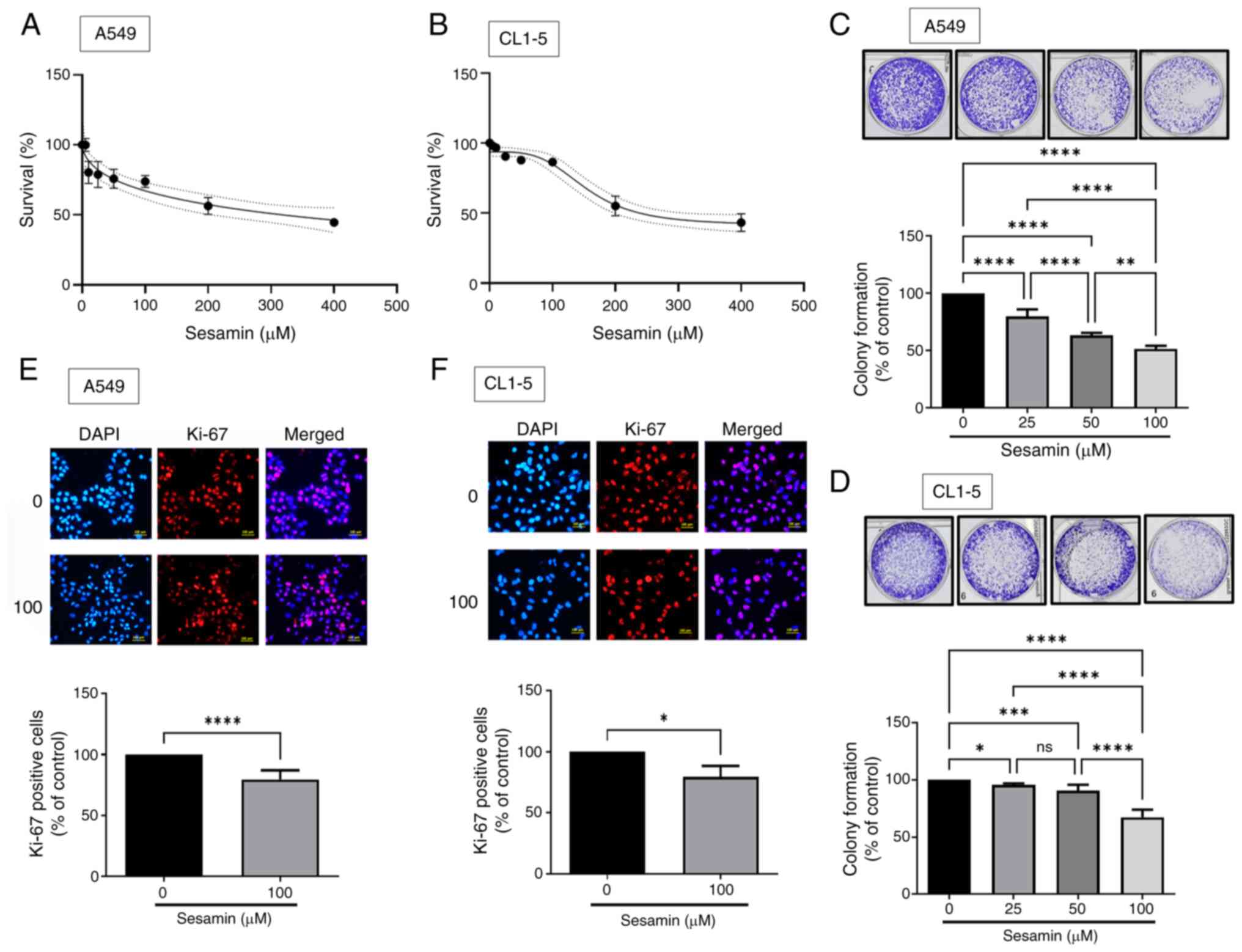
Figure 1

Sesamin reduces the viability of
human LUAD cells in a dose-dependent manner. (A-D) The effect of
various concentrations of sesamin (0-100 μM) on the
viability and survival of LUAD cells was evaluated using MTT and
colony formation assays, respectively. (E and F) LUAD cells were
treated with sesamin at a concentration of 100 μM, and cell
proliferation was evaluated using Ki-67 staining. Scale bars, 100
μm. Data are expressed as mean ± SD for triplicate samples.
*P<0.05, **P<0.01,
***P<0.001 and ****P<0.0001 relative to
the control group. LUAD, lung adenocarcinoma; ns, not
significant.

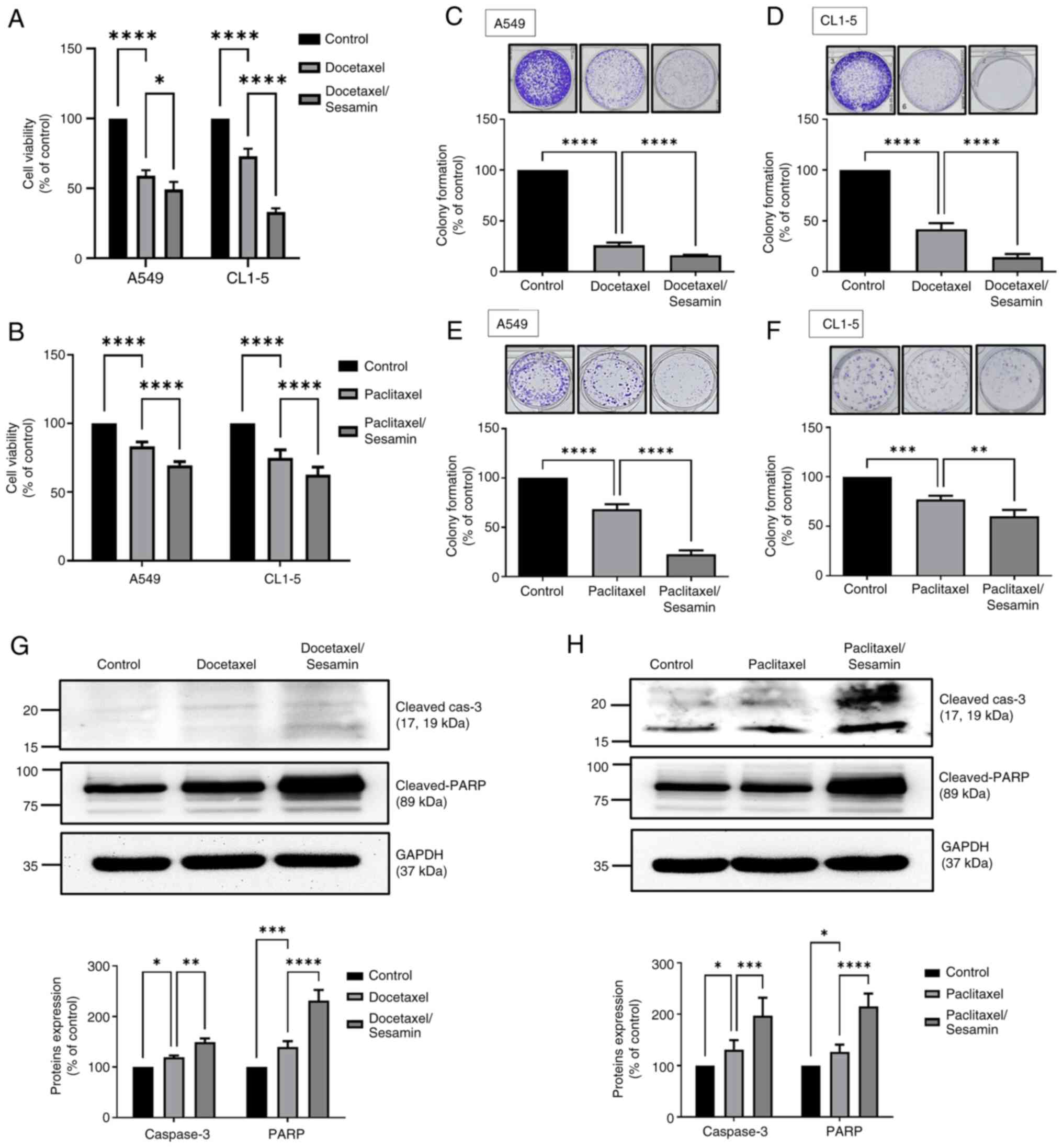
Figure 2

Sesamin increases the
chemosensitivity of LUAD cells. (A-F) Viability and survival of
LUAD cells treated with sesamin in combination with a
chemotherapeutic agent (12.5 μM docetaxel or 5 μM
paclitaxel), evaluated using both an MTT assay after incubation for
24 h and a colony formation assay after incubation for 1 week. (G
and H) The protein expression levels of cleaved caspase-3 and PARP
in LUAD cells were determined using a western blot assay after
treatment with sesamin in combination with a chemotherapeutic agent
(docetaxel or paclitaxel). Data are expressed as the mean ± SD for
triplicate samples. *P<0.05, **P<0.01,
***P<0.001 and ****P<0.0001 relative to
the control group. LUAD, lung adenocarcinoma; PARP,
poly(ADP-ribose) polymerase.

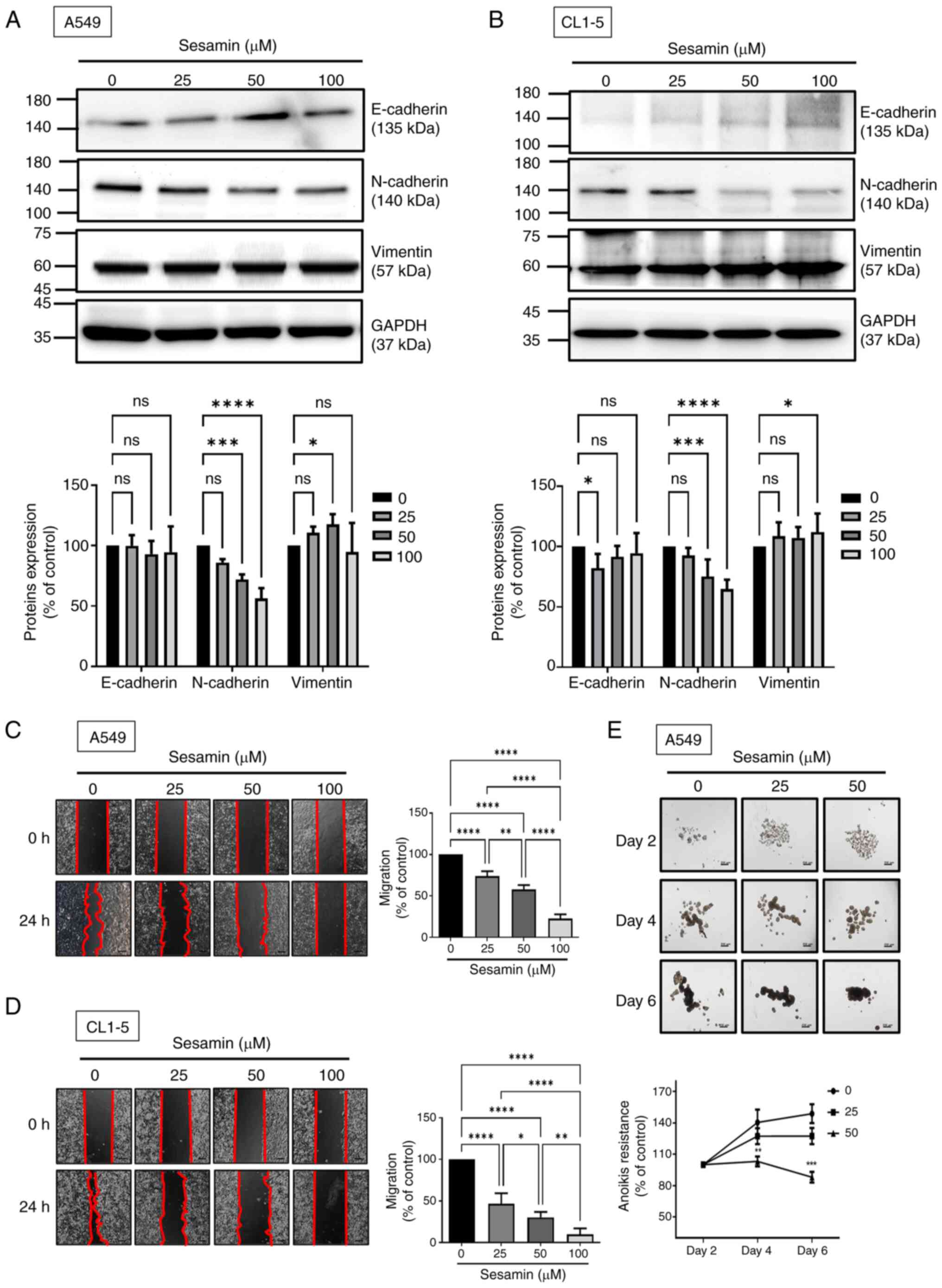
Figure 3

Sesamin reduces the motility and
anoikis resistance of LUAD cells by downregulating N-cadherin. (A
and B) The expression levels of epithelial to mesenchymal
transition-related markers, including E-cadherin, vimentin and
N-cadherin, were determined using a western blot assay in lung
adenocarcinoma cells treated with various concentrations of sesamin
(0-100 μM). (C and D) Cell motility determined using a wound
healing assay after 24 h of treatment with sesamin. Scale bars, 100
μm. (E) A549 cells treated with sesamin (0-50 μM) for
2, 4 and 6 days, with an anoikis resistance assay by measuring cell
numbers. Scale bars, 250 μm. Data are expressed as the mean
± SD for triplicate samples. *P<0.05,
**P<0.01, ***P<0.001 and
****P<0.0001 relative to the control group. ns, not
significant.

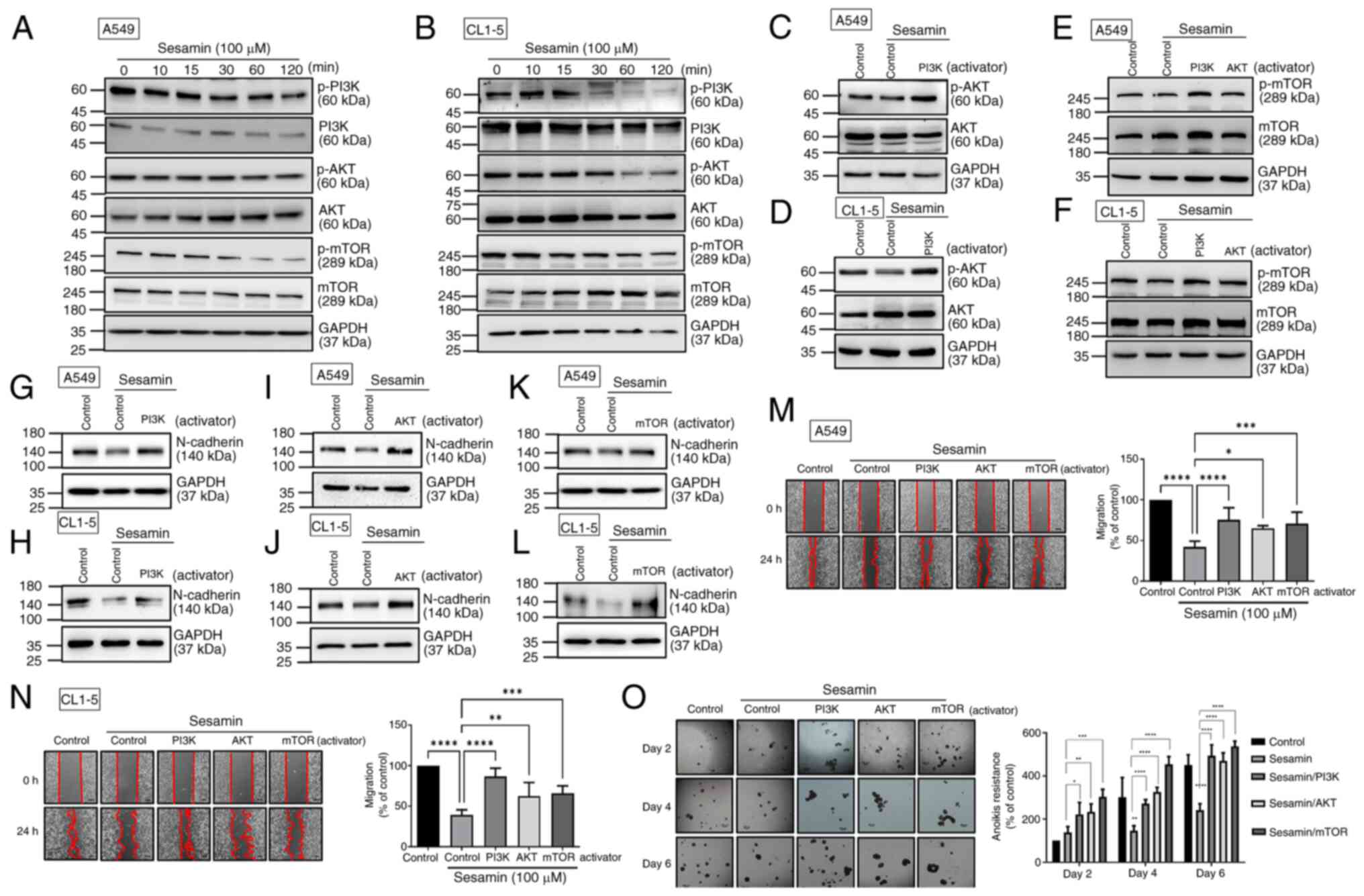
Figure 4

Sesamin reduces the motility and
anoikis resistance of LUAD cells by downregulating PI3K/AKT/mTOR.
(A and B) The protein expression levels of p-PI3K, p-AKT, and
p-mTOR in LUAD cells were determined using a western blot assay
after treatment with sesamin (100 μM) at various time
points. (C-F) Pretreatment of LUAD cells with activators of PI3K
(740 Y-P, 1 mM), AKT (SC79, 0.5 μg/ml) and mTOR (MHY1485, 1
mM) for 30 min was followed by treatment with sesamin (100
μM) for 2 h. The protein levels of AKT and mTOR
phosphorylation were detected using a western blot assay. (G-L)
Pretreatment of LUAD cells with activators of PI3K (740 Y-P, 1 mM),
AKT (SC79, 0.5 μg/ml), and mTOR (MHY1485, 1 mM) for 30 min,
followed by treatment with sesamin (100 μM) for 24 h. The
protein levels of N-cadherin were determined by western blot assay.
(M-O) Cell migration and anoikis resistance were determined using
wound healing and anoikis resistance assays, respectively. Scale
bars, 100 μm (wound healing) and 250 μm (anoikis
resistance). Data are expressed as the mean ± SD for triplicate
samples. *P<0.05, **P<0.01,
***P<0.001 and ****P<0.0001 relative to
the control group. LUAD, lung adenocarcinoma; p-,
phosphorylated.

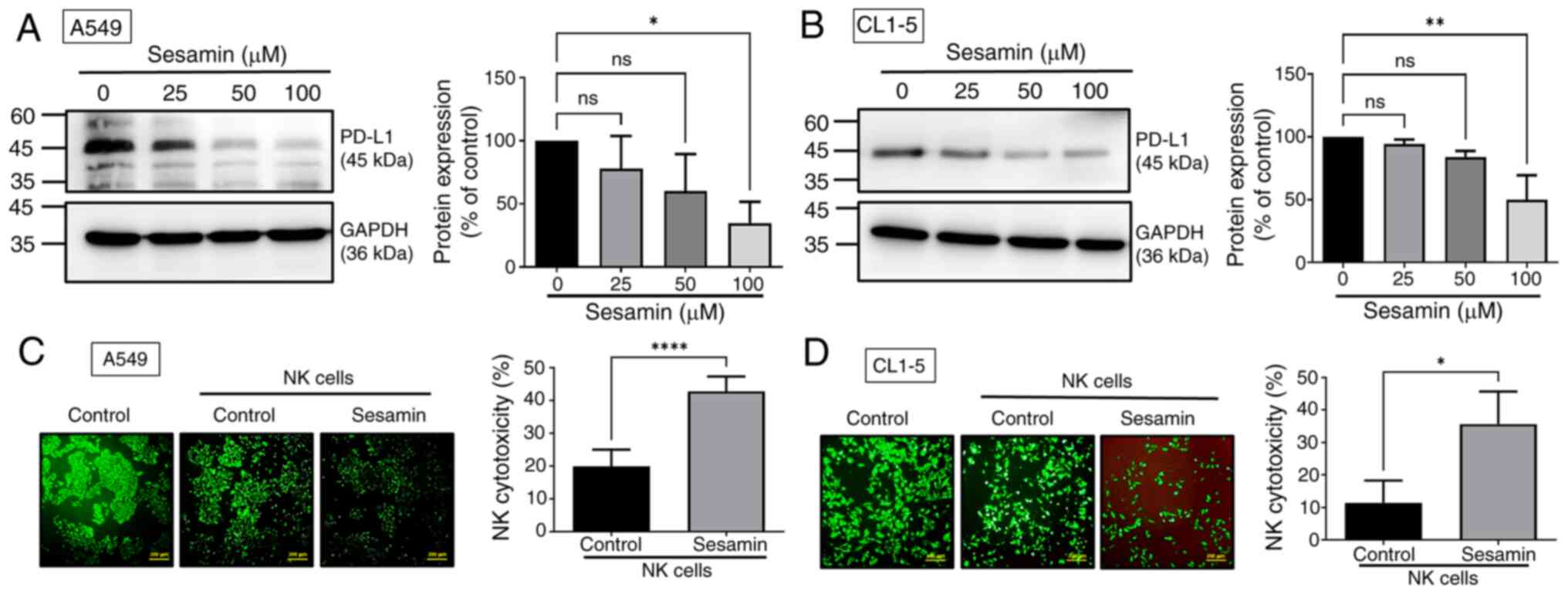
Figure 5

Sesamin downregulates the expression
of PD-L1 and mitigates cancer-associated immunosuppression. (A and
B) The protein expression of PD-L1 in LUAD cells treated with
various concentrations of sesamin (0-100 μM) was determined
using a western blot assay. (C and D) LUAD cells were stained with
calcein AM (a green fluorescent marker) after a 24-h sesamin
treatment (100 μM). Following the introduction of NK cells,
cytotoxicity was quantitatively evaluated by measuring the
fluorescence values. Scale bars, 200 μm. Data are expressed
as the mean ± SD for triplicate samples. *P<0.05,
**P<0.01 and ****P<0.0001 relative to
the control group. PD-L1, programmed death ligand 1; LUAD, lung
adenocarcinoma; NK cells, natural killer cells; ns, not
significant.

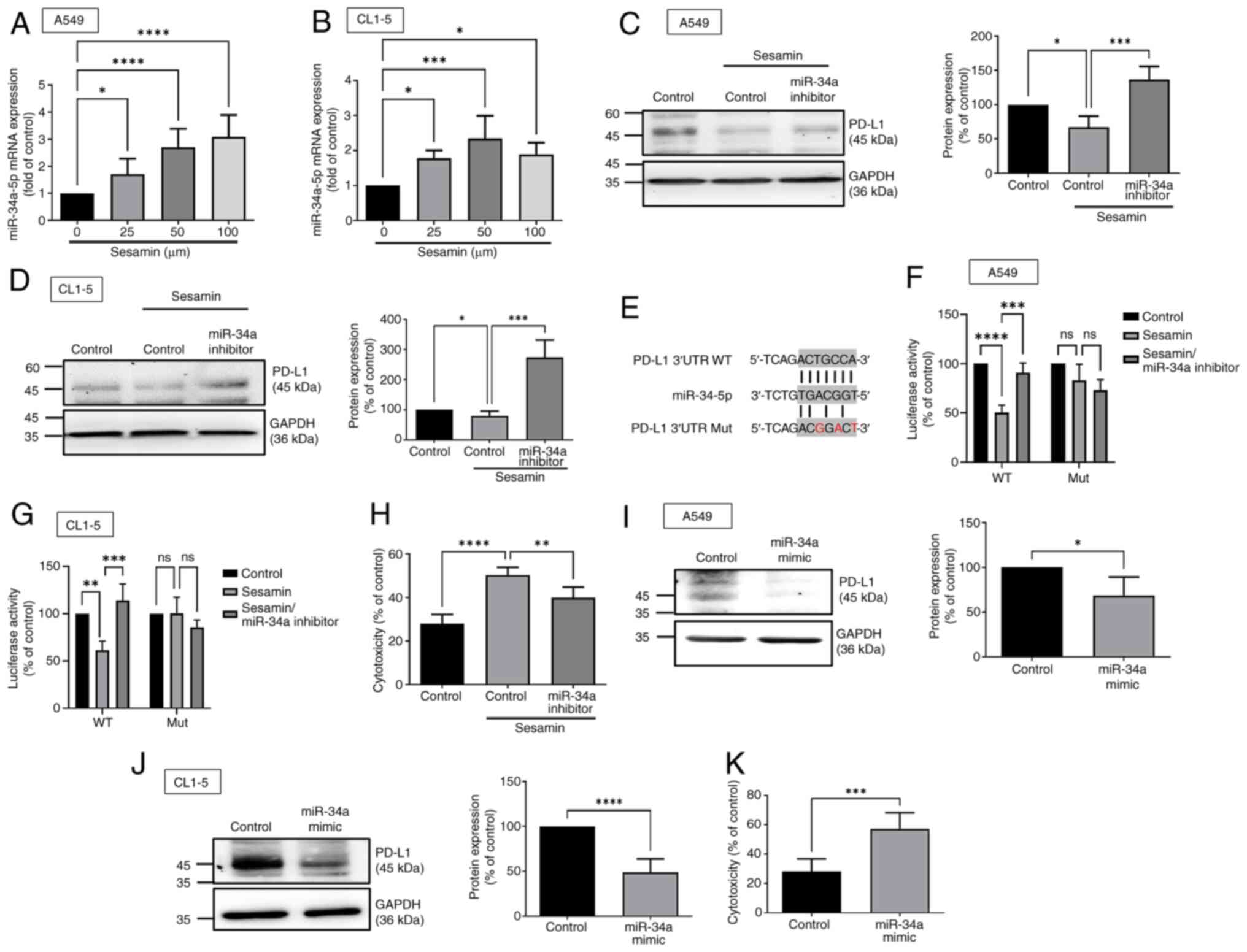
Figure 6

Hsa-miR-34a mediates the
sesamin-induced downregulation of PD-L1 and enhances the
cytotoxicity of NK cells. (A and B) The expression of
hsa-miR-34a-5p in LUAD cells, treated with various concentrations
of sesamin (0-100 μM), was determined using a reverse
transcription-quantitative PCR assay. (C and D) LUAD cells
transfected with either a control inhibitor or hsa-miR-34a-5p
inhibitor (25 nM) for 24 h, followed by treatment with sesamin (100
μM) for another 24 h. The protein levels of PD-L1 were
detected using a western blot assay. (E) Schematic representation
of the 3′-UTR of the WT PD-L1 sequence and the mutant PD-L1
sequence containing the miR-34a binding site. (F and G) LUAD cells
were co-transfected with a PD-L1 plasmid (1 μg/μl)
and a miR-34a inhibitor (25 nM) for 24 h, followed by stimulation
with sesamin for an additional 24 h. Relative luciferase and
Renilla activities were then measured. (H) NK cytotoxicity assay
revealing the immune evasion of CL1-5 cells transfected with a
hsa-miR-34a-5p inhibitor (25 nM) for 24 h, followed by treatment
with sesamin (100 μM). (I and J) LUAD cells were transfected
with either a control mimic or hsa-miR-34a-5p mimic (25 nM) for 24
h, and PD-L1 protein expression was measured using a western blot
assay. (K) Immune evasion was assessed through a NK cytotoxicity
assay after transfecting CL1-5 cells with a hsa-miR-34a-5p mimic
(25 nM) for 24 h. Data are expressed as the mean ± SD for
triplicate samples. *P<0.05, **P<0.01,
***P<0.001 and ****P<0.0001 relative to
the control group.. PD-L1, programmed death ligand 1; NK cells;
natural killer cells; miR, microRNA; LUAD, lung adenocarcinoma;
UTR, untranslated region; WT, wild-type; ns, not significant.

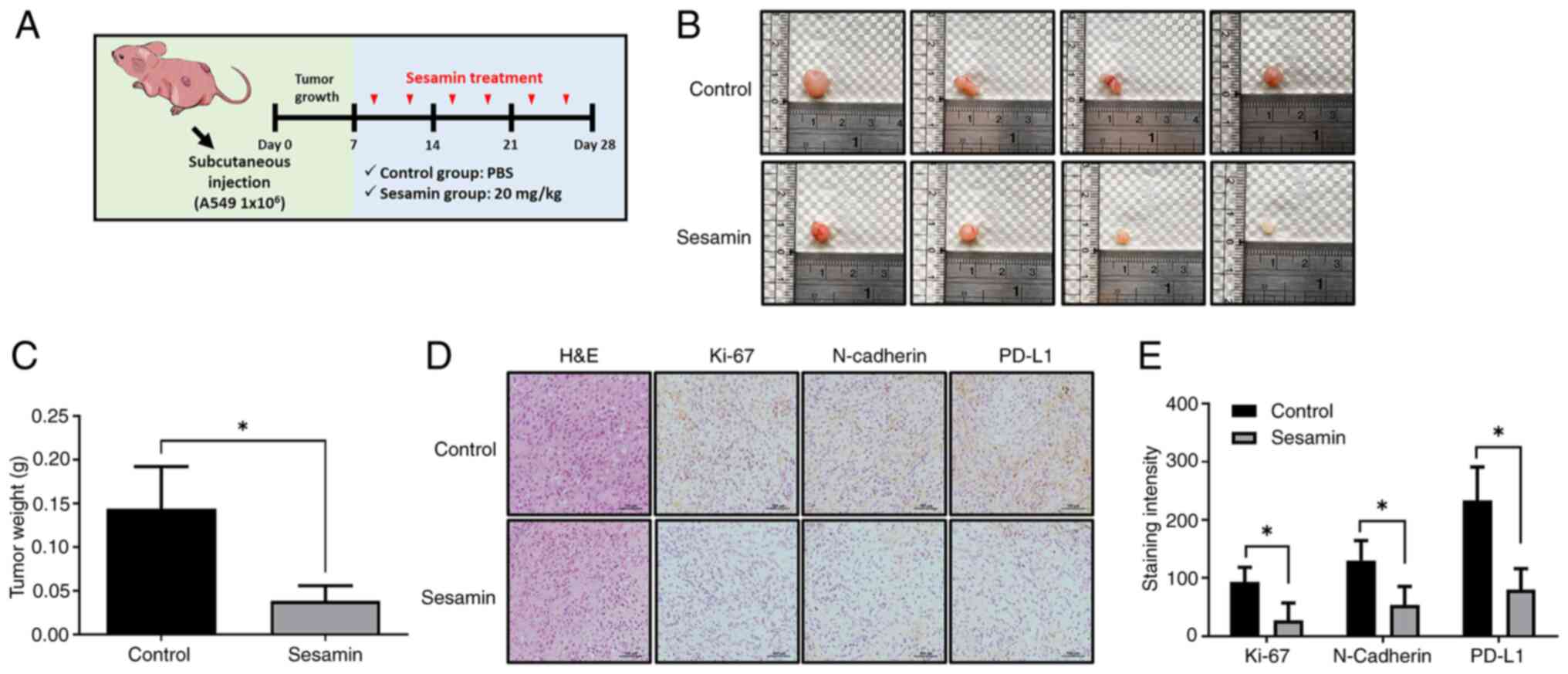
Figure 7

Sesamin inhibits lung tumor growth
in vivo. (A) Flowchart demonstrating the protocol for
sesamin treatment with a subcutaneous animal model. (B)
Representative images of tumors excised from each group were
obtained after 4 weeks of sesamin treatment. (C) Tumor weights of
the treatment and control groups. (D) Expression of N-cadherin and
PD-L1 proteins in tumor tissues, determined using an IHC analysis.
(E) Quantitative IHC analysis of N-cadherin and PD-L1 expression.
Data are expressed as the mean ± SD for triplicate samples.
*P<0.05 relative to the control group. PD-L1,
programmed death ligand 1; IHC, immunohistochemical.

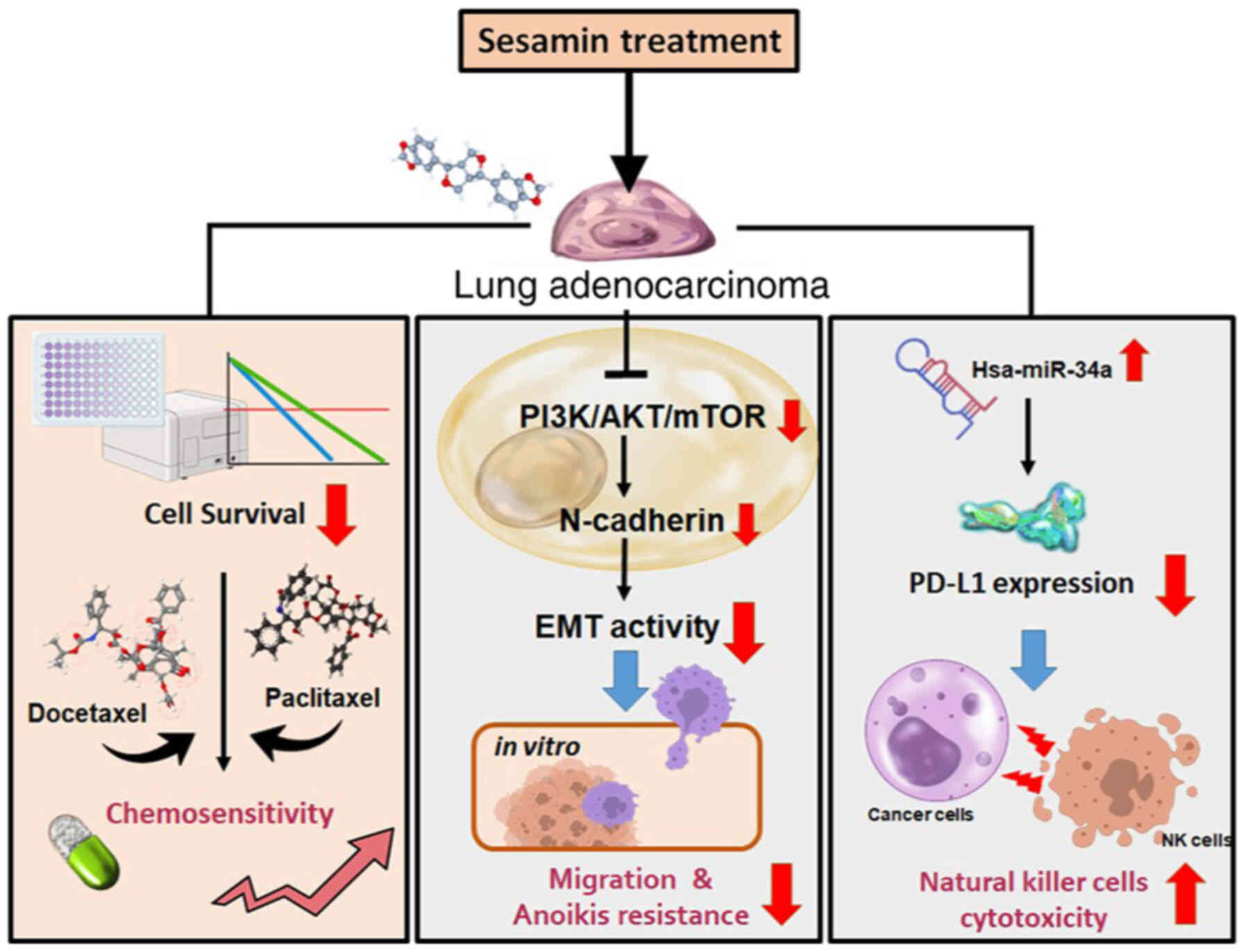
Figure 8

Graphical representation of the
mechanisms underlying the effect of sesamin on LUAD cells. Sesamin
inhibits cancer cell motility and anoikis resistance primarily
through the suppression of EMT. Sesamin also enhances antitumor
immunity by downregulating the expression of PD-L1, thereby
confirming the tumor-suppressive effects of sesamin in human LUAD.
LUAD, lung adenocarcinoma; EMT, epithelial-mesenchymal transition;
PD-L1, programmed death ligand 1.
View References

1 

Myers DJ and Wallen JM: Lung adenocarcinoma. StatPearls [Internet]. StatPearls Publishing; Treasure, Island FL: 2023

2 

Lu TP, Tsai MH, Lee JM, Hsu CP, Chen PC, Lin CW, Shih JY, Yang PC, Hsiao CK, Lai LC and Chuang EY: Identification of a novel biomarker, sema5a, for non-small cell lung carcinoma in nonsmoking women. Cancer Epidemiol Biomarkers Prev. 19:2590–2597. 2010. View Article : Google Scholar : PubMed/NCBI

3 

Tsai SC, Liu YC, Li CP, Huang TS and Lee CC: Sesamin inhibits vascular endothelial cell growth and angiogenic activity of lung adenocarcinoma cells. J Cancer Mol. 2:199–205. 2006.

4 

Kong X, Ma MZ, Zhang Y, Weng MZ, Gong W, Guo LQ, Zhang JX, Wang GD, Su Q, Quan ZW and Yang JR: Differentiation therapy: Sesamin as an effective agent in targeting cancer stem-like side population cells of human gallbladder carcinoma. BMC Complement Alternat Med. 14:1–12. 2014. View Article : Google Scholar

5 

Majdalawieh AF, Massri M and Nasrallah GK: A comprehensive review on the anti-cancer properties and mechanisms of action of sesamin, a lignan in sesame seeds (Sesamum indicum). Eur J Pharmacol. 815:512–521. 2017. View Article : Google Scholar : PubMed/NCBI

6 

Ye H, Sun L, Li J, Wang Y, Bai J, Wu L, Han Q, Yang Z and Li L: Sesamin attenuates carrageenan-induced lung inflammation through upregulation of A20 and TAX1BP1 in rats. Int Immunopharmacol. 88:1070092020. View Article : Google Scholar : PubMed/NCBI

7 

Yang S, Li X, Dou H, Hu Y, Che C and Xu D: Sesamin induces A549 cell mitophagy and mitochondrial apoptosis via a reactive oxygen species-mediated reduction in mitochondrial membrane potential. Korean J Physiol Pharmacol. 24:223–232. 2020. View Article : Google Scholar : PubMed/NCBI

8 

Dou H, Yang S, Hu Y, Xu D, Liu L and Li X: Sesamin induces ER stress-mediated apoptosis and activates autophagy in cervical cancer cells. Life Sci. 200:87–93. 2018. View Article : Google Scholar : PubMed/NCBI

9 

Siriwarin B and Weerapreeyakul N: Sesamol induced apoptotic effect in lung adenocarcinoma cells through both intrinsic and extrinsic pathways. Chem Biol Interact. 254:109–116. 2016. View Article : Google Scholar : PubMed/NCBI

10 

Acar V, Fernandez FL, Buscariolo FF, Novais AA, Pereira RA and de Campos Zuccari DAP: Immunohistochemical evaluation of PARP and caspase-3 as prognostic markers in prostate carcinomas. Clin Med Res. 19:183–191. 2021. View Article : Google Scholar : PubMed/NCBI

11 

Son H and Moon A: Epithelial-mesenchymal transition and cell invasion. Toxicol Res. 26:245–252. 2010. View Article : Google Scholar : PubMed/NCBI

12 

Mottaghi S and Abbaszadeh H: A comprehensive mechanistic insight into the dietary and estrogenic lignans, arctigenin and sesamin as potential anticarcinogenic and anticancer agents. Current status, challenges, and future perspectives. Crit Rev Food Sci Nutr. 62:7301–7318. 2022. View Article : Google Scholar

13 

Ediriweera MK, Tennekoon KH and Samarakoon SR: Role of the PI3K/AKT/mTOR signaling pathway in ovarian cancer: Biological and therapeutic significance. Semin Cancer Biol. 59:147–160. 2019. View Article : Google Scholar : PubMed/NCBI

14 

Fang Q, Zhu Y, Wang Q, Song M, Gao G and Zhou Z: Suppression of cyclooxygenase 2 increases chemosensitivity to sesamin through the Akt-PI3K signaling pathway in lung cancer cells. Int J Mol Med. 43:507–516. 2019.

15 

Dong H, Strome SE, Salomao DR, Tamura H, Hirano F, Flies DB, Roche PC, Lu J, Zhu G, Tamada K, et al: Tumor-associated B7-H1 promotes T-cell apoptosis: A potential mechanism of immune evasion. Nat Med. 8:793–800. 2002. View Article : Google Scholar : PubMed/NCBI

16 

Kongtawelert P, Wudtiwai B, Shwe TH, Pothacharoen P and Phitak T: Inhibition of programmed death ligand 1 (PD-L1) expression in breast cancer cells by sesamin. Int Immunopharmacol. 86:1067592020. View Article : Google Scholar : PubMed/NCBI

17 

Cha JH, Chan LC, Li CW, Hsu JL and Hung MC: Mechanisms controlling PD-L1 expression in cancer. Mol Cell. 76:359–370. 2019. View Article : Google Scholar : PubMed/NCBI

18 

Cortez MA, Ivan C, Valdecanas D, Wang X, Peltier HJ, Ye Y, Araujo L, Carbone DP, Shilo K, Giri DK, et al: PDL1 regulation by p53 via miR-34. J Natl Cancer Inst. 108:djv3032016. View Article : Google Scholar :

19 

Danbaran GR, Aslani S, Sharafkandi N, Hemmatzadeh M, Hosseinzadeh R, Azizi G, Jadidi-Niaragh F, Babaie F and Mohammadi H: How microRNAs affect the PD-L1 and its synthetic pathway in cancer. Int Immunopharmacol. 84:1065942020. View Article : Google Scholar : PubMed/NCBI

20 

Yin M, Zhang Z and Wang Y: Anti-tumor effects of miR-34a by regulating immune cells in the tumor microenvironment. Cancer Med. 12:11602–11610. 2023. View Article : Google Scholar : PubMed/NCBI

21 

Wang X, Li J, Dong K, Lin F, Long M, Ouyang Y, Wei J, Chen X, Weng Y, He T and Zhang H: Tumor suppressor miR-34a targets PD-L1 and functions as a potential immunotherapeutic target in acute myeloid leukemia. Cell Signal. 27:443–452. 2015. View Article : Google Scholar

22 

Chu YW, Yang PC, Yang SC, Shyu YC, Hendrix MJ, Wu R and Wu CW: Selection of invasive and metastatic subpopulations from a human lung adenocarcinoma cell line. Am J Respir Cell Mol Biol. 17:353–360. 1997. View Article : Google Scholar : PubMed/NCBI

23 

Tsai HC, Chang AC, Tsai CH, Huang YL, Gan L, Chen CK, Liu SC, Huang TY, Fong YC and Tang CH: CCN2 promotes drug resistance in osteosarcoma by enhancing ABCG2 expression. J Cell Physiol. 234:9297–9307. 2019. View Article : Google Scholar

24 

Yu HS, Wang SW, Chang AC, Tai HC, Yeh HI, Lin YM and Tang CH: Bradykinin promotes vascular endothelial growth factor expression and increases angiogenesis in human prostate cancer cells. Biochem Pharmacol. 87:243–253. 2014. View Article : Google Scholar

25 

Wu MH, Lo JF, Kuo CH, Lin JA, Lin YM, Chen LM, Tsai FJ, Tsai CH, Huang CY and Tang CH: Endothelin-1 promotes MMP-13 production and migration in human chondrosarcoma cells through FAK/PI3K/Akt/mTOR pathways. J Cell Physiol. 227:3016–3026. 2012. View Article : Google Scholar

26 

Livak KJ and Schmittgen TD: Analysis of relative gene expression data using real-time quantitative PCR and the 2(-Delta Delta C(T)) method. Methods. 25:402–408. 2001. View Article : Google Scholar

27 

Chang AC, Chen PC, Lin YF, Su CM, Liu JF, Lin TH, Chuang SM and Tang CH: Osteoblast-secreted WISP-1 promotes adherence of prostate cancer cells to bone via the VCAM-1/integrin α4β1 system. Cancer Lett. 426:47–56. 2018. View Article : Google Scholar : PubMed/NCBI

28 

Sun X and Kaufman PD: Ki-67: More than a proliferation marker. Chromosoma. 127:175–186. 2018. View Article : Google Scholar : PubMed/NCBI

29 

Ashrafizadeh M, Ahmadi Z, Mohamadi N, Zarrabi A, Abasi S, Dehghannoudeh G, Tamaddondoust RN, Khanbabaei H, Mohammadinejad R and Thakur VK: Chitosan-based advanced materials for docetaxel and paclitaxel delivery: Recent advances and future directions in cancer theranostics. Int J Biol Macromol. 145:282–300. 2020. View Article : Google Scholar

30 

Hou RC, Huang HM, Tzen JT and Jeng KC: Protective effects of sesamin and sesamolin on hypoxic neuronal and PC12 cells. J Neurosci Res. 74:123–133. 2003. View Article : Google Scholar : PubMed/NCBI

31 

Loh CY, Chai JY, Tang TF, Wong WF, Sethi G, Shanmugam MK, Chong PP and Looi CY: The E-cadherin and N-cadherin switch in epithelial-to-mesenchymal transition: Signaling, therapeutic implications, and challenges. Cells. 8:11182019. View Article : Google Scholar : PubMed/NCBI

32 

Zhou J, Yang S, Zhu D, Li H, Miao X, Gu M, Xu W, Zhang Y, Tang W, Shen R, et al: The crosstalk between anoikis and epithelial-mesenchymal transition and their synergistic roles in predicting prognosis in colon adenocarcinoma. Front Oncol. 13:11842152023. View Article : Google Scholar : PubMed/NCBI

33 

Zuo Y, Zheng W, Liu J, Tang Q, Wang SS and Yang XS: MiR-34a-5p/PD-L1 axis regulates cisplatin chemoresistance of ovarian cancer cells. Neoplasma. 67:93–101. 2020. View Article : Google Scholar

34 

Deng S, Wang M, Wang C, Zeng Y, Qin X, Tan Y, Liang B and Cao Y: p53 downregulates PD-L1 expression via miR-34a to inhibit the growth of triple-negative breast cancer cells: A potential clinical immunotherapeutic target. Mol Biol Rep. 50:577–587. 2023. View Article : Google Scholar

35 

Wang Y and Wang L: miR-34a attenuates glioma cells progression and chemoresistance via targeting PD-L1. Biotechnol Lett. 39:1485–1492. 2017. View Article : Google Scholar : PubMed/NCBI

36 

Verweij J, Clavel M and Chevalier B: Paclitaxel (TaxolTM) and docetaxel (TaxotereTM): Not simply two of a kind. Ann Oncol. 5:495–505. 1994. View Article : Google Scholar : PubMed/NCBI

37 

McGrogan BT, Gilmartin B, Carney DN and McCann A: Taxanes, microtubules and chemoresistant breast cancer. Biochim Biophys Acta. 1785:96–132. 2008.

38 

Cenik M, Abas BI, Kocabiyik B, Demirbolat GM and Cevik O: Development of a new drug delivery system from hela-derived exosomes and the effect of docetaxel-loaded exosomes on mitochondrial apoptosis. J Pharm Innov. 17:931–939. 2022. View Article : Google Scholar

39 

Ashrafizadeh M, Mirzaei S, Hashemi F, Zarrabi A, Zabolian A, Saleki H, Sharifzadeh SO, Soleymani L, Daneshi S, Hushmandi K, et al: New insight towards development of paclitaxel and docetaxel resistance in cancer cells: EMT as a novel molecular mechanism and therapeutic possibilities. Biomed Pharmacother. 141:1118242021. View Article : Google Scholar : PubMed/NCBI

40 

Chen Y, Li H, Zhang W, Qi W, Lu C, Huang H, Yang Z, Liu B and Zhang L: Sesamin suppresses NSCLC cell proliferation and induces apoptosis via Akt/p53 pathway. Toxicol Appl Pharmacol. 387:1148482020. View Article : Google Scholar

41 

Wu M, Jiang Z, Duan H, Sun L, Zhang S, Chen M, Wang Y, Gao Q, Song Y, Zhu X and Zhang L: Deoxypodophyllotoxin triggers necroptosis in human non-small cell lung cancer NCI-H460 cells. Biomed Pharmacother. 67:701–706. 2013. View Article : Google Scholar : PubMed/NCBI

42 

Choi JY, Hong WG, Cho JH, Kim EM, Kim J, Jung CH, Hwang SG, Um HD and Park JK: Podophyllotoxin acetate triggers anticancer effects against non-small cell lung cancer cells by promoting cell death via cell cycle arrest, ER stress and autophagy. Int J Oncol. 47:1257–1265. 2015. View Article : Google Scholar : PubMed/NCBI

43 

Kuo TN, Lin CS, Li GD, Kuo CY and Kao SH: Sesamin inhibits cervical cancer cell proliferation by promoting p53/PTEN-mediated apoptosis. Int J Med Sci. 17:2292–2298. 2020. View Article : Google Scholar : PubMed/NCBI

44 

Siao AC, Hou CW, Kao YH and Jeng KC: Effect of sesamin on apoptosis and cell cycle arrest in human breast cancer mcf-7 cells. Asian Pac J Cancer Prev. 16:3779–3783. 2015. View Article : Google Scholar : PubMed/NCBI

45 

Harikumar KB, Sung B, Tharakan ST, Pandey MK, Joy B, Guha S, Krishnan S and Aggarwal BB: Sesamin manifests chemopreventive effects through the suppression of NF-kappa B-regulated cell survival, proliferation, invasion, and angiogenic gene products. Mol Cancer Res. 8:751–761. 2010. View Article : Google Scholar : PubMed/NCBI

46 

Huang RY, Wong MK, Tan TZ, Kuay KT, Ng AH, Chung VY, Chu YS, Matsumura N, Lai HC, Lee YF, et al: An EMT spectrum defines an anoikis-resistant and spheroidogenic intermediate mesenchymal state that is sensitive to e-cadherin restoration by a src-kinase inhibitor, saracatinib (AZD0530). Cell Death Dis. 4:e9152013. View Article : Google Scholar : PubMed/NCBI

47 

Cao ZQ, Wang Z and Leng P: Aberrant N-cadherin expression in cancer. Biomed Pharmacother. 118:1093202019. View Article : Google Scholar : PubMed/NCBI

48 

Abufaraj M, Shariat SF, Haitel A, Moschini M, Foerster B, Chłosta P, Gust K, Babjuk M, Briganti A, Karakiewicz PI and Albrecht W: Prognostic role of N-cadherin expression in patients with non-muscle-invasive bladder cancer. Urol Oncol. 35:264–271. 2017. View Article : Google Scholar : PubMed/NCBI

49 

Su Y, Li J, Shi C, Hruban RH and Radice GL: N-cadherin functions as a growth suppressor in a model of K-ras-induced PanIN. Oncogene. 35:3335–3341. 2016. View Article : Google Scholar :

50 

Lammens T, Swerts K, Derycke L, De Craemer A, De Brouwer S, De Preter K, Van Roy N, Vandesompele J, Speleman F, Philippé J, et al: N-cadherin in neuroblastoma disease: Expression and clinical significance. PLoS One. 7:e312062012. View Article : Google Scholar : PubMed/NCBI

51 

He J, Hu Y, Hu M and Li B: Development of PD-1/PD-L1 pathway in tumor immune microenvironment and treatment for non-small cell lung cancer. Sci Rep. 5:131102015. View Article : Google Scholar : PubMed/NCBI

52 

Liu H, Zhao Z, Zhang L, Li Y, Jain A, Barve A, Jin W, Liu Y, Fetse J and Cheng K: Discovery of low-molecular weight anti-PD-L1 peptides for cancer immunotherapy. J Immunother Cancer. 7:2702019. View Article : Google Scholar : PubMed/NCBI

53 

Wu MS, Aquino LBB, Barbaza MYU, Hsieh CL, Castro-Cruz KA, Yang LL and Tsai PW: Anti-Inflammatory and anticancer properties of bioactive compounds from sesamum indicum L.-A review. Molecules. 24:44262019. View Article : Google Scholar : PubMed/NCBI

54 

Kim JH and Lee JK: Sesamolin enhances NK cell lysis activity by increasing the expression of NKG2D ligands on Burkitt's lymphoma cells. Int Immunopharmacol. 28:977–984. 2015. View Article : Google Scholar : PubMed/NCBI

55 

Wang Q, Lin W, Tang X, Li S, Guo L, Lin Y and Kwok HF: The roles of microRNAs in regulating the expression of PD-1/PD-L1 immune checkpoint. Int J Mol Sci. 18:25402017. View Article : Google Scholar : PubMed/NCBI

56 

Hwang TI, Cuiu YC, Chen YC, Chen PC, Tsai TF, Chou KY, Ho CY, Chen HE, Chang PH and Chang AC: Tumor suppressive functions of hsa-miR-34a on cell cycle, migration and protective autophagy in bladder cancer. Int J Oncol. 62:662023. View Article : Google Scholar :

57 

Yang P, Li QJ, Feng Y, Zhang Y, Markowitz GJ, Ning S, Deng Y, Zhao J, Jiang S, Yuan Y, et al: TGF-β-miR-34a-CCL22 signaling-induced Treg cell recruitment promotes venous metastases of HBV-positive hepatocellular carcinoma. Cancer Cell. 22:291–303. 2012. View Article : Google Scholar : PubMed/NCBI

58 

Shin J, Xie D and Zhong XP: MicroRNA-34a enhances T cell activation by targeting diacylglycerol kinase ζ. PLoS One. 8:e779832013. View Article : Google Scholar

Related Articles

  • Abstract
  • View
  • Download
  • Twitter
Copy and paste a formatted citation
Spandidos Publications style
Chao C, Peng P, Lin Y and Chang A: Effects of sesamin on the chemosensitivity, invasiveness and immune evasion mechanism of human lung adenocarcinoma. Int J Mol Med 56: 194, 2025.
APA
Chao, C., Peng, P., Lin, Y., & Chang, A. (2025). Effects of sesamin on the chemosensitivity, invasiveness and immune evasion mechanism of human lung adenocarcinoma. International Journal of Molecular Medicine, 56, 194. https://doi.org/10.3892/ijmm.2025.5635
MLA
Chao, C., Peng, P., Lin, Y., Chang, A."Effects of sesamin on the chemosensitivity, invasiveness and immune evasion mechanism of human lung adenocarcinoma". International Journal of Molecular Medicine 56.5 (2025): 194.
Chicago
Chao, C., Peng, P., Lin, Y., Chang, A."Effects of sesamin on the chemosensitivity, invasiveness and immune evasion mechanism of human lung adenocarcinoma". International Journal of Molecular Medicine 56, no. 5 (2025): 194. https://doi.org/10.3892/ijmm.2025.5635
Copy and paste a formatted citation
x
Spandidos Publications style
Chao C, Peng P, Lin Y and Chang A: Effects of sesamin on the chemosensitivity, invasiveness and immune evasion mechanism of human lung adenocarcinoma. Int J Mol Med 56: 194, 2025.
APA
Chao, C., Peng, P., Lin, Y., & Chang, A. (2025). Effects of sesamin on the chemosensitivity, invasiveness and immune evasion mechanism of human lung adenocarcinoma. International Journal of Molecular Medicine, 56, 194. https://doi.org/10.3892/ijmm.2025.5635
MLA
Chao, C., Peng, P., Lin, Y., Chang, A."Effects of sesamin on the chemosensitivity, invasiveness and immune evasion mechanism of human lung adenocarcinoma". International Journal of Molecular Medicine 56.5 (2025): 194.
Chicago
Chao, C., Peng, P., Lin, Y., Chang, A."Effects of sesamin on the chemosensitivity, invasiveness and immune evasion mechanism of human lung adenocarcinoma". International Journal of Molecular Medicine 56, no. 5 (2025): 194. https://doi.org/10.3892/ijmm.2025.5635
Follow us
  • Twitter
  • LinkedIn
  • Facebook
About
  • Spandidos Publications
  • Careers
  • Cookie Policy
  • Privacy Policy
How can we help?
  • Help
  • Live Chat
  • Contact
  • Email to our Support Team