Spandidos Publications Logo
  • About
    • About Spandidos
    • Aims and Scopes
    • Abstracting and Indexing
    • Editorial Policies
    • Reprints and Permissions
    • Job Opportunities
    • Terms and Conditions
    • Contact
  • Journals
    • All Journals
    • Oncology Letters
      • Oncology Letters
      • Information for Authors
      • Editorial Policies
      • Editorial Board
      • Aims and Scope
      • Abstracting and Indexing
      • Bibliographic Information
      • Archive
    • International Journal of Oncology
      • International Journal of Oncology
      • Information for Authors
      • Editorial Policies
      • Editorial Board
      • Aims and Scope
      • Abstracting and Indexing
      • Bibliographic Information
      • Archive
    • Molecular and Clinical Oncology
      • Molecular and Clinical Oncology
      • Information for Authors
      • Editorial Policies
      • Editorial Board
      • Aims and Scope
      • Abstracting and Indexing
      • Bibliographic Information
      • Archive
    • Experimental and Therapeutic Medicine
      • Experimental and Therapeutic Medicine
      • Information for Authors
      • Editorial Policies
      • Editorial Board
      • Aims and Scope
      • Abstracting and Indexing
      • Bibliographic Information
      • Archive
    • International Journal of Molecular Medicine
      • International Journal of Molecular Medicine
      • Information for Authors
      • Editorial Policies
      • Editorial Board
      • Aims and Scope
      • Abstracting and Indexing
      • Bibliographic Information
      • Archive
    • Biomedical Reports
      • Biomedical Reports
      • Information for Authors
      • Editorial Policies
      • Editorial Board
      • Aims and Scope
      • Abstracting and Indexing
      • Bibliographic Information
      • Archive
    • Oncology Reports
      • Oncology Reports
      • Information for Authors
      • Editorial Policies
      • Editorial Board
      • Aims and Scope
      • Abstracting and Indexing
      • Bibliographic Information
      • Archive
    • Molecular Medicine Reports
      • Molecular Medicine Reports
      • Information for Authors
      • Editorial Policies
      • Editorial Board
      • Aims and Scope
      • Abstracting and Indexing
      • Bibliographic Information
      • Archive
    • World Academy of Sciences Journal
      • World Academy of Sciences Journal
      • Information for Authors
      • Editorial Policies
      • Editorial Board
      • Aims and Scope
      • Abstracting and Indexing
      • Bibliographic Information
      • Archive
    • International Journal of Functional Nutrition
      • International Journal of Functional Nutrition
      • Information for Authors
      • Editorial Policies
      • Editorial Board
      • Aims and Scope
      • Abstracting and Indexing
      • Bibliographic Information
      • Archive
    • International Journal of Epigenetics
      • International Journal of Epigenetics
      • Information for Authors
      • Editorial Policies
      • Editorial Board
      • Aims and Scope
      • Abstracting and Indexing
      • Bibliographic Information
      • Archive
    • Medicine International
      • Medicine International
      • Information for Authors
      • Editorial Policies
      • Editorial Board
      • Aims and Scope
      • Abstracting and Indexing
      • Bibliographic Information
      • Archive
  • Articles
  • Information
    • Information for Authors
    • Information for Reviewers
    • Information for Librarians
    • Information for Advertisers
    • Conferences
  • Language Editing
Spandidos Publications Logo
  • About
    • About Spandidos
    • Aims and Scopes
    • Abstracting and Indexing
    • Editorial Policies
    • Reprints and Permissions
    • Job Opportunities
    • Terms and Conditions
    • Contact
  • Journals
    • All Journals
    • Biomedical Reports
      • Information for Authors
      • Editorial Policies
      • Editorial Board
      • Aims and Scope
      • Abstracting and Indexing
      • Bibliographic Information
      • Archive
    • Experimental and Therapeutic Medicine
      • Information for Authors
      • Editorial Policies
      • Editorial Board
      • Aims and Scope
      • Abstracting and Indexing
      • Bibliographic Information
      • Archive
    • International Journal of Epigenetics
      • Information for Authors
      • Editorial Policies
      • Editorial Board
      • Aims and Scope
      • Abstracting and Indexing
      • Bibliographic Information
      • Archive
    • International Journal of Functional Nutrition
      • Information for Authors
      • Editorial Policies
      • Editorial Board
      • Aims and Scope
      • Abstracting and Indexing
      • Bibliographic Information
      • Archive
    • International Journal of Molecular Medicine
      • Information for Authors
      • Editorial Policies
      • Editorial Board
      • Aims and Scope
      • Abstracting and Indexing
      • Bibliographic Information
      • Archive
    • International Journal of Oncology
      • Information for Authors
      • Editorial Policies
      • Editorial Board
      • Aims and Scope
      • Abstracting and Indexing
      • Bibliographic Information
      • Archive
    • Medicine International
      • Information for Authors
      • Editorial Policies
      • Editorial Board
      • Aims and Scope
      • Abstracting and Indexing
      • Bibliographic Information
      • Archive
    • Molecular and Clinical Oncology
      • Information for Authors
      • Editorial Policies
      • Editorial Board
      • Aims and Scope
      • Abstracting and Indexing
      • Bibliographic Information
      • Archive
    • Molecular Medicine Reports
      • Information for Authors
      • Editorial Policies
      • Editorial Board
      • Aims and Scope
      • Abstracting and Indexing
      • Bibliographic Information
      • Archive
    • Oncology Letters
      • Information for Authors
      • Editorial Policies
      • Editorial Board
      • Aims and Scope
      • Abstracting and Indexing
      • Bibliographic Information
      • Archive
    • Oncology Reports
      • Information for Authors
      • Editorial Policies
      • Editorial Board
      • Aims and Scope
      • Abstracting and Indexing
      • Bibliographic Information
      • Archive
    • World Academy of Sciences Journal
      • Information for Authors
      • Editorial Policies
      • Editorial Board
      • Aims and Scope
      • Abstracting and Indexing
      • Bibliographic Information
      • Archive
  • Articles
  • Information
    • For Authors
    • For Reviewers
    • For Librarians
    • For Advertisers
    • Conferences
  • Language Editing
Login Register Submit
  • This site uses cookies
  • You can change your cookie settings at any time by following the instructions in our Cookie Policy. To find out more, you may read our Privacy Policy.

    I agree
Search articles by DOI, keyword, author or affiliation
Search
Advanced Search
presentation
International Journal of Molecular Medicine
Join Editorial Board Propose a Special Issue
Print ISSN: 1107-3756 Online ISSN: 1791-244X
Journal Cover
January-2026 Volume 57 Issue 1

Full Size Image

Sign up for eToc alerts
Recommend to Library

Journals

International Journal of Molecular Medicine

International Journal of Molecular Medicine

International Journal of Molecular Medicine is an international journal devoted to molecular mechanisms of human disease.

International Journal of Oncology

International Journal of Oncology

International Journal of Oncology is an international journal devoted to oncology research and cancer treatment.

Molecular Medicine Reports

Molecular Medicine Reports

Covers molecular medicine topics such as pharmacology, pathology, genetics, neuroscience, infectious diseases, molecular cardiology, and molecular surgery.

Oncology Reports

Oncology Reports

Oncology Reports is an international journal devoted to fundamental and applied research in Oncology.

Experimental and Therapeutic Medicine

Experimental and Therapeutic Medicine

Experimental and Therapeutic Medicine is an international journal devoted to laboratory and clinical medicine.

Oncology Letters

Oncology Letters

Oncology Letters is an international journal devoted to Experimental and Clinical Oncology.

Biomedical Reports

Biomedical Reports

Explores a wide range of biological and medical fields, including pharmacology, genetics, microbiology, neuroscience, and molecular cardiology.

Molecular and Clinical Oncology

Molecular and Clinical Oncology

International journal addressing all aspects of oncology research, from tumorigenesis and oncogenes to chemotherapy and metastasis.

World Academy of Sciences Journal

World Academy of Sciences Journal

Multidisciplinary open-access journal spanning biochemistry, genetics, neuroscience, environmental health, and synthetic biology.

International Journal of Functional Nutrition

International Journal of Functional Nutrition

Open-access journal combining biochemistry, pharmacology, immunology, and genetics to advance health through functional nutrition.

International Journal of Epigenetics

International Journal of Epigenetics

Publishes open-access research on using epigenetics to advance understanding and treatment of human disease.

Medicine International

Medicine International

An International Open Access Journal Devoted to General Medicine.

Journal Cover
January-2026 Volume 57 Issue 1

Full Size Image

Sign up for eToc alerts
Recommend to Library

  • Article
  • Citations
    • Cite This Article
    • Download Citation
    • Create Citation Alert
    • Remove Citation Alert
    • Cited By
  • Similar Articles
    • Related Articles (in Spandidos Publications)
    • Similar Articles (Google Scholar)
    • Similar Articles (PubMed)
  • Download PDF
  • Download XML
  • View XML

  • Supplementary Files
    • Supplementary_Data.pdf
Article Open Access

TWEAK modulates the characteristics of periodontal ligament stem cells via the Fn14/NF‑κB pathway

  • Authors:
    • Linlin Xiao
    • Man Qu
    • Lulu Chen
    • Mingli Xiang
    • Qian Long
    • Jianguo Liu
    • Xiaoyan Guan
    • Chengcheng Liao
  • View Affiliations / Copyright

    Affiliations: Department of Orthodontics II, Affiliated Stomatological Hospital of Zunyi Medical University, Zunyi, Guizhou 563000, P.R. China, Oral Disease Research Key Laboratory of Guizhou Tertiary Institution, School of Stomatology, Zunyi Medical University, Zunyi, Guizhou 563000, P.R. China
    Copyright: © Xiao et al. This is an open access article distributed under the terms of Creative Commons Attribution License.
  • Article Number: 8
    |
    Published online on: October 27, 2025
       https://doi.org/10.3892/ijmm.2025.5679
  • Expand metrics +
Metrics: Total Views: 0 (Spandidos Publications: | PMC Statistics: )
Metrics: Total PDF Downloads: 0 (Spandidos Publications: | PMC Statistics: )
Cited By (CrossRef): 0 citations Loading Articles...

This article is mentioned in:


Abstract

Tumor necrosis factor‑like weak inducer of apoptosis (TWEAK)/fibroblast growth factor‑inducible 14 (Fn14) signaling represents a critical regulatory axis in tissue repair and the inflammatory response. However, the impact of TWEAK on the characteristics of periodontal ligament stem cells (PDLSCs), which subsequently influence periodontal homeostasis, remains inadequately understood. To address this, PDLSCs were isolated from human periodontitis tissue and cultured to investigate the effects of TWEAK on PDLSC proliferation, migration and osteogenic differentiation using Cell Counting Kit‑8, TUNEL, Transwell and scratch assays, and alizarin red and alkaline phosphatase staining. Transcriptome sequencing and western blot analysis were used to explore the underlying molecular mechanisms. Additionally, the potential of targeting TWEAK in periodontitis treatment was evaluated using inflammatory PDLSCs (iPDLSCs) and a rat periodontitis model. The present study demonstrated that low levels (1, 5 and 20 ng/ml) of TWEAK enhanced the proliferation and osteogenic differentiation of PDLSCs, with 1 and 5 ng/ml further enhancing their ability to promote M2 macrophage polarization. By contrast, elevated levels (100 ng/ml) of TWEAK impaired PDLSC proliferation, migration and osteogenic potential, activated the RANKL/osteoprotegerin (OPG) system, and promoted the M1 polarization of macrophages induced by PDLSCs, with the Fn14/NF‑κB pathway serving a pivotal role in this regulatory process. The expression levels of TWEAK, Fn14 and NF‑κB were significantly higher in iPDLSCs than in healthy donor‑derived PDLSCs, and these iPDLSCs exhibited reduced proliferation, migration and osteogenic potential, along with increased RANKL/OPG activation and M1 macrophage polarization. In iPDLSCs, inhibition of the TWEAK/Fn14/NF‑κB pathway enhanced cell proliferation, migration and osteogenic differentiation potential, and reversed the activation of the RANKL/OPG system and macrophage M1 polarization induced by iPDLSCs. Furthermore, high TWEAK levels were shown to accelerate the progression of rat periodontitis, while inhibition of the TWEAK/Fn14 pathway mitigated periodontitis‑induced periodontal tissue destruction in rats. Collectively, the present findings revealed the role of the TWEAK‑PDLSCs axis in the maintenance and disruption of periodontal homeostasis, and identified targeting of the TWEAK/Fn14/NF‑κB pathway in iPDLSCs during periodontitis as a promising therapeutic strategy.
View Figures

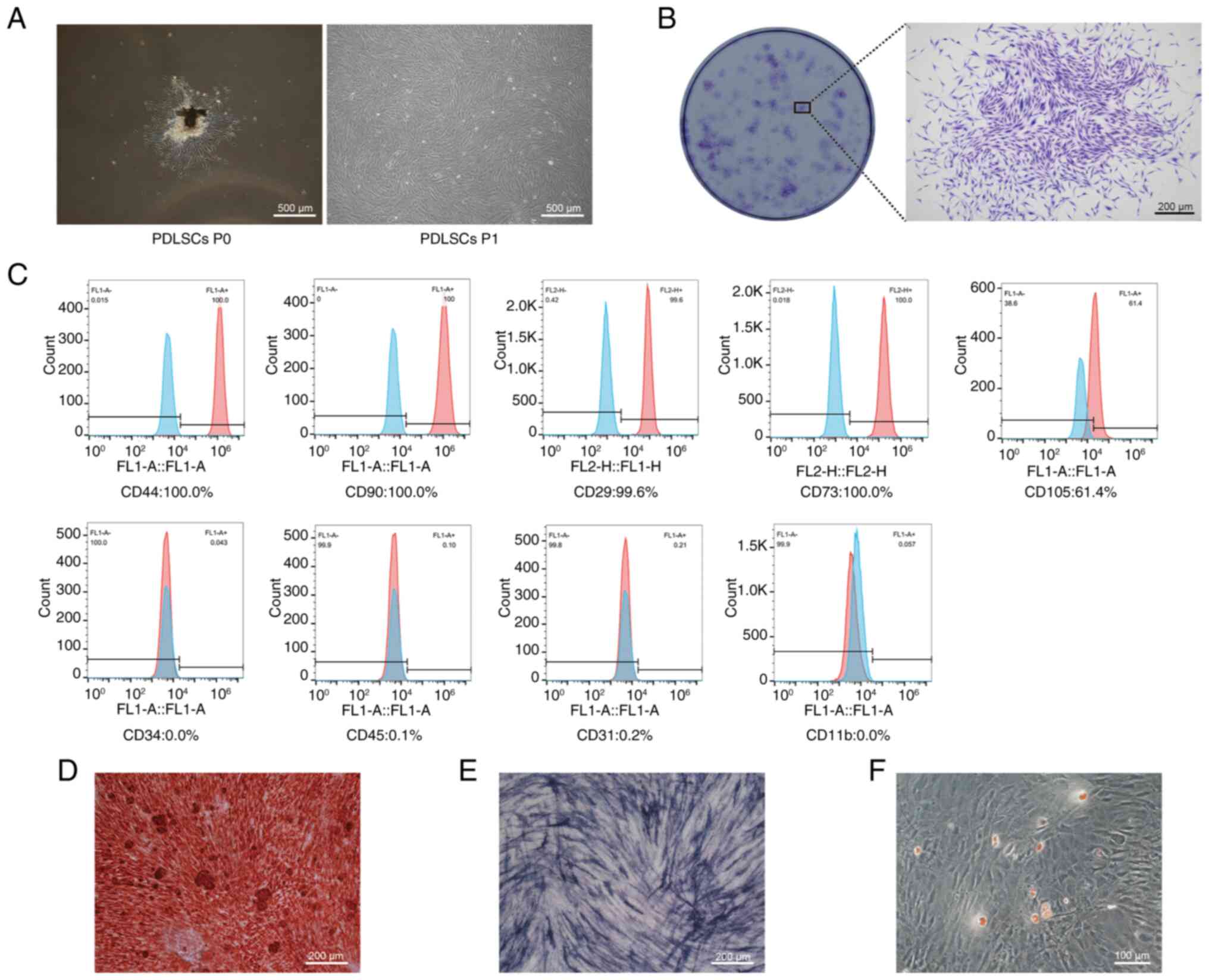
Figure 1

Identification of PDLSCs. (A)
Observation of P0 and P1 PDLSCs under a light microscope. Scale
bar, 500 μm. (B) PDLSC colonies stained with crystal violet
dye. Scale bar, 200 μm. (C) Expression profile of surface
markers in PDLSCs quantified using flow cytometry. (D) Mineralized
nodules formed by PDLSCs after 14 days of osteogenic induction
(stained with Alizarin Red S). Scale bar, 200 μm. (E)
Alkaline phosphatase staining of PDLSCs following 7 days of
osteogenic induction. Scale bar, 200 μm. (F) Oil red O
staining revealed the adipogenic differentiation potential of
PDLSCs. Scale bar, 100 μm. P0, primary; P1, first-passage;
PDLSC, periodontal ligament stem cell.

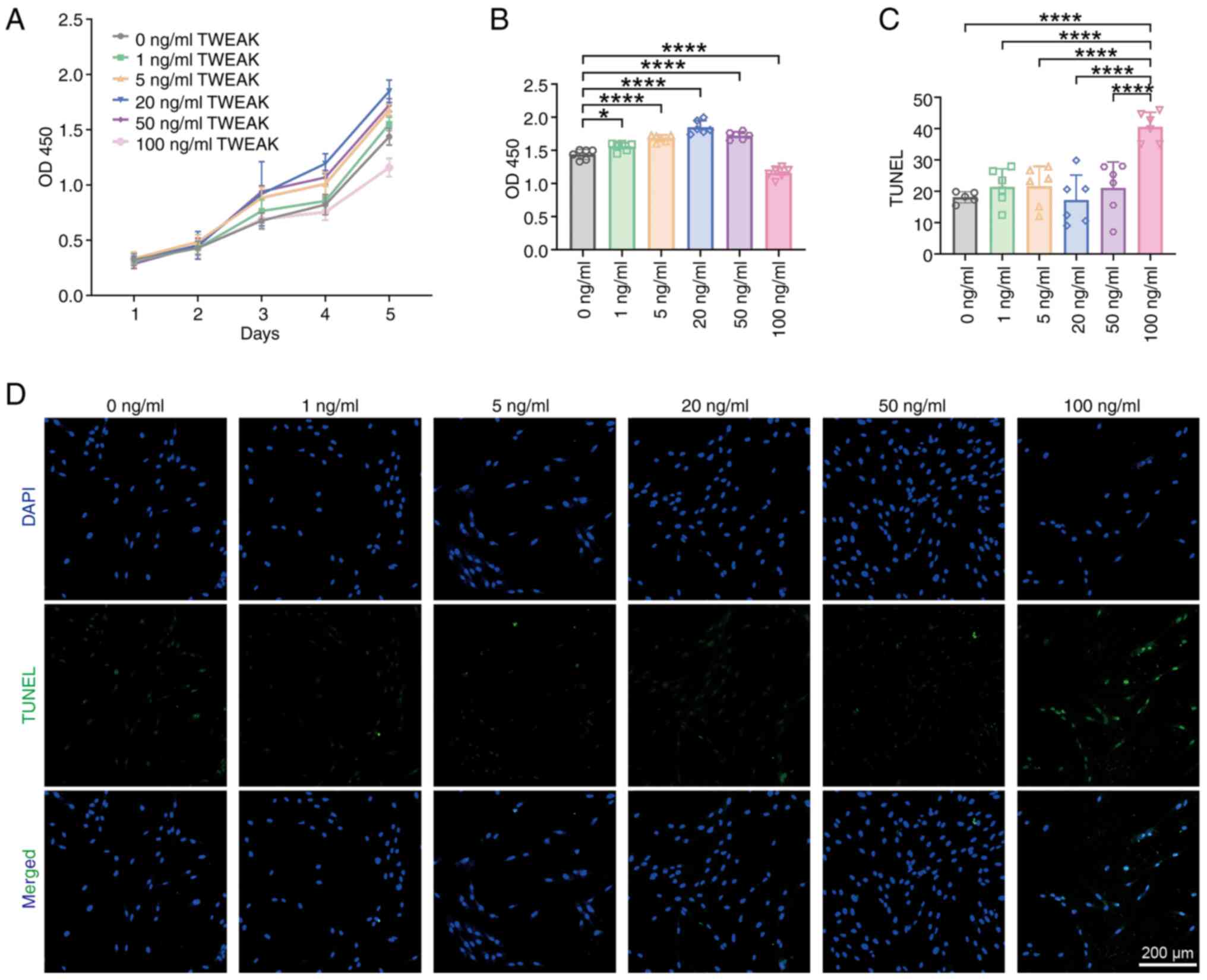
Figure 2

Effects of TWEAK on the proliferation
and apoptosis of PDLSCs. (A) Line chart depicting the effects of
various concentrations of TWEAK (0, 1, 5, 20, 50 and 100 ng/ml) on
PDLSC proliferation over 5 days, as assessed using the CCK-8 assay.
(B) Statistical analysis of the CCK-8 data from day 5 of TWEAK
stimulation shown in (A). (C) Statistical analysis of the average
fluorescence intensity of TUNEL (green) following treatment with
varying concentrations of TWEAK (0, 1, 5, 20, 50 and 100 ng/ml).
(D) TUNEL assay detecting the effects of various concentrations (0,
1, 5, 20, 50 and 100 ng/ml) of TWEAK on PDLSC apoptosis. Scale bar,
200 μm. Statistical analysis was performed using a one-way
ANOVA. *P<0.05; ****P<0.0001. Data are
presented as the mean ± SD (n=5 or 6). CCK-8, Cell Counting Kit-8;
OD450, optical density at 450 nm; PDLSC, periodontal ligament stem
cell; TWEAK, tumor necrosis factor-like weak inducer of
apoptosis.

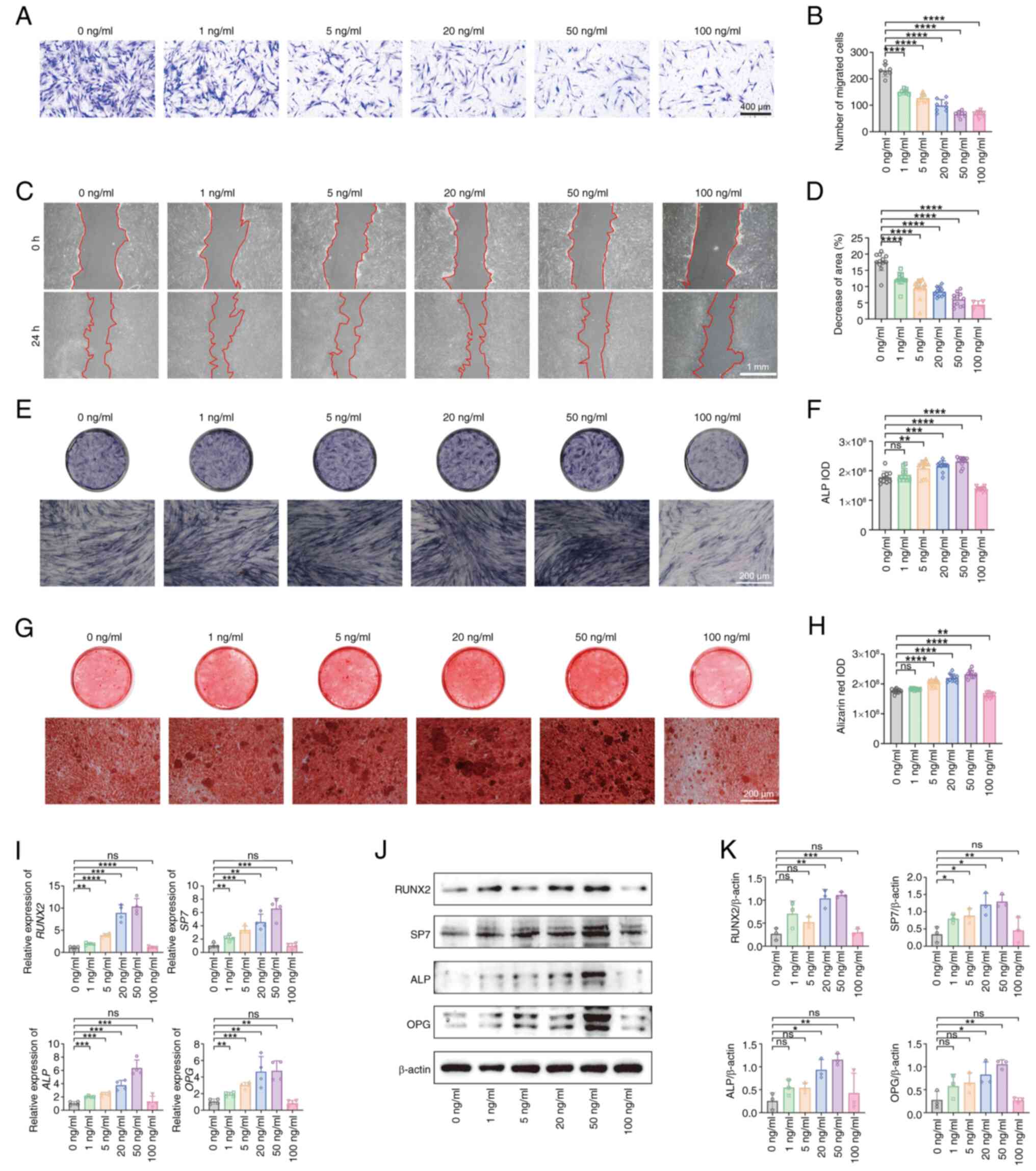
Figure 3

Effects of TWEAK on the migration and
osteogenic differentiation of PDLSCs. (A) Effects of various
concentrations of TWEAK (0, 1, 5, 20, 50 and 100 ng/ml) on the
number of migrating PDLSCs, and (B) quantitative analysis of the
number of migrating cells (n=6). Scale bar, 400 μm. (C)
Effects of various concentrations of TWEAK on PDLSC migration
toward scratch wounds over 24 h, and (D) quantitative analysis of
the percentage of wound area reduction (n=12). Scale bar, 1 mm. (E)
Effects of various concentrations of TWEAK on ALP staining in
PDLSCs, and (F) quantitative analysis of grayscale values from ALP
staining (n=6). Scale bar, 200 μm. (G) Alizarin Red staining
revealed the effects of various concentrations of TWEAK on PDLSC
mineralization, and (H) quantitative analysis of grayscale values
from Alizarin Red staining (n=6). Scale bar, 200 μm. (I)
Reverse transcription-quantitative PCR was used to assess the mRNA
expression levels of RUNX2, SP7, ALP and
OPG in PDLSCs after TWEAK stimulation (n=4), with
β-actin serving as the internal control. (J) Western blot
analysis of RUNX2, SP7, ALP and OPG protein expression in PDLSCs
after TWEAK induction, and (K) semi-quantitative analysis of the
gel band intensity, using β-actin as the internal control.
Statistical analysis was performed using a one-way ANOVA.
*P<0.05; **P<0.01;
***P<0.001; ****P<0.0001. Data are
presented as the mean ± SD. ALP, alkaline phosphatase; IOD,
integral optical density; ns, not significant; OPG,
osteoprotegerin; PDLSC, periodontal ligament stem cell; RUNX2,
runt-related transcription factor 2; SP7, Sp7 transcription factor;
TWEAK, tumor necrosis factor-like weak inducer of apoptosis.

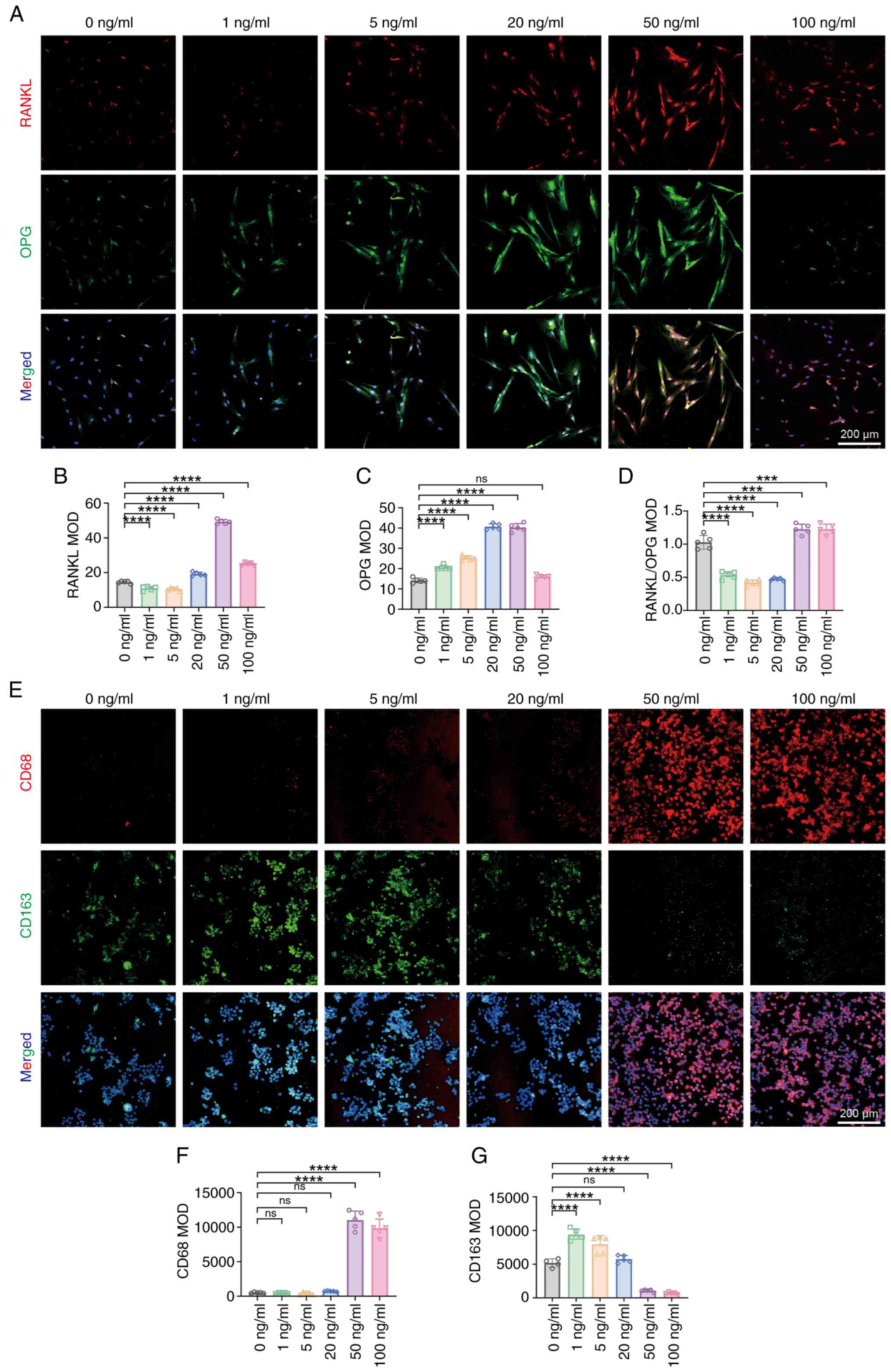
Figure 4

Effects of tumor necrosis factor-like
weak inducer of apoptosis on RANKL and OPG expression in PDLSCs and
PDLSC-induced macrophage polarization. (A) RANKL (red) and OPG
(green) expression in PDLSCs was detected by immunofluorescence
staining. Scale bar, 200 μm. Statistical analysis of the MOD
values for (B) RANKL and (C) OPG, and (D) their ratio based on (A)
(E) CD68 and CD163 expression in RAW264.7 macrophages was assessed
by immunofluorescence staining. Scale bar, 200 μm.
Statistical analysis of the MOD values for (F) CD68 and (G) CD163
based on (E). Statistical analysis was performed using a one-way
ANOVA. ***P<0.001; ****P<0.0001. Data
are presented as the mean ± SD (n=5). MOD, mean optical density;
ns, not significant; OPG, osteoprotegerin; PDLSC, periodontal
ligament stem cell; RANKL, receptor activator of nuclear factor-κB
ligand.

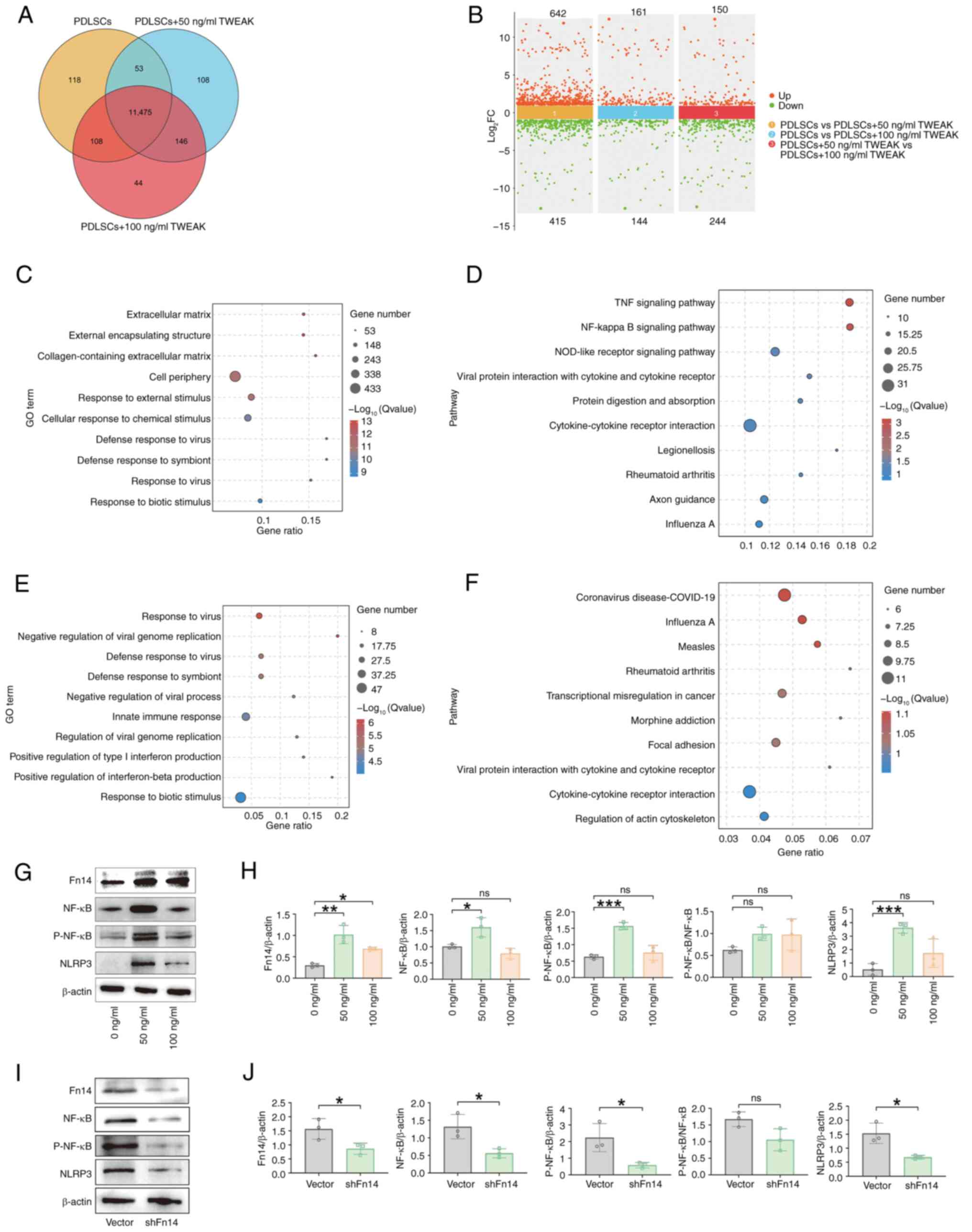
Figure 5

Transcriptome analysis of the effect
of TWEAK treatment on PDLSCs. (A) Venn diagram illustrating
differentially expressed genes in PDLSCs following TWEAK treatment.
(B) Multipoint differential scatter plot showing differentially
expressed genes in PDLSCs following TWEAK treatment. (C) GO
enrichment analysis comparing PDLSCs and PDLSCs treated with 50
ng/ml TWEAK. (D) KEGG enrichment analysis comparing PDLSCs and
PDLSCs treated with 50 ng/ml TWEAK. (E) GO enrichment analysis
comparing PDLSCs and PDLSCs treated with 100 ng/ml TWEAK. (F) KEGG
enrichment analysis comparing PDLSCs and PDLSCs treated with 100
ng/ml TWEAK. (G) Western blot analysis was conducted to detect the
levels of Fn14, NF-κB, P-NF-κB and NLRP3 in PDLSCs stimulated with
50 and 100 ng/ml TWEAK. (H) Statistical analysis of protein band
intensities from (G) (n=3). (I) Western blot analysis of the levels
of Fn14, NF-κB, P-NF-κB and NLRP3 in PDLSCs after Fn14 was silenced
using an shRNA. (J) Statistical analysis of protein band
intensities from (I) (n=3). Statistical analysis was performed
using (G and H) one-way ANOVA or (I and J) a two-tailed Student's
t-test. *P<0.05; **P<0.01;
***P<0.001. Data are presented as the mean ± SD. FC,
fold change; Fn14, fibroblast growth factor-inducible 14; GO, Gene
Ontology; KEGG, Kyoto Encyclopedia of Genes and Genomes; NLRP3,
NOD-like receptor thermal protein domain-associated protein 3; ns,
not significant; P-, phosphorylated; PDLSC, periodontal ligament
stem cell; shRNA/sh, short hairpin RNA; TWEAK, tumor necrosis
factor-like weak inducer of apoptosis.

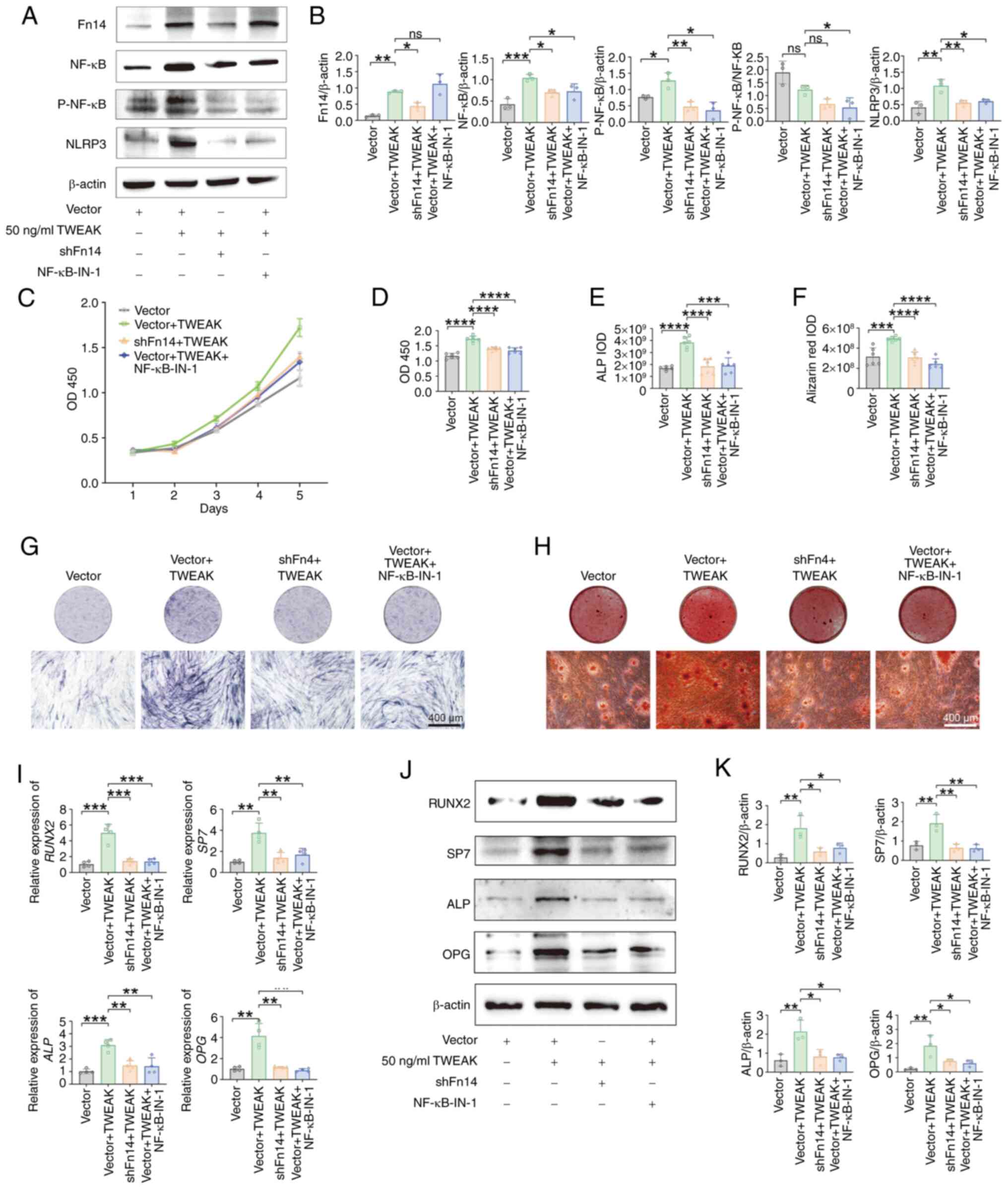
Figure 6

Inhibition of Fn14 and NF-κB
effectively blocks TWEAK-induced alterations in PDLSC
characteristics. (A) Western blot analysis was conducted to assess
the levels of Fn14, NF-κB, P-NF-κB and NLRP3 in PDLSCs. (B)
Statistical analysis of the intensities of the protein bands shown
in (A) (n=3). (C) A CCK-8 assay was performed to generate the
proliferation curve of PDLSCs. (D) Statistical analysis of the
OD450 values of cells from each group on day 5 of the CCK-8 assay,
as presented in (C) (n=6). (G) Results of ALP staining and (E) the
corresponding statistical analysis of PDLSCs after osteogenic
induction (n=6). Scale bar, 400 μm. (H) Results of Alizarin
Red staining and (F) the corresponding statistical analysis of
PDLSCs following osteogenic induction (n=6). Scale bar, 400
μm. (I) Reverse transcription-quantitative PCR was used to
assess the mRNA expression levels of RUNX2, SP7,
ALP and OPG in PDLSCs, with β-actin serving as
an internal reference (n=4). (J) Western blot analysis was
performed to detect the protein expression levels of RUNX2, SP7,
ALP and OPG in PDLSCs, and (K) the grayscale values of the gel
images were semi-quantitatively analyzed, with β-actin used as an
internal reference (n=3). Statistical analysis was performed using
a one-way ANOVA. *P<0.05; **P<0.01;
***P<0.001; ****P<0.0001. Data are
presented as the mean ± SD. ALP, alkaline phosphatase; CCK-8, Cell
Counting Kit-8; Fn14, fibroblast growth factor-inducible 14; IOD,
integral optical density; NLRP3, NOD-like receptor thermal protein
domain-associated protein 3; ns, not significant; OD450, optical
density at 450 nm; OPG, osteoprotegerin; P-, phosphorylated; PDLSC,
periodontal ligament stem cell; RUNX2, runt-related transcription
factor 2; sh, short hairpin RNA; SP7, Sp7 transcription factor;
TWEAK, tumor necrosis factor-like weak inducer of apoptosis.

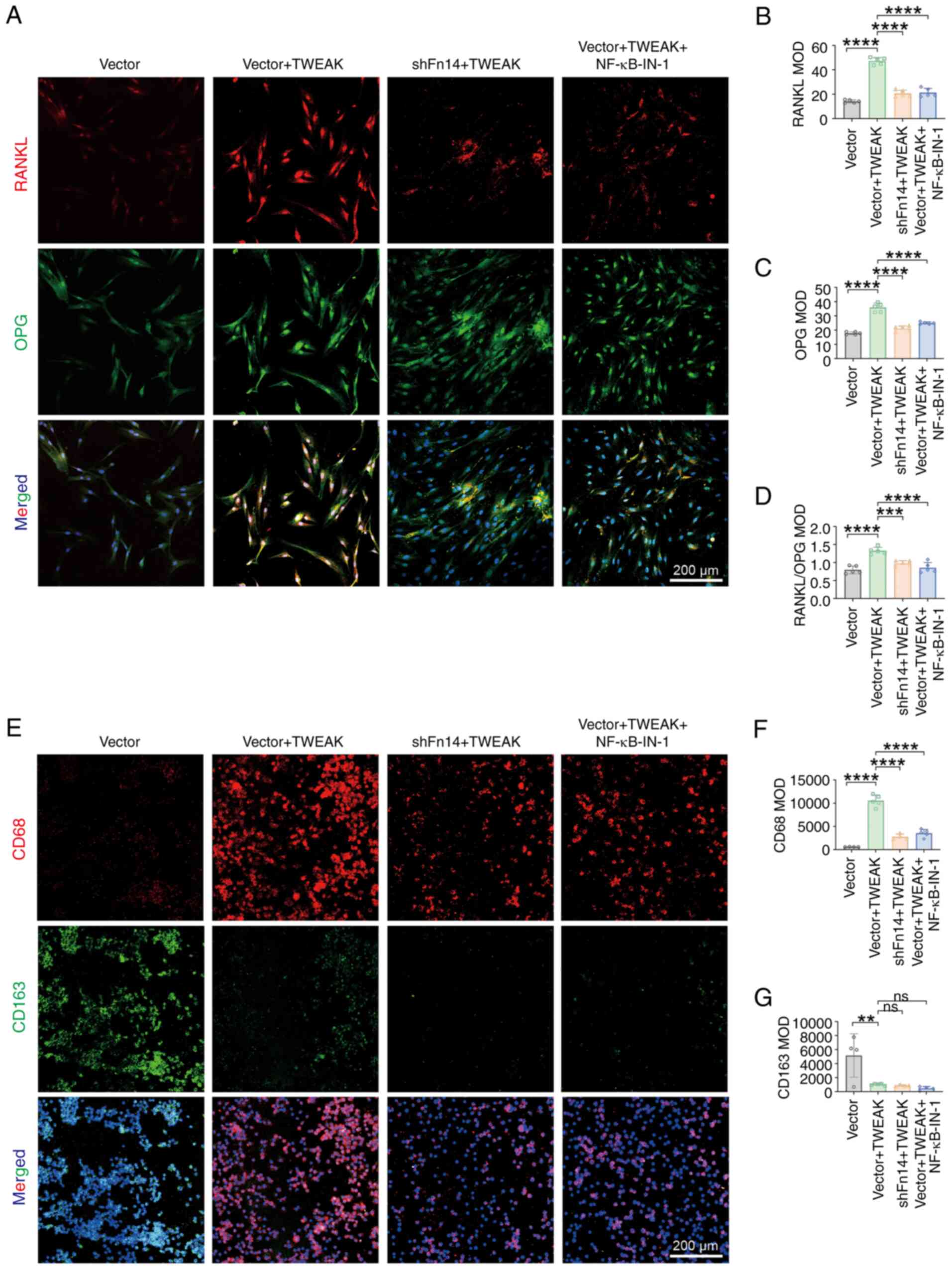
Figure 7

Inhibition of Fn14 and NF-κB
effectively blocks TWEAK-induced alterations in the
microenvironmental regulatory potential of PDLSCs. (A) Expression
levels of OPG (green) and RANKL (red) in PDLSCs were detected by
immunofluorescence staining, followed by quantitative analysis of
the MOD values for (B) RANKL and (C) OPG, and (D) the MOD ratio of
RANKL/OPG (n=5). Scale bar, 200 μm. (E) Expression levels of
CD68 and CD163 in RAW264.7 macrophages were detected by
immunofluorescence staining, followed by quantitative analysis of
the MOD values for (F) CD68 and (G) CD163 (n=5). Scale bar, 200
μm. Statistical analysis was performed using a one-way
ANOVA. **P<0.01; ***P<0.001;
****P<0.0001. Data are presented as the mean ± SD.
Fn14, fibroblast growth factor-inducible 14; MOD, mean optical
density; ns, not significant; OPGa, osteoprotegerin; PDLSC,
periodontal ligament stem cell; RANKL, receptor activator of
nuclear factor-κB ligand; sh, short hairpin RNA; TWEAK, tumor
necrosis factor-like weak inducer of apoptosis.

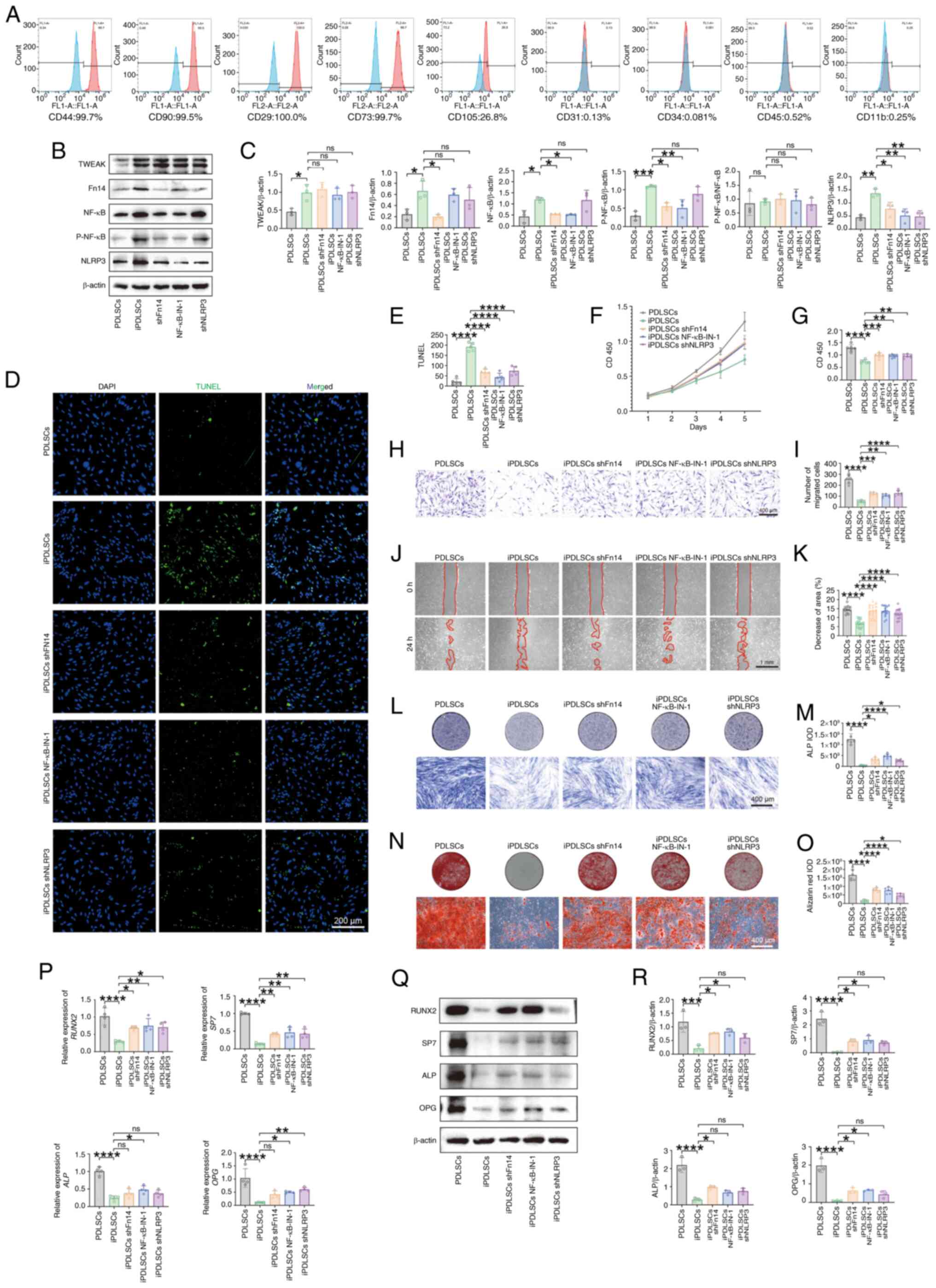
Figure 8

Inhibition of the
TWEAK/Fn14/NF-κB/NLRP3 pathway enhances the functional properties
of iPDLSCs. (A) Expression profile of surface markers in iPDLSCs
quantified using flow cytometry. (B) Levels of TWEAK, Fn14, NF-κB,
P-NF-κB and NLRP3 in PDLSCs, iPDLSCs, and iPDLSCs after the
downregulation of Fn14, NF-κB and NLRP3, and (C) statistical
analysis of the band density values (n=3). (D) Apoptosis levels in
PDLSCs, iPDLSCs, and iPDLSCs after downregulation of Fn14, NF-κB
and NLRP3 were detected using the TUNEL assay, and (E) statistical
analysis of the average fluorescence intensity of TUNEL was
performed (n=5). Scale bar, 200 μm. (F) A Cell Counting
Kit-8 assay was used to assess the proliferative potential of
PDLSCs, iPDLSCs, and iPDLSCs after the downregulation of Fn14,
NF-κB and NLRP3, and (G) statistical analysis of the OD450 values
on day 5 of the experiment was performed (n=6). (H) Transwell
migration assay evaluating the migratory potential of PDLSCs,
iPDLSCs, and iPDLSCs after Fn14, NF-κB or NLRP3 downregulation,
with (I) quantification of the number of migrated cells (n=6).
Scale bar, 400 μm. (J) Wound healing assay evaluating the
migratory potential of PDLSCs, iPDLSCs, and iPDLSCs after Fn14,
NF-κB or NLRP3 downregulation, with (K) quantification of the
percentage of wound closure (%) (n=16). Scale bar, 1 mm. (L) ALP
staining was used to evaluate the mineralization potential of
PDLSCs, iPDLSCs, and iPDLSCs after downregulation of Fn14, NF-κB or
NLRP3, with (M) quantification of the integral optical density of
the ALP-stained images (n=6). Scale bar, 400 μm. (N)
Alizarin Red staining was used to evaluate the mineralization
potential of PDLSCs, iPDLSCs, and iPDLSCs after downregulation of
Fn14, NF-κB or NLRP3, with (O) quantification of the integral
optical density of the Alizarin Red-stained images (n=6). Scale
bar, 400 μm. (P) Reverse transcription-quantitative PCR was
used to evaluate the mRNA expression levels of RUNX2,
SP7, ALP and OPG in PDLSCs, iPDLSCs, and
iPDLSCs after the downregulation of Fn14, NF-κB and NLRP3 (n=4).
(Q) Western blotting was used to detect the expression levels of
RUNX2, SP7, ALP and OPG in PDLSCs, iPDLSCs, and iPDLSCs after the
downregulation of Fn14, NF-κB and NLRP3, and (R) statistical
analysis of the band density values was performed (n=3).
Statistical analysis was performed using a one-way ANOVA.
*P<0.05; **P<0.01;
***P<0.001; ****P<0.0001. Data are
presented as the mean ± SD. ALP, alkaline phosphatase; Fn14,
fibroblast growth factor-inducible 14; IOD, integral optical
density; iPDLSC, inflammatory PDLSC; NLRP3, NOD-like receptor
thermal protein domain-associated protein 3; ns, not significant;
OD450, optical density at 450 nm; OPG, osteoprotegerin; P-,
phosphorylated; PDLSC, periodontal ligament stem cell; RUNX2,
runt-related transcription factor 2; sh, short hairpin RNA; SP7,
Sp7 transcription factor; TWEAK, tumor necrosis factor-like weak
inducer of apoptosis.

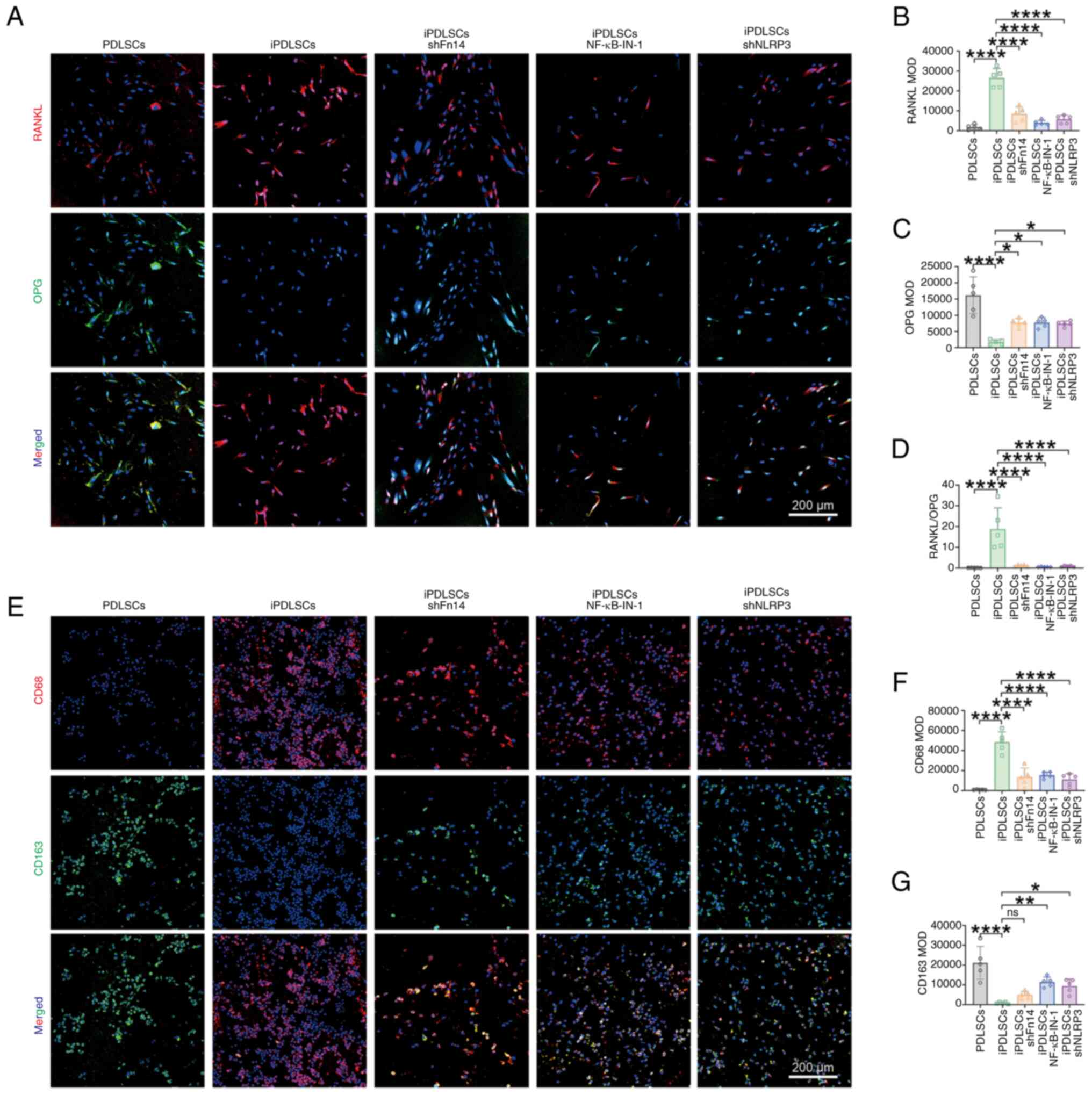
Figure 9

Effect of inhibition of the tumor
necrosis factor-like weak inducer of apoptosis/Fn14/NF-κB/NLRP3
pathway on the microenvironmental regulatory ability of iPDLSCs.
(A) Immunofluorescence staining was used to detect the expression
levels of RANKL and OPG in PDLSCs, iPDLSCs, and iPDLSCs after the
downregulation of Fn14, NF-κB and NLRP3, followed by statistical
analysis of the average optical density values of (B) RANKL and (C)
OPG, and (D) the RANKL/OPG ratio (n=5). Scale bar, 200 μm.
(E) Immunofluorescence staining was used to detect the expression
levels of CD68 and CD163 in macrophages cocultured with PDLSCs,
iPDLSCs, and iPDLSCs after the downregulation of Fn14, NF-κB and
NLRP3, followed by statistical analysis of the average optical
density values of (F) CD68 and (G) CD163 (n=5). Scale bar, 200
μm. Statistical analysis was performed using a one-way
ANOVA. *P<0.05; **P<0.01;
****P<0.0001. Data are presented as the mean ± SD.
Fn14, fibroblast growth factor-inducible 14; iPDLSC, inflammatory
PDLSC; MOD, mean optical density; NLRP3, NOD-like receptor thermal
protein domain-associated protein 3; ns, not significant; OPG,
osteoprotegerin; PDLSC, periodontal ligament stem cell; RANKL,
receptor activator of nuclear factor-κB ligand; sh, short hairpin
RNA.

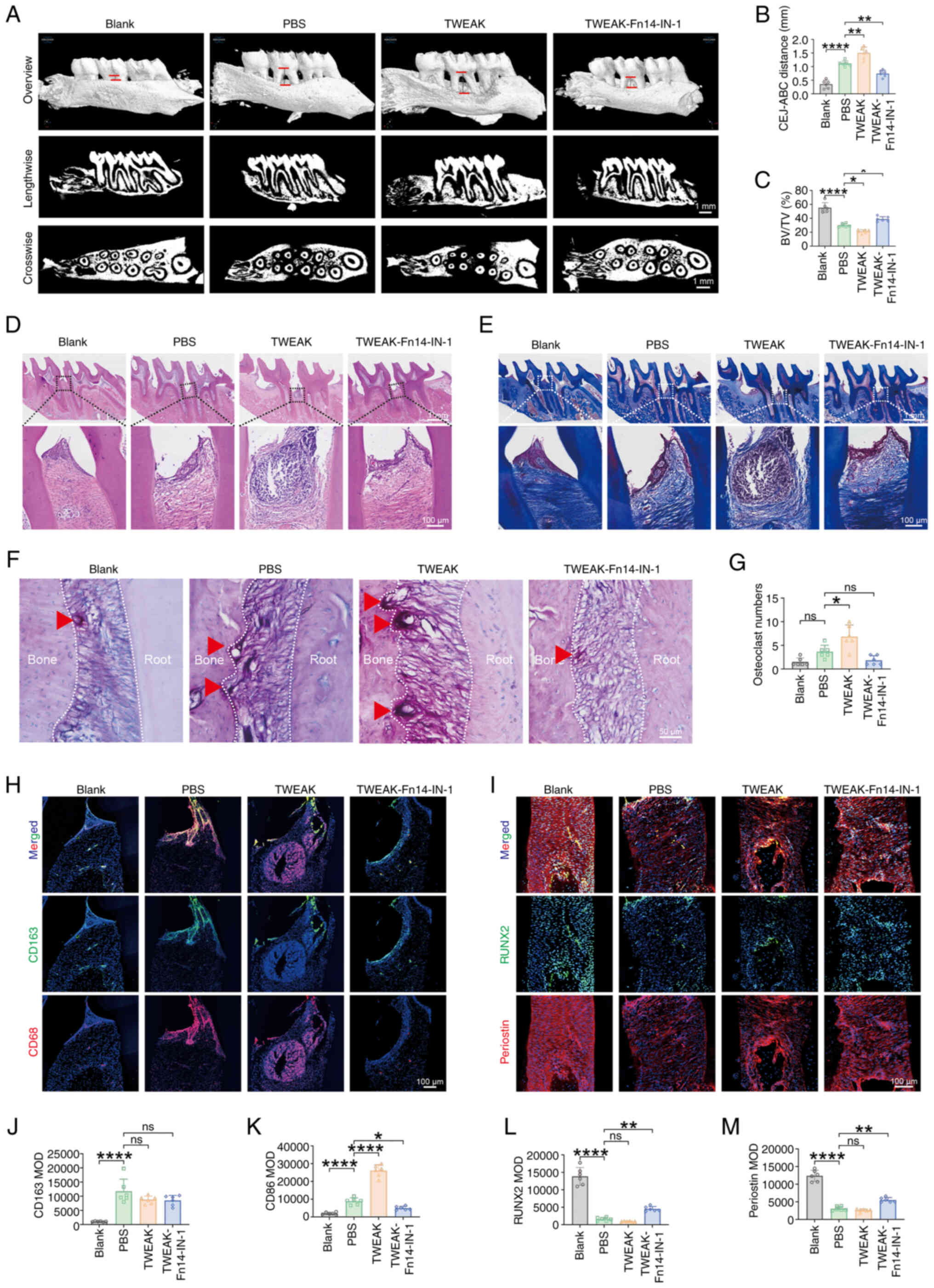
Figure 10

Effects of TWEAK and TWEAK-Fn14-IN-1
on the progression of rat periodontitis. (A) Micro-CT images of the
rat maxilla, with the distance between the two red short lines
representing the CEJ-ABC distance on the buccal side, and with
statistical analysis of the (B) distance of CEJ-ABC (n=6), and (C)
BV/TV at the root bifurcation of the maxillary second molar (n=6).
Scale bar, 1 mm. Images of (D) H&E and (E) Masson's trichrome
staining of rat periodontal tissues. Scale bar, 1 mm (top) or 100
μm (bottom). (F) Representative images of TRAP/alkaline
phosphatase double staining in the periodontal tissue of the rat
maxillary second molar, with (G) quantification and statistical
analysis of osteoclast numbers (TRAP-positive, multinucleated cells
located in the bone resorption lacunae) at the mesial root (n=6).
Red triangles indicate osteoclasts. Scale bar, 50 μm. (H)
Immunofluorescence staining of CD163 (green) and CD68 (red) in
periodontal tissues, with (J) quantification of the mean
fluorescence intensity of CD163 and (K) quantification of the mean
fluorescence intensity of CD68 (n=6). Scale bar, 100 μm. (I)
Immunofluorescence staining of RUNX2 (green) and Periostin (red) in
periodontal tissues, with (L) quantification of the mean
fluorescence intensity of RUNX2 and (M) quantification of the mean
fluorescence intensity of Periostin (n=6). Scale bar, 100
μm. Blank represents the unmodeled group, PBS refers to the
control group where PBS was used instead of TWEAK or
TWEAK-Fn14-IN-1 during modeling, and TWEAK and TWEAK-Fn14-IN-1
represent experimental groups where the recombinant TWEAK protein
or TWEAK-Fn14-IN-1 inhibitor was applied, respectively. Statistical
analysis was performed using a one-way ANOVA.
*P<0.05; **P<0.01;
****P<0.0001. Data are presented as the mean ± SD.
ABC, alveolar bone crest; BV/TV, bone volume to total volume; CEJ,
cementoenamel junction; Fn14, fibroblast growth factor-inducible
14; MOD, mean optical density; ns, not significant; RUNX2,
runt-related transcription factor 2; TRAP, tartrate-resistant acid
phosphatase; TWEAK, tumor necrosis factor-like weak inducer of
apoptosis.
View References

1 

Chicheportiche Y, Bourdon PR, Xu H, Hsu YM, Scott H, Hession C, Garcia I and Browning JL: TWEAK, a new secreted ligand in the tumor necrosis factor family that weakly induces apoptosis. J Biol Chem. 272:32401–32410. 1997. View Article : Google Scholar

2 

Liu Q, Xiao S and Xia Y: TWEAK/Fn14 activation participates in skin inflammation. Mediators Inflamm. 2017:67468702017. View Article : Google Scholar : PubMed/NCBI

3 

Liu J, Liu Y, Peng L, Li J, Wu K, Xia L, Wu J, Wang S, Wang X, Liu Q, et al: TWEAK/Fn14 signals mediate burn wound repair. J Invest Dermatol. 139:224–234. 2019. View Article : Google Scholar

4 

Wang A, Zhang F, Xu H, Xu M, Cao Y, Wang C, Xu Y, Su M, Zhang M and Zhuge Y: TWEAK/Fn14 promotes pro-inflammatory cytokine secretion in hepatic stellate cells via NF-κB/STAT3 pathways. Mol Immunol. 87:67–75. 2017. View Article : Google Scholar : PubMed/NCBI

5 

Johnston AJ and Hoogenraad NJ: Fn14: A new player in cancer-induced cachexia. Curr Opin Clin Nutr Metab Care. 19:316–318. 2016.PubMed/NCBI

6 

Burkly LC, Michaelson JS and Zheng TS: TWEAK/Fn14 pathway: An immunological switch for shaping tissue responses. Immunol Rev. 244:99–114. 2011. View Article : Google Scholar : PubMed/NCBI

7 

Ratajczak W, Atkinson SD and Kelly C: The TWEAK/Fn14/CD163 axis-implications for metabolic disease. Rev Endocr Metab Disord. 23:449–462. 2022. View Article : Google Scholar

8 

Xu WD, Zhao Y and Liu Y: Role of the TWEAK/Fn14 pathway in autoimmune diseases. Immunol Res. 64:44–50. 2016. View Article : Google Scholar

9 

Wang S, Li L, Cook C, Zhang Y, Xia Y and Liu Y: A potential fate decision landscape of the TWEAK/Fn14 axis on stem and progenitor cells: A systematic review. Stem Cell Res Ther. 13:2702022. View Article : Google Scholar : PubMed/NCBI

10 

Yakar N, Guncu GN, Akman AC, Pınar A, Karabulut E and Nohutcu RM: Evaluation of gingival crevicular fluid and peri-implant crevicular fluid levels of sclerostin, TWEAK, RANKL and OPG. Cytokine. 113:433–439. 2019. View Article : Google Scholar

11 

Kataria NG, Bartold PM, Dharmapatni AA, Atkins GJ, Holding CA and Haynes DR: Expression of tumor necrosis factor-like weak inducer of apoptosis (TWEAK) and its receptor, fibroblast growth factor-inducible 14 protein (Fn14), in healthy tissues and in tissues affected by periodontitis. J Periodontal Res. 45:564–573. 2010.PubMed/NCBI

12 

Gur AT, Guncu GN, Akman AC, Pinar A, Karabulut E and Nohutcu RM: Evaluation of GCF IL-17, IL-10, TWEAK, and sclerostin levels after scaling and root planing and adjunctive use of diode laser application in patients with periodontitis. J Periodontol. 93:1161–1172. 2022. View Article : Google Scholar

13 

Luan X, Zhou X, Trombetta-eSilva J, Francis M, Gaharwar AK, Atsawasuwan P and Diekwisch TGH: MicroRNAs and periodontal homeostasis. J Dent Res. 96:491–500. 2017. View Article : Google Scholar : PubMed/NCBI

14 

Deng DK, Zhang JJ, Gan D, Zou JK, Wu RX, Tian Y, Yin Y, Li X, Chen FM and He XT: Roles of extracellular vesicles in periodontal homeostasis and their therapeutic potential. J Nanobiotechnology. 20:5452022. View Article : Google Scholar : PubMed/NCBI

15 

Ravidà A, Qazi M, Rodriguez MV, Galli M, Saleh MHA, Troiano G and Wang HL: The influence of the interaction between staging, grading and extent on tooth loss due to periodontitis. J Clin Periodontol. 48:648–658. 2021. View Article : Google Scholar : PubMed/NCBI

16 

Zhang D, Lin W, Jiang S, Deng P, Liu L, Wang Q, Sheng R, Shu HS, Wang L, Zou W, et al: Lepr-Expressing PDLSCs contribute to periodontal homeostasis and respond to mechanical force by piezo1. Adv Sci. 10:e23032912023. View Article : Google Scholar

17 

Zhang Z, Deng M, Hao M and Tang J: Periodontal ligament stem cells in the periodontitis niche: Inseparable interactions and mechanisms. J Leukoc Biol. 110:565–576. 2021. View Article : Google Scholar : PubMed/NCBI

18 

Tomokiyo A, Wada N and Maeda H: Periodontal ligament stem cells: Regenerative potency in periodontium. Stem Cells Dev. 28:974–985. 2019. View Article : Google Scholar : PubMed/NCBI

19 

Liu J, Chen B, Bao J, Zhang Y, Lei L and Yan F: Macrophage polarization in periodontal ligament stem cells enhanced periodontal regeneration. Stem Cell Res Ther. 10:3202019. View Article : Google Scholar : PubMed/NCBI

20 

Jin SS, He DQ, Wang Y, Zhang T, Yu HJ, Li ZX, Zhu LS, Zhou YH and Liu Y: Mechanical force modulates periodontal ligament stem cell characteristics during bone remodelling via TRPV4. Cell Prolif. 53:e129122020. View Article : Google Scholar : PubMed/NCBI

21 

Zhang Z, Shuai Y, Zhou F, Yin J, Hu J, Guo S, Wang Y and Liu W: PDLSCs regulate angiogenesis of periodontal ligaments via VEGF transferred by exosomes in periodontitis. Int J Med Sci. 17:558–567. 2020. View Article : Google Scholar : PubMed/NCBI

22 

Qiu X, Du Y, Lou B, Zuo Y, Shao W, Huo Y, Huang J, Yu Y, Zhou B, Du J, et al: Synthesis and identification of new 4-arylidene curcumin analogues as potential anticancer agents targeting nuclear factor-κB signaling pathway. J Med Chem. 53:8260–73. 2010. View Article : Google Scholar : PubMed/NCBI

23 

Love MI, Huber W and Anders S: Moderated estimation of fold change and dispersion for RNA-seq data with DESeq2. Genome Biol. 15:5502014. View Article : Google Scholar : PubMed/NCBI

24 

Livak KJ and Schmittgen TD: Analysis of relative gene expression data using real-time quantitative PCR and the 2(-Delta Delta C(T)) method. Methods. 25:402–408. 2001. View Article : Google Scholar

25 

Seo BM, Miura M, Gronthos S, Bartold PM, Batouli S, Brahim J, Young M, Robey PG, Wang CY and Shi S: Investigation of multipotent postnatal stem cells from human periodontal ligament. Lancet. 364:149–55. 2004. View Article : Google Scholar : PubMed/NCBI

26 

Zhao X, Lin H, Ding T, Wang Y, Liu N and Shen Y: Overview of the main biological mechanisms linked to changes in periodontal ligament stem cells and the inflammatory microenvironment. J Zhejiang Univ Sci B. 24:373–386. 2023.In English, Chinese. View Article : Google Scholar : PubMed/NCBI

27 

Jin S, Jiang H, Sun Y, Li F, Xia J, Li Y, Zheng J and Qin Y: Osteogenic differentiation of periodontal membrane stem cells in inflammatory environments. Open Life Sci. 17:1240–1248. 2022. View Article : Google Scholar : PubMed/NCBI

28 

Silva I and Branco JC: Rank/Rankl/opg: Literature review. Acta Reumatol Port. 36:209–218. 2011.PubMed/NCBI

29 

Li P, Ou Q, Shi S and Shao C: Immunomodulatory properties of mesenchymal stem cells/dental stem cells and their therapeutic applications. Cell Mol Immunol. 20:558–569. 2023. View Article : Google Scholar : PubMed/NCBI

30 

Nakao Y, Fukuda T, Zhang Q, Sanui T, Shinjo T, Kou X, Chen C, Liu D, Watanabe Y, Hayashi C, et al: Exosomes from TNF-α-treated human gingiva-derived MSCs enhance M2 macrophage polarization and inhibit periodontal bone loss. Acta Biomater. 122:306–324. 2021. View Article : Google Scholar

31 

Huang X, Deng Y, Xiao J, Wang H, Yang Q and Cao Z: Genetically engineered M2-like macrophage-derived exosomes for P. gingivalis-suppressed cementum regeneration: From mechanism to therapy. Bioact Mater. 32:473–487. 2023.PubMed/NCBI

32 

Zaitseva O, Hoffmann A, Otto C and Wajant H: Targeting fibroblast growth factor (FGF)-inducible 14 (Fn14) for tumor therapy. Front Pharmacol. 13:9350862022. View Article : Google Scholar : PubMed/NCBI

33 

Saitoh T, Nakayama M, Nakano H, Yagita H, Yamamoto N and Yamaoka S: TWEAK induces NF-kappaB2 p100 processing and long lasting NF-kappaB activation. J Biol Chem. 278:36005–36012. 2003. View Article : Google Scholar : PubMed/NCBI

34 

Guo L, Zhang Y, Liu H, Cheng Q, Yang S and Yang D: All-trans retinoic acid inhibits the osteogenesis of periodontal ligament stem cells by promoting IL-1β production via NF-κB signaling. Int Immunopharmacol. 108:1087572022. View Article : Google Scholar

35 

Okić Đorđević I, Kukolj T, Živanović M, Momčilović S, Obradović H, Petrović A, Mojsilović S, Trivanović D and Jauković A: The role of doxycycline and IL-17 in regenerative potential of periodontal ligament stem cells: Implications in periodontitis. Biomolecules. 13:14372023. View Article : Google Scholar

36 

Zhang B, Yang Y, Yi J, Zhao Z and Ye R: Hyperglycemia modulates M1/M2 macrophage polarization via reactive oxygen species overproduction in Ligature-induced periodontitis. J Periodontal Res. 56:991–1005. 2021. View Article : Google Scholar : PubMed/NCBI

37 

Almubarak A, Tanagala KKK, Papapanou PN, Lalla E and Momen-Heravi F: Disruption of monocyte and macrophage homeostasis in periodontitis. Front Immunol. 11:3302020. View Article : Google Scholar : PubMed/NCBI

38 

Wang C, Zhao Q, Chen C, Li J, Zhang J, Qu S, Tang H, Zeng H and Zhang Y: CD301b+ macrophage: The new booster for activating bone regeneration in periodontitis treatment. Int J Oral Sci. 15:192023. View Article : Google Scholar :

39 

Wang Y, Zhang X, Wang J, Zhang Y, Ye Q, Wang Y, Fei D and Wang Q: Inflammatory periodontal ligament stem cells drive M1 macrophage polarization via exosomal miR-143-3p-mediated regulation of PI3K/AKT/NF-κB signaling. Stem Cells. 41:184–199. 2023. View Article : Google Scholar

40 

Qian JK, Ma Y, Huang X, Li XR, Xu YF, Liu ZY, Gu Y, Shen K, Tian LJ, Wang YT, et al: The CD163/TWEAK/Fn14 axis: A potential therapeutic target for alleviating inflammatory bone loss. J Orthop Translat. 49:82–95. 2024. View Article : Google Scholar : PubMed/NCBI

41 

Winkles JA: The TWEAK-Fn14 cytokine-receptor axis: Discovery, biology and therapeutic targeting. Nat Rev Drug Discov. 7:411–425. 2008. View Article : Google Scholar : PubMed/NCBI

42 

Wang W, Shi X, Feng J, Le Y, Jin L, Lu D, Zhang Q and Wang C: Perinatal exposure to PBEB aggravates liver injury via macrophage-derived TWEAK in male adult offspring mice under western diet. J Hazard Mater. 479:1357352024. View Article : Google Scholar : PubMed/NCBI

43 

Liu L, Wu P, Wei Y, Lu M, Ge H, Wang P, Sun J, Horng T, Liu X, Shen X, et al: TWEAK-Fn14 signaling protects mice from pulmonary fibrosis by inhibiting fibroblast activation and recruiting pro-regenerative macrophages. Cell Rep. 44:1152202025. View Article : Google Scholar : PubMed/NCBI

44 

Vincent C, Findlay DM, Welldon KJ, Wijenayaka AR, Zheng TS, Haynes DR, Fazzalari NL, Evdokiou A and Atkins GJ: Pro-inflammatory cytokines TNF-related weak inducer of apoptosis (TWEAK) and TNFα induce the mitogen-activated protein kinase (MAPK)-dependent expression of sclerostin in human osteoblasts. J Bone Miner Res. 24:1434–1449. 2009. View Article : Google Scholar : PubMed/NCBI

45 

Holmberg R, Robinson M, Gilbert SF, Lujano-Olazaba O, Waters JA, Kogan E, Velasquez CLR, Stevenson D, Cruz LS, Alexander LJ, et al: TWEAK-Fn14-RelB signaling cascade promotes stem Cell-like features that contribute to Post-chemotherapy ovarian cancer relapse. Mol Cancer Res. 21:170–186. 2023. View Article : Google Scholar

46 

Liu W, Gao L, Hou X, Feng S, Yan H, Pan H, Zhang S, Yang X, Jiang J, Ye F, et al: TWEAK Signaling-induced ID1 expression drives malignant transformation of hepatic progenitor cells during hepatocarcinogenesis. Adv Sci. 10:e23003502023. View Article : Google Scholar

47 

Ando T, Ichikawa J, Wako M, Hatsushika K, Watanabe Y, Sakuma M, Tasaka K, Ogawa H, Hamada Y, Yagita H and Nakao A: TWEAK/Fn14 interaction regulates RANTES production, BMP-2-induced differentiation, and RANKL expression in mouse osteoblastic MC3T3-E1 cells. Arthritis Res Ther. 8:R1462006. View Article : Google Scholar : PubMed/NCBI

48 

Zou X, Tian Y, Peng L, Luo M, Yan Z, Xue Z, Liu X and Xia Y: TWEAK regulates the functions of hair follicle stem cells via the Fn14-Wnt/β-catenin-CXCR4 signalling axis. Wound Repair Regen. 33:e700322025. View Article : Google Scholar

49 

Wang Y, Wang L, Sun T, Shen S, Li Z, Ma X, Gu X, Zhang X, Peng A, Xu X and Feng Q: Study of the inflammatory activating process in the early stage of Fusobacterium nucleatum infected PDLSCs. Int J Oral Sci. 15:82023. View Article : Google Scholar : PubMed/NCBI

50 

Wang P, Tian H, Zhang Z and Wang Z: EZH2 regulates lipopolysaccharide-induced periodontal ligament stem cell proliferation and osteogenesis through TLR4/MyD88/NF-κB pathway. Stem Cells Int. 2021:76251342021. View Article : Google Scholar

51 

Guan XX, Yang HH, Zhong WJ, Duan JX, Zhang CY, Jiang HL, Xiang Y, Zhou Y and Guan CX: Fn14 exacerbates acute lung injury by activating the NLRP3 inflammasome in mice. Mol Med. 28:852022. View Article : Google Scholar : PubMed/NCBI

52 

Zhao Y, Quan Y, Lei T, Fan L, Ge X and Hu S: The role of inflammasome NLPR3 in the development and therapy of periodontitis. Int J Med Sci. 19:1603–1614. 2022. View Article : Google Scholar : PubMed/NCBI

53 

Mao H, Gong T, Sun Y, Yang S, Qiao X and Yang D: Bacterial growth stage determines the yields, protein composition, and periodontal pathogenicity of porphyromonas gingivalis outer membrane vesicles. Front Cell Infect Microbiol. 13:11931982023. View Article : Google Scholar : PubMed/NCBI

54 

Liang F and Huang S: PGC-1α inhibits NLRP3 signaling through transcriptional activation of POP1 to alleviate inflammation and strengthen osteogenic differentiation of lipopolysaccharide-induced human periodontal stem cells. Prostaglandins Other Lipid Mediat. 174:1068532024. View Article : Google Scholar

55 

Michaelson JS and Burkly LC: Therapeutic targeting of TWEAK/Fn14 in cancer: Exploiting the intrinsic tumor cell killing capacity of the pathway. Results Probl Cell Differ. 49:145–160. 2009. View Article : Google Scholar

56 

Roessler M, Vega-Harring SM, Jarutat T, Geho D, Wang K, DeMario M, Goss GD and Schellens JH: Exposure and tumor Fn14 expression as determinants of pharmacodynamics of the Anti-TWEAK monoclonal antibody RG7212 in patients with Fn14-positive solid tumors. Clin Cancer Res. 22:858–867. 2016. View Article : Google Scholar

57 

Alvarez de Cienfuegos A, Cheung LH, Mohamedali KA, Whitsett TG, Winkles JA, Hittelman WN and Rosenblum MG: Therapeutic efficacy and safety of a human fusion construct targeting the TWEAK receptor Fn14 and containing a modified granzyme B. J Immunother Cancer. 8:e0011382020. View Article : Google Scholar : PubMed/NCBI

58 

Keshtvarz M, Rezaei E, Amani J, Pourmand MR, Salimian J, Sarial S and Douraghi M: A novel shiga based immunotoxin against Fn-14 receptor on colorectal and lung cancer. Int Immunopharmacol. 110:1090762022. View Article : Google Scholar : PubMed/NCBI

59 

Schneider CS, Perez JG, Cheng E, Zhang C, Mastorakos P, Hanes J, Winkles JA, Woodworth GF and Kim AJ: Minimizing the non-specific binding of nanoparticles to the brain enables active targeting of Fn14-positive glioblastoma cells. Biomaterials. 42:42–51. 2015. View Article : Google Scholar

60 

Guerrero-Hue M, Vallejo-Mudarra M, García-Caballero C, Córdoba-David GM, Palomino-Antolín A, Herencia C, Vendrell-Casana B, Rubio-Navarro A, Egido J, Blanco-Colio LM and Moreno JA: Tweak/Fn14 system is involved in rhabdomyolysis-induced acute kidney injury. Biomed Pharmacother. 169:1159252023. View Article : Google Scholar : PubMed/NCBI

61 

Hotta K, Sho M, Yamato I, Shimada K, Harada H, Akahori T, Nakamura S, Konishi N, Yagita H, Nonomura K and Nakajima Y: Direct targeting of fibroblast growth factor-inducible 14 protein protects against renal ischemia reperfusion injury. Kidney Int. 79:179–188. 2011. View Article : Google Scholar

62 

Dou Y, Li C, Li L, Guo J and Zhang J: Bioresponsive drug delivery systems for the treatment of inflammatory diseases. J Control Release. 327:641–666. 2020. View Article : Google Scholar : PubMed/NCBI

Related Articles

  • Abstract
  • View
  • Download
  • Twitter
Copy and paste a formatted citation
Spandidos Publications style
Xiao L, Qu M, Chen L, Xiang M, Long Q, Liu J, Guan X and Liao C: TWEAK modulates the characteristics of periodontal ligament stem cells via the Fn14/NF‑&kappa;B pathway. Int J Mol Med 57: 8, 2026.
APA
Xiao, L., Qu, M., Chen, L., Xiang, M., Long, Q., Liu, J. ... Liao, C. (2026). TWEAK modulates the characteristics of periodontal ligament stem cells via the Fn14/NF‑&kappa;B pathway. International Journal of Molecular Medicine, 57, 8. https://doi.org/10.3892/ijmm.2025.5679
MLA
Xiao, L., Qu, M., Chen, L., Xiang, M., Long, Q., Liu, J., Guan, X., Liao, C."TWEAK modulates the characteristics of periodontal ligament stem cells via the Fn14/NF‑&kappa;B pathway". International Journal of Molecular Medicine 57.1 (2026): 8.
Chicago
Xiao, L., Qu, M., Chen, L., Xiang, M., Long, Q., Liu, J., Guan, X., Liao, C."TWEAK modulates the characteristics of periodontal ligament stem cells via the Fn14/NF‑&kappa;B pathway". International Journal of Molecular Medicine 57, no. 1 (2026): 8. https://doi.org/10.3892/ijmm.2025.5679
Copy and paste a formatted citation
x
Spandidos Publications style
Xiao L, Qu M, Chen L, Xiang M, Long Q, Liu J, Guan X and Liao C: TWEAK modulates the characteristics of periodontal ligament stem cells via the Fn14/NF‑&kappa;B pathway. Int J Mol Med 57: 8, 2026.
APA
Xiao, L., Qu, M., Chen, L., Xiang, M., Long, Q., Liu, J. ... Liao, C. (2026). TWEAK modulates the characteristics of periodontal ligament stem cells via the Fn14/NF‑&kappa;B pathway. International Journal of Molecular Medicine, 57, 8. https://doi.org/10.3892/ijmm.2025.5679
MLA
Xiao, L., Qu, M., Chen, L., Xiang, M., Long, Q., Liu, J., Guan, X., Liao, C."TWEAK modulates the characteristics of periodontal ligament stem cells via the Fn14/NF‑&kappa;B pathway". International Journal of Molecular Medicine 57.1 (2026): 8.
Chicago
Xiao, L., Qu, M., Chen, L., Xiang, M., Long, Q., Liu, J., Guan, X., Liao, C."TWEAK modulates the characteristics of periodontal ligament stem cells via the Fn14/NF‑&kappa;B pathway". International Journal of Molecular Medicine 57, no. 1 (2026): 8. https://doi.org/10.3892/ijmm.2025.5679
Follow us
  • Twitter
  • LinkedIn
  • Facebook
About
  • Spandidos Publications
  • Careers
  • Cookie Policy
  • Privacy Policy
How can we help?
  • Help
  • Live Chat
  • Contact
  • Email to our Support Team