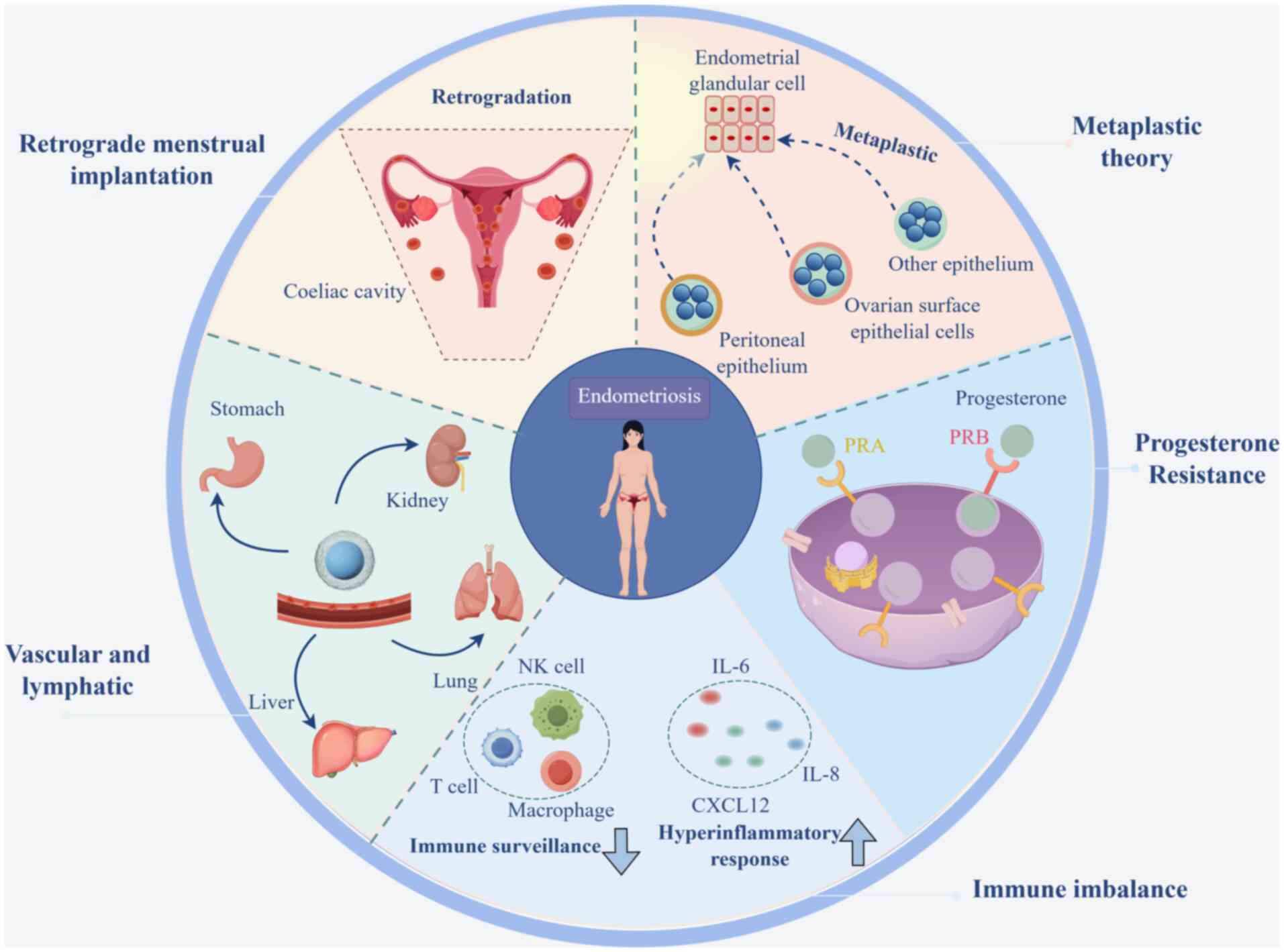
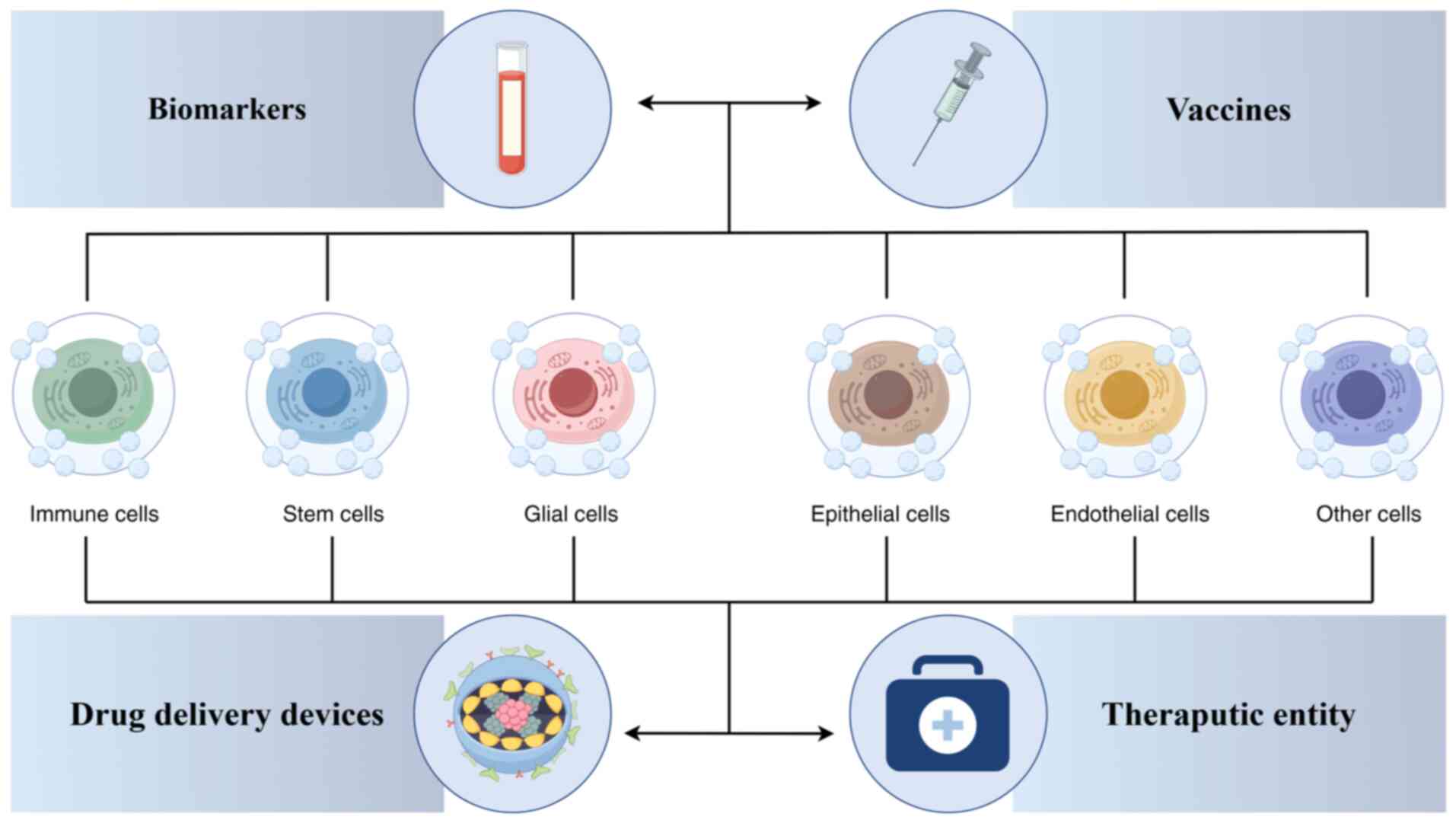
|
1
|
Kuan KKW, Gibson DA, Whitaker LHR and
Horne AW: Menstruation dysregulation and endometriosis development.
Front Reprod Health. 3:7567042021. View Article : Google Scholar : PubMed/NCBI
|
|
2
|
Wang PH, Yang ST, Chang WH, Liu CH, Lee FK
and Lee WL: Endometriosis: Part I. Basic concept. Taiwan J Obstet
Gynecol. 61:927–934. 2022. View Article : Google Scholar : PubMed/NCBI
|
|
3
|
Zondervan KT, Becker CM, Koga K, Missmer
SA, Taylor RN and Viganò P: Endometriosis. Nat Rev Dis Primers.
4:92018. View Article : Google Scholar : PubMed/NCBI
|
|
4
|
Hogg C, Horne AW and Greaves E:
Endometriosis-associated macrophages: Origin, phenotype, and
function. Front Endocrinol (Lausanne). 11:72020. View Article : Google Scholar : PubMed/NCBI
|
|
5
|
Horne AW and Missmer SA: Pathophysiology,
diagnosis, and management of endometriosis. BMJ. 379:e0707502022.
View Article : Google Scholar : PubMed/NCBI
|
|
6
|
Chapron C, Marcellin L, Borghese B and
Santulli P: Rethinking mechanisms, diagnosis and management of
endometriosis. Nat Rev Endocrinol. 15:666–682. 2019. View Article : Google Scholar : PubMed/NCBI
|
|
7
|
No authors listed. Revised American
society for reproductive medicine classification of endometriosis:
1996. Fertil Steril. 67:817–821. 1997. View Article : Google Scholar : PubMed/NCBI
|
|
8
|
Rolla E: Endometriosis: Advances and
controversies in classification, pathogenesis, diagnosis, and
treatment. F1000Res. 8:F1000 Faculty Rev 529. 2019. View Article : Google Scholar : PubMed/NCBI
|
|
9
|
Quan Q, Gu H, Wang Y and Yu M: Immune
micro-environment analysis and drug screening for ovarian
endometriosis. Genes Genomics. 46:803–815. 2024. View Article : Google Scholar : PubMed/NCBI
|
|
10
|
Saunders PTK and Horne AW: Endometriosis:
Etiology, pathobiology, and therapeutic prospects. Cell.
184:2807–2824. 2021. View Article : Google Scholar : PubMed/NCBI
|
|
11
|
Kapoor R, Stratopoulou CA and Dolmans MM:
Pathogenesis of endometriosis: New insights into prospective
therapies. Int J Mol Sci. 22:117002021. View Article : Google Scholar : PubMed/NCBI
|
|
12
|
Ji JQ, Yuan M, Tang YX, Lu XF, Li JY and
Lin KQ: Research progress on the role of exosomes in the
pathogenesis of endometriosis. Zhejiang J Integr Tradit Chin West
Med. 34:482–486. 2024.(In Chinese).
|
|
13
|
Zhang Y, Guo K, Guan X, Liu L and Han L:
Research progress of exosomes in the development of endometriosis.
Chin J Fam Plann Gynecotokol. 15:12–15. 2023.(In Chinese).
|
|
14
|
Schjenken JE, Panir K, Robertson SA and
Hull ML: Exosome-mediated intracellular signalling impacts the
development of endometriosis-new avenues for endometriosis
research. Mol Hum Reprod. 25:2–4. 2019. View Article : Google Scholar : PubMed/NCBI
|
|
15
|
Liu X: Various ways of signal molecules
regulating life activities. Middle Sch Biol. 36:2020.(In
Chinese).
|
|
16
|
Küpker W, Schultze-Mosgau A and Diedrich
K: Paracrine changes in the peritoneal environment of women with
endometriosis. Hum Reprod Update. 4:719–23. 1998. View Article : Google Scholar : PubMed/NCBI
|
|
17
|
Nisenblat V, Bossuyt PM, Shaikh R,
Farquhar C, Jordan V, Scheffers CS, Mol BW, Johnson N and Hull ML:
Blood biomarkers for the non-invasive diagnosis of endometriosis.
Cochrane Database Syst Rev. 2016:Cd0121792016.PubMed/NCBI
|
|
18
|
Yu X, Bai Y, Han B, Ju M, Tang T, Shen L,
Li M, Yang L, Zhang Z, Hu G, et al: Extracellular vesicle-mediated
delivery of circDYM alleviates CUS-induced depressive-like
behaviours. J Extracell Vesicles. 11:e121852022. View Article : Google Scholar : PubMed/NCBI
|
|
19
|
França PRC, Lontra ACP and Fernandes PD:
Endometriosis: A disease with few direct treatment options.
Molecules. 27:40342022. View Article : Google Scholar : PubMed/NCBI
|
|
20
|
Taylor HS, Kotlyar AM and Flores VA:
Endometriosis is a chronic systemic disease: Clinical challenges
and novel innovations. Lancet. 397:839–852. 2021. View Article : Google Scholar : PubMed/NCBI
|
|
21
|
Hou H and Shi X: Research progress on
mesenchymal stem cells and their exosomes in endometriosis. J Pract
Obstet Gynecol. 37:914–917. 2021.(In Chinese).
|
|
22
|
Eskenazi B and Warner ML: Epidemiology of
endometriosis. Obstet Gynecol Clin North Am. 24:235–258. 1997.
View Article : Google Scholar : PubMed/NCBI
|
|
23
|
Meuleman C, Vandenabeele B, Fieuws S,
Spiessens C, Timmerman D and D'Hooghe T: High prevalence of
endometriosis in infertile women with normal ovulation and
normospermic partners. Fertil Steril. 92:68–74. 2009. View Article : Google Scholar : PubMed/NCBI
|
|
24
|
Zondervan KT, Becker CM and Missmer SA:
Endometriosis. N Engl J Med. 382:1244–1256. 2020. View Article : Google Scholar : PubMed/NCBI
|
|
25
|
Pirtea P, Vulliemoz N, de Ziegler D and
Ayoubi JM: Infertility workup: Identifying endometriosis. Fertil
Steril. 118:29–33. 2022. View Article : Google Scholar : PubMed/NCBI
|
|
26
|
Colombo F, Norton EG and Cocucci E:
Microscopy approaches to study extracellular vesicles. Biochim
Biophys Acta Gen Subj. 1865:1297522021. View Article : Google Scholar : PubMed/NCBI
|
|
27
|
Gonçalves MO, Di Iorio JF, Marin GV,
Meneghetti P, Negreiros NGS and Torrecilhas AC: Extracellular
vesicles. Curr Top Membr. 94:1–31. 2024. View Article : Google Scholar : PubMed/NCBI
|
|
28
|
Eldh M, Ekström K, Valadi H, Sjöstrand M,
Olsson B, Jernås M and Lötvall J: Exosomes communicate protective
messages during oxidative stress; possible role of exosomal shuttle
RNA. PLoS One. 5:e153532010. View Article : Google Scholar : PubMed/NCBI
|
|
29
|
Moldovan L, Batte K, Wang Y, Wisler J and
Piper M: Analyzing the circulating microRNAs in
exosomes/extracellular vesicles from serum or plasma by qRT-PCR.
Methods Mol Biol. 1024:129–145. 2013. View Article : Google Scholar : PubMed/NCBI
|
|
30
|
Corrado C, Raimondo S, Chiesi A, Ciccia F,
De Leo G and Alessandro R: Exosomes as intercellular signaling
organelles involved in health and disease: Basic science and
clinical applications. Int J Mol Sci. 14:5338–5366. 2013.
View Article : Google Scholar : PubMed/NCBI
|
|
31
|
Jones LB, Bell CR, Bibb KE, Gu L, Coats MT
and Matthews QL: Pathogens and their effect on exosome biogenesis
and composition. Biomedicines. 6:792018. View Article : Google Scholar : PubMed/NCBI
|
|
32
|
Zhang Y, Bi J, Huang J, Tang Y, Du S and
Li P: Exosome: A review of its classification, isolation
techniques, storage, diagnostic and targeted therapy applications.
Int J Nanomedicine. 15:6917–6934. 2020. View Article : Google Scholar : PubMed/NCBI
|
|
33
|
Doyle LM and Wang MZ: Overview of
extracellular vesicles, their origin, composition, purpose, and
methods for exosome isolation and analysis. Cells. 8:7272019.
View Article : Google Scholar : PubMed/NCBI
|
|
34
|
Lai JJ, Chau ZL, Chen SY, Hill JJ, Korpany
KV, Liang NW, Lin LH, Lin YH, Liu JK, Liu YC, et al: Exosome
processing and characterization approaches for research and
technology development. Adv Sci (Weinh). 9:e21032222022. View Article : Google Scholar : PubMed/NCBI
|
|
35
|
Yang B, Chen Y and Shi J: Exosome
biochemistry and advanced nanotechnology for next-generation
theranostic platforms. Adv Mater. 31:e18028962019. View Article : Google Scholar : PubMed/NCBI
|
|
36
|
Esfandyari S, Elkafas H, Chugh RM, Park
HS, Navarro A and Al-Hendy A: Exosomes as biomarkers for female
reproductive diseases diagnosis and therapy. Int J Mol Sci.
22:21652021. View Article : Google Scholar : PubMed/NCBI
|
|
37
|
Kalluri R and LeBleu VS: The biology,
function, and biomedical applications of exosomes. Science.
367:eaau69772020. View Article : Google Scholar : PubMed/NCBI
|
|
38
|
Charoenviriyakul C, Takahashi Y, Nishikawa
M and Takakura Y: Preservation of exosomes at room temperature
using lyophilization. Int J Pharm. 553:1–7. 2018. View Article : Google Scholar : PubMed/NCBI
|
|
39
|
Gould SJ and Raposo G: As we wait: Coping
with an imperfect nomenclature for extracellular vesicles. J
Extracell Vesicles. 2:203892013. View Article : Google Scholar : PubMed/NCBI
|
|
40
|
Lötvall J, Hill AF, Hochberg F, Buzás EI,
Di Vizio D, Gardiner C, Gho YS, Kurochkin IV, Mathivanan S,
Quesenberry P, et al: Minimal experimental requirements for
definition of extracellular vesicles and their functions: A
position statement from the international society for extracellular
vesicles. J Extracell Vesicles. 3:269132014. View Article : Google Scholar : PubMed/NCBI
|
|
41
|
Cañas JA, Rodrigo-Muñoz JM, Gil-Martínez
M, Sastre B and del Pozo V: Exosomes: A key piece in asthmatic
inflammation. Int J Mol Sci. 22:9632021. View Article : Google Scholar : PubMed/NCBI
|
|
42
|
Zhang J, Li S, Li L, Li M, Guo C, Yao J
and Mi S: Exosome and exosomal microRNA: Trafficking, sorting, and
function. Genomics Proteomics Bioinformatics. 13:17–24. 2015.
View Article : Google Scholar : PubMed/NCBI
|
|
43
|
Wang M, Zheng L, Lin R, Ma S, Li J and
Yang S: A comprehensive overview of exosome lncRNAs: Emerging
biomarkers and potential therapeutics in endometriosis. Front
Endocrinol (Lausanne). 14:11995692023. View Article : Google Scholar : PubMed/NCBI
|
|
44
|
Bobrie A, Colombo M, Raposo G and Théry C:
Exosome secretion: Molecular mechanisms and roles in immune
responses. Traffic. 12:1659–1668. 2011. View Article : Google Scholar : PubMed/NCBI
|
|
45
|
Chaput N and Théry C: Exosomes: Immune
properties and potential clinical implementations. Semin
Immunopathol. 33:419–440. 2011. View Article : Google Scholar : PubMed/NCBI
|
|
46
|
Lai RC, Yeo RW, Tan KH and Lim SK:
Exosomes for drug delivery-a novel application for the mesenchymal
stem cell. Biotechnol Adv. 31:543–551. 2013. View Article : Google Scholar : PubMed/NCBI
|
|
47
|
Li B, Cao Y, Sun M and Feng H: Expression,
regulation, and function of exosome-derived miRNAs in cancer
progression and therapy. FASEB J. 35:e219162021. View Article : Google Scholar : PubMed/NCBI
|
|
48
|
Zhang Y, Liu Q, Zhang X, Huang H, Tang S,
Chai Y, Xu Z, Li M, Chen X, Liu J and Yang C: Recent advances in
exosome-mediated nucleic acid delivery for cancer therapy. J
Nanobiotechnology. 20:2792022. View Article : Google Scholar : PubMed/NCBI
|
|
49
|
Lan X, Wu N, Wu L, Qu K, Osoro EK, Guan D,
Du X, Wang B, Chen S, Miao J, et al: The human novel gene LNC-HC
inhibits hepatocellular carcinoma cell proliferation by
sequestering hsa-miR-183-5p. Mol Ther Nucleic Acids. 20:468–479.
2020. View Article : Google Scholar : PubMed/NCBI
|
|
50
|
Zhao J, Chen F, Ma W and Zhang P:
Suppression of long noncoding RNA NEAT1 attenuates hypoxia-induced
cardiomyocytes injury by targeting miR-378a-3p. Gene.
731:1443242020. View Article : Google Scholar : PubMed/NCBI
|
|
51
|
Sampson JA: Metastatic or embolic
endometriosis, due to the menstrual dissemination of endometrial
tissue into the venous circulation. Am J Pathol. 3:93–110.43.
1927.PubMed/NCBI
|
|
52
|
Halme J, Hammond MG, Hulka JF, Raj SG and
Talbert LM: Retrograde menstruation in healthy women and in
patients with endometriosis. Obstet Gynecol. 64:151–154.
1984.PubMed/NCBI
|
|
53
|
Zhang L, Li H, Yuan M, Li D, Sun C and
Wang G: Serum exosomal MicroRNAs as potential circulating
biomarkers for endometriosis. Dis Markers. 2020:24563402020.
View Article : Google Scholar : PubMed/NCBI
|
|
54
|
Harp D, Driss A, Mehrabi S, Chowdhury I,
Xu W, Liu D, Garcia-Barrio M, Taylor RN, Gold B, Jefferson S, et
al: Exosomes derived from endometriotic stromal cells have enhanced
angiogenic effects in vitro. Cell Tissue Res. 365:187–196. 2016.
View Article : Google Scholar : PubMed/NCBI
|
|
55
|
Schneider C, Kässens N, Greve B, Hassan H,
Schüring AN, Starzinski-Powitz A, Kiesel L, Seidler DG and Götte M:
Targeting of syndecan-1 by micro-ribonucleic acid miR-10b modulates
invasiveness of endometriotic cells via dysregulation of the
proteolytic milieu and interleukin-6 secretion. Fertil Steril.
99:871–881.e1. 2013. View Article : Google Scholar : PubMed/NCBI
|
|
56
|
Lin SC, Li WN, Lin SC, Hou HT, Tsai YC,
Lin TC, Wu MH and Tsai SJ: Targeting YAP1 ameliorates progesterone
resistance in endometriosis. Hum Reprod. 38:1124–1134. 2023.
View Article : Google Scholar : PubMed/NCBI
|
|
57
|
Qiu JJ, Lin XJ, Zheng TT, Tang XY, Zhang Y
and Hua KQ: The exosomal long noncoding RNA aHIF is upregulated in
serum from patients with endometriosis and promotes angiogenesis in
endometriosis. Reprod Sci. 26:1590–1602. 2019. View Article : Google Scholar : PubMed/NCBI
|
|
58
|
Wu Y, Yuan W, Ding H and Wu X: Serum
exosomal miRNA from endometriosis patients correlates with disease
severity. Arch Gynecol Obstet. 305:117–127. 2022. View Article : Google Scholar : PubMed/NCBI
|
|
59
|
Chen F, Liu Y and Lu W: Development and
validation of a serum exosomal biomarker panel for endometriosis
diagnosis. Chin Sci Technol J Database (Citation Edition) -
Medicine and Health. 62–65. 2024.(In Chinese).
|
|
60
|
Bei Y, Yu P, Cretoiu D, Cretoiu SM and
Xiao J: Exosomes-based biomarkers for the prognosis of
cardiovascular diseases. Adv Exp Med Biol. 998:71–88. 2017.
View Article : Google Scholar : PubMed/NCBI
|
|
61
|
Melo SA, Luecke LB, Kahlert C, Fernandez
AF, Gammon ST, Kaye J, LeBleu VS, Mittendorf EA, Weitz J, Rahbari
N, et al: Glypican-1 identifies cancer exosomes and detects early
pancreatic cancer. Nature. 523:177–182. 2015. View Article : Google Scholar : PubMed/NCBI
|
|
62
|
Liu T, Zhang X, Gao S, Jing F, Yang Y, Du
L, Zheng G, Li P, Li C and Wang C: Exosomal long noncoding RNA
CRNDE-h as a novel serum-based biomarker for diagnosis and
prognosis of colorectal cancer. Oncotarget. 7:85551–85563. 2016.
View Article : Google Scholar : PubMed/NCBI
|
|
63
|
Nazri HM, Imran M, Fischer R, Heilig R,
Manek S, Dragovic RA, Kessler BM, Zondervan KT, Tapmeier TT and
Becker CM: Characterization of exosomes in peritoneal fluid of
endometriosis patients. Fertil Steril. 113:364–373.e2. 2020.
View Article : Google Scholar : PubMed/NCBI
|
|
64
|
Li WN, Hsiao KY, Wang CA, Chang N, Hsu PL,
Sun CH, Wu SR, Wu MH and Tsai SJ: Extracellular vesicle-associated
VEGF-C promotes lymphangiogenesis and immune cells infiltration in
endometriosis. Proc Natl Acad Sci USA. 117:25859–25868. 2020.
View Article : Google Scholar : PubMed/NCBI
|
|
65
|
Shan S, Yang Y, Jiang J, Yang B, Yang Y,
Sun F, Zhang J, Lin Y and Xu H: Extracellular vesicle-derived long
non-coding RNA as circulating biomarkers for endometriosis. Reprod
Biomed Online. 44:923–933. 2022. View Article : Google Scholar : PubMed/NCBI
|
|
66
|
Sun SG, Guo JJ, Qu XY, Tang XY, Lin YY,
Hua KQ and Qiu JJ: The extracellular vesicular pseudogene LGMNP1
induces M2-like macrophage polarization by upregulating LGMN and
serves as a novel promising predictive biomarker for ovarian
endometriosis recurrence. Hum Reprod. 37:447–465. 2022. View Article : Google Scholar : PubMed/NCBI
|
|
67
|
Karimi N, Dalirfardouei R, Dias T, Lötvall
J and Lässer C: Tetraspanins distinguish separate extracellular
vesicle subpopulations in human serum and plasma-contributions of
platelet extracellular vesicles in plasma samples. J Extracell
Vesicles. 11:e122132022. View Article : Google Scholar : PubMed/NCBI
|
|
68
|
Wu D, Lu P, Mi X and Miao J: Exosomal
miR-214 from endometrial stromal cells inhibits endometriosis
fibrosis. Mol Hum Reprod. 24:357–365. 2018.PubMed/NCBI
|
|
69
|
Wang L, Hu Y, Li Y, Wu J and Kang S:
Differential expression profiles of exosomal microRNAs in ovarian
endometriosis based on the microarray technique. J Chongqing Med
Univ. 44:885–890. 2019.(In Chinese).
|
|
70
|
Chen Y, Wang K, Xu Y, Guo P, Hong B, Cao
Y, Wei Z, Xue R, Wang C and Jiang H: Alteration of myeloid-derived
suppressor cells, chronic inflammatory cytokines, and exosomal
miRNA contribute to the peritoneal immune disorder of patients with
endometriosis. Reprod Sci. 26:1130–1138. 2019. View Article : Google Scholar : PubMed/NCBI
|
|
71
|
Ivetic A and Ridley AJ:
Ezrin/radixin/moesin proteins and Rho GTPase signalling in
leucocytes. Immunology. 112:165–176. 2004. View Article : Google Scholar : PubMed/NCBI
|
|
72
|
Polesello C and Payre F: Small is
beautiful: What flies tell us about ERM protein function in
development. Trends Cell Biol. 14:294–302. 2004. View Article : Google Scholar : PubMed/NCBI
|
|
73
|
Abudula M, Fan X, Zhang J, Li J, Zhou X
and Chen Y: Ectopic endometrial cell-derived exosomal moesin
induces eutopic endometrial cell migration, enhances angiogenesis
and cytosolic inflammation in lesions contributes to endometriosis
progression. Front Cell Dev Biol. 10:8240752022. View Article : Google Scholar : PubMed/NCBI
|
|
74
|
Li Y, Cui S, Xu Z, Zhang Y, Wu T, Zhang J
and Chen Y: Exosomal tRF-Leu-AAG-001 derived from mast cell as a
potential non-invasive diagnostic biomarker for endometriosis. BMC
Womens Health. 22:2532022. View Article : Google Scholar : PubMed/NCBI
|
|
75
|
Mashouri L, Yousefi H, Aref AR, Ahadi AM,
Molaei F and Alahari SK: Exosomes: composition, biogenesis, and
mechanisms in cancer metastasis and drug resistance. Mol Cancer.
18:752019. View Article : Google Scholar : PubMed/NCBI
|
|
76
|
Jiang Y, Chai X, Chen S, Chen Z, Tian H,
Liu M and Wu X: Exosomes from the uterine cavity mediate immune
dysregulation via inhibiting the JNK signal pathway in
endometriosis. Biomedicines. 10:31102022. View Article : Google Scholar : PubMed/NCBI
|
|
77
|
Asante A and Taylor RN: Endometriosis: The
role of neuroangiogenesis. Annu Rev Physiol. 73:163–182. 2011.
View Article : Google Scholar : PubMed/NCBI
|
|
78
|
Laschke MW, Giebels C and Menger MD:
Vasculogenesis: A new piece of the endometriosis puzzle. Hum Reprod
Update. 17:628–636. 2011. View Article : Google Scholar : PubMed/NCBI
|
|
79
|
Carmeliet P and Tessier-Lavigne M: Common
mechanisms of nerve and blood vessel wiring. Nature. 436:193–200.
2005. View Article : Google Scholar : PubMed/NCBI
|
|
80
|
Tokushige N, Russell P, Black K, Barrera
H, Dubinovsky S, Markham R and Fraser IS: Nerve fibers in ovarian
endometriomas. Fertil Steril. 94:1944–1947. 2010. View Article : Google Scholar : PubMed/NCBI
|
|
81
|
Arnold J, Barcena de Arellano ML, Rüster
C, Vercellino GF, Chiantera V, Schneider A and Mechsner S:
Imbalance between sympathetic and sensory innervation in peritoneal
endometriosis. Brain Behav Immun. 26:132–141. 2012. View Article : Google Scholar : PubMed/NCBI
|
|
82
|
Sun H, Li D, Yuan M, Li Q, Li N and Wang
G: Eutopic stromal cells of endometriosis promote neuroangiogenesis
via exosome pathway†. Biol Reprod. 100:649–659. 2019. View Article : Google Scholar : PubMed/NCBI
|
|
83
|
Zhang A, Wang G, Jia L, Su T and Zhang L:
Exosome-mediated microRNA-138 and vascular endothelial growth
factor in endometriosis through inflammation and apoptosis via the
nuclear factor-κB signaling pathway. Int J Mol Med. 43:358–370.
2019.PubMed/NCBI
|
|
84
|
Huang JK, Ma L, Song WH, Lu BY, Huang YB,
Dong HM, Ma XK, Zhu ZZ and Zhou R: LncRNA-MALAT1 promotes
angiogenesis of thyroid cancer by modulating tumor-associated
macrophage FGF2 protein secretion. J Cell Biochem. 118:4821–4830.
2017. View Article : Google Scholar : PubMed/NCBI
|
|
85
|
Lang HL, Hu GW, Chen Y, Liu Y, Tu W, Lu
YM, Wu L and Xu GH: Glioma cells promote angiogenesis through the
release of exosomes containing long non-coding RNA POU3F3. Eur Rev
Med Pharmacol Sci. 21:959–972. 2017.PubMed/NCBI
|
|
86
|
Oh HJ, Shin Y, Chung S, Hwang DW and Lee
DS: Convective exosome-tracing microfluidics for analysis of
cell-non-autonomous neurogenesis. Biomaterials. 112:82–94. 2017.
View Article : Google Scholar : PubMed/NCBI
|
|
87
|
Mineo M, Garfield SH, Taverna S, Flugy A,
De Leo G, Alessandro R and Kohn EC: Exosomes released by K562
chronic myeloid leukemia cells promote angiogenesis in a
Src-dependent fashion. Angiogenesis. 15:33–45. 2012. View Article : Google Scholar : PubMed/NCBI
|
|
88
|
Yang J, Zhang X, Chen X, Wang L and Yang
G: Exosome mediated delivery of miR-124 promotes neurogenesis after
ischemia. Mol Ther Nucleic Acids. 7:278–287. 2017. View Article : Google Scholar : PubMed/NCBI
|
|
89
|
Hsu CY, Hsieh TH, Tsai CF, Tsai HP, Chen
HS, Chang Y, Chuang HY, Lee JN, Hsu YL and Tsai EM: miRNA-199a-5p
regulates VEGFA in endometrial mesenchymal stem cells and
contributes to the pathogenesis of endometriosis. J Pathol.
232:330–343. 2014. View Article : Google Scholar : PubMed/NCBI
|
|
90
|
Riccio LDGC, Santulli P, Marcellin L,
Abrão MS, Batteux F and Chapron C: Immunology of endometriosis.
Best Pract Res Clin Obstet Gynaecol. 50:39–49. 2018. View Article : Google Scholar : PubMed/NCBI
|
|
91
|
Paul Dmowski W and Braun DP: Immunology of
endometriosis. Best Pract Res Clin Obstet Gynaecol. 18:245–263.
2004. View Article : Google Scholar : PubMed/NCBI
|
|
92
|
Zhang T, De Carolis C, Man GCW and Wang
CC: The link between immunity, autoimmunity and endometriosis: A
literature update. Autoimmun Rev. 17:945–955. 2018. View Article : Google Scholar : PubMed/NCBI
|
|
93
|
Marečková M, Garcia-Alonso L, Moullet M,
Lorenzi V, Petryszak R, Sancho-Serra C, Oszlanczi A, Icoresi Mazzeo
C, Wong FCK, Kelava I, et al: An integrated single-cell reference
atlas of the human endometrium. Nat Genet. 56:1925–1937. 2024.
View Article : Google Scholar : PubMed/NCBI
|
|
94
|
Vallvé-Juanico J, Houshdaran S and Giudice
LC: The endometrial immune environment of women with endometriosis.
Hum Reprod Update. 25:564–591. 2019. View Article : Google Scholar : PubMed/NCBI
|
|
95
|
Patel BG, Lenk EE, Lebovic DI, Shu Y, Yu J
and Taylor RN: Pathogenesis of endometriosis: Interaction between
Endocrine and inflammatory pathways. Best Pract Res Clin Obstet
Gynaecol. 50:50–60. 2018. View Article : Google Scholar : PubMed/NCBI
|
|
96
|
Varol C, Mildner A and Jung S:
Macrophages: Development and tissue specialization. Annu Rev
Immunol. 33:643–675. 2015. View Article : Google Scholar : PubMed/NCBI
|
|
97
|
Sun H, Li D, Yuan M, Li Q, Zhen Q, Li N
and Wang G: Macrophages alternatively activated by
endometriosis-exosomes contribute to the development of lesions in
mice. Mol Hum Reprod. 25:5–16. 2019. View Article : Google Scholar : PubMed/NCBI
|
|
98
|
Freger S, Leonardi M and Foster WG:
Exosomes and their cargo are important regulators of cell function
in endometriosis. Reprod Biomed Online. 43:370–378. 2021.
View Article : Google Scholar : PubMed/NCBI
|
|
99
|
Huang Y, Zhu L, Li H, Ye J, Lin N, Chen M,
Pan D and Chen Z: Endometriosis derived exosomal miR-301a-3p
mediates macrophage polarization via regulating PTEN-PI3K axis.
Biomed Pharmacother. 147:1126802022. View Article : Google Scholar : PubMed/NCBI
|
|
100
|
Dai Y, Lin X, Xu W, Lin X, Huang Q, Shi L,
Pan Y, Zhang Y, Zhu Y, Li C, et al: MiR-210-3p protects
endometriotic cells from oxidative stress-induced cell cycle arrest
by targeting BARD1. Cell Death Dis. 10:1442019. View Article : Google Scholar : PubMed/NCBI
|
|
101
|
Chen S, Jiang Y, Chai X, Chen Z, Tian H,
Liu M, Zhu T, ShangGuan W and Wu X: Uterine-derived exosomes induce
the M2 polarization of macrophages via miR-210-3p/ATP5D to promote
endometriosis progression. Life Sci. 363:1233832025. View Article : Google Scholar : PubMed/NCBI
|
|
102
|
Peng Y, Ding S, Xu P and Zhang X, Wang J,
Li T, Liao L and Zhang X: CCL18 promotes endometriosis by
increasing endometrial cell migration and neuroangiogenesis. Eur J
Histochem. 68:40522024. View Article : Google Scholar : PubMed/NCBI
|
|
103
|
Chi Y, Wang D, Wang J, Yu W and Yang J:
Long non-coding RNA in the pathogenesis of cancers. Cells.
8:10152019. View Article : Google Scholar : PubMed/NCBI
|
|
104
|
Panir K, Schjenken JE, Robertson SA and
Hull ML: Non-coding RNAs in endometriosis: A narrative review. Hum
Reprod Update. 24:497–515. 2018. View Article : Google Scholar : PubMed/NCBI
|
|
105
|
Xiong F, Zhu K, Deng S, Huang H, Yang L,
Gong Z, Shi L, He Y, Tang Y, Liao Q, et al: AFAP1-AS1: A rising
star among oncogenic long non-coding RNAs. Sci China Life Sci.
64:1602–1611. 2021. View Article : Google Scholar : PubMed/NCBI
|
|
106
|
Zhong Y, Wang Y, Dang H and Wu X: LncRNA
AFAP1-AS1 contributes to the progression of endometrial carcinoma
by regulating miR-545-3p/VEGFA pathway. Mol Cell Probes.
53:1016062020. View Article : Google Scholar : PubMed/NCBI
|
|
107
|
Wang X, Zhang M, Jiang L, Fang X and Zhang
T: Exosomal AFAP1-AS1 binds to microRNA-15a-5p to promote the
proliferation, migration, and invasion of ectopic endometrial
stromal cells in endometriosis. Reprod Biol Endocrinol. 20:772022.
View Article : Google Scholar : PubMed/NCBI
|
|
108
|
Zhang L, Li HH, Yuan M, Li D and Wang GY:
Exosomal miR-22-3p derived from peritoneal macrophages enhances
proliferation, migration, and invasion of ectopic endometrial
stromal cells through regulation of the SIRT1/NF-κB signaling
pathway. Eur Rev Med Pharmacol Sci. 24:571–580. 2020.PubMed/NCBI
|
|
109
|
Liu T, Liu M, Zheng C, Zhang D, Li M and
Zhang L: Exosomal lncRNA CHL1-AS1 derived from peritoneal
macrophages promotes the progression of endometriosis via the
miR-610/MDM2 axis. Int J Nanomedicine. 16:5451–5464. 2021.
View Article : Google Scholar : PubMed/NCBI
|
|
110
|
Zhang L, Yu Z, Qu Q, Li X, Lu X and Zhang
H: Exosomal lncRNA HOTAIR promotes the progression and angiogenesis
of endometriosis via the miR-761/HDAC1 axis and activation of
STAT3-mediated inflammation. Int J Nanomedicine. 17:1155–1170.
2022. View Article : Google Scholar : PubMed/NCBI
|
|
111
|
Garcia Garcia JM, Vannuzzi V, Donati C,
Bernacchioni C, Bruni P and Petraglia F: Endometriosis: Cellular
and molecular mechanisms leading to fibrosis. Reprod Sci.
30:1453–1461. 2023. View Article : Google Scholar : PubMed/NCBI
|
|
112
|
Yang H, Yu C and Li B: Research progress
on the mechanism of micro-RNA in inflammation and fibrosis of
endometriosis. J Chin Phys. 26:617–621. 2024.(In Chinese).
|
|
113
|
Ma L, Yang X, Wei R, Ye T, Zhou JK, Wen M,
Men R, Li P, Dong B, Liu L, et al: MicroRNA-214 promotes hepatic
stellate cell activation and liver fibrosis by suppressing Sufu
expression. Cell Death Dis. 9:7182018. View Article : Google Scholar : PubMed/NCBI
|
|
114
|
Huang X, Zheng D, Liu C, Huang J, Chen X,
Zhong J, Wang J, Lin X, Zhao C, Chen M, et al: miR-214 could
promote myocardial fibrosis and cardiac mesenchymal transition in
VMC mice through regulation of the p53 or PTEN-PI3K-Akt signali
pathway, promoting CF proliferation and inhibiting its ng pathway.
Int Immunopharmacol. 124:1107652023. View Article : Google Scholar : PubMed/NCBI
|
|
115
|
Aghajanzadeh T, Talkhabi M, Zali MR,
Hatami B and Baghaei K: Diagnostic potential and pathogenic
performance of circulating miR-146b, miR-194, and miR-214 in liver
fibrosis. Noncoding RNA Res. 8:471–480. 2023. View Article : Google Scholar : PubMed/NCBI
|
|
116
|
Allaire C, Bedaiwy MA and Yong PJ:
Diagnosis and management of endometriosis. CMAJ. 195:E363–E371.
2023. View Article : Google Scholar : PubMed/NCBI
|
|
117
|
Davoodi Asl F, Sahraei SS, Kalhor N,
Fazaeli H, Sheykhhasan M, Soleimani Moud S, Naserpour L and
Sheikholeslami A: Promising effects of exosomes from menstrual
blood-derived mesenchymal stem cells on endometriosis. Reprod Biol.
23:1007882023. View Article : Google Scholar : PubMed/NCBI
|
|
118
|
Zhang M, Wang X, Xia X, Fang X, Zhang T
and Huang F: Endometrial epithelial cells-derived exosomes deliver
microRNA-30c to block the BCL9/Wnt/CD44 signaling and inhibit cell
invasion and migration in ovarian endometriosis. Cell Death Discov.
8:1512022. View Article : Google Scholar : PubMed/NCBI
|
|
119
|
Chen X, Jiang Y and Pan D: miR-30c may
serve a role in endometriosis by targeting plasminogen activator
inhibitor-1. Exp Ther Med. 14:4846–4852. 2017.PubMed/NCBI
|
|
120
|
Lai X, Wang M, McElyea SD, Sherman S,
House M and Korc M: A microRNA signature in circulating exosomes is
superior to exosomal glypican-1 levels for diagnosing pancreatic
cancer. Cancer Lett. 393:86–93. 2017. View Article : Google Scholar : PubMed/NCBI
|
|
121
|
Song S, Long M, Yu G, Cheng Y, Yang Q, Liu
J, Wang Y, Sheng J, Wang L, Wang Z and Xu B: Urinary exosome
miR-30c-5p as a biomarker of clear cell renal cell carcinoma that
inhibits progression by targeting HSPA5. J Cell Mol Med.
23:6755–6765. 2019. View Article : Google Scholar : PubMed/NCBI
|
|
122
|
Moghiman T, Barghchi B, Esmaeili SA,
Shabestari MM, Tabaee SS and Momtazi-Borojeni AA: Therapeutic
angiogenesis with exosomal microRNAs: An effectual approach for the
treatment of myocardial ischemia. Heart Fail Rev. 26:205–213. 2021.
View Article : Google Scholar : PubMed/NCBI
|
|
123
|
Zhang Y, Chang X, Wu D, Deng M, Miao J and
Jin Z: Down-regulation of exosomal miR-214-3p targeting CCN2
contributes to endometriosis fibrosis and the role of exosomes in
the horizontal transfer of miR-214-3p. Reprod Sci. 28:715–727.
2021. View Article : Google Scholar : PubMed/NCBI
|
|
124
|
Zhang Z, Shang J, Yang Q, Dai Z, Liang Y,
Lai C, Feng T, Zhong D, Zou H, Sun L, et al: Exosomes derived from
human adipose mesenchymal stem cells ameliorate hepatic fibrosis by
inhibiting PI3K/Akt/mTOR pathway and remodeling choline metabolism.
J Nanobiotechnology. 21:292023. View Article : Google Scholar : PubMed/NCBI
|
|
125
|
Liu YX, Sun JM, Ho CK, Gao Y, Wen DS, Liu
YD, Huang L and Zhang YF: Advancements in adipose-derived stem cell
therapy for skin fibrosis. World J Stem Cells. 15:342–353. 2023.
View Article : Google Scholar : PubMed/NCBI
|
|
126
|
Donnez J and Dolmans MM: Endometriosis and
medical therapy: From progestogens to progesterone resistance to
GnRH antagonists: A review. J Clin Med. 10:10852021. View Article : Google Scholar : PubMed/NCBI
|
|
127
|
Zhou M, Fu J, Xiao L, Yang S, Song Y,
Zhang X, Feng X, Sun H, Xu W and Huang W: miR-196a overexpression
activates the MEK/ERK signal and represses the progesterone
receptor and decidualization in eutopic endometrium from women with
endometriosis. Hum Reprod. 31:2598–2608. 2016. View Article : Google Scholar : PubMed/NCBI
|
|
128
|
Mashayekhi P, Noruzinia M and Khodaverdi
S: Metformin as a potential agent for modulating the faulty
endometriotic mesenchymal stem cells: A case-control study. Int J
Reprod Biomed. 20:861–872. 2022.PubMed/NCBI
|
|
129
|
Welsh JA, Goberdhan DCI, O'Driscoll L,
Buzas EI, Blenkiron C, Bussolati B, Cai H, Di Vizio D, Driedonks
TAP, Erdbrügger U, et al: Minimal information for studies of
extracellular vesicles (MISEV2023): From basic to advanced
approaches. J Extracell Vesicles. 13:e124042024. View Article : Google Scholar : PubMed/NCBI
|