Spandidos Publications Logo
  • About
    • About Spandidos
    • Aims and Scopes
    • Abstracting and Indexing
    • Editorial Policies
    • Reprints and Permissions
    • Job Opportunities
    • Terms and Conditions
    • Contact
  • Journals
    • All Journals
    • Oncology Letters
      • Oncology Letters
      • Information for Authors
      • Editorial Policies
      • Editorial Board
      • Aims and Scope
      • Abstracting and Indexing
      • Bibliographic Information
      • Archive
    • International Journal of Oncology
      • International Journal of Oncology
      • Information for Authors
      • Editorial Policies
      • Editorial Board
      • Aims and Scope
      • Abstracting and Indexing
      • Bibliographic Information
      • Archive
    • Molecular and Clinical Oncology
      • Molecular and Clinical Oncology
      • Information for Authors
      • Editorial Policies
      • Editorial Board
      • Aims and Scope
      • Abstracting and Indexing
      • Bibliographic Information
      • Archive
    • Experimental and Therapeutic Medicine
      • Experimental and Therapeutic Medicine
      • Information for Authors
      • Editorial Policies
      • Editorial Board
      • Aims and Scope
      • Abstracting and Indexing
      • Bibliographic Information
      • Archive
    • International Journal of Molecular Medicine
      • International Journal of Molecular Medicine
      • Information for Authors
      • Editorial Policies
      • Editorial Board
      • Aims and Scope
      • Abstracting and Indexing
      • Bibliographic Information
      • Archive
    • Biomedical Reports
      • Biomedical Reports
      • Information for Authors
      • Editorial Policies
      • Editorial Board
      • Aims and Scope
      • Abstracting and Indexing
      • Bibliographic Information
      • Archive
    • Oncology Reports
      • Oncology Reports
      • Information for Authors
      • Editorial Policies
      • Editorial Board
      • Aims and Scope
      • Abstracting and Indexing
      • Bibliographic Information
      • Archive
    • Molecular Medicine Reports
      • Molecular Medicine Reports
      • Information for Authors
      • Editorial Policies
      • Editorial Board
      • Aims and Scope
      • Abstracting and Indexing
      • Bibliographic Information
      • Archive
    • World Academy of Sciences Journal
      • World Academy of Sciences Journal
      • Information for Authors
      • Editorial Policies
      • Editorial Board
      • Aims and Scope
      • Abstracting and Indexing
      • Bibliographic Information
      • Archive
    • International Journal of Functional Nutrition
      • International Journal of Functional Nutrition
      • Information for Authors
      • Editorial Policies
      • Editorial Board
      • Aims and Scope
      • Abstracting and Indexing
      • Bibliographic Information
      • Archive
    • International Journal of Epigenetics
      • International Journal of Epigenetics
      • Information for Authors
      • Editorial Policies
      • Editorial Board
      • Aims and Scope
      • Abstracting and Indexing
      • Bibliographic Information
      • Archive
    • Medicine International
      • Medicine International
      • Information for Authors
      • Editorial Policies
      • Editorial Board
      • Aims and Scope
      • Abstracting and Indexing
      • Bibliographic Information
      • Archive
  • Articles
  • Information
    • Information for Authors
    • Information for Reviewers
    • Information for Librarians
    • Information for Advertisers
    • Conferences
  • Language Editing
Spandidos Publications Logo
  • About
    • About Spandidos
    • Aims and Scopes
    • Abstracting and Indexing
    • Editorial Policies
    • Reprints and Permissions
    • Job Opportunities
    • Terms and Conditions
    • Contact
  • Journals
    • All Journals
    • Biomedical Reports
      • Information for Authors
      • Editorial Policies
      • Editorial Board
      • Aims and Scope
      • Abstracting and Indexing
      • Bibliographic Information
      • Archive
    • Experimental and Therapeutic Medicine
      • Information for Authors
      • Editorial Policies
      • Editorial Board
      • Aims and Scope
      • Abstracting and Indexing
      • Bibliographic Information
      • Archive
    • International Journal of Epigenetics
      • Information for Authors
      • Editorial Policies
      • Editorial Board
      • Aims and Scope
      • Abstracting and Indexing
      • Bibliographic Information
      • Archive
    • International Journal of Functional Nutrition
      • Information for Authors
      • Editorial Policies
      • Editorial Board
      • Aims and Scope
      • Abstracting and Indexing
      • Bibliographic Information
      • Archive
    • International Journal of Molecular Medicine
      • Information for Authors
      • Editorial Policies
      • Editorial Board
      • Aims and Scope
      • Abstracting and Indexing
      • Bibliographic Information
      • Archive
    • International Journal of Oncology
      • Information for Authors
      • Editorial Policies
      • Editorial Board
      • Aims and Scope
      • Abstracting and Indexing
      • Bibliographic Information
      • Archive
    • Medicine International
      • Information for Authors
      • Editorial Policies
      • Editorial Board
      • Aims and Scope
      • Abstracting and Indexing
      • Bibliographic Information
      • Archive
    • Molecular and Clinical Oncology
      • Information for Authors
      • Editorial Policies
      • Editorial Board
      • Aims and Scope
      • Abstracting and Indexing
      • Bibliographic Information
      • Archive
    • Molecular Medicine Reports
      • Information for Authors
      • Editorial Policies
      • Editorial Board
      • Aims and Scope
      • Abstracting and Indexing
      • Bibliographic Information
      • Archive
    • Oncology Letters
      • Information for Authors
      • Editorial Policies
      • Editorial Board
      • Aims and Scope
      • Abstracting and Indexing
      • Bibliographic Information
      • Archive
    • Oncology Reports
      • Information for Authors
      • Editorial Policies
      • Editorial Board
      • Aims and Scope
      • Abstracting and Indexing
      • Bibliographic Information
      • Archive
    • World Academy of Sciences Journal
      • Information for Authors
      • Editorial Policies
      • Editorial Board
      • Aims and Scope
      • Abstracting and Indexing
      • Bibliographic Information
      • Archive
  • Articles
  • Information
    • For Authors
    • For Reviewers
    • For Librarians
    • For Advertisers
    • Conferences
  • Language Editing
Login Register Submit
  • This site uses cookies
  • You can change your cookie settings at any time by following the instructions in our Cookie Policy. To find out more, you may read our Privacy Policy.

    I agree
Search articles by DOI, keyword, author or affiliation
Search
Advanced Search
presentation
International Journal of Molecular Medicine
Join Editorial Board Propose a Special Issue
Print ISSN: 1107-3756 Online ISSN: 1791-244X
Journal Cover
April-2026 Volume 57 Issue 4

Full Size Image

Sign up for eToc alerts
Recommend to Library

Journals

International Journal of Molecular Medicine

International Journal of Molecular Medicine

International Journal of Molecular Medicine is an international journal devoted to molecular mechanisms of human disease.

International Journal of Oncology

International Journal of Oncology

International Journal of Oncology is an international journal devoted to oncology research and cancer treatment.

Molecular Medicine Reports

Molecular Medicine Reports

Covers molecular medicine topics such as pharmacology, pathology, genetics, neuroscience, infectious diseases, molecular cardiology, and molecular surgery.

Oncology Reports

Oncology Reports

Oncology Reports is an international journal devoted to fundamental and applied research in Oncology.

Experimental and Therapeutic Medicine

Experimental and Therapeutic Medicine

Experimental and Therapeutic Medicine is an international journal devoted to laboratory and clinical medicine.

Oncology Letters

Oncology Letters

Oncology Letters is an international journal devoted to Experimental and Clinical Oncology.

Biomedical Reports

Biomedical Reports

Explores a wide range of biological and medical fields, including pharmacology, genetics, microbiology, neuroscience, and molecular cardiology.

Molecular and Clinical Oncology

Molecular and Clinical Oncology

International journal addressing all aspects of oncology research, from tumorigenesis and oncogenes to chemotherapy and metastasis.

World Academy of Sciences Journal

World Academy of Sciences Journal

Multidisciplinary open-access journal spanning biochemistry, genetics, neuroscience, environmental health, and synthetic biology.

International Journal of Functional Nutrition

International Journal of Functional Nutrition

Open-access journal combining biochemistry, pharmacology, immunology, and genetics to advance health through functional nutrition.

International Journal of Epigenetics

International Journal of Epigenetics

Publishes open-access research on using epigenetics to advance understanding and treatment of human disease.

Medicine International

Medicine International

An International Open Access Journal Devoted to General Medicine.

Journal Cover
April-2026 Volume 57 Issue 4

Full Size Image

Sign up for eToc alerts
Recommend to Library

  • Article
  • Citations
    • Cite This Article
    • Download Citation
    • Create Citation Alert
    • Remove Citation Alert
    • Cited By
  • Similar Articles
    • Related Articles (in Spandidos Publications)
    • Similar Articles (Google Scholar)
    • Similar Articles (PubMed)
  • Download PDF
  • Download XML
  • View XML

  • Supplementary Files
    • Supplementary_Data1.pdf
    • Supplementary_Data2.pdf
Article Open Access

Endothelial UNC5B regulates blood‑retinal barrier homeostasis

  • Authors:
    • Yujia Yao
    • Suyu Wang
    • Jiajun Li
    • Qianzi Jin
    • Ziyi Chen
    • Qin Jiang
    • Keran Li
  • View Affiliations / Copyright

    Affiliations: Department of Ophthalmology, The Affiliated Eye Hospital, Nanjing Medical University, Nanjing, Jiangsu 210029, P.R. China
    Copyright: © Yao et al. This is an open access article distributed under the terms of Creative Commons Attribution License.
  • Article Number: 100
    |
    Published online on: February 20, 2026
       https://doi.org/10.3892/ijmm.2026.5771
  • Expand metrics +
Metrics: Total Views: 0 (Spandidos Publications: | PMC Statistics: )
Metrics: Total PDF Downloads: 0 (Spandidos Publications: | PMC Statistics: )
Cited By (CrossRef): 0 citations Loading Articles...

This article is mentioned in:


Abstract

The blood‑retinal barrier (BRB), a critical component of the retinal neurovascular unit (NVU), is essential for maintaining retinal homeostasis. Dysfunction of the BRB contributes to vascular leakage, neuronal degeneration and gliosis, which are the core pathological hallmarks of diabetic retinopathy (DR) and retinal vein occlusion (RVO). Despite the importance of the BRB, the molecular mechanisms underlying the preservation of BRB integrity under pathological conditions remain unclear. The present study identified the endothelial receptor unc‑5 netrin receptor B (UNC5B) as a critical regulator of BRB and NVU homeostasis and a potential therapeutic target for neurovascular protection. Analysis of a public Gene Expression Omnibus single‑cell transcriptomic dataset, cell and animal models, and clinical samples revealed reduced UNC5B expression in the aqueous humor of patients and in the retinas of DR and RVO models. In vitro, endothelial knockdown of UNC5B increased apoptosis (assessed by PI/calcein‑AM staining), impaired barrier function (evaluated by BSA uptake and permeability of cell monolayer) and reduced pericyte recruitment, whereas UNC5B knockdown in pericytes had no detectable effects on pericyte proliferation, apoptosis or migration. In vivo, endothelial‑specific UNC5B deficiency markedly exacerbated retinal vascular leakage and structural damage in the DR model, as evidenced by Evans blue leakage, Periodic acid‑Schiff staining and immunofluorescence analyses. Furthermore, UNC5B knockdown abolished the protective effects of high‑dose netrin‑1 administration in DR mice. Endothelial UNC5B modulation, including knockdown and overexpression, affected not only the vascular integrity but also the neural components within the NVU, as evidenced by altered retinal ganglion cell degeneration and glial activation in the DR model, assessed using NeuN, β‑III tubulin and vimentin staining. In the RVO model, endothelial UNC5B deficiency aggravated retinal edema and thinning, as revealed by in vivo retinal imaging. Mechanistically, transcriptomic and protein analyses revealed that UNC5B downregulation was associated with increased extracellular matrix protein deposition and reduced Hippo pathway activity. Collectively, these findings established UNC5B as a key mediator of BRB and NVU stability, and highlighted its therapeutic potential in maintaining vascular integrity and protecting neural elements in retinal vascular diseases.
View Figures

Figure 1

Bioinformatics analysis reveals
downregulated UNC5B expression in the retina of DR model mice,
predominantly in endothelial cells. The DR mice retinal single-cell
sequencing dataset (GSE178121) was obtained from the Gene
Expression Omnibus database. (A-C) Single-cell RNA sequencing data
were processed with Seurat software, showing (A) the tSNE
visualization of cell clusters, (B) the initial subpopulation
annotation based on known cell markers and (C) the final
identification of 11 retinal cell types after marker-based
annotation. (D) tSNE plot illustrating the global expression
pattern of UNC5B across retinal cells. (E) Dot plots comparing
UNC5B expression between control and DR mouse retinas. (F) GSVA
enrichment analysis of endothelial cells classified as
UNC5B-positive and UNC5B-negative, showing differentially enriched
biological processes. (G) GSVA enrichment analysis of endothelial
cells classified as UNC5B-positive and UNC5B-negative, showing
differentially enriched KEGG pathways. DR, diabetic retinopathy;
GSVA, gene set variation analysis; KEGG, Kyoto Encyclopedia of
Genes and Genomes; NORM, normal; p_adj, adjusted P-value; RGC,
retinal ganglion cell; RPE, retinal pigment epithelium; STZ,
streptozotocin; tSNE, t-distributed stochastic neighbor embedding;
UNC5B, unc-5 netrin receptor B.

Figure 2

UNC5B expression is downregulated in
DR and RVO models. Retinal tissues from DR model mice (DR) were
collected at 2, 4 and 8 weeks post-induction and compared with
those from age-matched untreated mice (WT). (A) RT-qPCR and (B)
western blot analysis of UNC5B expression in the retinas of both
groups. Endothelial cells were stimulated with 30 mM glucose for 24
and 48 h and compared with untreated cells from the same batch (0
h). (C) RT-qPCR and (D) western blot analysis of UNC5B expression
in these three groups. Retinal tissues were collected from RVO
model mice 1 day after successful induction (RVO) and compared with
those from age-matched untreated mice (WT). (E) RT-qPCR and (F)
western blot analysis of UNC5B expression in the retinas of both
groups. (G) Immunofluorescence staining of whole-mounted retinas
from untreated normal mice to show UNC5B localization (green) and
IB4-labeled vasculature (red). Scale bar, 100 μm. Aqueous
humor samples were collected from patients diagnosed with senile
cataract, DR and RVO, with 8 individuals per group. (H) UNC5B
expression was assayed by ELISA in aqueous humor samples from
patients with DR and RVO, and age-related cataract controls. Data
are presented as the mean ± SD. n=5 per group, except for western
blot experiments (n=4) and ELISA (n=8). Multi-group comparisons
between the WT/0 h/Control group and each of the other groups were
performed using one-way ANOVA followed by Dunnett's multiple
comparisons test, while two-group comparisons between the WT and
RVO groups were performed using two-tailed unpaired Student's
t-tests. *P<0.05 vs. WT/0 h/Control. DME, diabetic
macular edema; DR, diabetic retinopathy; IB4, isolectin B4; NPDR,
non-proliferative DR; PDR, proliferative DR; RT-qPCR, reverse
transcription-quantitative PCR; RVO, retinal vein occlusion; UNC5B,
unc-5 netrin receptor B; w, weeks; WT, wild-type.

Figure 3

UNC5B maintains the normal barrier
function of endothelial cells. (A) Fluorescence microscopy image of
HRMECs transfected with green fluorescence-labeled
lentivirus-coated UNC5B shRNA. Scale bar, 100 μm. HRMECs
were transfected with lentiviral shUNC5B or shC, and puromycin was
used to select stably transfected HRMECs. UNC5B (B) mRNA and (C)
protein expression was examined by reverse
transcription-quantitative PCR and western blotting. (D) Live and
apoptotic cells were assessed using PI/Calcein-AM staining (green,
live cells; red, dead or dying cells). Scale bar, 100 μm.
(E) mRNA and (F) protein expression levels of barrier regulators
were examined. (G) HRMECs were incubated with RBITC-BSA for 6 h.
The internalized RBITC-BSA was imaged by microscopy and the
intensity of the internalized RBITC-BSA was quantitated using
ImageJ (red, RBITC-BSA; blue, DAPI). Scale bar, 20 μm. (H)
Schematic illustration of the experimental procedure for assessing
HRMEC monolayer permeability and the corresponding quantitative
results. Data are presented as the mean ± SD. n=5 per group, except
for western blot experiments (n=4). All statistical comparisons in
this figure were performed between the C group and each of the
other groups using one-way ANOVA followed by Dunnett's multiple
comparisons test. *P<0.05 vs. C. C, control; GFP,
green fluorescent protein; HRMEC, human retinal microvascular
endothelial cell; ns, not significant; OD, optical density; PLVAP,
plasmalemma vesicle-associated protein; RBITC, rhodamine B
isothiocyanate; shRNA, short hairpin RNA; shC, scramble control
shRNA; shUNC5B, UNC5B shRNA; UNC5B, unc-5 netrin receptor B; ZO-1,
zonula occludens 1.

Figure 4

UNC5B specifically regulates
endothelium-pericyte interactions with no significant effect on
pericyte function. HRMECs were transfected with lentiviral shUNC5B
or shC and puromycin was used to select stably transfected HRMECs.
(A) Following transduction, HRMECs were co-cultured with HRMVPCs
for 6 h and then stained with NG2 (HRMVPCs) and IB4 (HRMECs) to
detect the recruitment of pericytes toward endothelial cells. Scale
bar, 100 μm. (B) For BRB model formation, HRMVPCs were
seeded in the lower compartment of the Transwell insert 1 h prior
to the addition of HRMECs. Co-cultures were maintained for 2 days
in complete DMEM. (C) Barrier properties of the BRB model were
assessed by permeability analysis. Subsequently, HRMVPCs were
transfected with lentiviral shUNC5B or shC, and puromycin was used
to select stably transfected HRMVPCs. UNC5B expression was examined
by (D) reverse transcription-quantitative PCR and (E) western
blotting. (F) Apoptosis (measured by PI incorporation), (G) cell
proliferation (measured by EdU incorporation) and (H) migration
were examined using the described assays, and the results were
quantified. Scale bar, 100 μm. Data are presented as the
mean ± SD. n=5 per group, except for western blot experiments
(n=4). All statistical comparisons in this figure were performed
between the C group and each of the other groups using one-way
ANOVA followed by Dunnett's multiple comparisons test.
*P<0.05 vs. C. BRB, blood-retinal barrier; C,
control; ECs, endothelial cells; EdU, 5-ethynyl-2'-deoxyuridine;
HRMEC, human retinal microvascular endothelial cell; HRMVPC, human
retinal microvascular pericyte; IB4, isolectin B4; NG2,
neuron-glial antigen 2; ns, not significant; PCs, pericytes; shRNA,
short hairpin RNA; shC, scramble control shRNA; shUNC5B, UNC5B
shRNA; UNC5B, unc-5 netrin receptor B.

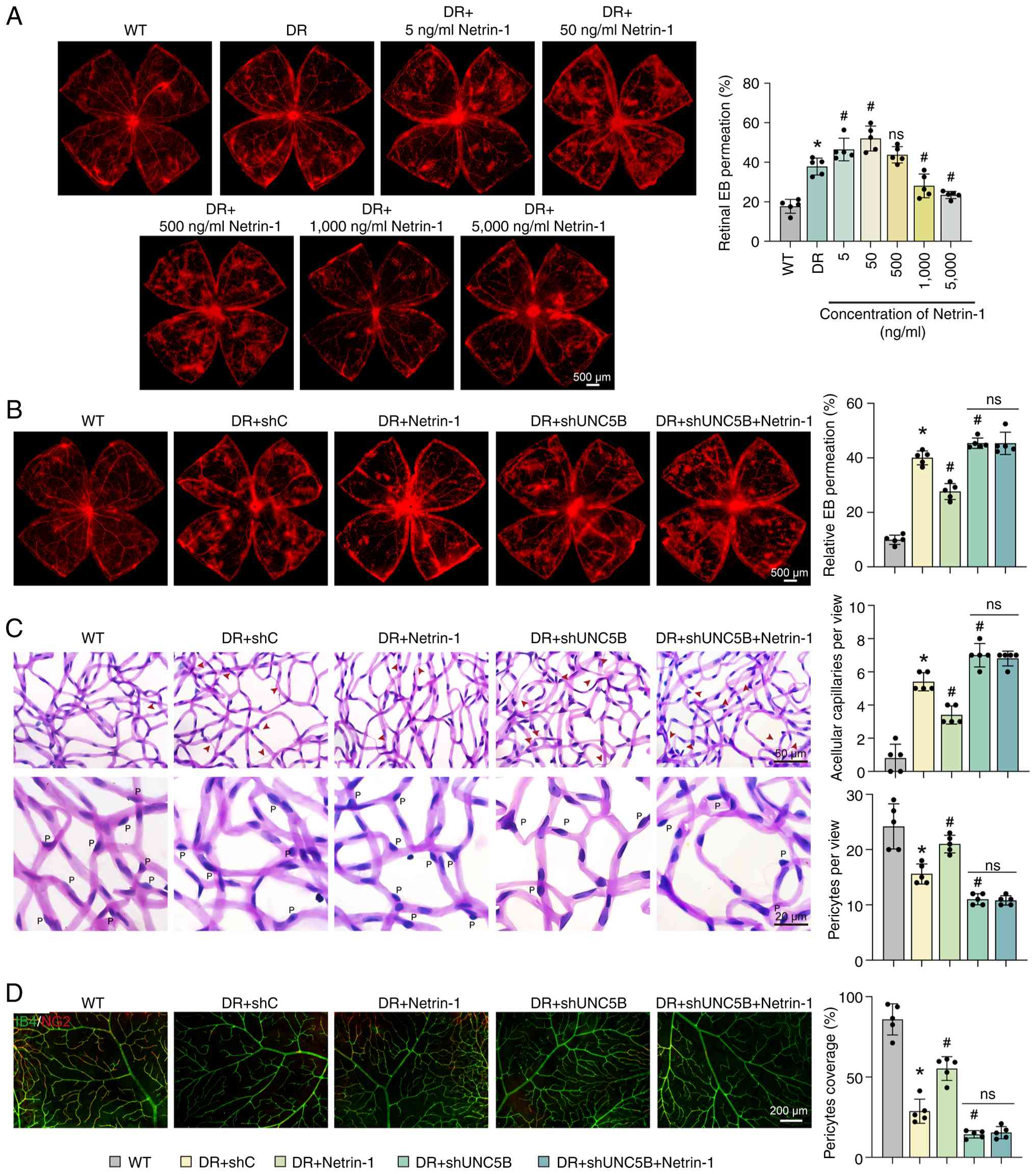
Figure 5

UNC5B silencing in endothelial cells
disrupts blood-retinal barrier homeostasis in DR model mice and
abrogates the protective effect of high-concentration netrin-1. At
week 4 after successful DR model induction, different
concentrations of netrin-1 (5, 50, 500, 1,000 and 5,000 ng/ml) were
injected intravitreally. Retinal tissues were collected after ≥12
weeks of DR model induction for subsequent analysis. (A) EB
staining was used to observe retinal vascular leakage in the
different groups. Scale bar, 500 μm. At week 4 after DR
model induction, control shRNA-AAV carrying an endothelial
cell-specific promoter sequence (DR + shC), 1,000 ng/ml netrin-1
(DR + Netrin-1), UNC5B shRNA-AAV carrying an endothelial
cell-specific promoter sequence (DR + shUNC5B) or a combination of
1,000 ng/ml netrin-1 and UNC5B shRNA-AAV (DR + shUNC5B + Netrin-1)
were injected. After ≥12 weeks of DR model induction, retinal
tissues were collected for analysis. (B) EB staining showed retinal
vascular leakage in the different groups. Scale bar, 500 μm.
(C) Periodic acid-Schiff staining revealed the formation of
acellular capillaries (arrows) and the number of pericytes ('P') in
the retinal tissues. Scale bar, 50 or 20 μm. (D) Whole-mount
retinal immunofluorescence staining showed the pericyte coverage in
the retinas of the different groups (red, NG2; green, IB4). Scale
bar, 200 μm. The data are presented as the mean ± SD. n=5
per group. All statistical comparisons in this figure were
performed among all groups using one-way ANOVA followed by Tukey's
multiple comparisons test. *P<0.05 vs. WT.
#P<0.05 vs. DR/DR + shC. AAV, adeno-associated virus;
DR, diabetic retinopathy; EB, Evans Blue; IB4, isolectin B4; NG2,
neuron-glial antigen 2; ns, not significant; shRNA, short hairpin
RNA; shC, scramble control shRNA; shUNC5B, UNC5B shRNA; UNC5B,
unc-5 netrin receptor B; WT, wild-type.

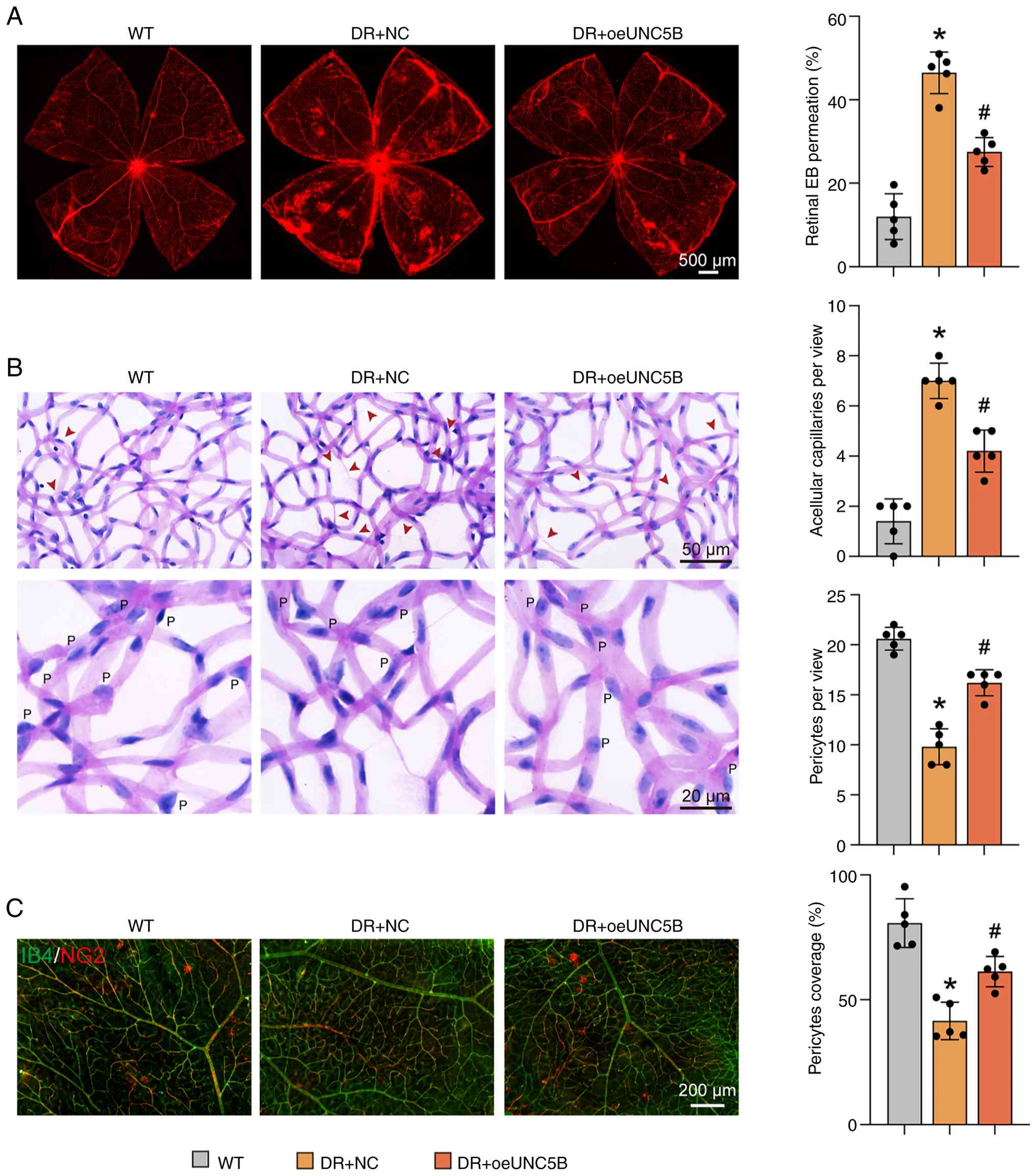
Figure 6

UNC5B overexpression in endothelial
cells maintains blood-retinal barrier homeostasis in DR model mice.
At week 4 after successful DR model induction, DR mice received a
single retro-orbital injection of adeno-associated virus carrying
an endothelial cell-specific promoter. Mice were assigned to two
groups: One with overexpression of UNC5B (DR + oeUNC5B) and the
other receiving an empty vector as a control (DR + NC). Retinal
tissues were collected after ≥12 weeks of DR model induction for
subsequent analysis. (A) EB staining showed retinal vascular
leakage in the different groups. Scale bar, 500 μm. (B)
Periodic acid-Schiff staining revealed acellular capillary
formation (arrows) and pericyte numbers ('P') in the retinas of the
different groups. Scale bar, 50 or 20 μm. (C) Whole-mount
retinal immunofluorescence staining showed pericyte coverage in the
retinas of the different groups (red, NG2; green, IB4). Scale bar,
200 μm. The data are presented as the mean ± SD. n=5 per
group. All statistical comparisons in this figure were performed
among all groups using one-way ANOVA followed by Tukey's multiple
comparisons test. *P<0.05 vs. WT.
#P<0.05 vs. DR + NC. DR, diabetic retinopathy; EB,
Evans Blue; IB4, isolectin B4; NC, negative control; NG2,
neuron-glial antigen 2; oe, overexpression; UNC5B, unc-5 netrin
receptor B; WT, wild-type.

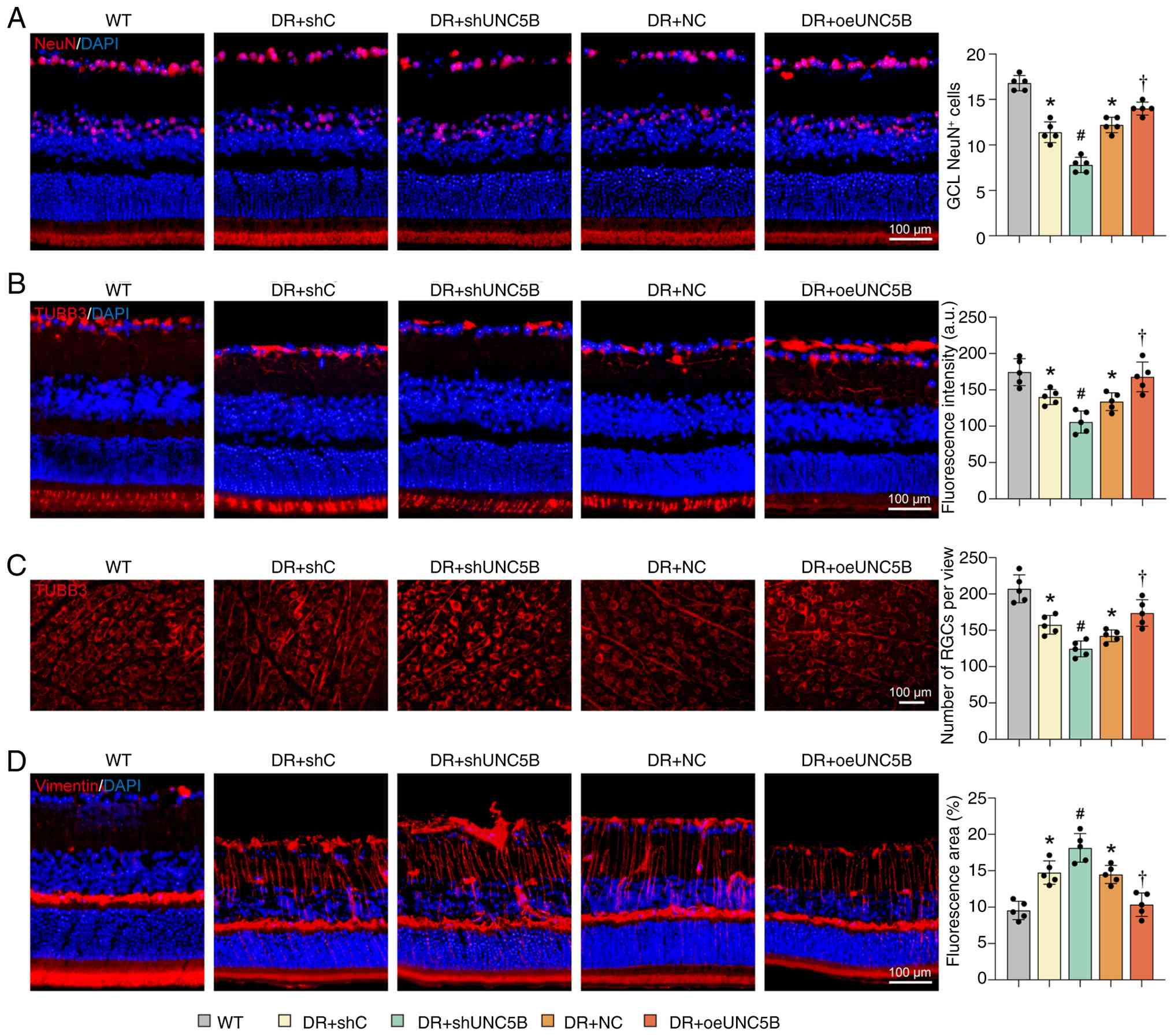
Figure 7

UNC5B affects neurodegeneration and
glial activation in the DR mouse model. After ≥14 weeks of DR model
induction, retinal tissues were collected for analysis. Mice were
divided into groups, including a WT group and four DR groups that
received different AAV treatments: DR + shC, DR + shUNC5B, DR + NC
and DR + oeUNC5B. Retinal cryosection immunofluorescence staining
showed (A) the number of NeuN-positive cells (red, NeuN; blue,
DAPI) and (B) TUBB3 fluorescence intensity (red, TUBB3; blue, DAPI)
in different groups. Scale bar, 100 μm. (C) Retinal
flat-mount TUBB3 immunofluorescence staining showed the number of
ganglion cells per field in different groups. Scale bar, 100
μm. (D) Retinal cryosection vimentin staining demonstrated
glial reactivity in different groups (red, vimentin; blue, DAPI).
Scale bar, 100 μm. The data are presented as the mean ± SD.
n=5 per group. All statistical comparisons in this figure were
performed among all groups using one-way ANOVA followed by Tukey's
multiple comparisons test. *P<0.05 vs. WT.
#P<0.05 vs. DR + shC. †P<0.05 vs. DR +
NC. DR, diabetic retinopathy; GCL, ganglion cell layer; NC,
negative control; NeuN, neuron-specific nuclear protein; oe,
overexpression; RGC, retinal ganglion cell; shRNA, short hairpin
RNA; shC, scramble control shRNA; shUNC5B, UNC5B shRNA; TUBB3,
β-III tubulin; UNC5B, unc-5 netrin receptor B; WT, wild-type.

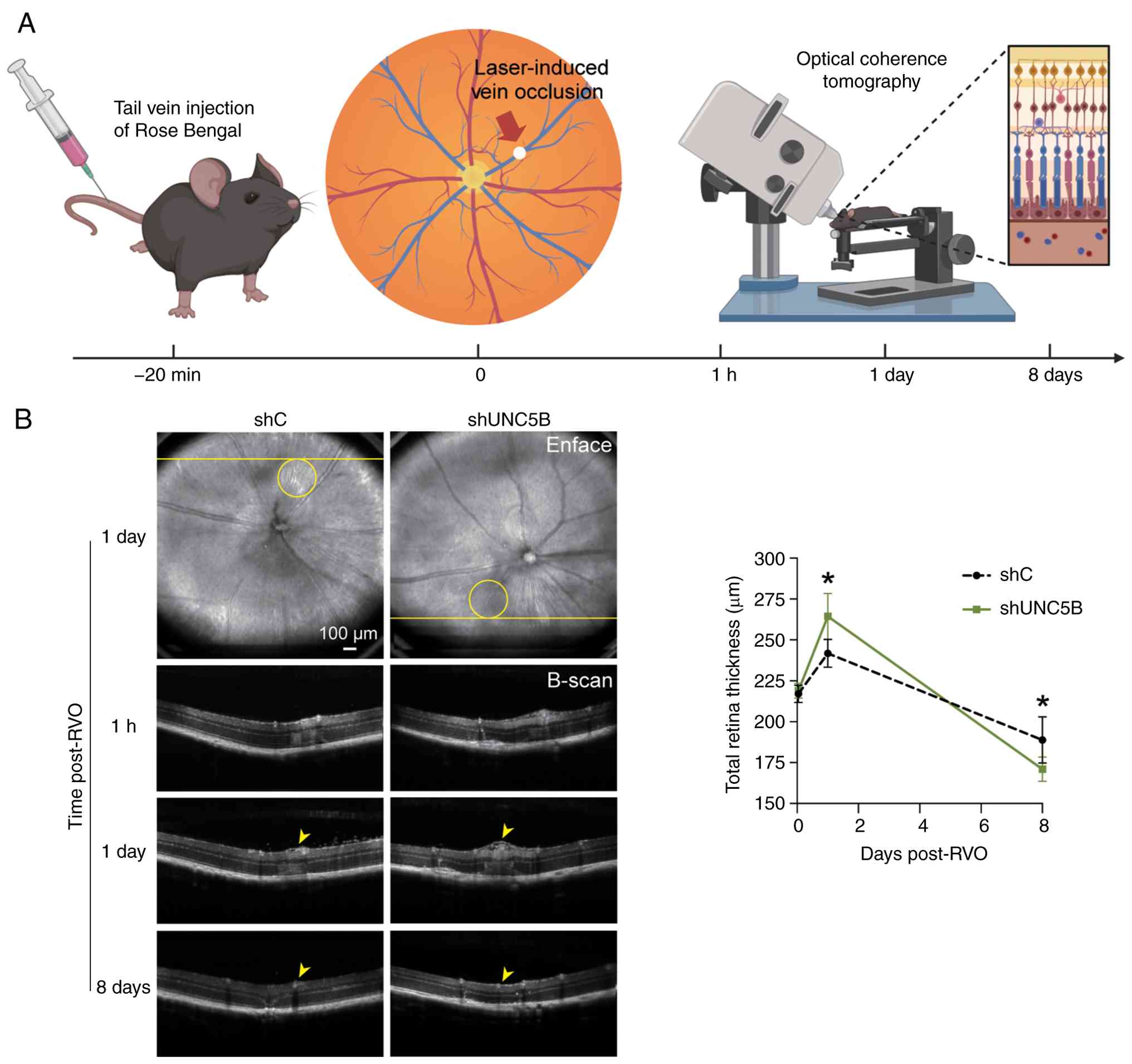
Figure 8

UNC5B silencing in endothelial cells
aggravates retinal edema in RVO model mice. In 6-8 week-old
wild-type mice, UNC5B shRNA-AAV (shUNC5B) or control shRNA-AAV
(shC), both carrying an endothelial cell-specific promoter
sequence, were administered via posterior orbital vein injection.
Following viral delivery, the mice were maintained for ≥4 weeks to
allow sufficient gene knockdown before subsequent procedures. (A)
Rose Bengal was injected via the tail vein, and retinal vein
occlusion was induced by laser treatment within 20 min
post-injection (created in BioRender; https://BioRender.com/g5aw0dv). (B) Optical coherence
tomography scans were performed 1 h, 1 day and 8 days after laser
induction to observe retinal edema and atrophy. The data are
presented as the mean ± SD. n=5 per group. Statistical comparisons
between the UNC5B knockdown and control groups at each time point
were performed using two-tailed unpaired Student's t-tests.
*P<0.05 vs. shC. AAV, adeno-associated virus; RVO,
retinal vein occlusion; shRNA, short hairpin RNA; shC, scramble
control shRNA; shUNC5B, UNC5B shRNA; UNC5B, unc-5 netrin receptor
B.

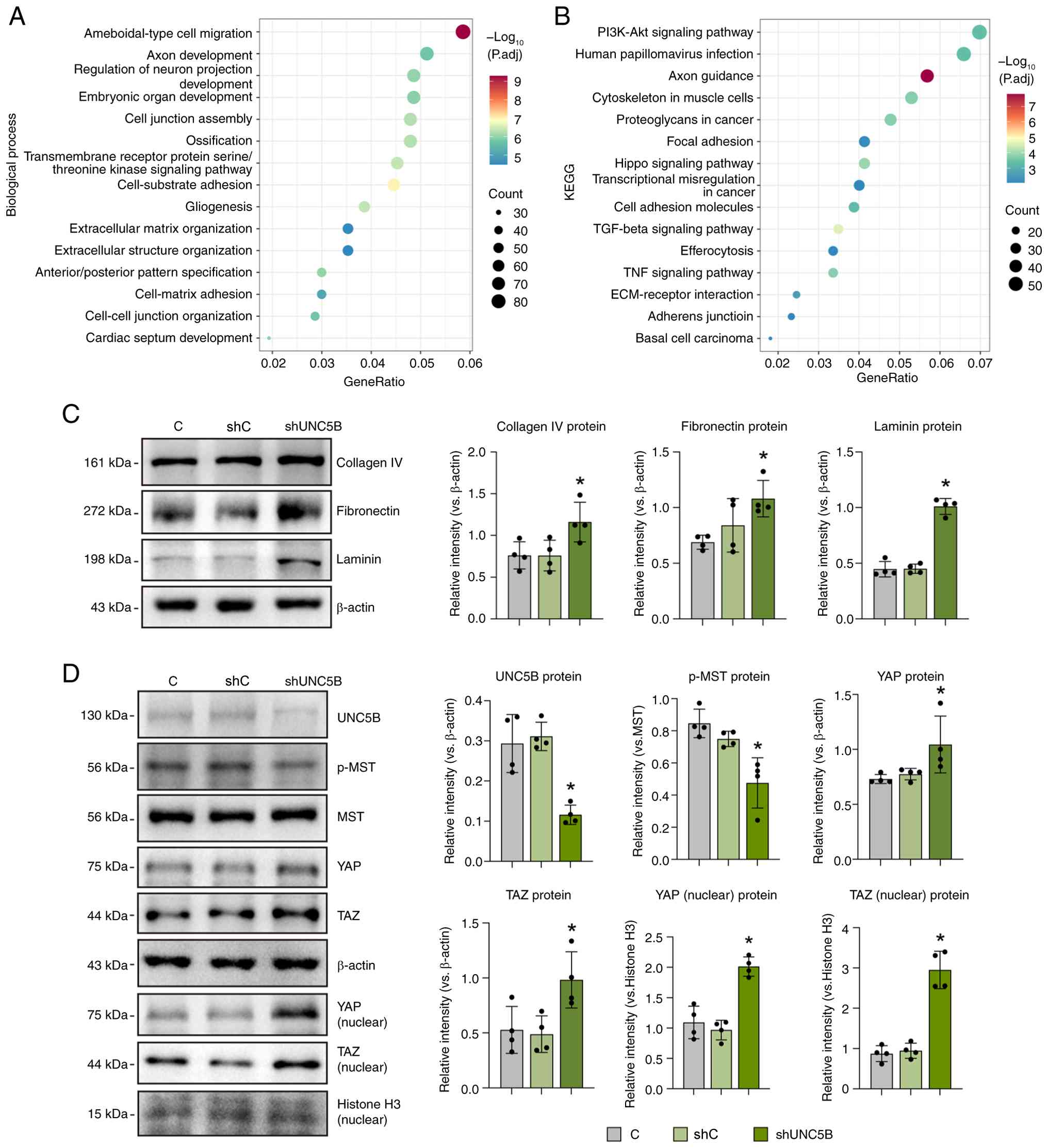
Figure 9

Silencing of UNC5B promotes
ECM-related protein synthesis and inhibits the Hippo signaling
pathway. HRMECs were transfected with lentiviral UNC5B shRNA, and
stable UNC5B-silenced cell lines (shUNC5B) were constructed using
puromycin selection. A control group was established by
transfection with negative control shRNA (shC). A total of three
samples from each group were used for transcriptome sequencing, and
differentially expressed genes were analyzed by Gene Ontology and
KEGG functional enrichment analysis. The lollipop plots displayed
the enrichment features of the two groups in terms of (A)
biological processes and (B) KEGG pathways. (C) Western blotting
was used to detect the expression of ECM-related proteins in HRMECs
after silencing of UNC5B. (D) Western blotting was also used to
assess the activation of the Hippo signaling pathway in HRMECs
after silencing of UNC5B. The data are presented as the mean ± SD.
n=4 per group. All statistical comparisons in this figure were
performed between the C group and each of the other groups using
one-way ANOVA followed by Dunnett's multiple comparisons test.
*P<0.05 vs. C. C, control; ECM, extracellular matrix;
HRMEC, human retinal microvascular endothelial cell; KEGG, Kyoto
Encyclopedia of Genes and Genomes; MST, mammalian Ste20-like
kinase; p-, phosphorylated; padj, adjusted P-value; shRNA, short
hairpin RNA; shC, scramble control shRNA; shUNC5B, UNC5B shRNA;
TAZ, transcriptional co-activator with PDZ-binding motif; UNC5B,
unc-5 netrin receptor B; YAP, yes-associated protein.

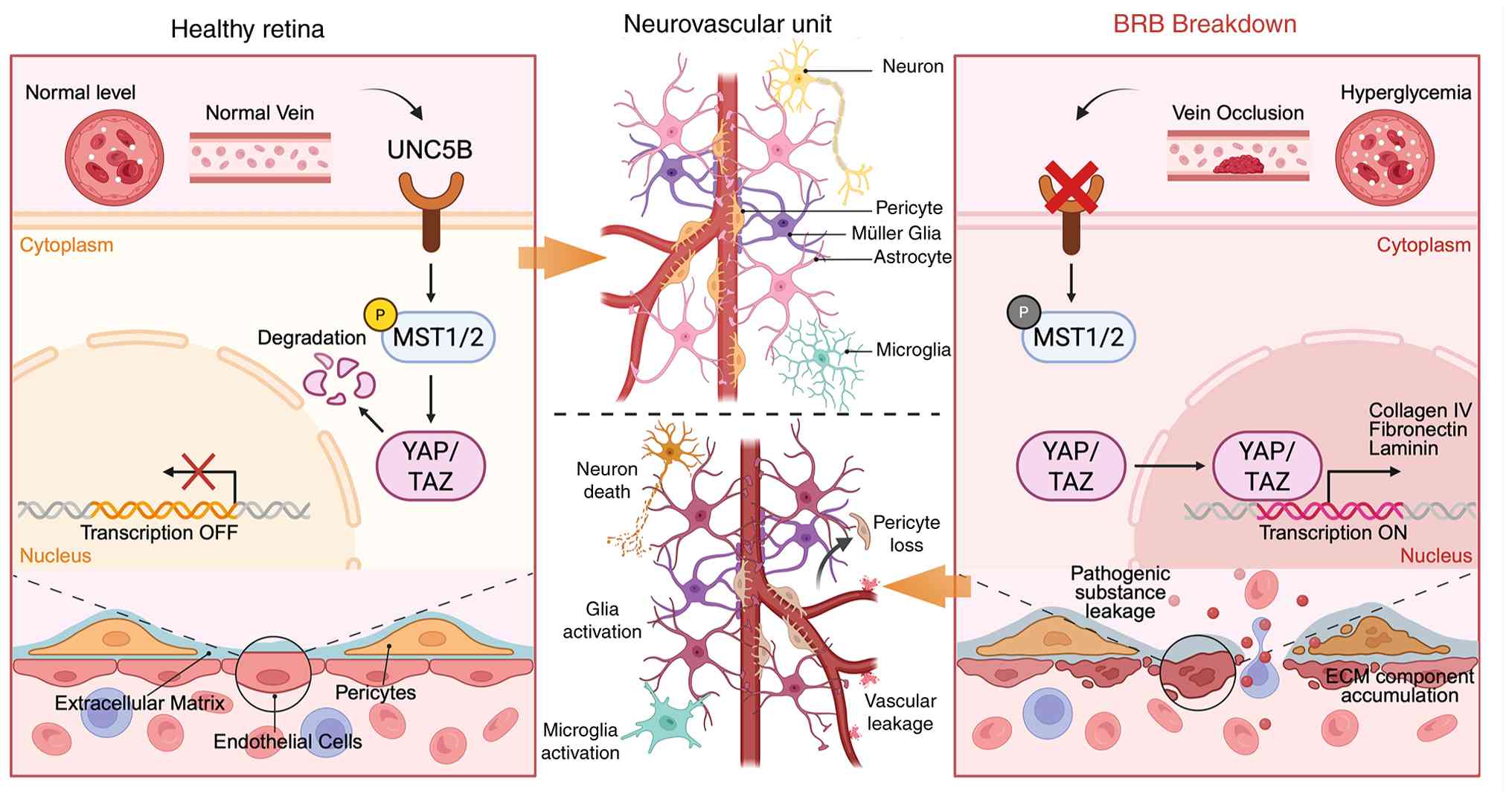
Figure 10

Role of endothelial UNC5B in
maintaining BRB and NVU integrity under normal and pathological
conditions. Normal UNC5B expression sustains BRB and NVU stability,
whereas its downregulation in diabetic retinopathy and retinal vein
occlusion is linked to Hippo signaling suppression, and impairment
of both BRB and NVU integrity. Created in BioRender; https://BioRender.com/xp1oos1. BRB,
blood-retinal barrier; ECM, extracellular matrix; MST, mammalian
Ste20-like kinase; NVU, neurovascular unit; P, phosphorylated; TAZ,
transcriptional co-activator with PDZ-binding motif; UNC5B, unc-5
netrin receptor B; YAP, yes-associated protein.
View References

1 

Meng Y, Liu Y, Duan R, Liu B, Lin Z, Ma Y, Jiang L, Qin Z and Li T: Global, regional, and national epidemiology of vision impairment due to diabetic retinopathy among working-age population, 1990-2021. J Diabetes. 17:e701212025. View Article : Google Scholar : PubMed/NCBI

2 

Chen Y, Tang S, Huang Y, Deng J, Chen X, Qi Y, Xiao H, Li Y, Li H and Guan H: Global burden of blindness or visually impairment attributable to diabetic retinopathy in the adults aged 70 years and older, 1990-2021: Results from the global burden of disease study in 2021. Diabetes Res Clin Pract. 226:1123832025. View Article : Google Scholar

3 

Antonetti DA, Silva PS and Stitt AW: Current understanding of the molecular and cellular pathology of diabetic retinopathy. Nat Rev Endocrinol. 17:195–206. 2021. View Article : Google Scholar : PubMed/NCBI

4 

Tang Y, Shi Y and Fan Z: The mechanism and therapeutic strategies for neovascular glaucoma secondary to diabetic retinopathy. Front Endocrinol (Lausanne). 14:11023612023. View Article : Google Scholar : PubMed/NCBI

5 

Yue T, Shi Y, Luo S, Weng J, Wu Y and Zheng X: The role of inflammation in immune system of diabetic retinopathy: Molecular mechanisms, pathogenetic role and therapeutic implications. Front Immunol. 13:10550872022. View Article : Google Scholar : PubMed/NCBI

6 

Kuroiwa DAK, Malerbi FK and Regatieri CVS: New insights in resistant diabetic macular edema. Ophthalmologica. 244:485–494. 2021. View Article : Google Scholar : PubMed/NCBI

7 

Tatsumi T: Current treatments for diabetic macular edema. Int J Mol Sci. 24:95912023. View Article : Google Scholar : PubMed/NCBI

8 

Sweeney MD, Ayyadurai S and Zlokovic BV: Pericytes of the neurovascular unit: Key functions and signaling pathways. Nat Neurosci. 19:771–783. 2016. View Article : Google Scholar : PubMed/NCBI

9 

Zhou L, Xu Z, Lu H, Cho H, Xie Y, Lee G, Ri K and Duh EJ: Suppression of inner blood-retinal barrier breakdown and pathogenic Müller glia activation in ischemia retinopathy by myeloid cell depletion. J Neuroinflammation. 21:2102024. View Article : Google Scholar

10 

Bora K, Kushwah N, Maurya M, Pavlovich MC, Wang Z and Chen J: Assessment of inner blood-retinal barrier: Animal models and methods. Cells. 12:24432023. View Article : Google Scholar : PubMed/NCBI

11 

O'Leary F and Campbell M: The blood-retina barrier in health and disease. FEBS J. 290:878–891. 2023. View Article : Google Scholar

12 

Klaassen I, Van Noorden CJF and Schlingemann RO: Molecular basis of the inner blood-retinal barrier and its breakdown in diabetic macular edema and other pathological conditions. Prog Retin Eye Res. 34:19–48. 2013. View Article : Google Scholar : PubMed/NCBI

13 

Fletcher EL, Dixon MA, Mills SA and Jobling AI: Anomalies in neurovascular coupling during early diabetes: A review. Clin Exp Ophthalmol. 51:81–91. 2023. View Article : Google Scholar

14 

Kugler EC, Greenwood J and MacDonald RB: The 'neuro-glial-vascular' unit: The role of glia in neurovascular unit formation and dysfunction. Front Cell Dev Biol. 9:7328202021. View Article : Google Scholar

15 

Grimes WN, Berson DM, Sabnis A, Hoon M, Sinha R, Tian H and Diamond JS: Layer-specific anatomical and physiological features of the retina's neurovascular unit. Curr Biol. 35:109–120.e4. 2025. View Article : Google Scholar :

16 

Ivanova E, Alam NM, Prusky GT and Sagdullaev BT: Blood-retina barrier failure and vision loss in neuron-specific degeneration. JCI Insight. 5:e1267472019. View Article : Google Scholar : PubMed/NCBI

17 

Sheng X, Zhang C, Zhao J, Xu J, Zhang P, Ding Q and Zhang J: Microvascular destabilization and intricated network of the cytokines in diabetic retinopathy: From the perspective of cellular and molecular components. Cell Biosci. 14:852024. View Article : Google Scholar : PubMed/NCBI

18 

Rudraraju M, Narayanan SP and Somanath PR: Regulation of blood-retinal barrier cell-junctions in diabetic retinopathy. Pharmacol Res. 161:1051152020. View Article : Google Scholar : PubMed/NCBI

19 

Daneman R, Zhou L, Kebede AA and Barres BA: Pericytes are required for blood-brain barrier integrity during embryogenesis. Nature. 468:562–566. 2010. View Article : Google Scholar : PubMed/NCBI

20 

Resnikoff HA, Miller CG and Schwarzbauer JE: Implications of fibrotic extracellular matrix in diabetic retinopathy. Exp Biol Med (Maywood). 247:1093–1102. 2022. View Article : Google Scholar : PubMed/NCBI

21 

Park DY, Lee J, Kim J, Kim K, Hong S, Han S, Kubota Y, Augustin HG, Ding L, Kim JW, et al: Plastic roles of pericytes in the blood-retinal barrier. Nat Commun. 8:152962017. View Article : Google Scholar : PubMed/NCBI

22 

Leonardo ED, Hinck L, Masu M, Keino-Masu K, Ackerman SL and Tessier-Lavigne M: Vertebrate homologues of C. elegans UNC-5 are candidate netrin receptors. Nature. 386:833–838. 1997. View Article : Google Scholar : PubMed/NCBI

23 

Serafini T, Colamarino SA, Leonardo ED, Wang H, Beddington R, Skarnes WC and Tessier-Lavigne M: Netrin-1 is required for commissural axon guidance in the developing vertebrate nervous system. Cell. 87:1001–1014. 1996. View Article : Google Scholar : PubMed/NCBI

24 

Navankasattusas S, Whitehead KJ, Suli A, Sorensen LK, Lim AH, Zhao J, Park KW, Wythe JD, Thomas KR, Chien CB and Li D: The netrin receptor UNC5B promotes angiogenesis in specific vascular beds. Development. 135:659–667. 2008. View Article : Google Scholar : PubMed/NCBI

25 

Larrivée B, Freitas C, Trombe M, Lv X, Delafarge B, Yuan L, Bouvrée K, Bréant C, Del Toro R, Bréchot N, et al: Activation of the UNC5B receptor by netrin-1 inhibits sprouting angiogenesis. Genes Dev. 21:2433–2447. 2007. View Article : Google Scholar : PubMed/NCBI

26 

Tu T, Zhang C, Yan H, Luo Y, Kong R, Wen P, Ye Z, Chen J, Feng J, Liu F, et al: CD146 acts as a novel receptor for netrin-1 in promoting angiogenesis and vascular development. Cell Res. 25:275–287. 2015. View Article : Google Scholar : PubMed/NCBI

27 

Yu Y, Zou J, Han Y, Quyang L, He H, Hu P, Shao Y and Tu P: Effects of intravitreal injection of netrin-1 in retinal neovascularization of streptozotocin-induced diabetic rats. Drug Des Devel Ther. 9:6363–6377. 2015.PubMed/NCBI

28 

Yang Y, Zou L, Wang Y, Xu KS, Zhang JX and Zhang JH: Axon guidance cue netrin-1 has dual function in angiogenesis. Cancer Biol Ther. 6:743–748. 2007. View Article : Google Scholar : PubMed/NCBI

29 

Oshitari T: Neurovascular impairment and therapeutic strategies in diabetic retinopathy. Int J Environ Res Public Health. 19:4392021. View Article : Google Scholar

30 

Ma J, Liu X, Qin Y, Qu Y, Liu Q and Li J: Canagliflozin inhibits NLRP3 inflammasome activation to protect the retinal neurovascular unit in a mouse retinal vein occlusion model. Exp Eye Res. 263:1108032026. View Article : Google Scholar

31 

Lu X, Le Noble F, Yuan L, Jiang Q, De Lafarge B, Sugiyama D, Bréant C, Claes F, De Smet F, Thomas JL, et al: The netrin receptor UNC5B mediates guidance events controlling morphogenesis of the vascular system. Nature. 432:179–186. 2004. View Article : Google Scholar : PubMed/NCBI

32 

Kaur S, Abu-Asab MS, Singla S, Yeo SY and Ramchandran R: Expression pattern for unc5b, an axon guidance gene in embryonic zebrafish development. Gene Expr. 13:321–327. 2007. View Article : Google Scholar : PubMed/NCBI

33 

Sun L, Wang R, Hu G, Liu H, Lv K, Duan Y, Shen N, Wu J, Hu J, Liu Y, et al: Single cell RNA sequencing (scRNA-Seq) deciphering pathological alterations in streptozotocin-induced diabetic retinas. Exp Eye Res. 210:1087182021. View Article : Google Scholar : PubMed/NCBI

34 

Binet F, Cagnone G, Crespo-Garcia S, Hata M, Neault M, Dejda A, Wilson AM, Buscarlet M, Mawambo GT, Howard JP, et al: Neutrophil extracellular traps target senescent vasculature for tissue remodeling in retinopathy. Science. 369:eaay53562020. View Article : Google Scholar : PubMed/NCBI

35 

Siddiqui SS, Siddiqui ZK and Malik AB: Albumin endocytosis in endothelial cells induces TGF-beta receptor II signaling. Am J Physiol Lung Cell Mol Physiol. 286:L1016–L1026. 2004. View Article : Google Scholar : PubMed/NCBI

36 

Wang N, Zhang D, Sun G, Zhang H, You Q, Shao M and Yue Y: Lipopolysaccharide-induced caveolin-1 phosphorylation-dependent increase in transcellular permeability precedes the increase in paracellular permeability. Drug Des Devel Ther. 9:4965–4977. 2015.PubMed/NCBI

37 

Adzraku SY, Wang G, Cao C, Bao Y, Wang Y, Smith AO, Du Y, Wang H, Li Y, Xu K, et al: Robo4 inhibits gamma radiation-induced permeability of a murine microvascular endothelial cell by regulating the junctions. Cell Mol Biol Lett. 28:22023. View Article : Google Scholar : PubMed/NCBI

38 

Xia M, Jiao L, Wang XH, Tong M, Yao MD, Li XM, Yao J, Li D, Zhao PQ and Yan B: Single-cell RNA sequencing reveals a unique pericyte type associated with capillary dysfunction. Theranostics. 13:2515–2530. 2023. View Article : Google Scholar : PubMed/NCBI

39 

Fresta CG, Fidilio A, Caruso G, Caraci F, Giblin FJ, Leggio GM, Salomone S, Drago F and Bucolo C: A New human blood-retinal barrier model based on endothelial cells, pericytes, and astrocytes. Int J Mol Sci. 21:16362020. View Article : Google Scholar : PubMed/NCBI

40 

Livak KJ and Schmittgen TD: Analysis of relative gene expression data using real-time quantitative PCR and the 2(-Delta Delta C(T)) method. Methods. 25:402–408. 2001. View Article : Google Scholar

41 

Chen S, Zhou Y, Chen Y and Gu J: fastp: An ultra-fast all-in-one FASTQ preprocessor. Bioinformatics. 34:i884–i890. 2018. View Article : Google Scholar : PubMed/NCBI

42 

Oosuka S, Kida T, Oku H, Horie T, Morishita S, Fukumoto M, Sato T and Ikeda T: Effects of an aquaporin 4 inhibitor, TGN-020, on murine diabetic retina. Int J Mol Sci. 21:23242020. View Article : Google Scholar : PubMed/NCBI

43 

Chou JC, Rollins SD and Fawzi AA: Trypsin digest protocol to analyze the retinal vasculature of a mouse model. J Vis Exp. e504892013.PubMed/NCBI

44 

Zhao Y, Ge Z, Guo T, Liu H, Zhou Y, Chen J, Xu H and Chen Z: Complement C3/C3aR signaling pathway inhibition ameliorates retinal damage in experimental retinal vein occlusion. Invest Ophthalmol Vis Sci. 66:22025. View Article : Google Scholar : PubMed/NCBI

45 

Avrutsky MI, Chen CW, Lawson JM, Snipas SJ, Salvesen GS and Troy CM: Caspase-9 inhibition confers stronger neuronal and vascular protection compared to VEGF neutralization in a mouse model of retinal vein occlusion. Front Neurosci. 17:12095272023. View Article : Google Scholar : PubMed/NCBI

46 

Minshall RD, Sessa WC, Stan RV, Anderson RG and Malik AB: Caveolin regulation of endothelial function. Am J Physiol Lung Cell Mol Physiol. 285:L1179–L1183. 2003. View Article : Google Scholar : PubMed/NCBI

47 

Avrutsky MI, Ortiz CC, Johnson KV, Potenski AM, Chen CW, Lawson JM, White AJ, Yuen SK, Morales FN, Canepa E, et al: Endothelial activation of caspase-9 promotes neurovascular injury in retinal vein occlusion. Nat Commun. 11:31732020. View Article : Google Scholar : PubMed/NCBI

48 

Wei L, Gao J, Wang L, Tao Q and Tu C: Hippo/YAP signaling pathway: A new therapeutic target for diabetes mellitus and vascular complications. Ther Adv Endocrinol Metab. 14:204201882312201342023. View Article : Google Scholar : PubMed/NCBI

49 

Lei Y, Liu Q, Chen B, Wu F, Li Y, Dong X, Ma N, Wu Z, Zhu Y, Wang L, et al: Protein O-GlcNAcylation coupled to Hippo signaling drives vascular dysfunction in diabetic retinopathy. Nat Commun. 15:93342024. View Article : Google Scholar : PubMed/NCBI

50 

Chaqour B: CCN-Hippo YAP signaling in vision and its role in neuronal, glial and vascular cell function and behavior. J Cell Commun Signal. 17:255–262. 2023. View Article : Google Scholar : PubMed/NCBI

51 

Ahmad US, Uttagomol J and Wan H: The regulation of the Hippo pathway by intercellular junction proteins. Life (Basel). 12:17922022.PubMed/NCBI

52 

Park JA and Kwon YG: Hippo-YAP/TAZ signaling in angiogenesis. BMB Rep. 51:157–162. 2018. View Article : Google Scholar : PubMed/NCBI

53 

Gu Y, Hao S, Liu K, Gao M, Lu B, Sheng F, Zhang L, Xu Y, Wu D, Han Y, et al: Airborne fine particulate matter (PM2.5) damages the inner blood-retinal barrier by inducing inflammation and ferroptosis in retinal vascular endothelial cells. Sci Total Environ. 838:1565632022. View Article : Google Scholar

54 

Haydinger CD, Ferreira LB, Williams KA and Smith JR: Mechanisms of macular edema. Front Med (Lausanne). 10:11288112023. View Article : Google Scholar : PubMed/NCBI

55 

Zhou LY, Liu ZG, Sun YQ, Li YZ, Teng ZQ and Liu CM: Preserving blood-retinal barrier integrity: A path to retinal ganglion cell protection in glaucoma and traumatic optic neuropathy. Cell Regen. 14:132025. View Article : Google Scholar : PubMed/NCBI

56 

Raza Q, Nadeem T, Youn SW, Swaminathan B, Gupta A, Sargis T, Du J, Cuervo H, Eichmann A, Ackerman SL, et al: Notch signaling regulates UNC5B to suppress endothelial proliferation, migration, junction activity, and retinal plexus branching. Sci Rep. 14:136032024. View Article : Google Scholar : PubMed/NCBI

57 

Boyé K, Geraldo LH, Furtado J, Pibouin-Fragner L, Poulet M, Kim D, Nelson B, Xu Y, Jacob L, Maissa N, et al: Endothelial Unc5B controls blood-brain barrier integrity. Nat Commun. 13:11692022. View Article : Google Scholar : PubMed/NCBI

58 

Furtado J, Geraldo LH, Leser FS, Poulet M, Park H, Pibouin-Fragner L, Eichmann A and Boyé K: Netrin-1 binding to Unc5B regulates blood-retina barrier integrity. bioRxiv [Preprint]: 2023.01.21.525006. 2023.

59 

Furtado J, Geraldo LH, Leser FS, Bartkowiak B, Poulet M, Park H, Robinson M, Pibouin-Fragner L, Eichmann A and Boyé K: Interplay between netrin-1 and Norrin controls arteriovenous zonation of blood-retina barrier integrity. Proc Natl Acad Sci USA. 121:e24086741212024. View Article : Google Scholar : PubMed/NCBI

60 

Zhang CL, Ma JJ, Li X, Yan HQ, Gui YK, Yan ZX, You MF and Zhang P: The role of transcytosis in the blood-retina barrier: From pathophysiological functions to drug delivery. Front Pharmacol. 16:15653822025. View Article : Google Scholar : PubMed/NCBI

61 

Armulik A, Abramsson A and Betsholtz C: Endothelial/pericyte interactions. Circ Res. 97:512–523. 2005. View Article : Google Scholar : PubMed/NCBI

62 

Nabeel Mustafa A, Salih Mahdi M, Ballal S, Chahar M, Verma R, Ali Al-Nuaimi AM, Kumar MR, Kadhim A, Al-Hussein R, Adil M and Jasem Jawad M: Netrin-1: Key insights in neural development and disorders. Tissue Cell. 93:1026782025. View Article : Google Scholar

63 

Li Y, Chai JL, Shi X, Feng Y, Li JJ, Zhou LN, Cao C and Li KR: Gαi1/3 mediate netrin-1-CD146-activated signaling and angiogenesis. Theranostics. 13:2319–2336. 2023. View Article : Google Scholar

64 

Roy S and Kim D: Retinal capillary basement membrane thickening: Role in the pathogenesis of diabetic retinopathy. Prog Retin Eye Res. 82:1009032021. View Article : Google Scholar

65 

Boopathy GTK and Hong W: Role of Hippo pathway-YAP/TAZ signaling in angiogenesis. Front Cell Dev Biol. 7:492019. View Article : Google Scholar : PubMed/NCBI

66 

Islam MS, Afrin S, Singh B, Jayes FL, Brennan JT, Borahay MA, Leppert PC and Segars JH: Extracellular matrix and Hippo signaling as therapeutic targets of antifibrotic compounds for uterine fibroids. Clin Transl Med. 11:e4752021. View Article : Google Scholar : PubMed/NCBI

67 

Lv H and Ai D: Hippo/yes-associated protein signaling functions as a mechanotransducer in regulating vascular homeostasis. J Mol Cell Cardiol. 162:158–165. 2022. View Article : Google Scholar

68 

Weiss EL: Hippo unleashed! Proteome-scale analysis reveals new views of Hippo pathway biology. Sci Signal. 6:pe362013. View Article : Google Scholar : PubMed/NCBI

69 

Ji L, Tian H, Webster KA and Li W: Neurovascular regulation in diabetic retinopathy and emerging therapies. Cell Mol Life Sci. 78:5977–5985. 2021. View Article : Google Scholar : PubMed/NCBI

70 

Meng C, Gu C, He S, Su T, Lhamo T, Draga D and Qiu Q: Pyroptosis in the retinal neurovascular unit: New insights into diabetic retinopathy. Front Immunol. 12:7630922021. View Article : Google Scholar : PubMed/NCBI

71 

Ahn EH, Kang SS, Qi Q, Liu X and Ye K: Netrin1 deficiency activates MST1 via UNC5B receptor, promoting dopaminergic apoptosis in Parkinson's disease. Proc Natl Acad Sci USA. 117:24503–24513. 2020. View Article : Google Scholar : PubMed/NCBI

72 

Qi Q, Li DY, Luo HR, Guan KL and Ye K: Netrin-1 exerts oncogenic activities through enhancing Yes-associated protein stability. Proc Natl Acad Sci USA. 112:7255–7260. 2015. View Article : Google Scholar : PubMed/NCBI

Related Articles

  • Abstract
  • View
  • Download
  • Twitter
Copy and paste a formatted citation
Spandidos Publications style
Yao Y, Wang S, Li J, Jin Q, Chen Z, Jiang Q and Li K: Endothelial UNC5B regulates blood‑retinal barrier homeostasis. Int J Mol Med 57: 100, 2026.
APA
Yao, Y., Wang, S., Li, J., Jin, Q., Chen, Z., Jiang, Q., & Li, K. (2026). Endothelial UNC5B regulates blood‑retinal barrier homeostasis. International Journal of Molecular Medicine, 57, 100. https://doi.org/10.3892/ijmm.2026.5771
MLA
Yao, Y., Wang, S., Li, J., Jin, Q., Chen, Z., Jiang, Q., Li, K."Endothelial UNC5B regulates blood‑retinal barrier homeostasis". International Journal of Molecular Medicine 57.4 (2026): 100.
Chicago
Yao, Y., Wang, S., Li, J., Jin, Q., Chen, Z., Jiang, Q., Li, K."Endothelial UNC5B regulates blood‑retinal barrier homeostasis". International Journal of Molecular Medicine 57, no. 4 (2026): 100. https://doi.org/10.3892/ijmm.2026.5771
Copy and paste a formatted citation
x
Spandidos Publications style
Yao Y, Wang S, Li J, Jin Q, Chen Z, Jiang Q and Li K: Endothelial UNC5B regulates blood‑retinal barrier homeostasis. Int J Mol Med 57: 100, 2026.
APA
Yao, Y., Wang, S., Li, J., Jin, Q., Chen, Z., Jiang, Q., & Li, K. (2026). Endothelial UNC5B regulates blood‑retinal barrier homeostasis. International Journal of Molecular Medicine, 57, 100. https://doi.org/10.3892/ijmm.2026.5771
MLA
Yao, Y., Wang, S., Li, J., Jin, Q., Chen, Z., Jiang, Q., Li, K."Endothelial UNC5B regulates blood‑retinal barrier homeostasis". International Journal of Molecular Medicine 57.4 (2026): 100.
Chicago
Yao, Y., Wang, S., Li, J., Jin, Q., Chen, Z., Jiang, Q., Li, K."Endothelial UNC5B regulates blood‑retinal barrier homeostasis". International Journal of Molecular Medicine 57, no. 4 (2026): 100. https://doi.org/10.3892/ijmm.2026.5771
Follow us
  • Twitter
  • LinkedIn
  • Facebook
About
  • Spandidos Publications
  • Careers
  • Cookie Policy
  • Privacy Policy
How can we help?
  • Help
  • Live Chat
  • Contact
  • Email to our Support Team