Spandidos Publications Logo
  • About
    • About Spandidos
    • Aims and Scopes
    • Abstracting and Indexing
    • Editorial Policies
    • Reprints and Permissions
    • Job Opportunities
    • Terms and Conditions
    • Contact
  • Journals
    • All Journals
    • Oncology Letters
      • Oncology Letters
      • Information for Authors
      • Editorial Policies
      • Editorial Board
      • Aims and Scope
      • Abstracting and Indexing
      • Bibliographic Information
      • Archive
    • International Journal of Oncology
      • International Journal of Oncology
      • Information for Authors
      • Editorial Policies
      • Editorial Board
      • Aims and Scope
      • Abstracting and Indexing
      • Bibliographic Information
      • Archive
    • Molecular and Clinical Oncology
      • Molecular and Clinical Oncology
      • Information for Authors
      • Editorial Policies
      • Editorial Board
      • Aims and Scope
      • Abstracting and Indexing
      • Bibliographic Information
      • Archive
    • Experimental and Therapeutic Medicine
      • Experimental and Therapeutic Medicine
      • Information for Authors
      • Editorial Policies
      • Editorial Board
      • Aims and Scope
      • Abstracting and Indexing
      • Bibliographic Information
      • Archive
    • International Journal of Molecular Medicine
      • International Journal of Molecular Medicine
      • Information for Authors
      • Editorial Policies
      • Editorial Board
      • Aims and Scope
      • Abstracting and Indexing
      • Bibliographic Information
      • Archive
    • Biomedical Reports
      • Biomedical Reports
      • Information for Authors
      • Editorial Policies
      • Editorial Board
      • Aims and Scope
      • Abstracting and Indexing
      • Bibliographic Information
      • Archive
    • Oncology Reports
      • Oncology Reports
      • Information for Authors
      • Editorial Policies
      • Editorial Board
      • Aims and Scope
      • Abstracting and Indexing
      • Bibliographic Information
      • Archive
    • Molecular Medicine Reports
      • Molecular Medicine Reports
      • Information for Authors
      • Editorial Policies
      • Editorial Board
      • Aims and Scope
      • Abstracting and Indexing
      • Bibliographic Information
      • Archive
    • World Academy of Sciences Journal
      • World Academy of Sciences Journal
      • Information for Authors
      • Editorial Policies
      • Editorial Board
      • Aims and Scope
      • Abstracting and Indexing
      • Bibliographic Information
      • Archive
    • International Journal of Functional Nutrition
      • International Journal of Functional Nutrition
      • Information for Authors
      • Editorial Policies
      • Editorial Board
      • Aims and Scope
      • Abstracting and Indexing
      • Bibliographic Information
      • Archive
    • International Journal of Epigenetics
      • International Journal of Epigenetics
      • Information for Authors
      • Editorial Policies
      • Editorial Board
      • Aims and Scope
      • Abstracting and Indexing
      • Bibliographic Information
      • Archive
    • Medicine International
      • Medicine International
      • Information for Authors
      • Editorial Policies
      • Editorial Board
      • Aims and Scope
      • Abstracting and Indexing
      • Bibliographic Information
      • Archive
  • Articles
  • Information
    • Information for Authors
    • Information for Reviewers
    • Information for Librarians
    • Information for Advertisers
    • Conferences
  • Language Editing
Spandidos Publications Logo
  • About
    • About Spandidos
    • Aims and Scopes
    • Abstracting and Indexing
    • Editorial Policies
    • Reprints and Permissions
    • Job Opportunities
    • Terms and Conditions
    • Contact
  • Journals
    • All Journals
    • Biomedical Reports
      • Information for Authors
      • Editorial Policies
      • Editorial Board
      • Aims and Scope
      • Abstracting and Indexing
      • Bibliographic Information
      • Archive
    • Experimental and Therapeutic Medicine
      • Information for Authors
      • Editorial Policies
      • Editorial Board
      • Aims and Scope
      • Abstracting and Indexing
      • Bibliographic Information
      • Archive
    • International Journal of Epigenetics
      • Information for Authors
      • Editorial Policies
      • Editorial Board
      • Aims and Scope
      • Abstracting and Indexing
      • Bibliographic Information
      • Archive
    • International Journal of Functional Nutrition
      • Information for Authors
      • Editorial Policies
      • Editorial Board
      • Aims and Scope
      • Abstracting and Indexing
      • Bibliographic Information
      • Archive
    • International Journal of Molecular Medicine
      • Information for Authors
      • Editorial Policies
      • Editorial Board
      • Aims and Scope
      • Abstracting and Indexing
      • Bibliographic Information
      • Archive
    • International Journal of Oncology
      • Information for Authors
      • Editorial Policies
      • Editorial Board
      • Aims and Scope
      • Abstracting and Indexing
      • Bibliographic Information
      • Archive
    • Medicine International
      • Information for Authors
      • Editorial Policies
      • Editorial Board
      • Aims and Scope
      • Abstracting and Indexing
      • Bibliographic Information
      • Archive
    • Molecular and Clinical Oncology
      • Information for Authors
      • Editorial Policies
      • Editorial Board
      • Aims and Scope
      • Abstracting and Indexing
      • Bibliographic Information
      • Archive
    • Molecular Medicine Reports
      • Information for Authors
      • Editorial Policies
      • Editorial Board
      • Aims and Scope
      • Abstracting and Indexing
      • Bibliographic Information
      • Archive
    • Oncology Letters
      • Information for Authors
      • Editorial Policies
      • Editorial Board
      • Aims and Scope
      • Abstracting and Indexing
      • Bibliographic Information
      • Archive
    • Oncology Reports
      • Information for Authors
      • Editorial Policies
      • Editorial Board
      • Aims and Scope
      • Abstracting and Indexing
      • Bibliographic Information
      • Archive
    • World Academy of Sciences Journal
      • Information for Authors
      • Editorial Policies
      • Editorial Board
      • Aims and Scope
      • Abstracting and Indexing
      • Bibliographic Information
      • Archive
  • Articles
  • Information
    • For Authors
    • For Reviewers
    • For Librarians
    • For Advertisers
    • Conferences
  • Language Editing
Login Register Submit
  • This site uses cookies
  • You can change your cookie settings at any time by following the instructions in our Cookie Policy. To find out more, you may read our Privacy Policy.

    I agree
Search articles by DOI, keyword, author or affiliation
Search
Advanced Search
presentation
International Journal of Molecular Medicine
Join Editorial Board Propose a Special Issue
Print ISSN: 1107-3756 Online ISSN: 1791-244X
Journal Cover
July-2026 Volume 58 Issue 1

Full Size Image

Sign up for eToc alerts
Recommend to Library

Journals

International Journal of Molecular Medicine

International Journal of Molecular Medicine

International Journal of Molecular Medicine is an international journal devoted to molecular mechanisms of human disease.

International Journal of Oncology

International Journal of Oncology

International Journal of Oncology is an international journal devoted to oncology research and cancer treatment.

Molecular Medicine Reports

Molecular Medicine Reports

Covers molecular medicine topics such as pharmacology, pathology, genetics, neuroscience, infectious diseases, molecular cardiology, and molecular surgery.

Oncology Reports

Oncology Reports

Oncology Reports is an international journal devoted to fundamental and applied research in Oncology.

Experimental and Therapeutic Medicine

Experimental and Therapeutic Medicine

Experimental and Therapeutic Medicine is an international journal devoted to laboratory and clinical medicine.

Oncology Letters

Oncology Letters

Oncology Letters is an international journal devoted to Experimental and Clinical Oncology.

Biomedical Reports

Biomedical Reports

Explores a wide range of biological and medical fields, including pharmacology, genetics, microbiology, neuroscience, and molecular cardiology.

Molecular and Clinical Oncology

Molecular and Clinical Oncology

International journal addressing all aspects of oncology research, from tumorigenesis and oncogenes to chemotherapy and metastasis.

World Academy of Sciences Journal

World Academy of Sciences Journal

Multidisciplinary open-access journal spanning biochemistry, genetics, neuroscience, environmental health, and synthetic biology.

International Journal of Functional Nutrition

International Journal of Functional Nutrition

Open-access journal combining biochemistry, pharmacology, immunology, and genetics to advance health through functional nutrition.

International Journal of Epigenetics

International Journal of Epigenetics

Publishes open-access research on using epigenetics to advance understanding and treatment of human disease.

Medicine International

Medicine International

An International Open Access Journal Devoted to General Medicine.

Journal Cover
July-2026 Volume 58 Issue 1

Full Size Image

Sign up for eToc alerts
Recommend to Library

  • Article
  • Citations
    • Cite This Article
    • Download Citation
    • Create Citation Alert
    • Remove Citation Alert
    • Cited By
  • Similar Articles
    • Related Articles (in Spandidos Publications)
    • Similar Articles (Google Scholar)
    • Similar Articles (PubMed)
  • Download PDF
  • Download XML
  • View XML
Article Open Access

Integrative transcriptomic analysis unveils FXR as a key regulator of intestinal stemness and inflammation in ulcerative colitis

  • Authors:
    • Hao Lin
    • Xinran Cheng
    • Yangyang Ren
    • Yongmei Zhang
    • Weixu Chen
    • Qingyan Lu
    • Yiqing Tian
  • View Affiliations / Copyright

    Affiliations: Jiangsu Key Laboratory of Immunity and Metabolism, Xuzhou Medical University, Xuzhou, Jiangsu 221004, P.R. China, School of Pharmacy, Anhui Medical University, Hefei, Anhui 230032, P.R. China, Department of Clinical Laboratory, Xinyi People's Hospital, Xinyi, Jiangsu 221400, P.R. China, Jiangsu Province Key Laboratory of Anesthesiology and Brain Science, Xuzhou Medical University, Xuzhou, Jiangsu 221004, P.R. China, Department of Gastroenterology, Xuzhou Central Hospital, Southeast University, Xuzhou, Jiangsu 221009, P.R. China, Department of Clinical Laboratory, Xuzhou Central Hospital, Southeast University, Xuzhou, Jiangsu 221009, P.R. China
    Copyright: © Lin et al. This is an open access article distributed under the terms of Creative Commons Attribution License.
  • Article Number: 200
    |
    Published online on: May 22, 2026
       https://doi.org/10.3892/ijmm.2026.5871
  • Expand metrics +
Metrics: Total Views: 0 (Spandidos Publications: | PMC Statistics: )
Metrics: Total PDF Downloads: 0 (Spandidos Publications: | PMC Statistics: )
Cited By (CrossRef): 0 citations Loading Articles...

This article is mentioned in:


Abstract

High‑throughput transcriptomic technologies offer a systems‑level approach to unravel the mechanisms of complex immune disorders. Inflammatory Bowel Disease (IBD), a classic example of such disorders, involves intricate interactions between genetics, microbiota and immune dysfunction. The nuclear receptor farnesoid X receptor (FXR) is implicated in IBD, but its precise mechanisms remain unclear. To investigate the role of FXR in ulcerative colitis (UC), the present study employed an integrative transcriptomic strategy, combining bulk transcriptomics (GSE75214, GSE13367 and GSE87466) and single‑cell RNA‑sequencing data (GSE116222) of human UC samples obtained from the Gene Expression Omnibus database. Subsequently, these findings were validated in a dextran sulfate sodium‑induced colitis model using FXR global knockout mice. The results revealed that FXR expression is downregulated in UC and co‑localizes with the stem cell marker CD133 in intestinal crypts. FXR deficiency exacerbated dextran sulfate sodium‑induced colitis, impaired the expression of stemness‑associated transcription factors (octamer‑binding transcription factor 3/4, homeobox protein NANOG, transcription factor SOX2 and Sal‑like protein 4), and activated the NF‑κB pathway, leading to increased production of pro‑inflammatory cytokines, specifically TNF‑α and IL‑1β. By integrating bulk and single‑cell transcriptomics with genetic validation, the present study uncovered an FXR‑dependent mechanism linking intestinal stem cell dysfunction to NF‑κB‑driven inflammation in colitis, and established a generalizable multi‑layer transcriptomic dissection strategy for complex inflammatory disorders.
View Figures

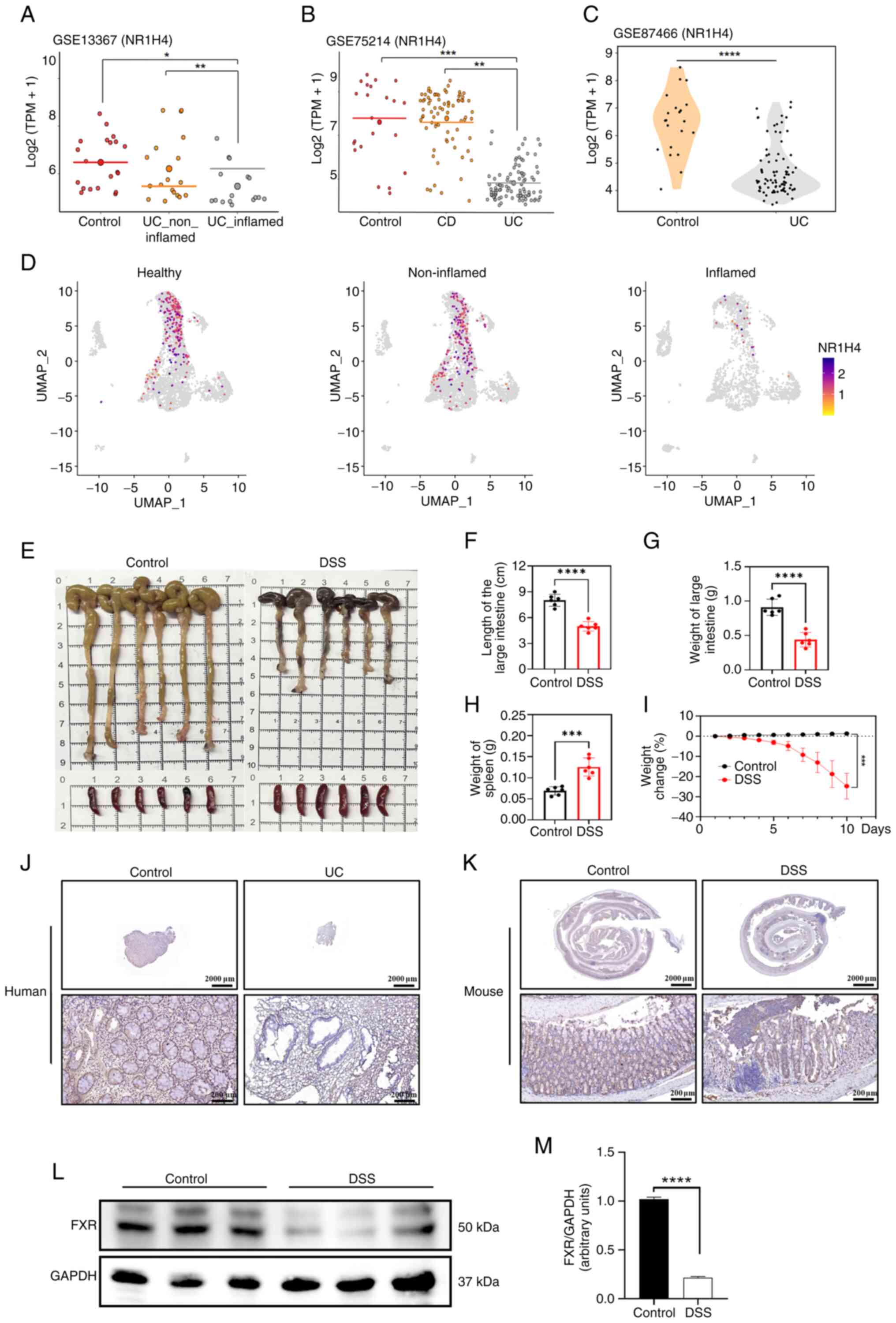
Figure 1

Integrative analysis identifies FXR
downregulation as a key feature of UC. Analysis of the bulk
transcriptomic datasets (A) GSE13367, (B) GSE75214 and (C) GSE87466
showed significantly lower FXR expression in UC tissues compared
with that in controls. (D) Single-cell RNA-sequencing (GSE116222)
analysis revealed FXR expression across intestinal cell types. The
color key represents the normalized expression level of NR1H4 (the
official gene symbol encoding FXR), transitioning from gray (no
expression) through yellow and red to dark purple (highest
expression). Analysis showed high expression in normal tissue and
progressive decrease in inflamed tissue. (E) Representative
macroscopic images of the large intestines and spleens from the
Control and UC groups. (F) Quantification of the large intestine
length. (G) Quantification of the large intestine weight. (H)
Quantification of the spleen weight. (I) Body weight loss over time
in DSS-treated mice. Immunohistochemistry staining of FXR in (J)
human and (K) mouse colon tissues showed reduced FXR-positive cells
in the DSS group. Scale bar, 2,000 µm (low magnification);
200 µm (high magnification). (L) Western blot analysis
confirmed FXR protein downregulation in DSS-treated mouse colon
tissue. (M) Densitometric quantification of FXR protein expression
levels relative to GAPDH. Data are presented as the mean ± SD. n=6
per group for macroscopic evaluations and n=3 per group for western
blotting. *P<0.05; **P<0.01;
***P<0.001; ****P<0.0001. FXR,
farnesoid X receptor; UC, ulcerative colitis; CD, Crohn's disease;
DSS, dextran sulfate sodium; UMAP, Uniform Manifold Approximation
and Projection; WT, wild-type; TPM, transcripts per million.

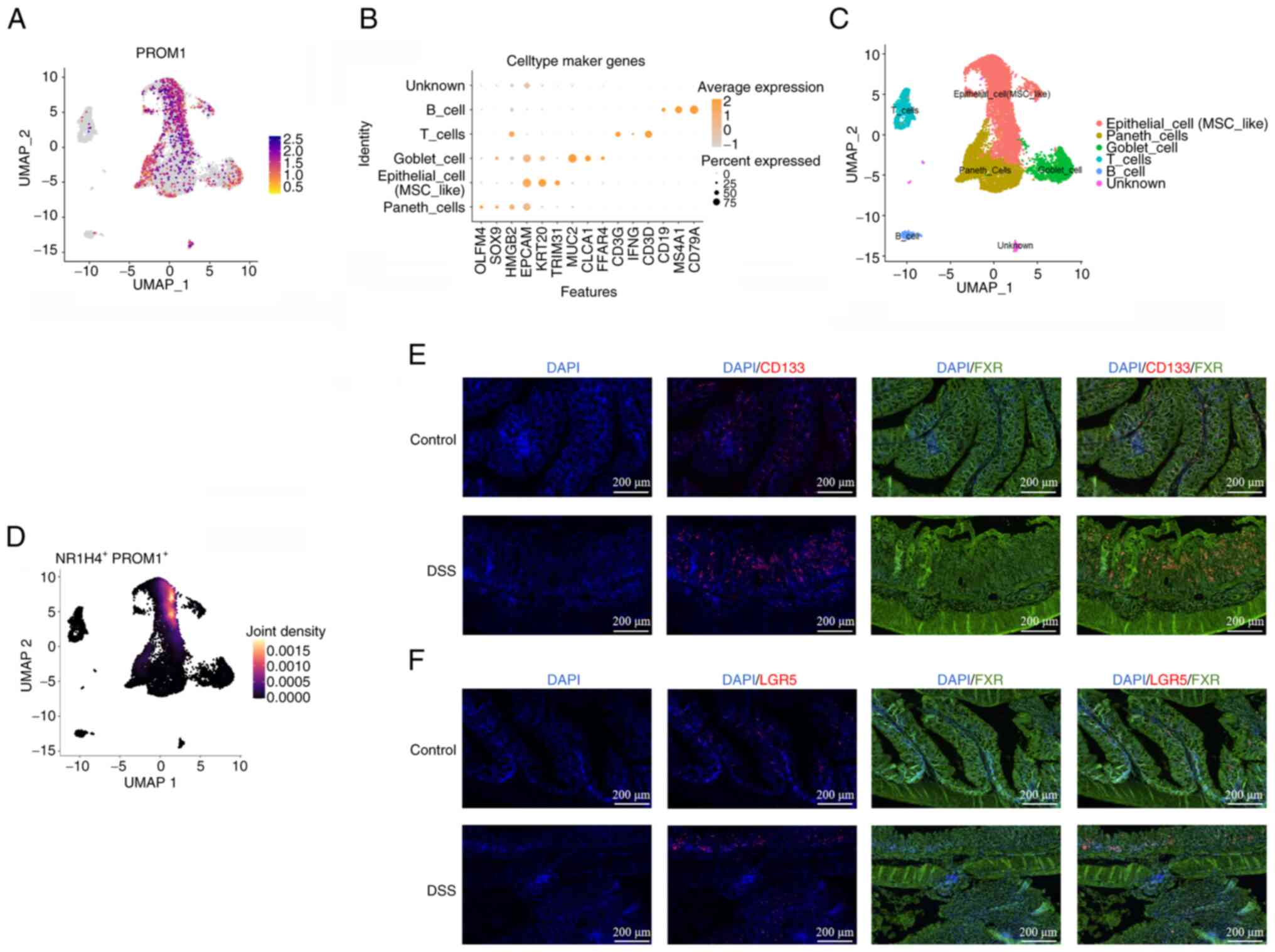
Figure 2

Single-cell resolution maps FXR
co-localization to the intestinal stem cell compartment. (A)
Single-cell RNA-sequencing (GSE116222) revealed overlapping
expression patterns of FXR with the stem cell marker PROM1 (CD133)
in UMAP projection. The color key represents the normalized
expression level, transitioning from gray (low/no expression) to
dark purple (high expression). (B) Cell type annotation based on
the CellMarker database identified five major intestinal cell
populations, (C) with feature plots showing distribution of marker
genes. The dot color represents the average expression level of
marker genes (transitioning from light gray for low expression to
dark orange for high expression), while the dot size indicates the
percentage of cells expressing the respective gene. (D)
Co-expression analysis demonstrated correlation between FXR and
CD133 in intestinal epithelial cells. The color key indicates the
joint expression density of NR1H4+ and
PROM1+, transitioning from black (low density) through
purple and orange to bright yellow (high density). NR1H4 is the
official gene symbol encoding FXR. (E) Immunofluorescence staining
of colon tissue from control and DSS mice confirmed co-localization
of FXR (green) with CD133 (red) in colonic crypts. Nuclei are
counterstained with DAPI (blue). Scale bar, 200 µm. (F)
Immunofluorescence staining of colon tissue from control and DSS
mice confirmed co-localization of FXR (green) with LGR5 (red) in
colonic crypts. Scale bar, 200 µm. Data are representative
of three independent experiments. FXR, farnesoid X receptor; DSS,
dextran sulfate sodium; UMAP, Uniform Manifold Approximation and
Projection; LGR5, leucine-rich repeat-containing G-protein coupled
receptor 5; MSC, Marker-defined Stem Cell.

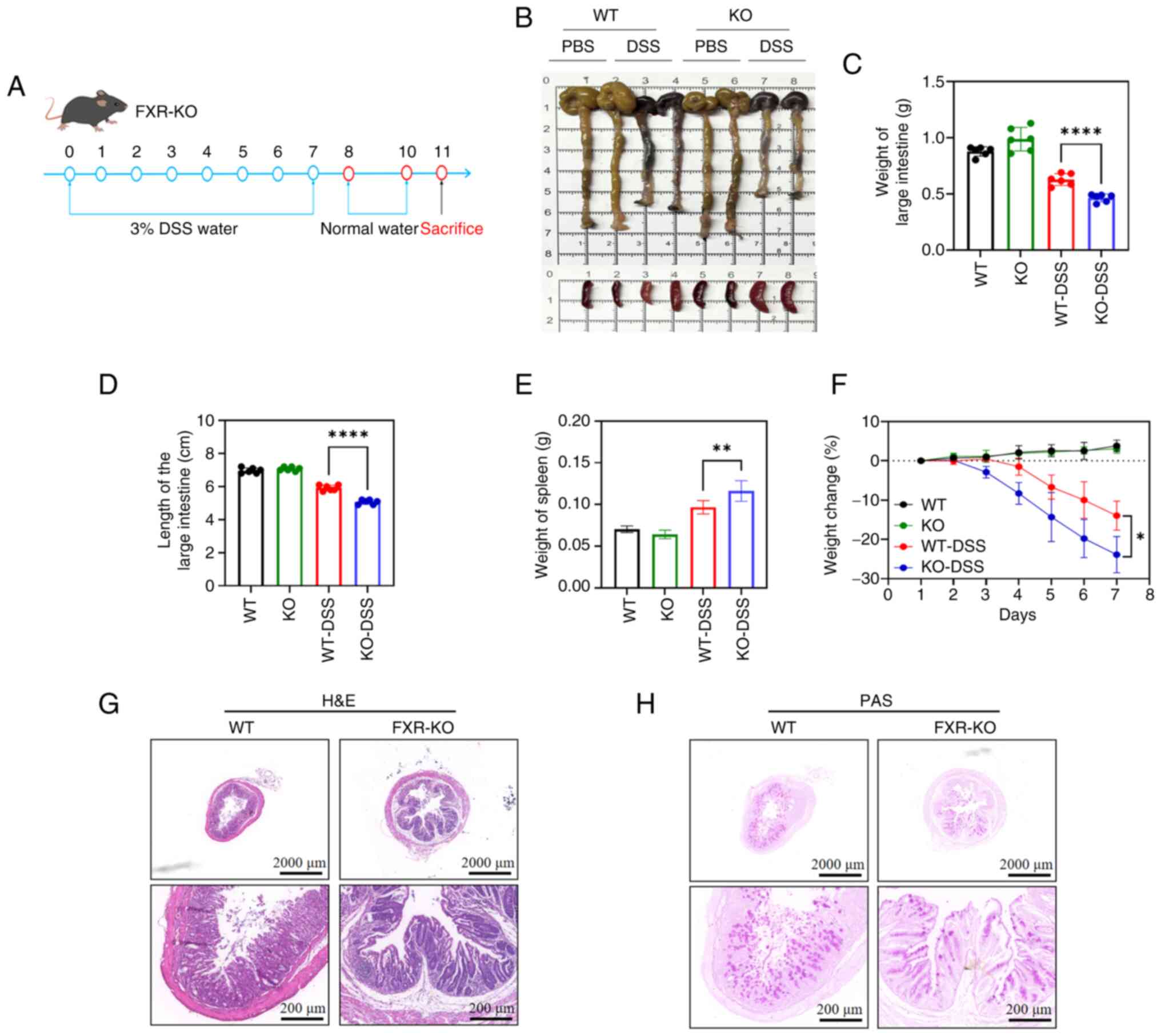
Figure 3

Functional validation in a genetic
model confirms the pathogenic role of FXR loss. (A) Schematic of
the experimental design for the FXR KO (FXR−/−) mouse
colitis model. (B) Representative macroscopic images of the colons
from WT and FXR−/− mice. (C) Quantification of the colon
weight. (D) Shortened colon length in the FXR−/− DSS
group compared with that in the WT DSS group. (E) Spleen weight was
significantly elevated in the FXR−/− DSS group. (F)
Progressive body weight decline over time in FXR−/− DSS
mice. Representative images of (G) H&E and (H) PAS staining
revealed severe mucosal damage, inflammatory infiltration and gland
disruption in FXR−/− DSS colon tissues. Scale bar, 2,000
µm (low magnification); 200 µm (high magnification).
Data are presented as the mean ± SD. n=6 per group.
*P<0.05; **P<0.01;
****P<0.0001. FXR, farnesoid X receptor; DSS, dextran
sulfate sodium; PAS, periodic acid-Schiff; WT, wild-type; KO,
knockout.

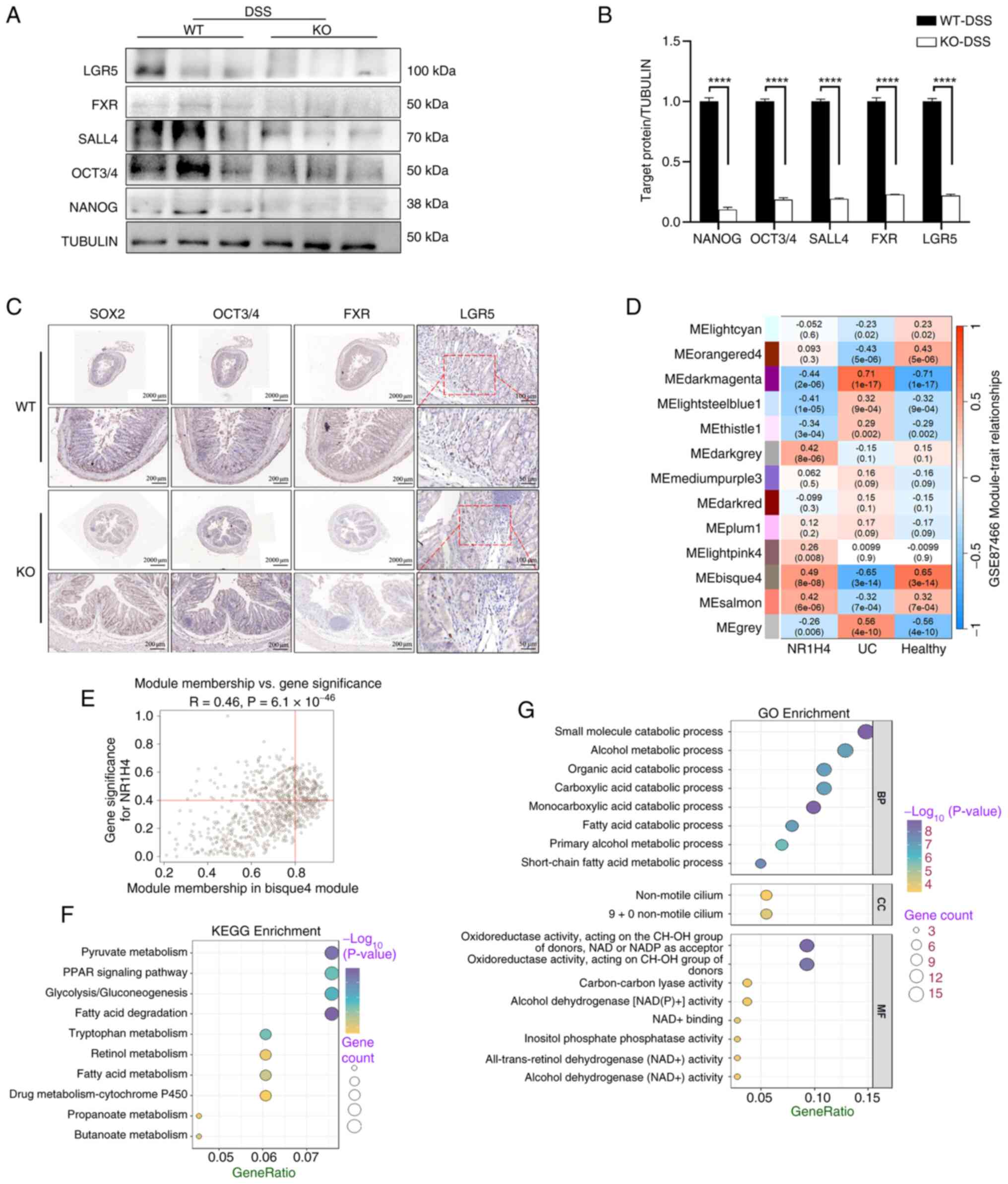
Figure 4

Integrative analysis links FXR to
stemness and metabolic pathways. (A) Western blot analysis revealed
a notable downregulation of LGR5 and core stemness-associated
transcription factors (SALL4, OCT3/4 and NANOG) in colon tissues of
FXR−/− DSS mice compared with those of WT DSS controls,
reflecting the collapse of the functional stem cell pool and its
transcriptional network. (B) Densitometric quantification of
protein expression levels. (C) Representative IHC images showing
the decreased expression of stemness-associated factors and LGR5 in
the epithelial and crypt regions of FXR−/− DSS mice.
Scale bar, 2,000 µm (low magnification); 200 µm (high
magnification); 100 µm (LGR5 magnification); and 50
µm (LGR5 crypt base high-magnification insets). (D) Weighted
Gene Co-expression Network Analysis of the GSE87466 transcriptome
identified a gene module (MEbisque4) significantly correlated with
FXR expression. The values outside the brackets represent the
Pearson correlation coefficients, and the values inside the
brackets represent the corresponding P-values. (E) Genes highly
correlated with both FXR and the MEbisque4 module were selected.
(F) KEGG and (G) GO enrichment analysis of the selected module
genes revealed associations with lipid and glucose metabolism
pathways. Data are presented as mean ± SD. n=3 per group for
western blotting and IHC. ****P<0.0001. IHC,
immunohistochemistry; FXR, farnesoid X receptor; DSS, dextran
sulfate sodium; WT, wild-type; KO, knockout; LGR5, leucine-rich
repeat-containing G-protein coupled receptor 5; OCT3/4,
octamer-binding transcription factor 3/4; SALL4, Sal-like protein
4; GO, Gene Ontology; KEGG, Kyoto Encyclopedia of Genes and
Genomes; UC, ulcerative colitis; BP, biological process; MF,
molecular function; CC, cellular component.

Figure 5

Integrative multi-layer network
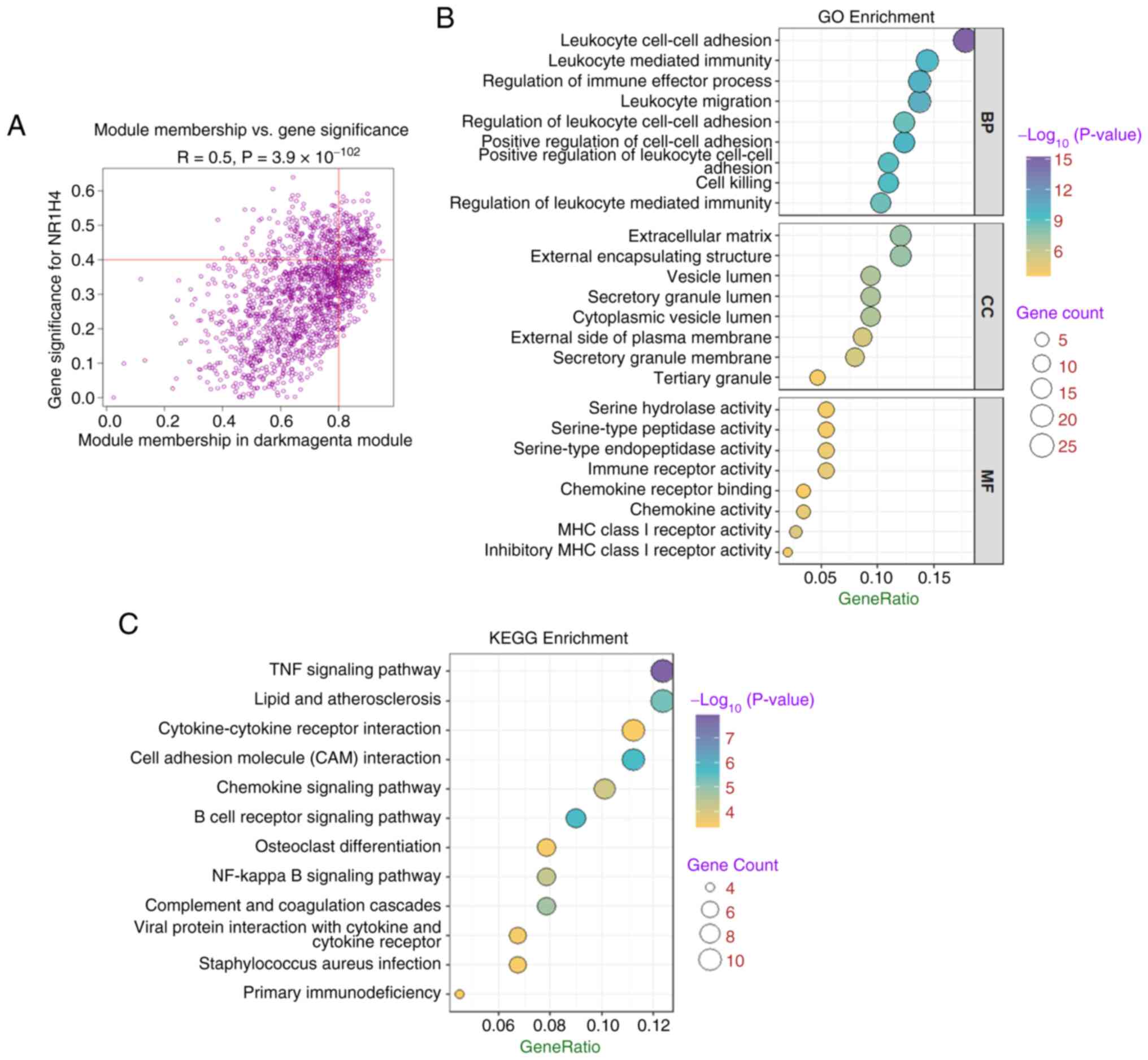
connects FXR to inflammatory signaling. (A) Weighted Gene
Co-expression Network Analysis of the GSE87466 transcriptome
identifies a gene module (MEdarkmagenta) negatively correlated with
FXR expression. Genes highly correlated with both FXR (negative)
and the MEdarkmagenta module were selected. (B) GO enrichment
analysis of the selected module genes highlighted immune-related
biological processes, including 'leukocyte cell-cell adhesion' and
'leukocyte-mediated immunity'. (C) KEGG pathway analysis showed
significant enrichment in 'TNF signaling pathway', 'B cell receptor
signaling pathway' and 'NF-κB signaling pathway'. FXR, farnesoid X
receptor; GO, Gene Ontology; KEGG, Kyoto Encyclopedia of Genes and
Genomes; BP, biological process; MF, molecular function; CC,
cellular component.

Figure 6

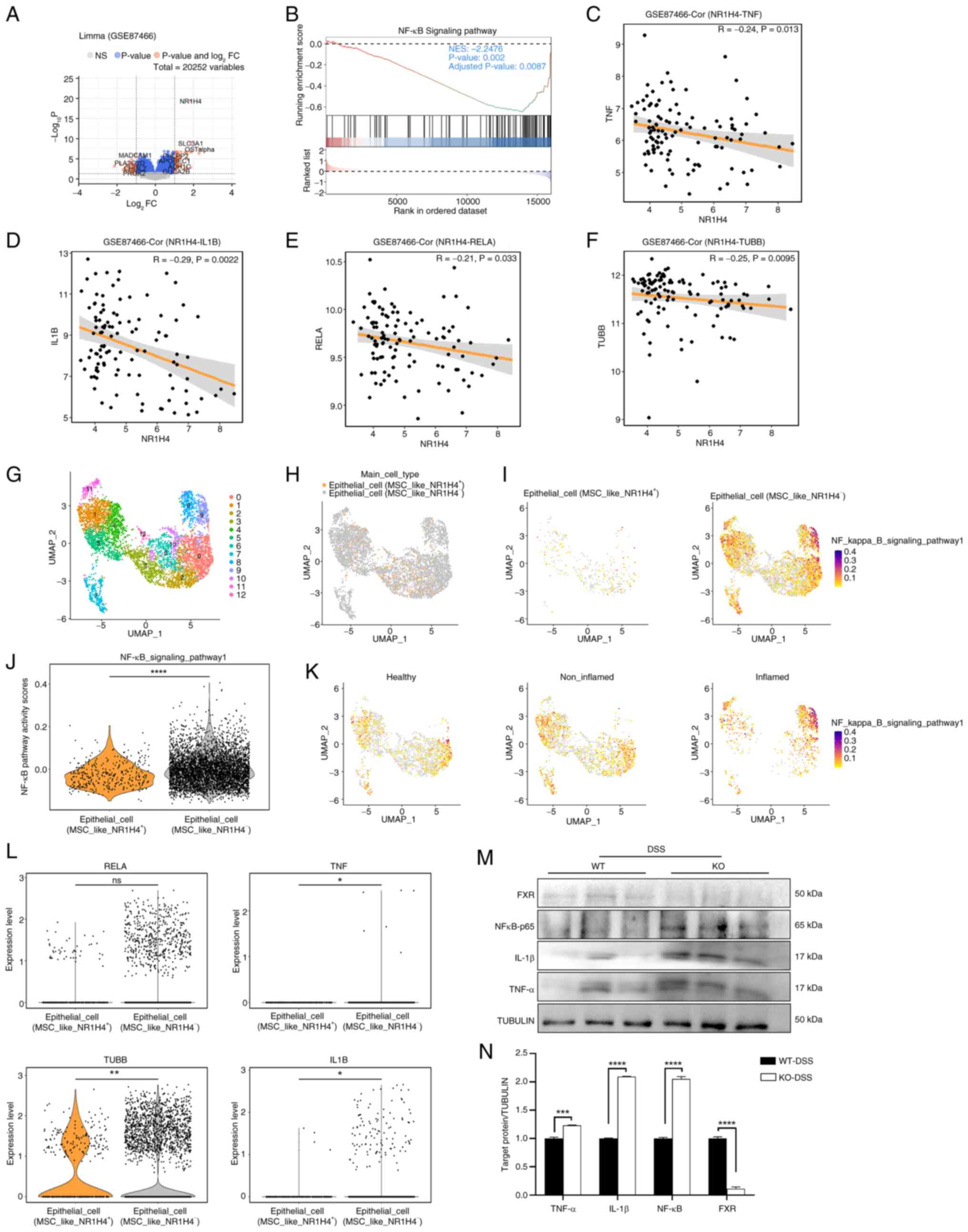
FXR knockout is tightly associated
with NF-κB signaling activation and promotes inflammatory
responses. (A) Volcano plot of differentially expressed genes
between FXR high- and low-expression groups in the GSE87466 cohort.
(B) Gene set enrichment analysis showed significant activation of
the NF-κB pathway in the FXR-low expression group. Negative
correlations between FXR and NF-κB-related genes, including (C)
TNF, (D) IL-1β, (E) RELA and (F) TUBB. (G) Sub-clustering of
epithelial-related stem cell populations from the single-cell
dataset GSE116222 and (H) identification of major subclusters. (I)
Stratification of cells into NR1H4+ and
NR1H4− groups (NR1H4 is the official gene symbol
encoding FXR). The color key represents the distribution density of
the respective cell populations. (J) NF-κB pathway activity scores
calculated using AddModuleScore revealed specific activation in
NR1H4− cell populations. (K) Progressive activation of
NF-κB signaling from healthy (lowest), through non-inflamed to
inflamed (highest). The color key indicates the normalized
expression level or pathway activity score, transitioning from low
(cool colors) to high (warm colors). (L) Single-cell expression
levels of NF-κB-related inflammatory genes in NR1H4− vs.
NR1H4+ populations. (M) Western blot validation showed
notably increased protein levels of TNF-α, IL-1β and NF-κB p65 in
colon tissues of FXR−/− DSS mice compared with those in
WT DSS controls. (N) Densitometric quantification of protein
expression levels. Data are presented as the mean ± SD. n=3 per
group for western blotting. *P<0.05;
**P<0.01; ***P<0.001;
****P<0.0001. FXR, farnesoid X receptor; DSS, dextran
sulfate sodium; WT, wild-type; KO, knockout; UMAP, Uniform Manifold
Approximation and Projection; MSC, Marker-defined Stem Cell; NS/ns,
not significant; Cor, correlation; NES, Normalized Enrichment
Score; FC, fold change.
View References

1 

Yang X, Guo H and Zou M: Inflammatory bowel diseases: Pathological mechanisms and therapeutic perspectives. Mol Biomed. 7:22026. View Article : Google Scholar : PubMed/NCBI

2 

Piovani D, Danese S, Peyrin-Biroulet L, Nikolopoulos GK, Lytras T and Bonovas S: Environmental Risk factors for inflammatory bowel diseases: An umbrella review of meta-analyses. Gastroenterology. 157:647–659.e4. 2019. View Article : Google Scholar : PubMed/NCBI

3 

Estevinho MM, Midya V, Cohen-Mekelburg S, Allin KH, Fumery M, Pinho SS, Colombel JF and Agrawal M: Emerging role of environmental pollutants in inflammatory bowel disease risk, outcomes and underlying mechanisms. Gut. 74:477–486. 2025. View Article : Google Scholar

4 

Shah SC and Itzkowitz SH: Colorectal cancer in inflammatory bowel disease: Mechanisms and management. Gastroenterology. 162:715–730.e3. 2022. View Article : Google Scholar

5 

Iliev ID, Ananthakrishnan AN and Guo CJ: Microbiota in inflammatory bowel disease: Mechanisms of disease and therapeutic opportunities. Nat Rev Microbiol. 23:509–524. 2025. View Article : Google Scholar : PubMed/NCBI

6 

Danne C, Skerniskyte J, Marteyn B and Sokol H: Neutrophils: From IBD to the gut microbiota. Nat Rev Gastroenterol Hepatol. 21:184–197. 2024. View Article : Google Scholar

7 

Foerster EG, Mukherjee T, Cabral-Fernandes L, Rocha JDB, Girardin SE and Philpott DJ: How autophagy controls the intestinal epithelial barrier. Autophagy. 18:86–103. 2022. View Article : Google Scholar :

8 

Chen Y, Cui W, Li X and Yang H: Interaction between commensal bacteria, immune response and the intestinal barrier in inflammatory bowel disease. Front Immunol. 12:7619812021. View Article : Google Scholar : PubMed/NCBI

9 

Dong L, Xie J, Wang Y, Jiang H, Chen K, Li D, Wang J, Liu Y, He J, Zhou J, et al: Mannose ameliorates experimental colitis by protecting intestinal barrier integrity. Nat Commun. 13:48042022. View Article : Google Scholar : PubMed/NCBI

10 

Won TH, Arifuzzaman M, Parkhurst CN, Miranda IC, Zhang B, Hu E, Kashyap S, Letourneau J, Jin WB, Fu Y, et al: Host metabolism balances microbial regulation of bile acid signalling. Nature. 638:216–224. 2025. View Article : Google Scholar : PubMed/NCBI

11 

Chen L, Jiao T, Liu W, Luo Y, Wang J, Guo X, Tong X, Lin Z, Sun C, Wang K, et al: Hepatic cytochrome P450 8B1 and cholic acid potentiate intestinal epithelial injury in colitis by suppressing intestinal stem cell renewal. Cell Stem Cell. 29:1366–1381.e9. 2022. View Article : Google Scholar : PubMed/NCBI

12 

Ding L, Yang L, Wang Z and Huang W: Bile acid nuclear receptor FXR and digestive system diseases. Acta Pharm Sin B. 5:135–144. 2015. View Article : Google Scholar : PubMed/NCBI

13 

Li T, Ding N, Guo H, Hua R, Lin Z, Tian H, Yu Y, Fan D, Yuan Z, Gonzalez FJ and Wu Y: A gut microbiota-bile acid axis promotes intestinal homeostasis upon aspirin-mediated damage. Cell Host Microbe. 32:191–208.e9. 2024. View Article : Google Scholar : PubMed/NCBI

14 

Liu F, Yao Y, Wang Q, Zhang F, Wang M, Zhu C and Lin C: Nigakinone alleviates DSS-induced experimental colitis via regulating bile acid profile and FXR/NLRP3 signaling pathways. Phytother Res. 37:15–34. 2023. View Article : Google Scholar

15 

Hou Q, Ye L, Liu H, Huang L, Yang Q, Turner JR and Yu Q: Lactobacillus accelerates ISCs regeneration to protect the integrity of intestinal mucosa through activation of STAT3 signaling pathway induced by LPLs secretion of IL-22. Cell Death Differ. 25:1657–1670. 2018. View Article : Google Scholar : PubMed/NCBI

16 

Montgomery RK and Shivdasani RA: Prominin1 (CD133) as an intestinal stem cell marker: Promise and nuance. Gastroenterology. 136:2051–2054. 2009. View Article : Google Scholar : PubMed/NCBI

17 

Bao W, You Y, Ni J, Hou H, Lyu J, Feng G, Wang Y, You K, Zhang S, Zhang L, et al: Inhibiting sorting nexin 10 promotes mucosal healing through SREBP2-mediated stemness restoration of intestinal stem cells. Sci Adv. 9:eadh50162023. View Article : Google Scholar : PubMed/NCBI

18 

Yuan SN, Wang MX, Han JL, Feng CY, Wang M, Wang M, Sun JY, Li NY, Simal-Gandara J and Liu C: Improved colonic inflammation by nervonic acid via inhibition of NF-κB signaling pathway of DSS-induced colitis mice. Phytomedicine. 112:1547022023. View Article : Google Scholar

19 

Zheng J, Zhang J, Zhou Y, Zhang D, Guo H, Li B and Cui S: Taurine alleviates experimental colitis by enhancing intestinal barrier function and inhibiting inflammatory response through TLR4/NF-κB signaling. J Agric Food Chem. 72:12119–12129. 2024. View Article : Google Scholar : PubMed/NCBI

20 

Fujii Y, Yoshihashi K, Suzuki H, Tsutsumi S, Mutoh H, Maeda S, Yamagata Y, Seto Y, Aburatani H and Hatakeyama M: CDX1 confers intestinal phenotype on gastric epithelial cells via induction of stemness-associated reprogramming factors SALL4 and KLF5. Proc Natl Acad Sci USA. 109:20584–20589. 2012. View Article : Google Scholar : PubMed/NCBI

21 

Wang MQ, Zhang KH, Liu FL, Zhou R, Zeng Y, Chen AL, Yu Y, Xia Q, Zhu CC and Lin CZ: Wedelolactone alleviates cholestatic liver injury by regulating FXR-bile acid-NF-κB/NRF2 axis to reduce bile acid accumulation and its subsequent inflammation and oxidative stress. Phytomedicine. 122:1551242024. View Article : Google Scholar

22 

Parikh K, Antanaviciute A, Fawkner-Corbett D, Jagielowicz M, Aulicino A, Lagerholm C, Davis S, Kinchen J, Chen HH, Alham NK, et al: Colonic epithelial cell diversity in health and inflammatory bowel disease. Nature. 567:49–55. 2019. View Article : Google Scholar : PubMed/NCBI

23 

Tran HTN, Ang KS, Chevrier M, Zhang X, Lee NYS, Goh M and Chen J: A benchmark of batch-effect correction methods for single-cell RNA sequencing data. Genome Biol. 21:122020. View Article : Google Scholar : PubMed/NCBI

24 

Vancamelbeke M, Vanuytsel T, Farré R, Verstockt S, Ferrante M, Van Assche G, Rutgeerts P, Schuit F, Vermeire S, Arijs I and Cleynen I: Genetic and transcriptomic bases of intestinal epithelial barrier dysfunction in inflammatory bowel disease. Inflamm Bowel Dis. 23:1718–1729. 2017. View Article : Google Scholar : PubMed/NCBI

25 

Bjerrum JT, Hansen M, Olsen J and Nielsen OH: Genome-wide gene expression analysis of mucosal colonic biopsies and isolated colonocytes suggests a continuous inflammatory state in the lamina propria of patients with quiescent ulcerative colitis. Inflamm Bowel Dis. 16:999–1007. 2010. View Article : Google Scholar

26 

Li K, Strauss R, Ouahed J, Chan D, Telesco S, Shouval DS, Canavan JB, Brodmerkel C, Snapper SB and Friedman JR: Molecular comparison of adult and pediatric ulcerative colitis indicates broad similarity of molecular pathways in disease tissue. J Pediatr Gastroenterol Nutr. 67:45–52. 2018. View Article : Google Scholar : PubMed/NCBI

27 

Robinson MD, McCarthy DJ and Smyth GK: edgeR: A BIoconductor package for differential expression analysis of digital gene expression data. Bioinformatics. 26:139–140. 2010. View Article : Google Scholar

28 

Love MI, Huber W and Anders S: Moderated estimation of fold change and dispersion for RNA-seq data with DESeq2. Genome Biol. 15:5502014. View Article : Google Scholar : PubMed/NCBI

29 

Liu S, Wang Z, Zhu R, Wang F, Cheng Y and Liu Y: Three differential expression analysis methods for RNA sequencing: Limma, EdgeR, DESeq2. J Vis Exp. 2021.

30 

Ritchie ME, Phipson B, Wu D, Hu Y, Law CW, Shi W and Smyth GK: Limma powers differential expression analyses for RNA-sequencing and microarray studies. Nucleic Acids Res. 43:e472015. View Article : Google Scholar : PubMed/NCBI

31 

Langfelder P and Horvath S: WGCNA: An R package for weighted correlation network analysis. BMC Bioinformatics. 9:5592008. View Article : Google Scholar : PubMed/NCBI

32 

Zhu L, Gibson P, Currle DS, Tong Y, Richardson RJ, Bayazitov IT, Poppleton H, Zakharenko S, Ellison DW and Gilbertson RJ: Prominin 1 marks intestinal stem cells that are susceptible to neoplastic transformation. Nature. 457:603–607. 2009. View Article : Google Scholar :

33 

Barker N, van Es JH, Kuipers J, Kujala P, van den Born M, Cozijnsen M, Haegebarth A, Korving J, Begthel H, Peters PJ and Clevers H: Identification of stem cells in small intestine and colon by marker gene Lgr5. Nature. 449:1003–1007. 2007. View Article : Google Scholar : PubMed/NCBI

34 

Liu T, Zhang L, Joo D and Sun SC: NF-κB signaling in inflammation. Signal Transduct Target Ther. 2:170232017. View Article : Google Scholar

35 

Rai A, Kapoor S, Singh S, Chatterji BP and Panda D: Transcription factor NF-κB associates with microtubules and stimulates apoptosis in response to suppression of microtubule dynamics in MCF-7 cells. Biochem Pharmacol. 93:277–289. 2015. View Article : Google Scholar

36 

Yui S, Azzolin L, Maimets M, Pedersen MT, Fordham RP, Hansen SL, Larsen HL, Guiu J, Alves MRP, Rundsten CF, et al: YAP/TAZ-dependent reprogramming of colonic epithelium links ECM remodeling to tissue regeneration. Cell Stem Cell. 22:35–49.e7. 2018. View Article : Google Scholar :

37 

Zeuner A, Todaro M, Stassi G and De Maria R: Colorectal cancer stem cells: From the crypt to the clinic. Cell Stem Cell. 15:692–705. 2014. View Article : Google Scholar : PubMed/NCBI

38 

Chen WD, Wang YD, Zhang L, Shiah S, Wang M, Yang F, Yu D, Forman BM and Huang W: Farnesoid X receptor alleviates age-related proliferation defects in regenerating mouse livers by activating forkhead box m1b transcription. Hepatology. 51:953–962. 2010. View Article : Google Scholar

39 

Seitz CS, Lin Q, Deng H and Khavari PA: Alterations in NF-kappaB function in transgenic epithelial tissue demonstrate a growth inhibitory role for NF-kappaB. Proc Natl Acad Sci USA. 95:2307–2312. 1998. View Article : Google Scholar : PubMed/NCBI

40 

Biton M, Haber AL, Rogel N, Burgin G, Beyaz S, Schnell A, Ashenberg O, Su CW, Smillie C, Shekhar K, et al: T helper cell cytokines modulate intestinal stem cell renewal and differentiation. Cell. 175:1307–1320.e22. 2018. View Article : Google Scholar : PubMed/NCBI

Related Articles

  • Abstract
  • View
  • Download
  • Twitter
Copy and paste a formatted citation
Spandidos Publications style
Lin H, Cheng X, Ren Y, Zhang Y, Chen W, Lu Q and Tian Y: Integrative transcriptomic analysis unveils FXR as a key regulator of intestinal stemness and inflammation in ulcerative colitis. Int J Mol Med 58: 200, 2026.
APA
Lin, H., Cheng, X., Ren, Y., Zhang, Y., Chen, W., Lu, Q., & Tian, Y. (2026). Integrative transcriptomic analysis unveils FXR as a key regulator of intestinal stemness and inflammation in ulcerative colitis. International Journal of Molecular Medicine, 58, 200. https://doi.org/10.3892/ijmm.2026.5871
MLA
Lin, H., Cheng, X., Ren, Y., Zhang, Y., Chen, W., Lu, Q., Tian, Y."Integrative transcriptomic analysis unveils FXR as a key regulator of intestinal stemness and inflammation in ulcerative colitis". International Journal of Molecular Medicine 58.1 (2026): 200.
Chicago
Lin, H., Cheng, X., Ren, Y., Zhang, Y., Chen, W., Lu, Q., Tian, Y."Integrative transcriptomic analysis unveils FXR as a key regulator of intestinal stemness and inflammation in ulcerative colitis". International Journal of Molecular Medicine 58, no. 1 (2026): 200. https://doi.org/10.3892/ijmm.2026.5871
Copy and paste a formatted citation
x
Spandidos Publications style
Lin H, Cheng X, Ren Y, Zhang Y, Chen W, Lu Q and Tian Y: Integrative transcriptomic analysis unveils FXR as a key regulator of intestinal stemness and inflammation in ulcerative colitis. Int J Mol Med 58: 200, 2026.
APA
Lin, H., Cheng, X., Ren, Y., Zhang, Y., Chen, W., Lu, Q., & Tian, Y. (2026). Integrative transcriptomic analysis unveils FXR as a key regulator of intestinal stemness and inflammation in ulcerative colitis. International Journal of Molecular Medicine, 58, 200. https://doi.org/10.3892/ijmm.2026.5871
MLA
Lin, H., Cheng, X., Ren, Y., Zhang, Y., Chen, W., Lu, Q., Tian, Y."Integrative transcriptomic analysis unveils FXR as a key regulator of intestinal stemness and inflammation in ulcerative colitis". International Journal of Molecular Medicine 58.1 (2026): 200.
Chicago
Lin, H., Cheng, X., Ren, Y., Zhang, Y., Chen, W., Lu, Q., Tian, Y."Integrative transcriptomic analysis unveils FXR as a key regulator of intestinal stemness and inflammation in ulcerative colitis". International Journal of Molecular Medicine 58, no. 1 (2026): 200. https://doi.org/10.3892/ijmm.2026.5871
Follow us
  • Twitter
  • LinkedIn
  • Facebook
About
  • Spandidos Publications
  • Careers
  • Cookie Policy
  • Privacy Policy
How can we help?
  • Help
  • Live Chat
  • Contact
  • Email to our Support Team