Spandidos Publications Logo
  • About
    • About Spandidos
    • Aims and Scopes
    • Abstracting and Indexing
    • Editorial Policies
    • Reprints and Permissions
    • Job Opportunities
    • Terms and Conditions
    • Contact
  • Journals
    • All Journals
    • Oncology Letters
      • Oncology Letters
      • Information for Authors
      • Editorial Policies
      • Editorial Board
      • Aims and Scope
      • Abstracting and Indexing
      • Bibliographic Information
      • Archive
    • International Journal of Oncology
      • International Journal of Oncology
      • Information for Authors
      • Editorial Policies
      • Editorial Board
      • Aims and Scope
      • Abstracting and Indexing
      • Bibliographic Information
      • Archive
    • Molecular and Clinical Oncology
      • Molecular and Clinical Oncology
      • Information for Authors
      • Editorial Policies
      • Editorial Board
      • Aims and Scope
      • Abstracting and Indexing
      • Bibliographic Information
      • Archive
    • Experimental and Therapeutic Medicine
      • Experimental and Therapeutic Medicine
      • Information for Authors
      • Editorial Policies
      • Editorial Board
      • Aims and Scope
      • Abstracting and Indexing
      • Bibliographic Information
      • Archive
    • International Journal of Molecular Medicine
      • International Journal of Molecular Medicine
      • Information for Authors
      • Editorial Policies
      • Editorial Board
      • Aims and Scope
      • Abstracting and Indexing
      • Bibliographic Information
      • Archive
    • Biomedical Reports
      • Biomedical Reports
      • Information for Authors
      • Editorial Policies
      • Editorial Board
      • Aims and Scope
      • Abstracting and Indexing
      • Bibliographic Information
      • Archive
    • Oncology Reports
      • Oncology Reports
      • Information for Authors
      • Editorial Policies
      • Editorial Board
      • Aims and Scope
      • Abstracting and Indexing
      • Bibliographic Information
      • Archive
    • Molecular Medicine Reports
      • Molecular Medicine Reports
      • Information for Authors
      • Editorial Policies
      • Editorial Board
      • Aims and Scope
      • Abstracting and Indexing
      • Bibliographic Information
      • Archive
    • World Academy of Sciences Journal
      • World Academy of Sciences Journal
      • Information for Authors
      • Editorial Policies
      • Editorial Board
      • Aims and Scope
      • Abstracting and Indexing
      • Bibliographic Information
      • Archive
    • International Journal of Functional Nutrition
      • International Journal of Functional Nutrition
      • Information for Authors
      • Editorial Policies
      • Editorial Board
      • Aims and Scope
      • Abstracting and Indexing
      • Bibliographic Information
      • Archive
    • International Journal of Epigenetics
      • International Journal of Epigenetics
      • Information for Authors
      • Editorial Policies
      • Editorial Board
      • Aims and Scope
      • Abstracting and Indexing
      • Bibliographic Information
      • Archive
    • Medicine International
      • Medicine International
      • Information for Authors
      • Editorial Policies
      • Editorial Board
      • Aims and Scope
      • Abstracting and Indexing
      • Bibliographic Information
      • Archive
  • Articles
  • Information
    • Information for Authors
    • Information for Reviewers
    • Information for Librarians
    • Information for Advertisers
    • Conferences
  • Language Editing
Spandidos Publications Logo
  • About
    • About Spandidos
    • Aims and Scopes
    • Abstracting and Indexing
    • Editorial Policies
    • Reprints and Permissions
    • Job Opportunities
    • Terms and Conditions
    • Contact
  • Journals
    • All Journals
    • Biomedical Reports
      • Information for Authors
      • Editorial Policies
      • Editorial Board
      • Aims and Scope
      • Abstracting and Indexing
      • Bibliographic Information
      • Archive
    • Experimental and Therapeutic Medicine
      • Information for Authors
      • Editorial Policies
      • Editorial Board
      • Aims and Scope
      • Abstracting and Indexing
      • Bibliographic Information
      • Archive
    • International Journal of Epigenetics
      • Information for Authors
      • Editorial Policies
      • Editorial Board
      • Aims and Scope
      • Abstracting and Indexing
      • Bibliographic Information
      • Archive
    • International Journal of Functional Nutrition
      • Information for Authors
      • Editorial Policies
      • Editorial Board
      • Aims and Scope
      • Abstracting and Indexing
      • Bibliographic Information
      • Archive
    • International Journal of Molecular Medicine
      • Information for Authors
      • Editorial Policies
      • Editorial Board
      • Aims and Scope
      • Abstracting and Indexing
      • Bibliographic Information
      • Archive
    • International Journal of Oncology
      • Information for Authors
      • Editorial Policies
      • Editorial Board
      • Aims and Scope
      • Abstracting and Indexing
      • Bibliographic Information
      • Archive
    • Medicine International
      • Information for Authors
      • Editorial Policies
      • Editorial Board
      • Aims and Scope
      • Abstracting and Indexing
      • Bibliographic Information
      • Archive
    • Molecular and Clinical Oncology
      • Information for Authors
      • Editorial Policies
      • Editorial Board
      • Aims and Scope
      • Abstracting and Indexing
      • Bibliographic Information
      • Archive
    • Molecular Medicine Reports
      • Information for Authors
      • Editorial Policies
      • Editorial Board
      • Aims and Scope
      • Abstracting and Indexing
      • Bibliographic Information
      • Archive
    • Oncology Letters
      • Information for Authors
      • Editorial Policies
      • Editorial Board
      • Aims and Scope
      • Abstracting and Indexing
      • Bibliographic Information
      • Archive
    • Oncology Reports
      • Information for Authors
      • Editorial Policies
      • Editorial Board
      • Aims and Scope
      • Abstracting and Indexing
      • Bibliographic Information
      • Archive
    • World Academy of Sciences Journal
      • Information for Authors
      • Editorial Policies
      • Editorial Board
      • Aims and Scope
      • Abstracting and Indexing
      • Bibliographic Information
      • Archive
  • Articles
  • Information
    • For Authors
    • For Reviewers
    • For Librarians
    • For Advertisers
    • Conferences
  • Language Editing
Login Register Submit
  • This site uses cookies
  • You can change your cookie settings at any time by following the instructions in our Cookie Policy. To find out more, you may read our Privacy Policy.

    I agree
Search articles by DOI, keyword, author or affiliation
Search
Advanced Search
presentation
International Journal of Oncology
Join Editorial Board Propose a Special Issue
Print ISSN: 1019-6439 Online ISSN: 1791-2423
Journal Cover
May 2013 Volume 42 Issue 5

Full Size Image

Cover Legend PDF

Sign up for eToc alerts
Recommend to Library

Journals

International Journal of Molecular Medicine

International Journal of Molecular Medicine

International Journal of Molecular Medicine is an international journal devoted to molecular mechanisms of human disease.

International Journal of Oncology

International Journal of Oncology

International Journal of Oncology is an international journal devoted to oncology research and cancer treatment.

Molecular Medicine Reports

Molecular Medicine Reports

Covers molecular medicine topics such as pharmacology, pathology, genetics, neuroscience, infectious diseases, molecular cardiology, and molecular surgery.

Oncology Reports

Oncology Reports

Oncology Reports is an international journal devoted to fundamental and applied research in Oncology.

Experimental and Therapeutic Medicine

Experimental and Therapeutic Medicine

Experimental and Therapeutic Medicine is an international journal devoted to laboratory and clinical medicine.

Oncology Letters

Oncology Letters

Oncology Letters is an international journal devoted to Experimental and Clinical Oncology.

Biomedical Reports

Biomedical Reports

Explores a wide range of biological and medical fields, including pharmacology, genetics, microbiology, neuroscience, and molecular cardiology.

Molecular and Clinical Oncology

Molecular and Clinical Oncology

International journal addressing all aspects of oncology research, from tumorigenesis and oncogenes to chemotherapy and metastasis.

World Academy of Sciences Journal

World Academy of Sciences Journal

Multidisciplinary open-access journal spanning biochemistry, genetics, neuroscience, environmental health, and synthetic biology.

International Journal of Functional Nutrition

International Journal of Functional Nutrition

Open-access journal combining biochemistry, pharmacology, immunology, and genetics to advance health through functional nutrition.

International Journal of Epigenetics

International Journal of Epigenetics

Publishes open-access research on using epigenetics to advance understanding and treatment of human disease.

Medicine International

Medicine International

An International Open Access Journal Devoted to General Medicine.

Journal Cover
May 2013 Volume 42 Issue 5

Full Size Image

Cover Legend PDF

Sign up for eToc alerts
Recommend to Library

  • Article
  • Citations
    • Cite This Article
    • Download Citation
    • Create Citation Alert
    • Remove Citation Alert
    • Cited By
  • Similar Articles
    • Related Articles (in Spandidos Publications)
    • Similar Articles (Google Scholar)
    • Similar Articles (PubMed)
  • Download PDF
  • Download XML
  • View XML
Article

Cyclophilin D modulates cell death transition from early apoptosis to programmed necrosis induced by honokiol

Corrigendum in: /10.3892/ijo.2021.5212
  • Authors:
    • Wei Tian
    • Dong Xu
    • Weidong Han
    • Haifei He
    • Hongke Cai
    • Hailong Chen
    • Meiqi Zhou
    • Jiani Chen
    • Yong-Chuan Deng
  • View Affiliations / Copyright

    Affiliations: Department of Surgical Oncology, The Second Affiliated Hospital, School of Medicine, Zhejiang University, Hangzhou 310009, P.R. China, Division of Stem Cell and Leukemia Research, City of Hope National Medical Center, City of Hope, Duarte, CA 91010, USA
  • Pages: 1654-1663
    |
    Published online on: March 22, 2013
       https://doi.org/10.3892/ijo.2013.1863
  • Expand metrics +
Metrics: Total Views: 0 (Spandidos Publications: | PMC Statistics: )
Metrics: Total PDF Downloads: 0 (Spandidos Publications: | PMC Statistics: )
Cited By (CrossRef): 0 citations Loading Articles...

This article is mentioned in:


Abstract

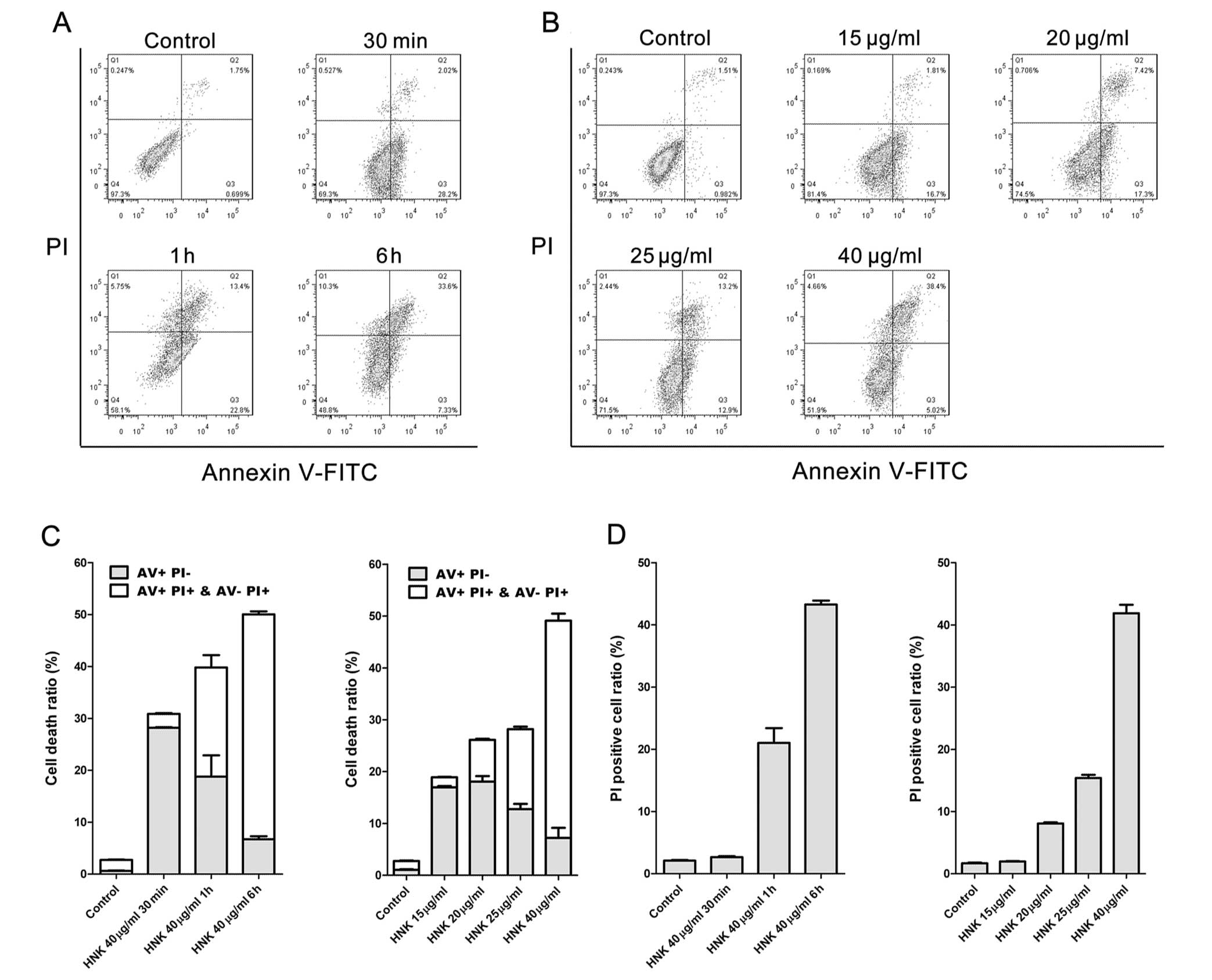
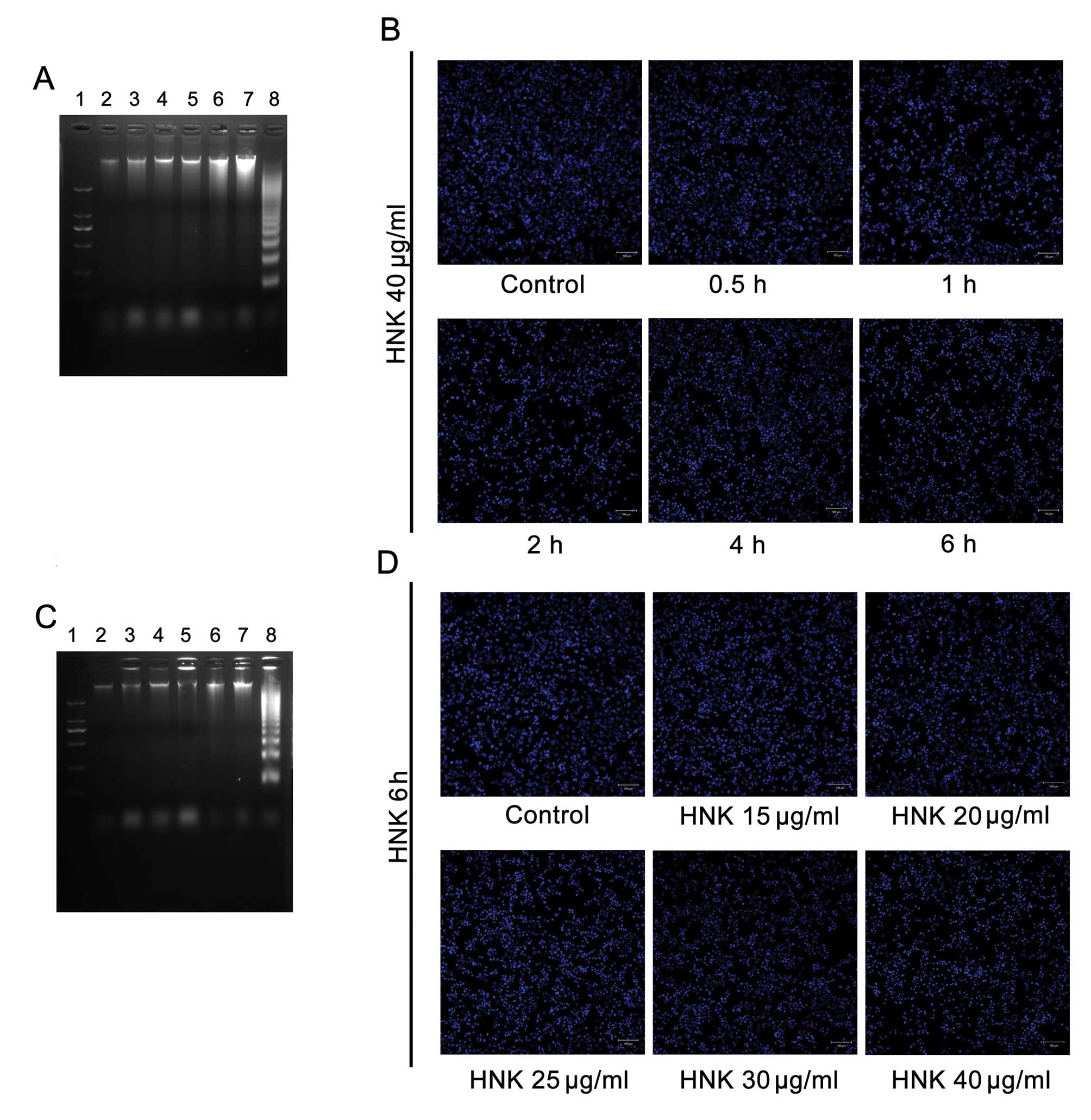
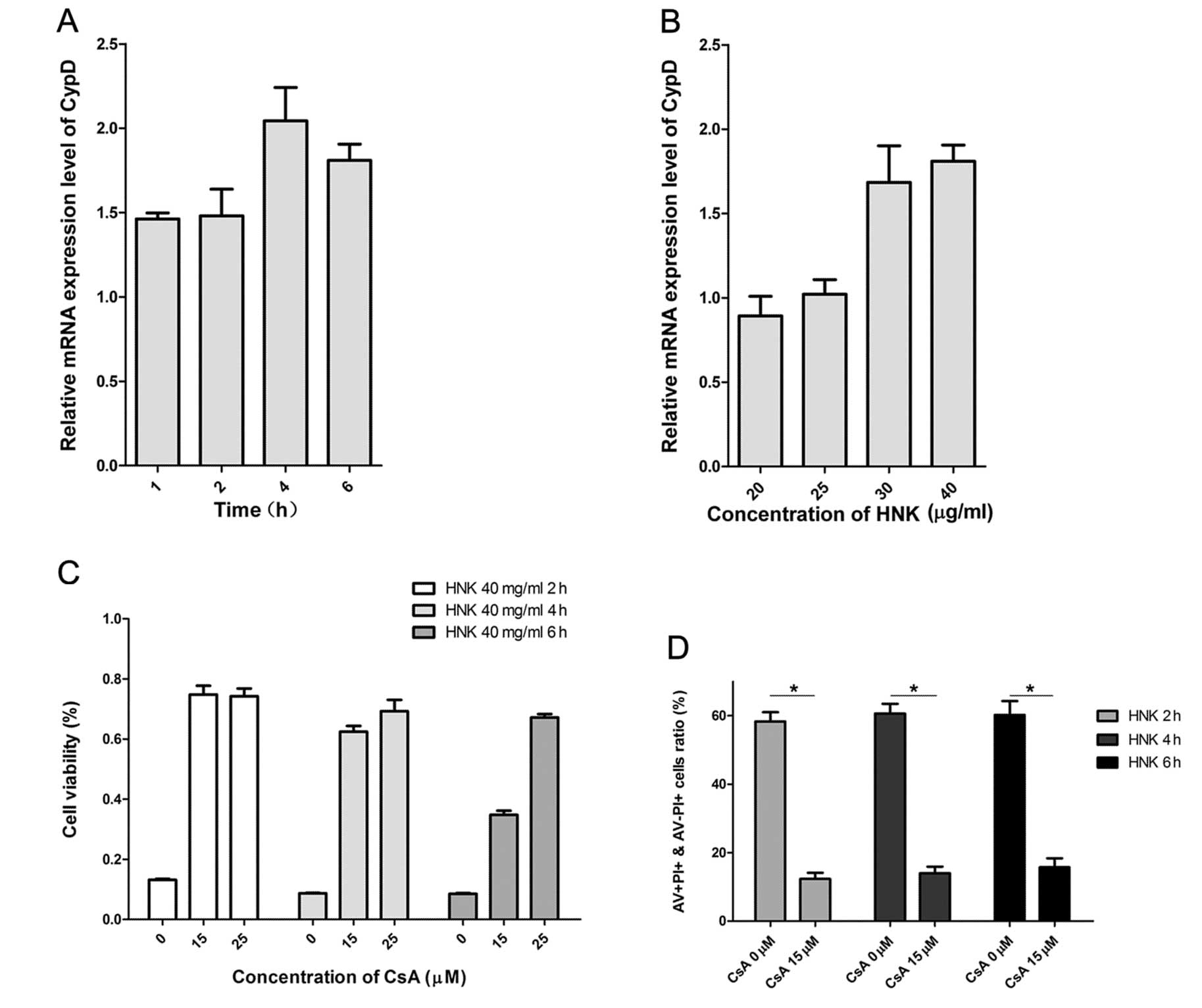
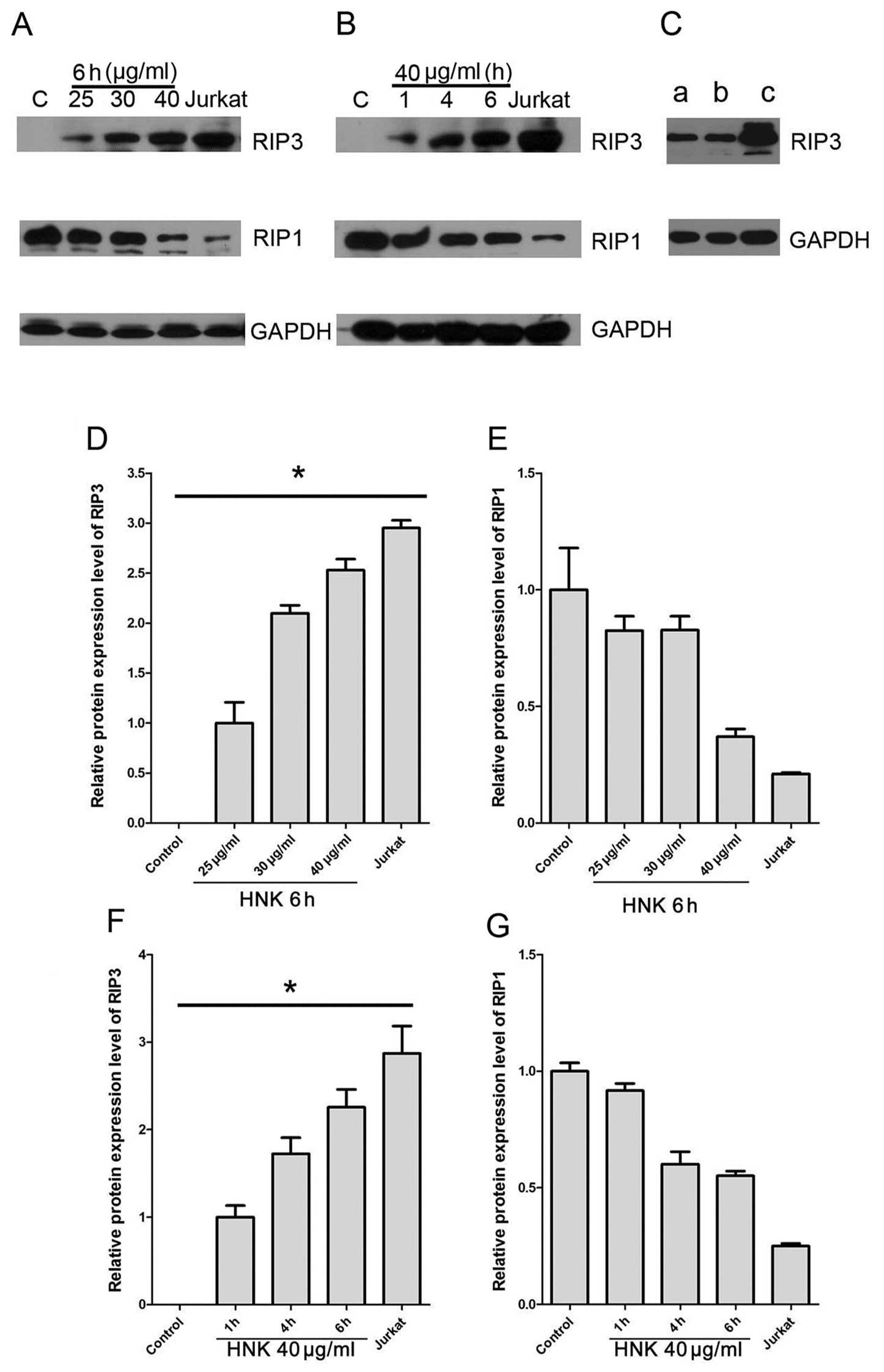
Honokiol is a pharmacologically active small molecule with multifunctional antitumor effects. Although plenty of literature is available on honokiol-triggered apoptosis and programmed necrosis, few studies have investigated the potential existence of death mode transition from apoptosis to programmed necrosis. In the current study, we demonstrated that the necrotic cell population (PI-positive) gradually increased and the early-stage apoptotic cell population (PI-negative and AV-positive) decreased in a dose- and time-dependent manner following honokiol treatment. Furthermore, we demonstrated that these PI-positive cells were under necrotic cell death, since no late-apoptosis characteristics including conspicuous chromatin condensation or DNA ladder patterns were detected. These results demonstrated that cells suffered death mode transition from early-stage apoptosis to programmed necrosis with the increase of honokiol dose or treatment time. The protein expression of RIP3 markedly increased in parallel with HNK-triggered death mode transition, while the expression of RIP1 decreased. Cyclophilin D expression increased during cell death mode transition, and inhibition of cyclophilin D by cyclosporin A clearly blocked HNK-triggered programmed necrosis. These data indicated that honokiol-induced programmed necrosis and death mode transition are potentially RIP3‑dependent, cyclophilin D-regulated. Further results showed that blocked cyclophilin D by cyclosporin A inhibited HNK-induced necrosis, but did not affect HNK-induced RIP3 overexpression. This indicated that cyclophilin D was a potential modulator at downstream of RIP3. In conclusion, honokiol triggers a potential RIP3-dependent cell death mode transition from early-stage apoptosis to programmed necrosis, which is highly regulated by cyclophilin D.
View Figures

Figure 1

Figure 2

Figure 3

Figure 4

Figure 5

Figure 6

View References

1. 

Galluzzi L, Vitale I, Abrams JM, et al: Molecular definitions of cell death subroutines: recommendations of the Nomenclature Committee on Cell Death 2012. Cell Death Differ. 19:107–120. 2012. View Article : Google Scholar : PubMed/NCBI

2. 

Vanlangenakker N, Vanden Berghe T and Vandenabeele P: Many stimuli pull the necrotic trigger, an overview. Cell Death Differ. 19:75–86. 2012. View Article : Google Scholar : PubMed/NCBI

3. 

Han J, Zhong CQ and Zhang DW: Programmed necrosis: backup to and competitor with apoptosis in the immune system. Nat Immunol. 12:1143–1149. 2011. View Article : Google Scholar : PubMed/NCBI

4. 

Tian W, Xu D and Deng YC: Honokiol, a multifunctional tumor cell death inducer. Pharmazie. 67:811–816. 2012.PubMed/NCBI

5. 

Battle TE, Arbiser J and Frank DA: The natural product honokiol induces caspase-dependent apoptosis in B-cell chronic lymphocytic leukemia (B-CLL) cells. Blood. 106:690–697. 2005. View Article : Google Scholar : PubMed/NCBI

6. 

Park EJ, Min HY, Chung HJ, et al: Down-regulation of c-Src/EGFR-mediated signaling activation is involved in the honokiol-induced cell cycle arrest and apoptosis in MDA-MB-231 human breast cancer cells. Cancer Lett. 277:133–140. 2009. View Article : Google Scholar : PubMed/NCBI

7. 

Raja SM, Chen S, Yue P, et al: The natural product honokiol preferentially inhibits cellular FLICE-inhibitory protein and augments death receptor-induced apoptosis. Mol Cancer Ther. 7:2212–2223. 2008. View Article : Google Scholar

8. 

Shigemura K, Arbiser JL, Sun SY, et al: Honokiol, a natural plant product, inhibits the bone metastatic growth of human prostate cancer cells. Cancer. 109:1279–1289. 2007. View Article : Google Scholar : PubMed/NCBI

9. 

Chen YJ, Wu CL, Liu JF, et al: Honokiol induces cell apoptosis in human chondrosarcoma cells through mitochondrial dysfunction and endoplasmic reticulum stress. Cancer Lett. 291:20–30. 2010. View Article : Google Scholar

10. 

Mannal PW, Schneider J, Tangada A, McDonald D and McFadden DW: Honokiol produces anti-neoplastic effects on melanoma cells in vitro. J Surg Oncol. 104:260–264. 2011. View Article : Google Scholar : PubMed/NCBI

11. 

Li L, Han W, Gu Y, et al: Honokiol induces a necrotic cell death through the mitochondrial permeability transition pore. Cancer Res. 67:4894–4903. 2007. View Article : Google Scholar : PubMed/NCBI

12. 

Xu D, Lu Q and Hu X: Down-regulation of P-glycoprotein expression in MDR breast cancer cell MCF-7/ADR by honokiol. Cancer Lett. 243:274–280. 2006. View Article : Google Scholar : PubMed/NCBI

13. 

Orrenius S, Nicotera P and Zhivotovsky B: Cell death mechanisms and their implications in toxicology. Toxicol Sci. 119:3–19. 2011. View Article : Google Scholar : PubMed/NCBI

14. 

Nakagawa T, Shimizu S, Watanabe T, et al: Cyclophilin D dependent mitochondrial permeability transition regulates some necrotic but not apoptotic cell death. Nature. 434:652–658. 2005. View Article : Google Scholar : PubMed/NCBI

15. 

Schubert A and Grimm S: Cyclophilin D, a component of the permeability transition-pore, is an apoptosis repressor. Cancer Res. 64:85–93. 2004. View Article : Google Scholar : PubMed/NCBI

16. 

Eliseev RA, Malecki J, Lester T, Zhang Y, Humphrey J and Gunter TE: Cyclophilin D interacts with Bcl2 and exerts an anti-apoptotic effect. J Biol Chem. 284:9692–9699. 2009. View Article : Google Scholar : PubMed/NCBI

17. 

Rasola A and Bernardi P: The mitochondrial permeability transition pore and its involvement in cell death and in disease pathogenesis. Apoptosis. 12:815–833. 2007. View Article : Google Scholar : PubMed/NCBI

18. 

Zhang DW, Zheng M, Zhao J, et al: Multiple death pathways in TNF-treated fibroblasts: RIP3- and RIP1-dependent and independent routes. Cell Res. 21:368–371. 2011. View Article : Google Scholar : PubMed/NCBI

19. 

Kreuzaler P and Watson CJ: Killing a cancer: what are the alternatives? Nat Rev Cancer. 12:411–424. 2012. View Article : Google Scholar : PubMed/NCBI

20. 

Zhang DW, Shao J, Lin J, et al: RIP3, an energy metabolism regulator that switches TNF-induced cell death from apoptosis to necrosis. Science. 325:332–336. 2009. View Article : Google Scholar : PubMed/NCBI

21. 

He S, Wang L, Miao L, et al: Receptor interacting protein kinase-3 determines cellular necrotic response to TNF-alpha. Cell. 137:1100–1111. 2009. View Article : Google Scholar : PubMed/NCBI

22. 

Li J, McQuade T, Siemer AB, et al: The RIP1/RIP3 necrosome forms a functional amyloid signaling complex required for programmed necrosis. Cell. 150:339–350. 2012. View Article : Google Scholar : PubMed/NCBI

23. 

Moquin D and Chan FK: The molecular regulation of programmed necrotic cell injury. Trends Biochem Sci. 35:434–441. 2010. View Article : Google Scholar : PubMed/NCBI

24. 

Declercq W, Vanden Berghe T and Vandenabeele P: RIP kinases at the crossroads of cell death and survival. Cell. 138:229–232. 2009. View Article : Google Scholar : PubMed/NCBI

25. 

Kurokawa M and Kornbluth S: Caspases and kinases in a death grip. Cell. 138:838–854. 2009. View Article : Google Scholar : PubMed/NCBI

26. 

Kelly PN and Strasser A: The role of Bcl-2 and its pro-survival relatives in tumourigenesis and cancer therapy. Cell Death Differ. 18:1414–1424. 2011. View Article : Google Scholar : PubMed/NCBI

27. 

Youle RJ and Strasser A: The BCL-2 protein family: opposing activities that mediate cell death. Nat Rev Mol Cell Biol. 9:47–59. 2008. View Article : Google Scholar : PubMed/NCBI

28. 

Song MS, Salmena L and Pandolfi PP: The functions and regulation of the PTEN tumour suppressor. Nat Rev Mol Cell Biol. 13:283–296. 2012.PubMed/NCBI

29. 

Hanahan D and Weinberg RA: Hallmarks of cancer: the next generation. Cell. 144:646–674. 2011. View Article : Google Scholar : PubMed/NCBI

30. 

Martelli AM, Evangelisti C, Chappell W, et al: Targeting the translational apparatus to improve leukemia therapy: roles of the PI3K/PTEN/Akt/mTOR pathway. Leukemia. 25:1064–1079. 2011. View Article : Google Scholar : PubMed/NCBI

31. 

Wolf I, O’Kelly J, Wakimoto N, et al: Honokiol, a natural biphenyl, inhibits in vitro and in vivo growth of breast cancer through induction of apoptosis and cell cycle arrest. Int J Oncol. 30:1529–1537. 2007.

32. 

Liu H, Zang C, Emde A, et al: Anti-tumor effect of honokiol alone and in combination with other anti-cancer agents in breast cancer. Eur J Pharmacol. 591:43–51. 2008. View Article : Google Scholar : PubMed/NCBI

33. 

Mocarski ES, Upton JW and Kaiser WJ: Viral infection and the evolution of caspase 8-regulated apoptotic and necrotic death pathways. Nat Rev Immunol. 12:79–88. 2012.PubMed/NCBI

34. 

Sun L, Wang H, Wang Z, et al: Mixed lineage kinase domain-like protein mediates necrosis signaling downstream of RIP3 kinase. Cell. 148:213–227. 2012. View Article : Google Scholar : PubMed/NCBI

35. 

Motani K, Kushiyama H, Imamura R, Kinoshita T, Nishiuchi T and Suda T: Caspase-1 protein induces apoptosis-associated speck-like protein containing a caspase recruitment domain (ASC)-mediated necrosis independently of its catalytic activity. J Biol Chem. 286:33963–33972. 2011. View Article : Google Scholar

36. 

Cho YS, Challa S, Moquin D, et al: Phosphorylation-driven assembly of the RIP1-RIP3 complex regulates programmed necrosis and virus-induced inflammation. Cell. 137:1112–1123. 2009. View Article : Google Scholar : PubMed/NCBI

37. 

Upton JW, Kaiser WJ and Mocarski ES: Virus inhibition of RIP3-dependent necrosis. Cell Host Microbe. 7:302–313. 2010. View Article : Google Scholar : PubMed/NCBI

38. 

Rebsamen M, Heinz LX, Meylan E, et al: DAI/ZBP1 recruits RIP1 and RIP3 through RIP homotypic interaction motifs to activate NF-kappaB. EMBO Rep. 10:916–922. 2009. View Article : Google Scholar : PubMed/NCBI

39. 

Ono K, Wang X, Kim SO, Armstrong LC, Bornstein P and Han J: Metaxin deficiency alters mitochondrial membrane permeability and leads to resistance to TNF-induced cell killing. Protein Cell. 1:161–173. 2010. View Article : Google Scholar : PubMed/NCBI

40. 

Jeong JJ, Lee JH, Chang KC and Kim HJ: Honokiol exerts an anticancer effect in T98G human glioblastoma cells through the induction of apoptosis and the regulation of adhesion molecules. Int J Oncol. 41:1358–1364. 2012.

41. 

Arora S, Bhardwaj A, Srivastava SK, et al: Honokiol arrests cell cycle, induces apoptosis, and potentiates the cytotoxic effect of gemcitabine in human pancreatic cancer cells. PLoS One. 6:e215732011. View Article : Google Scholar : PubMed/NCBI

42. 

Han LL, Xie LP, Li LH, Zhang XW, Zhang RQ and Wang HZ: Reactive oxygen species production and Bax/Bcl-2 regulation in honokiol-induced apoptosis in human hepatocellular carcinoma SMMC-7721 cells. Environ Toxicol Pharmacol. 28:97–103. 2009. View Article : Google Scholar : PubMed/NCBI

43. 

Deng J, Qian Y, Geng L, et al: Involvement of p38 mitogen-activated protein kinase pathway in honokiol-induced apoptosis in a human hepatoma cell line (hepG2). Liver Int. 28:1458–1464. 2008. View Article : Google Scholar : PubMed/NCBI

44. 

Hahm ER, Arlotti JA, Marynowski SW and Singh SV: Honokiol, a constituent of oriental medicinal herb Magnolia officinalis, inhibits growth of PC-3 xenografts in vivo in association with apoptosis induction. Clin Cancer Res. 14:1248–1257. 2008.PubMed/NCBI

Related Articles

  • Abstract
  • View
  • Download
  • Twitter
Copy and paste a formatted citation
Spandidos Publications style
Tian W, Xu D, Han W, He H, Cai H, Chen H, Zhou M, Chen J and Deng Y: Cyclophilin D modulates cell death transition from early apoptosis to programmed necrosis induced by honokiol Corrigendum in /10.3892/ijo.2021.5212. Int J Oncol 42: 1654-1663, 2013.
APA
Tian, W., Xu, D., Han, W., He, H., Cai, H., Chen, H. ... Deng, Y. (2013). Cyclophilin D modulates cell death transition from early apoptosis to programmed necrosis induced by honokiol Corrigendum in /10.3892/ijo.2021.5212. International Journal of Oncology, 42, 1654-1663. https://doi.org/10.3892/ijo.2013.1863
MLA
Tian, W., Xu, D., Han, W., He, H., Cai, H., Chen, H., Zhou, M., Chen, J., Deng, Y."Cyclophilin D modulates cell death transition from early apoptosis to programmed necrosis induced by honokiol Corrigendum in /10.3892/ijo.2021.5212". International Journal of Oncology 42.5 (2013): 1654-1663.
Chicago
Tian, W., Xu, D., Han, W., He, H., Cai, H., Chen, H., Zhou, M., Chen, J., Deng, Y."Cyclophilin D modulates cell death transition from early apoptosis to programmed necrosis induced by honokiol Corrigendum in /10.3892/ijo.2021.5212". International Journal of Oncology 42, no. 5 (2013): 1654-1663. https://doi.org/10.3892/ijo.2013.1863
Copy and paste a formatted citation
x
Spandidos Publications style
Tian W, Xu D, Han W, He H, Cai H, Chen H, Zhou M, Chen J and Deng Y: Cyclophilin D modulates cell death transition from early apoptosis to programmed necrosis induced by honokiol Corrigendum in /10.3892/ijo.2021.5212. Int J Oncol 42: 1654-1663, 2013.
APA
Tian, W., Xu, D., Han, W., He, H., Cai, H., Chen, H. ... Deng, Y. (2013). Cyclophilin D modulates cell death transition from early apoptosis to programmed necrosis induced by honokiol Corrigendum in /10.3892/ijo.2021.5212. International Journal of Oncology, 42, 1654-1663. https://doi.org/10.3892/ijo.2013.1863
MLA
Tian, W., Xu, D., Han, W., He, H., Cai, H., Chen, H., Zhou, M., Chen, J., Deng, Y."Cyclophilin D modulates cell death transition from early apoptosis to programmed necrosis induced by honokiol Corrigendum in /10.3892/ijo.2021.5212". International Journal of Oncology 42.5 (2013): 1654-1663.
Chicago
Tian, W., Xu, D., Han, W., He, H., Cai, H., Chen, H., Zhou, M., Chen, J., Deng, Y."Cyclophilin D modulates cell death transition from early apoptosis to programmed necrosis induced by honokiol Corrigendum in /10.3892/ijo.2021.5212". International Journal of Oncology 42, no. 5 (2013): 1654-1663. https://doi.org/10.3892/ijo.2013.1863
Follow us
  • Twitter
  • LinkedIn
  • Facebook
About
  • Spandidos Publications
  • Careers
  • Cookie Policy
  • Privacy Policy
How can we help?
  • Help
  • Live Chat
  • Contact
  • Email to our Support Team