Spandidos Publications Logo
  • About
    • About Spandidos
    • Aims and Scopes
    • Abstracting and Indexing
    • Editorial Policies
    • Reprints and Permissions
    • Job Opportunities
    • Terms and Conditions
    • Contact
  • Journals
    • All Journals
    • Oncology Letters
      • Oncology Letters
      • Information for Authors
      • Editorial Policies
      • Editorial Board
      • Aims and Scope
      • Abstracting and Indexing
      • Bibliographic Information
      • Archive
    • International Journal of Oncology
      • International Journal of Oncology
      • Information for Authors
      • Editorial Policies
      • Editorial Board
      • Aims and Scope
      • Abstracting and Indexing
      • Bibliographic Information
      • Archive
    • Molecular and Clinical Oncology
      • Molecular and Clinical Oncology
      • Information for Authors
      • Editorial Policies
      • Editorial Board
      • Aims and Scope
      • Abstracting and Indexing
      • Bibliographic Information
      • Archive
    • Experimental and Therapeutic Medicine
      • Experimental and Therapeutic Medicine
      • Information for Authors
      • Editorial Policies
      • Editorial Board
      • Aims and Scope
      • Abstracting and Indexing
      • Bibliographic Information
      • Archive
    • International Journal of Molecular Medicine
      • International Journal of Molecular Medicine
      • Information for Authors
      • Editorial Policies
      • Editorial Board
      • Aims and Scope
      • Abstracting and Indexing
      • Bibliographic Information
      • Archive
    • Biomedical Reports
      • Biomedical Reports
      • Information for Authors
      • Editorial Policies
      • Editorial Board
      • Aims and Scope
      • Abstracting and Indexing
      • Bibliographic Information
      • Archive
    • Oncology Reports
      • Oncology Reports
      • Information for Authors
      • Editorial Policies
      • Editorial Board
      • Aims and Scope
      • Abstracting and Indexing
      • Bibliographic Information
      • Archive
    • Molecular Medicine Reports
      • Molecular Medicine Reports
      • Information for Authors
      • Editorial Policies
      • Editorial Board
      • Aims and Scope
      • Abstracting and Indexing
      • Bibliographic Information
      • Archive
    • World Academy of Sciences Journal
      • World Academy of Sciences Journal
      • Information for Authors
      • Editorial Policies
      • Editorial Board
      • Aims and Scope
      • Abstracting and Indexing
      • Bibliographic Information
      • Archive
    • International Journal of Functional Nutrition
      • International Journal of Functional Nutrition
      • Information for Authors
      • Editorial Policies
      • Editorial Board
      • Aims and Scope
      • Abstracting and Indexing
      • Bibliographic Information
      • Archive
    • International Journal of Epigenetics
      • International Journal of Epigenetics
      • Information for Authors
      • Editorial Policies
      • Editorial Board
      • Aims and Scope
      • Abstracting and Indexing
      • Bibliographic Information
      • Archive
    • Medicine International
      • Medicine International
      • Information for Authors
      • Editorial Policies
      • Editorial Board
      • Aims and Scope
      • Abstracting and Indexing
      • Bibliographic Information
      • Archive
  • Articles
  • Information
    • Information for Authors
    • Information for Reviewers
    • Information for Librarians
    • Information for Advertisers
    • Conferences
  • Language Editing
Spandidos Publications Logo
  • About
    • About Spandidos
    • Aims and Scopes
    • Abstracting and Indexing
    • Editorial Policies
    • Reprints and Permissions
    • Job Opportunities
    • Terms and Conditions
    • Contact
  • Journals
    • All Journals
    • Biomedical Reports
      • Information for Authors
      • Editorial Policies
      • Editorial Board
      • Aims and Scope
      • Abstracting and Indexing
      • Bibliographic Information
      • Archive
    • Experimental and Therapeutic Medicine
      • Information for Authors
      • Editorial Policies
      • Editorial Board
      • Aims and Scope
      • Abstracting and Indexing
      • Bibliographic Information
      • Archive
    • International Journal of Epigenetics
      • Information for Authors
      • Editorial Policies
      • Editorial Board
      • Aims and Scope
      • Abstracting and Indexing
      • Bibliographic Information
      • Archive
    • International Journal of Functional Nutrition
      • Information for Authors
      • Editorial Policies
      • Editorial Board
      • Aims and Scope
      • Abstracting and Indexing
      • Bibliographic Information
      • Archive
    • International Journal of Molecular Medicine
      • Information for Authors
      • Editorial Policies
      • Editorial Board
      • Aims and Scope
      • Abstracting and Indexing
      • Bibliographic Information
      • Archive
    • International Journal of Oncology
      • Information for Authors
      • Editorial Policies
      • Editorial Board
      • Aims and Scope
      • Abstracting and Indexing
      • Bibliographic Information
      • Archive
    • Medicine International
      • Information for Authors
      • Editorial Policies
      • Editorial Board
      • Aims and Scope
      • Abstracting and Indexing
      • Bibliographic Information
      • Archive
    • Molecular and Clinical Oncology
      • Information for Authors
      • Editorial Policies
      • Editorial Board
      • Aims and Scope
      • Abstracting and Indexing
      • Bibliographic Information
      • Archive
    • Molecular Medicine Reports
      • Information for Authors
      • Editorial Policies
      • Editorial Board
      • Aims and Scope
      • Abstracting and Indexing
      • Bibliographic Information
      • Archive
    • Oncology Letters
      • Information for Authors
      • Editorial Policies
      • Editorial Board
      • Aims and Scope
      • Abstracting and Indexing
      • Bibliographic Information
      • Archive
    • Oncology Reports
      • Information for Authors
      • Editorial Policies
      • Editorial Board
      • Aims and Scope
      • Abstracting and Indexing
      • Bibliographic Information
      • Archive
    • World Academy of Sciences Journal
      • Information for Authors
      • Editorial Policies
      • Editorial Board
      • Aims and Scope
      • Abstracting and Indexing
      • Bibliographic Information
      • Archive
  • Articles
  • Information
    • For Authors
    • For Reviewers
    • For Librarians
    • For Advertisers
    • Conferences
  • Language Editing
Login Register Submit
  • This site uses cookies
  • You can change your cookie settings at any time by following the instructions in our Cookie Policy. To find out more, you may read our Privacy Policy.

    I agree
Search articles by DOI, keyword, author or affiliation
Search
Advanced Search
presentation
International Journal of Oncology
Join Editorial Board Propose a Special Issue
Print ISSN: 1019-6439 Online ISSN: 1791-2423
Journal Cover
August 2013 Volume 43 Issue 2

Full Size Image

Cover Legend PDF

Sign up for eToc alerts
Recommend to Library

Journals

International Journal of Molecular Medicine

International Journal of Molecular Medicine

International Journal of Molecular Medicine is an international journal devoted to molecular mechanisms of human disease.

International Journal of Oncology

International Journal of Oncology

International Journal of Oncology is an international journal devoted to oncology research and cancer treatment.

Molecular Medicine Reports

Molecular Medicine Reports

Covers molecular medicine topics such as pharmacology, pathology, genetics, neuroscience, infectious diseases, molecular cardiology, and molecular surgery.

Oncology Reports

Oncology Reports

Oncology Reports is an international journal devoted to fundamental and applied research in Oncology.

Experimental and Therapeutic Medicine

Experimental and Therapeutic Medicine

Experimental and Therapeutic Medicine is an international journal devoted to laboratory and clinical medicine.

Oncology Letters

Oncology Letters

Oncology Letters is an international journal devoted to Experimental and Clinical Oncology.

Biomedical Reports

Biomedical Reports

Explores a wide range of biological and medical fields, including pharmacology, genetics, microbiology, neuroscience, and molecular cardiology.

Molecular and Clinical Oncology

Molecular and Clinical Oncology

International journal addressing all aspects of oncology research, from tumorigenesis and oncogenes to chemotherapy and metastasis.

World Academy of Sciences Journal

World Academy of Sciences Journal

Multidisciplinary open-access journal spanning biochemistry, genetics, neuroscience, environmental health, and synthetic biology.

International Journal of Functional Nutrition

International Journal of Functional Nutrition

Open-access journal combining biochemistry, pharmacology, immunology, and genetics to advance health through functional nutrition.

International Journal of Epigenetics

International Journal of Epigenetics

Publishes open-access research on using epigenetics to advance understanding and treatment of human disease.

Medicine International

Medicine International

An International Open Access Journal Devoted to General Medicine.

Journal Cover
August 2013 Volume 43 Issue 2

Full Size Image

Cover Legend PDF

Sign up for eToc alerts
Recommend to Library

  • Article
  • Citations
    • Cite This Article
    • Download Citation
    • Create Citation Alert
    • Remove Citation Alert
    • Cited By
  • Similar Articles
    • Related Articles (in Spandidos Publications)
    • Similar Articles (Google Scholar)
    • Similar Articles (PubMed)
  • Download PDF
  • Download XML
  • View XML
Article Open Access

Induction of retinol-binding protein 4 and placenta-specific 8 expression in human prostate cancer cells remaining in bone following osteolytic tumor growth inhibition by osteoprotegerin

  • Authors:
    • Hisanori Uehara
    • Tetsuyuki Takahashi
    • Keisuke Izumi
  • View Affiliations / Copyright

    Affiliations: Department of Molecular and Environmental Pathology, Institute of Health Biosciences, The University of Tokushima Graduate School, Tokushima-shi, Tokushima 770-8503, Japan
    Copyright: © Uehara et al. This is an open access article distributed under the terms of Creative Commons Attribution License [CC BY_NC 3.0].
  • Pages: 365-374
    |
    Published online on: May 24, 2013
       https://doi.org/10.3892/ijo.2013.1954
  • Expand metrics +
Metrics: Total Views: 0 (Spandidos Publications: | PMC Statistics: )
Metrics: Total PDF Downloads: 0 (Spandidos Publications: | PMC Statistics: )
Cited By (CrossRef): 0 citations Loading Articles...

This article is mentioned in:


Abstract

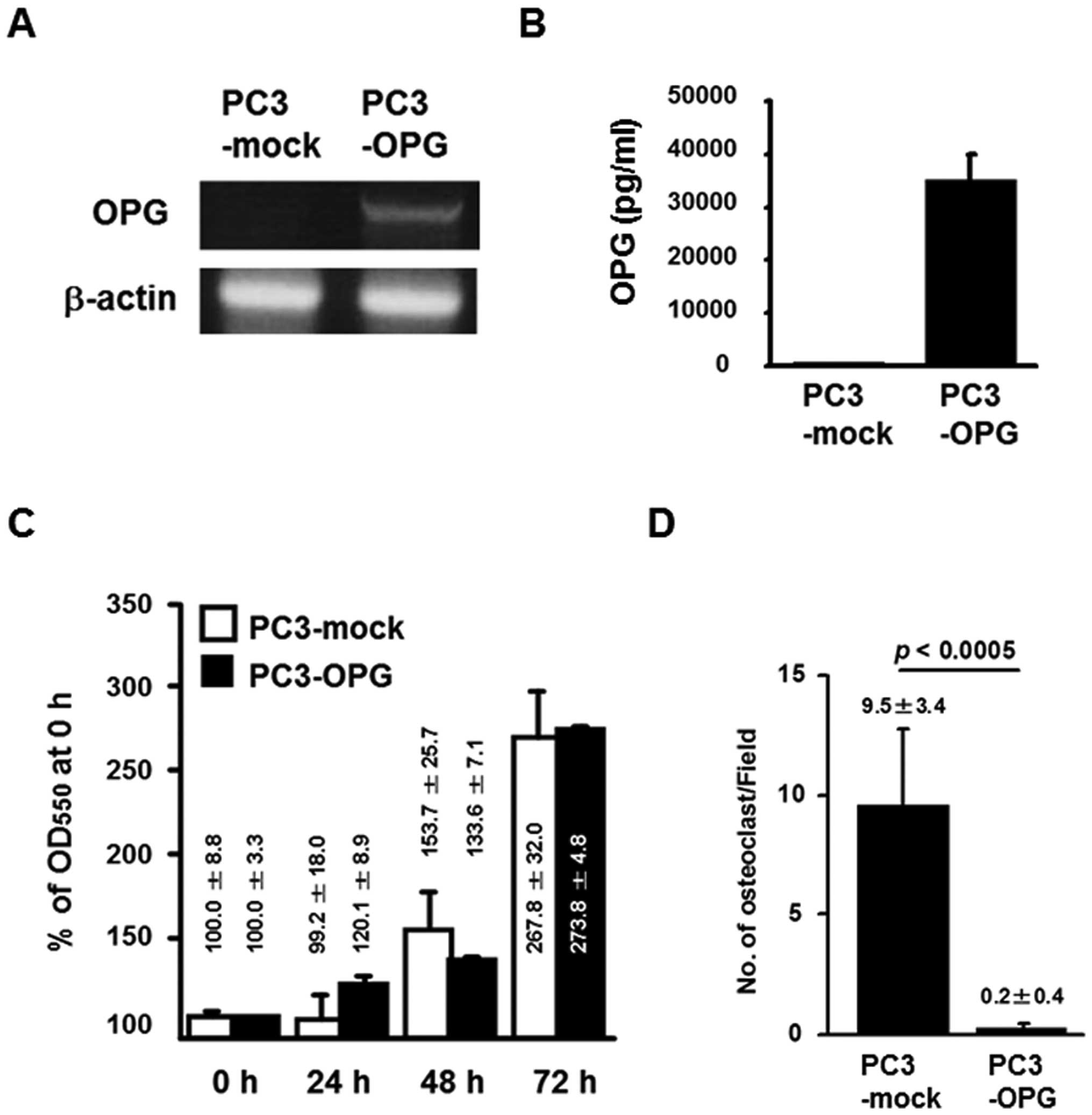
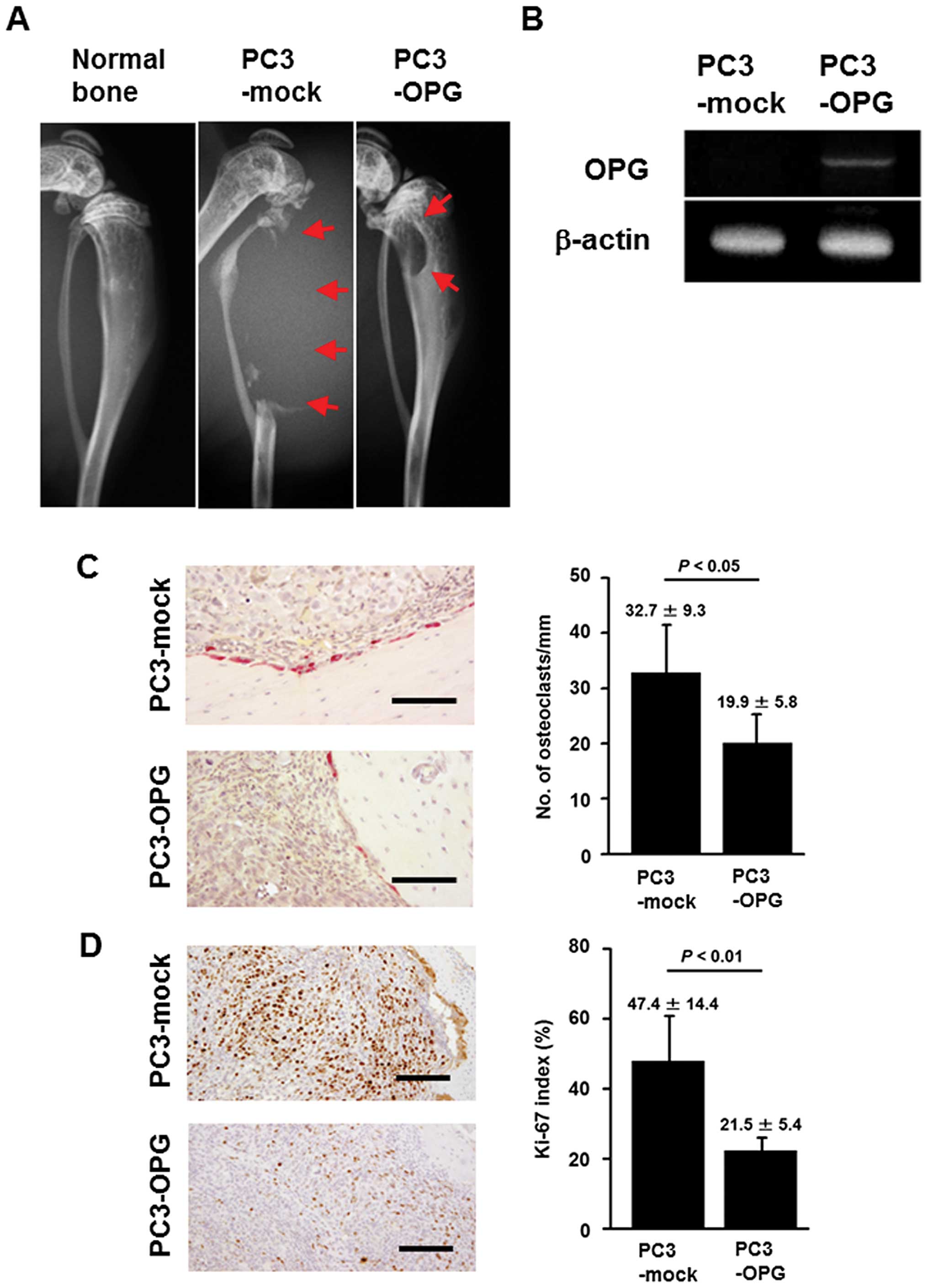
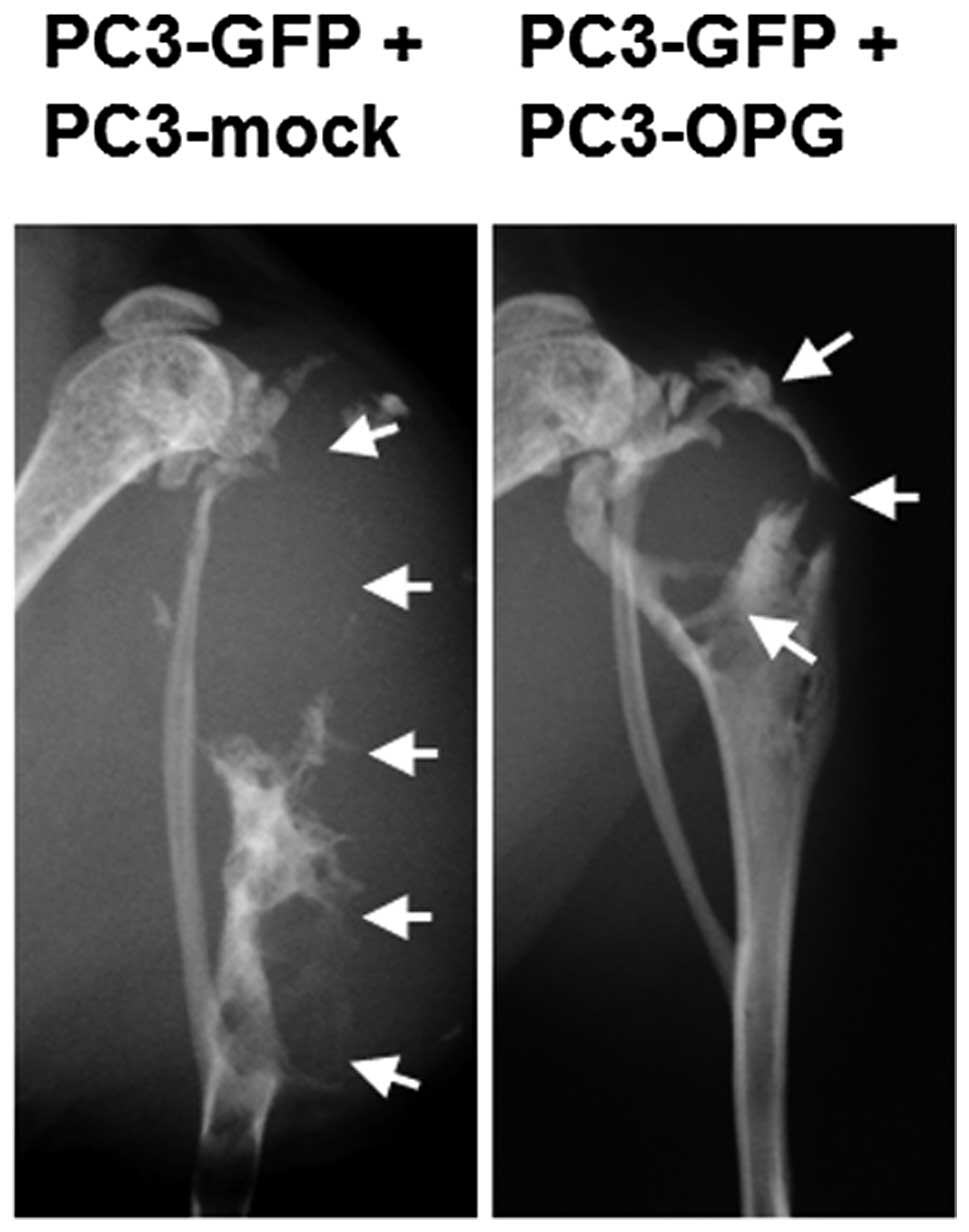
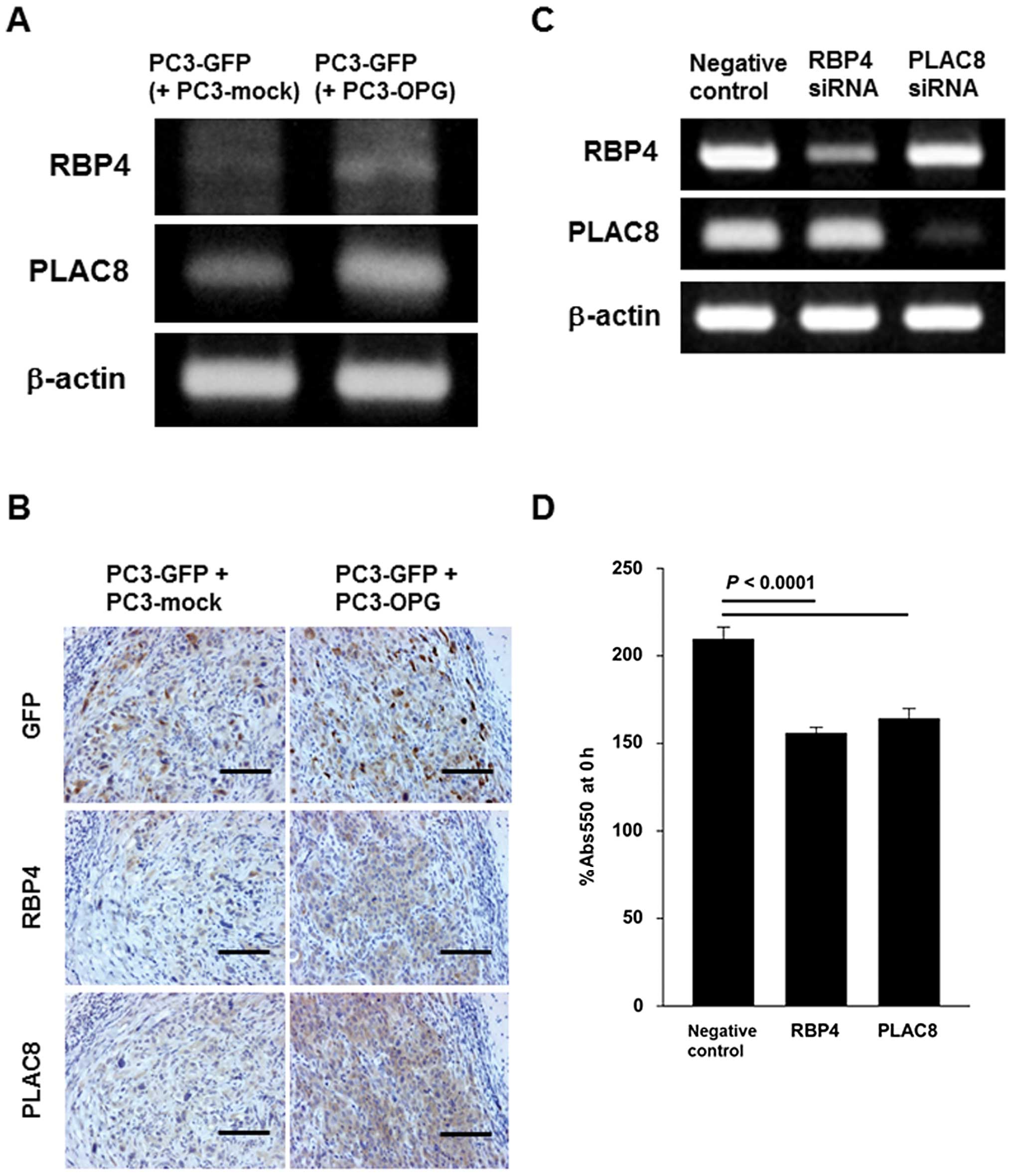
New drugs that inhibit the osteoprotegerin (OPG)/receptor activator of NF-κB ligand (RANKL)/RANK pathway have demonstrated efficacy for the treatment of bone metastasis. Toxicities induced by these drugs, however, including osteonecrosis of the jaw and hypocalcemia, may adversely affect therapy. The aim of this study was to identify additional therapeutic targets that can be combined with OPG/RANKL/RANK pathway inhibition in the treatment of prostate cancer bone metastasis. We established a stable transfectant that produces high levels of OPG mRNA and protein from PC-3 human prostate cancer cells (PC3-OPG). The culture medium of PC3-OPG cells significantly inhibited the differentiation of mouse monocytes into mature osteoclasts. Furthermore, when PC3-OPG cells were injected into the bones of nude mice, bone destruction and tumor-induced osteoclast formation were reduced. Injection into bone of the mixtures containing equal amounts of green fluorescent protein (GFP)-expressing PC-3 cells (PC3-GFP) and PC3-OPG cells also reduced bone destruction, compared to the control mixture. PC3-GFP cells were subsequently isolated from bone tumors and used for microarray analysis to assess changes in gene expression following osteolytic tumor growth inhibition by OPG. We selected the top 10 upregulated genes based on results from microarrays and confirmed mRNA expression of each gene by RT-PCR. The expression patterns of retinol-binding protein 4 (RBP4) and placenta-specific 8 (PLAC8) were consistent with microarray results. Expression of these genes was also increased in the bone tumors of PC3-GFP/PC3-OPG-injected mice. Knockdown of both RBP4 and PLAC8 by siRNA inhibited the growth of PC-3 cells in vitro. Thus, RBP4 and PLAC8 may become new therapeutic targets for prostate cancer bone metastasis, in combination with OPG/RANKL/RANK pathway inhibition.
View Figures

Figure 1

Figure 2

Figure 3

Figure 4

View References

1. 

Siegel R, Ward E, Brawley O and Jemal A: Cancer statistics, 2011: the impact of eliminating socioeconomic and racial disparities on premature cancer deaths. CA Cancer J Clin. 61:212–236. 2011. View Article : Google Scholar : PubMed/NCBI

2. 

Bubendorf L, Schopfer A, Wagner U, et al: Metastatic patterns of prostate cancer: an autopsy study of 1,589 patients. Hum Pathol. 31:578–583. 2000. View Article : Google Scholar : PubMed/NCBI

3. 

Brown JE, Cook RJ, Major P, et al: Bone turnover markers as predictors of skeletal complications in prostate cancer, lung cancer and other solid tumors. J Natl Cancer Inst. 97:59–69. 2005. View Article : Google Scholar : PubMed/NCBI

4. 

Roodman GD: Mechanisms of bone metastasis. N Engl J Med. 350:1655–1664. 2004. View Article : Google Scholar : PubMed/NCBI

5. 

Demers LM: Bone markers in the management of patients with skeletal metastases. Cancer. 97:874–879. 2003. View Article : Google Scholar : PubMed/NCBI

6. 

Percival RC, Urwin GH, Harris S, et al: Biochemical and histological evidence that carcinoma of the prostate is associated with increased bone resorption. Eur J Surg Oncol. 13:41–49. 1987.PubMed/NCBI

7. 

Freedland SJ, Richhariya A, Wang H, Chung K and Shore ND: Treatment patterns in patients with prostate cancer and bone metastasis among US community-based urology group practices. Urology. 80:293–298. 2012. View Article : Google Scholar : PubMed/NCBI

8. 

Coleman R, Gnant M, Morgan G and Clezardin P: Effects of bone-targeted agents on cancer progression and mortality. J Natl Cancer Inst. 104:1059–1067. 2012. View Article : Google Scholar : PubMed/NCBI

9. 

Mundy GR: Mechanisms of osteolytic bone destruction. Bone. 12(Suppl 1): S1–S6. 1991. View Article : Google Scholar

10. 

Lacey DL, Timms E, Tan HL, et al: Osteoprotegerin ligand is a cytokine that regulates osteoclast differentiation and activation. Cell. 93:165–176. 1998. View Article : Google Scholar : PubMed/NCBI

11. 

Simonet WS, Lacey DL, Dunstan CR, et al: Osteoprotegerin: a novel secreted protein involved in the regulation of bone density. Cell. 89:309–319. 1997. View Article : Google Scholar : PubMed/NCBI

12. 

Bucay N, Sarosi I, Dunstan CR, et al: Osteoprotegerin-deficient mice develop early onset osteoporosis and arterial calcification. Genes Dev. 12:1260–1268. 1998. View Article : Google Scholar : PubMed/NCBI

13. 

Zhang J, Dai J, Qi Y, et al: Osteoprotegerin inhibits prostate cancer-induced osteoclastogenesis and prevents prostate tumor growth in the bone. J Clin Invest. 107:1235–1244. 2001. View Article : Google Scholar : PubMed/NCBI

14. 

Corey E, Brown LG, Kiefer JA, et al: Osteoprotegerin in prostate cancer bone metastasis. Cancer Res. 65:1710–1718. 2005. View Article : Google Scholar : PubMed/NCBI

15. 

Zhang J, Dai J, Yao Z, Lu Y, Dougall W and Keller ET: Soluble receptor activator of nuclear factor kappaB Fc diminishes prostate cancer progression in bone. Cancer Res. 63:7883–7890. 2003.PubMed/NCBI

16. 

Shipman CM and Croucher PI: Osteoprotegerin is a soluble decoy receptor for tumor necrosis factor-related apoptosis-inducing ligand/Apo2 ligand and can function as a paracrine survival factor for human myeloma cells. Cancer Res. 63:912–916. 2003.

17. 

Holen I, Croucher PI, Hamdy FC and Eaton CL: Osteoprotegerin (OPG) is a survival factor for human prostate cancer cells. Cancer Res. 62:1619–1623. 2002.PubMed/NCBI

18. 

McGonigle JS, Giachelli CM and Scatena M: Osteoprotegerin and RANKL differentially regulate angiogenesis and endothelial cell function. Angiogenesis. 12:35–46. 2009. View Article : Google Scholar : PubMed/NCBI

19. 

Peddi P, Lopez-Olivo MA, Pratt GF and Suarez-Almazor ME: Denosumab in patients with cancer and skeletal metastases: a systematic review and meta-analysis. Cancer Treat Rev. 39:97–104. 2013. View Article : Google Scholar : PubMed/NCBI

20. 

Brown-Glaberman U and Stopeck AT: Role of denosumab in the management of skeletal complications in patients with bone metastases from solid tumors. Biologics. 6:89–99. 2012.PubMed/NCBI

21. 

Uehara H, Kim SJ, Karashima T, et al: Effects of blocking platelet-derived growth factor-receptor signaling in a mouse model of experimental prostate cancer bone metastases. J Natl Cancer Inst. 95:458–470. 2003. View Article : Google Scholar : PubMed/NCBI

22. 

Uemura H, Yanagisawa M, Ikeda I, et al: Possible anti-tumor activity of initial treatment with zoledronic acid with hormonal therapy for bone-metastatic prostate cancer in multicenter clinical trial. Int J Clin Oncol. Apr 11–2012, (Epub ahead of print).

23. 

Smith MR, Saad F, Coleman R, et al: Denosumab and bone-metastasis-free survival in men with castration-resistant prostate cancer: results of a phase 3, randomised, placebo-controlled trial. Lancet. 379:39–46. 2012. View Article : Google Scholar

24. 

Smith MR, Egerdie B, Hernandez Toriz N, et al: Denosumab in men receiving androgen-deprivation therapy for prostate cancer. N Engl J Med. 361:745–755. 2009. View Article : Google Scholar : PubMed/NCBI

25. 

Fizazi K, Lipton A, Mariette X, et al: Randomized phase II trial of denosumab in patients with bone metastases from prostate cancer, breast cancer, or other neoplasms after intravenous bisphosphonates. J Clin Oncol. 27:1564–1571. 2009. View Article : Google Scholar

26. 

Lipton A, Steger GG, Figueroa J, et al: Randomized active-controlled phase II study of denosumab efficacy and safety in patients with breast cancer-related bone metastases. J Clin Oncol. 25:4431–4437. 2007. View Article : Google Scholar : PubMed/NCBI

27. 

Lipton A, Fizazi K, Stopeck AT, et al: Superiority of denosumab to zoledronic acid for prevention of skeletal-related events: a combined analysis of 3 pivotal, randomised, phase 3 trials. Eur J Cancer. 48:3082–3092. 2012. View Article : Google Scholar : PubMed/NCBI

28. 

Ford JA, Jones R, Elders A, et al: Denosumab for treatment of bone metastases secondary to solid tumours: systematic review and network meta-analysis. Eur J Cancer. 49:416–430. 2013. View Article : Google Scholar : PubMed/NCBI

29. 

Stopeck AT, Lipton A, Body JJ, et al: Denosumab compared with zoledronic acid for the treatment of bone metastases in patients with advanced breast cancer: a randomized, double-blind study. J Clin Oncol. 28:5132–5139. 2010. View Article : Google Scholar

30. 

Feldman BJ and Feldman D: The development of androgen-independent prostate cancer. Nat Rev Cancer. 1:34–45. 2001. View Article : Google Scholar : PubMed/NCBI

31. 

Ting HJ, Hsu J, Bao BY and Lee YF: Docetaxel-induced growth inhibition and apoptosis in androgen independent prostate cancer cells are enhanced by 1alpha,25-dihydroxyvitamin D3. Cancer Lett. 247:122–129. 2007. View Article : Google Scholar : PubMed/NCBI

32. 

Bao BY, Hu YC, Ting HJ and Lee YF: Androgen signaling is required for the vitamin D-mediated growth inhibition in human prostate cancer cells. Oncogene. 23:3350–3360. 2004. View Article : Google Scholar : PubMed/NCBI

33. 

Arah IN, Song K, Seth P, Cowan KH and Sinha BK: Role of wild-type p53 in the enhancement of camptothecin cytotoxicity against human prostate tumor cells. Anticancer Res. 18:1845–1849. 1998.PubMed/NCBI

34. 

Fisher JL, Thomas-Mudge RJ, Elliott J, et al: Osteoprotegerin overexpression by breast cancer cells enhances orthotopic and osseous tumor growth and contrasts with that delivered therapeutically. Cancer Res. 66:3620–3628. 2006. View Article : Google Scholar

35. 

Flower DR: The lipocalin protein family: structure and function. Biochem J. 318:1–14. 1996.

36. 

Newcomer ME and Ong DE: Plasma retinol binding protein: structure and function of the prototypic lipocalin. Biochim Biophys Acta. 1482:57–64. 2000. View Article : Google Scholar : PubMed/NCBI

37. 

Tsutsumi C, Okuno M, Tannous L, et al: Retinoids and retinoid-binding protein expression in rat adipocytes. J Biol Chem. 267:1805–1810. 1992.PubMed/NCBI

38. 

Kovacs P, Geyer M, Berndt J, et al: Effects of genetic variation in the human retinol binding protein-4 gene (RBP4) on insulin resistance and fat depot-specific mRNA expression. Diabetes. 56:3095–3100. 2007. View Article : Google Scholar : PubMed/NCBI

39. 

Graham TE, Yang Q, Bluher M, et al: Retinol-binding protein 4 and insulin resistance in lean, obese and diabetic subjects. N Engl J Med. 354:2552–2563. 2006. View Article : Google Scholar : PubMed/NCBI

40. 

Yang Q, Graham TE, Mody N, et al: Serum retinol binding protein 4 contributes to insulin resistance in obesity and type 2 diabetes. Nature. 436:356–362. 2005. View Article : Google Scholar : PubMed/NCBI

41. 

Abel ED, Peroni O, Kim JK, et al: Adipose-selective targeting of the GLUT4 gene impairs insulin action in muscle and liver. Nature. 409:729–733. 2001. View Article : Google Scholar : PubMed/NCBI

42. 

Abulaizi M, Tomonaga T, Satoh M, et al: The application of a three-step proteome analysis for identification of new biomarkers of pancreatic cancer. Int J Proteomics. 2011:6287872011. View Article : Google Scholar : PubMed/NCBI

43. 

Patz EF Jr, Campa MJ, Gottlin EB, Kusmartseva I, Guan XR and Herndon JE II: Panel of serum biomarkers for the diagnosis of lung cancer. J Clin Oncol. 25:5578–5583. 2007. View Article : Google Scholar : PubMed/NCBI

44. 

Mourtada-Maarabouni M, Watson D, Munir M, Farzaneh F and Williams GT: Apoptosis suppression by candidate oncogene PLAC8 is reversed in other cell types. Curr Cancer Drug Targets. 13:80–91. 2012. View Article : Google Scholar : PubMed/NCBI

45. 

Li Y, Rogulski K, Zhou Q, Sims PJ and Prochownik EV: The negative c-Myc target onzin affects proliferation and apoptosis via its obligate interaction with phospholipid scramblase 1. Mol Cell Biol. 26:3401–3413. 2006. View Article : Google Scholar : PubMed/NCBI

46. 

Rogulski K, Li Y, Rothermund K, et al: Onzin, a c-Myc-repressed target, promotes survival and transformation by modulating the Akt-Mdm2-p53 pathway. Oncogene. 24:7524–7541. 2005. View Article : Google Scholar : PubMed/NCBI

Related Articles

  • Abstract
  • View
  • Download
  • Twitter
Copy and paste a formatted citation
Spandidos Publications style
Uehara H, Takahashi T and Izumi K: Induction of retinol-binding protein 4 and placenta-specific 8 expression in human prostate cancer cells remaining in bone following osteolytic tumor growth inhibition by osteoprotegerin. Int J Oncol 43: 365-374, 2013.
APA
Uehara, H., Takahashi, T., & Izumi, K. (2013). Induction of retinol-binding protein 4 and placenta-specific 8 expression in human prostate cancer cells remaining in bone following osteolytic tumor growth inhibition by osteoprotegerin. International Journal of Oncology, 43, 365-374. https://doi.org/10.3892/ijo.2013.1954
MLA
Uehara, H., Takahashi, T., Izumi, K."Induction of retinol-binding protein 4 and placenta-specific 8 expression in human prostate cancer cells remaining in bone following osteolytic tumor growth inhibition by osteoprotegerin". International Journal of Oncology 43.2 (2013): 365-374.
Chicago
Uehara, H., Takahashi, T., Izumi, K."Induction of retinol-binding protein 4 and placenta-specific 8 expression in human prostate cancer cells remaining in bone following osteolytic tumor growth inhibition by osteoprotegerin". International Journal of Oncology 43, no. 2 (2013): 365-374. https://doi.org/10.3892/ijo.2013.1954
Copy and paste a formatted citation
x
Spandidos Publications style
Uehara H, Takahashi T and Izumi K: Induction of retinol-binding protein 4 and placenta-specific 8 expression in human prostate cancer cells remaining in bone following osteolytic tumor growth inhibition by osteoprotegerin. Int J Oncol 43: 365-374, 2013.
APA
Uehara, H., Takahashi, T., & Izumi, K. (2013). Induction of retinol-binding protein 4 and placenta-specific 8 expression in human prostate cancer cells remaining in bone following osteolytic tumor growth inhibition by osteoprotegerin. International Journal of Oncology, 43, 365-374. https://doi.org/10.3892/ijo.2013.1954
MLA
Uehara, H., Takahashi, T., Izumi, K."Induction of retinol-binding protein 4 and placenta-specific 8 expression in human prostate cancer cells remaining in bone following osteolytic tumor growth inhibition by osteoprotegerin". International Journal of Oncology 43.2 (2013): 365-374.
Chicago
Uehara, H., Takahashi, T., Izumi, K."Induction of retinol-binding protein 4 and placenta-specific 8 expression in human prostate cancer cells remaining in bone following osteolytic tumor growth inhibition by osteoprotegerin". International Journal of Oncology 43, no. 2 (2013): 365-374. https://doi.org/10.3892/ijo.2013.1954
Follow us
  • Twitter
  • LinkedIn
  • Facebook
About
  • Spandidos Publications
  • Careers
  • Cookie Policy
  • Privacy Policy
How can we help?
  • Help
  • Live Chat
  • Contact
  • Email to our Support Team