Spandidos Publications Logo
  • About
    • About Spandidos
    • Aims and Scopes
    • Abstracting and Indexing
    • Editorial Policies
    • Reprints and Permissions
    • Job Opportunities
    • Terms and Conditions
    • Contact
  • Journals
    • All Journals
    • Oncology Letters
      • Oncology Letters
      • Information for Authors
      • Editorial Policies
      • Editorial Board
      • Aims and Scope
      • Abstracting and Indexing
      • Bibliographic Information
      • Archive
    • International Journal of Oncology
      • International Journal of Oncology
      • Information for Authors
      • Editorial Policies
      • Editorial Board
      • Aims and Scope
      • Abstracting and Indexing
      • Bibliographic Information
      • Archive
    • Molecular and Clinical Oncology
      • Molecular and Clinical Oncology
      • Information for Authors
      • Editorial Policies
      • Editorial Board
      • Aims and Scope
      • Abstracting and Indexing
      • Bibliographic Information
      • Archive
    • Experimental and Therapeutic Medicine
      • Experimental and Therapeutic Medicine
      • Information for Authors
      • Editorial Policies
      • Editorial Board
      • Aims and Scope
      • Abstracting and Indexing
      • Bibliographic Information
      • Archive
    • International Journal of Molecular Medicine
      • International Journal of Molecular Medicine
      • Information for Authors
      • Editorial Policies
      • Editorial Board
      • Aims and Scope
      • Abstracting and Indexing
      • Bibliographic Information
      • Archive
    • Biomedical Reports
      • Biomedical Reports
      • Information for Authors
      • Editorial Policies
      • Editorial Board
      • Aims and Scope
      • Abstracting and Indexing
      • Bibliographic Information
      • Archive
    • Oncology Reports
      • Oncology Reports
      • Information for Authors
      • Editorial Policies
      • Editorial Board
      • Aims and Scope
      • Abstracting and Indexing
      • Bibliographic Information
      • Archive
    • Molecular Medicine Reports
      • Molecular Medicine Reports
      • Information for Authors
      • Editorial Policies
      • Editorial Board
      • Aims and Scope
      • Abstracting and Indexing
      • Bibliographic Information
      • Archive
    • World Academy of Sciences Journal
      • World Academy of Sciences Journal
      • Information for Authors
      • Editorial Policies
      • Editorial Board
      • Aims and Scope
      • Abstracting and Indexing
      • Bibliographic Information
      • Archive
    • International Journal of Functional Nutrition
      • International Journal of Functional Nutrition
      • Information for Authors
      • Editorial Policies
      • Editorial Board
      • Aims and Scope
      • Abstracting and Indexing
      • Bibliographic Information
      • Archive
    • International Journal of Epigenetics
      • International Journal of Epigenetics
      • Information for Authors
      • Editorial Policies
      • Editorial Board
      • Aims and Scope
      • Abstracting and Indexing
      • Bibliographic Information
      • Archive
    • Medicine International
      • Medicine International
      • Information for Authors
      • Editorial Policies
      • Editorial Board
      • Aims and Scope
      • Abstracting and Indexing
      • Bibliographic Information
      • Archive
  • Articles
  • Information
    • Information for Authors
    • Information for Reviewers
    • Information for Librarians
    • Information for Advertisers
    • Conferences
  • Language Editing
Spandidos Publications Logo
  • About
    • About Spandidos
    • Aims and Scopes
    • Abstracting and Indexing
    • Editorial Policies
    • Reprints and Permissions
    • Job Opportunities
    • Terms and Conditions
    • Contact
  • Journals
    • All Journals
    • Biomedical Reports
      • Information for Authors
      • Editorial Policies
      • Editorial Board
      • Aims and Scope
      • Abstracting and Indexing
      • Bibliographic Information
      • Archive
    • Experimental and Therapeutic Medicine
      • Information for Authors
      • Editorial Policies
      • Editorial Board
      • Aims and Scope
      • Abstracting and Indexing
      • Bibliographic Information
      • Archive
    • International Journal of Epigenetics
      • Information for Authors
      • Editorial Policies
      • Editorial Board
      • Aims and Scope
      • Abstracting and Indexing
      • Bibliographic Information
      • Archive
    • International Journal of Functional Nutrition
      • Information for Authors
      • Editorial Policies
      • Editorial Board
      • Aims and Scope
      • Abstracting and Indexing
      • Bibliographic Information
      • Archive
    • International Journal of Molecular Medicine
      • Information for Authors
      • Editorial Policies
      • Editorial Board
      • Aims and Scope
      • Abstracting and Indexing
      • Bibliographic Information
      • Archive
    • International Journal of Oncology
      • Information for Authors
      • Editorial Policies
      • Editorial Board
      • Aims and Scope
      • Abstracting and Indexing
      • Bibliographic Information
      • Archive
    • Medicine International
      • Information for Authors
      • Editorial Policies
      • Editorial Board
      • Aims and Scope
      • Abstracting and Indexing
      • Bibliographic Information
      • Archive
    • Molecular and Clinical Oncology
      • Information for Authors
      • Editorial Policies
      • Editorial Board
      • Aims and Scope
      • Abstracting and Indexing
      • Bibliographic Information
      • Archive
    • Molecular Medicine Reports
      • Information for Authors
      • Editorial Policies
      • Editorial Board
      • Aims and Scope
      • Abstracting and Indexing
      • Bibliographic Information
      • Archive
    • Oncology Letters
      • Information for Authors
      • Editorial Policies
      • Editorial Board
      • Aims and Scope
      • Abstracting and Indexing
      • Bibliographic Information
      • Archive
    • Oncology Reports
      • Information for Authors
      • Editorial Policies
      • Editorial Board
      • Aims and Scope
      • Abstracting and Indexing
      • Bibliographic Information
      • Archive
    • World Academy of Sciences Journal
      • Information for Authors
      • Editorial Policies
      • Editorial Board
      • Aims and Scope
      • Abstracting and Indexing
      • Bibliographic Information
      • Archive
  • Articles
  • Information
    • For Authors
    • For Reviewers
    • For Librarians
    • For Advertisers
    • Conferences
  • Language Editing
Login Register Submit
  • This site uses cookies
  • You can change your cookie settings at any time by following the instructions in our Cookie Policy. To find out more, you may read our Privacy Policy.

    I agree
Search articles by DOI, keyword, author or affiliation
Search
Advanced Search
presentation
International Journal of Oncology
Join Editorial Board Propose a Special Issue
Print ISSN: 1019-6439 Online ISSN: 1791-2423
Journal Cover
November 2013 Volume 43 Issue 5

Full Size Image

Cover Legend PDF

Sign up for eToc alerts
Recommend to Library

Journals

International Journal of Molecular Medicine

International Journal of Molecular Medicine

International Journal of Molecular Medicine is an international journal devoted to molecular mechanisms of human disease.

International Journal of Oncology

International Journal of Oncology

International Journal of Oncology is an international journal devoted to oncology research and cancer treatment.

Molecular Medicine Reports

Molecular Medicine Reports

Covers molecular medicine topics such as pharmacology, pathology, genetics, neuroscience, infectious diseases, molecular cardiology, and molecular surgery.

Oncology Reports

Oncology Reports

Oncology Reports is an international journal devoted to fundamental and applied research in Oncology.

Experimental and Therapeutic Medicine

Experimental and Therapeutic Medicine

Experimental and Therapeutic Medicine is an international journal devoted to laboratory and clinical medicine.

Oncology Letters

Oncology Letters

Oncology Letters is an international journal devoted to Experimental and Clinical Oncology.

Biomedical Reports

Biomedical Reports

Explores a wide range of biological and medical fields, including pharmacology, genetics, microbiology, neuroscience, and molecular cardiology.

Molecular and Clinical Oncology

Molecular and Clinical Oncology

International journal addressing all aspects of oncology research, from tumorigenesis and oncogenes to chemotherapy and metastasis.

World Academy of Sciences Journal

World Academy of Sciences Journal

Multidisciplinary open-access journal spanning biochemistry, genetics, neuroscience, environmental health, and synthetic biology.

International Journal of Functional Nutrition

International Journal of Functional Nutrition

Open-access journal combining biochemistry, pharmacology, immunology, and genetics to advance health through functional nutrition.

International Journal of Epigenetics

International Journal of Epigenetics

Publishes open-access research on using epigenetics to advance understanding and treatment of human disease.

Medicine International

Medicine International

An International Open Access Journal Devoted to General Medicine.

Journal Cover
November 2013 Volume 43 Issue 5

Full Size Image

Cover Legend PDF

Sign up for eToc alerts
Recommend to Library

  • Article
  • Citations
    • Cite This Article
    • Download Citation
    • Create Citation Alert
    • Remove Citation Alert
    • Cited By
  • Similar Articles
    • Related Articles (in Spandidos Publications)
    • Similar Articles (Google Scholar)
    • Similar Articles (PubMed)
  • Download PDF
  • Download XML
  • View XML
Article

2-Aminophenoxazine-3-one-induced apoptosis via generation of reactive oxygen species followed by c-jun N-terminal kinase activation in the human glioblastoma cell line LN229

  • Authors:
    • Xiao-Fang Che
    • Shota Moriya
    • Chun-Lei Zheng
    • Akihisa Abe
    • Akio Tomoda
    • Keisuke Miyazawa
  • View Affiliations / Copyright

    Affiliations: Department of Biochemistry, Tokyo Medical University, Shinjuku-ku, Tokyo 160-8402, Japan, Department of Medical Oncology, Cancer Hospital, Fudan University, Shanghai 200032, P.R. China
  • Pages: 1456-1466
    |
    Published online on: September 4, 2013
       https://doi.org/10.3892/ijo.2013.2088
  • Expand metrics +
Metrics: Total Views: 0 (Spandidos Publications: | PMC Statistics: )
Metrics: Total PDF Downloads: 0 (Spandidos Publications: | PMC Statistics: )
Cited By (CrossRef): 0 citations Loading Articles...

This article is mentioned in:


Abstract

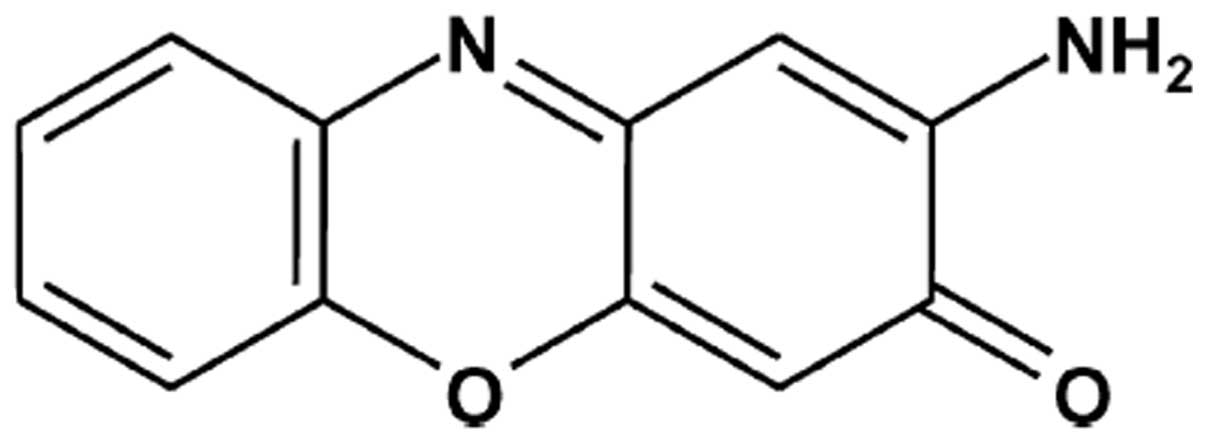
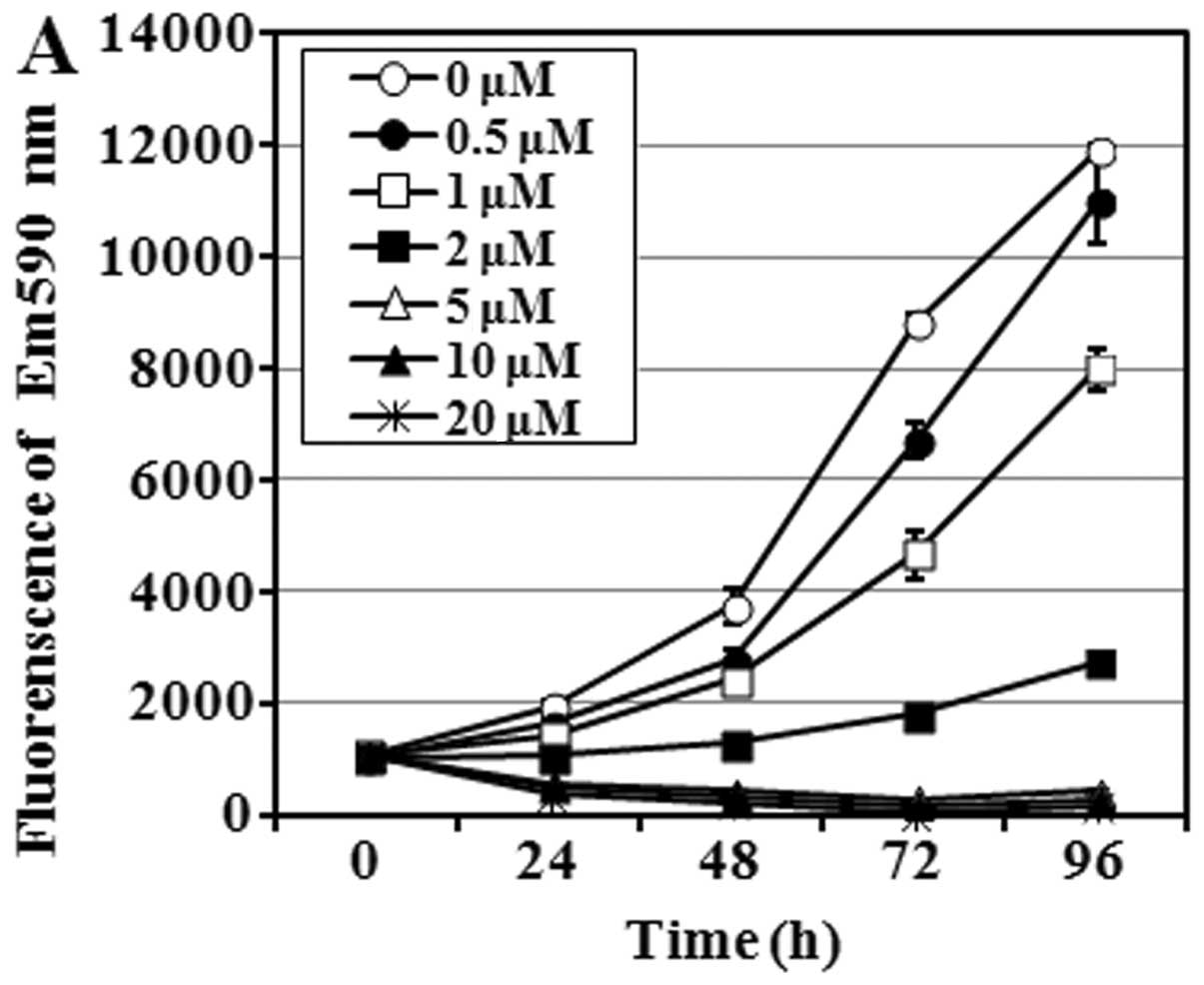
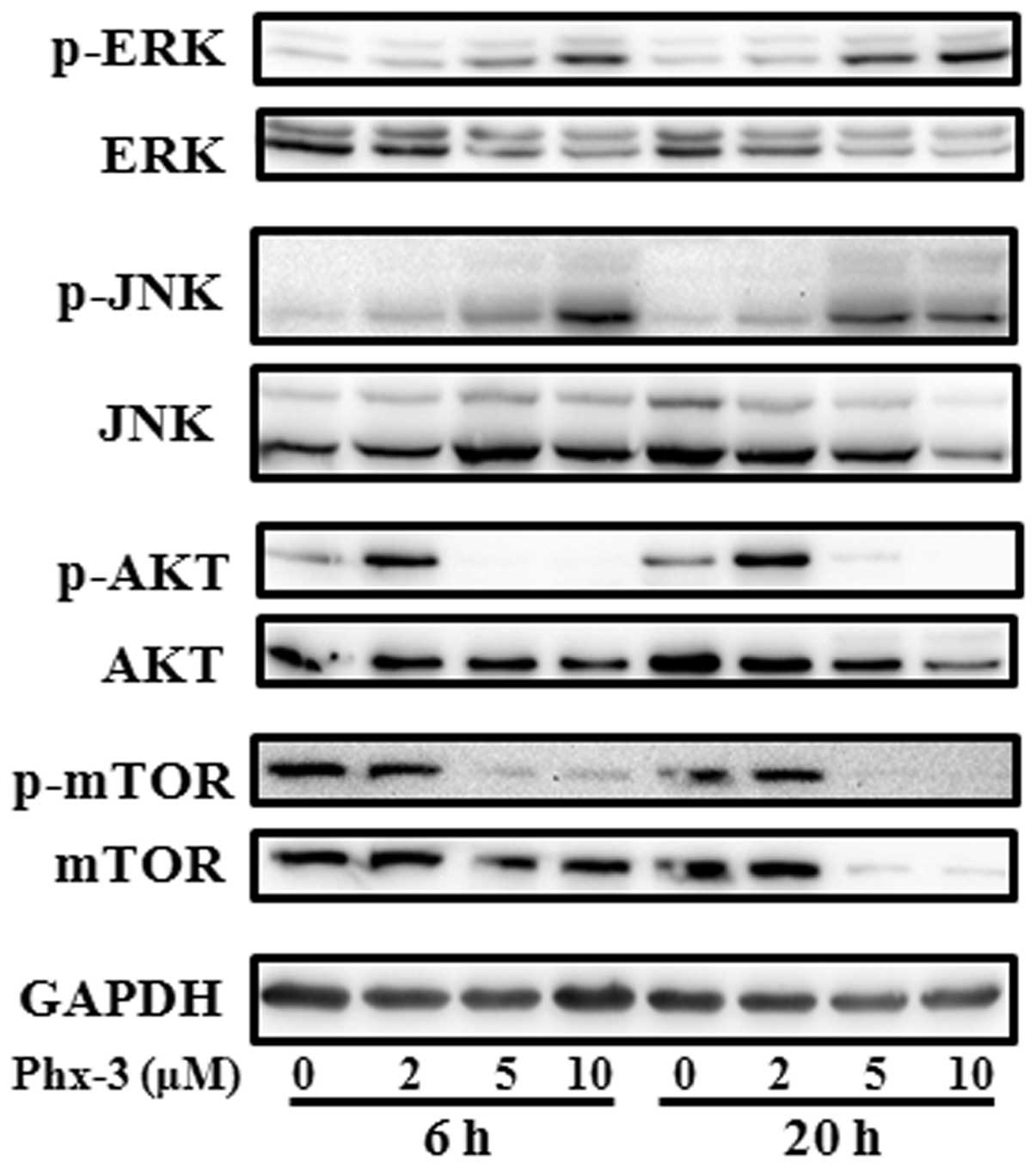
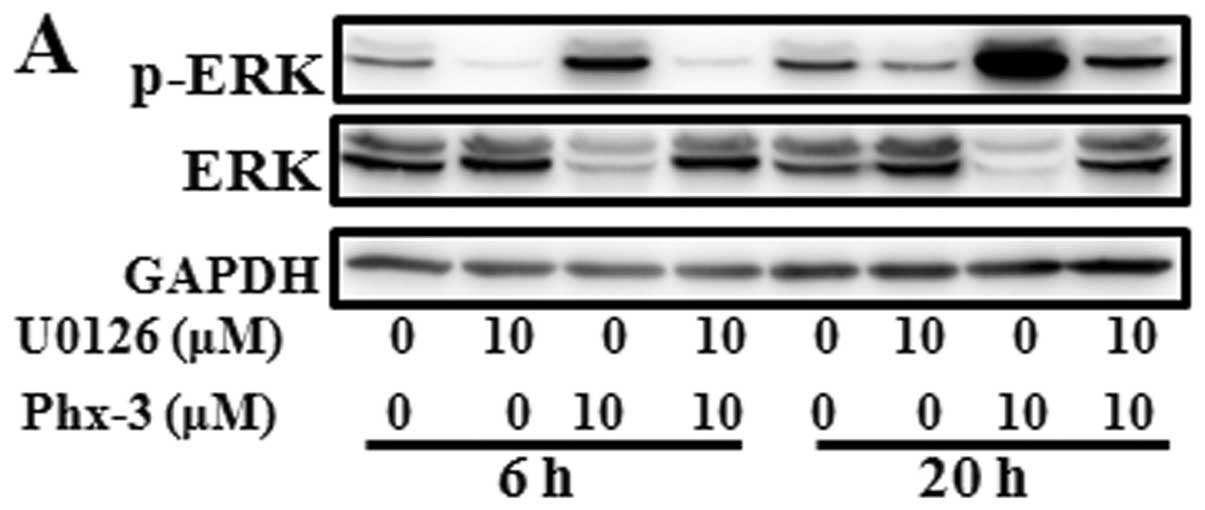
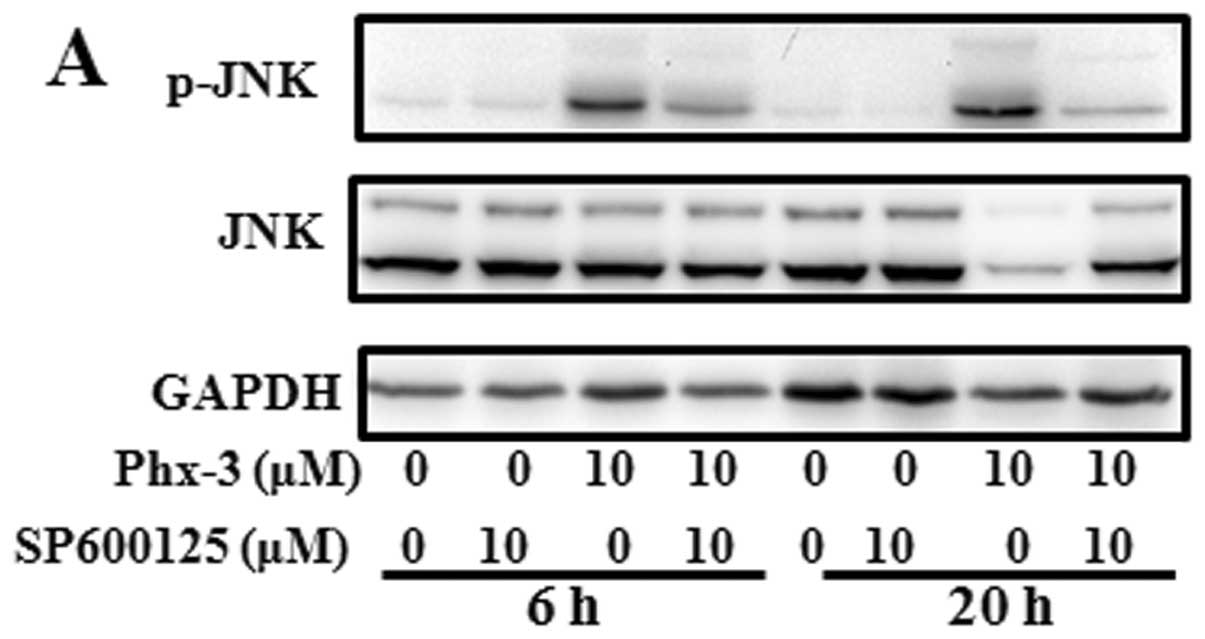
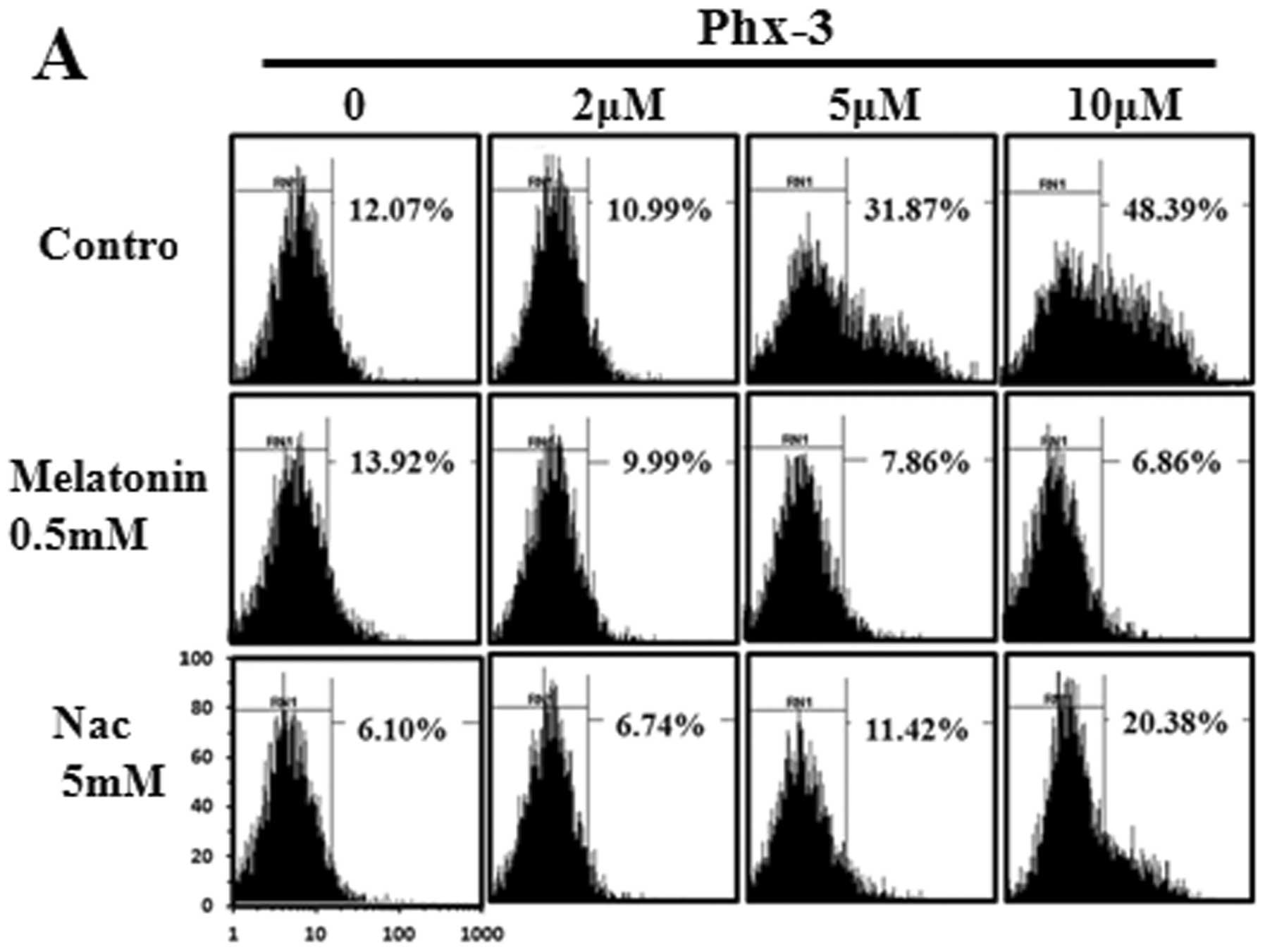
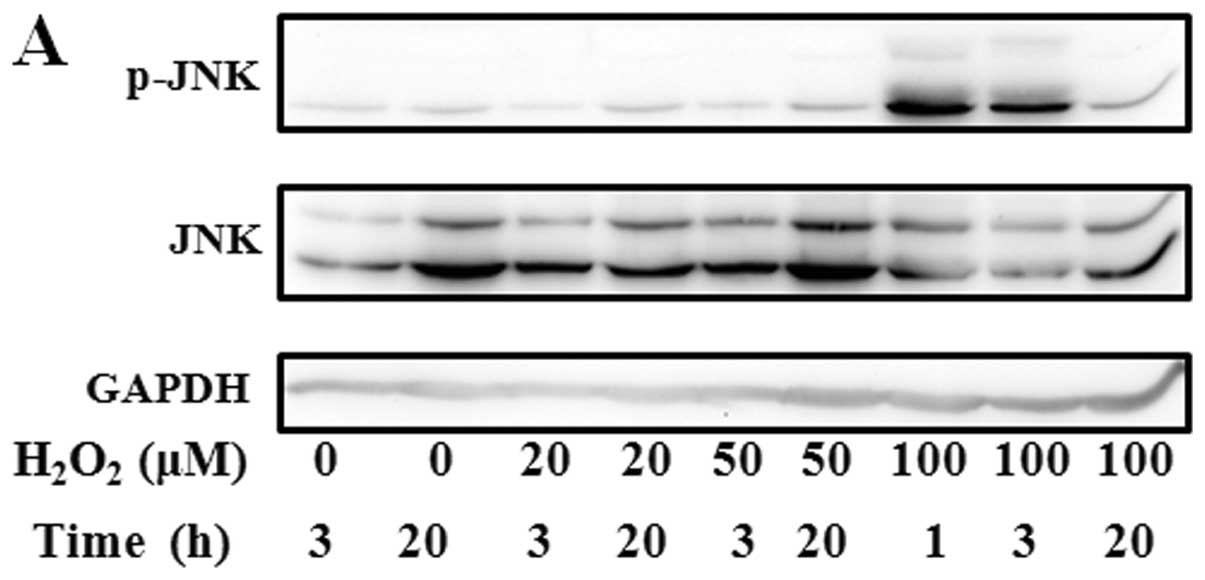
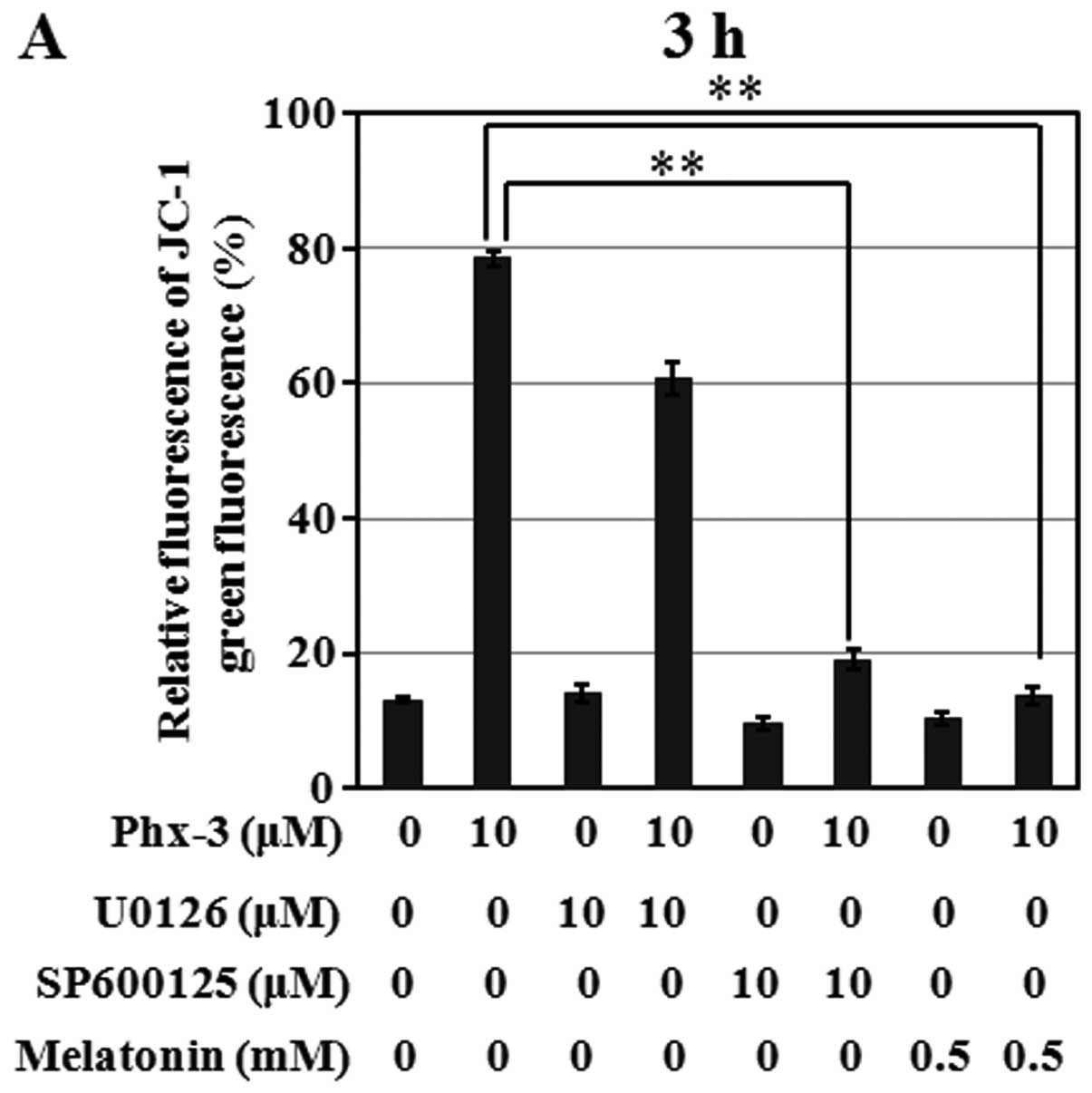
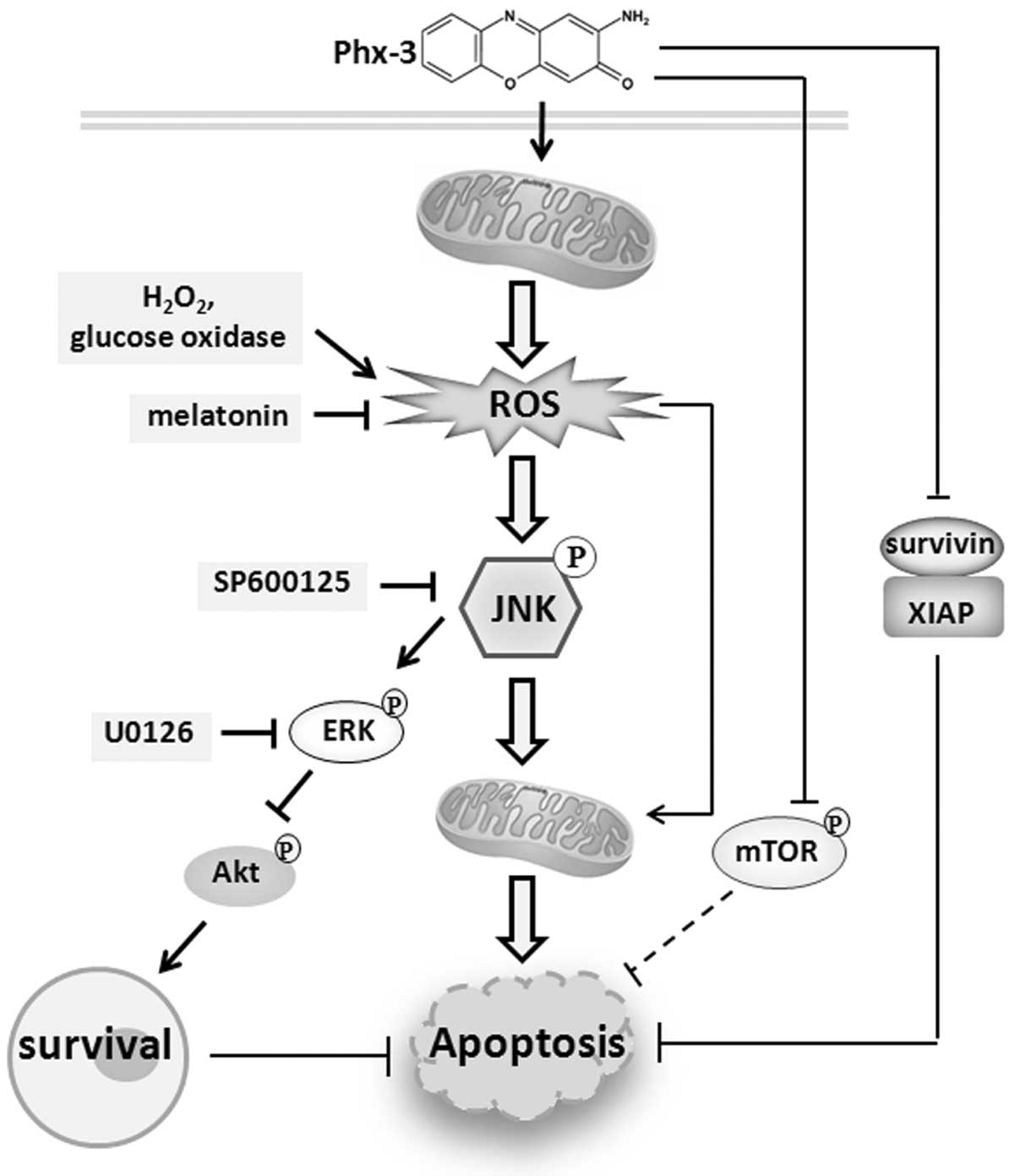
2-Aminophenoxazine-3-one (Phx-3) induces apoptosis in several types of cancer cell lines. However, the mechanism of apoptosis induction by Phx-3 has not been fully elucidated. In this study, we investigated the anticancer effects of Phx-3 in the glioblastoma cell line LN229 and analyzed its molecular mechanism. The results indicated that 6- and 20-h treatment with Phx-3 significantly induced apoptosis in LN229 cells, with downregulation of survivin and XIAP. Both ERK and JNK, which are the members of the MAPK family, were activated after treatment with Phx-3. Inhibition of ERK using the specific inhibitor U0126 blocked the Phx-3-induced apoptosis only in part. However, inhibition of JNK using the specific inhibitor SP600125 completely prevented Phx-3-induced apoptosis and restored the phosphorylation states of ERK to the control levels. Enhanced generation of reactive oxygen species (ROS) was detected after 3-h treatment with Phx-3. In addition, the ROS scavenger melatonin almost completely blocked Phx-3-induced JNK activation and apoptosis. This suggests that JNK activation was mediated by Phx-3-induced ROS generation. Although SP600125 and melatonin completely blocked the reduction of mitochondrial membrane potential after a 3-h treatment with Phx-3, extension of Phx-3 exposure time to 20 h resulted in no cancelation of mitochondrial depolarization by these reagents. These reagents also had little effect on the decreased expression of survivin and XIAP during a 3-20-h exposure to Phx-3. These results indicate that the production of ROS following JNK activation is the main axis of Phx-3-induced apoptosis in LN229 cells for short-term exposure to Phx-3, whereas alternative mechanism(s) appear to be involved in apoptosis induction during long-term exposure to Phx-3.
View Figures

Figure 1

Figure 2

Figure 3

Figure 4

Figure 5

Figure 6

Figure 7

Figure 8

Figure 9

View References

1. 

Bidros DS and Vogelbaum MA: Novel drug delivery strategies in neuro-oncology. Neurotherapeutics. 6:539–546. 2009. View Article : Google Scholar : PubMed/NCBI

2. 

Tomoda A, Arai S, Ishida R, Shimamoto T and Ohyashiki K: An improved method for the rapid preparation of 2-amino-4,4·-di-hydro-4,7-dimethyl-3Hphenoxazine-3-one, a novel antitumor agent. Bioorg Med Chem Lett. 11:1057–1058. 2001.PubMed/NCBI

3. 

Shimizu S, Suzuki M, Tomoda A, Arai S, Taguchi H, Hanawa T and Kamiya S: Phenoxazine compounds produced by the reactions with bovine hemoglobin show antimicrobial activity against non-tuberculosis mycobacteria. Tohoku J Exp Med. 203:47–52. 2004. View Article : Google Scholar

4. 

Shimamoto T, Tomoda A, Ishida R and Ohyashiki K: Antitumor effects of a novel phenoxazine derivative on human leukemia cell lines in vitro and in vivo. Clin Cancer Res. 7:704–708. 2001.PubMed/NCBI

5. 

Shirato K, Imaizumi K, Miyazawa K, Takasaki A, Mizuguchi J, Che XF, Akiyama S and Tomoda A: Apoptosis induction preceded by mitochondrial depolarization in multiple myeloma cell line U266 by 2-aminophenoxazine-3-one. Biol Pharm Bull. 31:62–67. 2008. View Article : Google Scholar : PubMed/NCBI

6. 

Shirato K, Imaizumi K, Abe A and Tomoda A: Phenoxazine derivatives induce caspase-independent cell death in human glioblastoma cell lines, A-172 and U-251MG. Oncol Rep. 17:201–208. 2007.PubMed/NCBI

7. 

Miyano-Kurosaki N, Kurosaki K, Hayaashi M, Takaku H, Hayafune M, Shrato K, Kasuga T, Endo T and Tomoda A: 2-Aminophenoxazine-3-one suppresses the growth of mouse malignant melanoma B16 cells transplanted into C57BL/6Cr Slc mice. Biol Pharm Bull. 29:2197–2201. 2006. View Article : Google Scholar : PubMed/NCBI

8. 

Che XF, Zheng CL, Akiyama S and Tomoda A: 2-Amino phenoxazine-3-one and 2-amino-4,4α-dihydro-4α,7-dimethyl-3H-phenoxazine-3-one cause cellular apoptosis by reducing higher intracellular pH in cancer cells. Proc Jpn Acad Ser B Phys Biol Sci. 87:199–213. 2011.

9. 

Takasaki A, Hanyu H, Iwamoto T, Shirato K, Izumi R, Toyota H, Izuguchi J, Miyazawa K and Tomoda A: Mitochondrial depolarization and apoptosis associated with sustained activation of c-jun-N-terminal kinasein the human multiple myeloma cell line U266 induced by 2-aminophenoxazine-3-one. Mol Med Rep. 2:199–203. 2009.PubMed/NCBI

10. 

Zheng CL, Che XF, Akiyama S, Miyazawa K and Tomoda A: 2-Aminophenoxazine-3-one induces cellular apoptosis by causing rapid intracellular acidification and generating reactive oxygen species in human lung adenocarcinoma cells. Int J Oncol. 36:641–650. 2010.

11. 

Azuine MA, Tokuda H, Takayasu J, Enjyo F, Mukainaka T, Konoshima T, Nishino H and Kapadia GJ: Cancer chemopreventive effect of phenothiazines and related tri-heterocyclic analogues in the 12-O-tetradecanoylphorbol-13-acetate promoted Epstein-Barr virus early antigen activation and the mouse skin two-stage carcinogenesis models. Pharmacol Res. 49:161–169. 2004. View Article : Google Scholar

12. 

Nakada M, Kita D, Watanabe T, Hayashi Y, Teng L, Pyko IV and Hamada J: Aberrant signaling pathways in glioma. Cancers. 3:3242–3278. 2011. View Article : Google Scholar : PubMed/NCBI

13. 

Soni D, King JA, Kaye AH and Hovens CM: Genetics of glioblastoma multiforme: mitogenic signaling and cell cycle pathways converge. J Clin Neurosci. 12:1–5. 2005. View Article : Google Scholar : PubMed/NCBI

14. 

Los M, Maddika S, Erb B and Schulze-Osthoff K: Switching Akt: from survival signaling to deadly response. Bioessays. 31:492–495. 2009. View Article : Google Scholar : PubMed/NCBI

15. 

Pearson G, Robinson F, Beers Gibson T, Xu BE, Karandikar M, Berman K and Cobb MH: Mitogen-activated protein (MAP) kinase pathways: regulation and physiological functions. Endocr Rev. 22:153–183. 2001.PubMed/NCBI

16. 

Davis RJ: Signal transduction by the JNK group of MAP kinases. Cell. 103:239–252. 2000. View Article : Google Scholar : PubMed/NCBI

17. 

Nakachi T, Tabuchi T, Takasaki A, Arai S, Miyazawa K and Tomoda A: Anticancer activity of phenoxazines produced by bovine erythrocytes on colon cancer cells. Oncol Rep. 23:1517–1522. 2010.PubMed/NCBI

18. 

Kawaguchi T, Miyazawa K, Moriya S, Ohtomo T, Che XF, Naito M, Itoh M and Tomoda A: Combined treatment with bortezomib plus bafilomycin A1 enhances the cytocidal effect and induces endoplasmic reticulum stress in U266 myeloma cells: crosstalk among proteasome, autophagy-lysosome and ER stress. Int J Oncol. 38:643–654. 2011.

19. 

Nohl H, Gille L and Staniek K: Intracellular generation of reactive oxygen species by mitochondria. Biochem Pharmacol. 69:719–723. 2005. View Article : Google Scholar : PubMed/NCBI

20. 

Gogvadze V, Orrenius S and Zhivotovsky B: Mitochondria as targets for cancer chemotherapy. Semin Cancer Biol. 19:57–66. 2009. View Article : Google Scholar : PubMed/NCBI

21. 

Maundrell K, Antonsson B, Magnenat E, Camps M, Muda M, Chabert C, Gillieron C, Boschert U, Vial-Knecht E, Martinou JC and Arkinstall S: Bcl-2 undergoes phosphorylation by c-Jun N-terminal kinase/stress-activated protein kinases in the presence of the constitutively active GTP-binding protein Rac1. J Biol Chem. 272:25238–25242. 1997. View Article : Google Scholar

22. 

Basu A and Haldar S: Identification of a novel Bcl-xL phospho rylation site regulating the sensitivity of taxol- or 2-methoxyestradiol-induced apoptosis. FEBS Lett. 538:41–47. 2003. View Article : Google Scholar : PubMed/NCBI

23. 

Fulda S, Gorman AM, Hori O and Samali A: Cellular stress responses: cell survival and cell death. Int J Cell Biol. 2010:2140742010. View Article : Google Scholar : PubMed/NCBI

24. 

Trachootham D, Lu W, Ogasawara MA, Valle NR and Huang P: Redox regulation of cell survival. Antioxid Redox Signal. 10:1343–1374. 2008. View Article : Google Scholar : PubMed/NCBI

25. 

Feligioni M, Brambilla E, Camassa A, Sclip A, Arnaboldi A, Morelli F, Antoniou X and Borsello T: Crosstalk between JNK and SUMO signaling pathways: deSUMOylation is protective against H2O2-induced cell injury. PLoS One. 6:e281852011. View Article : Google Scholar : PubMed/NCBI

26. 

Conde de la Rosa L, Schoemaker MH, Vrenken TE, Buist-Homan M, Havinga R, Jansen PL and Moshage H: Superoxide anions and hydrogen peroxide induce hepatocyte death by different mechanisms: involvement of JNK and ERK MAP kinases. J Hepatol. 44:918–929. 2006.PubMed/NCBI

27. 

Matos TJ, Duarte CB, Goncalo M and Lopes MC: Role of oxidative stress in ERK and p38 MAPK activation induced by the chemical sensitizer DNFB in a fetal skin dendritic cell line. Immunol Cell Biol. 83:607–614. 2005. View Article : Google Scholar : PubMed/NCBI

28. 

Tobiume K, Matsuzawa A, Takahashi T, Nishitoh H, Morita K, Takeda K, Minowa O, Miyazono K, Noda T and Ichijo H: ASK1 is required for sustained activations of JNK/p38 MAP kinases and apoptosis. EMBO Rep. 2:222–228. 2001. View Article : Google Scholar : PubMed/NCBI

29. 

Song JJ, Rhee JG, Suntharalingam M, Walsh SA, Spitz DR and Lee YJ: Role of glutaredoxin in metabolic oxidative stress: glutaredoxin as a sensor of oxidative stress mediated by H2O2. J Biol Chem. 277:46566–46575. 2002. View Article : Google Scholar : PubMed/NCBI

30. 

Yoshizumi M, Abe J, Haendeler J, Huang Q and Berk BC: Src and Cas mediate JNK activation but not ERK1/2 and p38 kinases by reactive oxygen species. J Biol Chem. 275:11706–11712. 2000. View Article : Google Scholar : PubMed/NCBI

31. 

Wang T, Arifoglu P, Ronai Z and Tew KD: Glutathione S-transferase P1-1 (GSTP1-1) inhibits c-Jun N-terminal kinase (JNK1) signaling through interaction with the C terminus. J Biol Chem. 276:20999–21003. 2001. View Article : Google Scholar : PubMed/NCBI

32. 

Sinha D, Bannergee S, Schwartz JH, Lieberthal W and Levine JS: Inhibition of ligand-independent ERK1/2 activity in kidney proximal tubular cells deprived of soluble survival factors upregulates Akt and prevents apoptosis. J Biol Chem. 279:10962–10972. 2004. View Article : Google Scholar

Related Articles

  • Abstract
  • View
  • Download
  • Twitter
Copy and paste a formatted citation
Spandidos Publications style
Che X, Moriya S, Zheng C, Abe A, Tomoda A and Miyazawa K: 2-Aminophenoxazine-3-one-induced apoptosis via generation of reactive oxygen species followed by c-jun N-terminal kinase activation in the human glioblastoma cell line LN229. Int J Oncol 43: 1456-1466, 2013.
APA
Che, X., Moriya, S., Zheng, C., Abe, A., Tomoda, A., & Miyazawa, K. (2013). 2-Aminophenoxazine-3-one-induced apoptosis via generation of reactive oxygen species followed by c-jun N-terminal kinase activation in the human glioblastoma cell line LN229. International Journal of Oncology, 43, 1456-1466. https://doi.org/10.3892/ijo.2013.2088
MLA
Che, X., Moriya, S., Zheng, C., Abe, A., Tomoda, A., Miyazawa, K."2-Aminophenoxazine-3-one-induced apoptosis via generation of reactive oxygen species followed by c-jun N-terminal kinase activation in the human glioblastoma cell line LN229". International Journal of Oncology 43.5 (2013): 1456-1466.
Chicago
Che, X., Moriya, S., Zheng, C., Abe, A., Tomoda, A., Miyazawa, K."2-Aminophenoxazine-3-one-induced apoptosis via generation of reactive oxygen species followed by c-jun N-terminal kinase activation in the human glioblastoma cell line LN229". International Journal of Oncology 43, no. 5 (2013): 1456-1466. https://doi.org/10.3892/ijo.2013.2088
Copy and paste a formatted citation
x
Spandidos Publications style
Che X, Moriya S, Zheng C, Abe A, Tomoda A and Miyazawa K: 2-Aminophenoxazine-3-one-induced apoptosis via generation of reactive oxygen species followed by c-jun N-terminal kinase activation in the human glioblastoma cell line LN229. Int J Oncol 43: 1456-1466, 2013.
APA
Che, X., Moriya, S., Zheng, C., Abe, A., Tomoda, A., & Miyazawa, K. (2013). 2-Aminophenoxazine-3-one-induced apoptosis via generation of reactive oxygen species followed by c-jun N-terminal kinase activation in the human glioblastoma cell line LN229. International Journal of Oncology, 43, 1456-1466. https://doi.org/10.3892/ijo.2013.2088
MLA
Che, X., Moriya, S., Zheng, C., Abe, A., Tomoda, A., Miyazawa, K."2-Aminophenoxazine-3-one-induced apoptosis via generation of reactive oxygen species followed by c-jun N-terminal kinase activation in the human glioblastoma cell line LN229". International Journal of Oncology 43.5 (2013): 1456-1466.
Chicago
Che, X., Moriya, S., Zheng, C., Abe, A., Tomoda, A., Miyazawa, K."2-Aminophenoxazine-3-one-induced apoptosis via generation of reactive oxygen species followed by c-jun N-terminal kinase activation in the human glioblastoma cell line LN229". International Journal of Oncology 43, no. 5 (2013): 1456-1466. https://doi.org/10.3892/ijo.2013.2088
Follow us
  • Twitter
  • LinkedIn
  • Facebook
About
  • Spandidos Publications
  • Careers
  • Cookie Policy
  • Privacy Policy
How can we help?
  • Help
  • Live Chat
  • Contact
  • Email to our Support Team