Spandidos Publications Logo
  • About
    • About Spandidos
    • Aims and Scopes
    • Abstracting and Indexing
    • Editorial Policies
    • Reprints and Permissions
    • Job Opportunities
    • Terms and Conditions
    • Contact
  • Journals
    • All Journals
    • Oncology Letters
      • Oncology Letters
      • Information for Authors
      • Editorial Policies
      • Editorial Board
      • Aims and Scope
      • Abstracting and Indexing
      • Bibliographic Information
      • Archive
    • International Journal of Oncology
      • International Journal of Oncology
      • Information for Authors
      • Editorial Policies
      • Editorial Board
      • Aims and Scope
      • Abstracting and Indexing
      • Bibliographic Information
      • Archive
    • Molecular and Clinical Oncology
      • Molecular and Clinical Oncology
      • Information for Authors
      • Editorial Policies
      • Editorial Board
      • Aims and Scope
      • Abstracting and Indexing
      • Bibliographic Information
      • Archive
    • Experimental and Therapeutic Medicine
      • Experimental and Therapeutic Medicine
      • Information for Authors
      • Editorial Policies
      • Editorial Board
      • Aims and Scope
      • Abstracting and Indexing
      • Bibliographic Information
      • Archive
    • International Journal of Molecular Medicine
      • International Journal of Molecular Medicine
      • Information for Authors
      • Editorial Policies
      • Editorial Board
      • Aims and Scope
      • Abstracting and Indexing
      • Bibliographic Information
      • Archive
    • Biomedical Reports
      • Biomedical Reports
      • Information for Authors
      • Editorial Policies
      • Editorial Board
      • Aims and Scope
      • Abstracting and Indexing
      • Bibliographic Information
      • Archive
    • Oncology Reports
      • Oncology Reports
      • Information for Authors
      • Editorial Policies
      • Editorial Board
      • Aims and Scope
      • Abstracting and Indexing
      • Bibliographic Information
      • Archive
    • Molecular Medicine Reports
      • Molecular Medicine Reports
      • Information for Authors
      • Editorial Policies
      • Editorial Board
      • Aims and Scope
      • Abstracting and Indexing
      • Bibliographic Information
      • Archive
    • World Academy of Sciences Journal
      • World Academy of Sciences Journal
      • Information for Authors
      • Editorial Policies
      • Editorial Board
      • Aims and Scope
      • Abstracting and Indexing
      • Bibliographic Information
      • Archive
    • International Journal of Functional Nutrition
      • International Journal of Functional Nutrition
      • Information for Authors
      • Editorial Policies
      • Editorial Board
      • Aims and Scope
      • Abstracting and Indexing
      • Bibliographic Information
      • Archive
    • International Journal of Epigenetics
      • International Journal of Epigenetics
      • Information for Authors
      • Editorial Policies
      • Editorial Board
      • Aims and Scope
      • Abstracting and Indexing
      • Bibliographic Information
      • Archive
    • Medicine International
      • Medicine International
      • Information for Authors
      • Editorial Policies
      • Editorial Board
      • Aims and Scope
      • Abstracting and Indexing
      • Bibliographic Information
      • Archive
  • Articles
  • Information
    • Information for Authors
    • Information for Reviewers
    • Information for Librarians
    • Information for Advertisers
    • Conferences
  • Language Editing
Spandidos Publications Logo
  • About
    • About Spandidos
    • Aims and Scopes
    • Abstracting and Indexing
    • Editorial Policies
    • Reprints and Permissions
    • Job Opportunities
    • Terms and Conditions
    • Contact
  • Journals
    • All Journals
    • Biomedical Reports
      • Information for Authors
      • Editorial Policies
      • Editorial Board
      • Aims and Scope
      • Abstracting and Indexing
      • Bibliographic Information
      • Archive
    • Experimental and Therapeutic Medicine
      • Information for Authors
      • Editorial Policies
      • Editorial Board
      • Aims and Scope
      • Abstracting and Indexing
      • Bibliographic Information
      • Archive
    • International Journal of Epigenetics
      • Information for Authors
      • Editorial Policies
      • Editorial Board
      • Aims and Scope
      • Abstracting and Indexing
      • Bibliographic Information
      • Archive
    • International Journal of Functional Nutrition
      • Information for Authors
      • Editorial Policies
      • Editorial Board
      • Aims and Scope
      • Abstracting and Indexing
      • Bibliographic Information
      • Archive
    • International Journal of Molecular Medicine
      • Information for Authors
      • Editorial Policies
      • Editorial Board
      • Aims and Scope
      • Abstracting and Indexing
      • Bibliographic Information
      • Archive
    • International Journal of Oncology
      • Information for Authors
      • Editorial Policies
      • Editorial Board
      • Aims and Scope
      • Abstracting and Indexing
      • Bibliographic Information
      • Archive
    • Medicine International
      • Information for Authors
      • Editorial Policies
      • Editorial Board
      • Aims and Scope
      • Abstracting and Indexing
      • Bibliographic Information
      • Archive
    • Molecular and Clinical Oncology
      • Information for Authors
      • Editorial Policies
      • Editorial Board
      • Aims and Scope
      • Abstracting and Indexing
      • Bibliographic Information
      • Archive
    • Molecular Medicine Reports
      • Information for Authors
      • Editorial Policies
      • Editorial Board
      • Aims and Scope
      • Abstracting and Indexing
      • Bibliographic Information
      • Archive
    • Oncology Letters
      • Information for Authors
      • Editorial Policies
      • Editorial Board
      • Aims and Scope
      • Abstracting and Indexing
      • Bibliographic Information
      • Archive
    • Oncology Reports
      • Information for Authors
      • Editorial Policies
      • Editorial Board
      • Aims and Scope
      • Abstracting and Indexing
      • Bibliographic Information
      • Archive
    • World Academy of Sciences Journal
      • Information for Authors
      • Editorial Policies
      • Editorial Board
      • Aims and Scope
      • Abstracting and Indexing
      • Bibliographic Information
      • Archive
  • Articles
  • Information
    • For Authors
    • For Reviewers
    • For Librarians
    • For Advertisers
    • Conferences
  • Language Editing
Login Register Submit
  • This site uses cookies
  • You can change your cookie settings at any time by following the instructions in our Cookie Policy. To find out more, you may read our Privacy Policy.

    I agree
Search articles by DOI, keyword, author or affiliation
Search
Advanced Search
presentation
International Journal of Oncology
Join Editorial Board Propose a Special Issue
Print ISSN: 1019-6439 Online ISSN: 1791-2423
Journal Cover
2014-February Volume 44 Issue 2

Full Size Image

Cover Legend PDF

Sign up for eToc alerts
Recommend to Library

Journals

International Journal of Molecular Medicine

International Journal of Molecular Medicine

International Journal of Molecular Medicine is an international journal devoted to molecular mechanisms of human disease.

International Journal of Oncology

International Journal of Oncology

International Journal of Oncology is an international journal devoted to oncology research and cancer treatment.

Molecular Medicine Reports

Molecular Medicine Reports

Covers molecular medicine topics such as pharmacology, pathology, genetics, neuroscience, infectious diseases, molecular cardiology, and molecular surgery.

Oncology Reports

Oncology Reports

Oncology Reports is an international journal devoted to fundamental and applied research in Oncology.

Experimental and Therapeutic Medicine

Experimental and Therapeutic Medicine

Experimental and Therapeutic Medicine is an international journal devoted to laboratory and clinical medicine.

Oncology Letters

Oncology Letters

Oncology Letters is an international journal devoted to Experimental and Clinical Oncology.

Biomedical Reports

Biomedical Reports

Explores a wide range of biological and medical fields, including pharmacology, genetics, microbiology, neuroscience, and molecular cardiology.

Molecular and Clinical Oncology

Molecular and Clinical Oncology

International journal addressing all aspects of oncology research, from tumorigenesis and oncogenes to chemotherapy and metastasis.

World Academy of Sciences Journal

World Academy of Sciences Journal

Multidisciplinary open-access journal spanning biochemistry, genetics, neuroscience, environmental health, and synthetic biology.

International Journal of Functional Nutrition

International Journal of Functional Nutrition

Open-access journal combining biochemistry, pharmacology, immunology, and genetics to advance health through functional nutrition.

International Journal of Epigenetics

International Journal of Epigenetics

Publishes open-access research on using epigenetics to advance understanding and treatment of human disease.

Medicine International

Medicine International

An International Open Access Journal Devoted to General Medicine.

Journal Cover
2014-February Volume 44 Issue 2

Full Size Image

Cover Legend PDF

Sign up for eToc alerts
Recommend to Library

  • Article
  • Citations
    • Cite This Article
    • Download Citation
    • Create Citation Alert
    • Remove Citation Alert
    • Cited By
  • Similar Articles
    • Related Articles (in Spandidos Publications)
    • Similar Articles (Google Scholar)
    • Similar Articles (PubMed)
  • Download PDF
  • Download XML
  • View XML
Article Open Access

Conditioned media from macrophages of M1, but not M2 phenotype, inhibit the proliferation of the colon cancer cell lines HT-29 and CACO-2

  • Authors:
    • Alexander Engström
    • Ann Erlandsson
    • Dick Delbro
    • Jonny Wijkander
  • View Affiliations / Copyright

    Affiliations: Department of Health Sciences, Karlstad University, Karlstad, Sweden, School of Health and Medical Sciences, Örebro University, Örebro, Sweden
    Copyright: © Engström et al. This is an open access article distributed under the terms of Creative Commons Attribution License [CC BY_NC 3.0].
  • Pages: 385-392
    |
    Published online on: December 2, 2013
       https://doi.org/10.3892/ijo.2013.2203
  • Expand metrics +
Metrics: Total Views: 0 (Spandidos Publications: | PMC Statistics: )
Metrics: Total PDF Downloads: 0 (Spandidos Publications: | PMC Statistics: )
Cited By (CrossRef): 0 citations Loading Articles...

This article is mentioned in:


Abstract

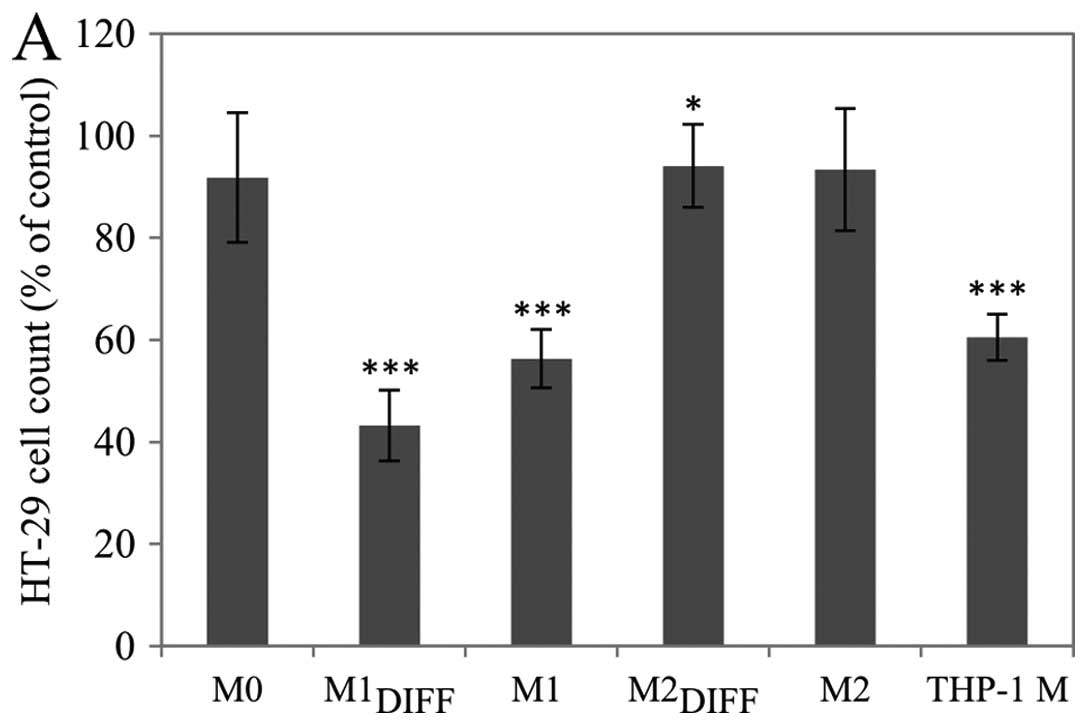
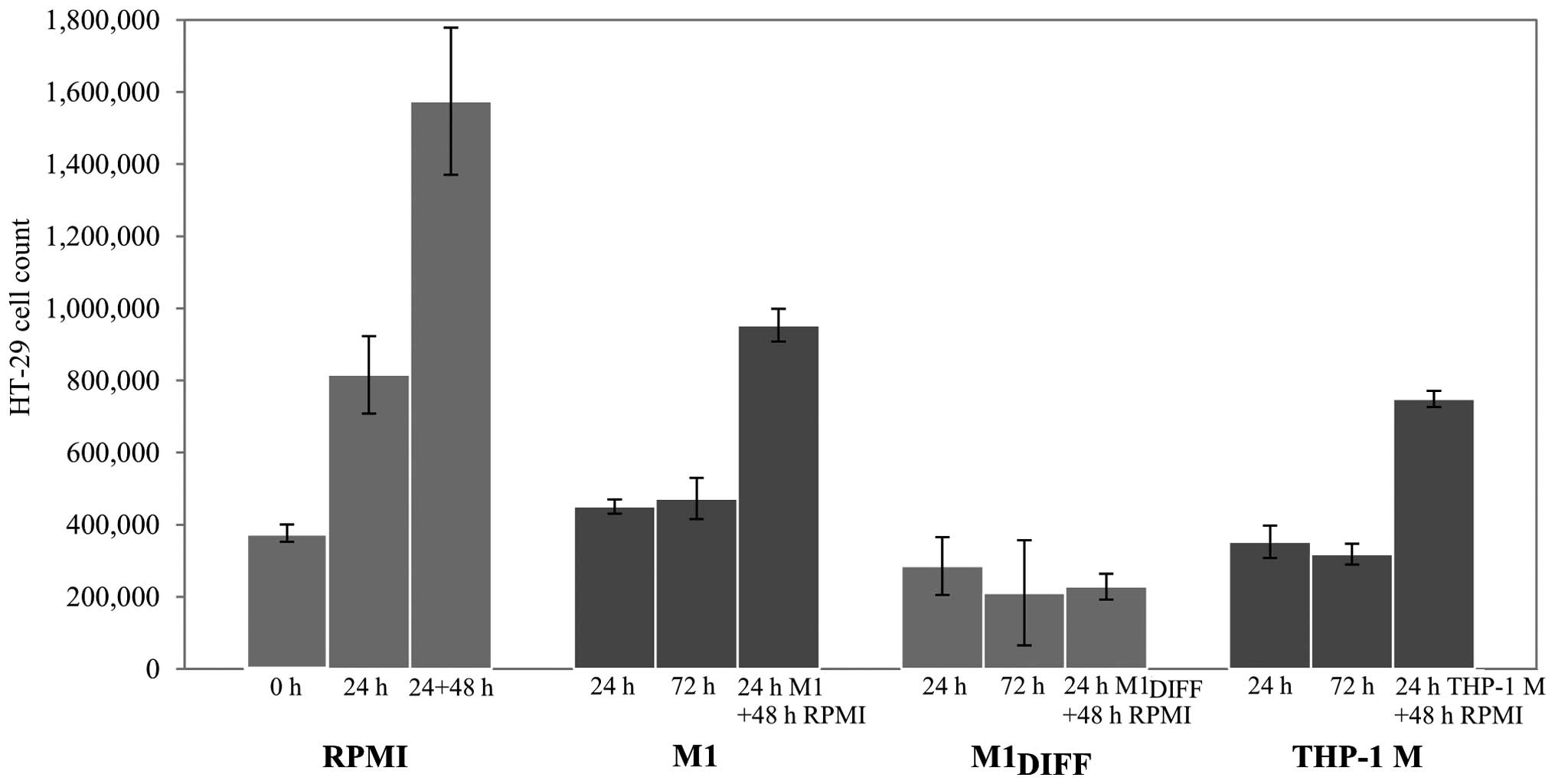
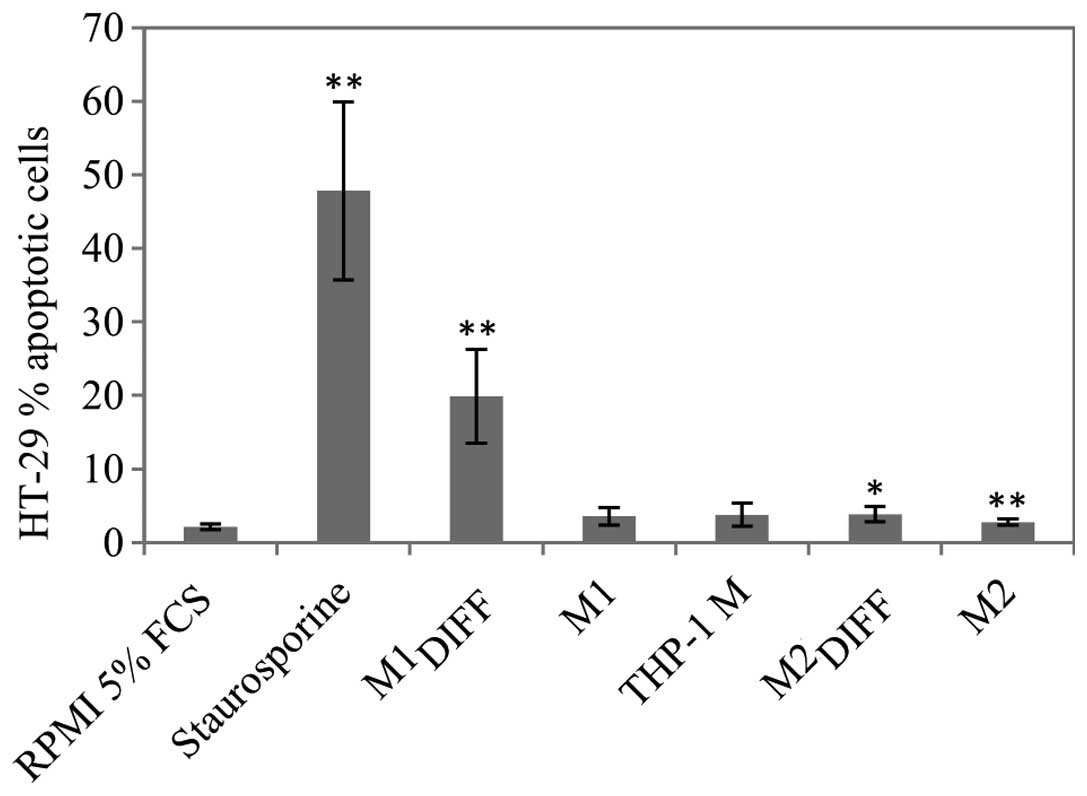
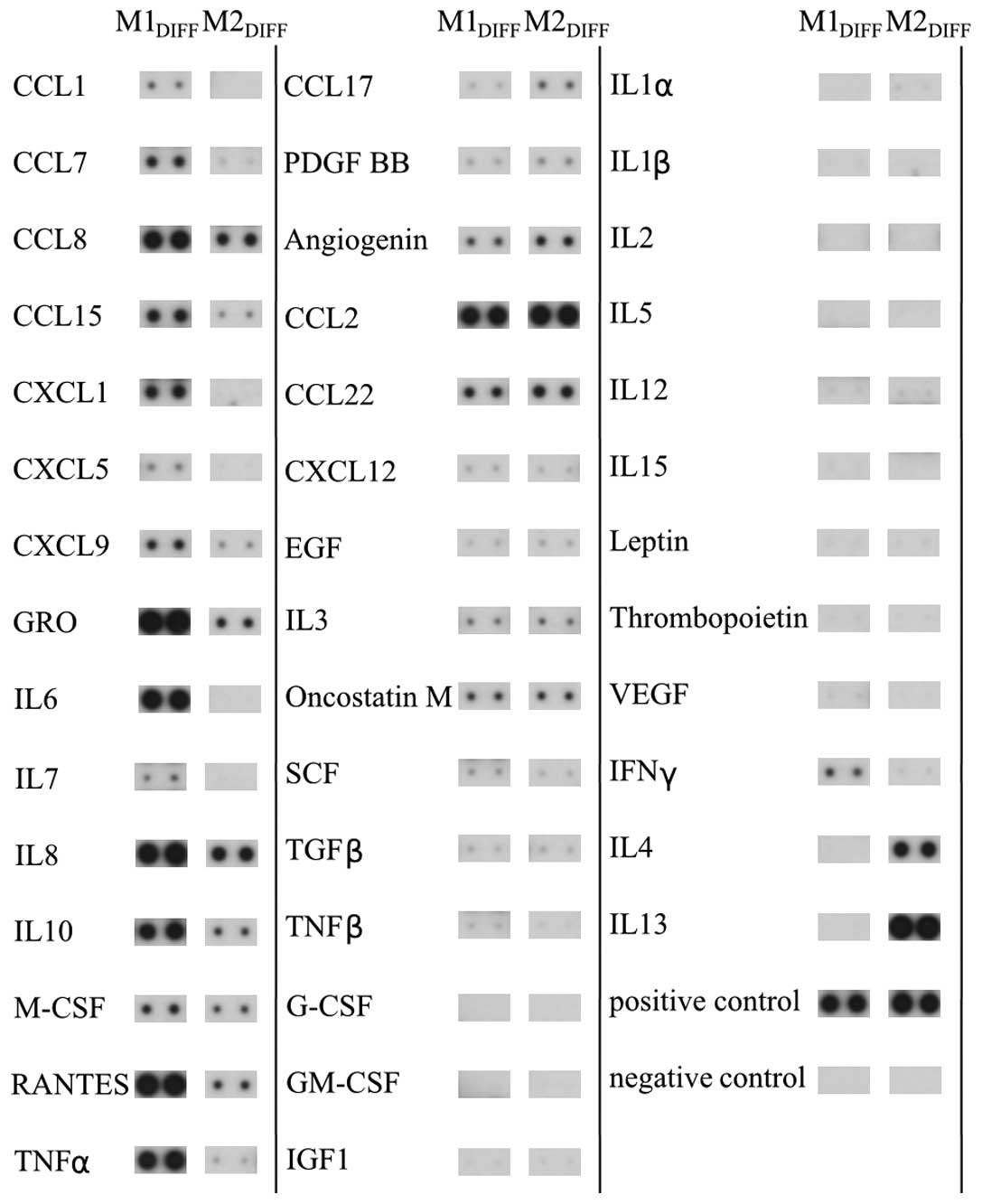
Solid tumors are infiltrated by stroma cells including macrophages and these cells can affect tumor growth, metastasis and angiogenesis. We have investigated the effects of conditioned media (CM) from different macrophages on the proliferation of the colon cancer cell lines HT-29 and CACO-2. CM from THP-1 macrophages and monocyte‑derived human macrophages of the M1 phenotype, but not the M2 phenotype, inhibited proliferation of the tumor cells in a dose‑dependent manner. Lipopolysaccaharide and interferon γ was used for differentiation of macrophages towards the M1 phenotype and CM were generated both during differentiation (M1DIFF) and after differentiation (M1). M1 and M1DIFF CM as well as THP-1 macrophage CM resulted in cell cycle arrest in HT-29 cells with a decrease of cells in S phase and an increase in G2/M phase. Treatment of HT-29 cells with M1DIFF, but not M1 or THP-1 macrophage CM, resulted in apoptosis of about 20% of the tumor cells and this was accompanied by lack of recovery of cell growth after removal of CM and subsequent culture in fresh media. A protein array was used to identify cytokines released from M1 and M2 macrophages. Among the cytokines released by M1 macrophages, tumor necrosis factor α and CXCL9 were tested by direct addition to HT-29 cells, but neither affected proliferation. Our results indicate that M1 macrophages inhibit colon cancer cell growth and have the potential of contributing to reducing tumor growth in vivo.
View Figures

Figure 1

Figure 2

Figure 3

Figure 4

View References

1. 

Jemal A, Siegel R, Ward E, Hao Y, Xu J and Thun MJ: Cancer statistics, 2009. CA Cancer J Clin. 59:225–249. 2009. View Article : Google Scholar

2. 

Lozano R, Naghavi M, Foreman K, et al: Global and regional mortality from 235 causes of death for 20 age groups in 1990 and 2010: a systematic analysis for the Global Burden of Disease Study 2010. Lancet. 380:2095–2128. 2012. View Article : Google Scholar : PubMed/NCBI

3. 

Power DG, Gloglowski E and Lipkin SM: Clinical genetics of hereditary colorectal cancer. Hematol Oncol Clin North Am. 24:837–859. 2010. View Article : Google Scholar : PubMed/NCBI

4. 

Peyrin-Biroulet L, Lepage C, Jooste V, Gueant JL, Faivre J and Bouvier AM: Colorectal cancer in inflammatory bowel diseases: a population-based study (1976–2008). Inflamm Bowel Dis. 18:2247–2251. 2012.PubMed/NCBI

5. 

Vargas AJ and Thompson PA: Diet and nutrient factors in colorectal cancer risk. Nutr Clin Pract. 27:613–623. 2012. View Article : Google Scholar : PubMed/NCBI

6. 

Vipperla K and O’Keefe SJ: The microbiota and its metabolites in colonic mucosal health and cancer risk. Nutr Clin Pract. 27:624–635. 2012. View Article : Google Scholar : PubMed/NCBI

7. 

Al-Sohaily S, Biankin A, Leong R, Kohonen-Corish M and Warusavitarne J: Molecular pathways in colorectal cancer. J Gastroenterol Hepatol. 27:1423–1431. 2012. View Article : Google Scholar

8. 

Cui G, Shi Y, Cui J, Tang F and Florholmen J: Immune micro-environmental shift along human colorectal adenoma-carcinoma sequence: is it relevant to tumor development, biomarkers and biotherapeutic targets? Scand J Gastroenterol. 47:367–377. 2012. View Article : Google Scholar

9. 

Taketo MM: Roles of stromal microenvironment in colon cancer progression. J Biochem. 151:477–481. 2012. View Article : Google Scholar : PubMed/NCBI

10. 

Quante M, Varga J, Wang TC and Greten FR: The gastrointestinal tumor microenvironment. Gastroenterology. 145:63–78. 2013. View Article : Google Scholar

11. 

Chen JJ, Yao PL, Yuan A, et al: Up-regulation of tumor inter-leukin-8 expression by infiltrating macrophages: its correlation with tumor angiogenesis and patient survival in non-small cell lung cancer. Clin Cancer Res. 9:729–737. 2003.PubMed/NCBI

12. 

Lewis CE and Pollard JW: Distinct role of macrophages in different tumor microenvironments. Cancer Res. 66:605–612. 2006. View Article : Google Scholar : PubMed/NCBI

13. 

Solinas G, Schiarea S, Liguori M, et al: Tumor-conditioned macrophages secrete migration-stimulating factor: a new marker for M2-polarization, influencing tumor cell motility. J Immunol. 185:642–652. 2010. View Article : Google Scholar : PubMed/NCBI

14. 

Hanahan D and Weinberg RA: Hallmarks of cancer: the next generation. Cell. 144:646–674. 2011. View Article : Google Scholar : PubMed/NCBI

15. 

Martinez FO, Gordon S, Locati M and Mantovani A: Transcriptional profiling of the human monocyte-to-macrophage differentiation and polarization: new molecules and patterns of gene expression. J Immunol. 177:7303–7311. 2006. View Article : Google Scholar : PubMed/NCBI

16. 

Watkins SK, Egilmez NK, Suttles J and Stout RD: IL-12 rapidly alters the functional profile of tumor-associated and tumor-infiltrating macrophages in vitro and in vivo. J Immunol. 178:1357–1362. 2007. View Article : Google Scholar : PubMed/NCBI

17. 

Sica A and Mantovani A: Macrophage plasticity and polarization: in vivo veritas. J Clin Invest. 122:787–795. 2012. View Article : Google Scholar

18. 

Biswas SK, Allavena P and Mantovani A: Tumor-associated macrophages: functional diversity, clinical significance, and open questions. Semin Immunopathol. 35:585–600. 2013. View Article : Google Scholar : PubMed/NCBI

19. 

Rey-Giraud F, Hafner M and Ries CH: In vitro generation of monocyte-derived macrophages under serum-free conditions improves their tumor promoting functions. PLoS One. 7:e426562012. View Article : Google Scholar : PubMed/NCBI

20. 

Diaz-Gandarilla JA, Osorio-Trujillo C, Hernandez-Ramirez VI and Talamas-Rohana P: PPAR activation induces M1 macrophage polarization via cPLA(2)-COX-2 inhibition, activating ROS production against Leishmania mexicana. Biomed Res Int. 2013:2152832013. View Article : Google Scholar : PubMed/NCBI

21. 

Mosser DM and Edwards JP: Exploring the full spectrum of macrophage activation. Nat Rev Immunol. 8:958–969. 2008. View Article : Google Scholar : PubMed/NCBI

22. 

Pello OM, De Pizzol M, Mirolo M, et al: Role of c-MYC in alternative activation of human macrophages and tumor-associated macrophage biology. Blood. 119:411–421. 2012. View Article : Google Scholar : PubMed/NCBI

23. 

Ruffell B, Affara NI and Coussens LM: Differential macrophage programming in the tumor microenvironment. Trends Immunol. 33:119–126. 2012. View Article : Google Scholar : PubMed/NCBI

24. 

Mantovani A, Sica A, Sozzani S, Allavena P, Vecchi A and Locati M: The chemokine system in diverse forms of macrophage activation and polarization. Trends Immunol. 25:677–686. 2004. View Article : Google Scholar : PubMed/NCBI

25. 

Kim S, Takahashi H, Lin WW, et al: Carcinoma-produced factors activate myeloid cells through TLR2 to stimulate metastasis. Nature. 457:102–106. 2009. View Article : Google Scholar : PubMed/NCBI

26. 

Rogers TL and Holen I: Tumour macrophages as potential targets of bisphosphonates. J Transl Med. 9:1772011. View Article : Google Scholar : PubMed/NCBI

27. 

Erreni M, Mantovani A and Allavena P: Tumor-associated macrophages (TAM) and inflammation in colorectal cancer. Cancer Microenviron. 4:141–154. 2011. View Article : Google Scholar : PubMed/NCBI

28. 

Sica A, Schioppa T, Mantovani A and Allavena P: Tumour-associated macrophages are a distinct M2 polarised population promoting tumour progression: potential targets of anti-cancer therapy. Eur J Cancer. 42:717–727. 2006. View Article : Google Scholar : PubMed/NCBI

29. 

Barbera-Guillem E, Nyhus JK, Wolford CC, Friece CR and Sampsel JW: Vascular endothelial growth factor secretion by tumor-infiltrating macrophages essentially supports tumor angiogenesis, and IgG immune complexes potentiate the process. Cancer Res. 62:7042–7049. 2002.

30. 

Pancione M, Forte N, Sabatino L, et al: Reduced beta-catenin and peroxisome proliferator-activated receptor-gamma expression levels are associated with colorectal cancer metastatic progression: correlation with tumor-associated macrophages, cyclooxygenase 2, and patient outcome. Hum Pathol. 40:714–725. 2009. View Article : Google Scholar

31. 

Bailey C, Negus R, Morris A, et al: Chemokine expression is associated with the accumulation of tumour associated macrophages (TAMs) and progression in human colorectal cancer. Clin Exp Metastasis. 24:121–130. 2007. View Article : Google Scholar : PubMed/NCBI

32. 

Algars A, Irjala H, Vaittinen S, et al: Type and location of tumor-infiltrating macrophages and lymphatic vessels predict survival of colorectal cancer patients. Int J Cancer. 131:864–873. 2012. View Article : Google Scholar : PubMed/NCBI

33. 

Forssell J, Oberg A, Henriksson ML, Stenling R, Jung A and Palmqvist R: High macrophage infiltration along the tumor front correlates with improved survival in colon cancer. Clin Cancer Res. 13:1472–1479. 2007. View Article : Google Scholar : PubMed/NCBI

34. 

Zhou Q, Peng RQ, Wu XJ, et al: The density of macrophages in the invasive front is inversely correlated to liver metastasis in colon cancer. J Transl Med. 8:132010. View Article : Google Scholar : PubMed/NCBI

35. 

Herrera M, Herrera A, Dominguez G, et al: Cancer-associated fibroblast and M2 macrophage markers together predict outcome in colorectal cancer patients. Cancer Sci. 104:437–444. 2013. View Article : Google Scholar : PubMed/NCBI

36. 

Recalcati S, Locati M, Marini A, et al: Differential regulation of iron homeostasis during human macrophage polarized activation. Eur J Immunol. 40:824–835. 2010. View Article : Google Scholar : PubMed/NCBI

37. 

Jedinak A, Dudhgaonkar S and Sliva D: Activated macrophages induce metastatic behavior of colon cancer cells. Immunobiology. 215:242–249. 2010. View Article : Google Scholar : PubMed/NCBI

38. 

Park EK, Jung HS, Yang HI, Yoo MC, Kim C and Kim KS: Optimized THP-1 differentiation is required for the detection of responses to weak stimuli. Inflamm Res. 56:45–50. 2007. View Article : Google Scholar : PubMed/NCBI

39. 

Lolmede K, Campana L, Vezzoli M, et al: Inflammatory and alternatively activated human macrophages attract vessel-associated stem cells, relying on separate HMGB1- and MMP-9-dependent pathways. J Leukoc Biol. 85:779–787. 2009. View Article : Google Scholar : PubMed/NCBI

40. 

Sica A, Larghi P, Mancino A, et al: Macrophage polarization in tumour progression. Semin Cancer Biol. 18:349–355. 2008. View Article : Google Scholar : PubMed/NCBI

41. 

Gordon S and Martinez FO: Alternative activation of macrophages: mechanism and functions. Immunity. 32:593–604. 2010. View Article : Google Scholar : PubMed/NCBI

42. 

Kwan WH, Boix C, Gougelet N, Fridman WH and Mueller CG: LPS induces rapid IL-10 release by M-CSF-conditioned tolerogenic dendritic cell precursors. J Leukoc Biol. 82:133–141. 2007. View Article : Google Scholar : PubMed/NCBI

43. 

Park ES, Yoo JM, Yoo HS, Yoon DY, Yun YP and Hong J: IL-32gamma enhances TNF-alpha-induced cell death in colon cancer. Mol Carcinog. Dec 19–2012.(Epub ahead of print).

44. 

Min HY, Chung HJ, Kim EH, Kim S, Park EJ and Lee SK: Inhibition of cell growth and potentiation of tumor necrosis factor-alpha (TNF-alpha)-induced apoptosis by a phenanthroindolizidine alkaloid antofine in human colon cancer cells. Biochem Pharmacol. 80:1356–1364. 2010. View Article : Google Scholar

45. 

Rivas MA, Carnevale RP, Proietti CJ, et al: TNF alpha acting on TNFR1 promotes breast cancer growth via p42/P44 MAPK, JNK, Akt and NF-kappa B-dependent pathways. Exp Cell Res. 314:509–529. 2008. View Article : Google Scholar : PubMed/NCBI

46. 

Gasperini S, Marchi M, Calzetti F, et al: Gene expression and production of the monokine induced by IFN-gamma (MIG), IFN-inducible T cell alpha chemoattractant (I-TAC), and IFN-gamma-inducible protein-10 (IP-10) chemokines by human neutrophils. J Immunol. 162:4928–4937. 1999.PubMed/NCBI

47. 

Erreni M, Bianchi P, Laghi L, et al: Expression of chemokines and chemokine receptors in human colon cancer. Methods Enzymol. 460:105–121. 2009. View Article : Google Scholar : PubMed/NCBI

48. 

Han X, Wu Z, Di J, et al: CXCL9 attenuated chemo-therapy-induced intestinal mucositis by inhibiting proliferation and reducing apoptosis. Biomed Pharmacother. 65:547–554. 2011. View Article : Google Scholar : PubMed/NCBI

49. 

Andersson A, Srivastava MK, Harris-White M, et al: Role of CXCR3 ligands in IL-7/IL-7R alpha-Fc-mediated antitumor activity in lung cancer. Clin Cancer Res. 17:3660–3672. 2011. View Article : Google Scholar : PubMed/NCBI

Related Articles

  • Abstract
  • View
  • Download
  • Twitter
Copy and paste a formatted citation
Spandidos Publications style
Engström A, Erlandsson A, Delbro D and Wijkander J: Conditioned media from macrophages of M1, but not M2 phenotype, inhibit the proliferation of the colon cancer cell lines HT-29 and CACO-2. Int J Oncol 44: 385-392, 2014.
APA
Engström, A., Erlandsson, A., Delbro, D., & Wijkander, J. (2014). Conditioned media from macrophages of M1, but not M2 phenotype, inhibit the proliferation of the colon cancer cell lines HT-29 and CACO-2. International Journal of Oncology, 44, 385-392. https://doi.org/10.3892/ijo.2013.2203
MLA
Engström, A., Erlandsson, A., Delbro, D., Wijkander, J."Conditioned media from macrophages of M1, but not M2 phenotype, inhibit the proliferation of the colon cancer cell lines HT-29 and CACO-2". International Journal of Oncology 44.2 (2014): 385-392.
Chicago
Engström, A., Erlandsson, A., Delbro, D., Wijkander, J."Conditioned media from macrophages of M1, but not M2 phenotype, inhibit the proliferation of the colon cancer cell lines HT-29 and CACO-2". International Journal of Oncology 44, no. 2 (2014): 385-392. https://doi.org/10.3892/ijo.2013.2203
Copy and paste a formatted citation
x
Spandidos Publications style
Engström A, Erlandsson A, Delbro D and Wijkander J: Conditioned media from macrophages of M1, but not M2 phenotype, inhibit the proliferation of the colon cancer cell lines HT-29 and CACO-2. Int J Oncol 44: 385-392, 2014.
APA
Engström, A., Erlandsson, A., Delbro, D., & Wijkander, J. (2014). Conditioned media from macrophages of M1, but not M2 phenotype, inhibit the proliferation of the colon cancer cell lines HT-29 and CACO-2. International Journal of Oncology, 44, 385-392. https://doi.org/10.3892/ijo.2013.2203
MLA
Engström, A., Erlandsson, A., Delbro, D., Wijkander, J."Conditioned media from macrophages of M1, but not M2 phenotype, inhibit the proliferation of the colon cancer cell lines HT-29 and CACO-2". International Journal of Oncology 44.2 (2014): 385-392.
Chicago
Engström, A., Erlandsson, A., Delbro, D., Wijkander, J."Conditioned media from macrophages of M1, but not M2 phenotype, inhibit the proliferation of the colon cancer cell lines HT-29 and CACO-2". International Journal of Oncology 44, no. 2 (2014): 385-392. https://doi.org/10.3892/ijo.2013.2203
Follow us
  • Twitter
  • LinkedIn
  • Facebook
About
  • Spandidos Publications
  • Careers
  • Cookie Policy
  • Privacy Policy
How can we help?
  • Help
  • Live Chat
  • Contact
  • Email to our Support Team