Spandidos Publications Logo
  • About
    • About Spandidos
    • Aims and Scopes
    • Abstracting and Indexing
    • Editorial Policies
    • Reprints and Permissions
    • Job Opportunities
    • Terms and Conditions
    • Contact
  • Journals
    • All Journals
    • Oncology Letters
      • Oncology Letters
      • Information for Authors
      • Editorial Policies
      • Editorial Board
      • Aims and Scope
      • Abstracting and Indexing
      • Bibliographic Information
      • Archive
    • International Journal of Oncology
      • International Journal of Oncology
      • Information for Authors
      • Editorial Policies
      • Editorial Board
      • Aims and Scope
      • Abstracting and Indexing
      • Bibliographic Information
      • Archive
    • Molecular and Clinical Oncology
      • Molecular and Clinical Oncology
      • Information for Authors
      • Editorial Policies
      • Editorial Board
      • Aims and Scope
      • Abstracting and Indexing
      • Bibliographic Information
      • Archive
    • Experimental and Therapeutic Medicine
      • Experimental and Therapeutic Medicine
      • Information for Authors
      • Editorial Policies
      • Editorial Board
      • Aims and Scope
      • Abstracting and Indexing
      • Bibliographic Information
      • Archive
    • International Journal of Molecular Medicine
      • International Journal of Molecular Medicine
      • Information for Authors
      • Editorial Policies
      • Editorial Board
      • Aims and Scope
      • Abstracting and Indexing
      • Bibliographic Information
      • Archive
    • Biomedical Reports
      • Biomedical Reports
      • Information for Authors
      • Editorial Policies
      • Editorial Board
      • Aims and Scope
      • Abstracting and Indexing
      • Bibliographic Information
      • Archive
    • Oncology Reports
      • Oncology Reports
      • Information for Authors
      • Editorial Policies
      • Editorial Board
      • Aims and Scope
      • Abstracting and Indexing
      • Bibliographic Information
      • Archive
    • Molecular Medicine Reports
      • Molecular Medicine Reports
      • Information for Authors
      • Editorial Policies
      • Editorial Board
      • Aims and Scope
      • Abstracting and Indexing
      • Bibliographic Information
      • Archive
    • World Academy of Sciences Journal
      • World Academy of Sciences Journal
      • Information for Authors
      • Editorial Policies
      • Editorial Board
      • Aims and Scope
      • Abstracting and Indexing
      • Bibliographic Information
      • Archive
    • International Journal of Functional Nutrition
      • International Journal of Functional Nutrition
      • Information for Authors
      • Editorial Policies
      • Editorial Board
      • Aims and Scope
      • Abstracting and Indexing
      • Bibliographic Information
      • Archive
    • International Journal of Epigenetics
      • International Journal of Epigenetics
      • Information for Authors
      • Editorial Policies
      • Editorial Board
      • Aims and Scope
      • Abstracting and Indexing
      • Bibliographic Information
      • Archive
    • Medicine International
      • Medicine International
      • Information for Authors
      • Editorial Policies
      • Editorial Board
      • Aims and Scope
      • Abstracting and Indexing
      • Bibliographic Information
      • Archive
  • Articles
  • Information
    • Information for Authors
    • Information for Reviewers
    • Information for Librarians
    • Information for Advertisers
    • Conferences
  • Language Editing
Spandidos Publications Logo
  • About
    • About Spandidos
    • Aims and Scopes
    • Abstracting and Indexing
    • Editorial Policies
    • Reprints and Permissions
    • Job Opportunities
    • Terms and Conditions
    • Contact
  • Journals
    • All Journals
    • Biomedical Reports
      • Information for Authors
      • Editorial Policies
      • Editorial Board
      • Aims and Scope
      • Abstracting and Indexing
      • Bibliographic Information
      • Archive
    • Experimental and Therapeutic Medicine
      • Information for Authors
      • Editorial Policies
      • Editorial Board
      • Aims and Scope
      • Abstracting and Indexing
      • Bibliographic Information
      • Archive
    • International Journal of Epigenetics
      • Information for Authors
      • Editorial Policies
      • Editorial Board
      • Aims and Scope
      • Abstracting and Indexing
      • Bibliographic Information
      • Archive
    • International Journal of Functional Nutrition
      • Information for Authors
      • Editorial Policies
      • Editorial Board
      • Aims and Scope
      • Abstracting and Indexing
      • Bibliographic Information
      • Archive
    • International Journal of Molecular Medicine
      • Information for Authors
      • Editorial Policies
      • Editorial Board
      • Aims and Scope
      • Abstracting and Indexing
      • Bibliographic Information
      • Archive
    • International Journal of Oncology
      • Information for Authors
      • Editorial Policies
      • Editorial Board
      • Aims and Scope
      • Abstracting and Indexing
      • Bibliographic Information
      • Archive
    • Medicine International
      • Information for Authors
      • Editorial Policies
      • Editorial Board
      • Aims and Scope
      • Abstracting and Indexing
      • Bibliographic Information
      • Archive
    • Molecular and Clinical Oncology
      • Information for Authors
      • Editorial Policies
      • Editorial Board
      • Aims and Scope
      • Abstracting and Indexing
      • Bibliographic Information
      • Archive
    • Molecular Medicine Reports
      • Information for Authors
      • Editorial Policies
      • Editorial Board
      • Aims and Scope
      • Abstracting and Indexing
      • Bibliographic Information
      • Archive
    • Oncology Letters
      • Information for Authors
      • Editorial Policies
      • Editorial Board
      • Aims and Scope
      • Abstracting and Indexing
      • Bibliographic Information
      • Archive
    • Oncology Reports
      • Information for Authors
      • Editorial Policies
      • Editorial Board
      • Aims and Scope
      • Abstracting and Indexing
      • Bibliographic Information
      • Archive
    • World Academy of Sciences Journal
      • Information for Authors
      • Editorial Policies
      • Editorial Board
      • Aims and Scope
      • Abstracting and Indexing
      • Bibliographic Information
      • Archive
  • Articles
  • Information
    • For Authors
    • For Reviewers
    • For Librarians
    • For Advertisers
    • Conferences
  • Language Editing
Login Register Submit
  • This site uses cookies
  • You can change your cookie settings at any time by following the instructions in our Cookie Policy. To find out more, you may read our Privacy Policy.

    I agree
Search articles by DOI, keyword, author or affiliation
Search
Advanced Search
presentation
International Journal of Oncology
Join Editorial Board Propose a Special Issue
Print ISSN: 1019-6439 Online ISSN: 1791-2423
Journal Cover
May-2014 Volume 44 Issue 5

Full Size Image

Cover Legend PDF

Sign up for eToc alerts
Recommend to Library

Journals

International Journal of Molecular Medicine

International Journal of Molecular Medicine

International Journal of Molecular Medicine is an international journal devoted to molecular mechanisms of human disease.

International Journal of Oncology

International Journal of Oncology

International Journal of Oncology is an international journal devoted to oncology research and cancer treatment.

Molecular Medicine Reports

Molecular Medicine Reports

Covers molecular medicine topics such as pharmacology, pathology, genetics, neuroscience, infectious diseases, molecular cardiology, and molecular surgery.

Oncology Reports

Oncology Reports

Oncology Reports is an international journal devoted to fundamental and applied research in Oncology.

Experimental and Therapeutic Medicine

Experimental and Therapeutic Medicine

Experimental and Therapeutic Medicine is an international journal devoted to laboratory and clinical medicine.

Oncology Letters

Oncology Letters

Oncology Letters is an international journal devoted to Experimental and Clinical Oncology.

Biomedical Reports

Biomedical Reports

Explores a wide range of biological and medical fields, including pharmacology, genetics, microbiology, neuroscience, and molecular cardiology.

Molecular and Clinical Oncology

Molecular and Clinical Oncology

International journal addressing all aspects of oncology research, from tumorigenesis and oncogenes to chemotherapy and metastasis.

World Academy of Sciences Journal

World Academy of Sciences Journal

Multidisciplinary open-access journal spanning biochemistry, genetics, neuroscience, environmental health, and synthetic biology.

International Journal of Functional Nutrition

International Journal of Functional Nutrition

Open-access journal combining biochemistry, pharmacology, immunology, and genetics to advance health through functional nutrition.

International Journal of Epigenetics

International Journal of Epigenetics

Publishes open-access research on using epigenetics to advance understanding and treatment of human disease.

Medicine International

Medicine International

An International Open Access Journal Devoted to General Medicine.

Journal Cover
May-2014 Volume 44 Issue 5

Full Size Image

Cover Legend PDF

Sign up for eToc alerts
Recommend to Library

  • Article
  • Citations
    • Cite This Article
    • Download Citation
    • Create Citation Alert
    • Remove Citation Alert
    • Cited By
  • Similar Articles
    • Related Articles (in Spandidos Publications)
    • Similar Articles (Google Scholar)
    • Similar Articles (PubMed)
  • Download PDF
  • Download XML
  • View XML
Article Open Access

Differential sensitivity to apoptosome apparatus activation in non-small cell lung carcinoma and the lung

  • Authors:
    • Erika Moravcikova
    • Evzen Krepela
    • Jan Prochazka
    • Kamila Benkova
    • Norbert Pauk
  • View Affiliations / Copyright

    Affiliations: Laboratories of Molecular and Cell Biology, Department of Pneumology and Thoracic Surgery, Hospital Bulovka and Third Faculty of Medicine, Charles University in Prague, Prague, Czech Republic, Department of Pathology, Hospital Bulovka, Prague, Czech Republic, Division of Pneumology, Department of Pneumology and Thoracic Surgery, Hospital Bulovka and Third Faculty of Medicine, Charles University in Prague, Prague, Czech Republic
    Copyright: © Moravcikova et al. This is an open access article distributed under the terms of Creative Commons Attribution License [CC BY_NC 3.0].
  • Pages: 1443-1454
    |
    Published online on: March 10, 2014
       https://doi.org/10.3892/ijo.2014.2333
  • Expand metrics +
Metrics: Total Views: 0 (Spandidos Publications: | PMC Statistics: )
Metrics: Total PDF Downloads: 0 (Spandidos Publications: | PMC Statistics: )
Cited By (CrossRef): 0 citations Loading Articles...

This article is mentioned in:


Abstract

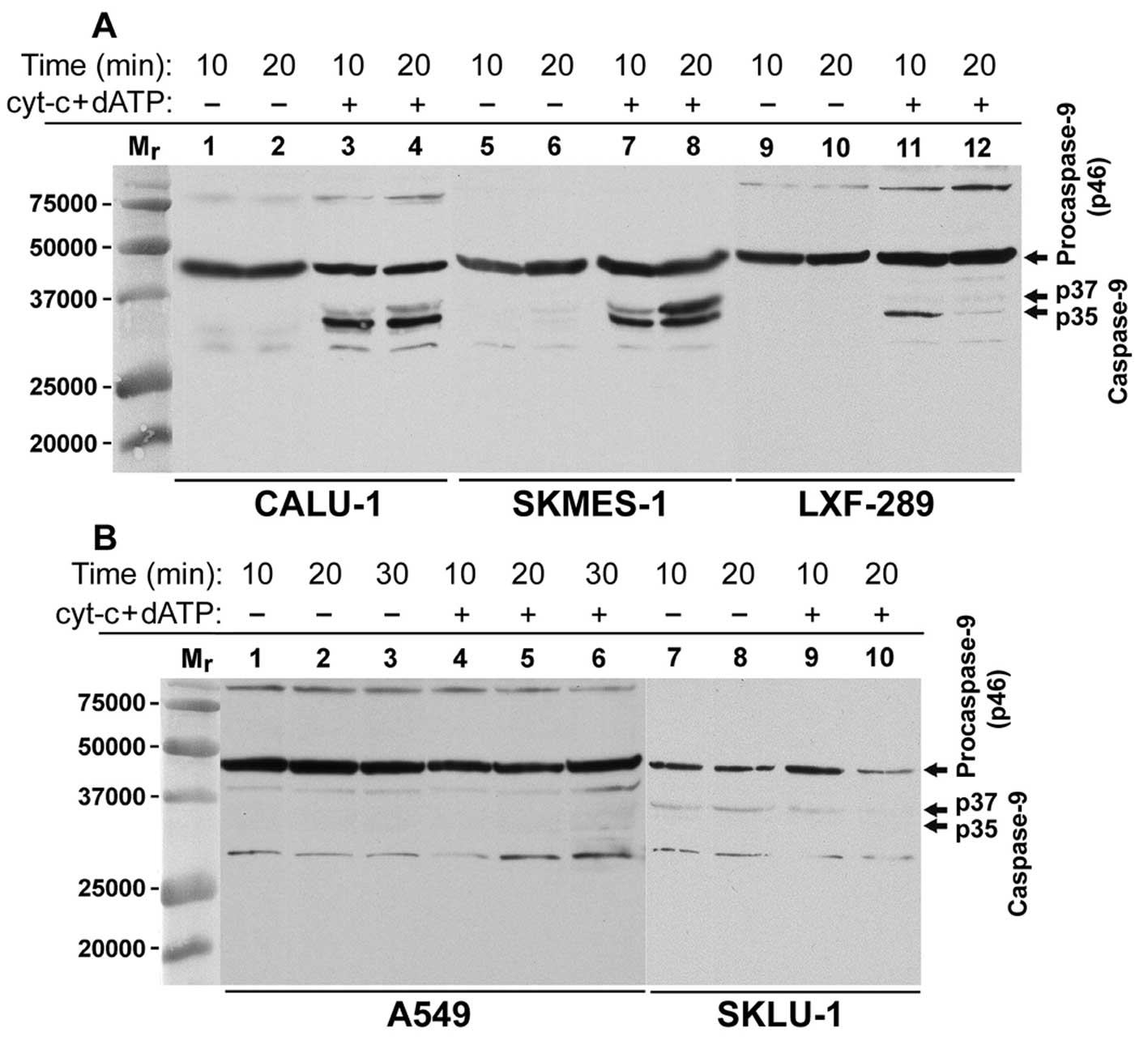
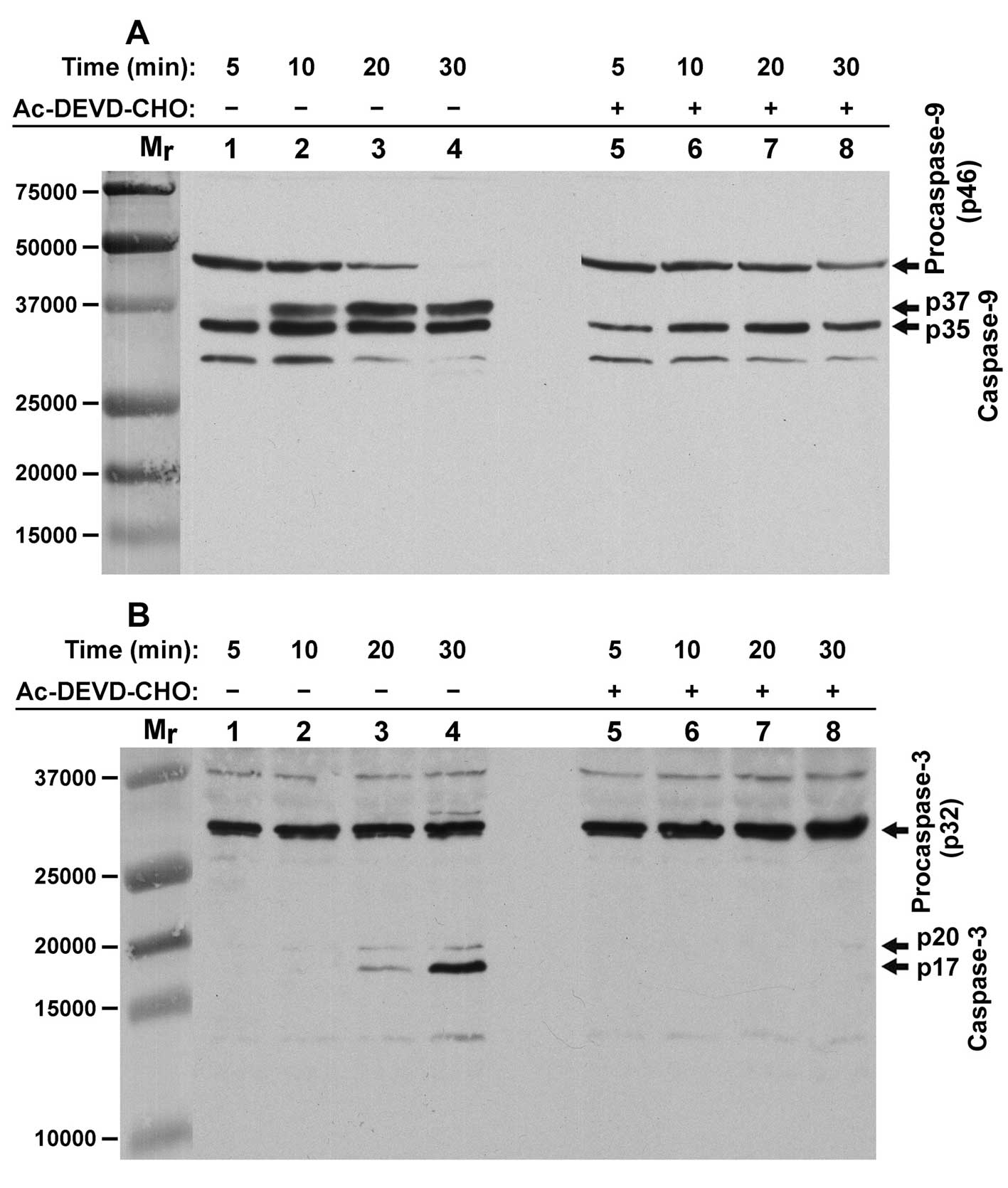
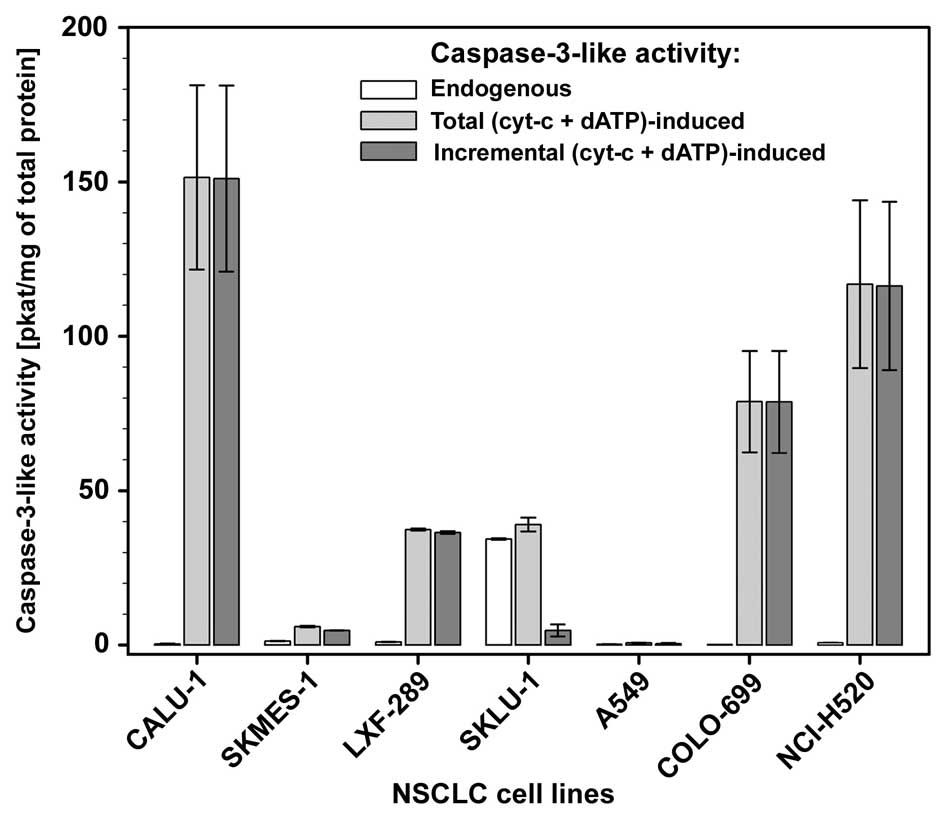
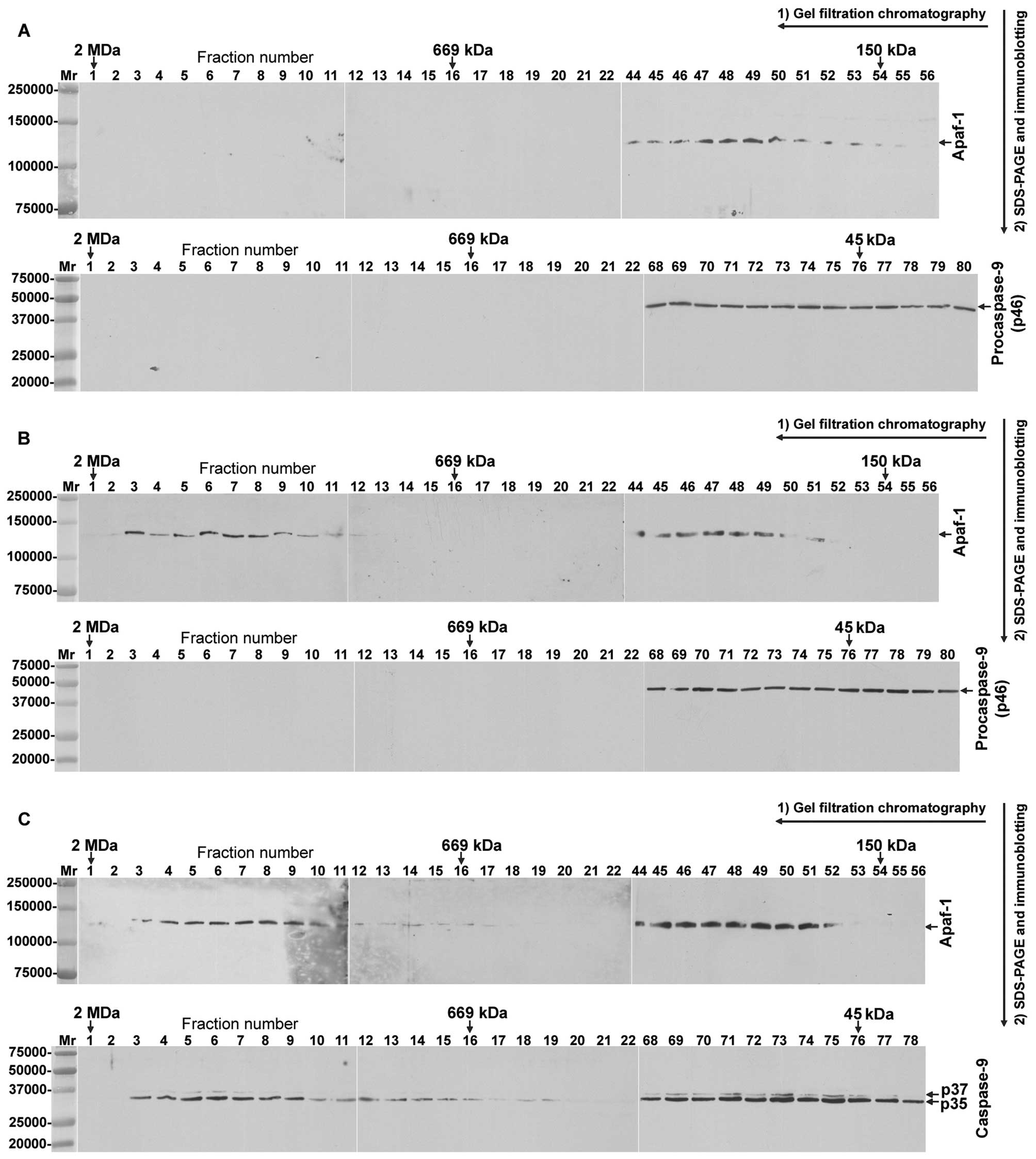
The intrinsic apoptosis pathway represents an important mechanism of stress-induced death of cancer cells. To gain insight into the functional status of the apoptosome apparatus in non-small cell lung carcinoma (NSCLC), we studied its sensitivity to activation, the assembly of apoptosome complexes and stability of their precursors, and the importance of X-linked inhibitor of apoptosis (XIAP) in the regulation of apoptosome activity, using cell-free cytosols from NSCLC cell lines and NSCLC tumours and lungs from 62 surgically treated patients. Treatment of cytosol samples with cytochrome c (cyt-c) and dATP induced proteolytic processing of procaspase-9 to caspase-9, which was followed by procaspase-3 processing to caspase-3, and by generation of caspase-3-like activity in 5 of 7 studied NSCLC cell lines. Further analysis demonstrated formation of high-Mr Apaf-1 complexes associated with cleaved caspase-9 in the (cyt-c + dATP)-responsive COLO-699 and CALU-1 cells. By contrast, in A549 cells, Apaf-1 and procaspase-9 co-eluted in the high-Mr fractions, indicating formation of an apoptosome complex unable of procaspase-9 processing. Thermal pre-treatment of cell-free cytosols in the absence of exogenous cyt-c and dATP lead to formation of Apaf-1 aggregates, unable to recruit and activate procaspase-9 in the presence of cyt-c and dATP, and to generate caspase‑3‑like activity. Further studies showed that the treatment with cyt-c and dATP induced a substantially higher increase of caspase-3-like activity in cytosol samples from NSCLC tumours compared to matched lungs. Tumour histology, grade and stage had no significant impact on the endogenous and the (cyt-c + dATP)-induced caspase-3-like activity. Upon addition into the cytosol, the XIAP-neutralizing peptides AVPIAQK and ATPFQEG only moderately heightened the (cyt-c + dATP)-induced caspase‑3‑like activity in some NSCLC tumours. Taken together, the present study provides evidence that the apoptosome apparatus is functional in the majority of NSCLCs and that its sensitivity to the (cyt-c + dATP)-mediated activation is often enhanced in NSCLCs compared to lungs. They also indicate that XIAP does not frequently and effectively suppress the activity of apoptosome apparatus in NSCLCs.
View Figures

Figure 1

Figure 2

Figure 3

Figure 4

Figure 5

Figure 6

Figure 7

View References

1. 

Cecconi F, Alvarez-Bolado G, Meyer BI, Roth KA and Gruss P: Apaf1 (CED-4 homolog) regulates programmed cell death in mammalian development. Cell. 94:727–737. 1998. View Article : Google Scholar

2. 

Hao Z, Duncan GS, Chang CC, Elia A, Fang M, Wakeham A, Okada H, Calzascia T, Jang Y, You-Ten A, Yeh WC, Ohashi P, Wang X and Mak TW: Specific ablation of the apoptotic functions of cytochrome C reveals a differential requirement for cytochrome C and Apaf-1 in apoptosis. Cell. 121:579–591. 2005. View Article : Google Scholar

3. 

Soengas MS, Capodieci P, Polsky D, Mora J, Esteller M, Opitz-Araya X, McCombie R, Herman JG, Gerald WL, Lazebnik YA, Cordon-Cardo C and Lowe SW: Inactivation of the apoptosis effector Apaf-1 in malignant melanoma. Nature. 409:207–211. 2001. View Article : Google Scholar : PubMed/NCBI

4. 

Nguyen JT and Wells JA: Direct activation of the apoptosis machinery as a mechanism to target cancer cells. Proc Natl Acad Sci USA. 100:7533–7538. 2003. View Article : Google Scholar : PubMed/NCBI

5. 

Jiang X and Wang X: Cytochrome C-mediated apoptosis. Annu Rev Biochem. 73:87–106. 2004. View Article : Google Scholar

6. 

Hausmann G, O’Reilly LA, van Driel R, Beaumont JG, Strasser A, Adams JM and Huang DC: Pro-apoptotic apoptosis protease-activating factor 1 (Apaf-1) has a cytoplasmic localization distinct from Bcl-2 or Bcl-x(L). J Cell Biol. 149:623–634. 2000. View Article : Google Scholar : PubMed/NCBI

7. 

Benedict MA, Hu Y, Inohara N and Nunez G: Expression and functional analysis of Apaf-1 isoforms. Extra Wd-40 repeat is required for cytochrome c binding and regulated activation of procaspase-9. J Biol Chem. 275:8461–8468. 2000. View Article : Google Scholar

8. 

Yuan S and Akey CW: Apoptosome structure, assembly, and procaspase activation. Structure. 21:501–515. 2013. View Article : Google Scholar : PubMed/NCBI

9. 

Yuan S, Topf M, Reubold TF, Eschenburg S and Akey CW: Changes in Apaf-1 conformation that drive apoptosome assembly. Biochemistry. 52:2319–2327. 2013. View Article : Google Scholar : PubMed/NCBI

10. 

Malladi S, Challa-Malladi M, Fearnhead HO and Bratton SB: The Apaf-1•procaspase-9 apoptosome complex functions as a proteolytic-based molecular timer. EMBO J. 28:1916–1925. 2009.

11. 

Yuan S, Yu X, Asara JM, Heuser JE, Ludtke SJ and Akey CW: The holo-apoptosome: activation of procaspase-9 and interactions with caspase-3. Structure. 19:1084–1096. 2011. View Article : Google Scholar : PubMed/NCBI

12. 

Hu Q, Wu D, Chen W, Yan Z and Shi Y: Proteolytic processing of caspase-9 zymogen is required for apoptosome-mediated activation of caspase-9. J Biol Chem. 288:15142–15147. 2013. View Article : Google Scholar : PubMed/NCBI

13. 

Twiddy D, Brown DG, Adrain C, Jukes R, Martin SJ, Cohen GM, Macfarlane M and Cain K: Pro-apoptotic proteins released from the mitochondria regulate the protein composition and caspase-processing activity of the native Apaf-1/caspase-9 apoptosome complex. J Biol Chem. 279:19665–19682. 2004. View Article : Google Scholar

14. 

Twiddy D, Cohen GM, Macfarlane M and Cain K: Caspase-7 is directly activated by the approximately 700-kDa apoptosome complex and is released as a stable XIAP-caspase-7 approximately 200-kDa complex. J Biol Chem. 281:3876–3888. 2006. View Article : Google Scholar : PubMed/NCBI

15. 

Schafer ZT and Kornbluth S: The apoptosome: physiological, developmental, and pathological modes of regulation. Dev Cell. 10:549–561. 2006. View Article : Google Scholar : PubMed/NCBI

16. 

Bratton SB and Salvesen GS: Regulation of the Apaf-1-caspase-9 apoptosome. J Cell Sci. 123:3209–3214. 2010. View Article : Google Scholar : PubMed/NCBI

17. 

Liu JR, Opipari AW, Tan L, Jiang Y, Zhang Y, Tang H and Nunez G: Dysfunctional apoptosome activation in ovarian cancer: implications for chemoresistance. Cancer Res. 62:924–931. 2002.PubMed/NCBI

18. 

Corvaro M, Fuoco C, Wagner M and Cecconi F: Analysis of apoptosome dysregulation in pancreatic cancer and of its role in chemoresistance. Cancer Biol Ther. 6:209–217. 2007. View Article : Google Scholar : PubMed/NCBI

19. 

Christoph F, Hinz S, Weikert S, Kempkensteffen C, Schostak M, Miller K and Schrader M: Comparative promoter methylation analysis of p53 target genes in urogenital cancers. Urol Int. 80:398–404. 2008. View Article : Google Scholar : PubMed/NCBI

20. 

Tan L, Kwok RP, Shukla A, Kshirsagar M, Zhao L, Opipari AW Jr and Liu JR: Trichostatin A restores Apaf-1 function in chemoresistant ovarian cancer cells. Cancer. 117:784–794. 2011. View Article : Google Scholar

21. 

Schafer ZT, Parrish AB, Wright KM, Margolis SS, Marks JR, Deshmukh M and Kornbluth S: Enhanced sensitivity to cytochrome c-induced apoptosis mediated by PHAPI in breast cancer cells. Cancer Res. 66:2210–2218. 2006. View Article : Google Scholar : PubMed/NCBI

22. 

Johnson CE, Huang YY, Parrish AB, Smith MI, Vaughn AE, Zhang Q, Wright KM, Van Dyke T, Wechsler-Reya RJ, Kornbluth S and Deshmukh M: Differential Apaf-1 levels allow cytochrome c to induce apoptosis in brain tumors but not in normal neural tissues. Proc Natl Acad Sci USA. 104:20820–20825. 2007. View Article : Google Scholar : PubMed/NCBI

23. 

Huang Q, Li F, Liu X, Li W, Shi W, Liu FF, O’Sullivan B, He Z, Peng Y, Tan AC, Zhou L, Shen J, Han G, Wang XJ, Thorburn J, Thorburn A, Jimeno A, Raben D, Bedford JS and Li CY: Caspase 3-mediated stimulation of tumor cell repopulation during cancer radiotherapy. Nat Med. 17:860–866. 2011. View Article : Google Scholar : PubMed/NCBI

24. 

Zimmerman MA, Huang Q, Li F, Liu X and Li CY: Cell death-stimulated cell proliferation: a tissue regeneration mechanism usurped by tumors during radiotherapy. Semin Radiat Oncol. 23:288–295. 2013. View Article : Google Scholar : PubMed/NCBI

25. 

Joseph B, Marchetti P, Formstecher P, Kroemer G, Lewensohn R and Zhivotovsky B: Mitochondrial dysfunction is an essential step for killing of non-small cell lung carcinomas resistant to conventional treatment. Oncogene. 21:65–77. 2002. View Article : Google Scholar : PubMed/NCBI

26. 

Gomyo Y, Sasaki J, Branch C, Roth JA and Mukhopadhyay T: 5-Aza-2′-deoxycytidine upregulates caspase-9 expression cooperating with p53-induced apoptosis in human lung cancer cells. Oncogene. 23:6779–6787. 2004.

27. 

Krepela E, Prochazka J, Liu X, Fiala P and Kinkor Z: Increased expression of Apaf-1 and procaspase-3 and the functionality of intrinsic apoptosis apparatus in non-small cell lung carcinoma. Biol Chem. 385:153–168. 2004. View Article : Google Scholar : PubMed/NCBI

28. 

Hoffarth S, Zitzer A, Wiewrodt R, Hahnel PS, Beyer V, Kreft A, Biesterfeld S and Schuler M: pp32/PHAPI determines the apoptosis response of non-small-cell lung cancer. Cell Death Differ. 15:161–170. 2008. View Article : Google Scholar : PubMed/NCBI

29. 

Ekedahl J, Joseph B, Grigoriev MY, Muller M, Magnusson C, Lewensohn R and Zhivotovsky B: Expression of inhibitor of apoptosis proteins in small- and non-small-cell lung carcinoma cells. Exp Cell Res. 279:277–290. 2002. View Article : Google Scholar : PubMed/NCBI

30. 

Bartling B, Lewensohn R and Zhivotovsky B: Endogenously released Smac is insufficient to mediate cell death of human lung carcinoma in response to etoposide. Exp Cell Res. 298:83–95. 2004. View Article : Google Scholar : PubMed/NCBI

31. 

Checinska A, Giaccone G, Hoogeland BS, Ferreira CG, Rodriguez JA and Kruyt FA: TUCAN/CARDINAL/CARD8 and apoptosis resistance in non-small cell lung cancer cells. BMC Cancer. 6:1662006. View Article : Google Scholar : PubMed/NCBI

32. 

Checinska A, Hoogeland BS, Rodriguez JA, Giaccone G and Kruyt FA: Role of XIAP in inhibiting cisplatin-induced caspase activation in non-small cell lung cancer cells: a small molecule Smac mimic sensitizes for chemotherapy-induced apoptosis by enhancing caspase-3 activation. Exp Cell Res. 313:1215–1224. 2007. View Article : Google Scholar

33. 

Cain K, Bratton SB, Langlais C, Walker G, Brown DG, Sun XM and Cohen GM: Apaf-1 oligomerizes into biologically active approximately 700-kDa and inactive approximately 1.4-MDa apoptosome complexes. J Biol Chem. 275:6067–6070. 2000. View Article : Google Scholar : PubMed/NCBI

34. 

Kim HE, Du F, Fang M and Wang X: Formation of apoptosome is initiated by cytochrome c-induced dATP hydrolysis and subsequent nucleotide exchange on Apaf-1. Proc Natl Acad Sci USA. 102:17545–17550. 2005. View Article : Google Scholar : PubMed/NCBI

35. 

Kim HE, Jiang X, Du F and Wang X: PHAPI, CAS, and Hsp70 promote apoptosome formation by preventing Apaf-1 aggregation and enhancing nucleotide exchange on Apaf-1. Mol Cell. 30:239–247. 2008. View Article : Google Scholar : PubMed/NCBI

36. 

Travis WD, Brambilla E, Müller-Hermelink HK and Harris CC: Pathology & Genetics: Tumours of the Lung, Pleura, Thymus and Heart. IARC Press; Lyon: 2004

37. 

Detterbeck FC, Boffa DJ and Tanoue LT: The new lung cancer staging system. Chest. 136:260–271. 2009. View Article : Google Scholar

38. 

Srinivasula SM, Datta P, Fan XJ, Fernandes-Alnemri T, Huang Z and Alnemri ES: Molecular determinants of the caspase-promoting activity of Smac/DIABLO and its role in the death receptor pathway. J Biol Chem. 275:36152–36157. 2000. View Article : Google Scholar : PubMed/NCBI

39. 

Schägger H and von Jagow G: Tricine-sodium dodecyl sulfatepolyacrylamide gel electrophoresis for the separation of proteins in the range from 1 to 100 kDa. Anal Biochem. 166:368–379. 1987.

40. 

Krepela E, Dankova P, Moravcikova E, Krepelova A, Prochazka J, Cermak J, Schützner J, Zatloukal P and Benkova K: Increased expression of inhibitor of apoptosis proteins, survivin and XIAP, in non-small cell lung carcinoma. Int J Oncol. 35:1449–1462. 2009. View Article : Google Scholar : PubMed/NCBI

41. 

Smith PK, Krohn RI, Hermanson GT, Mallia AK, Gartner FH, Provenzano MD, Fujimoto EK, Goeke NM, Olson BJ and Klenk DC: Measurement of protein using bicinchoninic acid. Anal Biochem. 150:76–85. 1985. View Article : Google Scholar

42. 

Bratton SB, Lewis J, Butterworth M, Duckett CS and Cohen GM: XIAP inhibition of caspase-3 preserves its association with the Apaf-1 apoptosome and prevents CD95- and Bax-induced apoptosis. Cell Death Differ. 9:881–892. 2002. View Article : Google Scholar : PubMed/NCBI

43. 

Shiozaki EN, Chai J, Rigotti DJ, Riedl SJ, Li P, Srinivasula SM, Alnemri ES, Fairman R and Shi Y: Mechanism of XIAP-mediated inhibition of caspase-9. Mol Cell. 11:519–527. 2003. View Article : Google Scholar : PubMed/NCBI

44. 

Scott FL, Denault JB, Riedl SJ, Shin H, Renatus M and Salvesen GS: XIAP inhibits caspase-3 and -7 using two binding sites: evolutionarily conserved mechanism of IAPs. EMBO J. 24:645–655. 2005. View Article : Google Scholar : PubMed/NCBI

45. 

Eckelman BP, Salvesen GS and Scott FL: Human inhibitor of apoptosis proteins: why XIAP is the black sheep of the family. EMBO Rep. 7:988–994. 2006. View Article : Google Scholar : PubMed/NCBI

46. 

Denault JB, Eckelman BP, Shin H, Pop C and Salvesen GS: Caspase 3 attenuates XIAP (X-linked inhibitor of apoptosis protein)-mediated inhibition of caspase 9. Biochem J. 405:11–19. 2007.PubMed/NCBI

47. 

Chua BT, Guo K and Li P: Direct cleavage by the calcium-activated protease calpain can lead to inactivation of caspases. J Biol Chem. 275:5131–5135. 2000. View Article : Google Scholar

48. 

Allan LA and Clarke PR: Apoptosis and autophagy: regulation of caspase-9 by phosphorylation. FEBS J. 276:6063–6073. 2009. View Article : Google Scholar

49. 

Kim J, Parrish AB, Kurokawa M, Matsuura K, Freel CD, Andersen JL, Johnson CE and Kornbluth S: Rsk-mediated phosphorylation and 14-3-3varepsilon binding of Apaf-1 suppresses cytochrome c-induced apoptosis. EMBO J. 31:1279–1292. 2012. View Article : Google Scholar

50. 

Martin MC, Allan LA, Lickrish M, Sampson C, Morrice N and Clarke PR: Protein kinase A regulates caspase-9 activation by Apaf-1 downstream of cytochrome c. J Biol Chem. 280:15449–15455. 2005. View Article : Google Scholar

51. 

White SR: Apoptosis and the airway epithelium. J Allergy (Cairo). 2011.948406:2011.PubMed/NCBI

52. 

Srinivasula SM, Hegde R, Saleh A, Datta P, Shiozaki E, Chai J, Lee RA, Robbins PD, Fernandes-Alnemri T, Shi Y and Alnemri ES: A conserved XIAP-interaction motif in caspase-9 and Smac/DIABLO regulates caspase activity and apoptosis. Nature. 410:112–116. 2001. View Article : Google Scholar : PubMed/NCBI

Related Articles

  • Abstract
  • View
  • Download
  • Twitter
Copy and paste a formatted citation
Spandidos Publications style
Moravcikova E, Krepela E, Prochazka J, Benkova K and Pauk N: Differential sensitivity to apoptosome apparatus activation in non-small cell lung carcinoma and the lung. Int J Oncol 44: 1443-1454, 2014.
APA
Moravcikova, E., Krepela, E., Prochazka, J., Benkova, K., & Pauk, N. (2014). Differential sensitivity to apoptosome apparatus activation in non-small cell lung carcinoma and the lung. International Journal of Oncology, 44, 1443-1454. https://doi.org/10.3892/ijo.2014.2333
MLA
Moravcikova, E., Krepela, E., Prochazka, J., Benkova, K., Pauk, N."Differential sensitivity to apoptosome apparatus activation in non-small cell lung carcinoma and the lung". International Journal of Oncology 44.5 (2014): 1443-1454.
Chicago
Moravcikova, E., Krepela, E., Prochazka, J., Benkova, K., Pauk, N."Differential sensitivity to apoptosome apparatus activation in non-small cell lung carcinoma and the lung". International Journal of Oncology 44, no. 5 (2014): 1443-1454. https://doi.org/10.3892/ijo.2014.2333
Copy and paste a formatted citation
x
Spandidos Publications style
Moravcikova E, Krepela E, Prochazka J, Benkova K and Pauk N: Differential sensitivity to apoptosome apparatus activation in non-small cell lung carcinoma and the lung. Int J Oncol 44: 1443-1454, 2014.
APA
Moravcikova, E., Krepela, E., Prochazka, J., Benkova, K., & Pauk, N. (2014). Differential sensitivity to apoptosome apparatus activation in non-small cell lung carcinoma and the lung. International Journal of Oncology, 44, 1443-1454. https://doi.org/10.3892/ijo.2014.2333
MLA
Moravcikova, E., Krepela, E., Prochazka, J., Benkova, K., Pauk, N."Differential sensitivity to apoptosome apparatus activation in non-small cell lung carcinoma and the lung". International Journal of Oncology 44.5 (2014): 1443-1454.
Chicago
Moravcikova, E., Krepela, E., Prochazka, J., Benkova, K., Pauk, N."Differential sensitivity to apoptosome apparatus activation in non-small cell lung carcinoma and the lung". International Journal of Oncology 44, no. 5 (2014): 1443-1454. https://doi.org/10.3892/ijo.2014.2333
Follow us
  • Twitter
  • LinkedIn
  • Facebook
About
  • Spandidos Publications
  • Careers
  • Cookie Policy
  • Privacy Policy
How can we help?
  • Help
  • Live Chat
  • Contact
  • Email to our Support Team