Spandidos Publications Logo
  • About
    • About Spandidos
    • Aims and Scopes
    • Abstracting and Indexing
    • Editorial Policies
    • Reprints and Permissions
    • Job Opportunities
    • Terms and Conditions
    • Contact
  • Journals
    • All Journals
    • Oncology Letters
      • Oncology Letters
      • Information for Authors
      • Editorial Policies
      • Editorial Board
      • Aims and Scope
      • Abstracting and Indexing
      • Bibliographic Information
      • Archive
    • International Journal of Oncology
      • International Journal of Oncology
      • Information for Authors
      • Editorial Policies
      • Editorial Board
      • Aims and Scope
      • Abstracting and Indexing
      • Bibliographic Information
      • Archive
    • Molecular and Clinical Oncology
      • Molecular and Clinical Oncology
      • Information for Authors
      • Editorial Policies
      • Editorial Board
      • Aims and Scope
      • Abstracting and Indexing
      • Bibliographic Information
      • Archive
    • Experimental and Therapeutic Medicine
      • Experimental and Therapeutic Medicine
      • Information for Authors
      • Editorial Policies
      • Editorial Board
      • Aims and Scope
      • Abstracting and Indexing
      • Bibliographic Information
      • Archive
    • International Journal of Molecular Medicine
      • International Journal of Molecular Medicine
      • Information for Authors
      • Editorial Policies
      • Editorial Board
      • Aims and Scope
      • Abstracting and Indexing
      • Bibliographic Information
      • Archive
    • Biomedical Reports
      • Biomedical Reports
      • Information for Authors
      • Editorial Policies
      • Editorial Board
      • Aims and Scope
      • Abstracting and Indexing
      • Bibliographic Information
      • Archive
    • Oncology Reports
      • Oncology Reports
      • Information for Authors
      • Editorial Policies
      • Editorial Board
      • Aims and Scope
      • Abstracting and Indexing
      • Bibliographic Information
      • Archive
    • Molecular Medicine Reports
      • Molecular Medicine Reports
      • Information for Authors
      • Editorial Policies
      • Editorial Board
      • Aims and Scope
      • Abstracting and Indexing
      • Bibliographic Information
      • Archive
    • World Academy of Sciences Journal
      • World Academy of Sciences Journal
      • Information for Authors
      • Editorial Policies
      • Editorial Board
      • Aims and Scope
      • Abstracting and Indexing
      • Bibliographic Information
      • Archive
    • International Journal of Functional Nutrition
      • International Journal of Functional Nutrition
      • Information for Authors
      • Editorial Policies
      • Editorial Board
      • Aims and Scope
      • Abstracting and Indexing
      • Bibliographic Information
      • Archive
    • International Journal of Epigenetics
      • International Journal of Epigenetics
      • Information for Authors
      • Editorial Policies
      • Editorial Board
      • Aims and Scope
      • Abstracting and Indexing
      • Bibliographic Information
      • Archive
    • Medicine International
      • Medicine International
      • Information for Authors
      • Editorial Policies
      • Editorial Board
      • Aims and Scope
      • Abstracting and Indexing
      • Bibliographic Information
      • Archive
  • Articles
  • Information
    • Information for Authors
    • Information for Reviewers
    • Information for Librarians
    • Information for Advertisers
    • Conferences
  • Language Editing
Spandidos Publications Logo
  • About
    • About Spandidos
    • Aims and Scopes
    • Abstracting and Indexing
    • Editorial Policies
    • Reprints and Permissions
    • Job Opportunities
    • Terms and Conditions
    • Contact
  • Journals
    • All Journals
    • Biomedical Reports
      • Information for Authors
      • Editorial Policies
      • Editorial Board
      • Aims and Scope
      • Abstracting and Indexing
      • Bibliographic Information
      • Archive
    • Experimental and Therapeutic Medicine
      • Information for Authors
      • Editorial Policies
      • Editorial Board
      • Aims and Scope
      • Abstracting and Indexing
      • Bibliographic Information
      • Archive
    • International Journal of Epigenetics
      • Information for Authors
      • Editorial Policies
      • Editorial Board
      • Aims and Scope
      • Abstracting and Indexing
      • Bibliographic Information
      • Archive
    • International Journal of Functional Nutrition
      • Information for Authors
      • Editorial Policies
      • Editorial Board
      • Aims and Scope
      • Abstracting and Indexing
      • Bibliographic Information
      • Archive
    • International Journal of Molecular Medicine
      • Information for Authors
      • Editorial Policies
      • Editorial Board
      • Aims and Scope
      • Abstracting and Indexing
      • Bibliographic Information
      • Archive
    • International Journal of Oncology
      • Information for Authors
      • Editorial Policies
      • Editorial Board
      • Aims and Scope
      • Abstracting and Indexing
      • Bibliographic Information
      • Archive
    • Medicine International
      • Information for Authors
      • Editorial Policies
      • Editorial Board
      • Aims and Scope
      • Abstracting and Indexing
      • Bibliographic Information
      • Archive
    • Molecular and Clinical Oncology
      • Information for Authors
      • Editorial Policies
      • Editorial Board
      • Aims and Scope
      • Abstracting and Indexing
      • Bibliographic Information
      • Archive
    • Molecular Medicine Reports
      • Information for Authors
      • Editorial Policies
      • Editorial Board
      • Aims and Scope
      • Abstracting and Indexing
      • Bibliographic Information
      • Archive
    • Oncology Letters
      • Information for Authors
      • Editorial Policies
      • Editorial Board
      • Aims and Scope
      • Abstracting and Indexing
      • Bibliographic Information
      • Archive
    • Oncology Reports
      • Information for Authors
      • Editorial Policies
      • Editorial Board
      • Aims and Scope
      • Abstracting and Indexing
      • Bibliographic Information
      • Archive
    • World Academy of Sciences Journal
      • Information for Authors
      • Editorial Policies
      • Editorial Board
      • Aims and Scope
      • Abstracting and Indexing
      • Bibliographic Information
      • Archive
  • Articles
  • Information
    • For Authors
    • For Reviewers
    • For Librarians
    • For Advertisers
    • Conferences
  • Language Editing
Login Register Submit
  • This site uses cookies
  • You can change your cookie settings at any time by following the instructions in our Cookie Policy. To find out more, you may read our Privacy Policy.

    I agree
Search articles by DOI, keyword, author or affiliation
Search
Advanced Search
presentation
International Journal of Oncology
Join Editorial Board Propose a Special Issue
Print ISSN: 1019-6439 Online ISSN: 1791-2423
Journal Cover
May-2014 Volume 44 Issue 5

Full Size Image

Cover Legend PDF

Sign up for eToc alerts
Recommend to Library

Journals

International Journal of Molecular Medicine

International Journal of Molecular Medicine

International Journal of Molecular Medicine is an international journal devoted to molecular mechanisms of human disease.

International Journal of Oncology

International Journal of Oncology

International Journal of Oncology is an international journal devoted to oncology research and cancer treatment.

Molecular Medicine Reports

Molecular Medicine Reports

Covers molecular medicine topics such as pharmacology, pathology, genetics, neuroscience, infectious diseases, molecular cardiology, and molecular surgery.

Oncology Reports

Oncology Reports

Oncology Reports is an international journal devoted to fundamental and applied research in Oncology.

Experimental and Therapeutic Medicine

Experimental and Therapeutic Medicine

Experimental and Therapeutic Medicine is an international journal devoted to laboratory and clinical medicine.

Oncology Letters

Oncology Letters

Oncology Letters is an international journal devoted to Experimental and Clinical Oncology.

Biomedical Reports

Biomedical Reports

Explores a wide range of biological and medical fields, including pharmacology, genetics, microbiology, neuroscience, and molecular cardiology.

Molecular and Clinical Oncology

Molecular and Clinical Oncology

International journal addressing all aspects of oncology research, from tumorigenesis and oncogenes to chemotherapy and metastasis.

World Academy of Sciences Journal

World Academy of Sciences Journal

Multidisciplinary open-access journal spanning biochemistry, genetics, neuroscience, environmental health, and synthetic biology.

International Journal of Functional Nutrition

International Journal of Functional Nutrition

Open-access journal combining biochemistry, pharmacology, immunology, and genetics to advance health through functional nutrition.

International Journal of Epigenetics

International Journal of Epigenetics

Publishes open-access research on using epigenetics to advance understanding and treatment of human disease.

Medicine International

Medicine International

An International Open Access Journal Devoted to General Medicine.

Journal Cover
May-2014 Volume 44 Issue 5

Full Size Image

Cover Legend PDF

Sign up for eToc alerts
Recommend to Library

  • Article
  • Citations
    • Cite This Article
    • Download Citation
    • Create Citation Alert
    • Remove Citation Alert
    • Cited By
  • Similar Articles
    • Related Articles (in Spandidos Publications)
    • Similar Articles (Google Scholar)
    • Similar Articles (PubMed)
  • Download PDF
  • Download XML
  • View XML
Article

Apigenin-induced apoptosis is enhanced by inhibition of autophagy formation in HCT116 human colon cancer cells

  • Authors:
    • Yujin Lee
    • Bokyung Sung
    • Yong Jung Kang
    • Dong Hwan Kim
    • Jung-Yoon Jang
    • Seong Yeon Hwang
    • Minjung Kim
    • Hyun Sook Lim
    • Jeong-Hyun Yoon
    • Hae Young Chung
    • Nam Deuk Kim
  • View Affiliations / Copyright

    Affiliations: Division of Pharmacy, College of Pharmacy, Molecular Inflammation Research Center for Aging Intervention (MRCA), Pusan National University, Busan 609-735, Republic of Korea
  • Pages: 1599-1606
    |
    Published online on: March 13, 2014
       https://doi.org/10.3892/ijo.2014.2339
  • Expand metrics +
Metrics: Total Views: 0 (Spandidos Publications: | PMC Statistics: )
Metrics: Total PDF Downloads: 0 (Spandidos Publications: | PMC Statistics: )
Cited By (CrossRef): 0 citations Loading Articles...

This article is mentioned in:


Abstract

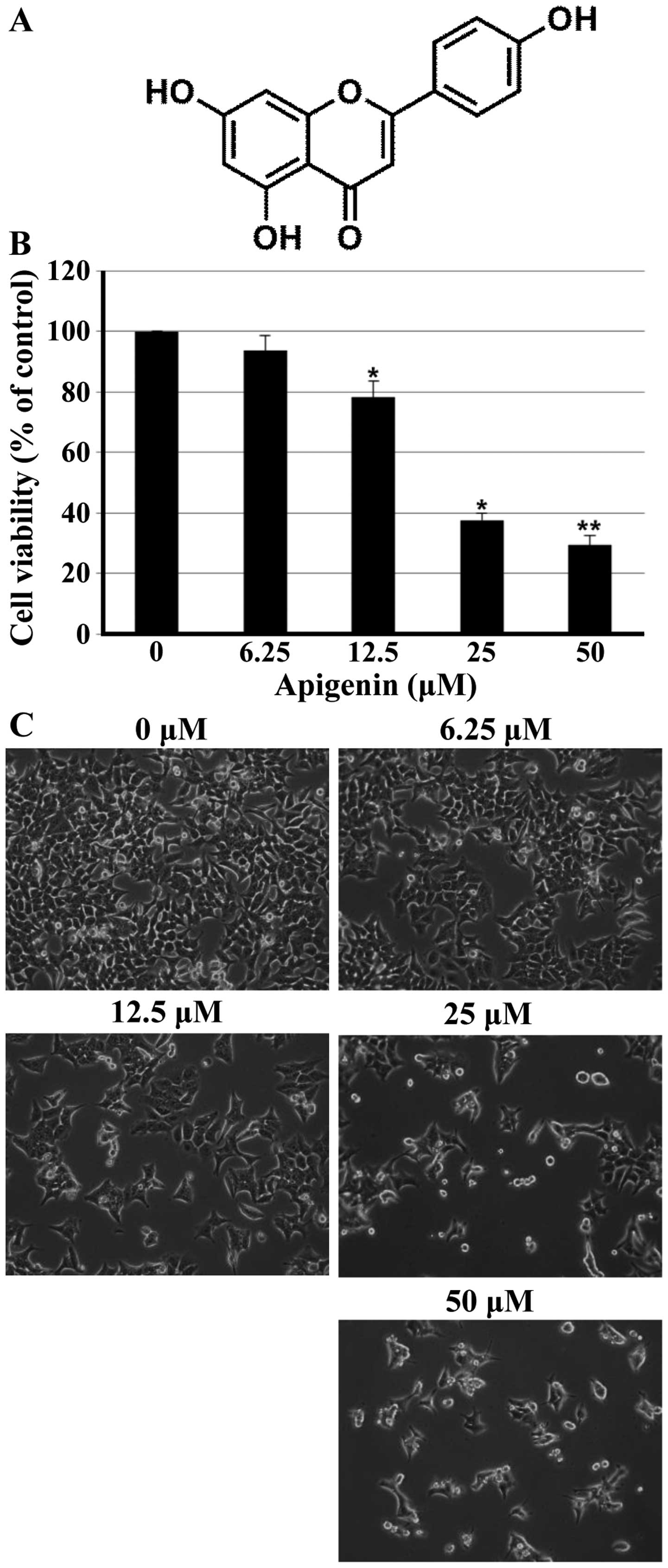
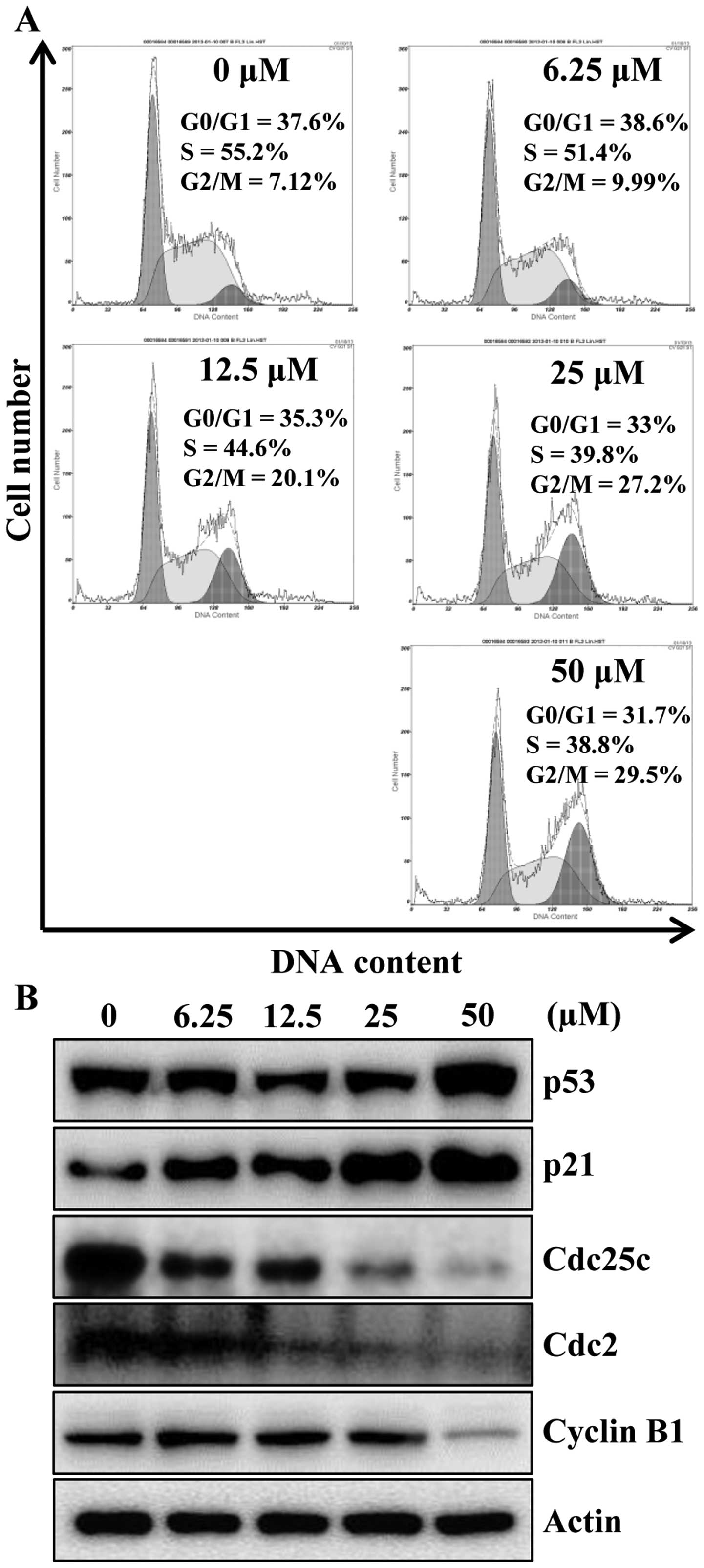
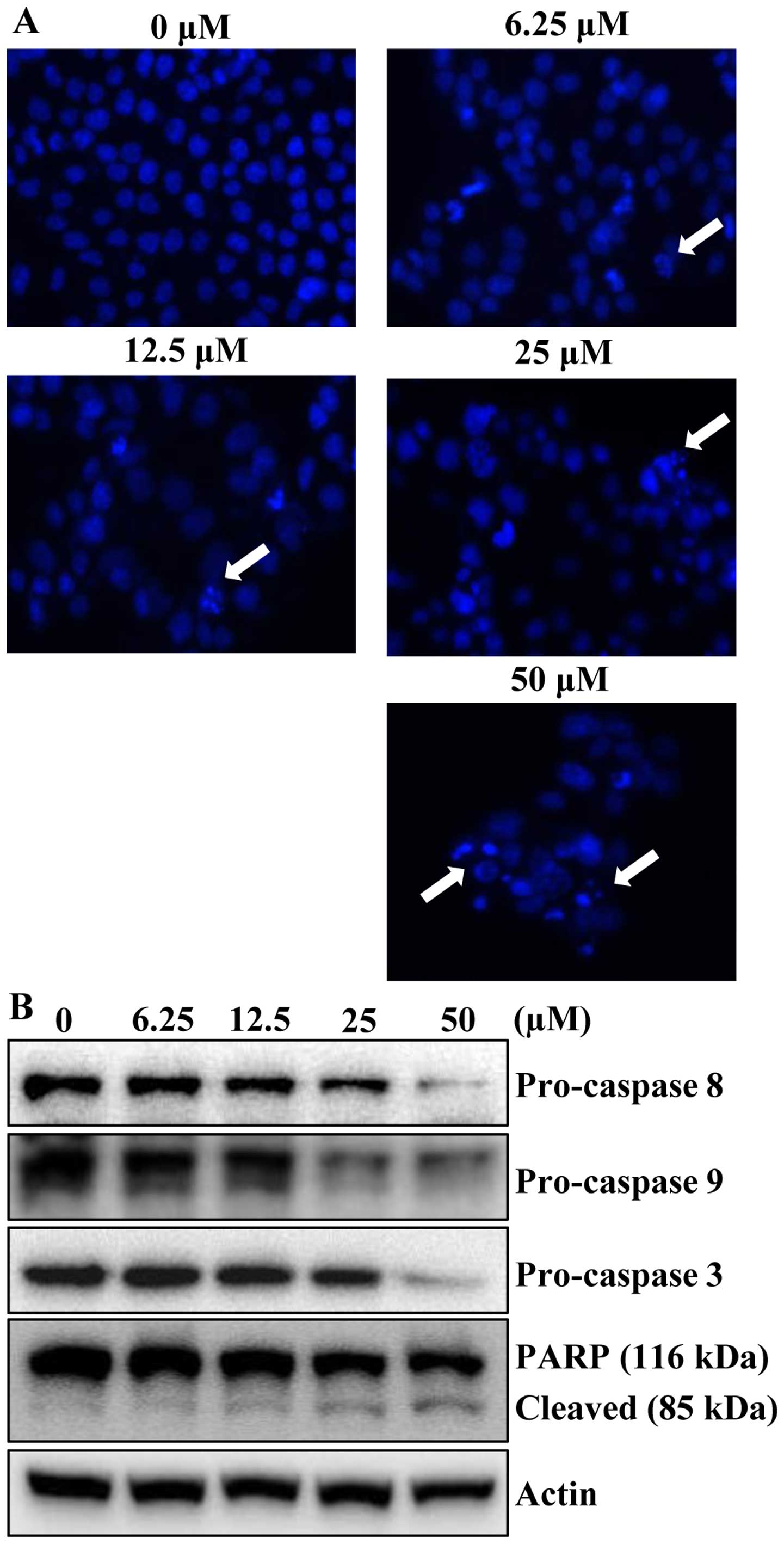
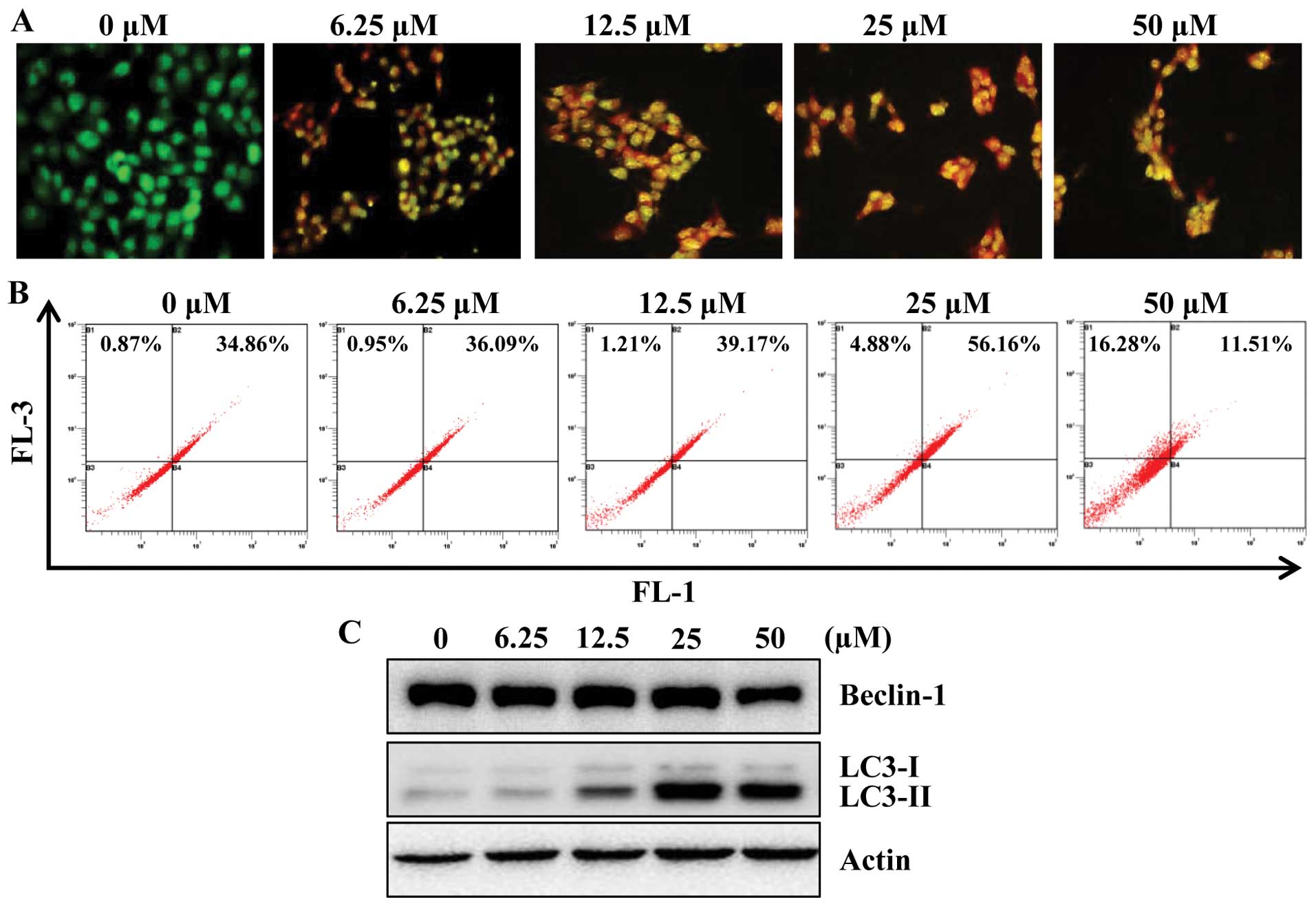
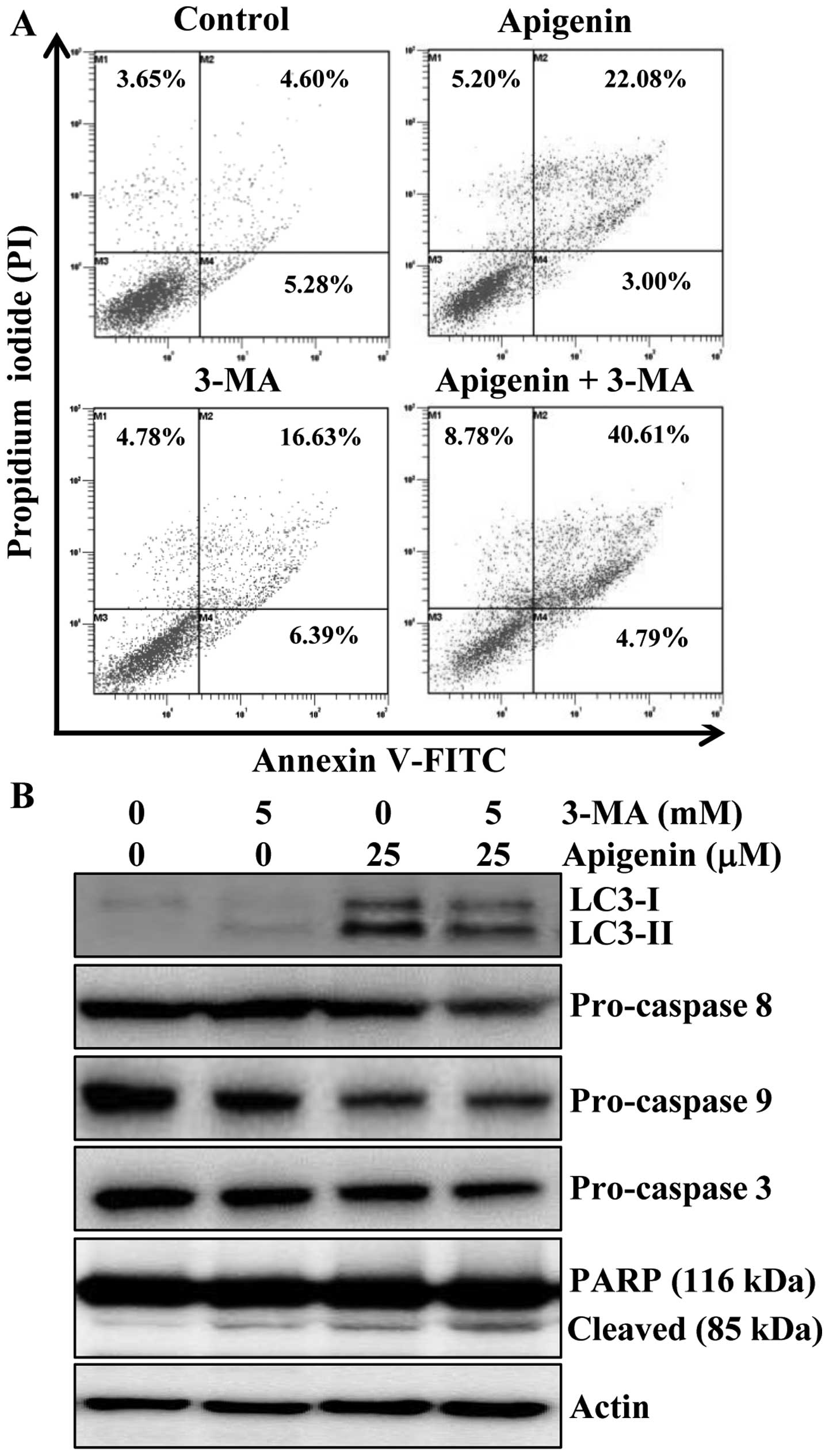
Apigenin (4',5,7-trihydroxyflavone) is a natural flavonoid, shown to have chemopreventive and/or anticancer properties in a variety of human cancer cells. The involvement of autophagy in apigenin-induced apoptotic cell death of HCT116 human colon cancer cells was investigated. Apigenin induced suppression of cell growth in a concentration-dependent manner in HCT116 cells. Flow cytometric analyses indicated that apigenin resulted in G2/M phase arrest. This flavone also suppressed the expression of both cyclin B1 and its activating partners, Cdc2 and Cdc25c, whereas the expression of cell cycle inhibitors, such as p53 and p53-dependent p21CIP1/WAF1, was increased after apigenin treatment. Apigenin induced poly (ADP-ribose) polymerase (PARP) cleavage and decreased the levels of procaspase-8, -9 and -3. In addition, the apigenin-treated cells exhibited autophagy, as characterized by the appearance of autophagosomes under fluorescence microscopy and the accumulation of acidic vesicular organelles by flow cytometry. Furthermore, the results of the western blot analysis revealed that the levels of LC3-II, the processed form of LC3-I, was increased by apigenin. Treatment with the autophagy inhibitor 3-methyladenine (3-MA) significantly enhanced the apoptosis induced by apigenin, which was accompanied by an increase in the levels of PARP cleavage. These results indicate that apigenin has apoptosis- and autophagy-inducing effects in HCT116 colon cancer cells. Autophagy plays a cytoprotective role in apigenin-induced apoptosis, and the combination of apigenin and an autophagy inhibitor may be a promising strategy for colon cancer control.
View Figures

Figure 1

Figure 2

Figure 3

Figure 4

Figure 5

View References

1. 

Wang W, Heideman L, Chung CS, Pelling JC, Koehler KJ and Birt DF: Cell-cycle arrest at G2/M and growth inhibition by apigenin in human colon carcinoma cell lines. Mol Carcinog. 28:102–110. 2000. View Article : Google Scholar : PubMed/NCBI

2. 

Wu DG, Yu P, Li JW, et al: Apigenin potentiates the growth inhibitory effects by IKK-beta-mediated NF-kappaB activation in pancreatic cancer cells. Toxicol Lett. 224:157–164. 2014. View Article : Google Scholar : PubMed/NCBI

3. 

Maggioni D, Garavello W, Rigolio R, Pignataro L, Gaini R and Nicolini G: Apigenin impairs oral squamous cell carcinoma growth in vitro inducing cell cycle arrest and apoptosis. Int J Oncol. 43:1675–1682. 2013.PubMed/NCBI

4. 

Das S, Das J, Samadder A, Boujedaini N and Khuda-Bukhsh AR: Apigenin-induced apoptosis in A375 and A549 cells through selective action and dysfunction of mitochondria. Exp Biol Med (Maywood). 237:1433–1448. 2012. View Article : Google Scholar : PubMed/NCBI

5. 

Jayasooriya RG, Kang SH, Kang CH, et al: Apigenin decreases cell viability and telomerase activity in human leukemia cell lines. Food Chem Toxicol. 50:2605–2611. 2012. View Article : Google Scholar : PubMed/NCBI

6. 

McVean M, Weinberg WC and Pelling JC: A p21(waf1)-independent pathway for inhibitory phosphorylation of cyclin-dependent kinase p34(cdc2) and concomitant G(2)/M arrest by the chemopreventive flavonoid apigenin. Mol Carcinog. 33:36–43. 2002. View Article : Google Scholar

7. 

Zhu Y, Mao Y, Chen H, et al: Apigenin promotes apoptosis, inhibits invasion and induces cell cycle arrest of T24 human bladder cancer cells. Cancer Cell Int. 13:542013. View Article : Google Scholar : PubMed/NCBI

8. 

Kim SH, Kang JG, Kim CS, et al: Apigenin induces c-Myc-mediated apoptosis in FRO anaplastic thyroid carcinoma cells. Mol Cell Endocrinol. 369:130–139. 2013. View Article : Google Scholar : PubMed/NCBI

9. 

Mirzoeva S, Kim ND, Chiu K, Franzen CA, Bergan RC and Pelling JC: Inhibition of HIF-1 alpha and VEGF expression by the chemopreventive bioflavonoid apigenin is accompanied by Akt inhibition in human prostate carcinoma PC3-M cells. Mol Carcinog. 47:686–700. 2008. View Article : Google Scholar

10. 

Horinaka M, Yoshida T, Shiraishi T, Nakata S, Wakada M and Sakai T: The dietary flavonoid apigenin sensitizes malignant tumor cells to tumor necrosis factor-related apoptosis-inducing ligand. Mol Cancer Ther. 5:945–951. 2006. View Article : Google Scholar

11. 

Xu Y, Xin Y, Diao Y, et al: Synergistic effects of apigenin and paclitaxel on apoptosis of cancer cells. PLoS One. 6:e291692011. View Article : Google Scholar : PubMed/NCBI

12. 

Shao H, Jing K, Mahmoud E, Huang H, Fang X and Yu C: Apigenin sensitizes colon cancer cells to antitumor activity of ABT-263. Mol Cancer Ther. 12:2640–2650. 2013. View Article : Google Scholar : PubMed/NCBI

13. 

Chan LP, Chou TH, Ding HY, et al: Apigenin induces apoptosis via tumor necrosis factor receptor- and Bcl-2-mediated pathway and enhances susceptibility of head and neck squamous cell carcinoma to 5-fluorouracil and cisplatin. Biochim Biophys Acta. 1820:1081–1091. 2012. View Article : Google Scholar

14. 

Mizushima N: Autophagy: process and function. Genes Dev. 21:2861–2873. 2007. View Article : Google Scholar

15. 

Shintani T and Klionsky DJ: Autophagy in health and disease: a double-edged sword. Science. 306:990–995. 2004. View Article : Google Scholar : PubMed/NCBI

16. 

Xie Z and Klionsky DJ: Autophagosome formation: core machinery and adaptations. Nat Cell Biol. 9:1102–1109. 2007. View Article : Google Scholar : PubMed/NCBI

17. 

Liang XH, Jackson S, Seaman M, et al: Induction of autophagy and inhibition of tumorigenesis by beclin 1. Nature. 402:672–676. 1999. View Article : Google Scholar : PubMed/NCBI

18. 

Vivanco I and Sawyers CL: The phosphatidylinositol 3-kinase AKT pathway in human cancer. Nat Rev Cancer. 2:489–501. 2002. View Article : Google Scholar : PubMed/NCBI

19. 

Ng G and Huang J: The significance of autophagy in cancer. Mol Carcinog. 43:183–187. 2005. View Article : Google Scholar : PubMed/NCBI

20. 

Gozuacik D and Kimchi A: Autophagy as a cell death and tumor suppressor mechanism. Oncogene. 23:2891–2906. 2004. View Article : Google Scholar : PubMed/NCBI

21. 

Ferlay J, Shin HR, Bray F, Forman D, Mathers C and Parkin DM: Estimates of worldwide burden of cancer in 2008: GLOBOCAN 2008. Int J Cancer. 127:2893–2917. 2010. View Article : Google Scholar : PubMed/NCBI

22. 

Jung KW, Park S, Kong HJ, et al: Cancer statistics in Korea: incidence, mortality, survival, and prevalence in 2009. Cancer Res Treat. 44:11–24. 2012. View Article : Google Scholar : PubMed/NCBI

23. 

Shin A, Kim KZ, Jung KW, et al: Increasing trend of colorectal cancer incidence in Korea, 1999–2009. Cancer Res Treat. 44:219–226. 2012.PubMed/NCBI

24. 

Huerta S, Goulet EJ and Livingston EH: Colon cancer and apoptosis. Am J Surg. 191:517–526. 2006. View Article : Google Scholar

25. 

Kundu M and Thompson CB: Autophagy: basic principles and relevance to disease. Annu Rev Pathol. 3:427–455. 2008. View Article : Google Scholar

26. 

Lin JF, Tsai TF, Liao PC, et al: Benzyl isothiocyanate induces protective autophagy in human prostate cancer cells via inhibition of mTOR signaling. Carcinogenesis. 34:406–414. 2013. View Article : Google Scholar : PubMed/NCBI

27. 

Cheng P, Ni Z, Dai X, et al: The novel BH-3 mimetic apogossypolone induces Beclin-1- and ROS-mediated autophagy in human hepatocellular carcinoma cells. Cell Death Dis. 4:e4892013. View Article : Google Scholar : PubMed/NCBI

28. 

Cao X, Liu B, Cao W, et al: Autophagy inhibition enhances apigenin-induced apoptosis in human breast cancer cells. Chin J Cancer Res. 25:212–222. 2013.PubMed/NCBI

29. 

Paglin S, Hollister T, Delohery T, et al: A novel response of cancer cells to radiation involves autophagy and formation of acidic vesicles. Cancer Res. 61:439–444. 2001.PubMed/NCBI

30. 

Klionsky DJ, Abeliovich H, Agostinis P, et al: Guidelines for the use and interpretation of assays for monitoring autophagy in higher eukaryotes. Autophagy. 4:151–175. 2008. View Article : Google Scholar

31. 

Carew JS, Nawrocki ST and Cleveland JL: Modulating autophagy for therapeutic benefit. Autophagy. 3:464–467. 2007. View Article : Google Scholar : PubMed/NCBI

32. 

Shukla S and Gupta S: Apigenin-induced cell cycle arrest is mediated by modulation of MAPK, PI3K-Akt, and loss of cyclin D1 associated retinoblastoma dephosphorylation in human prostate cancer cells. Cell Cycle. 6:1102–1114. 2007. View Article : Google Scholar : PubMed/NCBI

33. 

Van Dross RT, Hong X and Pelling JC: Inhibition of TPA-induced cyclooxygenase-2 (COX-2) expression by apigenin through downregulation of Akt signal transduction in human keratinocytes. Mol Carcinog. 44:83–91. 2005.PubMed/NCBI

34. 

King JC, Lu QY, Li G, et al: Evidence for activation of mutated p53 by apigenin in human pancreatic cancer. Biochim Biophys Acta. 1823:593–604. 2012. View Article : Google Scholar : PubMed/NCBI

35. 

Adams JM and Cory S: The Bcl-2 apoptotic switch in cancer development and therapy. Oncogene. 26:1324–1337. 2007. View Article : Google Scholar : PubMed/NCBI

36. 

Harhaji-Trajkovic L, Vilimanovich U, Kravic-Stevovic T, Bumbasirevic V and Trajkovic V: AMPK-mediated autophagy inhibits apoptosis in cisplatin-treated tumour cells. J Cell Mol Med. 13:3644–3654. 2009. View Article : Google Scholar : PubMed/NCBI

37. 

Nishikawa T, Tsuno NH, Okaji Y, et al: Inhibition of autophagy potentiates sulforaphane-induced apoptosis in human colon cancer cells. Ann Surg Oncol. 17:592–602. 2010. View Article : Google Scholar : PubMed/NCBI

38. 

Galluzzi L, Aaronson SA, Abrams J, et al: Guidelines for the use and interpretation of assays for monitoring cell death in higher eukaryotes. Cell Death Differ. 16:1093–1107. 2009. View Article : Google Scholar

39. 

Fang J, Xia C, Cao Z, Zheng JZ, Reed E and Jiang BH: Apigenin inhibits VEGF and HIF-1 expression via PI3K/AKT/p70S6K1 and HDM2/p53 pathways. FASEB J. 19:342–353. 2005. View Article : Google Scholar : PubMed/NCBI

40. 

Kim J, Kundu M, Viollet B and Guan KL: AMPK and mTOR regulate autophagy through direct phosphorylation of Ulk1. Nat Cell Biol. 13:132–141. 2011. View Article : Google Scholar : PubMed/NCBI

41. 

Shingu T, Fujiwara K, Bogler O, et al: Inhibition of autophagy at a late stage enhances imatinib-induced cytotoxicity in human malignant glioma cells. Int J Cancer. 124:1060–1071. 2009. View Article : Google Scholar : PubMed/NCBI

42. 

Li J, Hou N, Faried A, Tsutsumi S and Kuwano H: Inhibition of autophagy augments 5-fluorouracil chemotherapy in human colon cancer in vitro and in vivo model. Eur J Cancer. 46:1900–1909. 2010. View Article : Google Scholar : PubMed/NCBI

43. 

Li J, Hou N, Faried A, Tsutsumi S, Takeuchi T and Kuwano H: Inhibition of autophagy by 3-MA enhances the effect of 5-FU-induced apoptosis in colon cancer cells. Ann Surg Oncol. 16:761–771. 2009. View Article : Google Scholar : PubMed/NCBI

Related Articles

  • Abstract
  • View
  • Download
  • Twitter
Copy and paste a formatted citation
Spandidos Publications style
Lee Y, Sung B, Kang YJ, Kim DH, Jang J, Hwang SY, Kim M, Lim HS, Yoon J, Chung HY, Chung HY, et al: Apigenin-induced apoptosis is enhanced by inhibition of autophagy formation in HCT116 human colon cancer cells. Int J Oncol 44: 1599-1606, 2014.
APA
Lee, Y., Sung, B., Kang, Y.J., Kim, D.H., Jang, J., Hwang, S.Y. ... Kim, N.D. (2014). Apigenin-induced apoptosis is enhanced by inhibition of autophagy formation in HCT116 human colon cancer cells. International Journal of Oncology, 44, 1599-1606. https://doi.org/10.3892/ijo.2014.2339
MLA
Lee, Y., Sung, B., Kang, Y. J., Kim, D. H., Jang, J., Hwang, S. Y., Kim, M., Lim, H. S., Yoon, J., Chung, H. Y., Kim, N. D."Apigenin-induced apoptosis is enhanced by inhibition of autophagy formation in HCT116 human colon cancer cells". International Journal of Oncology 44.5 (2014): 1599-1606.
Chicago
Lee, Y., Sung, B., Kang, Y. J., Kim, D. H., Jang, J., Hwang, S. Y., Kim, M., Lim, H. S., Yoon, J., Chung, H. Y., Kim, N. D."Apigenin-induced apoptosis is enhanced by inhibition of autophagy formation in HCT116 human colon cancer cells". International Journal of Oncology 44, no. 5 (2014): 1599-1606. https://doi.org/10.3892/ijo.2014.2339
Copy and paste a formatted citation
x
Spandidos Publications style
Lee Y, Sung B, Kang YJ, Kim DH, Jang J, Hwang SY, Kim M, Lim HS, Yoon J, Chung HY, Chung HY, et al: Apigenin-induced apoptosis is enhanced by inhibition of autophagy formation in HCT116 human colon cancer cells. Int J Oncol 44: 1599-1606, 2014.
APA
Lee, Y., Sung, B., Kang, Y.J., Kim, D.H., Jang, J., Hwang, S.Y. ... Kim, N.D. (2014). Apigenin-induced apoptosis is enhanced by inhibition of autophagy formation in HCT116 human colon cancer cells. International Journal of Oncology, 44, 1599-1606. https://doi.org/10.3892/ijo.2014.2339
MLA
Lee, Y., Sung, B., Kang, Y. J., Kim, D. H., Jang, J., Hwang, S. Y., Kim, M., Lim, H. S., Yoon, J., Chung, H. Y., Kim, N. D."Apigenin-induced apoptosis is enhanced by inhibition of autophagy formation in HCT116 human colon cancer cells". International Journal of Oncology 44.5 (2014): 1599-1606.
Chicago
Lee, Y., Sung, B., Kang, Y. J., Kim, D. H., Jang, J., Hwang, S. Y., Kim, M., Lim, H. S., Yoon, J., Chung, H. Y., Kim, N. D."Apigenin-induced apoptosis is enhanced by inhibition of autophagy formation in HCT116 human colon cancer cells". International Journal of Oncology 44, no. 5 (2014): 1599-1606. https://doi.org/10.3892/ijo.2014.2339
Follow us
  • Twitter
  • LinkedIn
  • Facebook
About
  • Spandidos Publications
  • Careers
  • Cookie Policy
  • Privacy Policy
How can we help?
  • Help
  • Live Chat
  • Contact
  • Email to our Support Team