Spandidos Publications Logo
  • About
    • About Spandidos
    • Aims and Scopes
    • Abstracting and Indexing
    • Editorial Policies
    • Reprints and Permissions
    • Job Opportunities
    • Terms and Conditions
    • Contact
  • Journals
    • All Journals
    • Oncology Letters
      • Oncology Letters
      • Information for Authors
      • Editorial Policies
      • Editorial Board
      • Aims and Scope
      • Abstracting and Indexing
      • Bibliographic Information
      • Archive
    • International Journal of Oncology
      • International Journal of Oncology
      • Information for Authors
      • Editorial Policies
      • Editorial Board
      • Aims and Scope
      • Abstracting and Indexing
      • Bibliographic Information
      • Archive
    • Molecular and Clinical Oncology
      • Molecular and Clinical Oncology
      • Information for Authors
      • Editorial Policies
      • Editorial Board
      • Aims and Scope
      • Abstracting and Indexing
      • Bibliographic Information
      • Archive
    • Experimental and Therapeutic Medicine
      • Experimental and Therapeutic Medicine
      • Information for Authors
      • Editorial Policies
      • Editorial Board
      • Aims and Scope
      • Abstracting and Indexing
      • Bibliographic Information
      • Archive
    • International Journal of Molecular Medicine
      • International Journal of Molecular Medicine
      • Information for Authors
      • Editorial Policies
      • Editorial Board
      • Aims and Scope
      • Abstracting and Indexing
      • Bibliographic Information
      • Archive
    • Biomedical Reports
      • Biomedical Reports
      • Information for Authors
      • Editorial Policies
      • Editorial Board
      • Aims and Scope
      • Abstracting and Indexing
      • Bibliographic Information
      • Archive
    • Oncology Reports
      • Oncology Reports
      • Information for Authors
      • Editorial Policies
      • Editorial Board
      • Aims and Scope
      • Abstracting and Indexing
      • Bibliographic Information
      • Archive
    • Molecular Medicine Reports
      • Molecular Medicine Reports
      • Information for Authors
      • Editorial Policies
      • Editorial Board
      • Aims and Scope
      • Abstracting and Indexing
      • Bibliographic Information
      • Archive
    • World Academy of Sciences Journal
      • World Academy of Sciences Journal
      • Information for Authors
      • Editorial Policies
      • Editorial Board
      • Aims and Scope
      • Abstracting and Indexing
      • Bibliographic Information
      • Archive
    • International Journal of Functional Nutrition
      • International Journal of Functional Nutrition
      • Information for Authors
      • Editorial Policies
      • Editorial Board
      • Aims and Scope
      • Abstracting and Indexing
      • Bibliographic Information
      • Archive
    • International Journal of Epigenetics
      • International Journal of Epigenetics
      • Information for Authors
      • Editorial Policies
      • Editorial Board
      • Aims and Scope
      • Abstracting and Indexing
      • Bibliographic Information
      • Archive
    • Medicine International
      • Medicine International
      • Information for Authors
      • Editorial Policies
      • Editorial Board
      • Aims and Scope
      • Abstracting and Indexing
      • Bibliographic Information
      • Archive
  • Articles
  • Information
    • Information for Authors
    • Information for Reviewers
    • Information for Librarians
    • Information for Advertisers
    • Conferences
  • Language Editing
Spandidos Publications Logo
  • About
    • About Spandidos
    • Aims and Scopes
    • Abstracting and Indexing
    • Editorial Policies
    • Reprints and Permissions
    • Job Opportunities
    • Terms and Conditions
    • Contact
  • Journals
    • All Journals
    • Biomedical Reports
      • Information for Authors
      • Editorial Policies
      • Editorial Board
      • Aims and Scope
      • Abstracting and Indexing
      • Bibliographic Information
      • Archive
    • Experimental and Therapeutic Medicine
      • Information for Authors
      • Editorial Policies
      • Editorial Board
      • Aims and Scope
      • Abstracting and Indexing
      • Bibliographic Information
      • Archive
    • International Journal of Epigenetics
      • Information for Authors
      • Editorial Policies
      • Editorial Board
      • Aims and Scope
      • Abstracting and Indexing
      • Bibliographic Information
      • Archive
    • International Journal of Functional Nutrition
      • Information for Authors
      • Editorial Policies
      • Editorial Board
      • Aims and Scope
      • Abstracting and Indexing
      • Bibliographic Information
      • Archive
    • International Journal of Molecular Medicine
      • Information for Authors
      • Editorial Policies
      • Editorial Board
      • Aims and Scope
      • Abstracting and Indexing
      • Bibliographic Information
      • Archive
    • International Journal of Oncology
      • Information for Authors
      • Editorial Policies
      • Editorial Board
      • Aims and Scope
      • Abstracting and Indexing
      • Bibliographic Information
      • Archive
    • Medicine International
      • Information for Authors
      • Editorial Policies
      • Editorial Board
      • Aims and Scope
      • Abstracting and Indexing
      • Bibliographic Information
      • Archive
    • Molecular and Clinical Oncology
      • Information for Authors
      • Editorial Policies
      • Editorial Board
      • Aims and Scope
      • Abstracting and Indexing
      • Bibliographic Information
      • Archive
    • Molecular Medicine Reports
      • Information for Authors
      • Editorial Policies
      • Editorial Board
      • Aims and Scope
      • Abstracting and Indexing
      • Bibliographic Information
      • Archive
    • Oncology Letters
      • Information for Authors
      • Editorial Policies
      • Editorial Board
      • Aims and Scope
      • Abstracting and Indexing
      • Bibliographic Information
      • Archive
    • Oncology Reports
      • Information for Authors
      • Editorial Policies
      • Editorial Board
      • Aims and Scope
      • Abstracting and Indexing
      • Bibliographic Information
      • Archive
    • World Academy of Sciences Journal
      • Information for Authors
      • Editorial Policies
      • Editorial Board
      • Aims and Scope
      • Abstracting and Indexing
      • Bibliographic Information
      • Archive
  • Articles
  • Information
    • For Authors
    • For Reviewers
    • For Librarians
    • For Advertisers
    • Conferences
  • Language Editing
Login Register Submit
  • This site uses cookies
  • You can change your cookie settings at any time by following the instructions in our Cookie Policy. To find out more, you may read our Privacy Policy.

    I agree
Search articles by DOI, keyword, author or affiliation
Search
Advanced Search
presentation
International Journal of Oncology
Join Editorial Board Propose a Special Issue
Print ISSN: 1019-6439 Online ISSN: 1791-2423
Journal Cover
July-2014 Volume 45 Issue 1

Full Size Image

Cover Legend PDF

Sign up for eToc alerts
Recommend to Library

Journals

International Journal of Molecular Medicine

International Journal of Molecular Medicine

International Journal of Molecular Medicine is an international journal devoted to molecular mechanisms of human disease.

International Journal of Oncology

International Journal of Oncology

International Journal of Oncology is an international journal devoted to oncology research and cancer treatment.

Molecular Medicine Reports

Molecular Medicine Reports

Covers molecular medicine topics such as pharmacology, pathology, genetics, neuroscience, infectious diseases, molecular cardiology, and molecular surgery.

Oncology Reports

Oncology Reports

Oncology Reports is an international journal devoted to fundamental and applied research in Oncology.

Experimental and Therapeutic Medicine

Experimental and Therapeutic Medicine

Experimental and Therapeutic Medicine is an international journal devoted to laboratory and clinical medicine.

Oncology Letters

Oncology Letters

Oncology Letters is an international journal devoted to Experimental and Clinical Oncology.

Biomedical Reports

Biomedical Reports

Explores a wide range of biological and medical fields, including pharmacology, genetics, microbiology, neuroscience, and molecular cardiology.

Molecular and Clinical Oncology

Molecular and Clinical Oncology

International journal addressing all aspects of oncology research, from tumorigenesis and oncogenes to chemotherapy and metastasis.

World Academy of Sciences Journal

World Academy of Sciences Journal

Multidisciplinary open-access journal spanning biochemistry, genetics, neuroscience, environmental health, and synthetic biology.

International Journal of Functional Nutrition

International Journal of Functional Nutrition

Open-access journal combining biochemistry, pharmacology, immunology, and genetics to advance health through functional nutrition.

International Journal of Epigenetics

International Journal of Epigenetics

Publishes open-access research on using epigenetics to advance understanding and treatment of human disease.

Medicine International

Medicine International

An International Open Access Journal Devoted to General Medicine.

Journal Cover
July-2014 Volume 45 Issue 1

Full Size Image

Cover Legend PDF

Sign up for eToc alerts
Recommend to Library

  • Article
  • Citations
    • Cite This Article
    • Download Citation
    • Create Citation Alert
    • Remove Citation Alert
    • Cited By
  • Similar Articles
    • Related Articles (in Spandidos Publications)
    • Similar Articles (Google Scholar)
    • Similar Articles (PubMed)
  • Download PDF
  • Download XML
  • View XML
Article Open Access

Extracellular signal-regulated kinase signaling-mediated induction and interaction of FOXO3a and p53 contribute to the inhibition of nasopharyngeal carcinoma cell growth by curcumin

  • Authors:
    • Jingjing Wu
    • Qin Tang
    • Shunyu Zhao
    • Fang Zheng
    • Yan Wu
    • Ge Tang
    • Swei Sunny Hahn
  • View Affiliations / Copyright

    Affiliations: Laboratory of Tumor Molecular Biology and Targeted Therapies of Chinese Medicine, University of Guangzhou Traditional Chinese Medicine, Guangdong Provincial Hospital of Chinese Medicine, Guangzhou 510120, P.R. China
    Copyright: © Wu et al. This is an open access article distributed under the terms of Creative Commons Attribution License [CC BY_NC 3.0].
  • Pages: 95-103
    |
    Published online on: May 6, 2014
       https://doi.org/10.3892/ijo.2014.2420
  • Expand metrics +
Metrics: Total Views: 0 (Spandidos Publications: | PMC Statistics: )
Metrics: Total PDF Downloads: 0 (Spandidos Publications: | PMC Statistics: )
Cited By (CrossRef): 0 citations Loading Articles...

This article is mentioned in:


Abstract

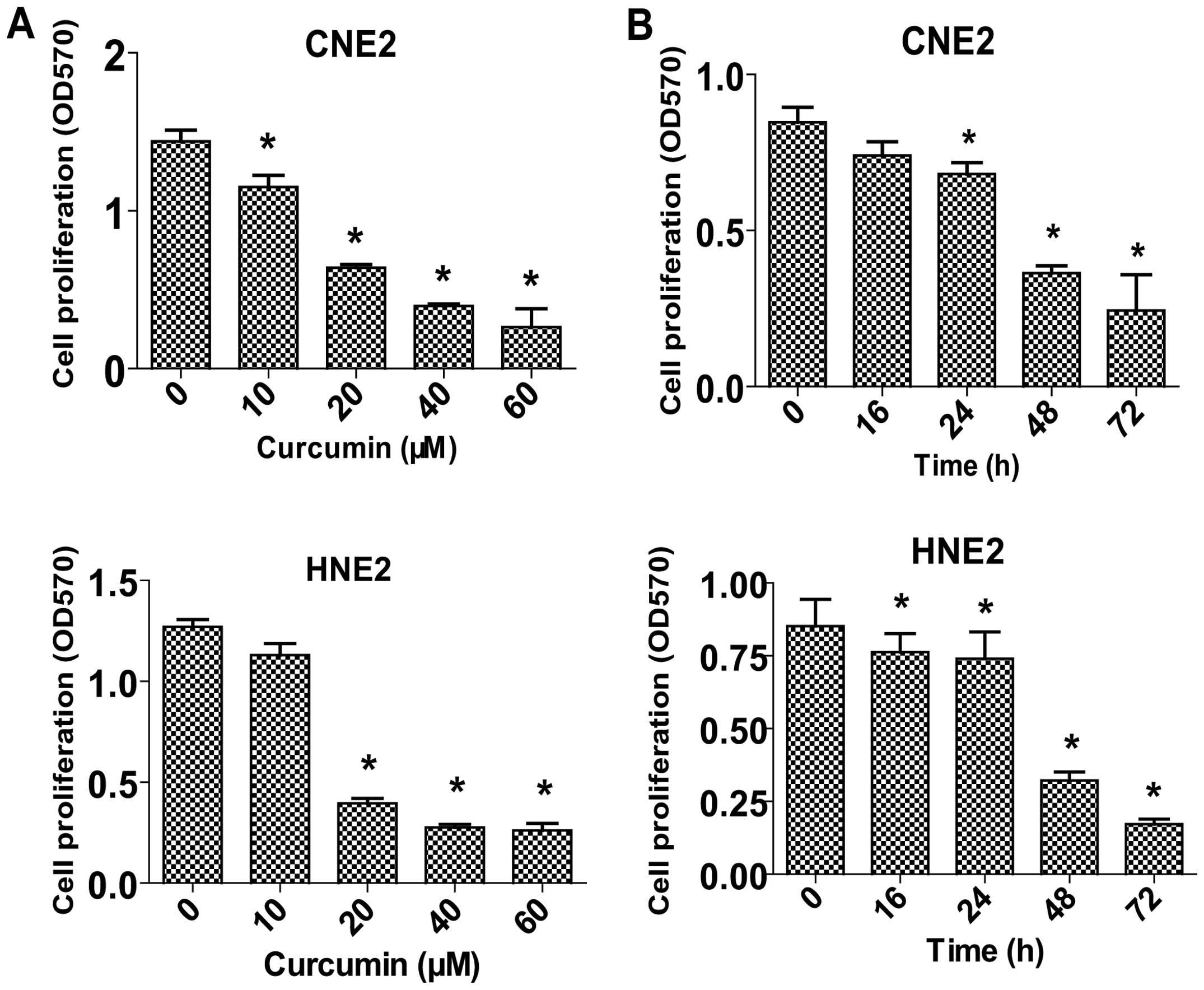
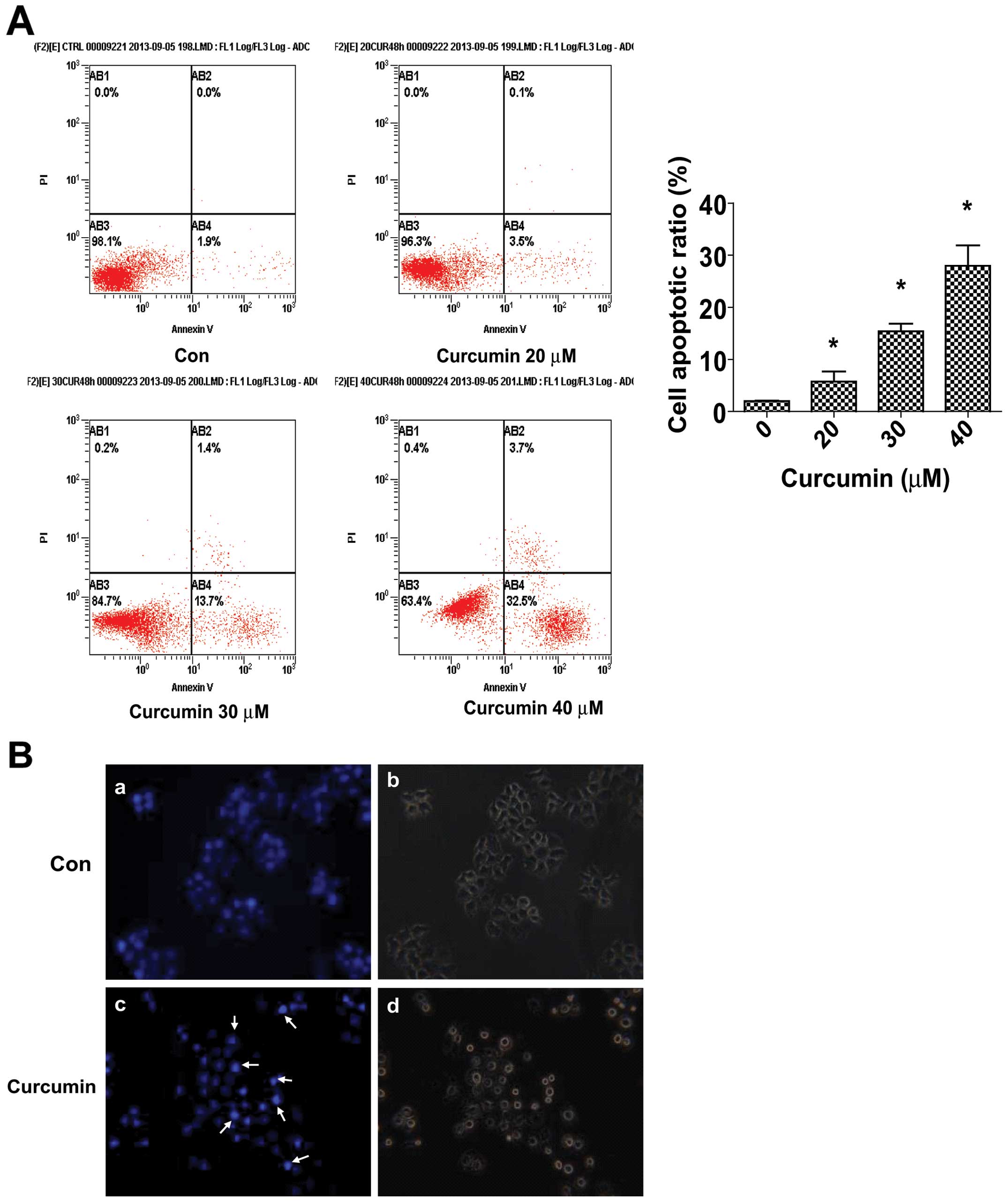
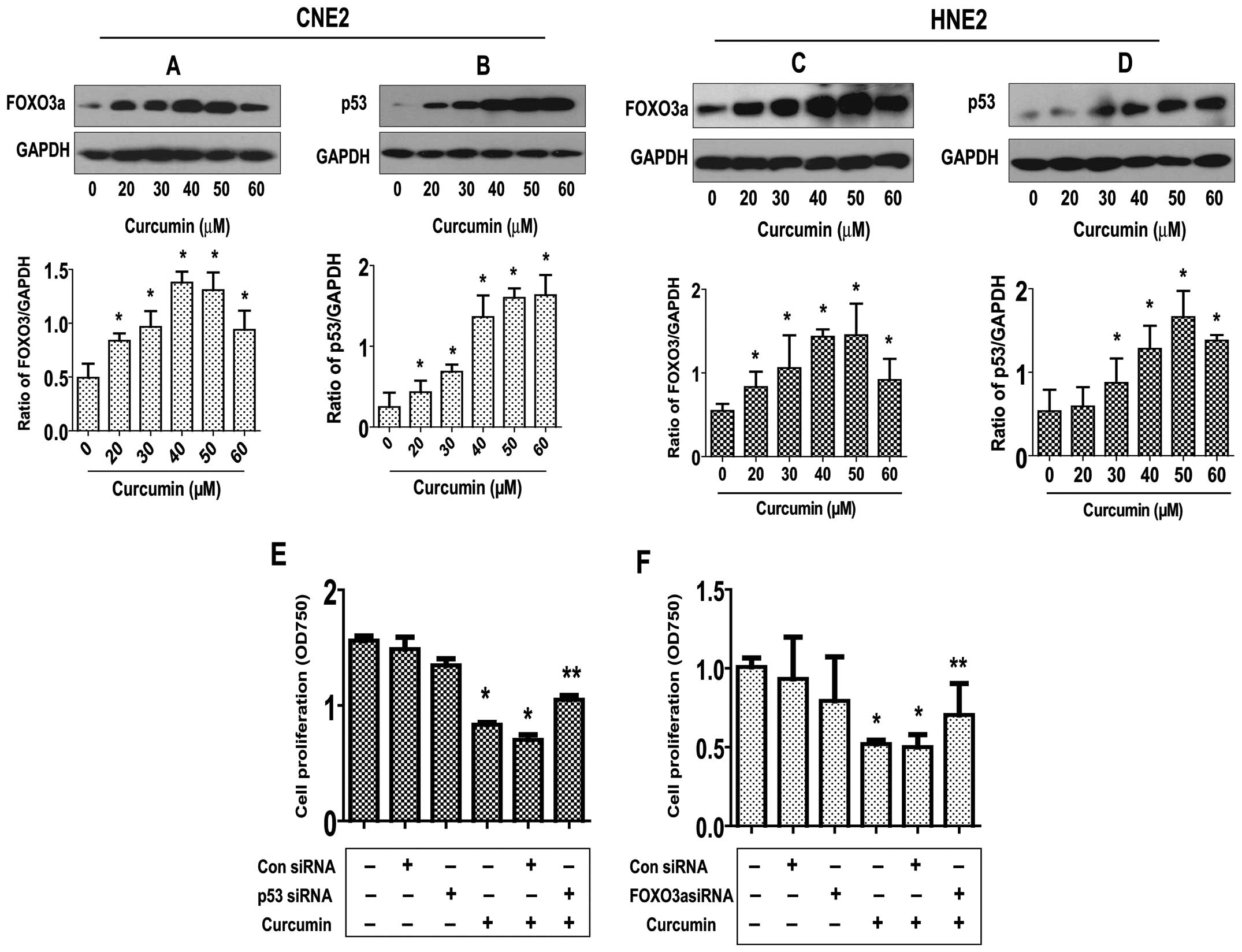
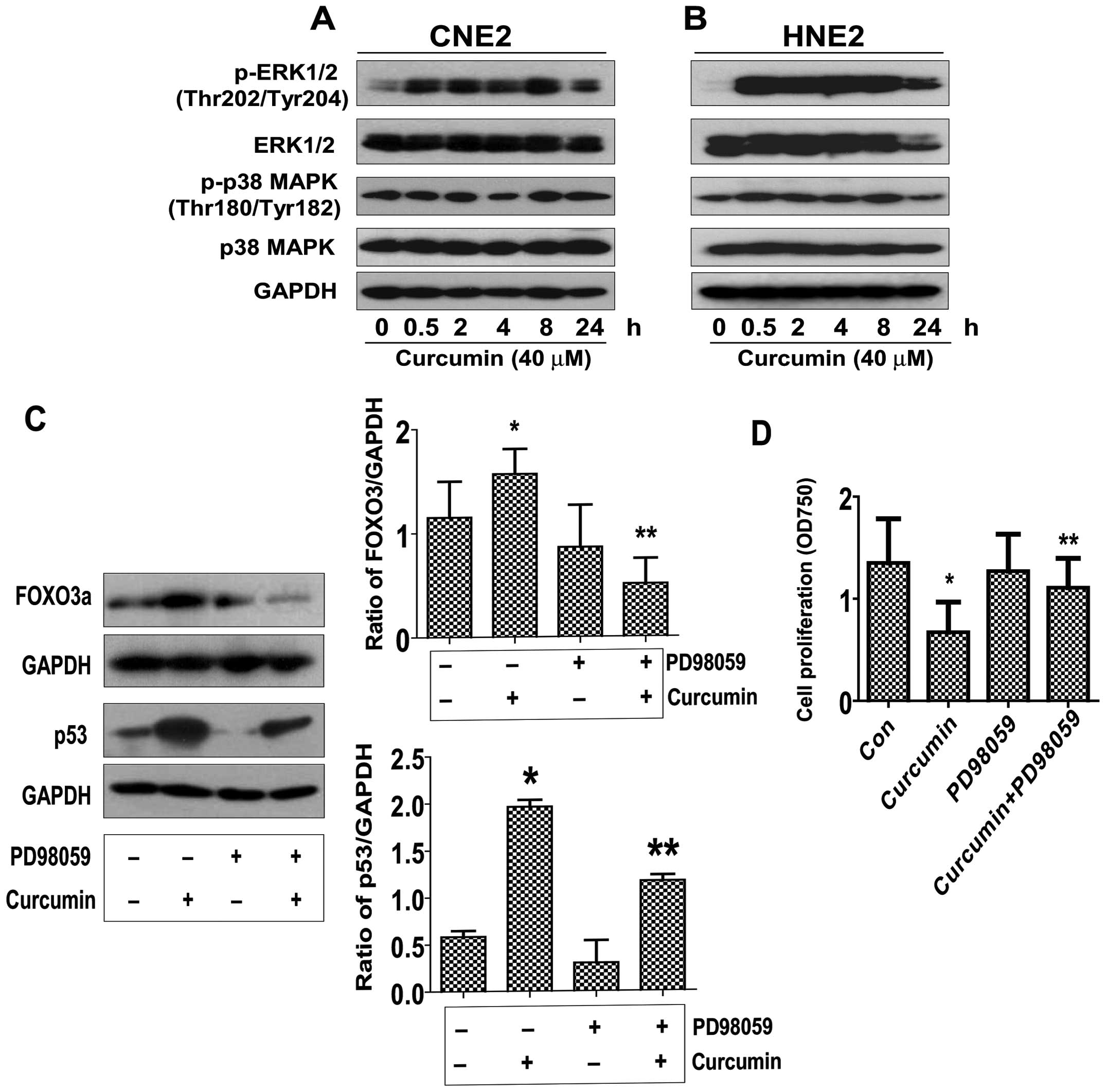
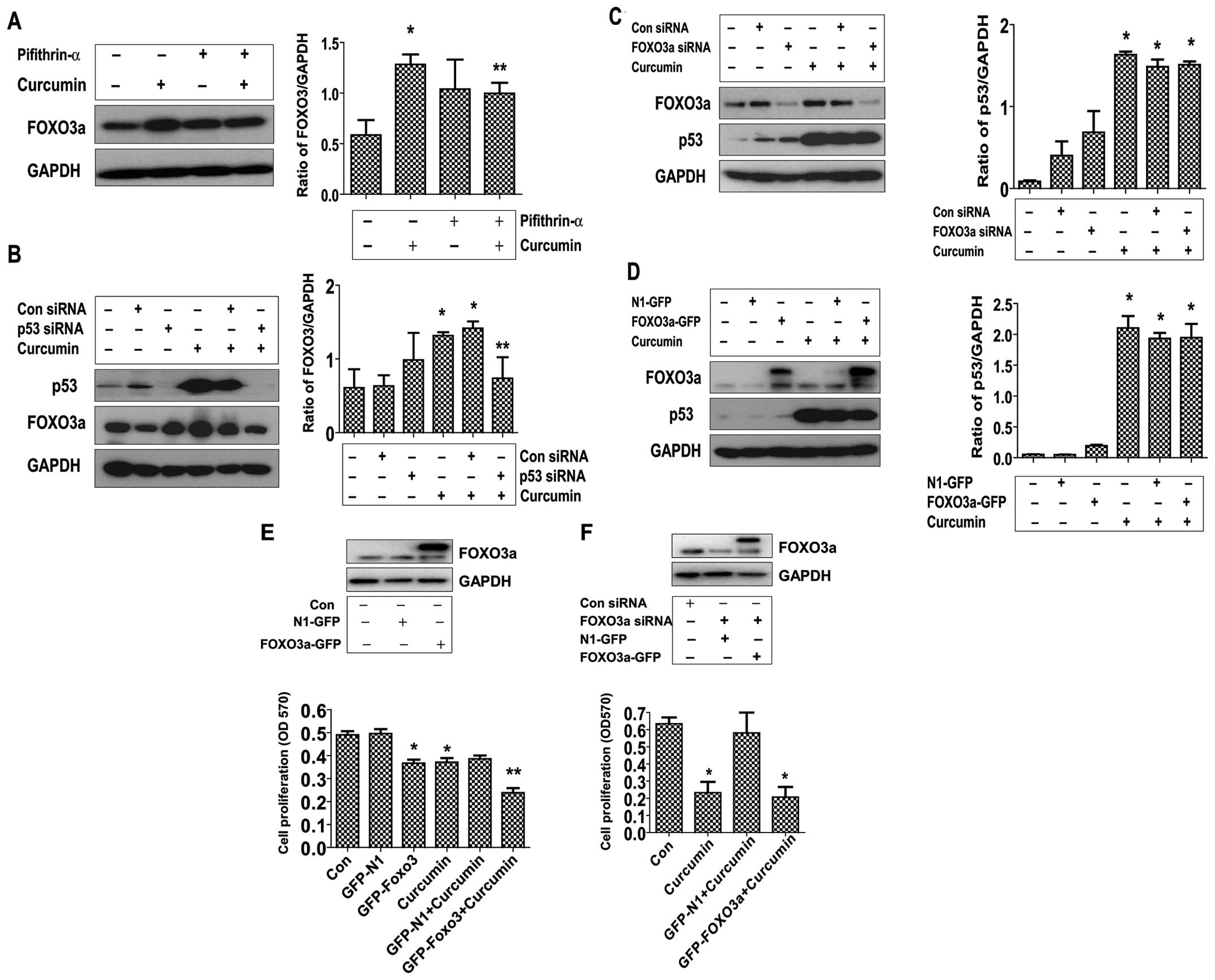
Curcumin, one of the main bioactive components extracted from a traditional Chinese medicinal herb, exhibits potent anticancer activity against many types of cancer cells including nasopharyngeal carcinoma (NPC). However, the detailed molecular mechanism underlying this is not clearly understood. In this study, we showed that curcumin significantly inhibited the growth of NPC cells in a dose- and time-dependent manner as determined by MTT assays, while increasing apoptosis was also observed as measured by flow cytometry for the FITC-Annexin V and propidium iodide (PI) label and Hoechst 33258 staining. To further explore the potential mechanism, we showed that curcumin increased the phosphorylation of ERK1/2 but not p38 MAPK in a time-dependent manner, and induced protein expression of the tumor suppressors FOXO3a and p53 in a dose‑dependent manner, which were not observed in the presence of PD98059, an inhibitor of ERK1/2. Furthermore, silencing of FOXO3a and p53 genes by siRNAs overcame the inhibitory effect of curcumin on cell proliferation. Silencing or blockade of p53 using siRNA or chemical inhibitor abrogated the effect of curcumin on expression of FOXO3a protein; silencing or overexpression of FOXO3a had no further effect on curcumin-induced p53 protein expression. Furthermore, blockade of ERK1/2 and exogenous expression of FOXO3a restored the effect of curcumin on growth of cells. Together, our studies show that curcumin inhibits growth and induces apoptosis of NPC cells through ERK1/2-mediated increase in the protein expression and interaction of p53 and FOXO3a. p53 is upstream of FOXO3a, which form a regulatory loop that mediates the effect of curcumin. This study unveils a new mechanism by which curcumin inhibits the proliferation and induces apoptosis of human NPC cells.
View Figures

Figure 1

Figure 2

Figure 3

Figure 4

Figure 5

View References

1. 

Xu Y, Zhang J, Shi W and Liu Y: Anticancer effects of 3,3′-diindolylmethane are associated with G1 arrest and mitochondria-dependent apoptosis in human nasopharyngeal carcinoma cells. Oncol Lett. 5:655–662. 2013.

2. 

Pan Y, Zhou F, Zhang R and Claret FX: Stat3 inhibitor Stattic exhibits potent antitumor activity and induces chemo- and radio-sensitivity in nasopharyngeal carcinoma. PloS One. 8:e545652013. View Article : Google Scholar : PubMed/NCBI

3. 

Aggarwal BB, Sundaram C, Malani N and Ichikawa H: Curcumin: the Indian solid gold. Adv Exp Med Biol. 595:1–75. 2007. View Article : Google Scholar : PubMed/NCBI

4. 

Wilken R, Veena MS, Wang MB and Srivatsan ES: Curcumin: A review of anti-cancer properties and therapeutic activity in head and neck squamous cell carcinoma. Mol Cancer. 10:122011. View Article : Google Scholar : PubMed/NCBI

5. 

Nayak G and Cooper GM: p53 is a major component of the transcriptional and apoptotic program regulated by PI 3-kinase/Akt/GSK3 signaling. Cell Death Dis. 3:e4002012. View Article : Google Scholar : PubMed/NCBI

6. 

Hollstein M, Sidransky D, Vogelstein B and Harris CC: p53 mutations in human cancers. Science. 253:49–53. 1991. View Article : Google Scholar

7. 

Zeng GQ, Yi H, Li XH, et al: Identification of the proteins related to p53-mediated radioresponse in nasopharyngeal carcinoma by proteomic analysis. J Proteomics. 74:2723–2733. 2011. View Article : Google Scholar

8. 

Shen YA, Lin CH, Chi WH, et al: Resveratrol impedes the stemness, epithelial-mesenchymal transition, and metabolic reprogramming of cancer stem cells in nasopharyngeal carcinoma through p53 activation. Evid Based Complement Alternat Med. 2013:5903932013.

9. 

Brunet A, Bonni A, Zigmond MJ, et al: Akt promotes cell survival by phosphorylating and inhibiting a Forkhead transcription factor. Cell. 96:857–868. 1999. View Article : Google Scholar : PubMed/NCBI

10. 

Schmidt M, Fernandez de Mattos S, van der Horst A, et al: Cell cycle inhibition by FoxO forkhead transcription factors involves downregulation of cyclin D. Mol Cell Biol. 22:7842–7852. 2002. View Article : Google Scholar : PubMed/NCBI

11. 

Obsil T and Obsilova V: Structural basis for DNA recognition by FOXO proteins. Biochim Biophys Acta. 1813.1946–1953. 2011.PubMed/NCBI

12. 

Yang JY, Zong CS, Xia W, et al: ERK promotes tumorigenesis by inhibiting FOXO3a via MDM2-mediated degradation. Nat Cell Biol. 10:138–148. 2008. View Article : Google Scholar : PubMed/NCBI

13. 

Shou Z, Lin L, Liang J, Li JL and Chen HY: Expression and prognosis of FOXO3a and HIF-1alpha in nasopharyngeal carcinoma. J Cancer Res Clin Oncol. 138:585–593. 2012. View Article : Google Scholar : PubMed/NCBI

14. 

Wen Q, Duan X, Liao R, et al: Characterization of intracellular translocation of Forkhead transcription factor O (FoxO) members induced by NGF in PC12 cells. Neurosci Lett. 498:31–36. 2011. View Article : Google Scholar : PubMed/NCBI

15. 

Wang F, Marshall CB, Yamamoto K, et al: Biochemical and structural characterization of an intramolecular interaction in FOXO3a and its binding with p53. J Mol Biol. 384:590–603. 2008. View Article : Google Scholar : PubMed/NCBI

16. 

Ye F, Zhang GH, Guan BX and Xu XC: Suppression of esophageal cancer cell growth using curcumin, (−)-epigallocatechin-3-gallate and lovastatin. World J Gastroenterol. 18:126–135. 2012.

17. 

Subramaniam D, Ponnurangam S, Ramamoorthy P, et al: Curcumin induces cell death in esophageal cancer cells through modulating Notch signaling. PloS One. 7:e305902012. View Article : Google Scholar : PubMed/NCBI

18. 

Quitschke WW: Curcuminoid binding to embryonal carcinoma cells: reductive metabolism, induction of apoptosis, senescence, and inhibition of cell proliferation. PloS One. 7:e395682012. View Article : Google Scholar : PubMed/NCBI

19. 

Sahu RP, Batra S and Srivastava SK: Activation of ATM/Chk1 by curcumin causes cell cycle arrest and apoptosis in human pancreatic cancer cells. Br J Cancer. 100:1425–1433. 2009. View Article : Google Scholar : PubMed/NCBI

20. 

Bao B, Ali S, Banerjee S, et al: Curcumin analogue CDF inhibits pancreatic tumor growth by switching on suppressor microRNAs and attenuating EZH2 expression. Cancer Res. 72:335–345. 2012. View Article : Google Scholar : PubMed/NCBI

21. 

Chen CC, Sureshbabul M, Chen HW, et al: Curcumin suppresses metastasis via Sp-1, FAK inhibition, and E-cadherin upregulation in colorectal cancer. Evid Based Complement Alternat Med. 2013:5416952013.PubMed/NCBI

22. 

Wang D, Hu J, Lv L, Xia X, Liu J and Li X: Enhanced inhibitory effect of curcumin via reactive oxygen species generation in human nasopharyngeal carcinoma cells following purple-light irradiation. Oncol Lett. 6:81–85. 2013.

23. 

Sundram V, Chauhan SC, Ebeling M and Jaggi M: Curcumin attenuates beta-catenin signaling in prostate cancer cells through activation of protein kinase D1. PloS One. 7:e353682012. View Article : Google Scholar : PubMed/NCBI

24. 

Jiang M, Huang O, Zhang X, et al: Curcumin induces cell death and restores tamoxifen sensitivity in the antiestrogen-resistant breast cancer cell lines MCF-7/LCC2 and MCF-7/LCC9. Molecules. 18:701–720. 2013. View Article : Google Scholar

25. 

Blakemore LM, Boes C, Cordell R and Manson MM: Curcumin-induced mitotic arrest is characterized by spindle abnormalities, defects in chromosomal congression and DNA damage. Carcinogenesis. 34:351–360. 2013. View Article : Google Scholar : PubMed/NCBI

26. 

You H and Mak TW: Crosstalk between p53 and FOXO transcription factors. Cell Cycle. 4:37–38. 2005. View Article : Google Scholar : PubMed/NCBI

27. 

Qiao Q, Jiang Y and Li G: Curcumin enhances the response of non-Hodgkin’s lymphoma cells to ionizing radiation through further induction of cell cycle arrest at the G2/M phase and inhibition of mTOR phosphorylation. Oncol Rep. 29:380–386. 2013.PubMed/NCBI

28. 

Singh AT, Ghosh M, Forte TM, Ryan RO and Gordon LI: Curcumin nanodisk-induced apoptosis in mantle cell lymphoma. Leuk Lymphoma. 52:1537–1543. 2011. View Article : Google Scholar : PubMed/NCBI

29. 

Sebolt-Leopold JS, Herrera R and Ohren JF: The mitogen-activated protein kinase pathway for molecular-targeted cancer treatment. Recent Results Cancer Res. 172:155–167. 2007. View Article : Google Scholar : PubMed/NCBI

30. 

Li R, Wang Y, Liu Y, et al: Curcumin inhibits transforming growth factor-beta1-induced EMT via PPARgamma pathway, not Smad pathway in renal tubular epithelial cells. PloS One. 8:e588482013. View Article : Google Scholar : PubMed/NCBI

31. 

Kang D, Park W, Lee S, Kim JH and Song JJ: Crosstalk from survival to necrotic death coexists in DU-145 cells by curcumin treatment. Cell Signal. 25:1288–1300. 2013. View Article : Google Scholar : PubMed/NCBI

32. 

Wang WZ, Li L, Liu MY, et al: Curcumin induces FasL-related apoptosis through p38 activation in human hepatocellular carcinoma Huh7 cells. Life Sci. 292:352–358. 2013. View Article : Google Scholar : PubMed/NCBI

33. 

Renault VM, Thekkat PU, Hoang KL, et al: The pro-longevity gene FoxO3 is a direct target of the p53 tumor suppressor. Oncogene. 30:3207–3221. 2011. View Article : Google Scholar : PubMed/NCBI

34. 

Miyaguchi Y, Tsuchiya K and Sakamoto K: P53 negatively regulates the transcriptional activity of FOXO3a under oxidative stress. Cell Biol Int. 33:853–860. 2009. View Article : Google Scholar : PubMed/NCBI

35. 

Guo LD, Chen XJ, Hu YH, Yu ZJ, Wang D and Liu JZ: Curcumin inhibits proliferation and induces apoptosis of human colorectal cancer cells by activating the mitochondria apoptotic pathway. Phytother Res. 27:422–430. 2013. View Article : Google Scholar : PubMed/NCBI

36. 

Zingg JM, Hasan ST, Cowan D, Ricciarelli R, Azzi A and Meydani M: Regulatory effects of curcumin on lipid accumulation in monocytes/macrophages. J Cell Biochem. 113:833–840. 2012. View Article : Google Scholar

37. 

Tudzarova S, Trotter MW, Wollenschlaeger A, et al: Molecular architecture of the DNA replication origin activation checkpoint. EMBO J. 29:3381–3394. 2010. View Article : Google Scholar : PubMed/NCBI

38. 

Amente S, Zhang J, Lavadera ML, Lania L, Avvedimento EV and Majello B: Myc and PI3K/AKT signaling cooperatively repress FOXO3a-dependent PUMA and GADD45a gene expression. Nucleic Acids Res. 39:9498–9507. 2011. View Article : Google Scholar

Related Articles

  • Abstract
  • View
  • Download
  • Twitter
Copy and paste a formatted citation
Spandidos Publications style
Wu J, Tang Q, Zhao S, Zheng F, Wu Y, Tang G and Hahn SS: Extracellular signal-regulated kinase signaling-mediated induction and interaction of FOXO3a and p53 contribute to the inhibition of nasopharyngeal carcinoma cell growth by curcumin. Int J Oncol 45: 95-103, 2014.
APA
Wu, J., Tang, Q., Zhao, S., Zheng, F., Wu, Y., Tang, G., & Hahn, S.S. (2014). Extracellular signal-regulated kinase signaling-mediated induction and interaction of FOXO3a and p53 contribute to the inhibition of nasopharyngeal carcinoma cell growth by curcumin. International Journal of Oncology, 45, 95-103. https://doi.org/10.3892/ijo.2014.2420
MLA
Wu, J., Tang, Q., Zhao, S., Zheng, F., Wu, Y., Tang, G., Hahn, S. S."Extracellular signal-regulated kinase signaling-mediated induction and interaction of FOXO3a and p53 contribute to the inhibition of nasopharyngeal carcinoma cell growth by curcumin". International Journal of Oncology 45.1 (2014): 95-103.
Chicago
Wu, J., Tang, Q., Zhao, S., Zheng, F., Wu, Y., Tang, G., Hahn, S. S."Extracellular signal-regulated kinase signaling-mediated induction and interaction of FOXO3a and p53 contribute to the inhibition of nasopharyngeal carcinoma cell growth by curcumin". International Journal of Oncology 45, no. 1 (2014): 95-103. https://doi.org/10.3892/ijo.2014.2420
Copy and paste a formatted citation
x
Spandidos Publications style
Wu J, Tang Q, Zhao S, Zheng F, Wu Y, Tang G and Hahn SS: Extracellular signal-regulated kinase signaling-mediated induction and interaction of FOXO3a and p53 contribute to the inhibition of nasopharyngeal carcinoma cell growth by curcumin. Int J Oncol 45: 95-103, 2014.
APA
Wu, J., Tang, Q., Zhao, S., Zheng, F., Wu, Y., Tang, G., & Hahn, S.S. (2014). Extracellular signal-regulated kinase signaling-mediated induction and interaction of FOXO3a and p53 contribute to the inhibition of nasopharyngeal carcinoma cell growth by curcumin. International Journal of Oncology, 45, 95-103. https://doi.org/10.3892/ijo.2014.2420
MLA
Wu, J., Tang, Q., Zhao, S., Zheng, F., Wu, Y., Tang, G., Hahn, S. S."Extracellular signal-regulated kinase signaling-mediated induction and interaction of FOXO3a and p53 contribute to the inhibition of nasopharyngeal carcinoma cell growth by curcumin". International Journal of Oncology 45.1 (2014): 95-103.
Chicago
Wu, J., Tang, Q., Zhao, S., Zheng, F., Wu, Y., Tang, G., Hahn, S. S."Extracellular signal-regulated kinase signaling-mediated induction and interaction of FOXO3a and p53 contribute to the inhibition of nasopharyngeal carcinoma cell growth by curcumin". International Journal of Oncology 45, no. 1 (2014): 95-103. https://doi.org/10.3892/ijo.2014.2420
Follow us
  • Twitter
  • LinkedIn
  • Facebook
About
  • Spandidos Publications
  • Careers
  • Cookie Policy
  • Privacy Policy
How can we help?
  • Help
  • Live Chat
  • Contact
  • Email to our Support Team