Spandidos Publications Logo
  • About
    • About Spandidos
    • Aims and Scopes
    • Abstracting and Indexing
    • Editorial Policies
    • Reprints and Permissions
    • Job Opportunities
    • Terms and Conditions
    • Contact
  • Journals
    • All Journals
    • Oncology Letters
      • Oncology Letters
      • Information for Authors
      • Editorial Policies
      • Editorial Board
      • Aims and Scope
      • Abstracting and Indexing
      • Bibliographic Information
      • Archive
    • International Journal of Oncology
      • International Journal of Oncology
      • Information for Authors
      • Editorial Policies
      • Editorial Board
      • Aims and Scope
      • Abstracting and Indexing
      • Bibliographic Information
      • Archive
    • Molecular and Clinical Oncology
      • Molecular and Clinical Oncology
      • Information for Authors
      • Editorial Policies
      • Editorial Board
      • Aims and Scope
      • Abstracting and Indexing
      • Bibliographic Information
      • Archive
    • Experimental and Therapeutic Medicine
      • Experimental and Therapeutic Medicine
      • Information for Authors
      • Editorial Policies
      • Editorial Board
      • Aims and Scope
      • Abstracting and Indexing
      • Bibliographic Information
      • Archive
    • International Journal of Molecular Medicine
      • International Journal of Molecular Medicine
      • Information for Authors
      • Editorial Policies
      • Editorial Board
      • Aims and Scope
      • Abstracting and Indexing
      • Bibliographic Information
      • Archive
    • Biomedical Reports
      • Biomedical Reports
      • Information for Authors
      • Editorial Policies
      • Editorial Board
      • Aims and Scope
      • Abstracting and Indexing
      • Bibliographic Information
      • Archive
    • Oncology Reports
      • Oncology Reports
      • Information for Authors
      • Editorial Policies
      • Editorial Board
      • Aims and Scope
      • Abstracting and Indexing
      • Bibliographic Information
      • Archive
    • Molecular Medicine Reports
      • Molecular Medicine Reports
      • Information for Authors
      • Editorial Policies
      • Editorial Board
      • Aims and Scope
      • Abstracting and Indexing
      • Bibliographic Information
      • Archive
    • World Academy of Sciences Journal
      • World Academy of Sciences Journal
      • Information for Authors
      • Editorial Policies
      • Editorial Board
      • Aims and Scope
      • Abstracting and Indexing
      • Bibliographic Information
      • Archive
    • International Journal of Functional Nutrition
      • International Journal of Functional Nutrition
      • Information for Authors
      • Editorial Policies
      • Editorial Board
      • Aims and Scope
      • Abstracting and Indexing
      • Bibliographic Information
      • Archive
    • International Journal of Epigenetics
      • International Journal of Epigenetics
      • Information for Authors
      • Editorial Policies
      • Editorial Board
      • Aims and Scope
      • Abstracting and Indexing
      • Bibliographic Information
      • Archive
    • Medicine International
      • Medicine International
      • Information for Authors
      • Editorial Policies
      • Editorial Board
      • Aims and Scope
      • Abstracting and Indexing
      • Bibliographic Information
      • Archive
  • Articles
  • Information
    • Information for Authors
    • Information for Reviewers
    • Information for Librarians
    • Information for Advertisers
    • Conferences
  • Language Editing
Spandidos Publications Logo
  • About
    • About Spandidos
    • Aims and Scopes
    • Abstracting and Indexing
    • Editorial Policies
    • Reprints and Permissions
    • Job Opportunities
    • Terms and Conditions
    • Contact
  • Journals
    • All Journals
    • Biomedical Reports
      • Information for Authors
      • Editorial Policies
      • Editorial Board
      • Aims and Scope
      • Abstracting and Indexing
      • Bibliographic Information
      • Archive
    • Experimental and Therapeutic Medicine
      • Information for Authors
      • Editorial Policies
      • Editorial Board
      • Aims and Scope
      • Abstracting and Indexing
      • Bibliographic Information
      • Archive
    • International Journal of Epigenetics
      • Information for Authors
      • Editorial Policies
      • Editorial Board
      • Aims and Scope
      • Abstracting and Indexing
      • Bibliographic Information
      • Archive
    • International Journal of Functional Nutrition
      • Information for Authors
      • Editorial Policies
      • Editorial Board
      • Aims and Scope
      • Abstracting and Indexing
      • Bibliographic Information
      • Archive
    • International Journal of Molecular Medicine
      • Information for Authors
      • Editorial Policies
      • Editorial Board
      • Aims and Scope
      • Abstracting and Indexing
      • Bibliographic Information
      • Archive
    • International Journal of Oncology
      • Information for Authors
      • Editorial Policies
      • Editorial Board
      • Aims and Scope
      • Abstracting and Indexing
      • Bibliographic Information
      • Archive
    • Medicine International
      • Information for Authors
      • Editorial Policies
      • Editorial Board
      • Aims and Scope
      • Abstracting and Indexing
      • Bibliographic Information
      • Archive
    • Molecular and Clinical Oncology
      • Information for Authors
      • Editorial Policies
      • Editorial Board
      • Aims and Scope
      • Abstracting and Indexing
      • Bibliographic Information
      • Archive
    • Molecular Medicine Reports
      • Information for Authors
      • Editorial Policies
      • Editorial Board
      • Aims and Scope
      • Abstracting and Indexing
      • Bibliographic Information
      • Archive
    • Oncology Letters
      • Information for Authors
      • Editorial Policies
      • Editorial Board
      • Aims and Scope
      • Abstracting and Indexing
      • Bibliographic Information
      • Archive
    • Oncology Reports
      • Information for Authors
      • Editorial Policies
      • Editorial Board
      • Aims and Scope
      • Abstracting and Indexing
      • Bibliographic Information
      • Archive
    • World Academy of Sciences Journal
      • Information for Authors
      • Editorial Policies
      • Editorial Board
      • Aims and Scope
      • Abstracting and Indexing
      • Bibliographic Information
      • Archive
  • Articles
  • Information
    • For Authors
    • For Reviewers
    • For Librarians
    • For Advertisers
    • Conferences
  • Language Editing
Login Register Submit
  • This site uses cookies
  • You can change your cookie settings at any time by following the instructions in our Cookie Policy. To find out more, you may read our Privacy Policy.

    I agree
Search articles by DOI, keyword, author or affiliation
Search
Advanced Search
presentation
International Journal of Oncology
Join Editorial Board Propose a Special Issue
Print ISSN: 1019-6439 Online ISSN: 1791-2423
Journal Cover
August-2014 Volume 45 Issue 2

Full Size Image

Cover Legend PDF

Sign up for eToc alerts
Recommend to Library

Journals

International Journal of Molecular Medicine

International Journal of Molecular Medicine

International Journal of Molecular Medicine is an international journal devoted to molecular mechanisms of human disease.

International Journal of Oncology

International Journal of Oncology

International Journal of Oncology is an international journal devoted to oncology research and cancer treatment.

Molecular Medicine Reports

Molecular Medicine Reports

Covers molecular medicine topics such as pharmacology, pathology, genetics, neuroscience, infectious diseases, molecular cardiology, and molecular surgery.

Oncology Reports

Oncology Reports

Oncology Reports is an international journal devoted to fundamental and applied research in Oncology.

Experimental and Therapeutic Medicine

Experimental and Therapeutic Medicine

Experimental and Therapeutic Medicine is an international journal devoted to laboratory and clinical medicine.

Oncology Letters

Oncology Letters

Oncology Letters is an international journal devoted to Experimental and Clinical Oncology.

Biomedical Reports

Biomedical Reports

Explores a wide range of biological and medical fields, including pharmacology, genetics, microbiology, neuroscience, and molecular cardiology.

Molecular and Clinical Oncology

Molecular and Clinical Oncology

International journal addressing all aspects of oncology research, from tumorigenesis and oncogenes to chemotherapy and metastasis.

World Academy of Sciences Journal

World Academy of Sciences Journal

Multidisciplinary open-access journal spanning biochemistry, genetics, neuroscience, environmental health, and synthetic biology.

International Journal of Functional Nutrition

International Journal of Functional Nutrition

Open-access journal combining biochemistry, pharmacology, immunology, and genetics to advance health through functional nutrition.

International Journal of Epigenetics

International Journal of Epigenetics

Publishes open-access research on using epigenetics to advance understanding and treatment of human disease.

Medicine International

Medicine International

An International Open Access Journal Devoted to General Medicine.

Journal Cover
August-2014 Volume 45 Issue 2

Full Size Image

Cover Legend PDF

Sign up for eToc alerts
Recommend to Library

  • Article
  • Citations
    • Cite This Article
    • Download Citation
    • Create Citation Alert
    • Remove Citation Alert
    • Cited By
  • Similar Articles
    • Related Articles (in Spandidos Publications)
    • Similar Articles (Google Scholar)
    • Similar Articles (PubMed)
  • Download PDF
  • Download XML
  • View XML
Article

The estrogen receptor signaling pathway activated by phthalates is linked with transforming growth factor-β in the progression of LNCaP prostate cancer models

  • Authors:
    • Hye-Rim Lee
    • Kyung-A Hwang
    • Kyung-Chul Choi
  • View Affiliations / Copyright

    Affiliations: Laboratory of Biochemistry and Immunology, College of Veterinary Medicine, Chungbuk National University, Cheongju, Chungbuk 361-763, Republic of Korea
  • Pages: 595-602
    |
    Published online on: May 22, 2014
       https://doi.org/10.3892/ijo.2014.2460
  • Expand metrics +
Metrics: Total Views: 0 (Spandidos Publications: | PMC Statistics: )
Metrics: Total PDF Downloads: 0 (Spandidos Publications: | PMC Statistics: )
Cited By (CrossRef): 0 citations Loading Articles...

This article is mentioned in:


Abstract

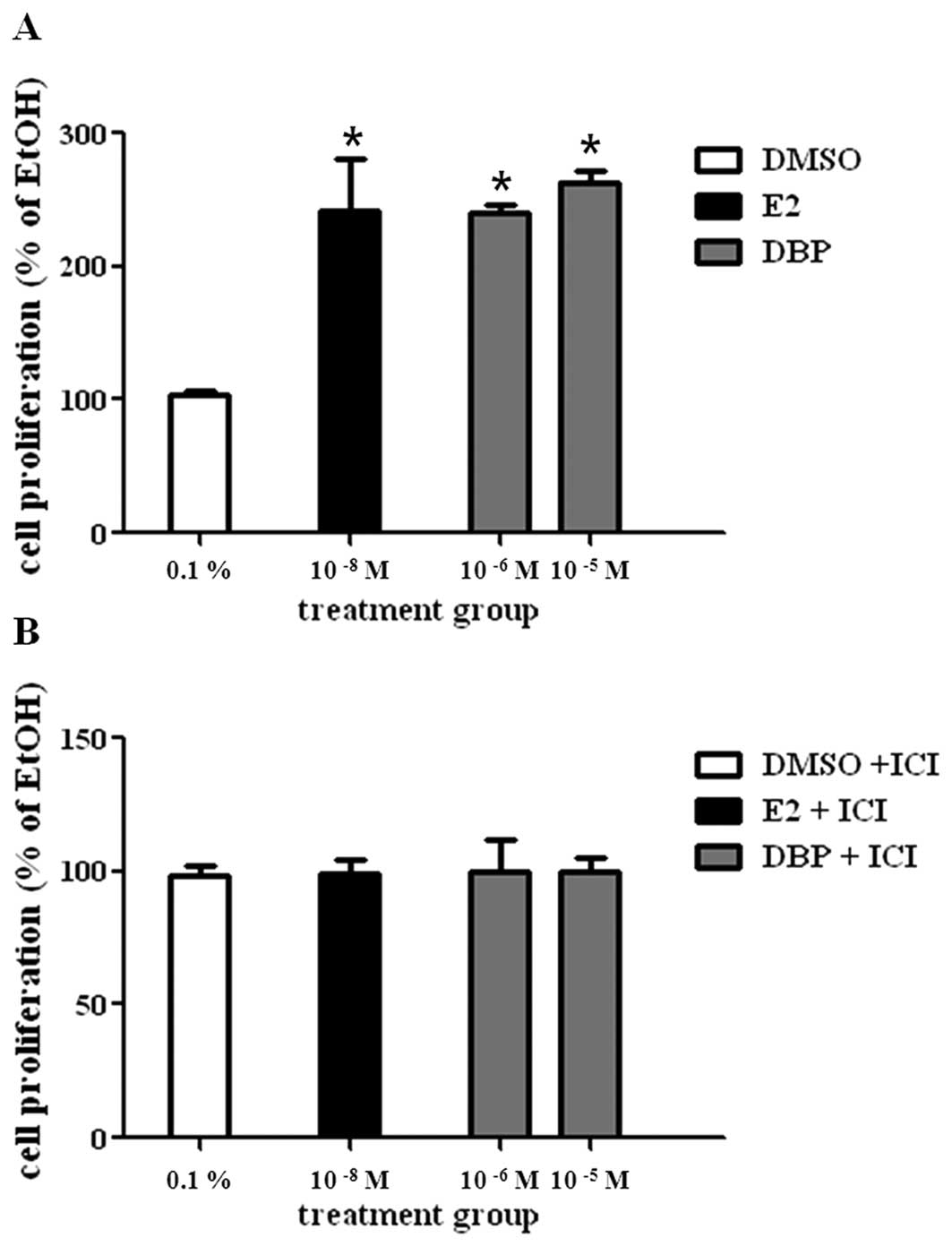
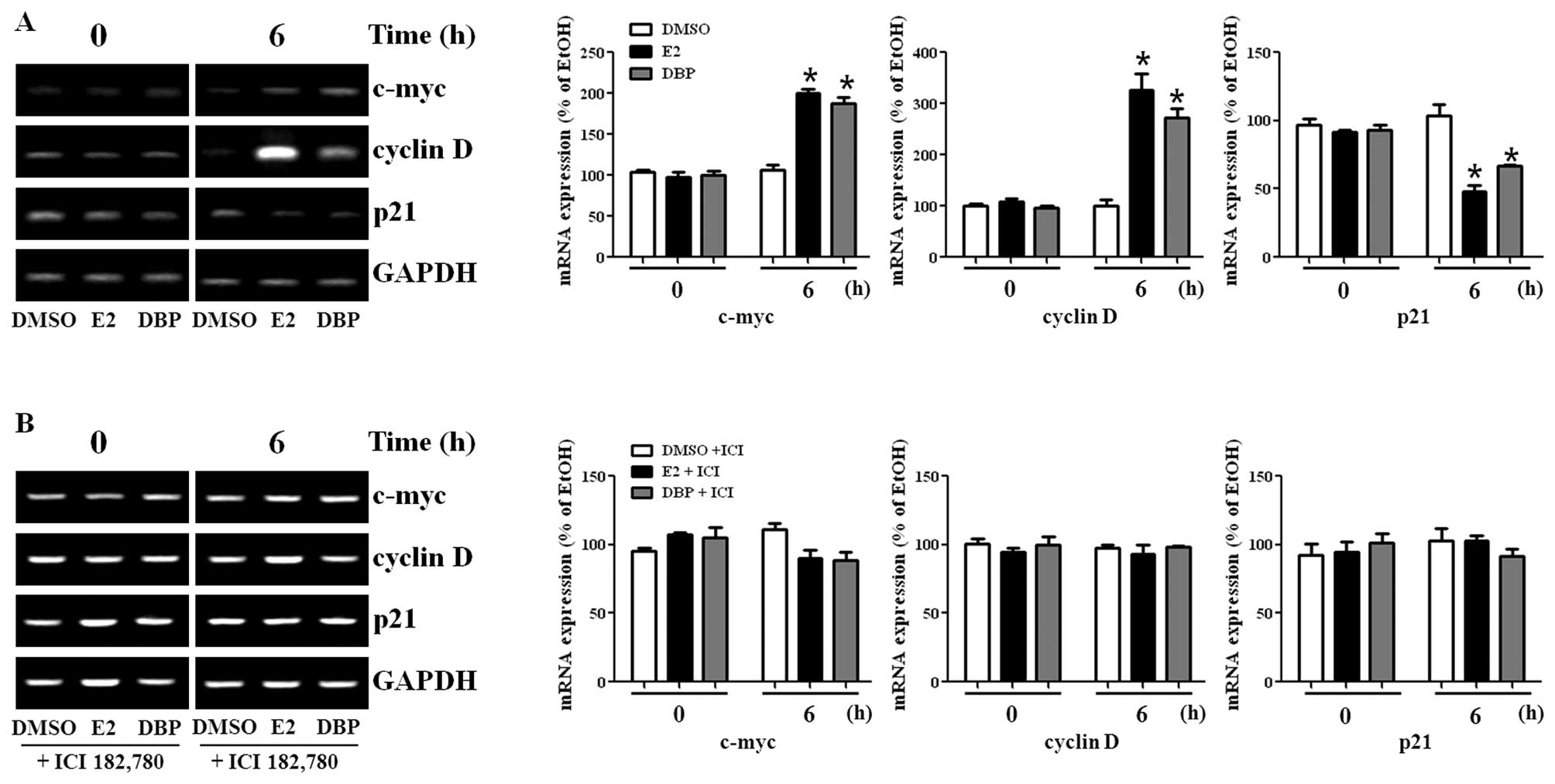
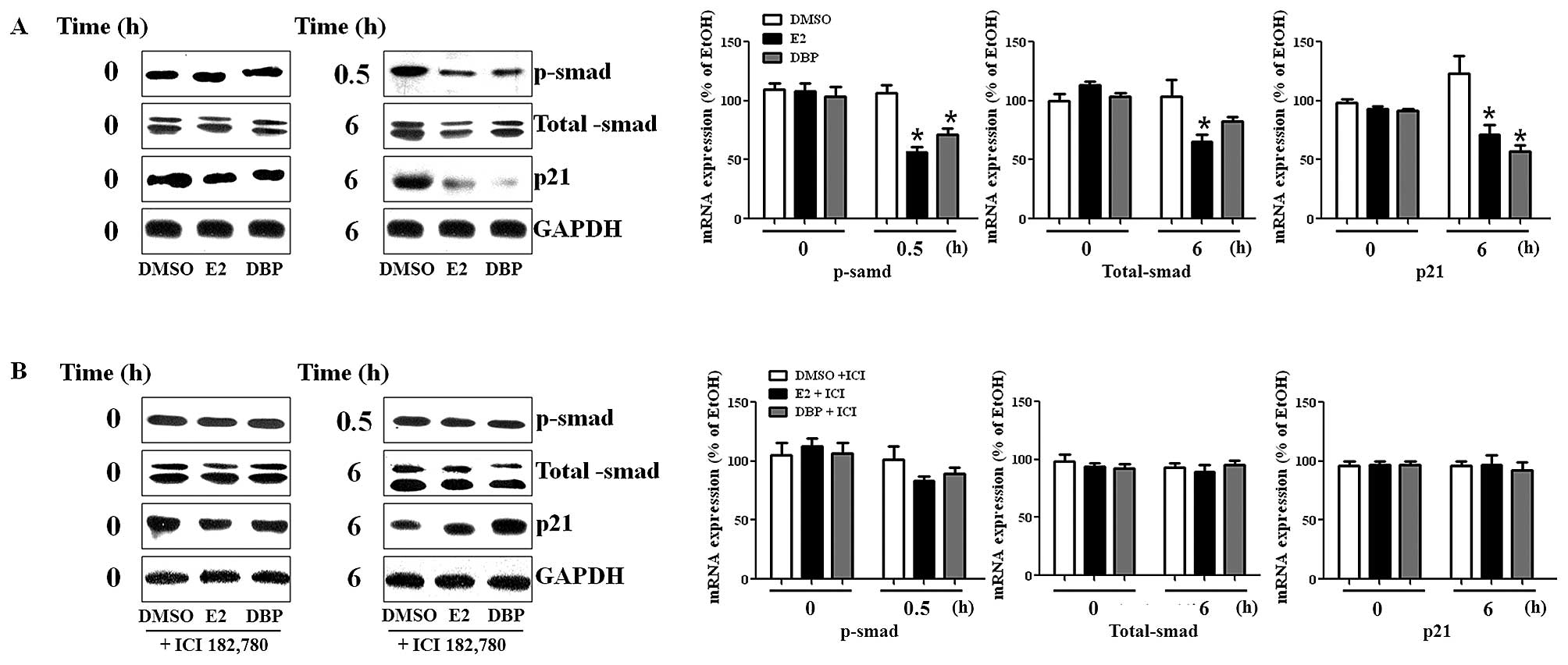
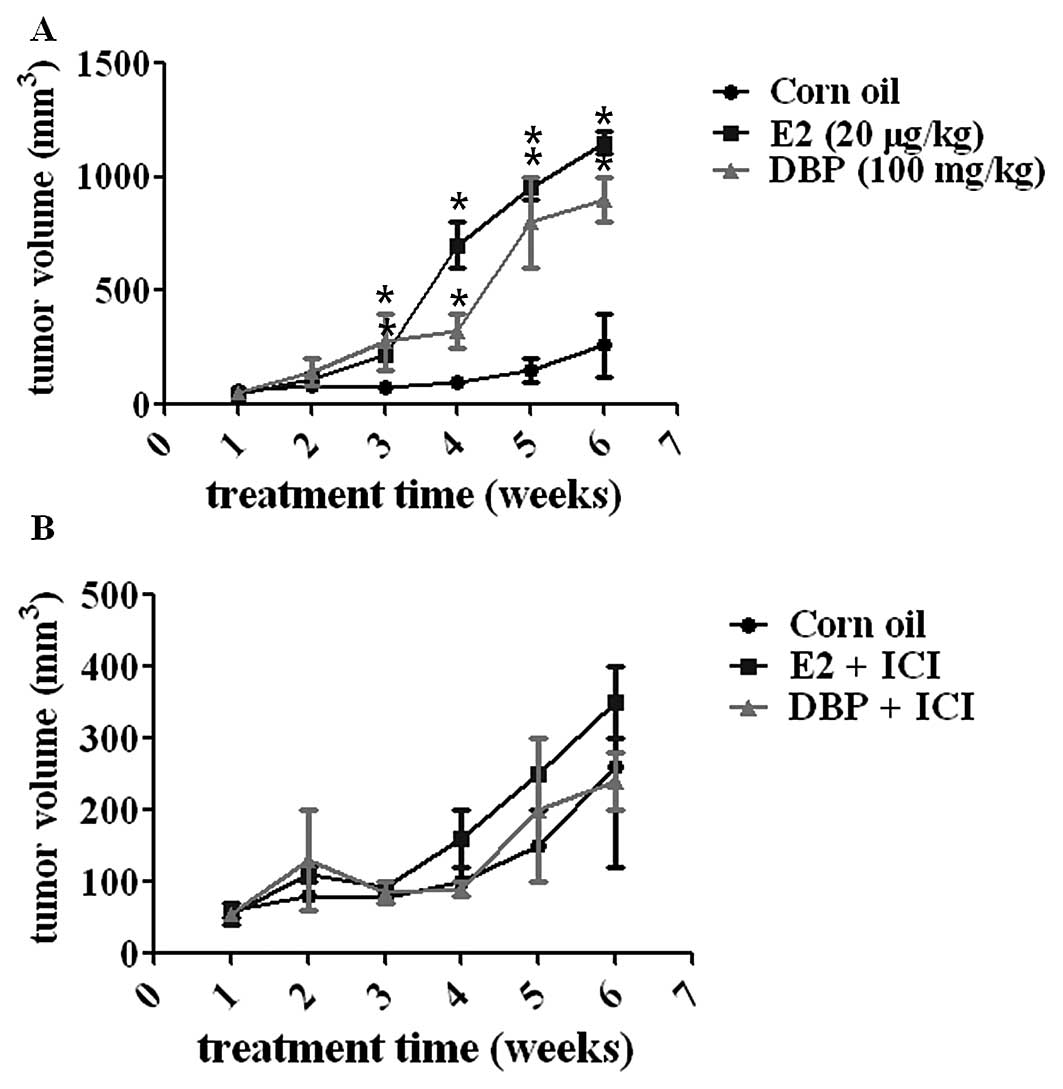
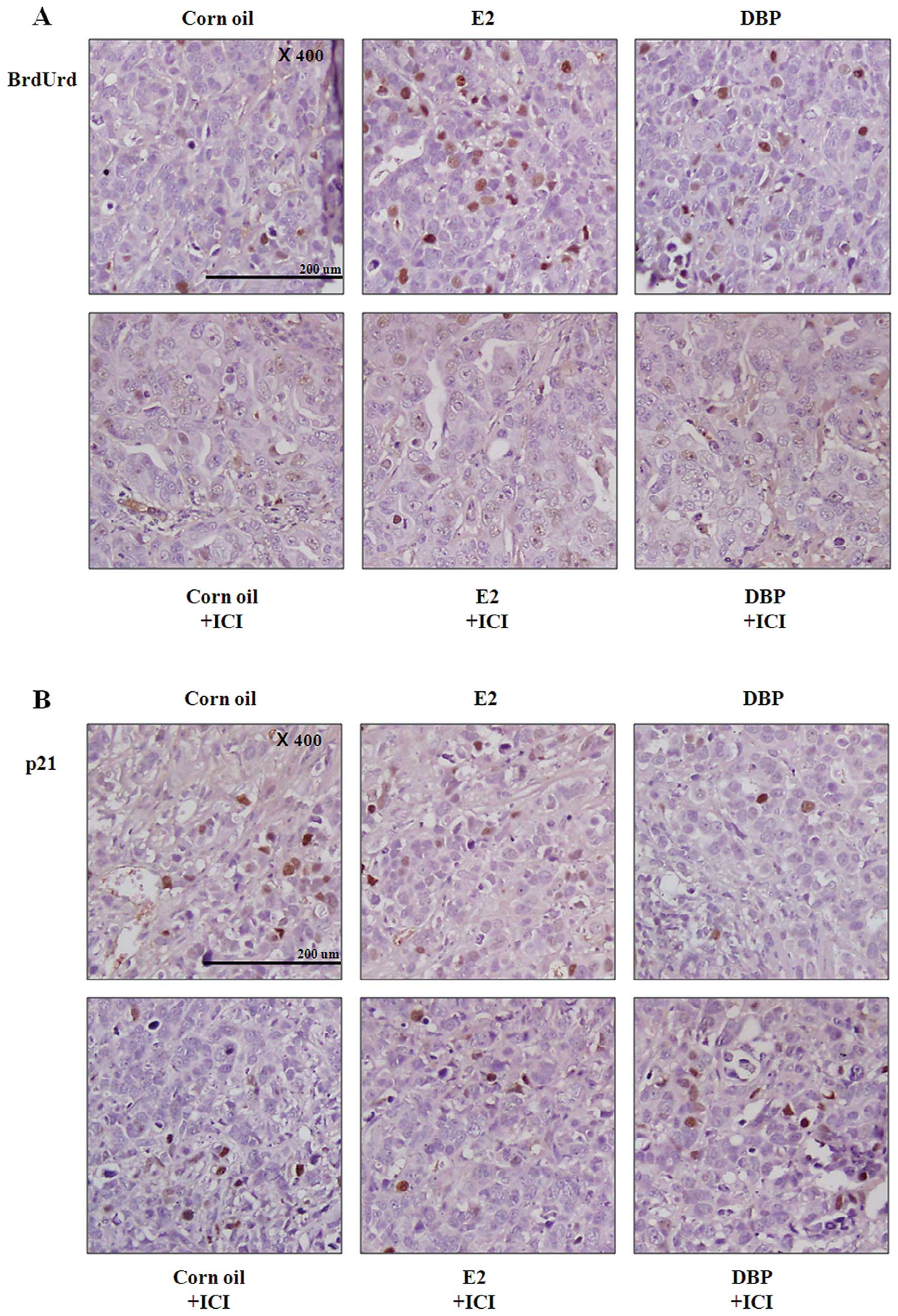
The distinct roles of estrogen receptors (ERs) related with androgen receptors (ARs) have been proposed in prostate cancer, while the involvement of transforming growth factor-β (TGF-β) has been reported in the progression of prostate cancer. In this study, we examined whether the TGF-β signaling pathway is associated with ER signaling in LNCaP prostate cancer cells, which express ERα, ERβ and ARs. We determined whether the exposure to phthalates may induce prostate cancer progression by affecting molecular crosstalk between ER and TGF-β signaling pathways. Cell viability was measured in LNCaP cells by MTT assay following treatment with di-n-buthyl phthalate (DBP). RT-PCR and immunoblot assay were performed to examine the expression levels of cell cycle-related genes and the TGF-β signaling cascade. A mouse xenograft model of prostate cancer was generated, and immunohistochemical and BrdU assay were carried out to determine the effect of DBP in this mouse model. DBP, a type of phthalate, was shown to promote LNCaP cell proliferation by upregulating the gene expression of c-myc and cyclin D1 and by downregulating the expression of p21. DBP significantly reduced the protein expression of p-smad similarly to E2. These regulations caused by DBP were reversed by ICI 182,780, an ER antagonist, indicating that DBP may affect crosstalk between TGF-β and ER signals. In an in vivo mouse model, tumor volume of mice exposed to DBP was increased. Number of cells in S phase of cell cycle was increased by DBP, while expression of p21 protein was reduced in the tissues of DBP-treated mice. These results indicate that DBP may induce the growth of LNCaP prostate cancer by acting on the crosstalk between TGF-β and ER signaling pathways.
View Figures

Figure 1

Figure 2

Figure 3

Figure 4

Figure 5

View References

1 

Parnes HL, House MG and Tangrea JA: Prostate cancer prevention: strategies for agent development. Curr Opin Oncol. 25:242–251. 2013.PubMed/NCBI

2 

Powers GL and Marker PC: Recent advances in prostate development and links to prostatic diseases. Wiley Interdiscip Rev Syst Biol Med. 5:243–256. 2013. View Article : Google Scholar : PubMed/NCBI

3 

Arai S, Shibata Y, Nakamura Y, et al: Development of prostate cancer in a patient with primary hypogonadism: intratumoural steroidogenesis in prostate cancer tissues. Andrology. 1:169–174. 2013. View Article : Google Scholar : PubMed/NCBI

4 

Dietrich D, Hasinger O, Banez LL, et al: Development and clinical validation of a real-time PCR assay for PITX2 DNA methylation to predict prostate-specific antigen recurrence in prostate cancer patients following radical prostatectomy. J Mol Diagn. 15:270–279. 2013. View Article : Google Scholar

5 

Meeks JJ and Schaeffer EM: Genetic regulation of prostate development. J Androl. 32:210–217. 2010. View Article : Google Scholar

6 

Lin D, Bayani J, Wang Y, et al: Development of metastatic and non-metastatic tumor lines from a patient’s prostate cancer specimen-identification of a small subpopulation with metastatic potential in the primary tumor. Prostate. 70:1636–1644. 2010.

7 

Onita T, Igawa T, Hisamatsu H, Sakai H and Kanetake H: Secondary endocrine therapy with oral estrogen for relapsed prostate cancer. Hinyokika Kiyo. 55:595–598. 2009.(In Japanese).

8 

Sissung TM, Danesi R, Kirkland CT, et al: Estrogen receptor alpha and aromatase polymorphisms affect risk, prognosis, and therapeutic outcome in men with castration-resistant prostate cancer treated with docetaxel-based therapy. J Clin Endocrinol Metab. 96:E368–E372. 2011. View Article : Google Scholar

9 

Fromont G, Yacoub M, Valeri A, et al: Differential expression of genes related to androgen and estrogen metabolism in hereditary versus sporadic prostate cancer. Cancer Epidemiol Biomarkers Prev. 17:1505–1509. 2008. View Article : Google Scholar : PubMed/NCBI

10 

Holt SK, Kwon EM, Fu R, et al: Association of variants in estrogen-related pathway genes with prostate cancer risk. Prostate. 73:1–10. 2012. View Article : Google Scholar : PubMed/NCBI

11 

Vitkus S, Yeh CR, Lin HH, et al: Distinct function of estrogen receptor alpha in smooth muscle and fibroblast cells in prostate development. Mol Endocrinol. 27:38–49. 2013. View Article : Google Scholar : PubMed/NCBI

12 

Kaminska B, Wesolowska A and Danilkiewicz M: TGF beta signalling and its role in tumour pathogenesis. Acta Biochim Pol. 52:329–337. 2005.PubMed/NCBI

13 

Li X, Placencio V, Iturregui JM, et al: Prostate tumor progression is mediated by a paracrine TGF-beta/Wnt3a signaling axis. Oncogene. 27:7118–7130. 2008. View Article : Google Scholar : PubMed/NCBI

14 

Assinder SJ, Dong Q, Kovacevic Z and Richardson DR: The TGF-beta, PI3K/Akt and PTEN pathways: established and proposed biochemical integration in prostate cancer. Biochem J. 417:411–421. 2009. View Article : Google Scholar : PubMed/NCBI

15 

Jones E, Pu H and Kyprianou N: Targeting TGF-beta in prostate cancer: therapeutic possibilities during tumor progression. Expert Opin Ther Targets. 13:227–234. 2009. View Article : Google Scholar : PubMed/NCBI

16 

Lenferink AE, Cantin C, Nantel A, et al: Transcriptome profiling of a TGF-beta-induced epithelial-to-mesenchymal transition reveals extracellular clusterin as a target for therapeutic antibodies. Oncogene. 29:831–844. 2009. View Article : Google Scholar

17 

Danielpour D: Functions and regulation of transforming growth factor-beta (TGF-beta) in the prostate. Eur J Cancer. 41:846–857. 2005. View Article : Google Scholar

18 

Miller DM, Thomas SD, Islam A, Muench D and Sedoris K: c-Myc and cancer metabolism. Clin Cancer Res. 18:5546–5553. 2012. View Article : Google Scholar : PubMed/NCBI

19 

Bockelman C, Koskensalo S, Hagstrom J, Lundin M, Ristimaki A and Haglund C: CIP2A overexpression is associated with c-Myc expression in colorectal cancer. Cancer Biol Ther. 13:289–295. 2012. View Article : Google Scholar : PubMed/NCBI

20 

Bouchalova K, Cizkova M, Cwiertka K, Trojanec R and Hajduch M: Triple negative breast cancer - current status and prospective targeted treatment based on HER1 (EGFR), TOP2A and C-MYC gene assessment. Biomed Pap Med Fac Univ Palacky Olomouc Czech Repub. 153:13–17. 2009. View Article : Google Scholar : PubMed/NCBI

21 

Long X, Hu S, Cao P, Liu Z, Zhen H and Cui Y: The expression of oncogene c-myc and its role on human laryngeal cancer. Lin Chung Er Bi Yan Hou Tou Jing Wai Ke Za Zhi. 23:1127–1129. 2009.(In Chinese).

22 

Liu M, Casimiro MC, Wang C, et al: p21CIP1 attenuates Ras- and c-Myc-dependent breast tumor epithelial mesenchymal transition and cancer stem cell-like gene expression in vivo. Proc Natl Acad Sci USA. 106:19035–19039. 2009. View Article : Google Scholar : PubMed/NCBI

23 

Du YP, Peng JS, Sun A, Tang ZH, Ling WH and Zhu HL: Assessment of the effect of betaine on p16 and c-myc DNA methylation and mRNA expression in a chemical induced rat liver cancer model. BMC Cancer. 9:2612009. View Article : Google Scholar : PubMed/NCBI

24 

Hwang KA, Kang NH, Yi BR, Lee HR, Park MA and Choi KC: Genistein, a soy phytoestrogen, prevents the growth of BG-1 ovarian cancer cells induced by 17β-estradiol or bisphenol A via the inhibition of cell cycle progression. Int J Oncol. 42:733–740. 2012.PubMed/NCBI

25 

Lee HR, Hwang KA, Park MA, Yi BR, Jeung EB and Choi KC: Treatment with bisphenol A and methoxychlor results in the growth of human breast cancer cells and alteration of the expression of cell cycle-related genes, cyclin D1 and p21, via an estrogen receptor-dependent signaling pathway. Int J Mol Med. 29:883–890. 2012.

26 

Park MA, Hwang KA, Lee HR, Yi BR, Jeung EB and Choi KC: Cell growth of BG-1 ovarian cancer cells is promoted by di-n-butyl phthalate and hexabromocyclododecane via upregulation of the cyclin D and cyclin-dependent kinase-4 genes. Mol Med Rep. 5:761–766. 2012.PubMed/NCBI

27 

Park MA, Hwang KA, Lee HR, Yi BR, Jeung EB and Choi KC: Benzophenone-1 stimulated the growth of BG-1 ovarian cancer cells by cell cycle regulation via an estrogen receptor alpha-mediated signaling pathway in cellular and xenograft mouse models. Toxicology. 305:41–48. 2013. View Article : Google Scholar

28 

Geier R, Adler S, Rashid G and Klein A: The synthetic estrogen diethylstilbestrol (DES) inhibits the telomerase activity and gene expression of prostate cancer cells. Prostate. 70:1307–1312. 2010.PubMed/NCBI

29 

Lee HR, Jeung EB, Cho MH, Kim TH, Leung PC and Choi KC: Molecular mechanism(s) of endocrine-disrupting chemicals and their potent oestrogenicity in diverse cells and tissues that express oestrogen receptors. J Cell Mol Med. 17:1–11. 2013. View Article : Google Scholar

30 

Hess-Wilson JK: Bisphenol A may reduce the efficacy of androgen deprivation therapy in prostate cancer. Cancer Causes Control. 20:1029–1037. 2009. View Article : Google Scholar : PubMed/NCBI

31 

Kang NH, Hwang KA, Kim TH, Hyun SH, Jeung EB and Choi KC: Induced growth of BG-1 ovarian cancer cells by 17β-estradiol or various endocrine disrupting chemicals was reversed by resveratrol via downregulation of cell cycle progression. Mol Med Rep. 6:151–156. 2012.

32 

Lee HR and Choi KC: 4-tert-Octylphenol stimulates the expression of cathepsins in human breast cancer cells and xenografted breast tumors of a mouse model via an estrogen receptor-mediated signaling pathway. Toxicology. 304:13–20. 2013. View Article : Google Scholar

33 

Derouiche S, Warnier M, Mariot P, et al: Bisphenol A stimulates human prostate cancer cell migration remodelling of calcium signalling. Springerplus. 2:542013. View Article : Google Scholar : PubMed/NCBI

34 

Mnif W, Hassine AI, Bouaziz A, Bartegi A, Thomas O and Roig B: Effect of endocrine disruptor pesticides: a review. Int J Environ Res Public Health. 8:2265–2303. 2011. View Article : Google Scholar : PubMed/NCBI

35 

Prins GS, Tang WY, Belmonte J and Ho SM: Developmental exposure to bisphenol A increases prostate cancer susceptibility in adult rats: epigenetic mode of action is implicated. Fertil Steril. 89:e412008. View Article : Google Scholar : PubMed/NCBI

36 

Wetherill YB, Fisher NL, Staubach A, Danielsen M, de Vere White RW and Knudsen KE: Xenoestrogen action in prostate cancer: pleiotropic effects dependent on androgen receptor status. Cancer Res. 65:54–65. 2005.PubMed/NCBI

37 

Dulinska-Litewka J, McCubrey JA and Laidler P: Increased Akt signaling resulting from the loss of androgen responsiveness in prostate cancer. Curr Med Chem. 20:144–157. 2013. View Article : Google Scholar : PubMed/NCBI

38 

Lee SO, Ma Z, Yeh CR, et al: New therapy targeting differential androgen receptor signaling in prostate cancer stem/progenitor vs. non-stem/progenitor cells. J Mol Cell Biol. 5:14–26. 2012. View Article : Google Scholar : PubMed/NCBI

39 

Hess-Wilson JK, Webb SL, Daly HK, et al: Unique bisphenol A transcriptome in prostate cancer: novel effects on ERbeta expression that correspond to androgen receptor mutation status. Environ Health Perspect. 115:1646–1653. 2007. View Article : Google Scholar : PubMed/NCBI

40 

Kim SM, Jung EM, An BS, et al: Additional effects of bisphenol A and paraben on the induction of calbindin-D(9K) and progesterone receptor via an estrogen receptor pathway in rat pituitary GH3 cells. J Physiol Pharmacol. 63:445–455. 2012.PubMed/NCBI

41 

Pries R, Hogrefe L, Xie L, et al: Induction of c-Myc-dependent cell proliferation through toll-like receptor 3 in head and neck cancer. Int J Mol Med. 21:209–215. 2008.PubMed/NCBI

42 

Serra JM, Gutierrez A, Alemany R, et al: Inhibition of c-Myc down-regulation by sustained extracellular signal-regulated kinase activation prevents the antimetabolite methotrexate- and gemcitabine-induced differentiation in non-small-cell lung cancer cells. Mol Pharmacol. 73:1679–1687. 2008. View Article : Google Scholar

43 

Guo J, Xiao B, Liu Q, Gong Z and Le Y: Suppression of C-myc expression associates with anti-proliferation of aloe-emodin on gastric cancer cells. Cancer Invest. 26:369–374. 2008. View Article : Google Scholar : PubMed/NCBI

44 

Wang H, Mannava S, Grachtchouk V, et al: c-Myc depletion inhibits proliferation of human tumor cells at various stages of the cell cycle. Oncogene. 27:1905–1915. 2008. View Article : Google Scholar : PubMed/NCBI

45 

Morrish F, Neretti N, Sedivy JM and Hockenbery DM: The oncogene c-Myc coordinates regulation of metabolic networks to enable rapid cell cycle entry. Cell Cycle. 7:1054–1066. 2008. View Article : Google Scholar : PubMed/NCBI

46 

Nakamura Y, Felizola SJ, Kurotaki Y, et al: Cyclin D1 (CCND1) expression is involved in estrogen receptor beta (ERβ) in human prostate cancer. Prostate. 73:590–595. 2012.

47 

Gross M, Ramirez C, Luthringer D, et al: Expression of androgen and estrogen related proteins in normal weight and obese prostate cancer patients. Prostate. 69:520–527. 2009. View Article : Google Scholar : PubMed/NCBI

48 

Nicolaiew N, Cancel-Tassin G, Azzouzi AR, et al: Association between estrogen and androgen receptor genes and prostate cancer risk. Eur J Endocrinol. 160:101–106. 2009. View Article : Google Scholar : PubMed/NCBI

49 

Chae YK, Huang HY, Strickland P, Hoffman SC and Helzlsouer K: Genetic polymorphisms of estrogen receptors alpha and beta and the risk of developing prostate cancer. PLoS One. 4:e65232009. View Article : Google Scholar : PubMed/NCBI

50 

Szendroi A, Speer G, Tabak A, et al: The role of vitamin D, estrogen, calcium sensing receptor genotypes and serum calcium in the pathogenesis of prostate cancer. Can J Urol. 18:5710–5716. 2011.PubMed/NCBI

51 

Celhay O, Yacoub M, Irani J, Dore B, Cussenot O and Fromont G: Expression of estrogen related proteins in hormone refractory prostate cancer: association with tumor progression. J Urol. 184:2172–2178. 2010. View Article : Google Scholar

Related Articles

  • Abstract
  • View
  • Download
  • Twitter
Copy and paste a formatted citation
Spandidos Publications style
Lee H, Hwang K and Choi K: The estrogen receptor signaling pathway activated by phthalates is linked with transforming growth factor-β in the progression of LNCaP prostate cancer models. Int J Oncol 45: 595-602, 2014.
APA
Lee, H., Hwang, K., & Choi, K. (2014). The estrogen receptor signaling pathway activated by phthalates is linked with transforming growth factor-β in the progression of LNCaP prostate cancer models. International Journal of Oncology, 45, 595-602. https://doi.org/10.3892/ijo.2014.2460
MLA
Lee, H., Hwang, K., Choi, K."The estrogen receptor signaling pathway activated by phthalates is linked with transforming growth factor-β in the progression of LNCaP prostate cancer models". International Journal of Oncology 45.2 (2014): 595-602.
Chicago
Lee, H., Hwang, K., Choi, K."The estrogen receptor signaling pathway activated by phthalates is linked with transforming growth factor-β in the progression of LNCaP prostate cancer models". International Journal of Oncology 45, no. 2 (2014): 595-602. https://doi.org/10.3892/ijo.2014.2460
Copy and paste a formatted citation
x
Spandidos Publications style
Lee H, Hwang K and Choi K: The estrogen receptor signaling pathway activated by phthalates is linked with transforming growth factor-β in the progression of LNCaP prostate cancer models. Int J Oncol 45: 595-602, 2014.
APA
Lee, H., Hwang, K., & Choi, K. (2014). The estrogen receptor signaling pathway activated by phthalates is linked with transforming growth factor-β in the progression of LNCaP prostate cancer models. International Journal of Oncology, 45, 595-602. https://doi.org/10.3892/ijo.2014.2460
MLA
Lee, H., Hwang, K., Choi, K."The estrogen receptor signaling pathway activated by phthalates is linked with transforming growth factor-β in the progression of LNCaP prostate cancer models". International Journal of Oncology 45.2 (2014): 595-602.
Chicago
Lee, H., Hwang, K., Choi, K."The estrogen receptor signaling pathway activated by phthalates is linked with transforming growth factor-β in the progression of LNCaP prostate cancer models". International Journal of Oncology 45, no. 2 (2014): 595-602. https://doi.org/10.3892/ijo.2014.2460
Follow us
  • Twitter
  • LinkedIn
  • Facebook
About
  • Spandidos Publications
  • Careers
  • Cookie Policy
  • Privacy Policy
How can we help?
  • Help
  • Live Chat
  • Contact
  • Email to our Support Team