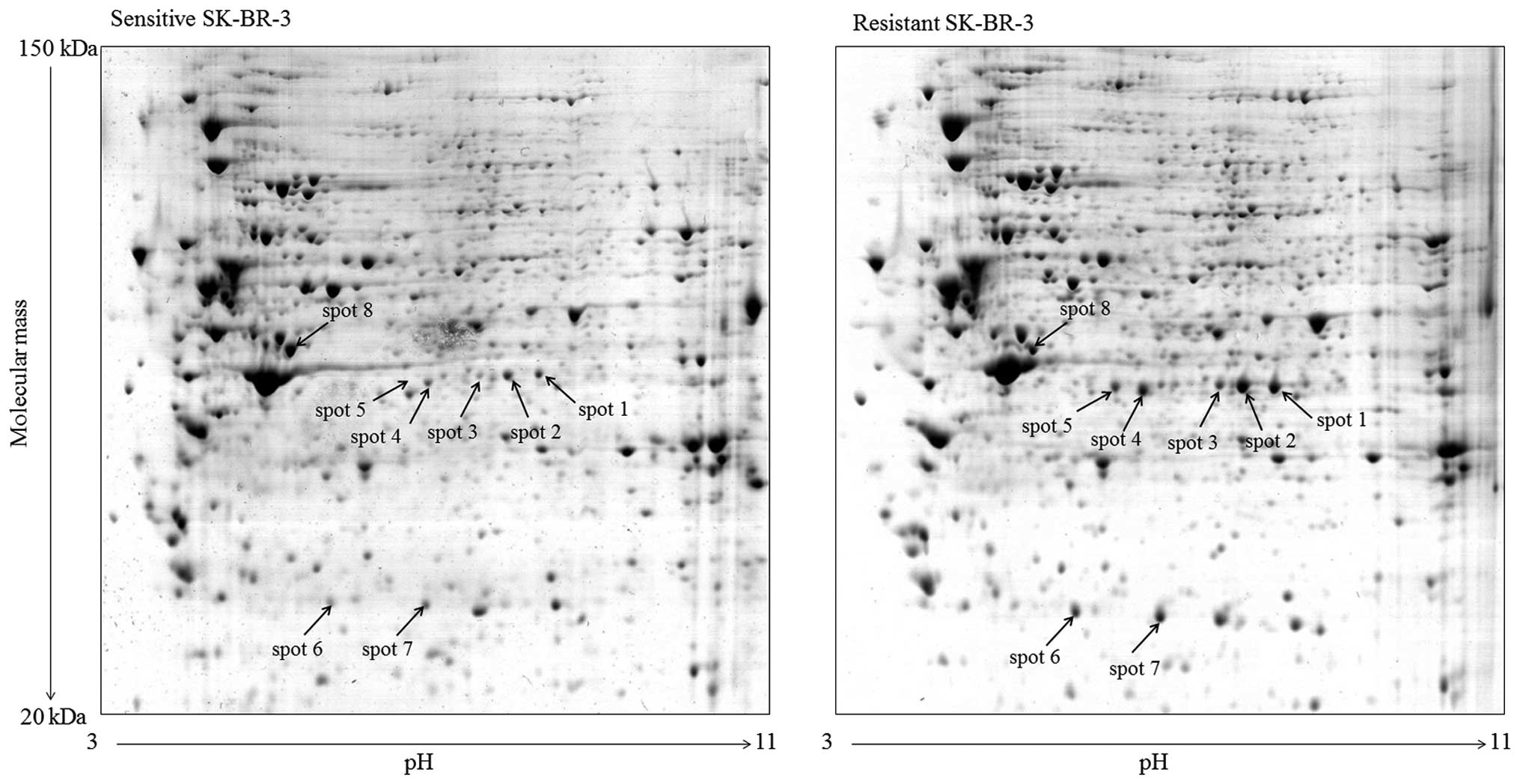
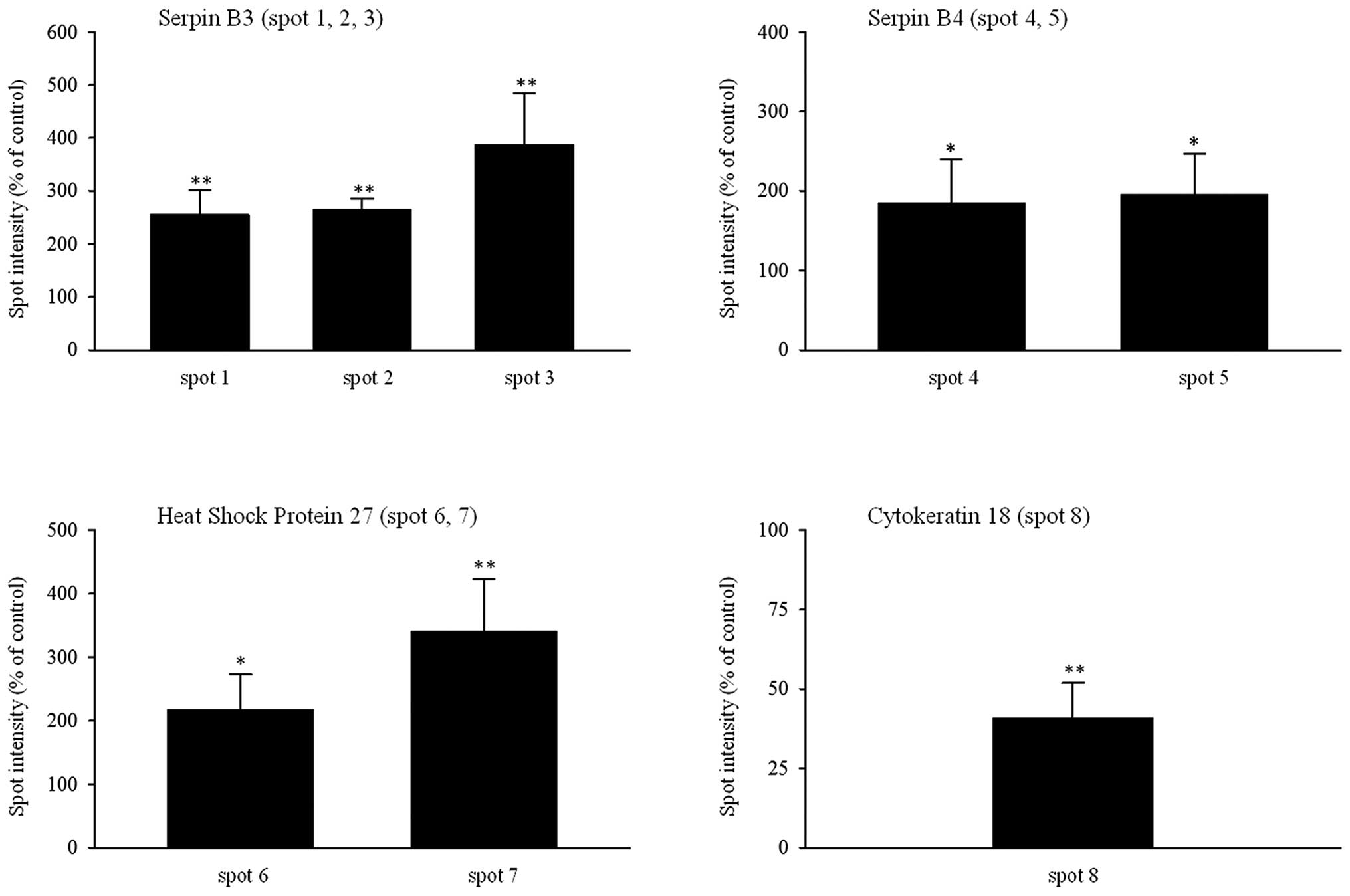
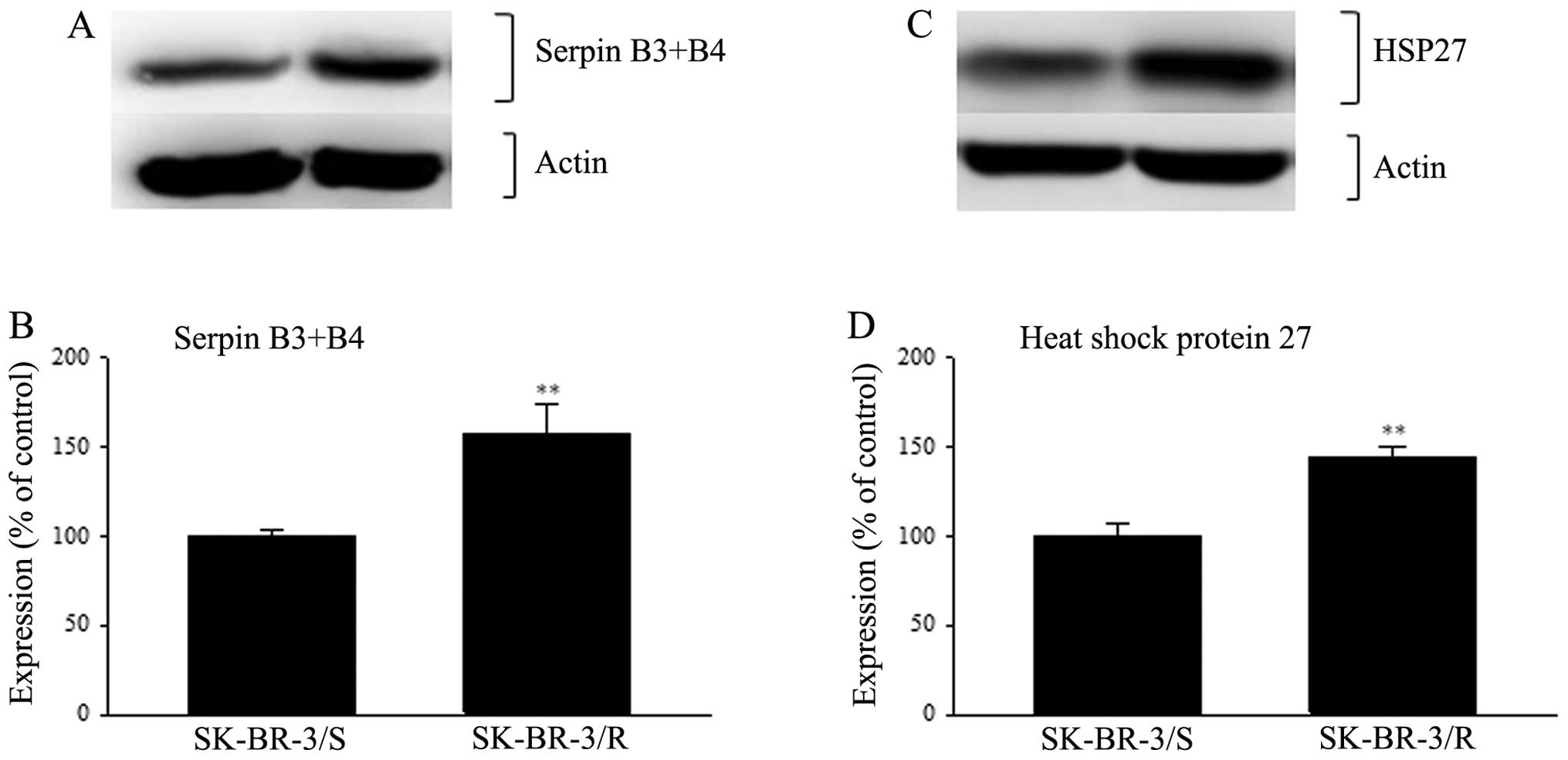
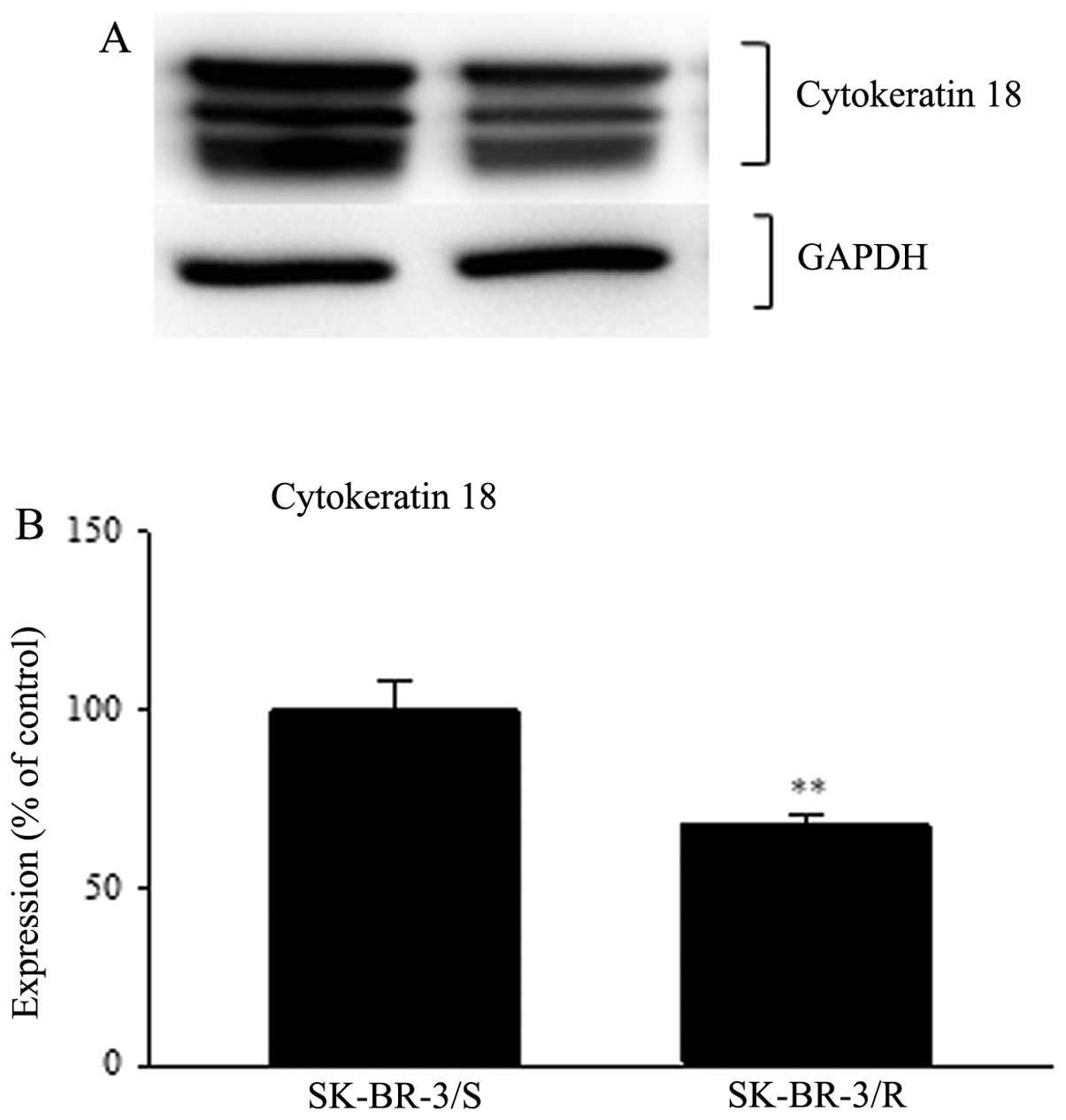
|
1
|
Jordan MA: Mechanism of action of
antitumor drugs that interact with microtubules and tubulin. Curr
Med Chem Anticancer Agents. 2:1–17. 2002. View Article : Google Scholar : PubMed/NCBI
|
|
2
|
Villeneuve DJ, Hembruff SL, Veitch Z,
Cecchetto M, Dew WA and Parissenti AM: cDNA microarray analysis of
isogenic paclitaxel- and doxorubicin-resistant breast tumor cell
lines reveals distinct drug-specific genetic signatures of
resistance. Breast Cancer Res Treat. 96:17–39. 2006. View Article : Google Scholar
|
|
3
|
Galletti E, Magnani M, Renzulli ML and
Botta M: Paclitaxel and docetaxel resistance: Molecular mechanisms
and development of new generation taxanes. Chem Med Chem.
2:920–942. 2007. View Article : Google Scholar : PubMed/NCBI
|
|
4
|
Stordal B and Davey R: A systematic review
of genes involved in the inverse resistance relationship between
cisplatin and paclitaxel chemotherapy: Role of BRCA1. Curr Cancer
Drug Targets. 9:354–365. 2009. View Article : Google Scholar : PubMed/NCBI
|
|
5
|
Smoter M, Bodnar L, Duchnowska R, Stec R,
Grala B and Szczylik C: The role of Tau protein in resistance to
paclitaxel. Cancer Chemother Pharmacol. 68:553–557. 2011.
View Article : Google Scholar : PubMed/NCBI
|
|
6
|
Vergara D, Tinelli A, Iannone A and Maffia
M: The impact of proteomics in the understanding of the molecular
basis of paclitaxel-resistance in ovarian tumors. Curr Cancer Drug
Targets. 12:987–997. 2012. View Article : Google Scholar : PubMed/NCBI
|
|
7
|
Rebucci M and Michiels C: Molecular
aspects of cancer cell resistance to chemotherapy. Biochem
Pharmacol. 85:1219–1226. 2013. View Article : Google Scholar : PubMed/NCBI
|
|
8
|
Mechetner E, Kyshtoobayeva A, Zonis S, et
al: Levels of multidrug resistance (MDR1) P-glycoprotein expression
by human breast cancer correlate with in vitro resistance to taxol
and doxorubicin. Clin Cancer Res. 4:389–398. 1998.PubMed/NCBI
|
|
9
|
Pires MM, Emmert D, Hrycyna CA and
Chmielewski J: Inhibition of P-glycoprotein-mediated paclitaxel
resistance by reversibly linked quinine homodimers. Mol Pharmacol.
75:92–100. 2009. View Article : Google Scholar : PubMed/NCBI
|
|
10
|
Thollet A, Vendrell JA, Payen L, et al:
ZNF217 confers resistance to the pro-apoptotic signals of
paclitaxel and aberrant expression of Aurora-A in breast cancer
cells. Mol Cancer. 9:2912010. View Article : Google Scholar : PubMed/NCBI
|
|
11
|
Wang Y, Chen QF, Jin S, et al:
Up-regulation of P-glycoprotein is involved in the increased
paclitaxel resistance in human esophageal cancer radioresistant
cells. Scand J Gastroenterol. 47:802–808. 2012. View Article : Google Scholar : PubMed/NCBI
|
|
12
|
Kwak JO, Lee SH, Lee GS, et al: Selective
inhibition of MDR1 (ABCB1) by HM30181 increases oral
bioavailability and therapeutic efficacy of paclitaxel. Eur J
Pharmacol. 627:92–98. 2010. View Article : Google Scholar : PubMed/NCBI
|
|
13
|
Huisman MT, Chhatta AA, van Tellingen O,
Beijnen JH and Schinkel AH: MRP2 (ABCC2) transports taxanes and
confers paclitaxel resistance and both processes are stimulated by
probenecid. Int J Cancer. 116:824–829. 2005. View Article : Google Scholar : PubMed/NCBI
|
|
14
|
O’Brien C, Cavet G, Pandita A, et al:
Functional genomics identifies ABCC3 as a mediator of taxane
resistance in HER2-amplified breast cancer. Cancer Res.
68:5380–5389. 2008.PubMed/NCBI
|
|
15
|
Violini S, D’Ascenzo S, Bagnoli M, et al:
Induction of a multifactorial resistance phenotype by high
paclitaxel selective pressure in a human ovarian carcinoma cell
line. J Exp Clin Cancer Res. 23:83–91. 2004.PubMed/NCBI
|
|
16
|
Takano M, Otani Y, Tanda M, Kawami M,
Nagai J and Yumoto R: Paclitaxel-resistance conferred by altered
expression of efflux and influx transporters for paclitaxel in the
human hepatoma cell line, HepG2. Drug Metab Pharmacokinet.
24:418–427. 2009. View Article : Google Scholar : PubMed/NCBI
|
|
17
|
Kars MD, Iseri OD and Gunduz U: A
microarray based expression profiling of paclitaxel and vincristine
resistant MCF-7 cells. Eur J Pharmacol. 657:4–9. 2011. View Article : Google Scholar : PubMed/NCBI
|
|
18
|
Taniguchi R, Kumai T, Matsumoto N, et al:
Utilization of human liver microsomes to explain individual
differences in paclitaxel metabolism by CYP2C8 and CYP3A4. J
Pharmacol Sci. 97:83–90. 2005. View Article : Google Scholar : PubMed/NCBI
|
|
19
|
Garcia-Martin E, Pizarro RM, Martinez C,
et al: Acquired resistance to the anticancer drug paclitaxel is
associated with induction of cytochrome P4502C8. Pharmacogenomics.
7:575–585. 2006. View Article : Google Scholar : PubMed/NCBI
|
|
20
|
Hendrikx J, Lagas JS, Rosing H, Schellens
JHM, Beijnen JH and Schinkel AH: P-glycoprotein and cytochrome P450
3A act together in restricting the oral bioavailability of
paclitaxel. Int J Cancer. 132:2439–2447. 2013. View Article : Google Scholar : PubMed/NCBI
|
|
21
|
Henningsson A, Sparreboom A, Sandstrom M,
et al: Population pharmacokinetic modelling of unbound and total
plasma concentrations of paclitaxel in cancer patients. Eur J
Cancer. 39:1105–1114. 2003. View Article : Google Scholar : PubMed/NCBI
|
|
22
|
De Hoon JPJ, Veeck J, Vriens B, Calon TGA,
van Engeland M and Tjan-Heijnen VCG: Taxane resistance in breast
cancer: A closed HER2 circuit? Biochim Biophys Acta Rev Cancer.
1825:197–206. 2012.PubMed/NCBI
|
|
23
|
Arai T, Miyoshi Y, Kim SJ, et al:
Association of GSTP1 expression with resistance to docetaxel and
paclitaxel in human breast cancers. Eur J Surg Oncol. 34:734–738.
2008. View Article : Google Scholar : PubMed/NCBI
|
|
24
|
Jardim BV, Moschetta MG, Gelaleti GB, et
al: Glutathione transferase pi (GSTpi) expression in breast cancer:
An immunohistochemical and molecular study. Acta Histochem.
114:510–517. 2012. View Article : Google Scholar : PubMed/NCBI
|
|
25
|
Miyake T, Nakayama T, Naoi Y, et al: GSTP1
expression predicts poor pathological complete response to
neoadjuvant chemotherapy in ER-negative breast cancer. Cancer Sci.
103:913–920. 2012. View Article : Google Scholar : PubMed/NCBI
|
|
26
|
Ferlini C, Raspaglio G, Mozzetti S, et al:
Bcl-2 down-regulation is a novel mechanism of paclitaxel
resistance. Mol Pharmacol. 64:51–58. 2003. View Article : Google Scholar : PubMed/NCBI
|
|
27
|
Pan Z and Gollahon L: Paclitaxel
attenuates Bcl-2 resistance to apoptosis in breast cancer cells
through an endoplasmic reticulum-mediated calcium release in a
dosage dependent manner. Biochem Biophys Res Commun. 432:431–437.
2013. View Article : Google Scholar
|
|
28
|
Ali-Osman F, Brunner JM, Kutluk TM and
Hess K: Prognostic significance of glutathione S-transferase pi
expression and subcellular localization in human gliomas. Clin
Cancer Res. 3:2253–2261. 1997.PubMed/NCBI
|
|
29
|
Cheung CHA, Wu SY, Lee TR, et al: Cancer
cells acquire mitotic drug resistance properties through beta
I-tubulin mutations and alterations in the expression of
beta-tubulin isotypes. PLoS One. 5:e125642010. View Article : Google Scholar
|
|
30
|
Wang YH, Sparano JA, Fineberg S, et al:
High expression of class III beta-tubulin predicts good response to
neoadjuvant taxane and doxorubicin/cyclophosphamide-based
chemotherapy in estrogen receptor-negative breast cancer. Clin
Breast Cancer. 13:103–108. 2013. View Article : Google Scholar
|
|
31
|
Yin SH, Zeng CQ, Hari M and Cabral F:
Random mutagenesis of beta-tubulin defines a set of dispersed
mutations that confer paclitaxel resistance. Pharm Res.
29:2994–3006. 2012. View Article : Google Scholar : PubMed/NCBI
|
|
32
|
Edelman MJ and Shvartsbeyn M: Epothilones
in development for non-small-cell lung cancer: Novel anti-tubulin
agents with the potential to overcome taxane resistance. Clin Lung
Cancer. 13:171–180. 2012. View Article : Google Scholar : PubMed/NCBI
|
|
33
|
Diaz JF, Barasoain I and Andreu JM: Fast
kinetics of taxol binding to microtubules. Effects of solution
variables and microtubule-associated proteins. J Biol Chem.
278:8407–8419. 2003. View Article : Google Scholar : PubMed/NCBI
|
|
34
|
Zhang M, Mukherjee N, Bermudez RS, et al:
Adenovirus-mediated inhibition of survivin expression sensitizes
human prostate cancer cells to paclitaxel in vitro and in vivo.
Prostate. 64:293–302. 2005. View Article : Google Scholar
|
|
35
|
Wang S, Huang X, Lee CK and Liu B:
Elevated expression of erbB3 confers paclitaxel resistance in
erbB2-overexpressing breast cancer cells via upregulation of
survivin. Oncogene. 29:4225–4236. 2010. View Article : Google Scholar : PubMed/NCBI
|
|
36
|
Lv KZ, Liu LQ, Wang LB, et al: Lin28
mediates paclitaxel resistance by modulating p21, Rb and Let-7a
miRNA in breast cancer cells. PLoS One. 7:e400082012. View Article : Google Scholar : PubMed/NCBI
|
|
37
|
Lu MS, Xiao L, Hu JL, Deng S and Xu Y:
Targeting of p38 mitogen-activated protein kinases to early growth
response gene 1 (EGR-1) in the human paclitaxel-resistance ovarian
carcinoma cells. J Huazhong Univ Sci Tech-Med. 28:451–455. 2008.
View Article : Google Scholar : PubMed/NCBI
|
|
38
|
Arai K, Matsumoto Y, Nagashima Y and
Yagasaki K: Regulation of class II beta-tubulin expression by tumor
suppressor p53 protein in mouse melanoma cells in response to vinca
alkaloid. Mol Cancer Res. 4:247–255. 2006. View Article : Google Scholar : PubMed/NCBI
|
|
39
|
Farrell A: A close look at cancer. Nat
Med. 17:262–265. 2011. View Article : Google Scholar
|
|
40
|
Pan Z, Gao YL, Heng LS, et al: Amphiphilic
N-(2,3-dihydroxypropyl)-chitosan-cholic acid micelles for
paclitaxel delivery. Carbohydr Polym. 94:394–399. 2013. View Article : Google Scholar : PubMed/NCBI
|
|
41
|
Ehrlichova M, Koc M, Truksa J, Naldova Z,
Vaclavikova R and Kovarr J: Cell death induced by taxanes in breast
cancer cells: Cytochrome c is released in resistant but not in
sensitive cells. Anticancer Res. 25:4215–4224. 2005.PubMed/NCBI
|
|
42
|
Ehrlichova M, Ojima I, Chen J, et al:
Transport, metabolism, cytotoxicity and effects of novel taxanes on
the cell cycle in MDA-MB-435 and NCI/ADR-RES cells.
Naunyn-Schmiedebergs Arch Pharmacol. 385:1035–1048. 2012.
View Article : Google Scholar : PubMed/NCBI
|
|
43
|
Nemcova-Furstova V, Balusikova K, Sramek
J, James RF and Kovar J: Caspase-2 and JNK activated by saturated
fatty acids are not involved in apoptosis induction but modulate ER
stress in human pancreatic beta-cells. Cell Physiol Biochem.
31:277–289. 2013. View Article : Google Scholar : PubMed/NCBI
|
|
44
|
Dyballa N and Metzger S: Fast and
sensitive colloidal coomassie G-250 staining for proteins in
polyacrylamide gels. J Vis Exp. 30:1–5. 2009.PubMed/NCBI
|
|
45
|
Jelinek M, Balusikova K, Kopperova D, et
al: Caspase-2 is involved in cell death induction by taxanes in
breast cancer cells. Cancer Cell Int. 13:422013. View Article : Google Scholar
|
|
46
|
Vidalino L, Doria A, Quarta S, Zen M,
Gatta A and Pontisso P: Serpin B3, apoptosis and autoimmunity.
Autoimmun Rev. 9:108–112. 2009. View Article : Google Scholar
|
|
47
|
Ho KY, Huang HH, Hung KF, et al:
Cholesteatoma growth and proliferation: Relevance with serpin B3.
Laryngoscope. 122:2818–2823. 2012. View Article : Google Scholar : PubMed/NCBI
|
|
48
|
Gettins PGW: Serpin structure, mechanism,
and function. Chem Rev. 102:4751–4803. 2002. View Article : Google Scholar : PubMed/NCBI
|
|
49
|
Izuhara K, Ohta S, Kanaji S, Shiraishi H
and Arima K: Recent progress in understanding the diversity of the
human ov-serpin/clade B serpin family. Cell Mol Life Sci.
65:2541–2553. 2008. View Article : Google Scholar : PubMed/NCBI
|
|
50
|
Cataltepe S, Gornstein ER, Schick C, et
al: Co-expression of the squamous cell carcinoma antigens 1 and 2
in normal adult human tissues and squamous cell carcinomas. J
Histochem Cytochem. 48:113–122. 2000.PubMed/NCBI
|
|
51
|
Murakami A, Suminami Y, Hirakawa H, Nawata
S, Numa F and Kato H: Squamous cell carcinoma antigen suppresses
radiation-induced cell death. Br J Cancer. 84:851–858. 2001.
View Article : Google Scholar : PubMed/NCBI
|
|
52
|
Suminami Y, Nagashima S, Murakami A, et
al: Suppression of a squamous cell carcinoma (SCC)-related serpin,
SCC antigen, inhibits tumor growth with increased intratumor
infiltration of natural killer cells. Cancer Res. 61:1776–1780.
2001.
|
|
53
|
Collie-Duguid ESR, Sweeney K, Stewart KN,
Miller ID, Smyth E and Heys SD: SerpinB3, a new prognostic tool in
breast cancer patients treated with neoadjuvant chemotherapy.
Breast Cancer Res Treat. 132:807–818. 2011. View Article : Google Scholar
|
|
54
|
Lim W, Kim HS, Jeong W, et al: Serpin B3
in the chicken model of ovarian cancer: A prognostic factor for
platinum resistance and survival in patients with epithelial
ovarian cancer. Plos One. 7:e498692012. View Article : Google Scholar : PubMed/NCBI
|
|
55
|
Kerr KM: Personalized medicine for lung
cancer: new challenges for pathology. Histopathology. 60:531–546.
2012. View Article : Google Scholar : PubMed/NCBI
|
|
56
|
Felbor U, Dreier L, Bryant RAR, Ploegh HL,
Olsen BR and Mothes W: Secreted cathepsin L generates endostatin
from collagen XVIII. EMBO J. 19:1187–1194. 2000. View Article : Google Scholar : PubMed/NCBI
|
|
57
|
Kudo T, Kigoshi H, Hagiwara T, Takino T,
Yamazaki M and Yui S: Cathepsin G, a neutrophil protease, induces
compact cell-cell adhesion in MCF-7 human breast cancer cells.
Mediat Inflamm. 2009:8509402009. View Article : Google Scholar : PubMed/NCBI
|
|
58
|
Lankelma JM, Voorend DM, Barwari T, et al:
Cathepsin L, target in cancer treatment? Life Sci. 86:225–233.
2012. View Article : Google Scholar : PubMed/NCBI
|
|
59
|
Small DM, Burden RE, Jaworski J, et al:
Cathepsin S from both tumor and tumor-associated cells promote
cancer growth and neovascularization. Int J Cancer. 133:2102–2112.
2013. View Article : Google Scholar : PubMed/NCBI
|
|
60
|
Broker LE, Huisman C, Span SW, Rodriguez
JA, Kruyt FAE and Giaccone G: Cathepsin B mediates
caspase-independent cell death induced by microtubule stabilizing
agents in non-small cell lung cancer cells. Cancer Res. 64:27–30.
2004. View Article : Google Scholar : PubMed/NCBI
|
|
61
|
De Koning PJA, Kummer JA, de Poot SAH, et
al: Intracellular serine protease inhibitor serpin B4 inhibits
granzyme M-induced cell death. PLoS One. 6:e226452011.PubMed/NCBI
|
|
62
|
Ahmed ST and Darnell JE: Serpin B3/B4,
activated by STAT3, promote survival of squamous carcinoma cells.
Biochem Biophys Res Commun. 378:821–825. 2009. View Article : Google Scholar : PubMed/NCBI
|
|
63
|
Ehrnsperger M, Graber S, Gaestel M and
Buchner J: Binding of nonnative protein to Hsp25 during heat shock
creates a reservoir of folding intermediates for reactivation. EMBO
J. 16:221–229. 1997. View Article : Google Scholar : PubMed/NCBI
|
|
64
|
Schmitt E, Gehrmann M, Brunet M, Multhoff
G and Garrido C: Intracellular and extracellular functions of heat
shock proteins: repercussions in cancer therapy. J Leukoc Biol.
81:15–27. 2007. View Article : Google Scholar : PubMed/NCBI
|
|
65
|
Garrido C, Bruey JM, Fromentin A, Hammann
A, Arrigo AP and Solary E: HSP27 inhibits cytochrome c-dependent
activation of procaspase-9. FASEB J. 13:2061–2070. 1999.PubMed/NCBI
|
|
66
|
Havasi A, Li ZJ, Wang ZY, et al: Hsp27
inhibits Bax activation and apoptosis via a phosphatidylinositol
3-kinase-dependent mechanism. J Biol Chem. 283:12305–12313. 2008.
View Article : Google Scholar : PubMed/NCBI
|
|
67
|
Ciocca DR, Arrigo AP and Calderwood SK:
Heat shock proteins and heat shock factor 1 in carcinogenesis and
tumor development: an update. Arch Toxicol. 87:19–48. 2012.
View Article : Google Scholar : PubMed/NCBI
|
|
68
|
Weng YR, Cui Y and Fang JY: Biological
functions of cytokeratin 18 in cancer. Mol Cancer Res. 10:485–493.
2012. View Article : Google Scholar : PubMed/NCBI
|
|
69
|
Galarneau L, Loranger A, Gilbert S and
Marceau N: Keratins modulate hepatic cell adhesion, size and G1/S
transition. Exp Cell Res. 313:179–194. 2007. View Article : Google Scholar : PubMed/NCBI
|
|
70
|
Abreu MT, Arnold ET, Chow JYC and Barrett
KE: Phosphatidylinositol 3-kinase-dependent pathways oppose
Fas-induced apoptosis and limit chloride secretion in human
intestinal epithelial cells. Implications for inflammatory
diarrheal states. J Biol Chem. 276:47563–47574. 2001. View Article : Google Scholar
|
|
71
|
Fortier AM, Van Themsche C, Asselin E and
Cadrin M: Akt isoforms regulate intermediate filament protein
levels in epithelial carcinoma cells. FEBS Lett. 584:984–988. 2010.
View Article : Google Scholar : PubMed/NCBI
|
|
72
|
Inada H, Izawa I, Nishizawa M, et al:
Keratin attenuates tumor necrosis factor-induced cytotoxicity
through association with TRADD. J Cell Biol. 155:415–425. 2001.
View Article : Google Scholar : PubMed/NCBI
|
|
73
|
Meng YG, Wu ZQ, Yin XY, et al: Keratin 18
attenuates estrogen receptor alpha-mediated signaling by
sequestering LRP16 in cytoplasm. BMC Cell Biol. 10:962009.
View Article : Google Scholar : PubMed/NCBI
|
|
74
|
Woelfle U, Sauter G, Santjer S, Brakenhoff
R and Pantel K: Down-regulated expression of cytokeratin 18
promotes progression of human breast cancer. Clin Cancer Res.
10:2670–2674. 2004. View Article : Google Scholar : PubMed/NCBI
|
|
75
|
Schaller G, Fuchs I, Pritze W, et al:
Elevated keratin 18 protein expression indicates a favorable
prognosis in patients with breast cancer. Clin Cancer Res.
2:1879–1885. 1996.PubMed/NCBI
|