Spandidos Publications Logo
  • About
    • About Spandidos
    • Aims and Scopes
    • Abstracting and Indexing
    • Editorial Policies
    • Reprints and Permissions
    • Job Opportunities
    • Terms and Conditions
    • Contact
  • Journals
    • All Journals
    • Oncology Letters
      • Oncology Letters
      • Information for Authors
      • Editorial Policies
      • Editorial Board
      • Aims and Scope
      • Abstracting and Indexing
      • Bibliographic Information
      • Archive
    • International Journal of Oncology
      • International Journal of Oncology
      • Information for Authors
      • Editorial Policies
      • Editorial Board
      • Aims and Scope
      • Abstracting and Indexing
      • Bibliographic Information
      • Archive
    • Molecular and Clinical Oncology
      • Molecular and Clinical Oncology
      • Information for Authors
      • Editorial Policies
      • Editorial Board
      • Aims and Scope
      • Abstracting and Indexing
      • Bibliographic Information
      • Archive
    • Experimental and Therapeutic Medicine
      • Experimental and Therapeutic Medicine
      • Information for Authors
      • Editorial Policies
      • Editorial Board
      • Aims and Scope
      • Abstracting and Indexing
      • Bibliographic Information
      • Archive
    • International Journal of Molecular Medicine
      • International Journal of Molecular Medicine
      • Information for Authors
      • Editorial Policies
      • Editorial Board
      • Aims and Scope
      • Abstracting and Indexing
      • Bibliographic Information
      • Archive
    • Biomedical Reports
      • Biomedical Reports
      • Information for Authors
      • Editorial Policies
      • Editorial Board
      • Aims and Scope
      • Abstracting and Indexing
      • Bibliographic Information
      • Archive
    • Oncology Reports
      • Oncology Reports
      • Information for Authors
      • Editorial Policies
      • Editorial Board
      • Aims and Scope
      • Abstracting and Indexing
      • Bibliographic Information
      • Archive
    • Molecular Medicine Reports
      • Molecular Medicine Reports
      • Information for Authors
      • Editorial Policies
      • Editorial Board
      • Aims and Scope
      • Abstracting and Indexing
      • Bibliographic Information
      • Archive
    • World Academy of Sciences Journal
      • World Academy of Sciences Journal
      • Information for Authors
      • Editorial Policies
      • Editorial Board
      • Aims and Scope
      • Abstracting and Indexing
      • Bibliographic Information
      • Archive
    • International Journal of Functional Nutrition
      • International Journal of Functional Nutrition
      • Information for Authors
      • Editorial Policies
      • Editorial Board
      • Aims and Scope
      • Abstracting and Indexing
      • Bibliographic Information
      • Archive
    • International Journal of Epigenetics
      • International Journal of Epigenetics
      • Information for Authors
      • Editorial Policies
      • Editorial Board
      • Aims and Scope
      • Abstracting and Indexing
      • Bibliographic Information
      • Archive
    • Medicine International
      • Medicine International
      • Information for Authors
      • Editorial Policies
      • Editorial Board
      • Aims and Scope
      • Abstracting and Indexing
      • Bibliographic Information
      • Archive
  • Articles
  • Information
    • Information for Authors
    • Information for Reviewers
    • Information for Librarians
    • Information for Advertisers
    • Conferences
  • Language Editing
Spandidos Publications Logo
  • About
    • About Spandidos
    • Aims and Scopes
    • Abstracting and Indexing
    • Editorial Policies
    • Reprints and Permissions
    • Job Opportunities
    • Terms and Conditions
    • Contact
  • Journals
    • All Journals
    • Biomedical Reports
      • Information for Authors
      • Editorial Policies
      • Editorial Board
      • Aims and Scope
      • Abstracting and Indexing
      • Bibliographic Information
      • Archive
    • Experimental and Therapeutic Medicine
      • Information for Authors
      • Editorial Policies
      • Editorial Board
      • Aims and Scope
      • Abstracting and Indexing
      • Bibliographic Information
      • Archive
    • International Journal of Epigenetics
      • Information for Authors
      • Editorial Policies
      • Editorial Board
      • Aims and Scope
      • Abstracting and Indexing
      • Bibliographic Information
      • Archive
    • International Journal of Functional Nutrition
      • Information for Authors
      • Editorial Policies
      • Editorial Board
      • Aims and Scope
      • Abstracting and Indexing
      • Bibliographic Information
      • Archive
    • International Journal of Molecular Medicine
      • Information for Authors
      • Editorial Policies
      • Editorial Board
      • Aims and Scope
      • Abstracting and Indexing
      • Bibliographic Information
      • Archive
    • International Journal of Oncology
      • Information for Authors
      • Editorial Policies
      • Editorial Board
      • Aims and Scope
      • Abstracting and Indexing
      • Bibliographic Information
      • Archive
    • Medicine International
      • Information for Authors
      • Editorial Policies
      • Editorial Board
      • Aims and Scope
      • Abstracting and Indexing
      • Bibliographic Information
      • Archive
    • Molecular and Clinical Oncology
      • Information for Authors
      • Editorial Policies
      • Editorial Board
      • Aims and Scope
      • Abstracting and Indexing
      • Bibliographic Information
      • Archive
    • Molecular Medicine Reports
      • Information for Authors
      • Editorial Policies
      • Editorial Board
      • Aims and Scope
      • Abstracting and Indexing
      • Bibliographic Information
      • Archive
    • Oncology Letters
      • Information for Authors
      • Editorial Policies
      • Editorial Board
      • Aims and Scope
      • Abstracting and Indexing
      • Bibliographic Information
      • Archive
    • Oncology Reports
      • Information for Authors
      • Editorial Policies
      • Editorial Board
      • Aims and Scope
      • Abstracting and Indexing
      • Bibliographic Information
      • Archive
    • World Academy of Sciences Journal
      • Information for Authors
      • Editorial Policies
      • Editorial Board
      • Aims and Scope
      • Abstracting and Indexing
      • Bibliographic Information
      • Archive
  • Articles
  • Information
    • For Authors
    • For Reviewers
    • For Librarians
    • For Advertisers
    • Conferences
  • Language Editing
Login Register Submit
  • This site uses cookies
  • You can change your cookie settings at any time by following the instructions in our Cookie Policy. To find out more, you may read our Privacy Policy.

    I agree
Search articles by DOI, keyword, author or affiliation
Search
Advanced Search
presentation
International Journal of Oncology
Join Editorial Board Propose a Special Issue
Print ISSN: 1019-6439 Online ISSN: 1791-2423
Journal Cover
February-2015 Volume 46 Issue 2

Full Size Image

Cover Legend PDF

Sign up for eToc alerts
Recommend to Library

Journals

International Journal of Molecular Medicine

International Journal of Molecular Medicine

International Journal of Molecular Medicine is an international journal devoted to molecular mechanisms of human disease.

International Journal of Oncology

International Journal of Oncology

International Journal of Oncology is an international journal devoted to oncology research and cancer treatment.

Molecular Medicine Reports

Molecular Medicine Reports

Covers molecular medicine topics such as pharmacology, pathology, genetics, neuroscience, infectious diseases, molecular cardiology, and molecular surgery.

Oncology Reports

Oncology Reports

Oncology Reports is an international journal devoted to fundamental and applied research in Oncology.

Experimental and Therapeutic Medicine

Experimental and Therapeutic Medicine

Experimental and Therapeutic Medicine is an international journal devoted to laboratory and clinical medicine.

Oncology Letters

Oncology Letters

Oncology Letters is an international journal devoted to Experimental and Clinical Oncology.

Biomedical Reports

Biomedical Reports

Explores a wide range of biological and medical fields, including pharmacology, genetics, microbiology, neuroscience, and molecular cardiology.

Molecular and Clinical Oncology

Molecular and Clinical Oncology

International journal addressing all aspects of oncology research, from tumorigenesis and oncogenes to chemotherapy and metastasis.

World Academy of Sciences Journal

World Academy of Sciences Journal

Multidisciplinary open-access journal spanning biochemistry, genetics, neuroscience, environmental health, and synthetic biology.

International Journal of Functional Nutrition

International Journal of Functional Nutrition

Open-access journal combining biochemistry, pharmacology, immunology, and genetics to advance health through functional nutrition.

International Journal of Epigenetics

International Journal of Epigenetics

Publishes open-access research on using epigenetics to advance understanding and treatment of human disease.

Medicine International

Medicine International

An International Open Access Journal Devoted to General Medicine.

Journal Cover
February-2015 Volume 46 Issue 2

Full Size Image

Cover Legend PDF

Sign up for eToc alerts
Recommend to Library

  • Article
  • Citations
    • Cite This Article
    • Download Citation
    • Create Citation Alert
    • Remove Citation Alert
    • Cited By
  • Similar Articles
    • Related Articles (in Spandidos Publications)
    • Similar Articles (Google Scholar)
    • Similar Articles (PubMed)
  • Download PDF
  • Download XML
  • View XML
Article

p53 suppresses 14-3-3γ by stimulating proteasome-mediated 14-3-3γ protein degradation

  • Authors:
    • De-Yu Chen
    • Dong-Fang Dai
    • Ye Hua
    • Wen-Qing Qi
  • View Affiliations / Copyright

    Affiliations: Institute of Oncology, The Affiliated Hospital of Jiangsu University, Zhenjiang, Jiangsu 212001, P.R. China
  • Pages: 818-824
    |
    Published online on: November 7, 2014
       https://doi.org/10.3892/ijo.2014.2740
  • Expand metrics +
Metrics: Total Views: 0 (Spandidos Publications: | PMC Statistics: )
Metrics: Total PDF Downloads: 0 (Spandidos Publications: | PMC Statistics: )
Cited By (CrossRef): 0 citations Loading Articles...

This article is mentioned in:


Abstract

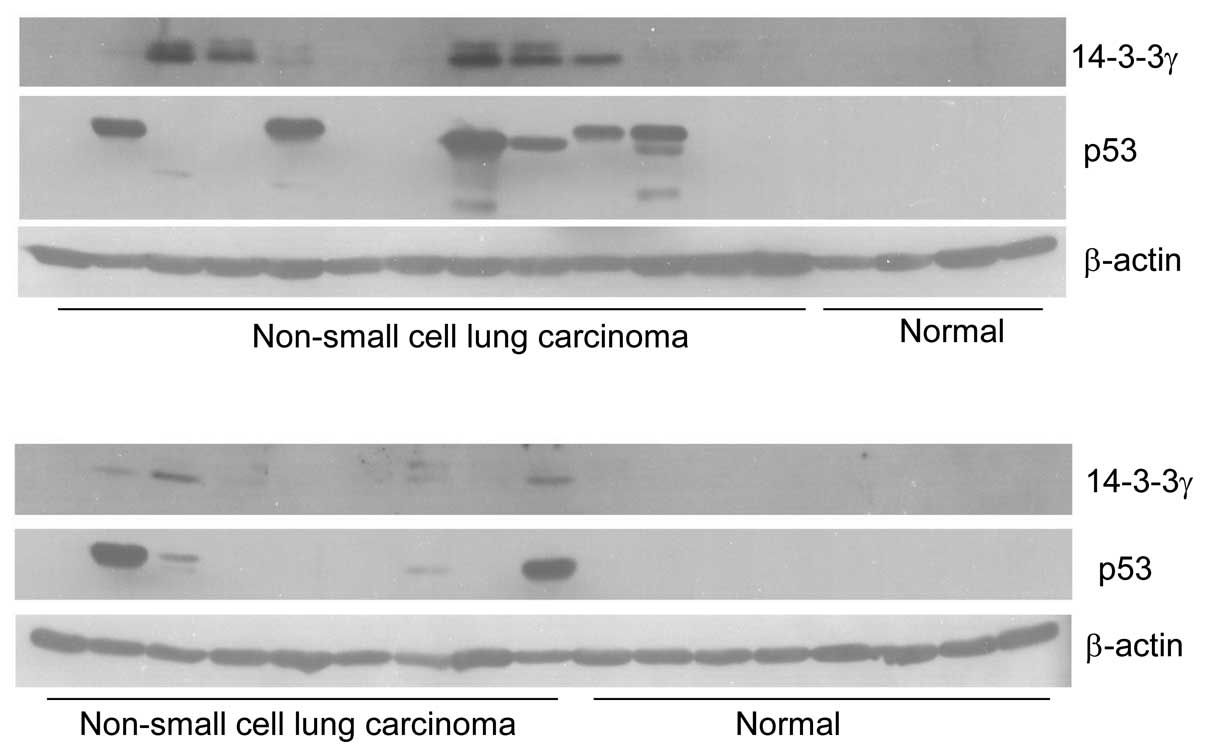
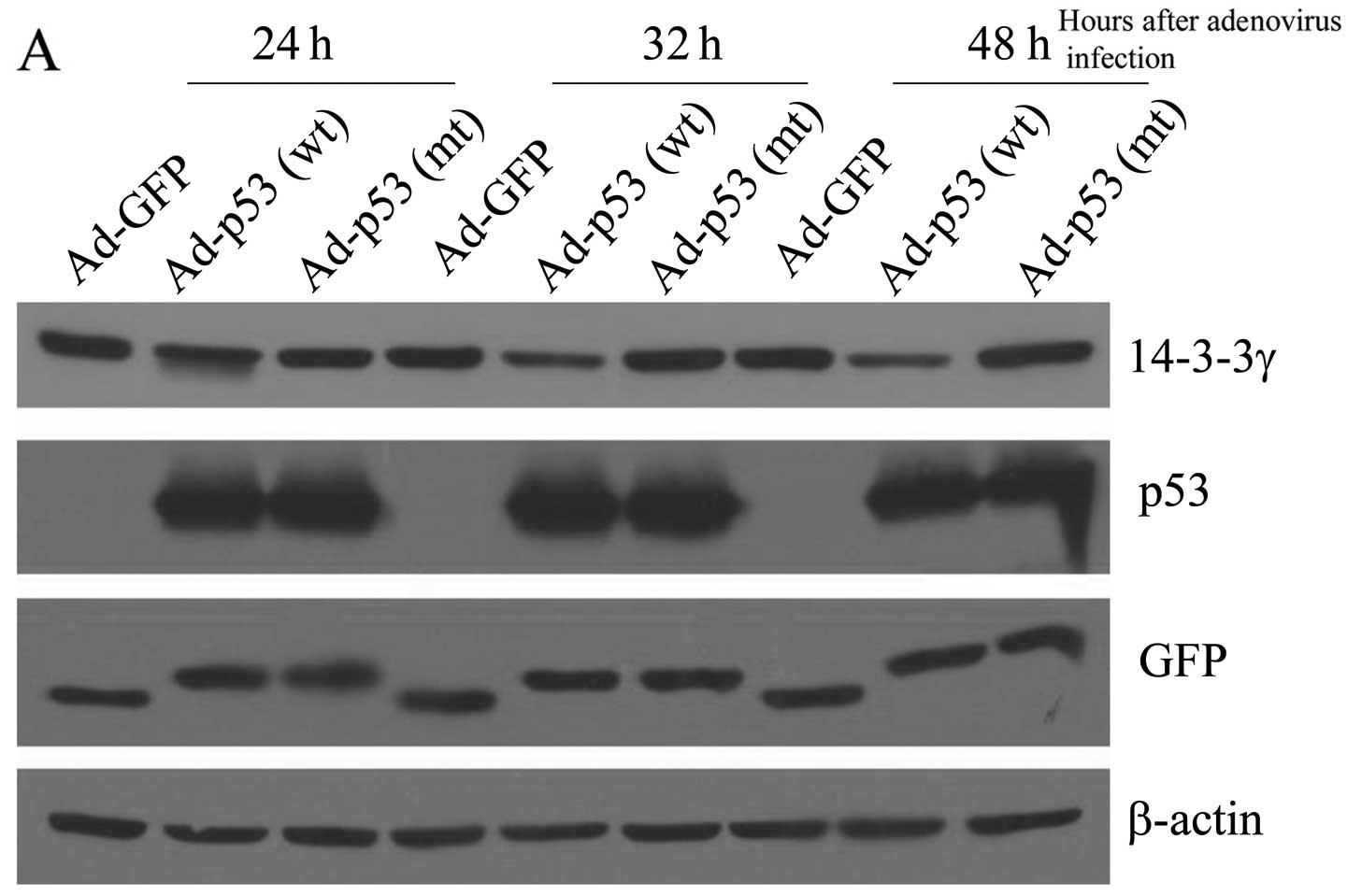
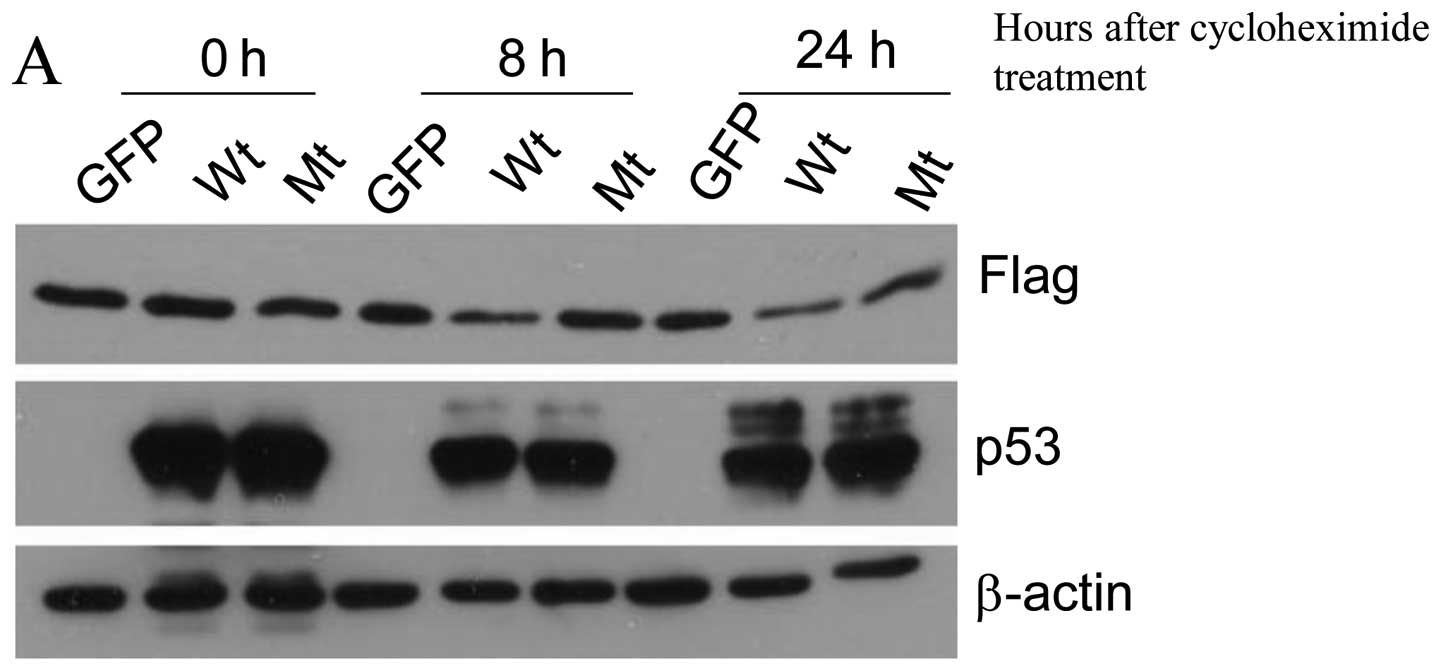
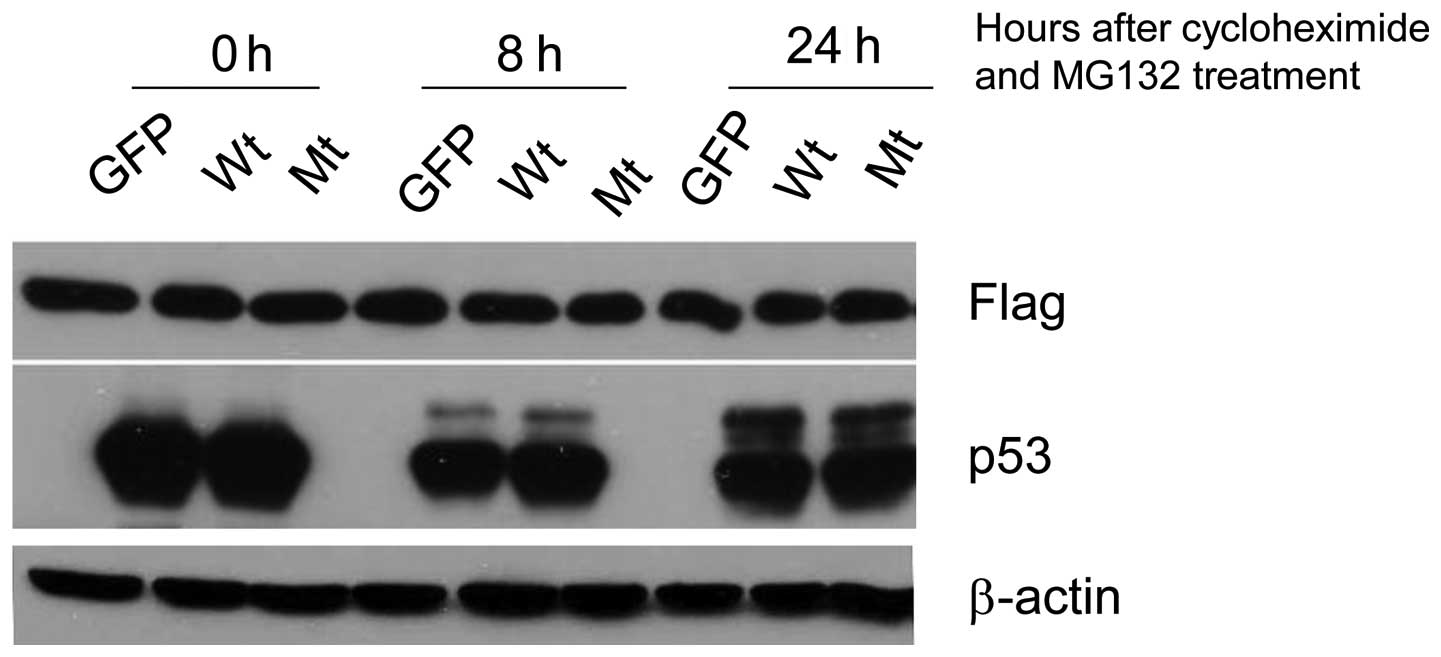
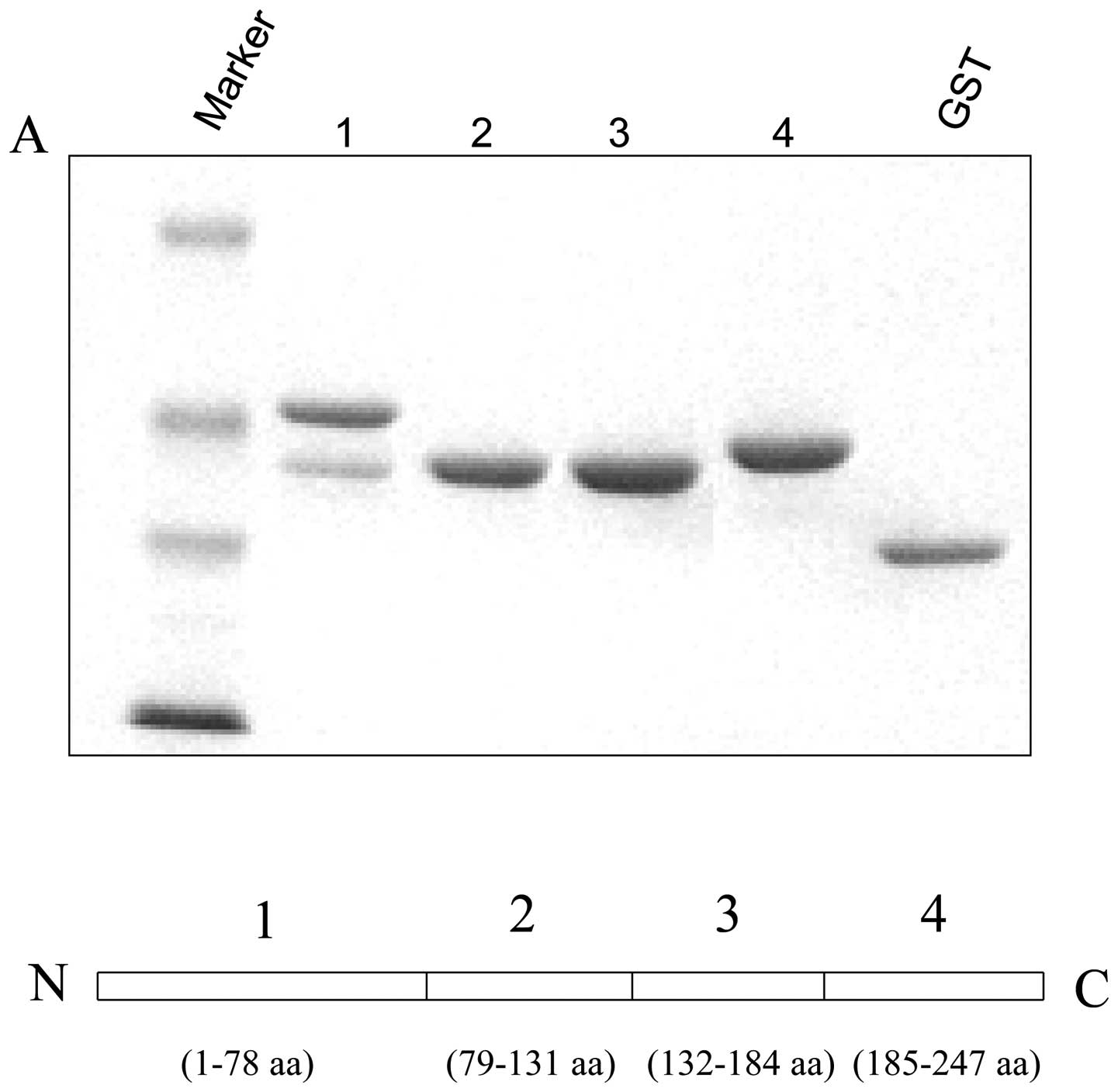
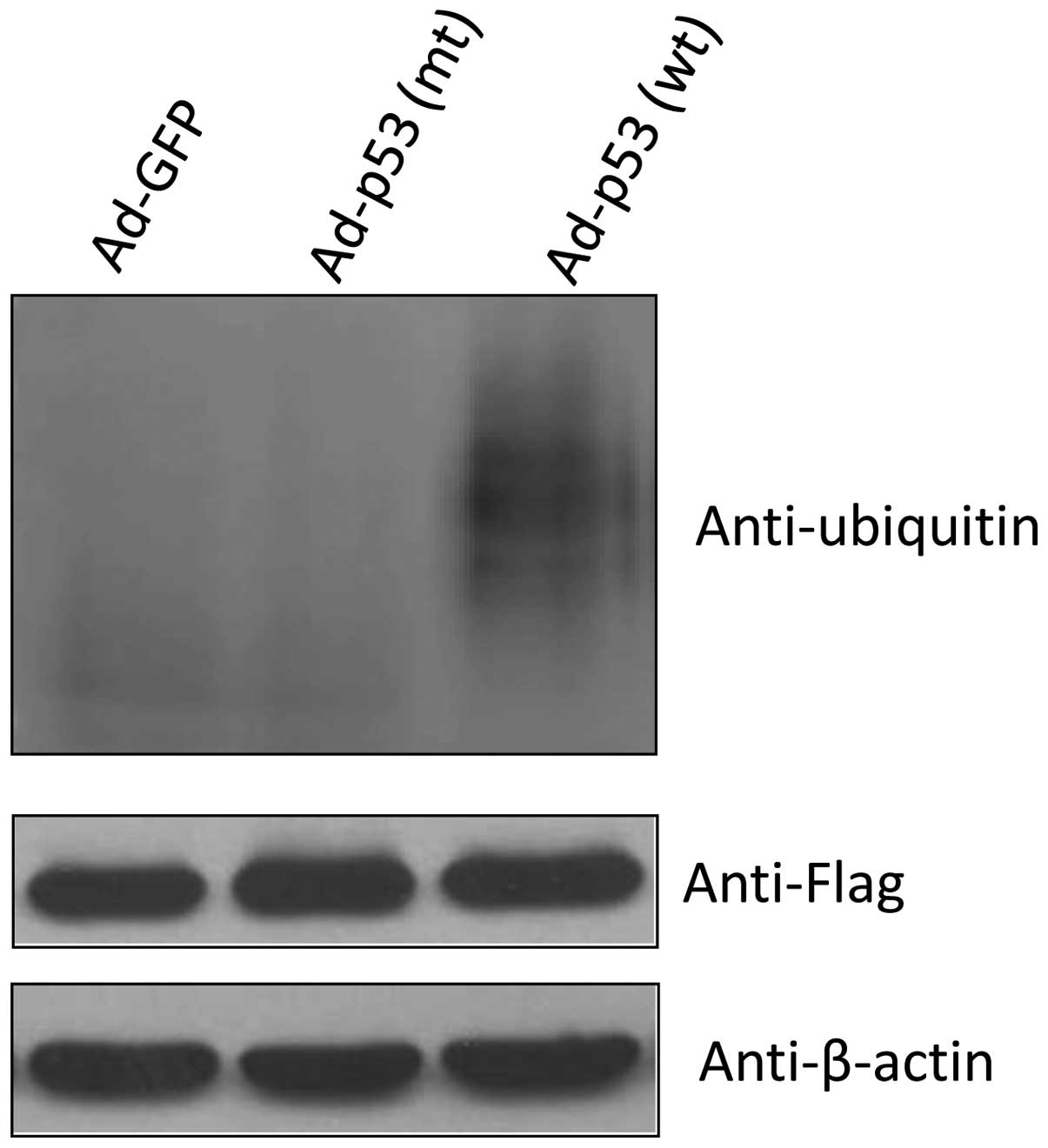
14-3-3 proteins are a family of highly conserved polypeptides that interact with a large number of proteins and play a role in a wide variety of cellular processes. 14-3-3 proteins have been demonstrated overexpressed in several cancers and serving as potential oncogenes. In a previous study we showed one isoform of the 14-3-3 family, 14-3-3γ was negatively regulated by p53 through binding to its promoter and inhibiting its transcription. In the present study we investigated both p53 and 14-3-3γ protein levels in human lung cancerous tissues and normal lung tissues. We found 14-3-3γ expression correlated to p53 overexpression in lung cancer tissues. Ecotopic expression of wild-type p53, but not mutant p53 (R175H) suppressed both endogenous and exogenous 14-3-3γ in colon and lung cancer cell lines. Further examination demonstrated that p53 interacted with C-terminal domain of 14-3-3γ and induced 14-3-3γ ubiquitination. MG132, a specific inhibitor of the 26S proteasome, could block the effect of p53 on 14-3-3γ protein levels, suggesting that p53 suppressed 14-3-3γ by stimulating the process of proteasome-mediated degradation of 14-3-3γ. These results indicate that the inhibitory effect of p53 on 14-3-3γ is mediated also by a post-transcriptional mechanism. Loss of p53 function may result in upregulation of 14-3-3γ in lung cancers.
View Figures

Figure 1

Figure 2

Figure 3

Figure 4

Figure 5

Figure 6

View References

1 

Aitken A: 14-3-3 proteins: a historic overview. Semin Cancer Biol. 16:162–172. 2006. View Article : Google Scholar : PubMed/NCBI

2 

Dougherty MK and Morrison DK: Unlocking the code of 14-3-3. J Cell Sci. 117:1875–1884. 2004. View Article : Google Scholar : PubMed/NCBI

3 

Hermeking H: The 14-3-3 cancer connection. Nat Rev Cancer. 3:931–943. 2003. View Article : Google Scholar

4 

Hermeking H and Benzinger A: 14-3-3 proteins in cell cycle regulation. Semin Cancer Biol. 16:183–192. 2006. View Article : Google Scholar : PubMed/NCBI

5 

Zhang Y, Karas M, Zhao H, Yakar S and LeRoith D: 14-3-3-sigma mediation of cell cycle progression is p53-independent in response to insulin-like growth factor-I receptor activation. J Biol Chem. 279:34353–34360. 2004. View Article : Google Scholar : PubMed/NCBI

6 

Kasahara K, Goto H, Enomoto M, Tomono Y, Kiyono T and Inagaki M: 14-3-3gamma mediates Cdc25A proteolysis to block premature mitotic entry after DNA damage. EMBO J. 29:2802–2812. 2010. View Article : Google Scholar : PubMed/NCBI

7 

Du J, Chen L, Luo X, Shen Y, Dou Z, Shen J, Cheng L, Chen Y, Li C, Wang H and Yao X: 14-3-3zeta cooperates with phosphorylated Plk1 and is required for correct cytokinesis. Front Biosci (Schol Ed). 4:639–650. 2012. View Article : Google Scholar

8 

Masters SC and Fu H: 14-3-3 proteins mediate an essential antiapoptotic signal. J Biol Chem. 276:45193–45200. 2001. View Article : Google Scholar : PubMed/NCBI

9 

Mhawech P: 14-3-3 proteins - an update. Cell Res. 15:228–236. 2005. View Article : Google Scholar : PubMed/NCBI

10 

Yan Y, Xu Y, Gao YY, Zong ZH, Zhang Q, Li C and Wang HQ: Implication of 14-3-3epsilon and 14-3-3theta/tau in proteasome inhibition-induced apoptosis of glioma cells. Cancer Sci. 104:55–61. 2005. View Article : Google Scholar

11 

Han DC, Rodriguez LG and Guan JL: Identification of a novel interaction between integrin beta1 and 14-3-3beta. Oncogene. 20:346–357. 2001. View Article : Google Scholar : PubMed/NCBI

12 

Rodriguez LG and Guan JL: 14-3-3 regulation of cell spreading and migration requires a functional amphipathic groove. J Cell Physiol. 202:285–294. 2005. View Article : Google Scholar

13 

Luk SC, Ngai SM, Tsui SK, Fung KP, Lee CY and Waye MM: In vivo and in vitro association of 14-3-3 epsilon isoform with calmodulin: implication for signal transduction and cell proliferation. J Cell Biochem. 73:31–35. 1999. View Article : Google Scholar : PubMed/NCBI

14 

Matitau AE, Gabor TV, Gill RM and Scheid MP: MEKK2 association with 14-3-3 regulates activation of c-Jun N-terminal kinase. J Biol Chem. 288:28293–28302. 2013. View Article : Google Scholar : PubMed/NCBI

15 

Radhakrishnan VM, Putnam CW and Martinez JD: Activation of phosphatidylinositol 3-kinase (PI3K) and mitogen-activated protein kinase (MAPK) signaling and the consequent induction of transformation by overexpressed 14-3-3gamma protein require specific amino acids within 14-3-3gamma N-terminal variable region II. J Biol Chem. 287:43300–43311. 2012. View Article : Google Scholar : PubMed/NCBI

16 

Qi W, Liu X, Qiao D and Martinez JD: Isoform-specific expression of 14-3-3 proteins in human lung cancer tissues. Int J Cancer. 113:359–363. 2005. View Article : Google Scholar

17 

Fan T, Li R, Todd NW, Qiu Q, Fang HB, Wang H, Shen J, Zhao RY, Caraway NP, Katz RL, Stass SA and Jiang F: Up-regulation of 14-3-3zeta in lung cancer and its implication as prognostic and therapeutic target. Cancer Res. 67:7901–7906. 2007. View Article : Google Scholar : PubMed/NCBI

18 

Titus MA, Tan JA, Gregory CW, Ford OH, Subramanian RR, Fu H, Wilson EM, Mohler JL and French FS: 14-3-3η amplifies androgen receptor actions in prostate cancer. Clin Cancer Res. 15:7571–7581. 2009. View Article : Google Scholar : PubMed/NCBI

19 

Han B, Xie H, Chen Q and Zhang JT: Sensitizing hormone-refractory prostate cancer cells to drug treatment by targeting 14-3-3sigma. Mol Cancer Ther. 5:903–912. 2006. View Article : Google Scholar : PubMed/NCBI

20 

Li Z, Dong Z, Myer D, Yip-Schneider M, Liu J, Cui P, Schmidt CM and Zhang JT: Role of 14-3-3sigma in poor prognosis and in radiation and drug resistance of human pancreatic cancers. BMC Cancer. 10:5982010. View Article : Google Scholar

21 

Naidoo K, Jones R, Dmitrovic B, Wijesuriya N, Kocher H, Hart IR and Crnogorac-Jurcevic T: Proteome of formalin-fixed paraffin-embedded pancreatic ductal adenocarcinoma and lymph node metastases. J Pathol. 226:756–763. 2012. View Article : Google Scholar

22 

Nishimura Y, Komatsu S, Ichikawa D, Nagata H, Hirajima S, Takeshita H, Kawaguchi T, Arita T, Konishi H, Kashimoto K, Shiozaki A, Fujiwara H, Okamoto K, Tsuda H and Otsuji E: Overexpression of YWHAZ relates to tumor cell proliferation and malignant outcome of gastric carcinoma. Br J Cancer. 108:1324–1331. 2013. View Article : Google Scholar : PubMed/NCBI

23 

O’Dwyer D, Ralton LD, O’Shea A and Murray GI: The proteomics of colorectal cancer: identification of a protein signature associated with prognosis. PLoS One. 6:e277182011. View Article : Google Scholar

24 

Yang X, Cao W, Zhang L, Zhang W, Zhang X and Lin H: Targeting 14-3-3zeta in cancer therapy. Cancer Gene Ther. 19:153–159. 2012. View Article : Google Scholar

25 

Kaufmann WK and Paules RS: DNA damage and cell cycle checkpoints. FASEB J. 10:238–247. 1996.PubMed/NCBI

26 

Mendoza-Rodriguez CA and Cerbon MA: Tumor suppressor gene p53: mechanisms of action in cell proliferation and death. Rev Invest Clin. 53:266–273. 2001.(In Spanish).

27 

Yang X, Taylor L and Polgar P: p53 down-regulates human brady-kinin B1 receptor gene expression. J Cell Biochem. 82:38–45. 2001. View Article : Google Scholar : PubMed/NCBI

28 

el-Deiry WS: Regulation of p53 downstream genes. Semin Cancer Biol. 8:345–357. 1998. View Article : Google Scholar

29 

Hermeking H, Lengauer C, Polyak K, He TC, Zhang L, Thiagalingam S, Kinzler KW and Vogelstein B: 14-3-3 sigma is a p53-regulated inhibitor of G2/M progression. Mol Cell. 1:3–11. 1997. View Article : Google Scholar

30 

Laronga C, Yang HY, Neal C and Lee MH: Association of the cyclin-dependent kinases and 14-3-3 sigma negatively regulates cell cycle progression. J Biol Chem. 275:23106–23112. 2000. View Article : Google Scholar : PubMed/NCBI

31 

Yang HY, Wen YY, Chen CH, Lozano G and Lee MH: 14-3-3 sigma positively regulates p53 and suppresses tumor growth. Mol Cell Biol. 23:7096–7107. 2003. View Article : Google Scholar : PubMed/NCBI

32 

Rajagopalan S, Sade RS, Townsley FM and Fersht AR: Mechanistic differences in the transcriptional activation of p53 by 14-3-3 isoforms. Nucleic Acids Res. 38:893–906. 2010. View Article : Google Scholar :

33 

Stavridi ES, Chehab NH, Malikzay A and Halazonetis TD: Substitutions that compromise the ionizing radiation-induced association of p53 with 14-3-3 proteins also compromise the ability of p53 to induce cell cycle arrest. Cancer Res. 61:7030–7033. 2001.PubMed/NCBI

34 

Qi W, Liu X, Chen W, Li Q and Martinez JD: Overexpression of 14-3-3gamma causes polyploidization in H322 lung cancer cells. Mol Carcinog. 46:847–856. 2007. View Article : Google Scholar : PubMed/NCBI

35 

Radhakrishnan VM, Putnam CW, Qi W and Martinez JD: P53 suppresses expression of the 14-3-3 gamma oncogene. BMC Cancer. 11:3782011. View Article : Google Scholar : PubMed/NCBI

36 

Qiao D, Gaitonde SV, Qi W and Martinez JD: Deoxycholic acid suppresses p53 by stimulating proteasome-mediated p53 protein degradation. Carcinogenesis. 22:957–964. 2001. View Article : Google Scholar : PubMed/NCBI

37 

Radhakrishnan VM and Martinez JD: 14-3-3gamma induces oncogenic transformation by stimulating MAP kinase and PI3K signaling. PLoS One. 5:e114332010. View Article : Google Scholar : PubMed/NCBI

38 

Golubovskaya VM and Cance WG: Targeting the p53 pathway. Surg Oncol Clin N Am. 22:747–764. 2013. View Article : Google Scholar : PubMed/NCBI

39 

Bhawal UK, Sugiyama M, Nomura Y, Kuniyasu H and Tsukinoki K: Loss of 14-3-3 sigma protein expression and presence of human papillomavirus type 16 E6 in oral squamous cell carcinoma. Arch Otolaryngol Head Neck Surg. 134:1055–1059. 2008. View Article : Google Scholar : PubMed/NCBI

40 

Ostergaard M, Rasmussen HH, Nielsen HV, Vorum H, Orntoft TF, Wolf H and Celis JE: Proteome profiling of bladder squamous cell carcinomas: identification of markers that define their degree of differentiation. Cancer Res. 57:4111–4117. 1997.PubMed/NCBI

41 

Ferguson AT, Evron E, Umbricht CB, Pandita TK, Chan TA, Hermeking H, Marks JR, Lambers AR, Futreal PA, Stampfer MR and Sukumar S: High frequency of hypermethylation at the 14-3-3 sigma locus leads to gene silencing in breast cancer. Proc Natl Acad Sci USA. 97:6049–6054. 2000. View Article : Google Scholar : PubMed/NCBI

42 

Suzuki H, Itoh F, Toyota M, Kikuchi T, Kakiuchi H and Imai K: Inactivation of the 14-3-3 sigma gene is associated with 5′ CpG island hypermethylation in human cancers. Cancer Res. 60:4353–4357. 2000.PubMed/NCBI

43 

Iwata N, Yamamoto H, Sasaki S, Itoh F, Suzuki H, Kikuchi T, Kaneto H, Iku S, Ozeki I, Karino Y, Satoh T, Toyota J, Satoh M, Endo T and Imai K: Frequent hypermethylation of CpG islands and loss of expression of the 14-3-3 sigma gene in human hepatocellular carcinoma. Oncogene. 19:5298–5302. 2000. View Article : Google Scholar : PubMed/NCBI

44 

Ichimura T, Taoka M, Shoji I, Kato H, Sato T, Hatakeyama S, Isobe T and Hachiya N: 14-3-3 proteins sequester a pool of soluble TRIM32 ubiquitin ligase to repress autoubiquitylation and cytoplasmic body formation. J Cell Sci. 126:2014–2026. 2013. View Article : Google Scholar : PubMed/NCBI

45 

Sato T, Maekawa S, Yasuda S, Domeki Y, Sueyoshi K, Fujiwara M, Fukao Y, Goto DB and Yamaguchi J: Identification of 14-3-3 proteins as a target of ATL31 ubiquitin ligase, a regulator of the C/N response in Arabidopsis. Plant J. 68:137–146. 2011. View Article : Google Scholar : PubMed/NCBI

Related Articles

  • Abstract
  • View
  • Download
  • Twitter
Copy and paste a formatted citation
Spandidos Publications style
Chen D, Dai D, Hua Y and Qi W: p53 suppresses 14-3-3γ by stimulating proteasome-mediated 14-3-3γ protein degradation. Int J Oncol 46: 818-824, 2015.
APA
Chen, D., Dai, D., Hua, Y., & Qi, W. (2015). p53 suppresses 14-3-3γ by stimulating proteasome-mediated 14-3-3γ protein degradation. International Journal of Oncology, 46, 818-824. https://doi.org/10.3892/ijo.2014.2740
MLA
Chen, D., Dai, D., Hua, Y., Qi, W."p53 suppresses 14-3-3γ by stimulating proteasome-mediated 14-3-3γ protein degradation". International Journal of Oncology 46.2 (2015): 818-824.
Chicago
Chen, D., Dai, D., Hua, Y., Qi, W."p53 suppresses 14-3-3γ by stimulating proteasome-mediated 14-3-3γ protein degradation". International Journal of Oncology 46, no. 2 (2015): 818-824. https://doi.org/10.3892/ijo.2014.2740
Copy and paste a formatted citation
x
Spandidos Publications style
Chen D, Dai D, Hua Y and Qi W: p53 suppresses 14-3-3γ by stimulating proteasome-mediated 14-3-3γ protein degradation. Int J Oncol 46: 818-824, 2015.
APA
Chen, D., Dai, D., Hua, Y., & Qi, W. (2015). p53 suppresses 14-3-3γ by stimulating proteasome-mediated 14-3-3γ protein degradation. International Journal of Oncology, 46, 818-824. https://doi.org/10.3892/ijo.2014.2740
MLA
Chen, D., Dai, D., Hua, Y., Qi, W."p53 suppresses 14-3-3γ by stimulating proteasome-mediated 14-3-3γ protein degradation". International Journal of Oncology 46.2 (2015): 818-824.
Chicago
Chen, D., Dai, D., Hua, Y., Qi, W."p53 suppresses 14-3-3γ by stimulating proteasome-mediated 14-3-3γ protein degradation". International Journal of Oncology 46, no. 2 (2015): 818-824. https://doi.org/10.3892/ijo.2014.2740
Follow us
  • Twitter
  • LinkedIn
  • Facebook
About
  • Spandidos Publications
  • Careers
  • Cookie Policy
  • Privacy Policy
How can we help?
  • Help
  • Live Chat
  • Contact
  • Email to our Support Team