Spandidos Publications Logo
  • About
    • About Spandidos
    • Aims and Scopes
    • Abstracting and Indexing
    • Editorial Policies
    • Reprints and Permissions
    • Job Opportunities
    • Terms and Conditions
    • Contact
  • Journals
    • All Journals
    • Oncology Letters
      • Oncology Letters
      • Information for Authors
      • Editorial Policies
      • Editorial Board
      • Aims and Scope
      • Abstracting and Indexing
      • Bibliographic Information
      • Archive
    • International Journal of Oncology
      • International Journal of Oncology
      • Information for Authors
      • Editorial Policies
      • Editorial Board
      • Aims and Scope
      • Abstracting and Indexing
      • Bibliographic Information
      • Archive
    • Molecular and Clinical Oncology
      • Molecular and Clinical Oncology
      • Information for Authors
      • Editorial Policies
      • Editorial Board
      • Aims and Scope
      • Abstracting and Indexing
      • Bibliographic Information
      • Archive
    • Experimental and Therapeutic Medicine
      • Experimental and Therapeutic Medicine
      • Information for Authors
      • Editorial Policies
      • Editorial Board
      • Aims and Scope
      • Abstracting and Indexing
      • Bibliographic Information
      • Archive
    • International Journal of Molecular Medicine
      • International Journal of Molecular Medicine
      • Information for Authors
      • Editorial Policies
      • Editorial Board
      • Aims and Scope
      • Abstracting and Indexing
      • Bibliographic Information
      • Archive
    • Biomedical Reports
      • Biomedical Reports
      • Information for Authors
      • Editorial Policies
      • Editorial Board
      • Aims and Scope
      • Abstracting and Indexing
      • Bibliographic Information
      • Archive
    • Oncology Reports
      • Oncology Reports
      • Information for Authors
      • Editorial Policies
      • Editorial Board
      • Aims and Scope
      • Abstracting and Indexing
      • Bibliographic Information
      • Archive
    • Molecular Medicine Reports
      • Molecular Medicine Reports
      • Information for Authors
      • Editorial Policies
      • Editorial Board
      • Aims and Scope
      • Abstracting and Indexing
      • Bibliographic Information
      • Archive
    • World Academy of Sciences Journal
      • World Academy of Sciences Journal
      • Information for Authors
      • Editorial Policies
      • Editorial Board
      • Aims and Scope
      • Abstracting and Indexing
      • Bibliographic Information
      • Archive
    • International Journal of Functional Nutrition
      • International Journal of Functional Nutrition
      • Information for Authors
      • Editorial Policies
      • Editorial Board
      • Aims and Scope
      • Abstracting and Indexing
      • Bibliographic Information
      • Archive
    • International Journal of Epigenetics
      • International Journal of Epigenetics
      • Information for Authors
      • Editorial Policies
      • Editorial Board
      • Aims and Scope
      • Abstracting and Indexing
      • Bibliographic Information
      • Archive
    • Medicine International
      • Medicine International
      • Information for Authors
      • Editorial Policies
      • Editorial Board
      • Aims and Scope
      • Abstracting and Indexing
      • Bibliographic Information
      • Archive
  • Articles
  • Information
    • Information for Authors
    • Information for Reviewers
    • Information for Librarians
    • Information for Advertisers
    • Conferences
  • Language Editing
Spandidos Publications Logo
  • About
    • About Spandidos
    • Aims and Scopes
    • Abstracting and Indexing
    • Editorial Policies
    • Reprints and Permissions
    • Job Opportunities
    • Terms and Conditions
    • Contact
  • Journals
    • All Journals
    • Biomedical Reports
      • Information for Authors
      • Editorial Policies
      • Editorial Board
      • Aims and Scope
      • Abstracting and Indexing
      • Bibliographic Information
      • Archive
    • Experimental and Therapeutic Medicine
      • Information for Authors
      • Editorial Policies
      • Editorial Board
      • Aims and Scope
      • Abstracting and Indexing
      • Bibliographic Information
      • Archive
    • International Journal of Epigenetics
      • Information for Authors
      • Editorial Policies
      • Editorial Board
      • Aims and Scope
      • Abstracting and Indexing
      • Bibliographic Information
      • Archive
    • International Journal of Functional Nutrition
      • Information for Authors
      • Editorial Policies
      • Editorial Board
      • Aims and Scope
      • Abstracting and Indexing
      • Bibliographic Information
      • Archive
    • International Journal of Molecular Medicine
      • Information for Authors
      • Editorial Policies
      • Editorial Board
      • Aims and Scope
      • Abstracting and Indexing
      • Bibliographic Information
      • Archive
    • International Journal of Oncology
      • Information for Authors
      • Editorial Policies
      • Editorial Board
      • Aims and Scope
      • Abstracting and Indexing
      • Bibliographic Information
      • Archive
    • Medicine International
      • Information for Authors
      • Editorial Policies
      • Editorial Board
      • Aims and Scope
      • Abstracting and Indexing
      • Bibliographic Information
      • Archive
    • Molecular and Clinical Oncology
      • Information for Authors
      • Editorial Policies
      • Editorial Board
      • Aims and Scope
      • Abstracting and Indexing
      • Bibliographic Information
      • Archive
    • Molecular Medicine Reports
      • Information for Authors
      • Editorial Policies
      • Editorial Board
      • Aims and Scope
      • Abstracting and Indexing
      • Bibliographic Information
      • Archive
    • Oncology Letters
      • Information for Authors
      • Editorial Policies
      • Editorial Board
      • Aims and Scope
      • Abstracting and Indexing
      • Bibliographic Information
      • Archive
    • Oncology Reports
      • Information for Authors
      • Editorial Policies
      • Editorial Board
      • Aims and Scope
      • Abstracting and Indexing
      • Bibliographic Information
      • Archive
    • World Academy of Sciences Journal
      • Information for Authors
      • Editorial Policies
      • Editorial Board
      • Aims and Scope
      • Abstracting and Indexing
      • Bibliographic Information
      • Archive
  • Articles
  • Information
    • For Authors
    • For Reviewers
    • For Librarians
    • For Advertisers
    • Conferences
  • Language Editing
Login Register Submit
  • This site uses cookies
  • You can change your cookie settings at any time by following the instructions in our Cookie Policy. To find out more, you may read our Privacy Policy.

    I agree
Search articles by DOI, keyword, author or affiliation
Search
Advanced Search
presentation
International Journal of Oncology
Join Editorial Board Propose a Special Issue
Print ISSN: 1019-6439 Online ISSN: 1791-2423
Journal Cover
May-2015 Volume 46 Issue 5

Full Size Image

Cover Legend PDF

Sign up for eToc alerts
Recommend to Library

Journals

International Journal of Molecular Medicine

International Journal of Molecular Medicine

International Journal of Molecular Medicine is an international journal devoted to molecular mechanisms of human disease.

International Journal of Oncology

International Journal of Oncology

International Journal of Oncology is an international journal devoted to oncology research and cancer treatment.

Molecular Medicine Reports

Molecular Medicine Reports

Covers molecular medicine topics such as pharmacology, pathology, genetics, neuroscience, infectious diseases, molecular cardiology, and molecular surgery.

Oncology Reports

Oncology Reports

Oncology Reports is an international journal devoted to fundamental and applied research in Oncology.

Experimental and Therapeutic Medicine

Experimental and Therapeutic Medicine

Experimental and Therapeutic Medicine is an international journal devoted to laboratory and clinical medicine.

Oncology Letters

Oncology Letters

Oncology Letters is an international journal devoted to Experimental and Clinical Oncology.

Biomedical Reports

Biomedical Reports

Explores a wide range of biological and medical fields, including pharmacology, genetics, microbiology, neuroscience, and molecular cardiology.

Molecular and Clinical Oncology

Molecular and Clinical Oncology

International journal addressing all aspects of oncology research, from tumorigenesis and oncogenes to chemotherapy and metastasis.

World Academy of Sciences Journal

World Academy of Sciences Journal

Multidisciplinary open-access journal spanning biochemistry, genetics, neuroscience, environmental health, and synthetic biology.

International Journal of Functional Nutrition

International Journal of Functional Nutrition

Open-access journal combining biochemistry, pharmacology, immunology, and genetics to advance health through functional nutrition.

International Journal of Epigenetics

International Journal of Epigenetics

Publishes open-access research on using epigenetics to advance understanding and treatment of human disease.

Medicine International

Medicine International

An International Open Access Journal Devoted to General Medicine.

Journal Cover
May-2015 Volume 46 Issue 5

Full Size Image

Cover Legend PDF

Sign up for eToc alerts
Recommend to Library

  • Article
  • Citations
    • Cite This Article
    • Download Citation
    • Create Citation Alert
    • Remove Citation Alert
    • Cited By
  • Similar Articles
    • Related Articles (in Spandidos Publications)
    • Similar Articles (Google Scholar)
    • Similar Articles (PubMed)
  • Download PDF
  • Download XML
  • View XML
Article

Inhibition of the transient receptor potential melastatin-2 channel causes increased DNA damage and decreased proliferation in breast adenocarcinoma cells

  • Authors:
    • Mandi M. Hopkins
    • Xiaoxing Feng
    • Mengwei Liu
    • Lauren P. Parker
    • David W. Koh
  • View Affiliations / Copyright

    Affiliations: Department of Pharmaceutical Sciences, Washington State University, Pullman, WA 99164, USA, Department of Pharmaceutical and Biomedical Sciences, Ohio Northern University, Ada, OH 45810, USA
  • Pages: 2267-2276
    |
    Published online on: March 6, 2015
       https://doi.org/10.3892/ijo.2015.2919
  • Expand metrics +
Metrics: Total Views: 0 (Spandidos Publications: | PMC Statistics: )
Metrics: Total PDF Downloads: 0 (Spandidos Publications: | PMC Statistics: )
Cited By (CrossRef): 0 citations Loading Articles...

This article is mentioned in:


Abstract

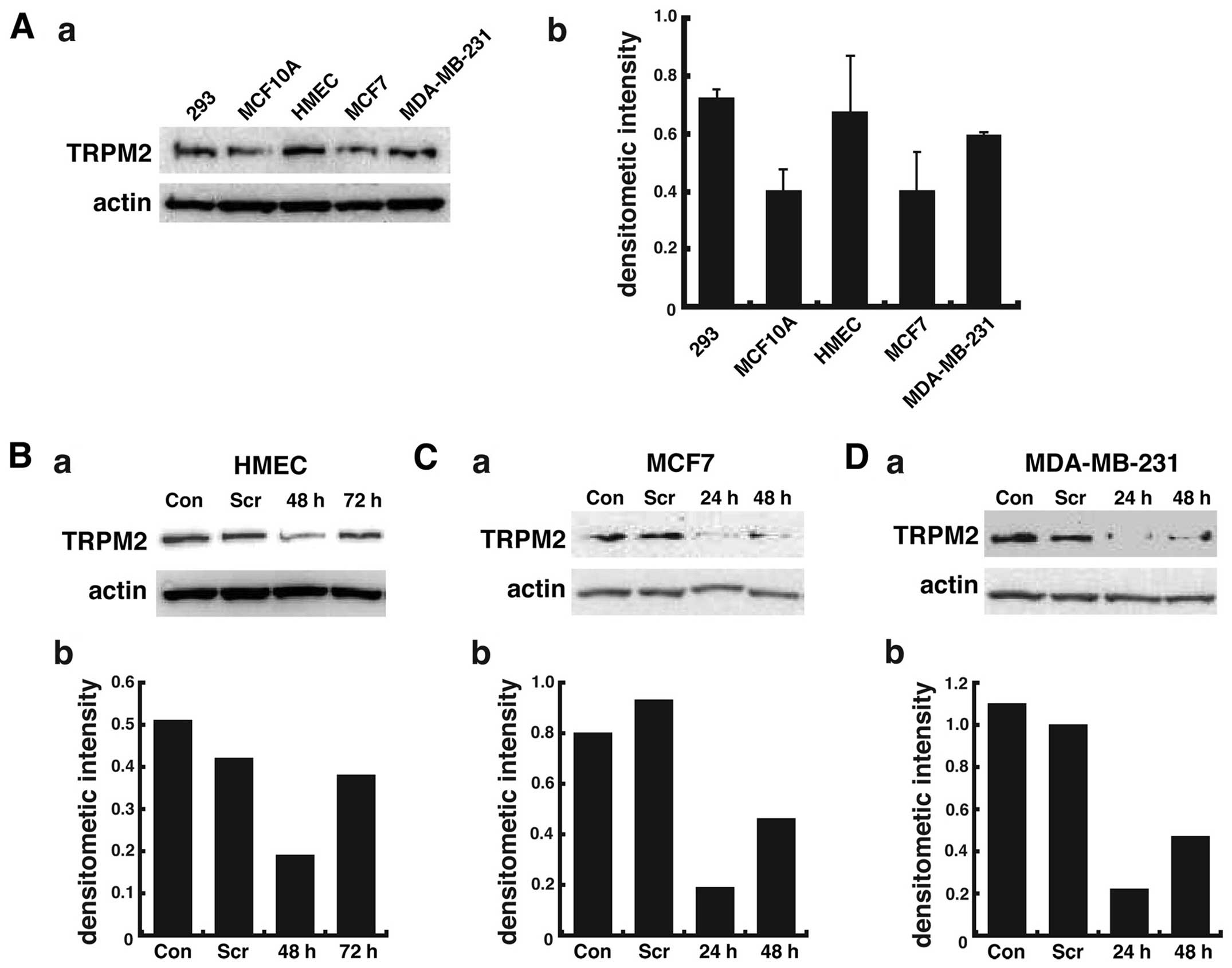
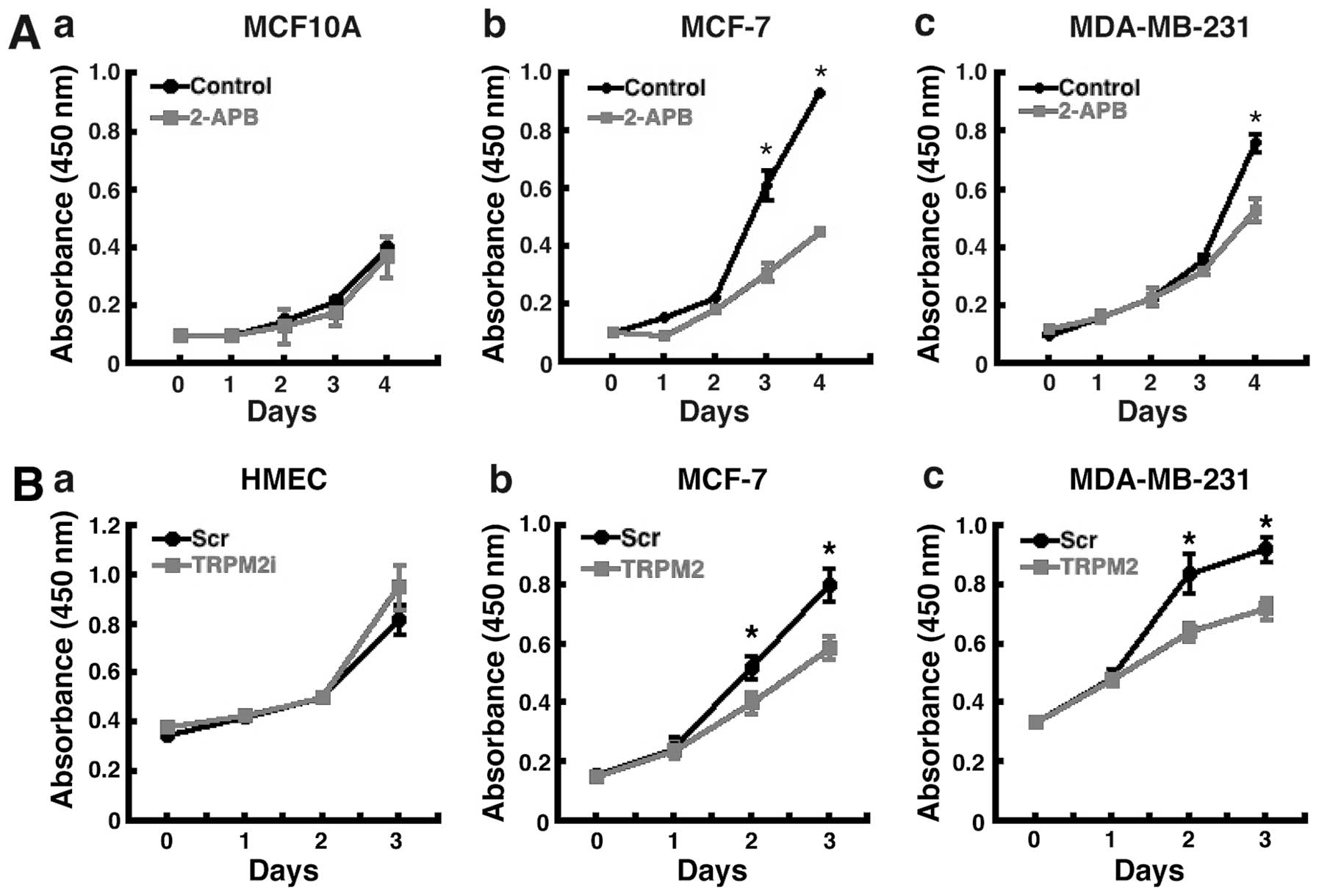
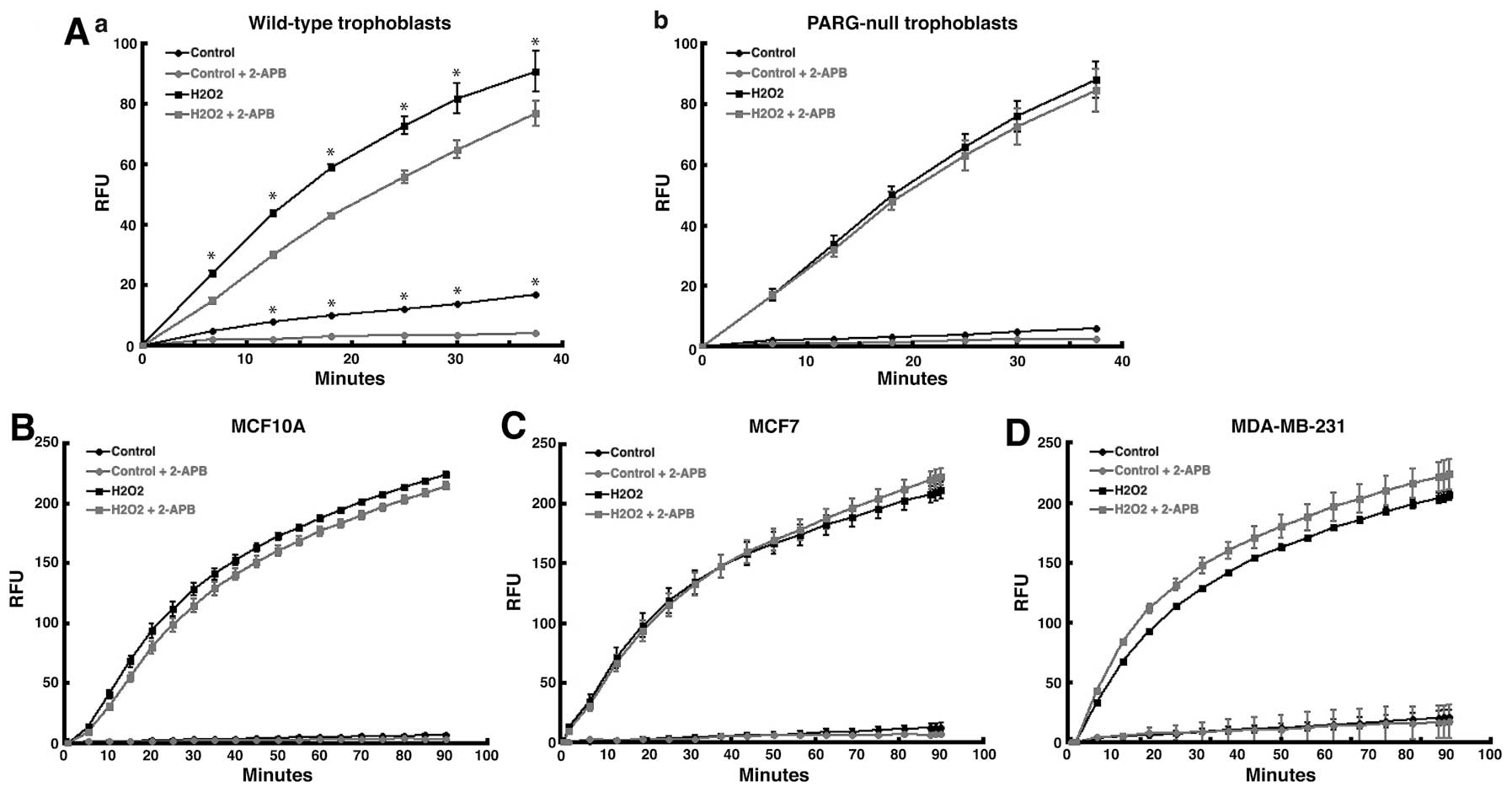
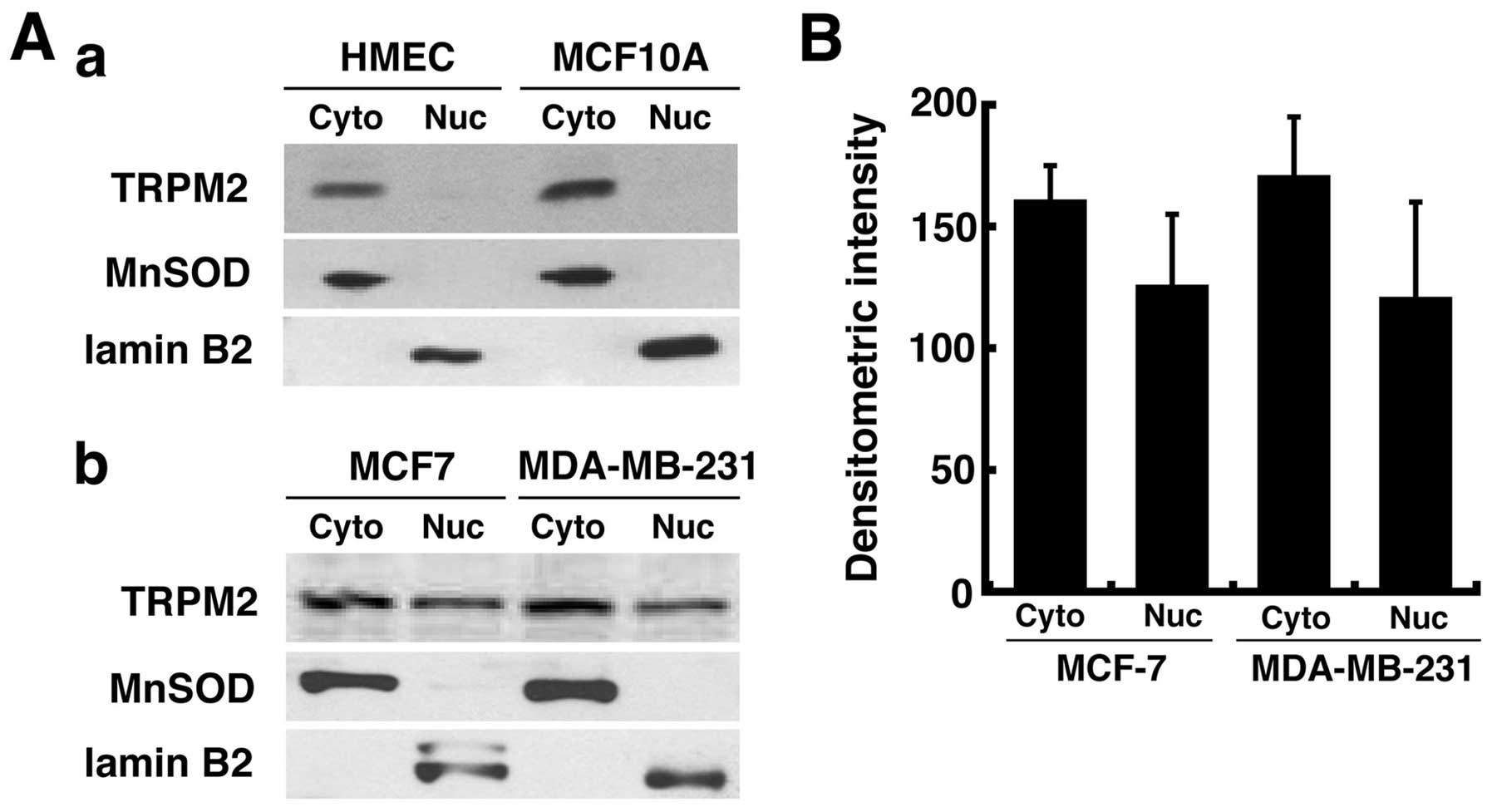
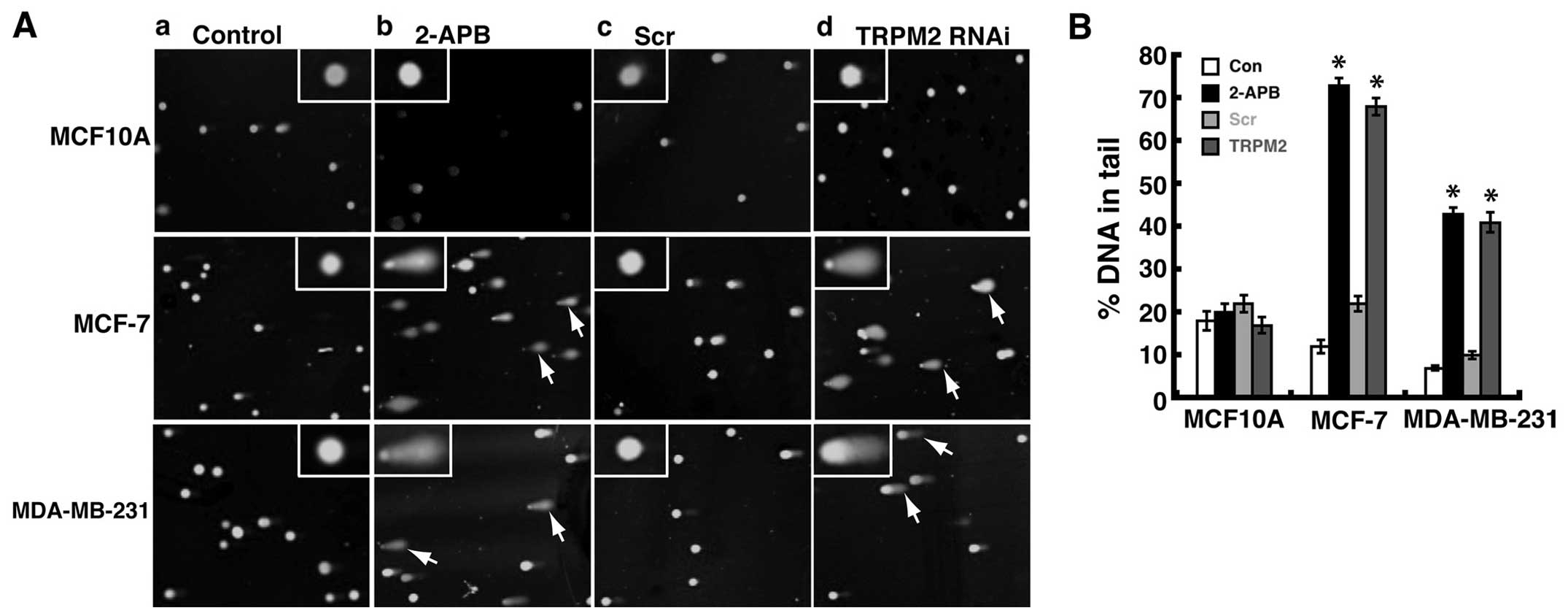
Transient receptor potential, melastatin-2 (TRPM2) is a plasma membrane cation channel with important roles in sensory functions and promoting cell death. However, we demonstrated here that TRPM2 was present in the nuclei of MCF-7 and MDA-MB-231 human breast adenocarcinoma cells, and its pharmacologic inhibition or RNAi silencing caused decreased cell proliferation. Neither an effect on proliferation nor a localization of TRPM2 in the nucleus was observed in noncancerous HMEC and MCF-10A human mammary epithelial cells. Investigation of possible effects of TRPM2 function in the nucleus demonstrated that pharmacologic inhibition or RNAi silencing of TRPM2 in MCF-7 and MDA-MB-231 human breast adenocarcinoma cells caused up to 4-fold increases in DNA damage levels, as compared to noncancerous breast cells after equivalent treatments. These results indicate that TRPM2 has a novel nuclear function in human breast adenocarcinoma cells that facilitates the integrity of genomic DNA, a finding that is distinct from its previously reported role as a plasma membrane cation channel in noncancerous cells. In summary, we report here a novel effect promoted by TRPM2, where it functions to minimize DNA damage and thus may have a role in the protection of genomic DNA in breast cancer cells. Our study therefore provides compelling evidence that TRPM2 has a unique role in breast adenocarcinoma cells. Accordingly, these studies suggest that TRPM2 is a potential therapeutic target, where its pharmacologic inhibition may provide an innovative strategy to selectively increase DNA damage levels in breast cancer cells.
View Figures

Figure 1

Figure 2

Figure 3

Figure 4

Figure 5

View References

1 

Ge R, Tai Y, Sun Y, Zhou K, Yang S, Cheng T, Zou Q, Shen F and Wang Y: Critical role of TRPC6 channels in VEGF-mediated angiogenesis. Cancer Lett. 283:43–51. 2009. View Article : Google Scholar : PubMed/NCBI

2 

Yee NS, Zhou W and Lee M: Transient receptor potential channel TRPM8 is over-expressed and required for cellular proliferation in pancreatic adenocarcinoma. Cancer Lett. 297:49–55. 2010. View Article : Google Scholar : PubMed/NCBI

3 

Zhu G, Wang X, Yang Z, Cao H, Meng Z, Wang Y and Chen D: Effects of TRPM8 on the proliferation and angiogenesis of prostate cancer PC-3 cells in vivo. Oncol Lett. 2:1213–1217. 2011.

4 

Bessac BF and Fleig A: TRPM7 channel is sensitive to osmotic gradients in human kidney cells. J Physiol. 582:1073–1086. 2007. View Article : Google Scholar : PubMed/NCBI

5 

Knowlton WM, Daniels RL, Palkar R, McCoy DD and McKemy DD: Pharmacological blockade of TRPM8 ion channels alters cold and cold pain responses in mice. PLoS One. 6:e258942011. View Article : Google Scholar : PubMed/NCBI

6 

Perraud AL, Fleig A, Dunn CA, et al: ADP-ribose gating of the calcium-permeable LTRPC2 channel revealed by Nudix motif homology. Nature. 411:595–599. 2001. View Article : Google Scholar : PubMed/NCBI

7 

Nadler MJ, Hermosura MC, Inabe K, et al: LTRPC7 is a Mg.ATP-regulated divalent cation channel required for cell viability. Nature. 411:590–595. 2001. View Article : Google Scholar : PubMed/NCBI

8 

Hara Y, Wakamori M, Ishii M, et al: LTRPC2 Ca2+-permeable channel activated by changes in redox status confers susceptibility to cell death. Mol Cell. 9:163–173. 2002. View Article : Google Scholar : PubMed/NCBI

9 

Zhang W, Hirschler-Laszkiewicz I, Tong Q, et al: TRPM2 is an ion channel that modulates hematopoietic cell death through activation of caspases and PARP cleavage. Am J Physiol Cell Physiol. 290:C1146–C1159. 2006. View Article : Google Scholar

10 

Blenn C, Wyrsch P, Bader J, Bollhalder M and Althaus FR: Poly(ADP-ribose)glycohydrolase is an upstream regulator of Ca2+ fluxes in oxidative cell death. Cell Mol Life Sci. 68:1455–1466. 2011. View Article : Google Scholar :

11 

Cook NL, Vink R, Helps SC, Manavis J and van den Heuvel C: Transient receptor potential melastatin 2 expression is increased following experimental traumatic brain injury in rats. J Mol Neurosci. 42:192–199. 2010. View Article : Google Scholar : PubMed/NCBI

12 

Lange I, Yamamoto S, Partida-Sanchez S, Mori Y, Fleig A and Penner R: TRPM2 functions as a lysosomal Ca2+-release channel in beta cells. Sci Signal. 2:ra232009.

13 

Ishii M, Hagiwara T, Mori Y and Shimizu S: Involvement of TRPM2 and L-type Ca2+ channels in Ca2+ entry and cell death induced by hydrogen peroxide in rat β-cell line RIN-5F. J Toxicol Sci. 39:199–209. 2014. View Article : Google Scholar : PubMed/NCBI

14 

Kheradpezhouh E, Ma L, Morphett A, Barritt GJ and Rychkov GY: TRPM2 channels mediate acetaminophen-induced liver damage. Proc Natl Acad Sci USA. 111:3176–3181. 2014. View Article : Google Scholar : PubMed/NCBI

15 

Liu X, Cotrim A, Teos L, Zheng C, Swaim W, Mitchell J, Mori Y and Ambudkar I: Loss of TRPM2 function protects against irradiation-induced salivary gland dysfunction. Nat Commun. 4:15152013. View Article : Google Scholar : PubMed/NCBI

16 

Orfanelli U, Wenke AK, Doglioni C, Russo V, Bosserhoff AK and Lavorgna G: Identification of novel sense and antisense transcription at the TRPM2 locus in cancer. Cell Res. 18:1128–1140. 2008. View Article : Google Scholar : PubMed/NCBI

17 

Zeng X, Sikka SC, Huang L, Sun C, Xu C, Jia D, Abdel-Mageed AB, Pottle JE, Taylor JT and Li M: Novel role for the transient receptor potential channel TRPM2 in prostate cancer cell proliferation. Prostate Cancer Prostatic Dis. 13:195–201. 2010. View Article : Google Scholar :

18 

Koh DW, Lawler AM, Poitras MF, Sasaki M, Wattler S, Nehls MC, Stöger T, Poirier GG, Dawson VL and Dawson TM: Failure to degrade poly(ADP-ribose) causes increased sensitivity to cytotoxicity and early embryonic lethality. Proc Natl Acad Sci USA. 101:17699–17704. 2004. View Article : Google Scholar : PubMed/NCBI

19 

Liu T, Biddle D, Hanks AN, Brouha B, Yan H, Lee RM, Leachman SA and Grossman D: Activation of dual apoptotic pathways in human melanocytes and protection by survivin. J Invest Dermatol. 126:2247–2256. 2006. View Article : Google Scholar : PubMed/NCBI

20 

Hartmann A, Agurell E, Beevers C, et al: 4th International Comet Assay Workshop: Recommendations for conducting the in vivo alkaline Comet assay. 4th International Comet Assay Workshop. Mutagenesis. 18:45–51. 2003. View Article : Google Scholar

21 

Zhou Y, Feng X and Koh DW: Enhanced DNA accessibility and increased DNA damage induced by the absence of poly(ADP-ribose) hydrolysis. Biochemistry. 49:7360–7366. 2010. View Article : Google Scholar : PubMed/NCBI

22 

Zhang W, Chu X, Tong Q, Cheung JY, Conrad K, Masker K and Miller BA: A novel TRPM2 isoform inhibits calcium influx and susceptibility to cell death. J Biol Chem. 278:16222–16229. 2003. View Article : Google Scholar : PubMed/NCBI

23 

Sun L, Yau HY, Wong WY, Li RA, Huang Y and Yao X: Role of TRPM2 in H(2)O(2)-induced cell apoptosis in endothelial cells. PLoS One. 7:e431862012. View Article : Google Scholar : PubMed/NCBI

24 

Togashi K, Inada H and Tominaga M: Inhibition of the transient receptor potential cation channel TRPM2 by 2-aminoethoxy-diphenyl borate (2-APB). Br J Pharmacol. 153:1324–1330. 2008. View Article : Google Scholar : PubMed/NCBI

25 

Koh DW, Patel CN, Ramsinghani S, Slama JT, Oliveira MA and Jacobson MK: Identification of an inhibitor binding site of poly(ADP-ribose) glycohydrolase. Biochemistry. 42:4855–4863. 2003. View Article : Google Scholar : PubMed/NCBI

26 

Buelow B, Song Y and Scharenberg AM: The Poly(ADP-ribose) polymerase PARP-1 is required for oxidative stress-induced TRPM2 activation in lymphocytes. J Biol Chem. 283:24571–24583. 2008. View Article : Google Scholar : PubMed/NCBI

27 

Singh NP, McCoy MT, Tice RR and Schneider EL: A simple technique for quantitation of low levels of DNA damage in individual cells. Exp Cell Res. 175:184–191. 1988. View Article : Google Scholar : PubMed/NCBI

28 

Miller BA, Hoffman NE, Merali S, et al: TRPM2 channels protect against cardiac ischemia-reperfusion injury: Role of mitochondria. J Biol Chem. 289:7615–7629. 2014. View Article : Google Scholar : PubMed/NCBI

Related Articles

  • Abstract
  • View
  • Download
  • Twitter
Copy and paste a formatted citation
Spandidos Publications style
Hopkins MM, Feng X, Liu M, Parker LP and Koh DW: Inhibition of the transient receptor potential melastatin-2 channel causes increased DNA damage and decreased proliferation in breast adenocarcinoma cells. Int J Oncol 46: 2267-2276, 2015.
APA
Hopkins, M.M., Feng, X., Liu, M., Parker, L.P., & Koh, D.W. (2015). Inhibition of the transient receptor potential melastatin-2 channel causes increased DNA damage and decreased proliferation in breast adenocarcinoma cells. International Journal of Oncology, 46, 2267-2276. https://doi.org/10.3892/ijo.2015.2919
MLA
Hopkins, M. M., Feng, X., Liu, M., Parker, L. P., Koh, D. W."Inhibition of the transient receptor potential melastatin-2 channel causes increased DNA damage and decreased proliferation in breast adenocarcinoma cells". International Journal of Oncology 46.5 (2015): 2267-2276.
Chicago
Hopkins, M. M., Feng, X., Liu, M., Parker, L. P., Koh, D. W."Inhibition of the transient receptor potential melastatin-2 channel causes increased DNA damage and decreased proliferation in breast adenocarcinoma cells". International Journal of Oncology 46, no. 5 (2015): 2267-2276. https://doi.org/10.3892/ijo.2015.2919
Copy and paste a formatted citation
x
Spandidos Publications style
Hopkins MM, Feng X, Liu M, Parker LP and Koh DW: Inhibition of the transient receptor potential melastatin-2 channel causes increased DNA damage and decreased proliferation in breast adenocarcinoma cells. Int J Oncol 46: 2267-2276, 2015.
APA
Hopkins, M.M., Feng, X., Liu, M., Parker, L.P., & Koh, D.W. (2015). Inhibition of the transient receptor potential melastatin-2 channel causes increased DNA damage and decreased proliferation in breast adenocarcinoma cells. International Journal of Oncology, 46, 2267-2276. https://doi.org/10.3892/ijo.2015.2919
MLA
Hopkins, M. M., Feng, X., Liu, M., Parker, L. P., Koh, D. W."Inhibition of the transient receptor potential melastatin-2 channel causes increased DNA damage and decreased proliferation in breast adenocarcinoma cells". International Journal of Oncology 46.5 (2015): 2267-2276.
Chicago
Hopkins, M. M., Feng, X., Liu, M., Parker, L. P., Koh, D. W."Inhibition of the transient receptor potential melastatin-2 channel causes increased DNA damage and decreased proliferation in breast adenocarcinoma cells". International Journal of Oncology 46, no. 5 (2015): 2267-2276. https://doi.org/10.3892/ijo.2015.2919
Follow us
  • Twitter
  • LinkedIn
  • Facebook
About
  • Spandidos Publications
  • Careers
  • Cookie Policy
  • Privacy Policy
How can we help?
  • Help
  • Live Chat
  • Contact
  • Email to our Support Team