Spandidos Publications Logo
  • About
    • About Spandidos
    • Aims and Scopes
    • Abstracting and Indexing
    • Editorial Policies
    • Reprints and Permissions
    • Job Opportunities
    • Terms and Conditions
    • Contact
  • Journals
    • All Journals
    • Oncology Letters
      • Oncology Letters
      • Information for Authors
      • Editorial Policies
      • Editorial Board
      • Aims and Scope
      • Abstracting and Indexing
      • Bibliographic Information
      • Archive
    • International Journal of Oncology
      • International Journal of Oncology
      • Information for Authors
      • Editorial Policies
      • Editorial Board
      • Aims and Scope
      • Abstracting and Indexing
      • Bibliographic Information
      • Archive
    • Molecular and Clinical Oncology
      • Molecular and Clinical Oncology
      • Information for Authors
      • Editorial Policies
      • Editorial Board
      • Aims and Scope
      • Abstracting and Indexing
      • Bibliographic Information
      • Archive
    • Experimental and Therapeutic Medicine
      • Experimental and Therapeutic Medicine
      • Information for Authors
      • Editorial Policies
      • Editorial Board
      • Aims and Scope
      • Abstracting and Indexing
      • Bibliographic Information
      • Archive
    • International Journal of Molecular Medicine
      • International Journal of Molecular Medicine
      • Information for Authors
      • Editorial Policies
      • Editorial Board
      • Aims and Scope
      • Abstracting and Indexing
      • Bibliographic Information
      • Archive
    • Biomedical Reports
      • Biomedical Reports
      • Information for Authors
      • Editorial Policies
      • Editorial Board
      • Aims and Scope
      • Abstracting and Indexing
      • Bibliographic Information
      • Archive
    • Oncology Reports
      • Oncology Reports
      • Information for Authors
      • Editorial Policies
      • Editorial Board
      • Aims and Scope
      • Abstracting and Indexing
      • Bibliographic Information
      • Archive
    • Molecular Medicine Reports
      • Molecular Medicine Reports
      • Information for Authors
      • Editorial Policies
      • Editorial Board
      • Aims and Scope
      • Abstracting and Indexing
      • Bibliographic Information
      • Archive
    • World Academy of Sciences Journal
      • World Academy of Sciences Journal
      • Information for Authors
      • Editorial Policies
      • Editorial Board
      • Aims and Scope
      • Abstracting and Indexing
      • Bibliographic Information
      • Archive
    • International Journal of Functional Nutrition
      • International Journal of Functional Nutrition
      • Information for Authors
      • Editorial Policies
      • Editorial Board
      • Aims and Scope
      • Abstracting and Indexing
      • Bibliographic Information
      • Archive
    • International Journal of Epigenetics
      • International Journal of Epigenetics
      • Information for Authors
      • Editorial Policies
      • Editorial Board
      • Aims and Scope
      • Abstracting and Indexing
      • Bibliographic Information
      • Archive
    • Medicine International
      • Medicine International
      • Information for Authors
      • Editorial Policies
      • Editorial Board
      • Aims and Scope
      • Abstracting and Indexing
      • Bibliographic Information
      • Archive
  • Articles
  • Information
    • Information for Authors
    • Information for Reviewers
    • Information for Librarians
    • Information for Advertisers
    • Conferences
  • Language Editing
Spandidos Publications Logo
  • About
    • About Spandidos
    • Aims and Scopes
    • Abstracting and Indexing
    • Editorial Policies
    • Reprints and Permissions
    • Job Opportunities
    • Terms and Conditions
    • Contact
  • Journals
    • All Journals
    • Biomedical Reports
      • Information for Authors
      • Editorial Policies
      • Editorial Board
      • Aims and Scope
      • Abstracting and Indexing
      • Bibliographic Information
      • Archive
    • Experimental and Therapeutic Medicine
      • Information for Authors
      • Editorial Policies
      • Editorial Board
      • Aims and Scope
      • Abstracting and Indexing
      • Bibliographic Information
      • Archive
    • International Journal of Epigenetics
      • Information for Authors
      • Editorial Policies
      • Editorial Board
      • Aims and Scope
      • Abstracting and Indexing
      • Bibliographic Information
      • Archive
    • International Journal of Functional Nutrition
      • Information for Authors
      • Editorial Policies
      • Editorial Board
      • Aims and Scope
      • Abstracting and Indexing
      • Bibliographic Information
      • Archive
    • International Journal of Molecular Medicine
      • Information for Authors
      • Editorial Policies
      • Editorial Board
      • Aims and Scope
      • Abstracting and Indexing
      • Bibliographic Information
      • Archive
    • International Journal of Oncology
      • Information for Authors
      • Editorial Policies
      • Editorial Board
      • Aims and Scope
      • Abstracting and Indexing
      • Bibliographic Information
      • Archive
    • Medicine International
      • Information for Authors
      • Editorial Policies
      • Editorial Board
      • Aims and Scope
      • Abstracting and Indexing
      • Bibliographic Information
      • Archive
    • Molecular and Clinical Oncology
      • Information for Authors
      • Editorial Policies
      • Editorial Board
      • Aims and Scope
      • Abstracting and Indexing
      • Bibliographic Information
      • Archive
    • Molecular Medicine Reports
      • Information for Authors
      • Editorial Policies
      • Editorial Board
      • Aims and Scope
      • Abstracting and Indexing
      • Bibliographic Information
      • Archive
    • Oncology Letters
      • Information for Authors
      • Editorial Policies
      • Editorial Board
      • Aims and Scope
      • Abstracting and Indexing
      • Bibliographic Information
      • Archive
    • Oncology Reports
      • Information for Authors
      • Editorial Policies
      • Editorial Board
      • Aims and Scope
      • Abstracting and Indexing
      • Bibliographic Information
      • Archive
    • World Academy of Sciences Journal
      • Information for Authors
      • Editorial Policies
      • Editorial Board
      • Aims and Scope
      • Abstracting and Indexing
      • Bibliographic Information
      • Archive
  • Articles
  • Information
    • For Authors
    • For Reviewers
    • For Librarians
    • For Advertisers
    • Conferences
  • Language Editing
Login Register Submit
  • This site uses cookies
  • You can change your cookie settings at any time by following the instructions in our Cookie Policy. To find out more, you may read our Privacy Policy.

    I agree
Search articles by DOI, keyword, author or affiliation
Search
Advanced Search
presentation
International Journal of Oncology
Join Editorial Board Propose a Special Issue
Print ISSN: 1019-6439 Online ISSN: 1791-2423
Journal Cover
December-2015 Volume 47 Issue 6

Full Size Image

Cover Legend PDF

Sign up for eToc alerts
Recommend to Library

Journals

International Journal of Molecular Medicine

International Journal of Molecular Medicine

International Journal of Molecular Medicine is an international journal devoted to molecular mechanisms of human disease.

International Journal of Oncology

International Journal of Oncology

International Journal of Oncology is an international journal devoted to oncology research and cancer treatment.

Molecular Medicine Reports

Molecular Medicine Reports

Covers molecular medicine topics such as pharmacology, pathology, genetics, neuroscience, infectious diseases, molecular cardiology, and molecular surgery.

Oncology Reports

Oncology Reports

Oncology Reports is an international journal devoted to fundamental and applied research in Oncology.

Experimental and Therapeutic Medicine

Experimental and Therapeutic Medicine

Experimental and Therapeutic Medicine is an international journal devoted to laboratory and clinical medicine.

Oncology Letters

Oncology Letters

Oncology Letters is an international journal devoted to Experimental and Clinical Oncology.

Biomedical Reports

Biomedical Reports

Explores a wide range of biological and medical fields, including pharmacology, genetics, microbiology, neuroscience, and molecular cardiology.

Molecular and Clinical Oncology

Molecular and Clinical Oncology

International journal addressing all aspects of oncology research, from tumorigenesis and oncogenes to chemotherapy and metastasis.

World Academy of Sciences Journal

World Academy of Sciences Journal

Multidisciplinary open-access journal spanning biochemistry, genetics, neuroscience, environmental health, and synthetic biology.

International Journal of Functional Nutrition

International Journal of Functional Nutrition

Open-access journal combining biochemistry, pharmacology, immunology, and genetics to advance health through functional nutrition.

International Journal of Epigenetics

International Journal of Epigenetics

Publishes open-access research on using epigenetics to advance understanding and treatment of human disease.

Medicine International

Medicine International

An International Open Access Journal Devoted to General Medicine.

Journal Cover
December-2015 Volume 47 Issue 6

Full Size Image

Cover Legend PDF

Sign up for eToc alerts
Recommend to Library

  • Article
  • Citations
    • Cite This Article
    • Download Citation
    • Create Citation Alert
    • Remove Citation Alert
    • Cited By
  • Similar Articles
    • Related Articles (in Spandidos Publications)
    • Similar Articles (Google Scholar)
    • Similar Articles (PubMed)
  • Download PDF
  • Download XML
  • View XML
Article Open Access

Inhibition of caspase-9 by oridonin, a diterpenoid isolated from Rabdosia rubescens, augments apoptosis in human laryngeal cancer cells

  • Authors:
    • Ning Kang
    • Shi-Jie Cao
    • Yan Zhou
    • Hao He
    • Shin-Ichi Tashiro
    • Satoshi Onodera
    • Feng Qiu
    • Takashi Ikejima
  • View Affiliations / Copyright

    Affiliations: School of Integrative Medicine, Tianjin University of Traditional Chinese Medicine, Tianjin 300193, P.R. China, Department of Natural Products Chemistry, Shenyang Pharmaceutical University, Shenyang 110016, P.R. China, China-Japan Research Institute of Medical and Pharmaceutical Sciences, Shenyang Pharmaceutical University, Shenyang 110016, P.R. China, Institute for Clinical and Biomedical Sciences, Kyoto 603-8072, Japan, Department of Clinical and Biomedical Science, Showa Pharmaceutical University, Tokyo 194-8543, Japan, College of Traditional Chinese Medicine, Tianjin University of Traditional Chinese Medicine, Tianjin 300193, P.R. China
    Copyright: © Kang et al. This is an open access article distributed under the terms of Creative Commons Attribution License.
  • Pages: 2045-2056
    |
    Published online on: September 28, 2015
       https://doi.org/10.3892/ijo.2015.3186
  • Expand metrics +
Metrics: Total Views: 0 (Spandidos Publications: | PMC Statistics: )
Metrics: Total PDF Downloads: 0 (Spandidos Publications: | PMC Statistics: )
Cited By (CrossRef): 0 citations Loading Articles...

This article is mentioned in:


Abstract

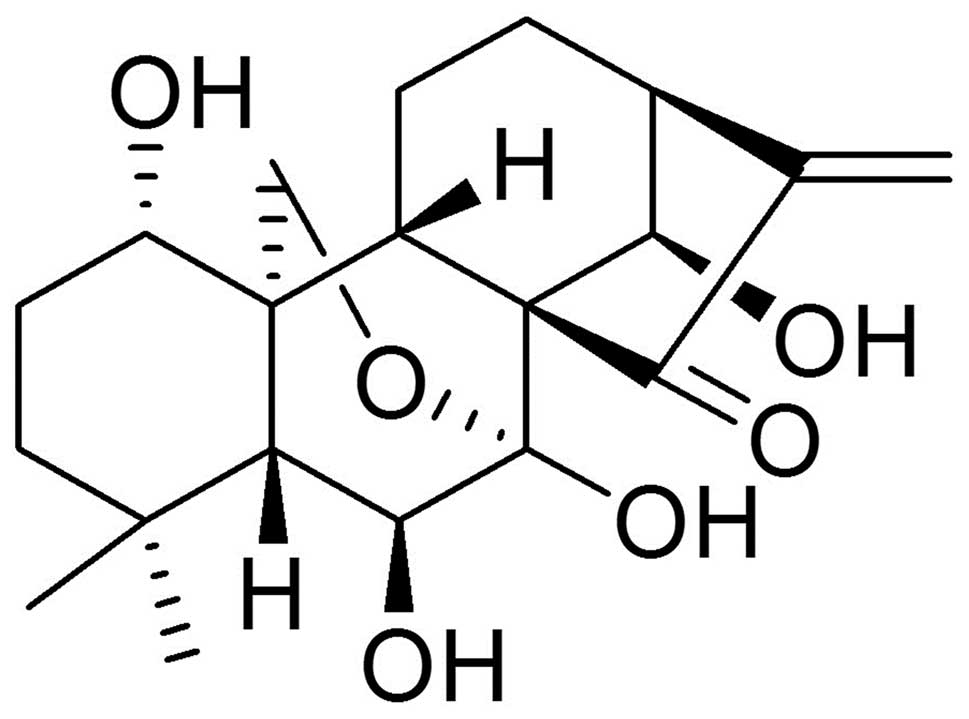
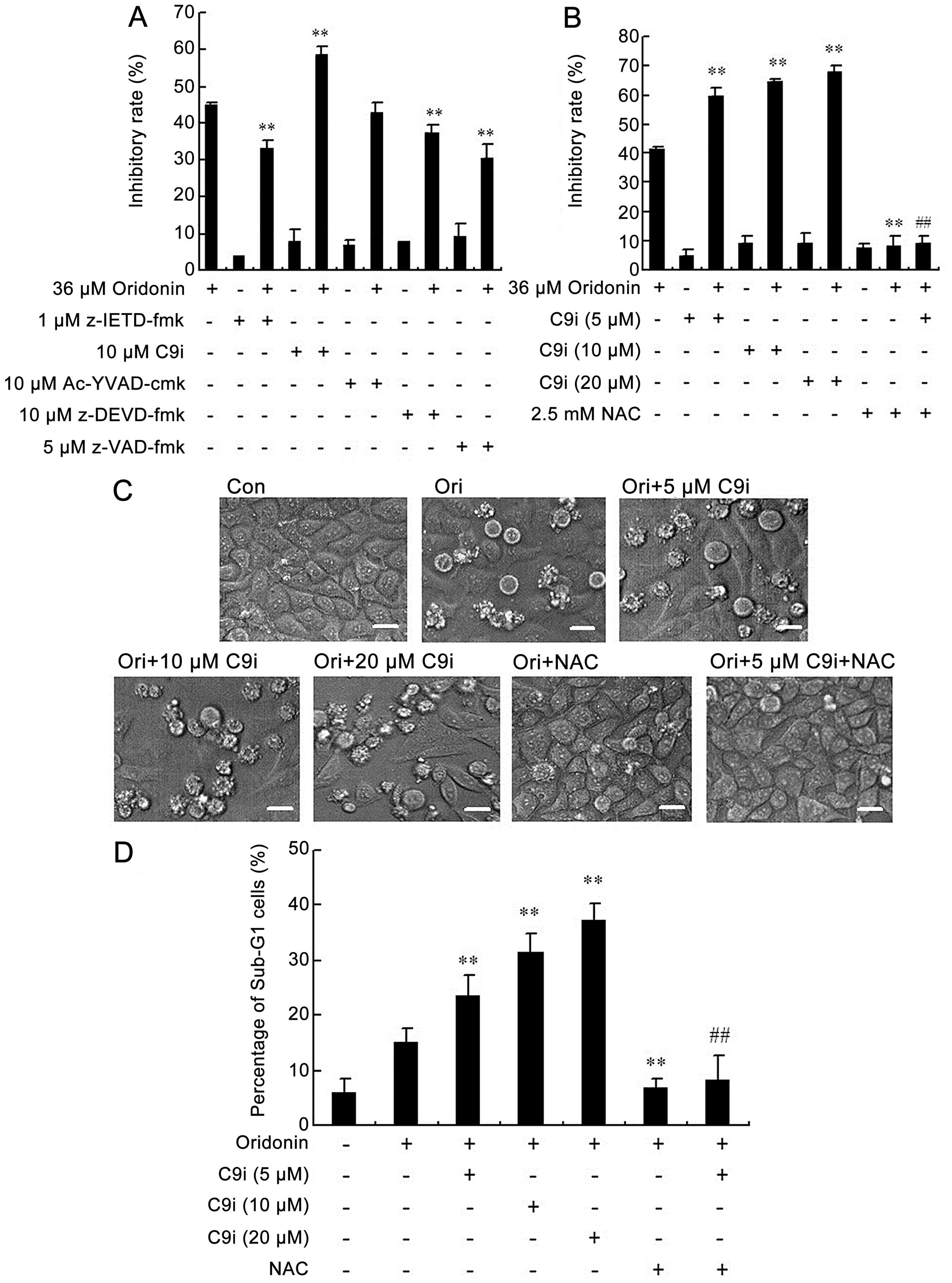
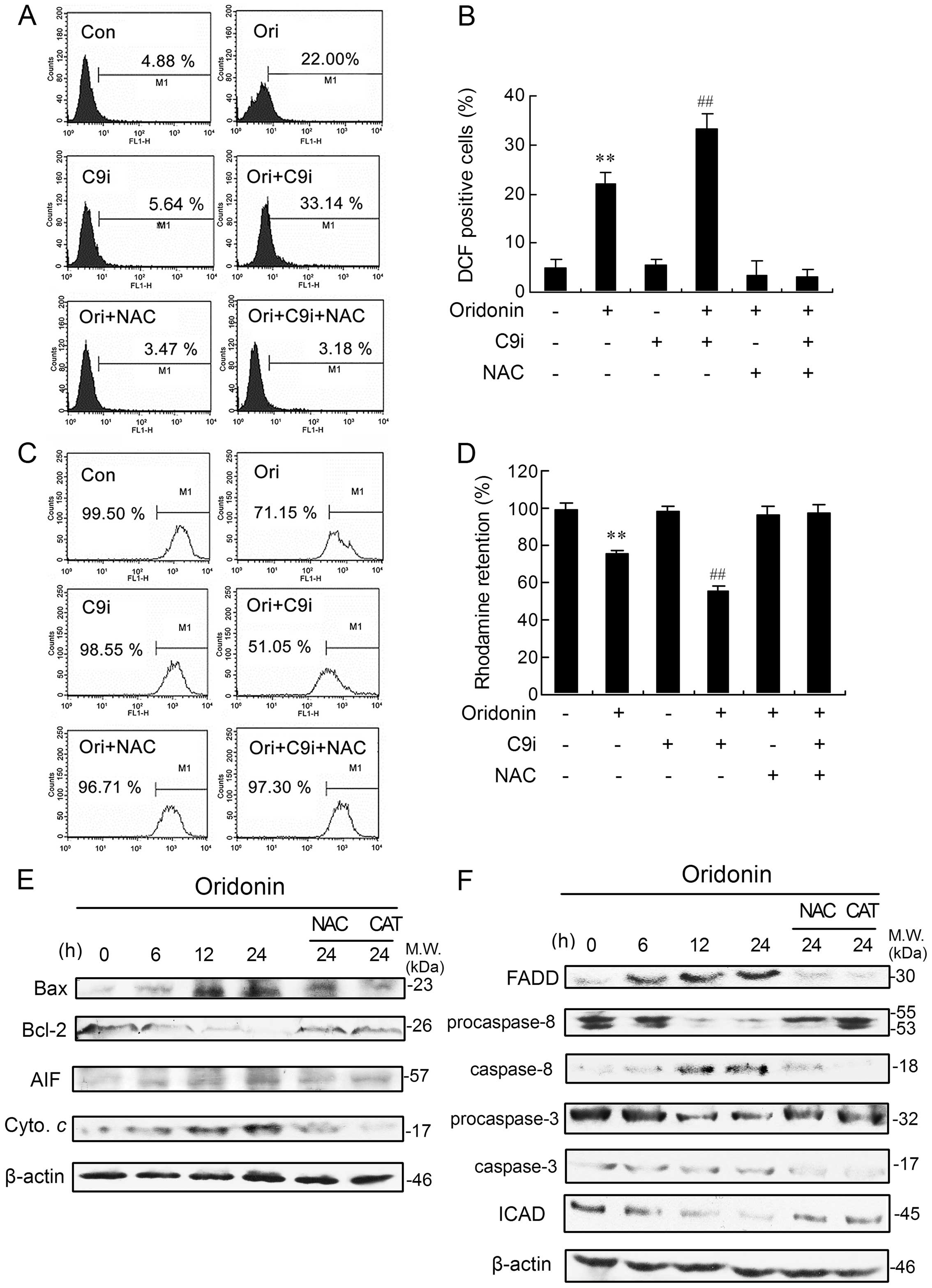
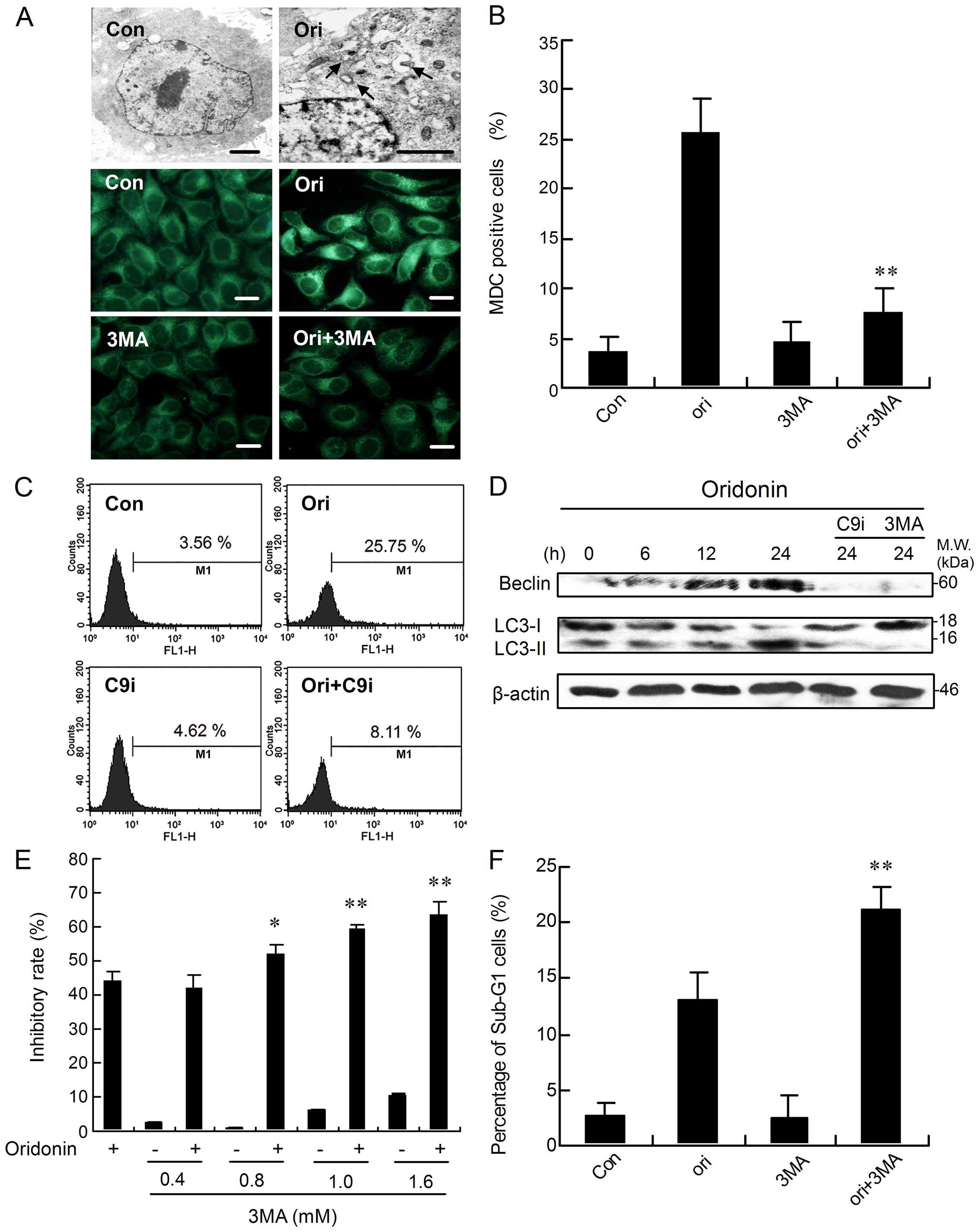
Rabdosia rubescens, a commonly used traditional Chinese medicine, has increasingly gained attention for its use as an antitumor herb. Oridonin, a bioactive diterpenoid isolated from Rabdosia rubescens, has been reported to induce apoptosis in human laryngeal cancer HEp-2 cells by our group. Here, we made unexpected observations that the caspase-9 inhibitor (C9i) enhanced apoptosis in response to selected stimuli, and HEp-2 cells which were made deficient in caspase-9 using siRNA exhibited no resistance to apoptotic signals and actually demonstrated increased apoptotic sensitivity to oridonin. The results were reversed by the transfection of an exogenous caspase-9 expression vector. Caspase-9 reduced sensitivity to apoptotic stimuli through reactive oxygen species (ROS)-suppressing and autophagy-promoting methods. ROS triggered the progression of apoptosis through activation of both the caspase-9-independent mitochondrial pathway and death receptor pathways, and the autophagy had an anti-apoptotic function in oridonin-treated HEp-2 cells. These collective results suggest that oridonin targets caspase-9 to alter ROS production and autophagy situation to promote HEp-2 cell apoptosis. Therefore, oridonin has the potential to be developed as an anticancer agent, and the combination of oridonin with those agents leading to reduction of caspase-9 expression in tumor cells could represent a novel approach to human laryngeal cancer treatment.
View Figures

Figure 1

Figure 2

Figure 3

Figure 4

Figure 5

Figure 6

Figure 7

Figure 8

View References

1 

Danial NN and Korsmeyer SJ: Cell death: Critical control points. Cell. 116:205–219. 2004. View Article : Google Scholar : PubMed/NCBI

2 

Yuan J and Yankner BA: Apoptosis in the nervous system. Nature. 407:802–809. 2000. View Article : Google Scholar : PubMed/NCBI

3 

Hanahan D and Weinberg RA: The hallmarks of cancer. Cell. 100:57–70. 2000. View Article : Google Scholar : PubMed/NCBI

4 

Nathan C: Specificity of a third kind: Reactive oxygen and nitrogen intermediates in cell signaling. J Clin Invest. 111:769–778. 2003. View Article : Google Scholar : PubMed/NCBI

5 

Ohsawa I, Ishikawa M, Takahashi K, Watanabe M, Nishimaki K, Yamagata K, Katsura K, Katayama Y, Asoh S and Ohta S: Hydrogen acts as a therapeutic antioxidant by selectively reducing cytotoxic oxygen radicals. Nat Med. 13:688–694. 2007. View Article : Google Scholar : PubMed/NCBI

6 

Pelicano H, Carney D and Huang P: ROS stress in cancer cells and therapeutic implications. Drug Resist Updat. 7:97–110. 2004. View Article : Google Scholar : PubMed/NCBI

7 

Reggiori F and Klionsky DJ: Autophagy in the eukaryotic cell. Eukaryot Cell. 1:11–21. 2002. View Article : Google Scholar : PubMed/NCBI

8 

Mathew R, Karantza-Wadsworth V and White E: Role of autophagy in cancer. Nat Rev Cancer. 7:961–967. 2007. View Article : Google Scholar : PubMed/NCBI

9 

Amaravadi RK and Thompson CB: The roles of therapy-induced autophagy and necrosis in cancer treatment. Clin Cancer Res. 13:7271–7279. 2007. View Article : Google Scholar : PubMed/NCBI

10 

Mizushima N, Levine B, Cuervo AM and Klionsky DJ: Autophagy fights disease through cellular self-digestion. Nature. 451:1069–1075. 2008. View Article : Google Scholar : PubMed/NCBI

11 

Marioni G, Marchese-Ragona R, Cartei G, Marchese F and Staffieri A: Current opinion in diagnosis and treatment of laryngeal carcinoma. Cancer Treat Rev. 32:504–515. 2006. View Article : Google Scholar : PubMed/NCBI

12 

Rafferty MA, Fenton JE and Jones AS: The history, aetiology and epidemiology of laryngeal carcinoma. Clin Otolaryngol Allied Sci. 26:442–446. 2001. View Article : Google Scholar

13 

Wang Z, Wang N, Chen J and Shen J: Emerging glycolysis targeting and drug discovery from Chinese medicine in cancer therapy. Evid Based Complement Alternat Med. 2012:8731752012.PubMed/NCBI

14 

Yang YC, Wei MC and Huang TC: Optimisation of an ultrasound-assisted extraction followed by RP-HPLC separation for the simultaneous determination of oleanolic acid, ursolic acid and oridonin content in Rabdosia rubescens. Phytochem Anal. 23:627–636. 2012. View Article : Google Scholar : PubMed/NCBI

15 

Fujita T, Takeda Y, Sun HD, Minami Y, Marunaka T, Takeda S, Yamada Y and Togo T: Cytotoxic and antitumor activities of Rabdosia diterpenoids. Planta Med. 54:414–417. 1988. View Article : Google Scholar : PubMed/NCBI

16 

Huang J, Wu L, Tashiro S, Onodera S and Ikejima T: Reactive oxygen species mediate oridonin-induced HepG2 apoptosis through p53, MAPK, and mitochondrial signaling pathways. J Pharmacol Sci. 107:370–379. 2008. View Article : Google Scholar : PubMed/NCBI

17 

Kang N, Zhang JH, Qiu F, Chen S, Tashiro S, Onodera S and Ikejima T: Induction of G(2)/M phase arrest and apoptosis by oridonin in human laryngeal carcinoma cells. J Nat Prod. 73:1058–1063. 2010. View Article : Google Scholar : PubMed/NCBI

18 

Wu JN, Huang J, Yang J, Tashiro S, Onodera S and Ikejima T: Caspase inhibition augmented oridonin-induced cell death in murine fibrosarcoma l929 by enhancing reactive oxygen species generation. J Pharmacol Sci. 108:32–39. 2008. View Article : Google Scholar : PubMed/NCBI

19 

Shah N, Asch RJ, Lysholm AS and Lebien TW: Enhancement of stress-induced apoptosis in B-lineage cells by caspase-9 inhibitor. Blood. 104:2873–2878. 2004. View Article : Google Scholar : PubMed/NCBI

20 

Kang N, Zhang JH, Qiu F, Tashiro S, Onodera S and Ikejima T: Inhibition of EGFR signaling augments oridonin-induced apoptosis in human laryngeal cancer cells via enhancing oxidative stress coincident with activation of both the intrinsic and extrinsic apoptotic pathways. Cancer Lett. 294:147–158. 2010. View Article : Google Scholar : PubMed/NCBI

21 

Lu Y, Sun C and Pan Y: Isolation and purification of oridonin from Rabdosia rubescens using upright counter-current chromatography. J Sep Sci. 29:314–318. 2006. View Article : Google Scholar : PubMed/NCBI

22 

Yu C and Wang L, Lv B, Lu Y, Zeng L, Chen Y, Ma D, Shi T and Wang L: TMEM74, a lysosome and autophagosome protein, regulates autophagy. Biochem Biophys Res Commun. 369:622–629. 2008. View Article : Google Scholar : PubMed/NCBI

23 

Kim RH, Coates JM, Bowles TL, McNerney GP, Sutcliffe J, Jung JU, Gandour-Edwards R, Chuang FY, Bold RJ and Kung HJ: Arginine deiminase as a novel therapy for prostate cancer induces autophagy and caspase-independent apoptosis. Cancer Res. 69:700–708. 2009. View Article : Google Scholar : PubMed/NCBI

24 

Zhang Y, Wu Y, Cheng Y, Zhao Z, Tashiro S, Onodera S and Ikejima T: Fas-mediated autophagy requires JNK activation in HeLa cells. Biochem Biophys Res Commun. 377:1205–1210. 2008. View Article : Google Scholar : PubMed/NCBI

25 

Wang HJ, Tashiro S, Onodera S and Ikejima T: Inhibition of insulin-like growth factor 1 receptor signaling enhanced silibinin-induced activation of death receptor and mitochondrial apoptotic pathways in human breast cancer MCF-7 cells. J Pharmacol Sci. 107:260–269. 2008. View Article : Google Scholar : PubMed/NCBI

26 

Schumacker PT: Reactive oxygen species in cancer cells: Live by the sword, die by the sword. Cancer Cell. 10:175–176. 2006. View Article : Google Scholar : PubMed/NCBI

27 

Sablina AA, Budanov AV, Ilyinskaya GV, Agapova LS, Kravchenko JE and Chumakov PM: The antioxidant function of the p53 tumor suppressor. Nat Med. 11:1306–1313. 2005. View Article : Google Scholar : PubMed/NCBI

28 

Wong YT, Ruan R and Tay FE: Relationship between levels of oxidative DNA damage, lipid peroxidation and mitochondrial membrane potential in young and old F344 rats. Free Radic Res. 40:393–402. 2006. View Article : Google Scholar : PubMed/NCBI

29 

Sakahira H, Enari M and Nagata S: Functional differences of two forms of the inhibitor of caspase-activated DNase, ICAD-L, and ICAD-S. J Biol Chem. 274:15740–15744. 1999. View Article : Google Scholar : PubMed/NCBI

30 

Trejo-Solís C, Jimenez-Farfan D, Rodriguez-Enriquez S, Fernandez-Valverde F, Cruz-Salgado A, Ruiz-Azuara L and Sotelo J: Copper compound induces autophagy and apoptosis of glioma cells by reactive oxygen species and JNK activation. BMC Cancer. 12:1562012. View Article : Google Scholar : PubMed/NCBI

31 

Cain K, Bratton SB, Langlais C, Walker G, Brown DG, Sun XM and Cohen GM: Apaf-1 oligomerizes into biologically active approximately 700-kDa and inactive approximately 1.4-MDa apoptosome complexes. J Biol Chem. 275:6067–6070. 2000. View Article : Google Scholar : PubMed/NCBI

32 

Hu Y, Benedict MA, Ding L and Núñez G: Role of cytochrome c and dATP/ATP hydrolysis in Apaf-1-mediated caspase-9 activation and apoptosis. EMBO J. 18:3586–3595. 1999. View Article : Google Scholar : PubMed/NCBI

33 

Pandey P, Saleh A, Nakazawa A, Kumar S, Srinivasula SM, Kumar V, Weichselbaum R, Nalin C, Alnemri ES, Kufe D, et al: Negative regulation of cytochrome c-mediated oligomerization of Apaf-1 and activation of procaspase-9 by heat shock protein 90. EMBO J. 19:4310–4322. 2000. View Article : Google Scholar : PubMed/NCBI

34 

Liu JR, Opipari AW, Tan L, Jiang Y, Zhang Y, Tang H and Nuñez G: Dysfunctional apoptosome activation in ovarian cancer: Implications for chemoresistance. Cancer Res. 62:924–931. 2002.PubMed/NCBI

35 

Lee KH: Anticancer drug design based on plant-derived natural products. J Biomed Sci. 6:236–250. 1999.PubMed/NCBI

36 

Herrera B, Alvarez AM, Sánchez A, Fernández M, Roncero C, Benito M and Fabregat I: Reactive oxygen species (ROS) mediates the mitochondrial-dependent apoptosis induced by transforming growth factor (beta) in fetal hepatocytes. FASEB J. 15:741–751. 2001. View Article : Google Scholar : PubMed/NCBI

37 

Herrera B, Fernández M, Alvarez AM, Roncero C, Benito M, Gil J and Fabregat I: Activation of caspases occurs downstream from radical oxygen species production, Bcl-xL down-regulation, and early cytochrome C release in apoptosis induced by transforming growth factor beta in rat fetal hepatocytes. Hepatology. 34:548–556. 2001. View Article : Google Scholar : PubMed/NCBI

38 

Chen Q, Chai YC, Mazumder S, Jiang C, Macklis RM, Chisolm GM and Almasan A: The late increase in intracellular free radical oxygen species during apoptosis is associated with cytochrome c release, caspase activation, and mitochondrial dysfunction. Cell Death Differ. 10:323–334. 2003. View Article : Google Scholar : PubMed/NCBI

39 

Daugas E, Nochy D, Ravagnan L, Loeffler M, Susin SA, Zamzami N and Kroemer G: Apoptosis-inducing factor (AIF): A ubiquitous mitochondrial oxidoreductase involved in apoptosis. FEBS Lett. 476:118–123. 2000. View Article : Google Scholar : PubMed/NCBI

40 

Mitsiades CS, Poulaki V, Fanourakis G, Sozopoulos E, McMillin D, Wen Z, Voutsinas G, Tseleni-Balafouta S and Mitsiades N: Fas signaling in thyroid carcinomas is diverted from apoptosis to proliferation. Clin Cancer Res. 12:3705–3712. 2006. View Article : Google Scholar : PubMed/NCBI

41 

Chandra J, Samali A and Orrenius S: Triggering and modulation of apoptosis by oxidative stress. Free Radic Biol Med. 29:323–333. 2000. View Article : Google Scholar : PubMed/NCBI

42 

Jeong HS, Choi HY, Lee ER, Kim JH, Jeon K, Lee HJ and Cho SG: Involvement of caspase-9 in autophagy-mediated cell survival pathway. Biochim Biophys Acta. 1813.80–90. 2011.

43 

Norman JM, Cohen GM and Bampton ET: The in vitro cleavage of the hAtg proteins by cell death proteases. Autophagy. 6:1042–1056. 2010. View Article : Google Scholar : PubMed/NCBI

44 

Young MM, Takahashi Y, Khan O, Park S, Hori T, Yun J, Sharma AK, Amin S, Hu CD, Zhang J, et al: Autophagosomal membrane serves as platform for intracellular death-inducing signaling complex (iDISC)-mediated caspase-8 activation and apoptosis. J Biol Chem. 287:12455–12468. 2012. View Article : Google Scholar : PubMed/NCBI

45 

Cho DH, Jo YK, Hwang JJ, Lee YM, Roh SA and Kim JC: Caspase-mediated cleavage of ATG6/Beclin-1 links apoptosis to autophagy in HeLa cells. Cancer Lett. 274:95–100. 2009. View Article : Google Scholar

46 

Wang ZH, Xu L, Duan ZL, Zeng LQ, Yan NH and Peng ZL: Beclin 1-mediated macroautophagy involves regulation of caspase-9 expression in cervical cancer HeLa cells. Gynecol Oncol. 107:107–113. 2007. View Article : Google Scholar : PubMed/NCBI

47 

Lum JJ, Bauer DE, Kong M, Harris MH, Li C, Lindsten T and Thompson CB: Growth factor regulation of autophagy and cell survival in the absence of apoptosis. Cell. 120:237–248. 2005. View Article : Google Scholar : PubMed/NCBI

48 

Crighton D, Wilkinson S, O'Prey J, Syed N, Smith P, Harrison PR, Gasco M, Garrone O, Crook T and Ryan KM: DRAM, a p53-induced modulator of autophagy, is critical for apoptosis. Cell. 126:121–134. 2006. View Article : Google Scholar : PubMed/NCBI

49 

Rodriguez J and Lazebnik Y: Caspase-9 and APAF-1 form an active holoenzyme. Genes Dev. 13:3179–3184. 1999. View Article : Google Scholar

50 

Stennicke HR, Deveraux QL, Humke EW, Reed JC, Dixit VM and Salvesen GS: Caspase-9 can be activated without proteolytic processing. J Biol Chem. 274:8359–8362. 1999. View Article : Google Scholar : PubMed/NCBI

Related Articles

  • Abstract
  • View
  • Download
  • Twitter
Copy and paste a formatted citation
Spandidos Publications style
Kang N, Cao S, Zhou Y, He H, Tashiro S, Onodera S, Qiu F and Ikejima T: Inhibition of caspase-9 by oridonin, a diterpenoid isolated from Rabdosia rubescens, augments apoptosis in human laryngeal cancer cells. Int J Oncol 47: 2045-2056, 2015.
APA
Kang, N., Cao, S., Zhou, Y., He, H., Tashiro, S., Onodera, S. ... Ikejima, T. (2015). Inhibition of caspase-9 by oridonin, a diterpenoid isolated from Rabdosia rubescens, augments apoptosis in human laryngeal cancer cells. International Journal of Oncology, 47, 2045-2056. https://doi.org/10.3892/ijo.2015.3186
MLA
Kang, N., Cao, S., Zhou, Y., He, H., Tashiro, S., Onodera, S., Qiu, F., Ikejima, T."Inhibition of caspase-9 by oridonin, a diterpenoid isolated from Rabdosia rubescens, augments apoptosis in human laryngeal cancer cells". International Journal of Oncology 47.6 (2015): 2045-2056.
Chicago
Kang, N., Cao, S., Zhou, Y., He, H., Tashiro, S., Onodera, S., Qiu, F., Ikejima, T."Inhibition of caspase-9 by oridonin, a diterpenoid isolated from Rabdosia rubescens, augments apoptosis in human laryngeal cancer cells". International Journal of Oncology 47, no. 6 (2015): 2045-2056. https://doi.org/10.3892/ijo.2015.3186
Copy and paste a formatted citation
x
Spandidos Publications style
Kang N, Cao S, Zhou Y, He H, Tashiro S, Onodera S, Qiu F and Ikejima T: Inhibition of caspase-9 by oridonin, a diterpenoid isolated from Rabdosia rubescens, augments apoptosis in human laryngeal cancer cells. Int J Oncol 47: 2045-2056, 2015.
APA
Kang, N., Cao, S., Zhou, Y., He, H., Tashiro, S., Onodera, S. ... Ikejima, T. (2015). Inhibition of caspase-9 by oridonin, a diterpenoid isolated from Rabdosia rubescens, augments apoptosis in human laryngeal cancer cells. International Journal of Oncology, 47, 2045-2056. https://doi.org/10.3892/ijo.2015.3186
MLA
Kang, N., Cao, S., Zhou, Y., He, H., Tashiro, S., Onodera, S., Qiu, F., Ikejima, T."Inhibition of caspase-9 by oridonin, a diterpenoid isolated from Rabdosia rubescens, augments apoptosis in human laryngeal cancer cells". International Journal of Oncology 47.6 (2015): 2045-2056.
Chicago
Kang, N., Cao, S., Zhou, Y., He, H., Tashiro, S., Onodera, S., Qiu, F., Ikejima, T."Inhibition of caspase-9 by oridonin, a diterpenoid isolated from Rabdosia rubescens, augments apoptosis in human laryngeal cancer cells". International Journal of Oncology 47, no. 6 (2015): 2045-2056. https://doi.org/10.3892/ijo.2015.3186
Follow us
  • Twitter
  • LinkedIn
  • Facebook
About
  • Spandidos Publications
  • Careers
  • Cookie Policy
  • Privacy Policy
How can we help?
  • Help
  • Live Chat
  • Contact
  • Email to our Support Team