Spandidos Publications Logo
  • About
    • About Spandidos
    • Aims and Scopes
    • Abstracting and Indexing
    • Editorial Policies
    • Reprints and Permissions
    • Job Opportunities
    • Terms and Conditions
    • Contact
  • Journals
    • All Journals
    • Oncology Letters
      • Oncology Letters
      • Information for Authors
      • Editorial Policies
      • Editorial Board
      • Aims and Scope
      • Abstracting and Indexing
      • Bibliographic Information
      • Archive
    • International Journal of Oncology
      • International Journal of Oncology
      • Information for Authors
      • Editorial Policies
      • Editorial Board
      • Aims and Scope
      • Abstracting and Indexing
      • Bibliographic Information
      • Archive
    • Molecular and Clinical Oncology
      • Molecular and Clinical Oncology
      • Information for Authors
      • Editorial Policies
      • Editorial Board
      • Aims and Scope
      • Abstracting and Indexing
      • Bibliographic Information
      • Archive
    • Experimental and Therapeutic Medicine
      • Experimental and Therapeutic Medicine
      • Information for Authors
      • Editorial Policies
      • Editorial Board
      • Aims and Scope
      • Abstracting and Indexing
      • Bibliographic Information
      • Archive
    • International Journal of Molecular Medicine
      • International Journal of Molecular Medicine
      • Information for Authors
      • Editorial Policies
      • Editorial Board
      • Aims and Scope
      • Abstracting and Indexing
      • Bibliographic Information
      • Archive
    • Biomedical Reports
      • Biomedical Reports
      • Information for Authors
      • Editorial Policies
      • Editorial Board
      • Aims and Scope
      • Abstracting and Indexing
      • Bibliographic Information
      • Archive
    • Oncology Reports
      • Oncology Reports
      • Information for Authors
      • Editorial Policies
      • Editorial Board
      • Aims and Scope
      • Abstracting and Indexing
      • Bibliographic Information
      • Archive
    • Molecular Medicine Reports
      • Molecular Medicine Reports
      • Information for Authors
      • Editorial Policies
      • Editorial Board
      • Aims and Scope
      • Abstracting and Indexing
      • Bibliographic Information
      • Archive
    • World Academy of Sciences Journal
      • World Academy of Sciences Journal
      • Information for Authors
      • Editorial Policies
      • Editorial Board
      • Aims and Scope
      • Abstracting and Indexing
      • Bibliographic Information
      • Archive
    • International Journal of Functional Nutrition
      • International Journal of Functional Nutrition
      • Information for Authors
      • Editorial Policies
      • Editorial Board
      • Aims and Scope
      • Abstracting and Indexing
      • Bibliographic Information
      • Archive
    • International Journal of Epigenetics
      • International Journal of Epigenetics
      • Information for Authors
      • Editorial Policies
      • Editorial Board
      • Aims and Scope
      • Abstracting and Indexing
      • Bibliographic Information
      • Archive
    • Medicine International
      • Medicine International
      • Information for Authors
      • Editorial Policies
      • Editorial Board
      • Aims and Scope
      • Abstracting and Indexing
      • Bibliographic Information
      • Archive
  • Articles
  • Information
    • Information for Authors
    • Information for Reviewers
    • Information for Librarians
    • Information for Advertisers
    • Conferences
  • Language Editing
Spandidos Publications Logo
  • About
    • About Spandidos
    • Aims and Scopes
    • Abstracting and Indexing
    • Editorial Policies
    • Reprints and Permissions
    • Job Opportunities
    • Terms and Conditions
    • Contact
  • Journals
    • All Journals
    • Biomedical Reports
      • Information for Authors
      • Editorial Policies
      • Editorial Board
      • Aims and Scope
      • Abstracting and Indexing
      • Bibliographic Information
      • Archive
    • Experimental and Therapeutic Medicine
      • Information for Authors
      • Editorial Policies
      • Editorial Board
      • Aims and Scope
      • Abstracting and Indexing
      • Bibliographic Information
      • Archive
    • International Journal of Epigenetics
      • Information for Authors
      • Editorial Policies
      • Editorial Board
      • Aims and Scope
      • Abstracting and Indexing
      • Bibliographic Information
      • Archive
    • International Journal of Functional Nutrition
      • Information for Authors
      • Editorial Policies
      • Editorial Board
      • Aims and Scope
      • Abstracting and Indexing
      • Bibliographic Information
      • Archive
    • International Journal of Molecular Medicine
      • Information for Authors
      • Editorial Policies
      • Editorial Board
      • Aims and Scope
      • Abstracting and Indexing
      • Bibliographic Information
      • Archive
    • International Journal of Oncology
      • Information for Authors
      • Editorial Policies
      • Editorial Board
      • Aims and Scope
      • Abstracting and Indexing
      • Bibliographic Information
      • Archive
    • Medicine International
      • Information for Authors
      • Editorial Policies
      • Editorial Board
      • Aims and Scope
      • Abstracting and Indexing
      • Bibliographic Information
      • Archive
    • Molecular and Clinical Oncology
      • Information for Authors
      • Editorial Policies
      • Editorial Board
      • Aims and Scope
      • Abstracting and Indexing
      • Bibliographic Information
      • Archive
    • Molecular Medicine Reports
      • Information for Authors
      • Editorial Policies
      • Editorial Board
      • Aims and Scope
      • Abstracting and Indexing
      • Bibliographic Information
      • Archive
    • Oncology Letters
      • Information for Authors
      • Editorial Policies
      • Editorial Board
      • Aims and Scope
      • Abstracting and Indexing
      • Bibliographic Information
      • Archive
    • Oncology Reports
      • Information for Authors
      • Editorial Policies
      • Editorial Board
      • Aims and Scope
      • Abstracting and Indexing
      • Bibliographic Information
      • Archive
    • World Academy of Sciences Journal
      • Information for Authors
      • Editorial Policies
      • Editorial Board
      • Aims and Scope
      • Abstracting and Indexing
      • Bibliographic Information
      • Archive
  • Articles
  • Information
    • For Authors
    • For Reviewers
    • For Librarians
    • For Advertisers
    • Conferences
  • Language Editing
Login Register Submit
  • This site uses cookies
  • You can change your cookie settings at any time by following the instructions in our Cookie Policy. To find out more, you may read our Privacy Policy.

    I agree
Search articles by DOI, keyword, author or affiliation
Search
Advanced Search
presentation
International Journal of Oncology
Join Editorial Board Propose a Special Issue
Print ISSN: 1019-6439 Online ISSN: 1791-2423
Journal Cover
March-2017 Volume 50 Issue 3

Full Size Image

Cover Legend PDF

Sign up for eToc alerts
Recommend to Library

Journals

International Journal of Molecular Medicine

International Journal of Molecular Medicine

International Journal of Molecular Medicine is an international journal devoted to molecular mechanisms of human disease.

International Journal of Oncology

International Journal of Oncology

International Journal of Oncology is an international journal devoted to oncology research and cancer treatment.

Molecular Medicine Reports

Molecular Medicine Reports

Covers molecular medicine topics such as pharmacology, pathology, genetics, neuroscience, infectious diseases, molecular cardiology, and molecular surgery.

Oncology Reports

Oncology Reports

Oncology Reports is an international journal devoted to fundamental and applied research in Oncology.

Experimental and Therapeutic Medicine

Experimental and Therapeutic Medicine

Experimental and Therapeutic Medicine is an international journal devoted to laboratory and clinical medicine.

Oncology Letters

Oncology Letters

Oncology Letters is an international journal devoted to Experimental and Clinical Oncology.

Biomedical Reports

Biomedical Reports

Explores a wide range of biological and medical fields, including pharmacology, genetics, microbiology, neuroscience, and molecular cardiology.

Molecular and Clinical Oncology

Molecular and Clinical Oncology

International journal addressing all aspects of oncology research, from tumorigenesis and oncogenes to chemotherapy and metastasis.

World Academy of Sciences Journal

World Academy of Sciences Journal

Multidisciplinary open-access journal spanning biochemistry, genetics, neuroscience, environmental health, and synthetic biology.

International Journal of Functional Nutrition

International Journal of Functional Nutrition

Open-access journal combining biochemistry, pharmacology, immunology, and genetics to advance health through functional nutrition.

International Journal of Epigenetics

International Journal of Epigenetics

Publishes open-access research on using epigenetics to advance understanding and treatment of human disease.

Medicine International

Medicine International

An International Open Access Journal Devoted to General Medicine.

Journal Cover
March-2017 Volume 50 Issue 3

Full Size Image

Cover Legend PDF

Sign up for eToc alerts
Recommend to Library

  • Article
  • Citations
    • Cite This Article
    • Download Citation
    • Create Citation Alert
    • Remove Citation Alert
    • Cited By
  • Similar Articles
    • Related Articles (in Spandidos Publications)
    • Similar Articles (Google Scholar)
    • Similar Articles (PubMed)
  • Download PDF
  • Download XML
  • View XML
Article

Triptolide inhibits viability and induces apoptosis in liver cancer cells through activation of the tumor suppressor gene p53

  • Authors:
    • Yan-Yan Sun
    • Lei Xiao
    • Dong Wang
    • Yan-Chao Ji
    • Yu-Peng Yang
    • Rong Ma
    • Xi-Hai Chen
  • View Affiliations / Copyright

    Affiliations: Department of General Surgery, The Fourth Affiliated Hospital of Harbin Medical University, Harbin, Heilongjiang 150001, P.R. China, Department of Gynecological Oncology, The Third Affiliated Hospital of Harbin Medical University, Harbin, Heilongjiang 150040, P.R. China
  • Pages: 847-852
    |
    Published online on: January 16, 2017
       https://doi.org/10.3892/ijo.2017.3850
  • Expand metrics +
Metrics: Total Views: 0 (Spandidos Publications: | PMC Statistics: )
Metrics: Total PDF Downloads: 0 (Spandidos Publications: | PMC Statistics: )
Cited By (CrossRef): 0 citations Loading Articles...

This article is mentioned in:


Abstract

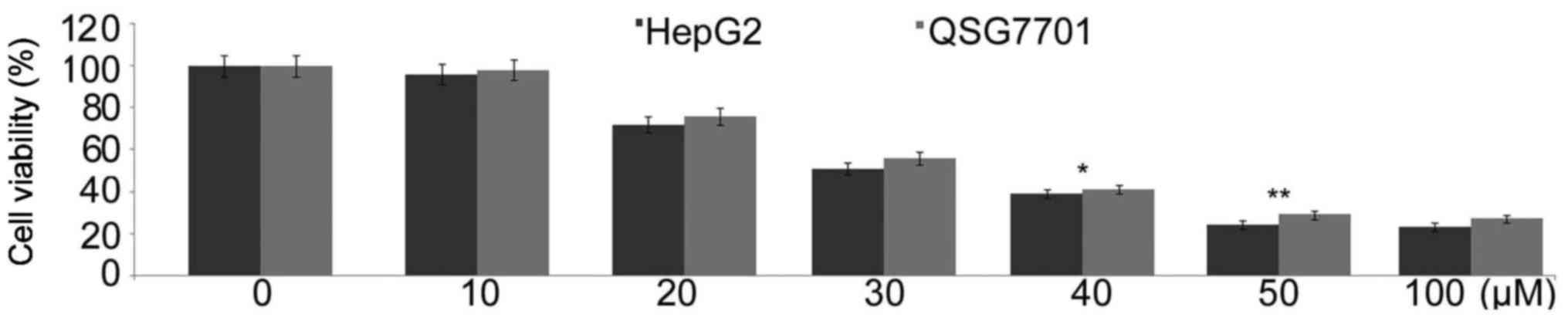
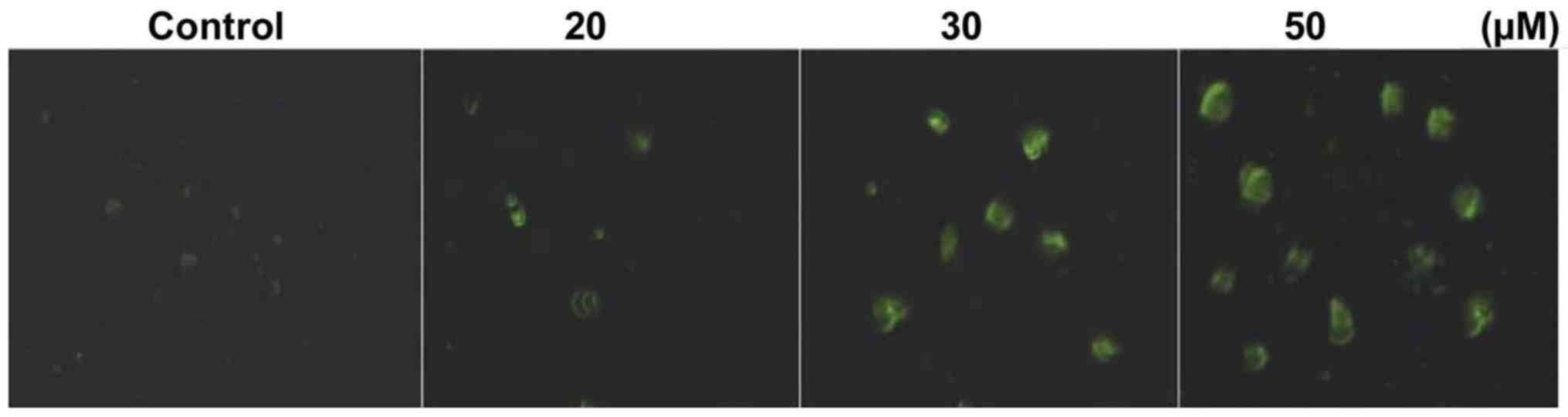
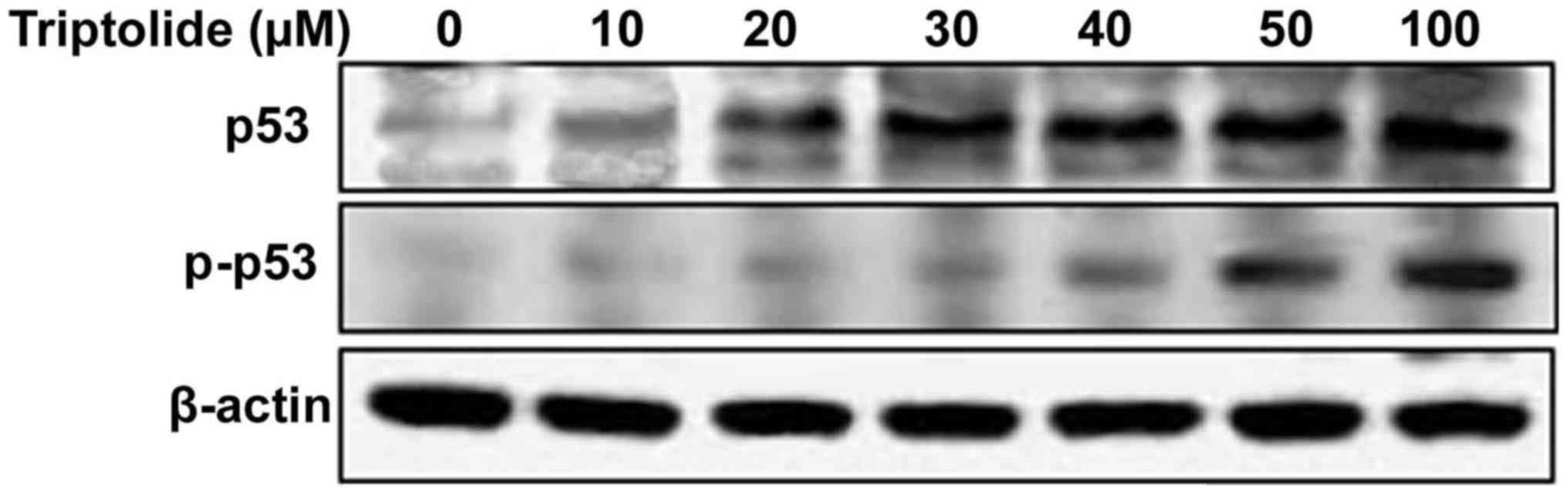
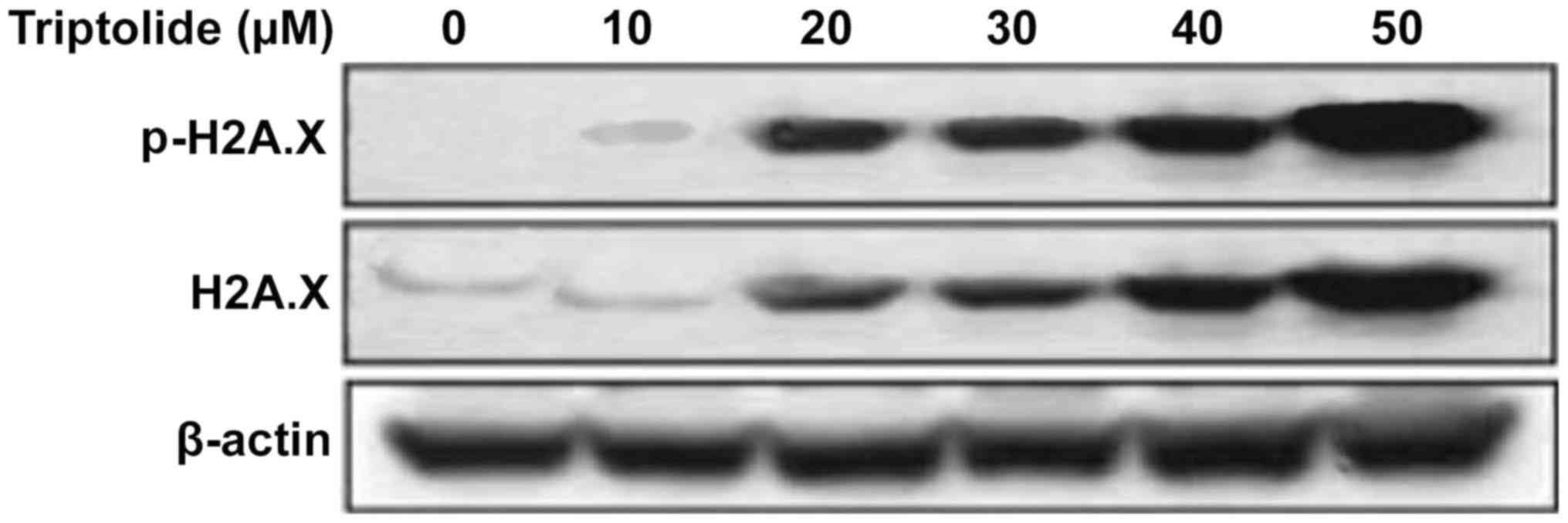
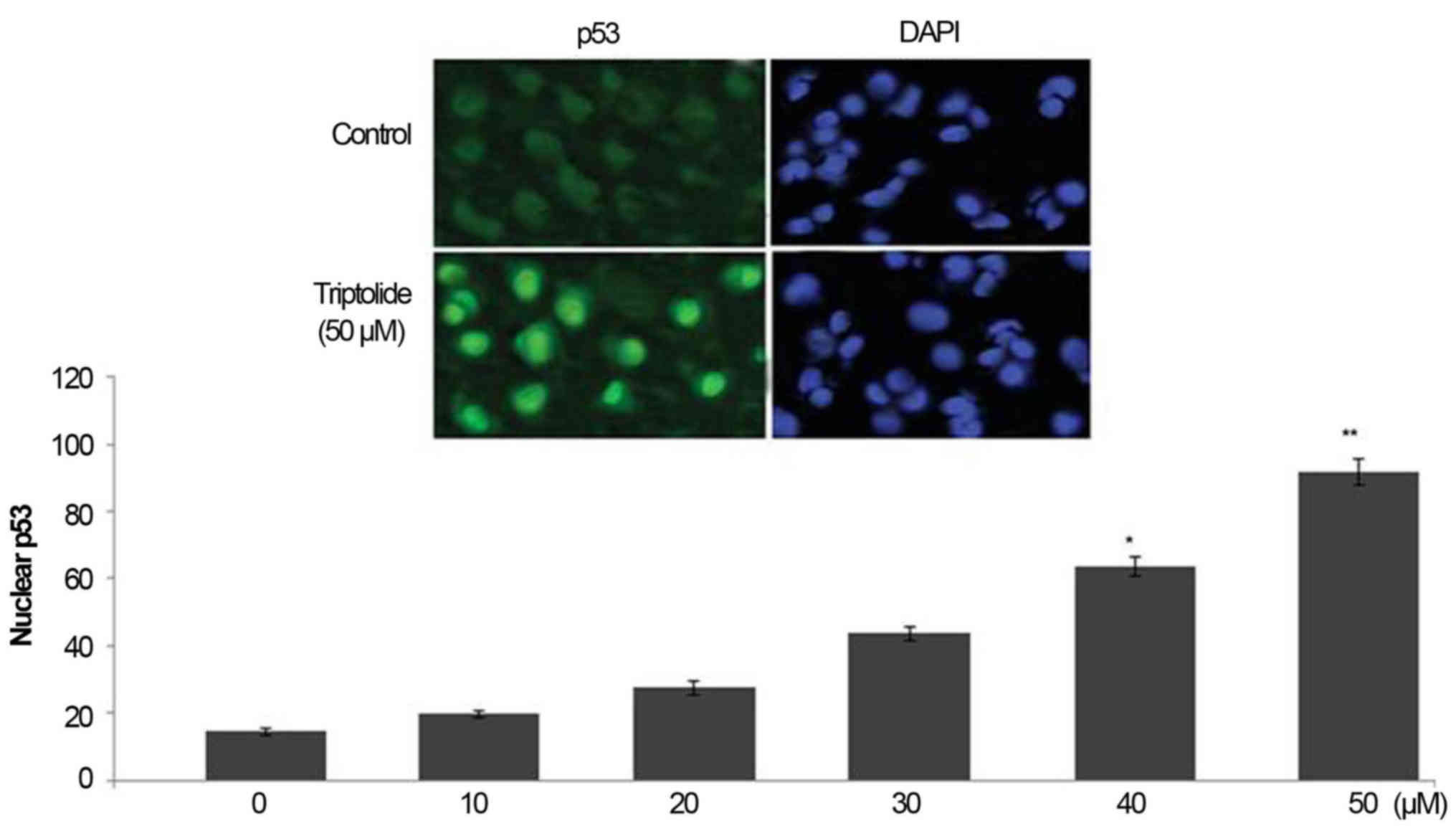
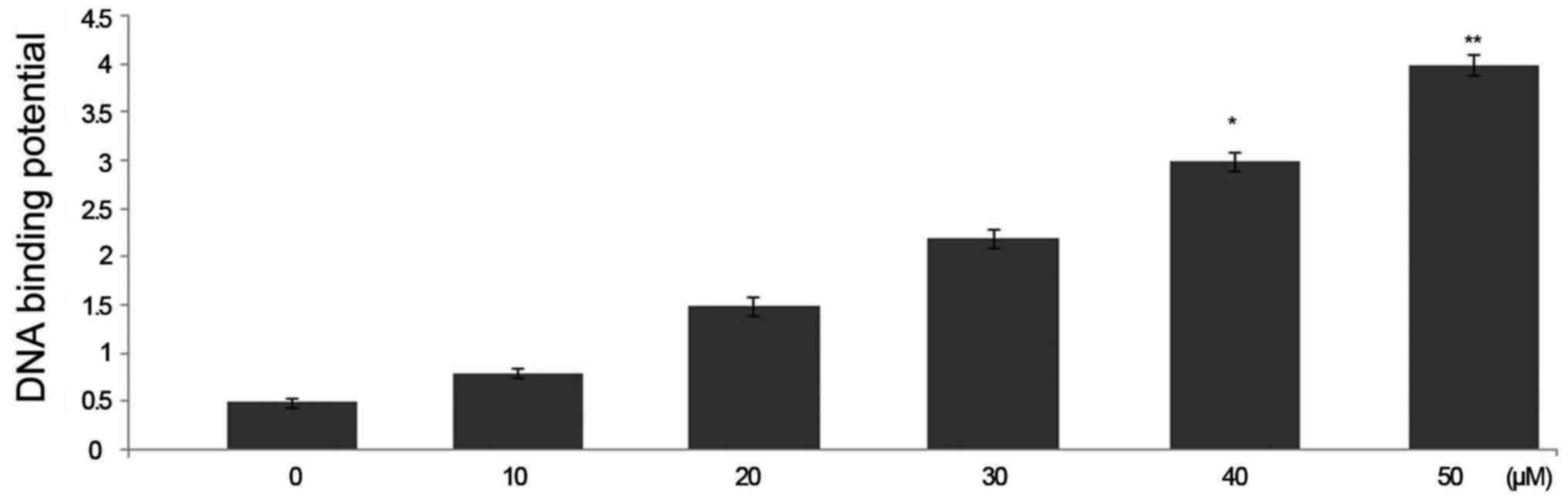
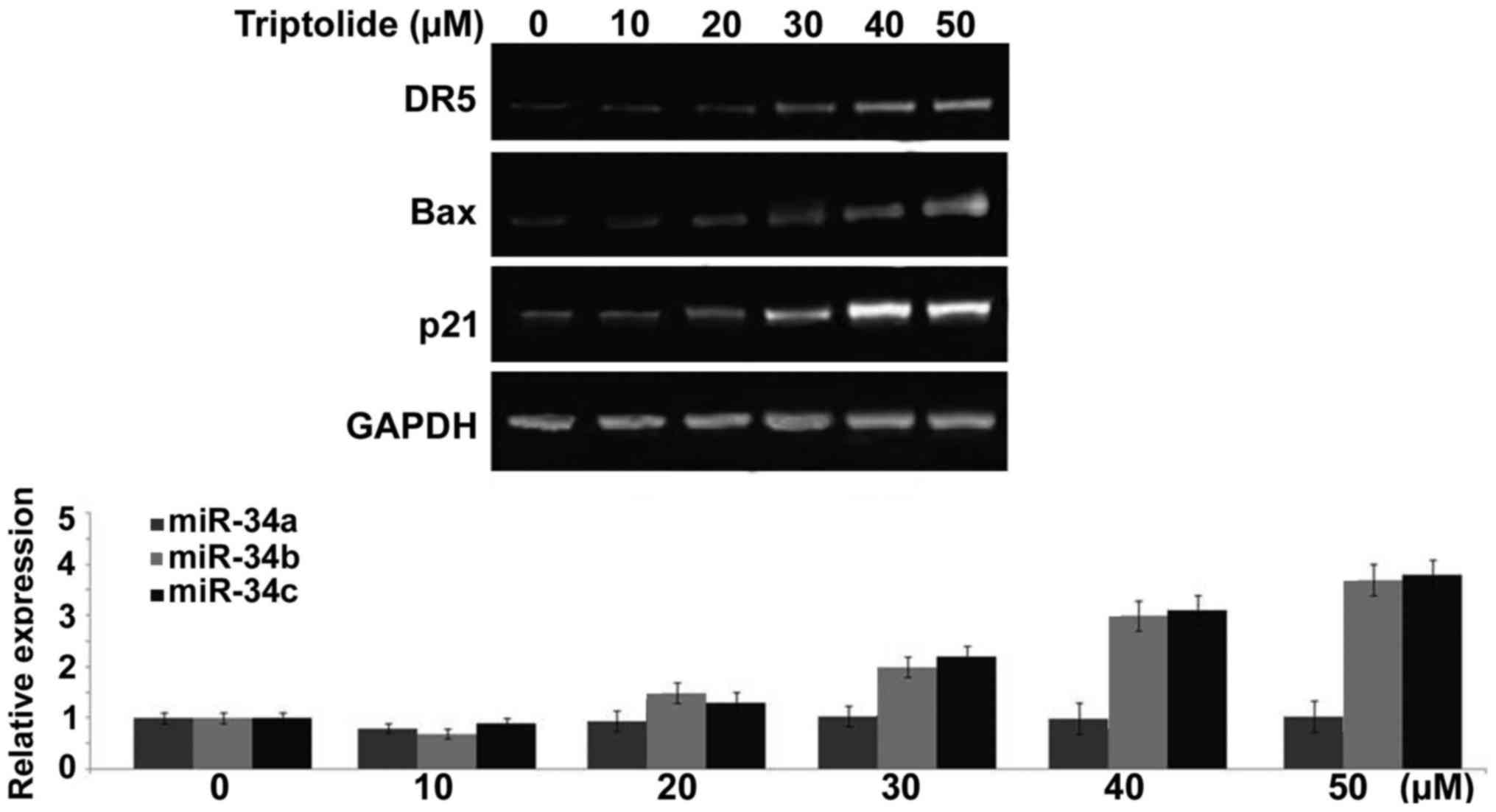
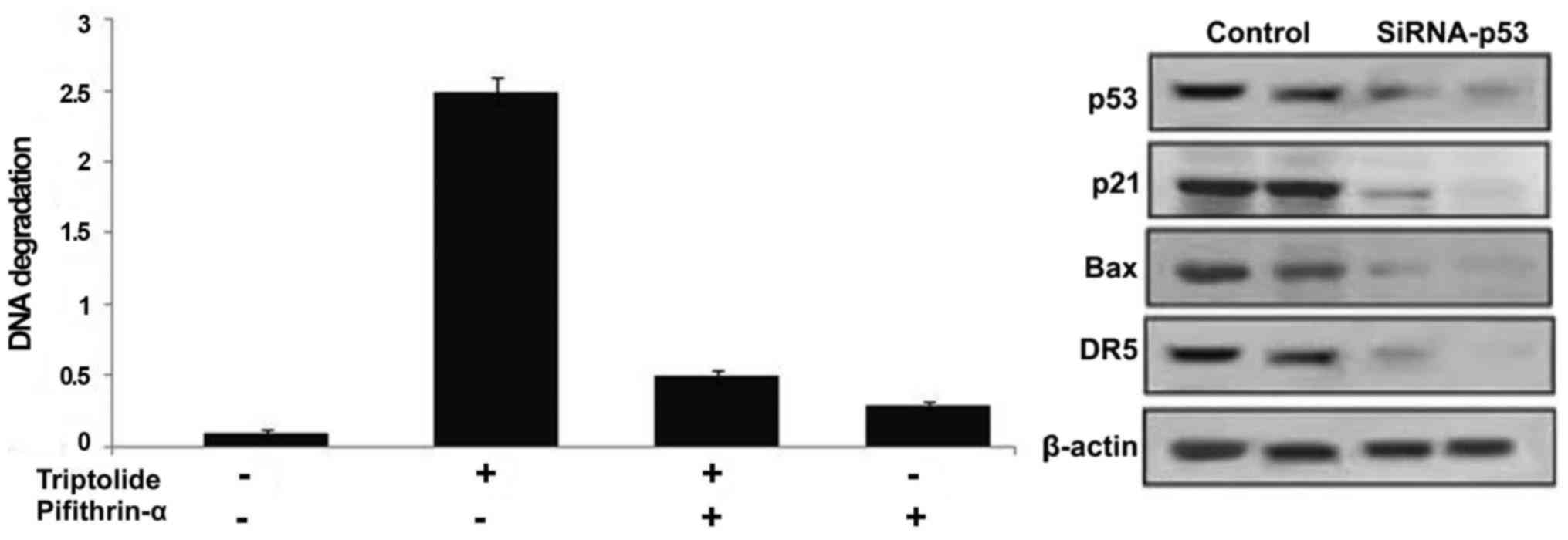
The present study investigated the effect of triptolide on viability and apoptosis along with underlying mechanism in liver cancer cells. CCK-8 assay showed that triptolide treatment for 48 h significantly reduced the viability of HepG2 and QSG7701 cells at 50 µM concentration. Annexin V-FITC and propidium iodide staining showed that triptolide treatment of HepG2 cells at 50 µM concentrations induced apoptosis in 56.45% cells compared to only 2.36% cells in the control cultures. Western blot assay showed that treatment of HepG2 cells with 50 µM concentration of triptolide significantly induced phosphorylation of p53 in a 2 h-treatment. Phosphorylation of histone H2A.X indicator of DNA damage was induced by triptolide treatment after 12 h in HepG2 cells. The level of nuclear p53 in a 6 h-treatment with 0, 10, 20, 30, 40 and 50 µM concentration of triptolide was found to be 15.3, 19.6, 28.5, 43.7, 63.8 and 91.5%, respectively. Treatment of HepG2 cells with triptolide at 50 µM concentration caused a significant increase in the binding potential of p53 to DNA. Triptolide treatment of HepG2 cells caused a significant increase in the expression of p21, Bax and DR5 genes in HepG2 cells. It also increased the expression of miR-34b and miR-34c in HepG2 cells markedly. Treatment of HepG2 cells with p53 inhibitor, pifithrin-α prior to incubation with triptolide significantly prevented induction of cell apoptosis. Suppression of p53 expression by siRNA inhibited the expression of p53 as well as its target genes along with the prevention of apoptosis induction. In conclusion, triptolide inhibits viability and induces apoptosis in liver cancer cells through activation of the tumor suppressor gene p53. Thus, triptolide can be used for the treatment of liver cancer.
View Figures

Figure 1

Figure 2

Figure 3

Figure 4

Figure 5

Figure 6

Figure 7

Figure 8

View References

1 

Zhen QS, Ye X and Wei ZJ: Recent progress in research on Tripterygium: A male antifertility plant. Contraception. 51:121–129. 1995. View Article : Google Scholar : PubMed/NCBI

2 

Tengchaisri T, Chawengkirttikul R, Rachaphaew N, Reutrakul V, Sangsuwan R and Sirisinha S: Antitumor activity of triptolide against cholangiocarcinoma growth in vitro and in hamsters. Cancer Lett. 133:169–175. 1998. View Article : Google Scholar

3 

Hachida M, Lu H, Zhang X, Saito S, Furutani Y, Matsuoka R, Hoshi H and Koyanagi H: Inhibitory effect of triptolide on platelet derived growth factor-A and coronary arteriosclerosis after heart transplantation. Transplant Proc. 31:2719–2723. 1999. View Article : Google Scholar : PubMed/NCBI

4 

Carter BZ, Mak DH, Schober WD, McQueen T, Harris D, Estrov Z, Evans RL and Andreeff M: Triptolide induces caspase-dependent cell death mediated via the mitochondrial pathway in leukemic cells. Blood. 108:630–637. 2006. View Article : Google Scholar : PubMed/NCBI

5 

Cohen JJ: Apoptosis. Immunol Today. 14:126–130. 1993. View Article : Google Scholar : PubMed/NCBI

6 

White E: Life, death, and the pursuit of apoptosis. Genes Dev. 10:1–15. 1996. View Article : Google Scholar : PubMed/NCBI

7 

Williams GT and Smith CA: Molecular regulation of apoptosis: Genetic controls on cell death. Cell. 74:777–779. 1993. View Article : Google Scholar : PubMed/NCBI

8 

Wyllie AH, Kerr JF and Currie AR: Cell death: The significance of apoptosis. Int Rev Cytol. 68:251–306. 1980. View Article : Google Scholar : PubMed/NCBI

9 

Ma S, Chan KW and Guan XY: In search of liver cancer stem cells. Stem Cell Rev. 4:179–192. 2008. View Article : Google Scholar : PubMed/NCBI

10 

Tomuleasa C, Soritau O, Rus-Ciuca D, Pop T, Todea D, Mosteanu O, Pintea B, Foris V, Susman S, Kacso G, et al: Isolation and characterization of hepatic cancer cells with stem-like properties from hepatocellular carcinoma. J Gastrointestin Liver Dis. 19:61–67. 2010.PubMed/NCBI

11 

Ricci-Vitiani L, Lombardi DG, Pilozzi E, Biffoni M, Todaro M, Peschle C and De Maria R: Identification and expansion of human colon-cancer-initiating cells. Nature. 445:111–115. 2007. View Article : Google Scholar

12 

Lee TK, Castilho A, Ma S and Ng IO: Liver cancer stem cells: Implications for a new therapeutic target. Liver Int. 29:955–965. 2009. View Article : Google Scholar : PubMed/NCBI

13 

Vogelstein B, Lane D and Levine AJ: Surfing the p53 network. Nature. 408:307–310. 2000. View Article : Google Scholar : PubMed/NCBI

14 

Ma L, Wagner J, Rice JJ, Hu W, Levine AJ and Stolovitzky GA: A plausible model for the digital response of p53 to DNA damage. Proc Natl Acad Sci USA. 102:14266–14271. 2005. View Article : Google Scholar : PubMed/NCBI

15 

Harris SL and Levine AJ: The p53 pathway: Positive and negative feedback loops. Oncogene. 24:2899–2908. 2005. View Article : Google Scholar : PubMed/NCBI

16 

Levine AJ: p53, the cellular gatekeeper for growth and division. Cell. 88:323–331. 1997. View Article : Google Scholar : PubMed/NCBI

17 

Bean LJ and Stark GR: Phosphorylation of serines 15 and 37 is necessary for efficient accumulation of p53 following irradiation with UV. Oncogene. 20:1076–1084. 2001. View Article : Google Scholar : PubMed/NCBI

18 

She QB, Chen N and Dong Z: ERKs and p38 kinase phosphorylate p53 protein at serine 15 in response to UV radiation. J Biol Chem. 275:20444–20449. 2000. View Article : Google Scholar : PubMed/NCBI

19 

Vazquez A, Bond EE, Levine AJ and Bond GL: The genetics of the p53 pathway, apoptosis and cancer therapy. Nat Rev Drug Discov. 7:979–987. 2008. View Article : Google Scholar : PubMed/NCBI

20 

Yin Y, Terauchi Y, Solomon GG, Aizawa S, Rangarajan PN, Yazaki Y, Kadowaki T and Barrett JC: Involvement of p85 in p53-dependent apoptotic response to oxidative stress. Nature. 391:707–710. 1998. View Article : Google Scholar : PubMed/NCBI

21 

Lowe SW, Ruley HE, Jacks T and Housman DE: p53-dependent apoptosis modulates the cytotoxicity of anticancer agents. Cell. 74:957–967. 1993. View Article : Google Scholar : PubMed/NCBI

22 

Brugarolas J, Chandrasekaran C, Gordon JI, Beach D, Jacks T and Hannon GJ: Radiation-induced cell cycle arrest compromised by p21 deficiency. Nature. 377:552–557. 1995. View Article : Google Scholar : PubMed/NCBI

23 

Miyashita T and Reed JC: Tumor suppressor p53 is a direct transcriptional activator of the human bax gene. Cell. 80:293–299. 1995. View Article : Google Scholar : PubMed/NCBI

24 

Oda E, Ohki R, Murasawa H, Nemoto J, Shibue T, Yamashita T, Tokino T, Taniguchi T and Tanaka N: Noxa, a BH3-only member of the Bcl-2 family and candidate mediator of p53-induced apoptosis. Science. 288:1053–1058. 2000. View Article : Google Scholar : PubMed/NCBI

25 

Yu J, Zhang L, Hwang PM, Kinzler KW and Vogelstein B: PUMA induces the rapid apoptosis of colorectal cancer cells. Mol Cell. 7:673–682. 2001. View Article : Google Scholar : PubMed/NCBI

26 

Shieh SY, Ikeda M, Taya Y and Prives C: DNA damage-induced phosphorylation of p53 alleviates inhibition by MDM2. Cell. 91:325–334. 1997. View Article : Google Scholar : PubMed/NCBI

27 

Prives C: Signaling to p53: Breaking the MDM2-p53 circuit. Cell. 95:5–8. 1998. View Article : Google Scholar : PubMed/NCBI

28 

Brew CT, Aronchik I, Hsu JC, Sheen JH, Dickson RB, Bjeldanes LF and Firestone GL: Indole-3-carbinol activates the ATM signaling pathway independent of DNA damage to stabilize p53 and induce G1 arrest of human mammary epithelial cells. Int J Cancer. 118:857–868. 2006. View Article : Google Scholar

29 

Loehberg CR, Thompson T, Kastan MB, Maclean KH, Edwards DG, Kittrell FS, Medina D, Conneely OM and O'Malley BW: Ataxia telangiectasia-mutated and p53 are potential mediators of chloroquine-induced resistance to mammary carcinogenesis. Cancer Res. 67:12026–12033. 2007. View Article : Google Scholar : PubMed/NCBI

30 

Jiang C, Hu H, Malewicz B, Wang Z and Lü J: Selenite-induced p53 Ser-15 phosphorylation and caspase-mediated apoptosis in LNCaP human prostate cancer cells. Mol Cancer Ther. 3:877–884. 2004.PubMed/NCBI

31 

Zhao R, Xiang N, Domann FE and Zhong W: Expression of p53 enhances selenite-induced superoxide production and apoptosis in human prostate cancer cells. Cancer Res. 66:2296–2304. 2006. View Article : Google Scholar : PubMed/NCBI

32 

Chang TC, Wentzel EA, Kent OA, Ramachandran K, Mullendore M, Lee KH, Feldmann G, Yamakuchi M, Ferlito M, Lowenstein CJ, et al: Transactivation of miR-34a by p53 broadly influences gene expression and promotes apoptosis. Mol Cell. 26:745–752. 2007. View Article : Google Scholar : PubMed/NCBI

Related Articles

  • Abstract
  • View
  • Download
  • Twitter
Copy and paste a formatted citation
Spandidos Publications style
Sun Y, Xiao L, Wang D, Ji Y, Yang Y, Ma R and Chen X: Triptolide inhibits viability and induces apoptosis in liver cancer cells through activation of the tumor suppressor gene p53. Int J Oncol 50: 847-852, 2017.
APA
Sun, Y., Xiao, L., Wang, D., Ji, Y., Yang, Y., Ma, R., & Chen, X. (2017). Triptolide inhibits viability and induces apoptosis in liver cancer cells through activation of the tumor suppressor gene p53. International Journal of Oncology, 50, 847-852. https://doi.org/10.3892/ijo.2017.3850
MLA
Sun, Y., Xiao, L., Wang, D., Ji, Y., Yang, Y., Ma, R., Chen, X."Triptolide inhibits viability and induces apoptosis in liver cancer cells through activation of the tumor suppressor gene p53". International Journal of Oncology 50.3 (2017): 847-852.
Chicago
Sun, Y., Xiao, L., Wang, D., Ji, Y., Yang, Y., Ma, R., Chen, X."Triptolide inhibits viability and induces apoptosis in liver cancer cells through activation of the tumor suppressor gene p53". International Journal of Oncology 50, no. 3 (2017): 847-852. https://doi.org/10.3892/ijo.2017.3850
Copy and paste a formatted citation
x
Spandidos Publications style
Sun Y, Xiao L, Wang D, Ji Y, Yang Y, Ma R and Chen X: Triptolide inhibits viability and induces apoptosis in liver cancer cells through activation of the tumor suppressor gene p53. Int J Oncol 50: 847-852, 2017.
APA
Sun, Y., Xiao, L., Wang, D., Ji, Y., Yang, Y., Ma, R., & Chen, X. (2017). Triptolide inhibits viability and induces apoptosis in liver cancer cells through activation of the tumor suppressor gene p53. International Journal of Oncology, 50, 847-852. https://doi.org/10.3892/ijo.2017.3850
MLA
Sun, Y., Xiao, L., Wang, D., Ji, Y., Yang, Y., Ma, R., Chen, X."Triptolide inhibits viability and induces apoptosis in liver cancer cells through activation of the tumor suppressor gene p53". International Journal of Oncology 50.3 (2017): 847-852.
Chicago
Sun, Y., Xiao, L., Wang, D., Ji, Y., Yang, Y., Ma, R., Chen, X."Triptolide inhibits viability and induces apoptosis in liver cancer cells through activation of the tumor suppressor gene p53". International Journal of Oncology 50, no. 3 (2017): 847-852. https://doi.org/10.3892/ijo.2017.3850
Follow us
  • Twitter
  • LinkedIn
  • Facebook
About
  • Spandidos Publications
  • Careers
  • Cookie Policy
  • Privacy Policy
How can we help?
  • Help
  • Live Chat
  • Contact
  • Email to our Support Team