Spandidos Publications Logo
  • About
    • About Spandidos
    • Aims and Scopes
    • Abstracting and Indexing
    • Editorial Policies
    • Reprints and Permissions
    • Job Opportunities
    • Terms and Conditions
    • Contact
  • Journals
    • All Journals
    • Oncology Letters
      • Oncology Letters
      • Information for Authors
      • Editorial Policies
      • Editorial Board
      • Aims and Scope
      • Abstracting and Indexing
      • Bibliographic Information
      • Archive
    • International Journal of Oncology
      • International Journal of Oncology
      • Information for Authors
      • Editorial Policies
      • Editorial Board
      • Aims and Scope
      • Abstracting and Indexing
      • Bibliographic Information
      • Archive
    • Molecular and Clinical Oncology
      • Molecular and Clinical Oncology
      • Information for Authors
      • Editorial Policies
      • Editorial Board
      • Aims and Scope
      • Abstracting and Indexing
      • Bibliographic Information
      • Archive
    • Experimental and Therapeutic Medicine
      • Experimental and Therapeutic Medicine
      • Information for Authors
      • Editorial Policies
      • Editorial Board
      • Aims and Scope
      • Abstracting and Indexing
      • Bibliographic Information
      • Archive
    • International Journal of Molecular Medicine
      • International Journal of Molecular Medicine
      • Information for Authors
      • Editorial Policies
      • Editorial Board
      • Aims and Scope
      • Abstracting and Indexing
      • Bibliographic Information
      • Archive
    • Biomedical Reports
      • Biomedical Reports
      • Information for Authors
      • Editorial Policies
      • Editorial Board
      • Aims and Scope
      • Abstracting and Indexing
      • Bibliographic Information
      • Archive
    • Oncology Reports
      • Oncology Reports
      • Information for Authors
      • Editorial Policies
      • Editorial Board
      • Aims and Scope
      • Abstracting and Indexing
      • Bibliographic Information
      • Archive
    • Molecular Medicine Reports
      • Molecular Medicine Reports
      • Information for Authors
      • Editorial Policies
      • Editorial Board
      • Aims and Scope
      • Abstracting and Indexing
      • Bibliographic Information
      • Archive
    • World Academy of Sciences Journal
      • World Academy of Sciences Journal
      • Information for Authors
      • Editorial Policies
      • Editorial Board
      • Aims and Scope
      • Abstracting and Indexing
      • Bibliographic Information
      • Archive
    • International Journal of Functional Nutrition
      • International Journal of Functional Nutrition
      • Information for Authors
      • Editorial Policies
      • Editorial Board
      • Aims and Scope
      • Abstracting and Indexing
      • Bibliographic Information
      • Archive
    • International Journal of Epigenetics
      • International Journal of Epigenetics
      • Information for Authors
      • Editorial Policies
      • Editorial Board
      • Aims and Scope
      • Abstracting and Indexing
      • Bibliographic Information
      • Archive
    • Medicine International
      • Medicine International
      • Information for Authors
      • Editorial Policies
      • Editorial Board
      • Aims and Scope
      • Abstracting and Indexing
      • Bibliographic Information
      • Archive
  • Articles
  • Information
    • Information for Authors
    • Information for Reviewers
    • Information for Librarians
    • Information for Advertisers
    • Conferences
  • Language Editing
Spandidos Publications Logo
  • About
    • About Spandidos
    • Aims and Scopes
    • Abstracting and Indexing
    • Editorial Policies
    • Reprints and Permissions
    • Job Opportunities
    • Terms and Conditions
    • Contact
  • Journals
    • All Journals
    • Biomedical Reports
      • Information for Authors
      • Editorial Policies
      • Editorial Board
      • Aims and Scope
      • Abstracting and Indexing
      • Bibliographic Information
      • Archive
    • Experimental and Therapeutic Medicine
      • Information for Authors
      • Editorial Policies
      • Editorial Board
      • Aims and Scope
      • Abstracting and Indexing
      • Bibliographic Information
      • Archive
    • International Journal of Epigenetics
      • Information for Authors
      • Editorial Policies
      • Editorial Board
      • Aims and Scope
      • Abstracting and Indexing
      • Bibliographic Information
      • Archive
    • International Journal of Functional Nutrition
      • Information for Authors
      • Editorial Policies
      • Editorial Board
      • Aims and Scope
      • Abstracting and Indexing
      • Bibliographic Information
      • Archive
    • International Journal of Molecular Medicine
      • Information for Authors
      • Editorial Policies
      • Editorial Board
      • Aims and Scope
      • Abstracting and Indexing
      • Bibliographic Information
      • Archive
    • International Journal of Oncology
      • Information for Authors
      • Editorial Policies
      • Editorial Board
      • Aims and Scope
      • Abstracting and Indexing
      • Bibliographic Information
      • Archive
    • Medicine International
      • Information for Authors
      • Editorial Policies
      • Editorial Board
      • Aims and Scope
      • Abstracting and Indexing
      • Bibliographic Information
      • Archive
    • Molecular and Clinical Oncology
      • Information for Authors
      • Editorial Policies
      • Editorial Board
      • Aims and Scope
      • Abstracting and Indexing
      • Bibliographic Information
      • Archive
    • Molecular Medicine Reports
      • Information for Authors
      • Editorial Policies
      • Editorial Board
      • Aims and Scope
      • Abstracting and Indexing
      • Bibliographic Information
      • Archive
    • Oncology Letters
      • Information for Authors
      • Editorial Policies
      • Editorial Board
      • Aims and Scope
      • Abstracting and Indexing
      • Bibliographic Information
      • Archive
    • Oncology Reports
      • Information for Authors
      • Editorial Policies
      • Editorial Board
      • Aims and Scope
      • Abstracting and Indexing
      • Bibliographic Information
      • Archive
    • World Academy of Sciences Journal
      • Information for Authors
      • Editorial Policies
      • Editorial Board
      • Aims and Scope
      • Abstracting and Indexing
      • Bibliographic Information
      • Archive
  • Articles
  • Information
    • For Authors
    • For Reviewers
    • For Librarians
    • For Advertisers
    • Conferences
  • Language Editing
Login Register Submit
  • This site uses cookies
  • You can change your cookie settings at any time by following the instructions in our Cookie Policy. To find out more, you may read our Privacy Policy.

    I agree
Search articles by DOI, keyword, author or affiliation
Search
Advanced Search
presentation
International Journal of Oncology
Join Editorial Board Propose a Special Issue
Print ISSN: 1019-6439 Online ISSN: 1791-2423
Journal Cover
March-2017 Volume 50 Issue 3

Full Size Image

Cover Legend PDF

Sign up for eToc alerts
Recommend to Library

Journals

International Journal of Molecular Medicine

International Journal of Molecular Medicine

International Journal of Molecular Medicine is an international journal devoted to molecular mechanisms of human disease.

International Journal of Oncology

International Journal of Oncology

International Journal of Oncology is an international journal devoted to oncology research and cancer treatment.

Molecular Medicine Reports

Molecular Medicine Reports

Covers molecular medicine topics such as pharmacology, pathology, genetics, neuroscience, infectious diseases, molecular cardiology, and molecular surgery.

Oncology Reports

Oncology Reports

Oncology Reports is an international journal devoted to fundamental and applied research in Oncology.

Experimental and Therapeutic Medicine

Experimental and Therapeutic Medicine

Experimental and Therapeutic Medicine is an international journal devoted to laboratory and clinical medicine.

Oncology Letters

Oncology Letters

Oncology Letters is an international journal devoted to Experimental and Clinical Oncology.

Biomedical Reports

Biomedical Reports

Explores a wide range of biological and medical fields, including pharmacology, genetics, microbiology, neuroscience, and molecular cardiology.

Molecular and Clinical Oncology

Molecular and Clinical Oncology

International journal addressing all aspects of oncology research, from tumorigenesis and oncogenes to chemotherapy and metastasis.

World Academy of Sciences Journal

World Academy of Sciences Journal

Multidisciplinary open-access journal spanning biochemistry, genetics, neuroscience, environmental health, and synthetic biology.

International Journal of Functional Nutrition

International Journal of Functional Nutrition

Open-access journal combining biochemistry, pharmacology, immunology, and genetics to advance health through functional nutrition.

International Journal of Epigenetics

International Journal of Epigenetics

Publishes open-access research on using epigenetics to advance understanding and treatment of human disease.

Medicine International

Medicine International

An International Open Access Journal Devoted to General Medicine.

Journal Cover
March-2017 Volume 50 Issue 3

Full Size Image

Cover Legend PDF

Sign up for eToc alerts
Recommend to Library

  • Article
  • Citations
    • Cite This Article
    • Download Citation
    • Create Citation Alert
    • Remove Citation Alert
    • Cited By
  • Similar Articles
    • Related Articles (in Spandidos Publications)
    • Similar Articles (Google Scholar)
    • Similar Articles (PubMed)
  • Download PDF
  • Download XML
  • View XML
Article

Cobalt chloride treatment induces autophagic apoptosis in human glioma cells via a p53-dependent pathway

  • Authors:
    • Bor-Chin Cheng
    • Jui-Tai Chen
    • Shun-Tai Yang
    • Chung-Ching Chio
    • Shing-Hwa Liu
    • Ruei-Ming Chen
  • View Affiliations / Copyright

    Affiliations: Department of Surgery, Chi-Mei Medical Center, Tainan, Taiwan, R.O.C., Graduate Institute of Medical Sciences, Taipei Medical University, Taipei, Taiwan, R.O.C., Department of Neurosurgery, Shuang-Ho Hospital, Taipei Medical University, New Taipei City, Taiwan, R.O.C., Department of Neurosurgery, Chi-Mei Medical Center, Tainan, Taiwan, R.O.C., Institute of Toxicology, College of Medicine, National Taiwan University, Taipei, Taiwan, R.O.C., Comprehensive Cancer Center, Taipei Medical University, Taipei, Taiwan, R.O.C.
  • Pages: 964-974
    |
    Published online on: January 25, 2017
       https://doi.org/10.3892/ijo.2017.3861
  • Expand metrics +
Metrics: Total Views: 0 (Spandidos Publications: | PMC Statistics: )
Metrics: Total PDF Downloads: 0 (Spandidos Publications: | PMC Statistics: )
Cited By (CrossRef): 0 citations Loading Articles...

This article is mentioned in:


Abstract

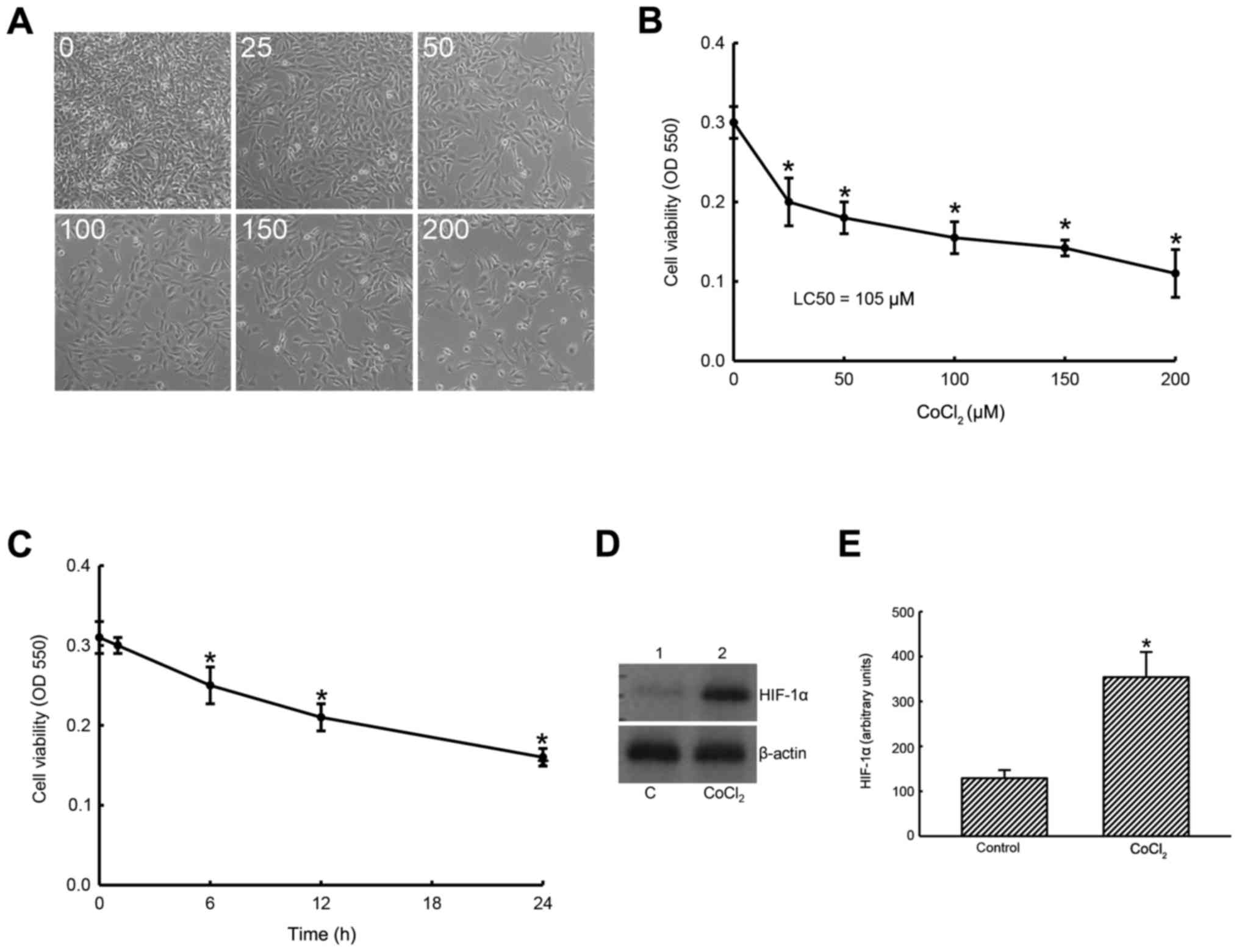
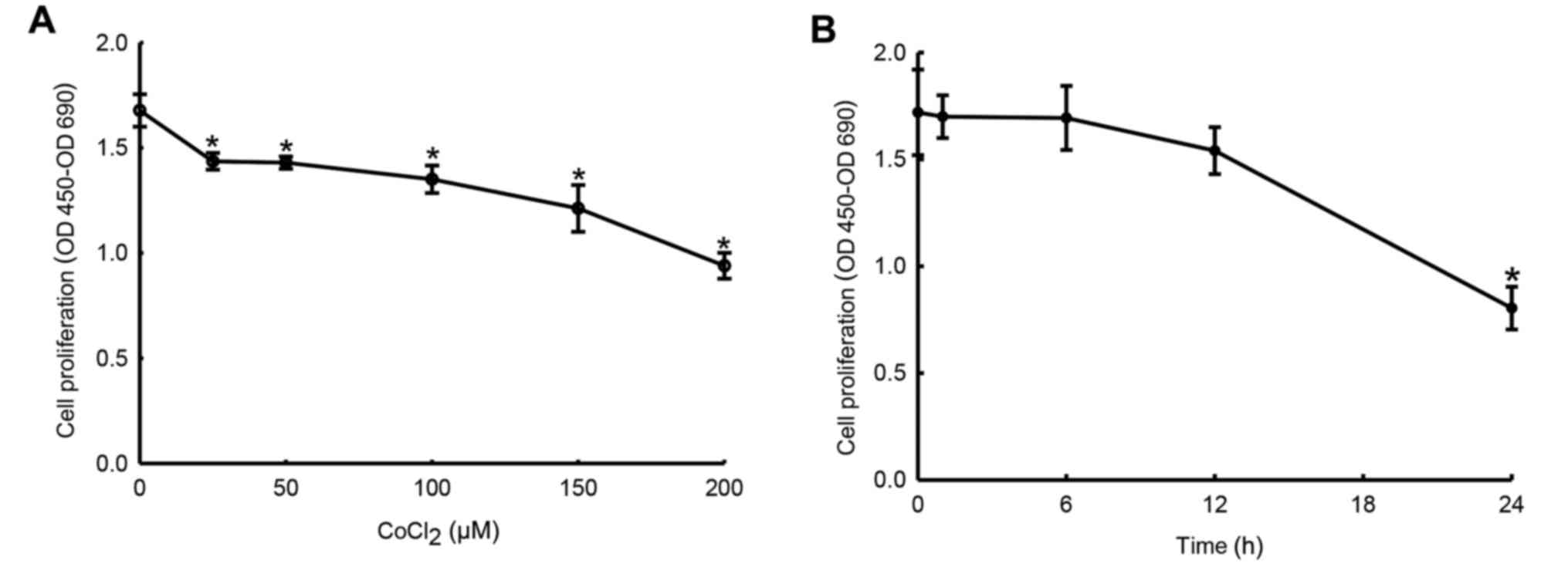
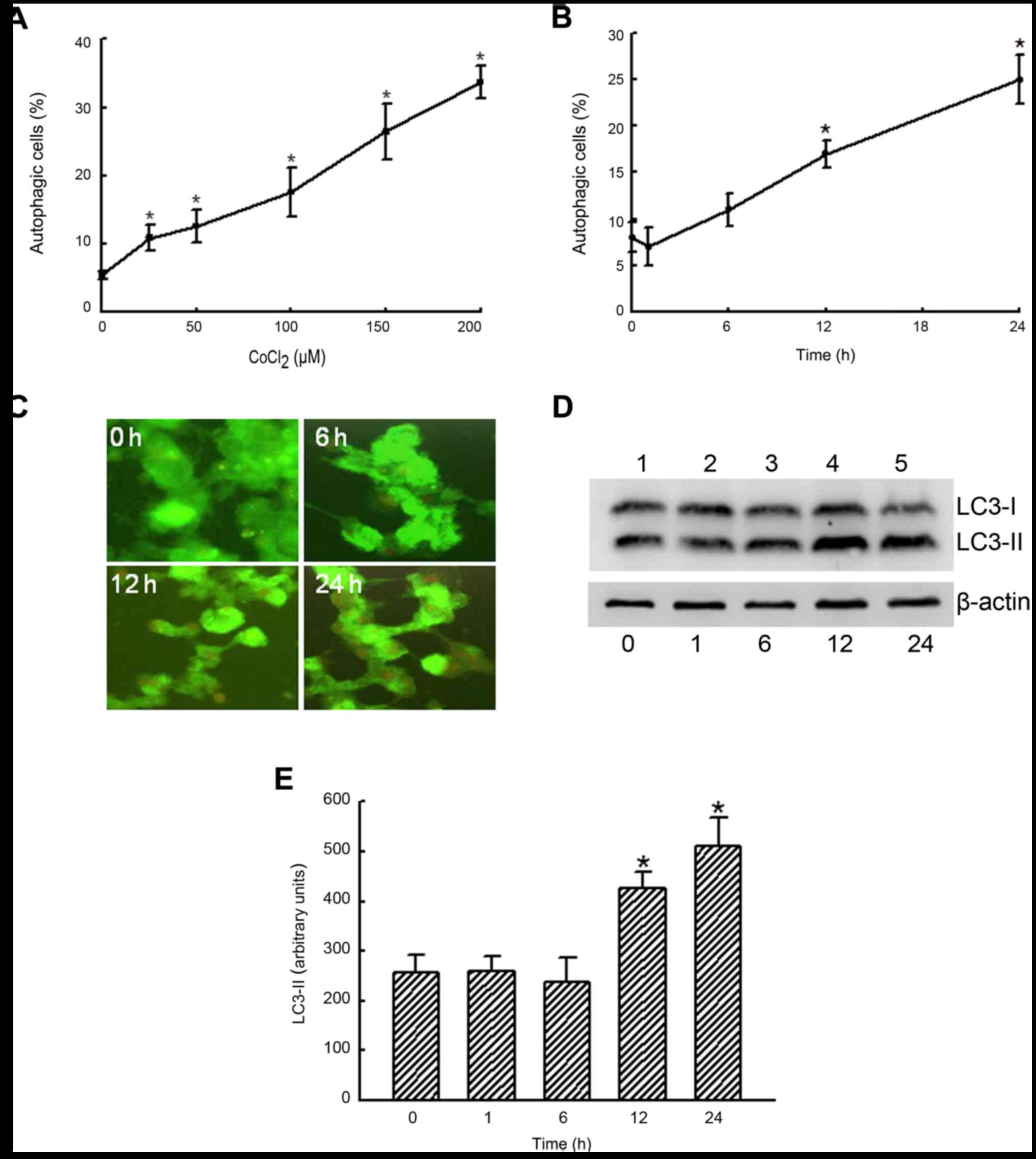
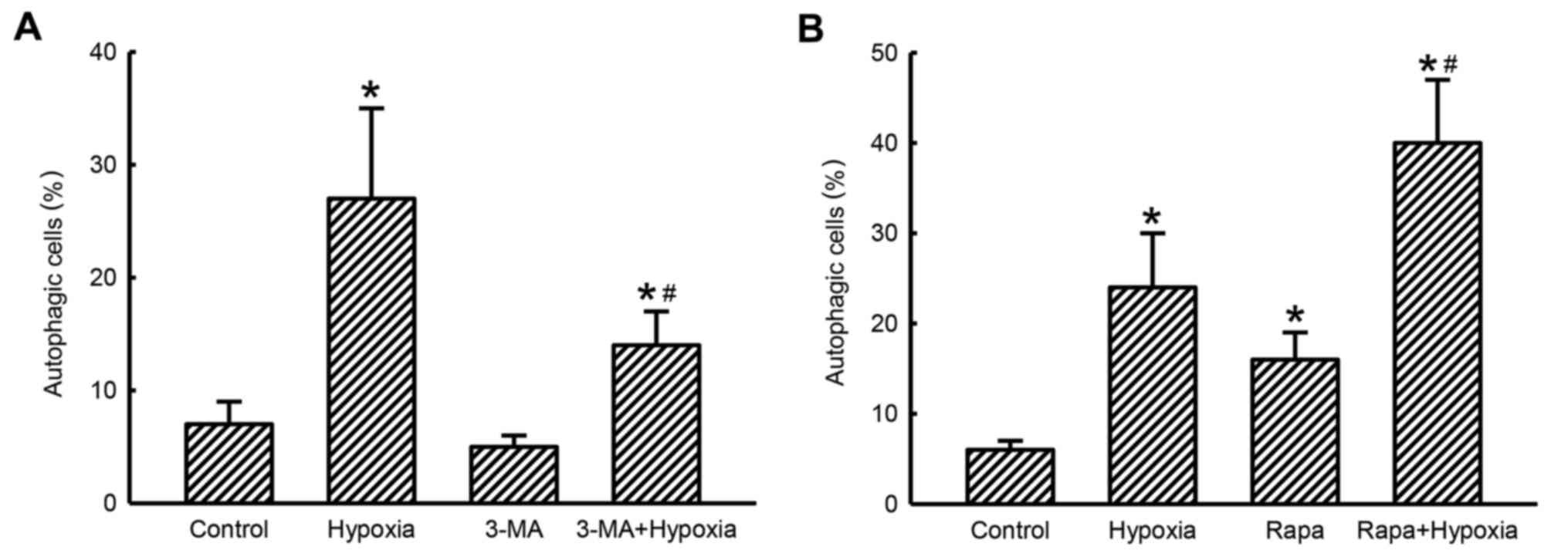
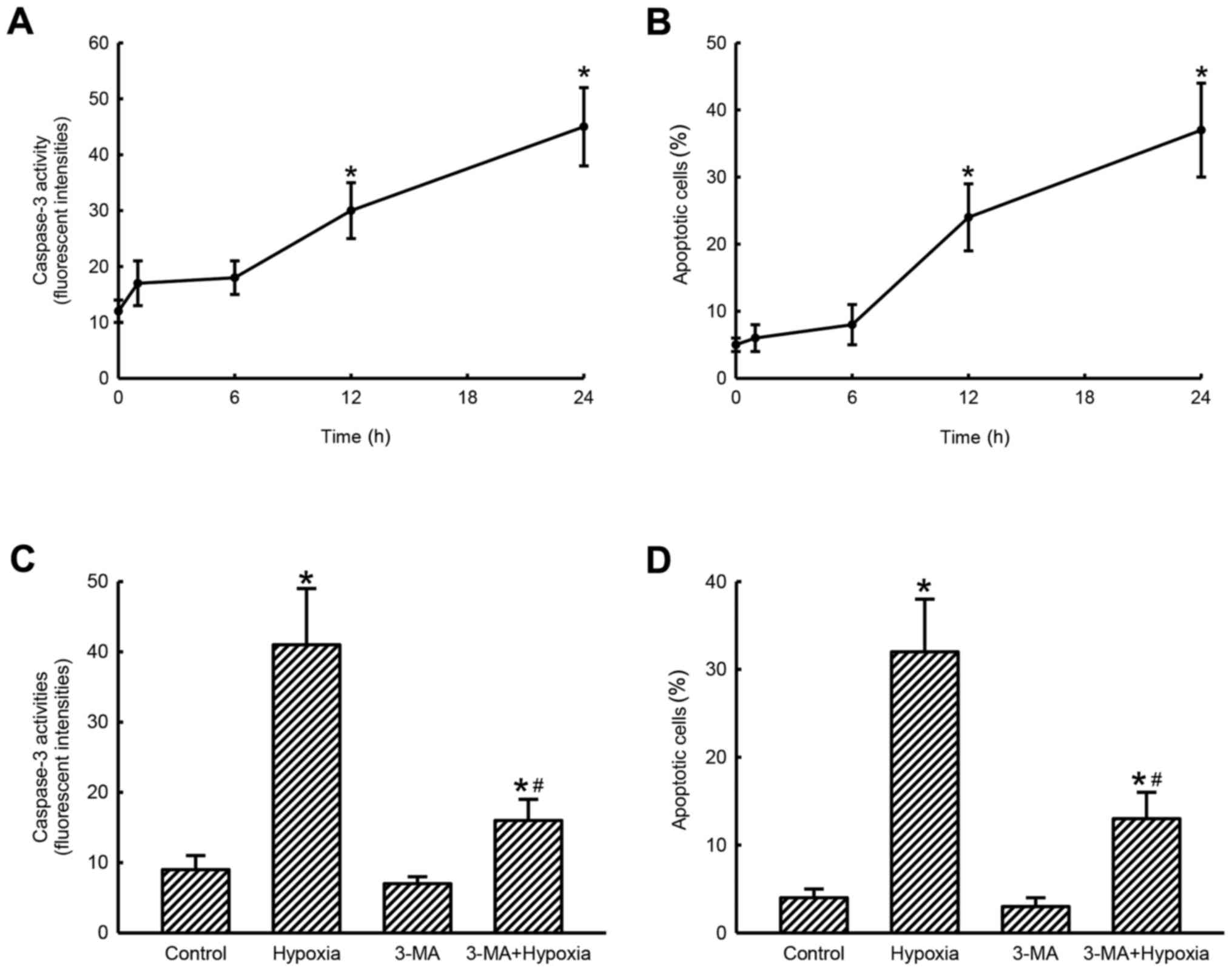
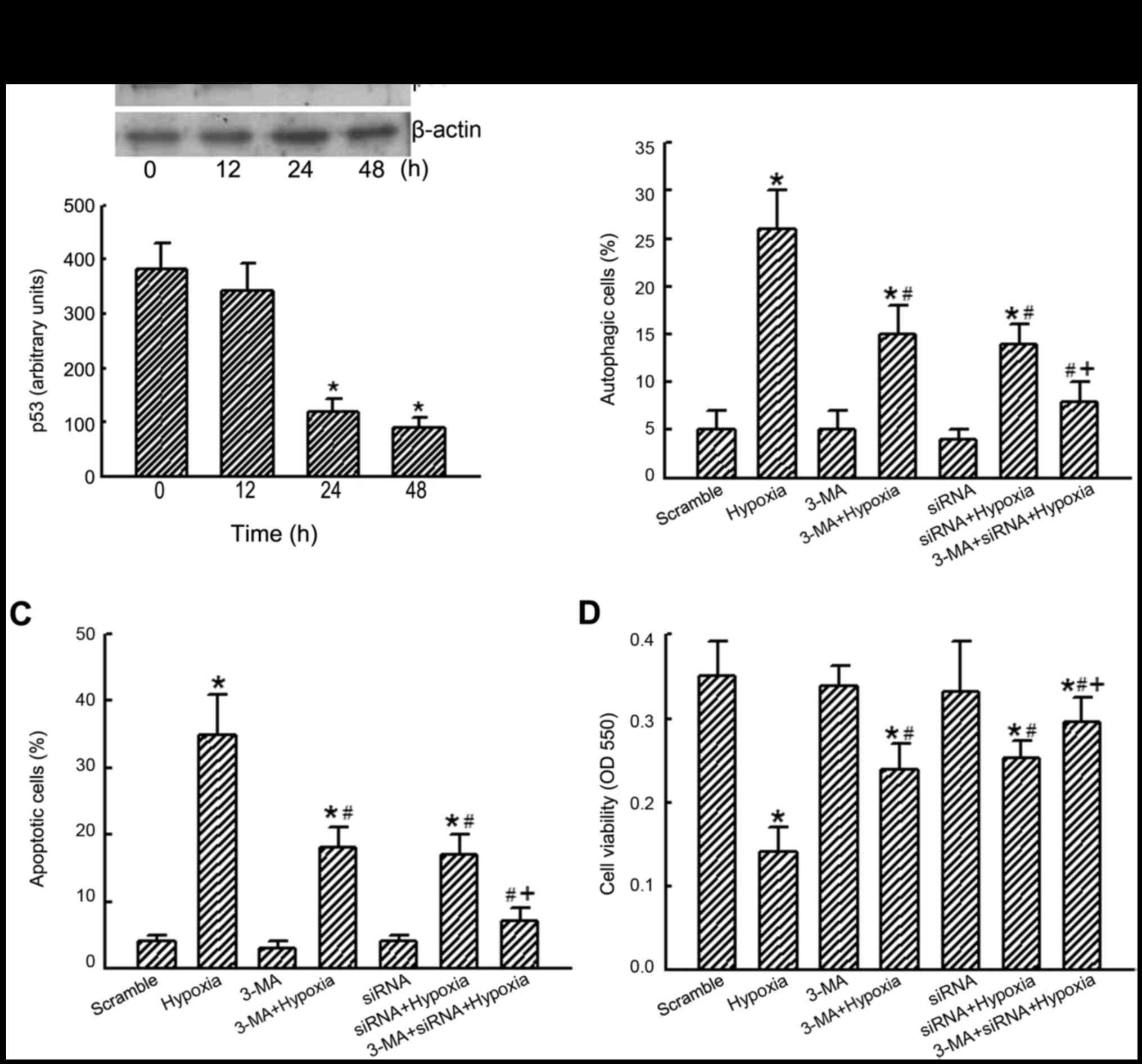
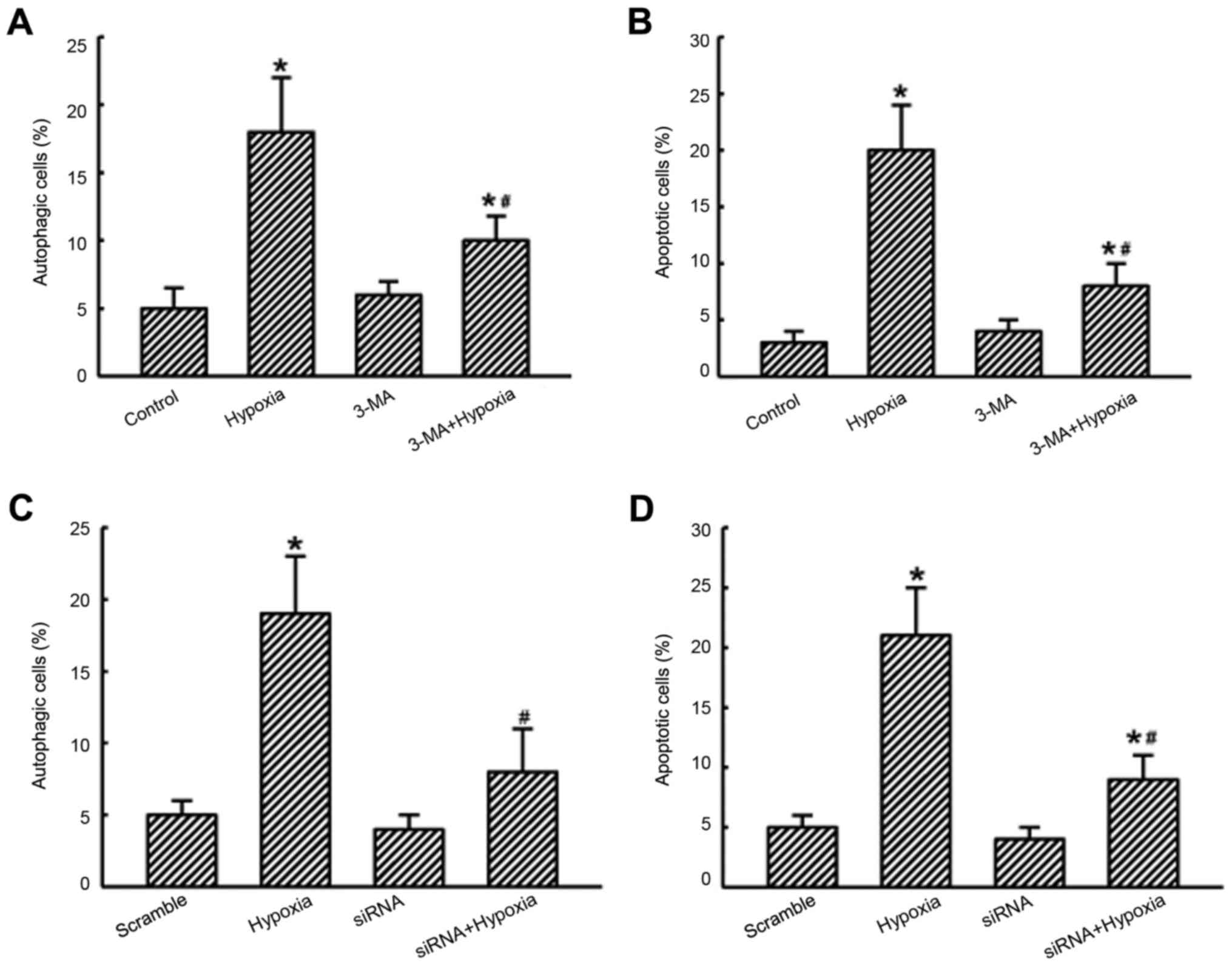
Malignant glioma is the most aggressive brain tumor. Hypoxic condition has been explored for killing cancer stem cells or drug-resistant tumor cells. This study investigated the effects of hypoxia on autophagic death and the possible mechanisms. Exposure of human malignant glioma U87-MG cells to cobalt chloride (CoCl2) increased cellular hypoxia-inducible factor-1α levels and concurrently decreased cell viability concentration- and time-dependently. In parallel, treatment with CoCl2 suppressed proliferation of human U87-MG cells. Autophagic cells and levels of LC3-II were concentration- and time-dependently induced in human U87-MG cells after exposure to CoCl2. However, pretreatment with 3-mehyladenine (3-MA) and chloroquine, inhibitors of cell autophagy, caused significant alleviations in CoCl2-induced cell autophagy. In contrast, exposure to rapamycin, an inducer of cell autophagy, synergistically induced hypoxia-induced autophagy of U87-MG cells. Administration of human U87-MG cells with CoCl2 triggered caspase-3 activation and cell apoptosis. Interestingly, pretreatment with 3-MA and chloroquine remarkably suppressed CoCl2-induced caspase-3 activation and cell apoptosis. Application of p53 small interference (si)RNA into human U87-MG cells downregulated levels of this protein and simultaneously lowered hypoxia- and 3-MA-induced alterations in cell autophagy, apoptosis, and death. The hypoxia-induced autophagy and apoptosis of DBTRG-05MG cells were significantly lowered by 3-MA pretreatment and p53 knockdown. Therefore, the present study shows that CoCl2 treatment can induce autophagy of human glioma cells and subsequent autophagic apoptosis via a p53-dependent pathway. Hypoxia-induced autophagic apoptosis may be applied as a therapeutic strategy for treatment of glioma patients.
View Figures

Figure 1

Figure 2

Figure 3

Figure 4

Figure 5

Figure 6

Figure 7

View References

1 

Wacker MR, Hoshino T, Ahn DK, Davis RL and Prados MD: The prognostic implications of histologic classification and bromodeoxyuridine labeling index of mixed gliomas. J Neurooncol. 19:113–122. 1994. View Article : Google Scholar : PubMed/NCBI

2 

Jordan JT, Gerstner ER, Batchelor TT, Cahill DP and Plotkin SR: Glioblastoma care in the elderly. Cancer. 122:189–197. 2016. View Article : Google Scholar

3 

Kalkan R: Hypoxia is the driving force behind GBM and could be a new tool in GBM treatment. Crit Rev Eukaryot Gene Expr. 25:363–369. 2015. View Article : Google Scholar : PubMed/NCBI

4 

Preusser M, Lim M, Hafler DA, Reardon DA and Sampson JH: Prospects of immune checkpoint modulators in the treatment of glioblastoma. Nat Rev Neurol. 11:504–514. 2015. View Article : Google Scholar : PubMed/NCBI

5 

Curtin JF, Liu N, Candolfi M, Xiong W, Assi H, Yagiz K, Edwards MR, Michelsen KS, Kroeger KM, Liu C, et al: HMGB1 mediates endogenous TLR2 activation and brain tumor regression. PLoS Med. 6:e102009. View Article : Google Scholar : PubMed/NCBI

6 

Gerstner ER, Duda DG, di Tomaso E, Ryg PA, Loeffler JS, Sorensen AG, Ivy P, Jain RK and Batchelor TT: VEGF inhibitors in the treatment of cerebral edema in patients with brain cancer. Nat Rev Clin Oncol. 6:229–236. 2009. View Article : Google Scholar : PubMed/NCBI

7 

Freese KE, Kokai L, Edwards RP, Philips BJ, Sheikh MA, Kelley J, Comerci J, Marra KG, Rubin JP and Linkov F: Adipose-derived stems cells and their role in human cancer development, growth, progression, and metastasis: A systematic review. Cancer Res. 75:1161–1168. 2015. View Article : Google Scholar : PubMed/NCBI

8 

Lingsma HF, Roozenbeek B, Steyerberg EW, Murray GD and Maas AI: Early prognosis in traumatic brain injury: From prophecies to predictions. Lancet Neurol. 9:543–554. 2010. View Article : Google Scholar : PubMed/NCBI

9 

Semenza GL: Surviving ischemia: Adaptive responses mediated by hypoxia-inducible factor 1. J Clin Invest. 106:809–812. 2000. View Article : Google Scholar : PubMed/NCBI

10 

Lin CJ, Lin YL, Luh F, Yen Y and Chen RM: Preclinical effects of CRLX101, an investigational camptothecin-containing nanoparticle drug conjugate, on treating glioblastoma multiforme via apoptosis and antiangiogenesis. Oncotarget. 7:42408–42421. 2016.PubMed/NCBI

11 

Chan DA, Krieg AJ, Turcotte S and Giaccia AJ: HIF gene expression in cancer therapy. Methods Enzymol. 435:323–345. 2007. View Article : Google Scholar : PubMed/NCBI

12 

Chio CC, Lin JW, Cheng HA, Chiu WT, Wang YH, Wang JJ, Hsing CH and Chen RM: MicroRNA-210 targets antiapoptotic Bcl-2 expression and mediates hypoxia-induced apoptosis of neuroblastoma cells. Arch Toxicol. 87:459–468. 2013. View Article : Google Scholar

13 

Joseph JV, Conroy S, Pavlov K, Sontakke P, Tomar T, Eggens-Meijer E, Balasubramaniyan V, Wagemakers M, den Dunnen WF and Kruyt FA: Hypoxia enhances migration and invasion in glioblastoma by promoting a mesenchymal shift mediated by the HIF1α-ZEB1 axis. Cancer Lett. 359:107–116. 2015. View Article : Google Scholar : PubMed/NCBI

14 

Sun W, Jelkmann W and Depping R: Prolyl-4-hydroxylase 2 enhances hypoxia-induced glioblastoma cell death by regulating the gene expression of hypoxia-inducible factor-α. Cell Death Dis. 5:e13222014. View Article : Google Scholar

15 

Codogno P, Mehrpour M and Proikas-Cezanne T: Canonical and non-canonical autophagy: Variations on a common theme of self-eating? Nat Rev Mol Cell Biol. 13:7–12. 2011.PubMed/NCBI

16 

Kaur J and Debnath J: Autophagy at the crossroads of catabolism and anabolism. Nat Rev Mol Cell Biol. 16:461–472. 2015. View Article : Google Scholar : PubMed/NCBI

17 

Yoshimori T: Autophagy: A regulated bulk degradation process inside cells. Biochem Biophys Res Commun. 313:453–458. 2004. View Article : Google Scholar

18 

Kondo Y, Kanzawa T, Sawaya R and Kondo S: The role of autophagy in cancer development and response to therapy. Nat Rev Cancer. 5:726–734. 2005. View Article : Google Scholar : PubMed/NCBI

19 

Nanegrungsunk D, Onchan W, Chattipakorn N and Chattipakorn SC: Current evidence of temozolomide and bevacizumab in treatment of gliomas. Neurol Res. 37:167–183. 2015. View Article : Google Scholar

20 

Dolma S, Selvadurai HJ, Lan X, Lee L, Kushida M, Voisin V, Whetstone H, So M, Aviv T, Park N, et al: Inhibition of dopamine receptor D4 impedes autophagic flux, proliferation, and survival of glioblastoma stem cells. Cancer Cell. 29:859–873. 2016. View Article : Google Scholar : PubMed/NCBI

21 

Lin CJ, Chen TL, Tseng YY, Wu GJ, Hsieh MH, Lin YW and Chen RM: Honokiol induces autophagic cell death in malignant glioma through reactive oxygen species-mediated regulation of the p53/PI3K/Akt/mTOR signaling pathway. Toxicol Appl Pharmacol. 304:59–69. 2016. View Article : Google Scholar : PubMed/NCBI

22 

Bota DA, Alexandru D, Keir ST, Bigner D, Vredenburgh J and Friedman HS: Proteasome inhibition with bortezomib induces cell death in GBM stem-like cells and temozolomide-resistant glioma cell lines, but stimulates GBM stem-like cells' VEGF production and angiogenesis. J Neurosurg. 119:1415–1423. 2013. View Article : Google Scholar : PubMed/NCBI

23 

Hu YL, DeLay M, Jahangiri A, Molinaro AM, Rose SD, Carbonell WS and Aghi MK: Hypoxia-induced autophagy promotes tumor cell survival and adaptation to antiangiogenic treatment in glioblastoma. Cancer Res. 72:1773–1783. 2012. View Article : Google Scholar : PubMed/NCBI

24 

Xue H, Yuan G, Guo X, Liu Q, Zhang J, Gao X, Guo X, Xu S, Li T, Shao Q, et al: A novel tumor-promoting mechanism of IL6 and the therapeutic efficacy of tocilizumab: Hypoxia-induced IL6 is a potent autophagy initiator in glioblastoma via the p-STAT3-MIR155-3p-CREBRF pathway. Autophagy. 12:1129–1152. 2016. View Article : Google Scholar : PubMed/NCBI

25 

Yeh PS, Wang W, Chang YA, Lin CJ, Wang JJ and Chen RM: Honokiol induces autophagy of neuroblastoma cells through activating the PI3K/Akt/mTOR and endoplasmic reticular stress/ERK1/2 signaling pathways and suppressing cell migration. Cancer Lett. 370:66–77. 2016. View Article : Google Scholar

26 

Vousden KH and Lu X: Live or let die: The cell's response to p53. Nat Rev Cancer. 2:594–604. 2002. View Article : Google Scholar : PubMed/NCBI

27 

Ho MH, Liao MH, Lin YL, Lai CH, Lin PI and Chen RM: Improving effects of chitosan nanofiber scaffolds on osteoblast proliferation and maturation. Int J Nanomed. 9:4293–4304. 2014.

28 

Chang CY, Lui TN, Lin JW, Lin YL, Hsing CH, Wang JJ and Chen RM: Roles of microRNA-1 in hypoxia-induced apoptotic insults to neuronal cells. Arch Toxicol. 90:191–202. 2016. View Article : Google Scholar

29 

Lee YE, Hong CY, Lin YL and Chen RM: MicroRNA-1 participates in nitric oxide-induced apoptotic insults to MC3T3-E1 cells by targeting heat-shock protein-70. Int J Biol Sci. 11:246–255. 2015. View Article : Google Scholar : PubMed/NCBI

30 

Wu GJ, Wang W, Lin YL, Liu SH and Chen RM: Oxidative stress-induced apoptotic insults to rat osteoblasts are attenuated by nitric oxide pretreatment via GATA-5-involved regulation of Bcl-X L gene expression and protein translocation. Arch Toxicol. 90:905–916. 2016. View Article : Google Scholar

31 

Wu TT, Tai YT, Cherng YG, Chen TG, Lin CJ, Chen TL, Chang HC and Chen RM: GATA-2 transduces LPS-induced il-1β gene expression in macrophages via a toll-like receptor 4/MD88/MAPK-dependent mechanism. PLoS One. 8:e724042013. View Article : Google Scholar

32 

Messaoudi K, Clavreul A and Lagarce F: Toward an effective strategy in glioblastoma treatment. Part II: RNA interference as a promising way to sensitize glioblastomas to temozolomide. Drug Discov Today. 20:772–779. 2015. View Article : Google Scholar : PubMed/NCBI

33 

Kaelin WG Jr and Ratcliffe PJ: Oxygen sensing by metazoans: The central role of the HIF hydroxylase pathway. Mol Cell. 30:393–402. 2008. View Article : Google Scholar : PubMed/NCBI

34 

Mamlouk S and Wielockx B: Hypoxia-inducible factors as key regulators of tumor inflammation. Int J Cancer. 132:2721–2729. 2013. View Article : Google Scholar

35 

Kajita K, Mori I, Kitada Y, Taguchi K, Kajita T, Hanamoto T, Ikeda T, Fujioka K, Yamauchi M, Okada H, et al: Small proliferative adipocytes: Identification of proliferative cells expressing adipocyte markers. Endocr J. 60:931–939. 2013. View Article : Google Scholar : PubMed/NCBI

36 

Li W, Winters A, Poteet E, Ryou MG, Lin S, Hao S, Wu Z, Yuan F, Hatanpaa KJ, Simpkins JW, et al: Involvement of estrogen receptor β5 in the progression of glioma. Brain Res. 1503:97–107. 2013. View Article : Google Scholar : PubMed/NCBI

37 

Mizushima N, Yoshimori T and Levine B: Methods in mammalian autophagy research. Cell. 140:313–326. 2010. View Article : Google Scholar : PubMed/NCBI

38 

Klionsky DJ, Abdelmohsen K, Abe A, Abedin MJ, Abeliovich H, Acevedo Arozena A, Adachi H, Adams CM, Adams PD, Adeli K, et al: Guidelines for the use and interpretation of assays for monitoring autophagy (3rd edition). Autophagy. 12:1–222. 2016. View Article : Google Scholar : PubMed/NCBI

39 

Wu YT, Tan HL, Shui G, Bauvy C, Huang Q, Wenk MR, Ong CN, Codogno P and Shen HM: Dual role of 3-methyladenine in modulation of autophagy via different temporal patterns of inhibition on class I and III phosphoinositide 3-kinase. J Biol Chem. 285:10850–10861. 2010. View Article : Google Scholar : PubMed/NCBI

40 

Chen N and Karantza-Wadsworth V: Role and regulation of autophagy in cancer. Biochim Biophys Acta. 1793:1516–1523. 2009. View Article : Google Scholar : PubMed/NCBI

41 

Galluzzi L, Kepp O and Kroemer G: Caspase-3 and prostaglandins signal for tumor regrowth in cancer therapy. Oncogene. 31:2805–2808. 2012. View Article : Google Scholar

42 

Mariño G, Niso-Santano M, Baehrecke EH and Kroemer G: Self-consumption: The interplay of autophagy and apoptosis. Nat Rev Mol Cell Biol. 15:81–94. 2014. View Article : Google Scholar : PubMed/NCBI

43 

Sui X, Chen R, Wang Z, Huang Z, Kong N, Zhang M, Han W, Lou F, Yang J, Zhang Q, et al: Autophagy and chemotherapy resistance: A promising therapeutic target for cancer treatment. Cell Death Dis. 4:e8382013. View Article : Google Scholar : PubMed/NCBI

44 

Feng Z, Zhang H, Levine AJ and Jin S: The coordinate regulation of the p53 and mTOR pathways in cells. Proc Natl Acad Sci USA. 102:8204–8209. 2005. View Article : Google Scholar : PubMed/NCBI

45 

Crighton D, Wilkinson S, O'Prey J, Syed N, Smith P, Harrison PR, Gasco M, Garrone O, Crook T and Ryan KM: DRAM, a p53-induced modulator of autophagy, is critical for apoptosis. Cell. 126:121–134. 2006. View Article : Google Scholar : PubMed/NCBI

Related Articles

  • Abstract
  • View
  • Download
  • Twitter
Copy and paste a formatted citation
Spandidos Publications style
Cheng B, Chen J, Yang S, Chio C, Liu S and Chen R: Cobalt chloride treatment induces autophagic apoptosis in human glioma cells via a p53-dependent pathway. Int J Oncol 50: 964-974, 2017.
APA
Cheng, B., Chen, J., Yang, S., Chio, C., Liu, S., & Chen, R. (2017). Cobalt chloride treatment induces autophagic apoptosis in human glioma cells via a p53-dependent pathway. International Journal of Oncology, 50, 964-974. https://doi.org/10.3892/ijo.2017.3861
MLA
Cheng, B., Chen, J., Yang, S., Chio, C., Liu, S., Chen, R."Cobalt chloride treatment induces autophagic apoptosis in human glioma cells via a p53-dependent pathway". International Journal of Oncology 50.3 (2017): 964-974.
Chicago
Cheng, B., Chen, J., Yang, S., Chio, C., Liu, S., Chen, R."Cobalt chloride treatment induces autophagic apoptosis in human glioma cells via a p53-dependent pathway". International Journal of Oncology 50, no. 3 (2017): 964-974. https://doi.org/10.3892/ijo.2017.3861
Copy and paste a formatted citation
x
Spandidos Publications style
Cheng B, Chen J, Yang S, Chio C, Liu S and Chen R: Cobalt chloride treatment induces autophagic apoptosis in human glioma cells via a p53-dependent pathway. Int J Oncol 50: 964-974, 2017.
APA
Cheng, B., Chen, J., Yang, S., Chio, C., Liu, S., & Chen, R. (2017). Cobalt chloride treatment induces autophagic apoptosis in human glioma cells via a p53-dependent pathway. International Journal of Oncology, 50, 964-974. https://doi.org/10.3892/ijo.2017.3861
MLA
Cheng, B., Chen, J., Yang, S., Chio, C., Liu, S., Chen, R."Cobalt chloride treatment induces autophagic apoptosis in human glioma cells via a p53-dependent pathway". International Journal of Oncology 50.3 (2017): 964-974.
Chicago
Cheng, B., Chen, J., Yang, S., Chio, C., Liu, S., Chen, R."Cobalt chloride treatment induces autophagic apoptosis in human glioma cells via a p53-dependent pathway". International Journal of Oncology 50, no. 3 (2017): 964-974. https://doi.org/10.3892/ijo.2017.3861
Follow us
  • Twitter
  • LinkedIn
  • Facebook
About
  • Spandidos Publications
  • Careers
  • Cookie Policy
  • Privacy Policy
How can we help?
  • Help
  • Live Chat
  • Contact
  • Email to our Support Team