Spandidos Publications Logo
  • About
    • About Spandidos
    • Aims and Scopes
    • Abstracting and Indexing
    • Editorial Policies
    • Reprints and Permissions
    • Job Opportunities
    • Terms and Conditions
    • Contact
  • Journals
    • All Journals
    • Oncology Letters
      • Oncology Letters
      • Information for Authors
      • Editorial Policies
      • Editorial Board
      • Aims and Scope
      • Abstracting and Indexing
      • Bibliographic Information
      • Archive
    • International Journal of Oncology
      • International Journal of Oncology
      • Information for Authors
      • Editorial Policies
      • Editorial Board
      • Aims and Scope
      • Abstracting and Indexing
      • Bibliographic Information
      • Archive
    • Molecular and Clinical Oncology
      • Molecular and Clinical Oncology
      • Information for Authors
      • Editorial Policies
      • Editorial Board
      • Aims and Scope
      • Abstracting and Indexing
      • Bibliographic Information
      • Archive
    • Experimental and Therapeutic Medicine
      • Experimental and Therapeutic Medicine
      • Information for Authors
      • Editorial Policies
      • Editorial Board
      • Aims and Scope
      • Abstracting and Indexing
      • Bibliographic Information
      • Archive
    • International Journal of Molecular Medicine
      • International Journal of Molecular Medicine
      • Information for Authors
      • Editorial Policies
      • Editorial Board
      • Aims and Scope
      • Abstracting and Indexing
      • Bibliographic Information
      • Archive
    • Biomedical Reports
      • Biomedical Reports
      • Information for Authors
      • Editorial Policies
      • Editorial Board
      • Aims and Scope
      • Abstracting and Indexing
      • Bibliographic Information
      • Archive
    • Oncology Reports
      • Oncology Reports
      • Information for Authors
      • Editorial Policies
      • Editorial Board
      • Aims and Scope
      • Abstracting and Indexing
      • Bibliographic Information
      • Archive
    • Molecular Medicine Reports
      • Molecular Medicine Reports
      • Information for Authors
      • Editorial Policies
      • Editorial Board
      • Aims and Scope
      • Abstracting and Indexing
      • Bibliographic Information
      • Archive
    • World Academy of Sciences Journal
      • World Academy of Sciences Journal
      • Information for Authors
      • Editorial Policies
      • Editorial Board
      • Aims and Scope
      • Abstracting and Indexing
      • Bibliographic Information
      • Archive
    • International Journal of Functional Nutrition
      • International Journal of Functional Nutrition
      • Information for Authors
      • Editorial Policies
      • Editorial Board
      • Aims and Scope
      • Abstracting and Indexing
      • Bibliographic Information
      • Archive
    • International Journal of Epigenetics
      • International Journal of Epigenetics
      • Information for Authors
      • Editorial Policies
      • Editorial Board
      • Aims and Scope
      • Abstracting and Indexing
      • Bibliographic Information
      • Archive
    • Medicine International
      • Medicine International
      • Information for Authors
      • Editorial Policies
      • Editorial Board
      • Aims and Scope
      • Abstracting and Indexing
      • Bibliographic Information
      • Archive
  • Articles
  • Information
    • Information for Authors
    • Information for Reviewers
    • Information for Librarians
    • Information for Advertisers
    • Conferences
  • Language Editing
Spandidos Publications Logo
  • About
    • About Spandidos
    • Aims and Scopes
    • Abstracting and Indexing
    • Editorial Policies
    • Reprints and Permissions
    • Job Opportunities
    • Terms and Conditions
    • Contact
  • Journals
    • All Journals
    • Biomedical Reports
      • Information for Authors
      • Editorial Policies
      • Editorial Board
      • Aims and Scope
      • Abstracting and Indexing
      • Bibliographic Information
      • Archive
    • Experimental and Therapeutic Medicine
      • Information for Authors
      • Editorial Policies
      • Editorial Board
      • Aims and Scope
      • Abstracting and Indexing
      • Bibliographic Information
      • Archive
    • International Journal of Epigenetics
      • Information for Authors
      • Editorial Policies
      • Editorial Board
      • Aims and Scope
      • Abstracting and Indexing
      • Bibliographic Information
      • Archive
    • International Journal of Functional Nutrition
      • Information for Authors
      • Editorial Policies
      • Editorial Board
      • Aims and Scope
      • Abstracting and Indexing
      • Bibliographic Information
      • Archive
    • International Journal of Molecular Medicine
      • Information for Authors
      • Editorial Policies
      • Editorial Board
      • Aims and Scope
      • Abstracting and Indexing
      • Bibliographic Information
      • Archive
    • International Journal of Oncology
      • Information for Authors
      • Editorial Policies
      • Editorial Board
      • Aims and Scope
      • Abstracting and Indexing
      • Bibliographic Information
      • Archive
    • Medicine International
      • Information for Authors
      • Editorial Policies
      • Editorial Board
      • Aims and Scope
      • Abstracting and Indexing
      • Bibliographic Information
      • Archive
    • Molecular and Clinical Oncology
      • Information for Authors
      • Editorial Policies
      • Editorial Board
      • Aims and Scope
      • Abstracting and Indexing
      • Bibliographic Information
      • Archive
    • Molecular Medicine Reports
      • Information for Authors
      • Editorial Policies
      • Editorial Board
      • Aims and Scope
      • Abstracting and Indexing
      • Bibliographic Information
      • Archive
    • Oncology Letters
      • Information for Authors
      • Editorial Policies
      • Editorial Board
      • Aims and Scope
      • Abstracting and Indexing
      • Bibliographic Information
      • Archive
    • Oncology Reports
      • Information for Authors
      • Editorial Policies
      • Editorial Board
      • Aims and Scope
      • Abstracting and Indexing
      • Bibliographic Information
      • Archive
    • World Academy of Sciences Journal
      • Information for Authors
      • Editorial Policies
      • Editorial Board
      • Aims and Scope
      • Abstracting and Indexing
      • Bibliographic Information
      • Archive
  • Articles
  • Information
    • For Authors
    • For Reviewers
    • For Librarians
    • For Advertisers
    • Conferences
  • Language Editing
Login Register Submit
  • This site uses cookies
  • You can change your cookie settings at any time by following the instructions in our Cookie Policy. To find out more, you may read our Privacy Policy.

    I agree
Search articles by DOI, keyword, author or affiliation
Search
Advanced Search
presentation
International Journal of Oncology
Join Editorial Board Propose a Special Issue
Print ISSN: 1019-6439 Online ISSN: 1791-2423
Journal Cover
March-2017 Volume 50 Issue 3

Full Size Image

Cover Legend PDF

Sign up for eToc alerts
Recommend to Library

Journals

International Journal of Molecular Medicine

International Journal of Molecular Medicine

International Journal of Molecular Medicine is an international journal devoted to molecular mechanisms of human disease.

International Journal of Oncology

International Journal of Oncology

International Journal of Oncology is an international journal devoted to oncology research and cancer treatment.

Molecular Medicine Reports

Molecular Medicine Reports

Covers molecular medicine topics such as pharmacology, pathology, genetics, neuroscience, infectious diseases, molecular cardiology, and molecular surgery.

Oncology Reports

Oncology Reports

Oncology Reports is an international journal devoted to fundamental and applied research in Oncology.

Experimental and Therapeutic Medicine

Experimental and Therapeutic Medicine

Experimental and Therapeutic Medicine is an international journal devoted to laboratory and clinical medicine.

Oncology Letters

Oncology Letters

Oncology Letters is an international journal devoted to Experimental and Clinical Oncology.

Biomedical Reports

Biomedical Reports

Explores a wide range of biological and medical fields, including pharmacology, genetics, microbiology, neuroscience, and molecular cardiology.

Molecular and Clinical Oncology

Molecular and Clinical Oncology

International journal addressing all aspects of oncology research, from tumorigenesis and oncogenes to chemotherapy and metastasis.

World Academy of Sciences Journal

World Academy of Sciences Journal

Multidisciplinary open-access journal spanning biochemistry, genetics, neuroscience, environmental health, and synthetic biology.

International Journal of Functional Nutrition

International Journal of Functional Nutrition

Open-access journal combining biochemistry, pharmacology, immunology, and genetics to advance health through functional nutrition.

International Journal of Epigenetics

International Journal of Epigenetics

Publishes open-access research on using epigenetics to advance understanding and treatment of human disease.

Medicine International

Medicine International

An International Open Access Journal Devoted to General Medicine.

Journal Cover
March-2017 Volume 50 Issue 3

Full Size Image

Cover Legend PDF

Sign up for eToc alerts
Recommend to Library

  • Article
  • Citations
    • Cite This Article
    • Download Citation
    • Create Citation Alert
    • Remove Citation Alert
    • Cited By
  • Similar Articles
    • Related Articles (in Spandidos Publications)
    • Similar Articles (Google Scholar)
    • Similar Articles (PubMed)
  • Download PDF
  • Download XML
  • View XML
Article

PGRMC1-dependent autophagy by hyperoside induces apoptosis and sensitizes ovarian cancer cells to cisplatin treatment

  • Authors:
    • Xiaofei Zhu
    • Mingde Ji
    • Yue Han
    • Yuanyuan Guo
    • Wenqiang Zhu
    • Feng Gao
    • Xuewen Yang
    • Chunbing Zhang
  • View Affiliations / Copyright

    Affiliations: Department of Laboratory Medicine, Affiliated Hospital of Nanjing University of Chinese Medicine, Nanjing, Jiangsu 210029, P.R. China, Department of Gynecology, Affiliated Hospital of Nanjing University of Chinese Medicine, Nanjing, Jiangsu 210029, P.R. China, Department of Biochemistry, Nanjing University of Chinese Medicine, Nanjing, Jiangsu 210023, P.R. China, Department of Surgical Oncology, Affiliated Hospital of Nanjing University of Chinese Medicine, Nanjing, Jiangsu 210029, P.R. China
  • Pages: 835-846
    |
    Published online on: February 10, 2017
       https://doi.org/10.3892/ijo.2017.3873
  • Expand metrics +
Metrics: Total Views: 0 (Spandidos Publications: | PMC Statistics: )
Metrics: Total PDF Downloads: 0 (Spandidos Publications: | PMC Statistics: )
Cited By (CrossRef): 0 citations Loading Articles...

This article is mentioned in:


Abstract

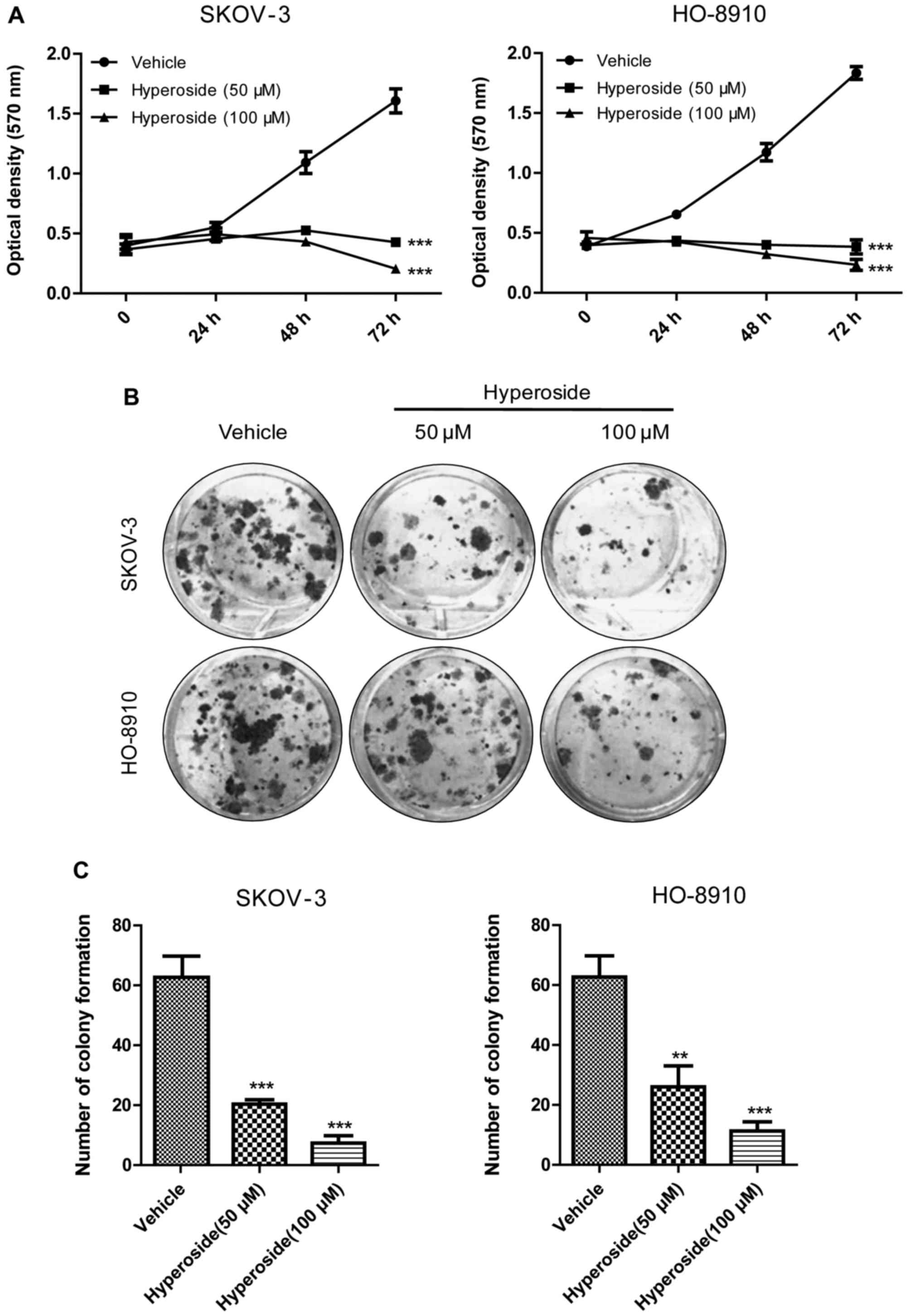
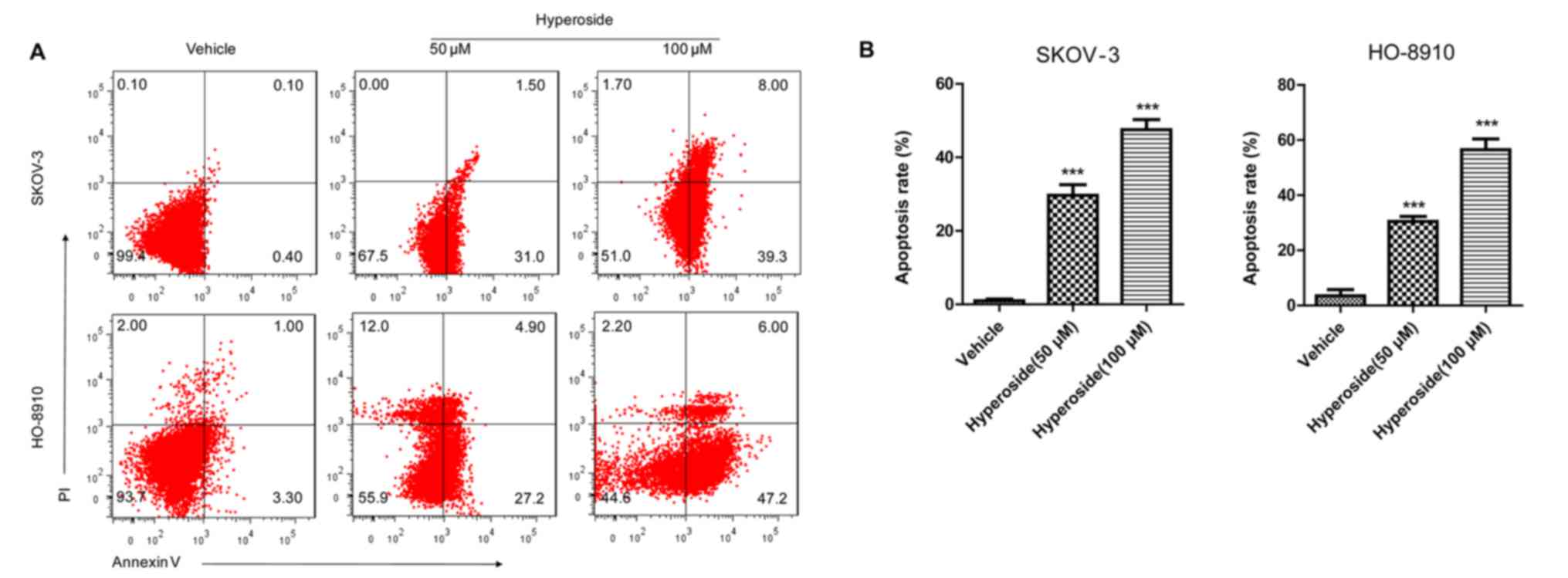
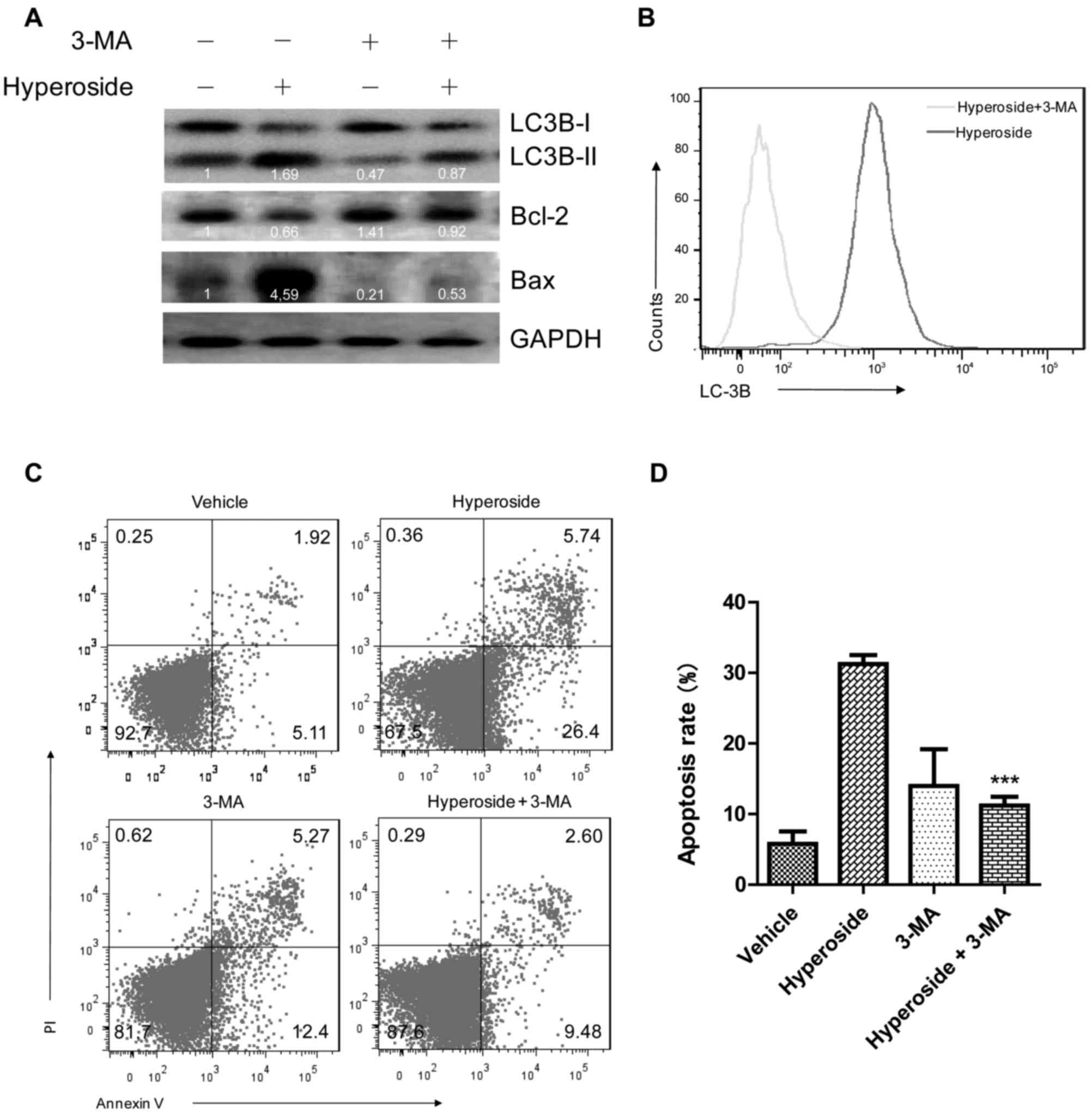
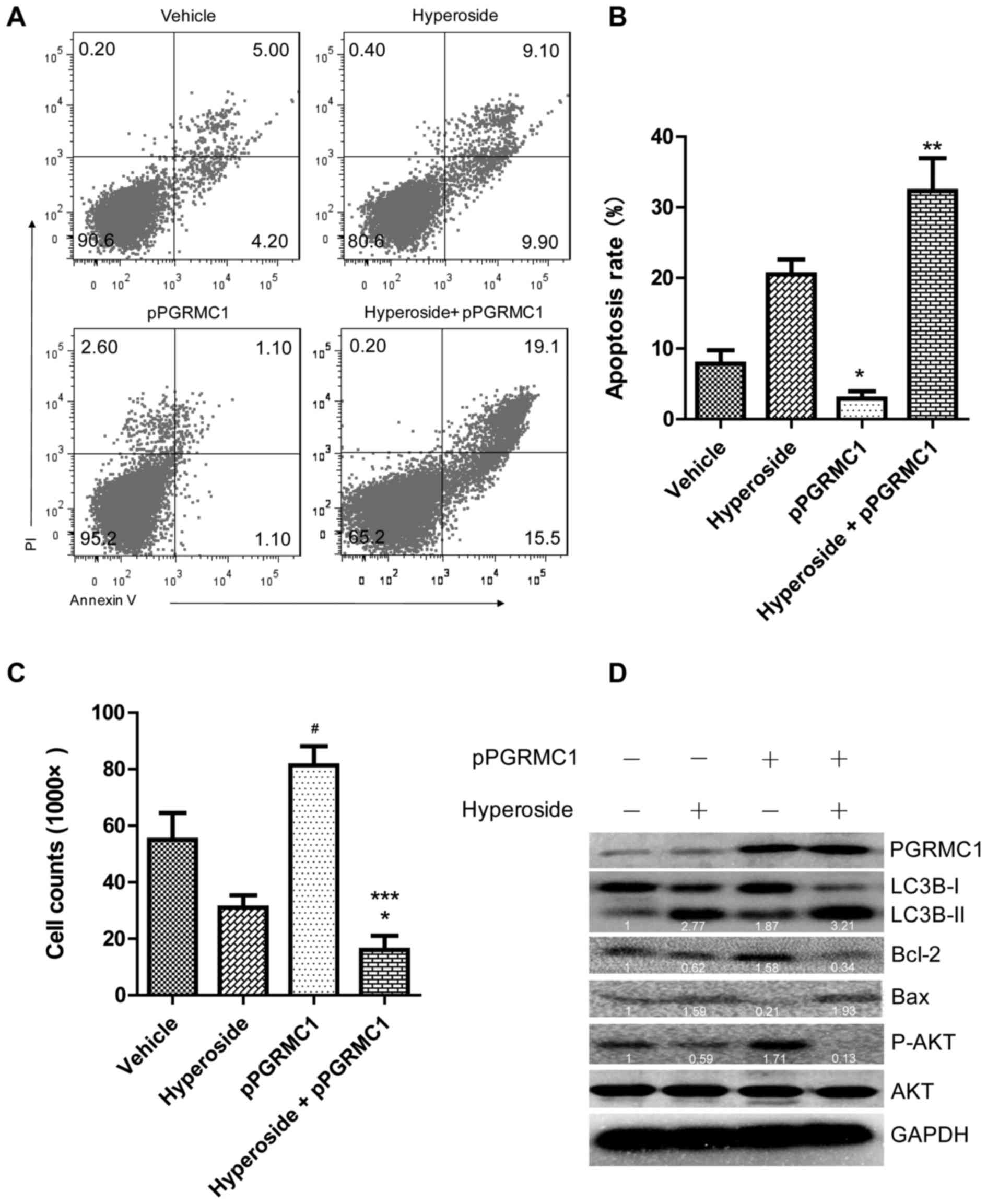
Cisplatin treatment some times leads to chemoresistance, which is now acknowledged partially due to the inductive expression of progesterone receptor membrane component (PGRMC)1 in ovarian cancer cells. PGRMC1 enhances autophagy, activates cytochrome p450, and inveigles signaling pathways to promote cell survival and reduce the effect of drug treatments. In this study, we give first line evidence that hyperoside inhibits cell viability, triggers autophagy and apoptosis in ovarian cancer cell lines. Mechanistically, PGRMC1-dependent autophagy was utilized by hyperoside to induce apoptotic cell death. Hyperoside induced the conversion of LC3B-I to LC3B-II and the formation of autophagosomes in ovarian cancer cells. Notably, PGRMC1 colocolized with LC3B‑II, and PGRMC1 overexpression enhanced hyperoside-induced autophagy and apoptosis, while PGRMC1 knockdown abrogated the action. Additionally, AKT signaling and Bcl-2 family were also involved in the hyperoside-induced autophagy and apoptosis. Importantly, in cisplatin-resistant ovarian cancer cells where PGRMC1 was overexpressed, hyperoside sensitized the cells to cisplatin treatment. Together these findings indicate hyperoside functions as a complementary therapy for ovarian cancer patients receiving platinum-based therapy.
View Figures

Figure 1

Figure 2

Figure 3

Figure 4

Figure 5

Figure 6

View References

1 

Salzberg M, Thurlimann B, Bonnefois H, Fink D, Rochlitz C, von Moos R and Senn H: Current concepts of treatment strategies in advanced or recurrent ovarian cancer. Oncology. 68:293–298. 2005. View Article : Google Scholar : PubMed/NCBI

2 

Middleton E Jr, Kandaswami C and Theoharides TC: The effects of plant flavonoids on mammalian cells: Implications for inflammation, heart disease, and cancer. Pharmacol Rev. 52:673–751. 2000.PubMed/NCBI

3 

Zou Y, Lu Y and Wei D: Antioxidant activity of a flavonoid-rich extract of Hypericum perforatum L. in vitro. J Agric Food Chem. 52:5032–5039. 2004. View Article : Google Scholar : PubMed/NCBI

4 

Piao MJ, Kang KA, Zhang R, Ko DO, Wang ZH, You HJ, Kim HS, Kim JS, Kang SS and Hyun JW: Hyperoside prevents oxidative damage induced by hydrogen peroxide in lung fibroblast cells via an antioxidant effect. Biochim Biophys Acta. 1780:1448–1457. 2008. View Article : Google Scholar : PubMed/NCBI

5 

Ku SK, Zhou W, Lee W, Han MS, Na M and Bae JS: Anti-inflammatory effects of hyperoside in human endothelial cells and in mice. Inflammation. 38:784–799. 2015. View Article : Google Scholar

6 

Ku SK, Kwak S, Kwon OJ and Bae JS: Hyperoside inhibits high-glucose-induced vascular inflammation in vitro and in vivo. Inflammation. 37:1389–1400. 2014. View Article : Google Scholar : PubMed/NCBI

7 

Lü P: Inhibitory effects of hyperoside on lung cancer by inducing apoptosis and suppressing inflammatory response via caspase-3 and NF-κB signaling pathway. Biomed Pharmacother. 82:216–225. 2016. View Article : Google Scholar

8 

Boukes GJ and van de Venter M: The apoptotic and autophagic properties of two natural occurring prodrugs, hyperoside and hypoxoside, against pancreatic cancer cell lines. Biomed Pharmacother. 83:617–626. 2016. View Article : Google Scholar : PubMed/NCBI

9 

Yuan J and Horvitz HR: A first insight into the molecular mechanisms of apoptosis. Cell. 116:S53–S56. 51following S59. 2004. View Article : Google Scholar : PubMed/NCBI

10 

Yaacoub K, Pedeux R, Tarte K and Guillaudeux T: Role of the tumor microenvironment in regulating apoptosis and cancer progression. Cancer Lett. 378:150–159. 2016. View Article : Google Scholar : PubMed/NCBI

11 

Ivanov VN, Bhoumik A and Ronai Z: Death receptors and melanoma resistance to apoptosis. Oncogene. 22:3152–3161. 2003. View Article : Google Scholar : PubMed/NCBI

12 

Ahmed IS, Rohe HJ, Twist KE and Craven RJ: PGRMC1 (progesterone receptor membrane component 1) associates with epidermal growth factor receptor and regulates erlotinib sensitivity. J Biol Chem. 285:24775–24782. 2010. View Article : Google Scholar : PubMed/NCBI

13 

Kabe Y, Nakane T, Koike I, Yamamoto T, Sugiura Y, Harada E, Sugase K, Shimamura T, Ohmura M, Muraoka K, et al: Haem-dependent dimerization of PGRMC1/Sigma-2 receptor facilitates cancer proliferation and chemoresistance. Nat Commun. 7:110302016. View Article : Google Scholar : PubMed/NCBI

14 

Szczesna-Skorupa E and Kemper B: Progesterone receptor membrane component 1 inhibits the activity of drug-metabolizing cytochromes P450 and binds to cytochrome P450 reductase. Mol Pharmacol. 79:340–350. 2011. View Article : Google Scholar :

15 

Zheng K, Li Y, Wang S, Wang X, Liao C, Hu X, Fan L, Kang Q, Zeng Y, Wu X, et al: Inhibition of autophagosome-lysosome fusion by ginsenoside Ro via the ESR2-NCF1-ROS pathway sensitizes esophageal cancer cells to 5-fluorouracil-induced cell death via the CHEK1-mediated DNA damage checkpoint. Autophagy. 12:1593–1613. 2016. View Article : Google Scholar : PubMed/NCBI

16 

Kohli L, Kaza N, Lavalley NJ, Turner KL, Byer S, Carroll SL and Roth KA: The pan erbB inhibitor PD168393 enhances lysosomal dysfunction-induced apoptotic death in malignant peripheral nerve sheath tumor cells. Neurooncol. 14:266–277. 2012.

17 

Ghadimi MP, Lopez G, Torres KE, Belousov R, Young ED, Liu J, Brewer KJ, Hoffman A, Lusby K, Lazar AJ, et al: Targeting the PI3K/mTOR axis, alone and in combination with autophagy blockade, for the treatment of malignant peripheral nerve sheath tumors. Mol Cancer Ther. 11:1758–1769. 2012. View Article : Google Scholar : PubMed/NCBI

18 

Amaravadi RK, Yu D, Lum JJ, Bui T, Christophorou MA, Evan GI, Thomas-Tikhonenko A and Thompson CB: Autophagy inhibition enhances therapy-induced apoptosis in a Myc-induced model of lymphoma. J Clin Invest. 117:326–336. 2007. View Article : Google Scholar : PubMed/NCBI

19 

Stanton MJ, Dutta S, Zhang H, Polavaram NS, Leontovich AA, Hönscheid P, Sinicrope FA, Tindall DJ, Muders MH and Datta K: Autophagy control by the VEGF-C/NRP-2 axis in cancer and its implication for treatment resistance. Cancer Res. 73:160–171. 2013. View Article : Google Scholar :

20 

de la Cruz-Morcillo MA, Valero ML, Callejas-Valera JL, Arias-González L, Melgar-Rojas P, Galán-Moya EM, García-Gil E, García-Cano J and Sánchez-Prieto R: P38MAPK is a major determinant of the balance between apoptosis and autophagy triggered by 5-fluorouracil: Implication in resistance. Oncogene. 31:1073–1085. 2012. View Article : Google Scholar

21 

Weidhaas JB, Babar I, Nallur SM, Trang P, Roush S, Boehm M, Gillespie E and Slack FJ: MicroRNAs as potential agents to alter resistance to cytotoxic anticancer therapy. Cancer Res. 67:11111–11116. 2007. View Article : Google Scholar : PubMed/NCBI

22 

Yu Y, Cao L, Yang L, Kang R, Lotze M and Tang D: microRNA 30A promotes autophagy in response to cancer therapy. Autophagy. 8:853–855. 2012. View Article : Google Scholar : PubMed/NCBI

23 

Liu H, He Z, von Rütte T, Yousefi S, Hunger RE and Simon HU: Down-regulation of autophagy-related protein 5 (ATG5) contributes to the pathogenesis of early-stage cutaneous melanoma. Sci Transl Med. 5:202ra1232013. View Article : Google Scholar : PubMed/NCBI

24 

Leng S, Hao Y, Du D, Xie S, Hong L, Gu H, Zhu X, Zhang J, Fan D and Kung HF: Ursolic acid promotes cancer cell death by inducing Atg5-dependent autophagy. Int J Cancer. 133:2781–2790. 2013.PubMed/NCBI

25 

Mir SU, Schwarze SR, Jin L, Zhang J, Friend W, Miriyala S, St Clair D and Craven RJ: Progesterone receptor membrane component 1/Sigma-2 receptor associates with MAP1LC3B and promotes autophagy. Autophagy. 9:1566–1578. 2013. View Article : Google Scholar : PubMed/NCBI

26 

Zhu X, Han Y, Fang Z, Wu W, Ji M, Teng F, Zhu W, Yang X, Jia X and Zhang C: Progesterone protects ovarian cancer cells from cisplatin-induced inhibitory effects through progesterone receptor membrane component 1/2 as well as AKT signaling. Oncol Rep. 30:2488–2494. 2013.PubMed/NCBI

27 

Zhu X, Guo Y, Yao S, Yan Q, Xue M, Hao T, Zhou F, Zhu J, Qin D and Lu C: Synergy between Kaposi's sarcoma-associated herpesvirus (KSHV) vIL-6 and HIV-1 Nef protein in promotion of angiogenesis and oncogenesis: Role of the AKT signaling pathway. Oncogene. 33:1986–1996. 2014. View Article : Google Scholar

28 

Xue M, Yao S, Hu M, Li W, Hao T, Zhou F, Zhu X, Lu H, Qin D, Yan Q, et al: HIV-1 Nef and KSHV oncogene K1 synergistically promote angiogenesis by inducing cellular miR-718 to regulate the PTEN/AKT/mTOR signaling pathway. Nucleic Acids Res. 42:9862–9879. 2014. View Article : Google Scholar : PubMed/NCBI

29 

Zhu H and Zhang Y: Life and death partners in post-PCI restenosis: Apoptosis, autophagy, and the cross-talk between them. Curr Drug Targets. Jun 24–2016.Epub ahead of print. PubMed/NCBI

30 

Dalby KN, Tekedereli I, Lopez-Berestein G and Ozpolat B: Targeting the prodeath and prosurvival functions of autophagy as novel therapeutic strategies in cancer. Autophagy. 6:322–329. 2010. View Article : Google Scholar : PubMed/NCBI

31 

Wang RC, Wei Y, An Z, Zou Z, Xiao G, Bhagat G, White M, Reichelt J and Levine B: Akt-mediated regulation of autophagy and tumorigenesis through Beclin 1 phosphorylation. Science. 338:956–959. 2012. View Article : Google Scholar : PubMed/NCBI

32 

Cahill MA, Jazayeri JA, Catalano SM, Toyokuni S, Kovacevic Z and Richardson DR: The emerging role of progesterone receptor membrane component 1 (PGRMC1) in cancer biology. Biochim Biophys Acta. 1866:339–349. 2016.PubMed/NCBI

33 

Grabowski JP and Sehouli J: Current management of ovarian cancer. Minerva Med. 106:151–156. 2015.PubMed/NCBI

34 

Herzog TJ: The current treatment of recurrent ovarian cancer. Curr Oncol Rep. 8:448–454. 2006. View Article : Google Scholar : PubMed/NCBI

35 

Absolom K, Eiser C, Turner L, Ledger W, Ross R, Davies H, Coleman R, Hancock B, Snowden J and Greenfield D; Late Effects Group Sheffield: Ovarian failure following cancer treatment: Current management and quality of life. Hum Reprod. 23:2506–2512. 2008. View Article : Google Scholar : PubMed/NCBI

36 

Rodriguez-Freixinos V, Mackay HJ, Karakasis K and Oza AM: Current and emerging treatment options in the management of advanced ovarian cancer. Expert Opin Pharmacother. 17:1063–1076. 2016. View Article : Google Scholar : PubMed/NCBI

37 

Peluso JJ: Non-genomic actions of progesterone in the normal and neoplastic mammalian ovary. Semin Reprod Med. 25:198–207. 2007. View Article : Google Scholar : PubMed/NCBI

38 

Peluso JJ: Progesterone signaling mediated through progesterone receptor membrane component-1 in ovarian cells with special emphasis on ovarian cancer. Steroids. 76:903–909. 2011.PubMed/NCBI

39 

Oda S, Nakajima M, Toyoda Y, Fukami T and Yokoi T: Progesterone receptor membrane component 1 modulates human cytochrome p450 activities in an isoform-dependent manner. Drug Metab Dispos. 39:2057–2065. 2011. View Article : Google Scholar : PubMed/NCBI

40 

Albrecht C, Huck V, Wehling M and Wendler A: In vitro inhibition of SKOV-3 cell migration as a distinctive feature of progesterone receptor membrane component type 2 versus type 1. Steroids. 77:1543–1550. 2012. View Article : Google Scholar : PubMed/NCBI

41 

Ahmed IS, Rohe HJ, Twist KE, Mattingly MN and Craven RJ: Progesterone receptor membrane component 1 (Pgrmc1): A heme-1 domain protein that promotes tumorigenesis and is inhibited by a small molecule. J Pharmacol Exp Ther. 333:564–573. 2010. View Article : Google Scholar : PubMed/NCBI

42 

Peluso JJ, Liu X, Gawkowska A, Lodde V and Wu CA: Progesterone inhibits apoptosis in part by PGRMC1-regulated gene expression. Mol Cell Endocrinol. 320:153–161. 2010. View Article : Google Scholar : PubMed/NCBI

43 

van Waarde A, Rybczynska AA, Ramakrishnan NK, Ishiwata K, Elsinga PH and Dierckx RA: Potential applications for sigma receptor ligands in cancer diagnosis and therapy. Biochim Biophys Acta. 1848B:2703–2714. 2015. View Article : Google Scholar

44 

Lin L and Baehrecke EH: Autophagy, cell death, and cancer. Mol Cell Oncol. 2:e9859132015. View Article : Google Scholar

45 

Gewirtz DA: Cytoprotective and nonprotective autophagy in cancer therapy. Autophagy. 9:1263–1265. 2013. View Article : Google Scholar : PubMed/NCBI

46 

Eisenberg-Lerner A, Bialik S, Simon HU and Kimchi A: Life and death partners: Apoptosis, autophagy and the cross-talk between them. Cell Death Differ. 16:966–975. 2009. View Article : Google Scholar : PubMed/NCBI

47 

Petiot A, Ogier-Denis E, Blommaart EF, Meijer AJ and Codogno P: Distinct classes of phosphatidylinositol 3′-kinases are involved in signaling pathways that control macroautophagy in HT-29 cells. J Biol Chem. 275:992–998. 2000. View Article : Google Scholar : PubMed/NCBI

48 

Rubinstein AD, Eisenstein M, Ber Y, Bialik S and Kimchi A: The autophagy protein Atg12 associates with antiapoptotic Bcl-2 family members to promote mitochondrial apoptosis. Mol Cell. 44:698–709. 2011. View Article : Google Scholar : PubMed/NCBI

49 

Mann SS and Hammarback JA: Molecular characterization of light chain 3. A microtubule binding subunit of MAP1A and MAP1B. J Biol Chem. 269:11492–11497. 1994.PubMed/NCBI

50 

Tsukada M and Ohsumi Y: Isolation and characterization of autophagy-defective mutants of Saccharomyces cerevisiae. FEBS Lett. 333:169–174. 1993. View Article : Google Scholar : PubMed/NCBI

51 

Ostenfeld MS, Høyer-Hansen M, Bastholm L, Fehrenbacher N, Olsen OD, Groth-Pedersen L, Puustinen P, Kirkegaard-Sørensen T, Nylandsted J, Farkas T, et al: Anti-cancer agent siramesine is a lysosomotropic detergent that induces cytoprotective autophagosome accumulation. Autophagy. 4:487–499. 2008. View Article : Google Scholar : PubMed/NCBI

52 

Ishisaka R, Kanno T, Akiyama J, Yoshioka T, Utsumi K and Utsumi T: Activation of caspase-3 by lysosomal cysteine proteases and its role in 2,2′-azobis-(2-amidinopropane)dihydrochloride (AAPH)-induced apoptosis in HL-60 cells. J Biochem. 129:35–41. 2001. View Article : Google Scholar : PubMed/NCBI

53 

Stoka V, Turk B, Schendel SL, Kim TH, Cirman T, Snipas SJ, Ellerby LM, Bredesen D, Freeze H, Abrahamson M, et al: Lysosomal protease pathways to apoptosis. Cleavage of bid, not pro-caspases, is the most likely route. J Biol Chem. 276:3149–3157. 2001. View Article : Google Scholar

Related Articles

  • Abstract
  • View
  • Download
  • Twitter
Copy and paste a formatted citation
Spandidos Publications style
Zhu X, Ji M, Han Y, Guo Y, Zhu W, Gao F, Yang X and Zhang C: PGRMC1-dependent autophagy by hyperoside induces apoptosis and sensitizes ovarian cancer cells to cisplatin treatment. Int J Oncol 50: 835-846, 2017.
APA
Zhu, X., Ji, M., Han, Y., Guo, Y., Zhu, W., Gao, F. ... Zhang, C. (2017). PGRMC1-dependent autophagy by hyperoside induces apoptosis and sensitizes ovarian cancer cells to cisplatin treatment. International Journal of Oncology, 50, 835-846. https://doi.org/10.3892/ijo.2017.3873
MLA
Zhu, X., Ji, M., Han, Y., Guo, Y., Zhu, W., Gao, F., Yang, X., Zhang, C."PGRMC1-dependent autophagy by hyperoside induces apoptosis and sensitizes ovarian cancer cells to cisplatin treatment". International Journal of Oncology 50.3 (2017): 835-846.
Chicago
Zhu, X., Ji, M., Han, Y., Guo, Y., Zhu, W., Gao, F., Yang, X., Zhang, C."PGRMC1-dependent autophagy by hyperoside induces apoptosis and sensitizes ovarian cancer cells to cisplatin treatment". International Journal of Oncology 50, no. 3 (2017): 835-846. https://doi.org/10.3892/ijo.2017.3873
Copy and paste a formatted citation
x
Spandidos Publications style
Zhu X, Ji M, Han Y, Guo Y, Zhu W, Gao F, Yang X and Zhang C: PGRMC1-dependent autophagy by hyperoside induces apoptosis and sensitizes ovarian cancer cells to cisplatin treatment. Int J Oncol 50: 835-846, 2017.
APA
Zhu, X., Ji, M., Han, Y., Guo, Y., Zhu, W., Gao, F. ... Zhang, C. (2017). PGRMC1-dependent autophagy by hyperoside induces apoptosis and sensitizes ovarian cancer cells to cisplatin treatment. International Journal of Oncology, 50, 835-846. https://doi.org/10.3892/ijo.2017.3873
MLA
Zhu, X., Ji, M., Han, Y., Guo, Y., Zhu, W., Gao, F., Yang, X., Zhang, C."PGRMC1-dependent autophagy by hyperoside induces apoptosis and sensitizes ovarian cancer cells to cisplatin treatment". International Journal of Oncology 50.3 (2017): 835-846.
Chicago
Zhu, X., Ji, M., Han, Y., Guo, Y., Zhu, W., Gao, F., Yang, X., Zhang, C."PGRMC1-dependent autophagy by hyperoside induces apoptosis and sensitizes ovarian cancer cells to cisplatin treatment". International Journal of Oncology 50, no. 3 (2017): 835-846. https://doi.org/10.3892/ijo.2017.3873
Follow us
  • Twitter
  • LinkedIn
  • Facebook
About
  • Spandidos Publications
  • Careers
  • Cookie Policy
  • Privacy Policy
How can we help?
  • Help
  • Live Chat
  • Contact
  • Email to our Support Team