Spandidos Publications Logo
  • About
    • About Spandidos
    • Aims and Scopes
    • Abstracting and Indexing
    • Editorial Policies
    • Reprints and Permissions
    • Job Opportunities
    • Terms and Conditions
    • Contact
  • Journals
    • All Journals
    • Oncology Letters
      • Oncology Letters
      • Information for Authors
      • Editorial Policies
      • Editorial Board
      • Aims and Scope
      • Abstracting and Indexing
      • Bibliographic Information
      • Archive
    • International Journal of Oncology
      • International Journal of Oncology
      • Information for Authors
      • Editorial Policies
      • Editorial Board
      • Aims and Scope
      • Abstracting and Indexing
      • Bibliographic Information
      • Archive
    • Molecular and Clinical Oncology
      • Molecular and Clinical Oncology
      • Information for Authors
      • Editorial Policies
      • Editorial Board
      • Aims and Scope
      • Abstracting and Indexing
      • Bibliographic Information
      • Archive
    • Experimental and Therapeutic Medicine
      • Experimental and Therapeutic Medicine
      • Information for Authors
      • Editorial Policies
      • Editorial Board
      • Aims and Scope
      • Abstracting and Indexing
      • Bibliographic Information
      • Archive
    • International Journal of Molecular Medicine
      • International Journal of Molecular Medicine
      • Information for Authors
      • Editorial Policies
      • Editorial Board
      • Aims and Scope
      • Abstracting and Indexing
      • Bibliographic Information
      • Archive
    • Biomedical Reports
      • Biomedical Reports
      • Information for Authors
      • Editorial Policies
      • Editorial Board
      • Aims and Scope
      • Abstracting and Indexing
      • Bibliographic Information
      • Archive
    • Oncology Reports
      • Oncology Reports
      • Information for Authors
      • Editorial Policies
      • Editorial Board
      • Aims and Scope
      • Abstracting and Indexing
      • Bibliographic Information
      • Archive
    • Molecular Medicine Reports
      • Molecular Medicine Reports
      • Information for Authors
      • Editorial Policies
      • Editorial Board
      • Aims and Scope
      • Abstracting and Indexing
      • Bibliographic Information
      • Archive
    • World Academy of Sciences Journal
      • World Academy of Sciences Journal
      • Information for Authors
      • Editorial Policies
      • Editorial Board
      • Aims and Scope
      • Abstracting and Indexing
      • Bibliographic Information
      • Archive
    • International Journal of Functional Nutrition
      • International Journal of Functional Nutrition
      • Information for Authors
      • Editorial Policies
      • Editorial Board
      • Aims and Scope
      • Abstracting and Indexing
      • Bibliographic Information
      • Archive
    • International Journal of Epigenetics
      • International Journal of Epigenetics
      • Information for Authors
      • Editorial Policies
      • Editorial Board
      • Aims and Scope
      • Abstracting and Indexing
      • Bibliographic Information
      • Archive
    • Medicine International
      • Medicine International
      • Information for Authors
      • Editorial Policies
      • Editorial Board
      • Aims and Scope
      • Abstracting and Indexing
      • Bibliographic Information
      • Archive
  • Articles
  • Information
    • Information for Authors
    • Information for Reviewers
    • Information for Librarians
    • Information for Advertisers
    • Conferences
  • Language Editing
Spandidos Publications Logo
  • About
    • About Spandidos
    • Aims and Scopes
    • Abstracting and Indexing
    • Editorial Policies
    • Reprints and Permissions
    • Job Opportunities
    • Terms and Conditions
    • Contact
  • Journals
    • All Journals
    • Biomedical Reports
      • Information for Authors
      • Editorial Policies
      • Editorial Board
      • Aims and Scope
      • Abstracting and Indexing
      • Bibliographic Information
      • Archive
    • Experimental and Therapeutic Medicine
      • Information for Authors
      • Editorial Policies
      • Editorial Board
      • Aims and Scope
      • Abstracting and Indexing
      • Bibliographic Information
      • Archive
    • International Journal of Epigenetics
      • Information for Authors
      • Editorial Policies
      • Editorial Board
      • Aims and Scope
      • Abstracting and Indexing
      • Bibliographic Information
      • Archive
    • International Journal of Functional Nutrition
      • Information for Authors
      • Editorial Policies
      • Editorial Board
      • Aims and Scope
      • Abstracting and Indexing
      • Bibliographic Information
      • Archive
    • International Journal of Molecular Medicine
      • Information for Authors
      • Editorial Policies
      • Editorial Board
      • Aims and Scope
      • Abstracting and Indexing
      • Bibliographic Information
      • Archive
    • International Journal of Oncology
      • Information for Authors
      • Editorial Policies
      • Editorial Board
      • Aims and Scope
      • Abstracting and Indexing
      • Bibliographic Information
      • Archive
    • Medicine International
      • Information for Authors
      • Editorial Policies
      • Editorial Board
      • Aims and Scope
      • Abstracting and Indexing
      • Bibliographic Information
      • Archive
    • Molecular and Clinical Oncology
      • Information for Authors
      • Editorial Policies
      • Editorial Board
      • Aims and Scope
      • Abstracting and Indexing
      • Bibliographic Information
      • Archive
    • Molecular Medicine Reports
      • Information for Authors
      • Editorial Policies
      • Editorial Board
      • Aims and Scope
      • Abstracting and Indexing
      • Bibliographic Information
      • Archive
    • Oncology Letters
      • Information for Authors
      • Editorial Policies
      • Editorial Board
      • Aims and Scope
      • Abstracting and Indexing
      • Bibliographic Information
      • Archive
    • Oncology Reports
      • Information for Authors
      • Editorial Policies
      • Editorial Board
      • Aims and Scope
      • Abstracting and Indexing
      • Bibliographic Information
      • Archive
    • World Academy of Sciences Journal
      • Information for Authors
      • Editorial Policies
      • Editorial Board
      • Aims and Scope
      • Abstracting and Indexing
      • Bibliographic Information
      • Archive
  • Articles
  • Information
    • For Authors
    • For Reviewers
    • For Librarians
    • For Advertisers
    • Conferences
  • Language Editing
Login Register Submit
  • This site uses cookies
  • You can change your cookie settings at any time by following the instructions in our Cookie Policy. To find out more, you may read our Privacy Policy.

    I agree
Search articles by DOI, keyword, author or affiliation
Search
Advanced Search
presentation
International Journal of Oncology
Join Editorial Board Propose a Special Issue
Print ISSN: 1019-6439 Online ISSN: 1791-2423
Journal Cover
June-2017 Volume 50 Issue 6

Full Size Image

Cover Legend PDF

Sign up for eToc alerts
Recommend to Library

Journals

International Journal of Molecular Medicine

International Journal of Molecular Medicine

International Journal of Molecular Medicine is an international journal devoted to molecular mechanisms of human disease.

International Journal of Oncology

International Journal of Oncology

International Journal of Oncology is an international journal devoted to oncology research and cancer treatment.

Molecular Medicine Reports

Molecular Medicine Reports

Covers molecular medicine topics such as pharmacology, pathology, genetics, neuroscience, infectious diseases, molecular cardiology, and molecular surgery.

Oncology Reports

Oncology Reports

Oncology Reports is an international journal devoted to fundamental and applied research in Oncology.

Experimental and Therapeutic Medicine

Experimental and Therapeutic Medicine

Experimental and Therapeutic Medicine is an international journal devoted to laboratory and clinical medicine.

Oncology Letters

Oncology Letters

Oncology Letters is an international journal devoted to Experimental and Clinical Oncology.

Biomedical Reports

Biomedical Reports

Explores a wide range of biological and medical fields, including pharmacology, genetics, microbiology, neuroscience, and molecular cardiology.

Molecular and Clinical Oncology

Molecular and Clinical Oncology

International journal addressing all aspects of oncology research, from tumorigenesis and oncogenes to chemotherapy and metastasis.

World Academy of Sciences Journal

World Academy of Sciences Journal

Multidisciplinary open-access journal spanning biochemistry, genetics, neuroscience, environmental health, and synthetic biology.

International Journal of Functional Nutrition

International Journal of Functional Nutrition

Open-access journal combining biochemistry, pharmacology, immunology, and genetics to advance health through functional nutrition.

International Journal of Epigenetics

International Journal of Epigenetics

Publishes open-access research on using epigenetics to advance understanding and treatment of human disease.

Medicine International

Medicine International

An International Open Access Journal Devoted to General Medicine.

Journal Cover
June-2017 Volume 50 Issue 6

Full Size Image

Cover Legend PDF

Sign up for eToc alerts
Recommend to Library

  • Article
  • Citations
    • Cite This Article
    • Download Citation
    • Create Citation Alert
    • Remove Citation Alert
    • Cited By
  • Similar Articles
    • Related Articles (in Spandidos Publications)
    • Similar Articles (Google Scholar)
    • Similar Articles (PubMed)
  • Download PDF
  • Download XML
  • View XML
Article

5-(Furan-2-yl)-4-(3,4,5-trimethoxyphenyl)-3H-1,2-dithiol-3-one oxime (6f), a new synthetic compound, causes human fibrosarcoma HT-1080 cell apoptosis by disrupting tubulin polymerisation and inducing G2/M arrest

  • Authors:
    • Daiying Zuo
    • Lili Pang
    • Jiwei Shen
    • Qi Guan
    • Zhaoshi Bai
    • Huijuan Zhang
    • Yao Li
    • Guodong Lu
    • Weige Zhang
    • Yingliang Wu
  • View Affiliations / Copyright

    Affiliations: Department of Pharmacology, Shenyang Pharmaceutical University, Shenyang, Liaoning 110016, P.R. China, Department of Clinical Pharmacy, The Sixth People's Hospital of Chengdu, Chengdu, Sichuan 610051, P.R. China, Key Laboratory of Structure-Based Drug Design and Discovery, Ministry of Education, Shenyang Pharmaceutical University, Shenyang, Liaoning 110016, P.R. China
  • Pages: 2069-2078
    |
    Published online on: April 18, 2017
       https://doi.org/10.3892/ijo.2017.3963
  • Expand metrics +
Metrics: Total Views: 0 (Spandidos Publications: | PMC Statistics: )
Metrics: Total PDF Downloads: 0 (Spandidos Publications: | PMC Statistics: )
Cited By (CrossRef): 0 citations Loading Articles...

This article is mentioned in:


Abstract

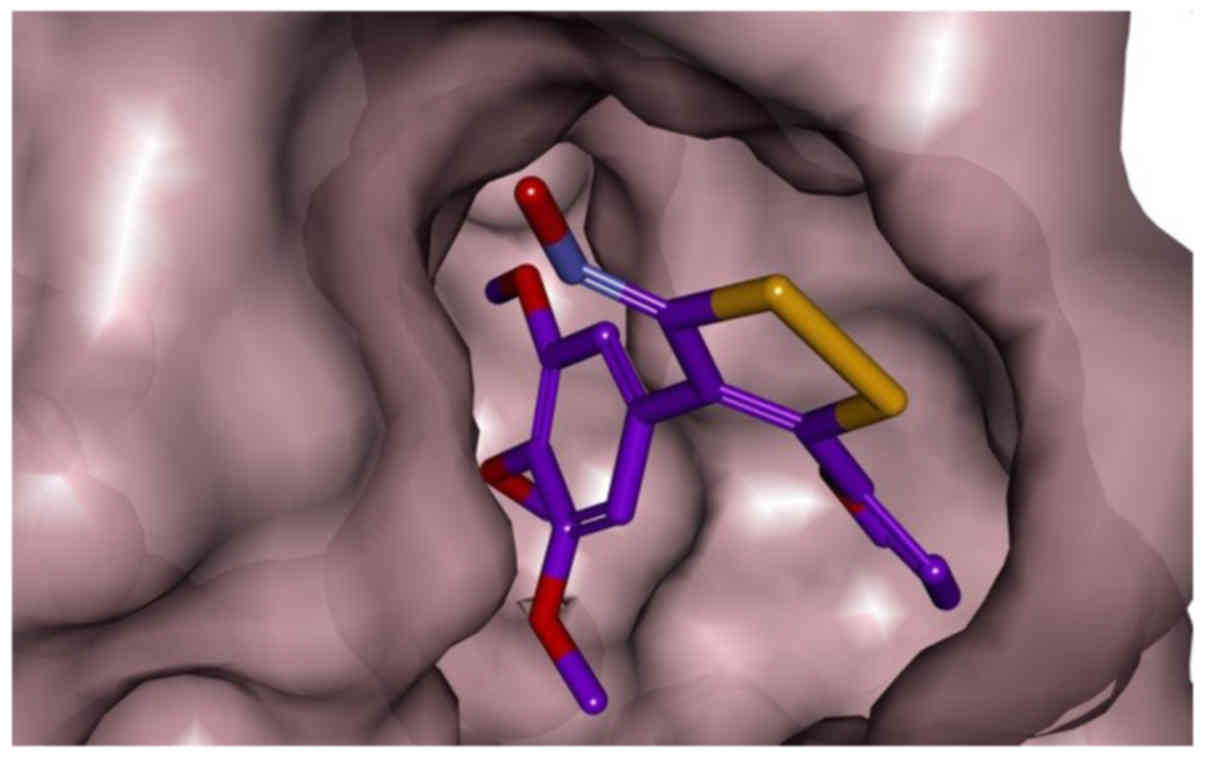
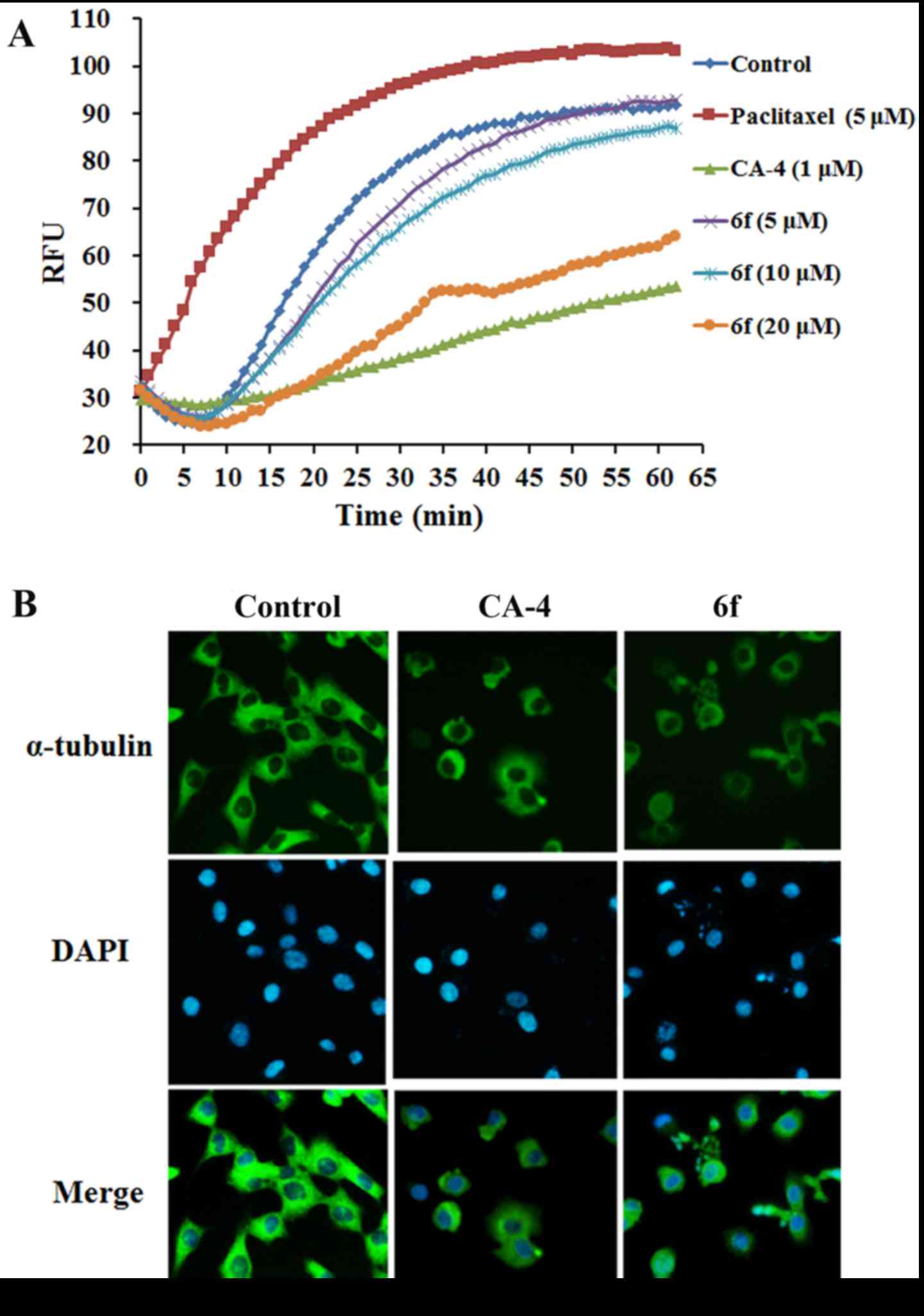
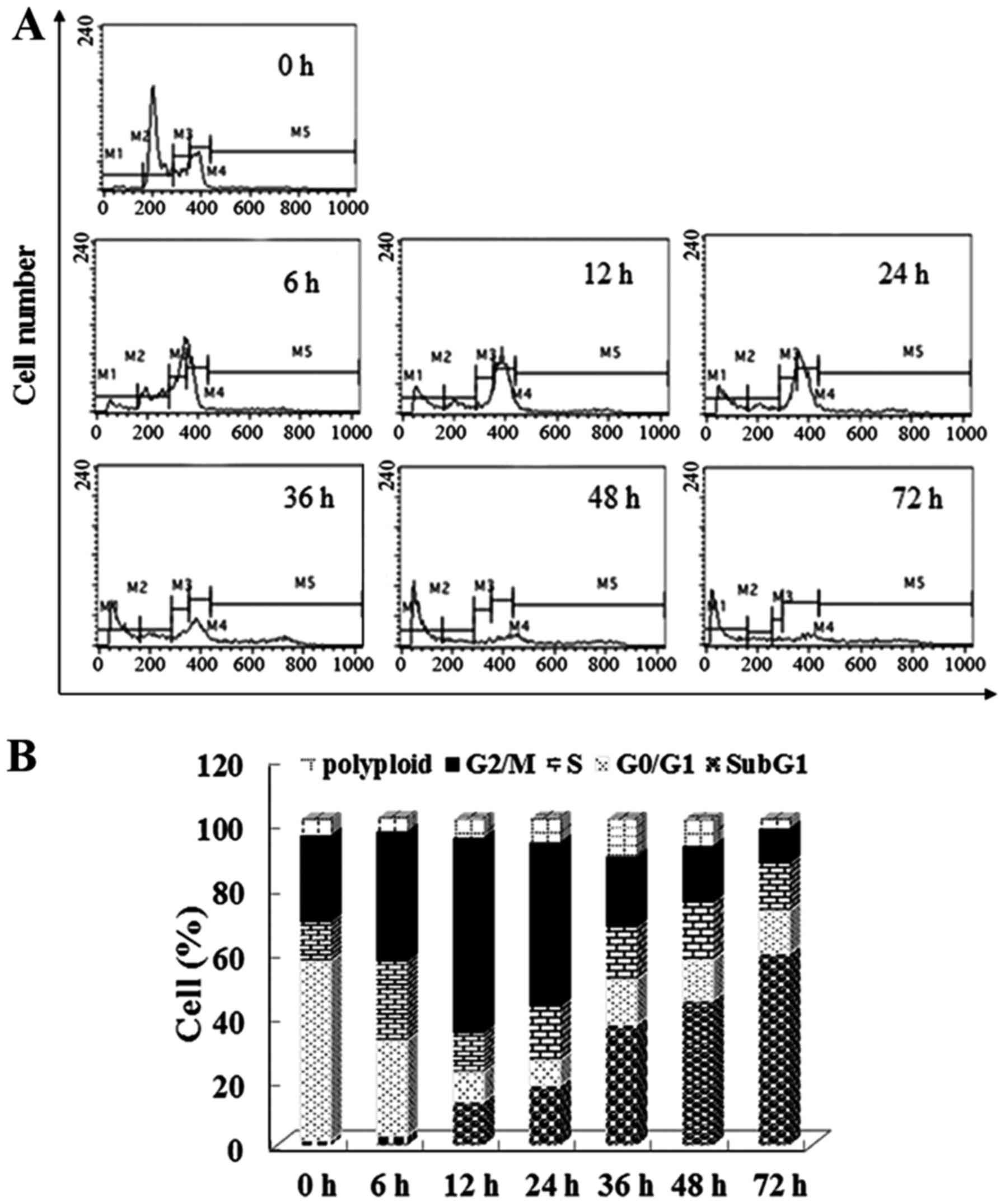
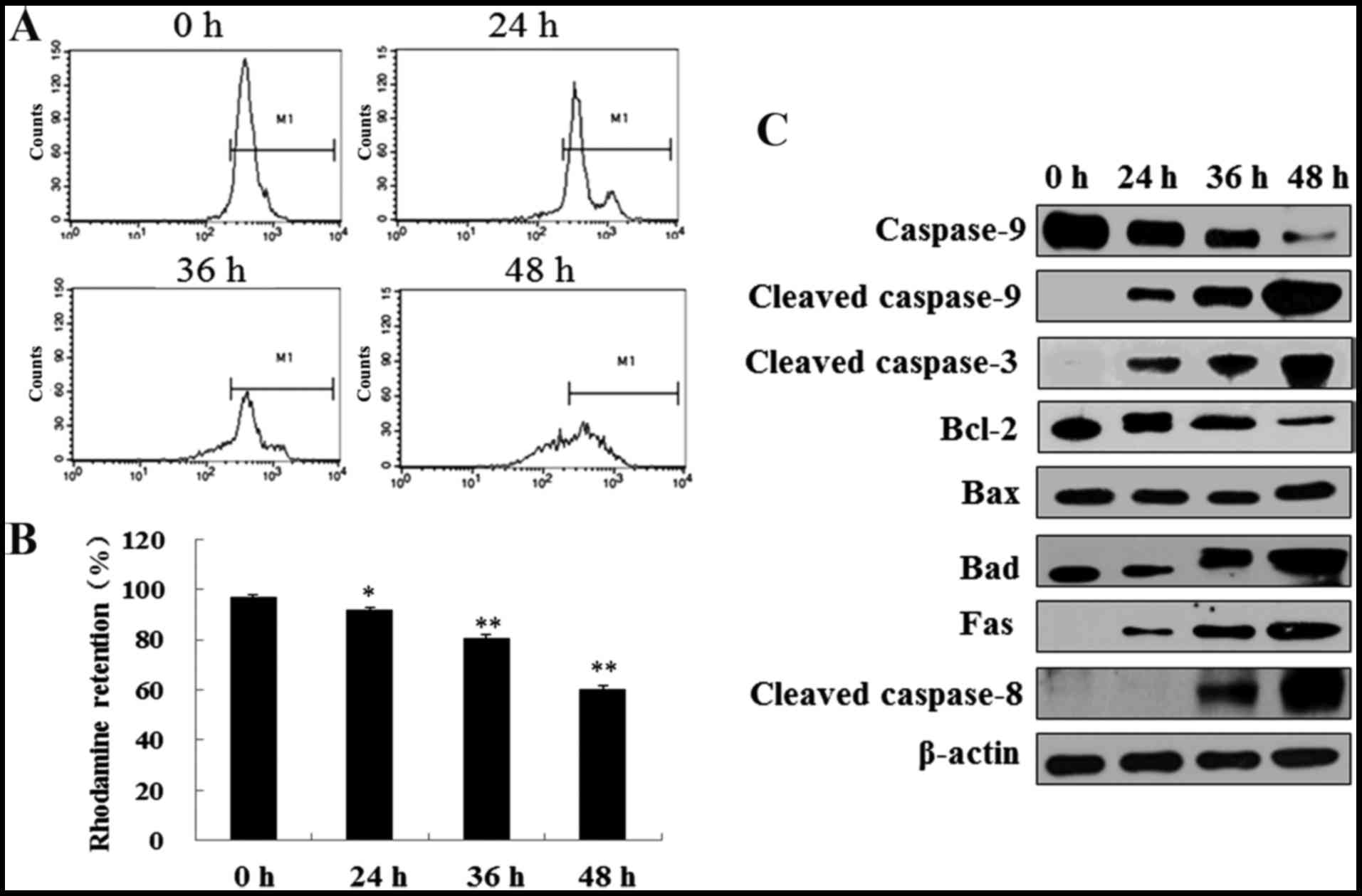
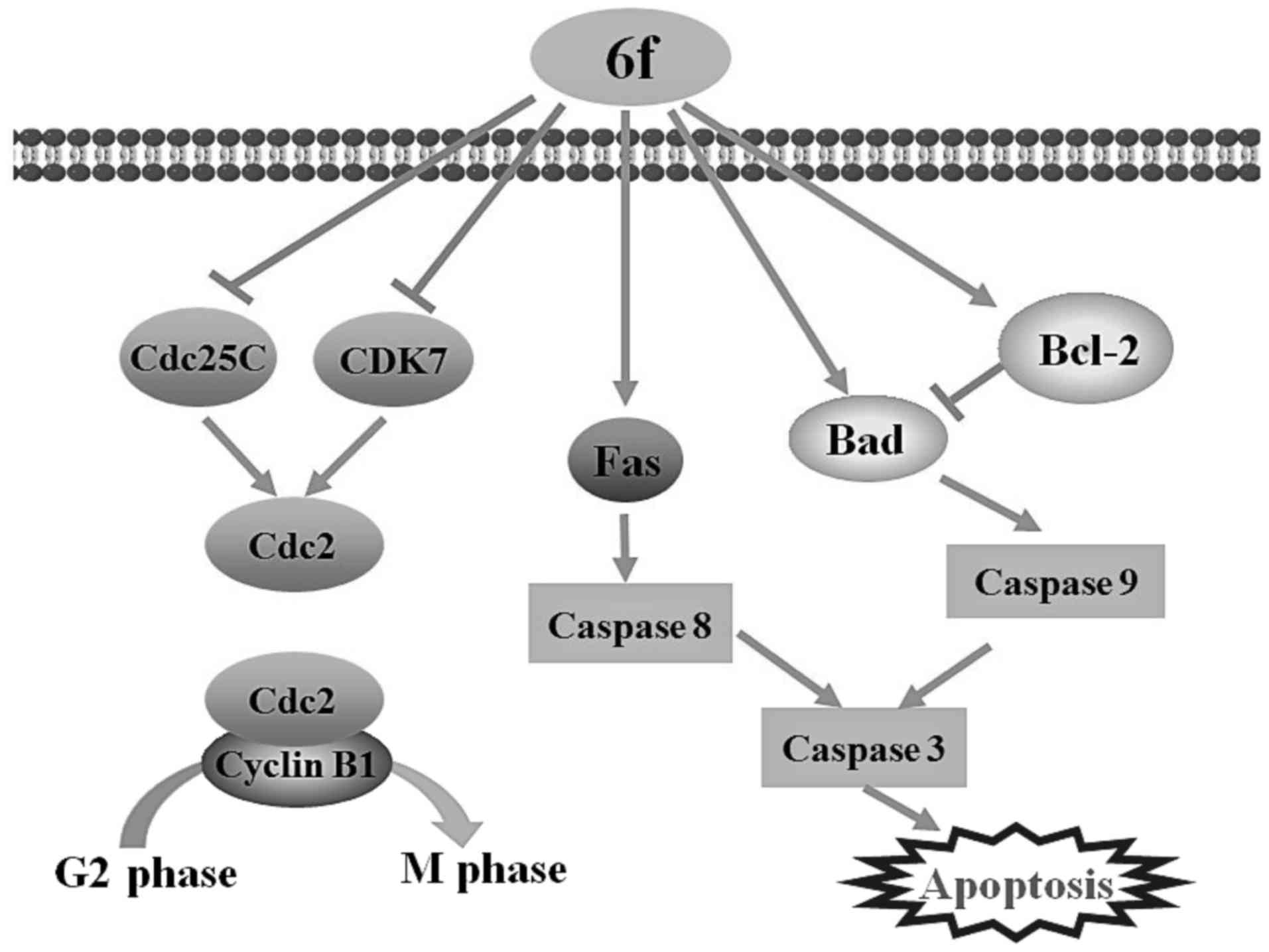
In the current study, we synthesized a series of new compounds targeting tubulin and tested their anti-proliferative activities. Among these new synthetic com­pounds, 5-(furan-2-yl)-4-(3,4,5-trimethoxyphenyl)-3H-1,2-dithiol-3-one oxime (6f) exhibited significant anti-proliferative activity against different human cancer cell lines including human gastric adenocarcinoma SGC-7901, human non-small cell lung cancer A549, and human fibrosarcoma HT-1080. As a result, 6f was selected to further test the sensitivity to different cancer cell lines including human cervical cancer cell line HeLa, human breast cancer cell line MCF-7, non-small cell lung cancer cell line A549, human liver carcinoma cell line HepG-2, human oral squamous cell carcinoma cell lines KB, SGC-7901 and HT-1080. Among these cell lines, HT-1080 and HeLa are the most sensitive. Therefore, HT-1080 was selected to further explore the properties of anti-proliferative activity and the underlying mechanisms. Our data proved that 6f exhibited strong anti-proliferative effects against HT-1080 cells in a time- and dose-dependent manner. We showed that the growth inhibitory effect of 6f in HT-1080 cells was related with microtubule depolymerisation. Molecular docking studies revealed that 6f interacted and bound efficiently with the colchicine-binding site of tubulin. In addition, 6f treatment induced G2/M cell cycle arrest dose-dependently and subsequently induced cell apoptosis. Western blot study indicated that upregulation of cyclin B1 and p-cdc2 was related with G2/M arrest. 6f-induced cell apoptosis was associated with both mitochondrial and death receptor pathway. In conclusion, our data showed that 6f, among the newly synthetic compounds, exhibited highest anti-proliferative activity by disrupting the microtubule polymerisation, causing G2/M arrest and subsequently inducing cell apoptosis in HT-1080 cells. Hence, 6f is a promising microtubule depolymerising agent for the treatment of various cancers especially human fibrosarcoma.
View Figures

Figure 1

Figure 2

Figure 3

Figure 4

Figure 5

Figure 6

Figure 7

Figure 8

Figure 9

View References

1 

Lombardi R, Jovine E, Zanini N, Salone MC, Gambarotti M, Righi A, Balladelli A, Colangeli M and Rocca M: A case of lung metastasis in myxoinflammatory fibroblastic sarcoma: Analytical review of one hundred and thirty eight cases. Int Orthop. 37:2429–2436. 2013. View Article : Google Scholar : PubMed/NCBI

2 

Amos LA: What tubulin drugs tell us about microtubule structure and dynamics. Semin Cell Dev Biol. 22:916–926. 2011. View Article : Google Scholar : PubMed/NCBI

3 

Perez EA: Microtubule inhibitors: Differentiating tubulin-inhibiting agents based on mechanisms of action, clinical activity, and resistance. Mol Cancer Ther. 8:2086–2095. 2009. View Article : Google Scholar : PubMed/NCBI

4 

de Forges H, Bouissou A and Perez F: Interplay between microtubule dynamics and intracellular organization. Int J Biochem Cell Biol. 44:266–274. 2012. View Article : Google Scholar

5 

Dumontet C and Jordan MA: Microtubule-binding agents: A dynamic field of cancer therapeutics. Nat Rev Drug Discov. 9:790–803. 2010. View Article : Google Scholar : PubMed/NCBI

6 

Kim SN, Kim NH, Park YS, Kim H, Lee S, Wang Q and Kim YK: 7-Diethylamino-3(2′-benzoxazolyl)-coumarin is a novel microtubule inhibitor with antimitotic activity in multidrug resistant cancer cells. Biochem Pharmacol. 77:1773–1779. 2009. View Article : Google Scholar : PubMed/NCBI

7 

Chang LC, Yu YL, Hsieh MT, Wang SH, Chou RH, Huang WC, Lin HY, Hung HY, Huang LJ and Kuo SC: A novel microtubule inhibitor, MT3-037, causes cancer cell apoptosis by inducing mitotic arrest and interfering with microtubule dynamics. Am J Cancer Res. 6:747–763. 2016.PubMed/NCBI

8 

Velasco-Velázquez MA, Agramonte-Hevia J, Barrera D, Jiménez-Orozco A, García-Mondragón MJ, Mendoza-Patiño N, Landa A and Mandoki J: 4-Hydroxycoumarin disorganizes the actin cytoskeleton in B16-F10 melanoma cells but not in B82 fibroblasts, decreasing their adhesion to extracellular matrix proteins and motility. Cancer Lett. 198:179–186. 2003. View Article : Google Scholar : PubMed/NCBI

9 

Gismondi A, Nanni V, Reina G, Orlanducci S, Terranova ML and Canini A: Nanodiamonds coupled with 5,7-dimethoxycoumarin, a plant bioactive metabolite, interfere with the mitotic process in B16F10 cells altering the actin organization. Int J Nanomed. 11:557–574. 2016. View Article : Google Scholar

10 

Kavallaris M, Annereau JP and Barret JM: Potential mechanisms of resistance to microtubule inhibitors. Semin Oncol. 35(Suppl 3): S22–S27. 2008. View Article : Google Scholar : PubMed/NCBI

11 

Pettit GR, Singh SB, Hamel E, Lin CM, Alberts DS and Garcia-Kendall D: Isolation and structure of the strong cell growth and tubulin inhibitor combretastatin A-4. Experientia. 45:209–211. 1989. View Article : Google Scholar : PubMed/NCBI

12 

Aziz G, Odlo K, Hansen TV, Paulsen RE and Mathisen GH: Combretastatin A-4 and structurally related triazole analogues induce caspase-3 and reactive oxygen species-dependent cell death in PC12 cells. Eur J Pharmacol. 703:25–32. 2013. View Article : Google Scholar : PubMed/NCBI

13 

Xu Q, Qi H, Sun M, Zuo D, Jiang X, Wen Z, Wang Z, Wu Y and Zhang W: Synthesis and biological evaluation of 3-alkyl-1,5-diaryl-1h-pyrazoles as rigid analogues of combretastatin a-4 with potent antiproliferative activity. PLoS One. 10:e01287102015. View Article : Google Scholar : PubMed/NCBI

14 

Mahal K, Biersack B, Caysa H, Schobert R and Mueller T: Combretastatin A-4 derived imidazoles show cytotoxic, antivascular, and antimetastatic effects based on cytoskeletal reorganisation. Invest New Drugs. 33:541–554. 2015. View Article : Google Scholar : PubMed/NCBI

15 

Zuo D, Guo D, Jiang X, Guan Q, Qi H, Xu J, Li Z, Yang F, Zhang W and Wu Y: 3-(3-Hydroxy-4-methoxyphenyl)-4-(3,4,5-trimethoxyphenyl)-1,2,5-selenadiazole (G-1103), a novel combretastatin A-4 analog, induces G2/M arrest and apoptosis by disrupting tubulin polymerization in human cervical HeLa cells and fibrosarcoma HT-1080 cells. Chem Biol interact. 227:7–17. 2015. View Article : Google Scholar

16 

Wen Z, Li X, Zuo D, Lang B, Wu Y, Jiang M, Ma H, Bao K, Wu Y and Zhang W: Ultrasound-promoted two-step synthesis of 3-arylselenylindoles and 3-arylthioindoles as novel combretastatin A-4 analogues. Sci Rep. 6:239862016. View Article : Google Scholar : PubMed/NCBI

17 

Duan YT, Man RJ, Tang DJ, Yao YF, Tao XX, Yu C, Liang XY, Makawana JA, Zou MJ, Wang ZC, et al: Design, synthesis and antitumor activity of novel link-bridge and b-ring modified combretastatin a-4 (ca-4) analogues as potent antitubulin agents. Sci Rep. 6:253872016. View Article : Google Scholar : PubMed/NCBI

18 

Wang Z, Qi H, Shen Q, Lu G, Li M, Bao K, Wu Y and Zhang W: 4,5-Diaryl-3H-1,2-dithiole-3-thiones and related compounds as combretastatin A-4/oltipraz hybrids: Synthesis, molecular modelling and evaluation as antiproliferative agents and inhibitors of tubulin. Eur J Med Chem. 122:520–529. 2016. View Article : Google Scholar : PubMed/NCBI

19 

Qiao F, Zuo D, Shen X, Qi H, Wang H, Zhang W and Wu Y: DAT-230, a novel microtubule inhibitor, exhibits potent antitumor activity by inducing G2/M phase arrest, apoptosis in vitro and perfusion decrease in vivo to HT-1080. Cancer Chemother Pharmacol. 70:259–270. 2012. View Article : Google Scholar : PubMed/NCBI

20 

Eisenlöffel C, Schmöle AC, Pews-Davtyan A, Brennführer A, Kuznetsov SA, Hübner R, Frech S, Schult C, Junghanss C, Beller M, et al: Interference of a novel indolylmaleimide with microtubules induces mitotic arrest and apoptosis in human progenitor and cancer cells. Biochem Pharmacol. 85:763–771. 2013. View Article : Google Scholar : PubMed/NCBI

21 

Yu G, Chen X, Chen S, Ye W, Hou K and Liang M: Arsenic trioxide reduces chemo-resistance to 5-fluorouracil and cisplatin in HBx-HepG2 cells via complex mechanisms. Cancer Cell int. 15:1162015. View Article : Google Scholar : PubMed/NCBI

22 

Islam MN and Iskander MN: Microtubulin binding sites as target for developing anticancer agents. Mini Rev Med Chem. 4:1077–1104. 2004. View Article : Google Scholar : PubMed/NCBI

23 

Huang Z, Xu Y and Peng W: Colchicine induces apoptosis in HT-29 human colon cancer cells via the AKT and c-Jun N-terminal kinase signaling pathways. Mol Med Rep. 12:5939–5944. 2015.PubMed/NCBI

24 

Chiu WH, Luo SJ, Chen CL, Cheng JH, Hsieh CY, Wang CY, Huang WC, Su WC and Lin CF: Vinca alkaloids cause aberrant ROS-mediated JNK activation, Mcl-1 downregulation, DNA damage, mitochondrial dysfunction, and apoptosis in lung adenocarcinoma cells. Biochem Pharmacol. 83:1159–1171. 2012. View Article : Google Scholar : PubMed/NCBI

25 

Ganansia-Leymarie V, Bischoff P, Bergerat JP and Holl V: Signal transduction pathways of taxanes-induced apoptosis. Curr Med Chem Anticancer Agents. 3:291–306. 2003. View Article : Google Scholar : PubMed/NCBI

26 

Hsieh CC, Kuo YH, Kuo CC, Chen LT, Cheung CH, Chao TY, Lin CH, Pan WY, Chang CY, Chien SC, et al: Chamaecypanone C, a novel skeleton microtubule inhibitor, with anticancer activity by trigger caspase 8-Fas/FasL dependent apoptotic pathway in human cancer cells. Biochem Pharmacol. 79:1261–1271. 2010. View Article : Google Scholar

27 

Chen CH, Liao CH, Chang YL, Guh JH, Pan SL and Teng CM: Protopine, a novel microtubule-stabilizing agent, causes mitotic arrest and apoptotic cell death in human hormone-refractory prostate cancer cell lines. Cancer Lett. 315:1–11. 2012. View Article : Google Scholar

28 

Vermeulen K, Van Bockstaele DR and Berneman ZN: The cell cycle: A review of regulation, deregulation and therapeutic targets in cancer. Cell Prolif. 36:131–149. 2003. View Article : Google Scholar : PubMed/NCBI

29 

Zhu H, Zhang J, Xue N, Hu Y, Yang B and He Q: Novel combretastatin A-4 derivative XN0502 induces cell cycle arrest and apoptosis in A549 cells. Invest New Drugs. 28:493–501. 2010. View Article : Google Scholar : PubMed/NCBI

30 

Tao L, Fu R, Wang X, Yao J, Zhou Y, Dai Q, Li Z, Lu N and Wang W: LL-202, a newly synthesized flavonoid, inhibits tumor growth via inducing G(2)/M phase arrest and cell apoptosis in MCF-7 human breast cancer cells in vitro and in vivo. Toxicol Lett. 228:1–12. 2014. View Article : Google Scholar : PubMed/NCBI

31 

Elmore S: Apoptosis: A review of programmed cell death. Toxicol Pathol. 35:495–516. 2007. View Article : Google Scholar : PubMed/NCBI

32 

Ouyang L, Shi Z, Zhao S, Wang FT, Zhou TT, Liu B and Bao JK: Programmed cell death pathways in cancer: A review of apoptosis, autophagy and programmed necrosis. Cell Prolif. 45:487–498. 2012. View Article : Google Scholar : PubMed/NCBI

33 

Mollinedo F and Gajate C: Microtubules, microtubule-interfering agents and apoptosis. Apoptosis. 8:413–450. 2003. View Article : Google Scholar : PubMed/NCBI

34 

Jeung HC, Che XF, Haraguchi M, Furukawa T, Zheng CL, Sumizawa T, Rha SY, Roh JK and Akiyama S: Thymidine phosphorylase suppresses apoptosis induced by microtubule-interfering agents. Biochem Pharmacol. 70:13–21. 2005. View Article : Google Scholar : PubMed/NCBI

35 

Zhou L, Cai X, Han X, Xu N and Chang DC: CDK1 switches mitotic arrest to apoptosis by phosphorylating Bcl-2/Bax family proteins during treatment with microtubule interfering agents. Cell Biol Int. 38:737–746. 2014. View Article : Google Scholar : PubMed/NCBI

36 

Khan KH, Blanco-Codesido M and Molife LR: Cancer therapeutics: Targeting the apoptotic pathway. Crit Rev Oncol Hematol. 90:200–219. 2014. View Article : Google Scholar : PubMed/NCBI

37 

Ola MS, Nawaz M and Ahsan H: Role of Bcl-2 family proteins and caspases in the regulation of apoptosis. Mol Cell Biochem. 351:41–58. 2011. View Article : Google Scholar : PubMed/NCBI

38 

Parrish AB, Freel CD and Kornbluth S: Cellular mechanisms controlling caspase activation and function. Cold Spring Harb Perspect Biol. 5:52013. View Article : Google Scholar

39 

Golks A, Brenner D, Fritsch C, Krammer PH and Lavrik IN: c-FLIPR, a new regulator of death receptor-induced apoptosis. J Biol Chem. 280:14507–14513. 2005. View Article : Google Scholar : PubMed/NCBI

40 

Saelens X, Festjens N, Vande Walle L, van Gurp M, van Loo G and Vandenabeele P: Toxic proteins released from mitochondria in cell death. Oncogene. 23:2861–2874. 2004. View Article : Google Scholar : PubMed/NCBI

41 

Wang CC, Liu HE, Lee YL, Huang YW, Chen YJ, Liou JP and Huang HM: Mpt0b169, a novel tubulin inhibitor, induces apoptosis in taxol-resistant acute myeloid leukemia cells through mitochondrial dysfunction and mcl-1 downregulation. Tumour Biol. 37:6065–6072. 2016. View Article : Google Scholar

Related Articles

  • Abstract
  • View
  • Download
  • Twitter
Copy and paste a formatted citation
Spandidos Publications style
Zuo D, Pang L, Shen J, Guan Q, Bai Z, Zhang H, Li Y, Lu G, Zhang W, Wu Y, Wu Y, et al: 5-(Furan-2-yl)-4-(3,4,5-trimethoxyphenyl)-3H-1,2-dithiol-3-one oxime (6f), a new synthetic compound, causes human fibrosarcoma HT-1080 cell apoptosis by disrupting tubulin polymerisation and inducing G2/M arrest. Int J Oncol 50: 2069-2078, 2017.
APA
Zuo, D., Pang, L., Shen, J., Guan, Q., Bai, Z., Zhang, H. ... Wu, Y. (2017). 5-(Furan-2-yl)-4-(3,4,5-trimethoxyphenyl)-3H-1,2-dithiol-3-one oxime (6f), a new synthetic compound, causes human fibrosarcoma HT-1080 cell apoptosis by disrupting tubulin polymerisation and inducing G2/M arrest. International Journal of Oncology, 50, 2069-2078. https://doi.org/10.3892/ijo.2017.3963
MLA
Zuo, D., Pang, L., Shen, J., Guan, Q., Bai, Z., Zhang, H., Li, Y., Lu, G., Zhang, W., Wu, Y."5-(Furan-2-yl)-4-(3,4,5-trimethoxyphenyl)-3H-1,2-dithiol-3-one oxime (6f), a new synthetic compound, causes human fibrosarcoma HT-1080 cell apoptosis by disrupting tubulin polymerisation and inducing G2/M arrest". International Journal of Oncology 50.6 (2017): 2069-2078.
Chicago
Zuo, D., Pang, L., Shen, J., Guan, Q., Bai, Z., Zhang, H., Li, Y., Lu, G., Zhang, W., Wu, Y."5-(Furan-2-yl)-4-(3,4,5-trimethoxyphenyl)-3H-1,2-dithiol-3-one oxime (6f), a new synthetic compound, causes human fibrosarcoma HT-1080 cell apoptosis by disrupting tubulin polymerisation and inducing G2/M arrest". International Journal of Oncology 50, no. 6 (2017): 2069-2078. https://doi.org/10.3892/ijo.2017.3963
Copy and paste a formatted citation
x
Spandidos Publications style
Zuo D, Pang L, Shen J, Guan Q, Bai Z, Zhang H, Li Y, Lu G, Zhang W, Wu Y, Wu Y, et al: 5-(Furan-2-yl)-4-(3,4,5-trimethoxyphenyl)-3H-1,2-dithiol-3-one oxime (6f), a new synthetic compound, causes human fibrosarcoma HT-1080 cell apoptosis by disrupting tubulin polymerisation and inducing G2/M arrest. Int J Oncol 50: 2069-2078, 2017.
APA
Zuo, D., Pang, L., Shen, J., Guan, Q., Bai, Z., Zhang, H. ... Wu, Y. (2017). 5-(Furan-2-yl)-4-(3,4,5-trimethoxyphenyl)-3H-1,2-dithiol-3-one oxime (6f), a new synthetic compound, causes human fibrosarcoma HT-1080 cell apoptosis by disrupting tubulin polymerisation and inducing G2/M arrest. International Journal of Oncology, 50, 2069-2078. https://doi.org/10.3892/ijo.2017.3963
MLA
Zuo, D., Pang, L., Shen, J., Guan, Q., Bai, Z., Zhang, H., Li, Y., Lu, G., Zhang, W., Wu, Y."5-(Furan-2-yl)-4-(3,4,5-trimethoxyphenyl)-3H-1,2-dithiol-3-one oxime (6f), a new synthetic compound, causes human fibrosarcoma HT-1080 cell apoptosis by disrupting tubulin polymerisation and inducing G2/M arrest". International Journal of Oncology 50.6 (2017): 2069-2078.
Chicago
Zuo, D., Pang, L., Shen, J., Guan, Q., Bai, Z., Zhang, H., Li, Y., Lu, G., Zhang, W., Wu, Y."5-(Furan-2-yl)-4-(3,4,5-trimethoxyphenyl)-3H-1,2-dithiol-3-one oxime (6f), a new synthetic compound, causes human fibrosarcoma HT-1080 cell apoptosis by disrupting tubulin polymerisation and inducing G2/M arrest". International Journal of Oncology 50, no. 6 (2017): 2069-2078. https://doi.org/10.3892/ijo.2017.3963
Follow us
  • Twitter
  • LinkedIn
  • Facebook
About
  • Spandidos Publications
  • Careers
  • Cookie Policy
  • Privacy Policy
How can we help?
  • Help
  • Live Chat
  • Contact
  • Email to our Support Team