Spandidos Publications Logo
  • About
    • About Spandidos
    • Aims and Scopes
    • Abstracting and Indexing
    • Editorial Policies
    • Reprints and Permissions
    • Job Opportunities
    • Terms and Conditions
    • Contact
  • Journals
    • All Journals
    • Oncology Letters
      • Oncology Letters
      • Information for Authors
      • Editorial Policies
      • Editorial Board
      • Aims and Scope
      • Abstracting and Indexing
      • Bibliographic Information
      • Archive
    • International Journal of Oncology
      • International Journal of Oncology
      • Information for Authors
      • Editorial Policies
      • Editorial Board
      • Aims and Scope
      • Abstracting and Indexing
      • Bibliographic Information
      • Archive
    • Molecular and Clinical Oncology
      • Molecular and Clinical Oncology
      • Information for Authors
      • Editorial Policies
      • Editorial Board
      • Aims and Scope
      • Abstracting and Indexing
      • Bibliographic Information
      • Archive
    • Experimental and Therapeutic Medicine
      • Experimental and Therapeutic Medicine
      • Information for Authors
      • Editorial Policies
      • Editorial Board
      • Aims and Scope
      • Abstracting and Indexing
      • Bibliographic Information
      • Archive
    • International Journal of Molecular Medicine
      • International Journal of Molecular Medicine
      • Information for Authors
      • Editorial Policies
      • Editorial Board
      • Aims and Scope
      • Abstracting and Indexing
      • Bibliographic Information
      • Archive
    • Biomedical Reports
      • Biomedical Reports
      • Information for Authors
      • Editorial Policies
      • Editorial Board
      • Aims and Scope
      • Abstracting and Indexing
      • Bibliographic Information
      • Archive
    • Oncology Reports
      • Oncology Reports
      • Information for Authors
      • Editorial Policies
      • Editorial Board
      • Aims and Scope
      • Abstracting and Indexing
      • Bibliographic Information
      • Archive
    • Molecular Medicine Reports
      • Molecular Medicine Reports
      • Information for Authors
      • Editorial Policies
      • Editorial Board
      • Aims and Scope
      • Abstracting and Indexing
      • Bibliographic Information
      • Archive
    • World Academy of Sciences Journal
      • World Academy of Sciences Journal
      • Information for Authors
      • Editorial Policies
      • Editorial Board
      • Aims and Scope
      • Abstracting and Indexing
      • Bibliographic Information
      • Archive
    • International Journal of Functional Nutrition
      • International Journal of Functional Nutrition
      • Information for Authors
      • Editorial Policies
      • Editorial Board
      • Aims and Scope
      • Abstracting and Indexing
      • Bibliographic Information
      • Archive
    • International Journal of Epigenetics
      • International Journal of Epigenetics
      • Information for Authors
      • Editorial Policies
      • Editorial Board
      • Aims and Scope
      • Abstracting and Indexing
      • Bibliographic Information
      • Archive
    • Medicine International
      • Medicine International
      • Information for Authors
      • Editorial Policies
      • Editorial Board
      • Aims and Scope
      • Abstracting and Indexing
      • Bibliographic Information
      • Archive
  • Articles
  • Information
    • Information for Authors
    • Information for Reviewers
    • Information for Librarians
    • Information for Advertisers
    • Conferences
  • Language Editing
Spandidos Publications Logo
  • About
    • About Spandidos
    • Aims and Scopes
    • Abstracting and Indexing
    • Editorial Policies
    • Reprints and Permissions
    • Job Opportunities
    • Terms and Conditions
    • Contact
  • Journals
    • All Journals
    • Biomedical Reports
      • Information for Authors
      • Editorial Policies
      • Editorial Board
      • Aims and Scope
      • Abstracting and Indexing
      • Bibliographic Information
      • Archive
    • Experimental and Therapeutic Medicine
      • Information for Authors
      • Editorial Policies
      • Editorial Board
      • Aims and Scope
      • Abstracting and Indexing
      • Bibliographic Information
      • Archive
    • International Journal of Epigenetics
      • Information for Authors
      • Editorial Policies
      • Editorial Board
      • Aims and Scope
      • Abstracting and Indexing
      • Bibliographic Information
      • Archive
    • International Journal of Functional Nutrition
      • Information for Authors
      • Editorial Policies
      • Editorial Board
      • Aims and Scope
      • Abstracting and Indexing
      • Bibliographic Information
      • Archive
    • International Journal of Molecular Medicine
      • Information for Authors
      • Editorial Policies
      • Editorial Board
      • Aims and Scope
      • Abstracting and Indexing
      • Bibliographic Information
      • Archive
    • International Journal of Oncology
      • Information for Authors
      • Editorial Policies
      • Editorial Board
      • Aims and Scope
      • Abstracting and Indexing
      • Bibliographic Information
      • Archive
    • Medicine International
      • Information for Authors
      • Editorial Policies
      • Editorial Board
      • Aims and Scope
      • Abstracting and Indexing
      • Bibliographic Information
      • Archive
    • Molecular and Clinical Oncology
      • Information for Authors
      • Editorial Policies
      • Editorial Board
      • Aims and Scope
      • Abstracting and Indexing
      • Bibliographic Information
      • Archive
    • Molecular Medicine Reports
      • Information for Authors
      • Editorial Policies
      • Editorial Board
      • Aims and Scope
      • Abstracting and Indexing
      • Bibliographic Information
      • Archive
    • Oncology Letters
      • Information for Authors
      • Editorial Policies
      • Editorial Board
      • Aims and Scope
      • Abstracting and Indexing
      • Bibliographic Information
      • Archive
    • Oncology Reports
      • Information for Authors
      • Editorial Policies
      • Editorial Board
      • Aims and Scope
      • Abstracting and Indexing
      • Bibliographic Information
      • Archive
    • World Academy of Sciences Journal
      • Information for Authors
      • Editorial Policies
      • Editorial Board
      • Aims and Scope
      • Abstracting and Indexing
      • Bibliographic Information
      • Archive
  • Articles
  • Information
    • For Authors
    • For Reviewers
    • For Librarians
    • For Advertisers
    • Conferences
  • Language Editing
Login Register Submit
  • This site uses cookies
  • You can change your cookie settings at any time by following the instructions in our Cookie Policy. To find out more, you may read our Privacy Policy.

    I agree
Search articles by DOI, keyword, author or affiliation
Search
Advanced Search
presentation
International Journal of Oncology
Join Editorial Board Propose a Special Issue
Print ISSN: 1019-6439 Online ISSN: 1791-2423
Journal Cover
November-2017 Volume 51 Issue 5

Full Size Image

Cover Legend PDF

Sign up for eToc alerts
Recommend to Library

Journals

International Journal of Molecular Medicine

International Journal of Molecular Medicine

International Journal of Molecular Medicine is an international journal devoted to molecular mechanisms of human disease.

International Journal of Oncology

International Journal of Oncology

International Journal of Oncology is an international journal devoted to oncology research and cancer treatment.

Molecular Medicine Reports

Molecular Medicine Reports

Covers molecular medicine topics such as pharmacology, pathology, genetics, neuroscience, infectious diseases, molecular cardiology, and molecular surgery.

Oncology Reports

Oncology Reports

Oncology Reports is an international journal devoted to fundamental and applied research in Oncology.

Experimental and Therapeutic Medicine

Experimental and Therapeutic Medicine

Experimental and Therapeutic Medicine is an international journal devoted to laboratory and clinical medicine.

Oncology Letters

Oncology Letters

Oncology Letters is an international journal devoted to Experimental and Clinical Oncology.

Biomedical Reports

Biomedical Reports

Explores a wide range of biological and medical fields, including pharmacology, genetics, microbiology, neuroscience, and molecular cardiology.

Molecular and Clinical Oncology

Molecular and Clinical Oncology

International journal addressing all aspects of oncology research, from tumorigenesis and oncogenes to chemotherapy and metastasis.

World Academy of Sciences Journal

World Academy of Sciences Journal

Multidisciplinary open-access journal spanning biochemistry, genetics, neuroscience, environmental health, and synthetic biology.

International Journal of Functional Nutrition

International Journal of Functional Nutrition

Open-access journal combining biochemistry, pharmacology, immunology, and genetics to advance health through functional nutrition.

International Journal of Epigenetics

International Journal of Epigenetics

Publishes open-access research on using epigenetics to advance understanding and treatment of human disease.

Medicine International

Medicine International

An International Open Access Journal Devoted to General Medicine.

Journal Cover
November-2017 Volume 51 Issue 5

Full Size Image

Cover Legend PDF

Sign up for eToc alerts
Recommend to Library

  • Article
  • Citations
    • Cite This Article
    • Download Citation
    • Create Citation Alert
    • Remove Citation Alert
    • Cited By
  • Similar Articles
    • Related Articles (in Spandidos Publications)
    • Similar Articles (Google Scholar)
    • Similar Articles (PubMed)
  • Download PDF
  • Download XML
  • View XML
Article

Inhibitory effect of black tea pigments, theaflavin‑3/3'-gallate against cisplatin-resistant ovarian cancer cells by inducing apoptosis and G1 cell cycle arrest

  • Authors:
    • Haibo Pan
    • Fang Wang
    • Gary O. Rankin
    • Yon Rojanasakul
    • Youying Tu
    • Yi Charlie Chen
  • View Affiliations / Copyright

    Affiliations: Department of Tea Science, Zhejiang University, Hangzhou, Zhejiang, P.R. China, Department of Tea Science, Wuyi University, Wuyishan, Fujian, P.R. China, Department of Biomedical Sciences, Joan C. Edwards School of Medicine, Marshall University, Huntington, WV, USA, Department of Pharmaceutical Sciences, West Virginia University, Morgantown, WV, USA, College of Science, Technology and Mathematics, Alderson Broaddus University, Philippi, WV, USA
  • Pages: 1508-1520
    |
    Published online on: October 3, 2017
       https://doi.org/10.3892/ijo.2017.4145
  • Expand metrics +
Metrics: Total Views: 0 (Spandidos Publications: | PMC Statistics: )
Metrics: Total PDF Downloads: 0 (Spandidos Publications: | PMC Statistics: )
Cited By (CrossRef): 0 citations Loading Articles...

This article is mentioned in:


Abstract

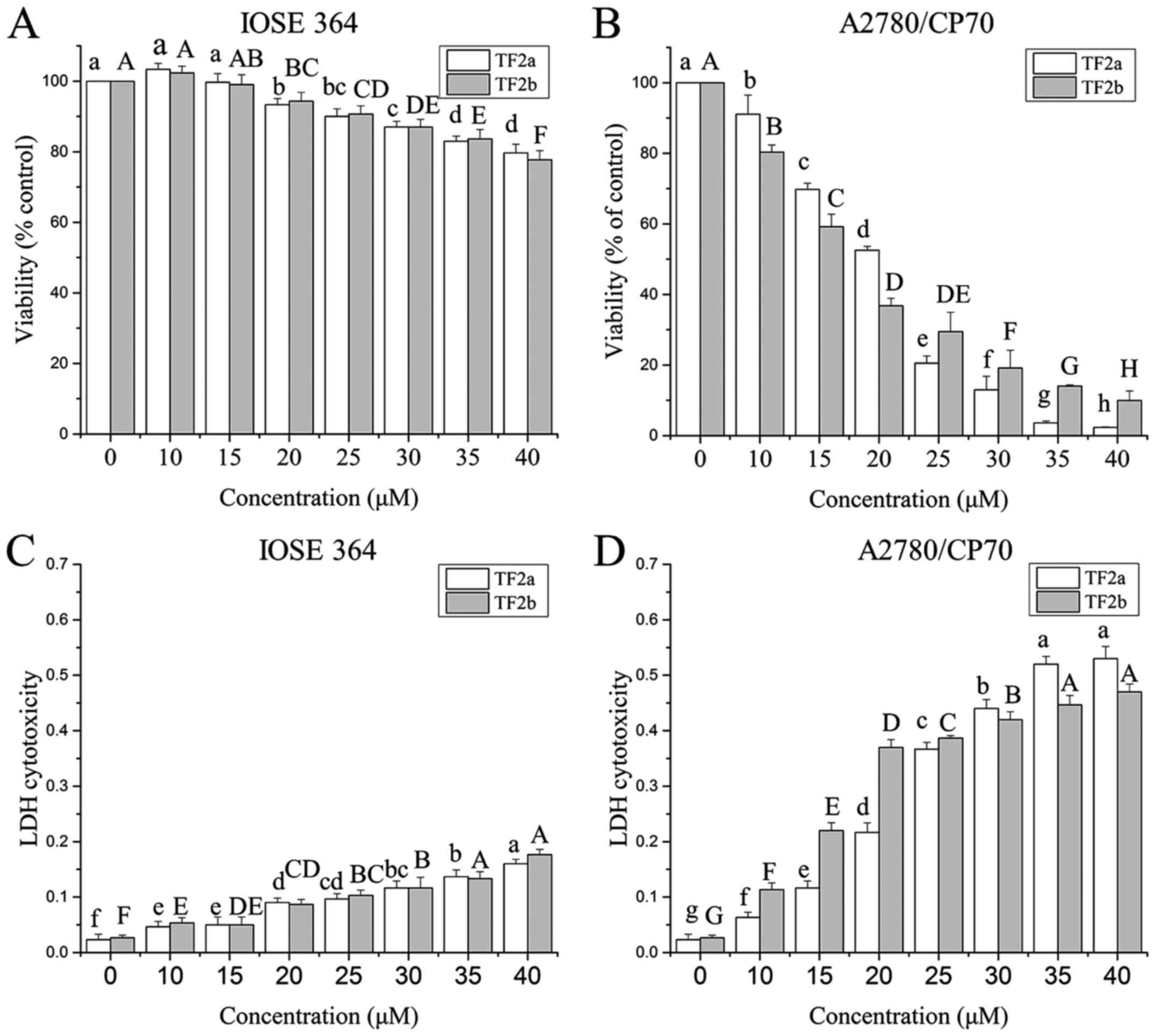
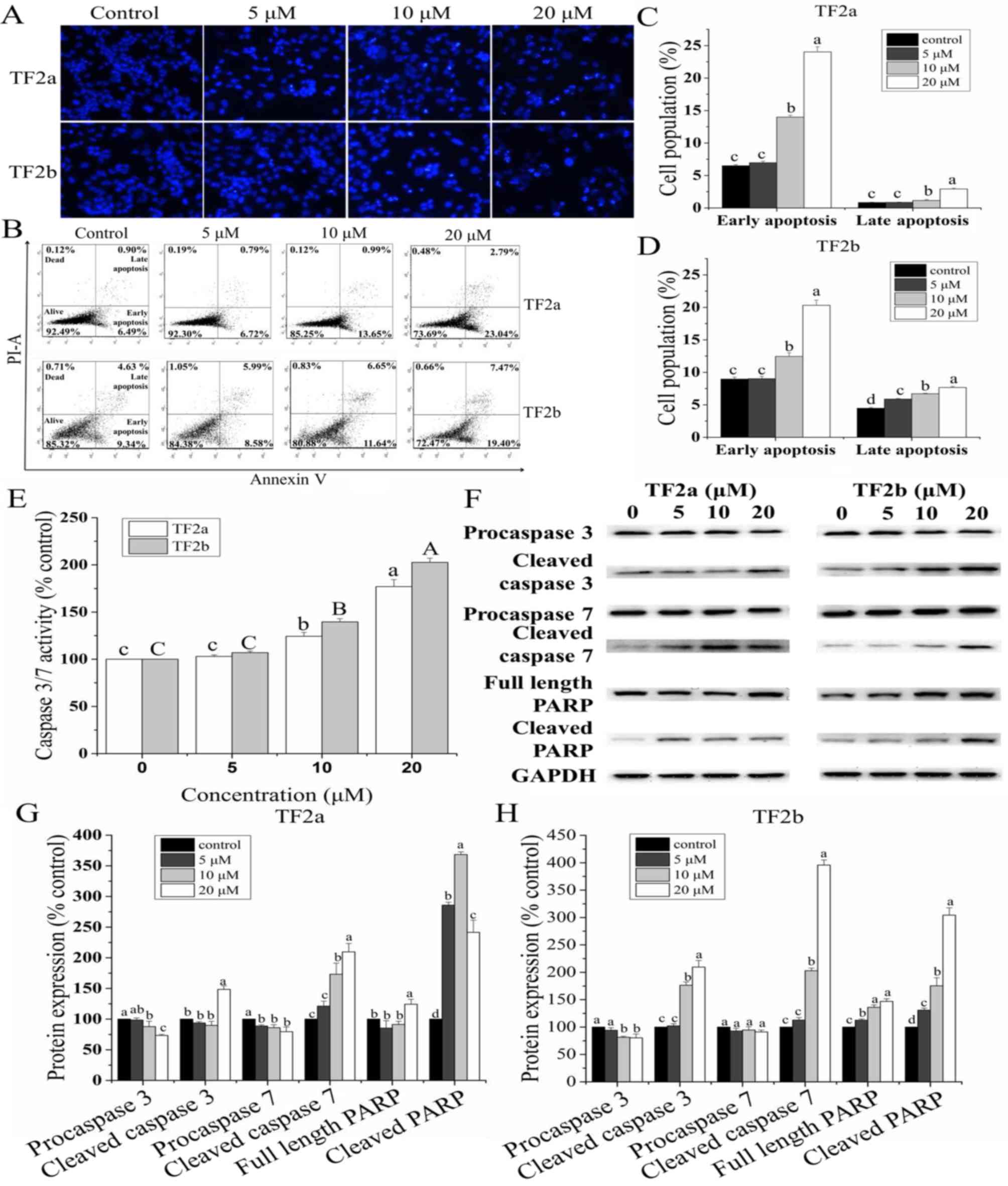
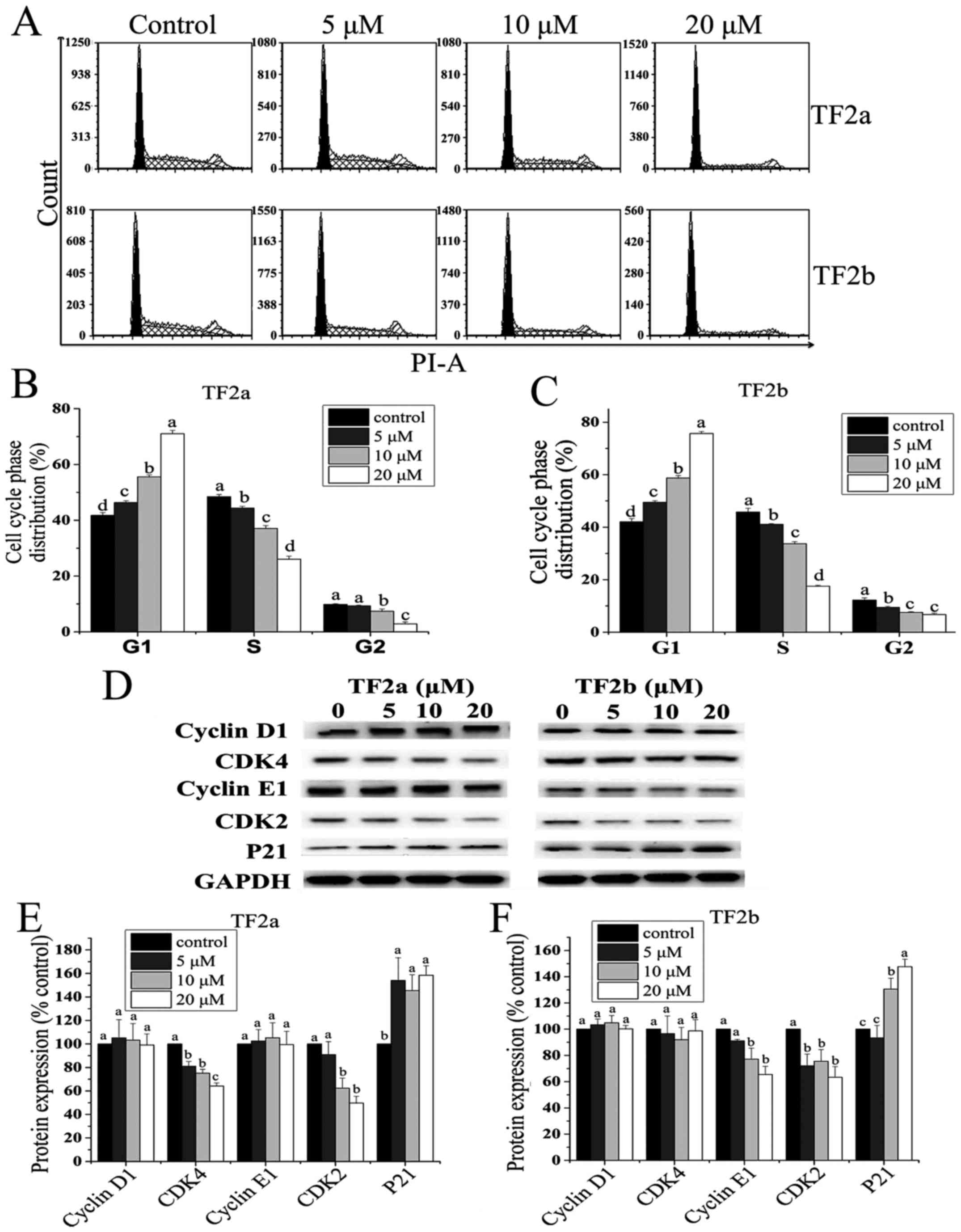
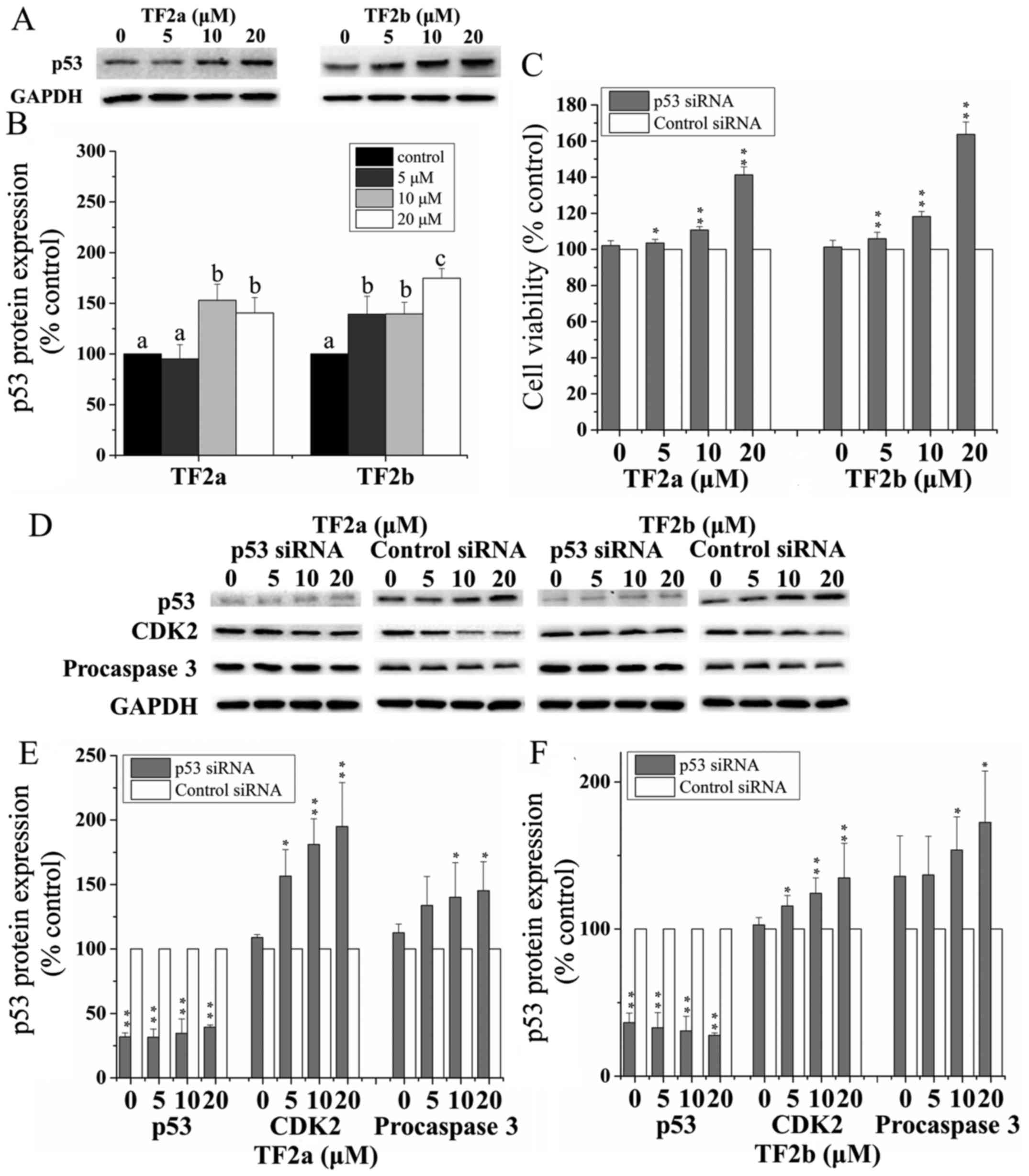
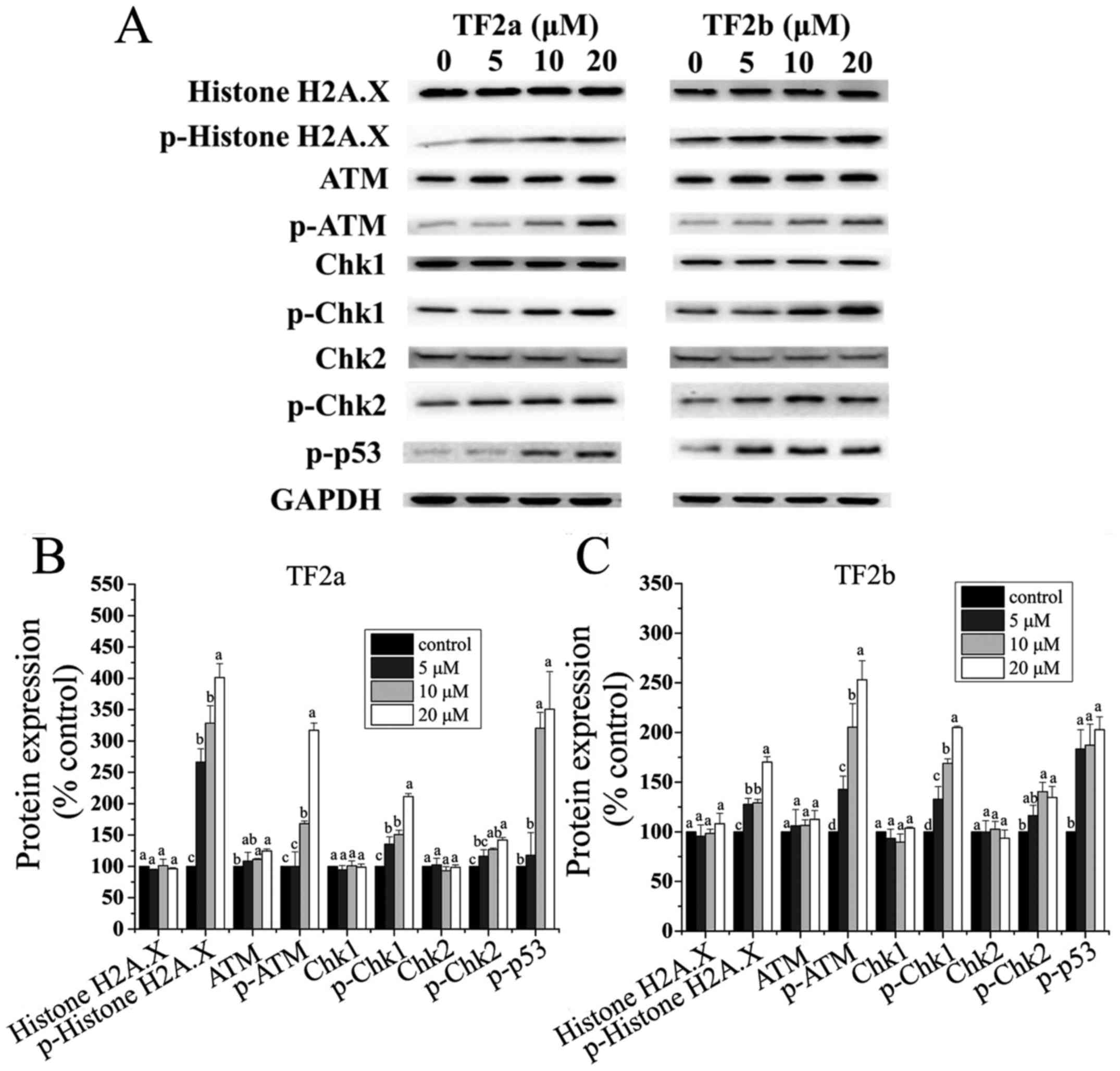
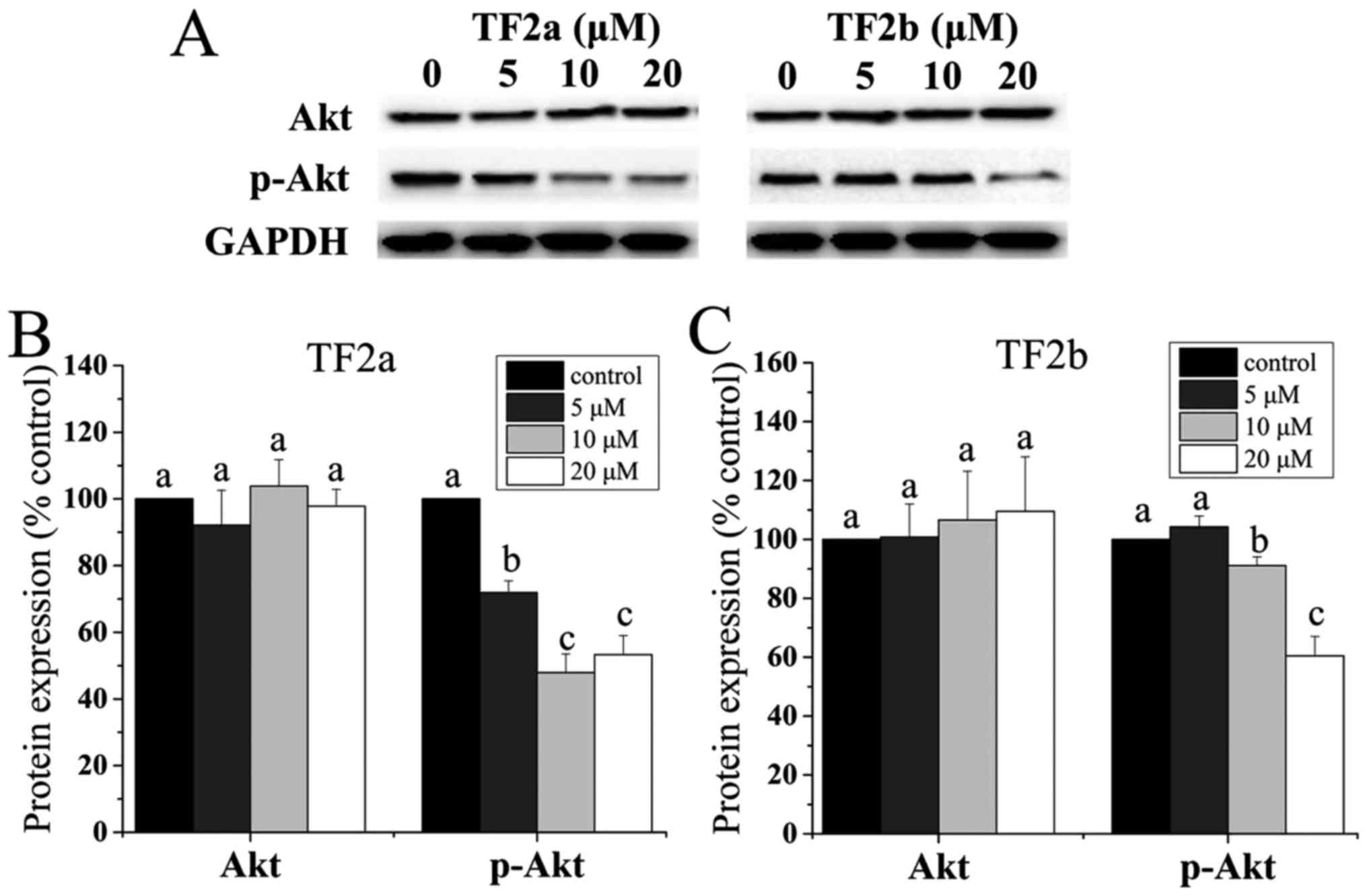
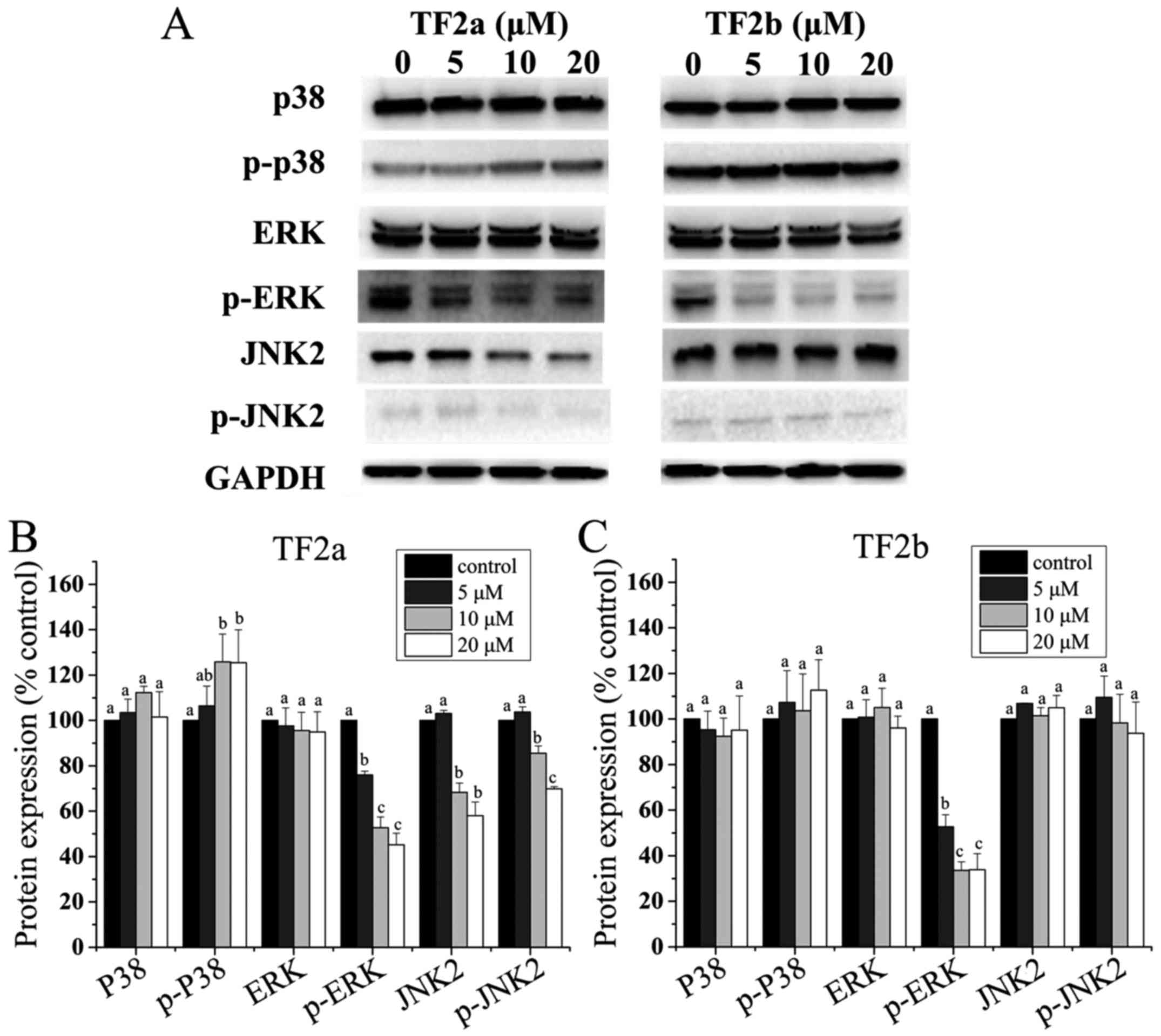
Adverse side effects and acquired resistance to conventional chemotherapy based on platinum drive the exploration of other selective anticancer drugs. Theaflavin‑3-gallate (TF2a) and theaflavin‑3'-gallate (TF2b), theaflavin monomers in black tea, exhibited a potent growth inhibitory effect on cisplatin-resistant ovarian cancer A2780/CP70 cells and were less cytotoxic to normal ovarian IOSE-364 cell line. Flow cytometry analysis and western blotting indicated that TF2a and TF2b induced apoptosis and G1 cell cycle arrest in ovarian cancer A2780/CP70 cells. Hoechst 33342 staining was used to confirm the apoptotic effect. Downregulation of CDK2 and CDK4 for TF2a and CDK2 and cyclin E1 for TF2b led to the accumulation of cells in G1 phase. TF2a and TF2b induced apoptosis and G1 through p53-dependent pathways. TF2a and TF2b induced DNA damage through ATM/Chk/p53 pathway. TF2a and TF2b also induced inhibition of A2780/CP70 cells through Akt and MAPK pathways. The results of this study implied that TF2a and TF2b might help prevent and treat platinum-resistant ovarian cancer.
View Figures

Figure 1

Figure 2

Figure 3

Figure 4

Figure 5

Figure 6

Figure 7

View References

1 

Siegel RL, Miller KD and Jemal A: Cancer statistics, 2016. CA Cancer J Clin. 66:7–30. 2016. View Article : Google Scholar : PubMed/NCBI

2 

Ali AY, Farrand L, Kim JY, Byun S, Suh JY, Lee HJ and Tsang BK: Molecular determinants of ovarian cancer chemoresistance: New insights into an old conundrum. Ann NY Acad Sci. 1271:58–67. 2012. View Article : Google Scholar : PubMed/NCBI

3 

Limtrakul P, Pitchakarn P and Suzuki S: Kuguacin J, a Triterpenoid from Momordica charantia Linn: A Comprehensive Review of Anticarcinogenic Properties. INTECH Open Access Publisher; View Article : Google Scholar : 2013

4 

Al Rawahi T, Lopes AD, Bristow RE, Bryant A, Elattar A, Chattopadhyay S and Galaal K: Surgical cytoreduction for recurrent epithelial ovarian cancer. Cochrane Database Syst Rev. Feb;28(2): CD008765 View Article : Google Scholar : 2013.

5 

Wang V, Li C, Lin M, Welch W, Bell D, Wong YF, Berkowitz R, Mok SC and Bandera CA: Ovarian cancer is a heterogeneous disease. Cancer Genet Cytogenet. 161:170–173. 2005. View Article : Google Scholar : PubMed/NCBI

6 

Cragg DJ, Kingston GM and Newman DG: Anticancer Agents from Natural Products. CRC Press; 2011, View Article : Google Scholar

7 

Butler MS, Robertson AA and Cooper MA: Natural product and natural product derived drugs in clinical trials. Nat Prod Rep. 31:1612–1661. 2014. View Article : Google Scholar : PubMed/NCBI

8 

Newman DJ and Cragg GM: Natural products as sources of new drugs from 1981 to 2014. J Nat Prod. 79:629–661. 2016. View Article : Google Scholar : PubMed/NCBI

9 

Goldbohm RA, Hertog MG, Brants HA, van Poppel G and van den Brandt PA: Consumption of black tea and cancer risk: A prospective cohort study. J Natl Cancer Inst. 88:93–100. 1996. View Article : Google Scholar : PubMed/NCBI

10 

Cassidy A, Huang T, Rice MS, Rimm EB and Tworoger SS: Intake of dietary flavonoids and risk of epithelial ovarian cancer. Am J Clin Nutr. 100:1344–1351. 2014. View Article : Google Scholar : PubMed/NCBI

11 

Finger A: In vitro studies on the effect of polyphenol oxidase and peroxidase on the formation of polyphenolic black tea constituents. J Sci Food Agric. 66:293–305. 1994. View Article : Google Scholar

12 

Yang GY, Liu Z, Seril DN, Liao J, Ding W, Kim S, Bondoc F and Yang CS: Black tea constituents, theaflavins, inhibit 4- (methylnitrosamino)-1- (3-pyridyl)-1-butanone (NNK)-induced lung tumorigenesis in A/J mice. Carcinogenesis. 18:2361–2365. 1997. View Article : Google Scholar

13 

Lu J, Ho C-T, Ghai G and Chen KY: Differential effects of theaflavin monogallates on cell growth, apoptosis, and Cox-2 gene expression in cancerous versus normal cells. Cancer Res. 60:6465–6471. 2000.PubMed/NCBI

14 

Hibasami H, Komiya T, Achiwa Y, Ohnishi K, Kojima T, Nakanishi K, Sugimoto Y, Hasegawa M, Akatsuka R and Hara Y: Black tea theaflavins induce programmed cell death in cultured human stomach cancer cells. Int J Mol Med. 1:725–727. 1998.PubMed/NCBI

15 

Lahiry L, Saha B, Chakraborty J, Adhikary A, Mohanty S, Hossain DM, Banerjee S, Das K, Sa G and Das T: Theaflavins target Fas/caspase-8 and Akt/pBad pathways to induce apoptosis in p53-mutated human breast cancer cells. Carcinogenesis. 31:259–268. 2010. View Article : Google Scholar

16 

Tu Y, Kim E, Gao Y, Rankin GO, Li B and Chen YC: Theaflavin-3, 3′-digallate induces apoptosis and G2 cell cycle arrest through the Akt/MDM2/p53 pathway in cisplatin-resistant ovarian cancer A2780/CP70 cells. Int J Oncol. 48:2657–2665. 2016.PubMed/NCBI

17 

Gao Y, Rankin GO, Tu Y and Chen YC: Theaflavin-3, 3′-digallate decreases human ovarian carcinoma OVCAR-3 cell-induced angiogenesis via Akt and Notch-1 pathways, not via MAPK pathways. Int J Oncol. 48:281–292. 2016. View Article : Google Scholar

18 

Gao Y, Rankin GO, Tu Y and Chen YC: Inhibitory Effects of the Four Main Theaflavin Derivatives Found in Black Tea on Ovarian Cancer Cells. Anticancer Res. 36:643–651. 2016.PubMed/NCBI

19 

Xu Y, Jin Y, Wu Y and Tu Y: Isolation and purification of four individual theaflavins using semi-preparative high performance liquid chromatography. J Liq Chromatogr Relat Technol. 33:1791–1801. 2010. View Article : Google Scholar

20 

Levine AJ: p53 the cellular gatekeeper for growth and division. Cell. 88:323–331. 1997. View Article : Google Scholar : PubMed/NCBI

21 

Lakin ND and Jackson SP: Regulation of p53 in response to DNA damage. Oncogene. 18:7644–7655. 1999. View Article : Google Scholar

22 

Burma S, Chen BP, Murphy M, Kurimasa A and Chen DJ: ATM phosphorylates histone H2AX in response to DNA double-strand breaks. J Biol Chem. 276:42462–42467. 2001. View Article : Google Scholar : PubMed/NCBI

23 

Tibbetts RS, Brumbaugh KM, Williams JM, Sarkaria JN, Cliby WA, Shieh SY, Taya Y, Prives C and Abraham RT: A role for ATR in the DNA damage-induced phosphorylation of p53. Genes Dev. 13:152–157. 1999. View Article : Google Scholar : PubMed/NCBI

24 

Gottlieb TM, Leal JFM, Seger R, Taya Y and Oren M: Cross-talk between Akt, p53 and Mdm2: Possible implications for the regulation of apoptosis. Oncogene. 21:1299–1303. 2002. View Article : Google Scholar : PubMed/NCBI

25 

Franke TF, Kaplan DR and Cantley LC: PI3K: Downstream AKTion blocks apoptosis. Cell. 88:435–437. 1997. View Article : Google Scholar : PubMed/NCBI

26 

Franke TF, Yang S-I, Chan TO, Datta K, Kazlauskas A, Morrison DK, Kaplan DR and Tsichlis PN: The protein kinase encoded by the Akt proto-oncogene is a target of the PDGF- activated phosphatidylinositol 3-kinase. Cell. 81:727–736. 1995. View Article : Google Scholar : PubMed/NCBI

27 

Diehl JA, Cheng M, Roussel MF and Sherr CJ: Glycogen synthase kinase-3β regulates cyclin D1 proteolysis and subcellular localization. Genes Dev. 12:3499–3511. 1998. View Article : Google Scholar : PubMed/NCBI

28 

Wu GS: The functional interactions between the p53 and MAPK signaling pathways. Cancer Biol Ther. 3:156–161. 2004. View Article : Google Scholar : PubMed/NCBI

29 

Blagosklonny MV: Overcoming limitations of natural anticancer drugs by combining with artificial agents. Trends Pharmacol Sci. 26:77–81. 2005. View Article : Google Scholar : PubMed/NCBI

30 

Wong RS: Apoptosis in cancer: From pathogenesis to treatment. J Exp Clin Cancer Res. 30:872011. View Article : Google Scholar : PubMed/NCBI

31 

Hassan M, Watari H, AbuAlmaaty A, Ohba Y and Sakuragi N: Apoptosis and molecular targeting therapy in cancer. BioMed Res Int. 2014:1508452014. View Article : Google Scholar : PubMed/NCBI

32 

McIlwain DR, Berger T and Mak TW: Caspase functions in cell death and disease. Cold Spring Harb Perspect Biol. 7:72015. View Article : Google Scholar

33 

Knaapen M, De Bie M, Muhring J and Kockx M: Cleaved PARP as a marker for apoptosis in tissue sections. Promega Notes. 72:71999.

34 

Los M, Mozoluk M, Ferrari D, Stepczynska A, Stroh C, Renz A, Herceg Z, Wang ZQ and Schulze-Osthoff K: Activation and caspase-mediated inhibition of PARP: A molecular switch between fibroblast necrosis and apoptosis in death receptor signaling. Mol Biol Cell. 13:978–988. 2002. View Article : Google Scholar : PubMed/NCBI

35 

Morales J, Li L, Fattah FJ, Dong Y, Bey EA, Patel M, Gao J and Boothman DA: Review of poly (ADP-Ribose) polymerase (PARP) mechanisms of action and rationale for targeting in cancer and other diseases. Crit Rev Eukaryot Gene Expr. 24:15–28. 2014. View Article : Google Scholar : PubMed/NCBI

36 

Chow A: Cell cycle control by oncogenes and tumor suppressors: Driving the transformation of normal cells into cancerous cells. Nature Education. 3:72010.

37 

Sherr CJ and Bartek J: Cell cycle-targeted cancer therapies. Annu Rev Cancer Biol. 1:41–57. 2017. View Article : Google Scholar

38 

Zhang G, Miura Y and Yagasaki K: Induction of apoptosis and cell cycle arrest in cancer cells by in vivo metabolites of teas. Nutr Cancer. 38:265–273. 2000. View Article : Google Scholar

39 

Prasad S, Kaur J, Roy P, Kalra N and Shukla Y: Theaflavins induce G2/M arrest by modulating expression of p21waf1/cip1, cdc25C and cyclin B in human prostate carcinoma PC-3 cells. Life Sci. 81:1323–1331. 2007. View Article : Google Scholar : PubMed/NCBI

40 

Kawabe T: G2 checkpoint abrogators as anticancer drugs. Mol Cancer Ther. 3:513–519. 2004.PubMed/NCBI

41 

Waldman T, Kinzler KW and Vogelstein B: p21 is necessary for the p53-mediated G1 arrest in human cancer cells. Cancer Res. 55:5187–5190. 1995.PubMed/NCBI

42 

Yu W, Park S-K, Jia L, Tiwary R, Scott WW, Li J, Wang P, Simmons-Menchaca M, Sanders BG and Kline K: RRR-γ-tocopherol induces human breast cancer cells to undergo apoptosis via death receptor 5 (DR5)-mediated apoptotic signaling. Cancer Lett. 259:165–176. 2008. View Article : Google Scholar

43 

Ozaki T and Nakagawara A: Role of p53 in cell death and human cancers. Cancers (Basel). 3:994–1013. 2011. View Article : Google Scholar

44 

Khoo KH, Verma CS and Lane DP: Drugging the p53 pathway: Understanding the route to clinical efficacy. Nat Rev Drug Discov. 13:217–236. 2014. View Article : Google Scholar : PubMed/NCBI

45 

Brown R, Clugston C, Burns P, Edlin A, Vasey P, Vojtĕsek B and Kaye SB: Increased accumulation of p53 protein in cisplatin-resistant ovarian cell lines. Int J Cancer. 55:678–684. 1993. View Article : Google Scholar : PubMed/NCBI

46 

Lahiry L, Saha B, Chakraborty J, Bhattacharyya S, Chattopadhyay S, Banerjee S, Choudhuri T, Mandal D, Bhattacharyya A, Sa G, et al: Contribution of p53-mediated Bax transactivation in theaflavin- induced mammary epithelial carcinoma cell apoptosis. Apoptosis. 13:771–781. 2008. View Article : Google Scholar : PubMed/NCBI

47 

Kalra N, Seth K, Prasad S, Singh M, Pant AB and Shukla Y: Theaflavins induced apoptosis of LNCaP cells is mediated through induction of p53 down-regulation of NF-kappa B and mitogen-activated protein kinases pathways. Life Sci. 80:2137–2146. 2007. View Article : Google Scholar : PubMed/NCBI

48 

Meek DW: The p53 response to DNA damage. DNA Repair (Amst). 3:1049–1056. 2004. View Article : Google Scholar

49 

Lee JH and Paull TT: Activation and regulation of ATM kinase activity in response to DNA double-strand breaks. Oncogene. 26:7741–7748. 2007. View Article : Google Scholar : PubMed/NCBI

50 

Zhao H and Piwnica-Worms H: ATR-mediated checkpoint pathways regulate phosphorylation and activation of human Chk1. Mol Cell Biol. 21:4129–4139. 2001. View Article : Google Scholar : PubMed/NCBI

51 

Matsuoka S, Rotman G, Ogawa A, Shiloh Y, Tamai K and Elledge SJ: Ataxia telangiectasia-mutated phosphorylates Chk2 in vivo and in vitro. Proc Natl Acad Sci USA. 97:10389–10394. 2000. View Article : Google Scholar : PubMed/NCBI

52 

Melchionna R, Chen X-B, Blasina A and McGowan CH: Threonine 68 is required for radiation-induced phosphorylation and activation of Cds1. Nat Cell Biol. 2:762–765. 2000. View Article : Google Scholar : PubMed/NCBI

53 

Yuan J, Adamski R and Chen J: Focus on histone variant H2AX: To be or not to be. FEBS Lett. 584:3717–3724. 2010. View Article : Google Scholar : PubMed/NCBI

54 

Rogakou EP, Pilch DR, Orr AH, Ivanova VS and Bonner WM: DNA double-stranded breaks induce histone H2AX phosphorylation on serine 139. J Biol Chem. 273:5858–5868. 1998. View Article : Google Scholar : PubMed/NCBI

55 

Shieh S-Y, Ikeda M, Taya Y and Prives C: DNA damage-induced phosphorylation of p53 alleviates inhibition by MDM2. Cell. 91:325–334. 1997. View Article : Google Scholar : PubMed/NCBI

56 

Sahu RP, Batra S and Srivastava SK: Activation of ATM/Chk1 by curcumin causes cell cycle arrest and apoptosis in human pancreatic cancer cells. Br J Cancer. 100:1425–1433. 2009. View Article : Google Scholar : PubMed/NCBI

57 

Lee H, Kim Y, Jeong JH, Ryu J-H and Kim W-Y: ATM/CHK/p53 pathway dependent chemopreventive and therapeutic activity on lung cancer by pterostilbene. PloS One. 11:e01623352016. View Article : Google Scholar : PubMed/NCBI

58 

Altomare DA and Testa JR: Perturbations of the AKT signaling pathway in human cancer. Oncogene. 24:7455–7464. 2005. View Article : Google Scholar : PubMed/NCBI

59 

Crowell JA, Steele VE and Fay JR: Targeting the AKT protein kinase for cancer chemoprevention. Mol Cancer Ther. 6:2139–2148. 2007. View Article : Google Scholar : PubMed/NCBI

60 

Mabuchi S, Kuroda H, Takahashi R and Sasano T: The PI3K/AKT/mTOR pathway as a therapeutic target in ovarian cancer. Gynecol Oncol. 137:173–179. 2015. View Article : Google Scholar : PubMed/NCBI

61 

Abraham AG and O'Neill E: PI3K/Akt-mediated regulation of p53 in cancer. Biochem Soc Trans. 42:798–803. 2014. View Article : Google Scholar : PubMed/NCBI

62 

Kim CW, Lu JN, Go S-I, Jung JH, Yi SM, Jeong JH, Hah YS, Han MS, Park JW, Lee WS, et al: p53 restoration can overcome cisplatin resistance through inhibition of Akt as well as induction of Bax. Int J Oncol. 43:1495–1502. 2013. View Article : Google Scholar : PubMed/NCBI

63 

Koul HK, Pal M and Koul S: Role of p38 MAP kinase signal transduction in solid tumors. Genes Cancer. 4:342–359. 2013. View Article : Google Scholar : PubMed/NCBI

64 

Cheng T-L, Symons M and Jou T-S: Regulation of anoikis by Cdc42 and Rac1. Exp Cell Res. 295:497–511. 2004. View Article : Google Scholar : PubMed/NCBI

65 

Hong B, Li H, Zhang M, Xu J, Lu Y, Zheng Y, Qian J, Chang JT, Yang J and Yi Q: p38 MAPK inhibits breast cancer metastasis through regulation of stromal expansion. Int J Cancer. 136:34–43. 2015. View Article : Google Scholar

66 

Kohno M and Pouyssegur J: Targeting the ERK signaling pathway in cancer therapy. Ann Med. 38:200–211. 2006. View Article : Google Scholar : PubMed/NCBI

67 

Dong Z, Ma W, Huang C and Yang CS: Inhibition of tumor promoter-induced activator protein 1 activation and cell transformation by tea polyphenols, (−)-epigallocatechin gallate, and theaflavins. Cancer Res. 57:4414–4419. 1997.PubMed/NCBI

68 

Vivas-Mejia P, Benito JM, Fernandez A, Han H-D, Mangala L, Rodriguez-Aguayo C, Chavez-Reyes A, Lin YG, Carey MS, Nick AM, et al: JNK-1 inhibition leads to antitumor activity in ovarian cancer. Clin Cancer Res. 16:184–194. 2010. View Article : Google Scholar

69 

Kitanaka C, Sato A and Okada M: JNK signaling in the control of the tumor-initiating capacity associated with cancer stem cells. Genes Cancer. 4:388–396. 2013. View Article : Google Scholar : PubMed/NCBI

Related Articles

  • Abstract
  • View
  • Download
  • Twitter
Copy and paste a formatted citation
Spandidos Publications style
Pan H, Wang F, Rankin GO, Rojanasakul Y, Tu Y and Chen YC: Inhibitory effect of black tea pigments, theaflavin‑3/3'-gallate against cisplatin-resistant ovarian cancer cells by inducing apoptosis and G1 cell cycle arrest. Int J Oncol 51: 1508-1520, 2017.
APA
Pan, H., Wang, F., Rankin, G.O., Rojanasakul, Y., Tu, Y., & Chen, Y.C. (2017). Inhibitory effect of black tea pigments, theaflavin‑3/3'-gallate against cisplatin-resistant ovarian cancer cells by inducing apoptosis and G1 cell cycle arrest. International Journal of Oncology, 51, 1508-1520. https://doi.org/10.3892/ijo.2017.4145
MLA
Pan, H., Wang, F., Rankin, G. O., Rojanasakul, Y., Tu, Y., Chen, Y. C."Inhibitory effect of black tea pigments, theaflavin‑3/3'-gallate against cisplatin-resistant ovarian cancer cells by inducing apoptosis and G1 cell cycle arrest". International Journal of Oncology 51.5 (2017): 1508-1520.
Chicago
Pan, H., Wang, F., Rankin, G. O., Rojanasakul, Y., Tu, Y., Chen, Y. C."Inhibitory effect of black tea pigments, theaflavin‑3/3'-gallate against cisplatin-resistant ovarian cancer cells by inducing apoptosis and G1 cell cycle arrest". International Journal of Oncology 51, no. 5 (2017): 1508-1520. https://doi.org/10.3892/ijo.2017.4145
Copy and paste a formatted citation
x
Spandidos Publications style
Pan H, Wang F, Rankin GO, Rojanasakul Y, Tu Y and Chen YC: Inhibitory effect of black tea pigments, theaflavin‑3/3'-gallate against cisplatin-resistant ovarian cancer cells by inducing apoptosis and G1 cell cycle arrest. Int J Oncol 51: 1508-1520, 2017.
APA
Pan, H., Wang, F., Rankin, G.O., Rojanasakul, Y., Tu, Y., & Chen, Y.C. (2017). Inhibitory effect of black tea pigments, theaflavin‑3/3'-gallate against cisplatin-resistant ovarian cancer cells by inducing apoptosis and G1 cell cycle arrest. International Journal of Oncology, 51, 1508-1520. https://doi.org/10.3892/ijo.2017.4145
MLA
Pan, H., Wang, F., Rankin, G. O., Rojanasakul, Y., Tu, Y., Chen, Y. C."Inhibitory effect of black tea pigments, theaflavin‑3/3'-gallate against cisplatin-resistant ovarian cancer cells by inducing apoptosis and G1 cell cycle arrest". International Journal of Oncology 51.5 (2017): 1508-1520.
Chicago
Pan, H., Wang, F., Rankin, G. O., Rojanasakul, Y., Tu, Y., Chen, Y. C."Inhibitory effect of black tea pigments, theaflavin‑3/3'-gallate against cisplatin-resistant ovarian cancer cells by inducing apoptosis and G1 cell cycle arrest". International Journal of Oncology 51, no. 5 (2017): 1508-1520. https://doi.org/10.3892/ijo.2017.4145
Follow us
  • Twitter
  • LinkedIn
  • Facebook
About
  • Spandidos Publications
  • Careers
  • Cookie Policy
  • Privacy Policy
How can we help?
  • Help
  • Live Chat
  • Contact
  • Email to our Support Team