Spandidos Publications Logo
  • About
    • About Spandidos
    • Aims and Scopes
    • Abstracting and Indexing
    • Editorial Policies
    • Reprints and Permissions
    • Job Opportunities
    • Terms and Conditions
    • Contact
  • Journals
    • All Journals
    • Oncology Letters
      • Oncology Letters
      • Information for Authors
      • Editorial Policies
      • Editorial Board
      • Aims and Scope
      • Abstracting and Indexing
      • Bibliographic Information
      • Archive
    • International Journal of Oncology
      • International Journal of Oncology
      • Information for Authors
      • Editorial Policies
      • Editorial Board
      • Aims and Scope
      • Abstracting and Indexing
      • Bibliographic Information
      • Archive
    • Molecular and Clinical Oncology
      • Molecular and Clinical Oncology
      • Information for Authors
      • Editorial Policies
      • Editorial Board
      • Aims and Scope
      • Abstracting and Indexing
      • Bibliographic Information
      • Archive
    • Experimental and Therapeutic Medicine
      • Experimental and Therapeutic Medicine
      • Information for Authors
      • Editorial Policies
      • Editorial Board
      • Aims and Scope
      • Abstracting and Indexing
      • Bibliographic Information
      • Archive
    • International Journal of Molecular Medicine
      • International Journal of Molecular Medicine
      • Information for Authors
      • Editorial Policies
      • Editorial Board
      • Aims and Scope
      • Abstracting and Indexing
      • Bibliographic Information
      • Archive
    • Biomedical Reports
      • Biomedical Reports
      • Information for Authors
      • Editorial Policies
      • Editorial Board
      • Aims and Scope
      • Abstracting and Indexing
      • Bibliographic Information
      • Archive
    • Oncology Reports
      • Oncology Reports
      • Information for Authors
      • Editorial Policies
      • Editorial Board
      • Aims and Scope
      • Abstracting and Indexing
      • Bibliographic Information
      • Archive
    • Molecular Medicine Reports
      • Molecular Medicine Reports
      • Information for Authors
      • Editorial Policies
      • Editorial Board
      • Aims and Scope
      • Abstracting and Indexing
      • Bibliographic Information
      • Archive
    • World Academy of Sciences Journal
      • World Academy of Sciences Journal
      • Information for Authors
      • Editorial Policies
      • Editorial Board
      • Aims and Scope
      • Abstracting and Indexing
      • Bibliographic Information
      • Archive
    • International Journal of Functional Nutrition
      • International Journal of Functional Nutrition
      • Information for Authors
      • Editorial Policies
      • Editorial Board
      • Aims and Scope
      • Abstracting and Indexing
      • Bibliographic Information
      • Archive
    • International Journal of Epigenetics
      • International Journal of Epigenetics
      • Information for Authors
      • Editorial Policies
      • Editorial Board
      • Aims and Scope
      • Abstracting and Indexing
      • Bibliographic Information
      • Archive
    • Medicine International
      • Medicine International
      • Information for Authors
      • Editorial Policies
      • Editorial Board
      • Aims and Scope
      • Abstracting and Indexing
      • Bibliographic Information
      • Archive
  • Articles
  • Information
    • Information for Authors
    • Information for Reviewers
    • Information for Librarians
    • Information for Advertisers
    • Conferences
  • Language Editing
Spandidos Publications Logo
  • About
    • About Spandidos
    • Aims and Scopes
    • Abstracting and Indexing
    • Editorial Policies
    • Reprints and Permissions
    • Job Opportunities
    • Terms and Conditions
    • Contact
  • Journals
    • All Journals
    • Biomedical Reports
      • Information for Authors
      • Editorial Policies
      • Editorial Board
      • Aims and Scope
      • Abstracting and Indexing
      • Bibliographic Information
      • Archive
    • Experimental and Therapeutic Medicine
      • Information for Authors
      • Editorial Policies
      • Editorial Board
      • Aims and Scope
      • Abstracting and Indexing
      • Bibliographic Information
      • Archive
    • International Journal of Epigenetics
      • Information for Authors
      • Editorial Policies
      • Editorial Board
      • Aims and Scope
      • Abstracting and Indexing
      • Bibliographic Information
      • Archive
    • International Journal of Functional Nutrition
      • Information for Authors
      • Editorial Policies
      • Editorial Board
      • Aims and Scope
      • Abstracting and Indexing
      • Bibliographic Information
      • Archive
    • International Journal of Molecular Medicine
      • Information for Authors
      • Editorial Policies
      • Editorial Board
      • Aims and Scope
      • Abstracting and Indexing
      • Bibliographic Information
      • Archive
    • International Journal of Oncology
      • Information for Authors
      • Editorial Policies
      • Editorial Board
      • Aims and Scope
      • Abstracting and Indexing
      • Bibliographic Information
      • Archive
    • Medicine International
      • Information for Authors
      • Editorial Policies
      • Editorial Board
      • Aims and Scope
      • Abstracting and Indexing
      • Bibliographic Information
      • Archive
    • Molecular and Clinical Oncology
      • Information for Authors
      • Editorial Policies
      • Editorial Board
      • Aims and Scope
      • Abstracting and Indexing
      • Bibliographic Information
      • Archive
    • Molecular Medicine Reports
      • Information for Authors
      • Editorial Policies
      • Editorial Board
      • Aims and Scope
      • Abstracting and Indexing
      • Bibliographic Information
      • Archive
    • Oncology Letters
      • Information for Authors
      • Editorial Policies
      • Editorial Board
      • Aims and Scope
      • Abstracting and Indexing
      • Bibliographic Information
      • Archive
    • Oncology Reports
      • Information for Authors
      • Editorial Policies
      • Editorial Board
      • Aims and Scope
      • Abstracting and Indexing
      • Bibliographic Information
      • Archive
    • World Academy of Sciences Journal
      • Information for Authors
      • Editorial Policies
      • Editorial Board
      • Aims and Scope
      • Abstracting and Indexing
      • Bibliographic Information
      • Archive
  • Articles
  • Information
    • For Authors
    • For Reviewers
    • For Librarians
    • For Advertisers
    • Conferences
  • Language Editing
Login Register Submit
  • This site uses cookies
  • You can change your cookie settings at any time by following the instructions in our Cookie Policy. To find out more, you may read our Privacy Policy.

    I agree
Search articles by DOI, keyword, author or affiliation
Search
Advanced Search
presentation
International Journal of Oncology
Join Editorial Board Propose a Special Issue
Print ISSN: 1019-6439 Online ISSN: 1791-2423
Journal Cover
July-2021 Volume 59 Issue 1

Full Size Image

Cover Legend PDF

Sign up for eToc alerts
Recommend to Library

Journals

International Journal of Molecular Medicine

International Journal of Molecular Medicine

International Journal of Molecular Medicine is an international journal devoted to molecular mechanisms of human disease.

International Journal of Oncology

International Journal of Oncology

International Journal of Oncology is an international journal devoted to oncology research and cancer treatment.

Molecular Medicine Reports

Molecular Medicine Reports

Covers molecular medicine topics such as pharmacology, pathology, genetics, neuroscience, infectious diseases, molecular cardiology, and molecular surgery.

Oncology Reports

Oncology Reports

Oncology Reports is an international journal devoted to fundamental and applied research in Oncology.

Experimental and Therapeutic Medicine

Experimental and Therapeutic Medicine

Experimental and Therapeutic Medicine is an international journal devoted to laboratory and clinical medicine.

Oncology Letters

Oncology Letters

Oncology Letters is an international journal devoted to Experimental and Clinical Oncology.

Biomedical Reports

Biomedical Reports

Explores a wide range of biological and medical fields, including pharmacology, genetics, microbiology, neuroscience, and molecular cardiology.

Molecular and Clinical Oncology

Molecular and Clinical Oncology

International journal addressing all aspects of oncology research, from tumorigenesis and oncogenes to chemotherapy and metastasis.

World Academy of Sciences Journal

World Academy of Sciences Journal

Multidisciplinary open-access journal spanning biochemistry, genetics, neuroscience, environmental health, and synthetic biology.

International Journal of Functional Nutrition

International Journal of Functional Nutrition

Open-access journal combining biochemistry, pharmacology, immunology, and genetics to advance health through functional nutrition.

International Journal of Epigenetics

International Journal of Epigenetics

Publishes open-access research on using epigenetics to advance understanding and treatment of human disease.

Medicine International

Medicine International

An International Open Access Journal Devoted to General Medicine.

Journal Cover
July-2021 Volume 59 Issue 1

Full Size Image

Cover Legend PDF

Sign up for eToc alerts
Recommend to Library

  • Article
  • Citations
    • Cite This Article
    • Download Citation
    • Create Citation Alert
    • Remove Citation Alert
    • Cited By
  • Similar Articles
    • Related Articles (in Spandidos Publications)
    • Similar Articles (Google Scholar)
    • Similar Articles (PubMed)
  • Download PDF
  • Download XML
  • View XML
Article

Proliferating cell nuclear antigen directly interacts with androgen receptor and enhances androgen receptor‑mediated signaling

  • Authors:
    • Shan Lu
    • Zhongyun Dong
  • View Affiliations / Copyright

    Affiliations: Division of Hematology‑Oncology, Department of Internal Medicine, University of Cincinnati College of Medicine, Cincinnati, OH 45267, USA
  • Article Number: 41
    |
    Published online on: May 13, 2021
       https://doi.org/10.3892/ijo.2021.5221
  • Expand metrics +
Metrics: Total Views: 0 (Spandidos Publications: | PMC Statistics: )
Metrics: Total PDF Downloads: 0 (Spandidos Publications: | PMC Statistics: )
Cited By (CrossRef): 0 citations Loading Articles...

This article is mentioned in:


Abstract

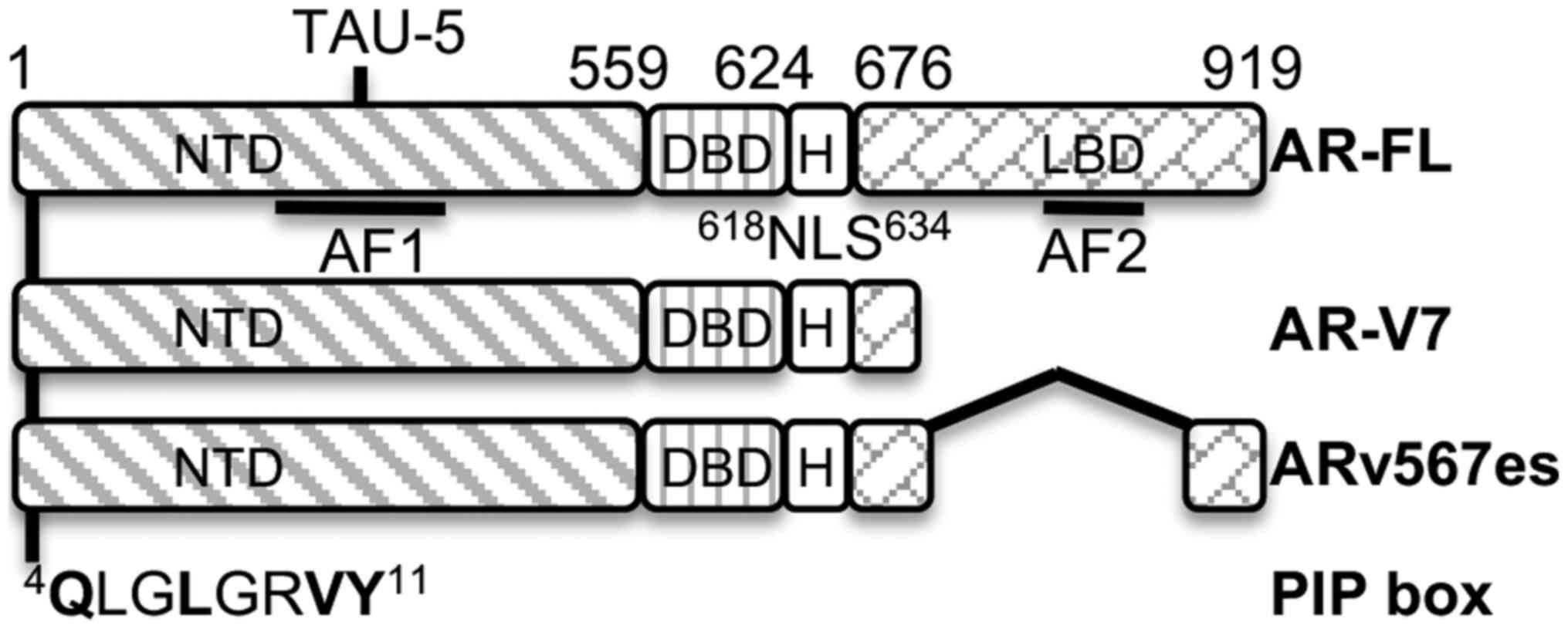
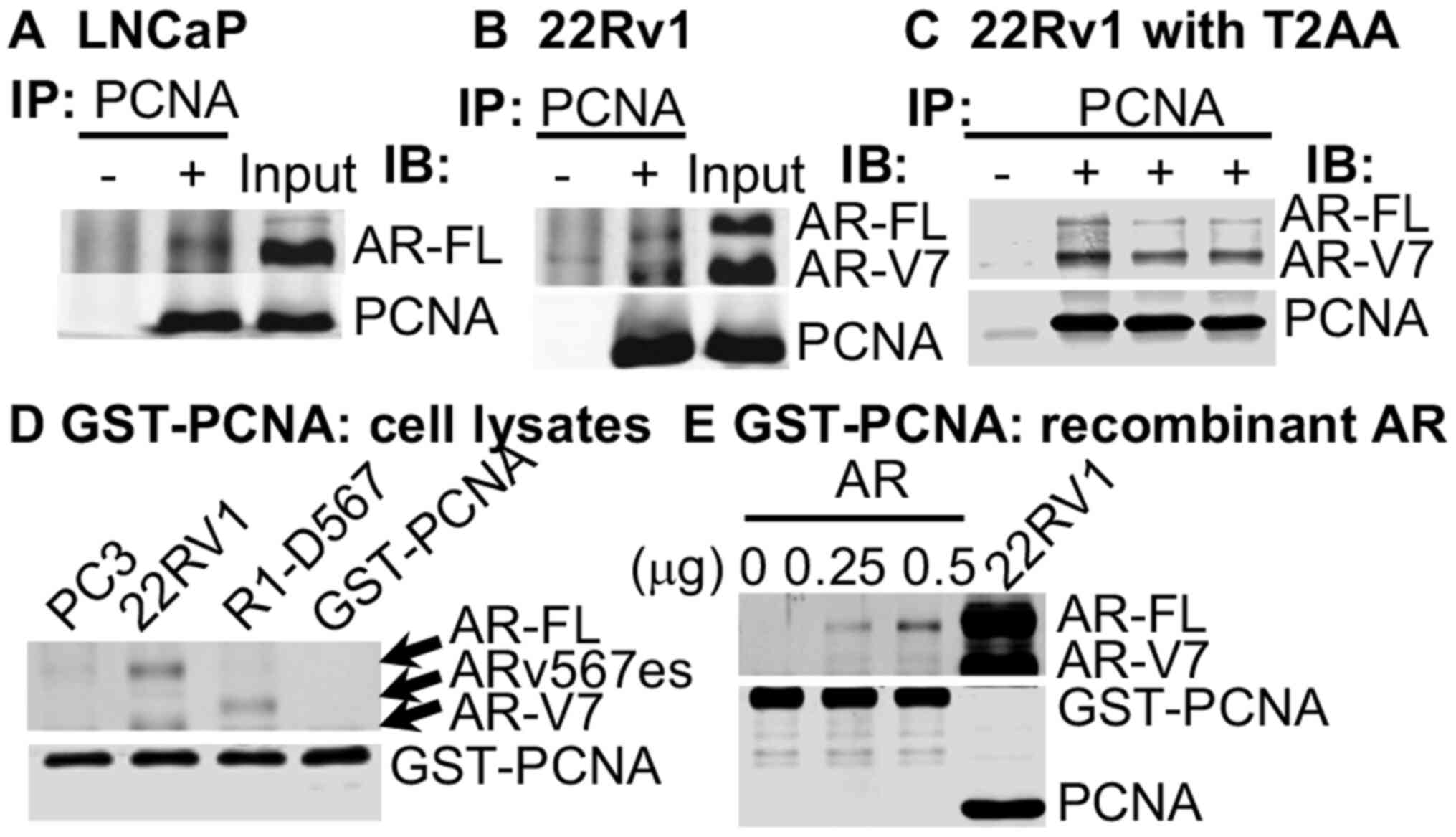
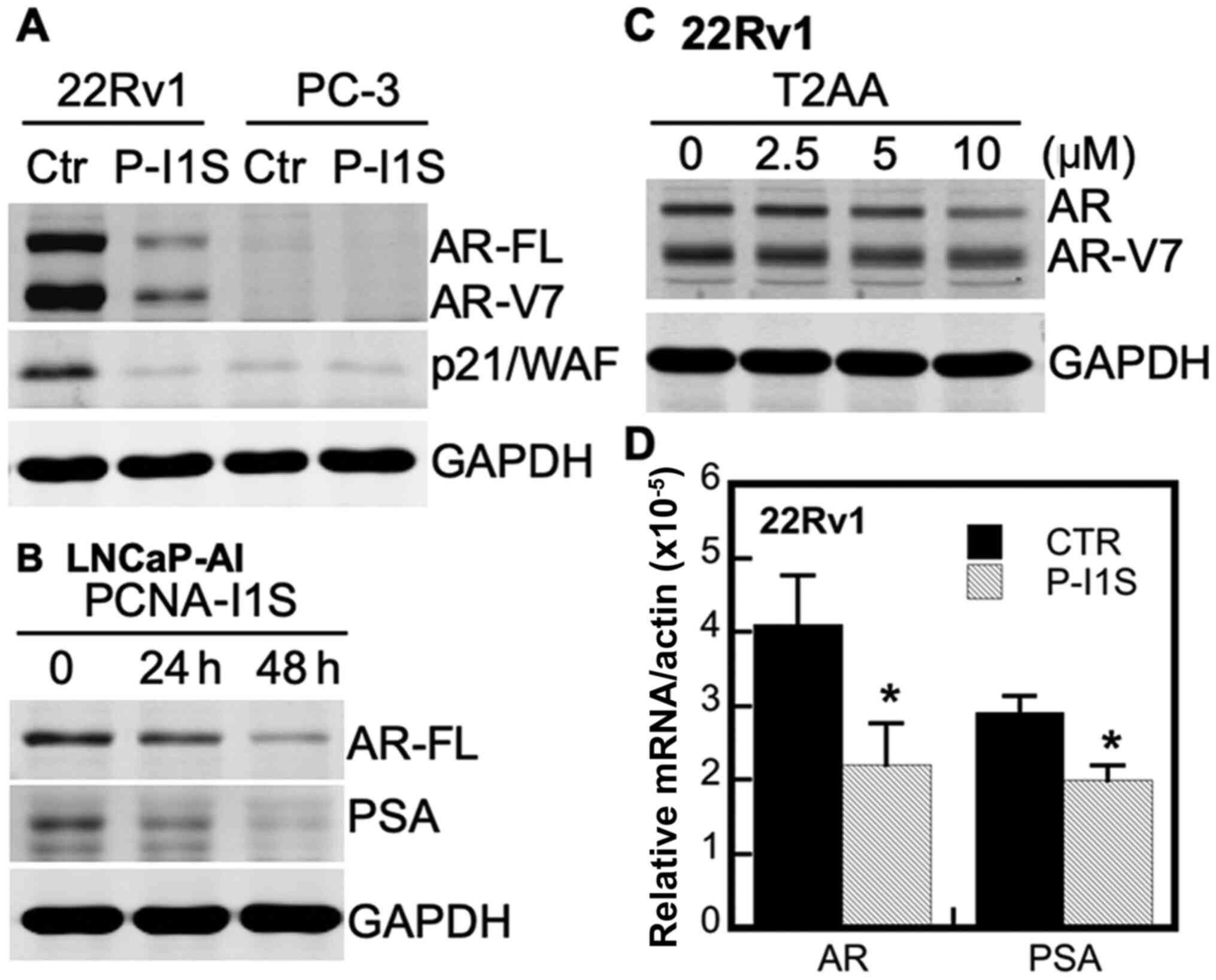
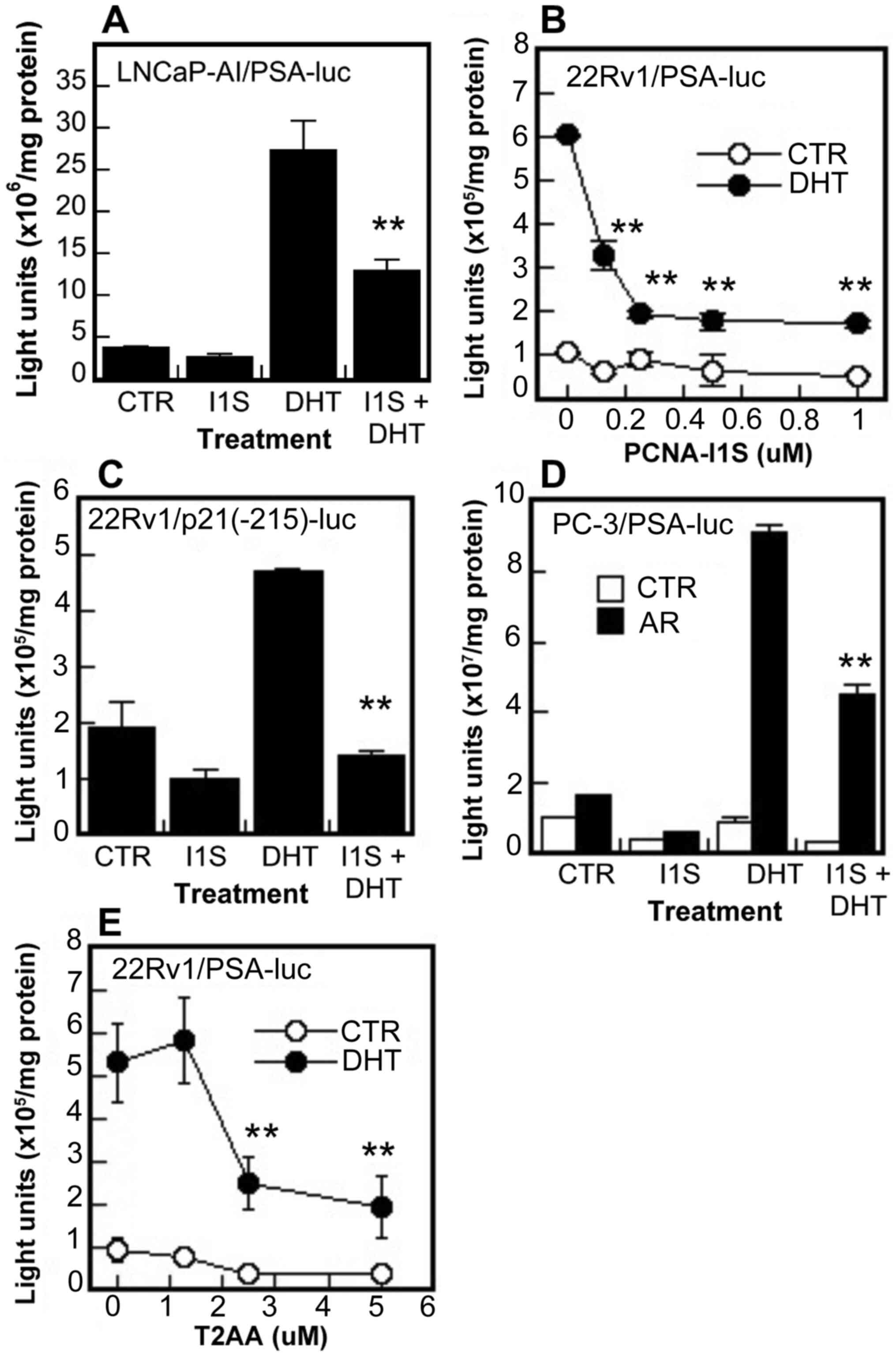
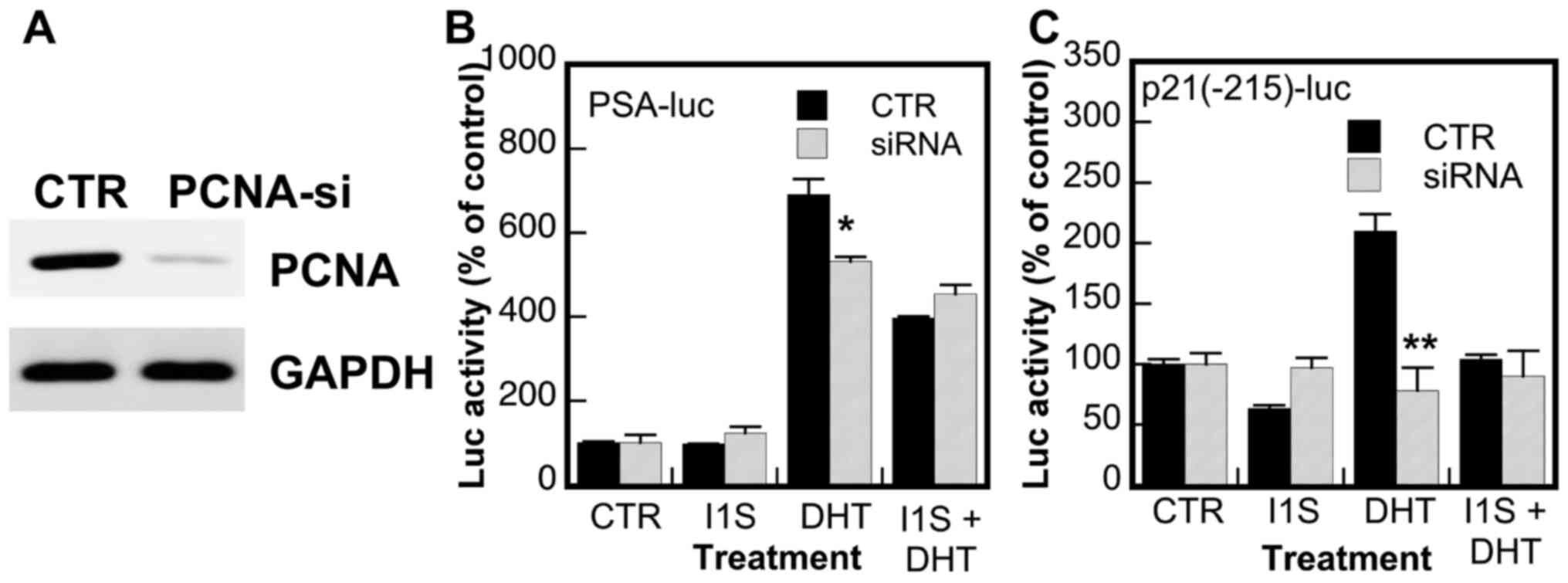
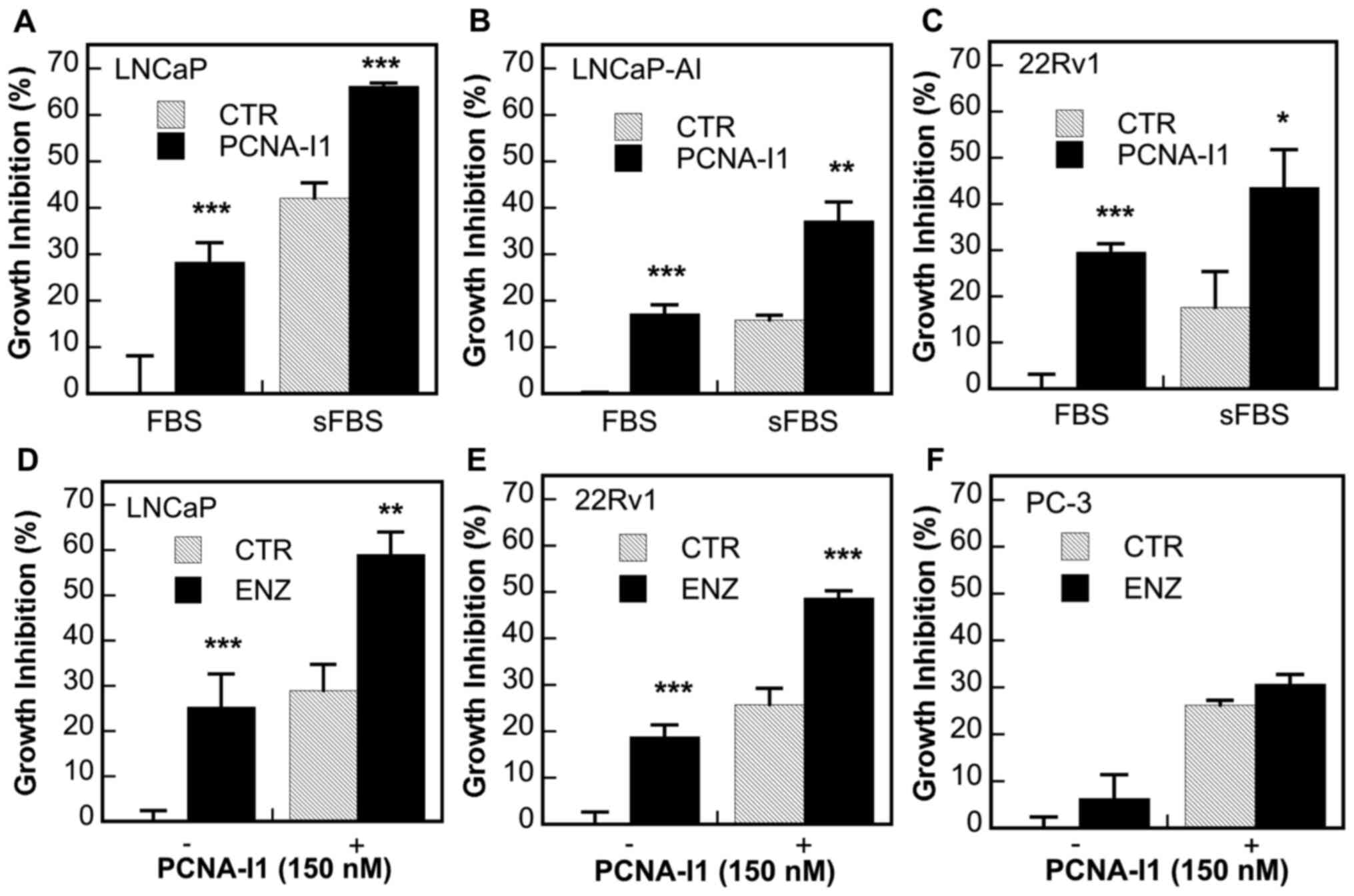
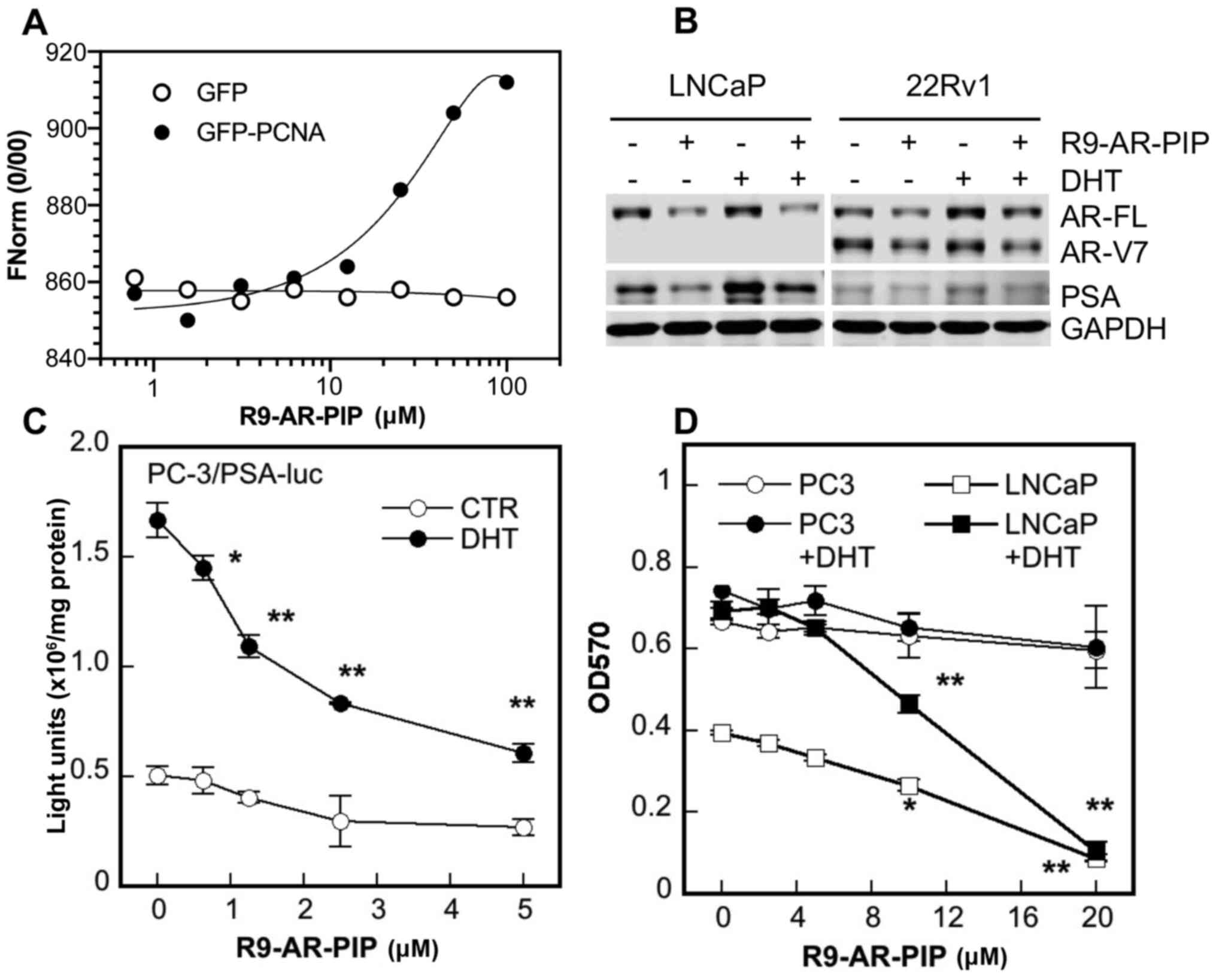
Androgen receptor (AR) and/or its constitutively active splicing variants (AR‑Vs), such as AR‑V7 and ARv567es, is required for prostate cancer cell growth and survival, and cancer progression. Proliferating cell nuclear antigen (PCNA) is preferentially overexpressed in all cancers and executes its functions through interaction with numerous partner proteins. The aim of the present study was to investigate the potential role of PCNA in the regulation of AR activity. An identical consensus sequence of the PCNA‑interacting protein‑box (PIP‑box) was identified at the N‑terminus of human, mouse and rat AR proteins. It was found that PCNA complexes with the full‑length AR (AR‑FL) and AR‑V7, which can be attenuated by the small molecule PIP‑box inhibitor, T2AA. PCNA also complexes with ARv567es and recombinant AR protein. The PCNA inhibitors, PCNA‑I1S and T2AA, inhibited AR transcriptional activity and the expression of AR target genes in LNCaP‑AI and 22Rv1 cells, but not in AR‑negative PC‑3 cells. The knockdown of PCNA expression reduced dihydrotestosterone‑stimulated AR transcriptional activity and abolished the inhibitory effect of PCNA‑I1S on AR activity. The PCNA inhibitor, PCNA‑I1, exerted additive growth inhibitory effects with androgen deprivation and enzalutamide in cells expressing AR‑FL or AR‑FL/AR‑V7, but not in AR‑negative PC‑3 cells. Finally, R9‑AR‑PIP, a small peptide mimicking AR PIP‑box, was found to bind to GFP‑PCNA at Kd of 2.73 µM and inhibit the expression of AR target genes, AR transcriptional activity and the growth of AR‑expressing cells. On the whole, these data strongly suggest that AR is a PCNA partner protein and interacts with PCNA via the PIP‑box and that targeting the PCNA‑AR interaction may represent an innovative and selective therapeutic strategy against prostate cancer, particularly castration‑resistant prostate cancers overexpressing constitutively active AR‑Vs.
View Figures

Figure 1

Figure 2

Figure 3

Figure 4

Figure 5

Figure 6

Figure 7

View References

1 

Tsai MJ and O'Malley BW: Molecular mechanisms of action of steroid/thyroid receptor superfamily members. Ann Rev Biochem. 63:451–486. 1994. View Article : Google Scholar : PubMed/NCBI

2 

Mangelsdorf DJ and Evans RM: The RXR heterodimers and orphan receptors. Cell. 83:841–850. 1995. View Article : Google Scholar : PubMed/NCBI

3 

Biron E and Bedard F: Recent progress in the development of protein-protein interaction inhibitors targeting androgen receptor-coactivator binding in prostate cancer. J Steroid Biochem Mol Biol. 161:36–44. 2016. View Article : Google Scholar

4 

Dehm SM and Tindall DJ: Alternatively spliced androgen receptor variants. Endocr Relat Cancer. 18:R183–R196. 2011. View Article : Google Scholar : PubMed/NCBI

5 

Lu J, Van der Steen T and Tindall DJ: Are androgen receptor variants a substitute for the full-length receptor? Nat Rev Urol. 12:137–144. 2015. View Article : Google Scholar : PubMed/NCBI

6 

Yu Z, Chen S, Sowalsky AG, Voznesensky OS, Mostaghel EA, Nelson PS, Cai C and Balk SP: Rapid induction of androgen receptor splice variants by androgen deprivation in prostate cancer. Clin Cancer Res. 20:1590–1600. 2014. View Article : Google Scholar : PubMed/NCBI

7 

Antonarakis ES, Lu C, Wang H, Luber B, Nakazawa M, Roeser JC, Chen Y, Mohammad TA, Chen Y, Fedor HL, et al: AR-V7 and resistance to enzalutamide and abiraterone in prostate cancer. N Engl J Med. 371:1028–1038. 2014. View Article : Google Scholar : PubMed/NCBI

8 

Yin Y, Li R, Xu K, Ding S, Li J, Baek G, Ramanand SG, Ding S, Liu Z, Gao Y, et al: Androgen receptor variants mediate DNA repair after prostate cancer irradiation. Cancer Res. 77:4745–4754. 2017. View Article : Google Scholar : PubMed/NCBI

9 

Xu D, Zhan Y, Qi Y, Cao B, Bai S, Xu W, Gambhir SS, Lee P, Sartor O, Flemington EK, et al: Androgen receptor splice variants dimerize to transactivate target genes. Cancer Res. 75:3663–3671. 2015. View Article : Google Scholar : PubMed/NCBI

10 

Hu R, Lu C, Mostaghel EA, Yegnasubramanian S, Gurel M, Tannahill C, Edwards J, Isaacs WB, Nelson PS, Bluemn E, et al: Distinct transcriptional programs mediated by the ligand-dependent full-length androgen receptor and its splice variants in castration-resistant prostate cancer. Cancer Res. 72:3457–3462. 2012. View Article : Google Scholar : PubMed/NCBI

11 

Wach S, Taubert H and Cronauer M: Role of androgen receptor splice variants, their clinical relevance and treatment options. World J Urol. 38:647–656. 2020. View Article : Google Scholar

12 

Guo Z, Yang X, Sun F, Jiang R, Linn DE, Chen H, Chen H, Kong X, Melamed J, Tepper CG, et al: A novel androgen receptor splice variant is up-regulated during prostate cancer progression and promotes androgen depletion-resistant growth. Cancer Res. 69:2305–2313. 2009. View Article : Google Scholar : PubMed/NCBI

13 

Sharp A, Coleman I, Yuan W, Sprenger C, Dolling D, Rodrigues DN, Russo JW, Figueiredo I, Bertan C, Seed G, et al: Androgen receptor splice variant-7 expression emerges with castration resistance in prostate cancer. J Clin Invest. 129:192–208. 2019. View Article : Google Scholar :

14 

Honda M, Kimura T, Kamata Y, Tashiro K, Kimura S, Koike Y, Sato S, Yorozu T, Furusato B, Takahashi H, et al: Differential expression of androgen receptor variants in hormone-sensitive prostate cancer xenografts, castration-resistant sublines, and patient specimens according to the treatment sequence. Prostate. 79:1043–1052. 2019. View Article : Google Scholar : PubMed/NCBI

15 

Paschalis A, Sharp A, Welti JC, Neeb A, Raj GV, Luo J, Plymate SR and de Bono JS: Alternative splicing in prostate cancer. Nature Rev Clin Oncol. 15:663–675. 2018. View Article : Google Scholar

16 

Scher HI, Graf RP, Schreiber NA, Jayaram A, Winquist E, McLaughlin B, Lu D, Fleisher M, Orr S, Lowes L, et al: Assessment of the validity of nuclear-localized androgen receptor splice variant 7 in circulating tumor cells as a predictive biomarker for castration-resistant prostate cancer. JAMA Oncol. 4:1179–1186. 2018. View Article : Google Scholar : PubMed/NCBI

17 

Sun S, Sprenger CC, Vessella RL, Haugk K, Soriano K, Mostaghel EA, Page ST, Coleman IM, Nguyen HM, Sun H, et al: Castration resistance in human prostate cancer is conferred by a frequently occurring androgen receptor splice variant. J Clin Invest. 120:2715–2730. 2010. View Article : Google Scholar : PubMed/NCBI

18 

Van Etten JL, Nyquist M, Li Y, Yang R, Ho Y, Johnson R, Ondigi O, Voytas DF, Henzler C and Dehm SM: Targeting a single alternative polyadenylation site coordinately blocks expression of androgen receptor mRNA splice variants in prostate cancer. Cancer Res. 77:5228–5235. 2017. View Article : Google Scholar : PubMed/NCBI

19 

Yang YC, Banuelos CA, Mawji NR, Wang J, Kato M, Haile S, McEwan IJ, Plymate S and Sadar MD: Targeting androgen receptor activation Function-1 with EPI to overcome resistance mechanisms in castration-resistant prostate cancer. Clin Cancer Res. 22:4466–4477. 2016. View Article : Google Scholar : PubMed/NCBI

20 

Liu C, Lou W, Zhu Y, Nadiminty N, Schwartz CT, Evans CP and Gao AC: Niclosamide inhibits androgen receptor variants expression and overcomes enzalutamide resistance in castration-resistant prostate cancer. Clin Cancer Res. 20:3198–3210. 2014. View Article : Google Scholar : PubMed/NCBI

21 

Moldovan GL, Pfander B and Jentsch S: PCNA, the maestro of the replication fork. Cell. 129:665–679. 2007. View Article : Google Scholar : PubMed/NCBI

22 

Stoimenov I and Helleday T: PCNA on the crossroad of cancer. Biochem Soc Transact. 37:605–613. 2009. View Article : Google Scholar

23 

Maga G and Hubscher U: Proliferating cell nuclear antigen (PCNA): A dancer with many partners. J Cell Sci. 116:3051–3060. 2003. View Article : Google Scholar : PubMed/NCBI

24 

Gilljam KM, Feyzi E, Aas PA, Sousa MM, Muller R, Vagbo CB, Catterall TC, Liabakk NB, Slupphaug G, Drabløs F, et al: Identification of a novel, widespread, and functionally important PCNA-binding motif. J Cell Biol. 186:645–654. 2009. View Article : Google Scholar : PubMed/NCBI

25 

Gulbis JM, Kelman Z, Hurwitz J, O'Donnell M and Kuriyan J: Structure of the C-terminal region of p21(WAF1/CIP1) complexed with human PCNA. Cell. 87:297–306. 1996. View Article : Google Scholar : PubMed/NCBI

26 

Lu S, Lee J, Revelo M, Wang X and Dong Z: Smad3 is overexpressed in advanced human prostate cancer and necessary for progressive growth of prostate cancer cells in nude mice. Clin Cancer Res. 13:5692–5702. 2007. View Article : Google Scholar : PubMed/NCBI

27 

Spires SE, Banks ER, Davey DD, Jennings CD, Wood DP Jr and Cibull ML: Proliferating cell nuclear antigen in prostatic adenocarcinoma: Correlation with established prognostic indicators. Urology. 43:660–666. 1994. View Article : Google Scholar : PubMed/NCBI

28 

Kallakury BV, Sheehan CE, Rhee SJ, Fisher HA, Kaufman RP Jr, Rifkin MD and Ross JS: The prognostic significance of proliferation-associated nucleolar protein p120 expression in prostate adenocarcinoma: A comparison with cyclins A and B1, Ki-67, proliferating cell nuclear antigen, and p34cdc2. Cancer. 85:1569–1576. 1999. View Article : Google Scholar : PubMed/NCBI

29 

Muller R, Misund K, Holien T, Bachke S, Gilljam KM, Vatsveen TK, Ro TB, Bellacchio E, Sundan A and Otterlei M: Targeting proliferating cell nuclear antigen and its protein interactions induces apoptosis in multiple myeloma cells. PLoS One. 8:e704302013. View Article : Google Scholar : PubMed/NCBI

30 

Smith SJ, Gu L, Phipps EA, Dobrolecki L, Mabrey KS, Gulley P, Dillehay KL, Dong Z, Fields GB, Chen Y, et al: A peptide mimicking a region in proliferating cell nuclear antigen specific to key protein interactions is cytotoxic to breast cancer. Mol Pharmacol. 87:263–276. 2015. View Article : Google Scholar :

31 

Punchihewa C, Inoue A, Hishiki A, Fujikawa Y, Connelly M, Evison B, Shao Y, Heath R, Kuraoka I, Rodrigues P, et al: Identification of a small molecule PCNA inhibitor that disrupts interactions with PIP-Box proteins and inhibits DNA replication. J Biol Chem. 287:14289–14300. 2012. View Article : Google Scholar : PubMed/NCBI

32 

Gu L, Lingeman R, Yakushijin F, Sun E, Cui Q, Chao J, Hu W, Li H, Hickey RJ, Stark JM, et al: The anticancer activity of a First-in-class Small-molecule targeting PCNA. Clin Cancer Res. 24:6053–6065. 2018. View Article : Google Scholar : PubMed/NCBI

33 

Lu S and Dong Z: Additive effects of a small molecular PCNA inhibitor PCNA-I1S and DNA damaging agents on growth inhibition and DNA damage in prostate and lung cancer cells. PLoS One. 14:e02238942019. View Article : Google Scholar

34 

Dillehay KL, Seibel WL, Zhao D, Lu S and Dong Z: Target validation and structure-activity analysis of a series of novel PCNA inhibitors. Pharmacol Res Perspect. 3:e001152015. View Article : Google Scholar : PubMed/NCBI

35 

Dillehay KL, Lu S and Dong Z: Antitumor effects of a novel small molecule targeting PCNA chromatin association in prostate cancer. Mol Cancer Ther. 13:2817–2826. 2014. View Article : Google Scholar : PubMed/NCBI

36 

Tan Z, Wortman M, Dillehay KL, Seibel WL, Evelyn CR, Smith SJ, Malkas LH, Zheng Y, Lu S and Dong Z: Small-molecule targeting of proliferating cell nuclear antigen chromatin association inhibits tumor cell growth. Mol Pharmacol. 81:811–819. 2012. View Article : Google Scholar : PubMed/NCBI

37 

Murthy S, Wu M, Bai VU, Hou Z, Menon M, Barrack ER, Kim SH and Reddy GP: Role of androgen receptor in progression of LNCaP prostate cancer cells from G1 to S phase. PLoS One. 8:e566922013. View Article : Google Scholar : PubMed/NCBI

38 

Lu S, Tsai SY and Tsai MJ: Melecular mechanisms of androgen-independent growth of human prostate cancer LNCaP-AI cells. Endocrinology. 140:5054–5059. 1999. View Article : Google Scholar : PubMed/NCBI

39 

Nyquist MD, Li Y, Hwang TH, Manlove LS, Vessella RL, Silverstein KA, Voytas DF and Dehm SM: TALEN-engineered AR gene rearrangements reveal endocrine uncoupling of androgen receptor in prostate cancer. Proc Natl Acad Sci USA. 110:17492–17497. 2013. View Article : Google Scholar : PubMed/NCBI

40 

Dong Z, Liu Y, Scott KF, Levin L, Gaitonde K, Bracken RB, Burk B, Zhai Q, Wang J, Oleksowicz L and Lu S: Secretory phospholipase A2-IIa is involved in prostate cancer progression and may potentially serve as a biomarker for Prostate Cancer. Carcinogenesis. 31:1948–1955. 2010. View Article : Google Scholar : PubMed/NCBI

41 

Lu S and Dong Z: Overexpression of secretory phospholipase A2-IIa supports cancer stem cell phenotype via HER/ERBB-elicited signaling in lung and prostate cancer cells. Int J Oncol. 50:2113–2122. 2017. View Article : Google Scholar : PubMed/NCBI

42 

Lu S, Tan Z, Wortman M, Lu S and Dong Z: Regulation of heat shock protein 70-1 expression by androgen receptor and its signaling in human prostate cancer cells. Int J Oncol. 36:459–467. 2010.PubMed/NCBI

43 

Simon P: Q-Gene: Processing quantitative real-time RT-PCR data. Bioinformatics. 19:1439–1440. 2003. View Article : Google Scholar : PubMed/NCBI

44 

Dong ZY, Ward NE, Fan D, Gupta KP and O'Brian CA: In vitro model for intrinsic drug resistance: Effects of protein kinase C activators on the chemosensitivity of cultured human colon cancer cells. Mol Pharmacol. 39:563–569. 1991.PubMed/NCBI

45 

Khavrutskii L, Yeh J, Timofeeva O, Tarasov SG, Pritt S, Stefanisko K and Tarasova N: Protein purification-free method of binding affinity determination by microscale thermophoresis. J Vis Exp. 50541:2013.

46 

Leonhardt H, Rahn HP, Weinzierl P, Sporbert A, Cremer T, Zink D and Cardoso MC: Dynamics of DNA replication factories in living cells. J Cell Biol. 149:271–280. 2000. View Article : Google Scholar : PubMed/NCBI

47 

Slade D: Maneuvers on PCNA Rings during DNA replication and repair. Genes (Basel). 9:4162018. View Article : Google Scholar

48 

Chen Z, Wu D, Thomas-Ahner JM, Lu C, Zhao P, Zhang Q, Geraghty C, Yan PS, Hankey W, Sunkel B, et al: Diverse AR-V7 cistromes in castration-resistant prostate cancer are governed by HoxB13. Proc Natl Acad Sci USA. 115:6810–6815. 2018. View Article : Google Scholar : PubMed/NCBI

49 

Lu S, Liu M, Epner DE, Tsai SY and Tsai MJ: Androgen regulation of the cyclin-dependent kinase inhibitor p21 gene through an androgen response element in the proximal promoter. Mol Endocrinol. 13:376–384. 1999. View Article : Google Scholar : PubMed/NCBI

50 

Dai JL, Maiorino CA, Gkonos PJ and Burnstein KL: Androgenic up-regulation of androgen receptor cDNA expression in androgen-independent prostate cancer cells. Steroids. 61:531–539. 1996. View Article : Google Scholar : PubMed/NCBI

51 

Manin M, Baron S, Goossens K, Beaudoin C, Jean C, Veyssiere G, Verhoeven G and Morel L: Androgen receptor expression is regulated by the phosphoinositide 3-kinase/Akt pathway in normal and tumoral epithelial cells. Biochem J. 366:729–736. 2002. View Article : Google Scholar : PubMed/NCBI

52 

Jia L and Coetzee GA: Androgen receptor-dependent PSA expression in androgen-independent prostate cancer cells does not involve androgen receptor occupancy of the PSA locus. Cancer Res. 65:8003–8008. 2005. View Article : Google Scholar : PubMed/NCBI

53 

Krishna TS, Kong XP, Gary S, Burgers PM and Kuriyan J: Crystal structure of the eukaryotic DNA polymerase processivity factor PCNA. Cell. 79:1233–1243. 1994. View Article : Google Scholar : PubMed/NCBI

54 

Kelman Z and O'Donnell M: Structural and functional similarities of prokaryotic and eukaryotic DNA polymerase sliding clamps. Nucleic Acids Res. 23:3613–3620. 1995. View Article : Google Scholar : PubMed/NCBI

55 

Koryakina Y, Ta HQ and Gioeli D: Androgen receptor phosphorylation: Biological context and functional consequences. Endocr Relat Cancer. 21:T131–T145. 2014. View Article : Google Scholar : PubMed/NCBI

56 

Dong Z, Liu Y and Lu S, Wang A, Lee K, Wang LH, Revelo M and Lu S: Vav3 oncogene is overexpressed and regulates cell growth and androgen receptor activity in human prostate cancer. Mol Endocrinol. 20:2315–2325. 2006. View Article : Google Scholar : PubMed/NCBI

Related Articles

  • Abstract
  • View
  • Download
  • Twitter
Copy and paste a formatted citation
Spandidos Publications style
Lu S and Dong Z: Proliferating cell nuclear antigen directly interacts with androgen receptor and enhances androgen receptor‑mediated signaling. Int J Oncol 59: 41, 2021.
APA
Lu, S., & Dong, Z. (2021). Proliferating cell nuclear antigen directly interacts with androgen receptor and enhances androgen receptor‑mediated signaling. International Journal of Oncology, 59, 41. https://doi.org/10.3892/ijo.2021.5221
MLA
Lu, S., Dong, Z."Proliferating cell nuclear antigen directly interacts with androgen receptor and enhances androgen receptor‑mediated signaling". International Journal of Oncology 59.1 (2021): 41.
Chicago
Lu, S., Dong, Z."Proliferating cell nuclear antigen directly interacts with androgen receptor and enhances androgen receptor‑mediated signaling". International Journal of Oncology 59, no. 1 (2021): 41. https://doi.org/10.3892/ijo.2021.5221
Copy and paste a formatted citation
x
Spandidos Publications style
Lu S and Dong Z: Proliferating cell nuclear antigen directly interacts with androgen receptor and enhances androgen receptor‑mediated signaling. Int J Oncol 59: 41, 2021.
APA
Lu, S., & Dong, Z. (2021). Proliferating cell nuclear antigen directly interacts with androgen receptor and enhances androgen receptor‑mediated signaling. International Journal of Oncology, 59, 41. https://doi.org/10.3892/ijo.2021.5221
MLA
Lu, S., Dong, Z."Proliferating cell nuclear antigen directly interacts with androgen receptor and enhances androgen receptor‑mediated signaling". International Journal of Oncology 59.1 (2021): 41.
Chicago
Lu, S., Dong, Z."Proliferating cell nuclear antigen directly interacts with androgen receptor and enhances androgen receptor‑mediated signaling". International Journal of Oncology 59, no. 1 (2021): 41. https://doi.org/10.3892/ijo.2021.5221
Follow us
  • Twitter
  • LinkedIn
  • Facebook
About
  • Spandidos Publications
  • Careers
  • Cookie Policy
  • Privacy Policy
How can we help?
  • Help
  • Live Chat
  • Contact
  • Email to our Support Team