|
1
|
Bray F, Ferlay J, Soerjomataram I, Siegel
RL, Torre LA and Jemal A: Global cancer statistics 2018: GLOBOCAN
estimates of incidence and mortality worldwide for 36 cancers in
185 countries. CA Cancer J Clin. 68:394–424. 2018. View Article : Google Scholar : PubMed/NCBI
|
|
2
|
Malhotra GK, Yanala U, Ravipati A, Follet
M, Vijayakumar M and Are C: Global trends in esophageal cancer. J
Surg Oncol. 115:564–579. 2017. View Article : Google Scholar : PubMed/NCBI
|
|
3
|
Huang FL and Yu SJ: Esophageal cancer:
Risk factors, genetic association, and treatment. Asian J Surg.
41:210–215. 2018. View Article : Google Scholar
|
|
4
|
Arnold M, Ferlay J, van Berge Henegouwen
MI and Soerjomataram I: Global burden of oesophageal and gastric
cancer by histology and subsite in 2018. Gut. 69:1564–1571. 2020.
View Article : Google Scholar : PubMed/NCBI
|
|
5
|
Maret-Ouda J, Markar SR and Lagergren J:
Gastroesophageal reflux disease: A review. JAMA. 324:2536–2547.
2020. View Article : Google Scholar : PubMed/NCBI
|
|
6
|
Schlottmann F, Molena D and Patti MG:
Gastroesophageal reflux and Barrett's esophagus: A pathway to
esophageal adenocarcinoma. Updates Surg. 70:339–342. 2018.
View Article : Google Scholar : PubMed/NCBI
|
|
7
|
Thrift AP, Shaheen NJ, Gammon MD,
Bernstein L, Reid BJ, Onstad L, Risch HA, Liu G, Bird NC, Wu AH, et
al: Obesity and risk of esophageal adenocarcinoma and Barrett's
esophagus: A Mendelian randomization study. J Natl Cancer Inst.
106:dju2522014. View Article : Google Scholar : PubMed/NCBI
|
|
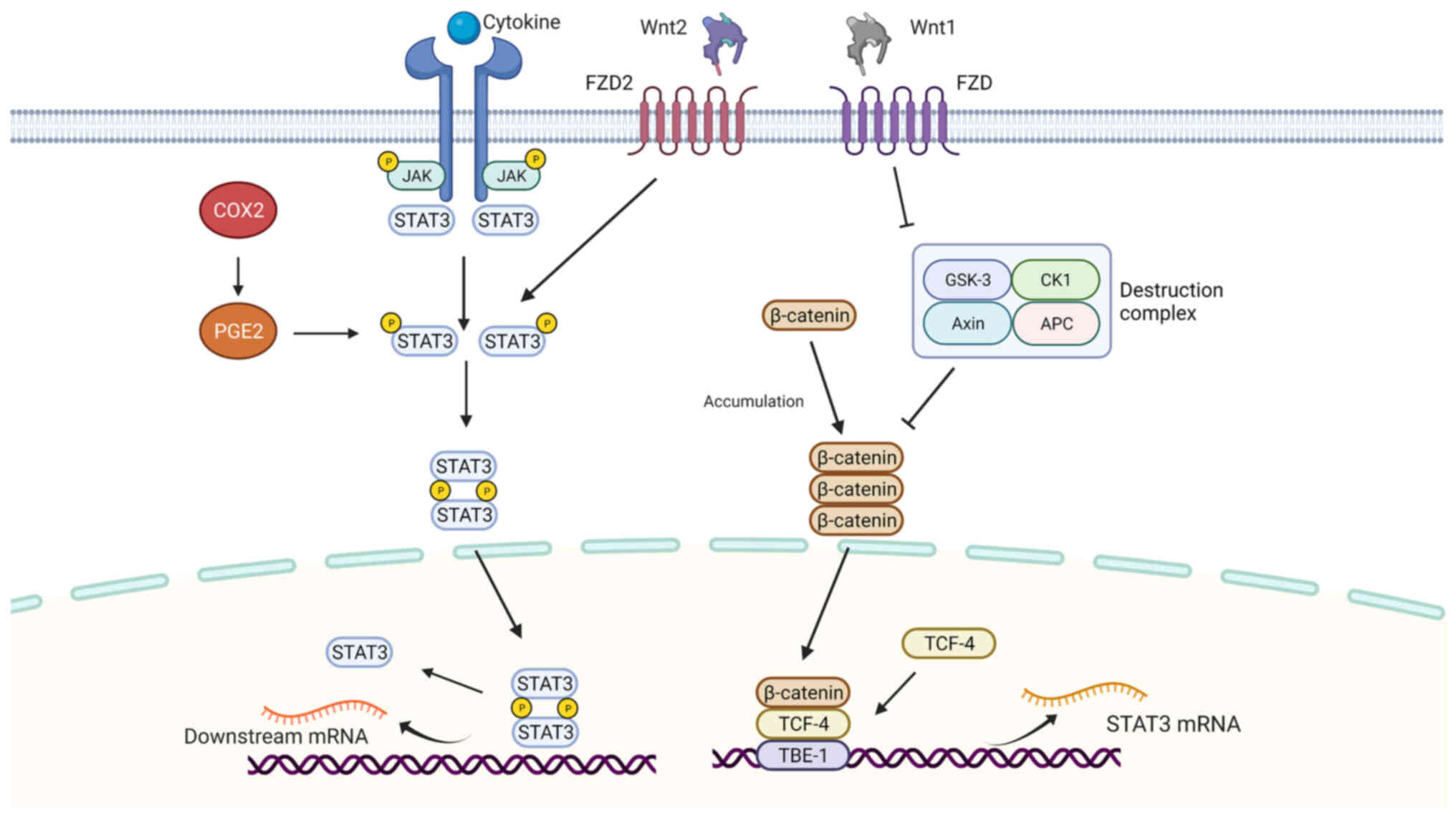
8
|
Oze I, Matsuo K, Ito H, Wakai K, Nagata C,
Mizoue T, Tanaka K, Tsuji I, Tamakoshi A, Sasazuki S, et al:
Cigarette smoking and esophageal cancer risk: An evaluation based
on a systematic review of epidemiologic evidence among the Japanese
population. Jpn J Clin Oncol. 42:63–73. 2012. View Article : Google Scholar
|
|
9
|
Katada C, Yokoyama T, Yano T, Kaneko K,
Oda I, Shimizu Y, Doyama H, Koike T, Takizawa K, Hirao M, et al:
Alcohol consumption and multiple dysplastic lesions increase risk
of squamous cell carcinoma in the esophagus, head, and neck.
Gastroenterology. 151:860–869.e7. 2016. View Article : Google Scholar
|
|
10
|
Mönig S, Chevallay M, Niclauss N, Zilli T,
Fang W, Bansal A and Hoeppner J: Early esophageal cancer: The
significance of surgery, endoscopy, and chemoradiation. Ann N Y
Acad Sci. 1434:115–123. 2018. View Article : Google Scholar : PubMed/NCBI
|
|
11
|
Horn SR, Stoltzfus KC, Lehrer EJ, Dawson
LA, Tchelebi L, Gusani NJ, Sharma NK, Chen H, Trifiletti DM and
Zaorsky NG: Epidemiology of liver metastases. Cancer Epidemiol.
67:1017602020. View Article : Google Scholar : PubMed/NCBI
|
|
12
|
Kobayashi N, Kohno T, Haruta S, Fujimori
S, Shinohara H, Ueno M and Udagawa H: Pulmonary metastasectomy
secondary to esophageal carcinoma: Long-term survival and
prognostic factors. Ann Surg Oncol. 21(Suppl 3): S365–S369. 2014.
View Article : Google Scholar : PubMed/NCBI
|
|
13
|
Zhang J, Ma W, Wu H, Wang J, Lin Y, Wang X
and Zhang C: Analysis of homogeneous and heterogeneous factors for
bone metastasis in esophageal cancer. Med Sci Monit. 25:9416–9425.
2019. View Article : Google Scholar : PubMed/NCBI
|
|
14
|
Carballo GB, Honorato JR, de Lopes GPF and
Spohr TCLSE: A highlight on Sonic hedgehog pathway. Cell Commun
Signal. 16:112018. View Article : Google Scholar : PubMed/NCBI
|
|
15
|
Vaillant C and Monard D: SHH pathway and
cerebellar development. Cerebellum. 8:291–301. 2009. View Article : Google Scholar : PubMed/NCBI
|
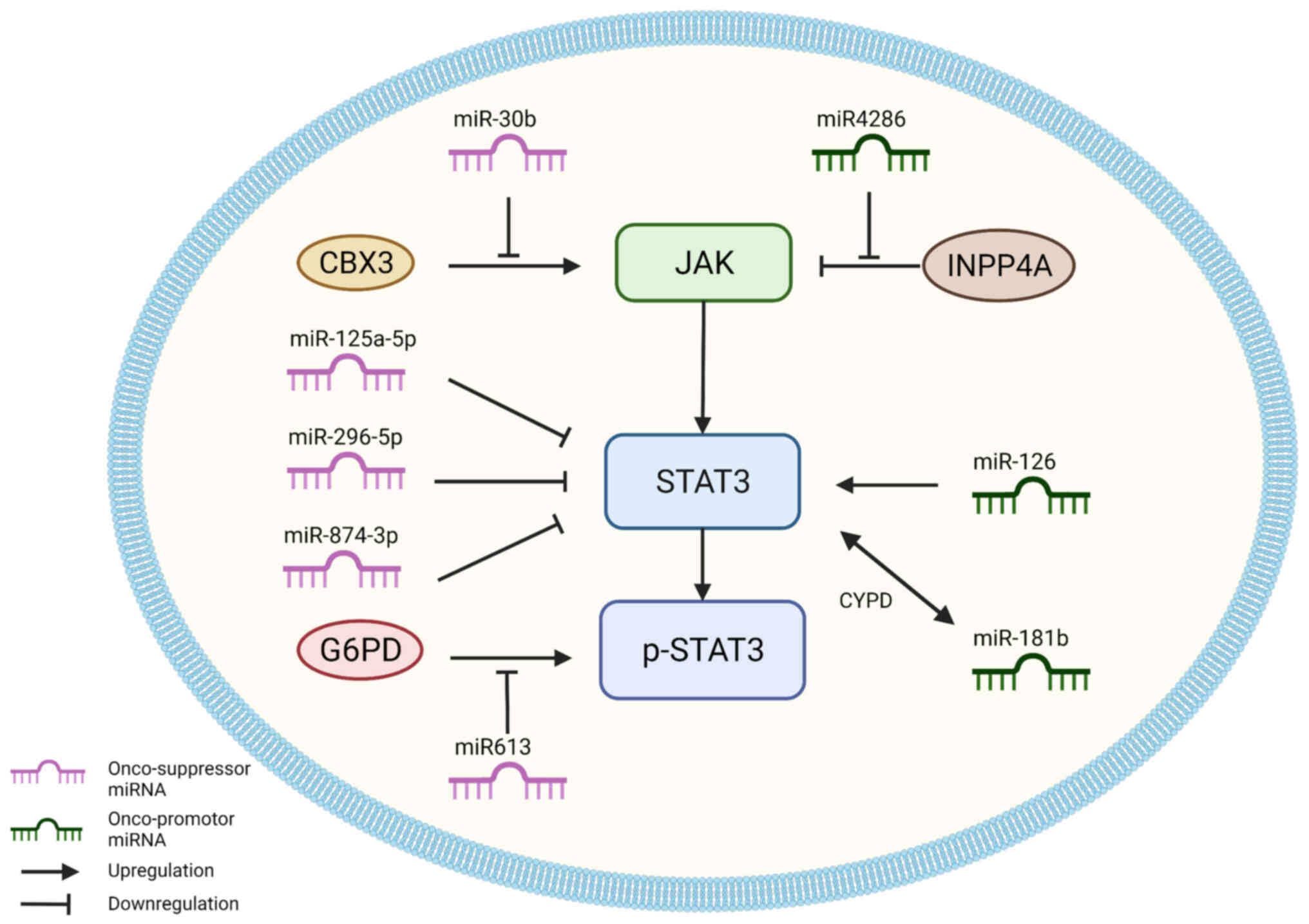
|
16
|
Skoda AM, Simovic D, Karin V, Kardum V,
Vranic S and Serman L: The role of the hedgehog signaling pathway
in cancer: A comprehensive review. Bosn J Basic Med Sci. 18:8–20.
2018. View Article : Google Scholar :
|
|
17
|
Wang L, Jin JQ, Zhou Y, Tian Z, Jablons DM
and He B: Gli is activated and promotes epithelial-mesenchymal
transition in human esophageal adenocarcinoma. Oncotarget.
9:853–865. 2017. View Article : Google Scholar
|
|
18
|
Najafi M, Abbaszadegan MR, Rad A, Dastpak
M, Boroumand-Noughabi S and Forghanifard MM: Crosstalk between SHH
and stemness state signaling pathways in esophageal squamous cell
carcinoma. J Cell Commun Signal. 11:147–153. 2017. View Article : Google Scholar :
|
|
19
|
Zhan T, Rindtorff N and Boutros M: Wnt
signaling in cancer. Oncogene. 36:1461–1473. 2017. View Article : Google Scholar :
|
|
20
|
Moghbeli M, Abbaszadegan MR, Golmakani E
and Forghanifard MM: Correlation of Wnt and NOTCH pathways in
esophageal squamous cell carcinoma. J Cell Commun Signal.
10:129–135. 2016. View Article : Google Scholar : PubMed/NCBI
|
|
21
|
Zhao D, Wang B and Chen H: RAB11A mediates
the proliferation and motility of esophageal cancer cells via WNT
signaling pathway. Acta Biochim Pol. 67:531–538. 2020.PubMed/NCBI
|
|
22
|
Feng AL, Han X, Meng X, Chen Z, Li Q, Shu
W, Dai H, Zhu J and Yang Z: PRDX2 plays an oncogenic role in
esophageal squamous cell carcinoma via Wnt/β-catenin and AKT
pathways. Clin Transl Oncol. 22:1838–1848. 2020. View Article : Google Scholar : PubMed/NCBI
|
|
23
|
Wang X and Wang X: Long non-coding RNA
colon cancer-associated transcript 2 may promote esophageal cancer
growth and metastasis by regulating the Wnt signaling pathway.
Oncol Lett. 18:1745–1754. 2019.PubMed/NCBI
|
|
24
|
Li Y, Li Y and Chen X: NOTCH and
esophageal squamous cell carcinoma. Adv Exp Med Biol. 1287:59–68.
2021. View Article : Google Scholar :
|
|
25
|
Natsuizaka M, Whelan KA, Kagawa S, Tanaka
K, Giroux V, Chandramouleeswaran PM, Long A, Sahu V, Darling DS,
Que J, et al: Interplay between Notch1 and Notch3 promotes EMT and
tumor initiation in squamous cell carcinoma. Nat Commun.
8:17582017. View Article : Google Scholar : PubMed/NCBI
|
|
26
|
Zhang T, Kee WH, Seow KT, Fung W and Cao
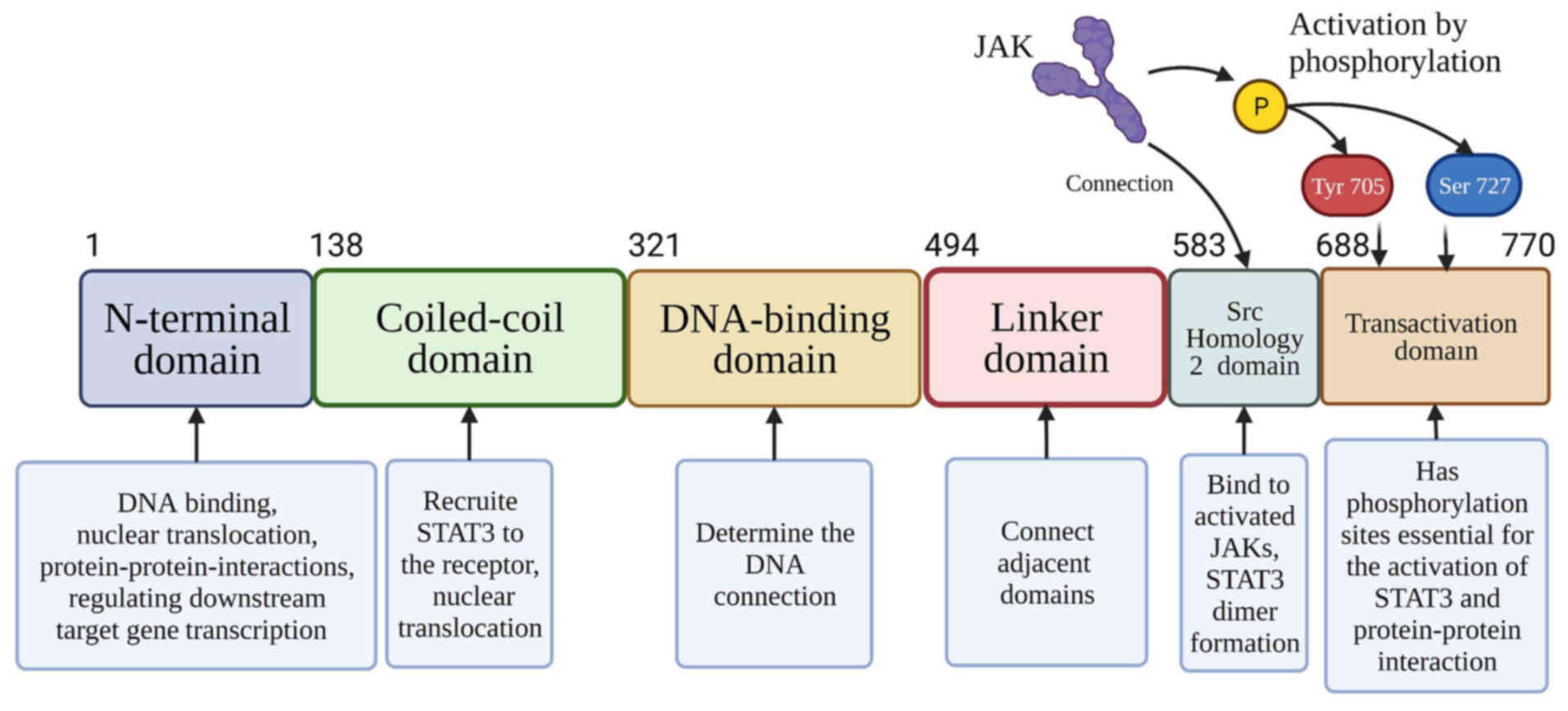
X: The coiled-coil domain of Stat3 is essential for its SH2
domain-mediated receptor binding and subsequent activation induced
by epidermal growth factor and interleukin-6. Mol Cell Biol.
20:7132–7139. 2000. View Article : Google Scholar : PubMed/NCBI
|
|
27
|
Ma J, Zhang T, Novotny-Diermayr V, Tan AL
and Cao X: A novel sequence in the coiled-coil domain of Stat3
essential for its nuclear translocation. J Biol Chem.
278:29252–29260. 2003. View Article : Google Scholar : PubMed/NCBI
|
|
28
|
Hu T, Yeh JE, Pinello L, Jacob J,
Chakravarthy S, Yuan GC, Chopra R and Frank DA: Impact of the
N-terminal domain of STAT3 in STAT3-dependent transcriptional
activity. Mol Cell Biol. 35:3284–3300. 2015. View Article : Google Scholar : PubMed/NCBI
|
|
29
|
Verhoeven Y, Tilborghs S, Jacobs J, De
Waele J, Quatannens D, Deben C, Prenen H, Pauwels P, Trinh XB,
Wouters A, et al: The potential and controversy of targeting STAT
family members in cancer. Semin Cancer Biol. 60:41–56. 2020.
View Article : Google Scholar
|
|
30
|
Yu H, Lee H, Herrmann A, Buettner R and
Jove R: Revisiting STAT3 signalling in cancer: New and unexpected
biological functions. Nat Rev Cancer. 14:736–746. 2014. View Article : Google Scholar : PubMed/NCBI
|
|
31
|
Guanizo AC, Fernando CD, Garama DJ and
Gough DJ: STAT3: A multifaceted oncoprotein. Growth Factors.
36:1–14. 2018. View Article : Google Scholar : PubMed/NCBI
|
|
32
|
Lim CP and Cao X: Structure, function, and
regulation of STAT proteins. Mol Biosyst. 2:536–550. 2006.
View Article : Google Scholar
|
|
33
|
Sgrignani J, Garofalo M, Matkovic M,
Merulla J, Catapano CV and Cavalli A: Structural biology of STAT3
and Its implications for anticancer therapies development. Int J
Mol Sci. 19:15912018. View Article : Google Scholar :
|
|
34
|
Hevehan DL, Miller WM and Papoutsakis ET:
Differential expression and phosphorylation of distinct STAT3
proteins during granulocytic differentiation. Blood. 99:1627–1637.
2002. View Article : Google Scholar : PubMed/NCBI
|
|
35
|
Kato T, Sakamoto E, Kutsuna H, Kimura-Eto
A, Hato F and Kitagawa S: Proteolytic conversion of STAT3alpha to
STAT3gamma in human neutrophils: role of granule-derived serine
proteases. J Biol Chem. 279:31076–31080. 2004. View Article : Google Scholar : PubMed/NCBI
|
|
36
|
Johnson DE, O'Keefe RA and Grandis JR:
Targeting the IL-6/JAK/STAT3 signalling axis in cancer. Nat Rev
Clin Oncol. 15:234–248. 2018. View Article : Google Scholar : PubMed/NCBI
|
|
37
|
Chen M, Chen P, Lu MS, Lin PY, Chen W and
Lee K: IL-6 expression predicts treatment response and outcome in
squamous cell carcinoma of the esophagus. Mol Cancer. 12:262013.
View Article : Google Scholar : PubMed/NCBI
|
|
38
|
Karakasheva TA, Lin EW, Tang Q, Qiao E,
Waldron TJ, Soni M, Klein-Szanto AJ, Sahu V, Basu D, Ohashi S, et
al: IL-6 mediates cross-talk between tumor cells and activated
fibroblasts in the tumor microenvironment. Cancer Res.
78:4957–4970. 2018. View Article : Google Scholar : PubMed/NCBI
|
|
39
|
Somasundar P, Yu AK, Vona-Davis L and
McFadden DW: Differential effects of leptin on cancer in vitro. J
Surg Res. 113:50–55. 2003. View Article : Google Scholar : PubMed/NCBI
|
|
40
|
Beales ILP, Garcia-Morales C, Ogunwobi OO
and Mutungi G: Adiponectin inhibits leptin-induced oncogenic
signalling in oesophageal cancer cells by activation of PTP1B. Mol
Cell Endocrinol. 382:150–158. 2014. View Article : Google Scholar
|
|
41
|
Murata T, Asanuma K, Ara N, Iijima K,
Hatta W, Hamada S, Asano N, Koike T, Imatani A, Masamune A and
Shimosegawa T: Leptin aggravates reflux esophagitis by increasing
tissue levels of macrophage migration inhibitory factor in rats.
Tohoku J Exp Med. 245:45–53. 2018. View Article : Google Scholar : PubMed/NCBI
|
|
42
|
Andl CD, Mizushima T, Oyama K, Bowser M,
Nakagawa H and Rustgi AK: EGFR-induced cell migration is mediated
predominantly by the JAK-STAT pathway in primary esophageal
keratinocytes. Am J Physiol Gastrointest Liver Physiol.
287:G1227–G1237. 2004. View Article : Google Scholar : PubMed/NCBI
|
|
43
|
Bhat AA, Lu H, Soutto M, Capobianco A, Rai
P, Zaika A and El-Rifai W: Exposure of Barrett's and esophageal
adenocarcinoma cells to bile acids activates EGFR-STAT3 signaling
axis via induction of APE1. Oncogene. 37:6011–6024. 2018.
View Article : Google Scholar : PubMed/NCBI
|
|
44
|
Vij N, Sharma A, Thakkar M, Sinha S and
Mohan RR: PDGF-driven proliferation, migration, and IL8 chemokine
secretion in human corneal fibroblasts involve JAK2-STAT3 signaling
pathway. Mol Vis. 14:1020–1027. 2008.PubMed/NCBI
|
|
45
|
Wang Y, Liu S, Jiang G, Zhai W, Yang L, Li
M, Chang Z and Zhu B: NOK associates with c-Src and promotes
c-Src-induced STAT3 activation and cell proliferation. Cell Signal.
75:1097622020. View Article : Google Scholar : PubMed/NCBI
|
|
46
|
Jiang Y, Zhang J, Zhao J, Li Z, Chen H,
Qiao Y, Chen X, Liu K and Dong Z: TOPK promotes metastasis of
esophageal squamous cell carcinoma by activating the
Src/GSK3β/STAT3 signaling pathway via γ-catenin. BMC Cancer.
19:12642019. View Article : Google Scholar
|
|
47
|
Zhu J, Luo L, Tian L, Yin S, Ma X, Cheng
S, Tang W, Yu J, Ma W, Zhou X, et al: Aryl hydrocarbon receptor
promotes IL-10 expression in inflammatory macrophages through
Src-STAT3 signaling pathway. Front Immunol. 9:20332018. View Article : Google Scholar : PubMed/NCBI
|
|
48
|
Kim H, Suh JM, Hwang ES, Kim DW, Chung HK,
Song JH, Hwang JH, Park KC, Ro HK and Jo EK: Thyrotropin-mediated
repression of class II trans-activator expression in thyroid cells:
Involvement of STAT3 and suppressor of cytokine signaling. J
Immunol. 171:616–627. 2003. View Article : Google Scholar : PubMed/NCBI
|
|
49
|
Zhang Y, Jia Y, Li P, Li H, Xiao D, Wang Y
and Ma X: Reciprocal activation of α5-nAChR and STAT3 in
nicotine-induced human lung cancer cell proliferation. J Genet
Genomics. 44:355–362. 2017. View Article : Google Scholar : PubMed/NCBI
|
|
50
|
Lu R, Zhang YG and Sun J: STAT3 activation
in infection and infection-associated cancer. Mol Cell Endocrinol.
451:80–87. 2017. View Article : Google Scholar : PubMed/NCBI
|
|
51
|
Gao X, Cao Q, Cheng Y, Zhao D, Wang Z,
Yang H, Wu Q, You L, Wang Y and Lin Y: Chronic stress promotes
colitis by disturbing the gut microbiota and triggering immune
system response. Proc Natl Acad Sci USA. 115:E2960–E2969. 2018.
View Article : Google Scholar : PubMed/NCBI
|
|
52
|
Kisseleva T, Bhattacharya S, Braunstein J
and Schindler CW: Signaling through the JAK/STAT pathway, recent
advances and future challenges. Gene. 285:1–24. 2002. View Article : Google Scholar : PubMed/NCBI
|
|
53
|
Bromberg JF, Wrzeszczynska MH, Devgan G,
Zhao Y, Pestell RG, Albanese C and Darnell JE Jr: Stat3 as an
oncogene. Cell. 98:295–303. 1999. View Article : Google Scholar : PubMed/NCBI
|
|
54
|
Xu ZS, Zhang HX, Zhang YL, Liu TT, Ran Y,
Chen LT, Wang YY and Shu HB: PASD1 promotes STAT3 activity and
tumor growth by inhibiting TC45-mediated dephosphorylation of STAT3
in the nucleus. J Mol Cell Biol. 8:221–231. 2016. View Article : Google Scholar : PubMed/NCBI
|
|
55
|
Zhu P, Zhou K, Lu S, Bai Y, Qi R and Zhang
S: Modulation of aryl hydrocarbon receptor inhibits esophageal
squamous cell carcinoma progression by repressing COX2/PGE2/STAT3
axis. J Cell Commun Signal. 14:175–192. 2020. View Article : Google Scholar : PubMed/NCBI
|
|
56
|
Tong D, Liu Q, Liu G, Xu J, Lan W, Jiang
Y, Xiao H, Zhang D and Jiang J: Metformin inhibits
castration-induced EMT in prostate cancer by repressing
COX2/PGE2/STAT3 axis. Cancer Lett. 389:23–32. 2017. View Article : Google Scholar : PubMed/NCBI
|
|
57
|
Colozza G and Koo BK: Wnt/β-catenin
signaling: Structure, assembly and endocytosis of the signalosome.
Dev Growth Differ. 63:199–218. 2021. View Article : Google Scholar : PubMed/NCBI
|
|
58
|
Mizushima T, Nakagawa H, Kamberov YG,
Wilder EL, Klein PS and Rustgi AK: Wnt-1 but not epidermal growth
factor induces beta-catenin/T-cell factor-dependent transcription
in esophageal cancer cells. Cancer Res. 62:277–282. 2002.PubMed/NCBI
|
|
59
|
Yan S, Zhou C, Zhang W, Zhang G, Zhao X,
Yang S, Wang Y, Lu N, Zhu H and Xu N: beta-Catenin/TCF pathway
upregulates STAT3 expression in human esophageal squamous cell
carcinoma. Cancer Lett. 271:85–97. 2008. View Article : Google Scholar : PubMed/NCBI
|
|
60
|
Tuluhong D, Chen T, Wang J, Zeng H, Li H,
Dunzhu W, Li Q and Wang S: FZD2 promotes TGF-β-induced
epithelial-to-mesenchymal transition in breast cancer via
activating notch signaling pathway. Cancer Cell Int. 21:1992021.
View Article : Google Scholar
|
|
61
|
Fu Y, Zheng Q, Mao Y, Jiang X, Chen X, Liu
P, Lv B, Huang T, Yang J, Cheng Y, et al: WNT2-Mediated FZD2
stabilization regulates esophageal cancer metastasis via STAT3
signaling. Front Oncol. 10:11682020. View Article : Google Scholar : PubMed/NCBI
|
|
62
|
Zhang Y, Du XL, Wang CJ, Lin DC, Ruan X,
Feng YB, Huo YQ, Peng H, Cui JL, Zhang TT, et al: Reciprocal
activation between PLK1 and Stat3 contributes to survival and
proliferation of esophageal cancer cells. Gastroenterology.
142:521–530.e3. 2012. View Article : Google Scholar
|
|
63
|
Fang Y, Zhang S, Yin J, Shen YX, Wang H,
Chen XS and Tang H: LINC01535 promotes proliferation and inhibits
apoptosis in esophageal squamous cell cancer by activating the
JAK/STAT3 pathway. Eur Rev Med Pharmacol Sci. 24:3694–3700.
2020.PubMed/NCBI
|
|
64
|
Gao J, Xia R, Chen J, Gao J, Luo X, Ke C,
Ren C, Li J and Mi Y: Inhibition of esophageal-carcinoma cell
proliferation by genistein via suppression of JAK1/2STAT3 and
AKT/MDM2/p53 signaling pathways. Aging (Albany NY). 12:6240–6259.
2020. View Article : Google Scholar
|
|
65
|
Zhang R, Hao J, Guo K, Liu W, Yao F, Wu Q,
Liu C, Wang Q and Yang X: Germacrone inhibits cell proliferation
and induces apoptosis in human esophageal squamous cell carcinoma
cells. Biomed Res Int. 2020:76432482020.PubMed/NCBI
|
|
66
|
Cao Y, Yin X, Jia Y, Liu B, Wu S and Shang
M: Plumbagin, a natural naphthoquinone, inhibits the growth of
esophageal squamous cell carcinoma cells through inactivation of
STAT3. Int J Mol Med. 42:1569–1576. 2018.PubMed/NCBI
|
|
67
|
Cao YY, Yu J, Liu TT, Yang KX, Yang LY,
Chen Q, Shi F, Hao JJ, Cai Y and Wang MR: Plumbagin inhibits the
proliferation and survival of esophageal cancer cells by blocking
STAT3-PLK1-AKT signaling. Cell Death Dis. 9:172018. View Article : Google Scholar : PubMed/NCBI
|
|
68
|
Chen M, Ye A, Wei J, Wang R and Poon K:
Deoxycholic acid upregulates the reprogramming factors KFL4 and
OCT4 through the IL-6/STAT3 pathway in esophageal adenocarcinoma
cells. Technol Cancer Res Treat. 19:15330338209453022020.
View Article : Google Scholar : PubMed/NCBI
|
|
69
|
Xu YY, Wang WW, Huang J and Zhu WG:
Ellagic acid induces esophageal squamous cell carcinoma cell
apoptosis by modulating SHP-1/STAT3 signaling. Kaohsiung J Med Sci.
36:699–704. 2020. View Article : Google Scholar : PubMed/NCBI
|
|
70
|
Huang Q, Li F, Liu X, Li W, Shi W, Liu FF,
O'Sullivan B, He Z, Peng Y, Tan AC, et al: Caspase 3-mediated
stimulation of tumor cell repopulation during cancer radiotherapy.
Nat Med. 17:860–866. 2011. View Article : Google Scholar : PubMed/NCBI
|
|
71
|
Bernard A, Chevrier S, Beltjens F, Dosset
M, Viltard E, Lagrange A, Derangère V, Oudot A, Ghiringhelli F,
Collin B, et al: Cleaved caspase-3 transcriptionally regulates
angiogenesis-promoting chemotherapy resistance. Cancer Res.
79:5958–5970. 2019. View Article : Google Scholar : PubMed/NCBI
|
|
72
|
Silva KA, Dong J, Dong Y, Dong Y, Schor N,
Tweardy DJ, Zhang L and Mitch WE: Inhibition of Stat3 activation
suppresses caspase-3 and the ubiquitin-proteasome system, leading
to preservation of muscle mass in cancer cachexia. J Biol Chem.
290:11177–11187. 2015. View Article : Google Scholar : PubMed/NCBI
|
|
73
|
Liu JR, Wu WJ, Liu SX, Zuo LF, Wang Y,
Yang JZ and Nan YM: Nimesulide inhibits the growth of human
esophageal carcinoma cells by inactivating the JAK2/STAT3 pathway.
Pathol Res Pract. 211:426–434. 2015. View Article : Google Scholar : PubMed/NCBI
|
|
74
|
Mills JN, Rutkovsky AC and Giordano A:
Mechanisms of resistance in estrogen receptor positive breast
cancer: Overcoming resistance to tamoxifen/aromatase inhibitors.
Curr Opin Pharmacol. 41:59–65. 2018. View Article : Google Scholar : PubMed/NCBI
|
|
75
|
Itami A, Shimada Y, Watanabe G and Imamura
M: Prognostic value of p27(Kip1) and CyclinD1 expression in
esophageal cancer. Oncology. 57:311–317. 1999. View Article : Google Scholar : PubMed/NCBI
|
|
76
|
Zhang N, Zhang M, Wang Z, Gao W and Sun Z:
Activated STAT3 could reduce survival in patients with esophageal
squamous cell carcinoma by up-regulating VEGF and cyclin D1
expression. J Cancer. 11:1859–1868. 2020. View Article : Google Scholar : PubMed/NCBI
|
|
77
|
Li H, Xiao W, Ma J, Zhang Y, Li R, Ye J,
Wang X, Zhong X and Wang S: Dual high expression of STAT3 and
cyclinD1 is associated with poor prognosis after curative resection
of esophageal squamous cell carcinoma. Int J Clin Exp Pathol.
7:7989–7998. 2014.
|
|
78
|
Yang Y, Jin G, Liu H, Liu K, Zhao J, Chen
X, Wang D, Bai R, Li X, Jang Y, et al: Metformin inhibits
esophageal squamous cell carcinoma-induced angiogenesis by
suppressing JAK/STAT3 signaling pathway. Oncotarget. 8:74673–74687.
2017. View Article : Google Scholar : PubMed/NCBI
|
|
79
|
Zhu Y, Yuan T, Zhang Y, Shi J, Bai L, Duan
X, Tong R and Zhong L: AR-42: A Pan-HDAC inhibitor with antitumor
and antiangiogenic activities in esophageal squamous cell
carcinoma. Drug Des Devel Ther. 13:4321–4330. 2019. View Article : Google Scholar
|
|
80
|
Lei YY, Feng YF, Zeng B, Zhang W, Xu Q,
Cheng F, Lan J, Luo HH, Zou JY, Chen ZG, et al: Exogenous
H2S promotes cancer progression by activating JAK2/STAT3
signaling pathway in esophageal EC109 cells. Int J Clin Exp Pathol.
11:3247–3256. 2018.
|
|
81
|
Li Y, Ma J, Guo Q, Duan F, Tang F, Zheng
P, Zhao Z and Lu G: Overexpression of MMP-2 and MMP-9 in esophageal
squamous cell carcinoma. Dis Esophagus. 22:664–667. 2009.
View Article : Google Scholar : PubMed/NCBI
|
|
82
|
Xuan X, Li S, Lou X, Zheng X, Li Y, Wang
F, Gao Y, Zhang H, He H and Zeng Q: Stat3 promotes invasion of
esophageal squamous cell carcinoma through up-regulation of MMP2.
Mol Biol Rep. 42:907–915. 2015. View Article : Google Scholar
|
|
83
|
Ou Y, Liu L, Xue L, Zhou W, Zhao Z, Xu B,
Song Y and Zhan Q: TRAP1 shows clinical significance and promotes
cellular migration and invasion through STAT3/MMP2 pathway in human
esophageal squamous cell cancer. J Genet Genomics. 41:529–537.
2014. View Article : Google Scholar : PubMed/NCBI
|
|
84
|
Huang LSM, Snyder EY and Schooley RT:
Strategies and progress in CXCR4-targeted anti-human
immunodeficiency virus (HIV) therapeutic development. Clin Infect
Dis. 73:919–924. 2021. View Article : Google Scholar : PubMed/NCBI
|
|
85
|
Yue D, Zhang D, Shi X, Liu S, Li A, Wang
D, Qin G, Ping Y, Qiao Y and Chen X: Chloroquine inhibits stemness
of esophageal squamous cell carcinoma cells through targeting
CXCR4-STAT3 pathway. Front Oncol. 10:3112020. View Article : Google Scholar : PubMed/NCBI
|
|
86
|
Wu J, Gao FX, Wang C, Qin M, Han F, Xu T,
Hu Z, Long Y, He XM and Deng X: IL-6 and IL-8 secreted by tumour
cells impair the function of NK cells via the STAT3 pathway in
oesophageal squamous cell carcinoma. J Exp Clin Cancer Res.
38:3212019. View Article : Google Scholar : PubMed/NCBI
|
|
87
|
Zhu H, Chen X, Chen B, Chen B, Fan J, Song
W, Xie Z, Jiang D, Li Q and Zhou M: Activating transcription factor
4 mediates a multidrug resistance phenotype of esophageal squamous
cell carcinoma cells through transactivation of STAT3 expression.
Cancer Lett. 354:142–152. 2014. View Article : Google Scholar : PubMed/NCBI
|
|
88
|
Zhao Y, Ma K, Yang S, Zhang X, Wang F,
Zhang X, Liu H and Fan Q: MicroRNA-125a-5p enhances the sensitivity
of esophageal squamous cell carcinoma cells to cisplatin by
suppressing the activation of the STAT3 signaling pathway. Int J
Oncol. 53:644–658. 2018.PubMed/NCBI
|
|
89
|
Lee MC, Chen YK, Hsu YJ and Lin BR:
Niclosamide inhibits the cell proliferation and enhances the
responsiveness of esophageal cancer cells to chemotherapeutic
agents. Oncol Rep. 43:549–561. 2020.PubMed/NCBI
|
|
90
|
Zang C, Liu X, Li B, He Y, Jing S, He Y,
Wu W, Zhang B, Ma S and Dai W: IL-6/STAT3/TWIST inhibition reverses
ionizing radiation-induced EMT and radioresistance in esophageal
squamous carcinoma. Oncotarget. 8:11228–11238. 2017. View Article : Google Scholar : PubMed/NCBI
|
|
91
|
Zhang Q, Zhang C, He J, Guo Q, Hu D, Yang
X, Wang J, Kang Y, She R, Wang Z, et al: STAT3 inhibitor stattic
enhances radiosensitivity in esophageal squamous cell carcinoma.
Tumour Biol. 36:2135–2142. 2015. View Article : Google Scholar
|
|
92
|
Liu Z, Wang Y, Shu S, Cai J, Tang C and
Dong Z: Non-coding RNAs in kidney injury and repair. Am J Physiol
Cell Physiol. 317:C177–C188. 2019. View Article : Google Scholar : PubMed/NCBI
|
|
93
|
Anastasiadou E, Jacob LS and Slack FJ:
Non-coding RNA networks in cancer. Nat Rev Cancer. 18:5–18. 2018.
View Article : Google Scholar
|
|
94
|
Romano G, Veneziano D, Acunzo M and Croce
CM: Small non-coding RNA and cancer. Carcinogenesis. 38:485–491.
2017. View Article : Google Scholar : PubMed/NCBI
|
|
95
|
Klingenberg M, Matsuda A, Diederichs S and
Patel T: Non-coding RNA in hepatocellular carcinoma: Mechanisms,
biomarkers and therapeutic targets. J Hepatol. 67:603–618. 2017.
View Article : Google Scholar : PubMed/NCBI
|
|
96
|
Ambros V: The functions of animal
microRNAs. Nature. 431:350–355. 2004. View Article : Google Scholar : PubMed/NCBI
|
|
97
|
Simonson B and Das S: MicroRNA
therapeutics: The next magic bullet? Mini Rev Med Chem. 15:467–474.
2015. View Article : Google Scholar : PubMed/NCBI
|
|
98
|
Bushati N and Cohen SM: microRNA
functions. Annu Rev Cell Dev Biol. 23:175–205. 2007. View Article : Google Scholar : PubMed/NCBI
|
|
99
|
Luo X, Zhang L, Li M, Zhang W, Leng X,
Zhang F, Zhao Y and Zeng X: The role of miR-125b in T lymphocytes
in the pathogenesis of systemic lupus erythematosus. Clin Exp
Rheumatol. 31:263–271. 2013.PubMed/NCBI
|
|
100
|
Liu LH, Li H, Li JP, Zhong H, Zhang HC,
Chen J and Xiao T: miR-125b suppresses the proliferation and
migration of osteosarcoma cells through down-regulation of STAT3.
Biochem Biophys Res Commun. 416:31–38. 2011. View Article : Google Scholar : PubMed/NCBI
|
|
101
|
Zhu L, Deng H, Hu J, Huang S, Xiong J and
Deng J: The promising role of miR-296 in human cancer. Pathol Res
Pract. 214:1915–1922. 2018. View Article : Google Scholar : PubMed/NCBI
|
|
102
|
Wang L, Bo X, Zheng Q, Xiao X, Wu L and Li
B: miR-296 inhibits proliferation and induces apoptosis by
targeting FGFR1 in human hepatocellular carcinoma. FEBS Lett.
590:4252–4262. 2016. View Article : Google Scholar : PubMed/NCBI
|
|
103
|
He Z, Yu L, Luo S, Li M, Li J, Li Q, Sun Y
and Wang C: miR-296 inhibits the metastasis and
epithelial-mesenchymal transition of colorectal cancer by targeting
S100A4. BMC Cancer. 17:1402017. View Article : Google Scholar : PubMed/NCBI
|
|
104
|
Wang ZZ, Luo YR, Du J, Yu Y, Yang XZ, Cui
YJ and Jin XF: MiR-296-5p inhibits cell invasion and migration of
esophageal squamous cell carcinoma by downregulating STAT3
signaling. Eur Rev Med Pharmacol Sci. 23:5206–5214. 2019.PubMed/NCBI
|
|
105
|
Lui WO, Pourmand N, Patterson BK and Fire
A: Patterns of known and novel small RNAs in human cervical cancer.
Cancer Res. 67:6031–6043. 2007. View Article : Google Scholar : PubMed/NCBI
|
|
106
|
Sun QH, Yin ZX, Li Z, Tian SB, Wang HC,
Zhang FX, Li LP, Zheng CN and Kong S: miR-874 inhibits gastric
cancer cell proliferation by targeting SPAG9. BMC Cancer.
20:5222020. View Article : Google Scholar : PubMed/NCBI
|
|
107
|
Liu WG, Zhuo L, Lu Y, Wang L, Ji YX and
Guo Q: miR-8743p inhibits cell migration through targeting RGS4 in
osteosarcoma. J Gene Med. 22:e32132020. View Article : Google Scholar
|
|
108
|
Dong D, Gong Y, Zhang D, Bao H and Gu G:
miR-874 suppresses the proliferation and metastasis of osteosarcoma
by targeting E2F3. Tumour Biol. 37:6447–6455. 2016. View Article : Google Scholar
|
|
109
|
Li Y, Chen X, Xue W, Liang J and Wang L:
MiR-874 inhibits cell proliferation, migration, and invasion of
glioma cells and correlates with prognosis of glioma patients.
Neuromolecular Med. 23:247–255. 2021. View Article : Google Scholar
|
|
110
|
Xia B, Lin M, Dong W, Chen H, Li B, Zhang
X, Hou Y and Lou G: Upregulation of miR-874-3p and miR-874-5p
inhibits epithelial ovarian cancer malignancy via SIK2. J Biochem
Mol Toxicol. 32:e221682018. View Article : Google Scholar : PubMed/NCBI
|
|
111
|
Feng X, Xue H, Guo S, Chen Y, Zhang X and
Tang X: MiR-874-3p suppresses cell proliferation and invasion by
targeting ADAM19 in nasopharyngeal carcinoma. Panminerva Med.
63:238–239. 2021. View Article : Google Scholar
|
|
112
|
Jiang B, Li Z, Zhang W, Wang H, Zhi X,
Feng J, Chen Z, Zhu Y, Yang L, Xu H and Xu Z: miR-874 Inhibits cell
proliferation, migration and invasion through targeting aquaporin-3
in gastric cancer. J Gastroenterol. 49:1011–1025. 2014. View Article : Google Scholar
|
|
113
|
Zhao B and Dong AS: MiR-874 inhibits cell
growth and induces apoptosis by targeting STAT3 in human colorectal
cancer cells. Eur Rev Med Pharmacol Sci. 20:269–277.
2016.PubMed/NCBI
|
|
114
|
Bu L, Zhang L, Tian M, Zheng Z, Tang H and
Yang Q: LncRNA MIR210HG facilitates non-small cell lung cancer
progression through directly regulation of miR-874/STAT3 axis. Dose
Response. 18:15593258209180522020. View Article : Google Scholar : PubMed/NCBI
|
|
115
|
Zhang X, Tang J, Zhi X, Xie K, Wang W, Li
Z, Zhu Y, Yang L, Xu H and Xu Z: miR-874 functions as a tumor
suppressor by inhibiting angiogenesis through STAT3/VEGF-A pathway
in gastric cancer. Oncotarget. 6:1605–1617. 2015. View Article : Google Scholar : PubMed/NCBI
|
|
116
|
Yuan RB, Zhang SH, He Y, Zhang XY and
Zhang YB: MiR-874-3p is an independent prognostic factor and
functions as an anti-oncomir in esophageal squamous cell carcinoma
via targeting STAT3. Eur Rev Med Pharmacol Sci. 22:7265–7273.
2018.PubMed/NCBI
|
|
117
|
Zhang Q, Liu S, Zhang J, Ma X, Dong M, Sun
B and Xin Y: Roles and regulatory mechanisms of miR-30b in cancer,
cardiovascular disease, and metabolic disorders (Review). Exp Ther
Med. 21:442021. View Article : Google Scholar
|
|
118
|
Meng L, Wang F, Sun S, Zheng Y, Ding Z,
Sun Y, Li B, Meng Q and Xu M: MicroRNA-30b targets CBX3 and
regulates cell proliferation, apoptosis, and migration in
esophageal squamous cell carcinoma via the JAK2/STAT3 signaling
pathway. Int J Clin Exp Pathol. 10:11828–11837. 2017.PubMed/NCBI
|
|
119
|
van Wijnen AJ, Bagheri L, Badreldin AA,
Larson AN, Dudakovic A, Thaler R, Paradise CR and Wu Z: Biological
functions of chromobox (CBX) proteins in stem cell self-renewal,
lineage-commitment, cancer and development. Bone. 143:1156592021.
View Article : Google Scholar
|
|
120
|
Xu J, Lv H, Zhang B, Xu F, Zhu H, Chen B,
Zhu C and Shen J: miR-30b-5p acts as a tumor suppressor microRNA in
esophageal squamous cell carcinoma. J Thorac Dis. 11:3015–3029.
2019. View Article : Google Scholar : PubMed/NCBI
|
|
121
|
Li B, Xie Z, Li Z, Chen S and Li B:
MicroRNA-613 targets FMNL2 and suppresses progression of colorectal
cancer. Am J Transl Res. 8:5475–5484. 2016.
|
|
122
|
Lu Y, Tang L, Zhang Q, Zhang Z and Wei W:
MicroRNA-613 inhibits the progression of gastric cancer by
targeting CDK9. Artif Cells Nanomed Biotechnol. 46:980–984. 2018.
View Article : Google Scholar
|
|
123
|
Luo J, Jin Y, Li M and Dong L: Tumor
suppressor miR-613 induces cisplatin sensitivity in non-small cell
lung cancer cells by targeting GJA1. Mol Med Rep. 23:3852021.
|
|
124
|
Jiang X, Wu J, Zhang Y, Wang S, Yu X, Li R
and Huang X: MiR-613 functions as tumor suppressor in
hepatocellular carcinoma by targeting YWHAZ. Gene. 659:168–174.
2018. View Article : Google Scholar : PubMed/NCBI
|
|
125
|
Wang W, Zhang H, Wang L, Zhang S and Tang
M: miR-613 inhibits the growth and invasiveness of human
hepatocellular carcinoma via targeting DCLK1. Biochem Biophys Res
Commun. 473:987–992. 2016. View Article : Google Scholar : PubMed/NCBI
|
|
126
|
Wang J, Yang S, Ge W, Wang Y, Han C and Li
M: MiR-613 suppressed the laryngeal squamous cell carcinoma
progression through regulating PDK1. J Cell Biochem. 119:5118–5125.
2018. View Article : Google Scholar
|
|
127
|
Yang HC, Wu YH, Yen WC, Liu HY, Hwang TL,
Stern A and Chiu DT: The redox role of G6PD in cell growth, cell
death, and cancer. Cells. 8:10552019. View Article : Google Scholar :
|
|
128
|
Su X, Gao C, Feng X and Jiang M: miR-613
suppresses migration and invasion in esophageal squamous cell
carcinoma via the targeting of G6PD. Exp Ther Med. 19:3081–3089.
2020.PubMed/NCBI
|
|
129
|
Li Z, Zhao S, Wang H, Zhang B and Zhang P:
miR-4286 promotes prostate cancer progression via targeting the
expression of SALL1. J Gene Med. e31272019.Epub ahead of print.
PubMed/NCBI
|
|
130
|
Tsai CC, Chen TY, Tsai KJ, Lin MW, Hsu CY,
Wu DC, Tsai EM and Hsieh TH: NF-κB/miR-18a-3p and miR-4286/BZRAP1
axis may mediate carcinogenesis in Helicobacter pylori-Associated
gastric cancer. Biomed Pharmacother. 132:1108692020. View Article : Google Scholar
|
|
131
|
An X, Ge J, Guo H, Mi H, Zhou J, Liu Y,
Weiyue and Wu Z: Overexpression of miR-4286 is an unfavorable
prognostic marker in individuals with non-small cell lung cancer. J
Cell Biochem. 120:17573–17583. 2019. View Article : Google Scholar : PubMed/NCBI
|
|
132
|
Ho KH, Chen PH, Shih CM, Lee YT, Cheng CH,
Liu AJ, Lee CC and Chen KC: miR-4286 is involved in connections
between IGF-1 and TGF-β signaling for the mesenchymal transition
and invasion by glioblastomas. Cell Mol Neurobiol. 42:791–806.
2020. View Article : Google Scholar
|
|
133
|
Rynkiewicz NK, Liu HJ, Balamatsias D and
Mitchell CA: INPP4A/INPP4B and P-Rex proteins: Related but
different? Adv Biol Regul. 52:265–279. 2012. View Article : Google Scholar
|
|
134
|
Zhang M, Tian H, Li R, Yan W and Xu R:
MicroRNA-4286 promotes esophageal carcinoma development by
targeting INPP4A to evoke the JAK2/STAT3 pathway activation.
Pharmazie. 73:342–348. 2018.PubMed/NCBI
|
|
135
|
Ebrahimi F, Gopalan V, Smith RA and Lam
AK: miR-126 in human cancers: Clinical roles and current
perspectives. Exp Mol Pathol. 96:98–107. 2014. View Article : Google Scholar
|
|
136
|
Zhang Z, Wang J, Cheng J and Yu X: Effects
of miR-126 on the STAT3 signaling pathway and the regulation of
malignant behavior in lung cancer cells. Oncol Lett. 15:8412–8416.
2018.PubMed/NCBI
|
|
137
|
Xu J, Wang H, Wang H, Chen Q, Zhang L,
Song C, Zhou Q and Hong Y: The inhibition of miR-126 in cell
migration and invasion of cervical cancer through regulating ZEB1.
Hereditas. 156:112019. View Article : Google Scholar : PubMed/NCBI
|
|
138
|
Jiang R, Zhang C, Liu G, Gu R and Wu H:
MicroRNA-126 inhibits proliferation, migration, invasion, and EMT
in osteosarcoma by targeting ZEB1. J Cell Biochem. 118:3765–3774.
2017. View Article : Google Scholar : PubMed/NCBI
|
|
139
|
Li M, Meng X and Li M: MiR-126 promotes
esophageal squamous cell carcinoma via inhibition of apoptosis and
autophagy. Aging (Albany NY). 12:12107–12118. 2020. View Article : Google Scholar
|
|
140
|
Indrieri A, Carrella S, Carotenuto P,
Banfi S and Franco B: The pervasive role of the miR-181 family in
development, neurodegeneration, and cancer. Int J Mol Sci.
21:20922020. View Article : Google Scholar :
|
|
141
|
He Y, Yang Y, Xu J, Liao Y, Liu L, Deng L
and Xiong X: IL22 drives cutaneous melanoma cell proliferation,
migration and invasion through activation of miR-181/STAT3/AKT
axis. J Cancer. 11:2679–2687. 2020. View Article : Google Scholar : PubMed/NCBI
|
|
142
|
Xu DD, Zhou PJ, Wang Y, Zhang L, Fu WY,
Ruan BB, Xu HP, Hu CZ, Tian L, Qin JH, et al: Reciprocal activation
between STAT3 and miR-181b regulates the proliferation of
esophageal cancer stem-like cells via the CYLD pathway. Mol Cancer.
15:402016. View Article : Google Scholar : PubMed/NCBI
|
|
143
|
Qian X, Zhao J, Yeung PY, Zhang QC and
Kwok CK: Revealing lncRNA structures and interactions by
sequencing-based approaches. Trends Biochem Sci. 44:33–52. 2019.
View Article : Google Scholar
|
|
144
|
Yao X, Wu L, Gu Z and Li J: LINC01535
promotes the development of osteosarcoma through modulating
miR-214-3p/KCNC4 axis. Cancer Manag Res. 12:5575–5585. 2020.
View Article : Google Scholar : PubMed/NCBI
|
|
145
|
Song H, Liu Y, Jin X, Liu Y, Yang Y, Li L,
Wang X and Li G: Long non-coding RNA LINC01535 promotes cervical
cancer progression via targeting the miR-214/EZH2 feedback loop. J
Cell Mol Med. 23:6098–6111. 2019. View Article : Google Scholar : PubMed/NCBI
|
|
146
|
Zhao C, Jiang Q, Chen L and Chen W: LncRNA
LINC01535 promotes colorectal cancer development and
chemoresistance by sponging miR-761. Exp Ther Med. 22:6852021.
View Article : Google Scholar : PubMed/NCBI
|
|
147
|
Wang L, Cao L, Wen C, Li J, Yu G and Liu
C: LncRNA LINC00857 regulates lung adenocarcinoma progression,
apoptosis and glycolysis by targeting miR-1179/SPAG5 axis. Hum
Cell. 33:195–204. 2020. View Article : Google Scholar
|
|
148
|
Lin X, Feng D, Li P and Lv Y: LncRNA
LINC00857 regulates the progression and glycolysis in ovarian
cancer by modulating the Hippo signaling pathway. Cancer Med.
9:8122–8132. 2020. View Article : Google Scholar : PubMed/NCBI
|
|
149
|
Xia C, Zhang XY, Liu W, Ju M, Ju Y, Bu YZ,
Wang W and Shao H: LINC00857 contributes to hepatocellular
carcinoma malignancy via enhancing epithelial-mesenchymal
transition. J Cell Biochem. Dec 3–2018.Epub ahead of print.
|
|
150
|
Su W, Wang L, Niu F, Zou L, Guo C, Wang Z,
Yang X, Wu J, Lu Y and Zhang J: LINC00857 knockdown inhibits cell
proliferation and induces apoptosis via involving STAT3 and MET
oncogenic proteins in esophageal adenocarcinoma. Aging (Albany NY).
11:2812–2821. 2019. View Article : Google Scholar
|
|
151
|
Liu J, Yao L, Zhang M, Jiang J, Yang M and
Wang Y: Downregulation of LncRNA-XIST inhibited development of
non-small cell lung cancer by activating miR-335/SOD2/ROS signal
pathway mediated pyroptotic cell death. Aging (Albany NY).
11:7830–7846. 2019. View Article : Google Scholar
|
|
152
|
Liu H, Deng H, Zhao Y, Li C and Liang Y:
LncRNA XIST/miR-34a axis modulates the cell proliferation and tumor
growth of thyroid cancer through MET-PI3K-AKT signaling. J Exp Clin
Cancer Res. 37:2792018. View Article : Google Scholar : PubMed/NCBI
|
|
153
|
Du YL, Liang Y, Cao Y, Liu L, Li J and Shi
GQ: LncRNA XIST promotes migration and invasion of papillary
thyroid cancer cell by modulating MiR-101-3p/CLDN1 axis. Biochem
Genet. 59:437–452. 2021. View Article : Google Scholar
|
|
154
|
Zheng H, Zhang M, Ke X, Deng X, Li D and
Wang Q, Yan S, Xue Y and Wang Q: LncRNA XIST/miR-137 axis
strengthens chemo-resistance and glycolysis of colorectal cancer
cells by hindering transformation from PKM2 to PKM1. Cancer
Biomark. 30:395–406. 2021. View Article : Google Scholar : PubMed/NCBI
|
|
155
|
Chen Z, Hu X, Wu Y, Cong L, He X, Lu J,
Feng J and Liu D: Long non-coding RNA XIST promotes the development
of esophageal cancer by sponging miR-494 to regulate CDK6
expression. Biomed Pharmacother. 109:2228–2236. 2019. View Article : Google Scholar
|
|
156
|
Jiang H, Deng W, Zhu K, Zeng Z, Hu B, Zhou
Z, Xie A, Zhang C, Fu B, Zhou X and Wang G: LINC00467 promotes
prostate cancer progression via M2 macrophage polarization and the
miR-494-3p/STAT3 axis. Front Oncol. 11:6614312021. View Article : Google Scholar :
|
|
157
|
Pan L, Liang W, Fu M, Huang ZH, Li X,
Zhang W, Zhang P, Qian H, Jiang PC, Xu WR and Zhang X:
Exosomes-mediated transfer of long noncoding RNA ZFAS1 promotes
gastric cancer progression. J Cancer Res Clin Oncol. 143:991–1004.
2017. View Article : Google Scholar : PubMed/NCBI
|
|
158
|
Li Z, Qin X, Bian W, Li Y, Shan B, Yao Z
and Li S: Exosomal lncRNA ZFAS1 regulates esophageal squamous cell
carcinoma cell proliferation, invasion, migration and apoptosis via
microRNA-124/STAT3 axis. J Exp Clin Canc Res. 38:4772019.
View Article : Google Scholar
|
|
159
|
Shi H, Liu Z, Pei D, Jiang Y, Zhu H and
Chen B: Development and validation of nomogram based on lncRNA
ZFAS1 for predicting survival in lymph node-negative esophageal
squamous cell carcinoma patients. Oncotarget. 8:59048–59057. 2017.
View Article : Google Scholar : PubMed/NCBI
|
|
160
|
Zhang L, Li C and Su X: Emerging impact of
the long noncoding RNA MIR22HG on proliferation and apoptosis in
multiple human cancers. J Exp Clin Cancer Res. 39:2712020.
View Article : Google Scholar : PubMed/NCBI
|
|
161
|
Su W, Guo C, Wang L, Wang Z, Yang X, Niu
F, Tzou D, Yang X, Huang X, Wu J, et al: LncRNA MIR22HG abrogation
inhibits proliferation and induces apoptosis in esophageal
adenocarcinoma cells via activation of the STAT3/c-Myc/FAK
signaling. Aging (Albany NY). 11:4587–4596. 2019. View Article : Google Scholar
|
|
162
|
Li F, Zhang L and Sun Q: CircAKT3 promotes
cell proliferation, survival and glutamine metabolism of gastric
cancer by activating SLC1A5 expression via targeting miR-515-5p.
Histol Histopathol. 37:227–241. 2022.
|
|
163
|
Huang X, Li Z, Zhang Q, Wang W, Li B, Wang
L, Xu Z, Zeng A, Zhang X, Zhang X, et al: Circular RNA AKT3
upregulates PIK3R1 to enhance cisplatin resistance in gastric
cancer via miR-198 suppression. Mol Cancer. 18:712019. View Article : Google Scholar : PubMed/NCBI
|
|
164
|
Guan X, Chen S and Zhao Y: The role of
RhoC in malignant tumor invasion, metastasis and targeted therapy.
Histol Histopathol. 33:255–260. 2018.
|
|
165
|
Zang HL, Ji FJ, Ju HY and Tian XF:
Circular RNA AKT3 governs malignant behaviors of esophageal cancer
cells by sponging miR-17-5p. World J Gastroentero. 27:240–254.
2021. View Article : Google Scholar
|
|
166
|
Xu Z, Tie X, Li N, Yi Z, Shen F and Zhang
Y: Circular RNA hsa_circ_0000654 promotes esophageal squamous cell
carcinoma progression by regulating the miR-149-5p/IL-6/STAT3
pathway. IUBMB Life. 72:426–439. 2020. View Article : Google Scholar
|
|
167
|
Dilruba S and Kalayda GV: Platinum-based
drugs: Past, present and future. Cancer Chemother Pharmacol.
77:1103–1124. 2016. View Article : Google Scholar : PubMed/NCBI
|
|
168
|
Ghosh S: Cisplatin: The first metal based
anticancer drug. Bioorg Chem. 88:1029252019. View Article : Google Scholar : PubMed/NCBI
|
|
169
|
Kato H and Nakajima M: Treatments for
esophageal cancer: A review. Gen Thorac Cardiovasc Surg.
61:330–335. 2013. View Article : Google Scholar : PubMed/NCBI
|
|
170
|
Ngan CY, Yamamoto H, Takagi A, Fujie Y,
Takemasa I, Ikeda M, Takahashi-Yanaga F, Sasaguri T, Sekimoto M,
Matsuura N and Monden M: Oxaliplatin induces mitotic catastrophe
and apoptosis in esophageal cancer cells. Cancer Sci. 99:129–139.
2008.
|
|
171
|
Kato J, Kuwabara Y, Mitani M, Shinoda N,
Sato A, Toyama T, Mitsui A, Nishiwaki T, Moriyama S, Kudo J and
Fujii Y: Expression of survivin in esophageal cancer: Correlation
with the prognosis and response to chemotherapy. Int J Cancer.
95:92–95. 2001. View Article : Google Scholar : PubMed/NCBI
|
|
172
|
Gritsko T, Williams A, Turkson J, Kaneko
S, Bowman T, Huang M, Nam S, Eweis I, Diaz N, Sullivan D, et al:
Persistent activation of stat3 signaling induces survivin gene
expression and confers resistance to apoptosis in human breast
cancer cells. Clin Cancer Res. 12:11–19. 2006. View Article : Google Scholar : PubMed/NCBI
|
|
173
|
Zhu L and Chen L: Progress in research on
paclitaxel and tumor immunotherapy. Cell Mol Biol Lett. 24:402019.
View Article : Google Scholar : PubMed/NCBI
|
|
174
|
Mayanagi S, Irino T, Kawakubo H and
Kitagawa Y: Neoadjuvant treatment strategy for locally advanced
thoracic esophageal cancer. Ann Gastroenterol Surg. 3:269–275.
2019. View Article : Google Scholar : PubMed/NCBI
|
|
175
|
Zhang X, Wu X, Zhang F, Mo S, Lu Y, Wei W,
Chen X, Lan L, Lu B and Liu Y: Paclitaxel induces apoptosis of
esophageal squamous cell carcinoma cells by downregulating STAT3
phosphorylation at Ser727. Oncol Rep. 37:2237–2244. 2017.
View Article : Google Scholar : PubMed/NCBI
|
|
176
|
Miura M: Therapeutic drug monitoring of
imatinib, nilotinib, and dasatinib for patients with chronic
myeloid leukemia. Biol Pharm Bull. 38:645–654. 2015. View Article : Google Scholar : PubMed/NCBI
|
|
177
|
Lue HW, Cole B, Rao SA, Podolak J, Van
Gaest A, King C, Eide CA, Wilmot B, Xue C, Spellman PT, et al: Src
and STAT3 inhibitors synergize to promote tumor inhibition in renal
cell carcinoma. Oncotarget. 6:44675–44687. 2015. View Article : Google Scholar : PubMed/NCBI
|
|
178
|
Ma L, Wei J, Su GH and Lin J: Dasatinib
can enhance paclitaxel and gemcitabine inhibitory activity in human
pancreatic cancer cells. Cancer Biol Ther. 20:855–865. 2019.
View Article : Google Scholar : PubMed/NCBI
|
|
179
|
Wang M and Yuang-Chi Chang A: Molecular
mechanism of action and potential biomarkers of growth inhibition
of synergistic combination of afatinib and dasatinib against
gefitinib-resistant non-small cell lung cancer cells. Oncotarget.
9:16533–16546. 2018. View Article : Google Scholar : PubMed/NCBI
|
|
180
|
Chen J, Lan T, Zhang W, Dong L, Kang N, Fu
M, Liu B, Liu K, Zhang C, Hou J and Zhan Q: Dasatinib enhances
cisplatin sensitivity in human esophageal squamous cell carcinoma
(ESCC) cells via suppression of PI3K/AKT and Stat3 pathways. Arch
Biochem Biophys. 575:38–45. 2015. View Article : Google Scholar : PubMed/NCBI
|
|
181
|
Gambacorti-Passerini C, le Coutre P and
Piazza R: The role of bosutinib in the treatment of chronic myeloid
leukemia. Future Oncol. 16:4395–4408. 2020. View Article : Google Scholar
|
|
182
|
Deng B, Jiang XL, Tan ZB, Cai M, Deng SH,
Ding WJ, Xu YC, Wu YT, Zhang SW, Chen RX, et al: Dauricine inhibits
proliferation and promotes death of melanoma cells via inhibition
of Src/STAT3 signaling. Phytother Res. 35:3836–3847. 2021.
View Article : Google Scholar : PubMed/NCBI
|
|
183
|
Ha YNE, Dai Y, Wufuer D, Pidayi M,
Anasihan G and Chen L: Second-generation Src/Abl inhibitor
bosutinib effectively induces apoptosis in human esophageal
squamous cell carcinoma (ESCC) cells via inhibiting Src/Abl
signaling. Neoplasma. 67:54–60. 2020. View Article : Google Scholar
|
|
184
|
Sanchez-Rangel E and Inzucchi SE:
Metformin: Clinical use in type 2 diabetes. Diabetologia.
60:1586–1593. 2017. View Article : Google Scholar : PubMed/NCBI
|
|
185
|
Lv Z and Guo Y: Metformin and its benefits
for various diseases. Front Endocrinol (Lausanne). 11:1912020.
View Article : Google Scholar
|
|
186
|
Feng Y, Ke C, Tang Q, Dong H, Zheng X, Lin
W, Ke J, Huang J, Yeung SC and Zhang H: Metformin promotes
autophagy and apoptosis in esophageal squamous cell carcinoma by
downregulating Stat3 signaling. Cell Death Dis. 5:e10882014.
View Article : Google Scholar : PubMed/NCBI
|
|
187
|
Chen W, Mook RJ Jr, Premont RT and Wang J:
Niclosamide: Beyond an antihelminthic drug. Cell Signal. 41:89–96.
2018. View Article : Google Scholar
|
|
188
|
Barbosa EJ, Löbenberg R, de Araujo GLB and
Bou-Chacra NA: Niclosamide repositioning for treating cancer:
Challenges and nano-based drug delivery opportunities. Eur J Pharm
Biopharm. 141:58–69. 2019. View Article : Google Scholar : PubMed/NCBI
|
|
189
|
Wei W, Liu H, Yuan J and Yao Y: Targeting
Wnt/β-catenin by anthelmintic drug niclosamide overcomes paclitaxel
resistance in esophageal cancer. Fund Clin Pharmacol. 35:165–173.
2021. View Article : Google Scholar
|
|
190
|
Ferreira PMP, Sousa RWR, Ferreira JRO,
Militão GCG and Bezerra DP: Chloroquine and hydroxychloroquine in
antitumor therapies based on autophagy-related mechanisms.
Pharmacol Res. 168:1055822021. View Article : Google Scholar : PubMed/NCBI
|
|
191
|
Tomeh MA, Hadianamrei R and Zhao X: A
review of curcumin and its derivatives as anticancer agents. Int J
Mol Sci. 20:10332019. View Article : Google Scholar :
|
|
192
|
Zheng BZ, Liu TD, Chen G, Zhang JX and
Kang X: The effect of curcumin on cell adhesion of human esophageal
cancer cell. Eur Rev Med Pharmacol Sci. 22:551–560. 2018.PubMed/NCBI
|
|
193
|
Liu Y, Wang X, Zeng S, Zhang X, Zhao J,
Zhang X, Chen X, Yang W, Yang Y, Dong Z, et al: The natural
polyphenol curcumin induces apoptosis by suppressing STAT3
signaling in esophageal squamous cell carcinoma. J Exp Clin Canc
Res. 37:3032018. View Article : Google Scholar
|
|
194
|
Wang Y, Zhou P, Qin S, Xu D, Liu Y, Fu W,
Ruan B, Zhang L, Zhang Y, Wang X, et al: The curcumin analogs
2-Pyridyl cyclohexanone induce apoptosis via inhibition of the
JAK2-STAT3 pathway in human esophageal squamous cell carcinoma
cells. Front Pharmacol. 9:8202018. View Article : Google Scholar : PubMed/NCBI
|
|
195
|
Cao Y, Xu W, Huang Y and Zeng X:
Licochalcone B, a chalcone derivative from Glycyrrhiza inflata, as
a multifunctional agent for the treatment of Alzheimer's disease.
Nat Prod Res. 34:736–739. 2020. View Article : Google Scholar
|
|
196
|
Song M, Yoon G, Choi JS, Kim E, Liu X, Oh
HN, Chae JI, Lee MH and Shim JH: Janus kinase 2 inhibition by
licochalcone B suppresses esophageal squamous cell carcinoma
growth. Phytother Res. 34:2032–2043. 2020. View Article : Google Scholar : PubMed/NCBI
|
|
197
|
Wu YH, Wu YR, Li B and Yan ZY:
Cryptotanshinone: A review of its pharmacology activities and
molecular mechanisms. Fitoterapia. 145:1046332020. View Article : Google Scholar : PubMed/NCBI
|
|
198
|
Ji Y, Liu Y, Xue N, Du T, Wang L, Huang R,
Li L, Yan C and Chen X: Cryptotanshinone inhibits esophageal
squamous-cell carcinoma in vitro and in vivo through the
suppression of STAT3 activation. Onco Targets Ther. 12:883–896.
2019. View Article : Google Scholar : PubMed/NCBI
|
|
199
|
Imran M, Rauf A, Khan IA, Shahbaz M,
Qaisrani TB, Fatmawati S, Abu-Izneid T, Imran A, Rahman KU and
Gondal TA: Thymoquinone: A novel strategy to combat cancer: A
review. Biomed Pharmacother. 106:390–402. 2018. View Article : Google Scholar : PubMed/NCBI
|
|
200
|
Hu X, Ma J, Vikash V, Li J, Wu D, Liu Y,
Zhang J and Dong W: Thymoquinone augments cisplatin-induced
apoptosis on esophageal carcinoma through mitigating the activation
of JAK2/STAT3 pathway. Digest Dis Sci. 63:126–134. 2018. View Article : Google Scholar
|
|
201
|
Luo YH, Li JQ, Zhang Y, Wang JR, Xu WT,
Zhang Y, Feng YC, Li SZ and Jin CH: Quinalizarin induces cycle
arrest and apoptosis via reactive oxygen species-mediated signaling
pathways in human melanoma A375 cells. Drug Dev Res. 80:1040–1050.
2019. View Article : Google Scholar : PubMed/NCBI
|
|
202
|
Zang YQ, Zhai YQ, Feng YY, Ju XY and Zuo
F: Molecular mechanisms of quinalizarin induces apoptosis and G0/G1
cell cycle of human esophageal cancer HCE-4 cells depends on MAPK,
STAT3, and NF-κB signaling pathways. Environ Toxicol. 36:276–286.
2021. View Article : Google Scholar
|
|
203
|
Yin Z, Zhang J, Chen L, Guo Q, Yang B,
Zhang W and Kang W: Anticancer effects and mechanisms of action of
plumbagin: Review of research advances. Biomed Res Int.
2020:69409532020. View Article : Google Scholar : PubMed/NCBI
|
|
204
|
Thangavel P, Puga-Olguín A,
Rodríguez-Landa JF and Zepeda RC: Genistein as potential
therapeutic candidate for menopausal symptoms and other related
diseases. Molecules. 24:38922019. View Article : Google Scholar :
|
|
205
|
Riaz A, Rasul A, Kanwal N, Hussain G, Shah
MA, Sarfraz I, Ishfaq R, Batool R, Rukhsar F and Adem Ş:
Germacrone: A potent secondary metabolite with therapeutic
potential in metabolic diseases, cancer and viral infections. Curr
Drug Metab. 21:1079–1090. 2020. View Article : Google Scholar : PubMed/NCBI
|
|
206
|
He C, Wang Z and Shi J: Pharmacological
effects of icariin. Adv Pharmacol. 87:179–203. 2020. View Article : Google Scholar : PubMed/NCBI
|
|
207
|
Gu ZF, Zhang ZT, Wang JY and Xu BB:
Icariin exerts inhibitory effects on the growth and metastasis of
KYSE70 human esophageal carcinoma cells via PI3K/AKT and STAT3
pathways. Environ Toxicol Phar. 54:7–13. 2017. View Article : Google Scholar
|
|
208
|
Derosa G, Maffioli P and Sahebkar A:
Ellagic acid and its role in chronic diseases. Adv Exp Med Biol.
928:473–479. 2016. View Article : Google Scholar : PubMed/NCBI
|