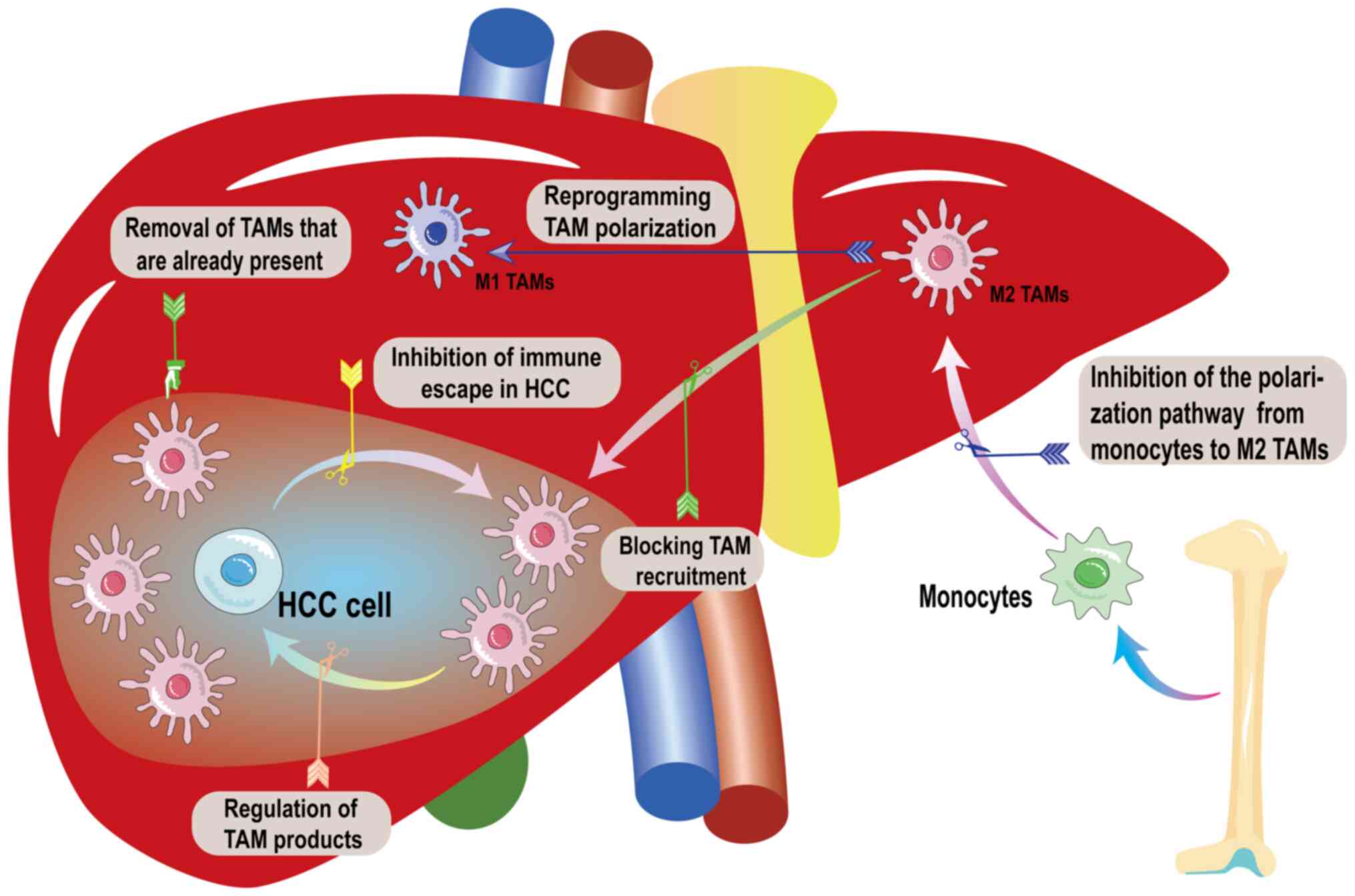
|
1
|
Jin HR, Wang J, Wang ZJ, Xi MJ, Xia BH,
Deng K and Yang JL: Lipid metabolic reprogramming in tumor
microenvironment: From mechanisms to therapeutics. J Hematol Oncol.
16:1032023. View Article : Google Scholar : PubMed/NCBI
|
|
2
|
Xue R, Zhang Q, Cao Q, Kong R, Xiang X,
Liu H, Feng M, Wang F, Cheng J, Li Z, et al: Liver tumour immune
microenvironment subtypes and neutrophil heterogeneity. Nature.
612:141–147. 2022. View Article : Google Scholar : PubMed/NCBI
|
|
3
|
Cheng K, Cai N, Zhu J, Yang X, Liang H and
Zhang W: Tumor-associated macrophages in liver cancer: From
mechanisms to therapy. Cancer Commun (Lond). 42:1112–1140. 2022.
View Article : Google Scholar : PubMed/NCBI
|
|
4
|
Bilotta MT, Antignani A and Fitzgerald DJ:
Managing the TME to improve the efficacy of cancer therapy. Front
Immunol. 13:9549922022. View Article : Google Scholar : PubMed/NCBI
|
|
5
|
Tacke F: Targeting hepatic macrophages to
treat liver diseases. J Hepatol. 66:1300–1312. 2017. View Article : Google Scholar : PubMed/NCBI
|
|
6
|
Minciuna I, Taru MG, Procopet B and
Stefanescu H: The inter-play between liver sinusoidal endothelial
cells, platelets, and neutrophil extracellular traps in the
development and progression of metabolic dysfunction-associated
steatotic liver disease. J Clin Med. 13:14062024. View Article : Google Scholar
|
|
7
|
McQuiston TJ and Williamson PR:
Paradoxical roles of alveolar macrophages in the host response to
Cryptococcus neoformans. J Infect Chemother. 18:1–9. 2012.
View Article : Google Scholar
|
|
8
|
Yao Z, Bai R, Liu W, Liu Y, Zhou W, Xu Z
and Sheng J: Activation of angiogenin expression in macrophages by
lipopolysaccharide via the TLR4/NF-κB pathway in colitis. Acta
Biochim Biophys Sin (Shanghai). 56:857–865. 2024.PubMed/NCBI
|
|
9
|
Murray PJ: Macrophage Polarization. Annu
Rev Physiol. 79:541–566. 2017. View Article : Google Scholar
|
|
10
|
Mehla K and Singh PK: metabolic regulation
of macrophage polarization in cancer. Trends Cancer. 5:822–834.
2019. View Article : Google Scholar : PubMed/NCBI
|
|
11
|
Locati M, Curtale G and Mantovani A:
Diversity, mechanisms, and significance of macrophage plasticity.
Annu Rev Pathol. 15:123–147. 2020. View Article : Google Scholar
|
|
12
|
Boutilier AJ and Elsawa SF: Macrophage
polarization states in the tumor microenvironment. Int J Mol Sci.
22:69952021. View Article : Google Scholar : PubMed/NCBI
|
|
13
|
Wang L, Li Y, Wang X, Wang P, Essandoh K,
Cui S, Huang W, Mu X, Liu Z, Wang Y, et al: GDF3 protects mice
against sepsis-induced cardiac dysfunction and mortality by
suppression of macrophage pro-inflammatory phenotype. Cells.
9:1202020. View Article : Google Scholar : PubMed/NCBI
|
|
14
|
Liu L, Stokes JV, Tan W and Pruett SB: An
optimized flow cytometry panel for classifying macrophage
polarization. J Immunol Methods. 511:1133782022. View Article : Google Scholar : PubMed/NCBI
|
|
15
|
Domschke G and Gleissner CA: CXCL4-induced
macrophages in human atherosclerosis. Cytokine. 122:1541412019.
View Article : Google Scholar
|
|
16
|
Kadl A, Meher AK, Sharma PR, Lee MY, Doran
AC, Johnstone SR, Elliott MR, Gruber F, Han J, Chen W, et al:
Identification of a novel macrophage phenotype that develops in
response to atherogenic phospholipids via Nrf2. Circ Res.
107:737–746. 2010. View Article : Google Scholar : PubMed/NCBI
|
|
17
|
Mantovani A, Sica A, Sozzani S, Allavena
P, Vecchi A and Locati M: The chemokine system in diverse forms of
macrophage activation and polarization. Trends Immunol. 25:677–686.
2004. View Article : Google Scholar : PubMed/NCBI
|
|
18
|
Lu Y, Sun Q, Guan Q, Zhang Z, He Q, He J,
Ji Z, Tian W, Xu X, Liu Y, et al: The XOR-IDH3α axis controls
macrophage polarization in hepatocellular carcinoma. J Hepatol.
79:1172–1184. 2023. View Article : Google Scholar : PubMed/NCBI
|
|
19
|
Chen S, Morine Y, Tokuda K, Yamada S,
Saito Y, Nishi M, Ikemoto T and Shimada M: Cancer-associated
fibroblast-induced M2-polarized macrophages promote hepatocellular
carcinoma progression via the plasminogen activator inhibitor-1
pathway. Int J Oncol. 59:592021. View Article : Google Scholar :
|
|
20
|
Gao Y, Yuan Y, Wen S, Chen Y, Zhang Z,
Feng Y, Jiang B, Ma S, Hu R, Fang C, et al: Dual role of ANGPTL8 in
promoting tumor cell proliferation and immune escape during
hepatocarcinogenesis. Oncogenesis. 12:262023. View Article : Google Scholar : PubMed/NCBI
|
|
21
|
Hao X, Zheng Z, Liu H, Zhang Y, Kang J,
Kong X, Rong D, Sun G, Sun G, Liu L, et al: Inhibition of APOC1
promotes the transformation of M2 into M1 macrophages via the
ferroptosis pathway and enhances anti-PD1 immunotherapy in
hepatocellular carcinoma based on single-cell RNA sequencing. Redox
Biol. 56:1024632022. View Article : Google Scholar : PubMed/NCBI
|
|
22
|
Zhao S, Mi Y, Guan B, Zheng B, Wei P, Gu
Y, Zhang Z, Cai S, Xu Y, Li X, et al: Tumor-derived exosomal
miR-934 induces macrophage M2 polarization to promote liver
metastasis of colorectal cancer. J Hematol Oncol. 13:1562020.
View Article : Google Scholar : PubMed/NCBI
|
|
23
|
Kuo CC, Hanzelmann S, Senturk Cetin N,
Frank S, Zajzon B, Derks JP, Akhade VS, Ahuja G, Kanduri C, Grummt
I, et al: Detection of RNA-DNA binding sites in long noncoding
RNAs. Nucleic Acids Res. 47:e322019. View Article : Google Scholar : PubMed/NCBI
|
|
24
|
Li P, He J, Yang Z, Ge S, Zhang H, Zhong Q
and Fan X: ZNNT1 long noncoding RNA induces autophagy to inhibit
tumorigenesis of uveal melanoma by regulating key autophagy gene
expression. Autophagy. 16:1186–1199. 2020. View Article : Google Scholar :
|
|
25
|
Wang H, Liu Y, Tang A and Zhang X:
Molecular subtypes of clear cell renal carcinoma based on
PCD-related long non-coding RNAs expression: Insights into the
underlying mechanisms and therapeutic strategies. Eur J Med Res.
29:2922024. View Article : Google Scholar : PubMed/NCBI
|
|
26
|
Wei H, Li W, Yang M, Fang Q, Nian J, Huang
Y, Wei Q, Huang Z, Liu G, Xu Z, et al: METTL3/16-mediated m(6)A
modification of ZNNT1 promotes hepatocellular carcinoma progression
by activating ZNNT1/osteopontin/S100A9 positive feedback
loop-mediated crosstalk between macrophages and tumour cells. Clin
Immunol. 261:1099242024. View Article : Google Scholar : PubMed/NCBI
|
|
27
|
Huang X, Wu W, Jing D, Yang L, Guo H, Wang
L, Zhang W, Pu F and Shao Z: Engineered exosome as targeted lncRNA
MEG3 delivery vehicles for osteosarcoma therapy. J Control Release.
343:107–117. 2022. View Article : Google Scholar : PubMed/NCBI
|
|
28
|
Zhang J, Lin Z, Gao Y and Yao T:
Downregulation of long noncoding RNA MEG3 is associated with poor
prognosis and promoter hypermethylation in cervical cancer. J Exp
Clin Cancer Res. 36:52017. View Article : Google Scholar : PubMed/NCBI
|
|
29
|
Wu X and Xu L: The RNA-binding protein HuR
in human cancer: A friend or foe? Adv Drug Deliv Rev.
184:1141792022. View Article : Google Scholar : PubMed/NCBI
|
|
30
|
Majumder M, Chakraborty P, Mohan S,
Mehrotra S and Palanisamy V: HuR as a molecular target for cancer
therapeutics and immune-related disorders. Adv Drug Deliv Rev.
188:1144422022. View Article : Google Scholar : PubMed/NCBI
|
|
31
|
Brauss TF, Winslow S, Lampe S, Scholz A,
Weigert A, Dehne N, von Stedingk K, Schmid T and Brüne B: The
RNA-binding protein HuR inhibits expression of CCL5 and limits
recruitment of macrophages into tumors. Mol Carcinog. 56:2620–2629.
2017. View Article : Google Scholar : PubMed/NCBI
|
|
32
|
Wei H, Wu X, Huang L, Long C, Lu Q, Huang
Z, Huang Y, Li W and Pu J: LncRNA MEG3 reduces the ratio of M2/M1
Macrophages Through the HuR/CCL5 axis in hepatocellular carcinoma.
J Hepatocell Carcinoma. 11:543–562. 2024. View Article : Google Scholar : PubMed/NCBI
|
|
33
|
Wei Q, Liu G, Huang Z, Huang Y, Huang L,
Huang Z, Wu X, Wei H and Pu J: LncRNA MEG3 inhibits tumor
progression by modulating macrophage phenotypic polarization via
miR-145-5p/DAB2 axis in hepatocellular carcinoma. J Hepatocell
Carcinoma. 10:1019–1035. 2023. View Article : Google Scholar : PubMed/NCBI
|
|
34
|
Su T, Zhang N, Wang T, Zeng J, Li W, Han L
and Yang M: Super Enhancer-Regulated LncRNA LINC01089 induces
alternative splicing of DIAPH3 to drive hepatocellular carcinoma
metastasis. Cancer Res. 83:4080–4094. 2023. View Article : Google Scholar : PubMed/NCBI
|
|
35
|
Peng Y, Yin D, Li X, Wang K, Li W, Huang
Y, Liu X, Ren Z, Yang X, Zhang Z, et al: Integration of
transcriptomics and metabolomics reveals a novel gene signature
guided by FN1 associated with immune response in oral squamous cell
carcinoma tumorigenesis. J Cancer Res Clin Oncol. 149:6097–6113.
2023. View Article : Google Scholar : PubMed/NCBI
|
|
36
|
Ma L, Jiang J, Si Q, Chen C and Duan Z:
IGF2BP3 enhances the growth of hepatocellular carcinoma tumors by
regulating the properties of macrophages and CD8(+) T cells in the
tumor microenvironment. J Clin Transl Hepatol. 11:1308–1320.
2023.PubMed/NCBI
|
|
37
|
Yang M, Yu T and Han L: Hsa_circ_0010882
facilitates hepatocellular carcinoma progression by modulating
M1/M2 macrophage polarization. J Viral Hepat. 31:189–196. 2024.
View Article : Google Scholar : PubMed/NCBI
|
|
38
|
Hu Z, You L, Hu S, Yu L, Gao Y, Li L and
Zhang S: Hepatocellular carcinoma cell-derived exosomal miR-21-5p
promotes the polarization of tumor-related macrophages (TAMs)
through SP1/XBP1 and affects the progression of hepatocellular
carcinoma. Int Immunopharmacol. 126:1111492024. View Article : Google Scholar
|
|
39
|
Bian Z, Xu C, Wang X, Zhang B, Xiao Y, Liu
L, Zhao S, Huang N, Yang F, Zhang Y, et al: TRIM65/NF2/YAP1
signaling coordinately orchestrates metabolic and immune advantages
in hepatocellular carcinoma. Adv Sci (Weinh). Jul 15–2024.Epub
ahead of print. View Article : Google Scholar
|
|
40
|
Zhu Y, Chen M, Xu D, Li TE, Zhang Z, Li
JH, Wang XY, Yang X, Lu L, Jia HL, et al: The combination of PD-1
blockade with interferon-α has a synergistic effect on
hepatocellular carcinoma. Cell Mol Immunol. 19:726–737. 2022.
View Article : Google Scholar : PubMed/NCBI
|
|
41
|
Jiang M, Wang D, Su N, Lou W, Chen Y, Yang
H, Chen C, Xi F, Chen Y, Deng L and Tang X: TRIM65 knockout
inhibits the development of HCC by polarization tumor-associated
macrophages towards M1 phenotype via JAK1/STAT1 signaling pathway.
Int Immunopharmacol. 128:1114942024. View Article : Google Scholar : PubMed/NCBI
|
|
42
|
Tan S, Wang Z, Li N, Guo X, Zhang Y, Ma H,
Peng X, Zhao Y, Li C, Gao L, et al: Transcription factor Zhx2 is a
checkpoint that programs macrophage polarization and antitumor
response. Cell Death Differ. 30:2104–2119. 2023. View Article : Google Scholar : PubMed/NCBI
|
|
43
|
Dai Z, Wang Y, Sun N and Zhang C:
Characterizing ligand-receptor interactions and unveiling the
pro-tumorigenic role of CCL16-CCR1 axis in the microenvironment of
hepatocellular carcinoma. Front Immunol. 14:12999532024. View Article : Google Scholar : PubMed/NCBI
|
|
44
|
Wu XM, Liao YW, Wang HY, Ji KQ, Li GF and
Zang B: Integrin alphavbeta6 is involved in measles protein-induced
airway immune suppression. Cytokine. 59:59–64. 2012. View Article : Google Scholar : PubMed/NCBI
|
|
45
|
Hu WM, Liu SQ, Zhu KF, Li W, Yang ZJ, Yang
Q, Zhu ZC and Chang J: The ALOX5 inhibitor Zileuton regulates
tumor-associated macrophage M2 polarization by JAK/STAT and
inhibits pancreatic cancer invasion and metastasis. Int
Immunopharmacol. 121:1105052023. View Article : Google Scholar : PubMed/NCBI
|
|
46
|
Yu C, Zhu Q, Ma C, Luo C, Nie L, Cai H,
Wang Q, Wang F, Ren H, Yan H, et al: Major vault protein regulates
tumor-associated macrophage polarization through interaction with
signal transducer and activator of transcription 6. Front Immunol.
14:12897952024. View Article : Google Scholar : PubMed/NCBI
|
|
47
|
Tang B, Zhu J, Wang Y, Chen W, Fang S, Mao
W, Xu Z, Yang Y, Weng Q, Zhao Z, et al: Targeted xCT-mediated
ferroptosis and protumoral polarization of macrophages is effective
against HCC and enhances the efficacy of the Anti-PD-1/L1 Response.
Adv Sci (Weinh). 10:e22039732023. View Article : Google Scholar
|
|
48
|
Savchenko VL: Regulation of NADPH oxidase
gene expression with PKA and cytokine IL-4 in neurons and
microglia. Neurotox Res. 23:201–213. 2013. View Article : Google Scholar
|
|
49
|
Liu Y, Chen H, Yan X and Zhang J, Deng Z,
Huang M, Gu J and Zhang J: MyD88 in myofibroblasts enhances
nonalcoholic fatty liver disease-related hepatocarcinogenesis via
promoting macrophage M2 polarization. Cell Commun Signal.
22:862024. View Article : Google Scholar : PubMed/NCBI
|
|
50
|
Ravindran C, Cheng YC and Liang SM:
CpG-ODNs induces up-regulated expression of chemokine CCL9 in mouse
macrophages and microglia. Cell Immunol. 260:113–118. 2010.
View Article : Google Scholar
|
|
51
|
Chen S, Wang M, Lu T, Liu Y, Hong W, He X,
Cheng Y, Liu J, Wei Y and Wei X: JMJD6 in tumor-associated
macrophage regulates macrophage polarization and cancer progression
via STAT3/IL-10 axis. Oncogene. 42:2737–2750. 2023. View Article : Google Scholar : PubMed/NCBI
|
|
52
|
Silswal N, Reis J, Qureshi AA, Papasian C
and Qureshi N: Of mice and men: Proteasome's Role in LPS-Induced
inflammation and tolerance. Shock. 47:445–454. 2017. View Article : Google Scholar
|
|
53
|
Lu F, Zhou J, Chen Q, Zhu J, Zheng X, Fang
N and Qiao L: PSMA5 contributes to progression of lung
adenocarcinoma in association with the JAK/STAT pathway.
Carcinogenesis. 43:624–634. 2022. View Article : Google Scholar : PubMed/NCBI
|
|
54
|
Xie S, Li X, Yan J, Yu H, Chen S and Chen
K: Knockdown of liver cancer cell-secreted exosomal PSMA5 controls
macrophage polarization to restrain cancer progression by blocking
JAK2/STAT3 signaling. Immun Inflamm Dis. 12:e11462024. View Article : Google Scholar : PubMed/NCBI
|
|
55
|
Liu Y, Tang Y, Jiang H, Zhang X, Chen X,
Guo J, Jin C and Wu M: Exosome-Related FTCD Facilitates M1
macrophage polarization and impacts the prognosis of hepatocellular
carcinoma. Biomolecules. 14:412023. View Article : Google Scholar
|
|
56
|
Liu L, Zhang W, Liu T, Tan Y, Chen C, Zhao
J, Geng H and Ma C: The physiological metabolite α-ketoglutarate
ameliorates osteoarthritis by regulating mitophagy and oxidative
stress. Redox Biol. 62:1026632023. View Article : Google Scholar
|
|
57
|
Zhang D, Wang Y, Shi Z, Liu J, Sun P, Hou
X, Zhang J, Zhao S, Zhou BP and Mi J: Metabolic reprogramming of
cancer-associated fibroblasts by IDH3α downregulation. Cell Rep.
10:1335–1348. 2015. View Article : Google Scholar : PubMed/NCBI
|
|
58
|
Wang C, Chen C, Hu W, Tao L and Chen J:
Revealing the role of necroptosis microenvironment: FCGBP +
tumor-associated macrophages drive primary liver cancer
differentiation towards cHCC-CCA or iCCA. Apoptosis. 29:460–481.
2024. View Article : Google Scholar
|
|
59
|
Mai Y, Su J, Yang C, Xia C and Fu L: The
strategies to cure cancer patients by eradicating cancer stem-like
cells. Mol Cancer. 22:1712023. View Article : Google Scholar : PubMed/NCBI
|
|
60
|
Zhao Q, Zong H, Zhu P, Su C, Tang W, Chen
Z and Jin S: Crosstalk between colorectal CSCs and immune cells in
tumorigenesis, and strategies for targeting colorectal CSCs. Exp
Hematol Oncol. 13:62024. View Article : Google Scholar : PubMed/NCBI
|
|
61
|
Liu X, Ye Y, Zhu L, Xiao X, Zhou B, Gu Y,
Si H, Liang H, Liu M, Li J, et al: Niche stiffness sustains cancer
stemness via TAZ and NANOG phase separation. Nat Commun.
14:2382023. View Article : Google Scholar : PubMed/NCBI
|
|
62
|
Liang T, Tao T, Wu K, Liu L, Xu W, Zhou D,
Fang H, Ding Q, Huang G and Wu S: Cancer-Associated
fibroblast-induced remodeling of tumor microenvironment in
recurrent bladder cancer. Adv Sci (Weinh). 10:e23032302023.
View Article : Google Scholar : PubMed/NCBI
|
|
63
|
Wang L, Zhang L, Zhao L, Shao S, Ning Q,
Jing X, Zhang Y, Zhao F, Liu X, Gu S, et al: VEGFA/NRP-1/GAPVD1
axis promotes progression and cancer stemness of triple-negative
breast cancer by enhancing tumor cell-macrophage crosstalk. Int J
Biol Sci. 20:446–463. 2024. View Article : Google Scholar : PubMed/NCBI
|
|
64
|
Zhang Q, Tsui YM, Zhang VX, Lu AJ, Lee JM,
Lee E, Cheung GC, Li PM, Cheung ET, Chia NH, et al: Reciprocal
interactions between malignant cells and macrophages enhance cancer
stemness and M2 polarization in HBV-associated hepatocellular
carcinoma. Theranostics. 14:892–910. 2024. View Article : Google Scholar : PubMed/NCBI
|
|
65
|
Qi Y, Zhao T, Li R and Han M:
Macrophage-Secreted S100A4 supports breast cancer metastasis by
remodeling the extracellular matrix in the premetastatic niche.
Biomed Res Int. 2022:98955042022. View Article : Google Scholar : PubMed/NCBI
|
|
66
|
Li Y, Wang J, Song K, Liu S, Zhang H, Wang
F, Ni C, Zhai W, Liang J, Qin Z and Zhang J: S100A4 promotes
hepatocellular carcinogenesis by intensifying fibrosis-associated
cancer cell stemness. Oncoimmunology. 9:17253552020. View Article : Google Scholar : PubMed/NCBI
|
|
67
|
Huang A, Lv B, Zhang Y, Yang J, Li J, Li
C, Yu Z and Xia J: Construction of a tumor immune infiltration
macrophage signature for predicting prognosis and immunotherapy
response in liver cancer. Front Mol Biosci. 9:9838402022.
View Article : Google Scholar : PubMed/NCBI
|
|
68
|
Wei R, Zhu WW, Yu GY, Wang X, Gao C, Zhou
X, Lin ZF, Shao WQ, Wang SH, Lu M and Qin LX: S100 calcium-binding
protein A9 from tumor-associated macrophage enhances cancer stem
cell-like properties of hepatocellular carcinoma. Int J Cancer.
148:1233–1244. 2021. View Article : Google Scholar
|
|
69
|
Chen Y, Wen H, Zhou C, Su Q, Lin Y, Xie Y,
Huang Y, Qiu Q, Lin J, Huang X, et al: TNF-alpha derived from M2
tumor-associated macrophages promotes epithelial-mesenchymal
transition and cancer stemness through the Wnt/beta-catenin pathway
in SMMC-7721 hepatocellular carcinoma cells. Exp Cell Res.
378:41–50. 2019. View Article : Google Scholar : PubMed/NCBI
|
|
70
|
Chen J, Feng W, Sun M, Huang W, Wang G,
Chen X, Yin Y, Chen X, Zhang B, Nie Y, et al: TGF-β1-Induced SOX18
elevation promotes hepatocellular carcinoma progression and
metastasis through transcriptionally upregulating PD-L1 and CXCL12.
Gastroenterology. 167:264–280. 2024. View Article : Google Scholar : PubMed/NCBI
|
|
71
|
Ye S, Huang H, Xiao Y, Han X, Shi F, Luo
W, Chen J, Ye Y, Zhao X, Huang W, et al: Macrophage Dectin-1
mediates Ang II renal injury through neutrophil migration and
TGF-β1 secretion. Cell Mol Life Sci. 80:1842023. View Article : Google Scholar
|
|
72
|
Yao Y, Chen R, Wang G, Zhang Y and Liu F:
Exosomes derived from mesenchymal stem cells reverse EMT via
TGF-β1/Smad pathway and promote repair of damaged endometrium. Stem
Cell Res Ther. 10:2252019. View Article : Google Scholar
|
|
73
|
Liu X, Xu J, Shen B, Xu J and Jiang J:
USP33 promotes pancreatic cancer malignant phenotype through the
regulation of TGFBR2/TGFβ signaling pathway. Cell Death Dis.
14:3622023. View Article : Google Scholar
|
|
74
|
Ye Y, Guo J, Xiao P, Ning J, Zhang R, Liu
P, Yu W, Xu L, Zhao Y and Yu J: Macrophages-induced long noncoding
RNA H19 up-regulation triggers and activates the miR-193b/MAPK1
axis and promotes cell aggressiveness in hepatocellular carcinoma.
Cancer Lett. 469:310–322. 2020. View Article : Google Scholar
|
|
75
|
Chang CH, Chang YT, Tseng TH and Wang CJ:
Mulberry leaf extract inhibit hepatocellular carcinoma cell
proliferation via depressing IL-6 and TNF-α derived from adipocyte.
J Food Drug Anal. 26:1024–1032. 2018. View Article : Google Scholar : PubMed/NCBI
|
|
76
|
Yang H, Kang B, Ha Y, Lee SH, Kim I, Kim
H, Lee WS, Kim G, Jung S, Rha SY, et al: High serum IL-6 correlates
with reduced clinical benefit of atezolizumab and bevacizumab in
unresectable hepatocellular carcinoma. JHEP Rep. 5:1006722023.
View Article : Google Scholar : PubMed/NCBI
|
|
77
|
Wan S, Zhao E, Kryczek I, Vatan L,
Sadovskaya A, Ludema G, Simeone DM, Zou W and Welling TH:
Tumor-associated macrophages produce interleukin 6 and signal via
STAT3 to promote expansion of human hepatocellular carcinoma stem
cells. Gastroenterology. 147:1393–1404. 2014. View Article : Google Scholar : PubMed/NCBI
|
|
78
|
Wen JH, Li DY, Liang S, Yang C, Tang JX
and Liu HF: Macrophage autophagy in macrophage polarization,
chronic inflammation and organ fibrosis. Front Immunol.
13:9468322022. View Article : Google Scholar : PubMed/NCBI
|
|
79
|
Ma L, Zhang R, Li D, Qiao T and Guo X:
Fluoride regulates chondrocyte proliferation and autophagy via
PI3K/AKT/mTOR signaling pathway. Chem Biol Interact.
349:1096592021. View Article : Google Scholar : PubMed/NCBI
|
|
80
|
Bi S, Zhang Y, Zhou J, Yao Y, Wang J, Fang
M, Li B, Wu C and Ren C: miR-210 promotes hepatocellular carcinoma
progression by modulating macrophage autophagy through
PI3K/AKT/mTOR signaling. Biochem Biophys Res Commun. 662:47–57.
2023. View Article : Google Scholar : PubMed/NCBI
|
|
81
|
Cai J, Qian X, Qi Q, Han J, Zhu X, Zhang Q
and Xia R: Extracellular ubiquitin inhibits the apoptosis of
hepatoma cells via the involvement of macrophages. Transl Cancer
Res. 9:2855–2864. 2020. View Article : Google Scholar : PubMed/NCBI
|
|
82
|
She G, Du JC, Wu W, Pu TT, Zhang Y, Bai
RY, Zhang Y, Pang ZD, Wang HF, Ren YJ, et al: Hippo pathway
activation mediates chemotherapy-induced anti-cancer effect and
cardiomyopathy through causing mitochondrial damage and
dysfunction. Theranostics. 13:560–577. 2023. View Article : Google Scholar : PubMed/NCBI
|
|
83
|
Fang S, Wan X, Zou X, Sun S, Hao X, Liang
C, Zhang Z, Zhang F, Sun B, Li H and Yu B: Arsenic trioxide induces
macrophage autophagy and atheroprotection by regulating
ROS-dependent TFEB nuclear translocation and AKT/mTOR pathway. Cell
Death Dis. 12:882021. View Article : Google Scholar : PubMed/NCBI
|
|
84
|
Ai JH, Wen YZ, Dai SJ, Zhang LD, Huang ZJ
and Shi J: Exosomal lncRNA HEIH, an essential communicator for
hepatocellular carcinoma cells and macrophage M2 polarization
through the miR-98-5p/STAT3 axis. J Biochem Mol Toxicol.
38:e236862024. View Article : Google Scholar : PubMed/NCBI
|
|
85
|
Keawvilai P, Kueanjinda P, Klomsing J and
Palaga T: Coculturing liver cancer cells and monocytes in spheroids
conditions monocytes to adopt tumor-associated macrophage
phenotypes that favor tumor growth via cholesterol metabolism. J
Leukoc Biol. 115:344–357. 2024. View Article : Google Scholar
|
|
86
|
Zhang L, Zhang J, Li P, Li T, Zhou Z and
Wu H: Exosomal hsa_circ_0004658 derived from RBPJ
overexpressed-macrophages inhibits hepatocellular carcinoma
progression via miR-499b-5p/JAM3. Cell Death Dis. 13:322022.
View Article : Google Scholar : PubMed/NCBI
|
|
87
|
Wu H, Zhang X, Han D, Cao J and Tian J:
Tumour-associated macrophages mediate the invasion and metastasis
of bladder cancer cells through CXCL8. PeerJ. 8:e87212020.
View Article : Google Scholar : PubMed/NCBI
|
|
88
|
Zou S, Chen S, Rao G, Zhang G, Ma M, Peng
B, Du X, Huang W, Lin W, Tian Y and Fu X: Extrachromosomal circular
MiR-17-92 amplicon promotes HCC. Hepatology. 79:79–95. 2024.
View Article : Google Scholar
|
|
89
|
Yu S, Su S, Wang P, Li J, Chen C, Xin H,
Gong Y, Wang H, Ye X, Mao L, et al: Tumor-associated
macrophage-induced circMRCK-alpha encodes a peptide to promote
glycolysis and progression in hepatocellular carcinoma. Cancer
Lett. 591:2168722024. View Article : Google Scholar
|
|
90
|
Qu W, Qiao S, Liu L, Chen Y, Peng C, Hou
Y, Xu Z, Lv M and Wang T: Dectin3 protects against hepatocellular
carcinoma by regulating glycolysis of macrophages. Int
Immunopharmacol. 113(Pt A): 1093842022. View Article : Google Scholar : PubMed/NCBI
|
|
91
|
Ji W, Bai J and Ke Y: Exosomal ZFPM2-AS1
contributes to tumorigenesis, metastasis, stemness, macrophage
polarization, and infiltration in hepatocellular carcinoma through
PKM mediated glycolysis. Environ Toxicol. 38:1332–1346. 2023.
View Article : Google Scholar : PubMed/NCBI
|
|
92
|
Wang L, Yi X, Xiao X, Zheng Q, Ma L and Li
B: Exosomal miR-628-5p from M1 polarized macrophages hinders m6A
modification of circFUT8 to suppress hepatocellular carcinoma
progression. Cell Mol Biol Lett. 27:1062022. View Article : Google Scholar : PubMed/NCBI
|
|
93
|
Xie Q, Zeng Y, Zhang X and Yu F: The
significance of lipid metabolism reprogramming of tumor-associated
macrophages in hepatocellular carcinoma. Cancer Immunol Immunother.
73:1712024. View Article : Google Scholar : PubMed/NCBI
|
|
94
|
Xie M, Lin Z, Ji X, Luo X, Zhang Z, Sun M,
Chen X, Zhang B, Liang H, Liu D, et al: FGF19/FGFR4-mediated
elevation of ETV4 facilitates hepatocellular carcinoma metastasis
by upregulating PD-L1 and CCL2. J Hepatol. 79:109–125. 2023.
View Article : Google Scholar : PubMed/NCBI
|
|
95
|
Yeung OW, Lo CM, Ling CC, Qi X, Geng W, Li
CX, Ng KT, Forbes SJ, Guan XY, Poon RT, et al: Alternatively
activated (M2) macrophages promote tumour growth and invasiveness
in hepatocellular carcinoma. J Hepatol. 62:607–616. 2015.
View Article : Google Scholar
|
|
96
|
Chen J, Zhao D, Zhang L, Zhang J, Xiao Y,
Wu Q, Wang Y and Zhan Q: Tumor-associated macrophage (TAM)-derived
CCL22 induces FAK addiction in esophageal squamous cell carcinoma
(ESCC). Cell Mol Immunol. 19:1054–1066. 2022. View Article : Google Scholar : PubMed/NCBI
|
|
97
|
Jiang Q, Zeng Y, Xu Y, Xiao X, Liu H, Zhou
B, Kong Y, Saw PE and Luo B: Ultrasound molecular imaging as a
potential non-invasive diagnosis to detect the margin of
hepatocarcinoma via CSF-1R Targeting. Front Bioeng Biotechnol.
8:7832020. View Article : Google Scholar : PubMed/NCBI
|
|
98
|
Pyonteck SM, Akkari L, Schuhmacher AJ,
Bowman RL, Sevenich L, Quail DF, Olson OC, Quick ML, Huse JT,
Teijeiro V, et al: CSF-1R inhibition alters macrophage polarization
and blocks glioma progression. Nat Med. 19:1264–1272. 2013.
View Article : Google Scholar : PubMed/NCBI
|
|
99
|
Peng S, Chen Y, Gong Y, Li Z, Xie R, Lin
Y, Zou B, Li J and Zeng L: Predictive value of intratumour
inflammatory cytokine mRNA levels of hepatocellular carcinoma
patients and activation of two distinct pathways govern IL-8
induced epithelial-mesenchymal transition in human hepatic cancer
cell lines. Cytokine. 119:81–89. 2019. View Article : Google Scholar : PubMed/NCBI
|
|
100
|
Yan W, Liu X, Ma H, Zhang H, Song X, Gao
L, Liang X and Ma C: Tim-3 fosters HCC development by enhancing
TGF-β-mediated alternative activation of macrophages. Gut.
64:1593–1604. 2015. View Article : Google Scholar : PubMed/NCBI
|
|
101
|
Ganjalikhani Hakemi M, Jafarinia M, Azizi
M, Rezaeepoor M, Isayev O and Bazhin AV: The Role of TIM-3 in
hepatocellular carcinoma: A promising target for immunotherapy?
Front Oncol. 10:6016612020. View Article : Google Scholar
|
|
102
|
Sun G, Liu H, Zhao J, Zhang J, Huang T,
Sun G, Zhao S, Zhang Z, Cao H, Rong D, et al: Macrophage
GSK3β-deficiency inhibits the progression of hepatocellular
carcinoma and enhances the sensitivity of anti-PD1 immunotherapy. J
Immunother Cancer. 10:e0056552022. View Article : Google Scholar
|
|
103
|
Liu D, Luo X, Xie M, Zhang T, Chen X,
Zhang B, Sun M, Wang Y, Feng Y, Ji X, et al: HNRNPC downregulation
inhibits IL-6/STAT3-mediated HCC metastasis by decreasing HIF1A
expression. Cancer Sci. 113:3347–3361. 2022. View Article : Google Scholar : PubMed/NCBI
|
|
104
|
Zhou Z, Wang P, Sun R, Li J, Hu Z, Xin H,
Luo C, Zhou J, Fan J and Zhou S: Tumor-associated neutrophils and
macrophages interaction contributes to intrahepatic
cholangiocarcinoma progression by activating STAT3. J Immunother
Cancer. 9:e0019462021. View Article : Google Scholar : PubMed/NCBI
|
|
105
|
Johnson DE, O'Keefe RA and Grandis JR:
Targeting the IL-6/JAK/STAT3 signalling axis in cancer. Nat Rev
Clin Oncol. 15:234–248. 2018. View Article : Google Scholar : PubMed/NCBI
|
|
106
|
Dong S, Yang Z, Xu P, Zheng W, Zhang B, Fu
F, Mao Z, Yuan J, Chen H and Yu W: Mutually exclusive epigenetic
modification on SIX6 with hypermethylation for precancerous stage
and metastasis emergence tracing. Signal Transduct Target Ther.
7:2082022. View Article : Google Scholar : PubMed/NCBI
|
|
107
|
Liu C, Yao Z, Wang J, Zhang W, Yang Y,
Zhang Y, Qu X, Zhu Y, Zou J, Peng S, et al: Macrophage-derived CCL5
facilitates immune escape of colorectal cancer cells via the
p65/STAT3-CSN5-PD-L1 pathway. Cell Death Differ. 27:1765–1781.
2020. View Article : Google Scholar :
|
|
108
|
Chang M and Nguyen TT: Strategy for
treatment of infected diabetic foot ulcers. Acc Chem Res.
54:1080–1093. 2021. View Article : Google Scholar : PubMed/NCBI
|
|
109
|
Yao RR, Li JH, Zhang R, Chen RX and Wang
YH: M2-polarized tumor-associated macrophages facilitated migration
and epithelial-mesenchymal transition of HCC cells via the
TLR4/STAT3 signaling pathway. World J Surg Oncol. 16:92018.
View Article : Google Scholar : PubMed/NCBI
|
|
110
|
Lin A, Wang G, Zhao H, Zhang Y, Han Q,
Zhang C, Tian Z and Zhang J: TLR4 signaling promotes a
COX-2/PGE(2)/STAT3 positive feedback loop in hepatocellular
carcinoma (HCC) cells. Oncoimmunology. 5:e10743762016. View Article : Google Scholar : PubMed/NCBI
|
|
111
|
Xu M, Zhou C, Weng J, Chen Z, Zhou Q, Gao
J, Shi G, Ke A, Ren N, Sun H and Shen Y: Tumor associated
macrophages-derived exosomes facilitate hepatocellular carcinoma
malignance by transferring lncMMPA to tumor cells and activating
glycolysis pathway. J Exp Clin Cancer Res. 41:2532022. View Article : Google Scholar : PubMed/NCBI
|
|
112
|
Zhou J, Liu M, Sun H, Feng Y, Xu L, Chan
AWH, Tong JH, Wong J, Chong CCN, Lai PBS, et al: Hepatoma-intrinsic
CCRK inhibition diminishes myeloid-derived suppressor cell
immunosuppression and enhances immune-checkpoint blockade efficacy.
Gut. 67:931–944. 2018. View Article : Google Scholar
|
|
113
|
Wu J, Gao W, Tang Q, Yu Y, You W, Wu Z,
Fan Y, Zhang L, Wu C, Han G, et al: M2 macrophage-derived exosomes
facilitate HCC metastasis by transferring αM
β2 Integrin to Tumor Cells. Hepatology. 73:1365–1380.
2021. View Article : Google Scholar
|
|
114
|
Lu Y, Han G, Zhang Y, Zhang L, Li Z, Wang
Q, Chen Z, Wang X and Wu J: M2 macrophage-secreted exosomes promote
metastasis and increase vascular permeability in hepatocellular
carcinoma. Cell Commun Signal. 21:2992023. View Article : Google Scholar : PubMed/NCBI
|
|
115
|
Bai ZZ, Li HY, Li CH, Sheng CL and Zhao
XN: Retraction Note: M1 Macrophage-Derived Exosomal MicroRNA-326
Suppresses Hepatocellular Carcinoma Cell Progression Via Mediating
NF-κB Signaling Pathway. Nanoscale Res Lett. 17:1222022. View Article : Google Scholar
|
|
116
|
Luo HL, Luo T, Liu JJ, Wu FX, Bai T, Ou C,
Chen J, Li LQ and Zhong JH: Macrophage polarization-associated
lnc-Ma301 interacts with caprin-1 to inhibit hepatocellular
carcinoma metastasis through the Akt/Erk1 pathway. Cancer Cell Int.
21:4222021. View Article : Google Scholar : PubMed/NCBI
|
|
117
|
Sun D, Luo T, Dong P, Zhang N, Chen J and
Zhang S, Dong L, Janssen HLA and Zhang S: M2-polarized
tumor-associated macrophages promote epithelial-mesenchymal
transition via activation of the AKT3/PRAS40 signaling pathway in
intrahepatic cholangiocarcinoma. J Cell Biochem. 121:2828–2838.
2020. View Article : Google Scholar
|
|
118
|
Baeriswyl V and Christofori G: The
angiogenic switch in carcinogenesis. Semin Cancer Biol. 19:329–337.
2009. View Article : Google Scholar : PubMed/NCBI
|
|
119
|
Dong S, Guo X, Han F, He Z and Wang Y:
Emerging role of natural products in cancer immunotherapy. Acta
Pharm Sin B. 12:1163–1185. 2022. View Article : Google Scholar : PubMed/NCBI
|
|
120
|
Pollard JW: Trophic macrophages in
development and disease. Nat Rev Immunol. 9:259–270. 2009.
View Article : Google Scholar : PubMed/NCBI
|
|
121
|
Palazon A, Tyrakis PA, Macias D, Veliça P,
Rundqvist H, Fitzpatrick S, Vojnovic N, Phan AT, Loman N, Hedenfalk
I, et al: An HIF-1α/VEGF-A Axis in Cytotoxic T Cells regulates
tumor progression. Cancer Cell. 32:669–683 e5. 2017. View Article : Google Scholar
|
|
122
|
Xu K, Wu CL, Wang ZX, Wang HJ, Yin FJ, Li
WD, Liu CC and Fan HN: VEGF family gene expression as prognostic
biomarkers for Alzheimer's disease and primary liver cancer. Comput
Math Methods Med. 2021:34223932021. View Article : Google Scholar : PubMed/NCBI
|
|
123
|
Simons M, Gordon E and Claesson-Welsh L:
Mechanisms and regulation of endothelial VEGF receptor signalling.
Nat Rev Mol Cell Biol. 17:611–625. 2016. View Article : Google Scholar : PubMed/NCBI
|
|
124
|
Apte RS, Chen DS and Ferrara N: VEGF in
signaling and disease: Beyond discovery and development. Cell.
176:1248–1264. 2019. View Article : Google Scholar : PubMed/NCBI
|
|
125
|
Pu J, Li W, Wang A, Zhang Y, Qin Z, Xu Z,
Wang J, Lu Y, Tang Q and Wei H: Long non-coding RNA HOMER3-AS1
drives hepatocellular carcinoma progression via modulating the
behaviors of both tumor cells and macrophages. Cell Death Dis.
12:11032021. View Article : Google Scholar : PubMed/NCBI
|
|
126
|
Cheng N, Bei Y, Song Y, Zhang W, Xu L,
Zhang W, Yang N, Bai X, Shu Y and Shen P: B7-H3 augments the
pro-angiogenic function of tumor-associated macrophages and acts as
a novel adjuvant target for triple-negative breast cancer therapy.
Biochem Pharmacol. 183:1142982021. View Article : Google Scholar
|
|
127
|
Mabeta P and Steenkamp V: The VEGF/VEGFR
axis revisited: Implications for cancer therapy. Int J Mol Sci.
23:155852022. View Article : Google Scholar : PubMed/NCBI
|
|
128
|
Grillet B, Pereira RVS, Van Damme J, Abu
El-Asrar A, Proost P and Opdenakker G: Matrix metalloproteinases in
arthritis: Towards precision medicine. Nat Rev Rheumatol.
19:363–377. 2023. View Article : Google Scholar : PubMed/NCBI
|
|
129
|
Riabov V, Gudima A, Wang N, Mickley A,
Orekhov A and Kzhyshkowska J: Role of tumor associated macrophages
in tumor angiogenesis and lymphangiogenesis. Front Physiol.
5:752014. View Article : Google Scholar : PubMed/NCBI
|
|
130
|
Peacock JW, Takeuchi A, Hayashi N, Liu L,
Tam KJ, Al Nakouzi N, Khazamipour N, Tombe T, Dejima T, Lee KC, et
al: SEMA3C drives cancer growth by transactivating multiple
receptor tyrosine kinases via Plexin B1. EMBO Mol Med. 10:219–238.
2018. View Article : Google Scholar : PubMed/NCBI
|
|
131
|
Korbecki J, Siminska D,
Gassowska-Dobrowolska M, Listos J, Gutowska I, Chlubek D and
Baranowska-Bosiacka I: Chronic and cycling hypoxia: Drivers of
cancer chronic inflammation through HIF-1 and NF-kappaB Activation:
A review of the molecular mechanisms. Int J Mol Sci. 22:107012021.
View Article : Google Scholar
|
|
132
|
He H, Chen S, Fan Z, Dong Y, Wang Y, Li S,
Sun X, Song Y, Yang J, Cao Q, et al: Multi-dimensional single-cell
characterization revealed suppressive immune microenvironment in
AFP-positive hepatocellular carcinoma. Cell Discov. 9:602023.
View Article : Google Scholar : PubMed/NCBI
|
|
133
|
Zhou Y, Zha Y, Yang Y, Ma T, Li H and
Liang J: S100 proteins in cardiovascular diseases. Mol Med.
29:682023. View Article : Google Scholar : PubMed/NCBI
|
|
134
|
Casazza A, Laoui D, Wenes M, Rizzolio S,
Bassani N, Mambretti M, Deschoemaeker S, Van Ginderachter JA,
Tamagnone L and Mazzone M: Impeding macrophage entry into hypoxic
tumor areas by Sema3A/Nrp1 signaling blockade inhibits angiogenesis
and restores antitumor immunity. Cancer Cell. 24:695–709. 2013.
View Article : Google Scholar : PubMed/NCBI
|
|
135
|
Shao R: YKL-40 acts as an angiogenic
factor to promote tumor angiogenesis. Front Physiol. 4:1222013.
View Article : Google Scholar : PubMed/NCBI
|
|
136
|
Qi M, Zhou Y, Liu J, Ou X, Li M, Long X,
Ye J and Yu G: AngII induces HepG2 cells to activate
epithelial-mesenchymal transition. Exp Ther Med. 16:3471–3477.
2018.PubMed/NCBI
|
|
137
|
Duran CL, Borriello L, Karagiannis GS,
Entenberg D, Oktay MH and Condeelis JS: Targeting Tie2 in the tumor
microenvironment: From angiogenesis to dissemination. Cancers
(Basel). 13:57302021. View Article : Google Scholar : PubMed/NCBI
|
|
138
|
Bartneck M, Schrammen PL, Mockel D,
Govaere O, Liepelt A, Krenkel O, Ergen C, McCain MV, Eulberg D,
Luedde T, et al: The CCR2(+) macrophage subset promotes pathogenic
angiogenesis for tumor vascularization in fibrotic livers. Cell Mol
Gastroenterol Hepatol. 7:371–390. 2019. View Article : Google Scholar : PubMed/NCBI
|
|
139
|
Xiang X, Pathak JL, Wu W, Li J, Huang W,
Wu Q, Xin M, Wu Y, Huang Y, Ge L and Zeng S: Human serum-derived
exosomes modulate macrophage inflammation to promote VCAM1-mediated
angiogenesis and bone regeneration. J Cell Mol Med. 27:1131–1143.
2023. View Article : Google Scholar : PubMed/NCBI
|
|
140
|
Rabinowitz JD and White E: Autophagy and
metabolism. Science. 330:1344–1348. 2010. View Article : Google Scholar : PubMed/NCBI
|
|
141
|
Liu Q, Yan X, Li R, Yuan Y, Wang J, Zhao
Y, Fu J and Su J: Polyamine Signal through HCC Microenvironment: A
key regulator of mitochondrial preservation and turnover in TAMs.
Int J Mol Sci. 25:9962024. View Article : Google Scholar : PubMed/NCBI
|
|
142
|
Liu X, Zhang Q, Liang Y, Xiong S, Cai Y,
Cao J, Xu Y, Xu X, Wu Y, Lu Q, et al: Nanoparticles (NPs)-mediated
Siglec15 silencing and macrophage repolarization for enhanced
cancer immunotherapy. Acta Pharm Sin B. 13:5048–5059. 2023.
View Article : Google Scholar : PubMed/NCBI
|
|
143
|
Zhang X, Wei Z, Yong T, Li S, Bie N, Li J,
Li X, Liu H, Xu H, Yan Y, et al: Cell microparticles loaded with
tumor antigen and resiquimod reprogram tumor-associated macrophages
and promote stem-like CD8(+) T cells to boost anti-PD-1 therapy.
Nat Commun. 14:56532023. View Article : Google Scholar : PubMed/NCBI
|
|
144
|
Fang W, Zhou T, Shi H, Yao M, Zhang D,
Qian H, Zeng Q, Wang Y, Jin F, Chai C and Chen T: Progranulin
induces immune escape in breast cancer via up-regulating PD-L1
expression on tumor-associated macrophages (TAMs) and promoting
CD8(+) T cell exclusion. J Exp Clin Cancer Res. 40:42021.
View Article : Google Scholar : PubMed/NCBI
|
|
145
|
Caraban BM, Matei E, Cozaru GC, Aşchie M,
Deacu M, Enciu M, Bălţătescu GI, Chisoi A, Dobrin N, Petcu L, et
al: PD-L1, CD4+, and CD8+ Tumor-Infiltrating Lymphocytes (TILs)
expression profiles in melanoma tumor microenvironment cells. J
Pers Med. 13:2212023. View Article : Google Scholar : PubMed/NCBI
|
|
146
|
Yuan L, Tatineni J, Mahoney KM and Freeman
GJ: VISTA: A mediator of quiescence and a promising target in
cancer immunotherapy. Trends Immunol. 42:209–227. 2021. View Article : Google Scholar : PubMed/NCBI
|
|
147
|
Shiri AM, Zhang T, Bedke T, Zazara DE,
Zhao L, Lücke J, Sabihi M, Fazio A, Zhang S, Tauriello DVF, et al:
IL-10 dampens antitumor immunity and promotes liver metastasis via
PD-L1 induction. J Hepatol. 80:634–644. 2024. View Article : Google Scholar : PubMed/NCBI
|
|
148
|
Wen J, Yang S, Yan G, Lei J, Liu X, Zhang
N, Zhang J, Deng H, Wu L and Li Y: Increased OIT3 in macrophages
promotes PD-L1 expression and hepatocellular carcinogenesis via
NF-κB signaling. Exp Cell Res. 428:1136512023. View Article : Google Scholar
|
|
149
|
Wang J, Zhang X, Ma X, Chen D, Cai M, Xiao
L, Li J, Huang Z, Huang Y and Lian Y: Blockage of CacyBP inhibits
macrophage recruitment and improves anti-PD-1 therapy in
hepatocellular carcinoma. J Exp Clin Cancer Res. 42:3032023.
View Article : Google Scholar : PubMed/NCBI
|
|
150
|
Ruf B, Bruhns M, Babaei S, Kedei N, Ma L,
Revsine M, Benmebarek MR, Ma C, Heinrich B, Subramanyam V, et al:
Tumor-associated macrophages trigger MAIT cell dysfunction at the
HCC invasive margin. Cell. 186:3686–3705 e32. 2023. View Article : Google Scholar : PubMed/NCBI
|
|
151
|
Saadey AA, Yousif A, Osborne N, Shahinfar
R, Chen YL, Laster B, Rajeev M, Bauman P, Webb A and Ghoneim HE:
Rebalancing TGFβ1/BMP signals in exhausted T cells unlocks
responsiveness to immune checkpoint blockade therapy. Nat Immunol.
24:280–294. 2023. View Article : Google Scholar
|
|
152
|
Wang J, Zhou J, Zhou Q, Qi Y, Zhang P, Yan
C and Ren X: Dysregulated Th1 cells in lung squamous cell
carcinoma. J Leukoc Biol. 112:1567–1576. 2022. View Article : Google Scholar : PubMed/NCBI
|
|
153
|
Xun X, Zhang C, Wang S, Hu S, Xiang X,
Cheng Q, Li Z, Wang Y and Zhu J: Cyclooxygenase-2 expressed
hepatocellular carcinoma induces cytotoxic T lymphocytes exhaustion
through M2 macrophage polarization. Am J Transl Res. 13:4360–4375.
2021.PubMed/NCBI
|
|
154
|
Vignali PDA, DePeaux K, Watson MJ, Ye C,
Ford BR, Lontos K, McGaa NK, Scharping NE, Menk AV, Robson SC, et
al: Hypoxia drives CD39-dependent suppressor function in exhausted
T cells to limit antitumor immunity. Nat Immunol. 24:267–279. 2023.
View Article : Google Scholar
|
|
155
|
Lu JC, Zhang PF, Huang XY, Guo XJ, Gao C,
Zeng HY, Zheng YM, Wang SW, Cai JB, Sun QM, et al: Amplification of
spatially isolated adenosine pathway by tumor-macrophage
interaction induces anti-PD1 resistance in hepatocellular
carcinoma. J Hematol Oncol. 14:2002021. View Article : Google Scholar : PubMed/NCBI
|
|
156
|
Wang J, Zhang L, Kang D, Yang D and Tang
Y: Activation of PGE2/EP2 and PGE2/EP4 signaling pathways
positively regulate the level of PD-1 in infiltrating CD8(+) T
cells in patients with lung cancer. Oncol Lett. 15:552–558.
2018.
|
|
157
|
Szefel J, Danielak A and Kruszewski WJ:
Metabolic pathways of L-arginine and therapeutic consequences in
tumors. Adv Med Sci. 64:104–110. 2019. View Article : Google Scholar : PubMed/NCBI
|
|
158
|
Kumari A, Syeda S, Rawat K, Kumari R and
Shrivastava A: Melatonin modulates L-arginine metabolism in
tumor-associated macrophages by targeting arginase 1 in lymphoma.
Naunyn Schmiedebergs Arch Pharmacol. 397:1163–1179. 2024.
View Article : Google Scholar
|
|
159
|
Wang X, Ye X, Chen Y and Lin J: Mechanism
of M2 type macrophage-derived extracellular vesicles regulating
PD-L1 expression via the MISP/IQGAP1 axis in hepatocellular
carcinoma immunotherapy resistance. Int Immunopharmacol. 124(Pt A):
1108482023. View Article : Google Scholar : PubMed/NCBI
|
|
160
|
Goswami KK, Bose A and Baral R:
Macrophages in tumor: An inflammatory perspective. Clin Immunol.
232:1088752021. View Article : Google Scholar : PubMed/NCBI
|
|
161
|
Moreno Ayala MA, Campbell TF, Zhang C,
Dahan N, Bockman A, Prakash V, Feng L, Sher T and DuPage M: CXCR3
expression in regulatory T cells drives interactions with type I
dendritic cells in tumors to restrict CD8(+) T cell antitumor
immunity. Immunity. 56:1613–1630 e5. 2023. View Article : Google Scholar
|
|
162
|
Liu Y, Zhang Q, Xing B, Luo N, Gao R, Yu
K, Hu X, Bu Z, Peng J, Ren X and Zhang Z: Immune phenotypic linkage
between colorectal cancer and liver metastasis. Cancer Cell.
40:424–437 e5. 2022. View Article : Google Scholar : PubMed/NCBI
|
|
163
|
Wu K, Lin K, Li X, Yuan X, Xu P, Ni P and
Xu D: Redefining tumor-associated macrophage subpopulations and
functions in the tumor microenvironment. Front Immunol.
11:17312020. View Article : Google Scholar : PubMed/NCBI
|
|
164
|
Wang H, Tian T and Zhang J:
Tumor-Associated Macrophages (TAMs) in Colorectal Cancer (CRC):
From mechanism to therapy and prognosis. Int J Mol Sci.
22:84702021. View Article : Google Scholar : PubMed/NCBI
|
|
165
|
Pan Y, Yu Y, Wang X and Zhang T:
Tumor-Associated macrophages in tumor immunity. Front Immunol.
11:5830842020. View Article : Google Scholar : PubMed/NCBI
|
|
166
|
Nowak M and Klink M: The role of
tumor-associated macrophages in the progression and chemoresistance
of ovarian cancer. Cells. 9:12992020. View Article : Google Scholar : PubMed/NCBI
|
|
167
|
Li C, Xu X, Wei S, Jiang P, Xue L and Wang
J: Senior Correspondence; Tumor-associated macrophages: Potential
therapeutic strategies and future prospects in cancer. J Immunother
Cancer. 9:e0013412021. View Article : Google Scholar
|
|
168
|
Zheng H, Peng X, Yang S, Li X, Huang M,
Wei S, Zhang S, He G, Liu J, Fan Q, et al: Targeting
tumor-associated macrophages in hepatocellular carcinoma: biology,
strategy, and immunotherapy. Cell Death Discov. 9:652023.
View Article : Google Scholar
|
|
169
|
Li Z, Wu T, Zheng B and Chen L:
Individualized precision treatment: Targeting TAM in HCC. Cancer
Lett. 458:86–91. 2019. View Article : Google Scholar
|
|
170
|
Argentiero A, Delvecchio A, Fasano R,
Andriano A, Caradonna IC, Memeo R and Desantis V: The complexity of
the tumor microenvironment in hepatocellular carcinoma and emerging
therapeutic developments. J Clin Med. 12:74692023. View Article : Google Scholar
|
|
171
|
Agirre-Lizaso A, Huici-Izagirre M,
Urretabizkaia-Garmendia J, Rodrigues PM, Banales JM and Perugorria
MJ: Targeting the heterogeneous tumour-associated macrophages in
hepatocellular carcinoma. Cancers (Basel). 15:49772023. View Article : Google Scholar
|
|
172
|
Mantovani A, Marchesi F, Malesci A, Laghi
L and Allavena P: Tumour-associated macrophages as treatment
targets in oncology. Nat Rev Clin Oncol. 14:399–416. 2017.
View Article : Google Scholar
|
|
173
|
Cassetta L, Fragkogianni S, Sims AH,
Swierczak A, Forrester LM, Zhang H, Soong DYH, Cotechini T, Anur P,
Lin EY, et al: Human tumor-associated macrophage and monocyte
transcriptional landscapes reveal cancer-specific reprogramming,
biomarkers, and therapeutic targets. Cancer Cell. 35:588–602 e10.
2019. View Article : Google Scholar : PubMed/NCBI
|
|
174
|
Wen J, Wang S, Guo R and Liu D: CSF1R
inhibitors are emerging immunotherapeutic drugs for cancer
treatment. Eur J Med Chem. 245(Pt 1): 1148842023. View Article : Google Scholar
|
|
175
|
Tkach M, Thalmensi J, Timperi E, Gueguen
P, Névo N, Grisard E, Sirven P, Cocozza F, Gouronnec A,
Martin-Jaular L, et al: Extracellular vesicles from triple negative
breast cancer promote pro-inflammatory macrophages associated with
better clinical outcome. Proc Natl Acad Sci USA.
119:e21073941192022. View Article : Google Scholar : PubMed/NCBI
|
|
176
|
Zhang W, Zhu XD, Sun HC, Xiong YQ, Zhuang
PY, Xu HX, Kong LQ, Wang L, Wu WZ and Tang ZY: Depletion of
tumor-associated macrophages enhances the effect of sorafenib in
metastatic liver cancer models by antimetastatic and antiangiogenic
effects. Clin Cancer Res. 16:3420–3430. 2010. View Article : Google Scholar : PubMed/NCBI
|
|
177
|
Jo H, Loison F and Luo HR: Microtubule
dynamics regulates Akt signaling via dynactin p150. Cell Signal.
26:1707–1716. 2014. View Article : Google Scholar : PubMed/NCBI
|
|
178
|
Liu Y, Ma J, Lu S, He P and Dong W: USP25
promotes hepatocellular carcinoma progression by interacting with
TRIM21 via the Wnt/β-catenin signaling pathway. Chin Med J (Engl).
136:2229–2242. 2023. View Article : Google Scholar : PubMed/NCBI
|
|
179
|
Mao J, Wang D, Wang Z, Tian W, Li X, Duan
J, Wang Y, Yang H, You L, Cheng Y, et al: Combretastatin A-1
phosphate, a microtubule inhibitor, acts on both hepatocellular
carcinoma cells and tumor-associated macrophages by inhibiting the
Wnt/β-catenin pathway. Cancer Lett. 380:134–143. 2016. View Article : Google Scholar : PubMed/NCBI
|
|
180
|
Xiang X, Wang J, Lu D and Xu X: Targeting
tumor-associated macrophages to synergize tumor immunotherapy.
Signal Transduct Target Ther. 6:752021. View Article : Google Scholar : PubMed/NCBI
|
|
181
|
Yao W, Ba Q, Li X, Li H, Zhang S, Yuan Y,
Wang F, Duan X, Li J, Zhang W and Wang H: A Natural CCR2 antagonist
relieves tumor-associated macrophage-mediated immunosuppression to
produce a therapeutic effect for liver cancer. EBioMedicine.
22:58–67. 2017. View Article : Google Scholar : PubMed/NCBI
|
|
182
|
Wu J, Chan YT, Lu Y, Feng Z, Yuan H, Xu X,
Xu L, Zhang C, Feng Y, Tan HY and Wang N: Genipin-activating
PPARgamma impedes CCR2-mediated macrophage infiltration into
postoperative liver to suppress recurrence of hepatocellular
carcinoma. Int J Biol Sci. 19:5257–5274. 2023. View Article : Google Scholar :
|
|
183
|
Hong M, Lee S, Clayton J, Yake W and Li J:
Genipin suppression of growth and metastasis in hepatocellular
carcinoma through blocking activation of STAT-3. J Exp Clin Cancer
Res. 39:1462020. View Article : Google Scholar : PubMed/NCBI
|
|
184
|
Gallage S, Ali A, Barragan Avila JE,
Seymen N, Ramadori P, Joerke V, Zizmare L, Aicher D, Gopalsamy IK,
Fong W, et al: A 5:2 intermittent fasting regimen ameliorates NASH
and fibrosis and blunts HCC development via hepatic PPARα and PCK1.
Cell Metab. 36:1371–1393 e7. 2024. View Article : Google Scholar
|
|
185
|
Ambade A, Lowe P, Kodys K, Catalano D,
Gyongyosi B, Cho Y, Iracheta-Vellve A, Adejumo A, Saha B, Calenda
C, et al: Pharmacological Inhibition of CCR2/5 signaling prevents
and reverses alcohol-induced liver damage, steatosis, and
inflammation in mice. Hepatology. 69:1105–1121. 2019. View Article : Google Scholar
|
|
186
|
Pozzi S and Satchi-Fainaro R: The role of
CCL2/CCR2 axis in cancer and inflammation: The next frontier in
nanomedicine. Adv Drug Deliv Rev. 209:1153182024. View Article : Google Scholar : PubMed/NCBI
|
|
187
|
Sugiyama S, Yumimoto K, Fujinuma S and
Nakayama KI: Identification of effective CCR2 inhibitors for cancer
therapy using humanized mice. J Biochem. 175:195–204. 2024.
View Article : Google Scholar
|
|
188
|
Yuan JM, Grouls M, Carmella SG, Wang R,
Heskin A, Jiang Y, Tan YT, Adams-Haduch J, Gao YT, Hecht SS, et al:
Prediagnostic levels of urinary 8-epi-prostaglandin F2α and
prostaglandin E2 metabolite, biomarkers of oxidative damage and
inflammation, and risk of hepatocellular carcinoma. Carcinogenesis.
40:989–997. 2019. View Article : Google Scholar : PubMed/NCBI
|
|
189
|
Wan Z, Huang H, West RE III, Zhang M,
Zhang B, Cai X, Zhang Z, Luo Z, Chen Y, Zhang Y, et al: Overcoming
pancreatic cancer immune resistance by codelivery of CCR2
antagonist using a STING-activating gemcitabine-based nanocarrier.
Mater Today (Kidlington). 62:33–50. 2023. View Article : Google Scholar
|
|
190
|
Sattiraju A, Kang S, Giotti B, Chen Z,
Marallano VJ, Brusco C, Ramakrishnan A, Shen L, Tsankov AM,
Hambardzumyan D, et al: Hypoxic niches attract and sequester
tumor-associated macrophages and cytotoxic T cells and reprogram
them for immunosuppression. Immunity. 56:1825–1843 e6. 2023.
View Article : Google Scholar : PubMed/NCBI
|
|
191
|
Chen Y, Ramjiawan RR, Reiberger T, Ng MR,
Hato T, Huang Y, Ochiai H, Kitahara S, Unan EC, Reddy TP, et al:
CXCR4 inhibition in tumor microenvironment facilitates
anti-programmed death receptor-1 immunotherapy in sorafenib-treated
hepatocellular carcinoma in mice. Hepatology. 61:1591–1602. 2015.
View Article : Google Scholar
|
|
192
|
White CW, Platt S, Kilpatrick LE, Dale N,
Abhayawardana RS, Dekkers S, Kindon ND, Kellam B, Stocks MJ,
Pfleger KDG and Hill SJ: CXCL17 is an allosteric inhibitor of CXCR4
through a mechanism of action involving glycosaminoglycans. Sci
Signal. 17:eabl37582024. View Article : Google Scholar : PubMed/NCBI
|
|
193
|
Klaver D, Gander H, Frena B, Amato M and
Thurnher M: Crosstalk between purinergic receptor P2Y11
and chemokine receptor CXCR7 is regulated by CXCR4 in human
macrophages. Cell Mol Life Sci. 81:1322024. View Article : Google Scholar
|
|
194
|
Ashrafizadeh M, Zarrabi A, Hashemi F,
Zabolian A, Salek i H, Bagher ian M, Azam i N, Bejandi A K,
Hushmandi K, Ang HL, et al: Polychemotherapy with curcumin and
doxorubicin via biological nanoplatforms: enhancing antitumor
activity. Pharmaceutics. 12:10842020. View Article : Google Scholar : PubMed/NCBI
|
|
195
|
Ma X, Yang S, Zhang T, Wang S, Yang Q,
Xiao Y, Shi X, Xue P, Kang Y, Liu G, et al: Bioresponsive
immune-booster-based prodrug nanogel for cancer immunotherapy. Acta
Pharm Sin B. 12:451–466. 2022. View Article : Google Scholar : PubMed/NCBI
|
|
196
|
Jang Y, Cho YS, Kim A, Zhou X, Kim Y, Wan
Z, Moon JJ and Park H: CXCR4-Targeted macrophage-derived biomimetic
hybrid vesicle nanoplatform for enhanced cancer therapy through
codelivery of manganese and doxorubicin. ACS Appl Mater Interfaces.
16:17129–17144. 2024. View Article : Google Scholar : PubMed/NCBI
|
|
197
|
Ries CH, Cannarile MA, Hoves S, Benz J,
Wartha K, Runza V, Rey-Giraud F, Pradel LP, Feuerhake F, Klaman I,
et al: Targeting tumor-associated macrophages with anti-CSF-1R
antibody reveals a strategy for cancer therapy. Cancer Cell.
25:846–859. 2014. View Article : Google Scholar : PubMed/NCBI
|
|
198
|
Hashimoto A, Sarker D, Reebye V, Jarvis S,
Sodergren MH, Kossenkov A, Sanseviero E, Raulf N, Vasara J,
Andrikakou P, et al: Upregulation of C/EBPα inhibits suppressive
activity of myeloid cells and potentiates antitumor response in
mice and patients with cancer. Clin Cancer Res. 27:5961–5978. 2021.
View Article : Google Scholar : PubMed/NCBI
|
|
199
|
Chen F, Gong M, Weng D, Jin Z, Han G, Yang
Z, Han J and Wang J: Phellinus linteus activates Treg cells via FAK
to promote M2 macrophage polarization in hepatocellular carcinoma.
Cancer Immunol Immunother. 73:182024. View Article : Google Scholar : PubMed/NCBI
|
|
200
|
Ao JY, Zhu XD, Chai ZT, Cai H, Zhang YY,
Zhang KZ, Kong LQ, Zhang N, Ye BG, Ma DN and Sun HC:
Colony-Stimulating Factor 1 receptor blockade inhibits tumor growth
by altering the polarization of tumor-associated macrophages in
hepatocellular carcinoma. Mol Cancer Ther. 16:1544–1554. 2017.
View Article : Google Scholar : PubMed/NCBI
|
|
201
|
Yang Y, Qin J, Lan L, Li N, Wang C, He P,
Liu F, Ni H and Wang Y: M-CSF cooperating with NFκB induces
macrophage transformation from M1 to M2 by upregulating c-Jun.
Cancer Biol Ther. 15:99–107. 2014. View Article : Google Scholar
|
|
202
|
Fang C, Zhong R, Lu S, Yu G, Liu Z, Yan C,
Gao J, Tang Y, Wang Y, Zhao Q and Feng X: TREM2 promotes macrophage
polarization from M1 to M2 and suppresses osteoarthritis through
the NF-κB/CXCL3 axis. Int J Biol Sci. 20:1992–2007. 2024.
View Article : Google Scholar :
|
|
203
|
Zhu D, Huang M, Shen P, Zhang B, Chen G,
Chen J, Duan L and Duan Y: TREM2 expression promotes liver and
peritoneal M2 macrophage polarization in mice infected with
Schistosoma japonicum. J Cell Mol Med. 27:2261–2269. 2023.
View Article : Google Scholar : PubMed/NCBI
|
|
204
|
Ye Y, Song Y, Zhuang J, Wang G, Ni J and
Xia W: Anticancer effects of echinacoside in hepatocellular
carcinoma mouse model and HepG2 cells. J Cell Physiol.
234:1880–1888. 2019. View Article : Google Scholar
|
|
205
|
Yang T, Zhang S, Yuan H, Wang Y, Cai L,
Chen H and Wang X, Song D and Wang X, Guo Z and Wang X:
Platinum-Based TREM2 inhibitor suppresses tumors by remodeling the
immunosuppressive microenvironment. Angew Chem Int Ed Engl.
62:e2022133372023. View Article : Google Scholar
|
|
206
|
Zhou L, Wang M, Guo H, Hou J, Zhang Y, Li
M, Wu X, Chen X and Wang L: Integrated analysis highlights the
immunosuppressive role of TREM2(+) macrophages in hepatocellular
carcinoma. Front Immunol. 13:8483672022. View Article : Google Scholar : PubMed/NCBI
|
|
207
|
Tan J, Fan W, Liu T, Zhu B, Liu Y, Wang S,
Wu J, Liu J, Zou F, Wei J, et al: TREM2(+) macrophages suppress
CD8(+) T-cell infiltration after transarterial chemoembolisation in
hepatocellular carcinoma. J Hepatol. 79:126–140. 2023. View Article : Google Scholar : PubMed/NCBI
|
|
208
|
Esparza-Baquer A, Labiano I, Sharif O,
Agirre-Lizaso A, Oakley F, Rodrigues PM, Zhuravleva E, O'Rourke CJ,
Hijona E, Jimenez-Agüero R, et al: TREM-2 defends the liver against
hepatocellular carcinoma through multifactorial protective
mechanisms. Gut. 70:1345–1361. 2021. View Article : Google Scholar
|
|
209
|
Binnewies M, Pollack JL, Rudolph J, Dash
S, Abushawish M, Lee T, Jahchan NS, Canaday P, Lu E, Norng M, et
al: Targeting TREM2 on tumor-associated macrophages enhances
immunotherapy. Cell Rep. 37:1098442021. View Article : Google Scholar : PubMed/NCBI
|
|
210
|
Tan HY, Wang N, Man K, Tsao SW, Che CM and
Feng Y: Autophagy-induced RelB/p52 activation mediates
tumour-associated macrophage repolarisation and suppression of
hepatocellular carcinoma by natural compound baicalin. Cell Death
Dis. 6:e19422015. View Article : Google Scholar : PubMed/NCBI
|
|
211
|
Xu G, Feng D, Yao Y, Li P, Sun H, Yang H,
Li C, Jiang R, Sun B and Chen Y: Listeria-based hepatocellular
carcinoma vaccine facilitates anti-PD-1 therapy by regulating
macrophage polarization. Oncogene. 39:1429–1444. 2020. View Article : Google Scholar
|
|
212
|
Zhou B, Yang Y and Li C: SIRT1 inhibits
hepatocellular carcinoma metastasis by promoting M1 macrophage
polarization via NF-κB pathway. Onco Targets Ther. 12:2519–2529.
2019. View Article : Google Scholar :
|
|
213
|
Ye Y, Xu Y, Lai Y, He W, Li Y, Wang R, Luo
X, Chen R and Chen T: Long non-coding RNA cox-2 prevents immune
evasion and metastasis of hepatocellular carcinoma by altering
M1/M2 macrophage polarization. J Cell Biochem. 119:2951–2963. 2018.
View Article : Google Scholar
|
|
214
|
Vyas AK, Jindal A, Hissar S, Ramakrishna G
and Trehanpati N: Immune balance in Hepatitis B Infection: Present
and future therapies. Scand J Immunol. 86:4–14. 2017. View Article : Google Scholar : PubMed/NCBI
|
|
215
|
Anderson NR, Minutolo NG, Gill S and
Klichinsky M: Macrophage-Based approaches for cancer immunotherapy.
Cancer Res. 81:1201–1208. 2021. View Article : Google Scholar
|
|
216
|
Bao D, Zhao J, Zhou X, Yang Q, Chen Y, Zhu
J, Yuan P, Yang J, Qin T, Wan S and Xing J: Mitochondrial
fission-induced mtDNA stress promotes tumor-associated macrophage
infiltration and HCC progression. Oncogene. 38:5007–5020. 2019.
View Article : Google Scholar : PubMed/NCBI
|
|
217
|
Rodell CB, Arlauckas SP, Cuccarese MF,
Garris CS, Li R, Ahmed MS, Kohler RH, Pittet MJ and Weissleder R:
TLR7/8-agonist-loaded nanoparticles promote the polarization of
tumour-associated macrophages to enhance cancer immunotherapy. Nat
Biomed Eng. 2:578–588. 2018. View Article : Google Scholar :
|
|
218
|
Powers N, Massena C, Crouse B, Smith M,
Hicks L, Evans JT, Miller S, Pravetoni M and Burkhart D:
Self-Adjuvanting TLR7/8 agonist and fentanyl hapten co-conjugate
achieves enhanced protection against fentanyl challenge. Bioconjug
Chem. 34:1811–1821. 2023. View Article : Google Scholar : PubMed/NCBI
|
|
219
|
Kim H, Khanna V, Kucaba TA, Zhang W,
Sehgal D, Ferguson DM, Griffith TS and Panyam J: TLR7/8
Agonist-Loaded Nanoparticles Augment NK Cell-Mediated
Antibody-Based Cancer Immunotherapy. Mol Pharm. 17:2109–2124. 2020.
View Article : Google Scholar : PubMed/NCBI
|
|
220
|
Kim H, Griffith TS and Panyam J:
Poly(d,l-lactide-co-glycolide) Nanoparticles as delivery platforms
for TLR7/8 agonist-based cancer vaccine. J Pharmacol Exp Ther.
370:715–724. 2019. View Article : Google Scholar : PubMed/NCBI
|
|
221
|
Davenne T, Bridgeman A, Rigby RE and
Rehwinkel J: Deoxyguanosine is a TLR7 agonist. Eur J Immunol.
50:56–62. 2020. View Article : Google Scholar :
|
|
222
|
Hirsch E, Katanaev VL, Garlanda C,
Azzolino O, Pirola L, Silengo L, Sozzani S, Mantovani A, Altruda F
and Wymann MP: Central role for G protein-coupled phosphoinositide
3-kinase gamma in inflammation. Science. 287:1049–1053. 2000.
View Article : Google Scholar : PubMed/NCBI
|
|
223
|
Zhang Y, Long X, Ruan X, Wei Q, Zhang L,
Wo L, Huang D, Lin L, Wang D, Xia L, et al: SIRT2-mediated
deacetylation and deubiquitination of C/EBPbeta prevents
ethanol-induced liver injury. Cell Discov. 7:932021. View Article : Google Scholar
|
|
224
|
Kaneda MM, Messer KS, Ralainirina N, Li H,
Leem CJ, Gorjestani S, Woo G, Nguyen AV, Figueiredo CC, Foubert P,
et al: PI3Kgamma is a molecular switch that controls immune
suppression. Nature. 539:437–442. 2016. View Article : Google Scholar : PubMed/NCBI
|
|
225
|
Rao J, Wang H, Ni M, Wang Z, Wang Z, Wei
S, Liu M, Wang P, Qiu J, Zhang L, et al: FSTL1 promotes liver
fibrosis by reprogramming macrophage function through modulating
the intracellular function of PKM2. Gut. 71:2539–2550. 2022.
View Article : Google Scholar : PubMed/NCBI
|
|
226
|
Yang XM, Wang XQ, Hu LP, Feng MX, Zhou YQ,
Li DX, Li J, Miao XC, Zhang YL, Yao LL, et al: Nucleolar HEAT
Repeat Containing 1 up-regulated by the mechanistic target of
rapamycin complex 1 signaling promotes hepatocellular carcinoma
growth by dominating ribosome biogenesis and proteome homeostasis.
Gastroenterology. 165:629–646. 2023. View Article : Google Scholar : PubMed/NCBI
|
|
227
|
O'Grady S, Crown J and Duffy MJ: Statins
inhibit proliferation and induce apoptosis in triple-negative
breast cancer cells. Med Oncol. 39:1422022. View Article : Google Scholar : PubMed/NCBI
|
|
228
|
Sprinzl MF, Puschnik A, Schlitter AM,
Schad A, Ackermann K, Esposito I, Lang H, Galle PR, Weinmann A,
Heikenwälder M and Protzer U: Sorafenib inhibits macrophage-induced
growth of hepatoma cells by interference with insulin-like growth
factor-1 secretion. J Hepatol. 62:863–870. 2015. View Article : Google Scholar
|
|
229
|
Wu L, Zhang X, Zheng L, Zhao H, Yan G,
Zhang Q, Zhou Y, Lei J, Zhang J, Wang J, et al: RIPK3 Orchestrates
Fatty Acid Metabolism in Tumor-Associated Macrophages and
Hepatocarcinogenesis. Cancer Immunol Res. 8:710–721. 2020.
View Article : Google Scholar : PubMed/NCBI
|
|
230
|
Hu Q, Li Y, Chen H, Liao H, He Y and Zheng
Q: CCDC88A Post-Transcriptionally Regulates VEGF via miR-101 and
subsequently regulates hepatocellular carcinoma. Front Immunol.
13:8593312022. View Article : Google Scholar : PubMed/NCBI
|
|
231
|
Xin Y, Tang L, Chen J, Chen D, Wen W and
Han F: Inhibition of miR-101-3p protects against sepsis-induced
myocardial injury by inhibiting MAPK and NF-κB pathway activation
via the upregulation of DUSP1. Int J Mol Med. 47:202021. View Article : Google Scholar
|
|
232
|
Delire B and Starkel P: The Ras/MAPK
pathway and hepatocarcinoma: pathogenesis and therapeutic
implications. Eur J Clin Invest. 45:609–623. 2015. View Article : Google Scholar : PubMed/NCBI
|
|
233
|
Takizawa H and Manz MG: Macrophage
tolerance: CD47-SIRP-alpha-mediated signals matter. Nat Immunol.
8:1287–1289. 2007. View Article : Google Scholar : PubMed/NCBI
|
|
234
|
McCracken MN, Cha AC and Weissman IL:
Molecular Pathways: Activating T Cells after Cancer Cell
Phagocytosis from Blockade of CD47 'Don't Eat Me' Signals. Clin
Cancer Res. 21:3597–3601. 2015. View Article : Google Scholar : PubMed/NCBI
|
|
235
|
Koh E, Lee EJ, Nam GH, Hong Y, Cho E, Yang
Y and Kim IS: Exosome-SIRPα, a CD47 blockade increases cancer cell
phagocytosis. Biomaterials. 121:121–129. 2017. View Article : Google Scholar : PubMed/NCBI
|
|
236
|
Xiao Z, Chung H, Banan B, Manning PT, Ott
KC, Lin S, Capoccia BJ, Subramanian V, Hiebsch RR, Upadhya GA, et
al: Antibody mediated therapy targeting CD47 inhibits tumor
progression of hepatocellular carcinoma. Cancer Lett. 360:302–309.
2015. View Article : Google Scholar : PubMed/NCBI
|
|
237
|
Lakhani NJ, Chow LQM, Gainor JF, LoRusso
P, Lee KW, Chung HC, Lee J, Bang YJ, Hodi FS, Kim WS, et al:
Evorpacept alone and in combination with pembrolizumab or
trastuzumab in patients with advanced solid tumours (ASPEN-01): A
first-in-human, open-label, multicentre, phase 1 dose-escalation
and dose-expansion study. Lancet Oncol. 22:1740–1751. 2021.
View Article : Google Scholar : PubMed/NCBI
|
|
238
|
Vaeteewoottacharn K, Kariya R, Pothipan P,
Fujikawa S, Pairojkul C, Waraasawapati S, Kuwahara K, Wongkham C,
Wongkham S and Okada S: Attenuation of CD47-SIRPα signal in
cholangiocarcinoma potentiates tumor-associated macrophage-mediated
phagocytosis and suppresses intrahepatic metastasis. Transl Oncol.
12:217–225. 2019. View Article : Google Scholar
|
|
239
|
Yang HD, Kim HS, Kim SY, Na MJ, Yang G,
Eun JW, Wang HJ, Cheong JY, Park WS and Nam SW: HDAC6 Suppresses
Let-7i-5p to Elicit TSP1/CD47-Mediated anti-tumorigenesis and
phagocytosis of hepatocellular carcinoma. Hepatology. 70:1262–1279.
2019. View Article : Google Scholar : PubMed/NCBI
|
|
240
|
Du K, Li Y, Liu J, Chen W, Wei Z, Luo Y,
Liu H, Qi Y, Wang F and Sui J: A bispecific antibody targeting GPC3
and CD47 induced enhanced antitumor efficacy against dual
antigen-expressing HCC. Mol Ther. 29:1572–1584. 2021. View Article : Google Scholar : PubMed/NCBI
|
|
241
|
Kamber RA, Nishiga Y, Morton B, Banuelos
AM, Barkal AA, Vences-Catalán F, Gu M, Fernandez D, Seoane JA, Yao
D, et al: Inter-cellular CRISPR screens reveal regulators of cancer
cell phagocytosis. Nature. 597:549–554. 2021. View Article : Google Scholar : PubMed/NCBI
|
|
242
|
Chen M, Mao A, Xu M, Weng Q, Mao J and Ji
J: CRISPR-Cas9 for cancer therapy: Opportunities and challenges.
Cancer Lett. 447:48–55. 2019. View Article : Google Scholar : PubMed/NCBI
|
|
243
|
Mout R and Rotello VM: Cytosolic and
nuclear delivery of CRISPR/Cas9-ribonucleoprotein for gene editing
using arginine functionalized gold nanoparticles. Bio Protoc.
7:e25862017. View Article : Google Scholar : PubMed/NCBI
|
|
244
|
Ray M, Lee YW, Hardie J, Mout R, Yeşilbag
Tonga G, Farkas ME and Rotello VM: CRISPRed macrophages for
cell-based cancer immunotherapy. Bioconjug Chem. 29:445–450. 2018.
View Article : Google Scholar : PubMed/NCBI
|
|
245
|
Quail DF, Bowman RL, Akkari L, Quick ML,
Schuhmacher AJ, Huse JT, Holland EC, Sutton JC and Joyce JA: The
tumor microenvironment underlies acquired resistance to CSF-1R
inhibition in gliomas. Science. 352:aad30182016. View Article : Google Scholar : PubMed/NCBI
|
|
246
|
Patwardhan PP, Surriga O, Beckman MJ, de
Stanchina E, Dematteo RP, Tap WD and Schwartz GK: Sustained
inhibition of receptor tyrosine kinases and macrophage depletion by
PLX3397 and rapamycin as a potential new approach for the treatment
of MPNSTs. Clin Cancer Res. 20:3146–3158. 2014. View Article : Google Scholar : PubMed/NCBI
|
|
247
|
Welford AF, Biziato D, Coffelt SB, Nucera
S, Fisher M, Pucci F, Di Serio C, Naldini L, De Palma M, Tozer GM
and Lewis CE: TIE2-expressing macrophages limit the therapeutic
efficacy of the vascular-disrupting agent combretastatin A4
phosphate in mice. J Clin Invest. 121:1969–1973. 2011. View Article : Google Scholar : PubMed/NCBI
|
|
248
|
De Palma M and Naldini L: Angiopoietin-2
TIEs up macrophages in tumor angiogenesis. Clin Cancer Res.
17:5226–5232. 2011. View Article : Google Scholar : PubMed/NCBI
|
|
249
|
De Palma M, Venneri MA, Galli R, Sergi
Sergi L, Politi LS, Sampaolesi M and Naldini L: Tie2 identifies a
hematopoietic lineage of proangiogenic monocytes required for tumor
vessel formation and a mesenchymal population of pericyte
progenitors. Cancer Cell. 8:211–226. 2005. View Article : Google Scholar : PubMed/NCBI
|
|
250
|
De Palma M, Murdoch C, Venneri MA, Naldini
L and Lewis CE: Tie2-expressing monocytes: Regulation of tumor
angiogenesis and therapeutic implications. Trends Immunol.
28:519–524. 2007. View Article : Google Scholar : PubMed/NCBI
|
|
251
|
Quail DF and Joyce JA: Molecular pathways:
Deciphering mechanisms of resistance to macrophage-targeted
therapies. Clin Cancer Res. 23:876–884. 2017. View Article : Google Scholar :
|
|
252
|
Bergers G and Hanahan D: Modes of
resistance to anti-angiogenic therapy. Nat Rev Cancer. 8:592–603.
2008. View Article : Google Scholar : PubMed/NCBI
|
|
253
|
Koivisto AP, Belvisi MG, Gaudet R and
Szallasi A: Advances in TRP channel drug discovery: From target
validation to clinical studies. Nat Rev Drug Discov. 21:41–59.
2022. View Article : Google Scholar
|
|
254
|
Wang W, Liu P, Zhang Y, Yan L, Zhu MX,
Wang J and Yu Y: Expression and functions of transient receptor
potential channels in liver diseases. Acta Pharm Sin B. 13:445–459.
2023. View Article : Google Scholar : PubMed/NCBI
|
|
255
|
Liu Y, Lyu Y, Zhu L and Wang H: Role of
TRP channels in liver-related diseases. Int J Mol Sci.
24:125092023. View Article : Google Scholar : PubMed/NCBI
|