Spandidos Publications Logo
  • About
    • About Spandidos
    • Aims and Scopes
    • Abstracting and Indexing
    • Editorial Policies
    • Reprints and Permissions
    • Job Opportunities
    • Terms and Conditions
    • Contact
  • Journals
    • All Journals
    • Oncology Letters
      • Oncology Letters
      • Information for Authors
      • Editorial Policies
      • Editorial Board
      • Aims and Scope
      • Abstracting and Indexing
      • Bibliographic Information
      • Archive
    • International Journal of Oncology
      • International Journal of Oncology
      • Information for Authors
      • Editorial Policies
      • Editorial Board
      • Aims and Scope
      • Abstracting and Indexing
      • Bibliographic Information
      • Archive
    • Molecular and Clinical Oncology
      • Molecular and Clinical Oncology
      • Information for Authors
      • Editorial Policies
      • Editorial Board
      • Aims and Scope
      • Abstracting and Indexing
      • Bibliographic Information
      • Archive
    • Experimental and Therapeutic Medicine
      • Experimental and Therapeutic Medicine
      • Information for Authors
      • Editorial Policies
      • Editorial Board
      • Aims and Scope
      • Abstracting and Indexing
      • Bibliographic Information
      • Archive
    • International Journal of Molecular Medicine
      • International Journal of Molecular Medicine
      • Information for Authors
      • Editorial Policies
      • Editorial Board
      • Aims and Scope
      • Abstracting and Indexing
      • Bibliographic Information
      • Archive
    • Biomedical Reports
      • Biomedical Reports
      • Information for Authors
      • Editorial Policies
      • Editorial Board
      • Aims and Scope
      • Abstracting and Indexing
      • Bibliographic Information
      • Archive
    • Oncology Reports
      • Oncology Reports
      • Information for Authors
      • Editorial Policies
      • Editorial Board
      • Aims and Scope
      • Abstracting and Indexing
      • Bibliographic Information
      • Archive
    • Molecular Medicine Reports
      • Molecular Medicine Reports
      • Information for Authors
      • Editorial Policies
      • Editorial Board
      • Aims and Scope
      • Abstracting and Indexing
      • Bibliographic Information
      • Archive
    • World Academy of Sciences Journal
      • World Academy of Sciences Journal
      • Information for Authors
      • Editorial Policies
      • Editorial Board
      • Aims and Scope
      • Abstracting and Indexing
      • Bibliographic Information
      • Archive
    • International Journal of Functional Nutrition
      • International Journal of Functional Nutrition
      • Information for Authors
      • Editorial Policies
      • Editorial Board
      • Aims and Scope
      • Abstracting and Indexing
      • Bibliographic Information
      • Archive
    • International Journal of Epigenetics
      • International Journal of Epigenetics
      • Information for Authors
      • Editorial Policies
      • Editorial Board
      • Aims and Scope
      • Abstracting and Indexing
      • Bibliographic Information
      • Archive
    • Medicine International
      • Medicine International
      • Information for Authors
      • Editorial Policies
      • Editorial Board
      • Aims and Scope
      • Abstracting and Indexing
      • Bibliographic Information
      • Archive
  • Articles
  • Information
    • Information for Authors
    • Information for Reviewers
    • Information for Librarians
    • Information for Advertisers
    • Conferences
  • Language Editing
Spandidos Publications Logo
  • About
    • About Spandidos
    • Aims and Scopes
    • Abstracting and Indexing
    • Editorial Policies
    • Reprints and Permissions
    • Job Opportunities
    • Terms and Conditions
    • Contact
  • Journals
    • All Journals
    • Biomedical Reports
      • Information for Authors
      • Editorial Policies
      • Editorial Board
      • Aims and Scope
      • Abstracting and Indexing
      • Bibliographic Information
      • Archive
    • Experimental and Therapeutic Medicine
      • Information for Authors
      • Editorial Policies
      • Editorial Board
      • Aims and Scope
      • Abstracting and Indexing
      • Bibliographic Information
      • Archive
    • International Journal of Epigenetics
      • Information for Authors
      • Editorial Policies
      • Editorial Board
      • Aims and Scope
      • Abstracting and Indexing
      • Bibliographic Information
      • Archive
    • International Journal of Functional Nutrition
      • Information for Authors
      • Editorial Policies
      • Editorial Board
      • Aims and Scope
      • Abstracting and Indexing
      • Bibliographic Information
      • Archive
    • International Journal of Molecular Medicine
      • Information for Authors
      • Editorial Policies
      • Editorial Board
      • Aims and Scope
      • Abstracting and Indexing
      • Bibliographic Information
      • Archive
    • International Journal of Oncology
      • Information for Authors
      • Editorial Policies
      • Editorial Board
      • Aims and Scope
      • Abstracting and Indexing
      • Bibliographic Information
      • Archive
    • Medicine International
      • Information for Authors
      • Editorial Policies
      • Editorial Board
      • Aims and Scope
      • Abstracting and Indexing
      • Bibliographic Information
      • Archive
    • Molecular and Clinical Oncology
      • Information for Authors
      • Editorial Policies
      • Editorial Board
      • Aims and Scope
      • Abstracting and Indexing
      • Bibliographic Information
      • Archive
    • Molecular Medicine Reports
      • Information for Authors
      • Editorial Policies
      • Editorial Board
      • Aims and Scope
      • Abstracting and Indexing
      • Bibliographic Information
      • Archive
    • Oncology Letters
      • Information for Authors
      • Editorial Policies
      • Editorial Board
      • Aims and Scope
      • Abstracting and Indexing
      • Bibliographic Information
      • Archive
    • Oncology Reports
      • Information for Authors
      • Editorial Policies
      • Editorial Board
      • Aims and Scope
      • Abstracting and Indexing
      • Bibliographic Information
      • Archive
    • World Academy of Sciences Journal
      • Information for Authors
      • Editorial Policies
      • Editorial Board
      • Aims and Scope
      • Abstracting and Indexing
      • Bibliographic Information
      • Archive
  • Articles
  • Information
    • For Authors
    • For Reviewers
    • For Librarians
    • For Advertisers
    • Conferences
  • Language Editing
Login Register Submit
  • This site uses cookies
  • You can change your cookie settings at any time by following the instructions in our Cookie Policy. To find out more, you may read our Privacy Policy.

    I agree
Search articles by DOI, keyword, author or affiliation
Search
Advanced Search
presentation
International Journal of Oncology
Join Editorial Board Propose a Special Issue
Print ISSN: 1019-6439 Online ISSN: 1791-2423
Journal Cover
November-2025 Volume 67 Issue 5

Full Size Image

Cover Legend PDF

Sign up for eToc alerts
Recommend to Library

Journals

International Journal of Molecular Medicine

International Journal of Molecular Medicine

International Journal of Molecular Medicine is an international journal devoted to molecular mechanisms of human disease.

International Journal of Oncology

International Journal of Oncology

International Journal of Oncology is an international journal devoted to oncology research and cancer treatment.

Molecular Medicine Reports

Molecular Medicine Reports

Covers molecular medicine topics such as pharmacology, pathology, genetics, neuroscience, infectious diseases, molecular cardiology, and molecular surgery.

Oncology Reports

Oncology Reports

Oncology Reports is an international journal devoted to fundamental and applied research in Oncology.

Experimental and Therapeutic Medicine

Experimental and Therapeutic Medicine

Experimental and Therapeutic Medicine is an international journal devoted to laboratory and clinical medicine.

Oncology Letters

Oncology Letters

Oncology Letters is an international journal devoted to Experimental and Clinical Oncology.

Biomedical Reports

Biomedical Reports

Explores a wide range of biological and medical fields, including pharmacology, genetics, microbiology, neuroscience, and molecular cardiology.

Molecular and Clinical Oncology

Molecular and Clinical Oncology

International journal addressing all aspects of oncology research, from tumorigenesis and oncogenes to chemotherapy and metastasis.

World Academy of Sciences Journal

World Academy of Sciences Journal

Multidisciplinary open-access journal spanning biochemistry, genetics, neuroscience, environmental health, and synthetic biology.

International Journal of Functional Nutrition

International Journal of Functional Nutrition

Open-access journal combining biochemistry, pharmacology, immunology, and genetics to advance health through functional nutrition.

International Journal of Epigenetics

International Journal of Epigenetics

Publishes open-access research on using epigenetics to advance understanding and treatment of human disease.

Medicine International

Medicine International

An International Open Access Journal Devoted to General Medicine.

Journal Cover
November-2025 Volume 67 Issue 5

Full Size Image

Cover Legend PDF

Sign up for eToc alerts
Recommend to Library

  • Article
  • Citations
    • Cite This Article
    • Download Citation
    • Create Citation Alert
    • Remove Citation Alert
    • Cited By
  • Similar Articles
    • Related Articles (in Spandidos Publications)
    • Similar Articles (Google Scholar)
    • Similar Articles (PubMed)
  • Download PDF
  • Download XML
  • View XML
Article Open Access

Harnessing TP73‑targeted nintedanib: A novel strategy to halt triple‑negative breast cancer via p53‑PPARα/PI3K‑Akt pathway suppression

  • Authors:
    • Xiaomeng Zou
    • Shiyu Li
    • Sisi Huang
    • Ruilan Niu
    • Gang Liu
    • Zhili Wang
  • View Affiliations / Copyright

    Affiliations: Department of Ultrasound, The First Medical Center, Chinese People's Liberation Army General Hospital, Beijing 100853, P.R. China, Department of Radiology, The First Medical Center, Chinese People's Liberation Army General Hospital, Beijing 100853, P.R. China
    Copyright: © Zou et al. This is an open access article distributed under the terms of Creative Commons Attribution License.
  • Article Number: 88
    |
    Published online on: August 22, 2025
       https://doi.org/10.3892/ijo.2025.5794
  • Expand metrics +
Metrics: Total Views: 0 (Spandidos Publications: | PMC Statistics: )
Metrics: Total PDF Downloads: 0 (Spandidos Publications: | PMC Statistics: )
Cited By (CrossRef): 0 citations Loading Articles...

This article is mentioned in:


Abstract

Triple‑negative breast cancer (TNBC) is an aggressive malignancy with limited treatment options, leading to poor clinical outcomes and the need for novel therapeutic approaches. Nintedanib, a United States Food and Drug Administration‑approved multi‑kinase inhibitor with anti‑fibrotic and anti‑angiogenic properties, has shown promise in cancer treatment. However, its precise molecular effects on TNBC have not yet been fully elucidated. Therefore, the present study aimed to investigate the therapeutic potential of nintedanib in TNBC using in vitro and in vivo models, specifically focusing on its regulatory effects on key oncogenic pathways. The present study utilized TNBC cell lines (MDA‑MB‑231 and 4T1) and BALB/c mice to evaluate the antitumor efficacy of nintedanib. Cell viability and clonogenic capacity were assessed using Cell Counting Kit‑8 and colony formation assays. Subsequently, apoptosis induction and cell cycle progression were determined by flow cytometry, and cell migration and invasion were analyzed through scratch and Transwell assays. To identify underlying mechanisms, potential molecular targets were identified via bioinformatics and network pharmacology, and were validated through western blotting, immunofluorescence and immunohistochemistry. Finally, an orthotopic TNBC mouse model was established and monitored in real time by multimodal ultrasound imaging. The results revealed that nintedanib significantly inhibited TNBC cell proliferation and suppressed stem cell‑like properties. Furthermore, it induced cell cycle arrest at the G2/M phase and promoted apoptosis. Mechanistic analysis revealed that nintedanib activated tumor protein p73 (TP73), leading to the disruption of the p53‑peroxisome proliferator‑activated receptor α (PPARα)/PI3K‑Akt signaling axis. Additionally, it downregulated epithelial‑mesenchymal transition (EMT) markers, including Snail and zinc finger E‑box‑binding homeobox protein 1, thereby mitigating tumor invasiveness. In vivo, nintedanib treatment effectively reduced tumor growth, angiogenesis and stiffness, indicating its potential as a viable therapeutic agent for TNBC. In conclusion, nintedanib exerts potent anti‑TNBC effects by modulating TP73, disrupting oncogenic signaling via the p53‑PPARα/PI3K‑Akt axis, and attenuating EMT‑associated transcription factors. These findings highlight its potential as a promising targeted therapy for TNBC, warranting further clinical exploration.
View Figures

Figure 1

Nintedanib suppresses the viability
of triple-negative breast cancer cells. Viability of (A) MDA-MB-231
and (B) 4T1 cells was assessed using the Cell Counting Kit-8 assay
following treatment with nintedanib for 24, 48 and 72 h. (C) Colony
formation assays were performed to further confirm the inhibitory
effects of nintedanib on cell proliferation. (D) Quantification of
colony formation rates based on statistical analysis. (E) Western
blot analysis of protein expression levels in TNBC cells after
nintedanib treatment. (F) Statistical analysis of relative protein
expression levels. (G) Cell cycle distribution of MDA-MB-231 and
4T1 cells analyzed after nintedanib treatment by flow cytometry.
(H) Quantitative analysis of cell cycle progression. All data are
presented as the mean ± SD from three independent experiments.
**P<0.01 and ****P<0.0001 vs. control.
CDC2, cell division control protein 2; PCNA, proliferating cell
nuclear antigen.

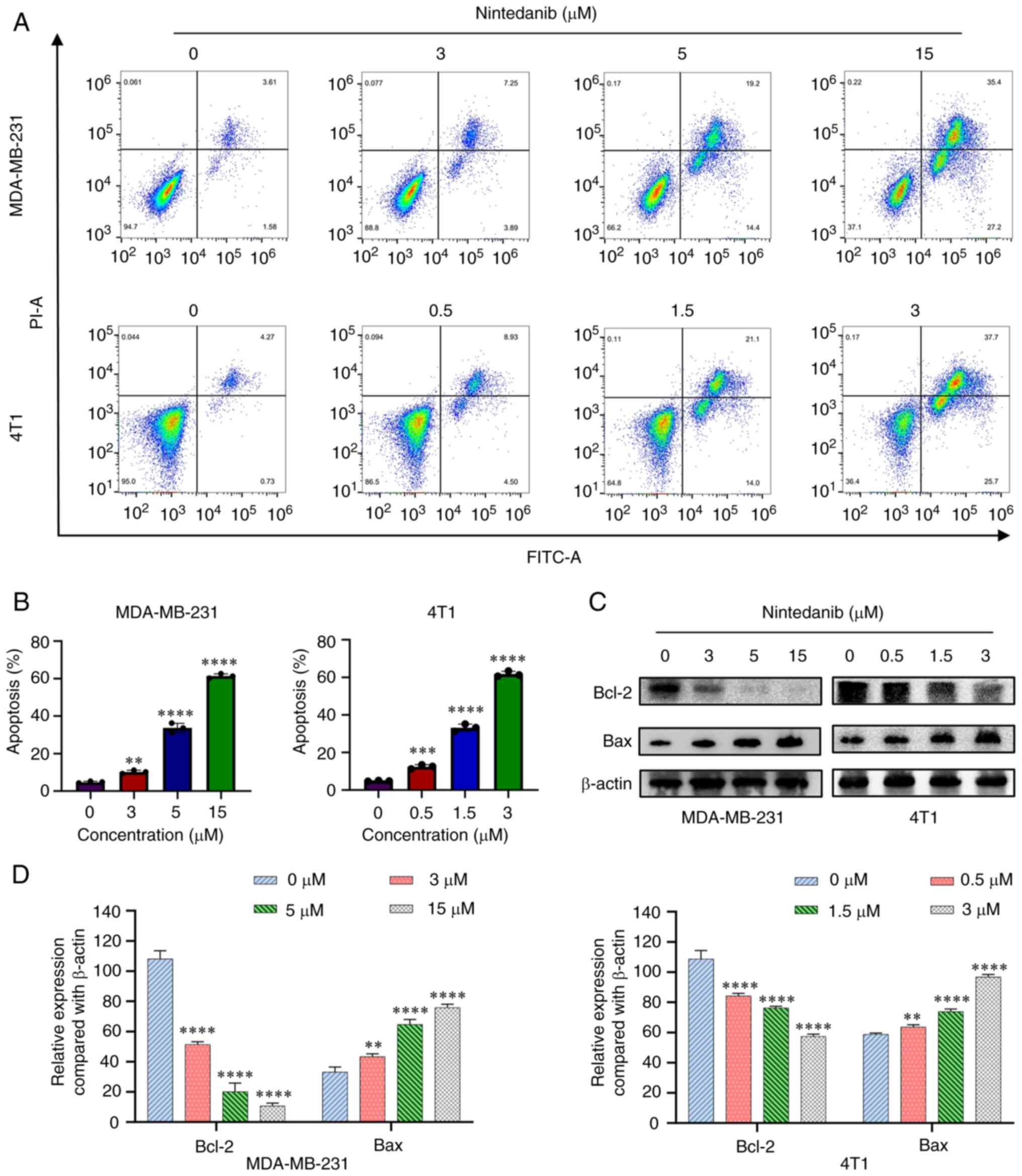
Figure 2

Nintedanib induces apoptosis in TNBC
cells. (A) Flow cytometric analysis of apoptosis in TNBC cells
following nintedanib treatment. (B) Quantification of apoptosis
rates based on flow cytometry data. (C) Western blot analysis of
Bcl-2 and Bax protein expression in TNBC cells after nintedanib
treatment. (D) Statistical analysis of relative protein expression
levels. All data are presented as the mean ± SD from three
independent experiments. **P<0.01,
***P<0.001 and ****P<0.0001 vs.
control. PI, propidium iodide; TNBC, triple-negative breast
cancer.

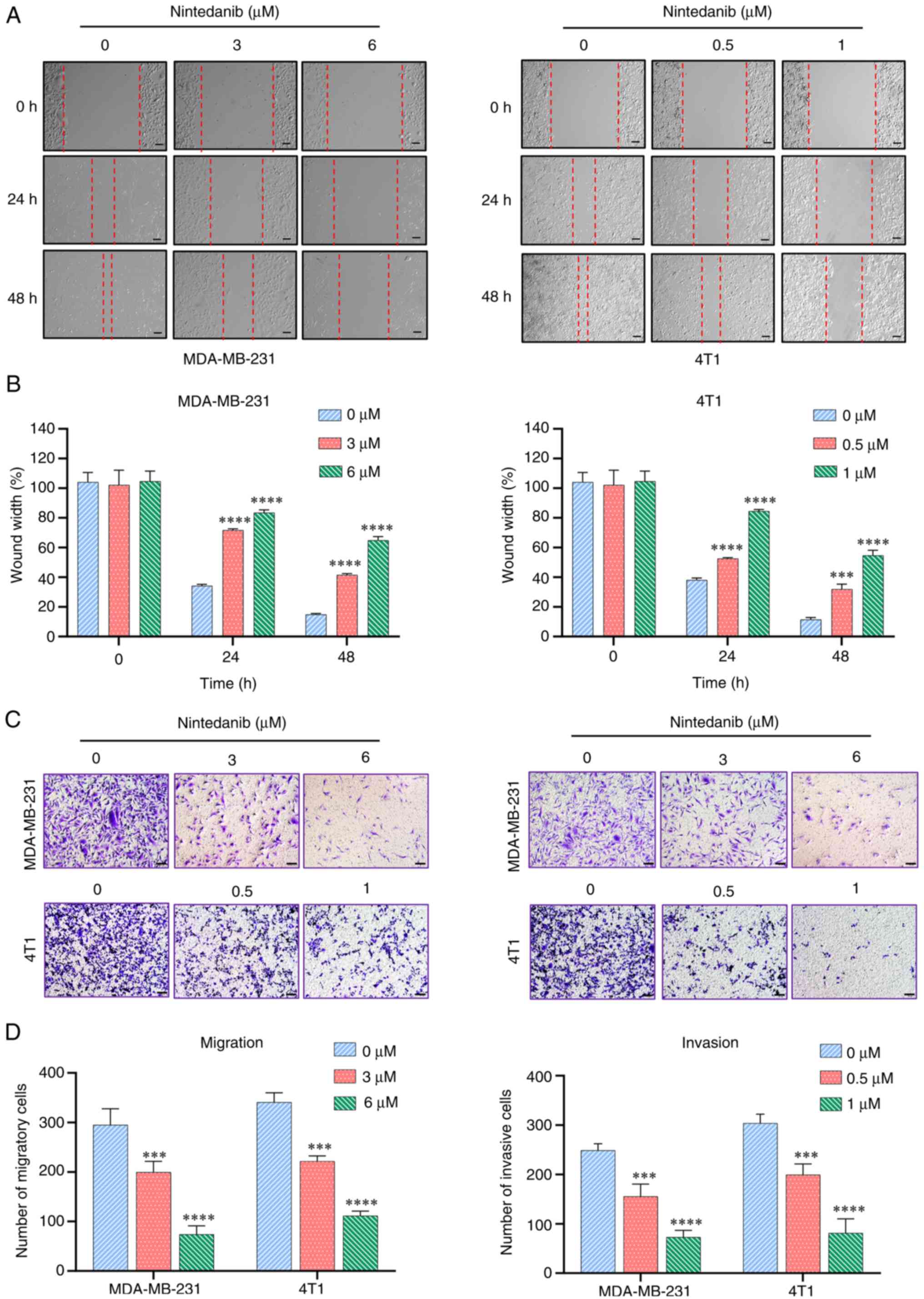
Figure 3

Nintedanib inhibits the migration and
invasion of TNBC cells. (A) Wound-healing assays were performed on
MDA-MB-231 and 4T1 cells following nintedanib treatment (scale bar,
200 µm). (B) Quantification of relative wound closure rates.
(C) Transwell migration and invasion assays were conducted to
evaluate the effects of nintedanib on TNBC cell motility (scale
bar, 200 µm). (D) Statistical analysis of the number of TNBC
cells that migrated or invaded through the membrane. All data are
presented as the mean ± SD from three independent experiments.
***P<0.001 and ****P<0.0001 vs.
control. TNBC, triple-negative breast cancer.

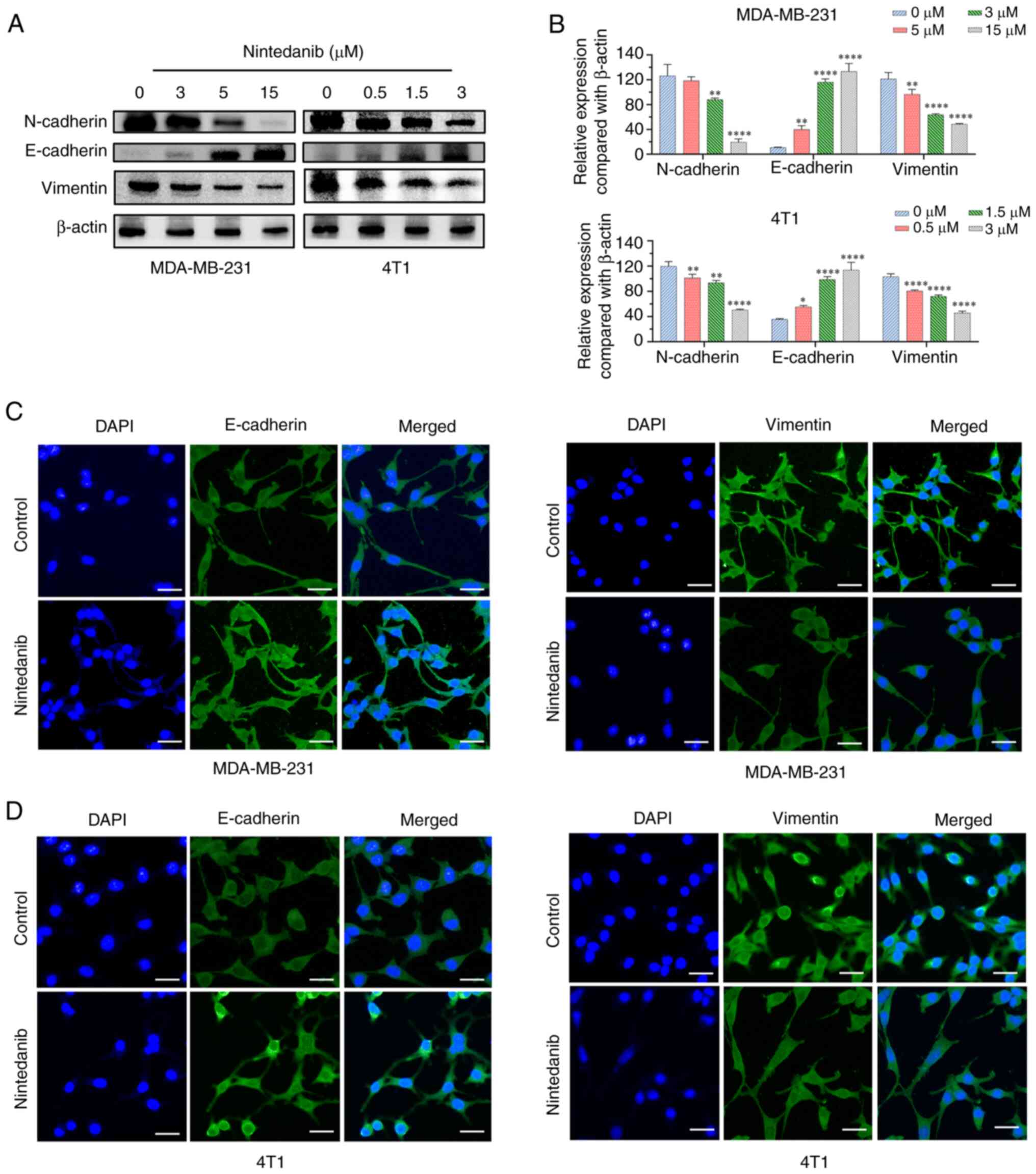
Figure 4

Nintedanib inhibits
epithelial-mesenchymal transition in MDA-MB-231 and 4T1 cells. (A)
Western blot analysis of N-cadherin, E-cadherin and vimentin
expression in TNBC cells following nintedanib treatment. (B)
Semi-quantification of relative protein expression levels.
Immunofluorescence analysis of E-cadherin and vimentin expression
in (C) MDA-MB-231 and (D) 4T1 TNBC cells after nintedanib treatment
(scale bar: 50 µm). Data are presented as the mean ± SD from
three independent experiments. *P<0.05,
**P<0.01 and ****P<0.0001 vs. control.
TNBC, triple-negative breast cancer.

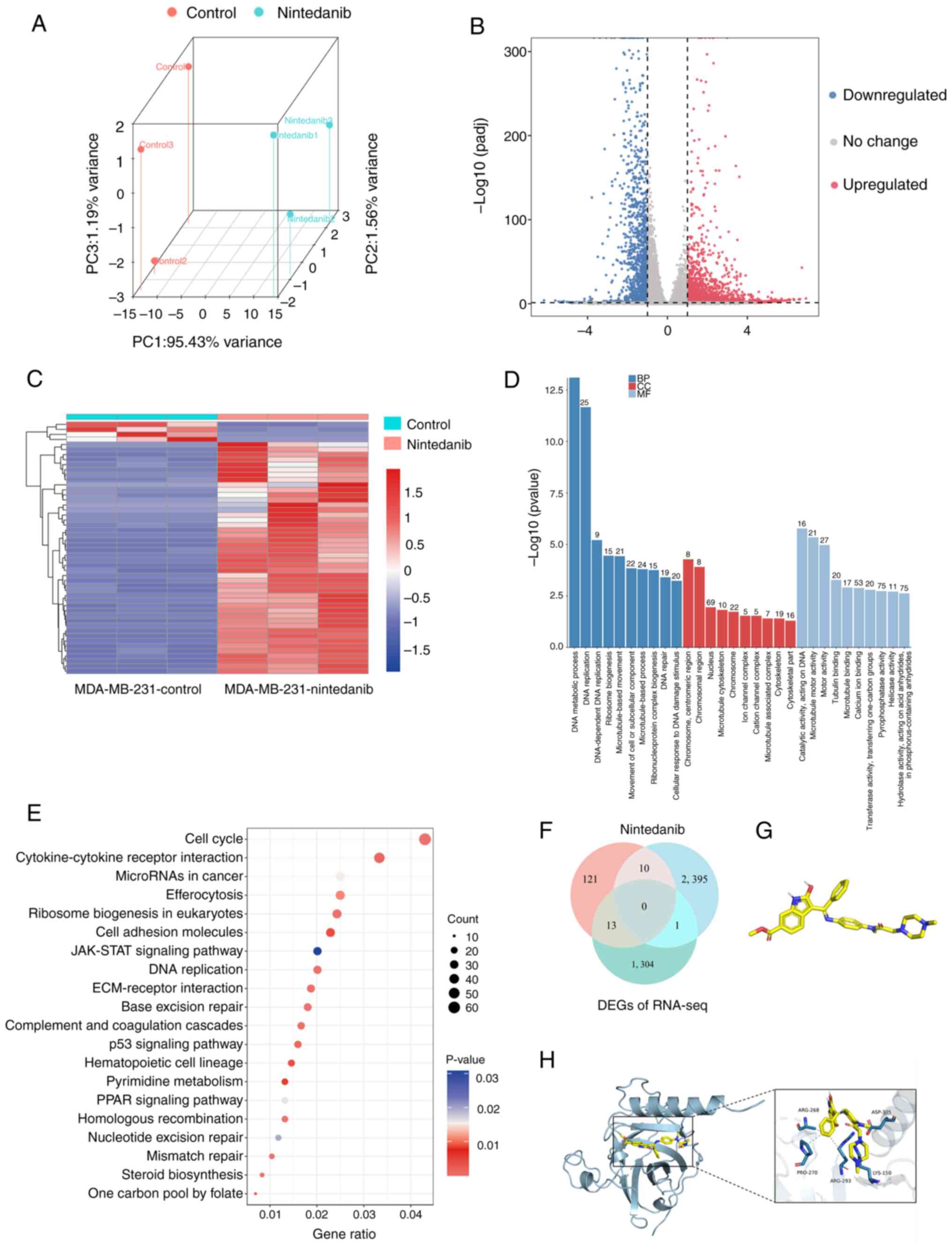
Figure 5

Bioinformatics and network
pharmacology analysis of the effects of nintedanib on TNBC. (A)
Principal component analysis scatter plot comparing control and
nintedanib-treated groups. (B) Volcano plot displaying DEGs
identified from RNA-seq data. (C) Heatmap of DEGs across three
nintedanib-treated and three control samples, with high expression
levels shown in red and low levels in blue. (D) Gene Ontology
enrichment analysis of DEGs related to TNBC. (E) Kyoto Encyclopedia
of Genes and Genomes pathway analysis of DEGs associated with TNBC.
(F) Venn diagram highlighting overlapping genes between DEGs from
RNA-seq and nintedanib targets identified via the PharmMapper
database. (G) Chemical structure of nintedanib. (H) Molecular
docking visualization of the interaction between nintedanib and
tumor protein p73. BP, biological process; CC, cellular component;
DEGs, differentially expressed genes; MF, molecular function;
RNA-seq, RNA sequencing; TNBC, triple-negative breast cancer.

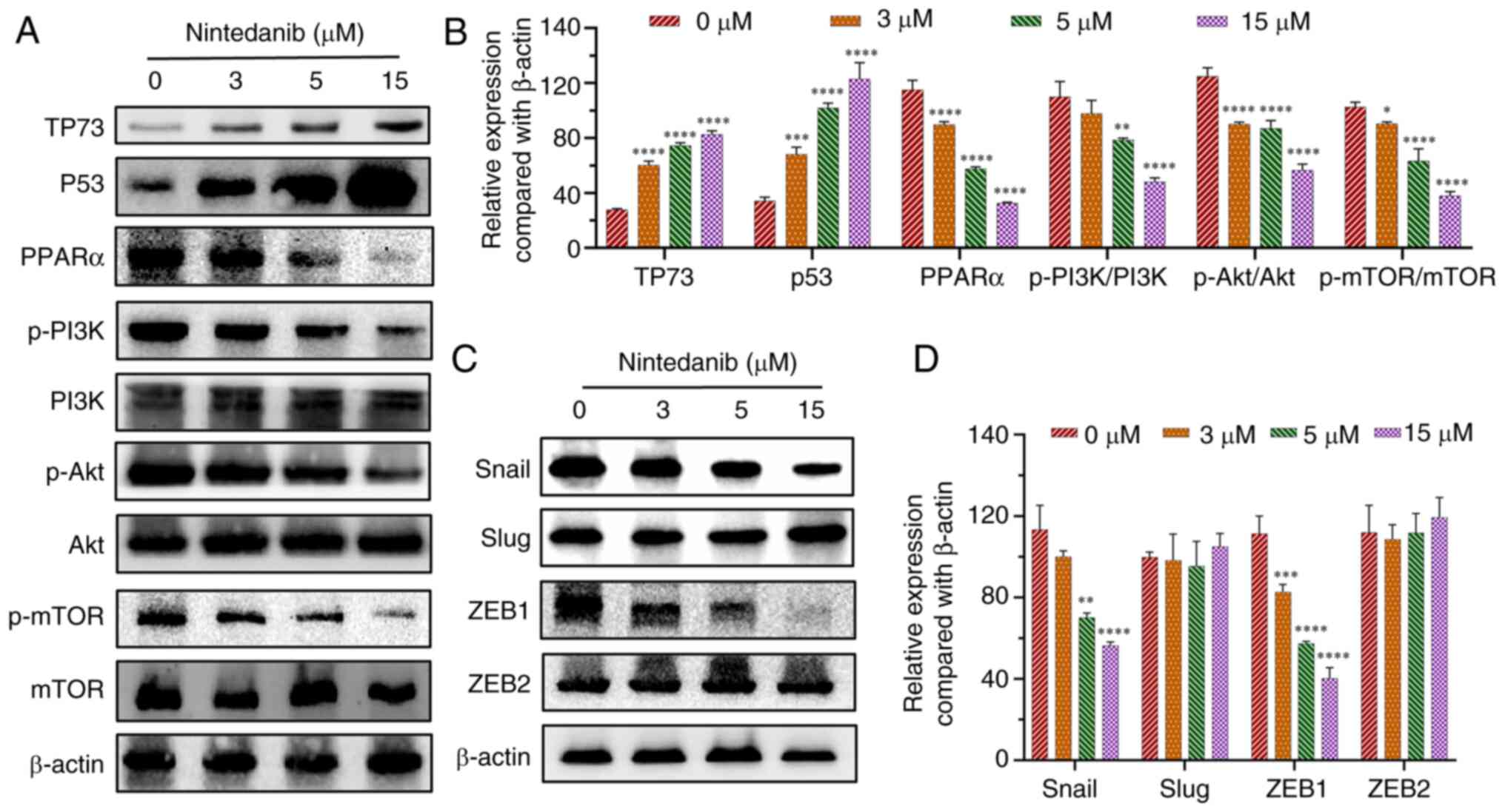
Figure 6

Expression of signaling pathway
proteins in TNBC cells following nintedanib treatment. (A) Western
blot analysis of key signaling pathway proteins after nintedanib
treatment. (B) Semi-quantification of relative protein expression
levels. (C) Western blot analysis of EMT regulatory protein
expression in TNBC cells after nintedanib treatment. (D)
Statistical analysis of relative EMT protein expression levels. All
data are presented as the mean ± SD from three independent
experiments. *P<0.05, **P<0.01,
***P<0.001 and ****P<0.0001 vs.
control. EMT, epithelial-mesenchymal transition; mTOR, mammalian
target of rapamycin; p-, phosphorylated; PPARα, peroxisome
proliferator-activated receptor α; TNBC, triple-negative breast
cancer; TP73, tumor protein p73; ZEB, zinc finger E-box-binding
homeobox protein.

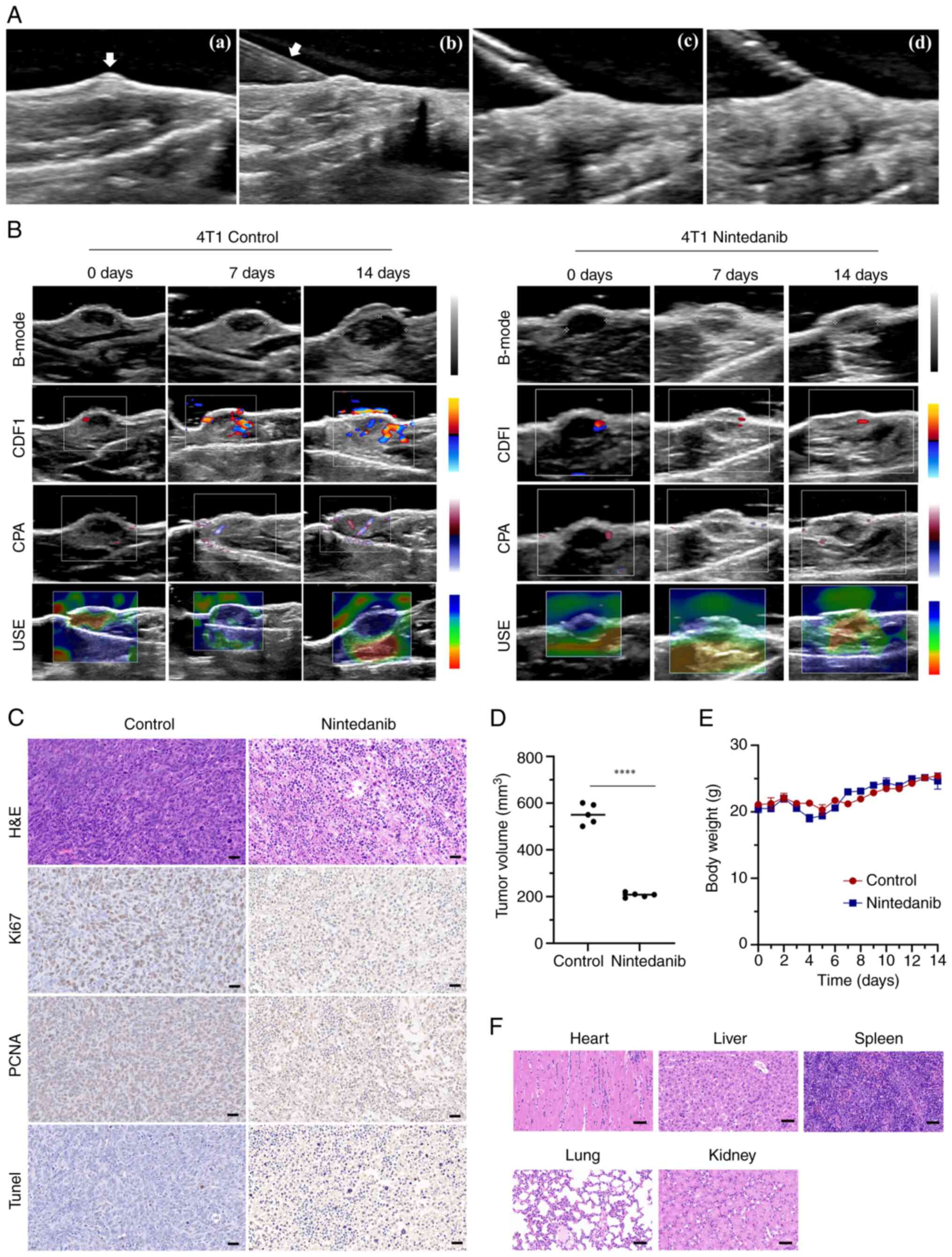
Figure 7

Nintedanib inhibits the growth of 4T1
orthotopic tumors in BALB/c mice. (A) Ultrasound-guided injection
of TNBC cell suspension into the MFP: (a) Localization of the mouse
MFP before implantation (arrow); (b) needle insertion into the MFP
(arrow); (c) injection of the cell suspension into the MFP; (d)
needle removal. (B) Multi-modal ultrasound imaging of tumors. (C)
Histological analysis of 4T1 orthotopic tumors treated with or
without nintedanib, including H&E staining,
immunohistochemistry and TUNEL staining (scale bar, 20 µm).
(D) Tumor volume measurements following nintedanib treatment. (E)
Body weight changes in mice. (F) H&E staining of major organs
from TNBC-bearing mice treated with nintedanib (scale bar, 50
µm). All data are presented as the mean ± SD from three
independent experiments. ****P<0.0001 vs. control.
H&E, hematoxylin and eosin; MFP, mammary fat pad; PCNA,
proliferating cell nuclear antigen; TNBC, triple-negative breast
cancer; CDFI, color Doppler flow imaging; CPA, color power
angiography; USE, ultrasound strain elastography.
View References

1 

Siegel RL, Miller KD and Jemal A: Cancer statistics, 2018. CA Cancer J Clin. 68:7–30. 2018.PubMed/NCBI

2 

Nolan E, Lindeman GJ and Visvader JE: Deciphering breast cancer: From biology to the clinic. Cell. 186:1708–1728. 2023. View Article : Google Scholar : PubMed/NCBI

3 

Lehmann BD, Jovanović B, Chen X, Estrada MV, Johnson KN, Shyr Y, Moses HL, Sanders ME and Pietenpol JA: Refinement of triple-negative breast cancer molecular subtypes: Implications for neoadjuvant chemotherapy selection. PLoS One. 11:e01573682016. View Article : Google Scholar :

4 

Bianchini G, De Angelis C, Licata L and Gianni L: Treatment landscape of triple-negative breast cancer-expanded options, evolving needs. Nat Rev Clin Oncol. 19:91–113. 2022. View Article : Google Scholar

5 

Waks AG and Winer EP: Breast cancer treatment: A review. JAMA. 321:288–300. 2019. View Article : Google Scholar : PubMed/NCBI

6 

Loibl S, Poortmans P, Morrow M, Denkert C and Curigliano G: Breast cancer. Lancet. 397:1750–1769. 2021. View Article : Google Scholar : PubMed/NCBI

7 

Cruwys S, Hein P, Humphries B and Black D: Drug discovery and development in idiopathic pulmonary fibrosis: The changing landscape. Drug Discov Today. 29:1042072024. View Article : Google Scholar : PubMed/NCBI

8 

Wollin L, Distler JHW, Redente EF, Riches DWH, Stowasser S, Schlenker-Herceg R, Maher TM and Kolb M: Potential of nintedanib in treatment of progressive fibrosing interstitial lung diseases. Eur Respir J. 54:19001612019. View Article : Google Scholar : PubMed/NCBI

9 

Peng M, Deng J and Li X: Clinical advances and challenges in targeting FGF/FGFR signaling in lung cancer. Mol Cancer. 23:2562024. View Article : Google Scholar : PubMed/NCBI

10 

Yao H, Ren Y, Wu F, Cao L, Liu J, Yan M and Li X: The discovery of a novel AXL/triple angiokinase inhibitor based on 6-chloro-substituted indolinone and side chain methyl substitution inhibiting pancreatic cancer growth and metastasis. J Med Chem. 68:465–490. 2025. View Article : Google Scholar

11 

Dong X, Wang L, Wang D, Yu M, Yang XJ and Cai H: Proteomic study on nintedanib in gastric cancer cells. PeerJ. 12:e167712024. View Article : Google Scholar : PubMed/NCBI

12 

Quintela-Fandino M, Urruticoechea A, Guerra J, Gil M, Gonzalez-Martin A, Marquez R, Hernandez-Agudo E, Rodriguez-Martin C, Gil-Martin M, Bratos R, et al: Phase I clinical trial of nintedanib plus paclitaxel in early HER-2-negative breast cancer (CNIO-BR-01-2010/GEICAM-2010-10 study). British Br J Cancer. 111:1060–1064. 2014. View Article : Google Scholar

13 

Adams CM, Mitra R, Xiao Y, Michener P, Palazzo J, Chao A, Gour J, Cassel J, Salvino JM and Eischen CM: Targeted MDM2 degradation reveals a new vulnerability for p53-inactivated triple-negative breast cancer. Cancer Discov. 13:1210–1229. 2023. View Article : Google Scholar : PubMed/NCBI

14 

Yu Z, Dong X, Song M, Xu A, He Q, Li H, Ouyang W, Chouchane L and Ma X: Targeting UBR5 inhibits postsurgical breast cancer lung metastases by inducing CDC73 and p53 mediated apoptosis. Int J Cancer. 154:723–737. 2024. View Article : Google Scholar :

15 

Li G, Lin SS, Yu Zl, Wu XH, Liu JW, Tu GH, Liu QY, Tang YL, Jiang QN, Xu JH, et al: A PARP1 PROTAC as a novel strategy against PARP inhibitor resistance via promotion of ferroptosis in p53-positive breast cancer. Biochem Pharmacol. 206:1153292022. View Article : Google Scholar

16 

Musa S, Amara N, Selawi A, Wang J, Marchini C, Agbarya A and Mahajna J: Overcoming chemoresistance in cancer: The promise of crizotinib. Cancers (Basel). 16:24792024. View Article : Google Scholar : PubMed/NCBI

17 

Ramos H, Raimundo L and Saraiva L: p73: From the p53 shadow to a major pharmacological target in anticancer therapy. Pharmacol Res. 162:1052452020. View Article : Google Scholar

18 

Bisso A, Collavin L and Del Sal G: p73 as a pharmaceutical target for cancer therapy. Curr Pharm Des. 17:578–590. 2011. View Article : Google Scholar : PubMed/NCBI

19 

Rozenberg JM, Zvereva S, Dalina A, Blatov I, Zubarev I, Luppov D, Bessmertnyi A, Romanishin A, Alsoulaiman L, Kumeiko V, et al: Dual role of p73 in cancer microenvironment and DNA damage response. Cells. 10:35162021. View Article : Google Scholar : PubMed/NCBI

20 

Wang X, Shen Y, Wang S, Li S, Zhang W, Liu X, Lai L, Pei J and Li H: PharmMapper 2017 update: A web server for potential drug target identification with a comprehensive target pharmacophore database. Nucleic Acids Res. 45(W1): W356–W60. 2017. View Article : Google Scholar

21 

Wang Z, Wang HY, Chung CR, Horng JT, Lu JJ and Lee TY: Large-scale mass spectrometry data combined with demographics analysis rapidly predicts methicillin resistance in Staphylococcus aureus. Brief Bioinform. 22:bbaa2932021. View Article : Google Scholar

22 

Sui X, Kong N, Ye L, Han W, Zhou J, Zhang Q, He C and Pan H: p38 and JNK MAPK pathways control the balance of apoptosis and autophagy in response to chemotherapeutic agents. Cancer Lett. 344:174–179. 2014. View Article : Google Scholar

23 

Kiri S and Ryba T: Cancer, metastasis, and the epigenome. Mol Cancer. 23:1542024. View Article : Google Scholar : PubMed/NCBI

24 

Teufelsbauer M, Stickler S, Eggerstorfer MT, Hammond DC and Hamilton G: BET-directed PROTACs in triple negative breast cancer cell lines MDA-MB-231 and MDA-MB-436. Breast Cancer Res Treat. 208:89–101. 2024. View Article : Google Scholar :

25 

Pham TH, Park HM, Kim J, Hong JT and Yoon DY: Interleukin-32θ triggers cellular senescence and reduces sensitivity to doxorubicin-mediated cytotoxicity in MDA-MB-231 Cells. Int J Mol Sci. 22:49752021. View Article : Google Scholar

26 

Hwang SY, Park S and Kwon Y: Recent therapeutic trends and promising targets in triple negative breast cancer. Pharmacol Ther. 199:30–57. 2019. View Article : Google Scholar

27 

van Dorst DCH, Dobbin SJH, Neves KB, Herrmann J, Herrmann SM, Versmissen J, Mathijssen RHJ, Danser AHJ and Lang NN: Hypertension and prohypertensive antineoplastic therapies in cancer patients. Circ Res. 128:1040–1061. 2021. View Article : Google Scholar : PubMed/NCBI

28 

Li Y, Zhang H, Merkher Y, Chen L, Liu N, Leonov S and Chen Y: Recent advances in therapeutic strategies for triple-negative breast cancer. J Hematol Oncol. 15:1212022. View Article : Google Scholar :

29 

Pushpakom S, Iorio F, Eyers PA, Escott KJ, Hopper S, Wells A, Doig A, Guilliams T, Latimer J, McNamee C, et al: Drug repurposing: Progress, challenges and recommendations. Nat Rev Drug Discov. 18:41–58. 2019. View Article : Google Scholar

30 

Pan L, Cheng Y, Yang W, Wu X, Zhu H, Hu M, Zhang Y and Zhang M: Nintedanib ameliorates bleomycin-induced pulmonary fibrosis, inflammation, apoptosis, and oxidative stress by modulating PI3K/Akt/mTOR pathway in mice. Inflammation. 46:1531–1542. 2023. View Article : Google Scholar

31 

Ferrara N, Gerber HP and LeCouter J: The biology of VEGF and its receptors. Nat Med. 9:669–676. 2003. View Article : Google Scholar : PubMed/NCBI

32 

Tomuleasa C, Tigu AB, Munteanu R, Moldovan CS, Kegyes D, Onaciu A, Gulei D, Ghiaur G, Einsele H and Croce CM: Therapeutic advances of targeting receptor tyrosine kinases in cancer. Signal Transduct Target Ther. 9:2012024. View Article : Google Scholar : PubMed/NCBI

33 

Peuget S, Zhou X and Selivanova G: Translating p53-based therapies for cancer into the clinic. Nat Rev Cancer. 24:192–215. 2024. View Article : Google Scholar : PubMed/NCBI

34 

Tuval A, Strandgren C, Heldin A, Palomar-Siles M and Wiman KG: Pharmacological reactivation of p53 in the era of precision anticancer medicine. Nat Rev Clin Oncol. 21:106–120. 2024. View Article : Google Scholar

35 

Rodriguez Calleja L, Lavaud M, Tesfaye R, Brounais-Le-Royer B, Baud'huin M, Georges S, Lamoureux F, Verrecchia F and Ory B: The p53 family members p63 and p73 roles in the metastatic dissemination: Interactions with microRNAs and TGFβ pathway. Cancers (Basel). 14:59482022. View Article : Google Scholar

36 

Sampath D, Calin GA, Puduvalli VK, Gopisetty G, Taccioli C, Liu CG, Ewald B, Liu C, Keating MJ and Plunkett W: Specific activation of microRNA106b enables the p73 apoptotic response in chronic lymphocytic leukemia by targeting the ubiquitin ligase Itch for degradation. Blood. 113:3744–3753. 2009. View Article : Google Scholar

37 

Humbert M, Federzoni EA and Tschan MP: Distinct TP73-DAPK2-ATG5 pathway involvement in ATO-mediated cell death versus ATRA-mediated autophagy responses in APL. J Leukoc Biol. 102:1357–1370. 2017. View Article : Google Scholar : PubMed/NCBI

38 

Browne IM, André F, Chandarlapaty S, Carey LA and Turner NC: Optimal targeting of PI3K-AKT and mTOR in advanced oestrogen receptor-positive breast cancer. Lancet Oncol. 25:e139–e151. 2024. View Article : Google Scholar : PubMed/NCBI

39 

Zhu L, Li XX, Shi L, Wu J, Qian JY, Xia TS, Zhou WB, Sun X, Zhou XJ, Wei JF and Ding Q: Rapamycin enhances the sensitivity of ER-positive breast cancer cells to tamoxifen by upregulating p73 expression. Oncol Rep. 41:455–464. 2019.

40 

Lu Z, Jiao D, Qiao J, Yang S, Yan M, Cui S and Liu Z: Restin suppressed epithelial-mesenchymal transition and tumor metastasis in breast cancer cells through upregulating mir-200a/b expression via association with p73. Mol Cancer. 14:1022015. View Article : Google Scholar : PubMed/NCBI

41 

Goossens S, Vandamme N, Van Vlierberghe P and Berx G: EMT transcription factors in cancer development re-evaluated: Beyond EMT and MET. Biochim Biophys Acta Rev Cancer. 1868:584–591. 2017. View Article : Google Scholar : PubMed/NCBI

42 

Garinet S, Didelot A, Denize T, Perrier A, Beinse G, Leclere JB, Oudart JB, Gibault L, Badoual C, Le Pimpec-Barthes F, et al: Clinical assessment of the miR-34, miR-200, ZEB1 and SNAIL EMT regulation hub underlines the differential prognostic value of EMT miRs to drive mesenchymal transition and prognosis in resected NSCLC. Br J Cancer. 125:1544–1551. 2021. View Article : Google Scholar : PubMed/NCBI

43 

Capdevila J, Carrato A, Tabernero J and Grande E: What could Nintedanib (BIBF 1120), a triple inhibitor of VEGFR, PDGFR, and FGFR, add to the current treatment options for patients with metastatic colorectal cancer? Crit Rev Oncol Hematol. 92:83–106. 2014. View Article : Google Scholar : PubMed/NCBI

44 

Khalique S and Banerjee S: Nintedanib in ovarian cancer. Expert Opin Investig Drugs. 26:1073–1081. 2017. View Article : Google Scholar : PubMed/NCBI

45 

Roth GJ, Binder R, Colbatzky F, Dallinger C, Schlenker-Herceg R, Hilberg F, Wollin SL and Kaiser R: Nintedanib: From discovery to the clinic. J Med Chem. 58:1053–1063. 2015. View Article : Google Scholar

46 

Tu J, Xu H, Ma L, Li C, Qin W, Chen X, Yi M, Sun L, Liu B and Yuan X: Nintedanib enhances the efficacy of PD-L1 blockade by upregulating MHC-I and PD-L1 expression in tumor cells. Theranostics. 12:747–766. 2022. View Article : Google Scholar : PubMed/NCBI

47 

Mukhopadhyay B, Singh S and Singh A: Utilizing nanomaterials for cancer treatment and diagnosis: An overview. Discov Nano. 19:2152024. View Article : Google Scholar : PubMed/NCBI

Related Articles

  • Abstract
  • View
  • Download
  • Twitter
Copy and paste a formatted citation
Spandidos Publications style
Zou X, Li S, Huang S, Niu R, Liu G and Wang Z: Harnessing TP73‑targeted nintedanib: A novel strategy to halt triple‑negative breast cancer via p53‑PPAR&alpha;/PI3K‑Akt pathway suppression. Int J Oncol 67: 88, 2025.
APA
Zou, X., Li, S., Huang, S., Niu, R., Liu, G., & Wang, Z. (2025). Harnessing TP73‑targeted nintedanib: A novel strategy to halt triple‑negative breast cancer via p53‑PPAR&alpha;/PI3K‑Akt pathway suppression. International Journal of Oncology, 67, 88. https://doi.org/10.3892/ijo.2025.5794
MLA
Zou, X., Li, S., Huang, S., Niu, R., Liu, G., Wang, Z."Harnessing TP73‑targeted nintedanib: A novel strategy to halt triple‑negative breast cancer via p53‑PPAR&alpha;/PI3K‑Akt pathway suppression". International Journal of Oncology 67.5 (2025): 88.
Chicago
Zou, X., Li, S., Huang, S., Niu, R., Liu, G., Wang, Z."Harnessing TP73‑targeted nintedanib: A novel strategy to halt triple‑negative breast cancer via p53‑PPAR&alpha;/PI3K‑Akt pathway suppression". International Journal of Oncology 67, no. 5 (2025): 88. https://doi.org/10.3892/ijo.2025.5794
Copy and paste a formatted citation
x
Spandidos Publications style
Zou X, Li S, Huang S, Niu R, Liu G and Wang Z: Harnessing TP73‑targeted nintedanib: A novel strategy to halt triple‑negative breast cancer via p53‑PPAR&alpha;/PI3K‑Akt pathway suppression. Int J Oncol 67: 88, 2025.
APA
Zou, X., Li, S., Huang, S., Niu, R., Liu, G., & Wang, Z. (2025). Harnessing TP73‑targeted nintedanib: A novel strategy to halt triple‑negative breast cancer via p53‑PPAR&alpha;/PI3K‑Akt pathway suppression. International Journal of Oncology, 67, 88. https://doi.org/10.3892/ijo.2025.5794
MLA
Zou, X., Li, S., Huang, S., Niu, R., Liu, G., Wang, Z."Harnessing TP73‑targeted nintedanib: A novel strategy to halt triple‑negative breast cancer via p53‑PPAR&alpha;/PI3K‑Akt pathway suppression". International Journal of Oncology 67.5 (2025): 88.
Chicago
Zou, X., Li, S., Huang, S., Niu, R., Liu, G., Wang, Z."Harnessing TP73‑targeted nintedanib: A novel strategy to halt triple‑negative breast cancer via p53‑PPAR&alpha;/PI3K‑Akt pathway suppression". International Journal of Oncology 67, no. 5 (2025): 88. https://doi.org/10.3892/ijo.2025.5794
Follow us
  • Twitter
  • LinkedIn
  • Facebook
About
  • Spandidos Publications
  • Careers
  • Cookie Policy
  • Privacy Policy
How can we help?
  • Help
  • Live Chat
  • Contact
  • Email to our Support Team