Spandidos Publications Logo
  • About
    • About Spandidos
    • Aims and Scopes
    • Abstracting and Indexing
    • Editorial Policies
    • Reprints and Permissions
    • Job Opportunities
    • Terms and Conditions
    • Contact
  • Journals
    • All Journals
    • Oncology Letters
      • Oncology Letters
      • Information for Authors
      • Editorial Policies
      • Editorial Board
      • Aims and Scope
      • Abstracting and Indexing
      • Bibliographic Information
      • Archive
    • International Journal of Oncology
      • International Journal of Oncology
      • Information for Authors
      • Editorial Policies
      • Editorial Board
      • Aims and Scope
      • Abstracting and Indexing
      • Bibliographic Information
      • Archive
    • Molecular and Clinical Oncology
      • Molecular and Clinical Oncology
      • Information for Authors
      • Editorial Policies
      • Editorial Board
      • Aims and Scope
      • Abstracting and Indexing
      • Bibliographic Information
      • Archive
    • Experimental and Therapeutic Medicine
      • Experimental and Therapeutic Medicine
      • Information for Authors
      • Editorial Policies
      • Editorial Board
      • Aims and Scope
      • Abstracting and Indexing
      • Bibliographic Information
      • Archive
    • International Journal of Molecular Medicine
      • International Journal of Molecular Medicine
      • Information for Authors
      • Editorial Policies
      • Editorial Board
      • Aims and Scope
      • Abstracting and Indexing
      • Bibliographic Information
      • Archive
    • Biomedical Reports
      • Biomedical Reports
      • Information for Authors
      • Editorial Policies
      • Editorial Board
      • Aims and Scope
      • Abstracting and Indexing
      • Bibliographic Information
      • Archive
    • Oncology Reports
      • Oncology Reports
      • Information for Authors
      • Editorial Policies
      • Editorial Board
      • Aims and Scope
      • Abstracting and Indexing
      • Bibliographic Information
      • Archive
    • Molecular Medicine Reports
      • Molecular Medicine Reports
      • Information for Authors
      • Editorial Policies
      • Editorial Board
      • Aims and Scope
      • Abstracting and Indexing
      • Bibliographic Information
      • Archive
    • World Academy of Sciences Journal
      • World Academy of Sciences Journal
      • Information for Authors
      • Editorial Policies
      • Editorial Board
      • Aims and Scope
      • Abstracting and Indexing
      • Bibliographic Information
      • Archive
    • International Journal of Functional Nutrition
      • International Journal of Functional Nutrition
      • Information for Authors
      • Editorial Policies
      • Editorial Board
      • Aims and Scope
      • Abstracting and Indexing
      • Bibliographic Information
      • Archive
    • International Journal of Epigenetics
      • International Journal of Epigenetics
      • Information for Authors
      • Editorial Policies
      • Editorial Board
      • Aims and Scope
      • Abstracting and Indexing
      • Bibliographic Information
      • Archive
    • Medicine International
      • Medicine International
      • Information for Authors
      • Editorial Policies
      • Editorial Board
      • Aims and Scope
      • Abstracting and Indexing
      • Bibliographic Information
      • Archive
  • Articles
  • Information
    • Information for Authors
    • Information for Reviewers
    • Information for Librarians
    • Information for Advertisers
    • Conferences
  • Language Editing
Spandidos Publications Logo
  • About
    • About Spandidos
    • Aims and Scopes
    • Abstracting and Indexing
    • Editorial Policies
    • Reprints and Permissions
    • Job Opportunities
    • Terms and Conditions
    • Contact
  • Journals
    • All Journals
    • Biomedical Reports
      • Information for Authors
      • Editorial Policies
      • Editorial Board
      • Aims and Scope
      • Abstracting and Indexing
      • Bibliographic Information
      • Archive
    • Experimental and Therapeutic Medicine
      • Information for Authors
      • Editorial Policies
      • Editorial Board
      • Aims and Scope
      • Abstracting and Indexing
      • Bibliographic Information
      • Archive
    • International Journal of Epigenetics
      • Information for Authors
      • Editorial Policies
      • Editorial Board
      • Aims and Scope
      • Abstracting and Indexing
      • Bibliographic Information
      • Archive
    • International Journal of Functional Nutrition
      • Information for Authors
      • Editorial Policies
      • Editorial Board
      • Aims and Scope
      • Abstracting and Indexing
      • Bibliographic Information
      • Archive
    • International Journal of Molecular Medicine
      • Information for Authors
      • Editorial Policies
      • Editorial Board
      • Aims and Scope
      • Abstracting and Indexing
      • Bibliographic Information
      • Archive
    • International Journal of Oncology
      • Information for Authors
      • Editorial Policies
      • Editorial Board
      • Aims and Scope
      • Abstracting and Indexing
      • Bibliographic Information
      • Archive
    • Medicine International
      • Information for Authors
      • Editorial Policies
      • Editorial Board
      • Aims and Scope
      • Abstracting and Indexing
      • Bibliographic Information
      • Archive
    • Molecular and Clinical Oncology
      • Information for Authors
      • Editorial Policies
      • Editorial Board
      • Aims and Scope
      • Abstracting and Indexing
      • Bibliographic Information
      • Archive
    • Molecular Medicine Reports
      • Information for Authors
      • Editorial Policies
      • Editorial Board
      • Aims and Scope
      • Abstracting and Indexing
      • Bibliographic Information
      • Archive
    • Oncology Letters
      • Information for Authors
      • Editorial Policies
      • Editorial Board
      • Aims and Scope
      • Abstracting and Indexing
      • Bibliographic Information
      • Archive
    • Oncology Reports
      • Information for Authors
      • Editorial Policies
      • Editorial Board
      • Aims and Scope
      • Abstracting and Indexing
      • Bibliographic Information
      • Archive
    • World Academy of Sciences Journal
      • Information for Authors
      • Editorial Policies
      • Editorial Board
      • Aims and Scope
      • Abstracting and Indexing
      • Bibliographic Information
      • Archive
  • Articles
  • Information
    • For Authors
    • For Reviewers
    • For Librarians
    • For Advertisers
    • Conferences
  • Language Editing
Login Register Submit
  • This site uses cookies
  • You can change your cookie settings at any time by following the instructions in our Cookie Policy. To find out more, you may read our Privacy Policy.

    I agree
Search articles by DOI, keyword, author or affiliation
Search
Advanced Search
presentation
International Journal of Oncology
Join Editorial Board Propose a Special Issue
Print ISSN: 1019-6439 Online ISSN: 1791-2423
Journal Cover
November-2025 Volume 67 Issue 5

Full Size Image

Cover Legend PDF

Sign up for eToc alerts
Recommend to Library

Journals

International Journal of Molecular Medicine

International Journal of Molecular Medicine

International Journal of Molecular Medicine is an international journal devoted to molecular mechanisms of human disease.

International Journal of Oncology

International Journal of Oncology

International Journal of Oncology is an international journal devoted to oncology research and cancer treatment.

Molecular Medicine Reports

Molecular Medicine Reports

Covers molecular medicine topics such as pharmacology, pathology, genetics, neuroscience, infectious diseases, molecular cardiology, and molecular surgery.

Oncology Reports

Oncology Reports

Oncology Reports is an international journal devoted to fundamental and applied research in Oncology.

Experimental and Therapeutic Medicine

Experimental and Therapeutic Medicine

Experimental and Therapeutic Medicine is an international journal devoted to laboratory and clinical medicine.

Oncology Letters

Oncology Letters

Oncology Letters is an international journal devoted to Experimental and Clinical Oncology.

Biomedical Reports

Biomedical Reports

Explores a wide range of biological and medical fields, including pharmacology, genetics, microbiology, neuroscience, and molecular cardiology.

Molecular and Clinical Oncology

Molecular and Clinical Oncology

International journal addressing all aspects of oncology research, from tumorigenesis and oncogenes to chemotherapy and metastasis.

World Academy of Sciences Journal

World Academy of Sciences Journal

Multidisciplinary open-access journal spanning biochemistry, genetics, neuroscience, environmental health, and synthetic biology.

International Journal of Functional Nutrition

International Journal of Functional Nutrition

Open-access journal combining biochemistry, pharmacology, immunology, and genetics to advance health through functional nutrition.

International Journal of Epigenetics

International Journal of Epigenetics

Publishes open-access research on using epigenetics to advance understanding and treatment of human disease.

Medicine International

Medicine International

An International Open Access Journal Devoted to General Medicine.

Journal Cover
November-2025 Volume 67 Issue 5

Full Size Image

Cover Legend PDF

Sign up for eToc alerts
Recommend to Library

  • Article
  • Citations
    • Cite This Article
    • Download Citation
    • Create Citation Alert
    • Remove Citation Alert
    • Cited By
  • Similar Articles
    • Related Articles (in Spandidos Publications)
    • Similar Articles (Google Scholar)
    • Similar Articles (PubMed)
  • Download PDF
  • Download XML
  • View XML

  • Supplementary Files
    • Supplementary_Data.pdf
Article Open Access

Cooperation between ZEB2 and SP1 upregulates PD‑L1 and CCL2 to promote the immunosuppressive activity of tumor cells

  • Authors:
    • Dongjoon Ko
    • Yunhee Lee
    • Junghwa Yoon
    • Eun Kyoung Choi
    • Donghwan Jang
    • Semi Kim
  • View Affiliations / Copyright

    Affiliations: Microbiome Convergence Research Center, Korea Research Institute of Bioscience and Biotechnology, Daejon 34141, Republic of Korea
    Copyright: © Ko et al. This is an open access article distributed under the terms of Creative Commons Attribution License.
  • Article Number: 95
    |
    Published online on: September 12, 2025
       https://doi.org/10.3892/ijo.2025.5801
  • Expand metrics +
Metrics: Total Views: 0 (Spandidos Publications: | PMC Statistics: )
Metrics: Total PDF Downloads: 0 (Spandidos Publications: | PMC Statistics: )
Cited By (CrossRef): 0 citations Loading Articles...

This article is mentioned in:


Abstract

Epithelial‑mesenchymal transition (EMT) is implicated in tumor progression and EMT‑inducing transcription factors play multifaceted roles; however, the molecular mechanisms underlying these processes are not well understood. Previously, we showed that ZEB2 acts cooperatively with the transcription factor SP1 to function as a transcriptional activator that promotes cancer cell invasion and survival, as well as angiogenesis. The present study reported a novel role for Zinc Finger E‑Box Binding Homeobox 2 (ZEB2) in conferring immunosuppressive activity on cancer cells, as well as the underlying molecular mechanism. ZEB2 cooperated with SP1 to upregulate transcription of CD274 and CCL2 by interacting with the proximal SP1 element in their promoters. ZEB2‑mediated programmed cell death 1 ligand 1 (PD‑L1) upregulation on tumor cells inhibited T cell activation and cytokine secretion in a co‑culture system. ZEB2 upregulated C‑C motif chemokine ligand 2 (CCL2) secretion to promote migration of macrophages and drive polarization to an M2‑like phenotype. ZEB2 suppressed the activity of tumor‑infiltrating T cells in a syngeneic mouse tumor model. Furthermore, SUMOylation of ZEB2 by PC2 was required for efficient cooperation between ZEB2 and SP1, as well as for subsequent gene expression. Clinical data showed that ZEB2 expression is associated positively with expression of CD274 and CCL2. Expression of both ZEB2 and CD274 or CBX4 has prognostic significance for predicting survival of colon cancer patients. The present study demonstrated a previously unrecognized role for ZEB2: Direct modulation of the interaction between tumor cells and immune cells. Taken together, the data increased our understanding of the molecular mechanism underlying immunosuppression mediated by an EMT‑inducing transcription factor.
View Figures

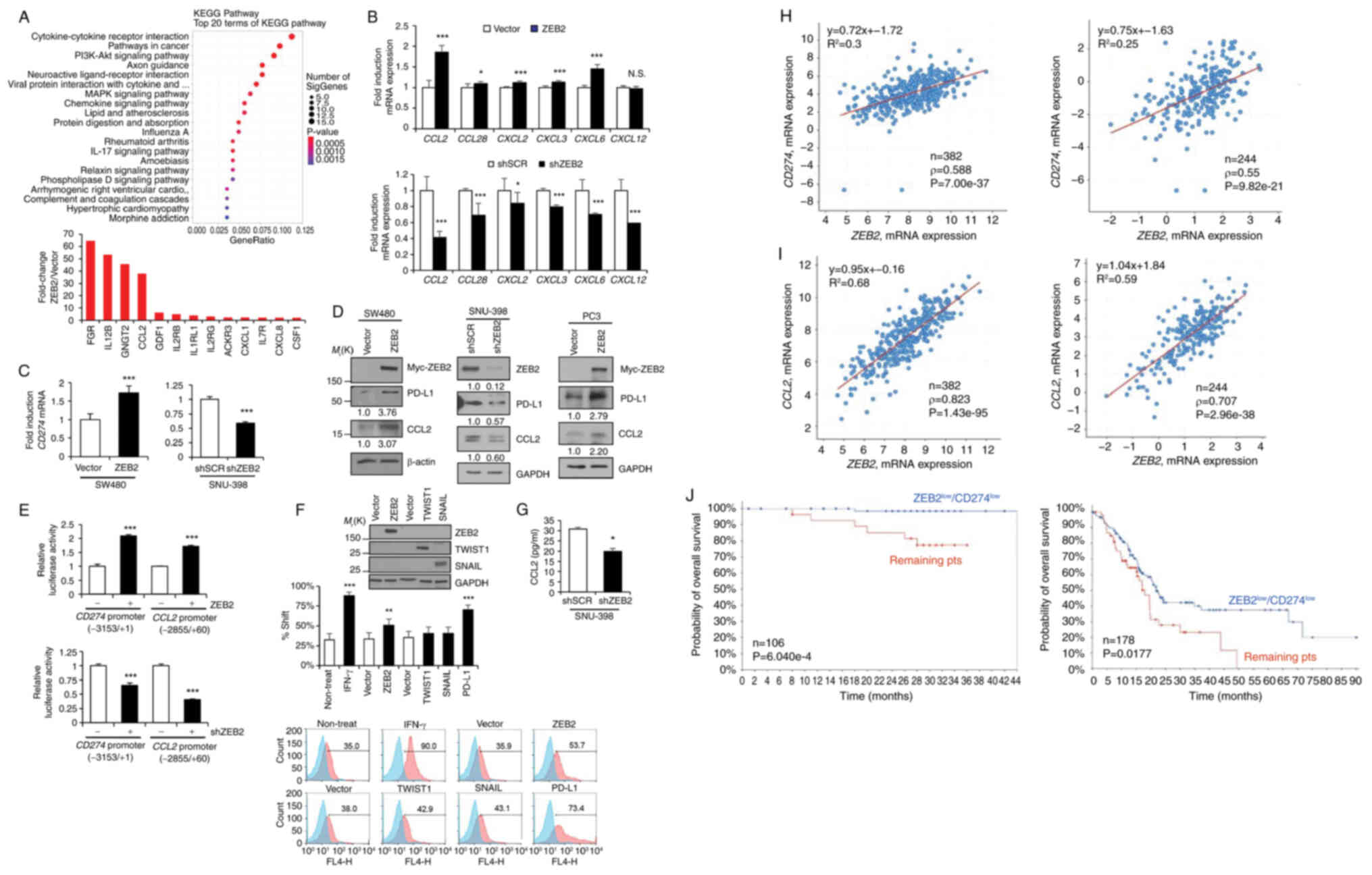
Figure 1

ZEB2 upregulates expression of PD-L1
and CCL2. (A) mRNA-seq analysis of ZEB2-overexpressing SW480 cells
and analysis of KEGG pathways affected by ZEB2 expression. The size
of each circle represents the number of genes involved in the
corresponding pathway and the color scale denotes the P-value
(upper). Changes in expression of cytokine-related genes in
ZEB2-overexpressing SW480 cells are vs. those in control cells
(lower). (B) RT-qPCR of CCL2, CCL28, CXCL2,
CXCL3, CXCL6 and CXCL12 levels in
ZEB2-overexpressing vs. control SW480 cells (upper) and in
ZEB2-suppressed vs. control SNU-398 cells (lower; n=4). (C) RT-qPCR
of CD274 mRNA levels in ZEB2-overexpressing vs. control
SW480 cells (left) and in ZEB2-suppressed vs. control SNU-398 cells
(right; n=4). (D) Analysis of CCL2 and PD-L1 protein levels in
ZEB2-overexpressing vs. control SW480 cells (left), in
ZEB2-suppressed vs. control SNU-398 cells (middle) and in
ZEB2-overexpressing vs. control PC3 cells (right). Densitometric
quantification of bands on the immunoblot was performed, with
β-actin or GAPDH as a loading control. (E) Reporter analysis of
CD274 and CCL2 promoter activity in
ZEB2-overexpressing vs. control SW480 cells (upper) and in
ZEB2-suppressed vs. control SNU-398 cells (lower; n=4). (F) Flow
cytometry analysis of PD-L1 expression in SW480 cells transfected
with ZEB2, TWIST1, or SNAIL expression vectors (n=3). Cells treated
with IFN-γ or transfected with a PD-L1 expression vector were used
as positive controls. Immunoblot analysis confirmed overexpression
of ZEB2 (anti-myc), TWIST1 (anti-flag) and SNAIL (anti-SNAIL). (G)
ELISA to measure secreted levels of CCL2 in conditioned medium from
ZEB2-suppressed vs. control SNU-398 cells (n=3). (H, I) Scatter
plots of ZEB2 mRNA expression vs. CD274 (H) and
CCL2 (I) mRNA expression in colorectal adenocarcinoma (data
from TCGA, Firehose Legacy and TCGA, Nature 2012). Correlations
were statistically analyzed using the Spearman test. Spearman's
correlation coefficients and equations were automatically generated
using the cBioPortal webpage tool. (J) Kaplan-Meier analysis
showing the relationship between overall survival of colon cancer
(CPTAC-2, Prospective, Cell 2019; n=106) and pancreatic
adenocarcinoma (TCGA, Firehose Legacy; n=178) patients and
expression of ZEB2 and CD274 mRNA. P-values were
calculated by the log-rank test. Values represent the mean ±
standard deviation. *P<0.05; **P<0.01;
***P<0.001; N.S, not significant. ZEB2, Zinc Finger
E-Box Binding Homeobox 2; PD-L1, programmed cell death 1 ligand 1;
CCL2, C-C motif chemokine ligand 2; KEGG, Kyoto Encyclopedia of
Genes and Genomes; RT-qPCR, reverse transcription-quantitative PCR;
ELISA, enzyme-linked immunosorbent assay; TCGA, The Cancer Genome
Atlas; sh, short hairpin.

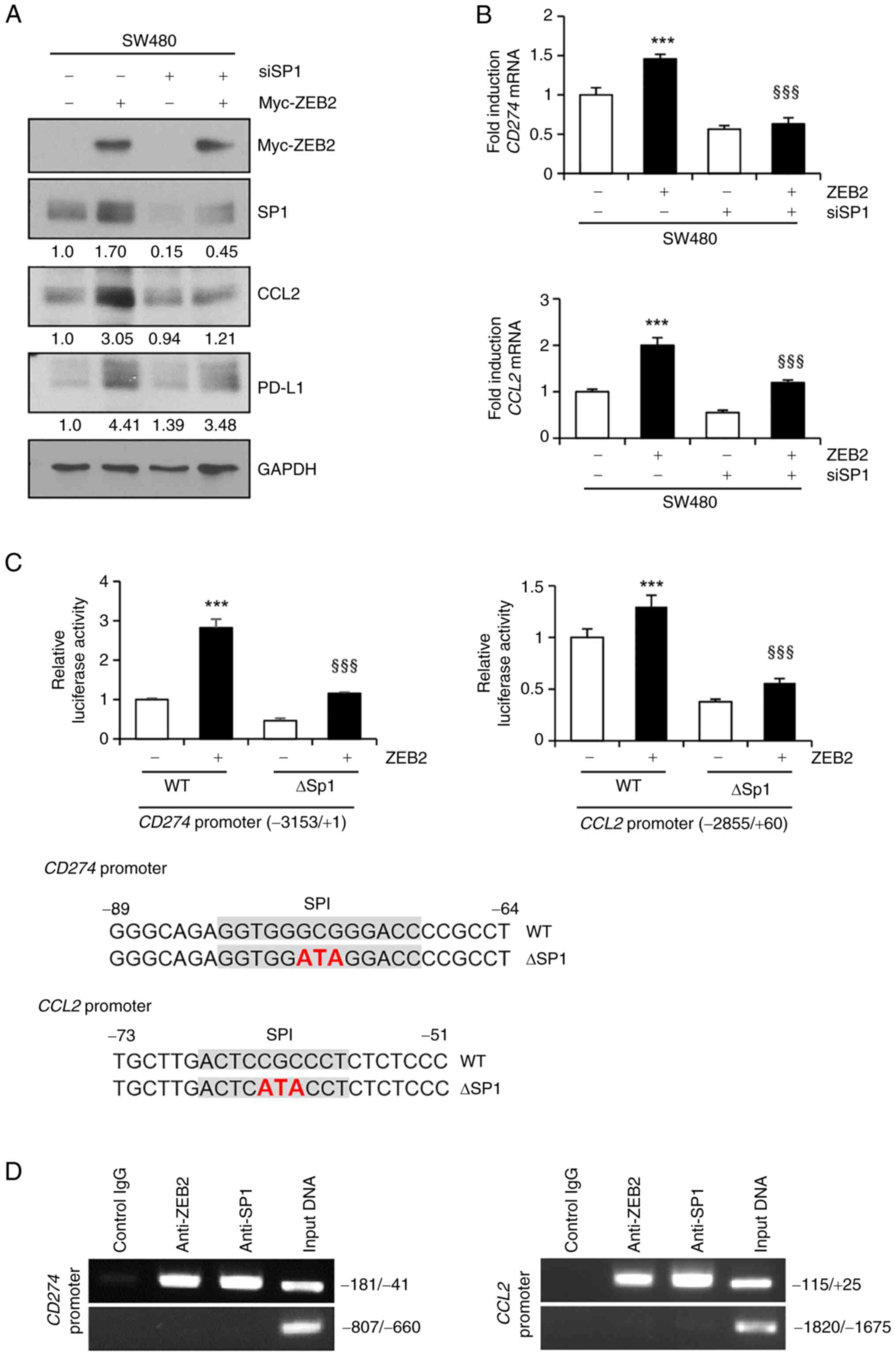
Figure 2

ZEB2 cooperates with SP1 to promote
transcription of CD274 and CCL2 by binding directly
to their promoters. (A) SW480 cells were co-transfected with siRNA
specific for SP1 (siSP1) and with a ZEB2 expression vector,
for 48 h prior to immunoblot analysis. Densitometric quantification
of bands on the immunoblot was performed, with GAPDH as a loading
control. (B) RT-qPCR of CD274 (upper) and CCL2
(lower) levels in SW480 cells co-transfected with siSP1 and the
ZEB2 expression vector (n=4). (C) Mutation analysis of the SP1 site
in the CD274 and CCL2 promoters. SW480 cells were
transfected with reporter constructs containing SP1 site mutations
and reporter activity was measured (n=4). Values represent mean ±
SD. ***P<0.001, vs. vector + control siRNA;
$$$P<0.001, vs. ZEB2 + control siRNA. (D) ChIP
analysis of the interaction between ZEB2 and SP1 and the
CD274 and CCL2 promoters. Chromatin fragments from
SNU-398 cells were immunoprecipitated by normal mouse IgG (lane 1),
anti-ZEB2 (lane 2), or anti-SP1 (lane 3) and data were analyzed by
semiquantitative PCR using CD274 (-181/-41) and CCL2
(-115/+25) promoter primers. The input control (1%) is shown in
lane 4. Irrelevant regions (-807/-660 for CD274 and
-1820/-1675 for CCL2) were also analyzed. ZEB2, Zinc Finger
E-Box Binding Homeobox 2; si, small interfering; RT-qPCR, reverse
transcription-quantitative PCR; PD-L1, programmed cell death 1
ligand 1; CCL2, C-C motif chemokine ligand 2; ChIP, chromatin
immunoprecipitation.

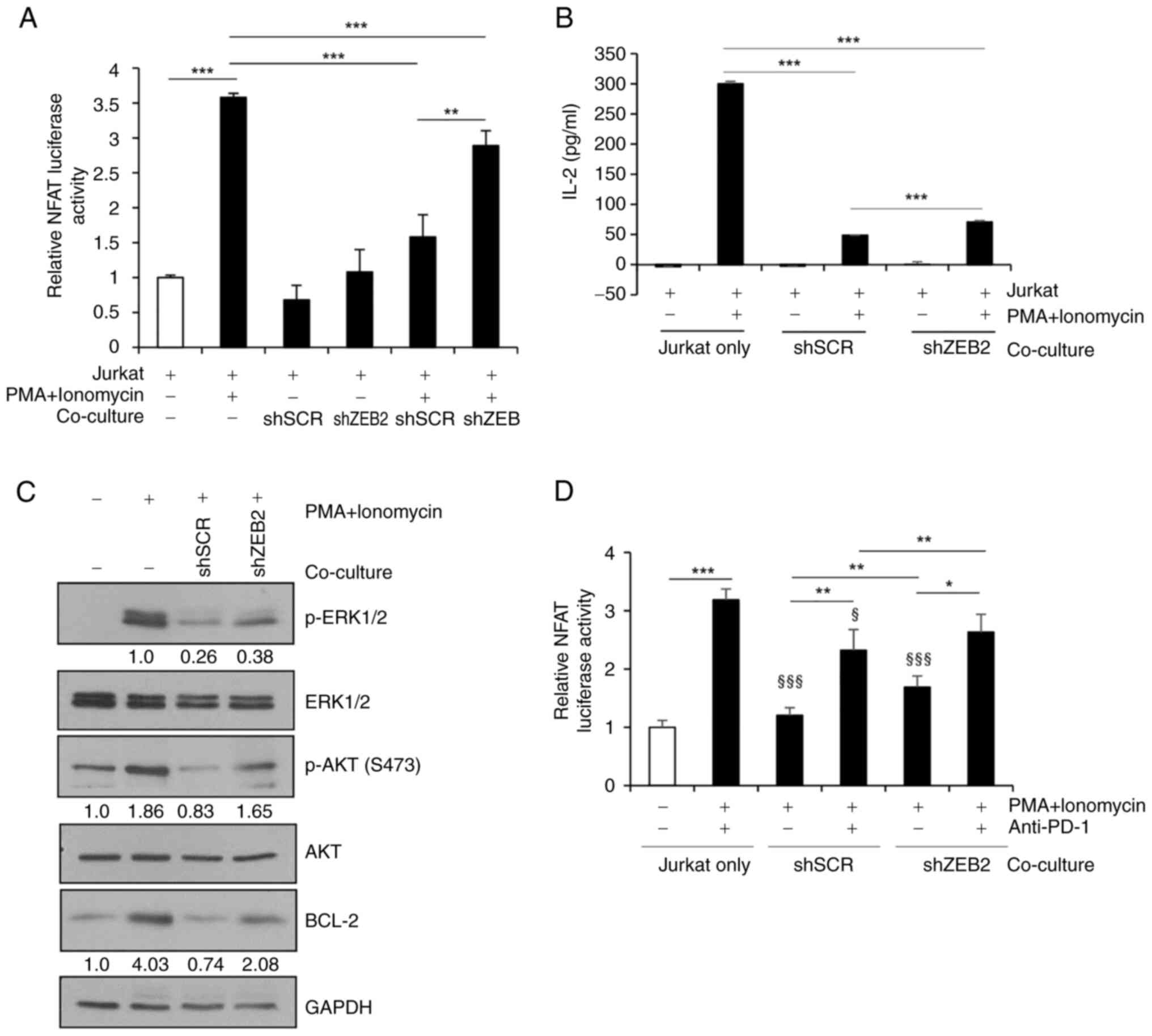
Figure 3

ZEB2 suppresses T cell activation by
upregulating PD-L1. (A) Jurkat cells transfected with NFAT-reporter
construct were co-cultured for 24 h with stable SNU-398 cells
(control vs. ZEB2-suppressed cells) and luciferase activity was
measured 24 h after stimulation with PMA and ionomycin (n=4). (B)
IL-2 secreted by Jurkat cells co-cultured with stable SNU-398 cells
was measured in an ELISA (n=3). (C) Jurkat cells were co-cultured
for 24 h with stable SNU-398 cells and then stimulated for 24 h
with PMA and ionomycin prior to immunoblot analysis. Densitometric
quantification of bands on the immunoblot was performed, with GAPDH
as a loading control. Phosphorylated proteins were normalized
against the corresponding total protein values. (D) Effect of an
anti-PD-1 antibody on NFAT activity in Jurkat cells co-cultured
with stable SNU-398 cells (n=4). Values represent mean ± SD.
*P<0.05; **P<0.01;
***P<0.001. $$$P<0.001 vs. Jurkat + PMA
+ ionomycin. ZEB2, Zinc Finger E-Box Binding Homeobox 2; PD-L1,
programmed cell death 1 ligand 1; NFAT, Nuclear factor of activated
T cells; ELISA, enzyme-linked immunosorbent assay; PMA, phorbol
12-myristate 13-acetate; p-, phosphorylated; sh, short hairpin.

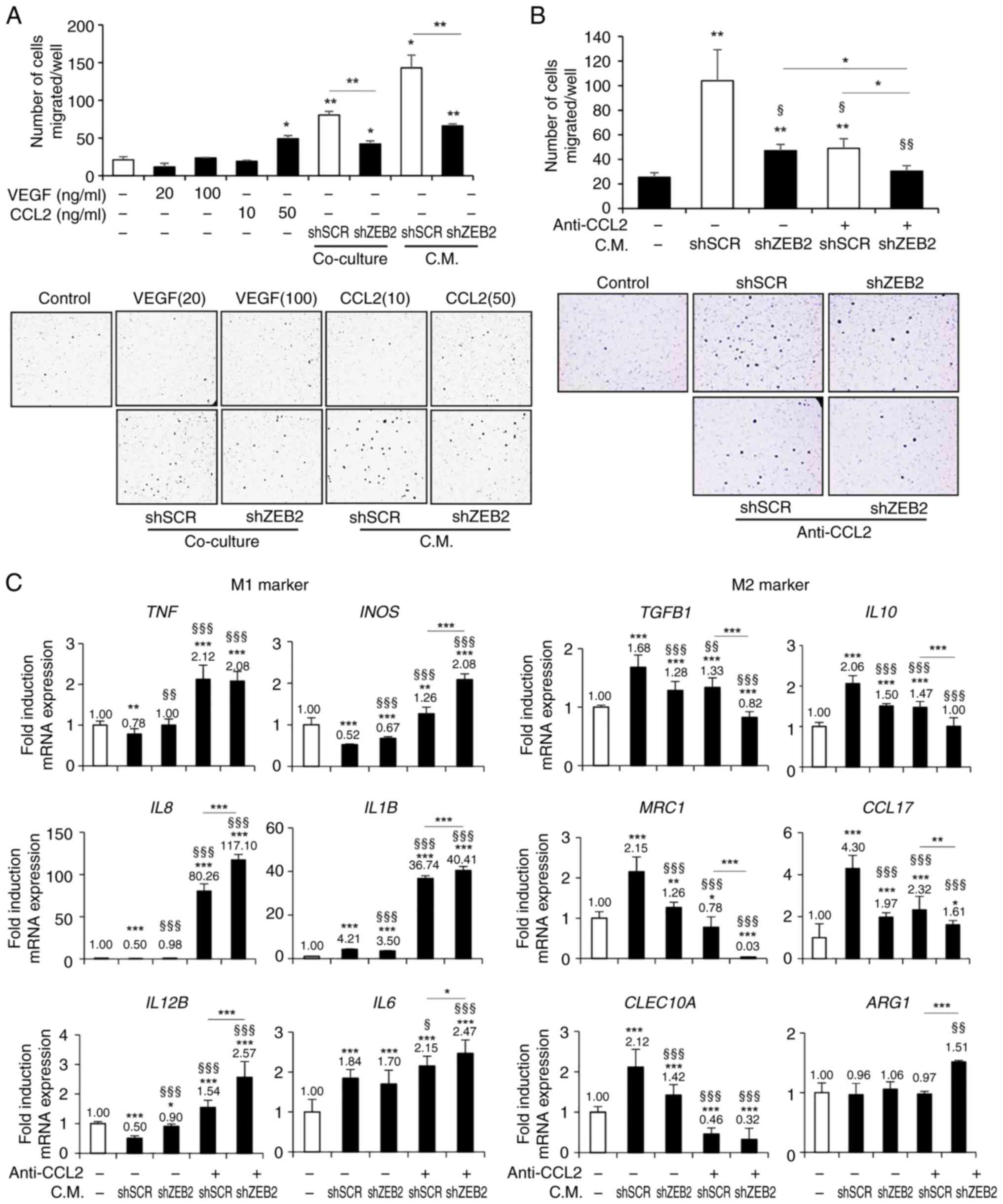
Figure 4

ZEB2 promotes macrophage migration
and polarization in a CCL2-dependent manner. (A) Migration of
THP-1-derived macrophages by conditioned medium from and
co-culturing with stable SNU-398 cells (control vs. ZEB2-suppressed
cells) (n=4). CCL2 was used as a positive control.
*P<0.05; **P<0.01. (B) Migration of
THP-1-derived macrophages toward conditioned medium from stable
SNU-398 cells in the presence of an anti-CCL2 antibody (n=4)
*P<0.05; **P<0.01 vs. no antibody + no
conditioned medium; $P<0.05; $$P<0.01
vs. no antibody + shSCR conditioned medium. (C) RT-qPCR of M1
(TNF, CXCL8/IL8, IL12B, NOS2/INOS,
IL1B and IL6) and M2 (TGFB1, IL10,
MRC1, CLEC10A, CCL17 and ARG1) markers
secreted by THP-1-derived macrophages incubated with conditioned
medium from stable SNU-398 cells in the absence and presence of an
anti-CCL2 antibody (n=4). *P<0.05;
**P<0.01; ***P<0.001, vs. no antibody +
no conditioned medium; $P<0.05;
$$$P<0.001, vs. no antibody + shSCR conditioned
medium. Values represent mean ± SD. ZEB2, Zinc Finger E-Box Binding
Homeobox 2; CCL2, C-C motif chemokine ligand 2; sh, short
hairpin.

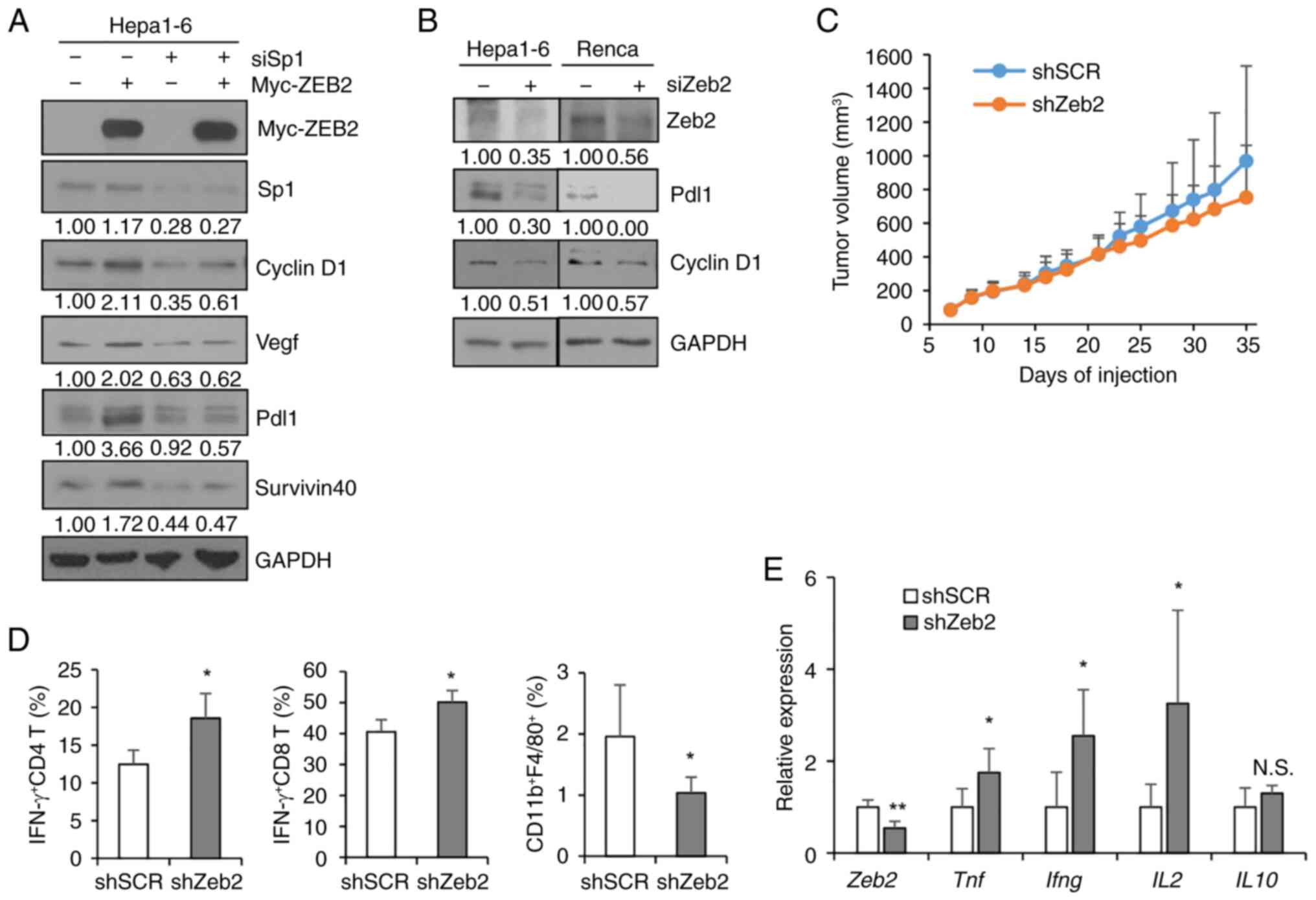
Figure 5

ZEB2 suppresses the activity of
tumor-infiltrating T cells in vivo. (A) Cells were
co-transfected for 48 h with a ZEB2 expression vector and siRNA
specific for Sp1 prior to lysis and immunoblot analysis. (B)
Effect of Zeb2 suppression. Densitometric quantification of bands
on the immunoblot was performed, with GAPDH as a loading control.
(C) Hepa1-6 stable cells (Zeb2-suppressed vs. control cells;
1×10⁷ cells/mouse) were injected subcutaneously into the
flanks of syngeneic C57BL/6 mice (n=5 per group). Tumor volume (0.5
× length x width x height) was measured for 35 days. The maximum
tumor volume was 1,790 mm3, with a length of 21 mm, on
Day 35. (D) Digested tumors were analyzed for the population of
IFN-γ-producing CD4 or CD8 T cells and macrophages
(CD11b+ F4/80+) by flow cytometry after
gating on CD45+ cells (n=5). (E) Expression of
Zeb2 and cytokines in the tumors was measured by RT-qPCR
(n=5). Values represent mean ± SD. *P<0.05;
**P<0.01; N.S, not significant. ZEB2, Zinc Finger
E-Box Binding Homeobox 2; sh, short hairpin; RT-qPCR, reverse
transcription-quantitative PCR.

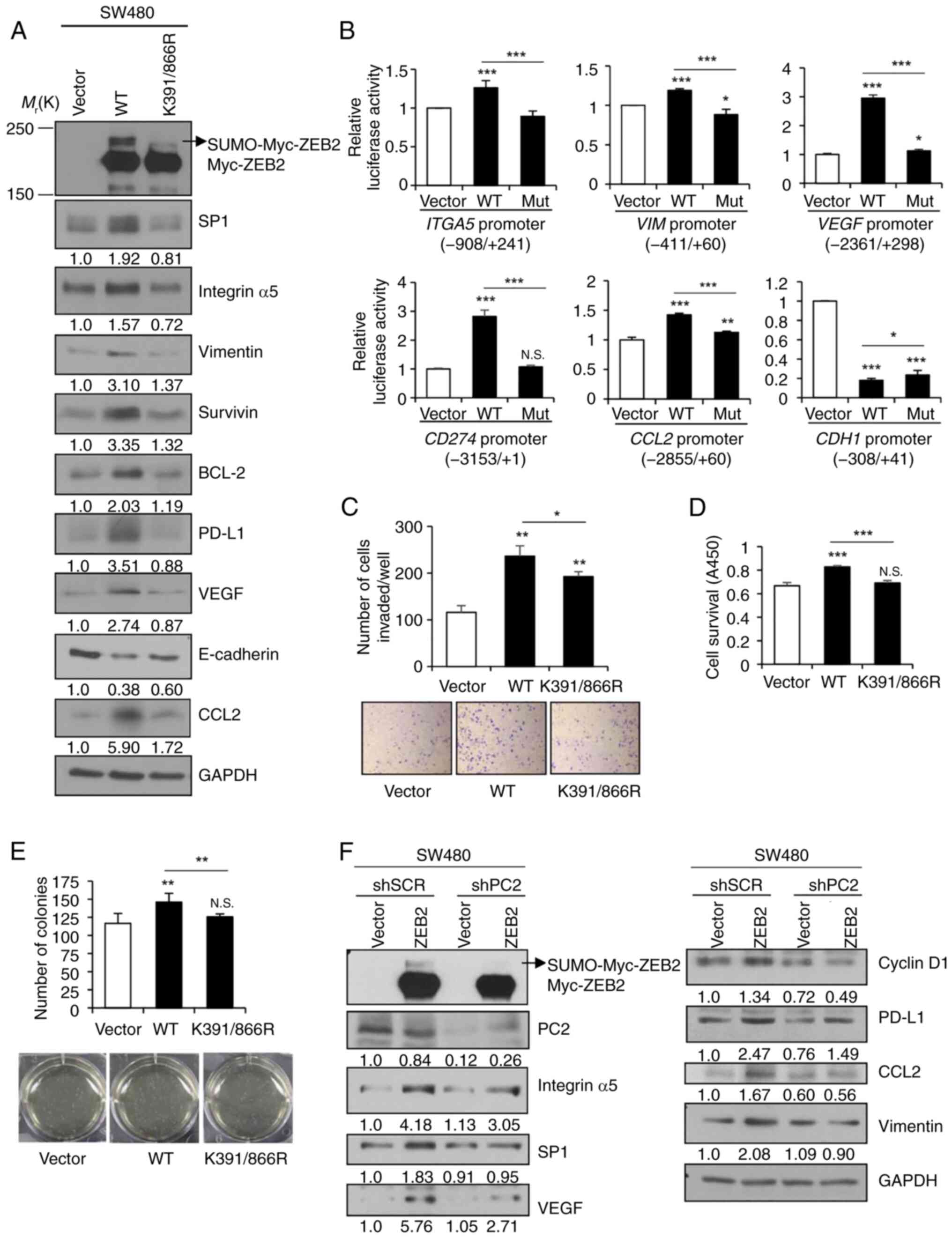
Figure 6

ZEB2 SUMOylation through PC2 is
required for ZEB2 acting as a transcriptional activator and playing
subsequent cellular functions. (A) SW480 cells were transfected
with ZEB2WT and ZEB2_K391/866R for 48 h prior to lysis and
immunoblot analysis. (B) Reporter assay of ITGA5 (integrin
α5), VIM (vimentin), VEGFA, CDH1, CD274
and CCL2 promoter activity in SW480 cells transfected with
ZEB2WT and ZEB2_K391/866R (n=4). (C) Invasion (representative
fields at magnification, ×100), (D) survival and (E)
anchorage-independent growth of SW480 cells transfected with ZEB2WT
and ZEB2_K391/866R (n=3). (F) SW480 cells were co-transfected with
shRNA specific for CBX4 (shPC2) and with a ZEB2-expression
vector, for 48 h prior to lysis and immunoblot analysis.
Densitometric quantification of bands on the immunoblot was
performed, with GAPDH as a loading control. Values represent mean ±
SD. *P<0.05; **P<0.01;
***P<0.001; N.S, not significant. ZEB2, Zinc Finger
E-Box Binding Homeobox 2; SUMO, small ubiquitin-like modifier;
CCL2, C-C motif chemokine ligand 2; PD-L1, programmed cell death 1
ligand 1; VEGF, vascular endothelial growth factor; sh, short
hairpin; WT, wild type; Mut, mutant.

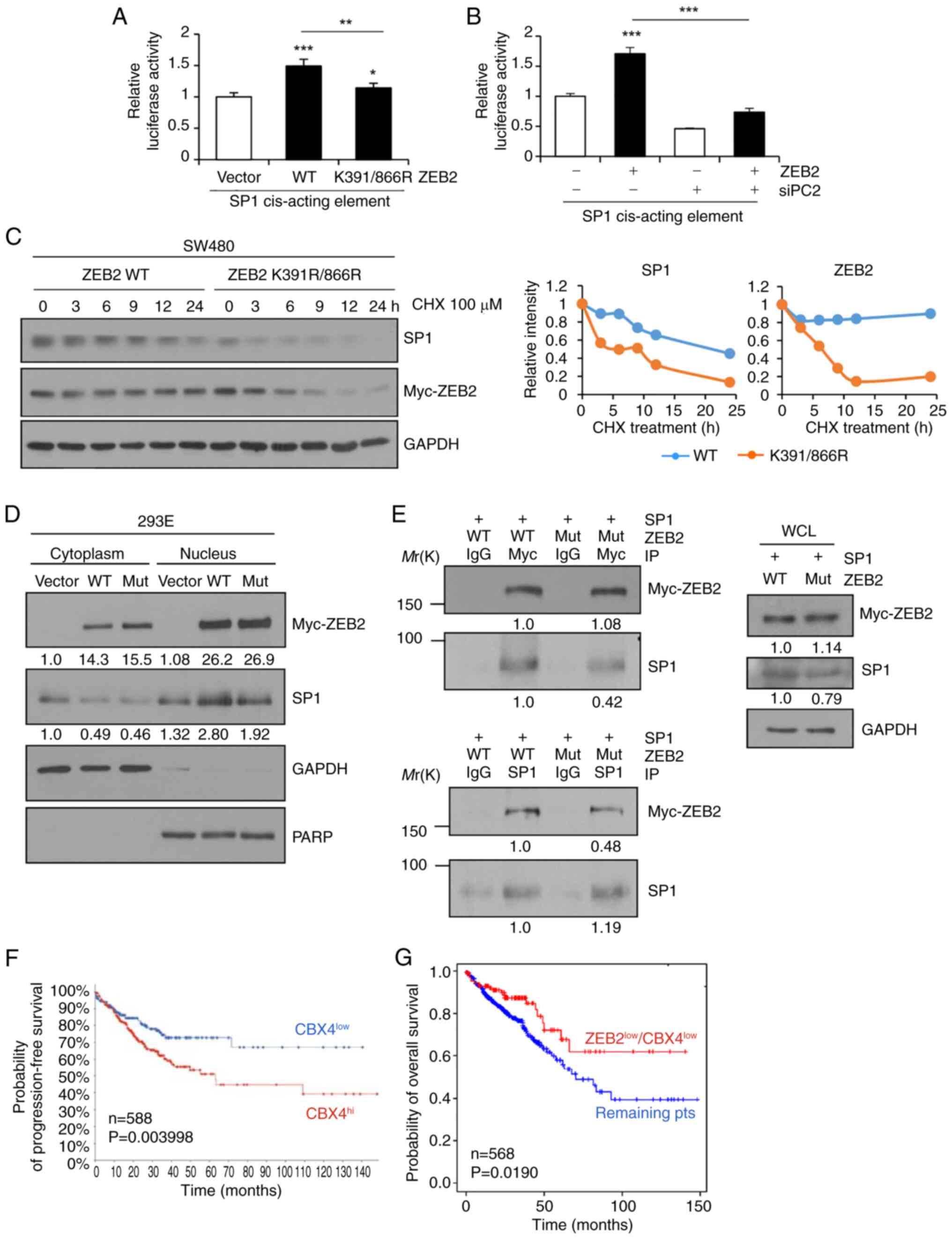
Figure 7

SUMOylation of ZEB2 is required for
cooperation between ZEB2 and SP1. Reporter assay to determine
transcriptional activity of SP1 in SW480 cells (n=4). (A) Cells
were transfected with ZEB2WT and ZEB2_K391/866R expression vectors
for 48 h. (B) Cells were co-transfected with a ZEB2 expression
vector and siRNA specific for CBX4 (siPC2) for 48 h. Values
represent mean ± SD. *P<0.05; **P<0.01;
***P<0.001. (C) SW480 cells transfected with ZEB2WT
and ZEB2_K391/866R expression vectors were treated with
cycloheximide for the indicated times prior to lysis and immunoblot
analysis. (D) A cytosolic fraction and a nuclear fraction were
prepared from 293E cells transfected for 48 h with ZEB2WT and
ZEB2_K391/866R expression vectors. GAPDH and PARP were used as
internal controls for the cytosolic and nuclear fractions,
respectively. (E) Co-immunoprecipitation analysis of the
interaction between ZEB2 and SP1 in 293E cells co-transfected with
ZEB2 (WT vs. K391/866R) and SP1 expression vectors. (F)
Kaplan-Meier analysis showing the probability of progression-free
survival of patients with colorectal adenocarcinoma (TCGA,
PanCancer Atlas; n=588) in relation to CBX4 mRNA expression.
(G) Overall survival of patients with colorectal adenocarcinoma
(TCGA, PanCancer Atlas; n=568) in relation to expression of
ZEB2 and CBX4 mRNA. P-values were calculated using
the log-rank test. SUMO, small ubiquitin-like modifier; ZEB2, Zinc
Finger E-Box Binding Homeobox 2; CCL2, C-C motif chemokine ligand
2; PD-L1, programmed cell death 1 ligand 1; VEGF, vascular
endothelial growth factor; TCGA, The Cancer Genome Atlas; si, small
interfering; WT, wild type; Mut, mutant.
View References

1 

Lu W and Kang Y: Epithelial-mesenchymal plasticity in cancer progression and metastasis. Dev Cell. 49:361–374. 2019. View Article : Google Scholar : PubMed/NCBI

2 

Thiery JP and Sleeman JP: Complex networks orchestrate epithelial-mesenchymal transitions. Nat Rev Mol. Cell Biol. 7:131–142. 2006. View Article : Google Scholar : PubMed/NCBI

3 

Huang Y, Hong W and Wei X: The molecular mechanisms and therapeutic strategies of EMT in tumor progression and metastasis. J Hematol Oncol. 15:1292022. View Article : Google Scholar : PubMed/NCBI

4 

Peinado H, Olmeda D and Cano A: Snail, Zeb and bHLH factors in tumour progression: An alliance against the epithelial phenotype? Nat Rev Cancer. 7:415–428. 2007. View Article : Google Scholar : PubMed/NCBI

5 

Sanchez-Tillo E, Liu Y, de Barrios O, Siles L, Fanlo L, Cuatrecasas M, Darling DS, Dean DC, Castells A and Postigo A: EMT-activating transcription factors in cancer: Beyond EMT and tumor invasiveness. Cell Mol Life Sci. 69:3429–3456. 2012. View Article : Google Scholar : PubMed/NCBI

6 

Zheng H and Kang Y: Multilayer control of the EMT master regulators. Oncogene. 33:1755–1763. 2014. View Article : Google Scholar

7 

Goossens S, Vandamme N, Van Vlierberghe P and Berx G: EMT transcription factors in cancer development re-evaluated: Beyond EMT and MET. Biochim Biophys Acta Rev Cancer. 1868:584–591. 2017. View Article : Google Scholar : PubMed/NCBI

8 

Jiang Y and Zhan H: Communication between EMT and PD-L1 signaling: New insights into tumor immune evasion. Cancer Lett. 468:72–81. 2020. View Article : Google Scholar

9 

Hanahan D and Weinberg RA: Hallmarks of cancer: The next generation. Cell. 144:646–674. 2011. View Article : Google Scholar : PubMed/NCBI

10 

Tie Y, Tang F, Wei YQ and Wei XW: Immunosuppressive cells in cancer: Mechanisms and potential therapeutic targets. J Hematol Oncol. 15:612022. View Article : Google Scholar : PubMed/NCBI

11 

Dongre A, Rashidian M, Reinhardt F, Bagnato A, Keckesova Z, Ploegh HL and Weinberg RA: Epithelial-to-mesenchymal transition contributes to immunosuppression in breast carcinomas. Cancer Res. 77:3982–3989. 2017. View Article : Google Scholar : PubMed/NCBI

12 

Hugo W, Zaretsky JM, Sun L, Song C, Moreno BH, Hu-Lieskovan S, Berent-Maoz B, Pang J, Chmielowski B, Cherry G, et al: Genomic and transcriptomic features of response to anti-PD-1 therapy in metastatic melanoma. Cell. 165:35–44. 2016. View Article : Google Scholar : PubMed/NCBI

13 

Dong P, Xiong Y, Yue J, Hanley SJB and Watari H: Tumor-intrinsic PD-L1 signaling in cancer initiation, development and treatment: Beyond immune evasion. Front Oncol. 8:3862018. View Article : Google Scholar : PubMed/NCBI

14 

Nam EH, Lee Y, Park YK, Lee JW and Kim S: ZEB2 upregulates integrin alpha5 expression through cooperation with Sp1 to induce invasion during epithelial-mesenchymal transition of human cancer cells. Carcinogenesis. 33:563–571. 2012. View Article : Google Scholar : PubMed/NCBI

15 

Nam EH, Lee Y, Zhao XF, Park YK, Lee JW and Kim S: ZEB2-Sp1 cooperation induces invasion by upregulating cadherin-11 and integrin alpha5 expression. Carcinogenesis. 35:302–314. 2014. View Article : Google Scholar

16 

Ko D and Kim S: Cooperation between ZEB2 and Sp1 promotes cancer cell survival and angiogenesis during metastasis through induction of survivin and VEGF. Oncotarget. 9:726–742. 2018. View Article : Google Scholar : PubMed/NCBI

17 

Jang D, Kwon H, Choi M, Lee J and Pak Y: Sumoylation of flotillin-1 promotes EMT in metastatic prostate cancer by suppressing snail degradation. Oncogene. 38:3248–3260. 2019. View Article : Google Scholar : PubMed/NCBI

18 

Bonello GB, Pham MH, Begum K, Sigala J, Sataranatarajan K and Mummidi S: An evolutionarily conserved TNF-alpha-responsive enhancer in the far upstream region of human CCL2 locus influences its gene expression. J Immunol. 186:7025–7038. 2011. View Article : Google Scholar : PubMed/NCBI

19 

Nam EH, Lee Y, Moon B, Lee JW and Kim S: Twist1 and AP-1 cooperatively upregulate integrin alpha5 expression to induce invasion and the epithelial-mesenchymal transition. Carcinogenesis. 36:327–337. 2015. View Article : Google Scholar : PubMed/NCBI

20 

Gao J, Aksoy BA, Dogrusoz U, Dresdner G, Gross B, Sumer SO, Sun Y, Jacobsen A, Sinha R, Larsson E, et al: Integrative analysis of complex cancer genomics and clinical profiles using the cBio-Portal. Sci Signal. 6:pl12013. View Article : Google Scholar

21 

Cerami E, Gao J, Dogrusoz U, Gross BE, Sumer SO, Aksoy BA, Jacobsen A, Byrne CJ, Heuer ML, Larsson E, et al: The cBio cancer genomics portal: An open platform for exploring multidimensional cancer genomics data. Cancer Discov. 2:401–404. 2012. View Article : Google Scholar : PubMed/NCBI

22 

Cancer Genome Atlas Network: Comprehensive molecular characterization of human colon and rectal cancer. Nature. 487:330–337. 2012. View Article : Google Scholar : PubMed/NCBI

23 

Vasaikar S, Huang C, Wang X, Petyuk VA, Savage SR, Wen B, Dou Y, Zhang Y, Shi Z, Arshad OA, et al: Proteogenomic analysis of human colon cancer reveals new therapeutic opportunities. Cell. 177:1035–1049.e1019. 2019. View Article : Google Scholar : PubMed/NCBI

24 

Simon R, Lam A, Li MC, Ngan M, Menenzes S and Zhao Y: Analysis of gene expression data using BRB-arraytools. Cancer Inform. 3:11–17. 2007. View Article : Google Scholar : PubMed/NCBI

25 

Wang S, Wang J, Chen Z, Luo J, Guo W, Sun L and Lin L: Targeting M2-like tumor-associated macrophages is a potential therapeutic approach to overcome antitumor drug resistance. NPJ Precis Oncol. 8:312024. View Article : Google Scholar : PubMed/NCBI

26 

Long J, Zuo D and Park M: Pc2-mediated sumoylation of Smad-interacting protein 1 attenuates transcriptional repression of E-cadherin. J Biol Chem. 280:35477–35489. 2005. View Article : Google Scholar : PubMed/NCBI

27 

Low-Marchelli JM, Ardi VC, Vizcarra EA, van Rooijen N, Quigley JP and Yang J: Twist1 induces CCL2 and recruits macrophages to promote angiogenesis. Cancer Res. 73:662–671. 2013. View Article : Google Scholar : PubMed/NCBI

28 

Lyons JG, Patel V, Roue NC, Fok SY, Soon LL, Halliday GM and Gutkind JS: Snail up-regulates proinflammatory mediators and inhibits differentiation in oral keratinocytes. Cancer Res. 68:4525–4530. 2008. View Article : Google Scholar : PubMed/NCBI

29 

Katsura A, Tamura Y, Hokari S, Harada M, Morikawa M, Sakurai T, Takahashi K, Mizutani A, Nishida J, Yokoyama Y, et al: ZEB1-regulated inflammatory phenotype in breast cancer cells. Mol Oncol. 11:1241–1262. 2017. View Article : Google Scholar : PubMed/NCBI

30 

Gschwandtner M, Derler R and Midwood KS: More than just attractive: How CCL2 influences myeloid cell behavior beyond chemotaxis. Front Immunol. 10:27592019. View Article : Google Scholar

31 

Kudo-Saito C, Shirako H, Ohike M, Tsukamoto N and Kawakami Y: CCL2 is critical for immunosuppression to promote cancer metastasis. Clin Exp Metastasis. 30:393–405. 2013. View Article : Google Scholar

32 

Gao L, Wang FQ, Li HM, Yang JG, Ren JG, He KF, Liu B, Zhang W and Zhao YF: CCL2/EGF positive feedback loop between cancer cells and macrophages promotes cell migration and invasion in head and neck squamous cell carcinoma. Oncotarget. 7:87037–87051. 2016. View Article : Google Scholar : PubMed/NCBI

33 

Wei C, Yang C, Wang S, Shi D, Zhang C, Lin X, Liu Q, Dou R and Xiong B: Crosstalk between cancer cells and tumor associated macrophages is required for mesenchymal circulating tumor cell-mediated colorectal cancer metastasis. Mol. Cancer. 18:642019. View Article : Google Scholar : PubMed/NCBI

34 

Zhang F, Wang H, Wang X, Jiang G, Liu H, Zhang G, Wang H, Fang R, Bu X, Cai S and Du J: TGF-β induces M2-like macrophage polarization via SNAIL-mediated suppression of a pro-inflammatory phenotype. Oncotarget. 7:52294–52306. 2016. View Article : Google Scholar : PubMed/NCBI

35 

Kim HR, Seo CW, Han SJ, Lee JH and Kim J: Zinc finger E-box binding homeobox 2 as a prognostic biomarker in various cancers and its correlation with infiltrating immune cells in ovarian cancer. Curr Issues Mol Biol. 44:1203–1214. 2022. View Article : Google Scholar : PubMed/NCBI

36 

Xie H, Wu Z, Li Z, Huang Y, Zou J and Zhou H: Significance of ZEB2 in the immune microenvironment of colon cancer. Front Genet. 13:9953332022. View Article : Google Scholar : PubMed/NCBI

37 

Wang Y, Wang H, Yao H, Li C, Fang JY and Xu J: Regulation of PD-L1: emerging routes for targeting tumor immune evasion. Front Pharmacol. 9:5362018. View Article : Google Scholar : PubMed/NCBI

38 

Peng W, Chen JQ, Liu C, Malu S, Creasy C, Tetzlaff MT, Xu C, McKenzie JA, Zhang C, Liang X, et al: Loss of PTEN promotes resistance to T cell-mediated immunotherapy. Cancer Discov. 6:202–216. 2016. View Article : Google Scholar :

39 

Mariathasan S, Turley SJ, Nickles D, Castiglioni A, Yuen K, Wang Y, Kadel EE III, Koeppen H, Astarita JL, Cubas R, et al: TGFβ attenuates tumour response to PD-L1 blockade by contributing to exclusion of T cells. Nature. 554:544–548. 2018. View Article : Google Scholar : PubMed/NCBI

40 

Yi M, Niu M, Xu L, Luo S and Wu K: Regulation of PD-L1 expression in the tumor microenvironment. J Hematol Oncol. 14:102021. View Article : Google Scholar : PubMed/NCBI

41 

Chen L, Gibbons DL, Goswami S, Cortez MA, Ahn YH, Byers LA, Zhang X, Yi X, Dwyer D, Lin W, et al: Metastasis is regulated via microRNA-200/ZEB1 axis control of tumour cell PD-L1 expression and intratumoral immunosuppression. Nat Commun. 5:52412014. View Article : Google Scholar : PubMed/NCBI

42 

Scott CL and Omilusik KD: ZEBs: Novel players in immune cell development and function. Trends Immunol. 40:431–446. 2019. View Article : Google Scholar : PubMed/NCBI

43 

Bogachek MV, De Andrade JP and Weigel RJ: Regulation of epithelial-mesenchymal transition through SUMOylation of transcription factors. Cancer Res. 75:11–15. 2015. View Article : Google Scholar :

44 

Seeler JS and Dejean A: SUMO and the robustness of cancer. Nat Rev Cancer. 17:184–197. 2017. View Article : Google Scholar : PubMed/NCBI

45 

Yang Y, Xia Z, Wang X, Zhao X, Sheng Z, Ye Y, He G, Zhou L, Zhu H, Xu N and Liang S: Small-molecule inhibitors targeting protein sumoylation as novel anticancer compounds. Mol Pharmacol. 94:885–894. 2018. View Article : Google Scholar : PubMed/NCBI

46 

Brackett CM and Blagg BSJ: Current status of sumoylation inhibitors. Curr Med Chem. 28:3892–3912. 2021. View Article : Google Scholar :

47 

Shibue T and Weinberg RA: EMT, CSCs and drug resistance: The mechanistic link and clinical implications. Nat Rev Clin Oncol. 14:611–629. 2017. View Article : Google Scholar : PubMed/NCBI

Related Articles

  • Abstract
  • View
  • Download
  • Twitter
Copy and paste a formatted citation
Spandidos Publications style
Ko D, Lee Y, Yoon J, Choi EK, Jang D and Kim S: Cooperation between ZEB2 and SP1 upregulates PD‑L1 and CCL2 to promote the immunosuppressive activity of tumor cells. Int J Oncol 67: 95, 2025.
APA
Ko, D., Lee, Y., Yoon, J., Choi, E.K., Jang, D., & Kim, S. (2025). Cooperation between ZEB2 and SP1 upregulates PD‑L1 and CCL2 to promote the immunosuppressive activity of tumor cells. International Journal of Oncology, 67, 95. https://doi.org/10.3892/ijo.2025.5801
MLA
Ko, D., Lee, Y., Yoon, J., Choi, E. K., Jang, D., Kim, S."Cooperation between ZEB2 and SP1 upregulates PD‑L1 and CCL2 to promote the immunosuppressive activity of tumor cells". International Journal of Oncology 67.5 (2025): 95.
Chicago
Ko, D., Lee, Y., Yoon, J., Choi, E. K., Jang, D., Kim, S."Cooperation between ZEB2 and SP1 upregulates PD‑L1 and CCL2 to promote the immunosuppressive activity of tumor cells". International Journal of Oncology 67, no. 5 (2025): 95. https://doi.org/10.3892/ijo.2025.5801
Copy and paste a formatted citation
x
Spandidos Publications style
Ko D, Lee Y, Yoon J, Choi EK, Jang D and Kim S: Cooperation between ZEB2 and SP1 upregulates PD‑L1 and CCL2 to promote the immunosuppressive activity of tumor cells. Int J Oncol 67: 95, 2025.
APA
Ko, D., Lee, Y., Yoon, J., Choi, E.K., Jang, D., & Kim, S. (2025). Cooperation between ZEB2 and SP1 upregulates PD‑L1 and CCL2 to promote the immunosuppressive activity of tumor cells. International Journal of Oncology, 67, 95. https://doi.org/10.3892/ijo.2025.5801
MLA
Ko, D., Lee, Y., Yoon, J., Choi, E. K., Jang, D., Kim, S."Cooperation between ZEB2 and SP1 upregulates PD‑L1 and CCL2 to promote the immunosuppressive activity of tumor cells". International Journal of Oncology 67.5 (2025): 95.
Chicago
Ko, D., Lee, Y., Yoon, J., Choi, E. K., Jang, D., Kim, S."Cooperation between ZEB2 and SP1 upregulates PD‑L1 and CCL2 to promote the immunosuppressive activity of tumor cells". International Journal of Oncology 67, no. 5 (2025): 95. https://doi.org/10.3892/ijo.2025.5801
Follow us
  • Twitter
  • LinkedIn
  • Facebook
About
  • Spandidos Publications
  • Careers
  • Cookie Policy
  • Privacy Policy
How can we help?
  • Help
  • Live Chat
  • Contact
  • Email to our Support Team