Spandidos Publications Logo
  • About
    • About Spandidos
    • Aims and Scopes
    • Abstracting and Indexing
    • Editorial Policies
    • Reprints and Permissions
    • Job Opportunities
    • Terms and Conditions
    • Contact
  • Journals
    • All Journals
    • Oncology Letters
      • Oncology Letters
      • Information for Authors
      • Editorial Policies
      • Editorial Board
      • Aims and Scope
      • Abstracting and Indexing
      • Bibliographic Information
      • Archive
    • International Journal of Oncology
      • International Journal of Oncology
      • Information for Authors
      • Editorial Policies
      • Editorial Board
      • Aims and Scope
      • Abstracting and Indexing
      • Bibliographic Information
      • Archive
    • Molecular and Clinical Oncology
      • Molecular and Clinical Oncology
      • Information for Authors
      • Editorial Policies
      • Editorial Board
      • Aims and Scope
      • Abstracting and Indexing
      • Bibliographic Information
      • Archive
    • Experimental and Therapeutic Medicine
      • Experimental and Therapeutic Medicine
      • Information for Authors
      • Editorial Policies
      • Editorial Board
      • Aims and Scope
      • Abstracting and Indexing
      • Bibliographic Information
      • Archive
    • International Journal of Molecular Medicine
      • International Journal of Molecular Medicine
      • Information for Authors
      • Editorial Policies
      • Editorial Board
      • Aims and Scope
      • Abstracting and Indexing
      • Bibliographic Information
      • Archive
    • Biomedical Reports
      • Biomedical Reports
      • Information for Authors
      • Editorial Policies
      • Editorial Board
      • Aims and Scope
      • Abstracting and Indexing
      • Bibliographic Information
      • Archive
    • Oncology Reports
      • Oncology Reports
      • Information for Authors
      • Editorial Policies
      • Editorial Board
      • Aims and Scope
      • Abstracting and Indexing
      • Bibliographic Information
      • Archive
    • Molecular Medicine Reports
      • Molecular Medicine Reports
      • Information for Authors
      • Editorial Policies
      • Editorial Board
      • Aims and Scope
      • Abstracting and Indexing
      • Bibliographic Information
      • Archive
    • World Academy of Sciences Journal
      • World Academy of Sciences Journal
      • Information for Authors
      • Editorial Policies
      • Editorial Board
      • Aims and Scope
      • Abstracting and Indexing
      • Bibliographic Information
      • Archive
    • International Journal of Functional Nutrition
      • International Journal of Functional Nutrition
      • Information for Authors
      • Editorial Policies
      • Editorial Board
      • Aims and Scope
      • Abstracting and Indexing
      • Bibliographic Information
      • Archive
    • International Journal of Epigenetics
      • International Journal of Epigenetics
      • Information for Authors
      • Editorial Policies
      • Editorial Board
      • Aims and Scope
      • Abstracting and Indexing
      • Bibliographic Information
      • Archive
    • Medicine International
      • Medicine International
      • Information for Authors
      • Editorial Policies
      • Editorial Board
      • Aims and Scope
      • Abstracting and Indexing
      • Bibliographic Information
      • Archive
  • Articles
  • Information
    • Information for Authors
    • Information for Reviewers
    • Information for Librarians
    • Information for Advertisers
    • Conferences
  • Language Editing
Spandidos Publications Logo
  • About
    • About Spandidos
    • Aims and Scopes
    • Abstracting and Indexing
    • Editorial Policies
    • Reprints and Permissions
    • Job Opportunities
    • Terms and Conditions
    • Contact
  • Journals
    • All Journals
    • Biomedical Reports
      • Information for Authors
      • Editorial Policies
      • Editorial Board
      • Aims and Scope
      • Abstracting and Indexing
      • Bibliographic Information
      • Archive
    • Experimental and Therapeutic Medicine
      • Information for Authors
      • Editorial Policies
      • Editorial Board
      • Aims and Scope
      • Abstracting and Indexing
      • Bibliographic Information
      • Archive
    • International Journal of Epigenetics
      • Information for Authors
      • Editorial Policies
      • Editorial Board
      • Aims and Scope
      • Abstracting and Indexing
      • Bibliographic Information
      • Archive
    • International Journal of Functional Nutrition
      • Information for Authors
      • Editorial Policies
      • Editorial Board
      • Aims and Scope
      • Abstracting and Indexing
      • Bibliographic Information
      • Archive
    • International Journal of Molecular Medicine
      • Information for Authors
      • Editorial Policies
      • Editorial Board
      • Aims and Scope
      • Abstracting and Indexing
      • Bibliographic Information
      • Archive
    • International Journal of Oncology
      • Information for Authors
      • Editorial Policies
      • Editorial Board
      • Aims and Scope
      • Abstracting and Indexing
      • Bibliographic Information
      • Archive
    • Medicine International
      • Information for Authors
      • Editorial Policies
      • Editorial Board
      • Aims and Scope
      • Abstracting and Indexing
      • Bibliographic Information
      • Archive
    • Molecular and Clinical Oncology
      • Information for Authors
      • Editorial Policies
      • Editorial Board
      • Aims and Scope
      • Abstracting and Indexing
      • Bibliographic Information
      • Archive
    • Molecular Medicine Reports
      • Information for Authors
      • Editorial Policies
      • Editorial Board
      • Aims and Scope
      • Abstracting and Indexing
      • Bibliographic Information
      • Archive
    • Oncology Letters
      • Information for Authors
      • Editorial Policies
      • Editorial Board
      • Aims and Scope
      • Abstracting and Indexing
      • Bibliographic Information
      • Archive
    • Oncology Reports
      • Information for Authors
      • Editorial Policies
      • Editorial Board
      • Aims and Scope
      • Abstracting and Indexing
      • Bibliographic Information
      • Archive
    • World Academy of Sciences Journal
      • Information for Authors
      • Editorial Policies
      • Editorial Board
      • Aims and Scope
      • Abstracting and Indexing
      • Bibliographic Information
      • Archive
  • Articles
  • Information
    • For Authors
    • For Reviewers
    • For Librarians
    • For Advertisers
    • Conferences
  • Language Editing
Login Register Submit
  • This site uses cookies
  • You can change your cookie settings at any time by following the instructions in our Cookie Policy. To find out more, you may read our Privacy Policy.

    I agree
Search articles by DOI, keyword, author or affiliation
Search
Advanced Search
presentation
International Journal of Oncology
Join Editorial Board Propose a Special Issue
Print ISSN: 1019-6439 Online ISSN: 1791-2423
Journal Cover
January-2026 Volume 68 Issue 1

Full Size Image

Cover Legend PDF

Sign up for eToc alerts
Recommend to Library

Journals

International Journal of Molecular Medicine

International Journal of Molecular Medicine

International Journal of Molecular Medicine is an international journal devoted to molecular mechanisms of human disease.

International Journal of Oncology

International Journal of Oncology

International Journal of Oncology is an international journal devoted to oncology research and cancer treatment.

Molecular Medicine Reports

Molecular Medicine Reports

Covers molecular medicine topics such as pharmacology, pathology, genetics, neuroscience, infectious diseases, molecular cardiology, and molecular surgery.

Oncology Reports

Oncology Reports

Oncology Reports is an international journal devoted to fundamental and applied research in Oncology.

Experimental and Therapeutic Medicine

Experimental and Therapeutic Medicine

Experimental and Therapeutic Medicine is an international journal devoted to laboratory and clinical medicine.

Oncology Letters

Oncology Letters

Oncology Letters is an international journal devoted to Experimental and Clinical Oncology.

Biomedical Reports

Biomedical Reports

Explores a wide range of biological and medical fields, including pharmacology, genetics, microbiology, neuroscience, and molecular cardiology.

Molecular and Clinical Oncology

Molecular and Clinical Oncology

International journal addressing all aspects of oncology research, from tumorigenesis and oncogenes to chemotherapy and metastasis.

World Academy of Sciences Journal

World Academy of Sciences Journal

Multidisciplinary open-access journal spanning biochemistry, genetics, neuroscience, environmental health, and synthetic biology.

International Journal of Functional Nutrition

International Journal of Functional Nutrition

Open-access journal combining biochemistry, pharmacology, immunology, and genetics to advance health through functional nutrition.

International Journal of Epigenetics

International Journal of Epigenetics

Publishes open-access research on using epigenetics to advance understanding and treatment of human disease.

Medicine International

Medicine International

An International Open Access Journal Devoted to General Medicine.

Journal Cover
January-2026 Volume 68 Issue 1

Full Size Image

Cover Legend PDF

Sign up for eToc alerts
Recommend to Library

  • Article
  • Citations
    • Cite This Article
    • Download Citation
    • Create Citation Alert
    • Remove Citation Alert
    • Cited By
  • Similar Articles
    • Related Articles (in Spandidos Publications)
    • Similar Articles (Google Scholar)
    • Similar Articles (PubMed)
  • Download PDF
  • Download XML
  • View XML

  • Supplementary Files
    • Supplementary_Data1.pdf
    • Supplementary_Data2.pdf
Article Open Access

c‑Myc‑regulated RPLP0 via the ROS‑mediated JAK2/STAT3 positive feedback loop facilitates hepatocellular carcinoma malignancy progression

  • Authors:
    • Yanqiu Meng
    • Lebin Yuan
    • Gangrui Meng
    • Hongxiang Huang
    • Xianbin Huang
    • Xinping Xu
    • Xiaodong Peng
  • View Affiliations / Copyright

    Affiliations: Department of Oncology, The First Affiliated Hospital, Jiangxi Medical College, Nanchang University, Nanchang, Jiangxi 330006, P.R. China, Department of Thyroid and Breast Surgery, Affiliated Hospital of Hubei University of Arts and Science, Xiangyang Central Hospital, Xiangyang, Hubei 441000, P.R. China, Department of General Surgery, First Clinical College, Hubei University of Medicine, Shiyan, Hubei 442000, P.R. China, Department of Oncology, Ganzhou Hospital‑Nanfang Hospital, Southern Medical University, Ganzhou, Jiangxi 341000, P.R. China, Jiangxi Provincial Key Laboratory of Respiratory Diseases, Jiangxi Institute of Respiratory Diseases, The Department of Respiratory and Critical Care Medicine, Jiangxi Clinical Research Center for Respiratory Diseases, The First Affiliated Hospital, Jiangxi Medical College, Nanchang University, Nanchang, Jiangxi 330006, P.R. China
    Copyright: © Meng et al. This is an open access article distributed under the terms of Creative Commons Attribution License.
  • Article Number: 13
    |
    Published online on: November 27, 2025
       https://doi.org/10.3892/ijo.2025.5826
  • Expand metrics +
Metrics: Total Views: 0 (Spandidos Publications: | PMC Statistics: )
Metrics: Total PDF Downloads: 0 (Spandidos Publications: | PMC Statistics: )
Cited By (CrossRef): 0 citations Loading Articles...

This article is mentioned in:


Abstract

Hepatocellular carcinoma (HCC) continues to rank as a predominant contributor to cancer‑related mortality on a global scale, attributed to its insidious onset and unfavorable prognosis. The ribosomal protein lateral stalk subunit P0 (RPLP0) has recently gathered widespread attention as a crucial factor in the pathological progression of various neoplasms; however, its exact role in HCC remains inadequately defined. Consequently, the present study endeavored to shed light on the function and mechanistic underpinnings of RPLP0 in HCC and assess its clinical significance and potential as a therapeutic target. qPCR and western blot analyses indicated that RPLP0 was markedly upregulated in HCC, with its elevated levels correlating with poorer survival outcomes. Silencing RPLP0 expression suppressed the proliferative, invasive, migratory, and epithelial‑mesenchymal transition (EMT) abilities of HCC cells, while concurrently promoting apoptosis, autophagy, and G2/M cell cycle arrest, as evidenced by CCK‑8, colony formation, Transwell assays and flow cytometry analysis, respectively. Moreover, the findings revealed that RPLP0 downregulation mediated the suppression of the JAK2/STAT3 pathway through reactive oxygen species (ROS) accumulation, which in turn downregulated c‑Myc expression. Furthermore, chromatin immunoprecipitation and dual luciferase assays demonstrated that c‑Myc directly bound to the promoter sequence of RPLP0, thereby augmenting its transcriptional activity. In summary, the current study highlighted that RPLP0 establishes a feedback circuit with c‑Myc by facilitating JAK2/STAT3 pathway activation through suppressing ROS levels, while c‑Myc reciprocally activates RPLP0, forming a regulatory circuit loop that drives HCC progression. Thus, targeting the c‑Myc/RPLP0/ROS/JAK2/STAT3 axis emerges as a promising therapeutic strategy for the management of HCC.
View Figures

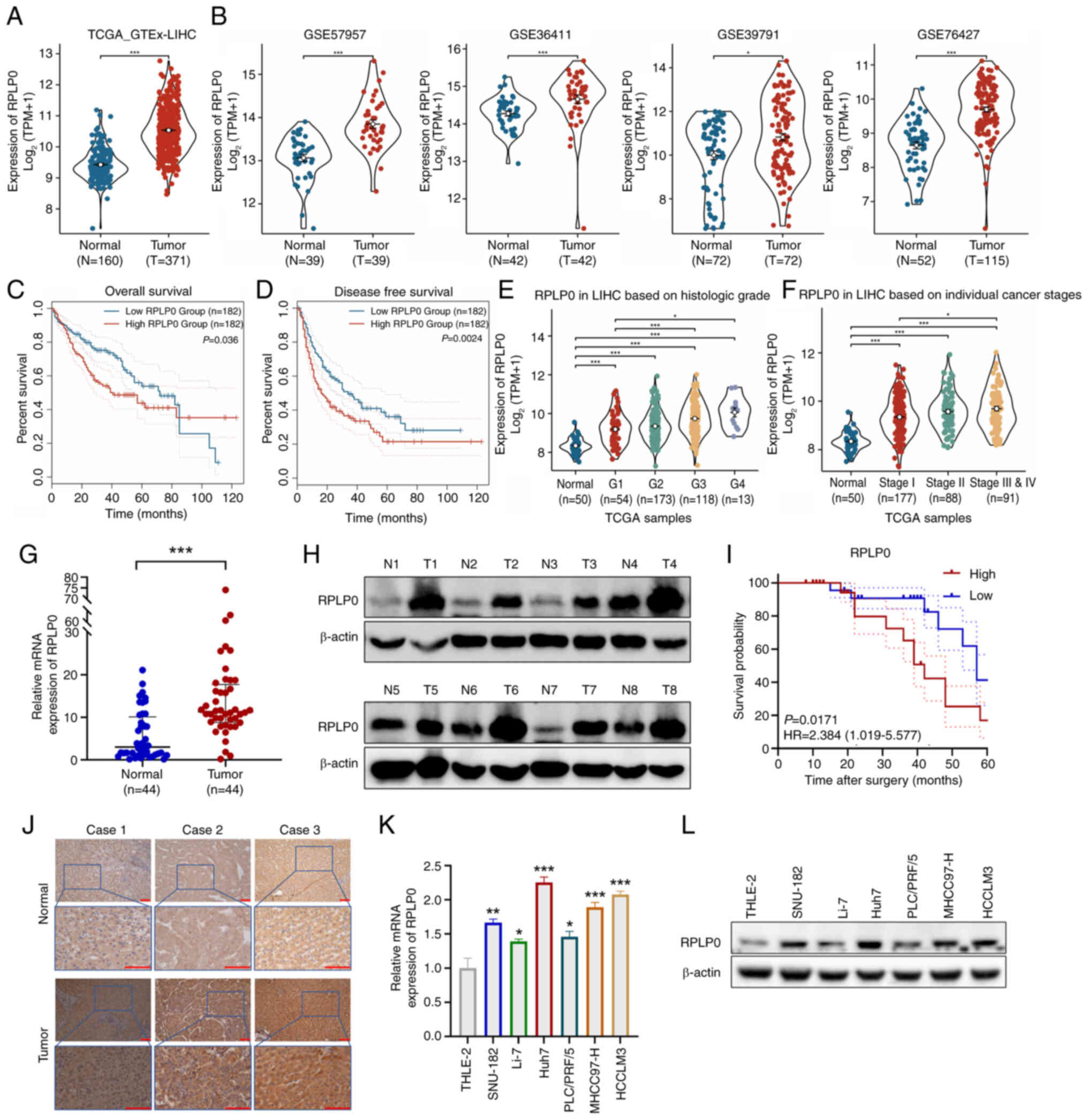
Figure 1

Elevated RPLP0 expression is
associated with unfavorable survival outcomes in HCC. (A) RPLP0
expression levels derived from the TCGA_GTEx database. (B)
Confirmation of RPLP0 expression in the GSE57957, GSE36411,
GSE39791 and GSE76427 datasets. Association between RPLP0
expression status and (C) OS and (D) DFS among HCC patients in the
GEPIA2 database. The relationship between RPLP0 expression and (E)
histological grade and (F) cancer stage in the TCGA database. The
expression levels of (G) mRNA and (H) protein for RPLP0 were
analyzed in 44 paired HCC samples. (I) The influence of RPLP0
expression on the survival outcomes of HCC patients. (J)
Immunohistochemical analysis of RPLP0 in HCC and adjacent
non-cancerous tissues (scale bar, 100 μm). RPLP0 (K) mRNA
and (L) protein levels were examined in immortalized hepatocytes
and HCC cell lines. *P<0.05, **P<0.01,
***P<0.001. RPLP0, ribosomal protein lateral stalk
subunit P0; HCC, hepatocellular carcinoma; TCGA, the cancer genome
atlas; GTEx, the genotype-tissue expression; N, normal; T, tumor;
GEO, gene expression omnibus; GEPIA2, gene expression profiling
interactive analysis; OS, overall survival; DFS, disease-free
survival.

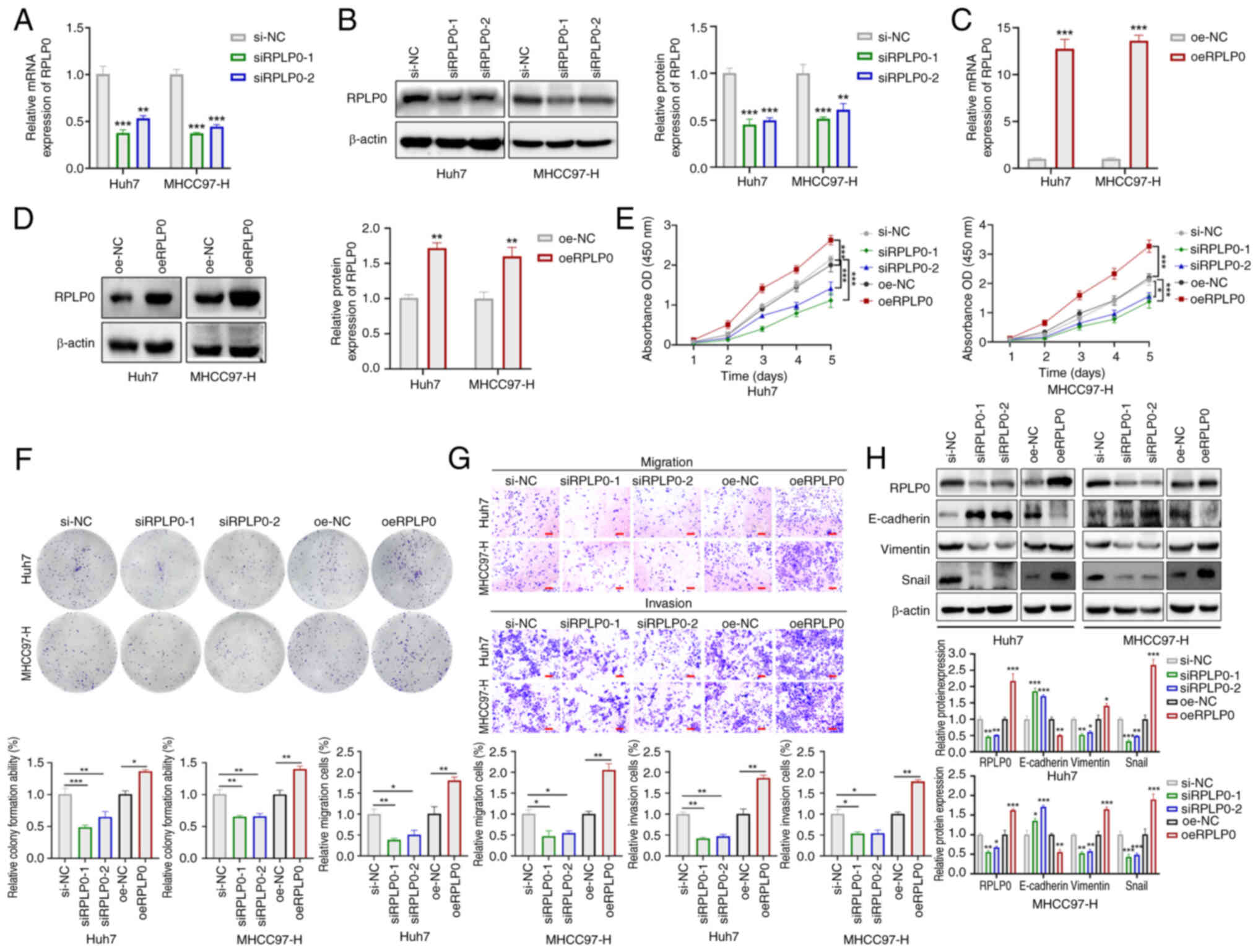
Figure 2

RPLP0 overexpression promotes
malignant phenotypes in HCC cells. Alterations in mRNA and protein
levels following (A and B) RPLP0 knockdown and (C and D)
overexpression in HCC cells. (E) CCK-8, (F) colony formation and
(G) Transwell assays were conducted to assess HCC cell
proliferation, invasion and migration (scale bar, 150 μm).
(H) EMT-related protein expression changes (E-cadherin, Vimentin
and Snail) were observed in treated HCC cells.
*P<0.05, **P<0.01,
***P<0.001. RPLP0, ribosomal protein lateral stalk
subunit P0; HCC, hepatocellular carcinoma; CCK-8, cell counting
kit-8; EMT, epithelial-mesenchymal transition.

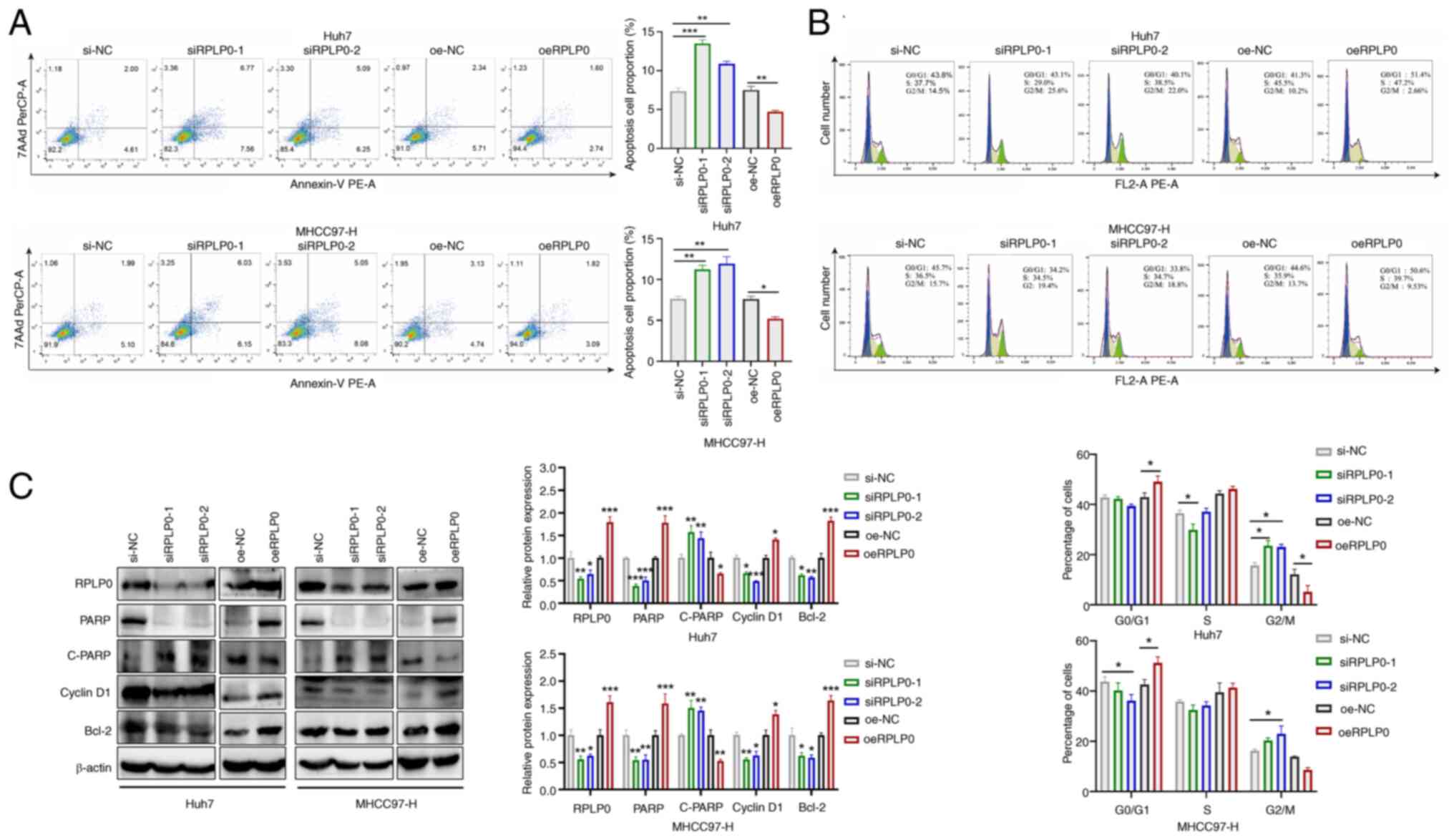
Figure 3

RPLP0 downregulation triggers
apoptosis and G2/M cell cycle arrest in HCC cells. Flow
cytometry was performed to evaluate the (A) apoptosis rate and (B)
cell cycle. (C) Western blotting was performed to quantify
apoptosis- and cycle-related protein levels (C-PARP, PARP, Cyclin
D1 and Bcl-2). *P<0.05, **P<0.01,
***P<0.001. RPLP0, ribosomal protein lateral stalk
subunit P0; HCC, hepatocellular carcinoma; PARP, Poly (ADP-ribose)
polymerase; C-, cleaved.

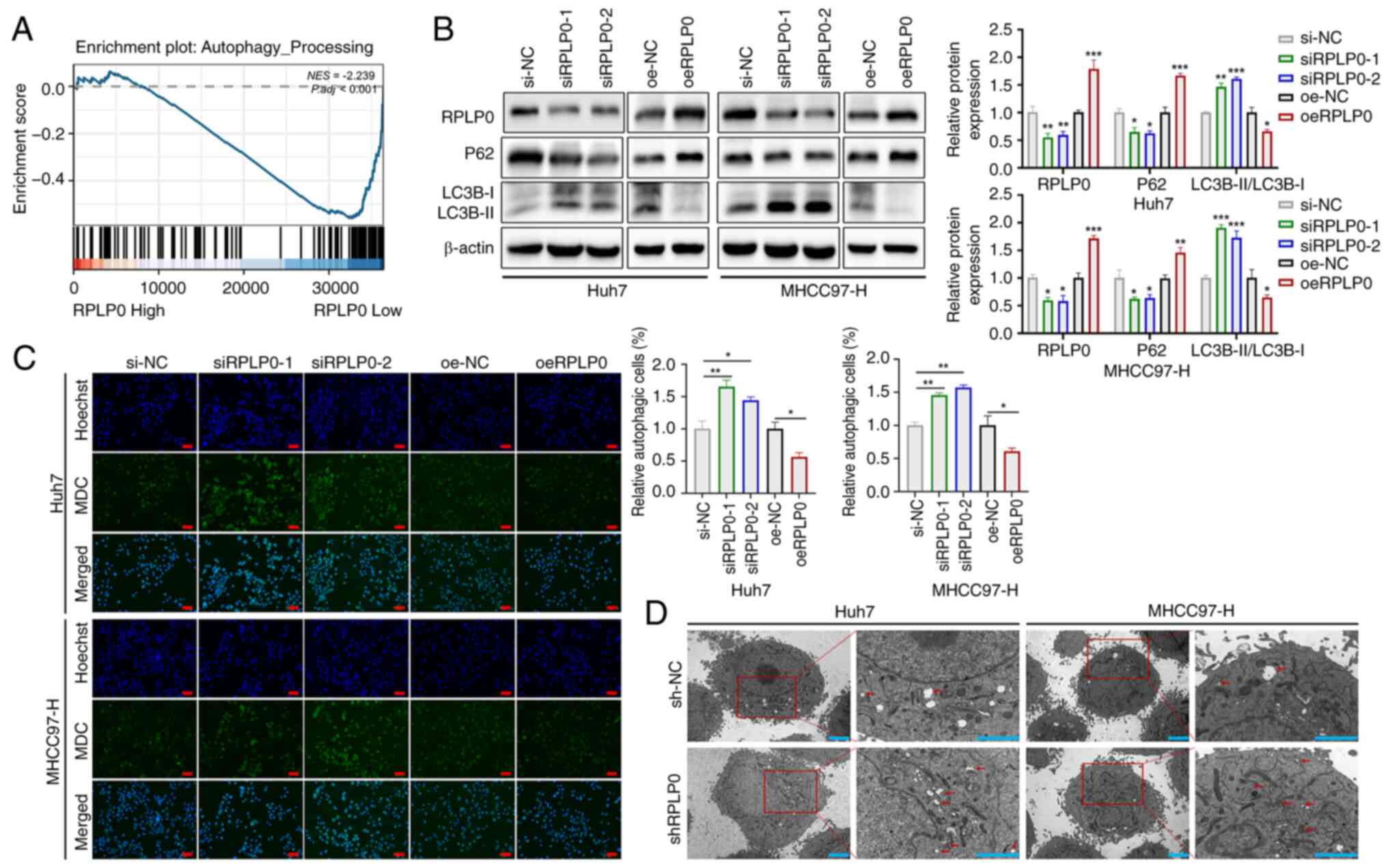
Figure 4

RPLP0 knockdown induces autophagy in
HCC cells. (A) GSEA demonstrated a significant enrichment of low
RPLP0 expression during autophagy. (B) Alterations in the levels of
autophagy-related proteins (P62 and LC3B). (C) The presence of
autophagosomes was assessed using MDC staining in HCC cells
subjected to RPLP0 knockdown and overexpression (scale bar, 50
μm). (D) Autophagosome quantity was examined via
transmission electron microscopy, with red arrows denoting
autophagosomes (scale bar, 2 μm). *P<0.05,
**P<0.01, ***P<0.001. RPLP0, ribosomal
protein lateral stalk subunit P0; HCC, hepatocellular carcinoma;
GSEA, gene set enrichment analysis; MDC, monodansylcadaverine.

Figure 5

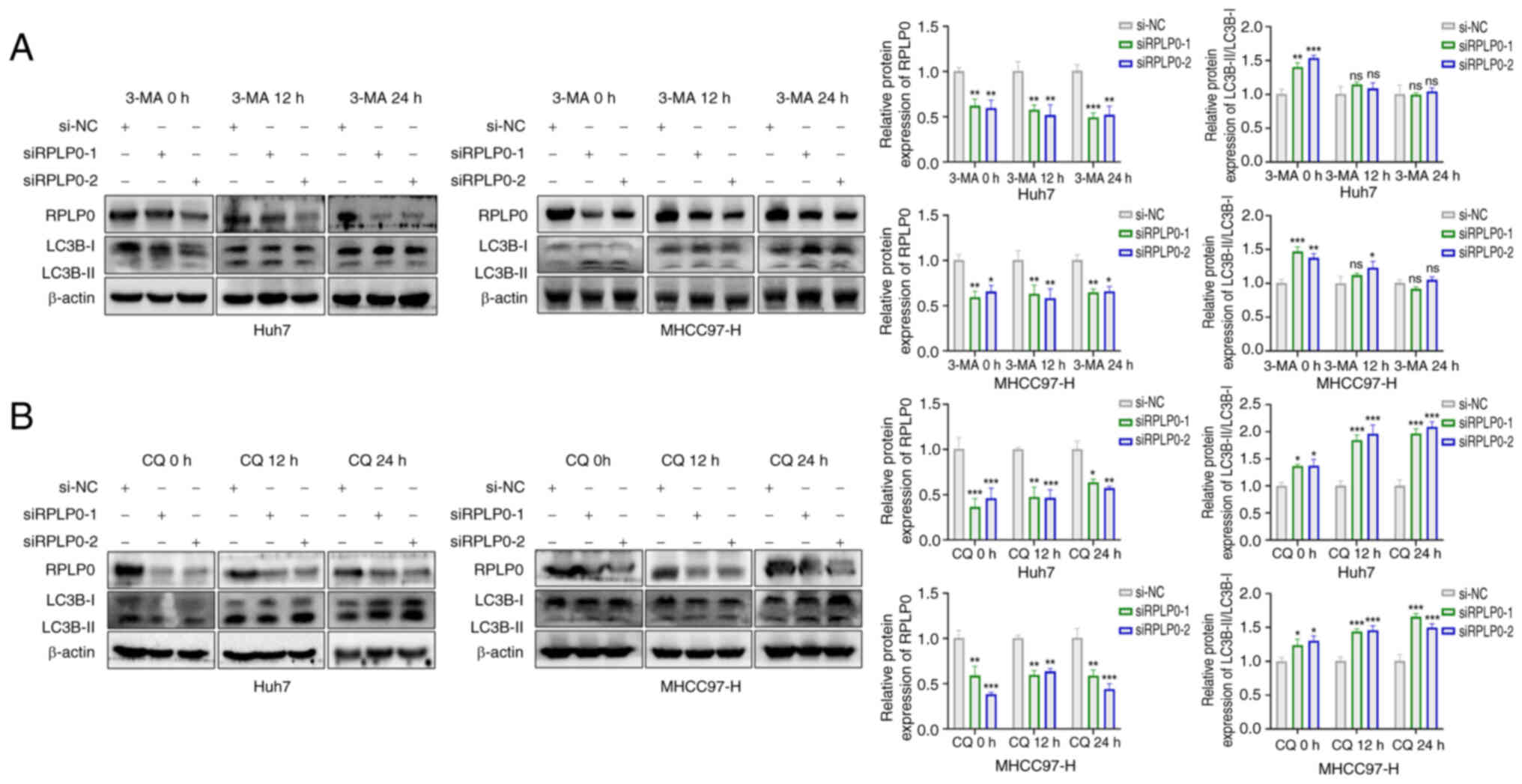
RPLP0 knockdown stimulates autophagic
flux in HCC cells, as shown by 3-MA and CQ. (A) Western blotting
analyzed LC3B expression in HCC cells pretreated with transfection
and subsequently exposed to 5 mM 3-MA for 0, 12 and 24 h. (B) HCC
cells were treated with 20 μM CQ for 0, 12 and 24 h,
respectively, followed by RPLP0 knockdown, and western blotting
evaluated LC3B levels. *P<0.05,
**P<0.01, ***P<0.001. RPLP0, ribosomal
protein lateral stalk subunit P0; HCC, hepatocellular carcinoma;
3-MA, 3-methyladenine; CQ, chloroquine.

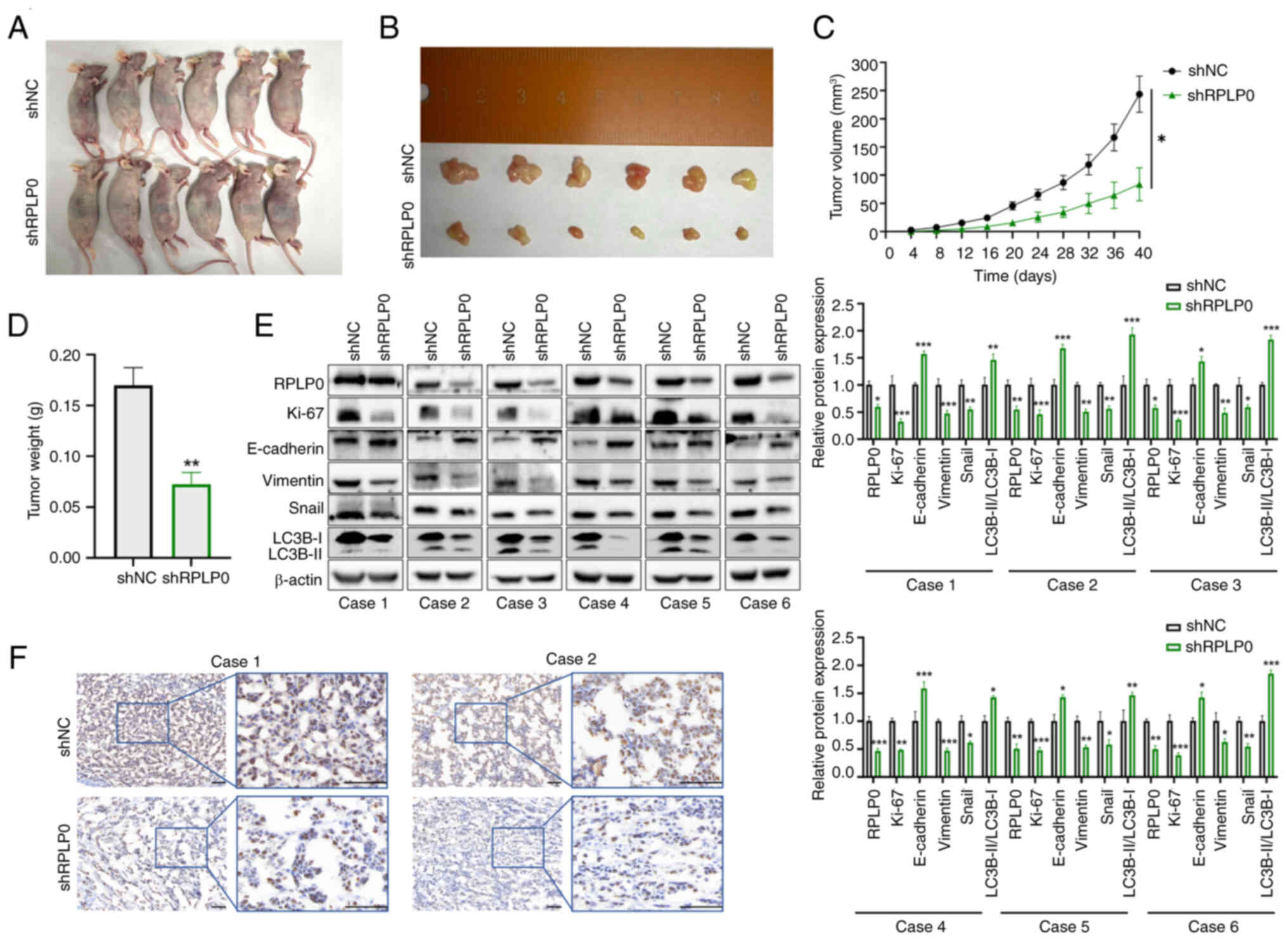
Figure 6

Suppression of RPLP0 expression
impedes xenograft tumor growth. (A) Subcutaneous xenograft tumor
models were established following pretreatment of MHCC97-H cells.
(B) Xenograft tumors were successfully isolated. The (C) volume and
(D) weight of subcutaneous xenografts were compared between the
shNC and shRPLP0 groups. (E) Western blotting was performed to
assess RPLP0, Ki-67, E-cadherin, Vimentin, Snail and LC3B levels in
the xenografts. (F) Immunohistochemical staining for Ki-67 in the
shNC and shRPLP0 groups (scale bar, 50 μm).
*P<0.05, **P<0.01,
***P<0.001. RPLP0, ribosomal protein lateral stalk
subunit P0; sh, short hairpin.

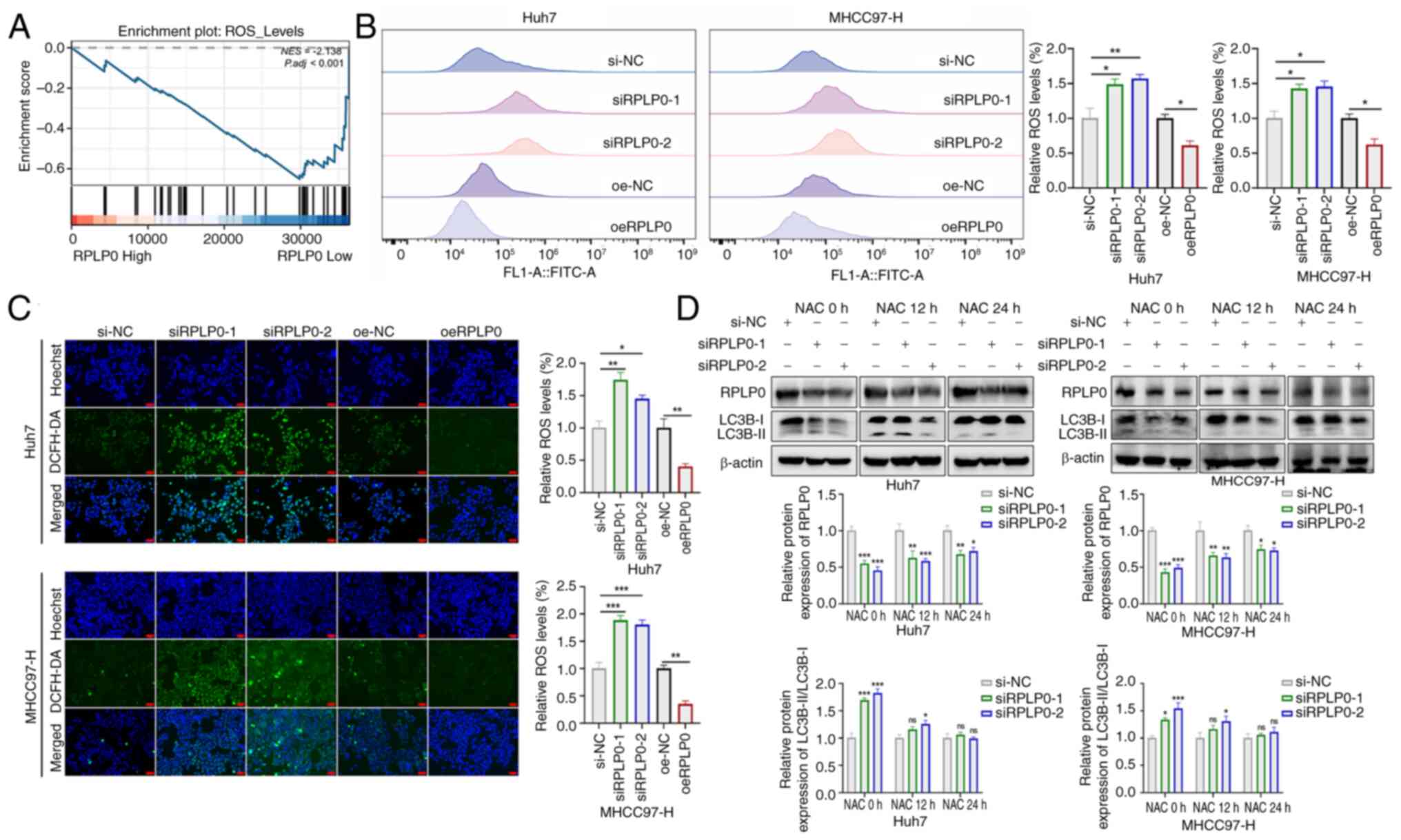
Figure 7

Suppression of RPLP0 expression
promotes ROS accumulation. (A) GSEA demonstrated a significant
correlation between reduced RPLP0 expression and increased ROS
accumulation. (B) ROS levels were evaluated via flow cytometry
following pretreatment. (C) Fluorescence microscopy was utilized to
evaluate ROS levels (scale bar, 50 μm). (D) HCC cells were
treated with 5 mM NAC for 0, 12 and 24 h and LC3B expression was
analyzed via western blotting. *P<0.05,
**P<0.01, ***P<0.001. RPLP0, ribosomal
protein lateral stalk subunit P0; ROS, reactive oxygen species;
GSEA, gene set enrichment analysis; HCC, hepatocellular carcinoma;
NAC, N-acetyl-L-cysteine.

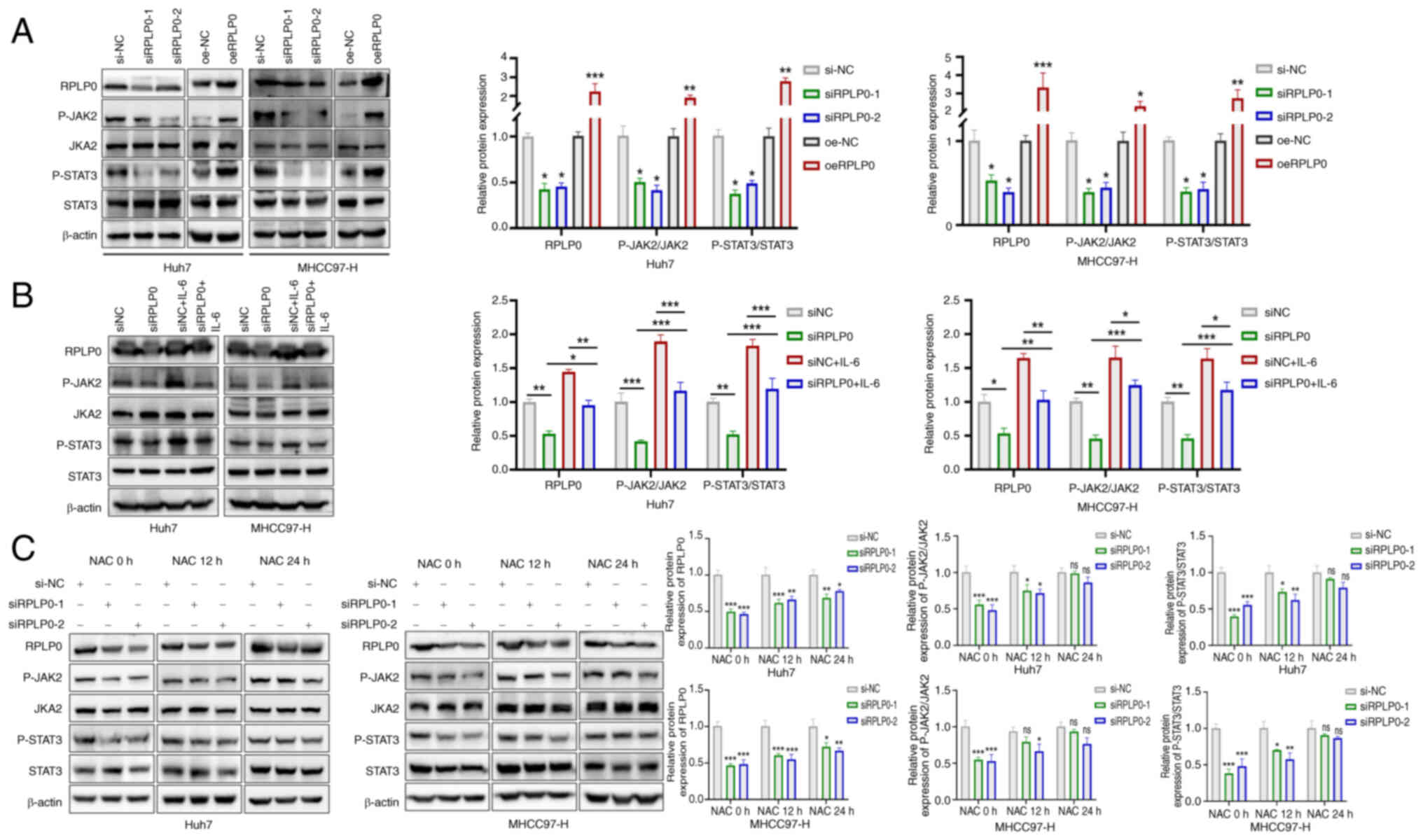
Figure 8

Suppressing RPLP0 deactivates the
JAK2/STAT3 pathway by accumulating ROS. (A) Alterations in RPLP0,
p-JAK2/JAK2 and p-STAT3/STAT3 expression were assessed in HCC cells
following transfection. (B) After 48 h of transfection, Huh7 and
MHCC97-H cells were exposed to 40 ng/ml IL-6 for an additional 24
h, followed by western blot analysis of RPLP0, p-JAK2/JAK2 and
p-STAT3/STAT3 expression. (C) HCC cells underwent a 48-h
transfection pretreatment and were then treated with 5 mM NAC for
0, 12 and 24 h, followed by western blot analysis of RPLP0,
p-JAK2/JAK2 and p-STAT3/STAT3 expression. *P<0.05,
**P<0.01, ***P<0.001. RPLP0, ribosomal
protein lateral stalk subunit P0; ROS, reactive oxygen species; p-,
phosphorylated; HCC, hepatocellular carcinoma; NAC,
N-acetyl-L-cysteine.

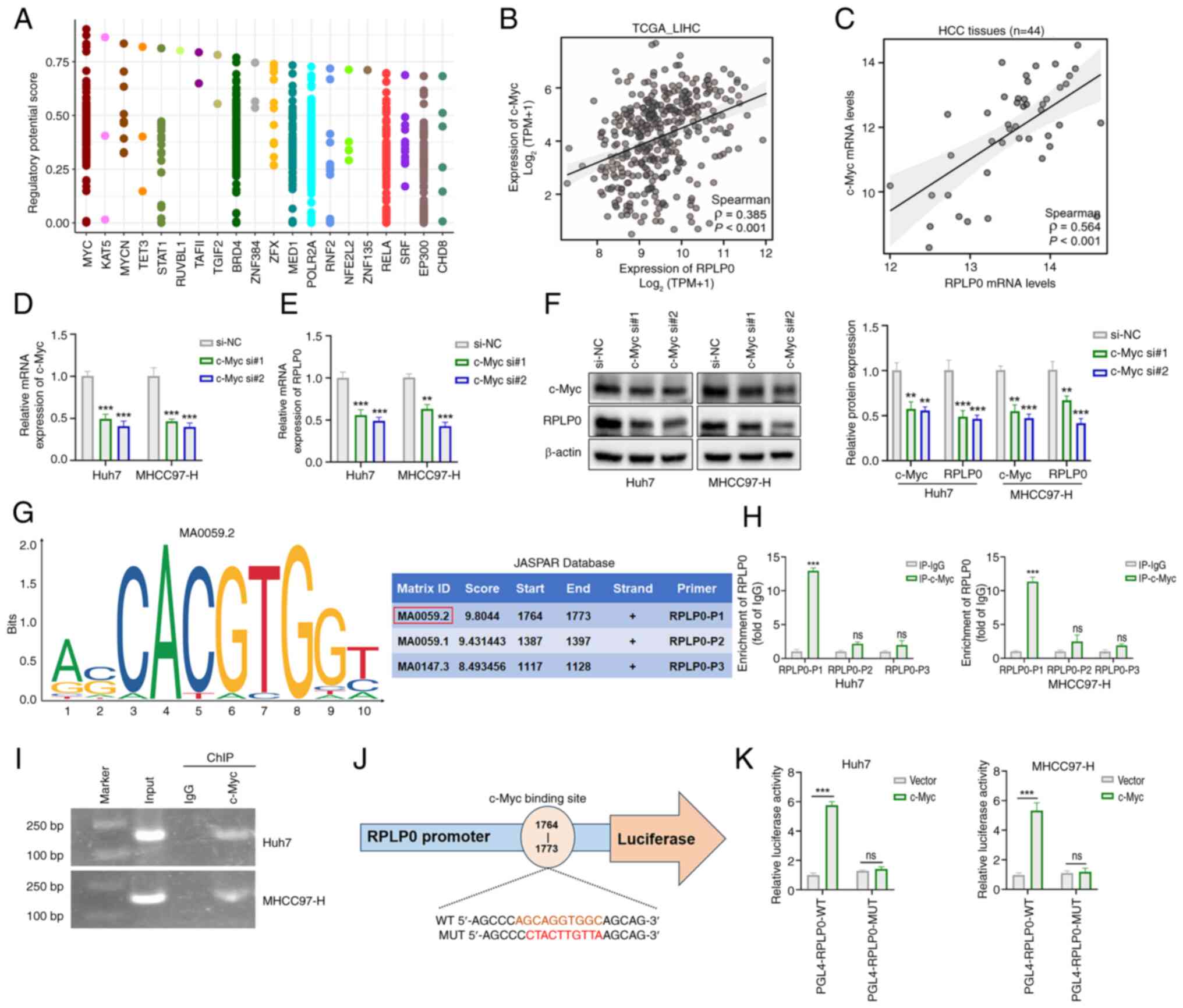
Figure 9

c-Myc promotes RPLP0 transcription.
(A) The Cistrome Data Browser database was used to predict
transcription factors associated with RPLP0. Correlation analyses
of RPLP0 and c-Myc expression were conducted from the (B) TCGA
database and (C) HCC samples (n=44). (D) HCC cells were transfected
for 24 h to evaluate the knockdown efficiency of c-Myc mRNA and (E)
the corresponding expression level of RPLP0 mRNA. (F) HCC cells
were transfected for 48 h to examine alterations in c-Myc and RPLP0
protein expression. (G) A schematic illustration of c-Myc binding
motifs, along with the relative scoring of binding sites derived
from the JASPAR database. Corresponding primers were designed based
on these binding sites. (H) ChIP-qPCR was conducted to investigate
the binding of c-Myc to RPLP0 promoter sequences. (I) Agarose gel
electrophoresis was performed to visualize the binding of c-Myc to
RPLP0 promoter sequences (input as a positive control, IgG as a
negative control). (J) Identification of potential sites for c-Myc
binding to the RPLP0 promoter region. (K) HCC cells were
co-transfected and subsequently analyzed for luciferase activity.
**P<0.01, ***P<0.001. RPLP0, ribosomal
protein lateral stalk subunit P0; HCC, hepatocellular carcinoma;
ChIP, chromatin immunoprecipitation; qPCR, quantitative polymerase
chain reaction.

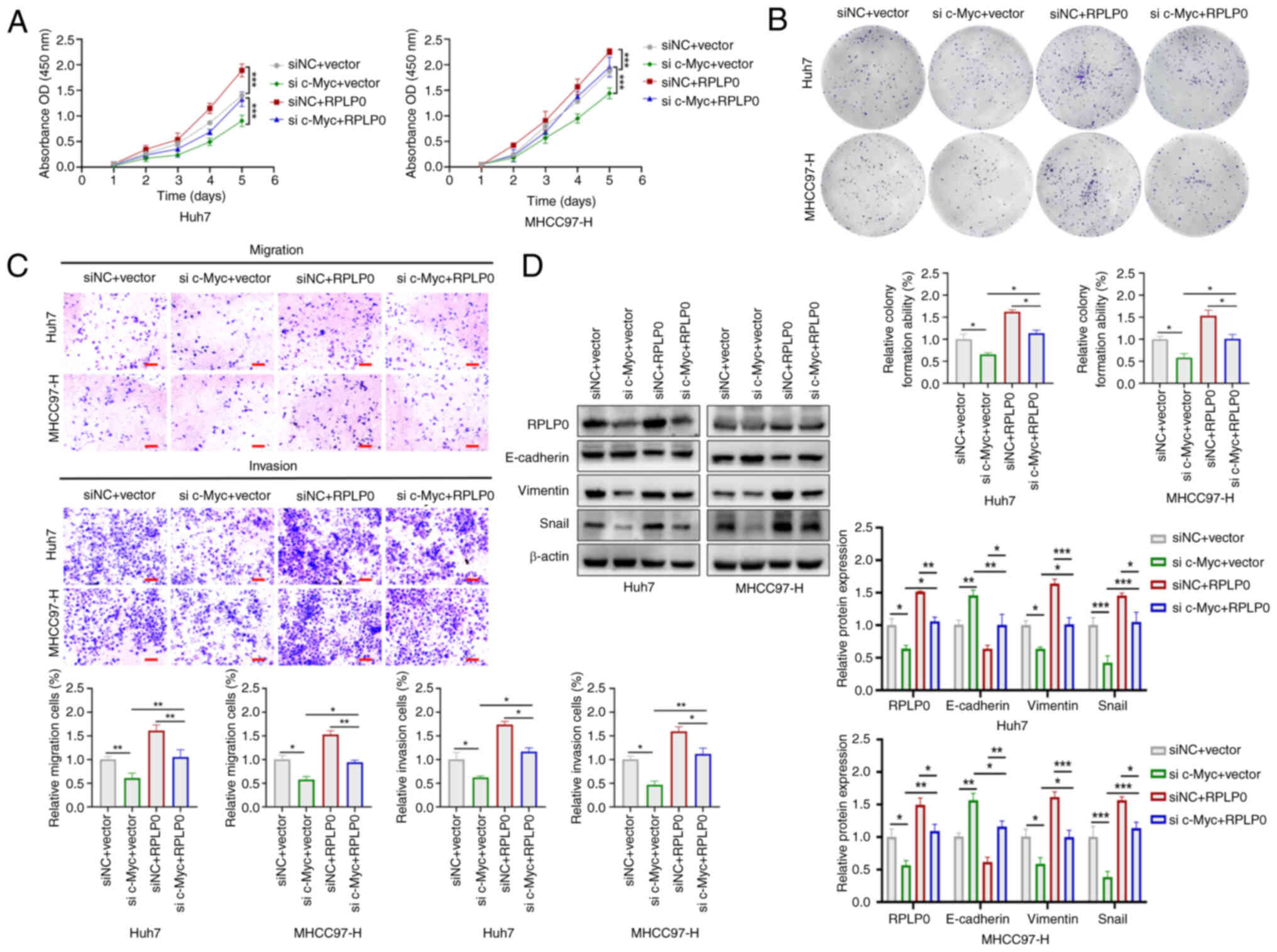
Figure 10

RPLP0 facilitates the proliferation
and metastasis of HCC cells through the regulation of c-Myc. (A)
CCK-8, (B) colony formation and (C) Transwell assays were used to
assess cell proliferation, migration and invasion (scale bar, 150
μm). (D) EMT-related protein levels, such as E-cadherin,
Vimentin and Snail, were examined in co-transfected HCC cells.
*P<0.05, **P<0.01,
***P<0.001. RPLP0, ribosomal protein lateral stalk
subunit P0; HCC, hepatocellular carcinoma; EMT,
epithelial-mesenchymal transition.

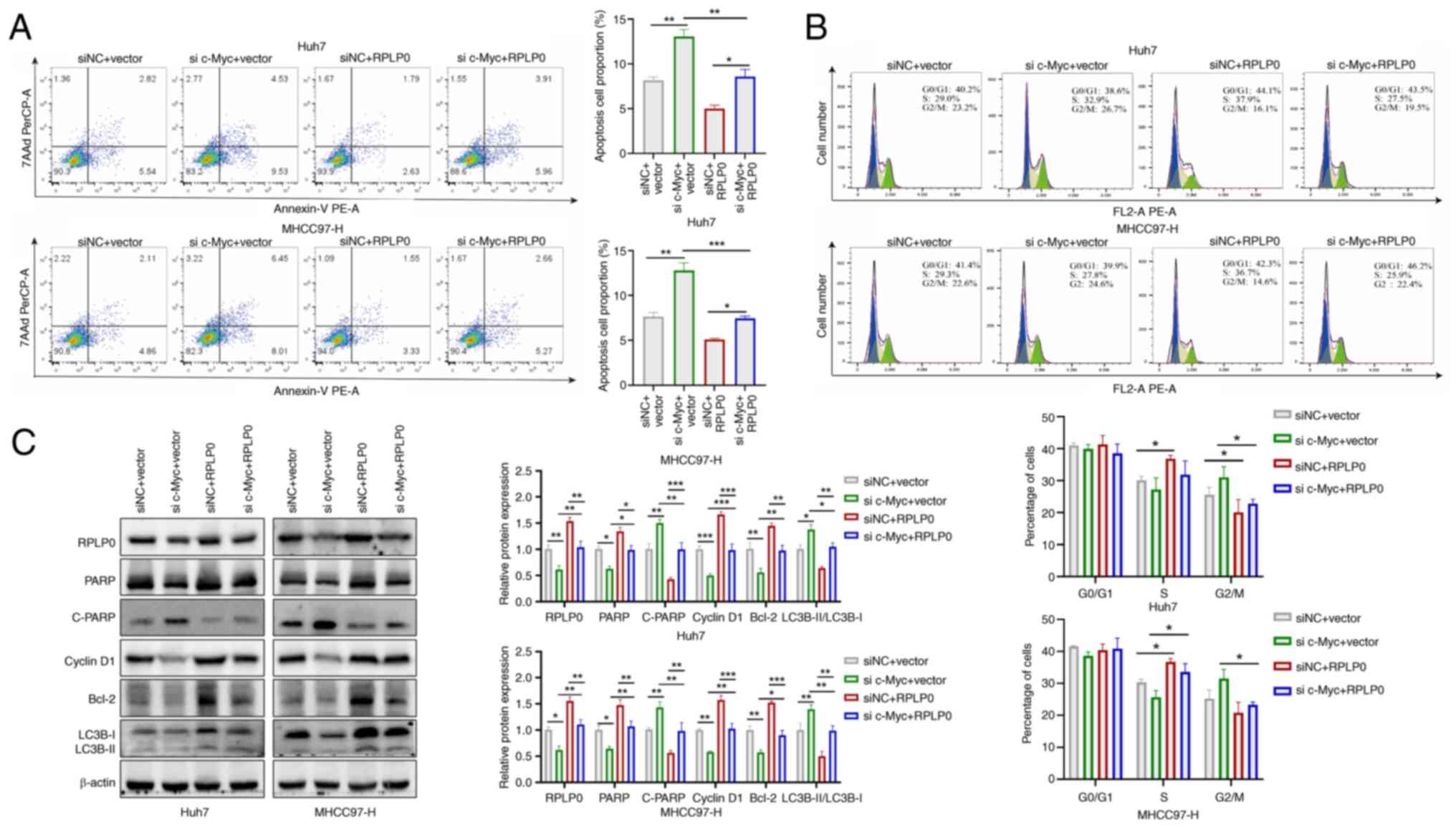
Figure 11

RPLP0-mediated regulation of
apoptosis and cell cycle distribution in HCC cells depends on
c-Myc. The (A) apoptosis rate and (B) cell cycle distribution were
analyzed via flow cytometry. (C) Western blotting was used to
evaluate PARP, C-PARP, Cyclin D1, Bcl-2 and LC3B expression.
*P<0.05, **P<0.01,
***P<0.001. RPLP0, ribosomal protein lateral stalk
subunit P0; HCC, hepatocellular carcinoma; PARP, Poly (ADP-ribose)
polymerase; C-, cleaved.

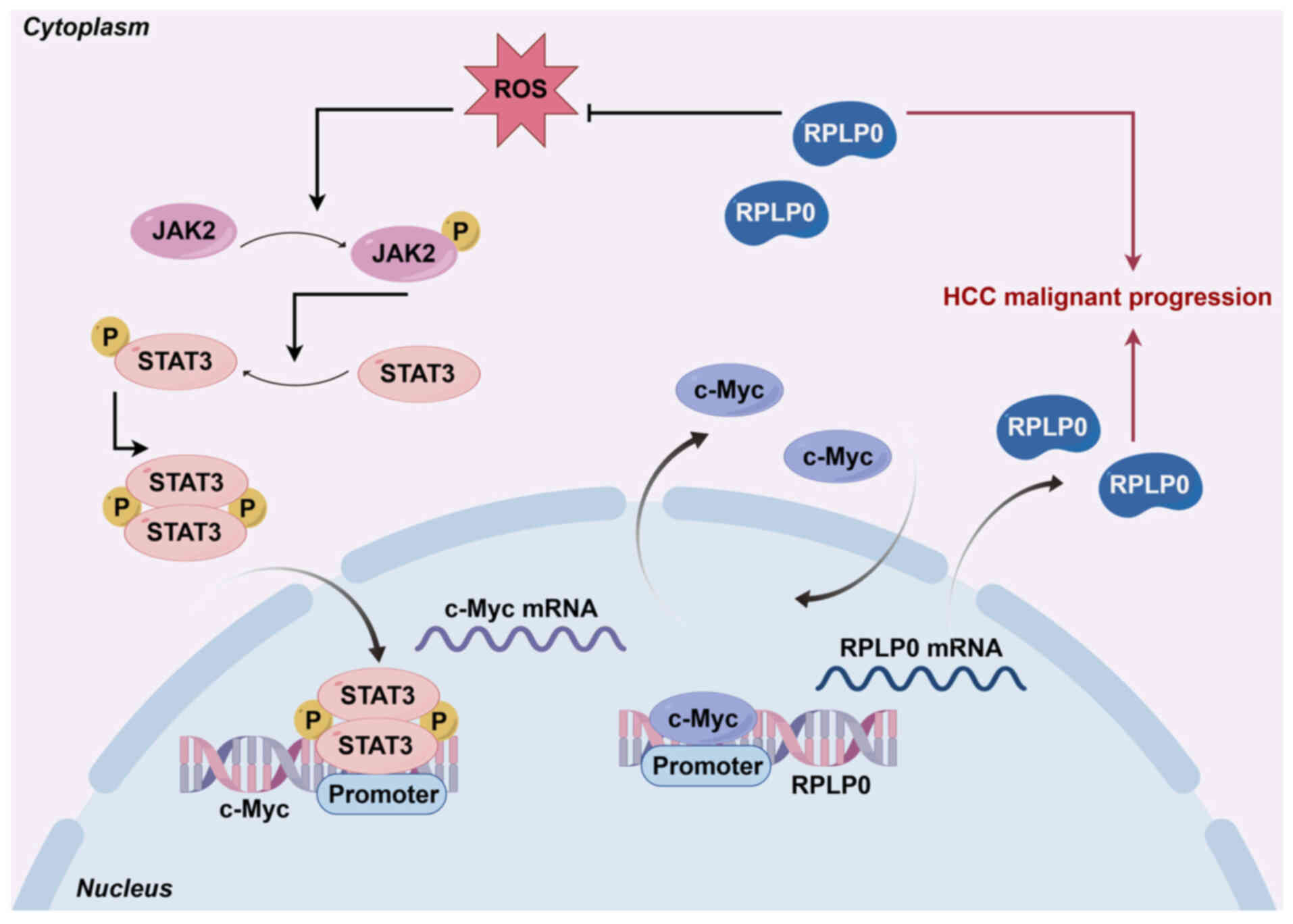
Figure 12

RPLP0, regulated by c-Myc,
facilitates HCC progression by reducing ROS levels and activating
the JAK2/STAT3 signaling pathway. Functional model of the
c-Myc/RPLP0/ROS/JAK2/STAT3 signaling axis. RPLP0, ribosomal protein
lateral stalk subunit P0; HCC, hepatocellular carcinoma; ROS,
reactive oxygen species.
View References

1 

Bray F, Laversanne M, Sung H, Ferlay J, Siegel RL, Soerjomataram I and Jemal A: Global cancer statistics 2022: GLOBOCAN estimates of incidence and mortality worldwide for 36 cancers in 185 countries. CA Cancer J Clin. 74:229–263. 2024.PubMed/NCBI

2 

Wang X, Zhang L and Dong B: Molecular mechanisms in MASLD/MASH-related HCC. Hepatology. 8:1303–1324. 2025. View Article : Google Scholar

3 

Foerster F, Gairing SJ, Müller L and Galle PR: NAFLD-driven HCC: Safety and efficacy of current and emerging treatment options. J Hepatol. 76:446–457. 2022. View Article : Google Scholar

4 

Toh MR, Wong EYT, Wong SH, Ng AWT, Loo LH, Chow PK and Ngeow J: Global epidemiology and genetics of hepatocellular carcinoma. Gastroenterology. 164:766–782. 2023. View Article : Google Scholar : PubMed/NCBI

5 

Childs A, Aidoo-Micah G, Maini MK and Meyer T: Immunotherapy for hepatocellular carcinoma. JHEP Rep. 6:1011302024. View Article : Google Scholar : PubMed/NCBI

6 

Medavaram S and Zhang Y: Emerging therapies in advanced hepatocellular carcinoma. Exp Hematol Oncol. 7:172018. View Article : Google Scholar : PubMed/NCBI

7 

Rimassa L, Pressiani T and Merle P: Systemic treatment options in hepatocellular carcinoma. Liver Cancer. 8:427–446. 2019. View Article : Google Scholar : PubMed/NCBI

8 

Artero-Castro A, Castellvi J, García A, Hernández J, Ramón Y, Cajal S and Lleonart ME: Expression of the ribosomal proteins Rplp0, Rplp1, and Rplp2 in gynecologic tumors. Hum Pathol. 42:194–203. 2011. View Article : Google Scholar

9 

Artero-Castro A, Perez-Alea M, Feliciano A, Leal JA, Genestar M, Castellvi J, Peg V, Ramón Y, Cajal S and Lleonart ME: Disruption of the ribosomal P complex leads to stress-induced autophagy. Autophagy. 11:1499–1519. 2015. View Article : Google Scholar : PubMed/NCBI

10 

Teller A, Jechorek D, Hartig R, Adolf D, Reißig K, Roessner A and Franke S: Dysregulation of apoptotic signaling pathways by interaction of RPLP0 and cathepsin X/Z in gastric cancer. Pathol Res Pract. 211:62–70. 2015. View Article : Google Scholar

11 

Wang CH, Wang LK, Wu CC, Chen ML, Lee MC, Lin YY and Tsai FM: The ribosomal protein RPLP0 mediates PLAAT4-induced cell cycle arrest and cell apoptosis. Cell Biochem Biophys. 77:253–260. 2019. View Article : Google Scholar : PubMed/NCBI

12 

Wang YL, Zhao WW, Bai SM, Ma Y, Yin XK, Feng LL, Zeng GD, Wang F, Feng WX, Zheng J, et al: DNA damage-induced paraspeckle formation enhances DNA repair and tumor radioresistance by recruiting ribosomal protein P0. Cell Death Dis. 13:7092022. View Article : Google Scholar : PubMed/NCBI

13 

Debnath J, Gammoh N and Ryan KM: Autophagy and autophagy-related pathways in cancer. Nat Rev Mol Cell Biol. 24:560–575. 2023. View Article : Google Scholar : PubMed/NCBI

14 

Miller DR and Thorburn A: Autophagy and organelle homeostasis in cancer. Dev Cell. 56:906–918. 2021. View Article : Google Scholar : PubMed/NCBI

15 

Meng Y, Huang X, Zhang G, Fu S, Li Y, Song J, Zhu Y, Xu X and Peng X: MicroRNA-450b-5p modulated RPLP0 promotes hepatocellular carcinoma progression via activating JAK/STAT3 pathway. Transl Oncol. 50:1021502024. View Article : Google Scholar : PubMed/NCBI

16 

Zheng P, Xu D, Cai Y, Zhu L, Xiao Q, Peng W and Chen B: A multi-omic analysis reveals that Gamabufotalin exerts anti-hepatocellular carcinoma effects by regulating amino acid metabolism through targeting STAMBPL1. Phytomedicine. 135:1560942024. View Article : Google Scholar : PubMed/NCBI

17 

Livak KJ and Schmittgen TD: Analysis of relative gene expression data using real-time quantitative PCR and the 2(-Delta Delta C(T)) method. Methods. 25:402–408. 2001. View Article : Google Scholar

18 

Qian J, Wang Q, Xiao L, Xiong W, Xian M, Su P, Yang M, Zhang C, Li Y, Zhong L, et al: Development of therapeutic monoclonal antibodies against DKK1 peptide-HLA-A2 complex to treat human cancers. J Immunother Cancer. 12:e0081452024. View Article : Google Scholar : PubMed/NCBI

19 

Mizushima N and Komatsu M: Autophagy: Renovation of cells and tissues. Cell. 147:728–741. 2011. View Article : Google Scholar : PubMed/NCBI

20 

Mizushima N and Levine B: Autophagy in human diseases. N Engl J Med. 383:1564–1576. 2020. View Article : Google Scholar : PubMed/NCBI

21 

Yan LS, Zhang SF, Luo G, Cheng BC, Zhang C, Wang YW, Qiu XY, Zhou XH, Wang QG, Song XL, et al: Schisandrin B mitigates hepatic steatosis and promotes fatty acid oxidation by inducing autophagy through AMPK/mTOR signaling pathway. Metabolism. 131:1552002022. View Article : Google Scholar : PubMed/NCBI

22 

Zhao YG, Codogno P and Zhang H: Machinery, regulation and pathophysiological implications of autophagosome maturation. Nat Rev Mol Cell Biol. 22:733–750. 2021. View Article : Google Scholar : PubMed/NCBI

23 

Miao CC, Hwang W, Chu LY, Yang LH, Ha CT, Chen PY, Kuo MH, Lin SC, Yang YY, Chuang SE, et al: LC3A-mediated autophagy regulates lung cancer cell plasticity. Autophagy. 18:921–934. 2022. View Article : Google Scholar :

24 

Bradford HF, McDonnell TCR, Stewart A, Skelton A, Ng J, Baig Z, Fraternali F, Dunn-Walters D, Isenberg DA, Khan AR, et al: Thioredoxin is a metabolic rheostat controlling regulatory B cells. Nat Immunol. 25:873–885. 2024. View Article : Google Scholar : PubMed/NCBI

25 

Ornatowski W, Lu Q, Yegambaram M, Garcia AE, Zemskov EA, Maltepe E, Fineman JR, Wang T and Black SM: Complex interplay between autophagy and oxidative stress in the development of pulmonary disease. Redox Biol. 36:1016792020. View Article : Google Scholar : PubMed/NCBI

26 

Russell RC and Guan KL: The multifaceted role of autophagy in cancer. EMBO J. 41:e1100312022. View Article : Google Scholar : PubMed/NCBI

27 

Yang R, Gao W, Wang Z, Jian H, Peng L, Yu X, Xue P, Peng W, Li K and Zeng P: Polyphyllin I induced ferroptosis to suppress the progression of hepatocellular carcinoma through activation of the mitochondrial dysfunction via Nrf2/HO-1/GPX4 axis. Phytomedicine. 122:1551352024. View Article : Google Scholar

28 

Tsai HY, Bronner MP, March JK, Valentine JF, Shroyer NF, Lai LA, Brentnall TA, Pan S and Chen R: Metabolic targeting of NRF2 potentiates the efficacy of the TRAP1 inhibitor G-TPP through reduction of ROS detoxification in colorectal cancer. Cancer Lett. 549:2159152022. View Article : Google Scholar : PubMed/NCBI

29 

Johnson DE, O'Keefe RA and Grandis JR: Targeting the IL-6/JAK/STAT3 signalling axis in cancer. Nat Rev Clin Oncol. 15:234–248. 2018. View Article : Google Scholar : PubMed/NCBI

30 

Lai SY and Johnson FM: Defining the role of the JAK-STAT pathway in head and neck and thoracic malignancies: Implications for future therapeutic approaches. Drug Resist Updat. 13:67–78. 2010. View Article : Google Scholar : PubMed/NCBI

31 

Yu H, Lee H, Herrmann A, Buettner R and Jove R: Revisiting STAT3 signalling in cancer: new and unexpected biological functions. Nat Rev Cancer. 14:736–746. 2014. View Article : Google Scholar : PubMed/NCBI

32 

Chen L, Zhang C, Xue R, Liu M, Bai J, Bao J, Wang Y, Jiang N, Li Z, Wang W, et al: Deep whole-genome analysis of 494 hepatocellular carcinomas. Nature. 627:586–593. 2024. View Article : Google Scholar : PubMed/NCBI

33 

Ng CKY, Dazert E, Boldanova T, Coto-Llerena M, Nuciforo S, Ercan C, Suslov A, Meier MA, Bock T, Schmidt A, et al: Integrative proteogenomic characterization of hepatocellular carcinoma across etiologies and stages. Nat Commu. 13:24362022. View Article : Google Scholar

34 

Calderaro J, Ziol M, Paradis V and Zucman-Rossi J: Molecular and histological correlations in liver cancer. J Hepatol. 71:616–630. 2019. View Article : Google Scholar : PubMed/NCBI

35 

Villanueva A: Hepatocellular carcinoma. N Engl J Med. 380:1450–1462. 2019. View Article : Google Scholar : PubMed/NCBI

36 

Li X, He S and Ma B: Autophagy and autophagy-related proteins in cancer. Mol Cancer. 19:122020. View Article : Google Scholar : PubMed/NCBI

37 

Fan J, Ren D, Wang J, Liu X, Zhang H, Wu M and Yang G: Bruceine D induces lung cancer cell apoptosis and autophagy via the ROS/MAPK signaling pathway in vitro and in vivo. Cell Death Dis. 11:1262020. View Article : Google Scholar : PubMed/NCBI

38 

Cao Y, Wang J, Tian H and Fu GH: Mitochondrial ROS accumulation inhibiting JAK2/STAT3 pathway is a critical modulator of CYT997-induced autophagy and apoptosis in gastric cancer. J Exp Clin Cancer Res. 39:1192020. View Article : Google Scholar : PubMed/NCBI

39 

Kim J, Park A, Hwang J, Zhao X, Kwak J, Kim HW, Ku M, Yang J, Kim TI, Jeong KS, et al: KS10076, a chelator for redox-active metal ions, induces ROS-mediated STAT3 degradation in autophagic cell death and eliminates ALDH1+ stem cells. Cell Rep. 40:1110772022. View Article : Google Scholar

40 

Liang JR and Yang H: Ginkgolic acid (GA) suppresses gastric cancer growth by inducing apoptosis and suppressing STAT3/JAK2 signaling regulated by ROS. Biomed Pharmacother. 125:1095852020. View Article : Google Scholar : PubMed/NCBI

41 

Zhao Z, Wang Y, Gong Y, Wang X, Zhang L, Zhao H, Li J, Zhu J, Huang X, Zhao C, et al: Celastrol elicits antitumor effects by inhibiting the STAT3 pathway through ROS accumulation in non-small cell lung cancer. J Transl Med. 20:5252022. View Article : Google Scholar : PubMed/NCBI

42 

Zhou H, Li J, He Y, Xia X, Liu J and Xiong H: SLC25A17 inhibits autophagy to promote triple-negative breast cancer tumorigenesis by ROS-mediated JAK2/STAT3 signaling pathway. Cancer Cell Int. 24:852024. View Article : Google Scholar : PubMed/NCBI

43 

Garg M, Shanmugam MK, Bhardwaj V, Goel A, Gupta R, Sharma A, Baligar P, Kumar AP, Goh BC, Wang L and Sethi G: The pleiotropic role of transcription factor STAT3 in oncogenesis and its targeting through natural products for cancer prevention and therapy. Med Res Rev. December 1–2020.Epub ahead of print. PubMed/NCBI

44 

Hu Y, Dong Z and Liu K: Unraveling the complexity of STAT3 in cancer: Molecular understanding and drug discovery. J Exp Clin Cancer Res. 43:232024. View Article : Google Scholar : PubMed/NCBI

45 

Zou S, Tong Q, Liu B, Huang W, Tian Y and Fu X: Targeting STAT3 in cancer immunotherapy. Mol Cancer. 19:1452020. View Article : Google Scholar : PubMed/NCBI

46 

Dhanasekaran R, Deutzmann A, Mahauad-Fernandez WD, Hansen AS, Gouw AM and Felsher DW: The MYC oncogene-the grand orchestrator of cancer growth and immune evasion. Nat Rev Clin Oncol. 19:23–36. 2022. View Article : Google Scholar

47 

Duffy MJ, O'Grady S, Tang M and Crown J: MYC as a target for cancer treatment. Cancer Treat Rev. 94:1021542021. View Article : Google Scholar : PubMed/NCBI

48 

Lourenco C, Resetca D, Redel C, Lin P, MacDonald AS, Ciaccio R, Kenney TMG, Wei Y, Andrews DW, Sunnerhagen M, et al: MYC protein interactors in gene transcription and cancer. Nat Rev Cancer. 21:579–591. 2021. View Article : Google Scholar : PubMed/NCBI

Related Articles

  • Abstract
  • View
  • Download
  • Twitter
Copy and paste a formatted citation
Spandidos Publications style
Meng Y, Yuan L, Meng G, Huang H, Huang X, Xu X and Peng X: c‑Myc‑regulated RPLP0 via the ROS‑mediated JAK2/STAT3 positive feedback loop facilitates hepatocellular carcinoma malignancy progression. Int J Oncol 68: 13, 2026.
APA
Meng, Y., Yuan, L., Meng, G., Huang, H., Huang, X., Xu, X., & Peng, X. (2026). c‑Myc‑regulated RPLP0 via the ROS‑mediated JAK2/STAT3 positive feedback loop facilitates hepatocellular carcinoma malignancy progression. International Journal of Oncology, 68, 13. https://doi.org/10.3892/ijo.2025.5826
MLA
Meng, Y., Yuan, L., Meng, G., Huang, H., Huang, X., Xu, X., Peng, X."c‑Myc‑regulated RPLP0 via the ROS‑mediated JAK2/STAT3 positive feedback loop facilitates hepatocellular carcinoma malignancy progression". International Journal of Oncology 68.1 (2026): 13.
Chicago
Meng, Y., Yuan, L., Meng, G., Huang, H., Huang, X., Xu, X., Peng, X."c‑Myc‑regulated RPLP0 via the ROS‑mediated JAK2/STAT3 positive feedback loop facilitates hepatocellular carcinoma malignancy progression". International Journal of Oncology 68, no. 1 (2026): 13. https://doi.org/10.3892/ijo.2025.5826
Copy and paste a formatted citation
x
Spandidos Publications style
Meng Y, Yuan L, Meng G, Huang H, Huang X, Xu X and Peng X: c‑Myc‑regulated RPLP0 via the ROS‑mediated JAK2/STAT3 positive feedback loop facilitates hepatocellular carcinoma malignancy progression. Int J Oncol 68: 13, 2026.
APA
Meng, Y., Yuan, L., Meng, G., Huang, H., Huang, X., Xu, X., & Peng, X. (2026). c‑Myc‑regulated RPLP0 via the ROS‑mediated JAK2/STAT3 positive feedback loop facilitates hepatocellular carcinoma malignancy progression. International Journal of Oncology, 68, 13. https://doi.org/10.3892/ijo.2025.5826
MLA
Meng, Y., Yuan, L., Meng, G., Huang, H., Huang, X., Xu, X., Peng, X."c‑Myc‑regulated RPLP0 via the ROS‑mediated JAK2/STAT3 positive feedback loop facilitates hepatocellular carcinoma malignancy progression". International Journal of Oncology 68.1 (2026): 13.
Chicago
Meng, Y., Yuan, L., Meng, G., Huang, H., Huang, X., Xu, X., Peng, X."c‑Myc‑regulated RPLP0 via the ROS‑mediated JAK2/STAT3 positive feedback loop facilitates hepatocellular carcinoma malignancy progression". International Journal of Oncology 68, no. 1 (2026): 13. https://doi.org/10.3892/ijo.2025.5826
Follow us
  • Twitter
  • LinkedIn
  • Facebook
About
  • Spandidos Publications
  • Careers
  • Cookie Policy
  • Privacy Policy
How can we help?
  • Help
  • Live Chat
  • Contact
  • Email to our Support Team