International Journal of Molecular Medicine is an international journal devoted to molecular mechanisms of human disease.
International Journal of Oncology is an international journal devoted to oncology research and cancer treatment.
Covers molecular medicine topics such as pharmacology, pathology, genetics, neuroscience, infectious diseases, molecular cardiology, and molecular surgery.
Oncology Reports is an international journal devoted to fundamental and applied research in Oncology.
Experimental and Therapeutic Medicine is an international journal devoted to laboratory and clinical medicine.
Oncology Letters is an international journal devoted to Experimental and Clinical Oncology.
Explores a wide range of biological and medical fields, including pharmacology, genetics, microbiology, neuroscience, and molecular cardiology.
International journal addressing all aspects of oncology research, from tumorigenesis and oncogenes to chemotherapy and metastasis.
Multidisciplinary open-access journal spanning biochemistry, genetics, neuroscience, environmental health, and synthetic biology.
Open-access journal combining biochemistry, pharmacology, immunology, and genetics to advance health through functional nutrition.
Publishes open-access research on using epigenetics to advance understanding and treatment of human disease.
An International Open Access Journal Devoted to General Medicine.
Int J Oncol 59: [Related article:] 89, 2021; DOI: 10.3892/ijo.2021.5269
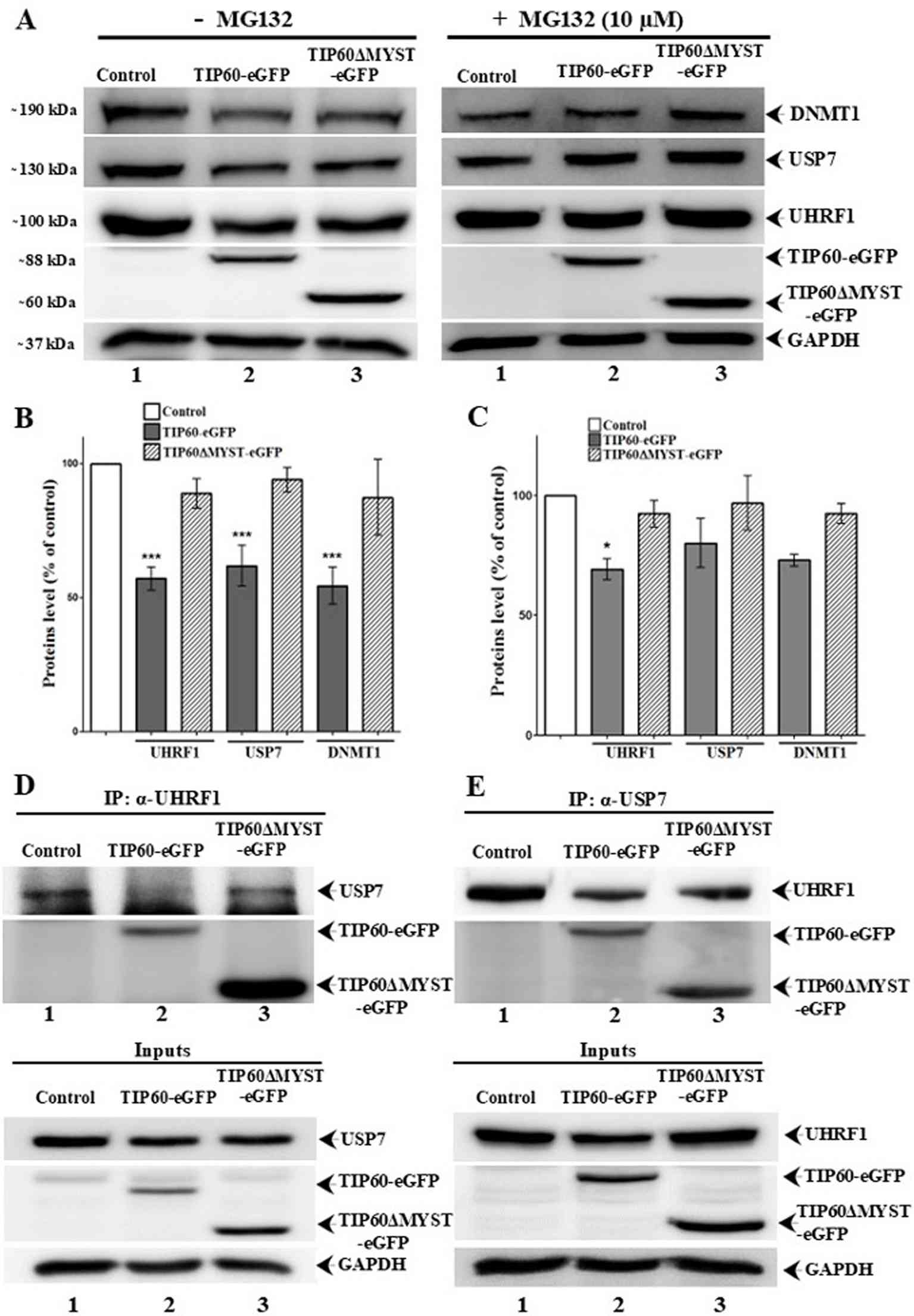
Following the publication of the above article, and an Expression of Concern statement (doi: 10.3892/ijo.2026.5908) that was published in light of the fact that the GAPDH control western blots shown in Fig. 5A on p. 9 were strikingly similar to the GAPDH control western blots shown in Fig. 5D, the authors have responded to the queries raised by the Editorial Office. The GAPDH panels shown in Figs. 5A and 5D were generated from the same experiment and the same set of protein lysates: Fig. 5A presented the analysis of total protein expression, whereas Fig. 5D presented immunoprecipitation analyses performed using material derived from these same experimental samples. Consequently, the GAPDH loading control was legitimately shared between the two figures. However, given that the original figure legend did not explicitly state that the same GAPDH loading control was used for both analyses, to eliminate any possible ambiguity for readers, the authors have revised Fig. 5 by replacing the representative '-MG132 panel' in Fig. 5A with results obtained from an independent repeat experiment performed under identical experimental conditions. The revised version of Fig. 5 is shown on the next page. Note that this revised figure reproduces the original findings, and does not affect the quantitative analyses, the interpretation of the data, or the conclusions of the study.
Regarding a query raised by the Editorial Office concerning the presentation of flow cytometric plots in Fig. 8, the authors explained that Fig. 8E was generated by applying an additional fluorescence gate to the parent flow cytometry dataset shown in Fig. 8B, which represents standard flow cytometric analysis, rather than duplication of experimental data, and so this figure was presented correctly, and as intended by the authors.
The authors thank the Editor of International Journal of Oncology for granting them the opportunity to publish this corrigendum, and all the authors agree with its publication.