Spandidos Publications Logo
  • About
    • About Spandidos
    • Aims and Scopes
    • Abstracting and Indexing
    • Editorial Policies
    • Reprints and Permissions
    • Job Opportunities
    • Terms and Conditions
    • Contact
  • Journals
    • All Journals
    • Oncology Letters
      • Oncology Letters
      • Information for Authors
      • Editorial Policies
      • Editorial Board
      • Aims and Scope
      • Abstracting and Indexing
      • Bibliographic Information
      • Archive
    • International Journal of Oncology
      • International Journal of Oncology
      • Information for Authors
      • Editorial Policies
      • Editorial Board
      • Aims and Scope
      • Abstracting and Indexing
      • Bibliographic Information
      • Archive
    • Molecular and Clinical Oncology
      • Molecular and Clinical Oncology
      • Information for Authors
      • Editorial Policies
      • Editorial Board
      • Aims and Scope
      • Abstracting and Indexing
      • Bibliographic Information
      • Archive
    • Experimental and Therapeutic Medicine
      • Experimental and Therapeutic Medicine
      • Information for Authors
      • Editorial Policies
      • Editorial Board
      • Aims and Scope
      • Abstracting and Indexing
      • Bibliographic Information
      • Archive
    • International Journal of Molecular Medicine
      • International Journal of Molecular Medicine
      • Information for Authors
      • Editorial Policies
      • Editorial Board
      • Aims and Scope
      • Abstracting and Indexing
      • Bibliographic Information
      • Archive
    • Biomedical Reports
      • Biomedical Reports
      • Information for Authors
      • Editorial Policies
      • Editorial Board
      • Aims and Scope
      • Abstracting and Indexing
      • Bibliographic Information
      • Archive
    • Oncology Reports
      • Oncology Reports
      • Information for Authors
      • Editorial Policies
      • Editorial Board
      • Aims and Scope
      • Abstracting and Indexing
      • Bibliographic Information
      • Archive
    • Molecular Medicine Reports
      • Molecular Medicine Reports
      • Information for Authors
      • Editorial Policies
      • Editorial Board
      • Aims and Scope
      • Abstracting and Indexing
      • Bibliographic Information
      • Archive
    • World Academy of Sciences Journal
      • World Academy of Sciences Journal
      • Information for Authors
      • Editorial Policies
      • Editorial Board
      • Aims and Scope
      • Abstracting and Indexing
      • Bibliographic Information
      • Archive
    • International Journal of Functional Nutrition
      • International Journal of Functional Nutrition
      • Information for Authors
      • Editorial Policies
      • Editorial Board
      • Aims and Scope
      • Abstracting and Indexing
      • Bibliographic Information
      • Archive
    • International Journal of Epigenetics
      • International Journal of Epigenetics
      • Information for Authors
      • Editorial Policies
      • Editorial Board
      • Aims and Scope
      • Abstracting and Indexing
      • Bibliographic Information
      • Archive
    • Medicine International
      • Medicine International
      • Information for Authors
      • Editorial Policies
      • Editorial Board
      • Aims and Scope
      • Abstracting and Indexing
      • Bibliographic Information
      • Archive
  • Articles
  • Information
    • Information for Authors
    • Information for Reviewers
    • Information for Librarians
    • Information for Advertisers
    • Conferences
  • Language Editing
Spandidos Publications Logo
  • About
    • About Spandidos
    • Aims and Scopes
    • Abstracting and Indexing
    • Editorial Policies
    • Reprints and Permissions
    • Job Opportunities
    • Terms and Conditions
    • Contact
  • Journals
    • All Journals
    • Biomedical Reports
      • Information for Authors
      • Editorial Policies
      • Editorial Board
      • Aims and Scope
      • Abstracting and Indexing
      • Bibliographic Information
      • Archive
    • Experimental and Therapeutic Medicine
      • Information for Authors
      • Editorial Policies
      • Editorial Board
      • Aims and Scope
      • Abstracting and Indexing
      • Bibliographic Information
      • Archive
    • International Journal of Epigenetics
      • Information for Authors
      • Editorial Policies
      • Editorial Board
      • Aims and Scope
      • Abstracting and Indexing
      • Bibliographic Information
      • Archive
    • International Journal of Functional Nutrition
      • Information for Authors
      • Editorial Policies
      • Editorial Board
      • Aims and Scope
      • Abstracting and Indexing
      • Bibliographic Information
      • Archive
    • International Journal of Molecular Medicine
      • Information for Authors
      • Editorial Policies
      • Editorial Board
      • Aims and Scope
      • Abstracting and Indexing
      • Bibliographic Information
      • Archive
    • International Journal of Oncology
      • Information for Authors
      • Editorial Policies
      • Editorial Board
      • Aims and Scope
      • Abstracting and Indexing
      • Bibliographic Information
      • Archive
    • Medicine International
      • Information for Authors
      • Editorial Policies
      • Editorial Board
      • Aims and Scope
      • Abstracting and Indexing
      • Bibliographic Information
      • Archive
    • Molecular and Clinical Oncology
      • Information for Authors
      • Editorial Policies
      • Editorial Board
      • Aims and Scope
      • Abstracting and Indexing
      • Bibliographic Information
      • Archive
    • Molecular Medicine Reports
      • Information for Authors
      • Editorial Policies
      • Editorial Board
      • Aims and Scope
      • Abstracting and Indexing
      • Bibliographic Information
      • Archive
    • Oncology Letters
      • Information for Authors
      • Editorial Policies
      • Editorial Board
      • Aims and Scope
      • Abstracting and Indexing
      • Bibliographic Information
      • Archive
    • Oncology Reports
      • Information for Authors
      • Editorial Policies
      • Editorial Board
      • Aims and Scope
      • Abstracting and Indexing
      • Bibliographic Information
      • Archive
    • World Academy of Sciences Journal
      • Information for Authors
      • Editorial Policies
      • Editorial Board
      • Aims and Scope
      • Abstracting and Indexing
      • Bibliographic Information
      • Archive
  • Articles
  • Information
    • For Authors
    • For Reviewers
    • For Librarians
    • For Advertisers
    • Conferences
  • Language Editing
Login Register Submit
  • This site uses cookies
  • You can change your cookie settings at any time by following the instructions in our Cookie Policy. To find out more, you may read our Privacy Policy.

    I agree
Search articles by DOI, keyword, author or affiliation
Search
Advanced Search
presentation
Molecular and Clinical Oncology
Join Editorial Board Propose a Special Issue
Print ISSN: 2049-9450 Online ISSN: 2049-9469
Journal Cover
July-August 2014 Volume 2 Issue 4

Full Size Image

Sign up for eToc alerts
Recommend to Library

Journals

International Journal of Molecular Medicine

International Journal of Molecular Medicine

International Journal of Molecular Medicine is an international journal devoted to molecular mechanisms of human disease.

International Journal of Oncology

International Journal of Oncology

International Journal of Oncology is an international journal devoted to oncology research and cancer treatment.

Molecular Medicine Reports

Molecular Medicine Reports

Covers molecular medicine topics such as pharmacology, pathology, genetics, neuroscience, infectious diseases, molecular cardiology, and molecular surgery.

Oncology Reports

Oncology Reports

Oncology Reports is an international journal devoted to fundamental and applied research in Oncology.

Experimental and Therapeutic Medicine

Experimental and Therapeutic Medicine

Experimental and Therapeutic Medicine is an international journal devoted to laboratory and clinical medicine.

Oncology Letters

Oncology Letters

Oncology Letters is an international journal devoted to Experimental and Clinical Oncology.

Biomedical Reports

Biomedical Reports

Explores a wide range of biological and medical fields, including pharmacology, genetics, microbiology, neuroscience, and molecular cardiology.

Molecular and Clinical Oncology

Molecular and Clinical Oncology

International journal addressing all aspects of oncology research, from tumorigenesis and oncogenes to chemotherapy and metastasis.

World Academy of Sciences Journal

World Academy of Sciences Journal

Multidisciplinary open-access journal spanning biochemistry, genetics, neuroscience, environmental health, and synthetic biology.

International Journal of Functional Nutrition

International Journal of Functional Nutrition

Open-access journal combining biochemistry, pharmacology, immunology, and genetics to advance health through functional nutrition.

International Journal of Epigenetics

International Journal of Epigenetics

Publishes open-access research on using epigenetics to advance understanding and treatment of human disease.

Medicine International

Medicine International

An International Open Access Journal Devoted to General Medicine.

Journal Cover
July-August 2014 Volume 2 Issue 4

Full Size Image

Sign up for eToc alerts
Recommend to Library

  • Article
  • Citations
    • Cite This Article
    • Download Citation
    • Create Citation Alert
    • Remove Citation Alert
    • Cited By
  • Similar Articles
    • Related Articles (in Spandidos Publications)
    • Similar Articles (Google Scholar)
    • Similar Articles (PubMed)
  • Download PDF
  • Download XML
  • View XML
Case Report Open Access

Successful treatment of rectal cancer with perineal invasion: Three case reports

  • Authors:
    • Tomohiro Kitahara
    • Mamoru Uemura
    • Naotsugu Haraguchi
    • Junichi Nishimura
    • Tatsushi Shingai
    • Taishi Hata
    • Ichiro Takemasa
    • Tsunekazu Mizushima
    • Yuichiro Doki
    • Masaki Mori
    • Hirofumi Yamamoto
  • View Affiliations / Copyright

    Affiliations: Department of Gastroenterological Surgery, Graduate School of Medicine, Osaka University, Suita, Osaka 565-0871, Japan, Department of Gastroenterological Surgery, National Hospital Organization, Osaka National Hospital, Osaka, Osaka 540-0006, Japan, Department of Surgery, Saiseikai Senri Hospital, Suita, Osaka 565-0862, Japan
  • Pages: 497-500
    |
    Published online on: April 17, 2014
       https://doi.org/10.3892/mco.2014.282
  • Expand metrics +
Metrics: Total Views: 0 (Spandidos Publications: | PMC Statistics: )
Metrics: Total PDF Downloads: 0 (Spandidos Publications: | PMC Statistics: )
Cited By (CrossRef): 0 citations Loading Articles...

This article is mentioned in:


Abstract

Rectal cancer occasionally invades adjacent organs. however, rectal cancer with perineal invasion is uncommon and difficult to treat. Locally advanced colorectal cancer may be clinically treated with neoadjuvant therapy, followed by en bloc resection. Skin invasion may lead to tumor dissemination via cutaneous blood flow and lymphatic routes. there is currently no firm evidence regarding the treatment of these significantly advanced rectal cancers. in this study, we report 3 cases of rectal cancer with perineal invasion, successfully managed by multimodality treatment. Case 1 is a 52‑year‑old man with rectal cancer that had invaded the perineum; case 2 is a 38‑year‑old man with rectal cancer infiltrating the perineal skin and liver metastasis; and case 3 is a 50‑year‑old woman with rectal cancer and perineal invasion. All the cases were treated with radical excision. No severe complications were observed in the perioperative period. Case 2, in particular, was confirmed to remain alive 5 years after the surgery. Our experience suggests that multimodality treatment, including extended radical surgery, may be a feasible approach to the treatment of rectal cancer with perineal skin invasion.

Introduction

Colorectal cancer most often disseminates to the liver and lung and rarely to the skin (1,2). The incidence of skin involvement for colorectal cancer is reported as low as 2.3% (3). Cutaneous metastases from colorectal cancer are generally caused by direct tumor extension, dissemination, invasion of the embryonic ligaments, or implantation during surgical resection (4). Massive invasion of rectal cancer to the perineal skin is considered extremely rare, since the sensation of a perianal lump, altered bowel habits, bleeding or soiling, usually leads to diagnosis prior to the occurrence of massive invasion to the perineal area (5). Patients with perineal skin invasion by rectal cancer present with symptoms of severe pain, continuous bleeding and distressing discharge, which significantly affect their quality of life.

In some cases, cancer lesions may be localized, allowing for surgical intervention as an effective treatment modality (3). However, in general, for these patients, the indication for radical resection is controversial, as the survival benefits and surgical outcomes have not been clearly determined (6–8).

In this study, we report 3 cases of rectal cancer with perineal skin involvement who underwent multimodality treatment, including effective extended radical resection.

Case report

Case 1

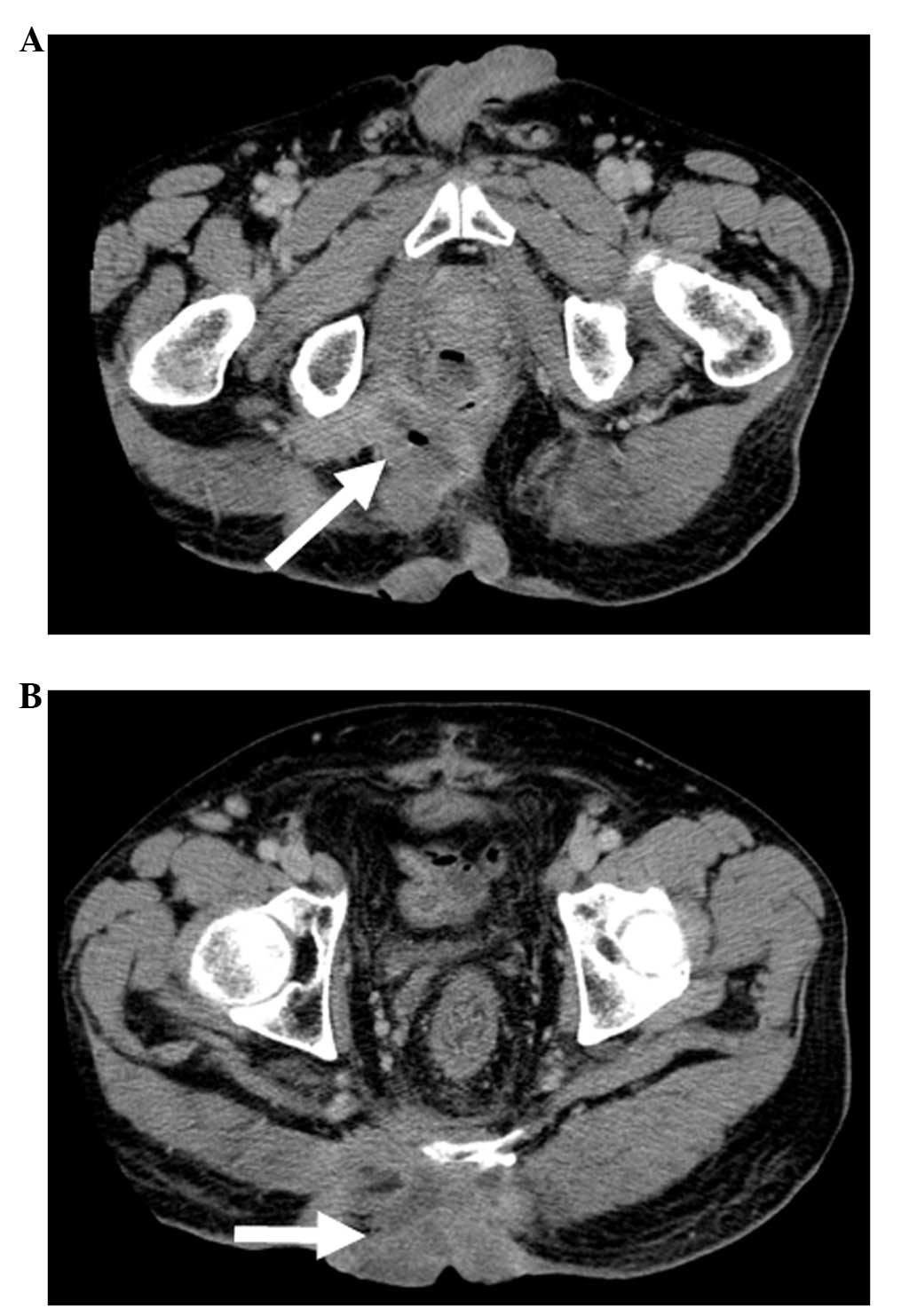
The patient was a 52-year-old man with rectal cancer that had invaded the perineum. A colostomy was constructed in September, 2003, as the tumor presented with extensive local invasion and complete resection was impossible due to invasion of the pelvic wall. After the operation, the patient received chemotherapy with irinotecan (CPT-11) and doxifluridine and radiotherapy (50 Gy). The patient achieved stable disease, according to Response Evaluation Criteria in Solid Tumor (RECIST); the tumor kept eroding the skin and the patient experienced constant pain. Pelvic computed tomography (CT) revealed that the rectal cancer had invaded the left levator ani and gluteus maximus muscles, perineal skin, bladder, seminal vesicle and prostate gland (Table I, Fig. 1A and B). The lesion was highly advanced locally, but there was no evidence of distant metastasis; therefore, we planned an extended radical resection with curative intent.

Figure 1

Pelvic CT of rectal cancer prior to total pelvic exenteration surgery. (A) The arrow indicates the site of origin. (B) The arrow indicates the direct invasion of tumor into the skin. CT, computed tomography.

Table I

Patient profiles.

Table I

Patient profiles.

CasesAge/genderStageOperationPreoperative treatmentOutcome
Case 152/MT4bN0M0TPECPT-11 + 5-DFUR and stage IIc radiotherapy (50 Gy)Died 3 years after the operation
Case 238/MT4bN1bM1a stage IVTPE6 cycles of mFOLFOX6a and radiotherapy (40 Gy)Alive
Case 350/FT4bN0M0 stage IIcAPRUFT/LV + CPT-11 and radiotherapy (45 Gy)Alive

a Leucovorin calcium (folinic acid), fluorouracil and oxaliplatin.

{ label (or @symbol) needed for fn[@id='tfn2-mco-02-04-0497'] } TPE, total pelvic exenteration; APR, abdominoperineal resection; CPR-11, irinotecan; DFUR, doxifluridine; UFT, uracil/tegafur; LV, leucovorin.

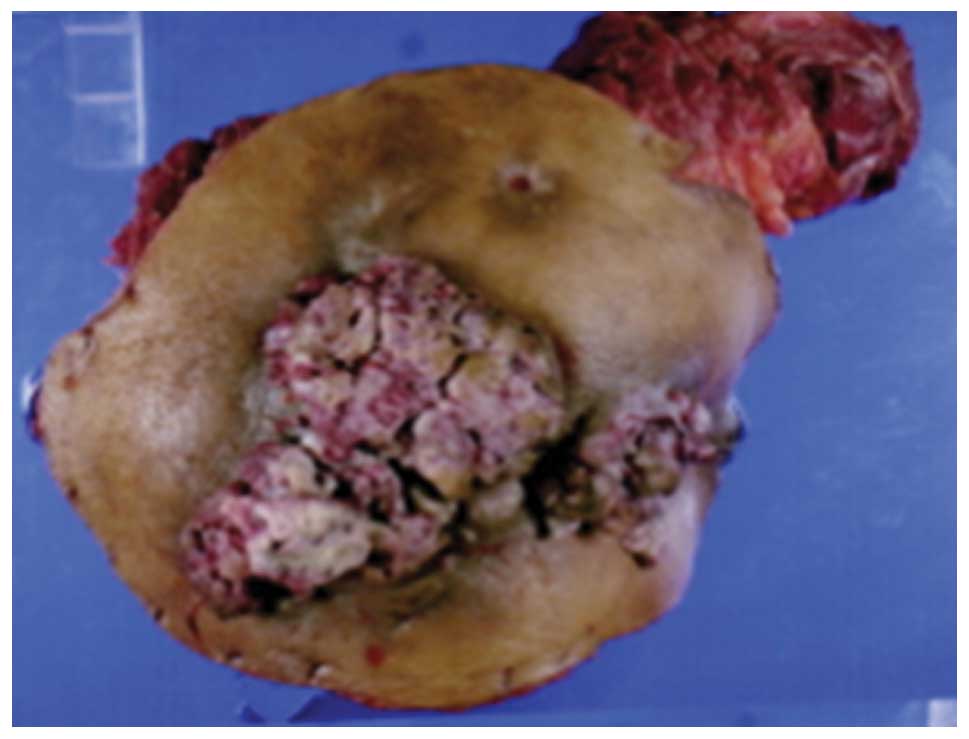
We performed a total pelvic exenteration (TPE) with extended resection of adjacent organs, including the perineal skin, in July, 2004 (Fig. 2). To reduce the risk of severe pelvic infection (9), a reconstruction was concomitantly performed, using a vertical rectus abdominis myocutaneous (VRAM) flap. The histological examination of the tumor revealed a moderately differentiated adenocarcinoma with extensive venous and lymphatic invasion and the examination of the 32 resected lymph nodes confirmed the absence of lymph node metastasis. A histologically complete resection was performed.

Figure 2

Specimen of total pelvic exenteration surgery, showing skin invasion by rectal adenocarcinoma.

The patient succumbed to the disease 3 years after surgery, due to local re-recurrence diagnosed 6 months prior to death. Up to the diagnosis of local re-recurrence, the daily quality of life of the patient was not significantly affected.

Case 2

The patient was a 38-year-old man, complaining of anal discharge, due to rectal cancer with rectoperineal fistula. The tumor was diagnosed as unresectable, due to a highly advanced primary tumor and the presence of liver metastasis. A colostomy was constructed in December, 2006, prior to the initiation of chemoradiotherapy. The patient received 6 cycles of chemotherapy with mFOLFOX6 and radiotherapy (40 Gy) and achieved a partial response (PR), according to RECIST (Table I).

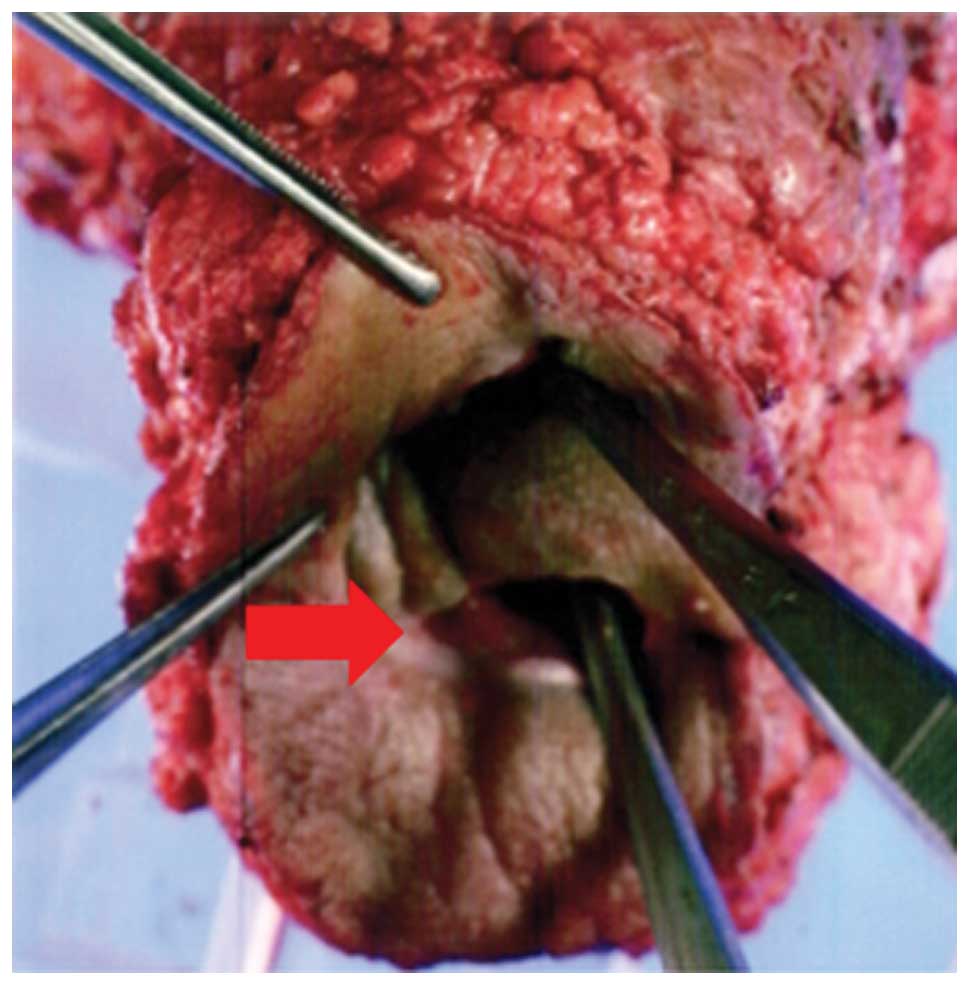
We performed a TPE on the patient, with extended resection of the perineal skin, followed by reconstruction, using a VRAM flap, in May, 2007 (Fig. 3). The histological examination of the tumor revealed a moderately differentiated adenocarcinoma with extensive venous and lymphatic invasion and the examination of the 38 resected lymph nodes confirmed the absence of lymph node metastasis.

Figure 3

Specimen of total pelvic exenteration surgery. The arrow indicates the rectoperineal fistula.

After the operation, the patient received chemotherapy with mFOLFOX and bevasizumab (Bev), followed by partial hepatectomy. After the hepatectomy, the patient received adjuvant chemotherapy with FOLFIRI and Bev. The patient is currently free from recurrence, 5 years after the hepatectomy.

Case 3

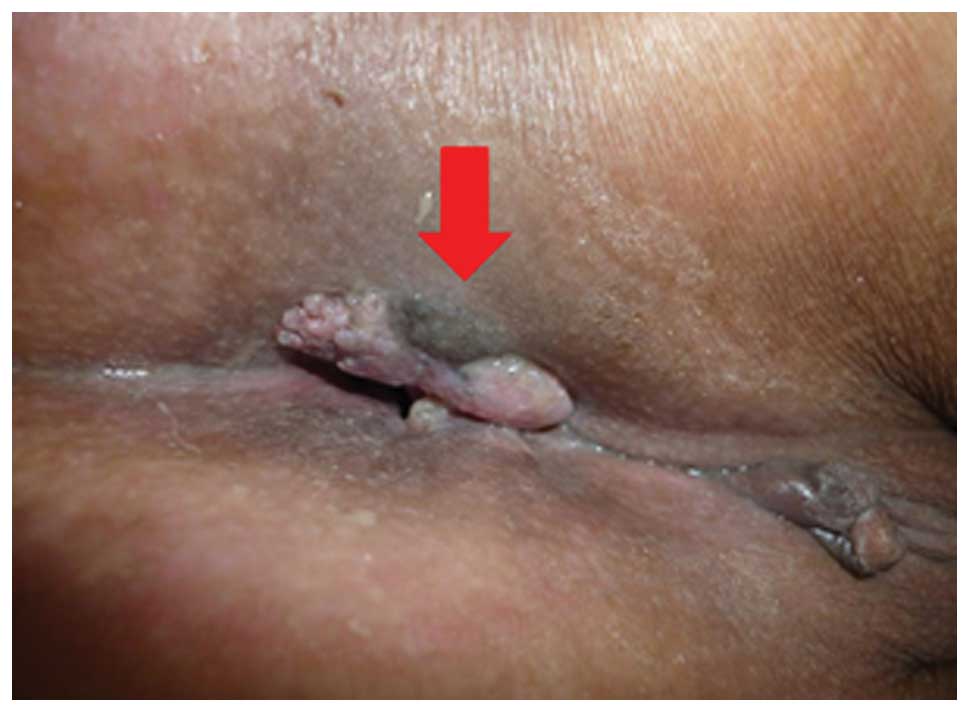
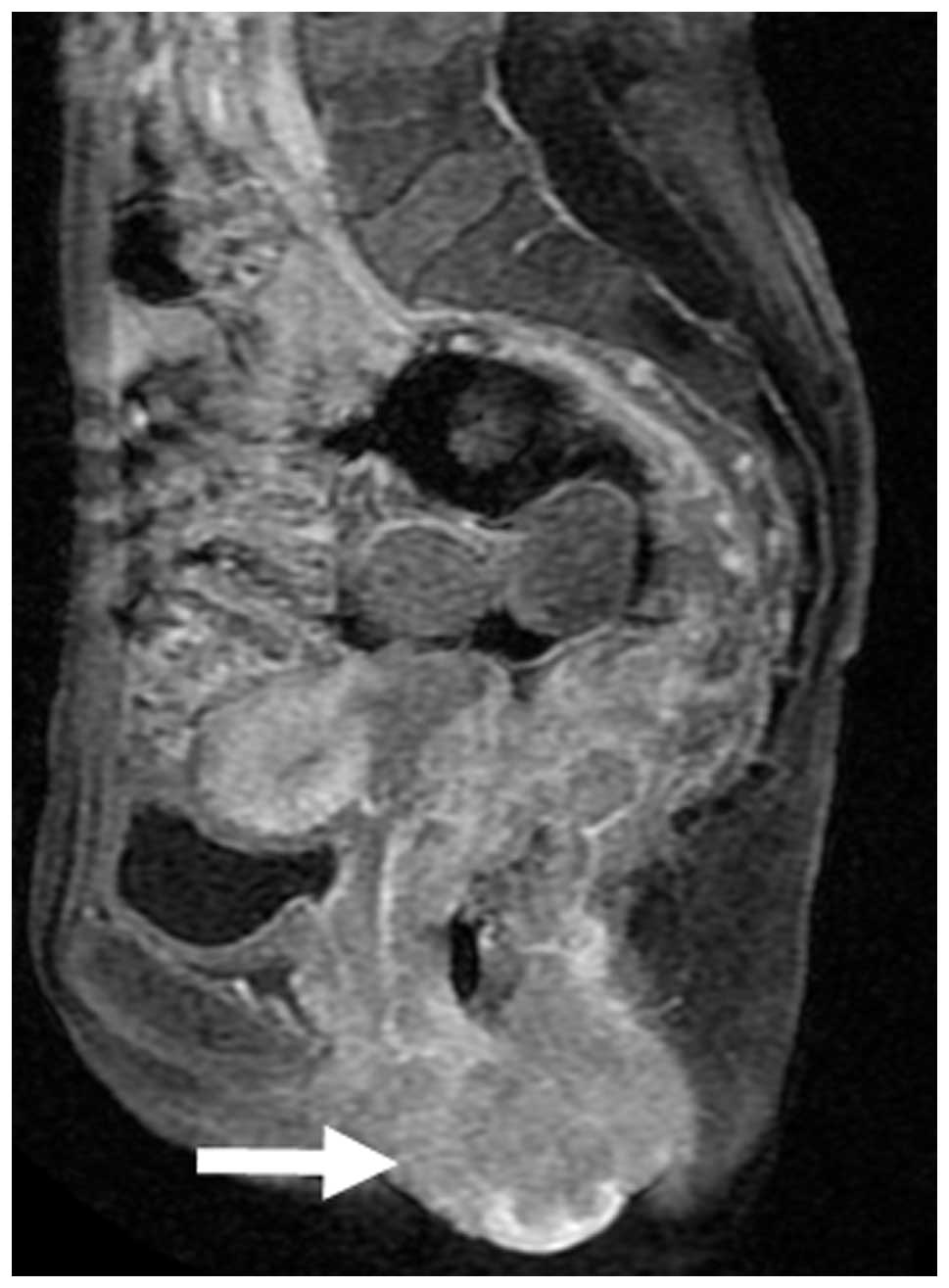
The patient was a 50-year-old woman, complaining of general fatigue and anemia. The patient had a sizeable tumor, visible at the anus (Fig. 4). A rectal biopsy confirmed the diagnosis of poorly differentiated adenocarcinoma. Pelvic magnetic resonance imaging revealed that the rectal cancer had invaded the uterus, cervix, vagina, levator ani muscle and perianal skin (Fig. 5).

Figure 4

View of the perineal region. The arrow indicates the direct invasion of rectal cancer into the skin.

Figure 5

Magnetic resonance imaging of rectal cancer prior to neoadjuvant radiochemotherapy. The arrow indicates the tumor invading into the skin.

The patient received chemotherapy treatment with uracil/tegafur/leucovorin plus CPT-11 and radiotherapy (45 Gy) and achieved a PR, according to RECIST (Table I). We performed abdominoperineal resection with extended resection of the perineal skin, followed by reconstruction using a VRAM flap, in March, 2011. The histological examination of the tumor revealed a poorly differentiated adenocarcinoma with extensive lymphatic invasion and the examination of the 31 resected lymph nodes confirmed the absence of lymph node metastasis.

Seven months after surgery, in October, 2011, the cancer metastasized to the lung. The patient received 3 cycles of chemotherapy with XELOX + Bev, which effectively controlled the metastases. The patient subsequently received a left upper lobectomy in March, 2012, followed by a right S6 segmental resection in June of the same year. The patient experienced local re-recurrence in May, 2013 and is currently under treatment.

Discussion

Approximately 10% of patients with colorectal cancer exhibit locally advanced disease with peritoneal involvement (T4a) or invasion of adjacent organs (T4b) at the time of diagnosis (10). In this type of cancer, the most frequently invaded organ is the urinary bladder, followed by the small intestine (11). A literature search revealed that locally advanced rectal cancer directly invading the perineal skin, is rare.

Direct invasion of the tumor into the skin primarily occurs through ulceration or inflammation. Once the malignant ulcers are infected, they are often foul-smelling, painful and bleeding, severely compromising the quality of life of the patients.

According to the National Comprehensive Cancer Network guidelines, neoadjuvant therapy should be administered for the treatment of locally advanced rectal cancer. In addition, it was suggested that extracolonic invasion is not necessarily a poor prognostic factor (11). Rödel et al (12) reported that curative operations may be performed on 94% of patients with contiguous or adherent-to-adjacent pelvic organs, following CRT with 5-fluorouracil regimen. A resection of the pelvic tumor with negative margins was achieved in 84% of patients.

Rectal cancer with massive perineal skin invasion should be managed differently from locally advanced rectal cancer, since, once tumor cells have invaded the perineal skin, tumor dissemination may occur via hematogenous and lymphatic routes (13). There are currently no reports on the appropriate treatment for such significantly advanced local rectal cancer.

In our cases, the patients did not achieve a complete cure. All the patients requested a surgical resection as they all suffered from severe and annoying symptoms. Therefore, we planned a multimodality treatment with curative intent, despite the lack of firm evidence. None of the cases had severe postoperative complications. The patients almost fully returned to their daily activities. In particular, the multimodal treatment was highly effective in Case 2, although the patient had liver metastasis.

The outcome of these cases shed light on the multimodal treatment, including extended surgery, for rectal cancers with massive perineal skin invasion. There are currently no data on the effectiveness of various treatment modalities for this type of cancer, as there are simply too few cases to make definitive conclusions. An extensive study should be conducted to determine the prognostic factors for long-term survival. Such studies could be informative to the selection of patients who should receive multimodal treatment with curative intent.

In conclusion, for rectal cancer patients with massive invasion to the perineum, multimodal treatment, including extended radical surgery, can be an effective treatment of choice, in terms of balancing cancer control and quality of life.

References

1 

Sgambati SA and Barrows GH: Cutaneous metastasis of colon carcinoma: a case report. Conn Med. 57:665–667. 1993.PubMed/NCBI

2 

Goris Gbenou MC, Wahidy T, Llinares K, et al: Atypical phimosis secondary to a preputial metastasis from rectal carcinoma. Case Rep Oncol. 4:542–546. 2011.PubMed/NCBI

3 

Lookingbill DP, Spangler N and Sexton FM: Skin involvement as the presenting sign of internal carcinoma-a retrospective study of 7316 cancer-patients. J Am Acad Dermatol. 22:19–26. 1990.PubMed/NCBI

4 

Reilly WT, Nelson H, Schroeder G, et al: Wound recurrence following conventional treatment for colorectal cancer. A rare but perhaps underestimated problem. Dis Colon Rectum. 39:200–207. 1996. View Article : Google Scholar

5 

Jensen SL, Shokouh-Amiri MH, Hagen K, et al: Adenocarcinoma of the anal ducts. A series of 21 cases. Dis Colon Rectum. 31:268–272. 1988. View Article : Google Scholar : PubMed/NCBI

6 

Lo S and Crew J: Penile metastasis from rectal carcinoma. Singapore Med J. 45:2992004.PubMed/NCBI

7 

Maestro MA, Martinez-Pineiro L, Moreno SS, et al: Penile metastasis of rectal carcinoma. Case report and bibliographic review. Arch Esp Urol. 64:981–984. 2011.(In English, Spanish).

8 

Yildirim M, Coskun A, Purten M, et al: A clinical case of the penile metastasis from the rectal carcinoma. Radiol Oncol. 44:121–123. 2011.PubMed/NCBI

9 

Uemura M, Ikeda M, Sekimoto M, et al: Prevention of severe pelvic abscess formation following extended radical surgery for locally reccurent of rectal cancer. Ann Surg Oncol. 16:2204–2210. 2009. View Article : Google Scholar : PubMed/NCBI

10 

Lehnert T, Methner M, Pollok A, et al: Multiviscerral resection for locally advanced primary colon and rectal cancer: An analysis of prognostic factors in 201 patients. Ann Surg. 235:217–225. 2002. View Article : Google Scholar : PubMed/NCBI

11 

Poeze M, Houbiers JG, van de Velde CJ, et al: Radical resection of locally advanced colorectal cancer. Br J Surg. 82:1386–1390. 1995. View Article : Google Scholar : PubMed/NCBI

12 

Rödel C, Grabenbauer GG, Schick C, et al: Preoperative radiation with concurrent 5-fluorouracil for locally advanced T4-primary rectal cancer. Strahlenther Onkol. 176:161–167. 2000.PubMed/NCBI

13 

Kauffman CL and Sina B: Metastatic inflammatory carcinoma of the rectum: tumor spread by three routes. Am J Dermatopathol. 19:528–532. 1997. View Article : Google Scholar : PubMed/NCBI

Related Articles

  • Abstract
  • View
  • Download
  • Twitter
Copy and paste a formatted citation
Spandidos Publications style
Kitahara T, Uemura M, Haraguchi N, Nishimura J, Shingai T, Hata T, Takemasa I, Mizushima T, Doki Y, Mori M, Mori M, et al: Successful treatment of rectal cancer with perineal invasion: Three case reports. Mol Clin Oncol 2: 497-500, 2014.
APA
Kitahara, T., Uemura, M., Haraguchi, N., Nishimura, J., Shingai, T., Hata, T. ... Yamamoto, H. (2014). Successful treatment of rectal cancer with perineal invasion: Three case reports. Molecular and Clinical Oncology, 2, 497-500. https://doi.org/10.3892/mco.2014.282
MLA
Kitahara, T., Uemura, M., Haraguchi, N., Nishimura, J., Shingai, T., Hata, T., Takemasa, I., Mizushima, T., Doki, Y., Mori, M., Yamamoto, H."Successful treatment of rectal cancer with perineal invasion: Three case reports". Molecular and Clinical Oncology 2.4 (2014): 497-500.
Chicago
Kitahara, T., Uemura, M., Haraguchi, N., Nishimura, J., Shingai, T., Hata, T., Takemasa, I., Mizushima, T., Doki, Y., Mori, M., Yamamoto, H."Successful treatment of rectal cancer with perineal invasion: Three case reports". Molecular and Clinical Oncology 2, no. 4 (2014): 497-500. https://doi.org/10.3892/mco.2014.282
Copy and paste a formatted citation
x
Spandidos Publications style
Kitahara T, Uemura M, Haraguchi N, Nishimura J, Shingai T, Hata T, Takemasa I, Mizushima T, Doki Y, Mori M, Mori M, et al: Successful treatment of rectal cancer with perineal invasion: Three case reports. Mol Clin Oncol 2: 497-500, 2014.
APA
Kitahara, T., Uemura, M., Haraguchi, N., Nishimura, J., Shingai, T., Hata, T. ... Yamamoto, H. (2014). Successful treatment of rectal cancer with perineal invasion: Three case reports. Molecular and Clinical Oncology, 2, 497-500. https://doi.org/10.3892/mco.2014.282
MLA
Kitahara, T., Uemura, M., Haraguchi, N., Nishimura, J., Shingai, T., Hata, T., Takemasa, I., Mizushima, T., Doki, Y., Mori, M., Yamamoto, H."Successful treatment of rectal cancer with perineal invasion: Three case reports". Molecular and Clinical Oncology 2.4 (2014): 497-500.
Chicago
Kitahara, T., Uemura, M., Haraguchi, N., Nishimura, J., Shingai, T., Hata, T., Takemasa, I., Mizushima, T., Doki, Y., Mori, M., Yamamoto, H."Successful treatment of rectal cancer with perineal invasion: Three case reports". Molecular and Clinical Oncology 2, no. 4 (2014): 497-500. https://doi.org/10.3892/mco.2014.282
Follow us
  • Twitter
  • LinkedIn
  • Facebook
About
  • Spandidos Publications
  • Careers
  • Cookie Policy
  • Privacy Policy
How can we help?
  • Help
  • Live Chat
  • Contact
  • Email to our Support Team