Spandidos Publications Logo
  • About
    • About Spandidos
    • Aims and Scopes
    • Abstracting and Indexing
    • Editorial Policies
    • Reprints and Permissions
    • Job Opportunities
    • Terms and Conditions
    • Contact
  • Journals
    • All Journals
    • Oncology Letters
      • Oncology Letters
      • Information for Authors
      • Editorial Policies
      • Editorial Board
      • Aims and Scope
      • Abstracting and Indexing
      • Bibliographic Information
      • Archive
    • International Journal of Oncology
      • International Journal of Oncology
      • Information for Authors
      • Editorial Policies
      • Editorial Board
      • Aims and Scope
      • Abstracting and Indexing
      • Bibliographic Information
      • Archive
    • Molecular and Clinical Oncology
      • Molecular and Clinical Oncology
      • Information for Authors
      • Editorial Policies
      • Editorial Board
      • Aims and Scope
      • Abstracting and Indexing
      • Bibliographic Information
      • Archive
    • Experimental and Therapeutic Medicine
      • Experimental and Therapeutic Medicine
      • Information for Authors
      • Editorial Policies
      • Editorial Board
      • Aims and Scope
      • Abstracting and Indexing
      • Bibliographic Information
      • Archive
    • International Journal of Molecular Medicine
      • International Journal of Molecular Medicine
      • Information for Authors
      • Editorial Policies
      • Editorial Board
      • Aims and Scope
      • Abstracting and Indexing
      • Bibliographic Information
      • Archive
    • Biomedical Reports
      • Biomedical Reports
      • Information for Authors
      • Editorial Policies
      • Editorial Board
      • Aims and Scope
      • Abstracting and Indexing
      • Bibliographic Information
      • Archive
    • Oncology Reports
      • Oncology Reports
      • Information for Authors
      • Editorial Policies
      • Editorial Board
      • Aims and Scope
      • Abstracting and Indexing
      • Bibliographic Information
      • Archive
    • Molecular Medicine Reports
      • Molecular Medicine Reports
      • Information for Authors
      • Editorial Policies
      • Editorial Board
      • Aims and Scope
      • Abstracting and Indexing
      • Bibliographic Information
      • Archive
    • World Academy of Sciences Journal
      • World Academy of Sciences Journal
      • Information for Authors
      • Editorial Policies
      • Editorial Board
      • Aims and Scope
      • Abstracting and Indexing
      • Bibliographic Information
      • Archive
    • International Journal of Functional Nutrition
      • International Journal of Functional Nutrition
      • Information for Authors
      • Editorial Policies
      • Editorial Board
      • Aims and Scope
      • Abstracting and Indexing
      • Bibliographic Information
      • Archive
    • International Journal of Epigenetics
      • International Journal of Epigenetics
      • Information for Authors
      • Editorial Policies
      • Editorial Board
      • Aims and Scope
      • Abstracting and Indexing
      • Bibliographic Information
      • Archive
    • Medicine International
      • Medicine International
      • Information for Authors
      • Editorial Policies
      • Editorial Board
      • Aims and Scope
      • Abstracting and Indexing
      • Bibliographic Information
      • Archive
  • Articles
  • Information
    • Information for Authors
    • Information for Reviewers
    • Information for Librarians
    • Information for Advertisers
    • Conferences
  • Language Editing
Spandidos Publications Logo
  • About
    • About Spandidos
    • Aims and Scopes
    • Abstracting and Indexing
    • Editorial Policies
    • Reprints and Permissions
    • Job Opportunities
    • Terms and Conditions
    • Contact
  • Journals
    • All Journals
    • Biomedical Reports
      • Information for Authors
      • Editorial Policies
      • Editorial Board
      • Aims and Scope
      • Abstracting and Indexing
      • Bibliographic Information
      • Archive
    • Experimental and Therapeutic Medicine
      • Information for Authors
      • Editorial Policies
      • Editorial Board
      • Aims and Scope
      • Abstracting and Indexing
      • Bibliographic Information
      • Archive
    • International Journal of Epigenetics
      • Information for Authors
      • Editorial Policies
      • Editorial Board
      • Aims and Scope
      • Abstracting and Indexing
      • Bibliographic Information
      • Archive
    • International Journal of Functional Nutrition
      • Information for Authors
      • Editorial Policies
      • Editorial Board
      • Aims and Scope
      • Abstracting and Indexing
      • Bibliographic Information
      • Archive
    • International Journal of Molecular Medicine
      • Information for Authors
      • Editorial Policies
      • Editorial Board
      • Aims and Scope
      • Abstracting and Indexing
      • Bibliographic Information
      • Archive
    • International Journal of Oncology
      • Information for Authors
      • Editorial Policies
      • Editorial Board
      • Aims and Scope
      • Abstracting and Indexing
      • Bibliographic Information
      • Archive
    • Medicine International
      • Information for Authors
      • Editorial Policies
      • Editorial Board
      • Aims and Scope
      • Abstracting and Indexing
      • Bibliographic Information
      • Archive
    • Molecular and Clinical Oncology
      • Information for Authors
      • Editorial Policies
      • Editorial Board
      • Aims and Scope
      • Abstracting and Indexing
      • Bibliographic Information
      • Archive
    • Molecular Medicine Reports
      • Information for Authors
      • Editorial Policies
      • Editorial Board
      • Aims and Scope
      • Abstracting and Indexing
      • Bibliographic Information
      • Archive
    • Oncology Letters
      • Information for Authors
      • Editorial Policies
      • Editorial Board
      • Aims and Scope
      • Abstracting and Indexing
      • Bibliographic Information
      • Archive
    • Oncology Reports
      • Information for Authors
      • Editorial Policies
      • Editorial Board
      • Aims and Scope
      • Abstracting and Indexing
      • Bibliographic Information
      • Archive
    • World Academy of Sciences Journal
      • Information for Authors
      • Editorial Policies
      • Editorial Board
      • Aims and Scope
      • Abstracting and Indexing
      • Bibliographic Information
      • Archive
  • Articles
  • Information
    • For Authors
    • For Reviewers
    • For Librarians
    • For Advertisers
    • Conferences
  • Language Editing
Login Register Submit
  • This site uses cookies
  • You can change your cookie settings at any time by following the instructions in our Cookie Policy. To find out more, you may read our Privacy Policy.

    I agree
Search articles by DOI, keyword, author or affiliation
Search
Advanced Search
presentation
Molecular and Clinical Oncology
Join Editorial Board Propose a Special Issue
Print ISSN: 2049-9450 Online ISSN: 2049-9469
Journal Cover
September-2015 Volume 3 Issue 5

Full Size Image

Sign up for eToc alerts
Recommend to Library

Journals

International Journal of Molecular Medicine

International Journal of Molecular Medicine

International Journal of Molecular Medicine is an international journal devoted to molecular mechanisms of human disease.

International Journal of Oncology

International Journal of Oncology

International Journal of Oncology is an international journal devoted to oncology research and cancer treatment.

Molecular Medicine Reports

Molecular Medicine Reports

Covers molecular medicine topics such as pharmacology, pathology, genetics, neuroscience, infectious diseases, molecular cardiology, and molecular surgery.

Oncology Reports

Oncology Reports

Oncology Reports is an international journal devoted to fundamental and applied research in Oncology.

Experimental and Therapeutic Medicine

Experimental and Therapeutic Medicine

Experimental and Therapeutic Medicine is an international journal devoted to laboratory and clinical medicine.

Oncology Letters

Oncology Letters

Oncology Letters is an international journal devoted to Experimental and Clinical Oncology.

Biomedical Reports

Biomedical Reports

Explores a wide range of biological and medical fields, including pharmacology, genetics, microbiology, neuroscience, and molecular cardiology.

Molecular and Clinical Oncology

Molecular and Clinical Oncology

International journal addressing all aspects of oncology research, from tumorigenesis and oncogenes to chemotherapy and metastasis.

World Academy of Sciences Journal

World Academy of Sciences Journal

Multidisciplinary open-access journal spanning biochemistry, genetics, neuroscience, environmental health, and synthetic biology.

International Journal of Functional Nutrition

International Journal of Functional Nutrition

Open-access journal combining biochemistry, pharmacology, immunology, and genetics to advance health through functional nutrition.

International Journal of Epigenetics

International Journal of Epigenetics

Publishes open-access research on using epigenetics to advance understanding and treatment of human disease.

Medicine International

Medicine International

An International Open Access Journal Devoted to General Medicine.

Journal Cover
September-2015 Volume 3 Issue 5

Full Size Image

Sign up for eToc alerts
Recommend to Library

  • Article
  • Citations
    • Cite This Article
    • Download Citation
    • Create Citation Alert
    • Remove Citation Alert
    • Cited By
  • Similar Articles
    • Related Articles (in Spandidos Publications)
    • Similar Articles (Google Scholar)
    • Similar Articles (PubMed)
  • Download PDF
  • Download XML
  • View XML
Case Report

Herald bleeding from a ruptured primary hepatic angiosarcoma: A case report

  • Authors:
    • Shamir O. Cawich
    • Chunilal Ramjit
  • View Affiliations / Copyright

    Affiliations: Department of Clinical Surgical Sciences, University of the West Indies, St. Augustine Campus, Trinidad and Tobago
  • Pages: 1063-1066
    |
    Published online on: June 9, 2015
       https://doi.org/10.3892/mco.2015.575
  • Expand metrics +
Metrics: Total Views: 0 (Spandidos Publications: | PMC Statistics: )
Metrics: Total PDF Downloads: 0 (Spandidos Publications: | PMC Statistics: )
Cited By (CrossRef): 0 citations Loading Articles...

This article is mentioned in:


Abstract

Primary hepatic angiosarcomas (PHAs) are rare tumours with an estimated annual incidence of 0.05 per million in the Caribbean, which is similar to that reported in Western countries. Although a number of cases are detected post‑mortem, the most common clinical presentation is with tumour rupture and herald bleeding. This is the case report of a 60‑year old female patient who presented with vague upper abdominal pain, found via imaging examinations to be due to a ruptured hepatic tumour in segment III of the liver. The tumour was removed via laparoscopic left lateral sectionectomy, with clear resection margins. The histopathological and immunohistochemical examination established the diagnosis of PHA. Therefore, an index of suspicion should be maintained in selected patients and, when detected ante‑mortem, PHAs should be treated aggressively with complete surgical resection to achieve microscopically clear margins, as the response of these tumours to other forms of adjuvant therapy may be unpredictable.

Introduction

Primary hepatic angiosarcoma (PHA) is an aggressive malignant neoplasm arising from the endothelium of blood vessels within the liver (1). PHA is rarely encountered in Western countries (2–4), where it reportedly accounts for 0.6% (1) to 2% (4) of all primary liver tumours.

Due to its aggressive growth patterns and indistinct clinical characteristics, the diagnosis of PHA is often made post-mortem (1,4). Approximately 1 in 5 patients are diagnosed in vivo when they present with capsular rupture and intraperitoneal bleeding (2,4,5); these tumours, however, tend to be locally advanced when diagnosed ante-mortem (4).

This is the case report of a 60-year old female patient who presented with a ruptured hepatic tumour histopathologically diagnosed as PHA and a review of the clinicopathological characteristics of PHAs.

Case report

A 60-year old woman with no known chronic medical conditions experienced vague upper abdominal pain for 6 weeks prior to presentation. The patient reported no weight loss, anorexia, gastrointestinal symptoms or history of trauma. The physical examination revealed no abnormalities.

The blood tests revealed a haemoglobin count of 10,000/dl. The electrolyte levels and the renal and liver function tests were normal. An endoscopic evaluation excluded the presence of gastrointestinal lesions. However, the abdominal ultrasound revealed the presence of free intraperitoneal fluid and a tumour in segment III of the liver. Contrast-enhanced computed tomography scans of the chest, abdomen and pelvis confirmed the presence of perihepatic fluid and the presence of a heterogenous 4-cm tumour in segment III of the liver. The remaining segments of the liver were normal, with no evidence of metastatic disease.

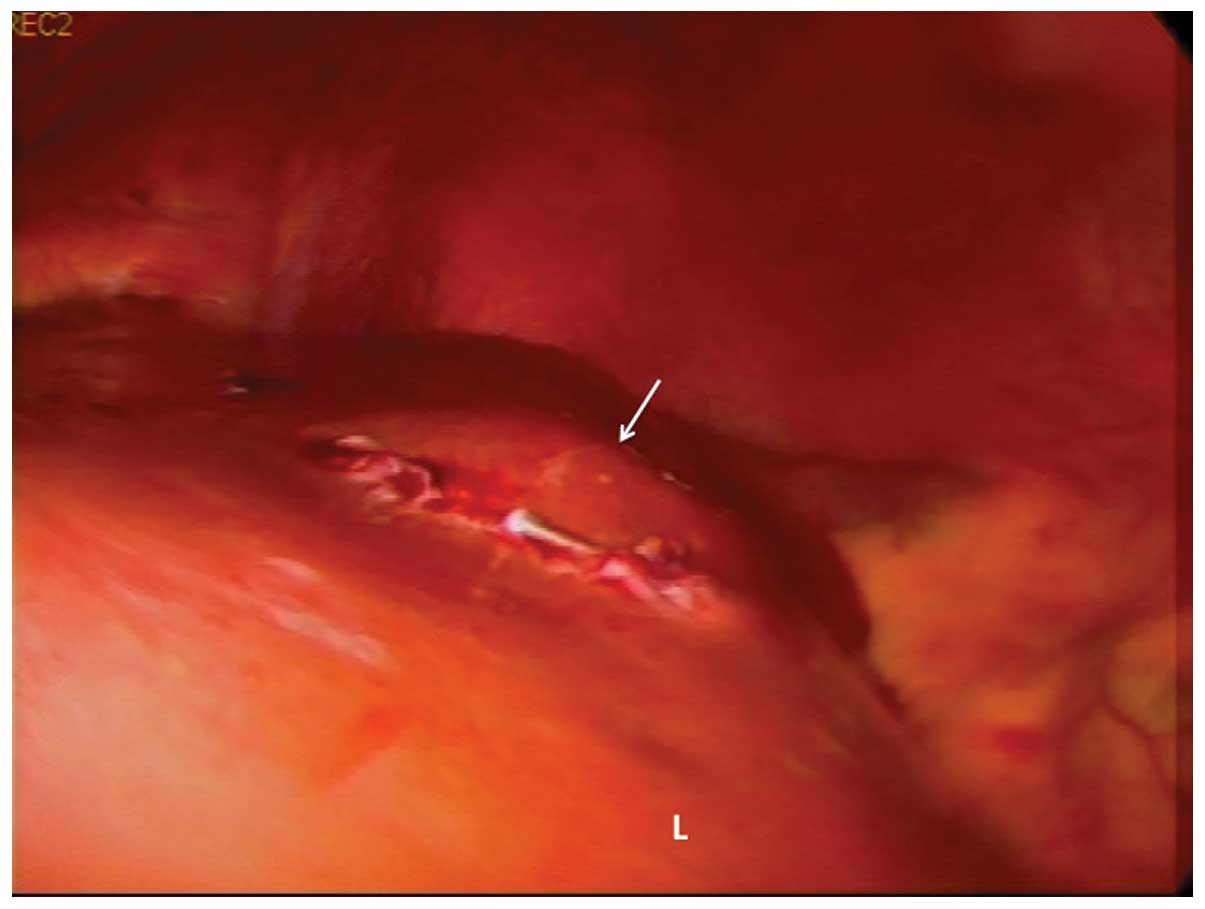
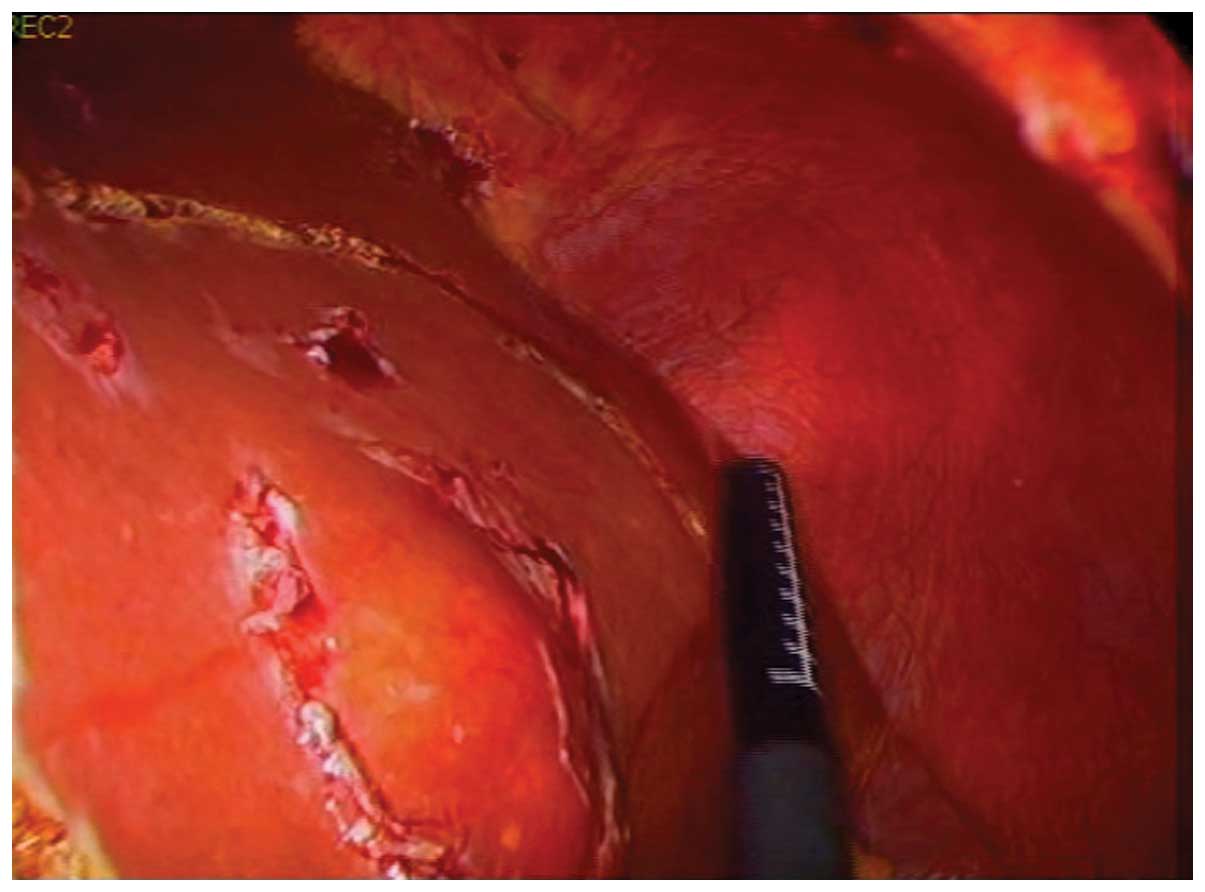
The patient was put under general anaesthesia and underwent laparoscopic liver resection. There was no evidence of metastatic disease in the peritoneal cavity and the tumour was readily identified by its bosselated surface (Fig. 1). Laparoscopic ultrasonography was used to achieve clear resection margins (Fig. 2). A laparoscopic left lateral sectionectomy was completed uneventfully.

Figure 1.

Laparoscopic view of the left liver. The elevated bosselated surface of the tumour (arrow) is easily be distinguished from the normal liver surface (L) covered by the Glisson's capsule.

Figure 2.

Laparoscopic view of the left liver. A laparoscopic ultrasound probe is used to delineate the tumour in order to achieve clear resection margins.

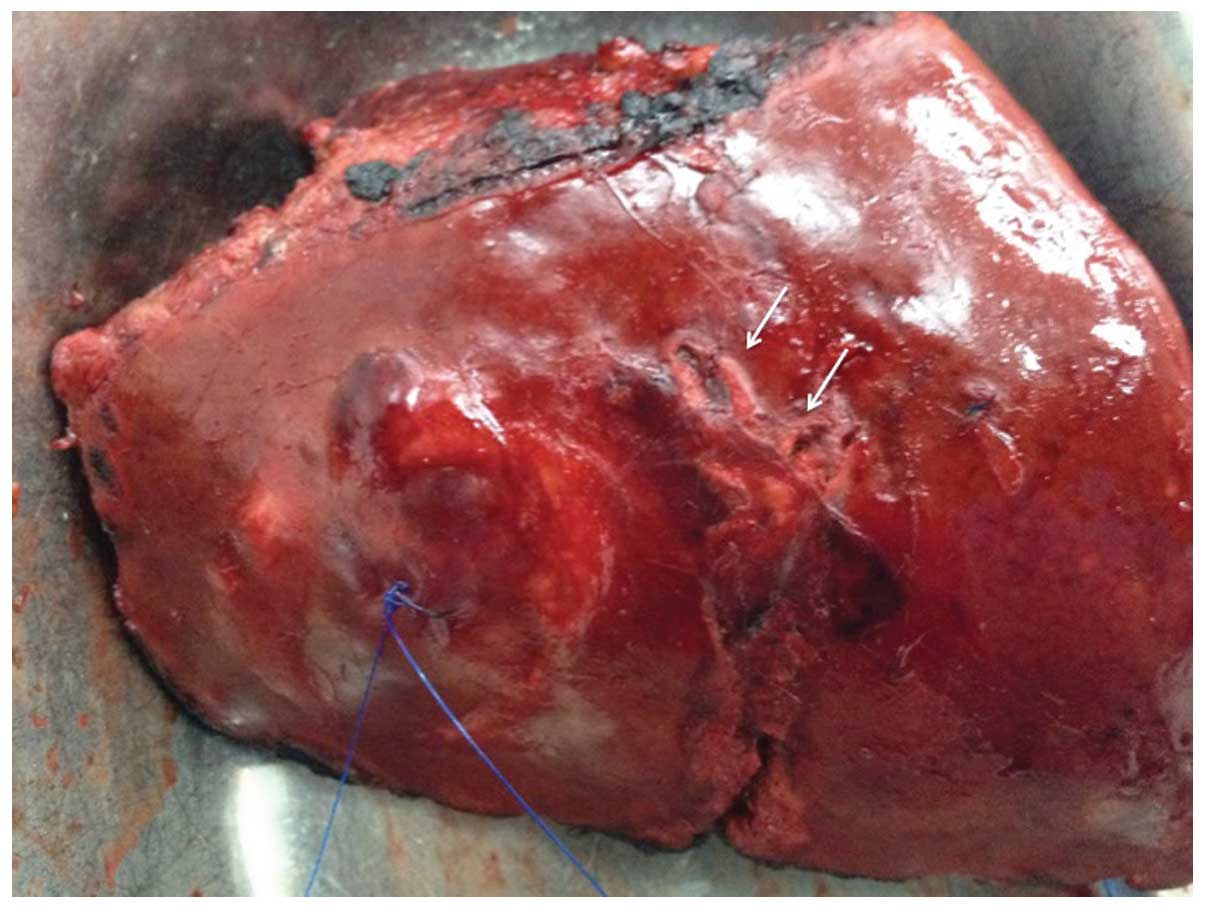
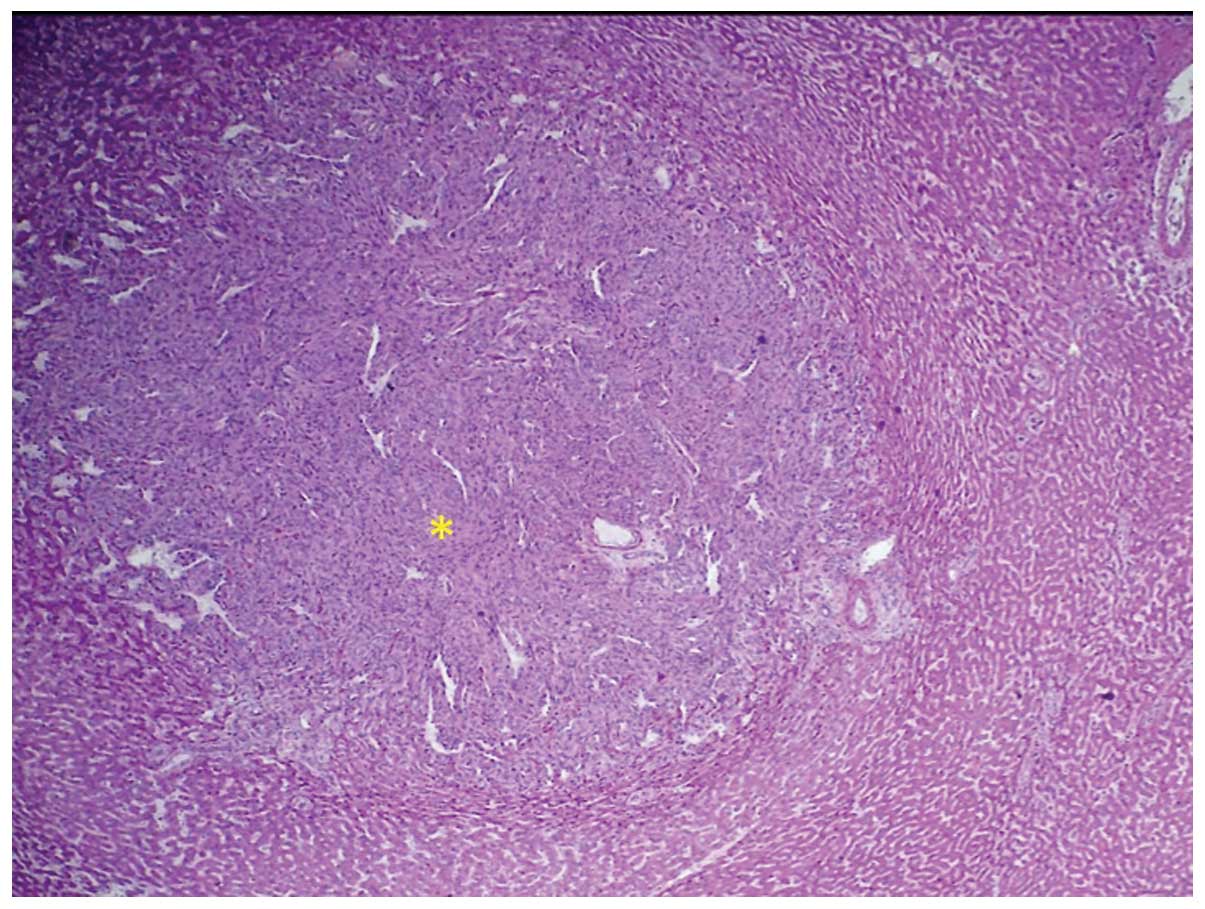
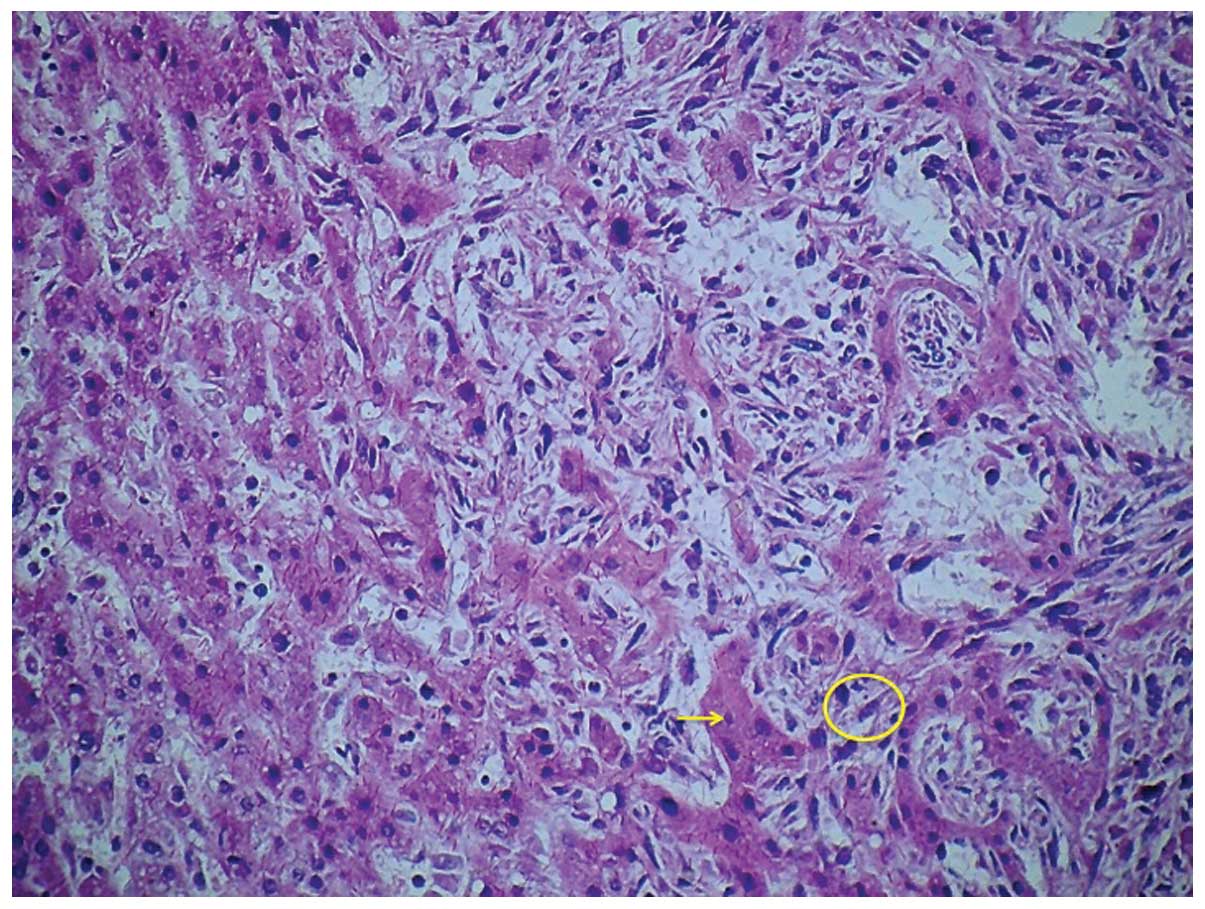
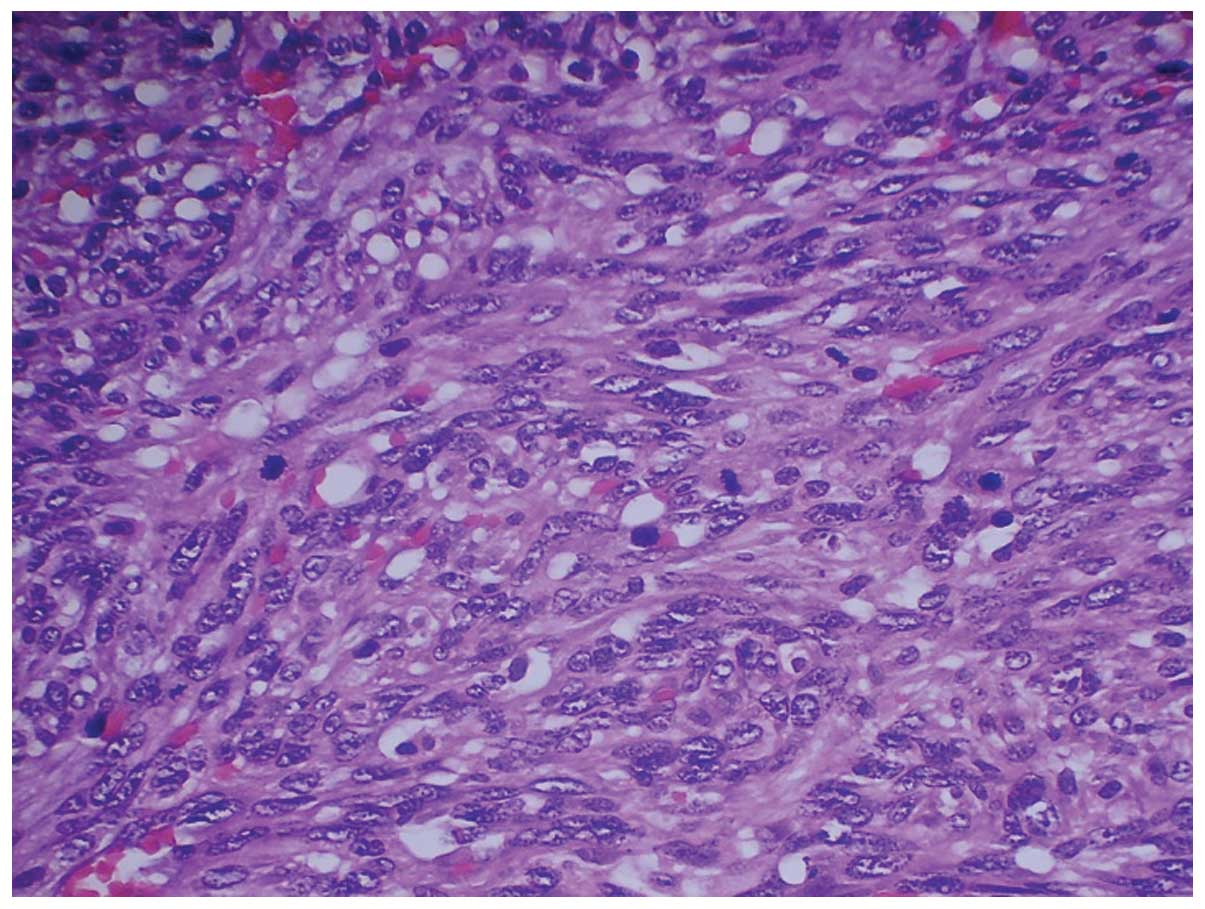
The pathological examination confirmed the presence of a tumour sized 3×4×2.5 cm, with a focal point at which Glisson's capsule was breached (Fig. 3). The resection margins were clear of tumour for >2 cm. Histologically, the tumour was composed of sheets of poorly differentiated neoplastic cells (Fig. 4). The malignant cells were spindle-shaped and possessed hyperchromatic nuclei, indistinct cell borders and scant cytoplasm (Fig. 5). Significant abnormal mitotic activity was observed and bizarre multinucleated giant cells were present, particularly at the periphery of the lesion (Fig. 6). The tumour characteristically grew along the hepatic sinusoids and around residual hyperplastic hepatocytes, which were otherwise normal. There were scattered islands of haematopoietic cells and large areas of thrombosis and infarction, with accompanying tumour necrosis. The histological appearance indicated a high-grade pleomorphic sarcoma consistent with PHA. The diagnosis was verified by immunohistochemistry, which was positive for CD31 and factor VIII (FVIII)-R antigen, but negative for desmin, keratin, S-100 protein and discovered on GIST-1.

Figure 3.

Excised hepatic segment III demonstrating the bosselated surface of the tumour (blue suture) and the area of capsular breach (arrows), which was responsible for the herald bleed.

Figure 4.

Low-power (x10) view of a tumour nodule (yellow asterisk placed in the centre) composed of sheets of neoplastic cells surrounded by normal liver.

Figure 5.

High-power (x20) view of spinde-shaped malignant cells with hyperchromatic nuclei and scant cytoplasm (a single neoplastic cell is encircled in the figure). The malignant cells may be seen dissecting between the normal hepatic plates (yellow arrow).

Figure 6.

A slide of the tumour (magnification, x100), showing bizzare, disordered malignant cells with undifferentiated cytomorphology. The cells exhibit hyperchromatic nuclei, scant cytoplasm and indistinct borders.

Discussion

Angiosarcomas are aggressive malignant neoplasms originating from the endothelium of blood vessels (2). The liver is the fifth most common site of origin for angiosarcomas (2–3). Although it accounts for 0.6% (1) to 2% (4) of primary liver tumours in Western countries, PHA is a rare occurrence (1–4). The three largest published series are audits from national sarcoma registries, with a limited number of cases, namely 6 cases over 15 years in China, 26 cases over 19 years in Taiwan (6) and 32 cases over 16 years in Britain (7).

In the largest reported series of 32 cases from the British Hepatic Angiosarcoma Register, Baxter (7) reported the annual incidence of PHA to be 0.16 cases per million persons. An annual incidence as high as 0.26 per million was reported in an audit from the United States by Vianna et al (8). There has been no prior report on PHA from the Anglophone Caribbean, a region consisting of 17 English-speaking Caribbean countries with a cumulative population of 6.5 million (9). We commenced a hepatobiliary registry to record all primary and metastatic liver tumours encountered in the three main referral centres for the Anglophone Caribbean in January, 2011 (9). This was the first case encountered in the registry, allowing us to estimate the annual incidence as 0.05 per million population in the Anglophone Caribbean, which is comparable to the incidence in Western countries (7,8).

Our patient was a 60-year old woman; this is the usual age at which a PHA is diagnosed (4), although they are more common in men (4,5,7). The reported male:female ratio ranges from 1.9:1 in Taiwan (7) to as high as 4:1 in Britain (8).

We were unable to identify an aetiological factor in our patient. Early studies suggested that environmental exposure to Thorotrast (4,7), vinyl (7), polyvinyl chloride-manufacturing materials (7), arsenic, pesticides and radium (4) were risk factors for PHA; however, exposure to these agents has become uncommon in modern practice. It was not surprising, therefore, that neither of these environmental risk factors were present in our case.

PHAs are often recognized only at autopsy (4,10), as the diagnosis is often missed in vivo when patients report vague, non-specific symptoms and the tumour exhibits aggressive growth patterns (2,4,10,11). When the diagnosis is made ante-mortem, PHAs are usually identified at an advanced stage, when therapeutic options are limited (4,12,13). In our case, the diagnosis was made relatively early in the absence of metastatic or locally advanced disease.

The patient presented after the tumour had ruptured. Intraperitoneal haemorrhage following tumour rupture appears to be a relatively common method of acute presentation (2,4,5,14,15), usually accompanied by a high mortality risk due to exsanguination (2,4,15). Survivors usually present with a herald bleed, as in our case. This presentation accounts for 22% (4) to 27% (10) of the cases diagnosed ante-mortem.

The histological characteristics observed in this case were typical of PHA. Normal hepatocytes were observed, with infiltrating islands of neoplastic endothelial cells extending along sinusoidal vascular channels (2,4). The individual neoplastic cells are often anaplastic or spindle-shaped, with pale cytoplasm, pleomorphic nuclei and indistinct borders (4). The presence of bizzare giant cells and epithelioid cell patterns, as seen in this case, are also characteristic (2). The cells stained positive for CD31 and FVIII, which are characteristic of PHA (2,4). Although not present in this case, PHA cells may also stain positive for CD34 (2,4) and vimentin (2).

PHAs are aggressive tumours. Without treatment, the median survival is reported to be only 6 months from the time of diagnosis (2,4,10,16). As the response to systemic chemotherapy and radiotherapy is unpredictable (2,17), it is crucial for surgeons to achieve complete resection with clear margins. However, even following complete (R0) resection, long-term survival is poor, with existing 5-year survival rate estimates of 3% (2,4,10,16).

In conclusion, PHAs are rare tumours, with an estimated annual incidence of 0.05 per million in the Caribbean. Intraperitoneal haemorrhage from tumour rupture appears to be a common method of presentation. Patients with herald bleeds should be urgently treated, prior to the development of exsanguinating haemorrhage, by hepatobiliary surgeons performing aggressive resection to ensure clear margins.

References

1 

Molina E and Hernandez A: Clinical manifestations of primary hepatic angiosarcoma. Dig Dis Sci. 48:677–682. 2003. View Article : Google Scholar : PubMed/NCBI

2 

Chien CY, Hwang CC, Yeh CN, Chen HY, Wu JT, Cheung CS, Lin CL, Yen CL, Wang WY and Chiang KC: Liver angiosarcoma, a rare liver malignancy, presented with intraabdominal bleeding due to rupture - a case report. World J Surg Oncol. 10:232012. View Article : Google Scholar : PubMed/NCBI

3 

Young RJ, Brown NJ, Reed MW, Hughes D and Woll PJ: Angiosarcoma. Lancet Oncol. 11:983–991. 2010. View Article : Google Scholar : PubMed/NCBI

4 

Huang NC, Wann SR, Chang HT, Lin SL, Wang JS and Guo HR: Arsenic, vinyl chloride, viral hepatitis, and hepatic angiosarcoma: A hospital-based study and review of literature in Taiwan. BMC Gastroenterol. 11:1422011. View Article : Google Scholar : PubMed/NCBI

5 

Ho S-Y, Tsai C-C, Tsai Y-C and Guo H-R: Hepatic angiosarcoma presenting as hepatic rupture in a patient with long-term ingestion of arsenic. J Formos Med Assoc. 103:374–379. 2004.PubMed/NCBI

6 

Wang TH, Pan ZG and Ren ZG: Rare primary liver malignant tumor. Fudan Univ J Med Sci. 36:221–224. 2009.

7 

Baxter PJ: The British hepatic angiosarcoma register. Environ Health Perspect. 41:115–116. 1981. View Article : Google Scholar : PubMed/NCBI

8 

Vianna NJ, Brady JA and Cardamone AT: Epidemiology of angiosarcoma of liver in New York State. N Y State J Med. 81:895–899. 1981.PubMed/NCBI

9 

Cawich SO, Johnson PB, Shah S, et al: Overcoming obstacles to establish a multidisciplinary team approach to hepatobiliary diseases: a working model in a Caribbean setting. J Multidiscip Healthc. 7:227–230. 2014. View Article : Google Scholar : PubMed/NCBI

10 

Locker GY, Doroshow JH, Zwelling LA and Chabner BA: The clinical features of hepatic angiosarcoma: A report of four cases and a review of the English literature. Medicine (Baltimore). 58:48–64. 1979. View Article : Google Scholar : PubMed/NCBI

11 

Timaran CH, Grandas OH and Bell JL: Hepatic angiosarcoma: Long-term survival after complete surgical removal. Am Surg. 66:1153–1157. 2000.PubMed/NCBI

12 

Poggio JL, Nagorney DM, Nascimento AG, Rowland C, Kay P, Young RM and Donohue JH: Surgical treatment of adult primary hepatic sarcoma. Br J Surg. 87:1500–1505. 2000. View Article : Google Scholar : PubMed/NCBI

13 

Jaffe BM, Donegan WL, Watson F and Spratt JS Jr: Factors influencing survival in patients with untreated hepatic metastases. Surg Gynecol Obstet. 127:1–11. 1968.PubMed/NCBI

14 

Tsai CC, Hsieh JF, Han SJ and Mo LR: Hemoperitoneum secondary to biopsy of the hepatic angiosarcoma. Chin J Radiol. 24:37–40. 1999.

15 

Lee SW, Song CY, Gi YH, Kang SB, Kim YS, Nam SW, Lee DS and Kim JO: Hepatic angiosarcoma manifested as recurrent hemoperitoneum. World J Gastroenterol. 14:2935–2938. 2008. View Article : Google Scholar : PubMed/NCBI

16 

Falk H, Herbert JT, Edmonds L, Heath CW Jr, Thomas LB and Popper H: Review of four cases of childhood hepatic angiosarcoma - elevated environmental arsenic exposure in one case. Cancer. 47:382–391. 1981. View Article : Google Scholar : PubMed/NCBI

17 

Almogy G, Lieberman S, Gips M, Pappo O, Edden Y, Jurim O, Simon Slasky B, Uzieli B and Eid A: Clinical outcomes of surgical resections for primary liver sarcoma in adults: Results from a single centre. Eur J Surg Oncol. 30:421–427. 2004. View Article : Google Scholar : PubMed/NCBI

Related Articles

  • Abstract
  • View
  • Download
  • Twitter
Copy and paste a formatted citation
Spandidos Publications style
Cawich SO and Ramjit C: Herald bleeding from a ruptured primary hepatic angiosarcoma: A case report. Mol Clin Oncol 3: 1063-1066, 2015.
APA
Cawich, S.O., & Ramjit, C. (2015). Herald bleeding from a ruptured primary hepatic angiosarcoma: A case report. Molecular and Clinical Oncology, 3, 1063-1066. https://doi.org/10.3892/mco.2015.575
MLA
Cawich, S. O., Ramjit, C."Herald bleeding from a ruptured primary hepatic angiosarcoma: A case report". Molecular and Clinical Oncology 3.5 (2015): 1063-1066.
Chicago
Cawich, S. O., Ramjit, C."Herald bleeding from a ruptured primary hepatic angiosarcoma: A case report". Molecular and Clinical Oncology 3, no. 5 (2015): 1063-1066. https://doi.org/10.3892/mco.2015.575
Copy and paste a formatted citation
x
Spandidos Publications style
Cawich SO and Ramjit C: Herald bleeding from a ruptured primary hepatic angiosarcoma: A case report. Mol Clin Oncol 3: 1063-1066, 2015.
APA
Cawich, S.O., & Ramjit, C. (2015). Herald bleeding from a ruptured primary hepatic angiosarcoma: A case report. Molecular and Clinical Oncology, 3, 1063-1066. https://doi.org/10.3892/mco.2015.575
MLA
Cawich, S. O., Ramjit, C."Herald bleeding from a ruptured primary hepatic angiosarcoma: A case report". Molecular and Clinical Oncology 3.5 (2015): 1063-1066.
Chicago
Cawich, S. O., Ramjit, C."Herald bleeding from a ruptured primary hepatic angiosarcoma: A case report". Molecular and Clinical Oncology 3, no. 5 (2015): 1063-1066. https://doi.org/10.3892/mco.2015.575
Follow us
  • Twitter
  • LinkedIn
  • Facebook
About
  • Spandidos Publications
  • Careers
  • Cookie Policy
  • Privacy Policy
How can we help?
  • Help
  • Live Chat
  • Contact
  • Email to our Support Team