Spandidos Publications Logo
  • About
    • About Spandidos
    • Aims and Scopes
    • Abstracting and Indexing
    • Editorial Policies
    • Reprints and Permissions
    • Job Opportunities
    • Terms and Conditions
    • Contact
  • Journals
    • All Journals
    • Oncology Letters
      • Oncology Letters
      • Information for Authors
      • Editorial Policies
      • Editorial Board
      • Aims and Scope
      • Abstracting and Indexing
      • Bibliographic Information
      • Archive
    • International Journal of Oncology
      • International Journal of Oncology
      • Information for Authors
      • Editorial Policies
      • Editorial Board
      • Aims and Scope
      • Abstracting and Indexing
      • Bibliographic Information
      • Archive
    • Molecular and Clinical Oncology
      • Molecular and Clinical Oncology
      • Information for Authors
      • Editorial Policies
      • Editorial Board
      • Aims and Scope
      • Abstracting and Indexing
      • Bibliographic Information
      • Archive
    • Experimental and Therapeutic Medicine
      • Experimental and Therapeutic Medicine
      • Information for Authors
      • Editorial Policies
      • Editorial Board
      • Aims and Scope
      • Abstracting and Indexing
      • Bibliographic Information
      • Archive
    • International Journal of Molecular Medicine
      • International Journal of Molecular Medicine
      • Information for Authors
      • Editorial Policies
      • Editorial Board
      • Aims and Scope
      • Abstracting and Indexing
      • Bibliographic Information
      • Archive
    • Biomedical Reports
      • Biomedical Reports
      • Information for Authors
      • Editorial Policies
      • Editorial Board
      • Aims and Scope
      • Abstracting and Indexing
      • Bibliographic Information
      • Archive
    • Oncology Reports
      • Oncology Reports
      • Information for Authors
      • Editorial Policies
      • Editorial Board
      • Aims and Scope
      • Abstracting and Indexing
      • Bibliographic Information
      • Archive
    • Molecular Medicine Reports
      • Molecular Medicine Reports
      • Information for Authors
      • Editorial Policies
      • Editorial Board
      • Aims and Scope
      • Abstracting and Indexing
      • Bibliographic Information
      • Archive
    • World Academy of Sciences Journal
      • World Academy of Sciences Journal
      • Information for Authors
      • Editorial Policies
      • Editorial Board
      • Aims and Scope
      • Abstracting and Indexing
      • Bibliographic Information
      • Archive
    • International Journal of Functional Nutrition
      • International Journal of Functional Nutrition
      • Information for Authors
      • Editorial Policies
      • Editorial Board
      • Aims and Scope
      • Abstracting and Indexing
      • Bibliographic Information
      • Archive
    • International Journal of Epigenetics
      • International Journal of Epigenetics
      • Information for Authors
      • Editorial Policies
      • Editorial Board
      • Aims and Scope
      • Abstracting and Indexing
      • Bibliographic Information
      • Archive
    • Medicine International
      • Medicine International
      • Information for Authors
      • Editorial Policies
      • Editorial Board
      • Aims and Scope
      • Abstracting and Indexing
      • Bibliographic Information
      • Archive
  • Articles
  • Information
    • Information for Authors
    • Information for Reviewers
    • Information for Librarians
    • Information for Advertisers
    • Conferences
  • Language Editing
Spandidos Publications Logo
  • About
    • About Spandidos
    • Aims and Scopes
    • Abstracting and Indexing
    • Editorial Policies
    • Reprints and Permissions
    • Job Opportunities
    • Terms and Conditions
    • Contact
  • Journals
    • All Journals
    • Biomedical Reports
      • Information for Authors
      • Editorial Policies
      • Editorial Board
      • Aims and Scope
      • Abstracting and Indexing
      • Bibliographic Information
      • Archive
    • Experimental and Therapeutic Medicine
      • Information for Authors
      • Editorial Policies
      • Editorial Board
      • Aims and Scope
      • Abstracting and Indexing
      • Bibliographic Information
      • Archive
    • International Journal of Epigenetics
      • Information for Authors
      • Editorial Policies
      • Editorial Board
      • Aims and Scope
      • Abstracting and Indexing
      • Bibliographic Information
      • Archive
    • International Journal of Functional Nutrition
      • Information for Authors
      • Editorial Policies
      • Editorial Board
      • Aims and Scope
      • Abstracting and Indexing
      • Bibliographic Information
      • Archive
    • International Journal of Molecular Medicine
      • Information for Authors
      • Editorial Policies
      • Editorial Board
      • Aims and Scope
      • Abstracting and Indexing
      • Bibliographic Information
      • Archive
    • International Journal of Oncology
      • Information for Authors
      • Editorial Policies
      • Editorial Board
      • Aims and Scope
      • Abstracting and Indexing
      • Bibliographic Information
      • Archive
    • Medicine International
      • Information for Authors
      • Editorial Policies
      • Editorial Board
      • Aims and Scope
      • Abstracting and Indexing
      • Bibliographic Information
      • Archive
    • Molecular and Clinical Oncology
      • Information for Authors
      • Editorial Policies
      • Editorial Board
      • Aims and Scope
      • Abstracting and Indexing
      • Bibliographic Information
      • Archive
    • Molecular Medicine Reports
      • Information for Authors
      • Editorial Policies
      • Editorial Board
      • Aims and Scope
      • Abstracting and Indexing
      • Bibliographic Information
      • Archive
    • Oncology Letters
      • Information for Authors
      • Editorial Policies
      • Editorial Board
      • Aims and Scope
      • Abstracting and Indexing
      • Bibliographic Information
      • Archive
    • Oncology Reports
      • Information for Authors
      • Editorial Policies
      • Editorial Board
      • Aims and Scope
      • Abstracting and Indexing
      • Bibliographic Information
      • Archive
    • World Academy of Sciences Journal
      • Information for Authors
      • Editorial Policies
      • Editorial Board
      • Aims and Scope
      • Abstracting and Indexing
      • Bibliographic Information
      • Archive
  • Articles
  • Information
    • For Authors
    • For Reviewers
    • For Librarians
    • For Advertisers
    • Conferences
  • Language Editing
Login Register Submit
  • This site uses cookies
  • You can change your cookie settings at any time by following the instructions in our Cookie Policy. To find out more, you may read our Privacy Policy.

    I agree
Search articles by DOI, keyword, author or affiliation
Search
Advanced Search
presentation
Molecular and Clinical Oncology
Join Editorial Board Propose a Special Issue
Print ISSN: 2049-9450 Online ISSN: 2049-9469
Journal Cover
November-2015 Volume 3 Issue 6

Full Size Image

Sign up for eToc alerts
Recommend to Library

Journals

International Journal of Molecular Medicine

International Journal of Molecular Medicine

International Journal of Molecular Medicine is an international journal devoted to molecular mechanisms of human disease.

International Journal of Oncology

International Journal of Oncology

International Journal of Oncology is an international journal devoted to oncology research and cancer treatment.

Molecular Medicine Reports

Molecular Medicine Reports

Covers molecular medicine topics such as pharmacology, pathology, genetics, neuroscience, infectious diseases, molecular cardiology, and molecular surgery.

Oncology Reports

Oncology Reports

Oncology Reports is an international journal devoted to fundamental and applied research in Oncology.

Experimental and Therapeutic Medicine

Experimental and Therapeutic Medicine

Experimental and Therapeutic Medicine is an international journal devoted to laboratory and clinical medicine.

Oncology Letters

Oncology Letters

Oncology Letters is an international journal devoted to Experimental and Clinical Oncology.

Biomedical Reports

Biomedical Reports

Explores a wide range of biological and medical fields, including pharmacology, genetics, microbiology, neuroscience, and molecular cardiology.

Molecular and Clinical Oncology

Molecular and Clinical Oncology

International journal addressing all aspects of oncology research, from tumorigenesis and oncogenes to chemotherapy and metastasis.

World Academy of Sciences Journal

World Academy of Sciences Journal

Multidisciplinary open-access journal spanning biochemistry, genetics, neuroscience, environmental health, and synthetic biology.

International Journal of Functional Nutrition

International Journal of Functional Nutrition

Open-access journal combining biochemistry, pharmacology, immunology, and genetics to advance health through functional nutrition.

International Journal of Epigenetics

International Journal of Epigenetics

Publishes open-access research on using epigenetics to advance understanding and treatment of human disease.

Medicine International

Medicine International

An International Open Access Journal Devoted to General Medicine.

Journal Cover
November-2015 Volume 3 Issue 6

Full Size Image

Sign up for eToc alerts
Recommend to Library

  • Article
  • Citations
    • Cite This Article
    • Download Citation
    • Create Citation Alert
    • Remove Citation Alert
    • Cited By
  • Similar Articles
    • Related Articles (in Spandidos Publications)
    • Similar Articles (Google Scholar)
    • Similar Articles (PubMed)
  • Download PDF
  • Download XML
  • View XML
Article

Laparoscopic jejunostomy for obstructing upper gastrointestinal malignancies

  • Authors:
    • Hironori Tsujimoto
    • Shuichi Hiraki
    • Risa Takahata
    • Shinsuke Nomura
    • Nozomi Ito
    • Kyohei Kanematsu
    • Hiroyuki Horiguchi
    • Suefumi Aosasa
    • Junji Yamamoto
    • Kazuo Hase
  • View Affiliations / Copyright

    Affiliations: Department of Surgery, National Defense Medical College, Tokorozawa, Saitama 359‑8513, Japan
  • Pages: 1307-1310
    |
    Published online on: July 30, 2015
       https://doi.org/10.3892/mco.2015.612
  • Expand metrics +
Metrics: Total Views: 0 (Spandidos Publications: | PMC Statistics: )
Metrics: Total PDF Downloads: 0 (Spandidos Publications: | PMC Statistics: )
Cited By (CrossRef): 0 citations Loading Articles...

This article is mentioned in:


Abstract

The aim of this study was to describe a minimally invasive laparoscopic jejunostomy (Lap‑J) technique for obstruction due to upper gastrointestinal malignancies and evaluate the nutritional benefit of Lap‑J during neoadjuvant chemotherapy (NAC) in cases with obstructing esophageal cancer. Under general anesthesia, the jejunum 20‑30 cm distant from the Treitz ligament was pulled out through an extended umbilical laparoscopic incision and a jejunal tube was inserted to 30 cm. The loop of bowel was gently returned to the abdomen and the feeding tube was drawn through the abdominal wall via the left lower incision. The jejunum was then laparoscopically sutured to the anterior abdominal wall. Lap‑J was performed in 26 cases. The median operative time was 82 min. The postoperative course was uneventful. Lap‑J prior to NAC was not associated with a decrease in body weight or serum total protein during NAC, compared with patients who received NAC without Lap‑J. This minimally invasive jejunostomy technique may be particularly useful in patients in whom endoscopic therapy is not feasible due to obstruction from upper gastrointestinal malignancies.

Introduction

Enteral nutrition is preferred in patients who are malnourished or undergoing cancer treatment and during the perioperative period (1–3). Safe and reliable methods for the placement of feeding tubes, such as percutaneous endoscopic gastrostomy (PEG) (4), laparoscopic gastrostomy (5) and nasogastric tube (NGT) feeding (6), have revolutionized nutritional therapy in such patients. However, NGT and PEG are not feasible in cases where tube or endoscopic therapy is not possible due to obstruction of the pharynx or esophagus; in addition, NGT compromises the patients' quality of life. Jejunostomy is often indicated in cases where gastrostomy is not feasible, including gastric and esophageal cancer, where gastric tube reconstruction is planned.

In this study, we describe a minimally invasive method of laparoscopic jejunostomy (Lap-J) for obstruction due to upper gastrointestinal malignancies. In addition, we evaluated the nutritional benefits of Lap-J during neoadjuvant chemotherapy (NAC) in cases of obstructing esophageal cancer.

Patients and methods

Patients

We conducted a non-randomized retrospective study of 26 patients who underwent Lap-J for obstruction due to esophageal or gastric cancer at the National Defense Medical College Hospital between January, 2008 and February, 2015. The indications for Lap-J included previous gastric or duodenal surgery, gastroparesis, high risk of aspiration and esophageal or gastric cancer where gastrostomy was technically impossible or contraindicated. The contraindications for Lap-J were unsuitability for general anesthesia and gastrointestinal disease. In order to evaluate the nutritional benefits of Lap-J during NAC, we compared nutritional parameters such as body weight, serum total protein, albumin, lymphocyte count and prognostic nutritional index (7) between patients who underwent Lap-J prior to NAC (Lap-J group, n=9) and those who received NAC without Lap-J (control group, n=56).

Chemotherapy with cisplatin plus 5-fluorouracil (5-FU) was repeated twice every 3 weeks. A dose of 80 mg/m2 cisplatin was administered by intravenous drip infusion for 2 h on day 1; 5-FU was administered at a dose of 800 mg/m2 by continuous infusion on days 1–5.

Surgical procedure

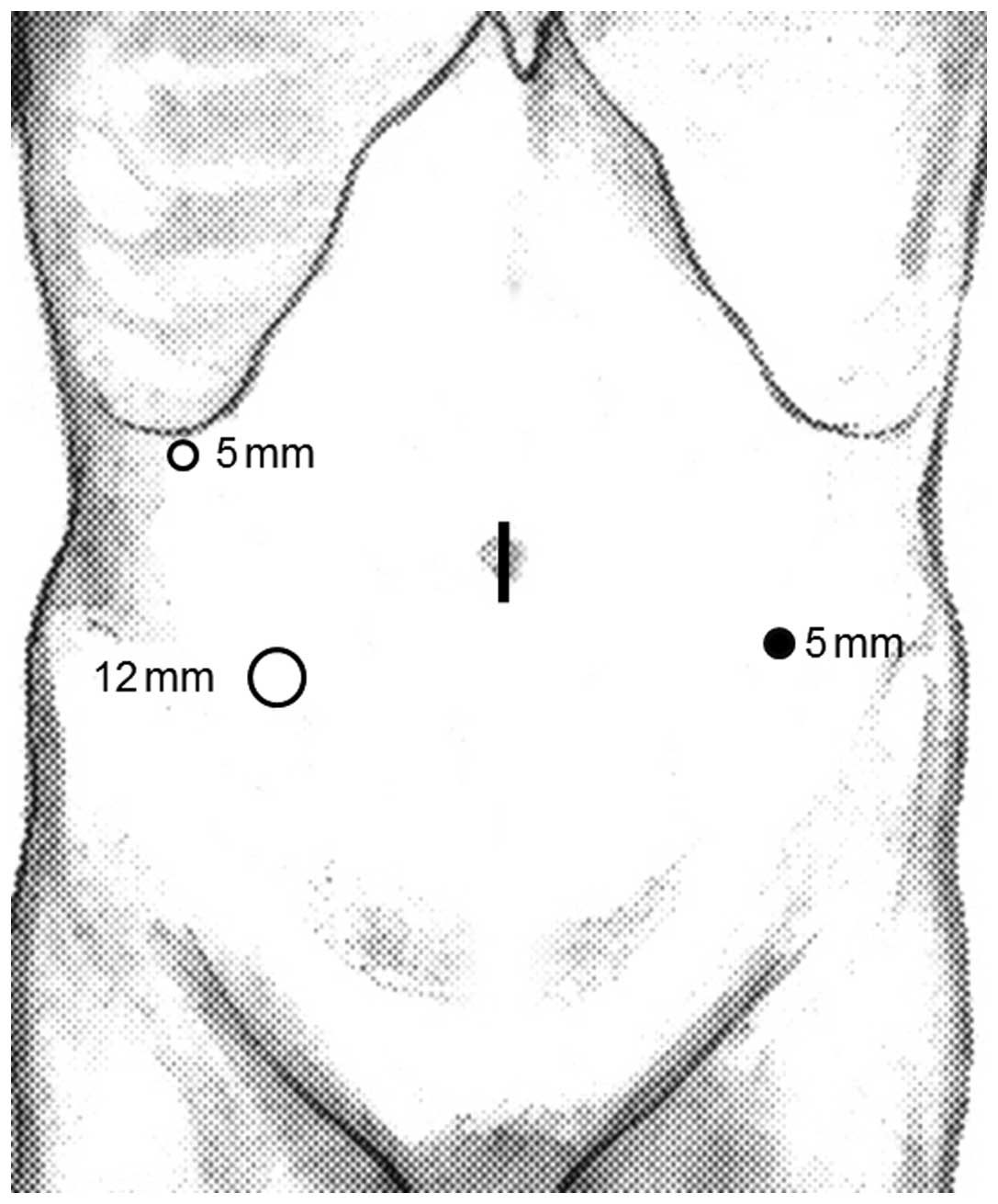
Following induction of general anesthesia, the patient was placed in a supine position. The surgeon and laparoscopist stood on the right side of the patient and the first assistant on the left side. A camera port was inserted through a median umbilical incision. Next, a 12 mmHg pneumoperitoneum was induced and 3 additional ports (2 ports with a diameter of 5 mm and 1 port with a diameter of 12 mm) were inserted under laparoscopic imaging into the right upper, left lower and right lower quadrants, as shown in Fig. 1.

Figure 1.

Port positioning. A camera port was inserted through a median umbilical incision and 3 additional ports (1 port with a diameter of 12 mm and 2 ports with a diameter of 5 mm) were inserted into the right lower (12 mm), right upper (5 mm) and left lower (5 mm) quadrants under laparoscopic imaging. The left lower quadrant port was the intended jejunostomy site.

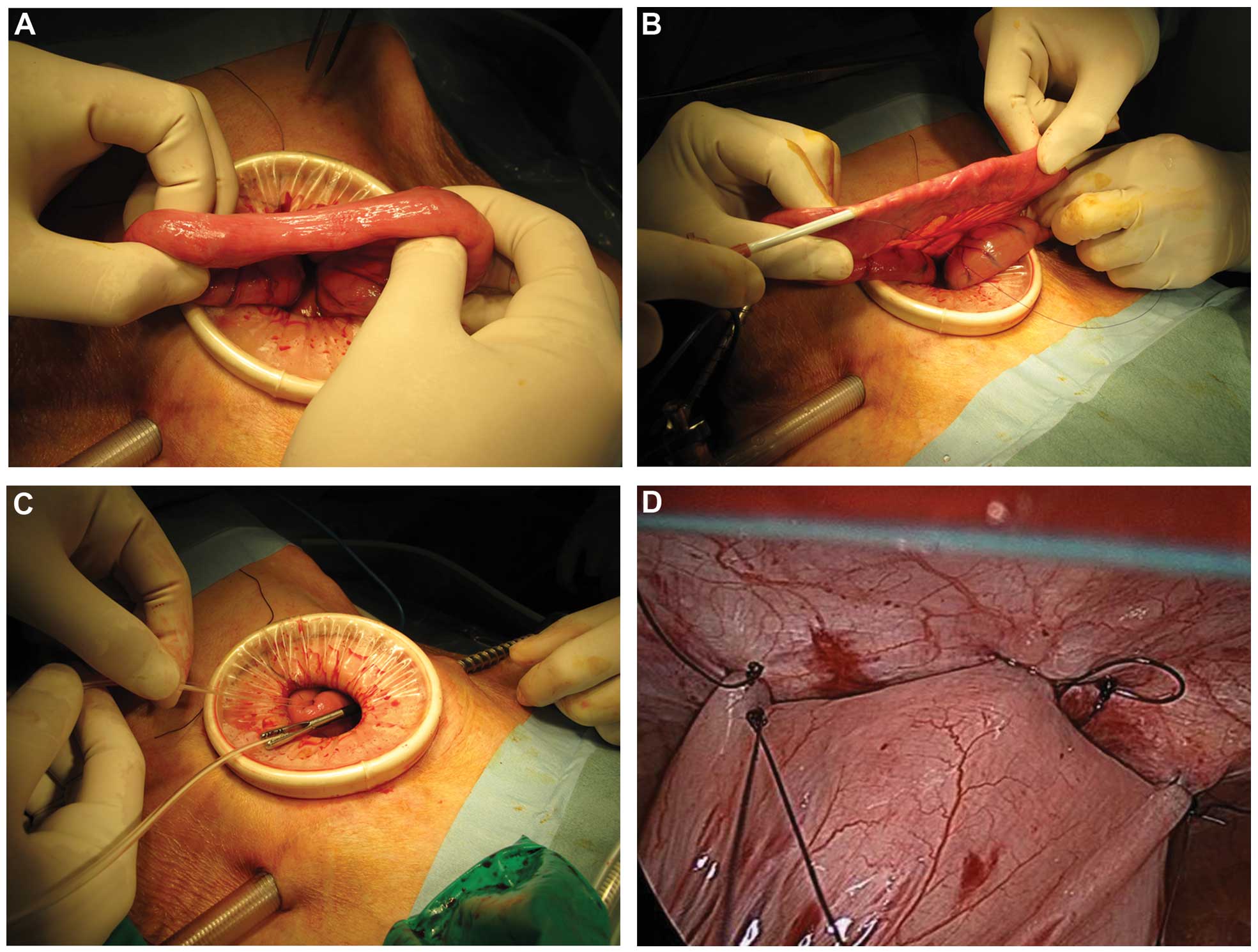
Following exploration of the peritoneal cavity, the jejunum 20–30 cm distant from the Treitz ligament was pulled out through the umbilical trocar incision, which was extended to ~2 cm by enlarging the median fascia and skin incision before covering with an Alexis wound retractor (Applied Medical, Tokyo, Japan) (Fig. 2A). After a serosal suture (4–0 PDS; Ethicon, Tokyo, Japan) was placed, a trocar with a peel-away sheath (Covidien, Tokyo, Japan) was used to penetrate the subserosa for ~8 cm prior to penetrating the jejunal lumen (Fig. 2B). The peel-away sheath was removed and the jejunal tube was inserted to 30 cm. Intraluminal placement was confirmed by flushing with saline. The tube was held by a laparoscopic grasper inserted through the left lower trocar (Fig. 2C). The loop of bowel was gently returned to the abdomen and the feeding tube was drawn through the abdominal wall via the left lower incision. The jejunum was laparoscopically sutured to the anterior abdominal wall using 5 or 6 sutures (3-0 Monocryl; Ethicon) (Fig. 2D).

Figure 2.

Surgical procedures in laparoscopic jejunostomy. (A) Following exploration of the peritoneal cavity, the jejunum 20–30 cm distant from the Treitz ligament was pulled out through the umbilical trocar incision. (B) After a serosal suture was placed, a trocar with a peel-away sheath was used to penetrate the subserosa for ~8 cm prior to penetrating the jejunal lumen. (C) The peel-away sheath was removed and a jejunal tube was inserted to 30 cm. The tube was held by a laparoscopic grasper inserted through the left lower trocar. The loop of bowel was gently returned to the abdomen and the feeding tube was drawn through the abdominal wall via the left lower incision. (D) The jejunum was laparoscopically sutured to the anterior abdominal wall with 5 or 6 sutures.

Statistical analysis

Data are expressed as means ± standard deviation. Comparisons between the two groups were performed using the Wilcoxon signed-rank test. Data were analyzed using the MedCalc v9.0 statistical software package (MedCalc, Mariakerke, Belgium). A P-value of <0.05 was considered to indicate statistically significant differences.

Results

Short-term outcomes of Lap-J

We safely performed the Lap-J procedure in 26 patients with obstructing upper gastrointestinal malignancies (Table I). The primary indications were esophageal (n=22) and gastric cancer (n=4). The mean age was 69.4±6.0 years (range, 48–79 years). All the patients had stage III or IV disease, except for 1 case of stage I gastric cancer. Nine esophageal cancer patients had NAC followed by surgery after Lap-J. The mean operative time was 81.6±29.6 min (range, 35–155 min). The mean estimated intraoperative blood loss was 1.2±0.4 ml (range, 0–15 ml). All the patients were able to stand, walk and resume enteral nutrition on postoperative day 1, without complications. The mean postoperative hospital stay was 21.6±18.3 days (range, 1–84 days). The hospital stay was prolonged in 20 cases, the causes of which are listed in Table II. Subsequent therapy was initiated 11.5±6.3 days (range, 3–27 days) after Lap-J, excluding cases receiving palliative care. Three cases developed diarrhea that improved with reduced feeding speed and 2 cases developed obstruction of the jejunostomy tube and tubes were exchanged using a guide wire. There was no Lap-J-related mortality.

Table I.

Demographic data of patients who underwent Lap-J.

Table I.

Demographic data of patients who underwent Lap-J.

VariablesNo. of patients (n=26)
Age, years69.4±6.0 (48–79)
Gender
  Male22
  Female  4
BMI, kg/m219.3±2.9 (14.6–24.0)
Location
  Esophageal cancer22
  Gastric cancer  4
Stage
  I  1
  II  0
  III15
  IV10
Type of treatment
  Surgery  2
  Chemotherapy followed by surgery  9
  Chemoradiation therapy  6
  Chemotherapy  4
  Radiation therapy  1
  Best supportive care  4

[i] Data are presented as absolute numbers or as mean ± standard deviation (range). Lap-J, laparoscopic jejunostomy; BMI, body mass index.

Table II.

Surgical outcomes of Lap-J.

Table II.

Surgical outcomes of Lap-J.

VariablesNo.
Operative time, min81.6±29.6 (35–155)
Blood loss, g0.9±2.9 (0–15)
Start of enteral feeding, days1.2±0.4 (1–2)
Start of subsequent therapy, days11.5±6.3 (3–27)
Hospital stay following Lap-J, days21.6±18.3 (1–84)
Complications
Diarrhea3
Obstruction of the tube2
Leakage0
Dislodgement0
Perforation0
Bowel necrosis0
Bowel torsion0
Herniation0

[i] Data are presented as absolute numbers or as mean ± standard deviation (range) Lap-J, laparoscopic jejunostomy.

Nutritional benefits of Lap-J during NAC for obstructing esophageal cancer

The nutritional parameters prior to and following NAC in the two groups are presented in Table III. Although there was a significant decrease in body weight and serum total protein following NAC in the control group, no such changes were observed in the Lap-J group. No change in serum albumin, lymphocyte count, or prognostic nutritional index following NAC was observed in either group.

Table III.

Nutritional data prior to and following NAC for esophageal cancer in patients who did and those who did not undergo Lap-J.

Table III.

Nutritional data prior to and following NAC for esophageal cancer in patients who did and those who did not undergo Lap-J.

With Lap-J (n=9)Without Lap-J (n=56)


VariablesPrior to NACFollowing NACP-valuePrior to NACFollowing NACP-value
Body weight, kg47.3±8.247.7±6.30.607258.3±5.556.4±4.80.0020
Total protein, g/dl6.89±0.466.90±0.460.92916.61±0.536.26±0.530.0010
Albumin, g/dl3.78±0.153.69±0.130.44963.83±0.373.72±0.470.0815
Lymphocyte count, /µl1,349.2±425.81,962.7±783.40.08731,539.8±500.51,550.5±447.30.8735
PNI38.4±4.337.9±3.90.620539.1±3.838.0±4.70.0837

[i] Data are presented as mean ± standard deviation. NAC, neoadjuvant chemotherapy; Lap-J, laparoscopic jejunostomy; PNI, prognostic nutritional index.

Discussion

In this study, we demonstrated a simple and safe technique for Lap-J with jejunopexy. There was no procedure-related mortality and enteral nutrition was resumed the following day in all the patients.

As laparoscopic feeding jejunostomy was first described in 1990 (8), several modified procedures for Lap-J have since been developed (9–12). Duh et al (13) described laparoscopy-assisted percutaneous placement of jejunostomy catheters using T-fasteners to retract and anchor the jejunum. This procedure is advantageous, as it does not require extension of the umbilical trocar incision or exposure of the jejunum. However, this procedure does not penetrate the subserosa for a sufficient length to avoid the use of the Witzel technique (14). Enterocutaneous fistula formation around the feeding tube is one of the most serious complications of jejunostomy. To avoid this complication, the techniques must involve affixation of the jejunum to the parietal peritoneum at the puncture site and employment of a subserous tunnel, as in our technique. Several studies have reported laparoscopy-guided techniques that exteriorize the proximal jejunum with the insertion of feeding tubes through an enterotomy and securing by extracorporeal fixation to the fascia with non-absorbable or absorbable stitches (15,16).

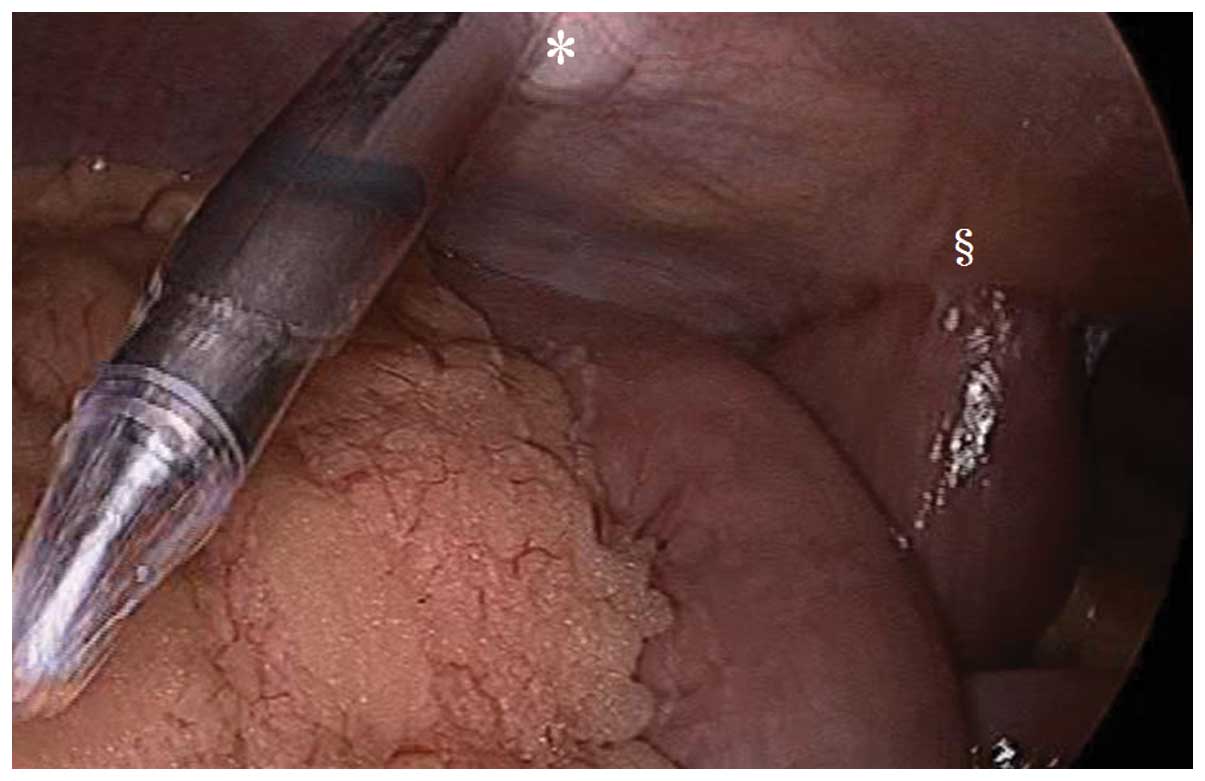
Obstructing esophageal cancer with planned gastric tube reconstruction is a common indication for jejunostomy. In Japan, preoperative chemotherapy with cisplatin plus 5-FU is considered standard treatment for patients with stage II/III esophageal squamous cell carcinoma (17). We performed Lap-J in 9 patients with stage II/III esophageal cancer prior to NAC. No abdominal adhesions were observed in these patients and there were no complications or difficulties in laparoscopic gastric tube reconstruction and abdominal lymph node dissection (Fig. 3) (18). No increase in laparoscopic operative time was observed (Lap-J vs. control group, 285 vs. 292 min, respectively). In addition, Lap-J prior to NAC was not associated with a decrease in body weight or serum total protein during NAC, compared with patients receiving NAC who did not undergo Lap-J. Thus, Lap-J prior to NAC may be useful in patients with obstructing esophageal cancer for whom gastric tube reconstruction is planned.

Figure 3.

Laparoscopic view during esophagectomy following laparoscopic jejunostomy (Lap-J). §, jejunum sutured to the anterior abdominal wall for Lap-J; *, trocar in the left lower quadrant during esophagectomy.

In conclusion, we described a minimally invasive jejunostomy technique that may be particularly useful for patients in whom endoscopic therapy is not feasible due to obstruction from upper gastrointestinal malignancies.

References

1 

Braga M, Ljungqvist O, Soeters P, Fearon K, Weimann A and Bozzetti F: ESPEN: ESPEN guidelines on parenteral nutrition: Surgery. Clin Nutr. 28:378–386. 2009. View Article : Google Scholar : PubMed/NCBI

2 

Aiko S, Kumano I, Yamanaka N, Tsujimoto H, Takahata R and Maehara T: Effects of an immuno-enhanced diet containing antioxidants in esophageal cancer surgery following neoadjuvant therapy. Dis Esophagus. 25:137–145. 2012. View Article : Google Scholar : PubMed/NCBI

3 

Braga M, Gianotti L, Nespoli L, Radaelli G and DiCarlo V: Nutritional approach in malnourished surgical patients: A prospective randomized study. Arch Surg. 137:174–180. 2002. View Article : Google Scholar : PubMed/NCBI

4 

Russell TR, Brotman M and Norris F: Percutaneous gastrostomy. A new simplified and cost-effective technique = Am J Surg. 148:132–137. 1984.

5 

Tsujimoto H, Yaguchi Y, Kumano I, Matsumoto Y, Yoshida K and Hase K: Laparoscopy-assisted percutaneous gastrostomy tube placement along with laparoscopic gastropexy. Dig Surg. 28:163–166. 2011. View Article : Google Scholar : PubMed/NCBI

6 

Nally DM, Kelly EG, Clarke M and Ridgway P: Nasogastric nutrition is efficacious in severe acute pancreatitis: A systematic review and meta-analysis. Br J Nutr. 112:1769–1778. 2014. View Article : Google Scholar : PubMed/NCBI

7 

Okamura Y, Ashida R, Ito T, Sugiura T, Mori K and Uesaka K: Preoperative neutrophil to lymphocyte ratio and prognostic nutritional index predict overall survival after hepatectomy for hepatocellular carcinoma. World J Surg. 39:1501–1509. 2015. View Article : Google Scholar : PubMed/NCBI

8 

O'Regan PJ and Scarrow GD: Laparoscopic jejunostomy. Endoscopy. 22:39–40. 1990. View Article : Google Scholar : PubMed/NCBI

9 

Albrink MH, Foster J, Rosemurgy AS and Carey LC: Laparoscopic feeding jejunostomy: Also a simple technique. Surg Endosc. 6:259–260. 1992. View Article : Google Scholar : PubMed/NCBI

10 

Allen JW, Ali A, Wo J, Bumpous JM and Cacchione RN: Totally laparoscopic feeding jejunostomy. Surg Endosc. 16:1802–1805. 2002. View Article : Google Scholar : PubMed/NCBI

11 

Grondona P, Andreani SM, Barr N and Singh KK: Laparoscopic feeding jejunostomy technique as part of staging laparoscopy. Surg Laparosc Endosc Percutan Tech. 15:263–266. 2005. View Article : Google Scholar : PubMed/NCBI

12 

HanGeurts IJ, Lim A, Stijnen T and Bonjer HJ: Laparoscopic feeding jejunostomy: A systematic review. Surg Endosc. 19:951–957. 2005. View Article : Google Scholar : PubMed/NCBI

13 

Duh QY, SenokozlieffEnglehart AL, Siperstein AE, et al: Prospective evaluation of the safety and efficacy of laparoscopic jejunostomy. West J Med. 162:117–122. 1995.PubMed/NCBI

14 

Pearce CB and Duncan HD: Enteral feeding. Nasogastric, nasojejunal, percutaneous endoscopic gastrostomy, or jejunostomy: Its indications and limitations. Postgrad Med J. 78:198–204. 2002. View Article : Google Scholar : PubMed/NCBI

15 

Gedaly R, Briceño P, Ravelo R and Weisinger K: Laparoscopic jejunostomy with an 18-mm trocar. Surg Laparosc Endosc. 7:420–422. 1997. View Article : Google Scholar : PubMed/NCBI

16 

Düzgün SA, Bozer M, Coskun A, et al: A simplified laparoscopic technique for enteral access in cancer patients. Hepatogastroenterology. 49:1002–1005. 2002.PubMed/NCBI

17 

Ando N, Kato H, Igaki H, et al: A randomized trial comparing postoperative adjuvant chemotherapy with cisplatin and 5-fluorouracil versus preoperative chemotherapy for localized advanced squamous cell carcinoma of the thoracic esophagus (JCOG9907). Ann Surg Oncol. 19:68–74. 2012. View Article : Google Scholar : PubMed/NCBI

18 

Tsujimoto H, Ono S, Sugasawa H, et al: Gastric tube reconstruction by laparoscopy-assisted surgery attenuates postoperative systemic inflammatory response after esophagectomy for esophageal cancer. World J Surg. 34:2830–2836. 2010. View Article : Google Scholar : PubMed/NCBI

Related Articles

  • Abstract
  • View
  • Download
  • Twitter
Copy and paste a formatted citation
Spandidos Publications style
Tsujimoto H, Hiraki S, Takahata R, Nomura S, Ito N, Kanematsu K, Horiguchi H, Aosasa S, Yamamoto J, Hase K, Hase K, et al: Laparoscopic jejunostomy for obstructing upper gastrointestinal malignancies. Mol Clin Oncol 3: 1307-1310, 2015.
APA
Tsujimoto, H., Hiraki, S., Takahata, R., Nomura, S., Ito, N., Kanematsu, K. ... Hase, K. (2015). Laparoscopic jejunostomy for obstructing upper gastrointestinal malignancies. Molecular and Clinical Oncology, 3, 1307-1310. https://doi.org/10.3892/mco.2015.612
MLA
Tsujimoto, H., Hiraki, S., Takahata, R., Nomura, S., Ito, N., Kanematsu, K., Horiguchi, H., Aosasa, S., Yamamoto, J., Hase, K."Laparoscopic jejunostomy for obstructing upper gastrointestinal malignancies". Molecular and Clinical Oncology 3.6 (2015): 1307-1310.
Chicago
Tsujimoto, H., Hiraki, S., Takahata, R., Nomura, S., Ito, N., Kanematsu, K., Horiguchi, H., Aosasa, S., Yamamoto, J., Hase, K."Laparoscopic jejunostomy for obstructing upper gastrointestinal malignancies". Molecular and Clinical Oncology 3, no. 6 (2015): 1307-1310. https://doi.org/10.3892/mco.2015.612
Copy and paste a formatted citation
x
Spandidos Publications style
Tsujimoto H, Hiraki S, Takahata R, Nomura S, Ito N, Kanematsu K, Horiguchi H, Aosasa S, Yamamoto J, Hase K, Hase K, et al: Laparoscopic jejunostomy for obstructing upper gastrointestinal malignancies. Mol Clin Oncol 3: 1307-1310, 2015.
APA
Tsujimoto, H., Hiraki, S., Takahata, R., Nomura, S., Ito, N., Kanematsu, K. ... Hase, K. (2015). Laparoscopic jejunostomy for obstructing upper gastrointestinal malignancies. Molecular and Clinical Oncology, 3, 1307-1310. https://doi.org/10.3892/mco.2015.612
MLA
Tsujimoto, H., Hiraki, S., Takahata, R., Nomura, S., Ito, N., Kanematsu, K., Horiguchi, H., Aosasa, S., Yamamoto, J., Hase, K."Laparoscopic jejunostomy for obstructing upper gastrointestinal malignancies". Molecular and Clinical Oncology 3.6 (2015): 1307-1310.
Chicago
Tsujimoto, H., Hiraki, S., Takahata, R., Nomura, S., Ito, N., Kanematsu, K., Horiguchi, H., Aosasa, S., Yamamoto, J., Hase, K."Laparoscopic jejunostomy for obstructing upper gastrointestinal malignancies". Molecular and Clinical Oncology 3, no. 6 (2015): 1307-1310. https://doi.org/10.3892/mco.2015.612
Follow us
  • Twitter
  • LinkedIn
  • Facebook
About
  • Spandidos Publications
  • Careers
  • Cookie Policy
  • Privacy Policy
How can we help?
  • Help
  • Live Chat
  • Contact
  • Email to our Support Team