Spandidos Publications Logo
  • About
    • About Spandidos
    • Aims and Scopes
    • Abstracting and Indexing
    • Editorial Policies
    • Reprints and Permissions
    • Job Opportunities
    • Terms and Conditions
    • Contact
  • Journals
    • All Journals
    • Oncology Letters
      • Oncology Letters
      • Information for Authors
      • Editorial Policies
      • Editorial Board
      • Aims and Scope
      • Abstracting and Indexing
      • Bibliographic Information
      • Archive
    • International Journal of Oncology
      • International Journal of Oncology
      • Information for Authors
      • Editorial Policies
      • Editorial Board
      • Aims and Scope
      • Abstracting and Indexing
      • Bibliographic Information
      • Archive
    • Molecular and Clinical Oncology
      • Molecular and Clinical Oncology
      • Information for Authors
      • Editorial Policies
      • Editorial Board
      • Aims and Scope
      • Abstracting and Indexing
      • Bibliographic Information
      • Archive
    • Experimental and Therapeutic Medicine
      • Experimental and Therapeutic Medicine
      • Information for Authors
      • Editorial Policies
      • Editorial Board
      • Aims and Scope
      • Abstracting and Indexing
      • Bibliographic Information
      • Archive
    • International Journal of Molecular Medicine
      • International Journal of Molecular Medicine
      • Information for Authors
      • Editorial Policies
      • Editorial Board
      • Aims and Scope
      • Abstracting and Indexing
      • Bibliographic Information
      • Archive
    • Biomedical Reports
      • Biomedical Reports
      • Information for Authors
      • Editorial Policies
      • Editorial Board
      • Aims and Scope
      • Abstracting and Indexing
      • Bibliographic Information
      • Archive
    • Oncology Reports
      • Oncology Reports
      • Information for Authors
      • Editorial Policies
      • Editorial Board
      • Aims and Scope
      • Abstracting and Indexing
      • Bibliographic Information
      • Archive
    • Molecular Medicine Reports
      • Molecular Medicine Reports
      • Information for Authors
      • Editorial Policies
      • Editorial Board
      • Aims and Scope
      • Abstracting and Indexing
      • Bibliographic Information
      • Archive
    • World Academy of Sciences Journal
      • World Academy of Sciences Journal
      • Information for Authors
      • Editorial Policies
      • Editorial Board
      • Aims and Scope
      • Abstracting and Indexing
      • Bibliographic Information
      • Archive
    • International Journal of Functional Nutrition
      • International Journal of Functional Nutrition
      • Information for Authors
      • Editorial Policies
      • Editorial Board
      • Aims and Scope
      • Abstracting and Indexing
      • Bibliographic Information
      • Archive
    • International Journal of Epigenetics
      • International Journal of Epigenetics
      • Information for Authors
      • Editorial Policies
      • Editorial Board
      • Aims and Scope
      • Abstracting and Indexing
      • Bibliographic Information
      • Archive
    • Medicine International
      • Medicine International
      • Information for Authors
      • Editorial Policies
      • Editorial Board
      • Aims and Scope
      • Abstracting and Indexing
      • Bibliographic Information
      • Archive
  • Articles
  • Information
    • Information for Authors
    • Information for Reviewers
    • Information for Librarians
    • Information for Advertisers
    • Conferences
  • Language Editing
Spandidos Publications Logo
  • About
    • About Spandidos
    • Aims and Scopes
    • Abstracting and Indexing
    • Editorial Policies
    • Reprints and Permissions
    • Job Opportunities
    • Terms and Conditions
    • Contact
  • Journals
    • All Journals
    • Biomedical Reports
      • Information for Authors
      • Editorial Policies
      • Editorial Board
      • Aims and Scope
      • Abstracting and Indexing
      • Bibliographic Information
      • Archive
    • Experimental and Therapeutic Medicine
      • Information for Authors
      • Editorial Policies
      • Editorial Board
      • Aims and Scope
      • Abstracting and Indexing
      • Bibliographic Information
      • Archive
    • International Journal of Epigenetics
      • Information for Authors
      • Editorial Policies
      • Editorial Board
      • Aims and Scope
      • Abstracting and Indexing
      • Bibliographic Information
      • Archive
    • International Journal of Functional Nutrition
      • Information for Authors
      • Editorial Policies
      • Editorial Board
      • Aims and Scope
      • Abstracting and Indexing
      • Bibliographic Information
      • Archive
    • International Journal of Molecular Medicine
      • Information for Authors
      • Editorial Policies
      • Editorial Board
      • Aims and Scope
      • Abstracting and Indexing
      • Bibliographic Information
      • Archive
    • International Journal of Oncology
      • Information for Authors
      • Editorial Policies
      • Editorial Board
      • Aims and Scope
      • Abstracting and Indexing
      • Bibliographic Information
      • Archive
    • Medicine International
      • Information for Authors
      • Editorial Policies
      • Editorial Board
      • Aims and Scope
      • Abstracting and Indexing
      • Bibliographic Information
      • Archive
    • Molecular and Clinical Oncology
      • Information for Authors
      • Editorial Policies
      • Editorial Board
      • Aims and Scope
      • Abstracting and Indexing
      • Bibliographic Information
      • Archive
    • Molecular Medicine Reports
      • Information for Authors
      • Editorial Policies
      • Editorial Board
      • Aims and Scope
      • Abstracting and Indexing
      • Bibliographic Information
      • Archive
    • Oncology Letters
      • Information for Authors
      • Editorial Policies
      • Editorial Board
      • Aims and Scope
      • Abstracting and Indexing
      • Bibliographic Information
      • Archive
    • Oncology Reports
      • Information for Authors
      • Editorial Policies
      • Editorial Board
      • Aims and Scope
      • Abstracting and Indexing
      • Bibliographic Information
      • Archive
    • World Academy of Sciences Journal
      • Information for Authors
      • Editorial Policies
      • Editorial Board
      • Aims and Scope
      • Abstracting and Indexing
      • Bibliographic Information
      • Archive
  • Articles
  • Information
    • For Authors
    • For Reviewers
    • For Librarians
    • For Advertisers
    • Conferences
  • Language Editing
Login Register Submit
  • This site uses cookies
  • You can change your cookie settings at any time by following the instructions in our Cookie Policy. To find out more, you may read our Privacy Policy.

    I agree
Search articles by DOI, keyword, author or affiliation
Search
Advanced Search
presentation
Molecular and Clinical Oncology
Join Editorial Board Propose a Special Issue
Print ISSN: 2049-9450 Online ISSN: 2049-9469
Journal Cover
February-2016 Volume 4 Issue 2

Full Size Image

Sign up for eToc alerts
Recommend to Library

Journals

International Journal of Molecular Medicine

International Journal of Molecular Medicine

International Journal of Molecular Medicine is an international journal devoted to molecular mechanisms of human disease.

International Journal of Oncology

International Journal of Oncology

International Journal of Oncology is an international journal devoted to oncology research and cancer treatment.

Molecular Medicine Reports

Molecular Medicine Reports

Covers molecular medicine topics such as pharmacology, pathology, genetics, neuroscience, infectious diseases, molecular cardiology, and molecular surgery.

Oncology Reports

Oncology Reports

Oncology Reports is an international journal devoted to fundamental and applied research in Oncology.

Experimental and Therapeutic Medicine

Experimental and Therapeutic Medicine

Experimental and Therapeutic Medicine is an international journal devoted to laboratory and clinical medicine.

Oncology Letters

Oncology Letters

Oncology Letters is an international journal devoted to Experimental and Clinical Oncology.

Biomedical Reports

Biomedical Reports

Explores a wide range of biological and medical fields, including pharmacology, genetics, microbiology, neuroscience, and molecular cardiology.

Molecular and Clinical Oncology

Molecular and Clinical Oncology

International journal addressing all aspects of oncology research, from tumorigenesis and oncogenes to chemotherapy and metastasis.

World Academy of Sciences Journal

World Academy of Sciences Journal

Multidisciplinary open-access journal spanning biochemistry, genetics, neuroscience, environmental health, and synthetic biology.

International Journal of Functional Nutrition

International Journal of Functional Nutrition

Open-access journal combining biochemistry, pharmacology, immunology, and genetics to advance health through functional nutrition.

International Journal of Epigenetics

International Journal of Epigenetics

Publishes open-access research on using epigenetics to advance understanding and treatment of human disease.

Medicine International

Medicine International

An International Open Access Journal Devoted to General Medicine.

Journal Cover
February-2016 Volume 4 Issue 2

Full Size Image

Sign up for eToc alerts
Recommend to Library

  • Article
  • Citations
    • Cite This Article
    • Download Citation
    • Create Citation Alert
    • Remove Citation Alert
    • Cited By
  • Similar Articles
    • Related Articles (in Spandidos Publications)
    • Similar Articles (Google Scholar)
    • Similar Articles (PubMed)
  • Download PDF
  • Download XML
  • View XML
Article

Development of combined thymic carcinoma and thymoma in an extrathymic lesion during long follow‑up for recurrent thymoma

  • Authors:
    • Yasuhiro Ohue
    • Shunichiro Matsuoka
    • Hirotaka Kumeda
    • Hiroyuki Agatsuma
    • Akira Hyougotani
    • Masayuki Toishi
    • Takayuki Shiina
    • Kazuo Yoshida
    • Kunihiko Shingu
    • Toshirou Fukushima
    • Tomonobu Koizumi
  • View Affiliations / Copyright

    Affiliations: Division of Thoracic Surgery, Department of Surgery, Shinshu University School of Medicine, Matsumoto, Nagano 390‑8621, Japan, Department of Laboratory Medicine, Shinshu University School of Medicine, Matsumoto, Nagano 390‑8621, Japan, Department of Comprehensive Cancer Therapy, Shinshu University School of Medicine, Matsumoto, Nagano 390‑8621, Japan
  • Pages: 139-142
    |
    Published online on: December 11, 2015
       https://doi.org/10.3892/mco.2015.708
  • Expand metrics +
Metrics: Total Views: 0 (Spandidos Publications: | PMC Statistics: )
Metrics: Total PDF Downloads: 0 (Spandidos Publications: | PMC Statistics: )
Cited By (CrossRef): 0 citations Loading Articles...

This article is mentioned in:


Abstract

The present study reported a rare case of combined thymic squamous cell carcinoma and thymoma exhibiting a mass on the left chest wall. The patient underwent thoracotomy for invasive thymoma 15 years previously, however, suffered a relapse in the left intrathoracic space. Radiotherapy, chemotherapy and partial resection, as secondary surgery for the intrathoracic mass, were performed. The histological findings in the resected specimens revealed type B3 thymoma. As the patient developed a left chest wall mass and pain in 2013, the mass was resected. The histological findings indicated two separate components composed of type B3 thymoma and squamous cell carcinoma. Immunohistological findings revealed that the thymoma cells were positive for CD5, while the thymic carcinoma cells were negative for CD5. Several reports have demonstrated the coexistence of thymic carcinoma and thymoma in the primary thymus, however, the development of a combined tumor in an extrathymic lesion is extremely rare. The present case had a long follow‑up for recurrent thymoma. The present case indicated that the development and/or coexistence of malignant components in the thymoma must be taken into consideration for the treatment and/or management of patients with thymoma and that a pre‑existence of CD5 expression in thymoma and the lost change may be associated with the process of malignant transformation.

Introduction

Thymoma is the most common neoplasm in the anterior mediastinum and ~70% of the cases are well encapsulated, and therefore considered benign (1). However, thymoma has malignant potential and may invade into adjacent organs within the thorax or form distant metastasis. By contrast, thymic carcinoma differs from thymoma, not only morphologically, but also biologically (1–4). The majority of cases of thymic carcinoma appear to arise de novo, however, there have been rare reports of their occurrence and/or coexistence in thymomas (5–14). In addition, these combined thymic epithelial tumor types were located in the anterior mediastinum and diagnosed by first tumor resection.

The present study encountered a case of thymic carcinoma coexisting with thymoma developing on the chest wall in a patient who had received several chemotherapy regimens and thoracic radiotherapy for invasive thymoma associated with myasthenia gravis over a period of 15 years. The present study described the clinical course and a reviewed the relevant literature.

Case report

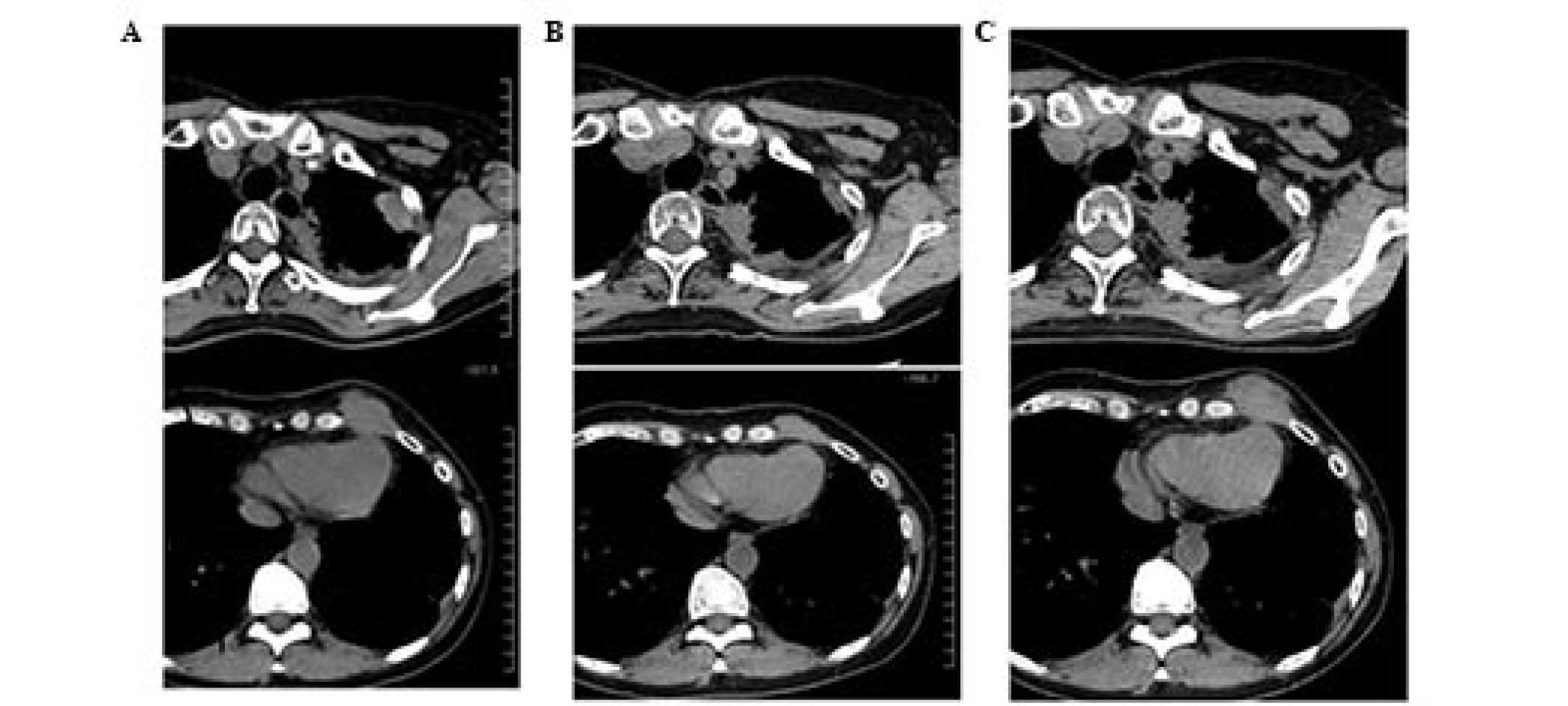
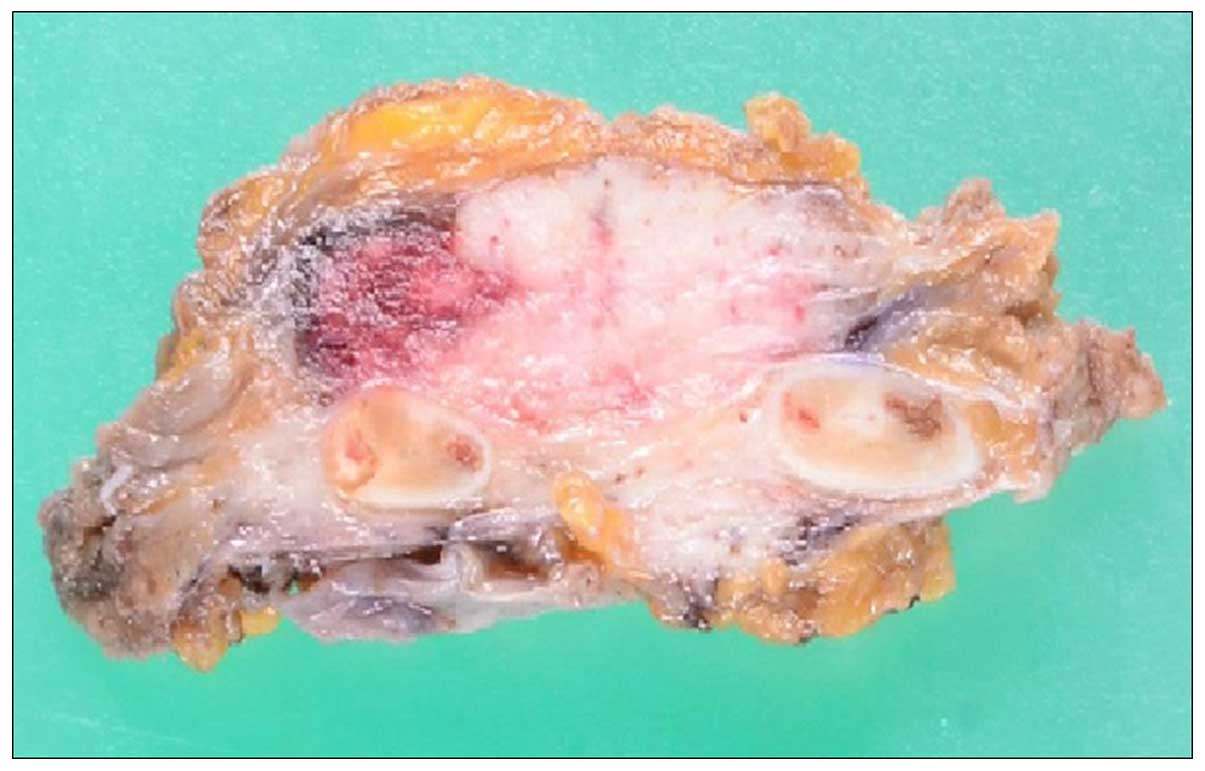
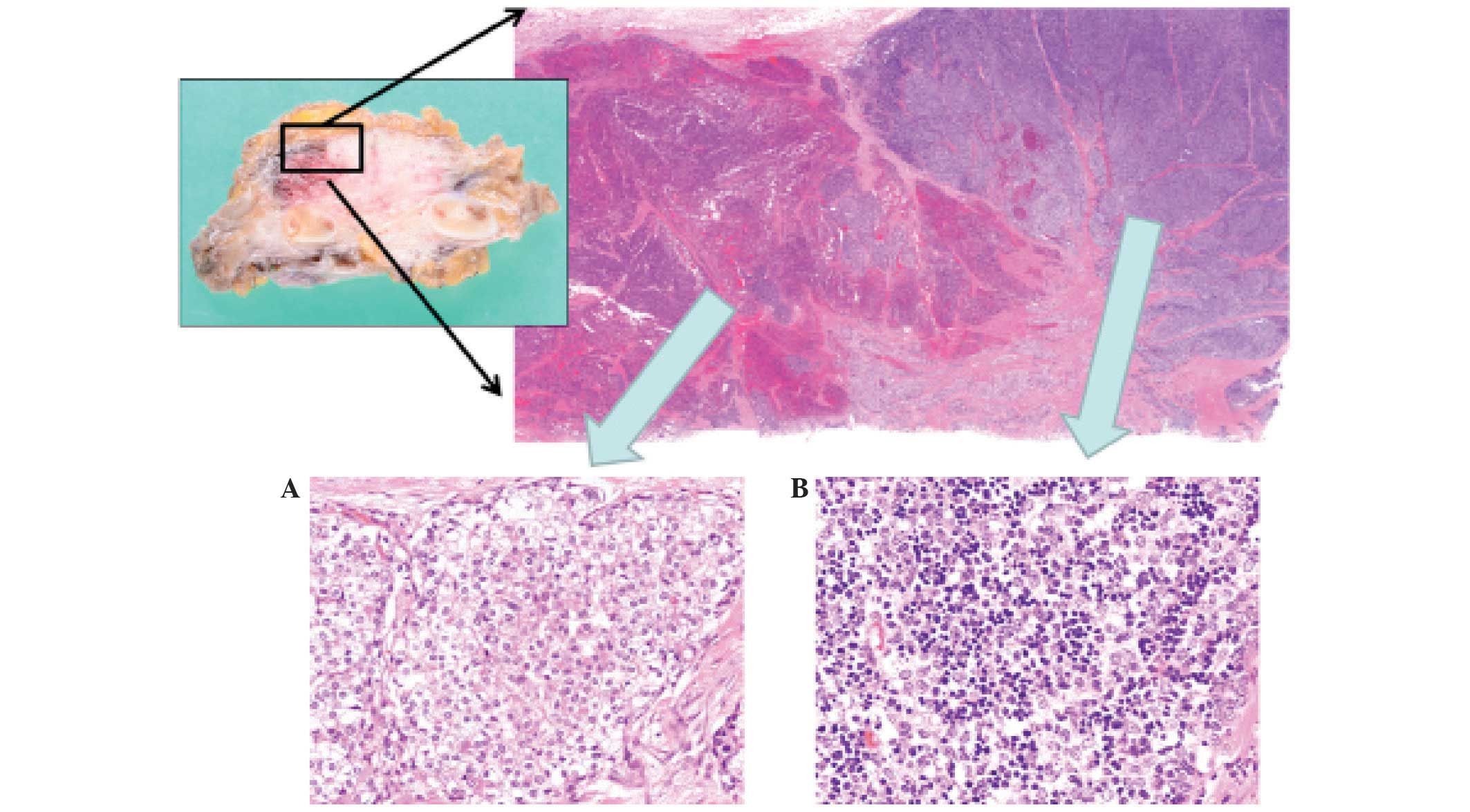
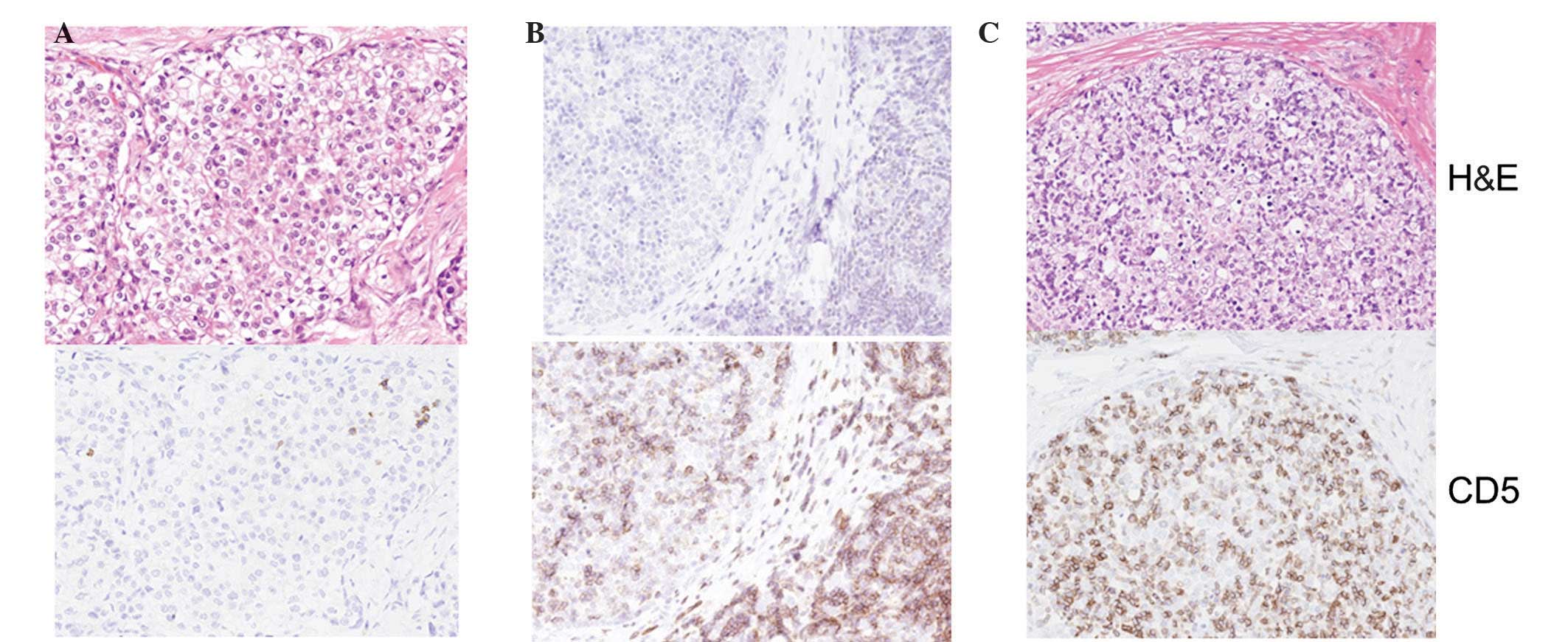
A 35-year-old woman, diagnosed with locally advanced thymoma [Masaoka et al classification, stage IVa (15)] underwent expanded thymectomy combined resection of the left brachiocephalic vein and left upper lung following four cycles of induction chemotherapy with cisplatin, doxorubicin, vincristine and cyclophosphamide in March 1999. The World Health Organization histological classification was type B3 (16). Subsequently, the patient received mediastinal radiotherapy (50 Gy). Relapse in the left pleural dissemination was observed in May 2003. As three cycles of carboplatin and paclitaxel chemotherapy failed to reduce the relapsed lesions, partial resection of the intrathoracic mass was performed as the second surgery. The patient developed dysphagia, ptosis and weakness in the neck in November 2010, and was diagnosed with anti-acetylcholine receptor antibody-positive myasthenia gravis. The patient was treated with prednisolone (10–15 mg/day) and tacrolimus (0.3 mg/day), which relieved and stabilized the symptoms of myasthenia gravis. However, tumors in the left intrathoracic space and chest wall grew in October 2013 (Fig. 1A). For the third-line setting, amrubicin administration was initiated and chest computed tomography (CT) following six cycles of amrubicin treatment demonstrated a significant reduction in the size of the masses (Fig. 1B). Following 4 months of the last chemotherapy, the left intrathoracic tumor was stable, however the left anterior chest wall tumor grew again (Fig. 1C). The patient underwent chest wall tumor resection (Fig. 2) and the histopathological findings revealed two separate components of a mixed type with features of squamous cell carcinoma (Fig. 3A) and thymoma (Fig. 3B). Notably, immunohistological analysis indicated CD5 positivity in the thymoma area, however, negative in the thymic cancer area (Fig. 4). The post-operative course was uneventful and no evidence of residual tumor growth was detected 9 months following the final surgery.

Figure 1.

Chest computed tomography findings revealed left intrathoracic and chest wall masses (A) prior to and (B) following chemotherapy. (C) The chest wall mass increased in size 4 months following the cessation of chemotherapy.

Figure 2.

Macroscopic findings of resected tumor revealed major well-demarcated areas with light yellow and slight reddish areas within the mass.

Figure 3.

Micrograph of the left upper area of the resected tumor (square position). The area contained two separate components consisting of (A) squamous cell carcinoma and (B) type B2 thymoma.

Figure 4.

H&E and immunohistochemical staining for CD5 in thymic carcinoma. (A) Tumor cell in squamous cell carcinoma were negative for CD5. The images show (B) the current combined tumor of thymoma and (C) previous thymoma resected by second salvage thoracotomy. The current and previous thymoma cells were positive for CD5. H&E, hematoxylin and eosin; CD, cluster of differentiation.

Discussion

Combined thymic epithelial tumors are rare and characterized by at least two distinct areas each corresponding to one of the histological thymoma and thymic carcinoma types (5–14). Several previous reports indicated that the histological types between the thymic carcinoma and thymoma are not always correlated (5–14). However, Suster et al (6) summarized 22 cases of combined thymic epithelial tumor types and reported that the most common combination was typical B2 or B3, and squamous cell carcinoma. The pathological findings were consistent with the present case. The majority of cases of combined thymic tumor types reported to date were observed in the anterior mediastinum and diagnosed on first tumor resection. The present case developed a combined thymic epithelial tumor in the chest wall lesion at follow-up >15 years following the initial diagnosis. Therefore, the present case clearly indicated that thymic carcinoma can arise from a pre-existing thymoma.

The etiology of combined thymic epithelial tumor types remains enigmatic. Several previous studies indicated that patients with thymoma exhibited increased risk of developing second primary extrathymic malignancies (17,18). In addition, myasthenia gravis is by far the most common paraneoplastic manifestation, and was also observed in the present case. It is unclear whether the presence of myasthenia gravis contributes to the development of combined thymic epithelial tumor types. However, the present study speculated that long-term administration of prednisolone and tacrolimus, and a history of several chemotherapies may have contributed to the malignant transformation in the present case. The patient received thoracic radiotherapy following the initial thoracotomy, however the location of the combined thymic epithelial tumor was slightly different compared with the previous radiation field. Therefore, it is likely that the previous thoracic radiotherapy caused no direct affect on the development of the malignant component in the present case.

Thymic carcinoma, however, not thymoma, is commonly immunoreactive for CD5 (19,20). Notably, thymic squamous cell carcinoma is positive for CD5. However, serial immunohistological findings indicated the thymoma to be positive for CD5 in the present case, while the thymic carcinoma was negative for CD5. Therefore, CD5 immunoreactivity was lost during malignant transformation in the present case. Suster et al (6) and Kuo et al (8) reported a similar case with a paradoxical change in the expression of CD5 in thymic epithelial tumors, respectively. The histological types (squamous cell carcinoma and type B3 thymoma) were also similar to those in the present study. These findings suggested that acquisition of CD5 immunoreactivity in thymoma cells may be an indicator of a biologically ‘aggressive’ phenotype. Further clinical experience and immunohistochemical studies are required to resolve the mechanism and/or interaction between malignant transformation to thymic carcinoma, and the change in CD5 expression.

As the immunoreactivity for CD5 was negative in the thymic carcinoma cells in the present case, there was a possibility of metastasis from other organs. However, two different thymic epithelial components coexisted in the resected chest wall tumor mass. Therefore, the present study hypothesized that the malignant tumor was not a metastatic tumor of other origins. Indeed, physical examination and 18F-Fluorodeoxy glucose positron emission tomography findings revealed no abnormalities, with the exception of in the right thoracic space where recurrent thymoma was present, suggesting that no primary metastatic squamous cell carcinoma lesions existed.

In conclusion, the present study reported a rare case of combined thymic squamous cell carcinoma and thymoma in an extrathymic lesion, which developed over the course of long-term follow-up for recurrent thymoma associated with myasthenia gravis. The present case had a history of immunosuppressive agents and chemotherapy, however, suggested the possibility of malignant transformation in patients with thymoma associated with myasthenia gravis. The development and/or coexistence of malignant components in thymoma must be taken into consideration for the treatment and/or management of patients with thymoma.

References

1 

Mikhail M, Mekhail Y and Mekhail T: Thymic neoplasms, A clinical update. Curr Oncol Rep. 14:350–358. 2012. View Article : Google Scholar : PubMed/NCBI

2 

Hejna M, Haberl I and Raderer M: Nonsurgical management of malignant thymoma. Cancer. 85:1871–1884. 1999. View Article : Google Scholar : PubMed/NCBI

3 

Kondo K and Monden Y: Therapy for thymic epithelial tumors: A clinical study of 1,320 patients from Japan. Ann Thorac Surg. 76:878–884. 2003. View Article : Google Scholar : PubMed/NCBI

4 

Suster S and Rosai J: Thymic carcinoma. Histopathology. Cancer. 67:1025–1032. 1991. View Article : Google Scholar : PubMed/NCBI

5 

Muller-Hermelink HK, Strobel P, Zettl A and Marx A: Combined thymic epithelial tumors. WHO classification of tumors of the lung, pleura, thymus and heart. Travis WD, Brambilla E, Muller-Hermelink HK and Harris CC: (Lyon). IARC Press. 196–197. 2004.

6 

Suster S and Moran CA: Primary thymic epithelial neoplasms showing combined features of thymoma and thymic carcinoma. Histopathology. Am J Surg Pathol. 20:1469–1480. 1996. View Article : Google Scholar : PubMed/NCBI

7 

Morinaga S, Sato Y, Shimosato Y, Sinkai T and Tsuchiya R: Multiple thymic squamous cell carcinomas associated with mixed type thymoma. Am J Surg Pathol. 11:982–988. 1987. View Article : Google Scholar : PubMed/NCBI

8 

Kuo TT and Chan JK: Thymic carcinoma arising in thymoma is associated with alterations in immunohistochemical profile. Am J Surg Pathol. 22:1474–1481. 1998. View Article : Google Scholar : PubMed/NCBI

9 

Wagner KB, Khan A, Mir R and Herman PG: Thymic carcinoma arising from long standing thymoma and presenting with pituitary metastases. Comput Med lmaging Graph. 15:411–414. 1991. View Article : Google Scholar

10 

Vilela Suarez D, Salas Valien JS, Moran Gonzalez MA, Lzquierdo Garcia F and Riera Velasco JR: Thymic carcinosarcoma associated with a spindle cell thymoma: An immunohistochemical study. Histopathology. 21:263–268. 1992. View Article : Google Scholar : PubMed/NCBI

11 

Hartman CA, Roth C, Minck C and Niedobitek G: Thymic carcinoma. Histopathology. J Cancer Res Clin Oncol. 116:69–82. 1990. View Article : Google Scholar : PubMed/NCBI

12 

Shimosato Y, Kameya T, Nagaki K and Suemasu K: Squamous cell carcinoma of the thymus, An analysis of eight cases. Am J Surg Pathol. 1:109–121. 1977. View Article : Google Scholar : PubMed/NCBI

13 

Wu SG, Li Y, Li B, Tian XY and Li Z: Unusual combined thymic mucoepidermoid carcinoma and thymoma, A case report and review of literature. Diagn Pathol. 9:82014. View Article : Google Scholar : PubMed/NCBI

14 

Kuo T, Chang JP, Lin FJ, Wu WC and Chang CH: Thymic carcinomas, Histopathological varieties and immunohistochemical study. Am J Surg Pathol. 14:24–34. 1990. View Article : Google Scholar : PubMed/NCBI

15 

Masaoka A, Monden Y, Nakahara K and Tanioka T: Follow-up study of thymomas with special reference to their clinical stages. Cancer. 48:2485–2492. 1981. View Article : Google Scholar : PubMed/NCBI

16 

Travis WD, Brambilla E, Muller-Hermelink HK and Harris CC: Pathology and genetics of tumours of the lung, pleura, thymus and heart. WHO Classification of Tumors of the Lung, Pleura, Thymus and Heart (Lyon). IARC press. 2004.

17 

Filosso PL, Galassi C, Ruffini E, Margaritora S, Bertolaccini L, Casadio C, Anile M and Venuta F: Thymoma and the increased risk of developing extrathymic malignancies, A multicentre study. Eur J Cardiothorac Surg. 44:219–224. 2013. View Article : Google Scholar : PubMed/NCBI

18 

Gadalla SM, Rajan A, Pfeiffer R, Kristinsson SY, Björkholm M, Landgren O and Giaccone G: A population-based assessment of mortality and morbidity patterns among patients with thymoma. Int J Cancer. 128:2688–2694. 2011. View Article : Google Scholar : PubMed/NCBI

19 

Dorfman DM, Shahsafaei A and Chan JK: Thymic carcinomas, but not thymomas and carcinomas of other sites, show CD5 immunoreactivity. Am J Surg Pathol. 21:936–940. 1997. View Article : Google Scholar : PubMed/NCBI

20 

Hishima T, Fukayama M, Fujisawa M, Hayashi Y, Arai K, Funata N and Koike M: CD5 expression in thymic carcinoma. Am J Pathol. 145:268–275. 1994.PubMed/NCBI

Related Articles

  • Abstract
  • View
  • Download
  • Twitter
Copy and paste a formatted citation
Spandidos Publications style
Ohue Y, Matsuoka S, Kumeda H, Agatsuma H, Hyougotani A, Toishi M, Shiina T, Yoshida K, Shingu K, Fukushima T, Fukushima T, et al: Development of combined thymic carcinoma and thymoma in an extrathymic lesion during long follow‑up for recurrent thymoma. Mol Clin Oncol 4: 139-142, 2016.
APA
Ohue, Y., Matsuoka, S., Kumeda, H., Agatsuma, H., Hyougotani, A., Toishi, M. ... Koizumi, T. (2016). Development of combined thymic carcinoma and thymoma in an extrathymic lesion during long follow‑up for recurrent thymoma. Molecular and Clinical Oncology, 4, 139-142. https://doi.org/10.3892/mco.2015.708
MLA
Ohue, Y., Matsuoka, S., Kumeda, H., Agatsuma, H., Hyougotani, A., Toishi, M., Shiina, T., Yoshida, K., Shingu, K., Fukushima, T., Koizumi, T."Development of combined thymic carcinoma and thymoma in an extrathymic lesion during long follow‑up for recurrent thymoma". Molecular and Clinical Oncology 4.2 (2016): 139-142.
Chicago
Ohue, Y., Matsuoka, S., Kumeda, H., Agatsuma, H., Hyougotani, A., Toishi, M., Shiina, T., Yoshida, K., Shingu, K., Fukushima, T., Koizumi, T."Development of combined thymic carcinoma and thymoma in an extrathymic lesion during long follow‑up for recurrent thymoma". Molecular and Clinical Oncology 4, no. 2 (2016): 139-142. https://doi.org/10.3892/mco.2015.708
Copy and paste a formatted citation
x
Spandidos Publications style
Ohue Y, Matsuoka S, Kumeda H, Agatsuma H, Hyougotani A, Toishi M, Shiina T, Yoshida K, Shingu K, Fukushima T, Fukushima T, et al: Development of combined thymic carcinoma and thymoma in an extrathymic lesion during long follow‑up for recurrent thymoma. Mol Clin Oncol 4: 139-142, 2016.
APA
Ohue, Y., Matsuoka, S., Kumeda, H., Agatsuma, H., Hyougotani, A., Toishi, M. ... Koizumi, T. (2016). Development of combined thymic carcinoma and thymoma in an extrathymic lesion during long follow‑up for recurrent thymoma. Molecular and Clinical Oncology, 4, 139-142. https://doi.org/10.3892/mco.2015.708
MLA
Ohue, Y., Matsuoka, S., Kumeda, H., Agatsuma, H., Hyougotani, A., Toishi, M., Shiina, T., Yoshida, K., Shingu, K., Fukushima, T., Koizumi, T."Development of combined thymic carcinoma and thymoma in an extrathymic lesion during long follow‑up for recurrent thymoma". Molecular and Clinical Oncology 4.2 (2016): 139-142.
Chicago
Ohue, Y., Matsuoka, S., Kumeda, H., Agatsuma, H., Hyougotani, A., Toishi, M., Shiina, T., Yoshida, K., Shingu, K., Fukushima, T., Koizumi, T."Development of combined thymic carcinoma and thymoma in an extrathymic lesion during long follow‑up for recurrent thymoma". Molecular and Clinical Oncology 4, no. 2 (2016): 139-142. https://doi.org/10.3892/mco.2015.708
Follow us
  • Twitter
  • LinkedIn
  • Facebook
About
  • Spandidos Publications
  • Careers
  • Cookie Policy
  • Privacy Policy
How can we help?
  • Help
  • Live Chat
  • Contact
  • Email to our Support Team