Spandidos Publications Logo
  • About
    • About Spandidos
    • Aims and Scopes
    • Abstracting and Indexing
    • Editorial Policies
    • Reprints and Permissions
    • Job Opportunities
    • Terms and Conditions
    • Contact
  • Journals
    • All Journals
    • Oncology Letters
      • Oncology Letters
      • Information for Authors
      • Editorial Policies
      • Editorial Board
      • Aims and Scope
      • Abstracting and Indexing
      • Bibliographic Information
      • Archive
    • International Journal of Oncology
      • International Journal of Oncology
      • Information for Authors
      • Editorial Policies
      • Editorial Board
      • Aims and Scope
      • Abstracting and Indexing
      • Bibliographic Information
      • Archive
    • Molecular and Clinical Oncology
      • Molecular and Clinical Oncology
      • Information for Authors
      • Editorial Policies
      • Editorial Board
      • Aims and Scope
      • Abstracting and Indexing
      • Bibliographic Information
      • Archive
    • Experimental and Therapeutic Medicine
      • Experimental and Therapeutic Medicine
      • Information for Authors
      • Editorial Policies
      • Editorial Board
      • Aims and Scope
      • Abstracting and Indexing
      • Bibliographic Information
      • Archive
    • International Journal of Molecular Medicine
      • International Journal of Molecular Medicine
      • Information for Authors
      • Editorial Policies
      • Editorial Board
      • Aims and Scope
      • Abstracting and Indexing
      • Bibliographic Information
      • Archive
    • Biomedical Reports
      • Biomedical Reports
      • Information for Authors
      • Editorial Policies
      • Editorial Board
      • Aims and Scope
      • Abstracting and Indexing
      • Bibliographic Information
      • Archive
    • Oncology Reports
      • Oncology Reports
      • Information for Authors
      • Editorial Policies
      • Editorial Board
      • Aims and Scope
      • Abstracting and Indexing
      • Bibliographic Information
      • Archive
    • Molecular Medicine Reports
      • Molecular Medicine Reports
      • Information for Authors
      • Editorial Policies
      • Editorial Board
      • Aims and Scope
      • Abstracting and Indexing
      • Bibliographic Information
      • Archive
    • World Academy of Sciences Journal
      • World Academy of Sciences Journal
      • Information for Authors
      • Editorial Policies
      • Editorial Board
      • Aims and Scope
      • Abstracting and Indexing
      • Bibliographic Information
      • Archive
    • International Journal of Functional Nutrition
      • International Journal of Functional Nutrition
      • Information for Authors
      • Editorial Policies
      • Editorial Board
      • Aims and Scope
      • Abstracting and Indexing
      • Bibliographic Information
      • Archive
    • International Journal of Epigenetics
      • International Journal of Epigenetics
      • Information for Authors
      • Editorial Policies
      • Editorial Board
      • Aims and Scope
      • Abstracting and Indexing
      • Bibliographic Information
      • Archive
    • Medicine International
      • Medicine International
      • Information for Authors
      • Editorial Policies
      • Editorial Board
      • Aims and Scope
      • Abstracting and Indexing
      • Bibliographic Information
      • Archive
  • Articles
  • Information
    • Information for Authors
    • Information for Reviewers
    • Information for Librarians
    • Information for Advertisers
    • Conferences
  • Language Editing
Spandidos Publications Logo
  • About
    • About Spandidos
    • Aims and Scopes
    • Abstracting and Indexing
    • Editorial Policies
    • Reprints and Permissions
    • Job Opportunities
    • Terms and Conditions
    • Contact
  • Journals
    • All Journals
    • Biomedical Reports
      • Information for Authors
      • Editorial Policies
      • Editorial Board
      • Aims and Scope
      • Abstracting and Indexing
      • Bibliographic Information
      • Archive
    • Experimental and Therapeutic Medicine
      • Information for Authors
      • Editorial Policies
      • Editorial Board
      • Aims and Scope
      • Abstracting and Indexing
      • Bibliographic Information
      • Archive
    • International Journal of Epigenetics
      • Information for Authors
      • Editorial Policies
      • Editorial Board
      • Aims and Scope
      • Abstracting and Indexing
      • Bibliographic Information
      • Archive
    • International Journal of Functional Nutrition
      • Information for Authors
      • Editorial Policies
      • Editorial Board
      • Aims and Scope
      • Abstracting and Indexing
      • Bibliographic Information
      • Archive
    • International Journal of Molecular Medicine
      • Information for Authors
      • Editorial Policies
      • Editorial Board
      • Aims and Scope
      • Abstracting and Indexing
      • Bibliographic Information
      • Archive
    • International Journal of Oncology
      • Information for Authors
      • Editorial Policies
      • Editorial Board
      • Aims and Scope
      • Abstracting and Indexing
      • Bibliographic Information
      • Archive
    • Medicine International
      • Information for Authors
      • Editorial Policies
      • Editorial Board
      • Aims and Scope
      • Abstracting and Indexing
      • Bibliographic Information
      • Archive
    • Molecular and Clinical Oncology
      • Information for Authors
      • Editorial Policies
      • Editorial Board
      • Aims and Scope
      • Abstracting and Indexing
      • Bibliographic Information
      • Archive
    • Molecular Medicine Reports
      • Information for Authors
      • Editorial Policies
      • Editorial Board
      • Aims and Scope
      • Abstracting and Indexing
      • Bibliographic Information
      • Archive
    • Oncology Letters
      • Information for Authors
      • Editorial Policies
      • Editorial Board
      • Aims and Scope
      • Abstracting and Indexing
      • Bibliographic Information
      • Archive
    • Oncology Reports
      • Information for Authors
      • Editorial Policies
      • Editorial Board
      • Aims and Scope
      • Abstracting and Indexing
      • Bibliographic Information
      • Archive
    • World Academy of Sciences Journal
      • Information for Authors
      • Editorial Policies
      • Editorial Board
      • Aims and Scope
      • Abstracting and Indexing
      • Bibliographic Information
      • Archive
  • Articles
  • Information
    • For Authors
    • For Reviewers
    • For Librarians
    • For Advertisers
    • Conferences
  • Language Editing
Login Register Submit
  • This site uses cookies
  • You can change your cookie settings at any time by following the instructions in our Cookie Policy. To find out more, you may read our Privacy Policy.

    I agree
Search articles by DOI, keyword, author or affiliation
Search
Advanced Search
presentation
Molecular and Clinical Oncology
Join Editorial Board Propose a Special Issue
Print ISSN: 2049-9450 Online ISSN: 2049-9469
Journal Cover
December-2016 Volume 5 Issue 6

Full Size Image

Sign up for eToc alerts
Recommend to Library

Journals

International Journal of Molecular Medicine

International Journal of Molecular Medicine

International Journal of Molecular Medicine is an international journal devoted to molecular mechanisms of human disease.

International Journal of Oncology

International Journal of Oncology

International Journal of Oncology is an international journal devoted to oncology research and cancer treatment.

Molecular Medicine Reports

Molecular Medicine Reports

Covers molecular medicine topics such as pharmacology, pathology, genetics, neuroscience, infectious diseases, molecular cardiology, and molecular surgery.

Oncology Reports

Oncology Reports

Oncology Reports is an international journal devoted to fundamental and applied research in Oncology.

Experimental and Therapeutic Medicine

Experimental and Therapeutic Medicine

Experimental and Therapeutic Medicine is an international journal devoted to laboratory and clinical medicine.

Oncology Letters

Oncology Letters

Oncology Letters is an international journal devoted to Experimental and Clinical Oncology.

Biomedical Reports

Biomedical Reports

Explores a wide range of biological and medical fields, including pharmacology, genetics, microbiology, neuroscience, and molecular cardiology.

Molecular and Clinical Oncology

Molecular and Clinical Oncology

International journal addressing all aspects of oncology research, from tumorigenesis and oncogenes to chemotherapy and metastasis.

World Academy of Sciences Journal

World Academy of Sciences Journal

Multidisciplinary open-access journal spanning biochemistry, genetics, neuroscience, environmental health, and synthetic biology.

International Journal of Functional Nutrition

International Journal of Functional Nutrition

Open-access journal combining biochemistry, pharmacology, immunology, and genetics to advance health through functional nutrition.

International Journal of Epigenetics

International Journal of Epigenetics

Publishes open-access research on using epigenetics to advance understanding and treatment of human disease.

Medicine International

Medicine International

An International Open Access Journal Devoted to General Medicine.

Journal Cover
December-2016 Volume 5 Issue 6

Full Size Image

Sign up for eToc alerts
Recommend to Library

  • Article
  • Citations
    • Cite This Article
    • Download Citation
    • Create Citation Alert
    • Remove Citation Alert
    • Cited By
  • Similar Articles
    • Related Articles (in Spandidos Publications)
    • Similar Articles (Google Scholar)
    • Similar Articles (PubMed)
  • Download PDF
  • Download XML
  • View XML
Case Report Open Access

Histological complete response in a patient with advanced biliary tract cancer treated by gemcitabine/cisplatin/S-1 combination chemotherapy: A case report

  • Authors:
    • Tokuhiro Matsubara
    • Tsutomu Nishida
    • Yoshito Tomimaru
    • Masashi Yamamoto
    • Shiro Hayashi
    • Sachiko Nakajima
    • Koji Fukui
    • Keizo Dono
    • Shiro Adachi
    • Tatsuya Ioka
    • Masashi Kanai
    • Masami Inada
  • View Affiliations / Copyright

    Affiliations: Department of Gastroenterology, Toyonaka Municipal Hospital, Toyonaka, Osaka 560-8565, Japan, Department of Surgery, Toyonaka Municipal Hospital, Toyonaka, Osaka 560-8565, Japan, Department of Pathology, Toyonaka Municipal Hospital, Toyonaka, Osaka 560-8565, Japan, Department of Hepatobiliary and Pancreatic Oncology, Osaka Medical Center for Cancer and Cardiovascular Diseases, Osaka 537-0025, Japan, Department of Clinical Oncology and Pharmacogenomics, Kyoto University Hospital, Kyoto 606-8507, Japan
    Copyright: © Matsubara et al. This is an open access article distributed under the terms of Creative Commons Attribution License.
  • Pages: 757-761
    |
    Published online on: October 26, 2016
       https://doi.org/10.3892/mco.2016.1065
  • Expand metrics +
Metrics: Total Views: 0 (Spandidos Publications: | PMC Statistics: )
Metrics: Total PDF Downloads: 0 (Spandidos Publications: | PMC Statistics: )
Cited By (CrossRef): 0 citations Loading Articles...

This article is mentioned in:


Abstract

A 68-year-old woman was referred to our hospital with increased levels of biliary enzymes. On imaging, the patient was diagnosed with unresectable intrahepatic biliary tract cancer (BTC) with invasion of the portal vein and para-aortic lymph node metastasis (cT3N1M1, cStage IVb) and underwent endoscopic biliary drainage for the biliary stricture prior to therapy. The patient was subsequently enrolled in a phase III randomized trial (UMIN000014371/NCT02182778) and randomly assigned to receive gemcitabine/cisplatin/S-1 (GCS) combination therapy intravenously at doses of 1,000 or 25 mg/m2 on day 1 and orally twice daily at a dose of 80 mg/m2 on days 1-7 every 2 weeks. After 12 cycles of scheduled therapy without uncontrollable adverse effects, the patient achieved a good partial response with chemotherapy. Computed tomography (CT) revealed a marked reduction of the primary and metastatic lesions. In addition,18F-fluorodeoxyglucose-positron emission tomography/CT revealed diminishing abnormal uptake and no macroscopic evidence of factors adversely affecting tumor resectability. Therefore, the patient underwent extended right hepatic lobectomy, lymph node dissection and left hepaticojejunostomy. Finally, histological examination of the resected tissues revealed no residual cancer cells, suggesting a pathologically complete response. We herein present the case of a patient with intrahepatic BTC who achieved a pathologically complete response following combination chemotherapy with GCS.

Introduction

Biliary tract cancer (BTC) is a relatively uncommon type of cancer. However, the incidence of BTC appears to be increasing worldwide over the last few decades, particularly in Latin America and East Asia (1). BTC is currently the sixth leading cause of cancer-related mortality in Japan, and patients with BTC have a poor prognosis (2). Therefore, effective treatment strategies are urgently required. Surgical resection currently represents the only potentially curative treatment for BTC. However, the majority of patients are diagnosed at an advanced stage, when curative resection is no longer feasible; in addition, even in cases where surgery may be performed, there is a significant likelihood of relapse (3). Patients with unresectable or recurrent disease appear to be clinical candidates for systemic chemotherapy (4,5). After the ABC-02 study reported that gemcitabine/cisplatin (GC) combination therapy significantly prolonged median survival time (MST) from 8.1 to 11.7 months over gemcitabine monotherapy in patients with advanced BTC (6), this combination therapy has become the standard treatment for BTC worldwide.

Recently, Kanai et al determined the optimal dose of GC/S-1 (GCS) combination therapy for patients with advanced BTC in a phase I study (7) and reported a promising MST of >15 months in a phase II study (8). Based on these results, a phase III randomized trial is underway to demonstrate the superiority of GCS therapy compared with GC in patients with unresectable BTC (UMIN000014371/NCT02182778). We herein report the case of a patient with unresectable intrahepatic cholangiocarcinoma (ICC) who underwent conversion surgery and ultimately achieved a pathologically complete response using GCS combination therapy.

Case report

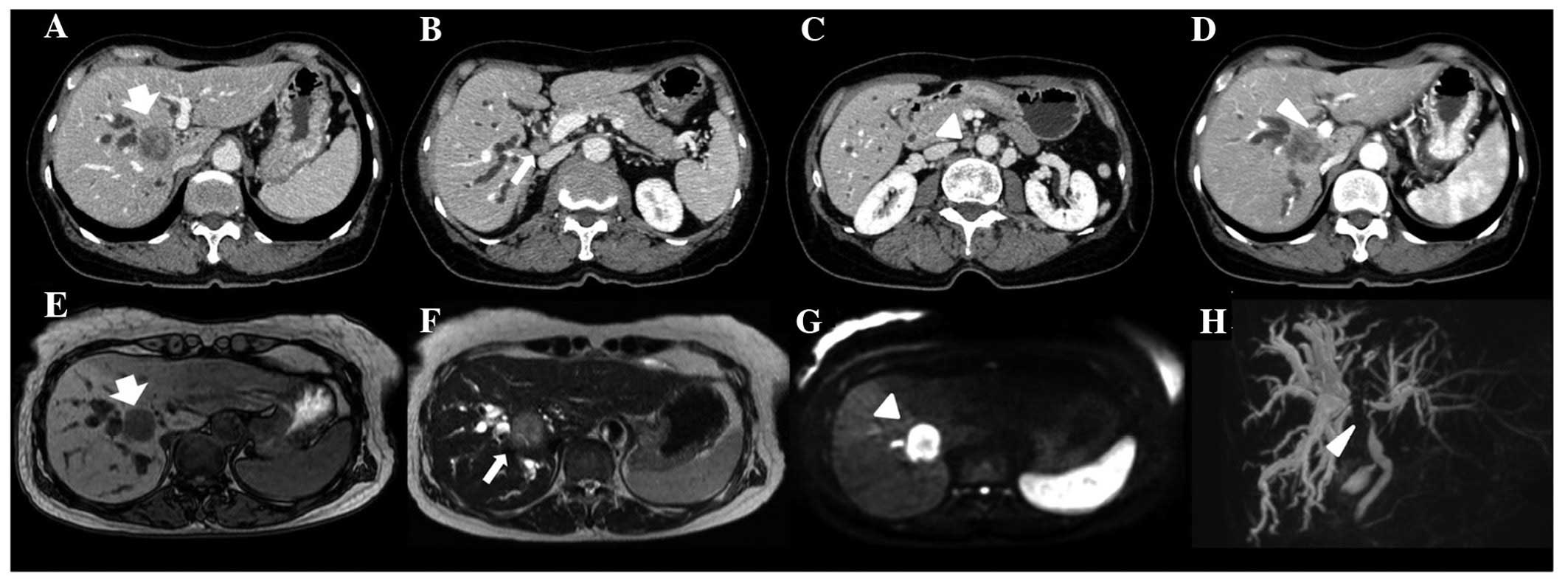
A 68-year-old woman was referred to Toyonaka Municipal Hospital with increased levels of biliary enzymes in March, 2015. The patient suffered from hypertension and rheumatoid arthritis, which were controlled with oral medication. A physical examination revealed no abdominal abnormalities, but the laboratory tests revealed abnormal liver function, including an elevated serum alkaline phosphatase level of 839 U/l [upper limit of normal (ULN), 328 U/l), a γ-glutamyltranspeptidase level of 324 U/l (ULN, 64 U/l) and an alanine aminotransferase level of 82 U/l (ULN, 40 U/l). Additionally, the serum carcinoembryonic antigen (CEA) and carbohydrate antigen (CA) 19-9 levels were 9.8 ng/ml (ULN, 5.0 ng/ml) and 32,806 U/ml (ULN, 37 U/ml), respectively. Computed tomography (CT) revealed a 3-cm mass in the 1/8 segment of the liver, resulting in dilated bile ducts in both hepatic lobes, enlarged para-aortic and regional lymph nodes, and invasion of the portal vein (PV) (Fig. 1A). Magnetic resonance imaging (MRI) revealed an intrahepatic mass as a hypointense lesion compared with normal liver tissue in T1-weighted images. T2-weighted images revealed mild hyperintensity compared with the liver parenchyma. Furthermore, diffusion-weighted MRI revealed high signal intensity (Fig. 1B).

Figure 1.

Imaging of intrahepatic biliary tract cancer. A computed tomography scan revealed a 3-cm mass in the 1/8 segment of the liver, resulting in bile duct dilation in both hepatic lobes, enlarged regional lymph nodes and invasion of the PV: (A) Arrow, intrahepatic mass; (B) arrow, enlarged regional lymph nodes; (C) arrowhead, enlarged para-aortic lymph nodes; (D) arrowhead, invasion of the PV. MRI also revealed the intrahepatic mass: (E) T1-weighted image showing a hypointense lesion (arrow) relative to the normal liver; (F) T2-weighted image showing mild hyperintensity (arrow) relative to the liver parenchyma; (G) diffusion-weighted MRI showing high signal intensity (arrowhead); (H) MRCP revealed irregular stricture of the hilar bile duct (arrowhead). PV, portal vein; MRI, magnetic resonance imaging; MRCP, magnetic resonance cholangiopancreatography.

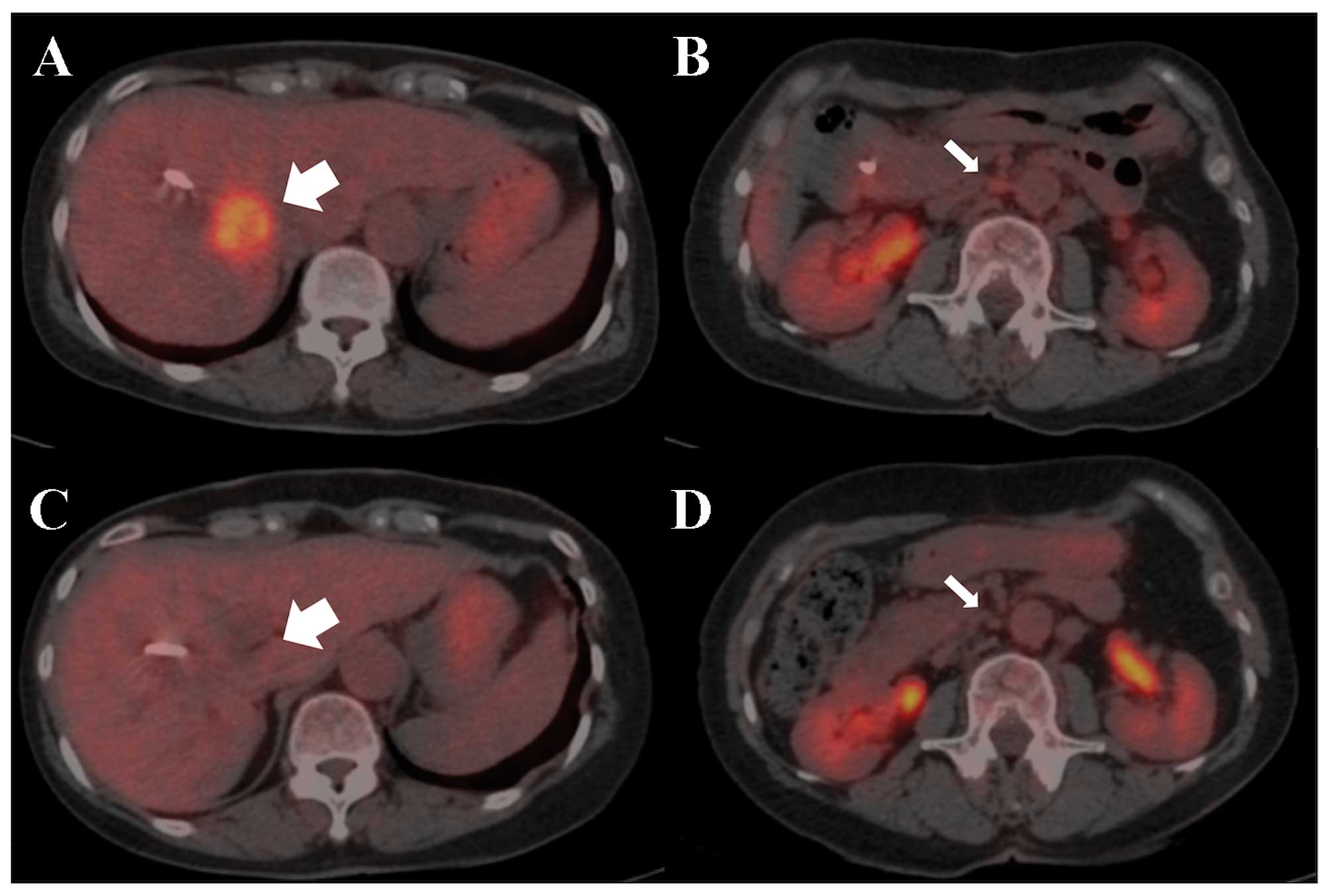
Positron emission tomography with 18F-fluoro-D-deoxyglucose (18F-FDG PET)/CT revealed abnormal uptake of the primary tumor and para-aortic lymph nodes, with an SUVmax of 5.8 and 2.5, respectively (Fig. 3A). On imaging, the patient was diagnosed with unresectable intrahepatic BTC with para-aortic and hilar lymph node metastasis [cT3N1M1, cStage IVb according to the Union for International Cancer Control classification system (http://www.uicc.org/sites/main/files/private/TNM_Classification_of_Malignant_Tumours_Website_15%20MAy2011.pdf)].

Figure 3.

18F-fluorodeoxyglucose positron emission tomography/computed tomography (18F-FDG-PET/CT) of the primary lesion and lymph nodes prior to and following chemotherapy. (A and B) Prior to chemotherapy, 18F-FDG-PET/CT showed abnormal uptake of the primary tumor (bold arrow) and para-aortic lymph nodes (thin arrow). (C and D) After chemotherapy, 18F-FDG-PET/CT showed a marked disappearance of the abnormal uptake of the primary lesion (bold arrow) and lymph nodes (thin arrow).

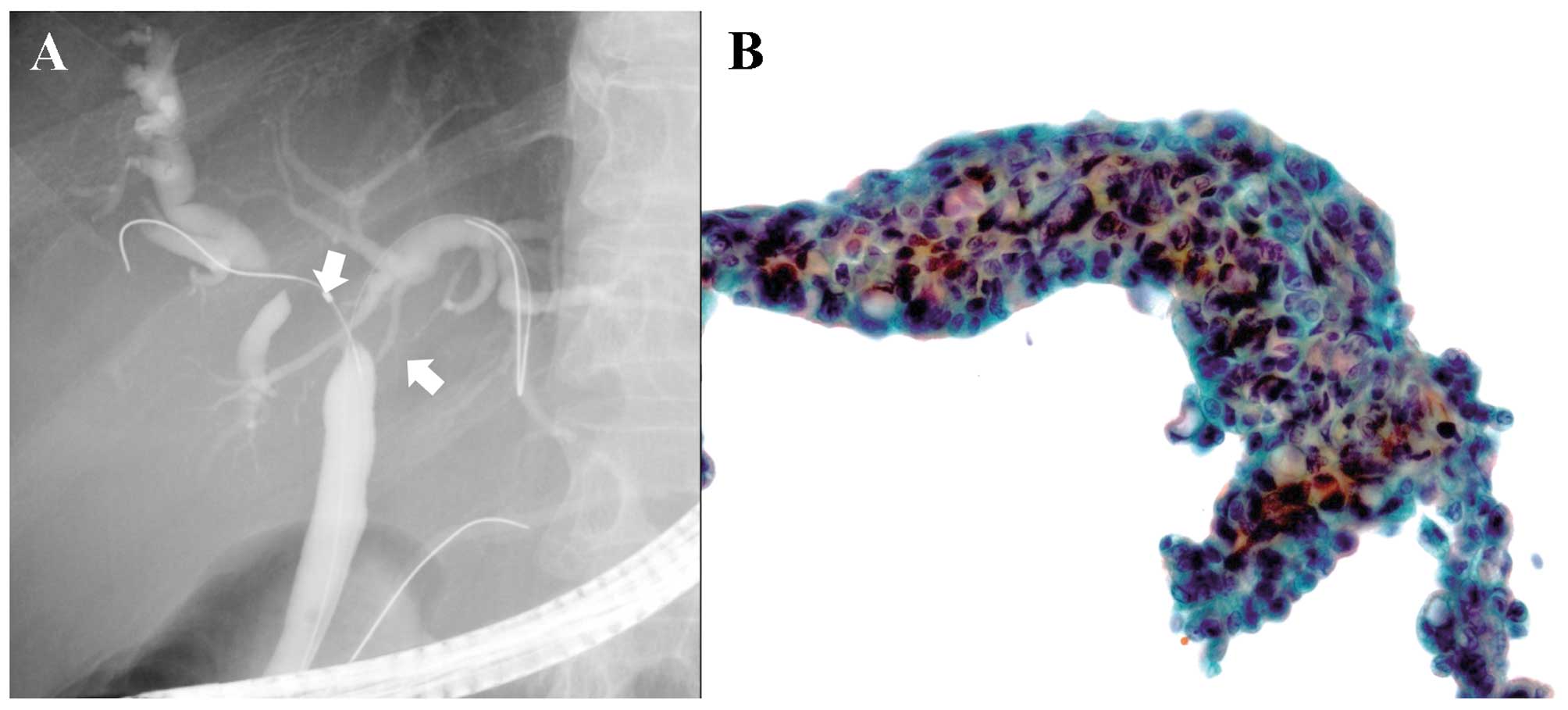
Endoscopic retrograde cholangiopancreatography (ERCP) revealed a 2-cm irregular stricture of the hilar bile duct with a lobulated tumor (Fig. 2A). The brush cytology specimens revealed atypical cells in a three-dimensional cluster and an isolated pattern strongly suggestive of adenocarcinoma (Fig. 2B). Based on these findings, the patient was diagnosed with unresectable ICC with para-aortic lymph node metastasis and, therefore, systemic chemotherapy was considered.

Figure 2.

Irregular stricture of the hilar bile duct with lobulated tumor was observed on endoscopic retrograde cholangiopancreatography (ERCP) and brush cytology. (A) ERCP showing irregular stricture of the hilar bile duct (arrows). (B) A three-dimensional cluster containing atypical cells with considerable variation in nuclear size was observed on brush cytology. The cells exhibited enlarged atypical nuclei with irregular contours and hyperchromasia. Papanicolaou staining identified the cells as class V.

The patient underwent endoscopic biliary drainage using plastic stent placement for the biliary stricture prior to therapy. Endobiliary stents (7F 12- and 7-cm at a light angle) were successfully placed through the narrowed lumen at initial ERCP, resulting in successful biliary decompression.

The patient was subsequently enrolled in a phase III randomized trial (UMIN000014371/NCT02182778) and randomly assigned to receive GCS combination therapy.

Gemcitabine and cisplatin were administered intravenously at doses of 1,000 or 25 mg/m2 on day 1, and oral S-1 was administered daily at a dose of 80 mg/m2 on days 1–7 every 2 weeks. The patient received 12 cycles of the regimen for 6 months. On the first day of the 8th cycle, the patient presented with grade 3 malaise after receiving chemotherapy. This adverse effect was, however, manageable and improved within 2 days by fluid replacement therapy. The scheduled treatment was completed in accordance with the protocol without delay. After the scheduled 12 cycles of the regimen, CT revealed a marked reduction of the primary tumor and metastatic lymph nodes. 18F-FDG-PET/CT also revealed diminished abnormal uptake of the primary lesion and para-aortic lymph nodes (Fig. 3B). Additionally, the serum CEA and CA19-9 levels decreased to within the normal range (1.5 ng/ml and 11 U/ml, respectively).

Imaging examination showed no macroscopic evidence of factors rendering the tumor unresectable. The patient achieved a good partial response to GCS therapy and was allowed to undergo conversion surgery. Intraoperative frozen section analysis of the lymph nodes showed no malignant findings. Therefore, the patient underwent extended right hepatic lobectomy, lymph node dissection and left hepaticojejunostomy. Macroscopically, curative resection was achieved.

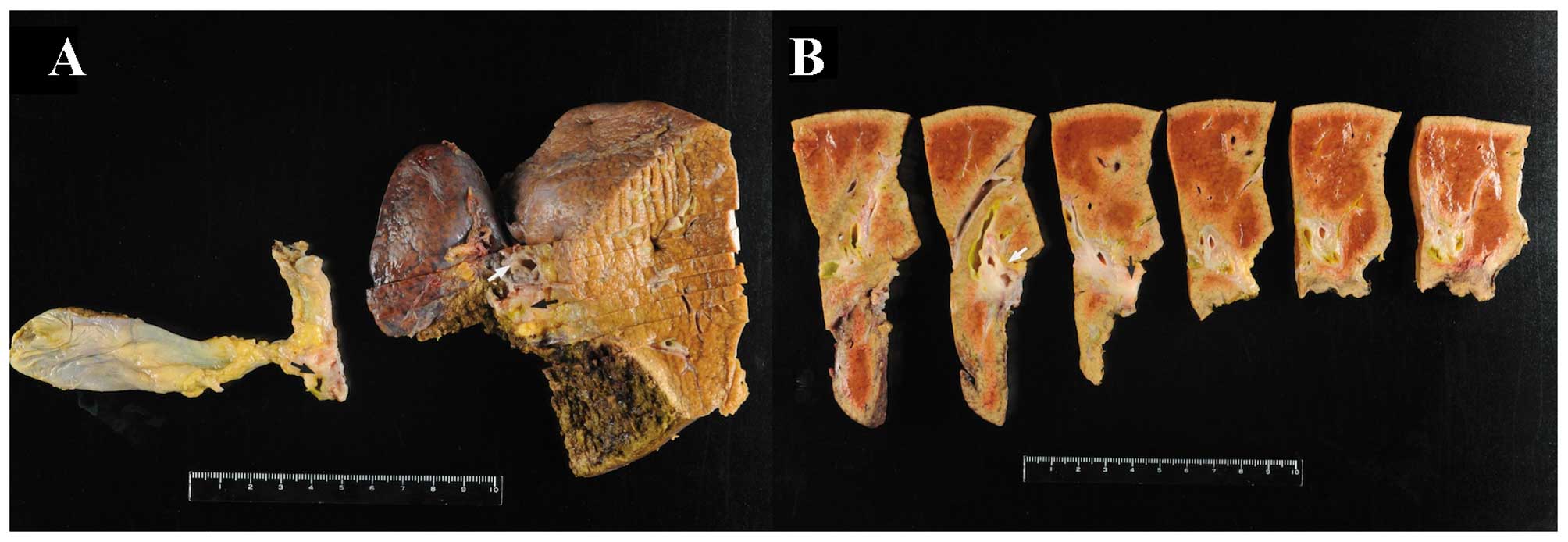
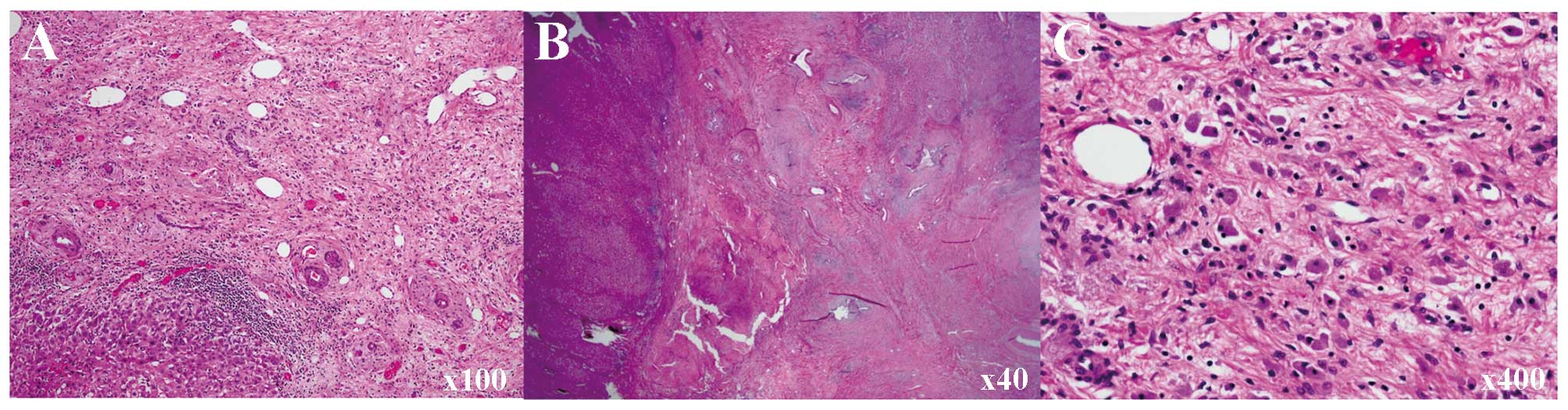
The resected specimen exhibited almost complete occlusion of the right hepatic duct immediately before the junction (Fig. 4). The hepatic parenchyma was eroded and replaced by fibrotic tissue. Histological examination revealed scattered pigmented macrophages in the fibrotic tissue, suggesting that necrotic cells were scavenged from this location. Although atypical epithelia in the bile duct were identified, invasive carcinoma and intraepithelial carcinoma components were not found, even following thorough examination. There were no viable carcinoma cells in the dissected nodes, but some contained fibrotic foci (Fig. 5).

Figure 4.

(A) Macroscopically resected specimen and (B) cross sections. The right hepatic duct was almost occluded immediately before the junction (arrows).

Figure 5.

Histological complete response demonstrated by histopathological examination. (A) Expanded fibrous tissue around the occluded right hepatic duct. The eroded hepatic parenchyma was replaced by dense collagenous tissue. (B) Although there was an increased number of capillaries as well as various inflammatory cells in the fibrous tissue, no invasive carcinoma cells were identified. (C) High magnification view showing numerous enlarged pigmented macrophages in the fibrous tissue, suggesting the presence of scavenged necrotic carcinoma cells.

In summary, a patient with unresectable ICC at presentation achieved a pathologically complete response after undergoing preoperative GCS combination chemotherapy. At the last follow-up, 9 months after the operation (September, 2016), the patient remained alive and recurrence-free, without adjuvant therapy.

Discussion

BTC, which originates in the intrahepatic and extrahepatic bile ducts, is a relatively uncommon type of cancer, comprising ~3% of all gastrointestinal malignancies (9,10). The majority of BTC patients are diagnosed at an advanced stage due to the lack of abdominal symptoms, and the prognosis is generally poor (1,2). Therefore, surgery is the optimal therapeutic approach, although systemic chemotherapy is considered for patients with unresectable BTC. In the ABC-02 study, Valle et al reported that GC combination therapy was associated with a significant survival advantage compared with gemcitabine alone, with a overall MST of 11.7 months compared with 8.1 months, respectively (hazard ratio = 0.64; P<0.001) (6). Based on that study, GC combination therapy has been the standard palliative chemotherapy for patients with advanced BTC worldwide. The BT-22 study used the same regimen as the ABC-02 study and evaluated the efficacy and safety for patients with advanced BTC in a Japanese population; the study revealed that its outcome was similar to that of the ABC-02 study, as the MST for GC combination therapy and G alone was 11.2 and 7.7 months, respectively, and the adverse events did not significantly differ between the two groups, although the incidence of hematotoxicity was higher with GC combination therapy compared with G alone (GC vs. G: Leukopenia, 29.3 vs. 19.0%; neutropenia, 56.1 vs. 38.1%; thrombocytopenia, 39.0 vs. 7.2%; and decreased hemoglobin level, 36.6 vs. 16.6%, respectively) (11). Therefore, this indicates that the new regimen exhibited a higher efficacy and fewer adverse events.

S-1 is an oral fluoropyrimidine prodrug that is widely used for various solid tumors (12–15), and it is approved in Japan as a chemotherapeutic agent for BTC (16). S-1 monotherapy has shown promising outcomes associated with mild toxicity in BTC patients (13). Additionally, in combination with gemcitabine, S-1 has also achieved favorable response rates (30–34%) and MST (11.6–12.7 months) (14,15).

On the basis of these reports, Kanai et al expected that the addition of S-1 would exert an additive or synergistic effect with GC combination therapy to improve treatment results with respect to efficacy and safety. In a phase I study, the regimen described below had the fewest grade 3–4 adverse events (maculopapular rash, vasovagal reaction and anemia). Based on the incidental rates of adverse events in the phase I study, Kanai et al established a recommended dose of the GCS combination therapy, which consisted of intravenous administration of gemcitabine (1,000 mg/m2) and cisplatin (25 mg/m2) on day 1 and oral administration of S-1 (80 mg/m2) on days 1–7, every 2 weeks (7). Next, the authors evaluated the efficacy of the GCS regimen. A phase II study demonstrated significantly prolonged MST (16.2 months, 95% confidence interval 10.2–22.2 months) without uncontrollable adverse events compared with that of the ABC-02 study (11.7 months, hazard ratio = 0.64; P<0.001). Interestingly, two patients (4%) were able to achieve curative secondary resection after tumor downstaging following chemotherapy (8). Thus, GCS combination therapy should not only be considered to be a standard first-line chemotherapy, but also a ‘conversion surgery or neoadjuvant chemotherapy’. On the basis of these findings, a randomized phase III study has now been launched (UMIN000014371/NCT02182778).

Conversion surgery is radical resection performed for previously unresectable cases that become resectable as a result of regression following chemotherapy; it should be distinguished from neoadjuvant chemotherapy, although a strict distinction between these two strategies is occasionally clinically difficult, as the definition of unresectable cancer varies among physicians. Conversion surgery or neoadjuvant chemotherapy for unresectable cancers, including gastric, colorectal and pancreatic cancer, has been frequently reported (17–19). Kim et al demonstrated that clinically curative conversion therapy resulted in the highest survival rate and best prognosis in gastric cancer patients with peritoneal seeding (cStage IV). The MST of patients undergoing clinically curative conversion therapy and non-curative resection was 37 and 18 months, respectively, and the 3-year survival rates were 50 and 0%, respectively (17). For colorectal and pancreatic cancer, several recent reports also demonstrated a clinical advantage with neoadjuvant chemotherapy (18,19). However, the feasibility and efficacy of neoadjuvant chemotherapy for BTC has not been determined (20). Kato et al reported that patients with initially unresectable locally advanced BTC who underwent neoadjuvant chemotherapy (gemcitabine) had a significantly longer survival time compared with those unable to undergo surgery (2-year overall survival rate of 45 and 19%, respectively) (21). Furthermore, a case of curative resection after GCS chemotherapy for initially unresectable biliary duct cancer and a case of a patient with extrahepatic cholangiocarcinoma after undergoing preoperative gemcitabine-based chemotherapy have been reported (22). Based on these reports, conversion therapy has recently attracted attention, although there is insufficient evidence regarding the safety and efficacy of performing conversion surgery. To the best of our knowledge, the present case is the first report of a patient diagnosed with unresectable BTC who ultimately achieved a pathologically complete response with GCS combination therapy. Further studies are required to verify the efficacy of conversion surgery in patients with BTC using a prospective study design.

Acknowledgements

We would like to thank the American Journal Expert copy editing company for the linguistic revision of the manuscript.

References

1 

Randi G, Malvezzi M, Levi F, et al: Epidemiology of biliary tract cancers: an update. Ann Oncol. 20:146–159. 2009. View Article : Google Scholar : PubMed/NCBI

2 

Matsuda T and Marugame T: International comparisons of cumulative risk of gallbladder cancer and other biliary tract cancer, from Cancer Incidence in Five Continents Vol. VIII. Jpn J Clin Oncol. 37:74–75. 2007. View Article : Google Scholar : PubMed/NCBI

3 

Leonard GD and O'Reilly EM: Biliary tract cancers: Current concepts and controversies. Expert Opin Pharmacother. 6:211–223. 2005. View Article : Google Scholar : PubMed/NCBI

4 

Glimelius B, Hoffman K, Sjoden PO, et al: Chemotherapy improves survival and quality of life in advanced pancreatic and biliary cancer. Ann Oncol. 7:593–600. 1996. View Article : Google Scholar : PubMed/NCBI

5 

Eckel F and Schmid RM: Chemotherapy in advanced biliary tract carcinoma: A pooled analysis of clinical trials. Br J Cancer. 96:896–902. 2007. View Article : Google Scholar : PubMed/NCBI

6 

Valle J, Wasan H, Palmer DH, Cunningham D, Anthoney A, Maraveyas A, Madhusudan S, Iveson T, Hughes S, Pereira SP, et al: ABC-02 Trial Investigators: Cisplatin plus gemcitabine versus gemcitabine for biliary tract cancer. N Engl J Med. 362:1273–1281. 2010. View Article : Google Scholar : PubMed/NCBI

7 

Kanai M, Hatano E, Kobayashi S, Fujiwara Y, Sakai D, Kodama Y, Ajiki T, Nagano H and Ioka T: Phase I trial of oral S-1 combined with gemcitabine and cisplatin for advanced biliary tract cancer (KHBO1002). Cancer Chemother Pharmacol. 69:1181–1188. 2012. View Article : Google Scholar : PubMed/NCBI

8 

Kanai M, Hatano E, Kobayashi S, Fujiwara Y, Marubashi S, Miyamoto A, Shiomi H, Kubo S, Ikuta S, Yanagimoto H, et al: A multi-institution phase II study of gemcitabine/cisplatin/S-1 (GCS) combination chemotherapy for patients with advanced biliary tract cancer (KHBO 1002). Cancer Chemother Pharmacol. 75:293–300. 2015. View Article : Google Scholar : PubMed/NCBI

9 

Sia D, Tovar V, Moeini A and Llovet JM: Intrahepatic cholangiocarcinoma: Pathogenesis and rationale for molecular therapies. Oncogene. 32:4861–4870. 2013. View Article : Google Scholar : PubMed/NCBI

10 

Vauthey JN and Blumgart LH: Recent advances in the management of cholangiocarcinomas. Semin Liver Dis. 14:109–114. 1994. View Article : Google Scholar : PubMed/NCBI

11 

Okusaka T, Nakachi K, Fukutomi A, Mizuno N, Ohkawa S, Funakoshi A, Nagino M, Kondo S, Nagaoka S, Funai J, et al: Gemcitabine alone or in combination with cisplatin in patients with biliary tract cancer: A comparative multicentre study in Japan. Br J Cancer. 103:469–474. 2010. View Article : Google Scholar : PubMed/NCBI

12 

Ichinose Y, Yoshimori K, Sakai H, et al: S-1 plus cisplatin combination chemotherapy in patients with advanced non-small cell lung cancer: a multi-institutional phase II trial. Clinical cancer research: an official journal of the American Association for Cancer Research. 10:7860–7864. 2004. View Article : Google Scholar : PubMed/NCBI

13 

Furuse J, Okusaka T, Boku N, Ohkawa S, Sawaki A, Masumoto T and Funakoshi A: S-1 monotherapy as first-line treatment in patients with advanced biliary tract cancer: A multicenter phase II study. Cancer Chemother Pharmacol. 62:849–855. 2008. View Article : Google Scholar : PubMed/NCBI

14 

Sasaki T, Isayama H, Nakai Y, Ito Y, Kogure H, Togawa O, Toda N, Yasuda I, Hasebe O, Maetani I, et al: Multicenter, phase II study of gemcitabine and S-1 combination chemotherapy in patients with advanced biliary tract cancer. Cancer Chemother Pharmacol. 65:1101–1107. 2010. View Article : Google Scholar : PubMed/NCBI

15 

Kanai M, Yoshimura K, Tsumura T, Asada M, Suzuki C, Niimi M, Matsumoto S, Nishimura T, Nitta T, Yasuchika K, et al: A multi-institution phase II study of gemcitabine/S-1 combination chemotherapy for patients with advanced biliary tract cancer. Cancer Chemother Pharmacol. 67:1429–1434. 2011. View Article : Google Scholar : PubMed/NCBI

16 

Sasaki T, Isayama H, Nakai Y, Mizuno S, Yamamoto K, Yagioka H, Yashima Y, Kawakubo K, Kogure H, Togawa O, et al: Multicenter phase II study of S-1 monotherapy as second-line chemotherapy for advanced biliary tract cancer refractory to gemcitabine. Invest New Drugs. 30:708–713. 2012. View Article : Google Scholar : PubMed/NCBI

17 

Kim SW: The result of conversion surgery in gastric cancer patients with peritoneal seeding. J Gastric Cancer. 14:266–270. 2014. View Article : Google Scholar : PubMed/NCBI

18 

Adam R, Wicherts DA, de Haas RJ, Ciacio O, Lévi F, Paule B, Ducreux M, Azoulay D, Bismuth H and Castaing D: Patients with initially unresectable colorectal liver metastases: Is there a possibility of cure? J Clin Oncol. 27:1829–1835. 2009. View Article : Google Scholar : PubMed/NCBI

19 

Morganti AG, Massaccesi M, La Torre G, Caravatta L, Piscopo A, Tambaro R, Sofo L, Sallustio G, Ingrosso M, Macchia G, et al: A systematic review of resectability and survival after concurrent chemoradiation in primarily unresectable pancreatic cancer. Ann Surg Oncol. 17:194–205. 2010. View Article : Google Scholar : PubMed/NCBI

20 

Grendar J, Grendarova P, Sinha R and Dixon E: Neoadjuvant therapy for downstaging of locally advanced hilar cholangiocarcinoma: A systematic review. HPB Oxf. 16:297–303. 2014. View Article : Google Scholar

21 

Kato A, Shimizu H, Ohtsuka M, Yoshidome H, Yoshitomi H, Furukawa K, Takeuchi D, Takayashiki T, Kimura F and Miyazaki M: Surgical resection after downsizing chemotherapy for initially unresectable locally advanced biliary tract cancer: A retrospective single-center study. Ann Surg Oncol. 20:318–324. 2013. View Article : Google Scholar : PubMed/NCBI

22 

Furukawa K, Uwagawa T, Sakamoto T, Shiba H, Tsutsumi J and Yanaga K: Curative resection after gemcitabine, cisplatin and S-1 chemotherapy for initially unresectable biliary duct cancer: A case report. Anticancer Res. 35:4203–4206. 2015.PubMed/NCBI

Related Articles

  • Abstract
  • View
  • Download
  • Twitter
Copy and paste a formatted citation
Spandidos Publications style
Matsubara T, Nishida T, Tomimaru Y, Yamamoto M, Hayashi S, Nakajima S, Fukui K, Dono K, Adachi S, Ioka T, Ioka T, et al: Histological complete response in a patient with advanced biliary tract cancer treated by gemcitabine/cisplatin/S-1 combination chemotherapy: A case report. Mol Clin Oncol 5: 757-761, 2016.
APA
Matsubara, T., Nishida, T., Tomimaru, Y., Yamamoto, M., Hayashi, S., Nakajima, S. ... Inada, M. (2016). Histological complete response in a patient with advanced biliary tract cancer treated by gemcitabine/cisplatin/S-1 combination chemotherapy: A case report. Molecular and Clinical Oncology, 5, 757-761. https://doi.org/10.3892/mco.2016.1065
MLA
Matsubara, T., Nishida, T., Tomimaru, Y., Yamamoto, M., Hayashi, S., Nakajima, S., Fukui, K., Dono, K., Adachi, S., Ioka, T., Kanai, M., Inada, M."Histological complete response in a patient with advanced biliary tract cancer treated by gemcitabine/cisplatin/S-1 combination chemotherapy: A case report". Molecular and Clinical Oncology 5.6 (2016): 757-761.
Chicago
Matsubara, T., Nishida, T., Tomimaru, Y., Yamamoto, M., Hayashi, S., Nakajima, S., Fukui, K., Dono, K., Adachi, S., Ioka, T., Kanai, M., Inada, M."Histological complete response in a patient with advanced biliary tract cancer treated by gemcitabine/cisplatin/S-1 combination chemotherapy: A case report". Molecular and Clinical Oncology 5, no. 6 (2016): 757-761. https://doi.org/10.3892/mco.2016.1065
Copy and paste a formatted citation
x
Spandidos Publications style
Matsubara T, Nishida T, Tomimaru Y, Yamamoto M, Hayashi S, Nakajima S, Fukui K, Dono K, Adachi S, Ioka T, Ioka T, et al: Histological complete response in a patient with advanced biliary tract cancer treated by gemcitabine/cisplatin/S-1 combination chemotherapy: A case report. Mol Clin Oncol 5: 757-761, 2016.
APA
Matsubara, T., Nishida, T., Tomimaru, Y., Yamamoto, M., Hayashi, S., Nakajima, S. ... Inada, M. (2016). Histological complete response in a patient with advanced biliary tract cancer treated by gemcitabine/cisplatin/S-1 combination chemotherapy: A case report. Molecular and Clinical Oncology, 5, 757-761. https://doi.org/10.3892/mco.2016.1065
MLA
Matsubara, T., Nishida, T., Tomimaru, Y., Yamamoto, M., Hayashi, S., Nakajima, S., Fukui, K., Dono, K., Adachi, S., Ioka, T., Kanai, M., Inada, M."Histological complete response in a patient with advanced biliary tract cancer treated by gemcitabine/cisplatin/S-1 combination chemotherapy: A case report". Molecular and Clinical Oncology 5.6 (2016): 757-761.
Chicago
Matsubara, T., Nishida, T., Tomimaru, Y., Yamamoto, M., Hayashi, S., Nakajima, S., Fukui, K., Dono, K., Adachi, S., Ioka, T., Kanai, M., Inada, M."Histological complete response in a patient with advanced biliary tract cancer treated by gemcitabine/cisplatin/S-1 combination chemotherapy: A case report". Molecular and Clinical Oncology 5, no. 6 (2016): 757-761. https://doi.org/10.3892/mco.2016.1065
Follow us
  • Twitter
  • LinkedIn
  • Facebook
About
  • Spandidos Publications
  • Careers
  • Cookie Policy
  • Privacy Policy
How can we help?
  • Help
  • Live Chat
  • Contact
  • Email to our Support Team