Spandidos Publications Logo
  • About
    • About Spandidos
    • Aims and Scopes
    • Abstracting and Indexing
    • Editorial Policies
    • Reprints and Permissions
    • Job Opportunities
    • Terms and Conditions
    • Contact
  • Journals
    • All Journals
    • Oncology Letters
      • Oncology Letters
      • Information for Authors
      • Editorial Policies
      • Editorial Board
      • Aims and Scope
      • Abstracting and Indexing
      • Bibliographic Information
      • Archive
    • International Journal of Oncology
      • International Journal of Oncology
      • Information for Authors
      • Editorial Policies
      • Editorial Board
      • Aims and Scope
      • Abstracting and Indexing
      • Bibliographic Information
      • Archive
    • Molecular and Clinical Oncology
      • Molecular and Clinical Oncology
      • Information for Authors
      • Editorial Policies
      • Editorial Board
      • Aims and Scope
      • Abstracting and Indexing
      • Bibliographic Information
      • Archive
    • Experimental and Therapeutic Medicine
      • Experimental and Therapeutic Medicine
      • Information for Authors
      • Editorial Policies
      • Editorial Board
      • Aims and Scope
      • Abstracting and Indexing
      • Bibliographic Information
      • Archive
    • International Journal of Molecular Medicine
      • International Journal of Molecular Medicine
      • Information for Authors
      • Editorial Policies
      • Editorial Board
      • Aims and Scope
      • Abstracting and Indexing
      • Bibliographic Information
      • Archive
    • Biomedical Reports
      • Biomedical Reports
      • Information for Authors
      • Editorial Policies
      • Editorial Board
      • Aims and Scope
      • Abstracting and Indexing
      • Bibliographic Information
      • Archive
    • Oncology Reports
      • Oncology Reports
      • Information for Authors
      • Editorial Policies
      • Editorial Board
      • Aims and Scope
      • Abstracting and Indexing
      • Bibliographic Information
      • Archive
    • Molecular Medicine Reports
      • Molecular Medicine Reports
      • Information for Authors
      • Editorial Policies
      • Editorial Board
      • Aims and Scope
      • Abstracting and Indexing
      • Bibliographic Information
      • Archive
    • World Academy of Sciences Journal
      • World Academy of Sciences Journal
      • Information for Authors
      • Editorial Policies
      • Editorial Board
      • Aims and Scope
      • Abstracting and Indexing
      • Bibliographic Information
      • Archive
    • International Journal of Functional Nutrition
      • International Journal of Functional Nutrition
      • Information for Authors
      • Editorial Policies
      • Editorial Board
      • Aims and Scope
      • Abstracting and Indexing
      • Bibliographic Information
      • Archive
    • International Journal of Epigenetics
      • International Journal of Epigenetics
      • Information for Authors
      • Editorial Policies
      • Editorial Board
      • Aims and Scope
      • Abstracting and Indexing
      • Bibliographic Information
      • Archive
    • Medicine International
      • Medicine International
      • Information for Authors
      • Editorial Policies
      • Editorial Board
      • Aims and Scope
      • Abstracting and Indexing
      • Bibliographic Information
      • Archive
  • Articles
  • Information
    • Information for Authors
    • Information for Reviewers
    • Information for Librarians
    • Information for Advertisers
    • Conferences
  • Language Editing
Spandidos Publications Logo
  • About
    • About Spandidos
    • Aims and Scopes
    • Abstracting and Indexing
    • Editorial Policies
    • Reprints and Permissions
    • Job Opportunities
    • Terms and Conditions
    • Contact
  • Journals
    • All Journals
    • Biomedical Reports
      • Information for Authors
      • Editorial Policies
      • Editorial Board
      • Aims and Scope
      • Abstracting and Indexing
      • Bibliographic Information
      • Archive
    • Experimental and Therapeutic Medicine
      • Information for Authors
      • Editorial Policies
      • Editorial Board
      • Aims and Scope
      • Abstracting and Indexing
      • Bibliographic Information
      • Archive
    • International Journal of Epigenetics
      • Information for Authors
      • Editorial Policies
      • Editorial Board
      • Aims and Scope
      • Abstracting and Indexing
      • Bibliographic Information
      • Archive
    • International Journal of Functional Nutrition
      • Information for Authors
      • Editorial Policies
      • Editorial Board
      • Aims and Scope
      • Abstracting and Indexing
      • Bibliographic Information
      • Archive
    • International Journal of Molecular Medicine
      • Information for Authors
      • Editorial Policies
      • Editorial Board
      • Aims and Scope
      • Abstracting and Indexing
      • Bibliographic Information
      • Archive
    • International Journal of Oncology
      • Information for Authors
      • Editorial Policies
      • Editorial Board
      • Aims and Scope
      • Abstracting and Indexing
      • Bibliographic Information
      • Archive
    • Medicine International
      • Information for Authors
      • Editorial Policies
      • Editorial Board
      • Aims and Scope
      • Abstracting and Indexing
      • Bibliographic Information
      • Archive
    • Molecular and Clinical Oncology
      • Information for Authors
      • Editorial Policies
      • Editorial Board
      • Aims and Scope
      • Abstracting and Indexing
      • Bibliographic Information
      • Archive
    • Molecular Medicine Reports
      • Information for Authors
      • Editorial Policies
      • Editorial Board
      • Aims and Scope
      • Abstracting and Indexing
      • Bibliographic Information
      • Archive
    • Oncology Letters
      • Information for Authors
      • Editorial Policies
      • Editorial Board
      • Aims and Scope
      • Abstracting and Indexing
      • Bibliographic Information
      • Archive
    • Oncology Reports
      • Information for Authors
      • Editorial Policies
      • Editorial Board
      • Aims and Scope
      • Abstracting and Indexing
      • Bibliographic Information
      • Archive
    • World Academy of Sciences Journal
      • Information for Authors
      • Editorial Policies
      • Editorial Board
      • Aims and Scope
      • Abstracting and Indexing
      • Bibliographic Information
      • Archive
  • Articles
  • Information
    • For Authors
    • For Reviewers
    • For Librarians
    • For Advertisers
    • Conferences
  • Language Editing
Login Register Submit
  • This site uses cookies
  • You can change your cookie settings at any time by following the instructions in our Cookie Policy. To find out more, you may read our Privacy Policy.

    I agree
Search articles by DOI, keyword, author or affiliation
Search
Advanced Search
presentation
Molecular and Clinical Oncology
Join Editorial Board Propose a Special Issue
Print ISSN: 2049-9450 Online ISSN: 2049-9469
Journal Cover
June-2016 Volume 4 Issue 6

Full Size Image

Sign up for eToc alerts
Recommend to Library

Journals

International Journal of Molecular Medicine

International Journal of Molecular Medicine

International Journal of Molecular Medicine is an international journal devoted to molecular mechanisms of human disease.

International Journal of Oncology

International Journal of Oncology

International Journal of Oncology is an international journal devoted to oncology research and cancer treatment.

Molecular Medicine Reports

Molecular Medicine Reports

Covers molecular medicine topics such as pharmacology, pathology, genetics, neuroscience, infectious diseases, molecular cardiology, and molecular surgery.

Oncology Reports

Oncology Reports

Oncology Reports is an international journal devoted to fundamental and applied research in Oncology.

Experimental and Therapeutic Medicine

Experimental and Therapeutic Medicine

Experimental and Therapeutic Medicine is an international journal devoted to laboratory and clinical medicine.

Oncology Letters

Oncology Letters

Oncology Letters is an international journal devoted to Experimental and Clinical Oncology.

Biomedical Reports

Biomedical Reports

Explores a wide range of biological and medical fields, including pharmacology, genetics, microbiology, neuroscience, and molecular cardiology.

Molecular and Clinical Oncology

Molecular and Clinical Oncology

International journal addressing all aspects of oncology research, from tumorigenesis and oncogenes to chemotherapy and metastasis.

World Academy of Sciences Journal

World Academy of Sciences Journal

Multidisciplinary open-access journal spanning biochemistry, genetics, neuroscience, environmental health, and synthetic biology.

International Journal of Functional Nutrition

International Journal of Functional Nutrition

Open-access journal combining biochemistry, pharmacology, immunology, and genetics to advance health through functional nutrition.

International Journal of Epigenetics

International Journal of Epigenetics

Publishes open-access research on using epigenetics to advance understanding and treatment of human disease.

Medicine International

Medicine International

An International Open Access Journal Devoted to General Medicine.

Journal Cover
June-2016 Volume 4 Issue 6

Full Size Image

Sign up for eToc alerts
Recommend to Library

  • Article
  • Citations
    • Cite This Article
    • Download Citation
    • Create Citation Alert
    • Remove Citation Alert
    • Cited By
  • Similar Articles
    • Related Articles (in Spandidos Publications)
    • Similar Articles (Google Scholar)
    • Similar Articles (PubMed)
  • Download PDF
  • Download XML
  • View XML
Case Report Open Access

Development of multiple malignancies following long‑term glucocorticoid therapy in a patient with leukocytoclastic vasculitis: A case report

  • Authors:
    • Lianghua Fang
    • Yue Hu
    • Wei Wang
    • Shouyou Hu
    • Li Zhang
    • Ruiping Wang
  • View Affiliations / Copyright

    Affiliations: Department of Oncology, Jiangsu Province Hospital of Traditional Chinese Medicine, Nanjing, Jiangsu 210029, P.R. China, Department of Hematopathology, MD Anderson Cancer Center, Houston, TX 77030, USA
    Copyright: © Fang et al. This is an open access article distributed under the terms of Creative Commons Attribution License.
  • Pages: 929-932
    |
    Published online on: April 7, 2016
       https://doi.org/10.3892/mco.2016.854
  • Expand metrics +
Metrics: Total Views: 0 (Spandidos Publications: | PMC Statistics: )
Metrics: Total PDF Downloads: 0 (Spandidos Publications: | PMC Statistics: )
Cited By (CrossRef): 0 citations Loading Articles...

This article is mentioned in:


Abstract

Leukocytoclastic vasculitis (LCV) is a neutrophilic inflammation of the blood vessels. LCV may present as a paraneoplastic syndrome occurring before, synchronously with, or after the diagnosis of malignancy. In this study, we report a unique case of multiple malignancies developing simultaneously in a patient with a long history of LCV. The patient was originally diagnosed with LCV and received long‑term glucocorticoid treatment. After 11 years of therapy, the patient developed three primary malignancies, including small‑cell lung carcinoma, gastric adenocarcinoma and colonic adenocarcinoma. It is likely that LCV was not a paraneoplastic syndrome in this case, but rather an independent process, and the development of multiple cancers is likely associated with the long‑term glucocorticoid treatment, which caused imbalance of the immune system. Although the development of cancer during the course of glucocorticoid treatment is very rare, clinicians must be aware of this possible association and immunodysregulation may play a role in this context.

Introduction

Leukocytoclastic vasculitis (LCV) has been associated with several disease processes, such as infections, drugs, allergies, rheumatological and neoplastic diseases (1). In neoplastic processes, LCV may present as a paraneoplastic phenomenon occurring before, synchronously with, or after the diagnosis of malignancy (2). Compared to hematological malignancies, solid tumors are significantly less likely to be associated with LCV (1). The first case of LCV in a patient with a solid tumor was reported in 1968 (3). Since then, more patients suffering from solid tumors and vasculitis have been documented in the literature (4,5), including patients with lung, colon, gastric and renal cancer. In these previously reported cases, the patients only developed one type of malignancy and the occurrence of multiple malignancies in patients with LCV has not been reported. We herein describe the case of a patient who developed LCV and was treated with glucocorticoids for 11 years. The patient then developed three primary tumors, including small-cell lung carcinoma (SCLC), gastric adenocarcinoma and colonic adenocarcinoma. To the best of our knowledge, this is the first case report of multiple malignancies developing in a patient with a history of LCV in the English medical literature.

Case report

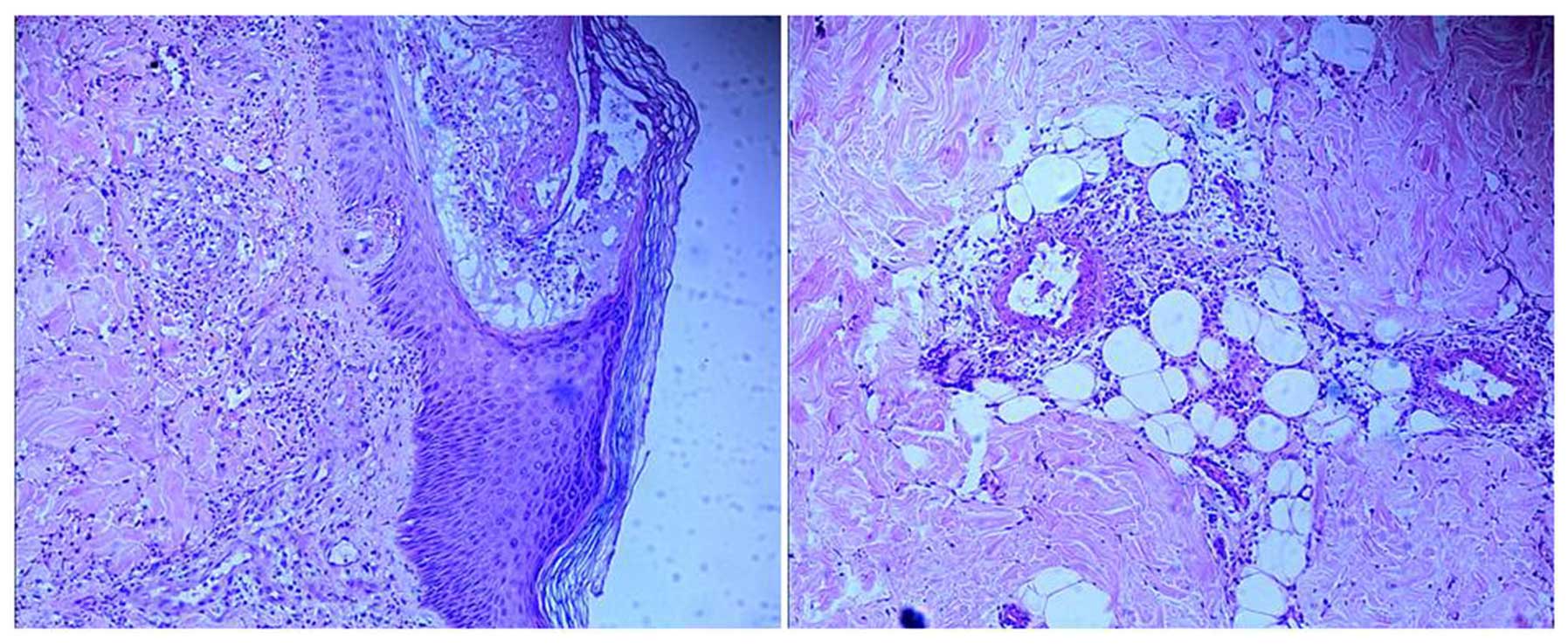
The patient was a 54-year-old man, initially presenting with rash, purpura, petechiae, bruising and desquamation on the right low limb followed by ulceration in May, 2001 at the age of 43 years. Skin biopsy confirmed the diagnosis of LCV (Fig. 1). The patient was treated with glucocorticoids and initially responded to the steroid therapy very well, achieving complete response. However, the disease later relapsed, and the patient developed dry gangrene of the right foot. Shock therapy with a maximum dose of 500 mg methylprednisolone for 5 days was administered repeatedly. After the disease was controlled, the patient was maintained on methylprednisolone at doses of 80, 60, 40, 20 and 4 mg, adjusted according to the disease status over the following 11 years.

Figure 1.

Skin punch biopsy showing the characteristics of leukocytoclastic vasculitis, with perivascular fibrin, neutrophils and leukocytoclasia (nuclear dust) (hematoxylin and eosin staining; magnification, ×200).

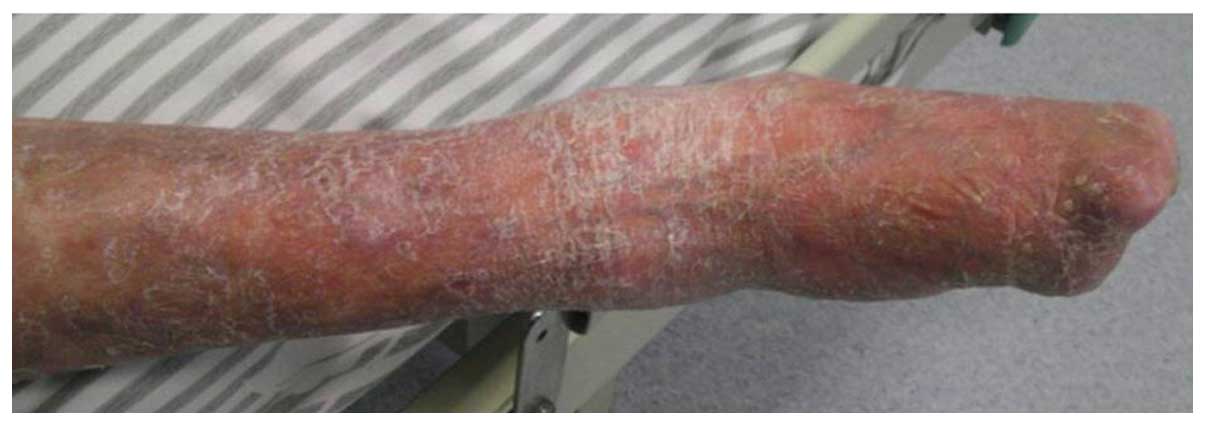
In February, 2012, approximately 11 years after the diagnosis of LCV, the patient presented to our hospital complaining of nausea and paroxysmal dull pain in the back and upper abdomen for 3 weeks. The LCV had been stabilized on 4 mg methylprednisolone twice a day. The patient was not a smoker and had no family history of cancer. On physical examination, the patient had a moon facies. No hepatosplenomegaly or lymph node enlargement were observed. There was no jaundice, rash or ulceration. The lower part of the right leg exhibited purple discoloration and desquamation, with marked deformity of the toes, possibly due to the dry gangrene the patient developed due to the deterioration of his LCV (Fig. 2).

Figure 2.

Purple discoloration and desquamation on the lower part of the right leg, with marked deformity of the toes.

The complete blood count revealed a white blood cell count of 10.9×10⁹/l, with an absolute neutrophil count of 8.76×10⁹/l. The percentage of neutrophils and lymphocytes was 80.4 and 8.6%, respectively. The hemoglobin level and platelet count were within normal limits. Routine urine tests showed no positive findings, while the routine stool test was positive for occult blood. Blood chemistry tests revealed an alkaline kinase proteinase level of 341 U/l (normal, 42–141 U/l), γ-GT 263 U/l (normal, 7–32 U/l) and lactate dehydrogenase 624.50 U/l (normal, 22–29 U/l); others were within the normal range. Tumor marker tests revealed an α-fetoprotein level of 3.0 ng/ml (normal, <10.9 ng/ml), carcinoembryonic antigen 3.63 ng/ml (normal, <5 ng/ml), ferritin >1,500 ng/ml (normal, 11–306.8 ng/ml), carbohydrate antigen (CA)125 >1,000 U/ml (normal, <35 U/ml), CA153, 78.91 U/ml (normal, <31.3 U/ml) and CA199, 112.28 U/ml (normal, <37 U/ml). The results of the cellular immunity tests were as follows: CD3, 37% (normal, 50–84%); CD19, 4% (normal, 5–18%), CD4, 20% (normal, 27–51%), CD8, 50% (normal, 15–44%); and CD4/CD8 ratio, 0.4 (normal, 0.71–2.78).

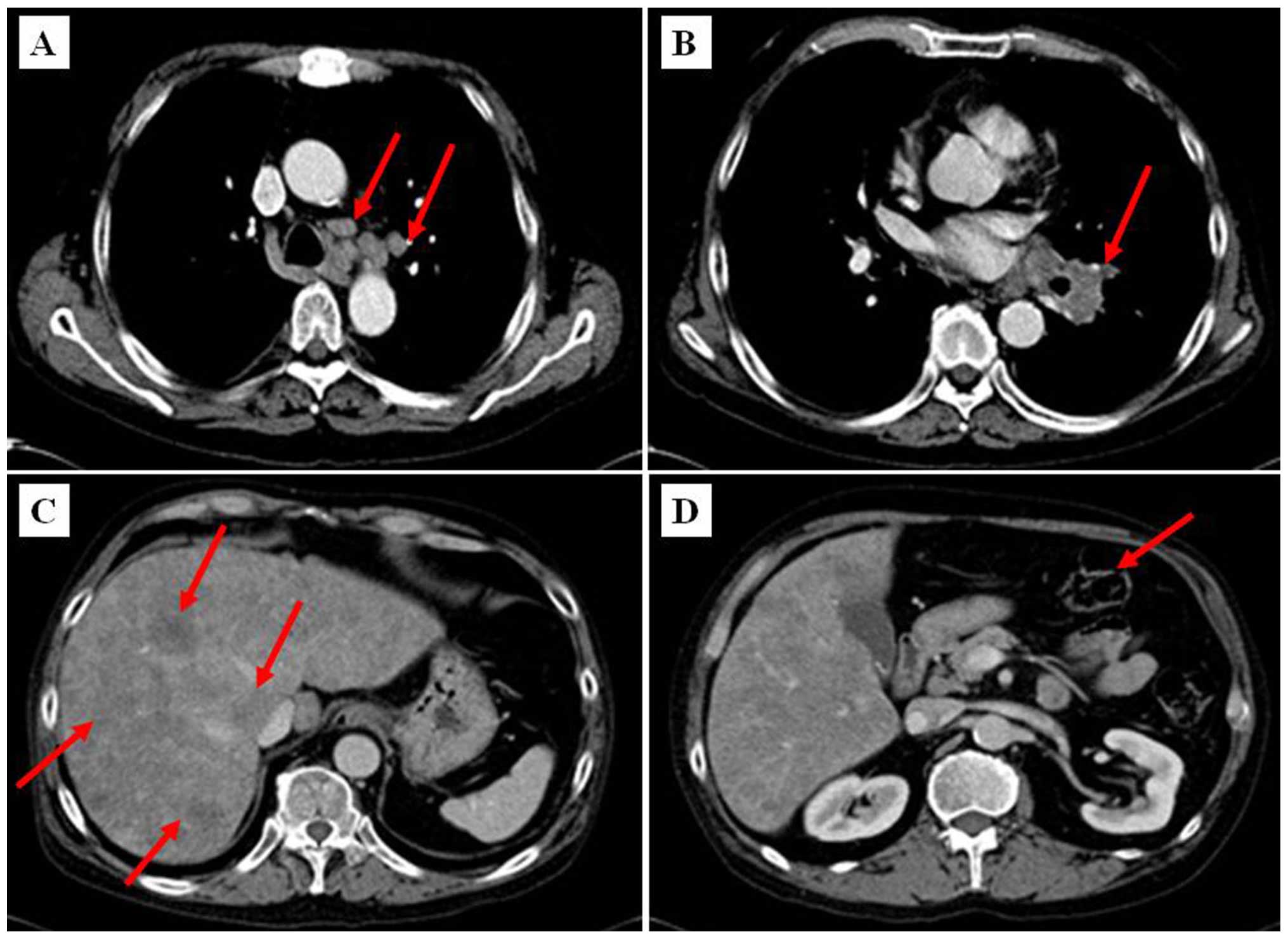
A CT scan of the chest and abdomen was performed and revealed bulky disease at the left lung hilus sized ≤4.2–5.6 cm, enlarged mediastinal lymph nodes sized ≤2–3 cm (Fig. 3A–B) and diffuse liver metastases (Fig. 3C). In addition, minor incrassation of the gastric wall in the antrum of stomach was present (Fig. 3D).

Figure 3.

Chest and abdominal computed tomography scans. (A and B) Bulky disease on the left lung hilus, sized ≥4.2–5.6 cm, with positive mediastinal lymph nodes, sized ≥2-3 cm (arrows); (C) diffuse metastases in the liver (arrows); (D) incrassation of the gastric wall in the antrum of stomach (arrow).

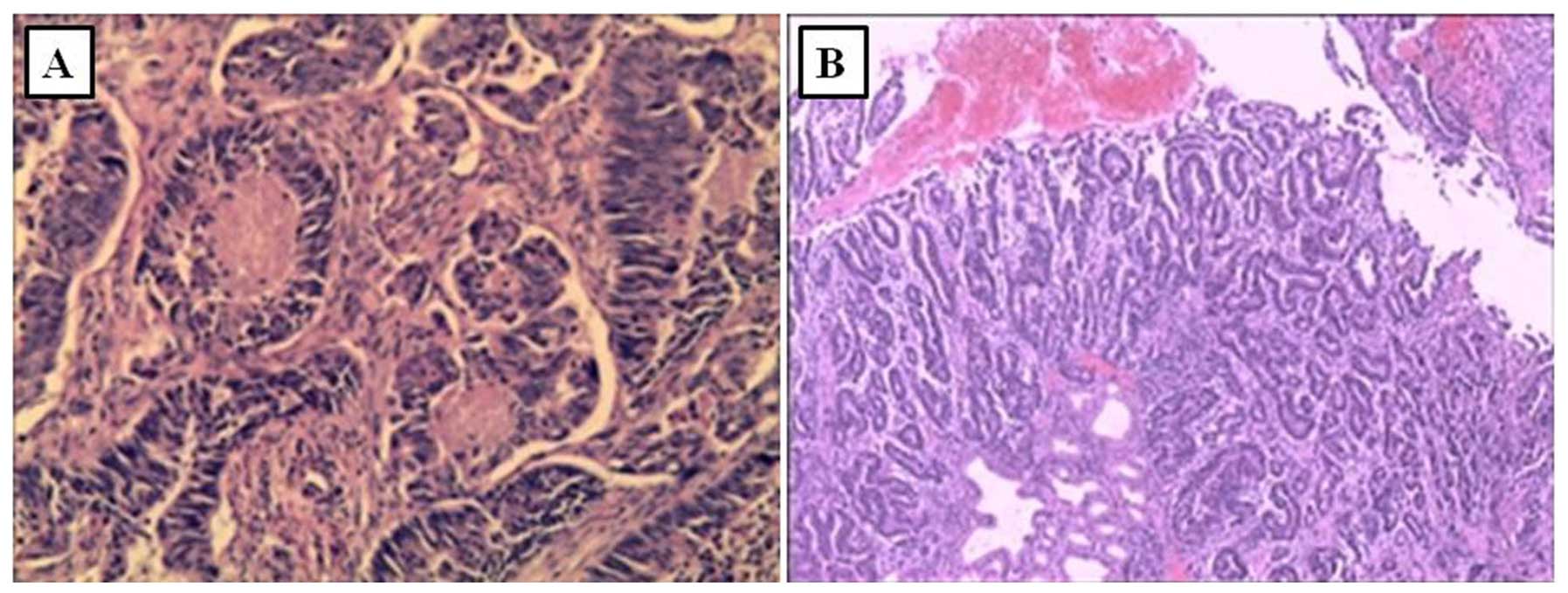
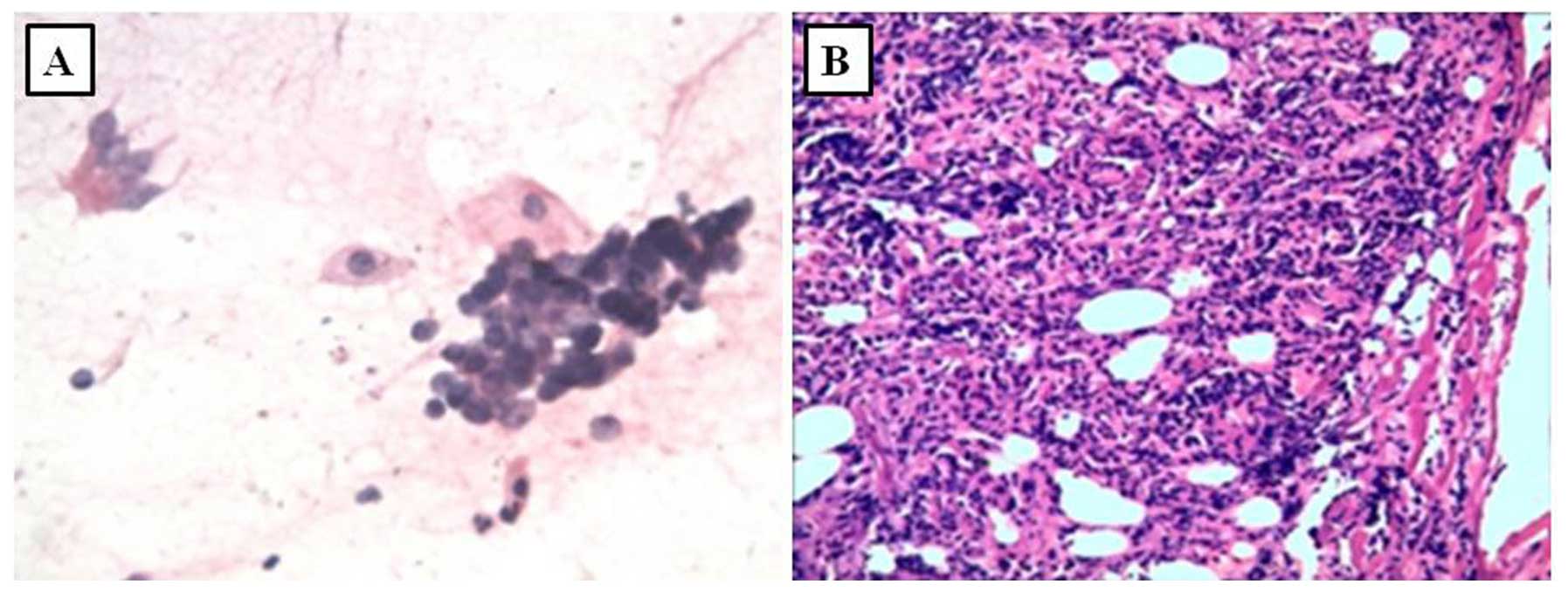
Colonoscopy and esophogastroduodenoscopy with concurrent biopsies were performed. Colonoscopy revealed an ulcerated lesion at the sigmoid region, measuring ~1×1.5 cm. Biopsy of the lesion (Fig. 4A) showed ulcerated type tubular adenocarcinoma. Esophogastroduodenoscopy revealed antral ulceration; the examination for Helicobacter pylori (H. pylori)was negative and the biopsy showed gastric adenocarcinoma, moderately differentiated (Fig. 4B). To confirm the pathology of the hilar mass in the left lung, bronchoscopy was performed and revealed left hilar enlargement. A bronchial brushing smear revealed clusters of malignant cells (Fig. 5A). SCLC was suspected and the diagnosis was confirmed by biopsy (Fig. 5B).

Figure 4.

Hematoxylin and eosin staining of (A) colon biopsy, showing ulcerated type tubular adenocarcinoma with central necrosis, characteristic of colonic adenocarcinoma (magnification, ×200) and (B) stomach biopsy, showing moderately differentiated adenocarcinoma (magnification, ×100).

Figure 5.

(A) Bronchial brushing smear. Clusters of malignant cells were identified (magnification, ×200). (B) Biopsy showing small-cell lung carcinoma (magnification, ×100). Hematoxylin and eosin staining was used (panels A and B).

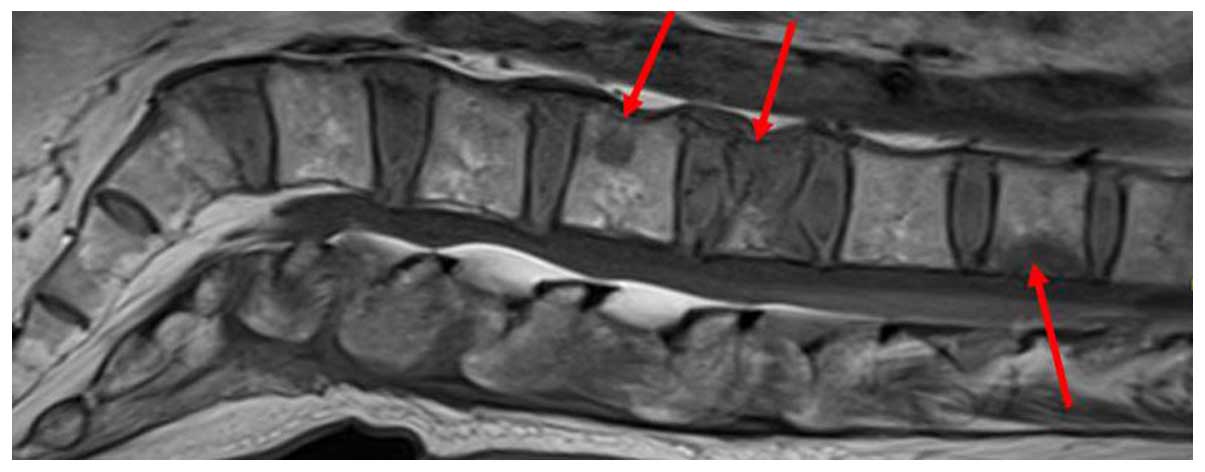
Due to back pain, vertebral magnetic resonance imaging was performed, which revealed multiple metastases to the spine, from the twelfth thoracic to the second sacral vertebra. A vertebral compression fracture of the second lumbar vertebra was also identified (Fig. 6).

Figure 6.

Vertebral magnetic resonance imaging showing multiple metastases to the spine, ranging from the twelfth thoracic to the second sacral vertebra (arrows), with a compression fracture of the second lumbar vertebra.

In summary, the patient was diagnosed with three separate maligancies: Gastric adenocarcinoma, colonic adenocarcinoma and SCLC, with stage IV metastatic disease. The patient received palliative chemotherapy, which included paclitaxel 120 mg (days 1 and 8), etoposide 100 mg (days 1–5) and cisplatin 20 mg (days 1–5). During the course of chemotherapy, grade 4 bone marrow suppression ensued, complicated by pulmonary pseudomonas aeruginosa infection. The patient was started on antibiotics and chemotherapy was terminated. However, his condition deteriorated rapidly, with pronounced abdominal distention, continuously declining urine volume, liver enlargement and ascites. During this period there was no progression of LCV and no new rash, purpura, petechia or ulceration were identified. The patient succumbed 3 months after the diagnosis of the cancers.

Discussion

LCV is a neutrophilic inflammation of the blood vessels. As a paraneoplastic syndrome, it may occur prior to the diagnosis of the primary tumor. The exact association between LCV and malignancy has not been fully elucidated. Various mechanisms have been proposed for tumor-associated LCV, including antigen-antibody complexes that form in response to tumor antigens and are deposited in vessel walls, resulting in inflammation (6). Malignant neoplasms may also increase blood viscosity, causing potential endothelial damage and increasing contact time for immune complex deposition (7). LCV, when presenting as a paraneoplastic syndrome, is usually refrractory to corticosteroid and immunosuppressant treatment, whereas its symptoms improve with effective treatment of the underlying malignancy. Moreover, recurrence of LCV often occurs with the progression or metastasis of the malignancy (8). In our case, LCV occurred 11 years prior to the development of the malignancies. The patient responded to methylprednisolone therapy and there was no deterioration of LCV when the malignancies were diagnosed. Thus, we hypothesize that LCV was not a paranoeplastic syndrome, but rather an independent condition in our patient. However, it is likely that the immunosuppression triggered by the long-term treatment of LCV with glucocorticoids contributed to the development of multiple malignancies.

It is well known that glucocorticoid administration inhibits the immune system, including induction of apoptosis in T lymphocytes (9) and inhibition of natural killer cell activity (10). These have been associated with increased susceptibility to tumor development (11). Furthermore, glucocorticoids appear to contribute to the shift of T helper cells from the Th1 to the Th2 phenotype (9), which facilitates cancer escape from host immune surveillance (12). It was previously demonstrated that patients with immunological disorders treated with glucocorticoids displayed a high incidence of secondary cancers (13). In our case, the patient had a history of LCV and received long-term glucocorticoid treatment, with the maximum dose reaching 500 mg/day of methylprednisolone. The disruption of the immune system by steroid treatment is likely the cause of cancer development. Other cancer risk factors were absent in this patient, as he was not a smoker and there was no H. pylori infection identified in the gastric biopsy.

To the best of our knowledge, this is the first reported case of multiple malignancies developing after long-term steroid treatment in a patient with LCV. LCV in this case was not a paraneoplastic syndrome, and the development of the malignancies is likely associated with immune dysregulation by the steroid treatment. This case report suggests that clinicians should be aware of the possible association of long-term use of glucocorticoids with the development of secondary malignancies.

Acknowledgements

The present study was supported by grants from the Natural Science Youth Foundation of Jiangsu Province (BK20141034) and the Project of Administration of Traditional Chinese Medicine Research of Jiangsu Province (LZ13051), the ‘Top Talented Personnel in Six Profession’ grant in Jiangsu Province (2011-WS-049) and a grant from the Jiangsu Province Hospital of Traditional Chinese Medicine (2013, Y1008).

References

1 

Langford CA: Vasculitis. J Allergy Clin Immunol. 125(2 Suppl 2): S216–S225. 2010. View Article : Google Scholar : PubMed/NCBI

2 

Fain O, Hamidou M, Cacoub P, Godeau B, Wechsler B, Pariès J, Stirnemann J, Morin AS, Gatfosse M, Hanslik T, et al: Vasculitides associated with malignancies: Analysis of sixty patients. Arthritis Rheum. 57:1473–1480. 2007. View Article : Google Scholar : PubMed/NCBI

3 

Torvik A and Berntzen AE: Necrotizing vasculitis without visceral involvement: Postmortem examination of three cases with affection of skeletal muscles and peripheral nerves. Acta Med Scand. 184:69–77. 1968. View Article : Google Scholar : PubMed/NCBI

4 

Podjasek JO, Wetter DA, Pittelkow MR and Wada DA: Cutaneous small-vessel vasculitis associated with solid organ malignancies: The Mayo Clinic experience, 1996 to 2009. J Am Acad Dermatol. 66:e55–e65. 2012. View Article : Google Scholar : PubMed/NCBI

5 

Kathula SK, Thomas DE, Anstadt MP and Khan AU: Paraneoplastic cutaneous leukocytoclastic vasculitis and iron deficiency anemia as the presenting features of squamous cell lung carcinoma. J Clin Oncol. 29:e83–e85. 2011. View Article : Google Scholar : PubMed/NCBI

6 

Greer JM, Longley S, Edwards NL, Elfenbein GJ and Panush RS: Vasculitis associated with malignancy: Experience with 13 patients and literature review. Medicine (Baltimore). 67:220–230. 1988. View Article : Google Scholar : PubMed/NCBI

7 

Magro CM and Crowson AN: A clinical and histologic study of 37cases of immunoglobulin A-associated vasculitis. Am J Dermatopathol. 21:234–240. 1999. View Article : Google Scholar : PubMed/NCBI

8 

Sánchez-Guerrero J, Gutiérrez-Ureña S, Vidaller A, Reyes E, Iglesias A and Alarcón-Segovia D: Vasculitis as a paraneoplastic syndrome: Report of 11 cases and review of the literature. J Rheumatol. 17:1458–1462. 1990.PubMed/NCBI

9 

Tuckermann JP, Kleiman A, McPherson KG and Reichardt HM: Molecular mechanisms of glucocorticoids in the control of inflammation and lymphocyte apoptosis. Crit Rev Clin Lab Sci. 42:71–104. 2005. View Article : Google Scholar : PubMed/NCBI

10 

Oshimi K, Gonda N, Sumiya M and Kano S: Effects of corticosteroids on natural killer activity in systemic lupus erythematosus. Clin Exp Immunol. 40:83–88. 1980.PubMed/NCBI

11 

Riley V: Psychoneuroendocrine influences on immunecompetence and neoplasia. Science. 212:1100–1109. 1981. View Article : Google Scholar : PubMed/NCBI

12 

Asselin-Paturel C, Echchakir H, Carayol G, Gay F, Opolon P, Grunenwald D, Chouaib S and Mami-Chouaib F: Quantitative analysis of Th1, Th2 and TGF-beta1 cytokine expression in tumor, TIL and PBL of non-small cell lung cancer patients. Int J Cancer. 77:7–12. 1998. View Article : Google Scholar : PubMed/NCBI

13 

Klumb EM, Araújo ML Jr, Jesus GR, Santos DB, Oliveira AV, Albuquerque EM and Macedo JM: Is higher prevalence of cervical intraepithelial neoplasia in women with lupus due to immunosuppression? J Clin Rheumatol. 16:153–157. 2010. View Article : Google Scholar : PubMed/NCBI

Related Articles

  • Abstract
  • View
  • Download
  • Twitter
Copy and paste a formatted citation
Spandidos Publications style
Fang L, Hu Y, Wang W, Hu S, Zhang L and Wang R: Development of multiple malignancies following long‑term glucocorticoid therapy in a patient with leukocytoclastic vasculitis: A case report. Mol Clin Oncol 4: 929-932, 2016.
APA
Fang, L., Hu, Y., Wang, W., Hu, S., Zhang, L., & Wang, R. (2016). Development of multiple malignancies following long‑term glucocorticoid therapy in a patient with leukocytoclastic vasculitis: A case report. Molecular and Clinical Oncology, 4, 929-932. https://doi.org/10.3892/mco.2016.854
MLA
Fang, L., Hu, Y., Wang, W., Hu, S., Zhang, L., Wang, R."Development of multiple malignancies following long‑term glucocorticoid therapy in a patient with leukocytoclastic vasculitis: A case report". Molecular and Clinical Oncology 4.6 (2016): 929-932.
Chicago
Fang, L., Hu, Y., Wang, W., Hu, S., Zhang, L., Wang, R."Development of multiple malignancies following long‑term glucocorticoid therapy in a patient with leukocytoclastic vasculitis: A case report". Molecular and Clinical Oncology 4, no. 6 (2016): 929-932. https://doi.org/10.3892/mco.2016.854
Copy and paste a formatted citation
x
Spandidos Publications style
Fang L, Hu Y, Wang W, Hu S, Zhang L and Wang R: Development of multiple malignancies following long‑term glucocorticoid therapy in a patient with leukocytoclastic vasculitis: A case report. Mol Clin Oncol 4: 929-932, 2016.
APA
Fang, L., Hu, Y., Wang, W., Hu, S., Zhang, L., & Wang, R. (2016). Development of multiple malignancies following long‑term glucocorticoid therapy in a patient with leukocytoclastic vasculitis: A case report. Molecular and Clinical Oncology, 4, 929-932. https://doi.org/10.3892/mco.2016.854
MLA
Fang, L., Hu, Y., Wang, W., Hu, S., Zhang, L., Wang, R."Development of multiple malignancies following long‑term glucocorticoid therapy in a patient with leukocytoclastic vasculitis: A case report". Molecular and Clinical Oncology 4.6 (2016): 929-932.
Chicago
Fang, L., Hu, Y., Wang, W., Hu, S., Zhang, L., Wang, R."Development of multiple malignancies following long‑term glucocorticoid therapy in a patient with leukocytoclastic vasculitis: A case report". Molecular and Clinical Oncology 4, no. 6 (2016): 929-932. https://doi.org/10.3892/mco.2016.854
Follow us
  • Twitter
  • LinkedIn
  • Facebook
About
  • Spandidos Publications
  • Careers
  • Cookie Policy
  • Privacy Policy
How can we help?
  • Help
  • Live Chat
  • Contact
  • Email to our Support Team