Spandidos Publications Logo
  • About
    • About Spandidos
    • Aims and Scopes
    • Abstracting and Indexing
    • Editorial Policies
    • Reprints and Permissions
    • Job Opportunities
    • Terms and Conditions
    • Contact
  • Journals
    • All Journals
    • Oncology Letters
      • Oncology Letters
      • Information for Authors
      • Editorial Policies
      • Editorial Board
      • Aims and Scope
      • Abstracting and Indexing
      • Bibliographic Information
      • Archive
    • International Journal of Oncology
      • International Journal of Oncology
      • Information for Authors
      • Editorial Policies
      • Editorial Board
      • Aims and Scope
      • Abstracting and Indexing
      • Bibliographic Information
      • Archive
    • Molecular and Clinical Oncology
      • Molecular and Clinical Oncology
      • Information for Authors
      • Editorial Policies
      • Editorial Board
      • Aims and Scope
      • Abstracting and Indexing
      • Bibliographic Information
      • Archive
    • Experimental and Therapeutic Medicine
      • Experimental and Therapeutic Medicine
      • Information for Authors
      • Editorial Policies
      • Editorial Board
      • Aims and Scope
      • Abstracting and Indexing
      • Bibliographic Information
      • Archive
    • International Journal of Molecular Medicine
      • International Journal of Molecular Medicine
      • Information for Authors
      • Editorial Policies
      • Editorial Board
      • Aims and Scope
      • Abstracting and Indexing
      • Bibliographic Information
      • Archive
    • Biomedical Reports
      • Biomedical Reports
      • Information for Authors
      • Editorial Policies
      • Editorial Board
      • Aims and Scope
      • Abstracting and Indexing
      • Bibliographic Information
      • Archive
    • Oncology Reports
      • Oncology Reports
      • Information for Authors
      • Editorial Policies
      • Editorial Board
      • Aims and Scope
      • Abstracting and Indexing
      • Bibliographic Information
      • Archive
    • Molecular Medicine Reports
      • Molecular Medicine Reports
      • Information for Authors
      • Editorial Policies
      • Editorial Board
      • Aims and Scope
      • Abstracting and Indexing
      • Bibliographic Information
      • Archive
    • World Academy of Sciences Journal
      • World Academy of Sciences Journal
      • Information for Authors
      • Editorial Policies
      • Editorial Board
      • Aims and Scope
      • Abstracting and Indexing
      • Bibliographic Information
      • Archive
    • International Journal of Functional Nutrition
      • International Journal of Functional Nutrition
      • Information for Authors
      • Editorial Policies
      • Editorial Board
      • Aims and Scope
      • Abstracting and Indexing
      • Bibliographic Information
      • Archive
    • International Journal of Epigenetics
      • International Journal of Epigenetics
      • Information for Authors
      • Editorial Policies
      • Editorial Board
      • Aims and Scope
      • Abstracting and Indexing
      • Bibliographic Information
      • Archive
    • Medicine International
      • Medicine International
      • Information for Authors
      • Editorial Policies
      • Editorial Board
      • Aims and Scope
      • Abstracting and Indexing
      • Bibliographic Information
      • Archive
  • Articles
  • Information
    • Information for Authors
    • Information for Reviewers
    • Information for Librarians
    • Information for Advertisers
    • Conferences
  • Language Editing
Spandidos Publications Logo
  • About
    • About Spandidos
    • Aims and Scopes
    • Abstracting and Indexing
    • Editorial Policies
    • Reprints and Permissions
    • Job Opportunities
    • Terms and Conditions
    • Contact
  • Journals
    • All Journals
    • Biomedical Reports
      • Information for Authors
      • Editorial Policies
      • Editorial Board
      • Aims and Scope
      • Abstracting and Indexing
      • Bibliographic Information
      • Archive
    • Experimental and Therapeutic Medicine
      • Information for Authors
      • Editorial Policies
      • Editorial Board
      • Aims and Scope
      • Abstracting and Indexing
      • Bibliographic Information
      • Archive
    • International Journal of Epigenetics
      • Information for Authors
      • Editorial Policies
      • Editorial Board
      • Aims and Scope
      • Abstracting and Indexing
      • Bibliographic Information
      • Archive
    • International Journal of Functional Nutrition
      • Information for Authors
      • Editorial Policies
      • Editorial Board
      • Aims and Scope
      • Abstracting and Indexing
      • Bibliographic Information
      • Archive
    • International Journal of Molecular Medicine
      • Information for Authors
      • Editorial Policies
      • Editorial Board
      • Aims and Scope
      • Abstracting and Indexing
      • Bibliographic Information
      • Archive
    • International Journal of Oncology
      • Information for Authors
      • Editorial Policies
      • Editorial Board
      • Aims and Scope
      • Abstracting and Indexing
      • Bibliographic Information
      • Archive
    • Medicine International
      • Information for Authors
      • Editorial Policies
      • Editorial Board
      • Aims and Scope
      • Abstracting and Indexing
      • Bibliographic Information
      • Archive
    • Molecular and Clinical Oncology
      • Information for Authors
      • Editorial Policies
      • Editorial Board
      • Aims and Scope
      • Abstracting and Indexing
      • Bibliographic Information
      • Archive
    • Molecular Medicine Reports
      • Information for Authors
      • Editorial Policies
      • Editorial Board
      • Aims and Scope
      • Abstracting and Indexing
      • Bibliographic Information
      • Archive
    • Oncology Letters
      • Information for Authors
      • Editorial Policies
      • Editorial Board
      • Aims and Scope
      • Abstracting and Indexing
      • Bibliographic Information
      • Archive
    • Oncology Reports
      • Information for Authors
      • Editorial Policies
      • Editorial Board
      • Aims and Scope
      • Abstracting and Indexing
      • Bibliographic Information
      • Archive
    • World Academy of Sciences Journal
      • Information for Authors
      • Editorial Policies
      • Editorial Board
      • Aims and Scope
      • Abstracting and Indexing
      • Bibliographic Information
      • Archive
  • Articles
  • Information
    • For Authors
    • For Reviewers
    • For Librarians
    • For Advertisers
    • Conferences
  • Language Editing
Login Register Submit
  • This site uses cookies
  • You can change your cookie settings at any time by following the instructions in our Cookie Policy. To find out more, you may read our Privacy Policy.

    I agree
Search articles by DOI, keyword, author or affiliation
Search
Advanced Search
presentation
Molecular and Clinical Oncology
Join Editorial Board Propose a Special Issue
Print ISSN: 2049-9450 Online ISSN: 2049-9469
Journal Cover
November-2017 Volume 7 Issue 5

Full Size Image

Sign up for eToc alerts
Recommend to Library

Journals

International Journal of Molecular Medicine

International Journal of Molecular Medicine

International Journal of Molecular Medicine is an international journal devoted to molecular mechanisms of human disease.

International Journal of Oncology

International Journal of Oncology

International Journal of Oncology is an international journal devoted to oncology research and cancer treatment.

Molecular Medicine Reports

Molecular Medicine Reports

Covers molecular medicine topics such as pharmacology, pathology, genetics, neuroscience, infectious diseases, molecular cardiology, and molecular surgery.

Oncology Reports

Oncology Reports

Oncology Reports is an international journal devoted to fundamental and applied research in Oncology.

Experimental and Therapeutic Medicine

Experimental and Therapeutic Medicine

Experimental and Therapeutic Medicine is an international journal devoted to laboratory and clinical medicine.

Oncology Letters

Oncology Letters

Oncology Letters is an international journal devoted to Experimental and Clinical Oncology.

Biomedical Reports

Biomedical Reports

Explores a wide range of biological and medical fields, including pharmacology, genetics, microbiology, neuroscience, and molecular cardiology.

Molecular and Clinical Oncology

Molecular and Clinical Oncology

International journal addressing all aspects of oncology research, from tumorigenesis and oncogenes to chemotherapy and metastasis.

World Academy of Sciences Journal

World Academy of Sciences Journal

Multidisciplinary open-access journal spanning biochemistry, genetics, neuroscience, environmental health, and synthetic biology.

International Journal of Functional Nutrition

International Journal of Functional Nutrition

Open-access journal combining biochemistry, pharmacology, immunology, and genetics to advance health through functional nutrition.

International Journal of Epigenetics

International Journal of Epigenetics

Publishes open-access research on using epigenetics to advance understanding and treatment of human disease.

Medicine International

Medicine International

An International Open Access Journal Devoted to General Medicine.

Journal Cover
November-2017 Volume 7 Issue 5

Full Size Image

Sign up for eToc alerts
Recommend to Library

  • Article
  • Citations
    • Cite This Article
    • Download Citation
    • Create Citation Alert
    • Remove Citation Alert
    • Cited By
  • Similar Articles
    • Related Articles (in Spandidos Publications)
    • Similar Articles (Google Scholar)
    • Similar Articles (PubMed)
  • Download PDF
  • Download XML
  • View XML
Case Report Open Access

Trigeminal neurofibroma in the infratemporal fossa arising from the inferior alveolar nerve: A case report

  • Authors:
    • Takuro Inoue
    • Mostafa Elaskary
    • Ayako Shima
    • Hisao Hirai
    • Fumio Suzuki
    • Masayuki Matsuda
  • View Affiliations / Copyright

    Affiliations: Department of Neurosurgery, Subarukai Kotoh Kinen Hospital, Higashiohmi, Shiga 527‑0134, Japan, Department of Neurosurgery, University of Alexandria, Alexandria 21526, Egypt
    Copyright: © Inoue et al. This is an open access article distributed under the terms of Creative Commons Attribution License.
  • Pages: 825-829
    |
    Published online on: September 19, 2017
       https://doi.org/10.3892/mco.2017.1410
  • Expand metrics +
Metrics: Total Views: 0 (Spandidos Publications: | PMC Statistics: )
Metrics: Total PDF Downloads: 0 (Spandidos Publications: | PMC Statistics: )
Cited By (CrossRef): 0 citations Loading Articles...

This article is mentioned in:


Abstract

Solitary neurofibromas arising from cranial nerves are rare, and those arising from the peripheral divisions of the trigeminal nerve are even rarer. Although infratemporal fossa (ITF) masses are challenging to remove, certain approaches are considered feasible for this region. The present study reports a rare case of an ITF neurofibroma arising from the inferior alveolar nerve. The 27‑year‑old male patient presented with numbness of the right jaw. A radiological examination revealed a large mass occupying the ITF, from the mandible to the foramen ovale, originating from the inferior alveolar nerve in the mandible. The tumor was successfully excised via a transtemporal approach followed by a transoral‑retromolar approach. A histological examination confirmed the diagnosis of neurofibroma. The present case demonstrates that a combination of the transtemporal and transoral‑retromolar approaches may provide wide access to the ITF region.

Introduction

Neurofibroma is usually associated with neurofibromatosis (NF) type 1, and is among the most common neurogenic tumors of the head and neck region in NF-1 patients. Solitary cases that are not associated with NF-1 are rarely reported. Among these, neurofibromas arising from peripheral divisions of the trigeminal nerve are even rarer (1–6). In the majority of cases, the tumor tends to extend outside the mandible, leading to deformity of the jaw as the initial symptom (3,7). Other common symptoms include pain or paresthesia of the affected division of the trigeminal nerve.

The excision of tumors located in the infratemporal fossa (ITF) is challenging, as such lesions are surrounded by the skull base, mandible, lateral and medial pterygoid plate, maxillary sinus and parapharyngeal structures. A number of approaches, including the transtemporal-transzygomatic, transzygomatic-transmandibular, transmaxillary, posterior high-cervical and transoral approaches, may be applied, depending on the tumor location (8–16). This study presents a rare case of a trigeminal neurofibroma arising from the inferior alveolar nerve, which was successfully excised via a combination of the transtemporal and transoral-retromolar approaches, as well as a discussion of these two approaches.

Case report

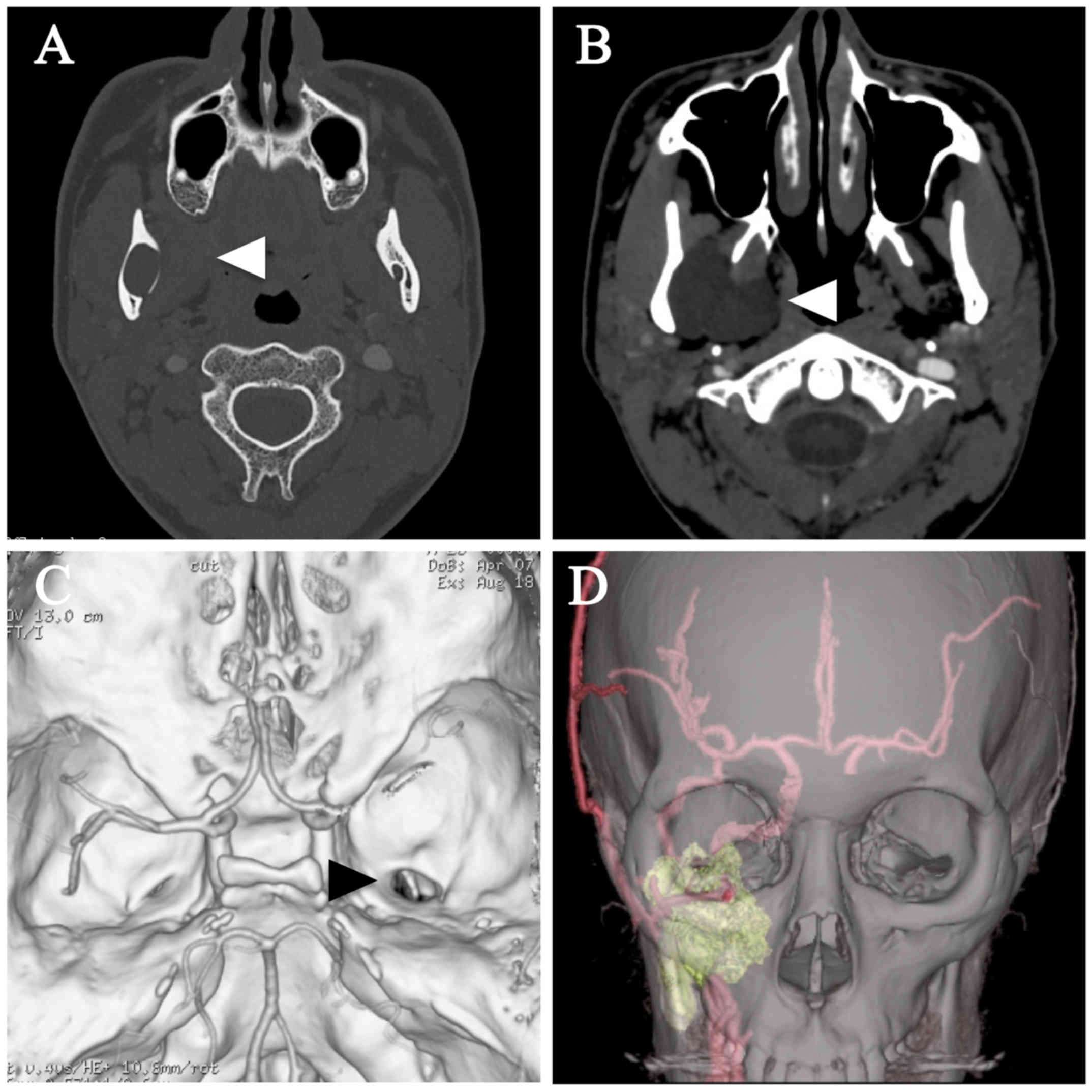
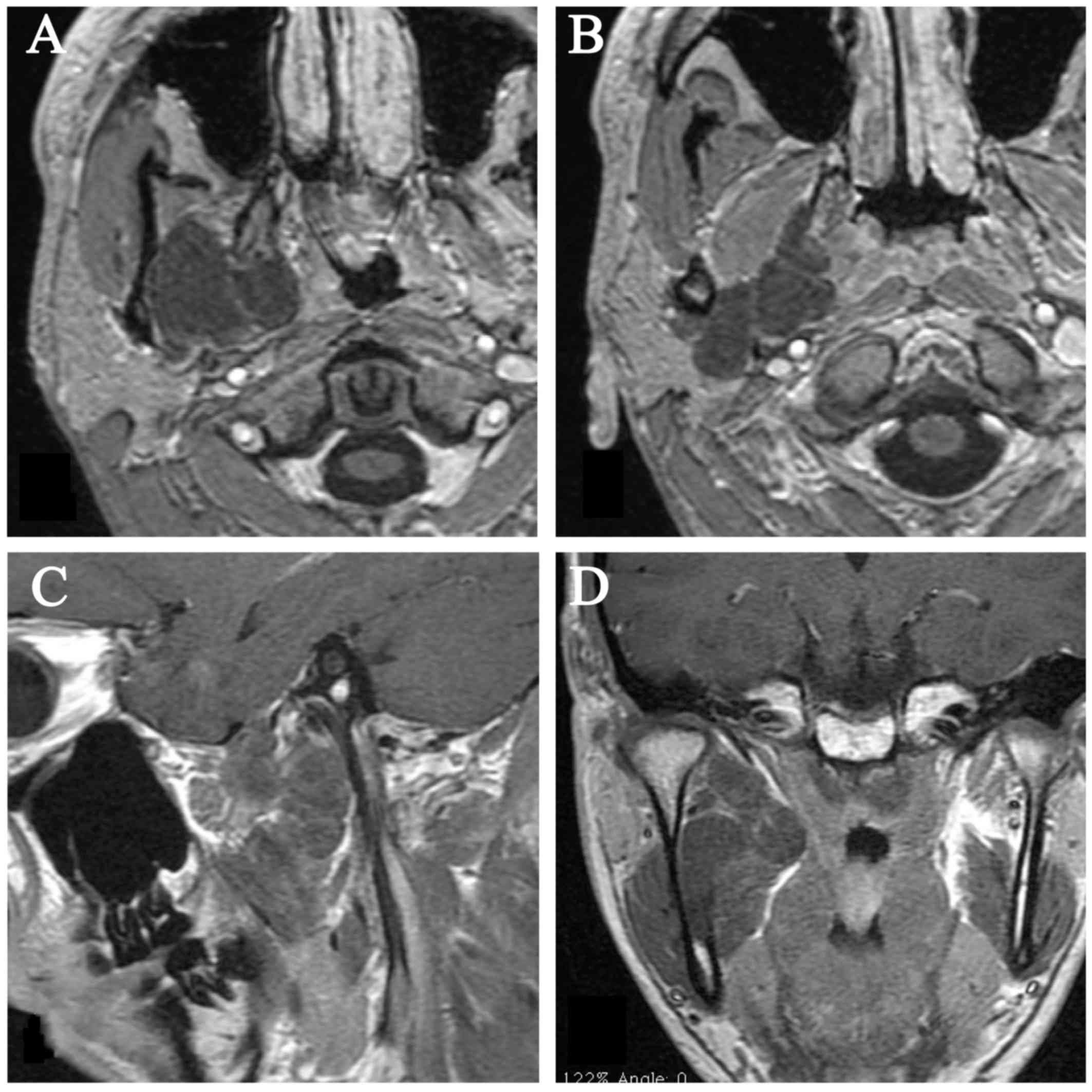
A 27-year-old man presented in June 2015 with progressive numbness of the right jaw, and was diagnosed with an ITF tumor at another hospital. The only neurological finding was paresthesia in the area innervated by the mental nerve of the trigeminal mandibular division. The patient's taste sensation was normal, and the motor function of the trigeminal nerve was intact. There was no inflammatory reaction in the parapharyngeal area or family history of NF. A computed tomography (CT) scan revealed a non-enhanced mass in the infratemporal region, with an enlarged mandibular canal and foramen ovale, suggesting a neurogenic tumor along the third branch of the trigeminal nerve (Fig. 1A and B). A 3D-CT scan clearly depicted the mass located within the mandible, occupying the ITF and widening the foramen ovale. The internal carotid artery was displaced posteriorly, and the maxillary artery ran along the anterior surface of the tumor (Fig. 1C and D). A magnetic resonance imaging (MRI) scan revealed a large mass in the ITF, extending from the intramandibular region to the foramen ovale. The mass exhibited no enhancement following administration of contrast medium (Fig. 2).

Figure 1.

Preoperative computed tomography (CT) images. (A) Bone window CT showing the enlarged mandibular canal (white arrowhead). (B) The tumor appears as a non-enhanced, low-density mass (white arrowhead). (C) Three-dimensional (3D) CT scan of the skull base showing the enlarged foramen ovale (black arrowhead). (D) A 3D-CT scan depicts the tumor location (green) and adjacent vessels (red). The internal carotid artery was located behind the tumor.

Figure 2.

Preoperative magnetic resonance imaging (MRI). (A and B) The axial view of contrast-enhanced MRI (T1-spoiled gradient recalled image) revealed that the mass extended from the infratemporal fossa to the styloid process on the right side. (C) The sagittal view revealed that the mass extended posteriorly around the jugular foramen and the styloid process. (D) The coronal view revealed that the tumor was growing into the mandibular body on the right.

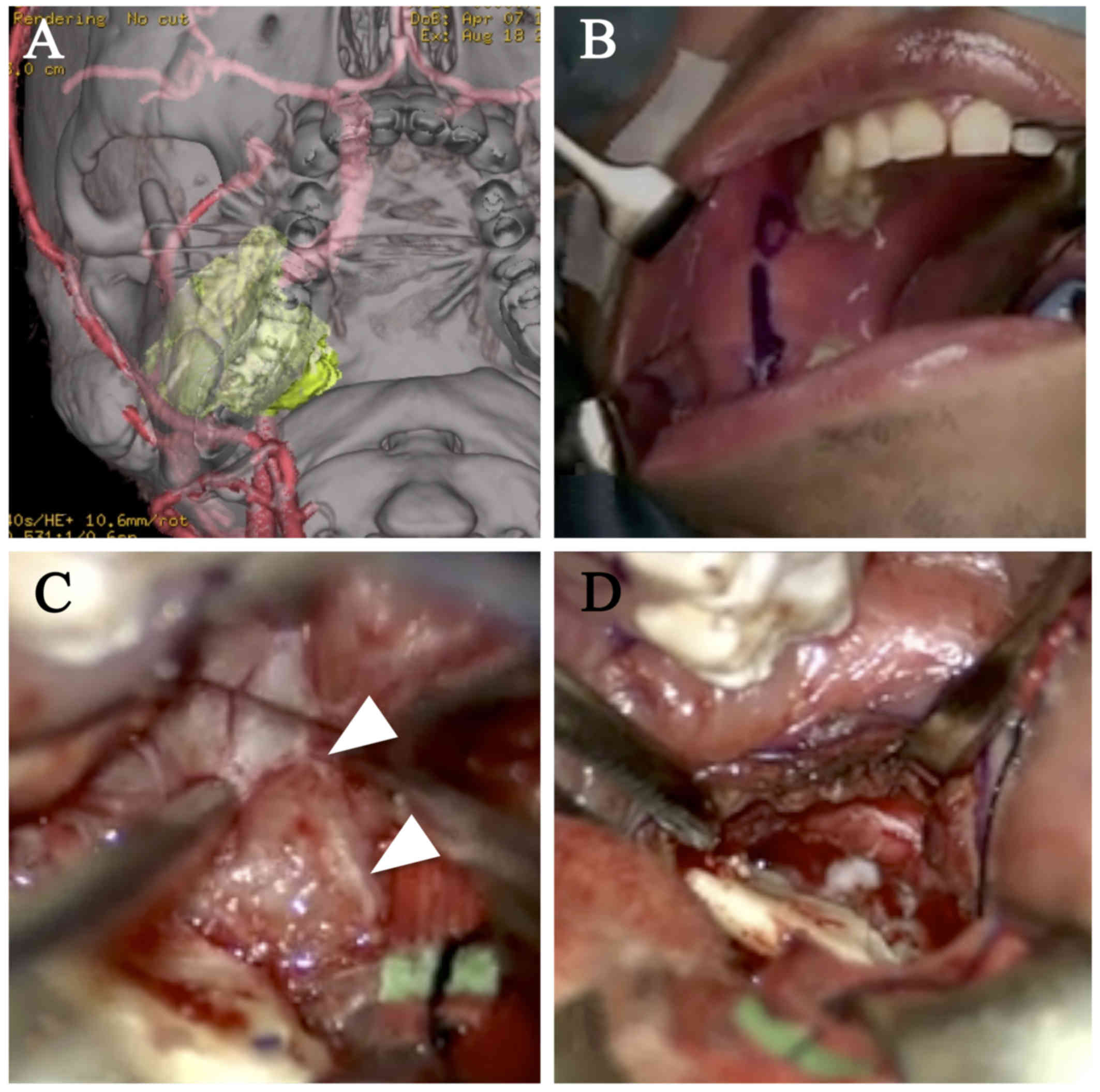
As the patient's symptoms progressed, a staged surgical excision was considered. A transtemporal approach was employed, which involved retraction of the temporal lobe extradurally, followed by drilling around the foramen ovale. Following removal of the upper third of the tumor, the remaining tumor was removed via a transoral-retromolar approach (Fig. 3). The tumor was soft and fibrous, without a capsule, which was consistent with the typical findings of a neurofibroma. As the tumor had originated from the inferior alveolar nerve, preservation of this nerve was not possible. However, the lingual nerve, which was identified on the anterior surface of the tumor, was completely preserved. Using Doppler ultrasound and intraoperative navigation, the course of the internal carotid artery was identified as running immediately behind the tumor and then entering into the carotid canal.

Figure 3.

A three-dimensional (3D)-computed tomography (CT) image and operative views. (A) Preoperative 3D-CT view of the intraoral approach. The tumor appeared to be accessible through this approach. (B) A mucosal incision was performed in the transoral-retromolar approach. The small circle on the mucosa indicates the papilla of the parotid duct. (C) The lingual nerve was identified at the anterior medial surface of the tumor (arrowheads). (D) View after complete removal of the tumor. The tumor cavity appeared to be extending to the jugular foramen.

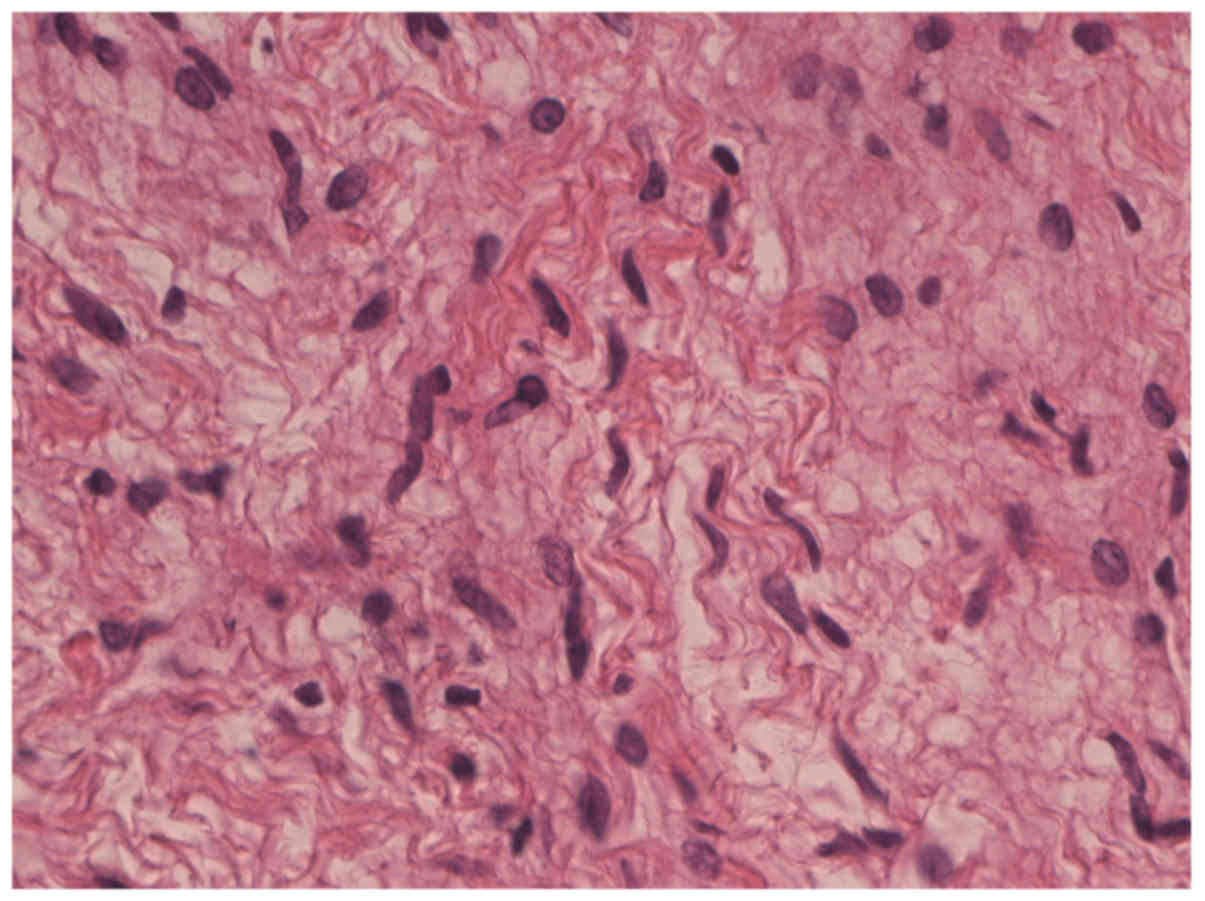
Histological examination revealed that the tumor cells were situated in a loose, delicate and myxoid stroma, and had wavy or serpiginous nuclei, suggesting a neurofibroma (Fig. 4). Immunohistochemical examination revealed that the lesion contained numerous S-100 protein-positive cells. Immunoreactivity for neurofilament protein was observed in the scattered axons. There was no immunoreactivity for epithelial membrane antigen. As the patient had no other neurofibromas, the diagnosis was established as solitary neurofibroma of the inferior alveolar nerve in the mandible.

Figure 4.

On histological examination, the tumor included a myxoid stroma and cells with serpiginous nuclei, suggesting a neurofibroma. Hematoxylin and eosin staining, magnification, ×400.

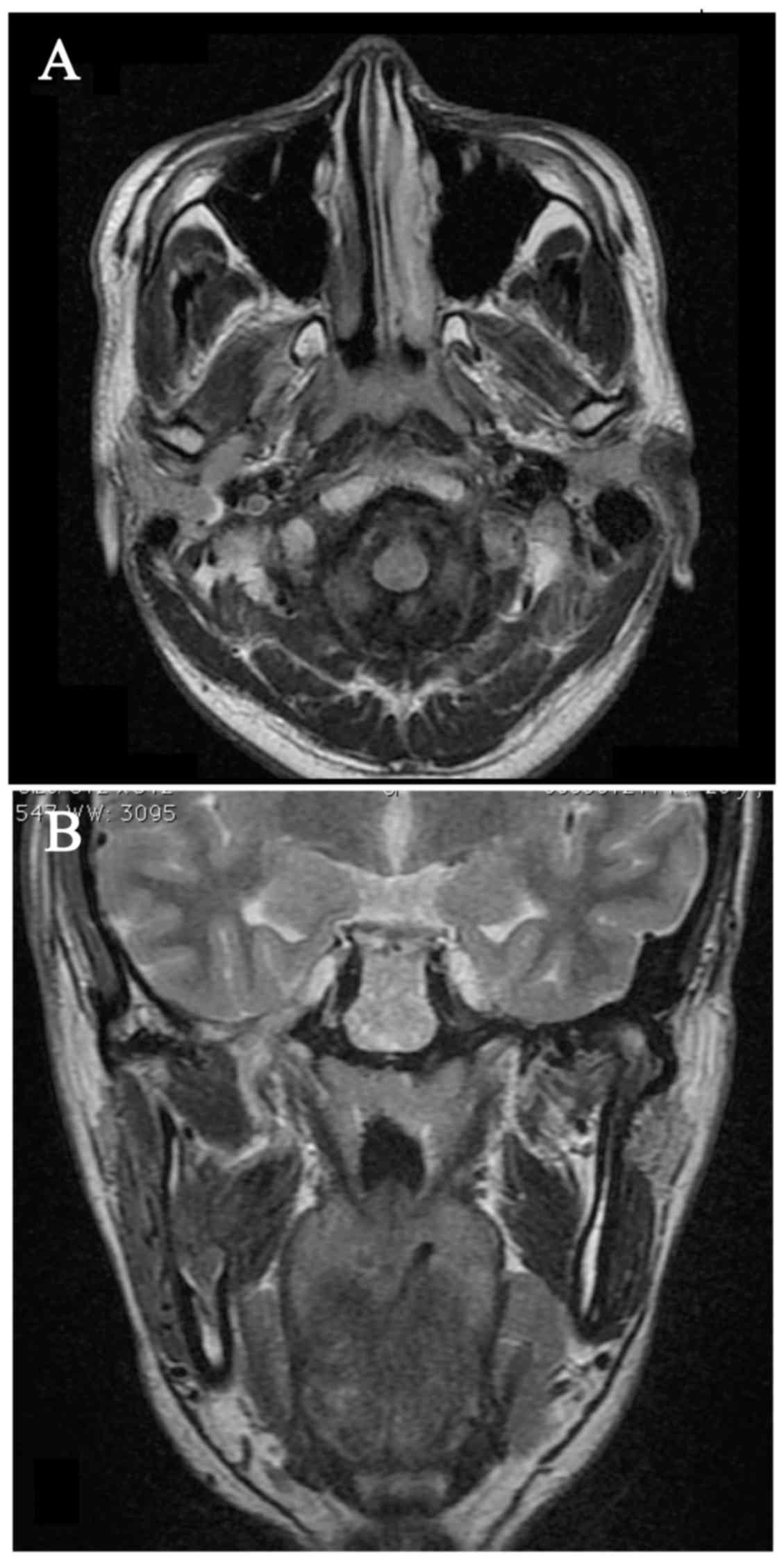
The patient's neurological symptom did not subside; the numbness of the right jaw, which was present prior to surgery, persisted postoperatively. No recurrence was observed on an MRI scan 12 months after the surgery (Fig. 5). The last follow-up visit was in June 2016. Written informed consent was obtained from the patient regarding the publication of this case report and associated images.

Figure 5.

Postoperative magnetic resonance imaging (MRI). (A and B) Axial and coronal views of the postoperative MRI showing total removal of the tumor. The lateral and medial pterygoid muscles have returned to their normal position.

Discussion

Neurofibroma is a benign tumor that arises from neurons and perineural cells (5). It is most commonly associated with NF-1, as multiple tumors may arise from peripheral nerves in NF-1 patients (1). On the contrary, solitary neurofibromas arising from a division of the trigeminal nerve are rarely reported (1–7). Neurofibromas arising from the inferior alveolar nerve usually present with deformity of the jaw, due to outgrowth of the mandible, as well as sensory disturbance of the affected nerve (1–3). Ellis et al summarized intraosseous benign neural sheath neoplasms of the jaw and described the characteristics of neurofibromas and neurinomas in this region (7). Solitary neurofibromas are reported to be slow-growing tumors; however, an unencapsulated neurofibroma has a greater probability of recurrence compared with an encapsulated neurinoma. Therefore, surgical resection plays an important role in the treatment of solitary neurofibromas in this region.

The ITF is among the most challenging regions to access (8,9,11,13). In addition, in cases with significant tumor extension, more than one approach may be required to remove the tumor. In the present case, the tumor extended from the body of the mandible to the foramen ovale, and was difficult to expose via a single approach. Thus, two approaches were used: A transtemporal approach for the upper part of the tumor, and a transoral-retromolar approach for the lower part of the tumor. The transtemporal approach is a transcranial extradural approach to the region (8) that provides a wide operative field around the foramen ovale, where most divisions of the mandibular nerve can be observed. However, the width of the operative field depends on the area of the middle fossa that can be drilled away. Furthermore, although extensive drilling of the middle fossa and removal of the zygomatic arch provide easy access to the medial and deeper areas of the ITF, exposing the lateral part of the ITF, just inside the mandibular ramus, requires excessive retraction of the temporal lobe. In addition, even with extensive posterior bone drilling, the temporomandibular joint limits the posterior surgical exposure around the carotid canal and styloid process. Therefore, a transtemporal approach is not suitable for the removal of masses located in the lateral and posterior parts of the ITF.

By contrast, the region difficult to reach via the aforementioned transtemporal approach may be reached easily via a transoral-retromolar approach (12,13). The gingival incision of the oral mucosa may be performed in the retromolar trigone, allowing direct exposure around the mandibular ramus, where the inferior alveolar nerve enters into the mandibular canal. Then, following the inferior alveolar nerve proximally, dissection of the connective tissues between the medial and lateral pterygoid muscles leads to the posterior trunk of the mandibular nerve, from where the lingual nerve branches just below the lateral pterygoid muscle. In contrast to the limitation of a surgical corridor formed by the window of bone drilling in the transtemporal approach, the entry from the oral mucosa allows flexible changes in the direction of the surgeon's view. In the present case, the tumor around the jugular foramen could not be reached via the transtemporal approach, but was easily identified and removed via the transoral-retromolar approach.

The transzygomatic-transmandibular approach is another useful approach for accessing the ITF (9,10). However, the facial nerve is at risk while dissecting around the parotid gland to expose the lateral ramus of the mandible. In addition, reconstruction of the mandible and temporomandibular joint is a major concern following tumor removal. The use of the transoral-retromolar approach is free from the risk of facial nerve injury or the necessity for reconstruction of the mandible. In addition, accessing the ITF and the subsequent closure are fast and simple, as only the gingival incision is required to create the corridor to the ITF (13). However, the risk of infection may be relatively high compared with other approaches due to the transoral route. Therefore, in cases involving a tumor of the ITF extending intradurally in the middle fossa, the transoral-retromolar approach must be applied following careful consideration.

References

1 

Apostolidis C, Anterriotis D, Rapidis AD and Angelopoulos AP: Solitary intraosseous neurofibroma of the inferior alveolar nerve: Report of a case. J Oral Maxillofac Surg. 59:232–235. 2001. View Article : Google Scholar : PubMed/NCBI

2 

Jangam SS, Ingole SN, Deshpande MD and Ranadive PA: Solitary intraosseous neurofibroma: Report of a unique case. Contemp Clin Dent. 5:561–563. 2014. View Article : Google Scholar : PubMed/NCBI

3 

Polak M, Polak G, Brocheriou C and Vigneul J: Solitary neurofibroma of the mandible: Case report and review of the literature. J Oral Maxillofac Surg. 47:65–68. 1989. View Article : Google Scholar : PubMed/NCBI

4 

da Rosa MR, Ribeiro AL, de Menezes SA, Pinheiro JJ and Alves-Junior SM: Solitary giant neurofibroma of the mental nerve: A trauma-related lesion? J Craniofac Surg. 24:e247–e251. 2013. View Article : Google Scholar : PubMed/NCBI

5 

Wang HM, Hsu YC, Lee KW, Chiang FY and Kuo WR: Neurofibroma of the lingual nerve: A case report. Kaohsiung J Med Sci. 22:461–464. 2006. View Article : Google Scholar : PubMed/NCBI

6 

Cartellieri M and Swoboda H: Neurofibroma of the auriculotemporal nerve. Eur Arch Otorhinolaryngol. 257:396–398. 2000. View Article : Google Scholar : PubMed/NCBI

7 

Ellis GL, Abrams AM and Melrose RJ: Intraosseous benign neural sheath neoplasms of the jaws. Report of seven new cases and review of the literature. Oral Surg Oral Med Oral Pathol. 44:731–743. 1977. View Article : Google Scholar : PubMed/NCBI

8 

Terasaka S, Sawamura Y, Goto S and Fukushima T: A lateral transzygomatic-transtemporal approach to the infratemporal fossa: Technical note for mobilization of the second and third branches of the trigeminal nerve. Skull Base Surg. 9:277–287. 1999. View Article : Google Scholar : PubMed/NCBI

9 

Timoshenko AP, Asanau A, Gavid M, Colin V, Martin C and Prades JM: Preauricular transmandibular and transzygomatic approach for tumors of the infratemporal fossa revisited. ORL J Otorhinolaryngol Relat Spec. 75:250–255. 2013. View Article : Google Scholar : PubMed/NCBI

10 

Chatni SS, Sharan R, Patel D, Iyer S, Tiwari RM and Kuriakose MA: Transmandibular approach for excision of maxillary sinus tumors extending to pterygopalatine and infratemporal fossae. Oral Oncol. 45:720–726. 2009. View Article : Google Scholar : PubMed/NCBI

11 

Liu JK, Sameshima T, Gottfried ON, Couldwell WT and Fukushima T: The combined transmastoid retro- and infralabyrinthine transjugular transcondylar transtubercular high cervical approach for resection of glomus jugulare tumors. Neurosurgery. 59 1 Suppl 1:ONS115–125. 2006.PubMed/NCBI

12 

Cobzeanu BM, Popescu E, Costan VV, Ungureanu D and Cobzeanu MD: Retromolar trigone-oropharynx junction maligns tumor surgery: Transmandibular versus oral approach. Rev Med Chir Soc Med Nat Iasi. 119:119–126. 2015.PubMed/NCBI

13 

Scheller K, Eckert AW and Scheller C: Transoral, retromolar, para-tonsillar approach to the styloid process in 6 patients with Eagle's syndrome. Med Oral Patol Oral Cir Bucal. 19:e61–e66. 2014. View Article : Google Scholar : PubMed/NCBI

14 

El-Sayed I, Pletcher S, Russell M, McDermott M and Parsa A: Endoscopic anterior maxillotomy: Infratemporal fossa via transnasal approach. Laryngoscope. 121:694–698. 2011. View Article : Google Scholar : PubMed/NCBI

15 

Carrau RL, Prevedello DM, de Lara D, Durmus K and Ozer E: Combined transoral robotic surgery and endoscopic endonasal approach for the resection of extensive malignancies of the skull base. Head Neck. 35:E351–E358. 2013. View Article : Google Scholar : PubMed/NCBI

16 

Satar B, Yazar F, Ceyhan A, Arslan HH and Aydin S: Analysis of jugular foramen exposure in the fallopian bridge technique. Skull Base. 19:203–207. 2009. View Article : Google Scholar : PubMed/NCBI

Related Articles

  • Abstract
  • View
  • Download
  • Twitter
Copy and paste a formatted citation
Spandidos Publications style
Inoue T, Elaskary M, Shima A, Hirai H, Suzuki F and Matsuda M: Trigeminal neurofibroma in the infratemporal fossa arising from the inferior alveolar nerve: A case report. Mol Clin Oncol 7: 825-829, 2017.
APA
Inoue, T., Elaskary, M., Shima, A., Hirai, H., Suzuki, F., & Matsuda, M. (2017). Trigeminal neurofibroma in the infratemporal fossa arising from the inferior alveolar nerve: A case report. Molecular and Clinical Oncology, 7, 825-829. https://doi.org/10.3892/mco.2017.1410
MLA
Inoue, T., Elaskary, M., Shima, A., Hirai, H., Suzuki, F., Matsuda, M."Trigeminal neurofibroma in the infratemporal fossa arising from the inferior alveolar nerve: A case report". Molecular and Clinical Oncology 7.5 (2017): 825-829.
Chicago
Inoue, T., Elaskary, M., Shima, A., Hirai, H., Suzuki, F., Matsuda, M."Trigeminal neurofibroma in the infratemporal fossa arising from the inferior alveolar nerve: A case report". Molecular and Clinical Oncology 7, no. 5 (2017): 825-829. https://doi.org/10.3892/mco.2017.1410
Copy and paste a formatted citation
x
Spandidos Publications style
Inoue T, Elaskary M, Shima A, Hirai H, Suzuki F and Matsuda M: Trigeminal neurofibroma in the infratemporal fossa arising from the inferior alveolar nerve: A case report. Mol Clin Oncol 7: 825-829, 2017.
APA
Inoue, T., Elaskary, M., Shima, A., Hirai, H., Suzuki, F., & Matsuda, M. (2017). Trigeminal neurofibroma in the infratemporal fossa arising from the inferior alveolar nerve: A case report. Molecular and Clinical Oncology, 7, 825-829. https://doi.org/10.3892/mco.2017.1410
MLA
Inoue, T., Elaskary, M., Shima, A., Hirai, H., Suzuki, F., Matsuda, M."Trigeminal neurofibroma in the infratemporal fossa arising from the inferior alveolar nerve: A case report". Molecular and Clinical Oncology 7.5 (2017): 825-829.
Chicago
Inoue, T., Elaskary, M., Shima, A., Hirai, H., Suzuki, F., Matsuda, M."Trigeminal neurofibroma in the infratemporal fossa arising from the inferior alveolar nerve: A case report". Molecular and Clinical Oncology 7, no. 5 (2017): 825-829. https://doi.org/10.3892/mco.2017.1410
Follow us
  • Twitter
  • LinkedIn
  • Facebook
About
  • Spandidos Publications
  • Careers
  • Cookie Policy
  • Privacy Policy
How can we help?
  • Help
  • Live Chat
  • Contact
  • Email to our Support Team