Spandidos Publications Logo
  • About
    • About Spandidos
    • Aims and Scopes
    • Abstracting and Indexing
    • Editorial Policies
    • Reprints and Permissions
    • Job Opportunities
    • Terms and Conditions
    • Contact
  • Journals
    • All Journals
    • Oncology Letters
      • Oncology Letters
      • Information for Authors
      • Editorial Policies
      • Editorial Board
      • Aims and Scope
      • Abstracting and Indexing
      • Bibliographic Information
      • Archive
    • International Journal of Oncology
      • International Journal of Oncology
      • Information for Authors
      • Editorial Policies
      • Editorial Board
      • Aims and Scope
      • Abstracting and Indexing
      • Bibliographic Information
      • Archive
    • Molecular and Clinical Oncology
      • Molecular and Clinical Oncology
      • Information for Authors
      • Editorial Policies
      • Editorial Board
      • Aims and Scope
      • Abstracting and Indexing
      • Bibliographic Information
      • Archive
    • Experimental and Therapeutic Medicine
      • Experimental and Therapeutic Medicine
      • Information for Authors
      • Editorial Policies
      • Editorial Board
      • Aims and Scope
      • Abstracting and Indexing
      • Bibliographic Information
      • Archive
    • International Journal of Molecular Medicine
      • International Journal of Molecular Medicine
      • Information for Authors
      • Editorial Policies
      • Editorial Board
      • Aims and Scope
      • Abstracting and Indexing
      • Bibliographic Information
      • Archive
    • Biomedical Reports
      • Biomedical Reports
      • Information for Authors
      • Editorial Policies
      • Editorial Board
      • Aims and Scope
      • Abstracting and Indexing
      • Bibliographic Information
      • Archive
    • Oncology Reports
      • Oncology Reports
      • Information for Authors
      • Editorial Policies
      • Editorial Board
      • Aims and Scope
      • Abstracting and Indexing
      • Bibliographic Information
      • Archive
    • Molecular Medicine Reports
      • Molecular Medicine Reports
      • Information for Authors
      • Editorial Policies
      • Editorial Board
      • Aims and Scope
      • Abstracting and Indexing
      • Bibliographic Information
      • Archive
    • World Academy of Sciences Journal
      • World Academy of Sciences Journal
      • Information for Authors
      • Editorial Policies
      • Editorial Board
      • Aims and Scope
      • Abstracting and Indexing
      • Bibliographic Information
      • Archive
    • International Journal of Functional Nutrition
      • International Journal of Functional Nutrition
      • Information for Authors
      • Editorial Policies
      • Editorial Board
      • Aims and Scope
      • Abstracting and Indexing
      • Bibliographic Information
      • Archive
    • International Journal of Epigenetics
      • International Journal of Epigenetics
      • Information for Authors
      • Editorial Policies
      • Editorial Board
      • Aims and Scope
      • Abstracting and Indexing
      • Bibliographic Information
      • Archive
    • Medicine International
      • Medicine International
      • Information for Authors
      • Editorial Policies
      • Editorial Board
      • Aims and Scope
      • Abstracting and Indexing
      • Bibliographic Information
      • Archive
  • Articles
  • Information
    • Information for Authors
    • Information for Reviewers
    • Information for Librarians
    • Information for Advertisers
    • Conferences
  • Language Editing
Spandidos Publications Logo
  • About
    • About Spandidos
    • Aims and Scopes
    • Abstracting and Indexing
    • Editorial Policies
    • Reprints and Permissions
    • Job Opportunities
    • Terms and Conditions
    • Contact
  • Journals
    • All Journals
    • Biomedical Reports
      • Information for Authors
      • Editorial Policies
      • Editorial Board
      • Aims and Scope
      • Abstracting and Indexing
      • Bibliographic Information
      • Archive
    • Experimental and Therapeutic Medicine
      • Information for Authors
      • Editorial Policies
      • Editorial Board
      • Aims and Scope
      • Abstracting and Indexing
      • Bibliographic Information
      • Archive
    • International Journal of Epigenetics
      • Information for Authors
      • Editorial Policies
      • Editorial Board
      • Aims and Scope
      • Abstracting and Indexing
      • Bibliographic Information
      • Archive
    • International Journal of Functional Nutrition
      • Information for Authors
      • Editorial Policies
      • Editorial Board
      • Aims and Scope
      • Abstracting and Indexing
      • Bibliographic Information
      • Archive
    • International Journal of Molecular Medicine
      • Information for Authors
      • Editorial Policies
      • Editorial Board
      • Aims and Scope
      • Abstracting and Indexing
      • Bibliographic Information
      • Archive
    • International Journal of Oncology
      • Information for Authors
      • Editorial Policies
      • Editorial Board
      • Aims and Scope
      • Abstracting and Indexing
      • Bibliographic Information
      • Archive
    • Medicine International
      • Information for Authors
      • Editorial Policies
      • Editorial Board
      • Aims and Scope
      • Abstracting and Indexing
      • Bibliographic Information
      • Archive
    • Molecular and Clinical Oncology
      • Information for Authors
      • Editorial Policies
      • Editorial Board
      • Aims and Scope
      • Abstracting and Indexing
      • Bibliographic Information
      • Archive
    • Molecular Medicine Reports
      • Information for Authors
      • Editorial Policies
      • Editorial Board
      • Aims and Scope
      • Abstracting and Indexing
      • Bibliographic Information
      • Archive
    • Oncology Letters
      • Information for Authors
      • Editorial Policies
      • Editorial Board
      • Aims and Scope
      • Abstracting and Indexing
      • Bibliographic Information
      • Archive
    • Oncology Reports
      • Information for Authors
      • Editorial Policies
      • Editorial Board
      • Aims and Scope
      • Abstracting and Indexing
      • Bibliographic Information
      • Archive
    • World Academy of Sciences Journal
      • Information for Authors
      • Editorial Policies
      • Editorial Board
      • Aims and Scope
      • Abstracting and Indexing
      • Bibliographic Information
      • Archive
  • Articles
  • Information
    • For Authors
    • For Reviewers
    • For Librarians
    • For Advertisers
    • Conferences
  • Language Editing
Login Register Submit
  • This site uses cookies
  • You can change your cookie settings at any time by following the instructions in our Cookie Policy. To find out more, you may read our Privacy Policy.

    I agree
Search articles by DOI, keyword, author or affiliation
Search
Advanced Search
presentation
Molecular and Clinical Oncology
Join Editorial Board Propose a Special Issue
Print ISSN: 2049-9450 Online ISSN: 2049-9469
Journal Cover
December-2017 Volume 7 Issue 6

Full Size Image

Sign up for eToc alerts
Recommend to Library

Journals

International Journal of Molecular Medicine

International Journal of Molecular Medicine

International Journal of Molecular Medicine is an international journal devoted to molecular mechanisms of human disease.

International Journal of Oncology

International Journal of Oncology

International Journal of Oncology is an international journal devoted to oncology research and cancer treatment.

Molecular Medicine Reports

Molecular Medicine Reports

Covers molecular medicine topics such as pharmacology, pathology, genetics, neuroscience, infectious diseases, molecular cardiology, and molecular surgery.

Oncology Reports

Oncology Reports

Oncology Reports is an international journal devoted to fundamental and applied research in Oncology.

Experimental and Therapeutic Medicine

Experimental and Therapeutic Medicine

Experimental and Therapeutic Medicine is an international journal devoted to laboratory and clinical medicine.

Oncology Letters

Oncology Letters

Oncology Letters is an international journal devoted to Experimental and Clinical Oncology.

Biomedical Reports

Biomedical Reports

Explores a wide range of biological and medical fields, including pharmacology, genetics, microbiology, neuroscience, and molecular cardiology.

Molecular and Clinical Oncology

Molecular and Clinical Oncology

International journal addressing all aspects of oncology research, from tumorigenesis and oncogenes to chemotherapy and metastasis.

World Academy of Sciences Journal

World Academy of Sciences Journal

Multidisciplinary open-access journal spanning biochemistry, genetics, neuroscience, environmental health, and synthetic biology.

International Journal of Functional Nutrition

International Journal of Functional Nutrition

Open-access journal combining biochemistry, pharmacology, immunology, and genetics to advance health through functional nutrition.

International Journal of Epigenetics

International Journal of Epigenetics

Publishes open-access research on using epigenetics to advance understanding and treatment of human disease.

Medicine International

Medicine International

An International Open Access Journal Devoted to General Medicine.

Journal Cover
December-2017 Volume 7 Issue 6

Full Size Image

Sign up for eToc alerts
Recommend to Library

  • Article
  • Citations
    • Cite This Article
    • Download Citation
    • Create Citation Alert
    • Remove Citation Alert
    • Cited By
  • Similar Articles
    • Related Articles (in Spandidos Publications)
    • Similar Articles (Google Scholar)
    • Similar Articles (PubMed)
  • Download PDF
  • Download XML
  • View XML
Article

Successful detection of SRY gene via fine needle biopsy: A case of extragenital gestational choriocarcinoma in the kidney

  • Authors:
    • Shunsuke Orisaka
    • Kyosuke Kagami
    • Yasunari Mizumoto
    • Wataru Koda
    • Masanori Ono
    • Mitsuhiro Nakamura
    • Hiroshi Fujiwara
  • View Affiliations / Copyright

    Affiliations: Department of Obstetrics and Gynecology, Kanazawa University Graduate School of Medical Sciences, Kanazawa, Ishikawa 920‑8641, Japan, Department of Radiology, Kanazawa University Graduate School of Medical Sciences, Kanazawa, Ishikawa 920‑8641, Japan
  • Pages: 1057-1060
    |
    Published online on: October 18, 2017
       https://doi.org/10.3892/mco.2017.1460
  • Expand metrics +
Metrics: Total Views: 0 (Spandidos Publications: | PMC Statistics: )
Metrics: Total PDF Downloads: 0 (Spandidos Publications: | PMC Statistics: )
Cited By (CrossRef): 0 citations Loading Articles...

This article is mentioned in:


Abstract

The current report describes a case of extragenital gestational choriocarcinoma in the kidney. A 36‑year‑old woman with a history of two deliveries of male babies visited the present hospital due to secondary amenorrhea following a positive urinary pregnancy test. Despite a high serum level of human chorionic gonadotropin, at 51,800 mIU/ml, diagnostic imaging methods and pathological examination did not detect any conceptus in the genital tract. Positron emission tomography‑computed tomography detected 18F‑FDG‑positive tumors in the left kidney and right lung. A fine needle biopsy of the renal lesion pathologically revealed the presence of choriocarcinoma and a subsequent polymerase chain reaction analysis verified the presence of a Y‑chromosome‑specific the sex‑determining region Y (SRY) gene, diagnosed as extragenital gestational choriocarcinoma. Clinically, 10 cycles of EMA/CO chemotherapy were administered and an optimal response was obtained. In conclusion, this is the first report of the diagnosis of extragenital gestational choriocarcinoma by the detection of the SRY gene with PCR using biopsy samples.

Introduction

Choriocarcinoma is classified into two types: gestational and non-gestational (1–3). Gestational choriocarcinoma affects women at reproductive age and is derived from pregnancies including hydatidiform mole, miscarriage, ectopic pregnancy and term or pre-term deliveries (4,5). Therefore, it theoretically contains paternal genes. The incidence of gestational choriocarcinoma is estimated in 1:40,000–50,000 pregnancies, and 1:40 hydatidiform mole cases. Non-gestational choriocarcinoma is independent of pregnancies and less sensitive to chemotherapy compared to gestational choriocarcinoma (4–7). Non-gestational choriocarcinoma is reported as a very rare tumor (4,8). Choriocarcinoma in the female genital tract is generally treated as the gestational type. However, when the lesion is in the extragenital organs, differential diagnosis will be difficult based on clinical data alone. Furthermore, since there is little difference in morphological characterizations on pathological examination between the two types of choriocarcinomas, gene analysis is recommended to obtain definitive diagnosis in some cases (9).

In general, a single DNA strand conformation polymorphism analysis to evaluate short tandem repeat sites is employed for gene analysis of choriocarcinoma using resected lesions following surgery. However, the reliability of this method may be reduced in cases of low amounts of tumor DNA and/or marked contamination by maternal DNA. On the other hand, when gestational carcinomas have originated from male conceptuses, we can prove the presence of paternal genes by detecting Y-chromosome-specific genes.

Based on this background, we here report a case of extragenital choriocarcinoma in the kidney that was successfully diagnosed as a gestational type by detection of the Sex-determining region Y (SRY) gene in needle-biopsied fine tissue samples. The informed consent of this report was obtained from the patient.

Case report

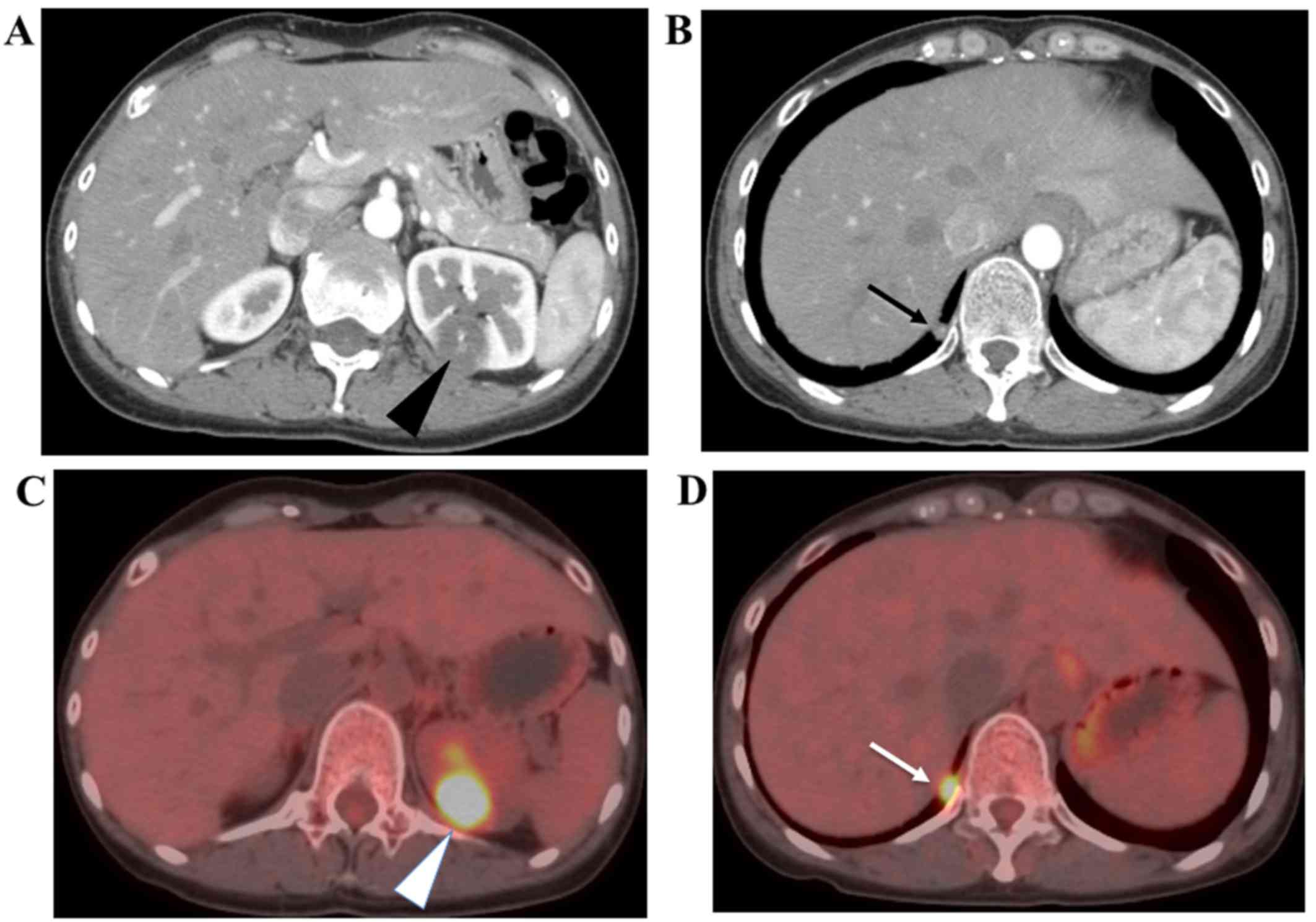
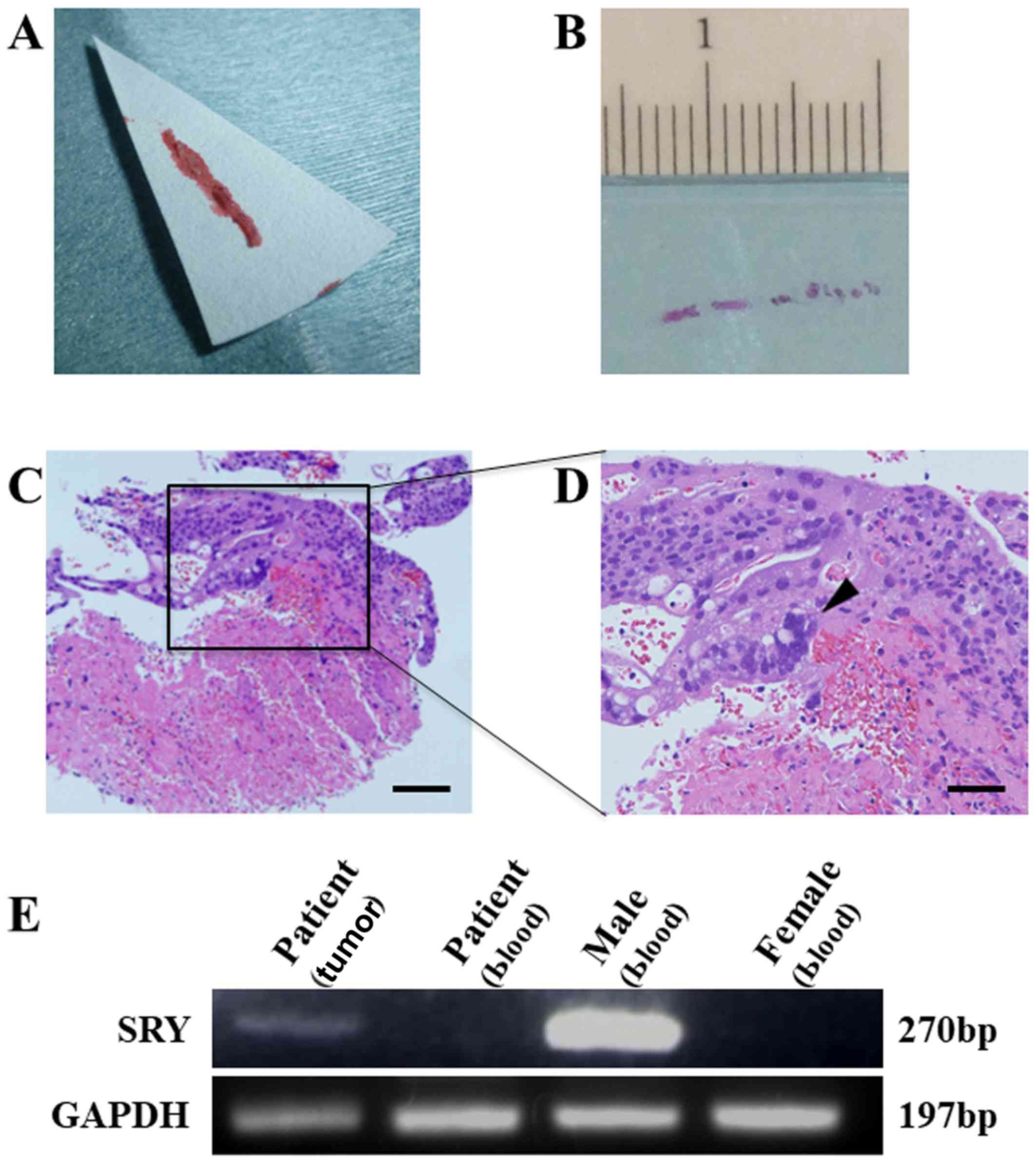
Five months after the second parturition, a 36-year-old woman visited a nearby hospital due to secondary amenorrhea with nausea after obtaining a positive result on a urinary pregnancy test. She had a past history of two normal vaginal deliveries of male babies 4.5 years and six months ago, respectively, and received artificial abortion one time. Although the serum level of human chorionic gonadotropin (hCG) was elevated at 51,800 mIU/ml, a gestational sac was not observed in the uterus or bilateral adnexa by ultrasonography. Computed tomography (CT) and magnetic resonance imaging (MRI) did not detect a gestational sac in the genital tract, but showed abnormal solitary tumor features in the left kidney and right lung (Fig. 1A). Positron emission tomography-computed tomography (PET-CT) confirmed that both tumor lesions showed a high uptake of 18F-FDG (Fig. 1B). Pathological examination by endometrial curettage was negative for an intrauterine conceptus. The ultrasonographic characterization of the renal lesion suggested renal cell carcinoma. Therefore, to determine whether it was metastatic trophoblastic disease or renal cell carcinoma, we biopsied the renal lesion with a fine needle technique (Fig. 2A), and obtained a final pathological diagnosis of choriocarcinoma (Fig. 2B and C). We chose a chemotherapeutic regimen comprising etoposide, methotrexate, actinomycin-D, cyclophosphamide and vincristine (EMA/CO chemotherapy) and performed 10 courses. The serum hCG level was successfully reduced to less than 1 mIU/ml. The enhanced CT confirmed the size reduction of both tumors with avascular changes. The uptake of 18F-FDG by PET-CT was also diminished. No sign of recurrence was observed during the 18-month follow-up period.

Figure 1.

Enhanced CT and PET-CT images. (A and B) Enhanced CT images. (A) A slightly enhanced tumor lesion of 3.5 cm in its longest diameter was observed in the posterior wall of the left kidney (arrowhead). No hemorrhagic lesion was detected in the tumor. (B) A solitary lesion was observed in the posterior pleural cavity of the right lung (arrow). (C and D) PET-CT images. High uptake of 18F-FDG was observed in both tumors in the kidney (arrowhead) and in the pleural cavity (arrow).

Figure 2.

Analysis of a needle-biopsied sample. (A) The overall features of the needle-biopsied sample. (B) A tissue slide of the needle-biopsied sample. (C and D) Microscopic images. Atypical polynuclear giant cells resembling a syncytiotrophoblast (arrowhead) were observed without constructing chorionic villi. Bars show 100 and 50 µm, respectively. (E) PCR analysis of the SRY gene. PCR products of 270 bp corresponding to the SRY gene were detected in the tumor sample and a blood sample from a male volunteer (positive control), while they were not detected in the blood samples of the patient and a female volunteer (negative control).

Although the serum level of hCG has been controlled under the detection limit, we could not obtain a complete response based on CT. Since non-gestational choriocarcinoma was reported to be associated with a poor prognosis (6,10), we needed to determine whether or not these lesions were derived from the conceptus, that is the gestational type. Accordingly, we performed the polymerase chain reaction (PCR) to detect the SRY gene in the needle-biopsied sample. Briefly, DNA was extracted from formalin-fixed 4-tissue sections using TaKaRa DEXPAT Easy (Takara Co. Kyoto, Japan). Using SRY primers (5′-CAGTGTGAAACGGGAGAAAACAGT-3′; 5′-TATAAGTATCGACCTCGTCGGAAG-3′) (11) and GAPDH primers (5′-GGAGCGAGATCCCTCCAAAAT-3′; 5′-GGCTGTTGTCATACTTCTCATGG-3′) (12), both genes were amplified in 40 cycles. The SRY gene was successfully detected (Fig. 2D), indicating that this DNA contained Y-chromosome-specific genes.

Informed consent for the use of these tissues in this study was obtained from the patient. Analysis of these samples was approved by the Ethics Committee of the Kanazawa University Graduate School of Medical Sciences.

Discussion

In this case, the malignancy-suspected solitary lesion that can be responsible for the elevation of hCG was also observed in the right lung by enhanced CT and PET-CT (13,14). In addition, since the morphological characterization of the renal lesion by ultrasound examination was compatible with that of renal cell carcinoma, we had to rule out the possibility of independent renal carcinoma. Consequently, we tried to biopsy the renal lesion with a fine needle technique. Although the amount of the obtained tissue sample was small, it contained the malignant lesion, and we successfully achieved a final pathological diagnosis of choriocarcinoma. However, the lesion sample was very limited, making it difficult to extract non-contaminated choriocarcinoma-derived DNA samples that were sufficient for the standard analysis of gene polymorphism.

Fortunately, according to the history, this patient had given birth to two male babies in the previous pregnancies, along with one artificial abortion. Furthermore, although the precise amount and purity were unclear, we could prepare DNA samples of choriocarcinoma from the formalin-fixed tissue slices. Consequently, we applied the above method and detected a paternal SRY gene consensus, leading to the conclusion that this case was gestational choriocarcinoma. Both renal and right lung lesion were evaluated as metastases of gestational choriocarcinoma.

Although differences have been reported in the chemotherapy response, genetic origin and prognosis, gestational and non-gestational choriocarcinoma exhibit similar morphological pattern, histopathological classification and biochemical markers (4,15,16). Even with multidrug chemotherapy, a large number of patients with non-gestational choriocarcinoma died from the disease (16). In non-gestational choriocarcinoma, surgery and treatment with multiple chemotherapy agents are indicated. Therefore, distinguishing these two entities is very important (4).

The SRY gene is one of the Y-chromosome-specific genes. Therefore, when the SRY gene is detected in DNA samples extracted from choriocarcinoma tissues, we can safely conclude that this lesion is derived from the conceptus, except for the rare cases of chromosome chimera induced by bone transplantation, twin pregnancy, etc. In this context, fluorescence in situ hybridization (FISH) using centromere probe of Y chromosome could be used for this case. However, the weak point of these methods is that they cannot be applied to patients with a history of female delivery and sex-non-determined abortions. Accordingly, the negative detection of the SRY gene cannot lead to a definitive conclusion.

In conclusion, this is the first report that the detection of the SRY gene by PCR is clinically available to diagnose extragenital gestational choriocarcinoma. Since PCR is a more convenient method than gene polymorphism analysis, this method is one of the candidates for alternative techniques when the sample is limited and marked contamination of maternal DNA is expected (17).

Acknowledgements

The present study was supported in part by Grants-in-Aid for Scientific Research (no. 15K10708).

References

1 

Vereczkey I, Csernák E, Olasz J, Küronya Z, Szentirmay Z and Tóth E: Renal choriocarcinoma: Gestational or germ cell origin? Int J Surg Pathol. 20:623–628. 2012. View Article : Google Scholar : PubMed/NCBI

2 

Koyanagi T, Fujiwara H, Usui H, Ariga H, Machida S, Takei Y, Saga Y, Shozu M, Fukushima N, Tóth E, et al: Ovarian nongestational choriocarcinoma and associated adenocarcinoma with the same germ cell origin determined by a molecular genetic approach: A case report. Pathol Int. 66:529–534. 2016. View Article : Google Scholar : PubMed/NCBI

3 

Tempfer C, Horn LC, Ackermann S, Beckmann MW, Dittrich R, Einenkel J, Gunthert A, Haase H, Kratzsch J, Kreissl MC, et al: Gestational and non-gestational trophoblastic disease. guideline of the DGGG, OEGGG and SGGG (S2k Level, AWMF registry No. 032/049, december 2015). Geburtshilfe Frauenheilkd. 76:134–144. 2016. View Article : Google Scholar : PubMed/NCBI

4 

Mello JB, Cirilo Ramos PD, Michelin OC, Domingues Custódio MA, Rudge Cunha MV, Rogatto SR and Maestá I: Genomic profile in gestational and non-gestational choriocarcinomas. Placenta. 50:8–15. 2017. View Article : Google Scholar : PubMed/NCBI

5 

Fisher RA, Newlands ES, Jeffreys AJ, Boxer GM, Begent RH, Rustin GJ and Bagshawe KD: Gestational and nongestational trophoblastic tumors distinguished by DNA analysis. Cancer. 69:839–845. 1992. View Article : Google Scholar : PubMed/NCBI

6 

Wang Y, Yang Y, Teng F, Zhang H and Xue F: Pure nongestational uterine choriocarcinoma in a postmenopausal Chinese woman confirmed with short tandem repeat analysis. Am J Obstet Gynecol. 211:e1–e3. 2014. View Article : Google Scholar : PubMed/NCBI

7 

Imamura Y, Tashiro H, Saito F, Takaishi K, Ohba T, Fukunaga M and Katabuchi H: Choriocarcinoma coexisting with epithelioid trophoblastic tumor of the uterine horn. Gynecol Oncol Rep. 14:31–33. 2015. View Article : Google Scholar : PubMed/NCBI

8 

Wang Q, Guo C, Zou L, Wang Y, Song X, Ma Y and Liu A: Clinicopathological analysis of non-gestational ovarian choriocarcinoma: Report of two cases and review of the literature. Oncol Lett. 11:2599–2604. 2016.PubMed/NCBI

9 

Yamamoto E, Niimi K, Shinjo K, Yamamoto T, Fukunaga M and Kikkawa F: Identification of causative pregnancy of gestational trophoblastic neoplasia diagnosed during pregnancy by short tandem repeat analysis. Gynecol Oncol Case Rep. 9:3–6. 2014. View Article : Google Scholar : PubMed/NCBI

10 

Zhao J, Xiang Y, Wan XR, Feng FZ, Cui QC and Yang XY: Molecular genetic analyses of choriocarcinoma. Placenta. 30:816–820. 2009. View Article : Google Scholar : PubMed/NCBI

11 

Kuroki M, Okayama A, Nakamura S, Sasaki T, Murai K, Shiba R, Shinohara M and Tsubouchi H: Detection of maternal-fetal microchimerism in the inflammatory lesions of patients with Sjogren's syndrome. Ann Rheum Dis. 61:1041–1046. 2002. View Article : Google Scholar : PubMed/NCBI

12 

Yang G, Zhou X, Chen T, Deng Y, Yu D, Pan S and Song Y: Hydroxysafflor yellow A inhibits lipopolysaccharide-induced proliferation and migration of vascular smooth muscle cells via Toll-like receptor-4 pathway. Int J Clin Exp Med. 8:5295–5302. 2015.PubMed/NCBI

13 

Brown J, Naumann RW, Seckl MJ and Schink J: 15 years of progress in gestational trophoblastic disease: Scoring, standardization and salvage. Gynecol Oncol. 144:200–207. 2017. View Article : Google Scholar : PubMed/NCBI

14 

Mangili G, Lorusso D, Brown J, Pfisterer J, Massuger L, Vaughan M, Ngan HY, Golfier F, Sekharan PK, Charry RC, et al: Trophoblastic disease review for diagnosis and management: A joint report from the international society for the study of trophoblastic disease, european organisation for the treatment of trophoblastic disease and the gynecologic cancer intergroup. Int J Gynecol Cancer. 24 suppl 3:S109–S116. 2014. View Article : Google Scholar : PubMed/NCBI

15 

Cheung AN, Zhang HJ, Xue WC and Siu MK: Pathogenesis of choriocarcinoma: Clinical, genetic and stem cell perspectives. Future Oncol. 5:217–231. 2009. View Article : Google Scholar : PubMed/NCBI

16 

Newlands ES: The management of recurrent and drug-resistant gestational trophoblastic neoplasia (GTN). Best Pract Res Clin Obstet Gynaecol. 17:905–923. 2003. View Article : Google Scholar : PubMed/NCBI

17 

Robino C, Barilaro MR, Gino S, Chiarle R, Palestro G and Torre C: Incestuous paternity detected by STR-typing of chorionic villi isolated from archival formalin-fixed paraffin-embedded abortion material using laser microdissection. J Forensic Sci. 51:90–92. 2006. View Article : Google Scholar : PubMed/NCBI

Related Articles

  • Abstract
  • View
  • Download
  • Twitter
Copy and paste a formatted citation
Spandidos Publications style
Orisaka S, Kagami K, Mizumoto Y, Koda W, Ono M, Nakamura M and Fujiwara H: Successful detection of SRY gene via fine needle biopsy: A case of extragenital gestational choriocarcinoma in the kidney. Mol Clin Oncol 7: 1057-1060, 2017.
APA
Orisaka, S., Kagami, K., Mizumoto, Y., Koda, W., Ono, M., Nakamura, M., & Fujiwara, H. (2017). Successful detection of SRY gene via fine needle biopsy: A case of extragenital gestational choriocarcinoma in the kidney. Molecular and Clinical Oncology, 7, 1057-1060. https://doi.org/10.3892/mco.2017.1460
MLA
Orisaka, S., Kagami, K., Mizumoto, Y., Koda, W., Ono, M., Nakamura, M., Fujiwara, H."Successful detection of SRY gene via fine needle biopsy: A case of extragenital gestational choriocarcinoma in the kidney". Molecular and Clinical Oncology 7.6 (2017): 1057-1060.
Chicago
Orisaka, S., Kagami, K., Mizumoto, Y., Koda, W., Ono, M., Nakamura, M., Fujiwara, H."Successful detection of SRY gene via fine needle biopsy: A case of extragenital gestational choriocarcinoma in the kidney". Molecular and Clinical Oncology 7, no. 6 (2017): 1057-1060. https://doi.org/10.3892/mco.2017.1460
Copy and paste a formatted citation
x
Spandidos Publications style
Orisaka S, Kagami K, Mizumoto Y, Koda W, Ono M, Nakamura M and Fujiwara H: Successful detection of SRY gene via fine needle biopsy: A case of extragenital gestational choriocarcinoma in the kidney. Mol Clin Oncol 7: 1057-1060, 2017.
APA
Orisaka, S., Kagami, K., Mizumoto, Y., Koda, W., Ono, M., Nakamura, M., & Fujiwara, H. (2017). Successful detection of SRY gene via fine needle biopsy: A case of extragenital gestational choriocarcinoma in the kidney. Molecular and Clinical Oncology, 7, 1057-1060. https://doi.org/10.3892/mco.2017.1460
MLA
Orisaka, S., Kagami, K., Mizumoto, Y., Koda, W., Ono, M., Nakamura, M., Fujiwara, H."Successful detection of SRY gene via fine needle biopsy: A case of extragenital gestational choriocarcinoma in the kidney". Molecular and Clinical Oncology 7.6 (2017): 1057-1060.
Chicago
Orisaka, S., Kagami, K., Mizumoto, Y., Koda, W., Ono, M., Nakamura, M., Fujiwara, H."Successful detection of SRY gene via fine needle biopsy: A case of extragenital gestational choriocarcinoma in the kidney". Molecular and Clinical Oncology 7, no. 6 (2017): 1057-1060. https://doi.org/10.3892/mco.2017.1460
Follow us
  • Twitter
  • LinkedIn
  • Facebook
About
  • Spandidos Publications
  • Careers
  • Cookie Policy
  • Privacy Policy
How can we help?
  • Help
  • Live Chat
  • Contact
  • Email to our Support Team