Spandidos Publications Logo
  • About
    • About Spandidos
    • Aims and Scopes
    • Abstracting and Indexing
    • Editorial Policies
    • Reprints and Permissions
    • Job Opportunities
    • Terms and Conditions
    • Contact
  • Journals
    • All Journals
    • Oncology Letters
      • Oncology Letters
      • Information for Authors
      • Editorial Policies
      • Editorial Board
      • Aims and Scope
      • Abstracting and Indexing
      • Bibliographic Information
      • Archive
    • International Journal of Oncology
      • International Journal of Oncology
      • Information for Authors
      • Editorial Policies
      • Editorial Board
      • Aims and Scope
      • Abstracting and Indexing
      • Bibliographic Information
      • Archive
    • Molecular and Clinical Oncology
      • Molecular and Clinical Oncology
      • Information for Authors
      • Editorial Policies
      • Editorial Board
      • Aims and Scope
      • Abstracting and Indexing
      • Bibliographic Information
      • Archive
    • Experimental and Therapeutic Medicine
      • Experimental and Therapeutic Medicine
      • Information for Authors
      • Editorial Policies
      • Editorial Board
      • Aims and Scope
      • Abstracting and Indexing
      • Bibliographic Information
      • Archive
    • International Journal of Molecular Medicine
      • International Journal of Molecular Medicine
      • Information for Authors
      • Editorial Policies
      • Editorial Board
      • Aims and Scope
      • Abstracting and Indexing
      • Bibliographic Information
      • Archive
    • Biomedical Reports
      • Biomedical Reports
      • Information for Authors
      • Editorial Policies
      • Editorial Board
      • Aims and Scope
      • Abstracting and Indexing
      • Bibliographic Information
      • Archive
    • Oncology Reports
      • Oncology Reports
      • Information for Authors
      • Editorial Policies
      • Editorial Board
      • Aims and Scope
      • Abstracting and Indexing
      • Bibliographic Information
      • Archive
    • Molecular Medicine Reports
      • Molecular Medicine Reports
      • Information for Authors
      • Editorial Policies
      • Editorial Board
      • Aims and Scope
      • Abstracting and Indexing
      • Bibliographic Information
      • Archive
    • World Academy of Sciences Journal
      • World Academy of Sciences Journal
      • Information for Authors
      • Editorial Policies
      • Editorial Board
      • Aims and Scope
      • Abstracting and Indexing
      • Bibliographic Information
      • Archive
    • International Journal of Functional Nutrition
      • International Journal of Functional Nutrition
      • Information for Authors
      • Editorial Policies
      • Editorial Board
      • Aims and Scope
      • Abstracting and Indexing
      • Bibliographic Information
      • Archive
    • International Journal of Epigenetics
      • International Journal of Epigenetics
      • Information for Authors
      • Editorial Policies
      • Editorial Board
      • Aims and Scope
      • Abstracting and Indexing
      • Bibliographic Information
      • Archive
    • Medicine International
      • Medicine International
      • Information for Authors
      • Editorial Policies
      • Editorial Board
      • Aims and Scope
      • Abstracting and Indexing
      • Bibliographic Information
      • Archive
  • Articles
  • Information
    • Information for Authors
    • Information for Reviewers
    • Information for Librarians
    • Information for Advertisers
    • Conferences
  • Language Editing
Spandidos Publications Logo
  • About
    • About Spandidos
    • Aims and Scopes
    • Abstracting and Indexing
    • Editorial Policies
    • Reprints and Permissions
    • Job Opportunities
    • Terms and Conditions
    • Contact
  • Journals
    • All Journals
    • Biomedical Reports
      • Information for Authors
      • Editorial Policies
      • Editorial Board
      • Aims and Scope
      • Abstracting and Indexing
      • Bibliographic Information
      • Archive
    • Experimental and Therapeutic Medicine
      • Information for Authors
      • Editorial Policies
      • Editorial Board
      • Aims and Scope
      • Abstracting and Indexing
      • Bibliographic Information
      • Archive
    • International Journal of Epigenetics
      • Information for Authors
      • Editorial Policies
      • Editorial Board
      • Aims and Scope
      • Abstracting and Indexing
      • Bibliographic Information
      • Archive
    • International Journal of Functional Nutrition
      • Information for Authors
      • Editorial Policies
      • Editorial Board
      • Aims and Scope
      • Abstracting and Indexing
      • Bibliographic Information
      • Archive
    • International Journal of Molecular Medicine
      • Information for Authors
      • Editorial Policies
      • Editorial Board
      • Aims and Scope
      • Abstracting and Indexing
      • Bibliographic Information
      • Archive
    • International Journal of Oncology
      • Information for Authors
      • Editorial Policies
      • Editorial Board
      • Aims and Scope
      • Abstracting and Indexing
      • Bibliographic Information
      • Archive
    • Medicine International
      • Information for Authors
      • Editorial Policies
      • Editorial Board
      • Aims and Scope
      • Abstracting and Indexing
      • Bibliographic Information
      • Archive
    • Molecular and Clinical Oncology
      • Information for Authors
      • Editorial Policies
      • Editorial Board
      • Aims and Scope
      • Abstracting and Indexing
      • Bibliographic Information
      • Archive
    • Molecular Medicine Reports
      • Information for Authors
      • Editorial Policies
      • Editorial Board
      • Aims and Scope
      • Abstracting and Indexing
      • Bibliographic Information
      • Archive
    • Oncology Letters
      • Information for Authors
      • Editorial Policies
      • Editorial Board
      • Aims and Scope
      • Abstracting and Indexing
      • Bibliographic Information
      • Archive
    • Oncology Reports
      • Information for Authors
      • Editorial Policies
      • Editorial Board
      • Aims and Scope
      • Abstracting and Indexing
      • Bibliographic Information
      • Archive
    • World Academy of Sciences Journal
      • Information for Authors
      • Editorial Policies
      • Editorial Board
      • Aims and Scope
      • Abstracting and Indexing
      • Bibliographic Information
      • Archive
  • Articles
  • Information
    • For Authors
    • For Reviewers
    • For Librarians
    • For Advertisers
    • Conferences
  • Language Editing
Login Register Submit
  • This site uses cookies
  • You can change your cookie settings at any time by following the instructions in our Cookie Policy. To find out more, you may read our Privacy Policy.

    I agree
Search articles by DOI, keyword, author or affiliation
Search
Advanced Search
presentation
Molecular and Clinical Oncology
Join Editorial Board Propose a Special Issue
Print ISSN: 2049-9450 Online ISSN: 2049-9469
Journal Cover
January-2018 Volume 8 Issue 1

Full Size Image

Sign up for eToc alerts
Recommend to Library

Journals

International Journal of Molecular Medicine

International Journal of Molecular Medicine

International Journal of Molecular Medicine is an international journal devoted to molecular mechanisms of human disease.

International Journal of Oncology

International Journal of Oncology

International Journal of Oncology is an international journal devoted to oncology research and cancer treatment.

Molecular Medicine Reports

Molecular Medicine Reports

Covers molecular medicine topics such as pharmacology, pathology, genetics, neuroscience, infectious diseases, molecular cardiology, and molecular surgery.

Oncology Reports

Oncology Reports

Oncology Reports is an international journal devoted to fundamental and applied research in Oncology.

Experimental and Therapeutic Medicine

Experimental and Therapeutic Medicine

Experimental and Therapeutic Medicine is an international journal devoted to laboratory and clinical medicine.

Oncology Letters

Oncology Letters

Oncology Letters is an international journal devoted to Experimental and Clinical Oncology.

Biomedical Reports

Biomedical Reports

Explores a wide range of biological and medical fields, including pharmacology, genetics, microbiology, neuroscience, and molecular cardiology.

Molecular and Clinical Oncology

Molecular and Clinical Oncology

International journal addressing all aspects of oncology research, from tumorigenesis and oncogenes to chemotherapy and metastasis.

World Academy of Sciences Journal

World Academy of Sciences Journal

Multidisciplinary open-access journal spanning biochemistry, genetics, neuroscience, environmental health, and synthetic biology.

International Journal of Functional Nutrition

International Journal of Functional Nutrition

Open-access journal combining biochemistry, pharmacology, immunology, and genetics to advance health through functional nutrition.

International Journal of Epigenetics

International Journal of Epigenetics

Publishes open-access research on using epigenetics to advance understanding and treatment of human disease.

Medicine International

Medicine International

An International Open Access Journal Devoted to General Medicine.

Journal Cover
January-2018 Volume 8 Issue 1

Full Size Image

Sign up for eToc alerts
Recommend to Library

  • Article
  • Citations
    • Cite This Article
    • Download Citation
    • Create Citation Alert
    • Remove Citation Alert
    • Cited By
  • Similar Articles
    • Related Articles (in Spandidos Publications)
    • Similar Articles (Google Scholar)
    • Similar Articles (PubMed)
  • Download PDF
  • Download XML
  • View XML
Article

Paradoxical response to osimertinib therapy in a patient with T790M‑mutated lung adenocarcinoma

  • Authors:
    • Shinichiro Okauchi
    • Hajime Osawa
    • Kunihiko Miyazaki
    • Mio Kawaguchi
    • Hiroaki Satoh
  • View Affiliations / Copyright

    Affiliations: Division of Respiratory Medicine, Mito Medical Center, University of Tsukuba, Mito, Ibaraki 310‑0015, Japan, Division of Respiratory Medicine, Faculty of Medicine, University of Tsukuba, Tsukuba, Ibaraki 305‑8575, Japan
  • Pages: 175-177
    |
    Published online on: October 27, 2017
       https://doi.org/10.3892/mco.2017.1474
  • Expand metrics +
Metrics: Total Views: 0 (Spandidos Publications: | PMC Statistics: )
Metrics: Total PDF Downloads: 0 (Spandidos Publications: | PMC Statistics: )
Cited By (CrossRef): 0 citations Loading Articles...

This article is mentioned in:


Abstract

A ‘paradoxical response’ to cancer treatment is a term used to describe the emergence of unexpected new lesions and the progression of existing lesions, despite appropriate and effective therapy. ‘Pseudo‑progression’ is a phenomenon in which lymphocytes activated by an immune checkpoint inhibitor accumulate in a tumor and expand its shadow, mimicking enlargement of the primary lesion or development of a new metastatic lesion. Patients receiving cancer chemotherapy may respond differently to treatment, by exhibiting a response, deterioration, or the simultaneous occurrence of both. These variations may be attributed to the heterogeneity of the cancer. However, differences in the temporary response to epidermal growth factor receptor‑tyrosine kinase inhibitor (EGFR‑TKI) treatment are rarely observed. If such a phenomenon is observed, it should not affect the evaluation of the therapeutic effect or be considered as an indication for the discontinuation of treatment. We herein report a rare case of a transient increase in carcinomatous pleural fluid as a paradoxical response to osimertinib treatment in a patient with T790M‑mutated lung adenocarcinoma. The primary lesion and pulmonary metastases responded well to therapy. Although this paradoxical response is very rare, of non‑malignant nature, and does not usually require treatment modification of, physicians must acknowledge that it is not a clinically discouraging characteristic when using EGFR‑TKI to treat T790M‑mutated lung adenocarcinoma.

Introduction

A ‘paradoxical response’ to cancer treatment is the emergence of unexpected new lesions and/or the progression of existing lesions, despite appropriate and effective therapy. This term is commonly used in association with anti-tuberculosis treatment, where it describes a phenomenon observed in some patients with pulmonary and pleural tuberculosis, tuberculous lymphadenitis and intracranial tuberculoma (1–5). ‘Pseudo-progression’ is another term used to describe a phenomenon in which lymphocytes activated by an immune checkpoint inhibitor accumulate in a tumor to expand its shadow, appearing as enlargement of the primary lesion or development of a new metastatic lesion. A proportion of patients treated with nivolumab exhibit pseudo-progression, in which transient disease progression is followed by a response to an immune checkpoint inhibitor (6–10). Cancer patients may respond differently to chemotherapy by exhibiting a response, deterioration, or occasionally simultaneous occurrence of both. These different responses may be attributed to the heterogeneity of the cancer. However, differences in the transient responses to epidermal growth factor receptor-tyrosine kinase inhibitor (EGFR-TKI) treatment are rare and, should such a phenomenon be observed, it should not affect the evaluation of the therapeutic effect or be considered as an indication for discontinuation of treatment. We herein describe a case with a transient increase in the amount of carcinomatous pleural fluid as a paradoxical response to osimertinib therapy for T790M-mutated lung adenocarcinoma, despite the primary lesion and pulmonary metastases responding well to this treatment. The aim of the present study was to report this phenomenon in order to raise physicians’ awareness of this rare occurrence.

Case report

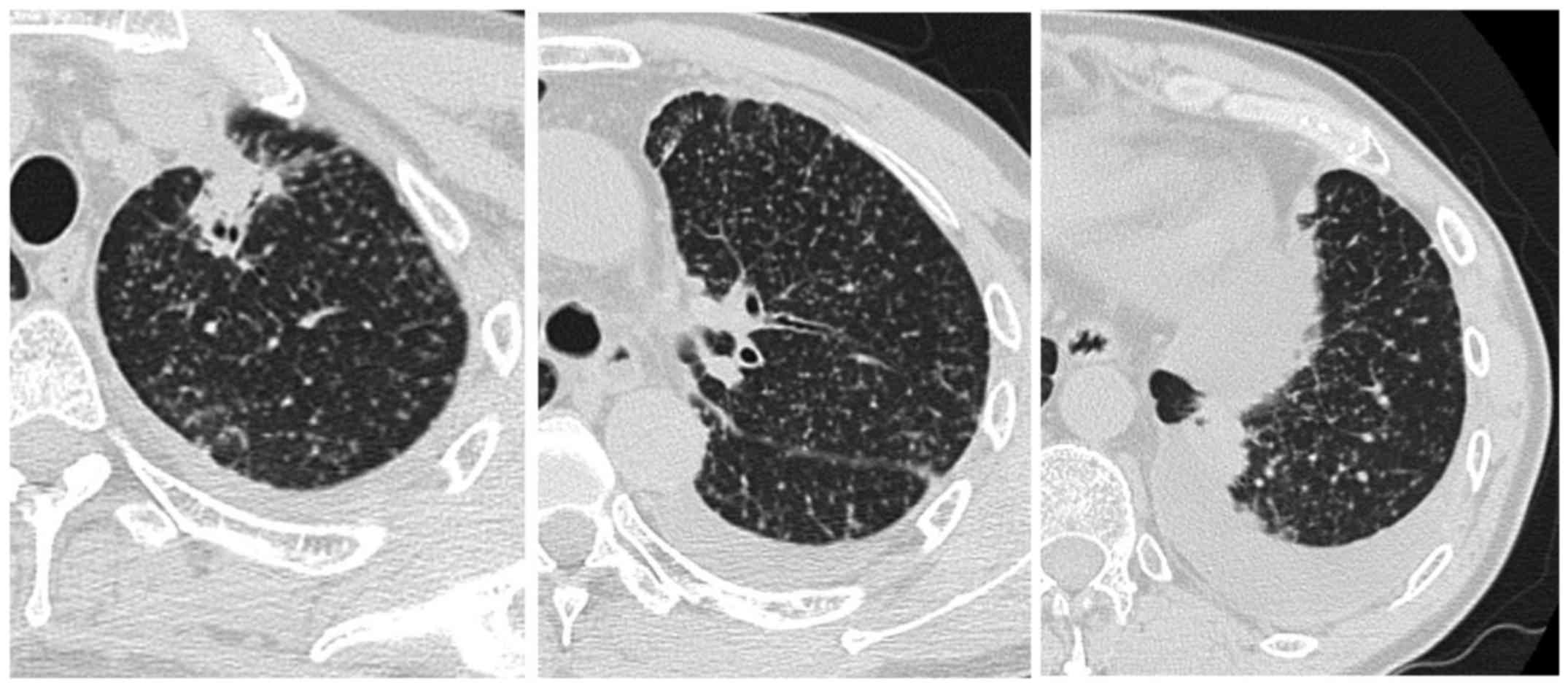
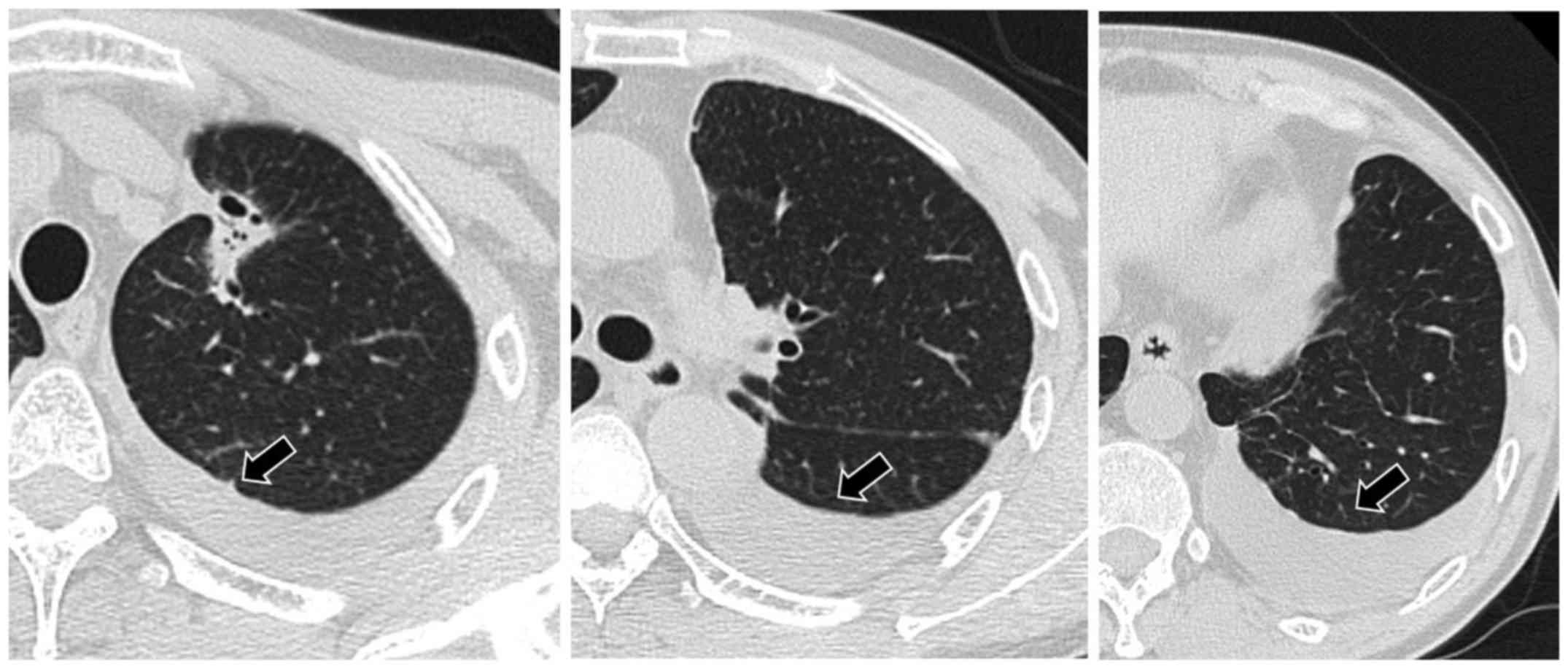
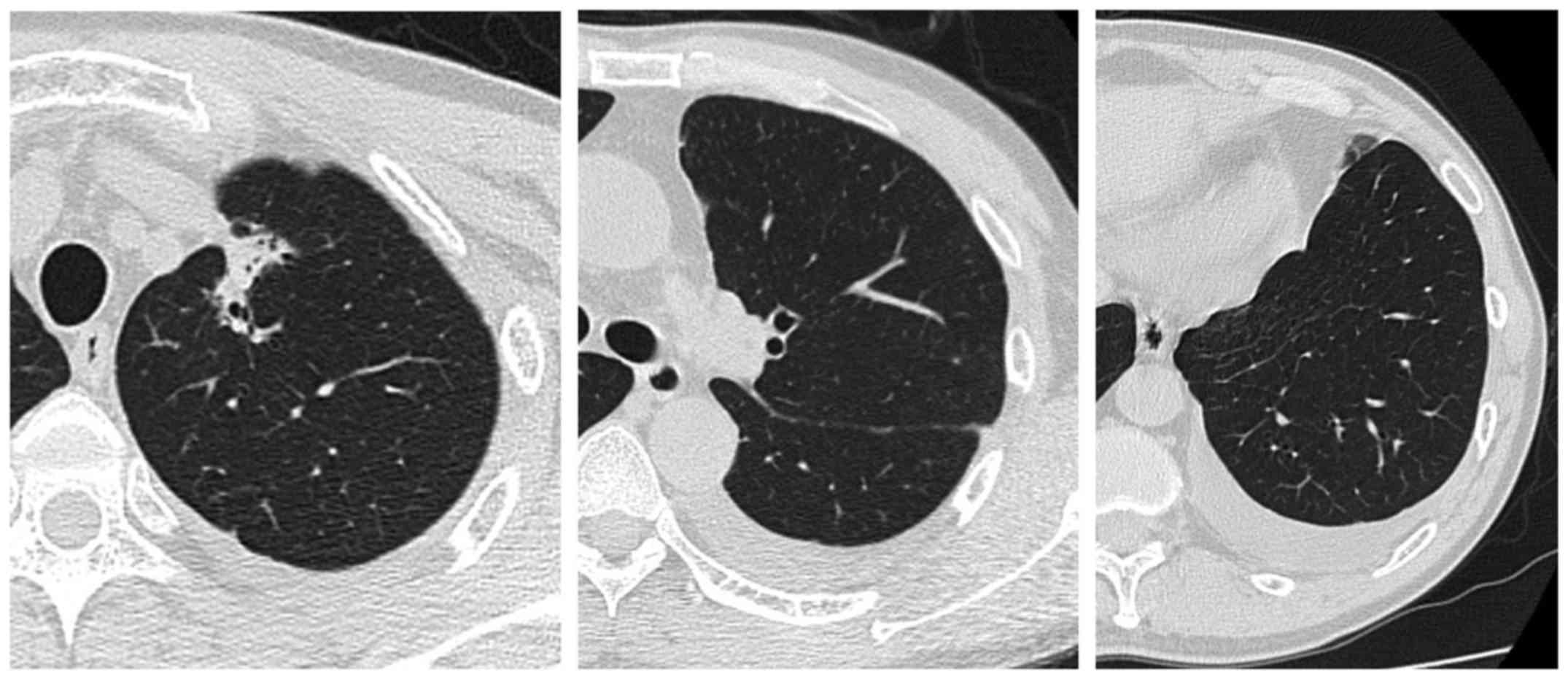
A 58-year-old male patient was referred to the Mito Medical Center in January 2014 after experiencing dyspnea on exertion for 1 month. The patient had been diagnosed 27 months prior with adenocarcinoma in the upper lobe of the right lung. An EGFR exon 19 deletion was identified. Due to multiple metastases in both lungs, platinum-based chemotherapy and gefitinib therapy were administered. As third-line therapy, the patient received nivolumab therapy, but 3 months after the initiation of nivolumab therapy, a follow-up chest computed tomography (CT) scan revealed regrowth of the primary pulmonary lesion in the left upper lobe and appearance of miliary pulmonary metastases and bilateral pleural fluid (Fig. 1). The serum carcinoembryonic antigen (CEA) level increased from 252.4 to 340.2 ng/ml in 1 month. Thoracentesis was performed to obtain cytological specimens. Cytology of the pleural fluid revealed adenocarcinoma cells. A T790M mutation, together with a deletion within exon 19 of the EGFR gene, were identified. Osimertinib (80 mg once daily) was therefore prescribed as fourth-line treatment for the adenocarcinoma. A chest CT scan 1 month after the initiation of osimertinib treatment revealed shrinkage of the primary lesion and disappearance of pulmonary metastases, but an increase in the amount of pleural fluid (Fig. 2). A chest CT scan 1 month later revealed a decrease in the amount of the pleural fluid and tumor shrinkage (Fig. 3). In addition, the serum CEA level had decreased to 20.2 ng/ml. The patient currently remains on osimertinib treatment, without major adverse events or disease recurrence (last follow-up visit, June 2017).

Figure 1.

Chest computed tomography scan revealed regrowth of the primary lesion in the left upper lobe of the lung, with appearance of miliary pulmonary metastases and bilateral pleural fluid.

Figure 2.

Chest computed tomography scan 1 month after the initiation of osimertinib treatment revealed shrinkage of the primary lesion and disappearance of pulmonary metastases, but an increase in the amount of pleural fluid was observed (arrows).

Figure 3.

Chest computed tomography scan 1 month later showed decrease of the amount of pleural fluid and tumor shrinkage.

Discussion

Pleural fluid is commonly found in a disseminated form in lung adenocarcinoma patients with carcinomatous pleuritis. However, to the best of our knowledge, an increase in the amount of pleural fluid as a transient paradoxical response to osimertinib therapy in a patient with EGFR-mutated lung cancer has never been reported to date. A paradoxical aggravation response, which is a phenomenon that appears despite effective chemotherapy for tuberculosis, is generally considered immune-mediated (1–5). Active tuberculosis leads to an immunosuppressed state via an altered cell-mediated response (1–5). When active tuberculosis is controlled by appropriate treatment, enhanced focal immune responses (immunological rebound) mobilize lymphocytes and macrophages at the site of lesions (2).

In a proportion of patients treated with nivolumab, an IgG4 antibody that targets the programmed cell death protein-1 on the T-cell surface, there is pseudo-progression followed by transient progression and then a response (6–8). This immune-related tumor response may result in a temporary increase in tumor size, regression, or emergence of new lesions, followed by a response to subsequent treatment (10). The response itself may take longer compared with that observed using conventional cytotoxic drugs (10). This pseudo-progression may be attributed to the inflammation, edema and necrosis that are associated with immune cell infiltration of the tumor deposits (9). This immunological response is important for characterizing the effects of immune checkpoint inhibitors, and is not observed with conventional cytotoxic drugs or other targeted therapeutics (8). The patient presented herein developed an increase in pleural fluid after 1 month of osimertinib therapy for recurrent T790M-mutated lung adenocarcinoma. The mechanism underlying this phenomenon has not been fully elucidated, but it may be hypothesized that rapid death of cancer cells following successful treatment of pulmonary and pleural lesions released factors that stimulated the production of pleural fluid. Another possibility is that increased pleural fluid is caused by an imbalance between production and drainage. It was unclear whether there was increased pleural fluid production, impaired drainage of pleural fluid, or both. There was no evidence to suggest pleurisy, other than carcinomatous pleuritis. The pleural fluid was exudative, but there were no findings consistent with infectious or tuberculous pleural fluid. It is paradoxical that there was a temporary increase in the pleural fluid containing T790M-positive cancer cells, despite the prompt response of the pulmonary metastatic lesions to treatment. Recognizing this clinically frustrating, but non-malignant paradoxical response, is meaningful for clinicians, although treatment modification is unnecessary. It is important that clinicians are aware of this rare event, whilst simultaneously considering other causes of an inadequate response to treatment, such as incorrect diagnosis, inappropriate drug regimen, drug resistance, atypical infectious disease, adverse effect to therapeutic drugs, or the deterioration of the disease. An accumulation of knowledge in this aspect of malignancy and cancer management will ensure continuing improvement in patient care. Informed consent to the publication of the case details and associated images was obtained from the patient.

References

1 

Breen RA, Smith CJ, Bettinson H, Dart S, Bannister B, Johnson MA and Lipman MC: Paradoxical reactions during tuberculosis treatment in patients with and without HIV co-infection. Thorax. 59:704–707. 2004. View Article : Google Scholar : PubMed/NCBI

2 

Marshall BG and Chambers MA: Central nervous system tuberculosis-the paradox of the host immune response. J Infect. 36:3–4. 1998. View Article : Google Scholar : PubMed/NCBI

3 

Gupta RC, Dixit R, Purohit SD and Saxena A: Development of pleural effusion in patients during anti-tuberculosis therapy: Analysis of twenty-nine cases with review of literature. Indian J Chest Dis Allied Sci. 42:161–166. 2000.PubMed/NCBI

4 

Bukharie H: Paradoxical response to anti-tuberculosis drugs: Resolution with corticosteroid therapy. Scand J Infect Dis. 32:96–97. 2000. View Article : Google Scholar : PubMed/NCBI

5 

Al-Orainey IO: Diagnosis of latent tuberculosis: Can we do better? Ann Thorac Med. 4:5–9. 2009. View Article : Google Scholar : PubMed/NCBI

6 

Ito K, Hataji O, Katsuta K, Kobayashi T, Gabazza EC, Yatabe Y, Taguchi O and Yamamoto N: ‘Pseudoprogression’ of pulmonary pleomorphic carcinoma during nivolumab therapy. J Thorac Oncol. 11:e117–e119. 2016. View Article : Google Scholar : PubMed/NCBI

7 

Kolla BC and Patel MR: Recurrent pleural effusions and cardiac tamponade as possible manifestations of pseudoprogression associated with nivolumab therapy- a report of two cases. J Immunother Cancer. 4:802016. View Article : Google Scholar : PubMed/NCBI

8 

Tanizaki J, Hayashi H, Kimura M, Tanaka K, Takeda M, Shimizu S, Ito A and Nakagawa K: Report of two cases of pseudoprogression in patients with non-small cell lung cancer treated with nivolumab-including histological analysis of one case after tumor regression. Lung Cancer. 102:44–48. 2016. View Article : Google Scholar : PubMed/NCBI

9 

Di Giacomo AM, Danielli R, Guidoboni M, Calabrò L, Carlucci D, Miracco C, Volterrani L, Mazzei MA, Biagioli M, Altomonte M and Maio M: Therapeutic efficacy of ipilimumab, an anti-CTLA-4 monoclonal antibody, in patients with metastatic melanoma unresponsive to prior systemic treatments: Clinical and immunological evidence from three patient cases. Cancer Immunol Immunother. 58:1297–1306. 2009. View Article : Google Scholar : PubMed/NCBI

10 

Hoos A, Parmiani G, Hege K, Sznol M, Loibner H, Eggermont A, Urba W, Blumenstein B, Sacks N, Keilholz U, et al: A clinical development paradigm for cancer vaccines and related biologics. J Immunother. 30:1–15. 2007. View Article : Google Scholar : PubMed/NCBI

Related Articles

  • Abstract
  • View
  • Download
  • Twitter
Copy and paste a formatted citation
Spandidos Publications style
Okauchi S, Osawa H, Miyazaki K, Kawaguchi M and Satoh H: Paradoxical response to osimertinib therapy in a patient with T790M‑mutated lung adenocarcinoma. Mol Clin Oncol 8: 175-177, 2018.
APA
Okauchi, S., Osawa, H., Miyazaki, K., Kawaguchi, M., & Satoh, H. (2018). Paradoxical response to osimertinib therapy in a patient with T790M‑mutated lung adenocarcinoma. Molecular and Clinical Oncology, 8, 175-177. https://doi.org/10.3892/mco.2017.1474
MLA
Okauchi, S., Osawa, H., Miyazaki, K., Kawaguchi, M., Satoh, H."Paradoxical response to osimertinib therapy in a patient with T790M‑mutated lung adenocarcinoma". Molecular and Clinical Oncology 8.1 (2018): 175-177.
Chicago
Okauchi, S., Osawa, H., Miyazaki, K., Kawaguchi, M., Satoh, H."Paradoxical response to osimertinib therapy in a patient with T790M‑mutated lung adenocarcinoma". Molecular and Clinical Oncology 8, no. 1 (2018): 175-177. https://doi.org/10.3892/mco.2017.1474
Copy and paste a formatted citation
x
Spandidos Publications style
Okauchi S, Osawa H, Miyazaki K, Kawaguchi M and Satoh H: Paradoxical response to osimertinib therapy in a patient with T790M‑mutated lung adenocarcinoma. Mol Clin Oncol 8: 175-177, 2018.
APA
Okauchi, S., Osawa, H., Miyazaki, K., Kawaguchi, M., & Satoh, H. (2018). Paradoxical response to osimertinib therapy in a patient with T790M‑mutated lung adenocarcinoma. Molecular and Clinical Oncology, 8, 175-177. https://doi.org/10.3892/mco.2017.1474
MLA
Okauchi, S., Osawa, H., Miyazaki, K., Kawaguchi, M., Satoh, H."Paradoxical response to osimertinib therapy in a patient with T790M‑mutated lung adenocarcinoma". Molecular and Clinical Oncology 8.1 (2018): 175-177.
Chicago
Okauchi, S., Osawa, H., Miyazaki, K., Kawaguchi, M., Satoh, H."Paradoxical response to osimertinib therapy in a patient with T790M‑mutated lung adenocarcinoma". Molecular and Clinical Oncology 8, no. 1 (2018): 175-177. https://doi.org/10.3892/mco.2017.1474
Follow us
  • Twitter
  • LinkedIn
  • Facebook
About
  • Spandidos Publications
  • Careers
  • Cookie Policy
  • Privacy Policy
How can we help?
  • Help
  • Live Chat
  • Contact
  • Email to our Support Team