Spandidos Publications Logo
  • About
    • About Spandidos
    • Aims and Scopes
    • Abstracting and Indexing
    • Editorial Policies
    • Reprints and Permissions
    • Job Opportunities
    • Terms and Conditions
    • Contact
  • Journals
    • All Journals
    • Oncology Letters
      • Oncology Letters
      • Information for Authors
      • Editorial Policies
      • Editorial Board
      • Aims and Scope
      • Abstracting and Indexing
      • Bibliographic Information
      • Archive
    • International Journal of Oncology
      • International Journal of Oncology
      • Information for Authors
      • Editorial Policies
      • Editorial Board
      • Aims and Scope
      • Abstracting and Indexing
      • Bibliographic Information
      • Archive
    • Molecular and Clinical Oncology
      • Molecular and Clinical Oncology
      • Information for Authors
      • Editorial Policies
      • Editorial Board
      • Aims and Scope
      • Abstracting and Indexing
      • Bibliographic Information
      • Archive
    • Experimental and Therapeutic Medicine
      • Experimental and Therapeutic Medicine
      • Information for Authors
      • Editorial Policies
      • Editorial Board
      • Aims and Scope
      • Abstracting and Indexing
      • Bibliographic Information
      • Archive
    • International Journal of Molecular Medicine
      • International Journal of Molecular Medicine
      • Information for Authors
      • Editorial Policies
      • Editorial Board
      • Aims and Scope
      • Abstracting and Indexing
      • Bibliographic Information
      • Archive
    • Biomedical Reports
      • Biomedical Reports
      • Information for Authors
      • Editorial Policies
      • Editorial Board
      • Aims and Scope
      • Abstracting and Indexing
      • Bibliographic Information
      • Archive
    • Oncology Reports
      • Oncology Reports
      • Information for Authors
      • Editorial Policies
      • Editorial Board
      • Aims and Scope
      • Abstracting and Indexing
      • Bibliographic Information
      • Archive
    • Molecular Medicine Reports
      • Molecular Medicine Reports
      • Information for Authors
      • Editorial Policies
      • Editorial Board
      • Aims and Scope
      • Abstracting and Indexing
      • Bibliographic Information
      • Archive
    • World Academy of Sciences Journal
      • World Academy of Sciences Journal
      • Information for Authors
      • Editorial Policies
      • Editorial Board
      • Aims and Scope
      • Abstracting and Indexing
      • Bibliographic Information
      • Archive
    • International Journal of Functional Nutrition
      • International Journal of Functional Nutrition
      • Information for Authors
      • Editorial Policies
      • Editorial Board
      • Aims and Scope
      • Abstracting and Indexing
      • Bibliographic Information
      • Archive
    • International Journal of Epigenetics
      • International Journal of Epigenetics
      • Information for Authors
      • Editorial Policies
      • Editorial Board
      • Aims and Scope
      • Abstracting and Indexing
      • Bibliographic Information
      • Archive
    • Medicine International
      • Medicine International
      • Information for Authors
      • Editorial Policies
      • Editorial Board
      • Aims and Scope
      • Abstracting and Indexing
      • Bibliographic Information
      • Archive
  • Articles
  • Information
    • Information for Authors
    • Information for Reviewers
    • Information for Librarians
    • Information for Advertisers
    • Conferences
  • Language Editing
Spandidos Publications Logo
  • About
    • About Spandidos
    • Aims and Scopes
    • Abstracting and Indexing
    • Editorial Policies
    • Reprints and Permissions
    • Job Opportunities
    • Terms and Conditions
    • Contact
  • Journals
    • All Journals
    • Biomedical Reports
      • Information for Authors
      • Editorial Policies
      • Editorial Board
      • Aims and Scope
      • Abstracting and Indexing
      • Bibliographic Information
      • Archive
    • Experimental and Therapeutic Medicine
      • Information for Authors
      • Editorial Policies
      • Editorial Board
      • Aims and Scope
      • Abstracting and Indexing
      • Bibliographic Information
      • Archive
    • International Journal of Epigenetics
      • Information for Authors
      • Editorial Policies
      • Editorial Board
      • Aims and Scope
      • Abstracting and Indexing
      • Bibliographic Information
      • Archive
    • International Journal of Functional Nutrition
      • Information for Authors
      • Editorial Policies
      • Editorial Board
      • Aims and Scope
      • Abstracting and Indexing
      • Bibliographic Information
      • Archive
    • International Journal of Molecular Medicine
      • Information for Authors
      • Editorial Policies
      • Editorial Board
      • Aims and Scope
      • Abstracting and Indexing
      • Bibliographic Information
      • Archive
    • International Journal of Oncology
      • Information for Authors
      • Editorial Policies
      • Editorial Board
      • Aims and Scope
      • Abstracting and Indexing
      • Bibliographic Information
      • Archive
    • Medicine International
      • Information for Authors
      • Editorial Policies
      • Editorial Board
      • Aims and Scope
      • Abstracting and Indexing
      • Bibliographic Information
      • Archive
    • Molecular and Clinical Oncology
      • Information for Authors
      • Editorial Policies
      • Editorial Board
      • Aims and Scope
      • Abstracting and Indexing
      • Bibliographic Information
      • Archive
    • Molecular Medicine Reports
      • Information for Authors
      • Editorial Policies
      • Editorial Board
      • Aims and Scope
      • Abstracting and Indexing
      • Bibliographic Information
      • Archive
    • Oncology Letters
      • Information for Authors
      • Editorial Policies
      • Editorial Board
      • Aims and Scope
      • Abstracting and Indexing
      • Bibliographic Information
      • Archive
    • Oncology Reports
      • Information for Authors
      • Editorial Policies
      • Editorial Board
      • Aims and Scope
      • Abstracting and Indexing
      • Bibliographic Information
      • Archive
    • World Academy of Sciences Journal
      • Information for Authors
      • Editorial Policies
      • Editorial Board
      • Aims and Scope
      • Abstracting and Indexing
      • Bibliographic Information
      • Archive
  • Articles
  • Information
    • For Authors
    • For Reviewers
    • For Librarians
    • For Advertisers
    • Conferences
  • Language Editing
Login Register Submit
  • This site uses cookies
  • You can change your cookie settings at any time by following the instructions in our Cookie Policy. To find out more, you may read our Privacy Policy.

    I agree
Search articles by DOI, keyword, author or affiliation
Search
Advanced Search
presentation
Molecular and Clinical Oncology
Join Editorial Board Propose a Special Issue
Print ISSN: 2049-9450 Online ISSN: 2049-9469
Journal Cover
February-2018 Volume 8 Issue 2

Full Size Image

Sign up for eToc alerts
Recommend to Library

Journals

International Journal of Molecular Medicine

International Journal of Molecular Medicine

International Journal of Molecular Medicine is an international journal devoted to molecular mechanisms of human disease.

International Journal of Oncology

International Journal of Oncology

International Journal of Oncology is an international journal devoted to oncology research and cancer treatment.

Molecular Medicine Reports

Molecular Medicine Reports

Covers molecular medicine topics such as pharmacology, pathology, genetics, neuroscience, infectious diseases, molecular cardiology, and molecular surgery.

Oncology Reports

Oncology Reports

Oncology Reports is an international journal devoted to fundamental and applied research in Oncology.

Experimental and Therapeutic Medicine

Experimental and Therapeutic Medicine

Experimental and Therapeutic Medicine is an international journal devoted to laboratory and clinical medicine.

Oncology Letters

Oncology Letters

Oncology Letters is an international journal devoted to Experimental and Clinical Oncology.

Biomedical Reports

Biomedical Reports

Explores a wide range of biological and medical fields, including pharmacology, genetics, microbiology, neuroscience, and molecular cardiology.

Molecular and Clinical Oncology

Molecular and Clinical Oncology

International journal addressing all aspects of oncology research, from tumorigenesis and oncogenes to chemotherapy and metastasis.

World Academy of Sciences Journal

World Academy of Sciences Journal

Multidisciplinary open-access journal spanning biochemistry, genetics, neuroscience, environmental health, and synthetic biology.

International Journal of Functional Nutrition

International Journal of Functional Nutrition

Open-access journal combining biochemistry, pharmacology, immunology, and genetics to advance health through functional nutrition.

International Journal of Epigenetics

International Journal of Epigenetics

Publishes open-access research on using epigenetics to advance understanding and treatment of human disease.

Medicine International

Medicine International

An International Open Access Journal Devoted to General Medicine.

Journal Cover
February-2018 Volume 8 Issue 2

Full Size Image

Sign up for eToc alerts
Recommend to Library

  • Article
  • Citations
    • Cite This Article
    • Download Citation
    • Create Citation Alert
    • Remove Citation Alert
    • Cited By
  • Similar Articles
    • Related Articles (in Spandidos Publications)
    • Similar Articles (Google Scholar)
    • Similar Articles (PubMed)
  • Download PDF
  • Download XML
  • View XML
Article

Therapy‑associated myelodysplastic syndrome with monosomy 7 arising in a Muir‑Torre Syndrome patient carrying SETBP1 mutation

  • Authors:
    • David Ullman
    • Erin Baumgartner
    • Nicholas Wnukowski
    • Gabe Koenig
    • Fady M. Mikhail
    • Peter Pavlidakey
    • Deniz Peker
  • View Affiliations / Copyright

    Affiliations: Department of Pathology, University of Alabama at Birmingham, Birmingham, AL 35233, USA, Department of Genetics, University of Alabama at Birmingham, Birmingham, AL 35233, USA, Department of Dermatology, University of Alabama at Birmingham, Birmingham, AL 35233, USA
  • Pages: 306-309
    |
    Published online on: December 8, 2017
       https://doi.org/10.3892/mco.2017.1532
  • Expand metrics +
Metrics: Total Views: 0 (Spandidos Publications: | PMC Statistics: )
Metrics: Total PDF Downloads: 0 (Spandidos Publications: | PMC Statistics: )
Cited By (CrossRef): 0 citations Loading Articles...

This article is mentioned in:


Abstract

Muir-Torre Syndrome (MTS) is a rare hereditary autosomal dominant cancer syndrome and is linked to hereditary non‑polyposis colorectal carcinoma (Lynch Syndrome). Individuals develop various skin neoplasms in addition to colorectal, endometrial and upper gastrointestinal malignancies. Therapy‑associated myelodysplastic syndrome (T‑MDS) is an aggressive hematologic malignancy and is considered a pre‑leukemic phase. T‑MDS is associated with prior exposure to chemo‑ and radiotherapy that potentially results in DNA damage. The current case report presents a 74-year-old male MTS patient with prior history of solid tumors and radiation therapy with new onset cytopenia. A subsequent bone marrow biopsy revealed multilineage dysplasia with a high blast count and a diagnosis of high grade T‑MDS was rendered. FISH and G‑banded karyotype analyses revealed 5q deletion and monosomy 7. This is a unique case of T‑MDS arising in the setting of MTS. Secondary malignancies including MDS and acute leukemia may occur in cancer survivors and are often associated with an unfavorable prognosis. This case demonstrates the need to be aware of the risk of secondary hematologic malignancies in cancer patients and a thorough clinical and lab work‑up are warranted in patients with persistent or transfusion requiring cytopenia(s).

Introduction

Hereditary non-polyposis colorectal carcinoma (HNPCC) is an autosomal dominant genetic disorder characterized by a deficiency of DNA mismatch repair proteins (1–3). This deficiency leads to the formation of various neoplasms including colorectal carcinoma and malignancies of the endometrium, ovary, stomach, small bowel, and pancreas. Muir-Torre Syndrome (MTS) is subtype of HNPCC characterized by the additional presence of various dermatologic neoplasms including sebaceous adenomas, sebaceous carcinomas, and keratoacanthomas (1–3). HNPCC is not traditionally associated with hematologic malignancies (4).

MDS is defined by the World Health Organization (WHO) as a group of clonal bone marrow neoplasms characterized by ineffective hematopoiesis, manifested by morphologic dysplasia in hematopoietic cells and peripheral cytopenia (5). Therapy-related MDS (t-MDS) is a subtype of MDS defined by the WHO as a distinct category in the classification of patients who develop myeloid neoplasms following cytotoxic therapy (5). Associations between t-MDS and several germline mutations have been established but, to our knowledge, no association between t-MDS and MTS has been reported.

Case report

Patient and methods

A 74-year-old male with MTS presented with a new onset anemia. Approximately 10 years previously, the patient was treated at an outside hospital for a variety of malignancies including gastric adenocarcinoma, colorectal adenocarcinoma, prostatic adenocarcinoma, and multiple cutaneous neoplasms. The patient reported undergoing several surgical operations including a resection of approximately 70% of his stomach for gastric adenocarcinoma. While specific details of his treatment are unavailable, the patient reported being treated with fluorouracil (5-FU) and radiation for his gastric adenocarcinoma.

Initial complete blood count revealed a hemoglobin of 7.6 g/dl, a reticulocyte count of 2.59, and a platelet count of 95,000 platelets/dl. Given the patient's history and new onset anemia, an evaluation including a peripheral blood smear and bone marrow biopsy was performed. FISH analysis and a hematologic panel of next generation sequencing were performed on the bone marrow specimen. Written informed consent was obtained from the patient.

Results

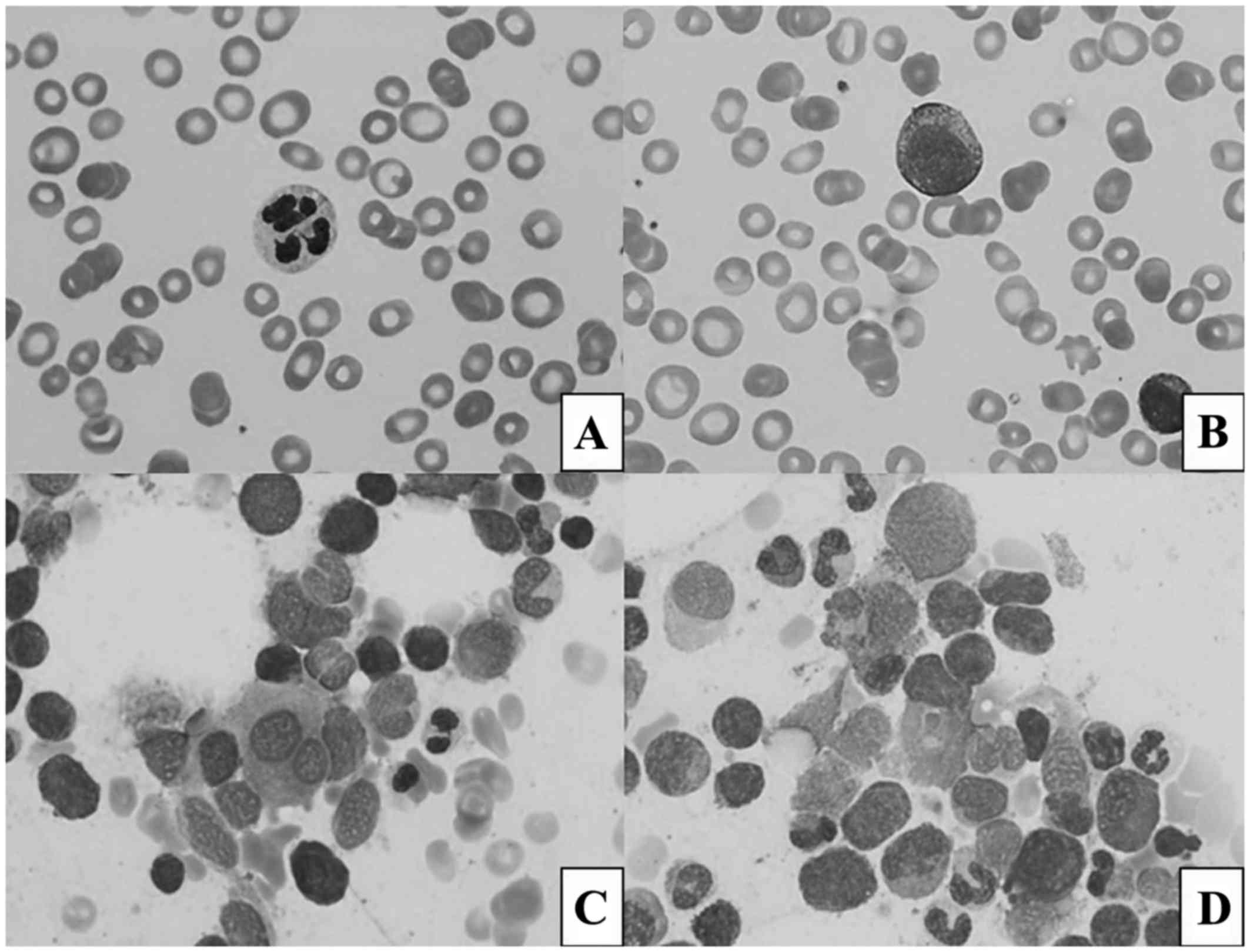
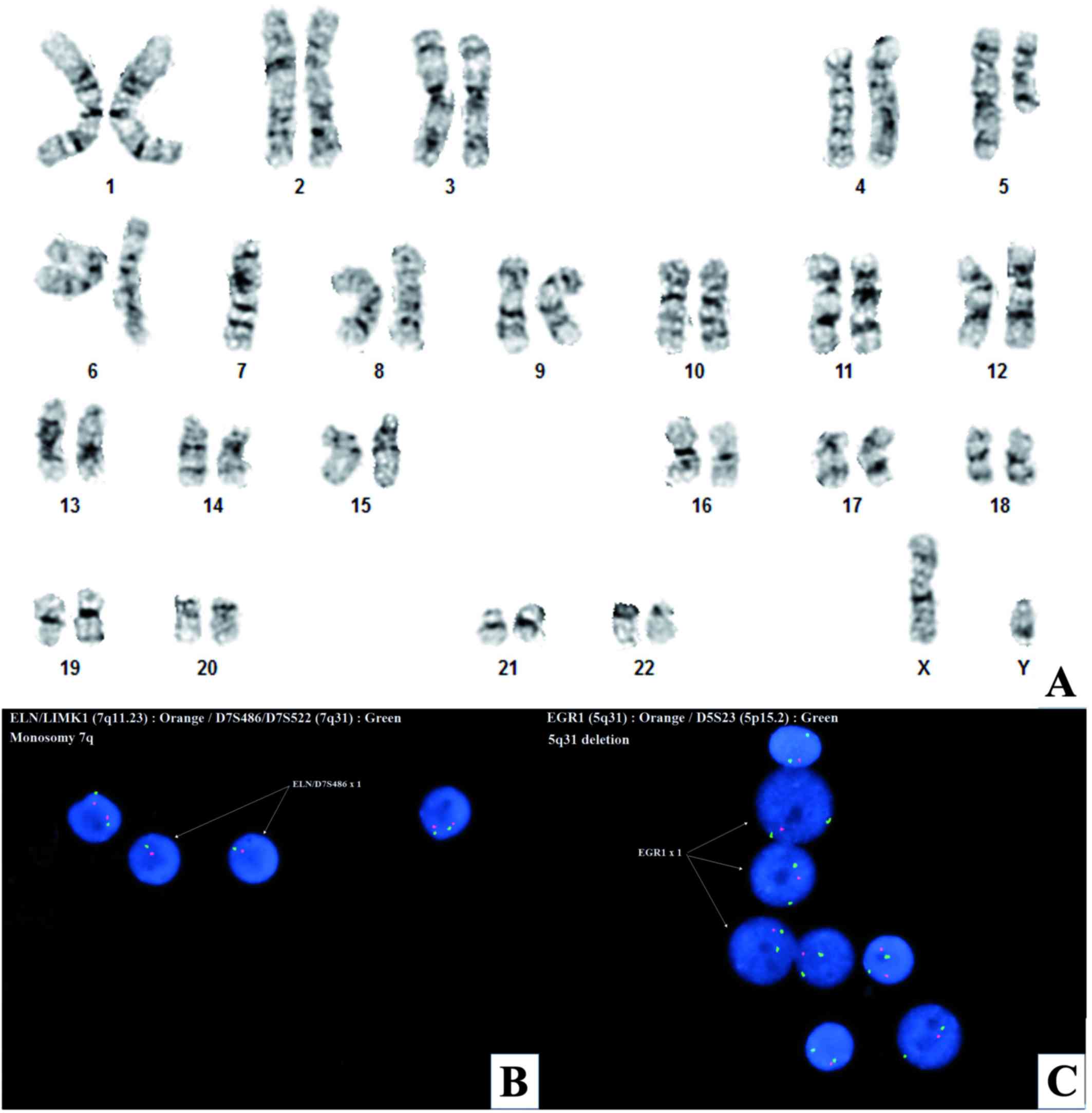
The peripheral blood smear revealed dysplastic, hypo- and hypersegmented neutrophils and rare blasts (Fig. 1A and B). The bone marrow biopsy revealed megakaryocytic, erythroid and myeloid dysplasia (Fig. 1C and D) and concurrent flow cytometry revealed an increased portion of blasts (12%). FISH analysis (Fig. 2), revealed 5q31 deletion and monosomy 7q in ~88% of interphase cells (Fig. 2B and C). G-banded chromosome analysis demonstrated an interstitial 5q13q33 deletion and monosomy 7 in all 20-metaphase cells examined [45,XY,del(5)(q13q33),-7] (Fig. 2A). A hematologic panel of next generation sequencing was performed on the bone marrow revealing mutations in SETBP1 p.G870S and NF1 p.S340Cfs*12. The patient was diagnosed with refractory anemia with excess blasts grade II (RAEB-2). A final diagnosis of t-MDS was rendered based on prior radiation history, multilineage dysplasia and unfavorable karyotype. The patient's age and existing co-morbidities pose a significant challenge for the available treatment modalities. The current patient is an unlikely candidate for stem cell transplant which is the only potentially curative modality in MDS.

Figure 1.

(A) Hypersegmented neutrophil, peripheral blood (Wright-Giemsa, original magnification ×1,000). (B) Blast, peripheral blood (Wright-Giemsa, original magnification ×1,000). (C and D) Dysplastic changes in all three lineages, bone marrow aspirate (Wright-Giemsa, original magnification ×1,000).

Figure 2.

Cytogenetic analysis (A) G-banded karyotype demonstrating 5q13q33 deletion and monosomy 7 [45,XY,del(5)(q13q33),-7], (B) Interphase FISH analysis demonstrating monosomy 7q. Note the deletion of the ELN/LIMK1 orange probe at 7q11.23 and the D7S486/D7S522 green probe at 7q31, (C) Interphase FISH analysis demonstrating 5q31 deletion. Note the deletion of the EGR1 orange probe at 5q31.

Discussion

Establishing a diagnosis of t-MDS vs. de novo MDS is a difficult task. In 50 to 70% of t-MDS cases, rearrangements in the chromosome 5 and/or 7 are present (6). The average time until onset of t-MDS depends on the type and amount of chemotherapy used. For alkylating agents and topoisomerase inhibitors the average time until onset of t-MDS is 5 to 7 years and 2 to 3 years, respectively. Different chemotherapy agents are associated with different genetic mutations; alkylating agents being associated with rearrangements in chromosome 5 and/or 7 (6–10). Our patient presumably developed t-MDS over 10 years after his treatment with 5-FU and radiation. T-MDS is traditionally associated with alkylating agents and topoisomerase inhibitors. However, cases of 5-FU derived t-MDS have also been reported (11). While HNPCC is not traditionally associated with hematologic malignancies, mutations in mismatch repair genes have been detected in hematologic malignancies and MDS (4,12,13). Also, there are reports of HNPCC families with neurofibromatosis like syndromes and increased incidences of hematologic malignancies (4). A second unrelated primary MDS in a patient with HNPCC is another possibility. While 10 years is longer than the average time until onset of MDS and establishing a definitive etiology may be impossible, the multilineage dysplasia, complex karyotype and history of chemotherapy and radiation are indicative of t-MDS.

Next generation sequencing of the marrow indicated that Muir-Torre syndrome may have played a more important role than chemotherapy/radiation in the pathogenesis of our patient's t-MDS. Our patient's bone marrow had a mutation in SETBP1 p.G870S. As in our patient, SETBP1 p.G870S mutations are associated with monosomy 7 (14). Counterintuitively, while monosomy 7 is associated with t-MDS, SETBP1 p.G870S is not commonly associated with t-MDS (6–10,15). Fabiani et al specifically examined SETBP1 mutations in t-MDS and found only 2.83% (3 of 106) of their therapy related myeloid neoplasm patient cohort had SETBP1 point mutations (15). The other mutation detected in our patient was NF1 p.S340Cfs*12. NF1 mutations are thought to be causative mutations of neurofibromatosis. Evans et al found NF1 mutations in 97.08% (166/171) of familial cases of neurofibromatosis type 1 (16). Interestingly, there are reports of HNPCC families with increased incidences of hematologic malignancies and neurofibromatosis like syndromes (4).

Recently a new diagnostic category, ‘myeloid neoplasms with germline predisposition’, was established by the WHO (5). The genes currently implicated in this category are not involved in HNPCC. However, unlike other hematologic conditions such as chronic myelogenous leukemia, MDS is a cytogenetically heterogeneous disease (17). As more research is conducted, other germline mutations such as those involved in HNPCC, maybe correlated with MDS.

There is an increased frequency of t-MDS in breast cancer survivors who have germline mutations in breast cancer susceptibility genes. One recent study found 21% (10/41) of breast cancer survivors with t-MDS had inherited mutations in at least one of the following genes: BRCA1, BRCA2, TP53, CHEK2, or PALB2 (6). T-MDS has also been reported to occur at an increased frequency in patients with an inactivating polymorphism in NQ01 gene and the glutathione S-transferase P1 gene (18,19). These genes both produce enzymes responsible for metabolizing toxic byproducts of chemotherapy agents. It has been hypothesized that certain populations may be susceptible to developing t-MDS due to an impaired ability to repair DNA damage or an impaired ability to metabolize chemotherapeutic agents (10).

MTS is caused by an impaired ability to repair DNA damage, but establishing a correlation with t-MDS may be difficult due to MTS's low prevalence. Further studies examining the relationship between t-MDS and MTS are needed. As therapies continue to improve and life expectancies increase, long term complications of chemotherapy and radiation such as t-MDS may become more prevalent. Genetically screening patients undergoing chemotherapy, and maintaining a central database may allow us to further elucidate which patients have an increased risk of developing t-MDS.

References

1 

Lynch HT and de la Chapelle A: Hereditary colorectal cancer. N Engl J Med. 348:919–932. 2003. View Article : Google Scholar : PubMed/NCBI

2 

Wells K and Wise PE: Hereditary colorectal cancer syndromes. Surg Clin North Am. 97:605–625. 2017. View Article : Google Scholar : PubMed/NCBI

3 

Lynch HT, Kimberling W, Albano WA, Lynch JF, Biscone K, Schuelke GS, Sandberg AA, Lipkin M, Deschner EE, Mikol YB, et al: Hereditary nonpolyposis colorectal cancer (lynch syndrome I and II). I. Clinical description of resource. Cancer. 56:934–938. 1985. View Article : Google Scholar : PubMed/NCBI

4 

Bandipalliam P: Syndrome of early onset colon cancers, hematologic malignancies & features of neurofibromatosis in HNPCC families with homozygous mismatch repair gene mutations. Fam Cancer. 4:323–333. 2005. View Article : Google Scholar : PubMed/NCBI

5 

Arber DA, Orazi A, Hasserjian R, Thiele J, Borowitz MJ, Le Beau MM, Bloomfield CD, Cazzola M and Vardiman JW: The 2016 revision to the world health organization classification of myeloid neoplasms and acute leukemia. Blood. 127:2391–2405. 2016. View Article : Google Scholar : PubMed/NCBI

6 

Churpek JE, Marquez R, Neistadt B, Claussen K, Lee MK, Churpek MM, Huo D, Weiner H, Bannerjee M, Godley LA, et al: Inherited mutations in cancer susceptibility genes are common among survivors of breast cancer who develop therapy-related leukemia. Cancer. 122:304–311. 2016. View Article : Google Scholar : PubMed/NCBI

7 

Larson RA: Etiology and management of therapy-related myeloid leukemia. Hematology Am Soc Hematol Educ Program. 1–459. 2007.PubMed/NCBI

8 

Pedersen-Bjergaard J, Andersen MT and Andersen MK: Genetic pathways in the pathogenesis of therapy-related myelodysplasia and acute myeloid leukemia. Hematology Am Soc Hematol Educ Program. 1–397. 2007.PubMed/NCBI

9 

Haase D: Cytogenetic features in myelodysplastic syndromes. Ann Hematol. 87:515–526. 2008. View Article : Google Scholar : PubMed/NCBI

10 

Godley LA and Larson RA: Therapy-related myeloid leukemia. Semin Oncol. 35:418–429. 2008. View Article : Google Scholar : PubMed/NCBI

11 

Park HJ, Choi JH, Lee KA, Kim HC, Nam YS, Oh YH and Lee WS: A case of therapy-related acute myeloid leukemia following 5-fluorouracil chemotherapy. Korean J Intern Med. 27:115–117. 2012. View Article : Google Scholar : PubMed/NCBI

12 

Hangaishi A, Ogawa S, Mitani K, Hosoya N, Chiba S, Yazaki Y and Hirai H: Mutations and loss of expression of a mismatch repair gene, hMLH1, in leukemia and lymphoma cell lines. Blood. 89:1740–1747. 1997.PubMed/NCBI

13 

Maeck L, Haase D, Schoch C, Hiddemann W and Alves F: Genetic instability in myelodysplastic syndrome: Detection of microsatellite instability and loss of heterozygosity in bone marrow samples with karyotype alterations. Br J Haematol. 109:842–846. 2000. View Article : Google Scholar : PubMed/NCBI

14 

Hou HA, Kuo YY, Tang JL, Chou WC, Yao M, Lai YJ, Lin CC, Chen CY, Liu CY, Tseng MH, et al: Clinical implications of the SETBP1 mutation in patients with primary myelodysplastic syndrome and its stability during disease progression. Am J Hematol. 89:181–186. 2014. View Article : Google Scholar : PubMed/NCBI

15 

Fabiani E, Falconi G, Fianchi L, Criscuolo M, Leone G and Voso MT: SETBP1 mutations in 106 patients with therapy-related myeloid neoplasms. Haematologica. 99:e152–e153. 2014. View Article : Google Scholar : PubMed/NCBI

16 

Evans DG, Bowers N, Burkitt-Wright E, Miles E, Garg S, Scott-Kitching V, Penman-Splitt M, Dobbie A, Howard E, Ealing J, et al: Comprehensive RNA analysis of the NF1 gene in classically affected NF1 affected individuals meeting NIH criteria has high sensitivity and mutation negative testing is reassuring in isolated cases with pigmentary features only. EBioMedicine. 7:212–220. 2016. View Article : Google Scholar : PubMed/NCBI

17 

Haase D, Germing U, Schanz J, Pfeilstöcker M, Nösslinger T, Hildebrandt B, Kundgen A, Lübbert M, Kunzmann R, Giagounidis AA, et al: New insights into the prognostic impact of the karyotype in MDS and correlation with subtypes: Evidence from a core dataset of 2124 patients. Blood. 110:4385–4395. 2007. View Article : Google Scholar : PubMed/NCBI

18 

Allan JM, Wild CP, Rollinson S, Willett EV, Moorman AV, Dovey GJ, Roddam PL, Roman E, Cartwright RA and Morgan GJ: Polymorphism in glutathione S-transferase P1 is associated with susceptibility to chemotherapy-induced leukemia. Proc Natl Acad Sci USA. 98:pp. 11592–11597. 2001; View Article : Google Scholar : PubMed/NCBI

19 

Larson RA, Wang Y, Banerjee M, Wiemels J, Hartford C, Le Beau MM and Smith MT: Prevalence of the inactivating 609C->T polymorphism in the NAD(P)H:quinone oxidoreductase (NQO1) gene in patients with primary and therapy-related myeloid leukemia. Blood. 94:803–807. 1999.PubMed/NCBI

Related Articles

  • Abstract
  • View
  • Download
  • Twitter
Copy and paste a formatted citation
Spandidos Publications style
Ullman D, Baumgartner E, Wnukowski N, Koenig G, Mikhail FM, Pavlidakey P and Peker D: Therapy‑associated myelodysplastic syndrome with monosomy 7 arising in a Muir‑Torre Syndrome patient carrying SETBP1 mutation. Mol Clin Oncol 8: 306-309, 2018.
APA
Ullman, D., Baumgartner, E., Wnukowski, N., Koenig, G., Mikhail, F.M., Pavlidakey, P., & Peker, D. (2018). Therapy‑associated myelodysplastic syndrome with monosomy 7 arising in a Muir‑Torre Syndrome patient carrying SETBP1 mutation. Molecular and Clinical Oncology, 8, 306-309. https://doi.org/10.3892/mco.2017.1532
MLA
Ullman, D., Baumgartner, E., Wnukowski, N., Koenig, G., Mikhail, F. M., Pavlidakey, P., Peker, D."Therapy‑associated myelodysplastic syndrome with monosomy 7 arising in a Muir‑Torre Syndrome patient carrying SETBP1 mutation". Molecular and Clinical Oncology 8.2 (2018): 306-309.
Chicago
Ullman, D., Baumgartner, E., Wnukowski, N., Koenig, G., Mikhail, F. M., Pavlidakey, P., Peker, D."Therapy‑associated myelodysplastic syndrome with monosomy 7 arising in a Muir‑Torre Syndrome patient carrying SETBP1 mutation". Molecular and Clinical Oncology 8, no. 2 (2018): 306-309. https://doi.org/10.3892/mco.2017.1532
Copy and paste a formatted citation
x
Spandidos Publications style
Ullman D, Baumgartner E, Wnukowski N, Koenig G, Mikhail FM, Pavlidakey P and Peker D: Therapy‑associated myelodysplastic syndrome with monosomy 7 arising in a Muir‑Torre Syndrome patient carrying SETBP1 mutation. Mol Clin Oncol 8: 306-309, 2018.
APA
Ullman, D., Baumgartner, E., Wnukowski, N., Koenig, G., Mikhail, F.M., Pavlidakey, P., & Peker, D. (2018). Therapy‑associated myelodysplastic syndrome with monosomy 7 arising in a Muir‑Torre Syndrome patient carrying SETBP1 mutation. Molecular and Clinical Oncology, 8, 306-309. https://doi.org/10.3892/mco.2017.1532
MLA
Ullman, D., Baumgartner, E., Wnukowski, N., Koenig, G., Mikhail, F. M., Pavlidakey, P., Peker, D."Therapy‑associated myelodysplastic syndrome with monosomy 7 arising in a Muir‑Torre Syndrome patient carrying SETBP1 mutation". Molecular and Clinical Oncology 8.2 (2018): 306-309.
Chicago
Ullman, D., Baumgartner, E., Wnukowski, N., Koenig, G., Mikhail, F. M., Pavlidakey, P., Peker, D."Therapy‑associated myelodysplastic syndrome with monosomy 7 arising in a Muir‑Torre Syndrome patient carrying SETBP1 mutation". Molecular and Clinical Oncology 8, no. 2 (2018): 306-309. https://doi.org/10.3892/mco.2017.1532
Follow us
  • Twitter
  • LinkedIn
  • Facebook
About
  • Spandidos Publications
  • Careers
  • Cookie Policy
  • Privacy Policy
How can we help?
  • Help
  • Live Chat
  • Contact
  • Email to our Support Team