Spandidos Publications Logo
  • About
    • About Spandidos
    • Aims and Scopes
    • Abstracting and Indexing
    • Editorial Policies
    • Reprints and Permissions
    • Job Opportunities
    • Terms and Conditions
    • Contact
  • Journals
    • All Journals
    • Oncology Letters
      • Oncology Letters
      • Information for Authors
      • Editorial Policies
      • Editorial Board
      • Aims and Scope
      • Abstracting and Indexing
      • Bibliographic Information
      • Archive
    • International Journal of Oncology
      • International Journal of Oncology
      • Information for Authors
      • Editorial Policies
      • Editorial Board
      • Aims and Scope
      • Abstracting and Indexing
      • Bibliographic Information
      • Archive
    • Molecular and Clinical Oncology
      • Molecular and Clinical Oncology
      • Information for Authors
      • Editorial Policies
      • Editorial Board
      • Aims and Scope
      • Abstracting and Indexing
      • Bibliographic Information
      • Archive
    • Experimental and Therapeutic Medicine
      • Experimental and Therapeutic Medicine
      • Information for Authors
      • Editorial Policies
      • Editorial Board
      • Aims and Scope
      • Abstracting and Indexing
      • Bibliographic Information
      • Archive
    • International Journal of Molecular Medicine
      • International Journal of Molecular Medicine
      • Information for Authors
      • Editorial Policies
      • Editorial Board
      • Aims and Scope
      • Abstracting and Indexing
      • Bibliographic Information
      • Archive
    • Biomedical Reports
      • Biomedical Reports
      • Information for Authors
      • Editorial Policies
      • Editorial Board
      • Aims and Scope
      • Abstracting and Indexing
      • Bibliographic Information
      • Archive
    • Oncology Reports
      • Oncology Reports
      • Information for Authors
      • Editorial Policies
      • Editorial Board
      • Aims and Scope
      • Abstracting and Indexing
      • Bibliographic Information
      • Archive
    • Molecular Medicine Reports
      • Molecular Medicine Reports
      • Information for Authors
      • Editorial Policies
      • Editorial Board
      • Aims and Scope
      • Abstracting and Indexing
      • Bibliographic Information
      • Archive
    • World Academy of Sciences Journal
      • World Academy of Sciences Journal
      • Information for Authors
      • Editorial Policies
      • Editorial Board
      • Aims and Scope
      • Abstracting and Indexing
      • Bibliographic Information
      • Archive
    • International Journal of Functional Nutrition
      • International Journal of Functional Nutrition
      • Information for Authors
      • Editorial Policies
      • Editorial Board
      • Aims and Scope
      • Abstracting and Indexing
      • Bibliographic Information
      • Archive
    • International Journal of Epigenetics
      • International Journal of Epigenetics
      • Information for Authors
      • Editorial Policies
      • Editorial Board
      • Aims and Scope
      • Abstracting and Indexing
      • Bibliographic Information
      • Archive
    • Medicine International
      • Medicine International
      • Information for Authors
      • Editorial Policies
      • Editorial Board
      • Aims and Scope
      • Abstracting and Indexing
      • Bibliographic Information
      • Archive
  • Articles
  • Information
    • Information for Authors
    • Information for Reviewers
    • Information for Librarians
    • Information for Advertisers
    • Conferences
  • Language Editing
Spandidos Publications Logo
  • About
    • About Spandidos
    • Aims and Scopes
    • Abstracting and Indexing
    • Editorial Policies
    • Reprints and Permissions
    • Job Opportunities
    • Terms and Conditions
    • Contact
  • Journals
    • All Journals
    • Biomedical Reports
      • Information for Authors
      • Editorial Policies
      • Editorial Board
      • Aims and Scope
      • Abstracting and Indexing
      • Bibliographic Information
      • Archive
    • Experimental and Therapeutic Medicine
      • Information for Authors
      • Editorial Policies
      • Editorial Board
      • Aims and Scope
      • Abstracting and Indexing
      • Bibliographic Information
      • Archive
    • International Journal of Epigenetics
      • Information for Authors
      • Editorial Policies
      • Editorial Board
      • Aims and Scope
      • Abstracting and Indexing
      • Bibliographic Information
      • Archive
    • International Journal of Functional Nutrition
      • Information for Authors
      • Editorial Policies
      • Editorial Board
      • Aims and Scope
      • Abstracting and Indexing
      • Bibliographic Information
      • Archive
    • International Journal of Molecular Medicine
      • Information for Authors
      • Editorial Policies
      • Editorial Board
      • Aims and Scope
      • Abstracting and Indexing
      • Bibliographic Information
      • Archive
    • International Journal of Oncology
      • Information for Authors
      • Editorial Policies
      • Editorial Board
      • Aims and Scope
      • Abstracting and Indexing
      • Bibliographic Information
      • Archive
    • Medicine International
      • Information for Authors
      • Editorial Policies
      • Editorial Board
      • Aims and Scope
      • Abstracting and Indexing
      • Bibliographic Information
      • Archive
    • Molecular and Clinical Oncology
      • Information for Authors
      • Editorial Policies
      • Editorial Board
      • Aims and Scope
      • Abstracting and Indexing
      • Bibliographic Information
      • Archive
    • Molecular Medicine Reports
      • Information for Authors
      • Editorial Policies
      • Editorial Board
      • Aims and Scope
      • Abstracting and Indexing
      • Bibliographic Information
      • Archive
    • Oncology Letters
      • Information for Authors
      • Editorial Policies
      • Editorial Board
      • Aims and Scope
      • Abstracting and Indexing
      • Bibliographic Information
      • Archive
    • Oncology Reports
      • Information for Authors
      • Editorial Policies
      • Editorial Board
      • Aims and Scope
      • Abstracting and Indexing
      • Bibliographic Information
      • Archive
    • World Academy of Sciences Journal
      • Information for Authors
      • Editorial Policies
      • Editorial Board
      • Aims and Scope
      • Abstracting and Indexing
      • Bibliographic Information
      • Archive
  • Articles
  • Information
    • For Authors
    • For Reviewers
    • For Librarians
    • For Advertisers
    • Conferences
  • Language Editing
Login Register Submit
  • This site uses cookies
  • You can change your cookie settings at any time by following the instructions in our Cookie Policy. To find out more, you may read our Privacy Policy.

    I agree
Search articles by DOI, keyword, author or affiliation
Search
Advanced Search
presentation
Molecular and Clinical Oncology
Join Editorial Board Propose a Special Issue
Print ISSN: 2049-9450 Online ISSN: 2049-9469
Journal Cover
June-2018 Volume 8 Issue 6

Full Size Image

Sign up for eToc alerts
Recommend to Library

Journals

International Journal of Molecular Medicine

International Journal of Molecular Medicine

International Journal of Molecular Medicine is an international journal devoted to molecular mechanisms of human disease.

International Journal of Oncology

International Journal of Oncology

International Journal of Oncology is an international journal devoted to oncology research and cancer treatment.

Molecular Medicine Reports

Molecular Medicine Reports

Covers molecular medicine topics such as pharmacology, pathology, genetics, neuroscience, infectious diseases, molecular cardiology, and molecular surgery.

Oncology Reports

Oncology Reports

Oncology Reports is an international journal devoted to fundamental and applied research in Oncology.

Experimental and Therapeutic Medicine

Experimental and Therapeutic Medicine

Experimental and Therapeutic Medicine is an international journal devoted to laboratory and clinical medicine.

Oncology Letters

Oncology Letters

Oncology Letters is an international journal devoted to Experimental and Clinical Oncology.

Biomedical Reports

Biomedical Reports

Explores a wide range of biological and medical fields, including pharmacology, genetics, microbiology, neuroscience, and molecular cardiology.

Molecular and Clinical Oncology

Molecular and Clinical Oncology

International journal addressing all aspects of oncology research, from tumorigenesis and oncogenes to chemotherapy and metastasis.

World Academy of Sciences Journal

World Academy of Sciences Journal

Multidisciplinary open-access journal spanning biochemistry, genetics, neuroscience, environmental health, and synthetic biology.

International Journal of Functional Nutrition

International Journal of Functional Nutrition

Open-access journal combining biochemistry, pharmacology, immunology, and genetics to advance health through functional nutrition.

International Journal of Epigenetics

International Journal of Epigenetics

Publishes open-access research on using epigenetics to advance understanding and treatment of human disease.

Medicine International

Medicine International

An International Open Access Journal Devoted to General Medicine.

Journal Cover
June-2018 Volume 8 Issue 6

Full Size Image

Sign up for eToc alerts
Recommend to Library

  • Article
  • Citations
    • Cite This Article
    • Download Citation
    • Create Citation Alert
    • Remove Citation Alert
    • Cited By
  • Similar Articles
    • Related Articles (in Spandidos Publications)
    • Similar Articles (Google Scholar)
    • Similar Articles (PubMed)
  • Download PDF
  • Download XML
  • View XML
Article Open Access

Definition of fields margins for palliative radiotherapy of pancreatic carcinoma

  • Authors:
    • Milly Buwenge
    • Alfonso Marinelli
    • Francesco Deodato
    • Gabriella Macchia
    • Tigeneh Wondemagegnhu
    • Tareq Salah
    • Silvia Cammelli
    • A. F. M. Kamal Uddin
    • Mostafa A. Sumon
    • Constanza M. Donati
    • Savino Cilla
    • Alessio G. Morganti
  • View Affiliations / Copyright

    Affiliations: Department of Experimental, Diagnostic and Specialty Medicine‑DIMES, Radiation Oncology Center, University of Bologna, S. Orsola‑Malpighi Hospital, I‑40138 Bologna, Italy, Radiation Oncology Unit, Research and Care Foundation ‘Giovanni Paolo II’, Catholic University of Sacred Heart, I‑86100 Campobasso, Italy, Department of Radiation Oncology, Black Lion Hospital, Addis Ababa 9086, Ethiopia, Faculty of Medicine, Assiut University, Assiut 71515, Egypt, Radiation Oncology Department, United Hospital Limited, Gulshan, Dhaka 1212, Bangladesh, Medical Physics Unit, Research and Care Foundation ‘Giovanni Paolo II’, Catholic University of Sacred Heart, I‑86100 Campobasso, Italy
    Copyright: © Buwenge et al. This is an open access article distributed under the terms of Creative Commons Attribution License.
  • Pages: 715-718
    |
    Published online on: April 12, 2018
       https://doi.org/10.3892/mco.2018.1605
  • Expand metrics +
Metrics: Total Views: 0 (Spandidos Publications: | PMC Statistics: )
Metrics: Total PDF Downloads: 0 (Spandidos Publications: | PMC Statistics: )
Cited By (CrossRef): 0 citations Loading Articles...

This article is mentioned in:


Abstract

The present study aimed to provide practical guidelines for palliative treatment of advanced carcinoma of the pancreas (CAP) with the 2D technique. Fifteen patients with locally advanced CAP consecutively treated with radiation therapy at the Radiation Oncology Center, Research and Care Foundation ‘Giovanni Paolo II’ (Campobasso, Italy) underwent computed tomography simulation in supine position. Definition of the clinical target volume (CTV) included the head and body of the pancreas, and the retropancreatic space. The planning target volume was defined by adding a margin of 14 mm to the CTV in the cranio‑caudal direction and of 11 mm in radial direction. For each patient, 3 treatment plans were calculated using a cobalt source, 6 MV photons and 15 MV photons (box technique). Beams were drawn using the primary collimators without using multileaf collimators, and progressively optimized in order to respect the minimum dose (Dmin>90%) constraint. Once the final plan was achieved, distances of the fields edges from a set of reference points (bony or duodenal landmarks) were measured. Using this technique, 15 anterior‑posterior and postero‑anterior (AP‑PA) beams and 15 pairs of lateral‑lateral (LL) beams were defined for the different patients. Finally, the single minimal AP‑PA and LL beams able to include the 15 sets of AP‑PA and LL beams were defined. The results of this analysis are reported in tabular form. Guidelines are provided for treatment based on cobalt unit or Linear accelerator (both 6 and 15 MV photons). This study provides information regarding field size and position. A dosimetric study has been planned to identify the dose to be administered with this technique taking into account current dose‑volume constraints.

Introduction

Carcinoma of the pancreas (CAP) portends a poor prognosis. In fact, at diagnosis, the disease is generally advanced, with frequent presence of epigastric and back pain (1). Radiation therapy (RT) is effective for pain palliation, even with short-term and involved-field radiotherapy (2).

The standard treatment technique of CAP is three-dimensional conformal radiotherapy (3D-CRT), intensity modulated radiotherapy, and stereotactic radiotherapy (3). These techniques however, are not available in several centers, especially in developing countries, where the only available technique is standard two-dimensional (2D) technique, often based on a cobalt unit (4–6). For 2D technique, guidelines for adjuvant or radical treatments involving the prophylactic irradiation of regional lymph nodes are available (7). Conversely, guidelines for palliative RT with standard 2D technique are lacking.

Therefore, the purpose of this study is to provide guidelines for palliative treatment of advanced CAP with a 2D technique.

Patients and methods

Fifteen patients with locally advanced CAP consecutively treated with RT in our center were identified. Patients underwent computed tomography (CT) simulation in supine position. Prior to CT-simulation, 100 cc of contrast medium (Gastrografin) were administered orally in order to visualize the stomach and duodenum. Scans were performed at an interval of 5 mm, from T9 to L5.

The definition of the Clinical Target Volume (CTV) included the head and body of the pancreas irrespective of tumor stage and tumor site of the individual patient. In the CTV, the retropancreatic space was included, from the posterior surface of the gland to the middle of the aorta and inferior vena cava. All contours were verified by an experienced radiation oncologist (GM) and by a senior consultant (AGM). All patients enrolled in the study signed a consent form for the use of their data and CT images for performing this analysis. The study was approved by the institutional board of Research and Care Foundation ‘Giovanni Paolo II’.

The contours of the following Organs at Risk (OARs) were defined: spinal cord, liver, kidneys, small bowel and duodenum. An Internal Margin of 10 mm in cranio-caudal direction and 4 mm in the radial direction was considered (8). A Set-Up Margin of 10 mm in all directions was also considered. The Planning Target Volume (PTV) was defined by adding a margin of 14 mm to the CTV in cranio-caudal direction and 11 mm in radial direction.

For each patient, 3 treatment plans were calculated using: A cobalt source, 6 MV photons and 15 MV photons, respectively. Treatment plans based on the box technique were generated, with a pair of anterior-posterior and postero-anterior (AP-PA) and with a pair of lateral beams (LL). A fixed Source-Axis Distance (SAD) technique was used. The SAD was 100 cm for photon beams and 80 cm for the cobalt unit. The beams weights were: 20% AP, 30% PA, and 25% for L-L beams, in order to reduce the dose to liver and kidneys.

Beams were drawn using the primary collimators (without using multileaf collimators). Primary collimators were initially placed at 5 mm distance with respect to the PTV margins. Then the minimum dose (Dmin) was evaluated. Fields sizes were gradually increased, in steps of 2–3 mm in order to respect the minimum dose (Dmin >90%) constraint. This progressive optimization was analyzed with an iterative procedure assessing the three-dimensional dose distribution. In this way, it was possible to identify the fields sizes to be enlarged on the basis of ‘cold spots’ sites.

Once the final plan was achieved, distances of the fields edges from a set of reference points were measured. In this way 15 AP-PA beams and 15 pairs of LL beams were defined for the different patients. Finally, minimal individual field margins for AP-PA and LL beams, able to encompass the entire different 15 sets were defined.

Results

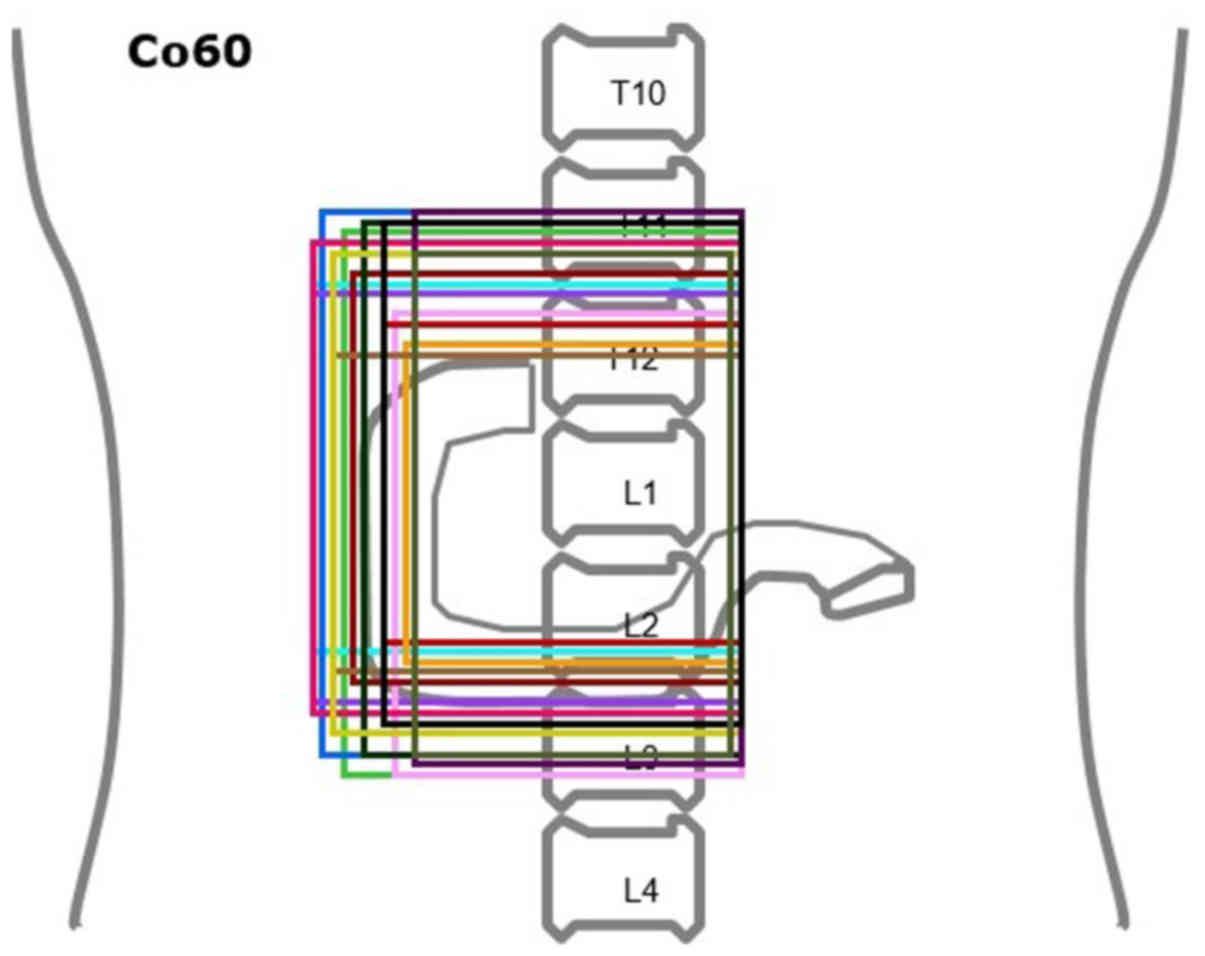
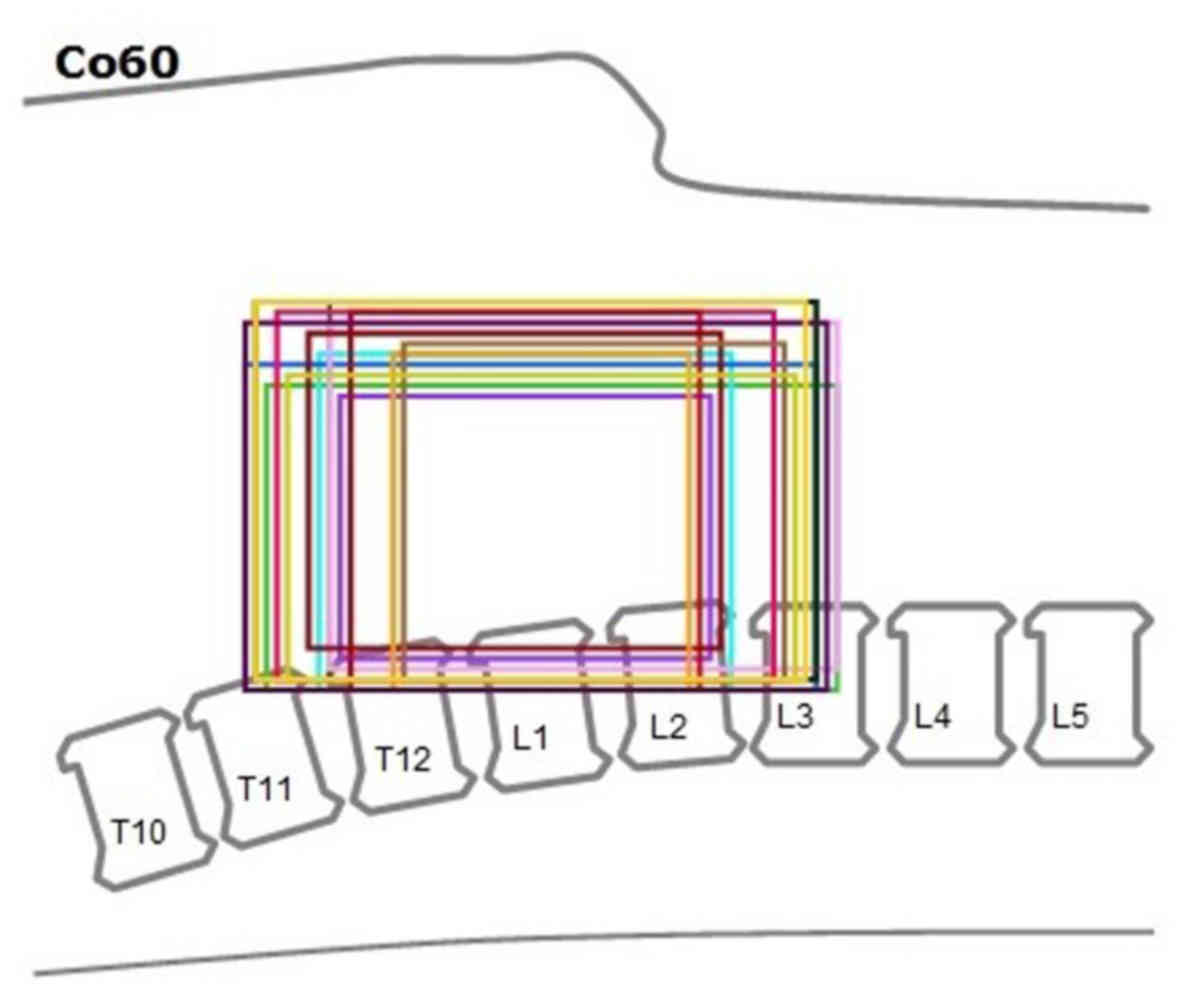
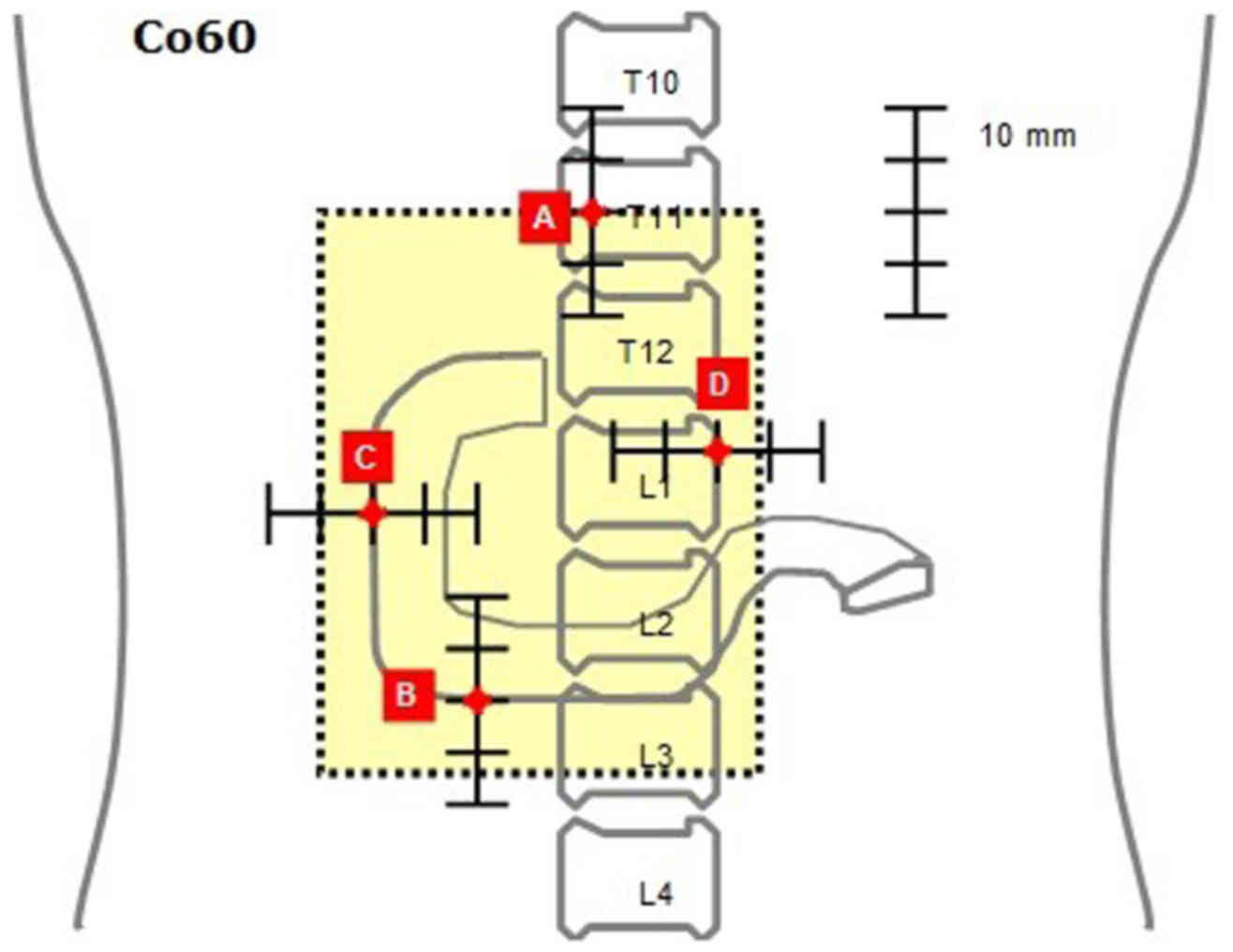
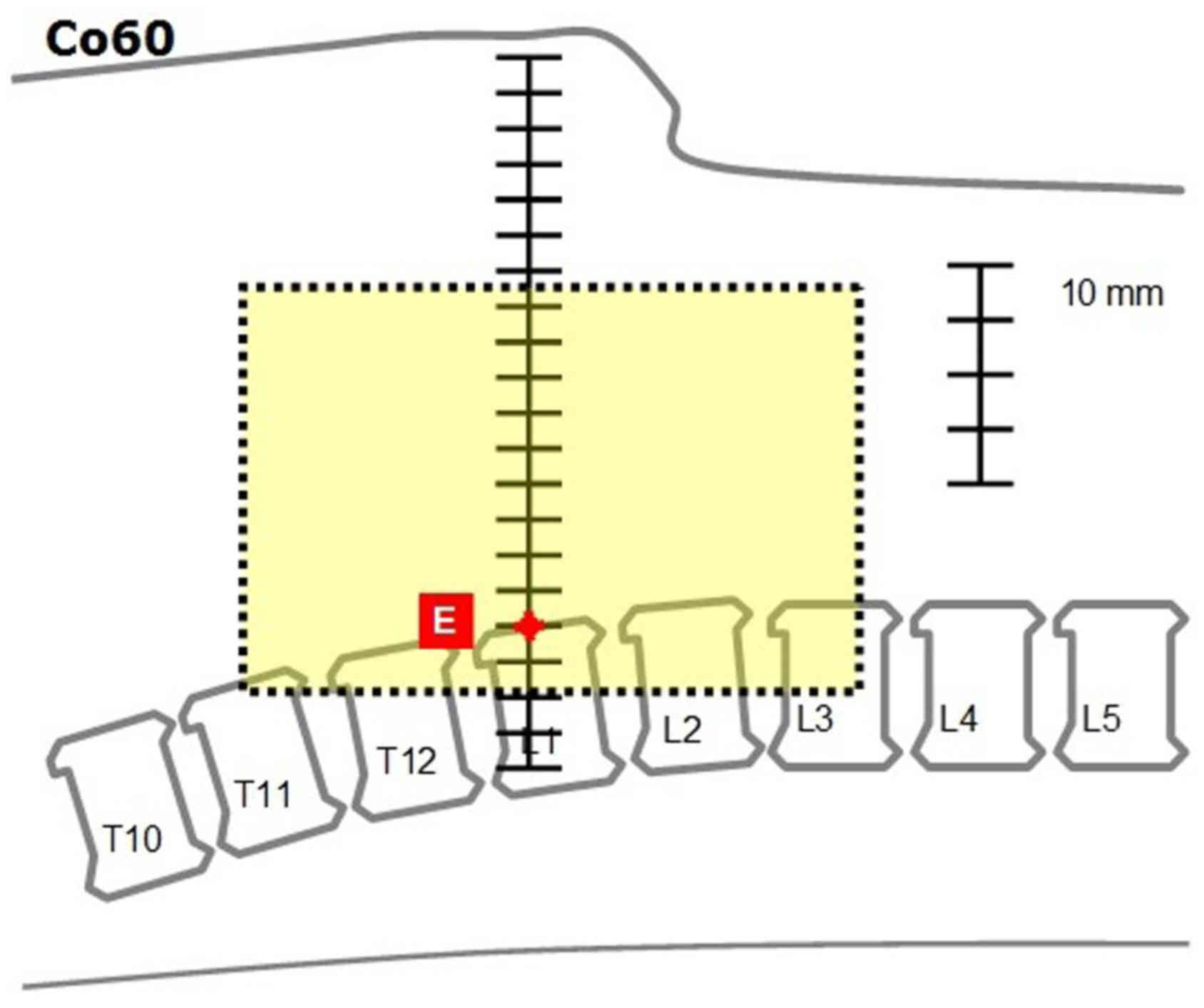
Fifteen patients with locally advanced CAP were enrolled in the study. Patient characteristics are shown in Table I. Figs. 1 and 2 show the AP-PA and LL fields defined in the individual patients. Table II shows the results of the analysis, in terms of field margins using the different beam energies. Figs. 3 and 4 show the suggested fields obtained using the ‘recommended’ margins for a cobalt unit.

Figure 1.

Anterior-posterior treatment fields defined for the different patients (cobalt source only) are represented with different colours.

Figure 2.

Lateral-lateral treatment fields defined for the different patients (cobalt source only) are represented with different colours.

Figure 3.

Recommended anteroposterio field margins for cobalt unit.

Figure 4.

Recommended lateral field margins for cobalt unit.

Table I.

Patient characteristics.

Table I.

Patient characteristics.

CharacteristicNumber%
Age, years median (range)66 (46–82)
Sex (male/female)9/660/40
BMI, median (range)25 (20–30)

[i] BMI, body mass index.

Table II.

Field definitions.

Table II.

Field definitions.

FieldMargin Co606 MV15 MV
Anterior-posteriorCranialFrom point A (middle of T11 vertebra): Caudally0510
CaudalFrom point B (bottom of the duodenal wall): Caudally15105
RightFrom point C (most external point of the duodenum): Laterally1088
LeftFrom point D (left margin of L1 vertebra): Laterally151313
LateralCranialSame as anterior-posterior0510
CaudalSame as anterior-posterior15105
AnteriorFrom point E (anteriorsurface of L1 vertebra): Anteriorly959393
PosteriorFrom point E (anterior surface of L1 vertebra): Posteriorly201818

[i] Reported measures represent minimal individual field margins needed to respect the PTV constraint Dmin >90%. Measures are expressed in millimetres.

Discussion

A dosimetric evaluation was performed in 15 patients with locally advanced CAP to define the standard fields for palliative RT with 2D technique. Previous guidelines for 2D RT were available (7). However, these guidelines were provided for tumor and prophylactic nodal irradiation (PNI). In our study, guidelines are provided for the irradiation of the primary tumor only. In fact, our recommendations are aimed at standardization of palliative RT, for which PNI is unnecessary. In fact, PNI produces higher toxicity, with a negative impact on quality of life (QoL) (9).

The analysis was conducted by defining the CTV as the head and body of the pancreas since they account for most sites of CAP. Therefore, the guidelines given in this study apply only to tumors in these locations. In the CTV, the retropancreatic space was also included. The region behind the pancreas, referred to as the ‘mesopancreas’ (10), contains a rich nerve plexus accompanying the lymphatic vessels (11). The infiltration of this nerve plexus can cause pain, frequently present in these patients (1). Therefore, to broadly include this potential pain site of origin, the anterior half of the great vessels was included in the CTV.

For the definition of the set-up margin, 1 cm in all directions was used. We must recognize that this margin may be lower especially in cases of systematic use of portal imaging (12). However, our study is addressed to less technologically equipped centers, and therefore probably without these practicality setting.

In this analysis, field margins were defined using the minimum size to ensure a minimum dose to the target of 90% of the prescribed dose. This constraint is less restrictive than the limits recommended by ICRU 62 which provides a minimum dose to the target of 95%. However, the constraint Dmin >90% seemed more appropriate considering our palliative treatment concept. More so, the use of this dose limit can probably reduce the risk of wide irradiation of OARs, particularly the intestine and stomach. We felt it was important to reduce the toxicity profile with respect to OARs since our goal was to improve QoL.

This study included 15 patients with different anatomical features, as indicated from the large range of body mass index (Table I). This sample size seemed reasonable to define the standard dimensions of the irradiation fields. However, we can not exclude that these fields may be inadequate in some patients. Therefore, it is recommended that a qualitative assessment of the tumor site be undertaken, such as using a diagnostic CT scan. Particularly, this would provide an assessment of the cranial field limit appropriate for the inclusion of the tumor in the treated volume. A qualitative assessment of this type may also enable reduction of the field size in some patients.

Our study provides descriptive information only about field sizes and location, and not on dose and fractionation. Therefore, a subsequent dosimetric study has been planned in order to identify the dose to be administered with this technique taking into account current dose-volume constraints (13). This analysis will also determine the actual feasibility of treatment based on cobalt equipment. Thus, these results will be potentially useful in centers with this modality only.

In conclusion, with this paper we are providing a convenient tool for 2D target delineation of CAP in less equipped centres.

Acknowledgements

Not applicable.

Funding

No funding was received.

Availability of data and materials

All relevant data and its supporting information files are within the paper.

Authors' contributions

Concept and design involved MB, SaC, FD, GB, SiC and AGM. Treatment planning, analysis and interpretation of the data was performed by AM, MB, CMD, AG and AGM. Drafting of the article was performed by MB, FD, SaC, and AGM. Critical revision of the article for important intellectual content involved TW, TS, AFMK, MAS and AGM.

Ethics approval and consent to participate

All patients enrolled in the study signed a consent form for the use of their data and CT images for performing this analysis. The study was approved by the institutional board of Research and Care Foundation ‘Giovanni Paolo II’.

Consent to publication

Not applicable.

Competing interests

The authors declare that they have no competing interests.

References

1 

Saif MW: Pancreatic neoplasm in 2011: An update. JOP. 12:316–321. 2011.PubMed/NCBI

2 

Morganti AG, Trodella L, Valentini V, Barbi S, Macchia G, Mantini G, Turriziani A and Cellini N: Pain relief with short term irradiation in locally advanced carcinoma of the pancreas. J Pall Care. 19:258–262. 2003.

3 

NCCN Clinical Practice Guidelines in Oncology (NCCN Guidelines), . Pancreatic Adenocarcinoma. version 3. 2017.http://www.nccn.org/professionals/physicians/pdf/prostate.pdf27th–September. 2017

4 

Adebamowo CA and Akarolo-Anthony S: Cancer in Africa: Opportunities for collaborative research and training. Afr J Med Sci. 38 Suppl 2:S5–S13. 2009.

5 

Mugambe Kigula JB and Wegoye P: Pattern and experience with cancers treated with the Chinese GWGP80 cobalt unit at mulago hospital, kampala. East Afr Med J. 77:523–525. 2000.PubMed/NCBI

6 

Sharma V, Gaye PM, Wahab SA, Ndlovu N, Ngoma T, Vanderpuye V, Sowuhami A, Dawotola DA, Kigula-Mugambe J and Jeremic B: Palliative radiation therapy practice for advanced esophageal carcinoma in Africa. Dis Esophagus. 23:240–243. 2010. View Article : Google Scholar : PubMed/NCBI

7 

Willett CG, Czito BJ and Bendell JC: Cancer of the pancreasHalperin EC, Perez CA and Brady LW: Perez and Brady's principles and practices of radiation oncology. 5th edition. Lippincott, Williams & Wilkins; Philadelphia PA: pp. 1336–31348. 2008

8 

Song YC, You JQ, Yuan ZY, Wang W, Li XY and Wang P: A preliminary probe into the movement of pancreatic lesions and factors that influence it. Br J Radiol. 83:505–508. 2010. View Article : Google Scholar : PubMed/NCBI

9 

Morganti AG, Trodella L, Valentini V, Macchia G, Alfieri S, Smaniotto D, Luzi S, Costamagna G, Doglietto GB and Cellini N: Concomitant gemcitabine (‘Gemzar’) and extended nodal irradiation in the treatment of pancreatic and biliary carcinoma: A phase I study. Onkologie. 26:325–329. 2003.PubMed/NCBI

10 

Gockel I, Domeyer M, Wolloscheck T, Konerding MA and Junginger T: Resection of the mesopancreas (RMP): A new surgical classification of a known anatomical space. World J Surg Oncol. 5:442007. View Article : Google Scholar : PubMed/NCBI

11 

Noto M, Miwa K, Kitagawa H, Kayahara M, Takamura H, Shimizu K and Ohta T: Pancreas head carcinoma: Frequency of invasion to soft tissue adherent to the superior mesenteric artery. Am J Surg Pathol. 29:1056–1061. 2005.PubMed/NCBI

12 

Yovino S, Poppe M, Jabbour S, David V, Garofalo M, Pandya N, Alexander R, Hanna N and Regine WF: Intensity-modulated radiation therapy significantly improves acute gastrointestinal toxicity in pancreatic and ampullary cancers. Int J Radiat Oncol Biol Phys. 79:158–162. 2011. View Article : Google Scholar : PubMed/NCBI

13 

Bentzen SM, Constine LS, Deasy JO, Eisbruch A, Jackson A, Marks LB, Ten Haken RK and Yorke ED: Quantitative analyses of normal tissue effects in the clinic (QUANTEC): An introduction to the scientific issues. Int J Radiat Oncol Biol Phys. 76 3 Suppl:S3–S9. 2010. View Article : Google Scholar : PubMed/NCBI

Related Articles

  • Abstract
  • View
  • Download
  • Twitter
Copy and paste a formatted citation
Spandidos Publications style
Buwenge M, Marinelli A, Deodato F, Macchia G, Wondemagegnhu T, Salah T, Cammelli S, Uddin AF, Sumon MA, Donati CM, Donati CM, et al: Definition of fields margins for palliative radiotherapy of pancreatic carcinoma. Mol Clin Oncol 8: 715-718, 2018.
APA
Buwenge, M., Marinelli, A., Deodato, F., Macchia, G., Wondemagegnhu, T., Salah, T. ... Morganti, A.G. (2018). Definition of fields margins for palliative radiotherapy of pancreatic carcinoma. Molecular and Clinical Oncology, 8, 715-718. https://doi.org/10.3892/mco.2018.1605
MLA
Buwenge, M., Marinelli, A., Deodato, F., Macchia, G., Wondemagegnhu, T., Salah, T., Cammelli, S., Uddin, A. F., Sumon, M. A., Donati, C. M., Cilla, S., Morganti, A. G."Definition of fields margins for palliative radiotherapy of pancreatic carcinoma". Molecular and Clinical Oncology 8.6 (2018): 715-718.
Chicago
Buwenge, M., Marinelli, A., Deodato, F., Macchia, G., Wondemagegnhu, T., Salah, T., Cammelli, S., Uddin, A. F., Sumon, M. A., Donati, C. M., Cilla, S., Morganti, A. G."Definition of fields margins for palliative radiotherapy of pancreatic carcinoma". Molecular and Clinical Oncology 8, no. 6 (2018): 715-718. https://doi.org/10.3892/mco.2018.1605
Copy and paste a formatted citation
x
Spandidos Publications style
Buwenge M, Marinelli A, Deodato F, Macchia G, Wondemagegnhu T, Salah T, Cammelli S, Uddin AF, Sumon MA, Donati CM, Donati CM, et al: Definition of fields margins for palliative radiotherapy of pancreatic carcinoma. Mol Clin Oncol 8: 715-718, 2018.
APA
Buwenge, M., Marinelli, A., Deodato, F., Macchia, G., Wondemagegnhu, T., Salah, T. ... Morganti, A.G. (2018). Definition of fields margins for palliative radiotherapy of pancreatic carcinoma. Molecular and Clinical Oncology, 8, 715-718. https://doi.org/10.3892/mco.2018.1605
MLA
Buwenge, M., Marinelli, A., Deodato, F., Macchia, G., Wondemagegnhu, T., Salah, T., Cammelli, S., Uddin, A. F., Sumon, M. A., Donati, C. M., Cilla, S., Morganti, A. G."Definition of fields margins for palliative radiotherapy of pancreatic carcinoma". Molecular and Clinical Oncology 8.6 (2018): 715-718.
Chicago
Buwenge, M., Marinelli, A., Deodato, F., Macchia, G., Wondemagegnhu, T., Salah, T., Cammelli, S., Uddin, A. F., Sumon, M. A., Donati, C. M., Cilla, S., Morganti, A. G."Definition of fields margins for palliative radiotherapy of pancreatic carcinoma". Molecular and Clinical Oncology 8, no. 6 (2018): 715-718. https://doi.org/10.3892/mco.2018.1605
Follow us
  • Twitter
  • LinkedIn
  • Facebook
About
  • Spandidos Publications
  • Careers
  • Cookie Policy
  • Privacy Policy
How can we help?
  • Help
  • Live Chat
  • Contact
  • Email to our Support Team