Spandidos Publications Logo
  • About
    • About Spandidos
    • Aims and Scopes
    • Abstracting and Indexing
    • Editorial Policies
    • Reprints and Permissions
    • Job Opportunities
    • Terms and Conditions
    • Contact
  • Journals
    • All Journals
    • Oncology Letters
      • Oncology Letters
      • Information for Authors
      • Editorial Policies
      • Editorial Board
      • Aims and Scope
      • Abstracting and Indexing
      • Bibliographic Information
      • Archive
    • International Journal of Oncology
      • International Journal of Oncology
      • Information for Authors
      • Editorial Policies
      • Editorial Board
      • Aims and Scope
      • Abstracting and Indexing
      • Bibliographic Information
      • Archive
    • Molecular and Clinical Oncology
      • Molecular and Clinical Oncology
      • Information for Authors
      • Editorial Policies
      • Editorial Board
      • Aims and Scope
      • Abstracting and Indexing
      • Bibliographic Information
      • Archive
    • Experimental and Therapeutic Medicine
      • Experimental and Therapeutic Medicine
      • Information for Authors
      • Editorial Policies
      • Editorial Board
      • Aims and Scope
      • Abstracting and Indexing
      • Bibliographic Information
      • Archive
    • International Journal of Molecular Medicine
      • International Journal of Molecular Medicine
      • Information for Authors
      • Editorial Policies
      • Editorial Board
      • Aims and Scope
      • Abstracting and Indexing
      • Bibliographic Information
      • Archive
    • Biomedical Reports
      • Biomedical Reports
      • Information for Authors
      • Editorial Policies
      • Editorial Board
      • Aims and Scope
      • Abstracting and Indexing
      • Bibliographic Information
      • Archive
    • Oncology Reports
      • Oncology Reports
      • Information for Authors
      • Editorial Policies
      • Editorial Board
      • Aims and Scope
      • Abstracting and Indexing
      • Bibliographic Information
      • Archive
    • Molecular Medicine Reports
      • Molecular Medicine Reports
      • Information for Authors
      • Editorial Policies
      • Editorial Board
      • Aims and Scope
      • Abstracting and Indexing
      • Bibliographic Information
      • Archive
    • World Academy of Sciences Journal
      • World Academy of Sciences Journal
      • Information for Authors
      • Editorial Policies
      • Editorial Board
      • Aims and Scope
      • Abstracting and Indexing
      • Bibliographic Information
      • Archive
    • International Journal of Functional Nutrition
      • International Journal of Functional Nutrition
      • Information for Authors
      • Editorial Policies
      • Editorial Board
      • Aims and Scope
      • Abstracting and Indexing
      • Bibliographic Information
      • Archive
    • International Journal of Epigenetics
      • International Journal of Epigenetics
      • Information for Authors
      • Editorial Policies
      • Editorial Board
      • Aims and Scope
      • Abstracting and Indexing
      • Bibliographic Information
      • Archive
    • Medicine International
      • Medicine International
      • Information for Authors
      • Editorial Policies
      • Editorial Board
      • Aims and Scope
      • Abstracting and Indexing
      • Bibliographic Information
      • Archive
  • Articles
  • Information
    • Information for Authors
    • Information for Reviewers
    • Information for Librarians
    • Information for Advertisers
    • Conferences
  • Language Editing
Spandidos Publications Logo
  • About
    • About Spandidos
    • Aims and Scopes
    • Abstracting and Indexing
    • Editorial Policies
    • Reprints and Permissions
    • Job Opportunities
    • Terms and Conditions
    • Contact
  • Journals
    • All Journals
    • Biomedical Reports
      • Information for Authors
      • Editorial Policies
      • Editorial Board
      • Aims and Scope
      • Abstracting and Indexing
      • Bibliographic Information
      • Archive
    • Experimental and Therapeutic Medicine
      • Information for Authors
      • Editorial Policies
      • Editorial Board
      • Aims and Scope
      • Abstracting and Indexing
      • Bibliographic Information
      • Archive
    • International Journal of Epigenetics
      • Information for Authors
      • Editorial Policies
      • Editorial Board
      • Aims and Scope
      • Abstracting and Indexing
      • Bibliographic Information
      • Archive
    • International Journal of Functional Nutrition
      • Information for Authors
      • Editorial Policies
      • Editorial Board
      • Aims and Scope
      • Abstracting and Indexing
      • Bibliographic Information
      • Archive
    • International Journal of Molecular Medicine
      • Information for Authors
      • Editorial Policies
      • Editorial Board
      • Aims and Scope
      • Abstracting and Indexing
      • Bibliographic Information
      • Archive
    • International Journal of Oncology
      • Information for Authors
      • Editorial Policies
      • Editorial Board
      • Aims and Scope
      • Abstracting and Indexing
      • Bibliographic Information
      • Archive
    • Medicine International
      • Information for Authors
      • Editorial Policies
      • Editorial Board
      • Aims and Scope
      • Abstracting and Indexing
      • Bibliographic Information
      • Archive
    • Molecular and Clinical Oncology
      • Information for Authors
      • Editorial Policies
      • Editorial Board
      • Aims and Scope
      • Abstracting and Indexing
      • Bibliographic Information
      • Archive
    • Molecular Medicine Reports
      • Information for Authors
      • Editorial Policies
      • Editorial Board
      • Aims and Scope
      • Abstracting and Indexing
      • Bibliographic Information
      • Archive
    • Oncology Letters
      • Information for Authors
      • Editorial Policies
      • Editorial Board
      • Aims and Scope
      • Abstracting and Indexing
      • Bibliographic Information
      • Archive
    • Oncology Reports
      • Information for Authors
      • Editorial Policies
      • Editorial Board
      • Aims and Scope
      • Abstracting and Indexing
      • Bibliographic Information
      • Archive
    • World Academy of Sciences Journal
      • Information for Authors
      • Editorial Policies
      • Editorial Board
      • Aims and Scope
      • Abstracting and Indexing
      • Bibliographic Information
      • Archive
  • Articles
  • Information
    • For Authors
    • For Reviewers
    • For Librarians
    • For Advertisers
    • Conferences
  • Language Editing
Login Register Submit
  • This site uses cookies
  • You can change your cookie settings at any time by following the instructions in our Cookie Policy. To find out more, you may read our Privacy Policy.

    I agree
Search articles by DOI, keyword, author or affiliation
Search
Advanced Search
presentation
Molecular and Clinical Oncology
Join Editorial Board Propose a Special Issue
Print ISSN: 2049-9450 Online ISSN: 2049-9469
Journal Cover
July-2018 Volume 9 Issue 1

Full Size Image

Sign up for eToc alerts
Recommend to Library

Journals

International Journal of Molecular Medicine

International Journal of Molecular Medicine

International Journal of Molecular Medicine is an international journal devoted to molecular mechanisms of human disease.

International Journal of Oncology

International Journal of Oncology

International Journal of Oncology is an international journal devoted to oncology research and cancer treatment.

Molecular Medicine Reports

Molecular Medicine Reports

Covers molecular medicine topics such as pharmacology, pathology, genetics, neuroscience, infectious diseases, molecular cardiology, and molecular surgery.

Oncology Reports

Oncology Reports

Oncology Reports is an international journal devoted to fundamental and applied research in Oncology.

Experimental and Therapeutic Medicine

Experimental and Therapeutic Medicine

Experimental and Therapeutic Medicine is an international journal devoted to laboratory and clinical medicine.

Oncology Letters

Oncology Letters

Oncology Letters is an international journal devoted to Experimental and Clinical Oncology.

Biomedical Reports

Biomedical Reports

Explores a wide range of biological and medical fields, including pharmacology, genetics, microbiology, neuroscience, and molecular cardiology.

Molecular and Clinical Oncology

Molecular and Clinical Oncology

International journal addressing all aspects of oncology research, from tumorigenesis and oncogenes to chemotherapy and metastasis.

World Academy of Sciences Journal

World Academy of Sciences Journal

Multidisciplinary open-access journal spanning biochemistry, genetics, neuroscience, environmental health, and synthetic biology.

International Journal of Functional Nutrition

International Journal of Functional Nutrition

Open-access journal combining biochemistry, pharmacology, immunology, and genetics to advance health through functional nutrition.

International Journal of Epigenetics

International Journal of Epigenetics

Publishes open-access research on using epigenetics to advance understanding and treatment of human disease.

Medicine International

Medicine International

An International Open Access Journal Devoted to General Medicine.

Journal Cover
July-2018 Volume 9 Issue 1

Full Size Image

Sign up for eToc alerts
Recommend to Library

  • Article
  • Citations
    • Cite This Article
    • Download Citation
    • Create Citation Alert
    • Remove Citation Alert
    • Cited By
  • Similar Articles
    • Related Articles (in Spandidos Publications)
    • Similar Articles (Google Scholar)
    • Similar Articles (PubMed)
  • Download PDF
  • Download XML
  • View XML
Case Report

Gliomatosis peritonei with 18F-fluorodeoxyglucose accumulation and contrast enhancement secondary to immature teratoma: A case report

  • Authors:
    • Tsutomu Ohara
    • Koji Yamanoi
    • Yoshihide Inayama
    • Jumpei Ogura
    • Mie Sakai
    • Haruka Suzuki
    • Takahiro Hirayama
    • Koji Yasumoto
    • Ko Suginami
  • View Affiliations / Copyright

    Affiliations: Department of Obstetrics and Gynecology, Toyooka Public Hospital, Toyooka, Hyogo 668-8501, Japan
  • Pages: 40-43
    |
    Published online on: May 2, 2018
       https://doi.org/10.3892/mco.2018.1618
  • Expand metrics +
Metrics: Total Views: 0 (Spandidos Publications: | PMC Statistics: )
Metrics: Total PDF Downloads: 0 (Spandidos Publications: | PMC Statistics: )
Cited By (CrossRef): 0 citations Loading Articles...

This article is mentioned in:


Abstract

Gliomatosis peritonei (GP) is a rare condition characterized by mature glial tissue implants widespread in the peritoneum, which is occasionally followed by treatment for immature teratoma (IM). The present study reported a case of GP with fluorodeoxyglucose (FDG) accumulation and contrast enhancement followed by treatment for IM. A 30‑year‑old female, 2‑gravida and 0‑para, underwent laparotomy with hysterectomy, bilateral salpingo‑oophorectomy, and partial omentectomy followed by four cycles of chemotherapy with bleomycin, etoposide, and cisplatin for IM (Grade 2) of stage IIIC. At the 6‑month follow‑up, computed tomography (CT) revealed a 1‑cm mass with contrast enhancement on splenic flexure. Positron‑emission tomography (PET)/CT revealed intense FDG accumulation at the same site. Although α‑fetoprotein, which was elevated preoperatively, remained normal, she was diagnosed with IM recurrence. The patient underwent three cycles of chemotherapy with paclitaxel, ifosfamide, and cisplatin, but the size, the degree of contrast enhancement and FDG accumulation of the mass did not change after chemotherapy. A diagnostic laparoscopy was performed. which revealed multiple small peritoneal implants, including a 1‑cm mass at the splenic flexure. The 1‑cm mass was dissected at the splenic flexure and some other implants. Mature well‑differentiated glial tissue with non‑atypia was identified in all tissue, and a diagnosis of GP was made. The patient is currently undergoing regular follow‑up. Few reports are available regarding FDG‑PET/CT imaging of GP. GP should be considered as the differential diagnosis of FDG‑avid mass followed by IM therapy. A laparoscopic diagnosis is useful to obtain an accurate diagnosis of GP.

Introduction

Immature teratoma (IM) is a germ cell tumor that develops in the ovary of the relatively young women (1). Chemotherapy involving cisplatin, etoposide and bleomycin (BEP) has improved its prognosis, but recurrence of IM is occasionally encountered (2–4). Thus, it is important to assess for recurrence in the follow-up examination. In addition to IM recurrence, gliomatosis peritonitis (GP) and growing teratoma syndrome (GTS) can develop after treatment for IM (5–7).

GP is characterized by mature glial tissue in the peritoneum, and GTS is defined as an increase in tumor size, which is composed of only a mature teratoma, after treatment for IM. Both are histologically benign tumors. In some cases, a tumor becomes large and requires resection. However, when symptoms are not present, we do not have to resect the tumor does not require resection (5–7). On the other hand, we start treatment as soon as possible in cases involving the recurrence of IM.

Thus, it is very important to distinguish whether the tumor represents IM recurrence or the development of GP and GTS.

Imaging examination, such as computed tomography (CT) and fluorodeoxyglucose positron emission tomography (FDG-PET), is widely used clinically. Given that these techniques can be used to visualize vascularization and glucose transport, which are characteristics of malignant cells, they are useful (8–10).

Here, we report on a tumor that developed after treatment for IM and exhibited both the contrast enhancement and accumulation of FDG. Diagnostic laparoscopy was useful to obtain an accurate diagnosis. The patient is now undergoing regular follow-up without any evidence of IM recurrence.

Case report

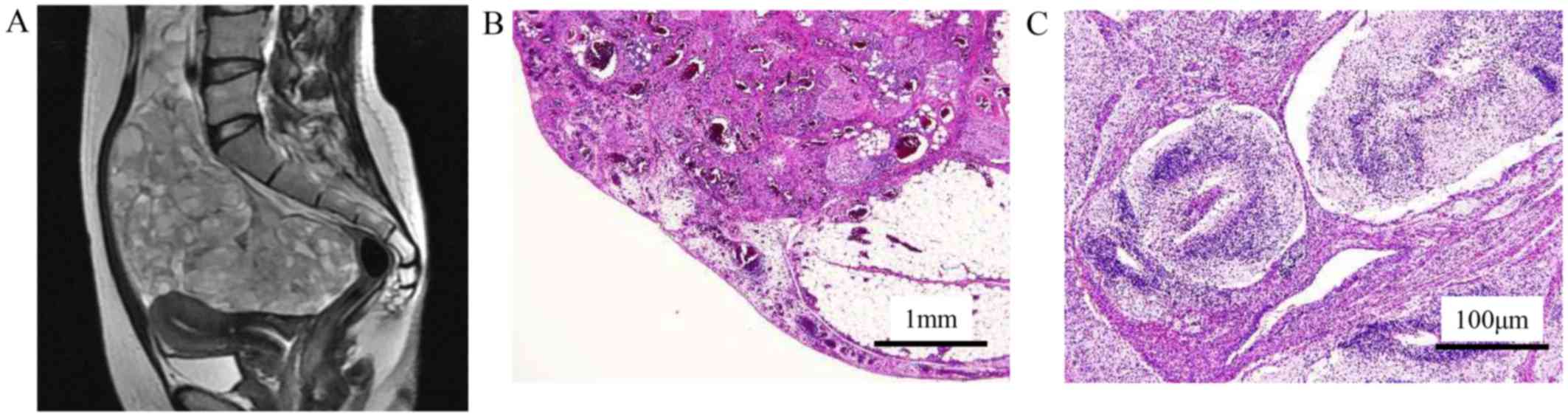
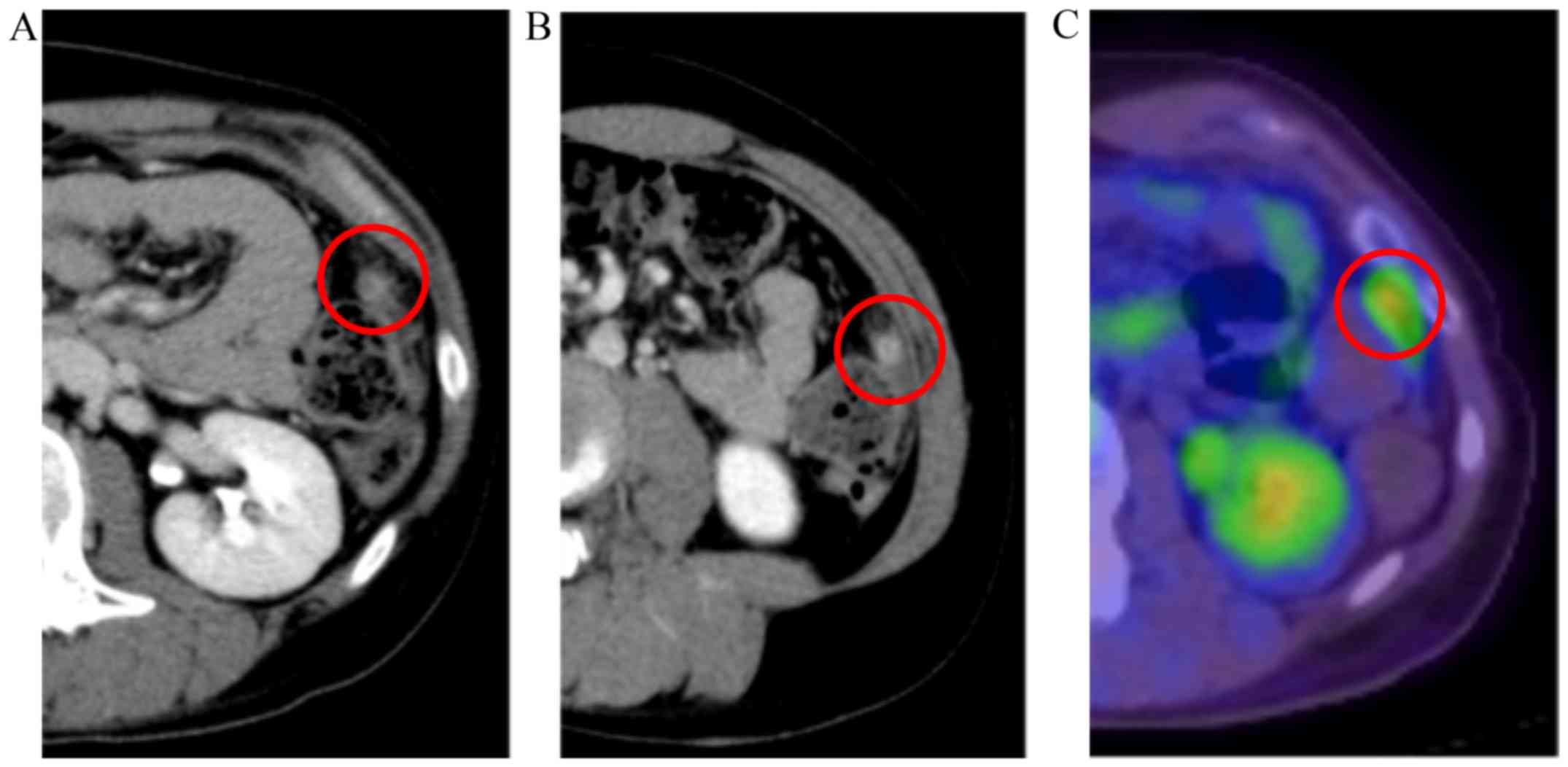
A 30-year-old nulliparous woman presented with abdominal discomfort. MR image suggested malignant ovarian cancer (Fig. 1A), and a total abdominal hysterectomy, and bilateral salpingo-oophorectomy and partial omentectomy were performed. She was diagnosed with a grade 2 immature teratoma (Fig. 1B and C), and the FIGO stage was IIIB (pT3bNXM0). Four cycles of BEP chemotherapy were administered after surgery. α-feto protein (AFP), which was markedly elevated before treatment, decreased rapidly. At the end of treatment, a CT test was performed, and we did not find any evidence of tumor recurrence (Fig. 2A).

Figure 1.

Imaging and pathological findings of primary ovarian tumor. (A) MRI (T2 weighted image) findings of primary ovarian tumor: The mass with irregularly shaped edges and heterogeneous signal intensity occupied pelvic cavity. (B) Immature tissue with bleeding and necrosis [hematoxylin and eosin staining (H&E) (magnification, ×40); scale bar, 1 mm]. (C) Tumor showed immature neural tissue, grade2 [H&E staining (magnification, ×200; scale bar, 100µm)].

Figure 2.

The findings of computed tomography (CT) and positron-emission tomography (PET)/CT images before paclitaxel, ifomide and cisplatin (TIP) therapy. (A) Contrast CT image taken at the end of initial treatment. On the splenic flexure, there was a lesion with very slightly enhancement (red circle). (B) Contrast CT image taken at six months after initial treatment, tumor (red circle) with contrast enhancement developed on the splenic flexure. (C) PET/CT image taken at six months after initial treatment. Tumor (red circle) showed accumulation of fluorodeoxyglucose (FDG) in the same place (SUVmax of 3.43).

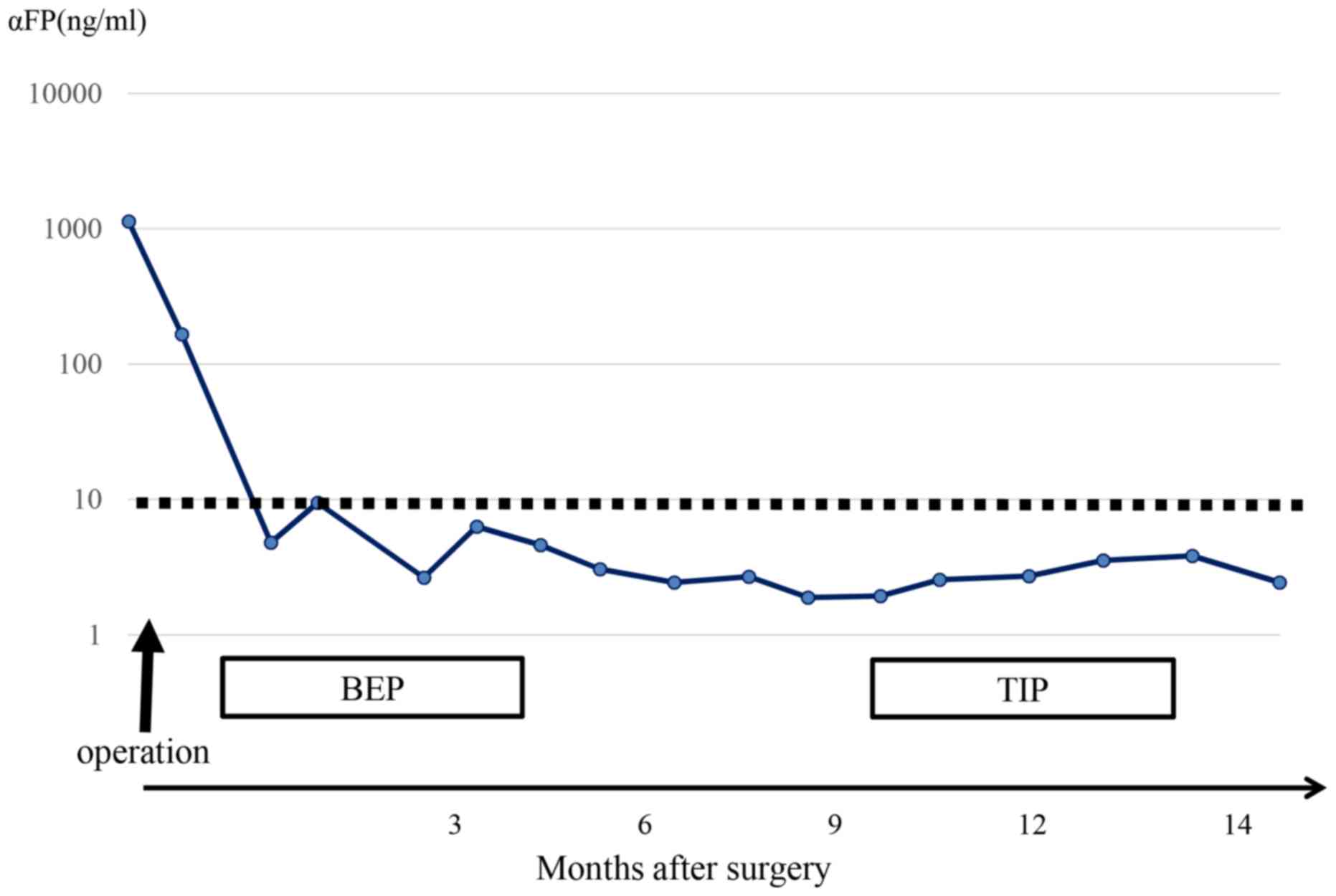
Six months after initial treatment, follow-up CT was performed. A tumor with contrast enhancement developed on the splenic flexure (Fig. 2B). To distinguish whether the tumor was a recurrence of IM or GP and GTS, a PET/CT test was performed. As a result, accumulation of FDG was noted in the same place (SUVmax, 3.43) (Fig. 2C). AFP levels remained normal (Fig. 3).

Figure 3.

Change of tumor marker (AFP) and treatment course are shown. Dot plot indicates the upper limit of normal range (10 ng/ml). AFP level was within normal range during initial and secondary treatment. BEP, bleomycin, etoposide and cisplatin; TIP, paclitaxel, ifomide and cisplatin.

At that time, no reports were available that referred to GP and GTS with FDG accumulation. Although low levels of AFP are atypical of recurrence of IM, we thought that the tumor represented recurrent IM. Upon patient consent, four cycles of paclitaxel, ifomide and cisplatin (TIP) chemotherapy were administered.

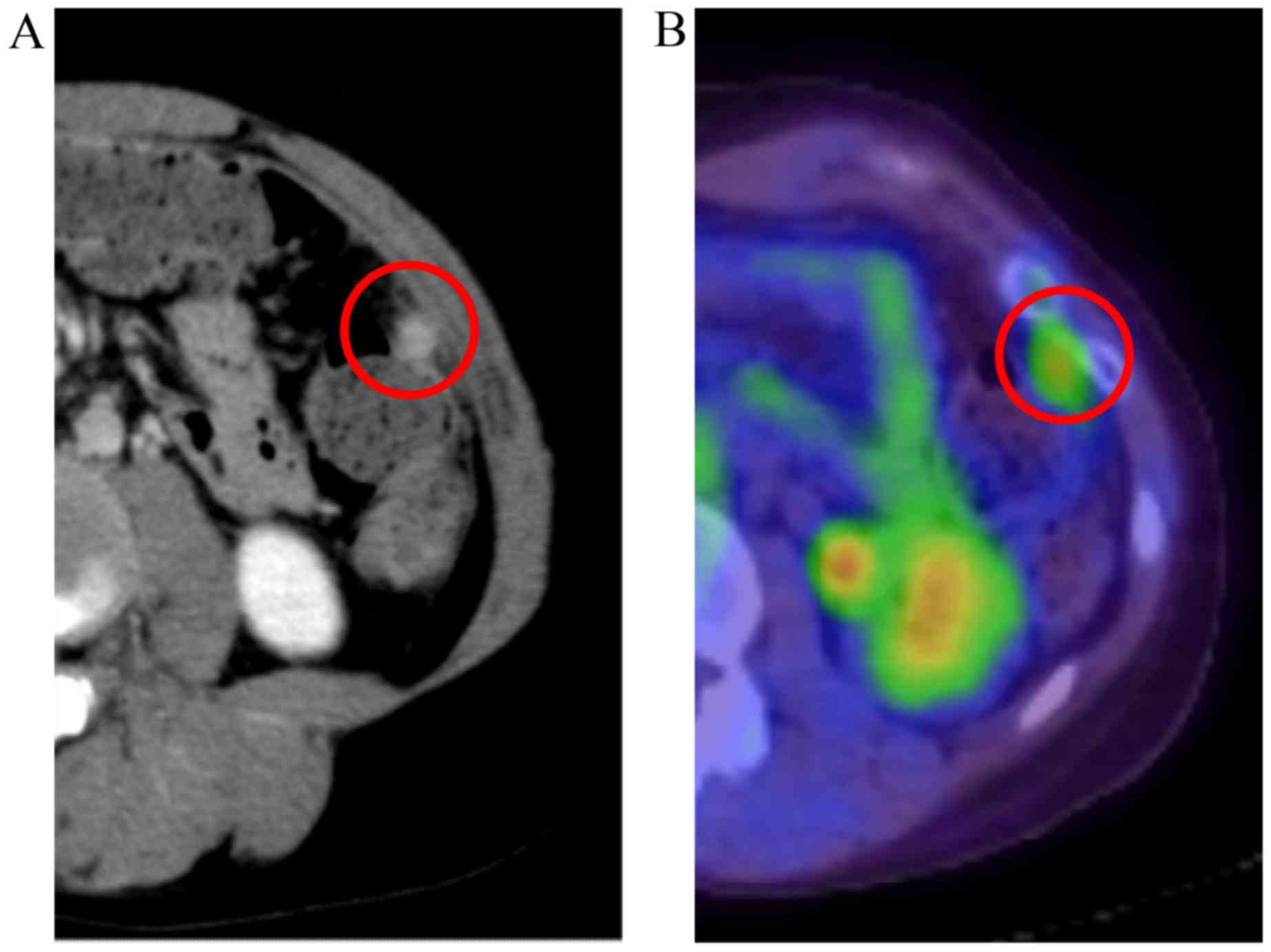
However, contrast enhancement of the tumor remained after TIP treatment (Fig. 4A). FDG accumulation also remained (SUVmax, 3.15) (Fig. 4B). AFP levels remained normal (Fig. 3).

Figure 4.

The findings of computed tomography (CT) and positron-emission tomography (PET)/CT images after paclitaxel, ifomide and cisplatin (TIP) therapy. (A) Contrast CT image at the splenic flexure. Tumor (red circle) with contrast enhancement remained. Tumor size was not changed. (B) PET/CT image at the same place. Tumor (red circle) showed accumulation of fluorodeoxyglucose (FDG) in the same place (SUVmax, 3.15).

Surgery can be indicated for local and chemorefractory recurrent IM. Although there was no report that referred to GP and GTS with FDG accumulation at that time, we proposed the possibility of GP and GTS with FDG accumulation. Upon obtaining patient consent, diagnostic laparoscopy was performed to make an accurate diagnosis.

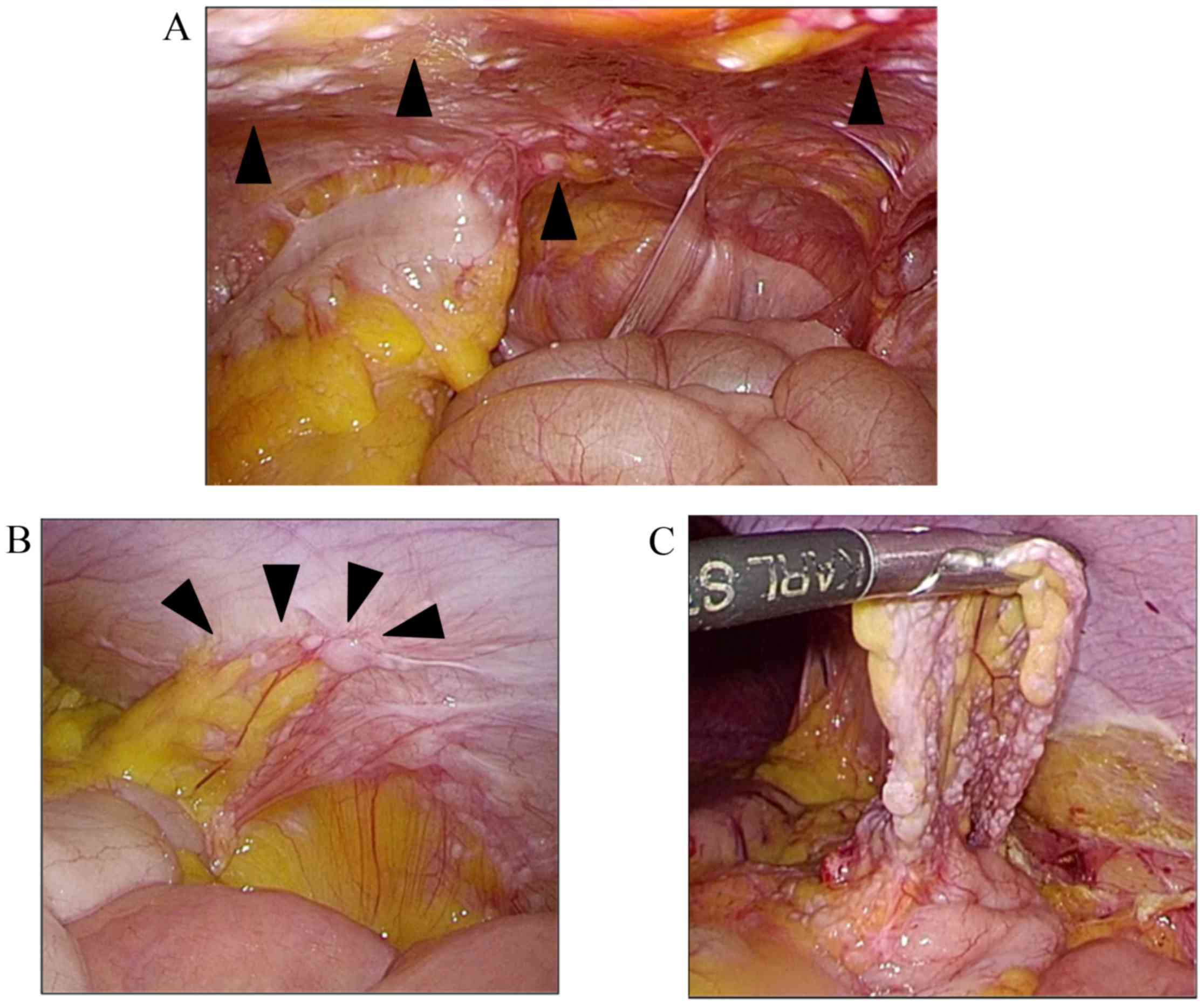
With the help of digestive surgery doctors, diagnostic laparoscopy was performed. Numerous white nodes were located in the peritoneum (Fig. 5A). A tumor on the splenic flexure adhered to the peritoneum wall surrounded by omentum (Fig. 5B).

Figure 5.

Intraoperative findings in the diagnostic laparoscopy. (A) We found multiple white nodes on the surface of peritoneum. Black arrows indicates white nodes. (B) Tumor that were detected in contrast computed tomography (CT) and positron-emission tomography (PET)/CT adhered on the peritoneum and was surrounded by omentum tissue. (C) Adhesion was successfully removed laparoscopically, and tumor was resected.

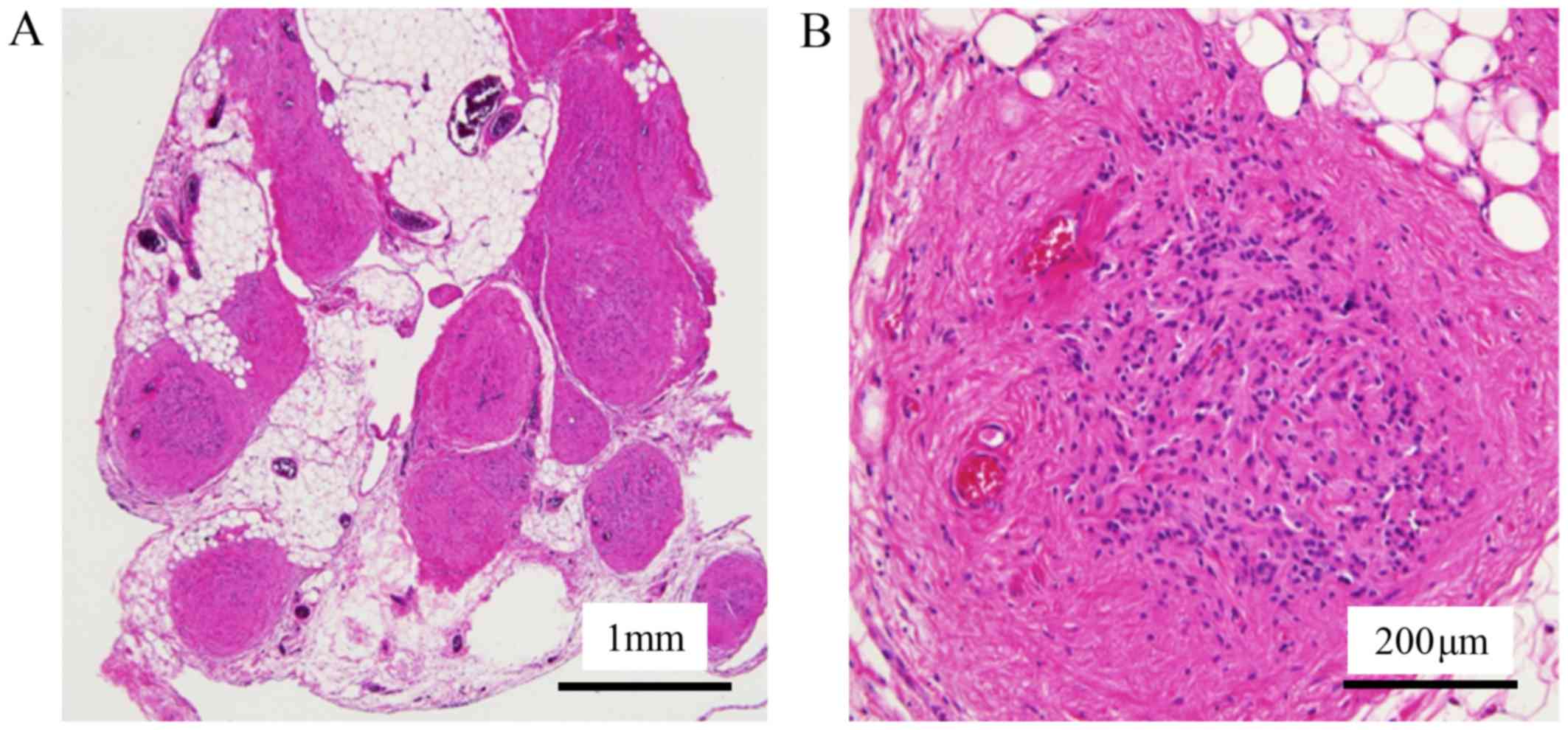
Under laparoscopy, the adhesion was removed carefully, and the tumor was resected (Fig. 5C). We also resected several white perinoneal nodes. Intraoperative rapid diagnosis revealed GP, and no evidence of IM was found. Detailed pathological examination revealed mature glioma and fibrosis in the tumor (Fig. 6). The tumor was diagnosed as GP.

Figure 6.

Pathological findings of resected tumor. (A) Glial nodes exist among adipose tissue [hematoxylin and eosin staining (H&E) is shown (magnification, ×40; scale bar, 1 mm)]. (B) Tumor cells in glial tissue harbor neither nuclear atypia nor high nuclear/cytoplasmic ration (magnification, ×200).

At the one-year follow-up examination after diagnostic laparoscopy, we did not find any evidence of IM recurrence. The patient is currently undergoing regular follow-up.

Discussion

In this report, we describe a case of GP with both contrast enhancement and FDG accumulation, which developed after treatment for IM. As a result, the tumor was GP not recurrent IM. To date, only one report describes GP with FDG accumulation developed after treatment for IM (11). However, to our knowledge, this is the first report that describes GP with both FDG accumulation and contrast enhancement.

In the follow-up of malignancies, imaging tests play an important role. Vascularization and facilitated glucose transport are characteristics of malignant tumor. Given that enhanced CT can evaluate tumor vascularization, FDG-PET can evaluate glucose transport. These tests represent useful imaging tests to evaluate tumor function.

In this case, the tumor harbored both contrast enhancement and FDG accumulation. Thus, we initially assumed IM recurrence and administered 2nd line chemotherapy. However, the 2nd line chemotherapy TIP did not alter contrast enhancement, FDG accumulation or tumor size.

Given that tumor status and levels of the tumor marker AFP remained stable, we assumed GP and GTS, which are known to develop in relation to IM.

Occasionally, GP or GTS become large and must be resected if symptoms develop. However, these lesions are pathologically benign tumors. We believe that glucose transport should be reduced in GP compared with malignant tumors. However, recently, a case of GP with high FDG uptake was reported. Although a detailed mechanism must be elucidated, glia that consist of GP may occasionally exhibit increased glucose transport regardless of the degree of malignancies.

When we cannot make an accurate diagnosis based on imaging tests, pathological examination is very important. In this case, we could make an accurate diagnosis by diagnostic laparoscopy. As laparoscopic surgery becomes popular, it is useful in the field of gynecologic malignancies. Compared with laparotomy, laparoscopic surgery reduces intraoperative blood loss, post-operative pain, and the length of hospital stay. This technique also offers a more speedy recovery. In addition, we obtain a wide intra-abdominal view with a smaller incision. If an accurate diagnosis is difficult to obtain, close observation and biopsy of the lesion with laparoscopy can be considered.

In conclusion, we report a case of GP with both contrast enhancement and high FDG uptake that developed after treatment for IM. We could not distinguish GP or GTP from IM recurrence by imaging tests. Biopsy and pathological examination of the lesion by laparoscopic surgery were useful. In the follow-up examination after treatment for IM, we should consider that GP, which cannot be completely distinguished from IM recurrence by imaging tests alone, can develop. In such a case, we should consider diagnostic laparoscopy to obtain an accurate diagnosis.

Acknowledgements

Not applicable.

Funding

No funding was received.

Availability of data and materials

All data has been presented in this published study.

Authors' contributions

OT performed treatments and wrote the manuscript; YK performed treatments and edited the manuscript; IY, OJ, SM, SH, HT, YK and SK performed treatments.

Ethics approval and consent to participate

Written informed consent was obtained from the patient in the present study.

Consent for publication

Not applicable.

Competing interests

The authors declare that they have no competing interests.

References

1 

Zalel Y, Piura B, Elchalal U, Czernobilsky B, Antebi S and Dgani R: Diagnosis and management of malignant germ cell ovarian tumors in young females. Int J Gynaecol Obstet. 55:1–10. 1996. View Article : Google Scholar : PubMed/NCBI

2 

Williams S, Blessing JA, Liao SY, Ball H and Hanjani P: Adjuvant therapy of ovarian germ cell tumors with cisplatin, etoposide and bleomycin: A trial of the Gynecologic Oncology Group. J Clin Oncol. 12:701–706. 1994. View Article : Google Scholar : PubMed/NCBI

3 

Norris HJ, Zirkin HJ and Benson WL: Immature (malignant) teratoma of the ovary: A clinical and pathologic study of 58 cases. Cancer. 37:2359–2372. 1976. View Article : Google Scholar : PubMed/NCBI

4 

Mangili G, Scarfone G, Gadducci A, Sigismondi C, Ferrandina G, Scibilia G, Vigano R, Tateo S, Villa A and Lorusso D: Is adjuvant chemotherapy indicated in stage I pure immature ovarian teratoma (IT)? Amulticentre Italian trial in ovarian cancer (MITO-9). Gynecol Oncol. 119:48–52. 2010. View Article : Google Scholar : PubMed/NCBI

5 

André F, Fizazi K, Culine S, Droz J, Taupin P, Lhommé C, Terrier-Lacombe M and Théodore C: The growing teratoma syndrome: Results of therapy and long-term follow-up of 33 patients. Eur J Cancer. 36:1389–1394. 2000. View Article : Google Scholar : PubMed/NCBI

6 

Fortt RW and Mathie IK: Gliomatosis peritonei caused by ovarian teratoma. J Clin Pathol. 22:348–353. 1969. View Article : Google Scholar : PubMed/NCBI

7 

Yoon NR, Lee JW, Kim BG, Bae DS, Sohn I, Sung CO and Song SY: Gliomatosis pertonei is associated with frequent recurrence, but does not affect overall survival in patients with ovarian immature teratoma. Vichows Arch. 461:299–304. 2012. View Article : Google Scholar

8 

Gu P, Pan LL, Wu SQ, Sun L and Huang G: CA125, PET alone, PET-CT, CT and MRI in diagnosing reccurent ovarian carcinoma: A systematic review and meta-analysis. Eur J Radiol. 71:164–174. 2009. View Article : Google Scholar : PubMed/NCBI

9 

Beyer T, Townsend DW, Brun T, Kinahan PE, Charron M, Roddy R, Jerin J, Young J, Byars L and Nutt R: A combined PET/CT scanner for clinical oncology. J Nucl Med. 41:1369–1379. 2000.PubMed/NCBI

10 

Oldan JD and Patel PS: Positron emission tomography/computed tomography for gynecologic malignancies. Obstet Gynecol Surv. 71:545–556. 2016. View Article : Google Scholar : PubMed/NCBI

11 

Lavoie JM, Lacroix-Poisson F, Hoang LN, Wilson DC, Seckl MJ and Tinker AV: 18F FDG positron-emission tomography findings of gliomatosis peritonei: A case report and review of the literature. Gynecol Oncol Rep. 20:105–107. 2017. View Article : Google Scholar : PubMed/NCBI

Related Articles

  • Abstract
  • View
  • Download
  • Twitter
Copy and paste a formatted citation
Spandidos Publications style
Ohara T, Yamanoi K, Inayama Y, Ogura J, Sakai M, Suzuki H, Hirayama T, Yasumoto K and Suginami K: Gliomatosis peritonei with 18F-fluorodeoxyglucose accumulation and contrast enhancement secondary to immature teratoma: A case report. Mol Clin Oncol 9: 40-43, 2018.
APA
Ohara, T., Yamanoi, K., Inayama, Y., Ogura, J., Sakai, M., Suzuki, H. ... Suginami, K. (2018). Gliomatosis peritonei with 18F-fluorodeoxyglucose accumulation and contrast enhancement secondary to immature teratoma: A case report. Molecular and Clinical Oncology, 9, 40-43. https://doi.org/10.3892/mco.2018.1618
MLA
Ohara, T., Yamanoi, K., Inayama, Y., Ogura, J., Sakai, M., Suzuki, H., Hirayama, T., Yasumoto, K., Suginami, K."Gliomatosis peritonei with 18F-fluorodeoxyglucose accumulation and contrast enhancement secondary to immature teratoma: A case report". Molecular and Clinical Oncology 9.1 (2018): 40-43.
Chicago
Ohara, T., Yamanoi, K., Inayama, Y., Ogura, J., Sakai, M., Suzuki, H., Hirayama, T., Yasumoto, K., Suginami, K."Gliomatosis peritonei with 18F-fluorodeoxyglucose accumulation and contrast enhancement secondary to immature teratoma: A case report". Molecular and Clinical Oncology 9, no. 1 (2018): 40-43. https://doi.org/10.3892/mco.2018.1618
Copy and paste a formatted citation
x
Spandidos Publications style
Ohara T, Yamanoi K, Inayama Y, Ogura J, Sakai M, Suzuki H, Hirayama T, Yasumoto K and Suginami K: Gliomatosis peritonei with 18F-fluorodeoxyglucose accumulation and contrast enhancement secondary to immature teratoma: A case report. Mol Clin Oncol 9: 40-43, 2018.
APA
Ohara, T., Yamanoi, K., Inayama, Y., Ogura, J., Sakai, M., Suzuki, H. ... Suginami, K. (2018). Gliomatosis peritonei with 18F-fluorodeoxyglucose accumulation and contrast enhancement secondary to immature teratoma: A case report. Molecular and Clinical Oncology, 9, 40-43. https://doi.org/10.3892/mco.2018.1618
MLA
Ohara, T., Yamanoi, K., Inayama, Y., Ogura, J., Sakai, M., Suzuki, H., Hirayama, T., Yasumoto, K., Suginami, K."Gliomatosis peritonei with 18F-fluorodeoxyglucose accumulation and contrast enhancement secondary to immature teratoma: A case report". Molecular and Clinical Oncology 9.1 (2018): 40-43.
Chicago
Ohara, T., Yamanoi, K., Inayama, Y., Ogura, J., Sakai, M., Suzuki, H., Hirayama, T., Yasumoto, K., Suginami, K."Gliomatosis peritonei with 18F-fluorodeoxyglucose accumulation and contrast enhancement secondary to immature teratoma: A case report". Molecular and Clinical Oncology 9, no. 1 (2018): 40-43. https://doi.org/10.3892/mco.2018.1618
Follow us
  • Twitter
  • LinkedIn
  • Facebook
About
  • Spandidos Publications
  • Careers
  • Cookie Policy
  • Privacy Policy
How can we help?
  • Help
  • Live Chat
  • Contact
  • Email to our Support Team