Spandidos Publications Logo
  • About
    • About Spandidos
    • Aims and Scopes
    • Abstracting and Indexing
    • Editorial Policies
    • Reprints and Permissions
    • Job Opportunities
    • Terms and Conditions
    • Contact
  • Journals
    • All Journals
    • Oncology Letters
      • Oncology Letters
      • Information for Authors
      • Editorial Policies
      • Editorial Board
      • Aims and Scope
      • Abstracting and Indexing
      • Bibliographic Information
      • Archive
    • International Journal of Oncology
      • International Journal of Oncology
      • Information for Authors
      • Editorial Policies
      • Editorial Board
      • Aims and Scope
      • Abstracting and Indexing
      • Bibliographic Information
      • Archive
    • Molecular and Clinical Oncology
      • Molecular and Clinical Oncology
      • Information for Authors
      • Editorial Policies
      • Editorial Board
      • Aims and Scope
      • Abstracting and Indexing
      • Bibliographic Information
      • Archive
    • Experimental and Therapeutic Medicine
      • Experimental and Therapeutic Medicine
      • Information for Authors
      • Editorial Policies
      • Editorial Board
      • Aims and Scope
      • Abstracting and Indexing
      • Bibliographic Information
      • Archive
    • International Journal of Molecular Medicine
      • International Journal of Molecular Medicine
      • Information for Authors
      • Editorial Policies
      • Editorial Board
      • Aims and Scope
      • Abstracting and Indexing
      • Bibliographic Information
      • Archive
    • Biomedical Reports
      • Biomedical Reports
      • Information for Authors
      • Editorial Policies
      • Editorial Board
      • Aims and Scope
      • Abstracting and Indexing
      • Bibliographic Information
      • Archive
    • Oncology Reports
      • Oncology Reports
      • Information for Authors
      • Editorial Policies
      • Editorial Board
      • Aims and Scope
      • Abstracting and Indexing
      • Bibliographic Information
      • Archive
    • Molecular Medicine Reports
      • Molecular Medicine Reports
      • Information for Authors
      • Editorial Policies
      • Editorial Board
      • Aims and Scope
      • Abstracting and Indexing
      • Bibliographic Information
      • Archive
    • World Academy of Sciences Journal
      • World Academy of Sciences Journal
      • Information for Authors
      • Editorial Policies
      • Editorial Board
      • Aims and Scope
      • Abstracting and Indexing
      • Bibliographic Information
      • Archive
    • International Journal of Functional Nutrition
      • International Journal of Functional Nutrition
      • Information for Authors
      • Editorial Policies
      • Editorial Board
      • Aims and Scope
      • Abstracting and Indexing
      • Bibliographic Information
      • Archive
    • International Journal of Epigenetics
      • International Journal of Epigenetics
      • Information for Authors
      • Editorial Policies
      • Editorial Board
      • Aims and Scope
      • Abstracting and Indexing
      • Bibliographic Information
      • Archive
    • Medicine International
      • Medicine International
      • Information for Authors
      • Editorial Policies
      • Editorial Board
      • Aims and Scope
      • Abstracting and Indexing
      • Bibliographic Information
      • Archive
  • Articles
  • Information
    • Information for Authors
    • Information for Reviewers
    • Information for Librarians
    • Information for Advertisers
    • Conferences
  • Language Editing
Spandidos Publications Logo
  • About
    • About Spandidos
    • Aims and Scopes
    • Abstracting and Indexing
    • Editorial Policies
    • Reprints and Permissions
    • Job Opportunities
    • Terms and Conditions
    • Contact
  • Journals
    • All Journals
    • Biomedical Reports
      • Information for Authors
      • Editorial Policies
      • Editorial Board
      • Aims and Scope
      • Abstracting and Indexing
      • Bibliographic Information
      • Archive
    • Experimental and Therapeutic Medicine
      • Information for Authors
      • Editorial Policies
      • Editorial Board
      • Aims and Scope
      • Abstracting and Indexing
      • Bibliographic Information
      • Archive
    • International Journal of Epigenetics
      • Information for Authors
      • Editorial Policies
      • Editorial Board
      • Aims and Scope
      • Abstracting and Indexing
      • Bibliographic Information
      • Archive
    • International Journal of Functional Nutrition
      • Information for Authors
      • Editorial Policies
      • Editorial Board
      • Aims and Scope
      • Abstracting and Indexing
      • Bibliographic Information
      • Archive
    • International Journal of Molecular Medicine
      • Information for Authors
      • Editorial Policies
      • Editorial Board
      • Aims and Scope
      • Abstracting and Indexing
      • Bibliographic Information
      • Archive
    • International Journal of Oncology
      • Information for Authors
      • Editorial Policies
      • Editorial Board
      • Aims and Scope
      • Abstracting and Indexing
      • Bibliographic Information
      • Archive
    • Medicine International
      • Information for Authors
      • Editorial Policies
      • Editorial Board
      • Aims and Scope
      • Abstracting and Indexing
      • Bibliographic Information
      • Archive
    • Molecular and Clinical Oncology
      • Information for Authors
      • Editorial Policies
      • Editorial Board
      • Aims and Scope
      • Abstracting and Indexing
      • Bibliographic Information
      • Archive
    • Molecular Medicine Reports
      • Information for Authors
      • Editorial Policies
      • Editorial Board
      • Aims and Scope
      • Abstracting and Indexing
      • Bibliographic Information
      • Archive
    • Oncology Letters
      • Information for Authors
      • Editorial Policies
      • Editorial Board
      • Aims and Scope
      • Abstracting and Indexing
      • Bibliographic Information
      • Archive
    • Oncology Reports
      • Information for Authors
      • Editorial Policies
      • Editorial Board
      • Aims and Scope
      • Abstracting and Indexing
      • Bibliographic Information
      • Archive
    • World Academy of Sciences Journal
      • Information for Authors
      • Editorial Policies
      • Editorial Board
      • Aims and Scope
      • Abstracting and Indexing
      • Bibliographic Information
      • Archive
  • Articles
  • Information
    • For Authors
    • For Reviewers
    • For Librarians
    • For Advertisers
    • Conferences
  • Language Editing
Login Register Submit
  • This site uses cookies
  • You can change your cookie settings at any time by following the instructions in our Cookie Policy. To find out more, you may read our Privacy Policy.

    I agree
Search articles by DOI, keyword, author or affiliation
Search
Advanced Search
presentation
Molecular and Clinical Oncology
Join Editorial Board Propose a Special Issue
Print ISSN: 2049-9450 Online ISSN: 2049-9469
Journal Cover
September-2021 Volume 15 Issue 3

Full Size Image

Sign up for eToc alerts
Recommend to Library

Journals

International Journal of Molecular Medicine

International Journal of Molecular Medicine

International Journal of Molecular Medicine is an international journal devoted to molecular mechanisms of human disease.

International Journal of Oncology

International Journal of Oncology

International Journal of Oncology is an international journal devoted to oncology research and cancer treatment.

Molecular Medicine Reports

Molecular Medicine Reports

Covers molecular medicine topics such as pharmacology, pathology, genetics, neuroscience, infectious diseases, molecular cardiology, and molecular surgery.

Oncology Reports

Oncology Reports

Oncology Reports is an international journal devoted to fundamental and applied research in Oncology.

Experimental and Therapeutic Medicine

Experimental and Therapeutic Medicine

Experimental and Therapeutic Medicine is an international journal devoted to laboratory and clinical medicine.

Oncology Letters

Oncology Letters

Oncology Letters is an international journal devoted to Experimental and Clinical Oncology.

Biomedical Reports

Biomedical Reports

Explores a wide range of biological and medical fields, including pharmacology, genetics, microbiology, neuroscience, and molecular cardiology.

Molecular and Clinical Oncology

Molecular and Clinical Oncology

International journal addressing all aspects of oncology research, from tumorigenesis and oncogenes to chemotherapy and metastasis.

World Academy of Sciences Journal

World Academy of Sciences Journal

Multidisciplinary open-access journal spanning biochemistry, genetics, neuroscience, environmental health, and synthetic biology.

International Journal of Functional Nutrition

International Journal of Functional Nutrition

Open-access journal combining biochemistry, pharmacology, immunology, and genetics to advance health through functional nutrition.

International Journal of Epigenetics

International Journal of Epigenetics

Publishes open-access research on using epigenetics to advance understanding and treatment of human disease.

Medicine International

Medicine International

An International Open Access Journal Devoted to General Medicine.

Journal Cover
September-2021 Volume 15 Issue 3

Full Size Image

Sign up for eToc alerts
Recommend to Library

  • Article
  • Citations
    • Cite This Article
    • Download Citation
    • Create Citation Alert
    • Remove Citation Alert
    • Cited By
  • Similar Articles
    • Related Articles (in Spandidos Publications)
    • Similar Articles (Google Scholar)
    • Similar Articles (PubMed)
  • Download PDF
  • Download XML
  • View XML
Article

Infrastructure maxillectomy for maxillary sinus and hard palate neoplasms

  • Authors:
    • Dong Hoon Lee
    • Hye Rin Lim
    • Joon Kyoo Lee
    • Sang Chul Lim
  • View Affiliations / Copyright

    Affiliations: Department of Otolaryngology‑Head and Neck Surgery, Chonnam National University Medical School and Chonnam National University Hwasun Hospital, Hwasun, Jeonnam 58128, Republic of Korea
  • Article Number: 180
    |
    Published online on: July 1, 2021
       https://doi.org/10.3892/mco.2021.2342
  • Expand metrics +
Metrics: Total Views: 0 (Spandidos Publications: | PMC Statistics: )
Metrics: Total PDF Downloads: 0 (Spandidos Publications: | PMC Statistics: )
Cited By (CrossRef): 0 citations Loading Articles...

This article is mentioned in:


Abstract

Infrastructure maxillectomy is a surgical procedure to remove the lower part of the maxilla and hard palate. The objective of the present study was to analyze clinical data and treatment outcome of patients who underwent infrastructure maxillectomy between 2011 and 2019. A total of 13 patients who underwent infrastructure maxillectomy for maxillary sinus and hard palate neoplasms between 2011 and 2019 were analyzed. These patients were subdivided into maxillary sinus neoplasm (n=5) and hard palate neoplasm (n=8) groups. All patients except one underwent infrastructure maxillectomy using the sublabial approach. One patient underwent an external approach through lateral rhinotomy. Postoperative reconstruction was performed for 11 patients using obturator, 6 patients using skin grafts and 3 patients using free flaps. A total of 6 patients had radiotherapy (RT), 3 had concurrent chemoradiotherapy (CCRT) and 2 had chemotherapy after surgery. The survival rate and recurrence rate were 61.5% (8/13) and 46.2% (6/13), respectively. The current results suggested that infrastructure maxillectomy may be an effective treatment for maxillary sinus neoplasms in the lower part of the maxillary sinus and hard palate neoplasms without causing marked functional or cosmetic morbidity. Postoperative RT or CCRT may be recommended to decrease the recurrence after infrastructure maxillectomy.

Introduction

Infrastructure maxillectomy is a surgical procedure to remove the lower part of the maxilla and hard palate (1,2). The procedure preserves structures around orbit and zygoma, thus providing good functional and cosmetic results (3). However, the role of partial maxillectomy for maxillary sinus and hard palate carcinomas is not well understood yet (2). Therefore, the objective of this study was to analyze clinical data and treatment outcome of patients who underwent infrastructure maxillectomy between 2011 and 2019.

Patients and methods

This study was approved by the Institutional Review Board of Chonnam National University Hwasun Hospital (CNUHH-2020-049). Sixteen patients who underwent infrastructure maxillectomy for maxillary sinus and hard palate neoplasms between 2011 and 2019 were identified. All patients provided written informed consent. Among them, 3 patients who had reoperation for maxillary sinus cancer were not analyzed. These subjects were subdivided into maxillary sinus neoplasm (n=5) and hard palate neoplasm (n=8) groups. We reviewed their demographic characteristics, symptoms, duration of symptoms, size and location of primary tumor, preoperative biopsy results, radiologic examinations, clinical stage, surgery, reconstruction method, histopathologic results, treatment outcomes, adjuvant treatment, postoperative complications, and recurrence.

All patients underwent radiologic examinations before the operation to assess the extent of the lesion and aid treatment planning. If lymph node metastasis was suspected or diagnosed by preoperative examinations, a neck dissection was performed. All patients who underwent infrastructure maxillectomy were confirmed histopathologically. RT or CCRT was performed according to postoperative biopsy results.

Results

Of 13 patients who underwent infrastructure maxillectomy, the location of the primary tumor was maxillary sinus in 5 patients and hard palate in 8 patients. Clinical findings of patients who underwent infrastructure maxillectomy are summarized in Table I. There were 11 males and 2 females. The mean age of all patients was 67.4±10.5 years (range, 43-80 years). The most common symptoms were pain (n=6, 46.2%), abnormal sensation (n=2), rhinorrhea (n=2), mass (n=1), cheek swelling (n=1), and oral bleeding (n=1). The mean duration of symptoms was 1.8±1.5 months (range, 0.2-6 months). Of 13 patients, 6 occurred on the left side, 6 on the right side, and 1 on both sides. The mean tumor size was 5.2±1.5 cm (range, 3-8 cm).

Table I

Clinical data of the 13 patients who underwent infrastructure maxillectomy.

Table I

Clinical data of the 13 patients who underwent infrastructure maxillectomy.

Age, years/sexSymptomsTumor siteSiteTumor size, cmPreoperative biopsyStagePostoperative biopsyReconstruction methodPostoperative treatmentPatient statusRecurrenceFollow-up time, months
59/MASMSLeft5SqccIVSqccS, ORTNEDD106
72/MaPainHPRight3.5SqccIISqccORTOCD 39
62/MMassHPRight3AdenocaIIAdenocaOCCRTDODD53
79/FPainHPLeft6.5SqccIIISqccS, O NED 29
43/MPainMSRight5SqccIISqccS, ORTNED 38
70/MASHPBoth5.5SqccIVSqccALTChemoDODL, D17
64/MPainMSLeft5.4SqccIVSqccOCCRTNED 46
80/MaPainHPLeft7SqccIVSqccPMMCRTDODL21
77/MaBleedingHPRight5MMIVMMS, OChemoDODL, D17
63/FRhinorrheaMSLeft6MMTIIISCSS, ORTNED 25
62/MbSwellingHPRight8SqccIVSqccALT, OCCRTNEDD26
65/MPainHPLeft3.5AdenocaIVPAO NED 8
80/MRhinorrheaMSRight4.2SqccIIISqccS, ORTNED 4

[i] aThree patients underwent neck dissection.

[ii] bOne patient underwent infrastructure maxillectomy using an external approach. M, male; F, female; AS, abnormal sensation; MS, maxillary sinus; HP, hard palate; Sqcc, squamous cell carcinoma; Adenoca, adenocarcinoma; MM, malignant melanoma; MMT, malignant mesenchymal tumor; SCS, high grade spindle cell sarcoma; PA, pleomorphic adenoma; S, skin graft; O, obturator; ALT, anterolateral thigh flap; PMMC, pectoralis major myocutaneous flap; RT, radiotherapy; CCRT, concurrent chemoradiotherapy; Chemo, chemotherapy; NED, no evidence of disease; OCD, other cause of death; DOD, death of disease; D, distant metastasis; L, local metastasis.

Preoperative punch biopsy was performed for all patients. Results revealed that squamous cell carcinoma was the most common in 9 patients (n=9, 69.2%), followed by adenocarcinoma (n=2), malignant melanoma (n=1), and malignant mesenchymal tumor (n=1). Computed tomography (CT, n=10), magnetic resonance imaging (MRI, n=5), and positron emission tomography CT (PET CT, n=10) were performed to confirm primary site lesions, neck and distant metastasis. Before surgery, 2 patients underwent chemotherapy and 1 underwent chemotherapy and CCRT. In the clinical stage, stage IV was the most common (n=7, 53.8%). Stage III and stage II had 3 patients each. There was no patient with stage I.

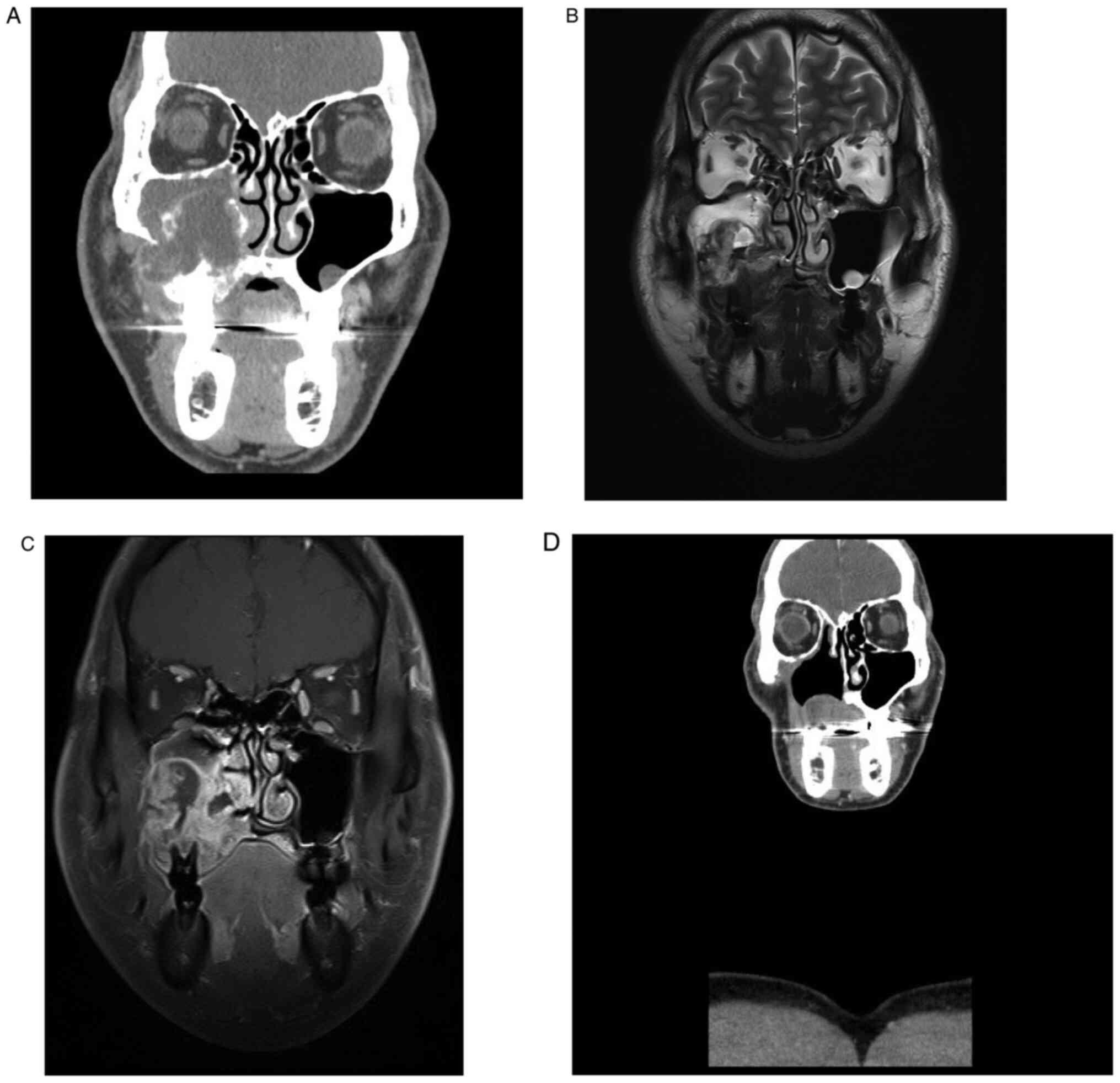
All patients except one underwent infrastructure maxillectomy using the sublabial approach. One patient underwent an external approach through lateral rhinotomy. We performed frozen biopsies to determine whether further resection was needed. Resection of lesions with clear margins was performed. Neck dissection was performed in 3 patients. Postoperative reconstruction was done for 11 patients using obturator, 6 with skin graft, and the 3 with free flaps [2 with anterolateral thigh (ALT) flap and 1 with pectoralis major myocutaneous (PMMC) flap]. No major complications from surgical intervention were reported. Histopathologic results included squamous cell carcinoma (n=9, Fig. 1), adenocarcinoma (n=1), malignant melanoma (n=1), high grade spindle cell sarcoma (n=1), and pleomorphic adenoma (n=1). Histopathologic examination revealed that one patient who was considered as having adenocarcinoma on preoperative biopsy was found to have pleomorphic adenoma. Except for this one, the final biopsy was the same as the preoperative biopsy. Among 13 patients who underwent infrastructure maxillectomy, 6 had RT, 3 had CCRT, and 2 had chemotherapy after surgery. One patient diagnosed with squamous cell carcinoma (stage III) of the hard palate and one patient with pleomorphic adenoma as a final diagnosis did not undergo additional treatment after surgery.

Figure 1

In a 43-year-old male patient, (A) preoperative coronal CT, (B) coronal T2-weighted MRI and (C) coronal T1-weighted MRI with enhancement showing 5x4.6 cm sized multi-loculated cystic mass in the right maxillary sinus. (D) Coronal CT showing no recurrence at three years after treatment with infrastructure maxillectomy and postoperative radiotherapy. CT, computed tomography; MRI, magnetic resonance imaging.

Among 13 patients who underwent infrastructure maxillectomy, 5 patients (38.5%) died during the follow-up, including 4 tumor related deaths and 1 death from other disease. Recurrence occurred in 6 (1 case of local recurrence, 3 cases of distant metastasis, and 2 cases of local and distant recurrence). Sites of distant metastasis were lung in 3 patients, mediastinum in 1 patient, and whole body in 1 patient diagnosed with malignant melanoma. Three of five patients who developed distant metastases died and two were followed up without recurrence after lung metastasis resection and treatment. The mean follow-up period after surgery was 33.0±26.2 months (range, 4-106 months).

Discussion

This study presented our 9-year experience of infrastructure maxillectomy for maxillary sinus and hard palate neoplasms. The survival rate of patients who underwent infrastructure maxillectomy at the last follow-up was 61.5% (8/13), similar to previous reports, although disease location, stage, and histology were different between our study and previous studies (2,4).

We performed infrastructure maxillectomy for 5 maxillary sinus neoplasms and 8 hard palate neoplasms. Imaging examinations such as CT and MRI can confirm the exact extent of the lesion. Infrastructure maxillectomy can provide sufficient oncological safety margin (2). In addition, it can determine the clear resection margin through frozen biopsies (2). In all cases, we confirmed clear surgical margins by intraoperative frozen biopsies.

Preoperative punch biopsy was done for all patients. Result of preoperative punch biopsy was the same as the final biopsy after surgery except for 1 patient. Therefore, it is better to perform a preoperative punch biopsy to determine the surgical plan such as metastasis evaluation and reconstruction method.

All patients except one were operated via sublabial approach without external incision. In one case, the hard palate carcinoma invaded the nasal alar and surrounding tissues. Thus, external approach through lateral osteotomy was inevitable. For 3 patients, neck dissection was performed due to the presence of preoperatively suspicious metastatic lymph node. In 11 patients, postoperative RT, CCRT, or chemotherapy was required to treat residual microscopic disease to achieve more satisfactory local control and reduce the rate of recurrence (5,6). Indications of postoperative RT or CCRT include advanced stage, positive or close surgical margins, perineural invasion, and neck lymph node metastasis (6). Two patients (1 patient with malignant melanoma and 1 patient who received CCRT before surgery) received chemotherapy only.

After infrastructure maxillectomy, a palatal defect will develop. It must be sealed (1,7-9). The method of palatal defect reconstruction depends on the size of the defect and the availability of dentition to support prosthesis (1). The reconstruction method for a palatal defect includes an obturator, a locoregional pedicled flap, or a free flap (1,7-9). The most common reconstruction method in this study was obturator (84.6%, 11/13). Free flap has the advantage of being able to supply virtually unlimited tissue. However, it has increased surgical time and donor site morbidity (9). Free flap was performed only in 3 patients with large and wide lesions in the present study.

Survival rate and recurrence rate were 61.5% (8/13) and 46.2% (6/13), respectively. These results were similar to those of total or radical maxillectomy (2,3,10). Postoperative RT or CCRT is needed in most cases, even with partial or total maxillectomy (2). In addition, infrastructure maxillectomy can remarkable reduce functional and cosmetic damage due to preservation of orbit and zygoma (2,3). Therefore, this surgical method is an effective treatment for maxillary sinus neoplasms in the lower part of the maxillary sinus and hard palate neoplasms.

The limitation of this study is the small sample size. Long-term follow-up of more patients at multiple centers is required. Another limitation of this study is the absence of figures of before and after surgery or histopathological findings.

Infrastructure maxillectomy is an effective treatment for maxillary sinus neoplasms in the lower part of the maxillary sinus and hard palate neoplasms without causing remarkable functional or cosmetic morbidity. We recommend postoperative RT or CCRT to reduce recurrence after an infrastructure maxillectomy.

Acknowledgements

Not applicable.

Funding

No funding was received.

Availability of data and materials

All data generated or analyzed during this study are included in this published article.

Authors' contributions

DHL analyzed and interpreted the patient data regarding the disease, and was a major contributor in writing the manuscript. DHL, JKL and SCL performed the infrastructure maxillectomy. DHL and SCL conceived and designed the study. DHL, HRL and SCL acquired the data. DHL and HRL analyzed and interpreted the data. All authors confirm the authenticity of all the raw data and have read and approved the final manuscript.

Ethics approval and consent to participate

The study was approved by the Institutional Review Board of Chonnam National University Hwasun Hospital (approval no. CNUHH-2020-049). All patients provided written informed consent.

Patient consent for publication

Written informed consent was obtained for the publication of patient images.

Competing interests

The authors declare that they have no competing interests.

References

1 

Omura K, Nomura K, Aoki S, Otori N and Tanaka Y: Soft tissue reconstruction with anterior pedicled inferior turbinate flap in conjunction with palatal flap for standard inferior maxillectomy with hard palate resection. Head Neck. 42:1110–1114. 2020.PubMed/NCBI View Article : Google Scholar

2 

Roy BC, Bahadur S and Thakar A: Partial maxillectomy for malignant neoplasms of para nasal sinuses and hard palate. Indian J Cancer. 39:83–90. 2002.PubMed/NCBI

3 

Liu L, Liu D, Guo Q and Shen B: Quality of life in advanced maxillary sinus cancer after radical versus conservative maxillectomy. J Craniofac Surg. 24:1368–1372. 2013.PubMed/NCBI View Article : Google Scholar

4 

Truitt TO, Gleich LL, Huntress GP and Gluckman JL: Surgical management of hard palate malignancies. Otolaryngol Head Neck Surg. 121:548–552. 1999.PubMed/NCBI View Article : Google Scholar

5 

Aydil U, Kızıl Y, Bakkal FK, Köybaşıoğlu A and Uslu S: Neoplasms of the hard palate. J Oral Maxillofac Surg. 72:619–626. 2014.PubMed/NCBI View Article : Google Scholar

6 

Li Q, Zhang XR, Liu XK, Liu ZM, Liu WW, Li H and Guo ZM: Long-term treatment outcome of minor salivary gland carcinoma of the hard palate. Oral Oncol. 48:456–462. 2012.PubMed/NCBI View Article : Google Scholar

7 

King E, Abbott C, Dovgalski L and Owens J: Orofacial rehabilitation with zygomatic implants: CAD-CAM bar and magnets for patients with nasal cancer after rhinectomy and partial maxillectomy. J Prosthet Dent. 117:806–810. 2017.PubMed/NCBI View Article : Google Scholar

8 

Murphy J, Isaiah A, Wolf JS and Lubek JE: Quality of life factors and survival after total or extended maxillectomy for sinonasal malignancies. J Oral Maxillofac Surg. 73:759–763. 2015.PubMed/NCBI View Article : Google Scholar

9 

Freije JE, Campbell BH, Yousif NJ and Matloub HS: Reconstruction after infrastructure maxillectomy using dual free flaps. Laryngoscope. 107:694–697. 1997.PubMed/NCBI View Article : Google Scholar

10 

Hayashi T, Nonaka S, Bandoh N, Kobayashi Y, Imada M and Harabuchi Y: Treatment outcome of maxillary sinus squamous cell carcinoma. Cancer. 92:1495–1503. 2001.PubMed/NCBI View Article : Google Scholar

Related Articles

  • Abstract
  • View
  • Download
  • Twitter
Copy and paste a formatted citation
Spandidos Publications style
Lee DH, Lim HR, Lee JK and Lim SC: Infrastructure maxillectomy for maxillary sinus and hard palate neoplasms. Mol Clin Oncol 15: 180, 2021.
APA
Lee, D.H., Lim, H.R., Lee, J.K., & Lim, S.C. (2021). Infrastructure maxillectomy for maxillary sinus and hard palate neoplasms. Molecular and Clinical Oncology, 15, 180. https://doi.org/10.3892/mco.2021.2342
MLA
Lee, D. H., Lim, H. R., Lee, J. K., Lim, S. C."Infrastructure maxillectomy for maxillary sinus and hard palate neoplasms". Molecular and Clinical Oncology 15.3 (2021): 180.
Chicago
Lee, D. H., Lim, H. R., Lee, J. K., Lim, S. C."Infrastructure maxillectomy for maxillary sinus and hard palate neoplasms". Molecular and Clinical Oncology 15, no. 3 (2021): 180. https://doi.org/10.3892/mco.2021.2342
Copy and paste a formatted citation
x
Spandidos Publications style
Lee DH, Lim HR, Lee JK and Lim SC: Infrastructure maxillectomy for maxillary sinus and hard palate neoplasms. Mol Clin Oncol 15: 180, 2021.
APA
Lee, D.H., Lim, H.R., Lee, J.K., & Lim, S.C. (2021). Infrastructure maxillectomy for maxillary sinus and hard palate neoplasms. Molecular and Clinical Oncology, 15, 180. https://doi.org/10.3892/mco.2021.2342
MLA
Lee, D. H., Lim, H. R., Lee, J. K., Lim, S. C."Infrastructure maxillectomy for maxillary sinus and hard palate neoplasms". Molecular and Clinical Oncology 15.3 (2021): 180.
Chicago
Lee, D. H., Lim, H. R., Lee, J. K., Lim, S. C."Infrastructure maxillectomy for maxillary sinus and hard palate neoplasms". Molecular and Clinical Oncology 15, no. 3 (2021): 180. https://doi.org/10.3892/mco.2021.2342
Follow us
  • Twitter
  • LinkedIn
  • Facebook
About
  • Spandidos Publications
  • Careers
  • Cookie Policy
  • Privacy Policy
How can we help?
  • Help
  • Live Chat
  • Contact
  • Email to our Support Team