Spandidos Publications Logo
  • About
    • About Spandidos
    • Aims and Scopes
    • Abstracting and Indexing
    • Editorial Policies
    • Reprints and Permissions
    • Job Opportunities
    • Terms and Conditions
    • Contact
  • Journals
    • All Journals
    • Oncology Letters
      • Oncology Letters
      • Information for Authors
      • Editorial Policies
      • Editorial Board
      • Aims and Scope
      • Abstracting and Indexing
      • Bibliographic Information
      • Archive
    • International Journal of Oncology
      • International Journal of Oncology
      • Information for Authors
      • Editorial Policies
      • Editorial Board
      • Aims and Scope
      • Abstracting and Indexing
      • Bibliographic Information
      • Archive
    • Molecular and Clinical Oncology
      • Molecular and Clinical Oncology
      • Information for Authors
      • Editorial Policies
      • Editorial Board
      • Aims and Scope
      • Abstracting and Indexing
      • Bibliographic Information
      • Archive
    • Experimental and Therapeutic Medicine
      • Experimental and Therapeutic Medicine
      • Information for Authors
      • Editorial Policies
      • Editorial Board
      • Aims and Scope
      • Abstracting and Indexing
      • Bibliographic Information
      • Archive
    • International Journal of Molecular Medicine
      • International Journal of Molecular Medicine
      • Information for Authors
      • Editorial Policies
      • Editorial Board
      • Aims and Scope
      • Abstracting and Indexing
      • Bibliographic Information
      • Archive
    • Biomedical Reports
      • Biomedical Reports
      • Information for Authors
      • Editorial Policies
      • Editorial Board
      • Aims and Scope
      • Abstracting and Indexing
      • Bibliographic Information
      • Archive
    • Oncology Reports
      • Oncology Reports
      • Information for Authors
      • Editorial Policies
      • Editorial Board
      • Aims and Scope
      • Abstracting and Indexing
      • Bibliographic Information
      • Archive
    • Molecular Medicine Reports
      • Molecular Medicine Reports
      • Information for Authors
      • Editorial Policies
      • Editorial Board
      • Aims and Scope
      • Abstracting and Indexing
      • Bibliographic Information
      • Archive
    • World Academy of Sciences Journal
      • World Academy of Sciences Journal
      • Information for Authors
      • Editorial Policies
      • Editorial Board
      • Aims and Scope
      • Abstracting and Indexing
      • Bibliographic Information
      • Archive
    • International Journal of Functional Nutrition
      • International Journal of Functional Nutrition
      • Information for Authors
      • Editorial Policies
      • Editorial Board
      • Aims and Scope
      • Abstracting and Indexing
      • Bibliographic Information
      • Archive
    • International Journal of Epigenetics
      • International Journal of Epigenetics
      • Information for Authors
      • Editorial Policies
      • Editorial Board
      • Aims and Scope
      • Abstracting and Indexing
      • Bibliographic Information
      • Archive
    • Medicine International
      • Medicine International
      • Information for Authors
      • Editorial Policies
      • Editorial Board
      • Aims and Scope
      • Abstracting and Indexing
      • Bibliographic Information
      • Archive
  • Articles
  • Information
    • Information for Authors
    • Information for Reviewers
    • Information for Librarians
    • Information for Advertisers
    • Conferences
  • Language Editing
Spandidos Publications Logo
  • About
    • About Spandidos
    • Aims and Scopes
    • Abstracting and Indexing
    • Editorial Policies
    • Reprints and Permissions
    • Job Opportunities
    • Terms and Conditions
    • Contact
  • Journals
    • All Journals
    • Biomedical Reports
      • Information for Authors
      • Editorial Policies
      • Editorial Board
      • Aims and Scope
      • Abstracting and Indexing
      • Bibliographic Information
      • Archive
    • Experimental and Therapeutic Medicine
      • Information for Authors
      • Editorial Policies
      • Editorial Board
      • Aims and Scope
      • Abstracting and Indexing
      • Bibliographic Information
      • Archive
    • International Journal of Epigenetics
      • Information for Authors
      • Editorial Policies
      • Editorial Board
      • Aims and Scope
      • Abstracting and Indexing
      • Bibliographic Information
      • Archive
    • International Journal of Functional Nutrition
      • Information for Authors
      • Editorial Policies
      • Editorial Board
      • Aims and Scope
      • Abstracting and Indexing
      • Bibliographic Information
      • Archive
    • International Journal of Molecular Medicine
      • Information for Authors
      • Editorial Policies
      • Editorial Board
      • Aims and Scope
      • Abstracting and Indexing
      • Bibliographic Information
      • Archive
    • International Journal of Oncology
      • Information for Authors
      • Editorial Policies
      • Editorial Board
      • Aims and Scope
      • Abstracting and Indexing
      • Bibliographic Information
      • Archive
    • Medicine International
      • Information for Authors
      • Editorial Policies
      • Editorial Board
      • Aims and Scope
      • Abstracting and Indexing
      • Bibliographic Information
      • Archive
    • Molecular and Clinical Oncology
      • Information for Authors
      • Editorial Policies
      • Editorial Board
      • Aims and Scope
      • Abstracting and Indexing
      • Bibliographic Information
      • Archive
    • Molecular Medicine Reports
      • Information for Authors
      • Editorial Policies
      • Editorial Board
      • Aims and Scope
      • Abstracting and Indexing
      • Bibliographic Information
      • Archive
    • Oncology Letters
      • Information for Authors
      • Editorial Policies
      • Editorial Board
      • Aims and Scope
      • Abstracting and Indexing
      • Bibliographic Information
      • Archive
    • Oncology Reports
      • Information for Authors
      • Editorial Policies
      • Editorial Board
      • Aims and Scope
      • Abstracting and Indexing
      • Bibliographic Information
      • Archive
    • World Academy of Sciences Journal
      • Information for Authors
      • Editorial Policies
      • Editorial Board
      • Aims and Scope
      • Abstracting and Indexing
      • Bibliographic Information
      • Archive
  • Articles
  • Information
    • For Authors
    • For Reviewers
    • For Librarians
    • For Advertisers
    • Conferences
  • Language Editing
Login Register Submit
  • This site uses cookies
  • You can change your cookie settings at any time by following the instructions in our Cookie Policy. To find out more, you may read our Privacy Policy.

    I agree
Search articles by DOI, keyword, author or affiliation
Search
Advanced Search
presentation
Molecular and Clinical Oncology
Join Editorial Board Propose a Special Issue
Print ISSN: 2049-9450 Online ISSN: 2049-9469
Journal Cover
June-2022 Volume 16 Issue 6

Full Size Image

Sign up for eToc alerts
Recommend to Library

Journals

International Journal of Molecular Medicine

International Journal of Molecular Medicine

International Journal of Molecular Medicine is an international journal devoted to molecular mechanisms of human disease.

International Journal of Oncology

International Journal of Oncology

International Journal of Oncology is an international journal devoted to oncology research and cancer treatment.

Molecular Medicine Reports

Molecular Medicine Reports

Covers molecular medicine topics such as pharmacology, pathology, genetics, neuroscience, infectious diseases, molecular cardiology, and molecular surgery.

Oncology Reports

Oncology Reports

Oncology Reports is an international journal devoted to fundamental and applied research in Oncology.

Experimental and Therapeutic Medicine

Experimental and Therapeutic Medicine

Experimental and Therapeutic Medicine is an international journal devoted to laboratory and clinical medicine.

Oncology Letters

Oncology Letters

Oncology Letters is an international journal devoted to Experimental and Clinical Oncology.

Biomedical Reports

Biomedical Reports

Explores a wide range of biological and medical fields, including pharmacology, genetics, microbiology, neuroscience, and molecular cardiology.

Molecular and Clinical Oncology

Molecular and Clinical Oncology

International journal addressing all aspects of oncology research, from tumorigenesis and oncogenes to chemotherapy and metastasis.

World Academy of Sciences Journal

World Academy of Sciences Journal

Multidisciplinary open-access journal spanning biochemistry, genetics, neuroscience, environmental health, and synthetic biology.

International Journal of Functional Nutrition

International Journal of Functional Nutrition

Open-access journal combining biochemistry, pharmacology, immunology, and genetics to advance health through functional nutrition.

International Journal of Epigenetics

International Journal of Epigenetics

Publishes open-access research on using epigenetics to advance understanding and treatment of human disease.

Medicine International

Medicine International

An International Open Access Journal Devoted to General Medicine.

Journal Cover
June-2022 Volume 16 Issue 6

Full Size Image

Sign up for eToc alerts
Recommend to Library

  • Article
  • Citations
    • Cite This Article
    • Download Citation
    • Create Citation Alert
    • Remove Citation Alert
    • Cited By
  • Similar Articles
    • Related Articles (in Spandidos Publications)
    • Similar Articles (Google Scholar)
    • Similar Articles (PubMed)
  • Download PDF
  • Download XML
  • View XML
Case Report

A successful operation for giant intra‑abdominal desmoid tumors associated with familial adenomatous polyposis: A case report

  • Authors:
    • Yoshitoshi Ichikawa
    • Kyowon Lee
    • Takashi Yokouchi
    • Souta Watanabe
    • Daishi Yoshimura
    • Gaku Mizojiri
    • Kentaro Maruyama
    • Tamaki Maeda
    • Yasushi Fujimori
    • Hiroshi Oka
  • View Affiliations / Copyright

    Affiliations: Department of Surgery, Moriguchi Keijinkai Hospital, Moriguchi, Osaka 570‑0021, Japan, Department of Pathology, Moriguchi Keijinkai Hospital, Moriguchi, Osaka 570‑0021, Japan, Department of Plastic Surgery, Moriguchi Keijinkai Hospital, Moriguchi, Osaka 570‑0021, Japan
  • Article Number: 107
    |
    Published online on: May 6, 2022
       https://doi.org/10.3892/mco.2022.2540
  • Expand metrics +
Metrics: Total Views: 0 (Spandidos Publications: | PMC Statistics: )
Metrics: Total PDF Downloads: 0 (Spandidos Publications: | PMC Statistics: )
Cited By (CrossRef): 0 citations Loading Articles...

This article is mentioned in:


Abstract

Desmoid tumors are benign proliferations of spindle cells originating in fibro‑aponeurotic tissue. Many patients with familial adenomatous polyposis (FAP) die from desmoid tumors, which can arise spontaneously but often appear to be surgically induced by prophylactic colectomy. Desmoid tumors are the second most common cause of death in patients with FAP, second to colorectal cancer. Many patients can live a long life with desmoid tumors without symptoms, but when symptoms (ranging from bowel or ureteric obstruction to bowel perforation with abscess and fistula) appear or there is a risk of functional impairment, a wide spectrum of therapies (local and systemic) are valuable in improving the symptoms and controlling the disease. A half‑Japanese, half‑Caucasian male, who had been diagnosed with intra‑abdominal desmoid tumors associated with FAP at age 13, was treated using abdominal wall incision for decompression and chemotherapy from the age of 38. The therapeutic outcome was progressive disease, based on the modified response evaluation criteria in solid tumors (mRECIST), and when he visited our hospital at age 41 the desmoid tumor had invaded the small bowel with a fistula to the abdominal wall. We performed a palliative operation to improve his symptoms, which were fever, abdominal pain, vomiting, and difficulty eating. As the tumor was extremely large and had invaded the small intestine, massive resection including the small intestine was required. To prepare for anticipated massive bleeding, a balloon catheter was placed in the superior mesenteric artery just prior to surgery. Although the operation was extremely difficult, following surgery the patient regained his ability to eat and when discharged was ambulatory and without short‑bowel syndrome. We report our experience treating one of the largest reported intraperitoneal desmoid tumors. Resection resulted in a good postoperative course, with improved quality of life and prognosis.

Introduction

Desmoid tumors are benign proliferations of spindle cells originating in fibro-aponeurotic tissue. They often occur in the abdominal wall, mesentery, and retroperitoneum, and may cause various symptoms such as gastrointestinal tract obstruction, perforation, abscesses, and ureteral obstruction. No consensus has been reached concerning the treatment of desmoid tumors in familial adenomatous polyposis (FAP) patients. Pharmacotherapy, surgery, and conservative treatment (follow-up) may be selected according to the site and severity of the tumors (1). Many patients with FAP die from desmoid tumors, which can arise spontaneously but often appear to be surgically induced by prophylactic colectomy. The overall prevalence of desmoid disease is 15% of 379 patients with APC germline mutation (2). Ishida et al reported that desmoid tumors accounted for about 10% (n=71) of deaths due to FAP between 1990 and 2003, approximately 3.0% (n=268) up to 1980, and approximately 4.8% (n=171) between 1981 and 1990(1). They are the second most common cause of death in patients with FAP following colorectal cancers, and their incidence is increasing (1,3). Although many patients can live a long life with desmoid tumors without symptoms, when symptoms appear (ranging from bowel or ureteric obstruction to bowel perforation with abscess and fistula) or when there is a risk of functional impairment, a wide spectrum of therapies (local and systemic) can be useful in improving symptoms and controlling the disease (4-6). However, the tumors are often refractory and are reported to recur in about 70% of patients following resection (4). Chemotherapy, surgery, and radiation therapy have been reported as treatments for desmoid tumors, but no consensus on the best treatment has been reached. Surgical treatment is often required for large tumors (6-9). Church et al retrospectively analyzed the treatment strategies actually performed and suggested a staging system for desmoid tumors. In this system, all stage-IV cases required some type of treatment, such as surgery, chemotherapy, or radiation (10). There is one report that palliative surgery was effective for a large symptomatic desmoid tumor (11).

The aim of this case study was to present our experience of resecting a giant mesenteric desmoid tumor in stage IV, resulting in a good postoperative course and improvement of quality of life and prognosis of the patient.

Case report

A 41-year-old half-Japanese half-Caucasian male who had been diagnosed with intra-abdominal desmoid tumors associated with FAP at age 13 visited our hospital with fever, abdominal pain, vomiting, and oral uptake disorder. His Caucasian father died from FAP. An abdominal mass was detected at the age of 35, but the patient was diagnosed as not eligible for surgery. He had been treated with abdominal wall incision for decompression and chemotherapy (tamoxifen, imatinib, doxorubicin, and dacarbazine) since he was 38 years of age. The tumors exposed on the abdominal wall were treated using Mohs paste for more than one year. The therapeutic response was progressive disease, based on Modified Response Evaluation Criteria in Solid Tumors (mRECIST). There was no history of prophylactic colectomy.

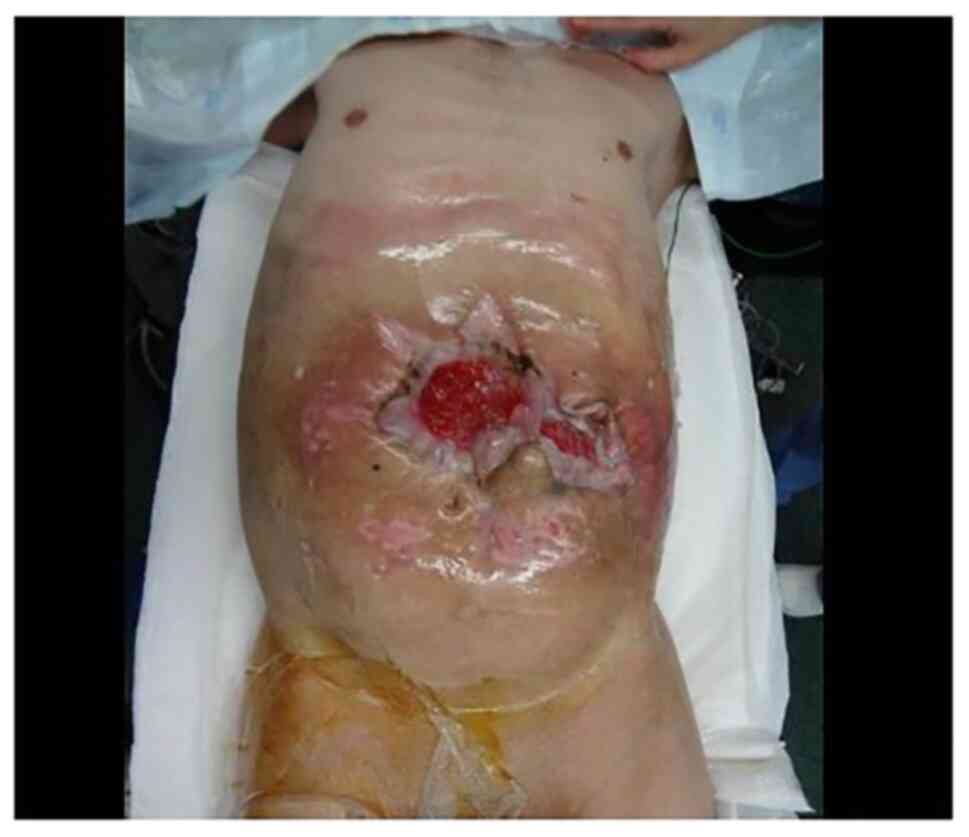
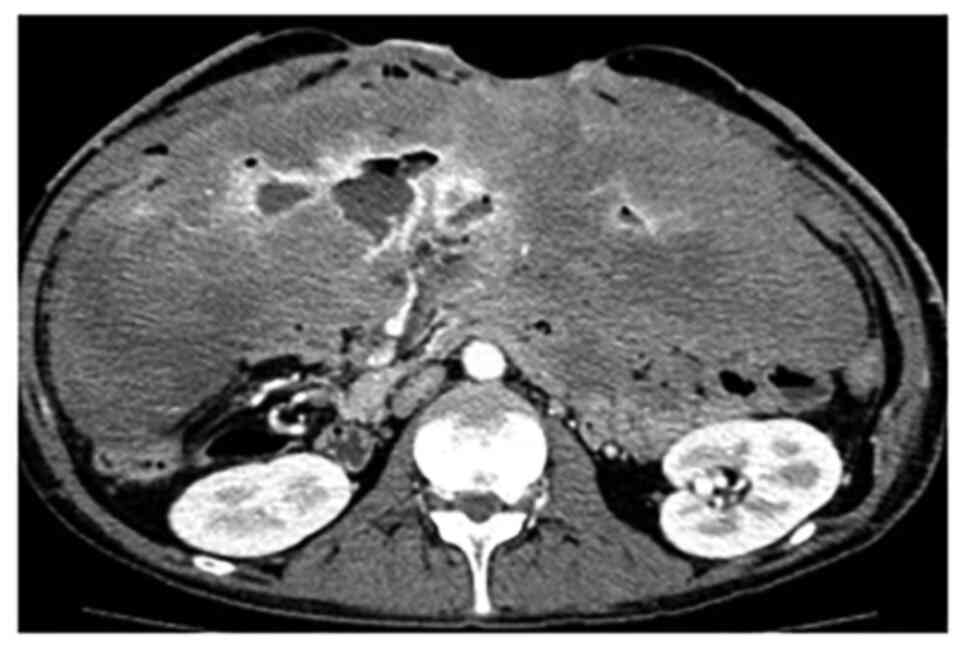
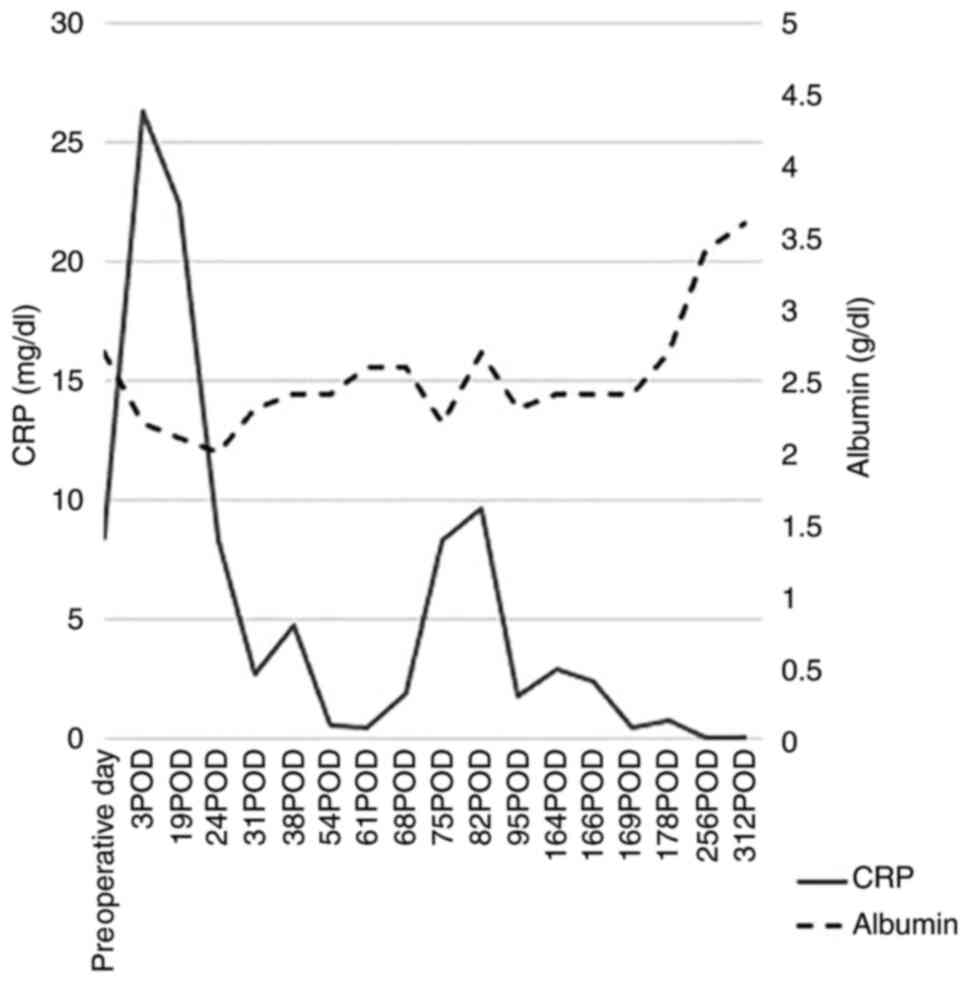
A desmoid tumor was exposed on the body surface and the tumor invaded the abdominal wall and small intestine; thus, pus and digestive juice from the tumor were observed (Fig. 1). A blood test showed a mild increase in neutrophilia (15,300/µl) and C-reactive protein (CRP) (8.47 mg/dl). Serum albumin was 2.7 g/dl. Enhanced computed tomography (CT) examination revealed a large tumor throughout the abdominal cavity. A branch of the superior mesenteric artery (SMA) penetrated the tumor. An abscess was also found in the upper abdomen (Fig. 2).

Figure 1

Tumor invasion of the abdominal wall.

Figure 2

Preoperative enhanced-computed tomography (CT) showing a branch of the superior mesenteric artery (SMA) penetrating the tumor. An abscess is present in the upper abdomen.

Although it was unlikely that the tumor could be completely removed by surgery, and the risk of postoperative complications (short bowel syndrome, massive bleeding) was high, the medical team decided to perform surgery for the purpose of symptom improvement.

Surgical findings

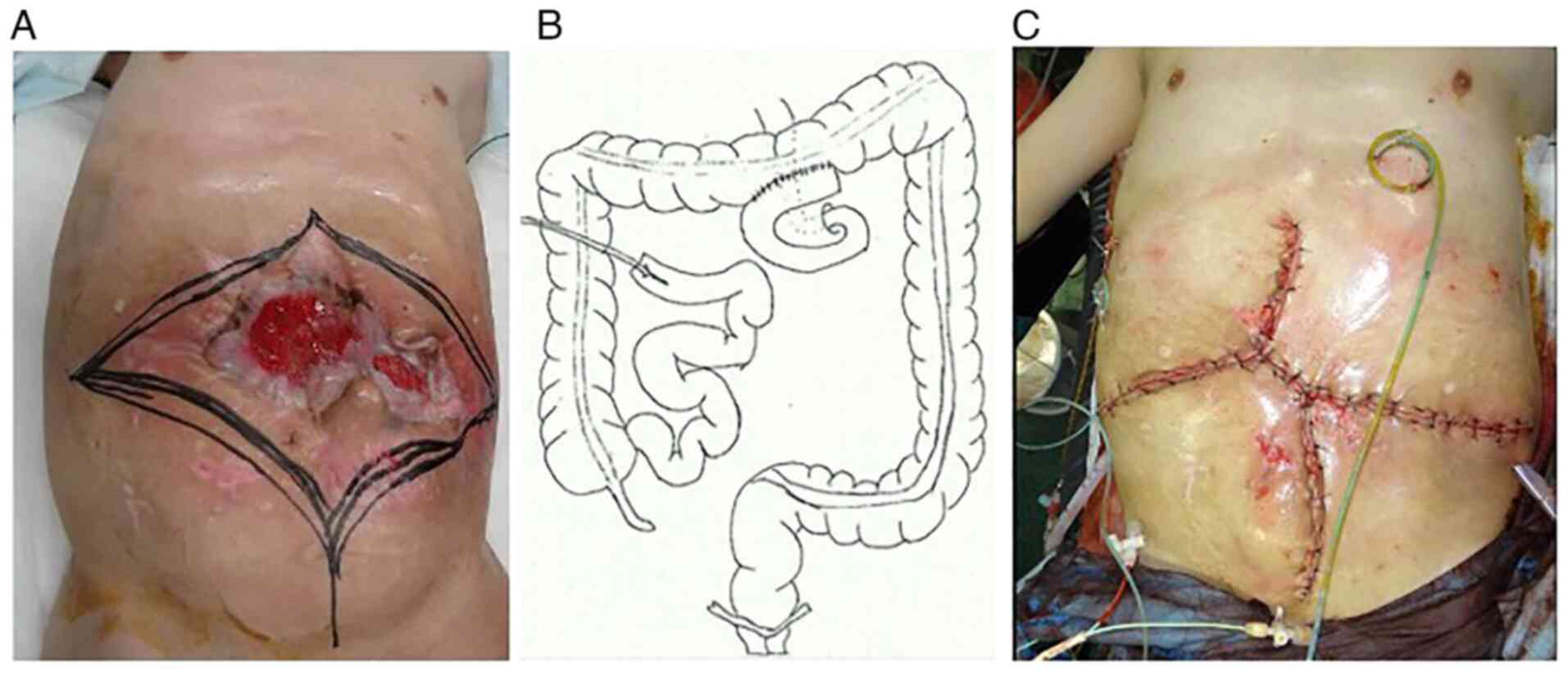
General anesthesia was initiated after placing a balloon catheter in the SMA under fluoroscopy to prepare for bleeding during surgery. The skin incision was designed to remove the desmoid tumor that formed a mass with the abdominal wall (Fig. 3A). In regards to the small intestine, only 30 cm on the anal side from the Treitz ligament and 100 cm on the oral side from the terminal ileum were able to be preserved. The other small tumors and the remainder of the small intestine were removed. When bleeding occurred, hemostasis was performed while dilating the SMA balloon to reduce blood flow appropriately. SMA occlusion occurred within 10 min. A side-to-side anastomosis between the oral jejunum and the transverse colon was performed, and an intestinal fistula was constructed from the oral side of the remaining ileum on the anal side (Fig. 3B). Reconstruction of the abdominal wall was performed by removing the remaining anterior sheath of the rectus abdominis and the peritoneum to bring them closer together (Fig. 3C). The operation time was 9 h and 20 min, and the blood loss was 3,430 ml.

Figure 3

(A) Design of the skin incision. (B) The schema of gastrointestinal reconstruction. (C) Reconstruction of the abdominal wall was performed by removing the remaining anterior sheath of the rectus abdominis and the peritoneum to bring them closer together.

Specimen

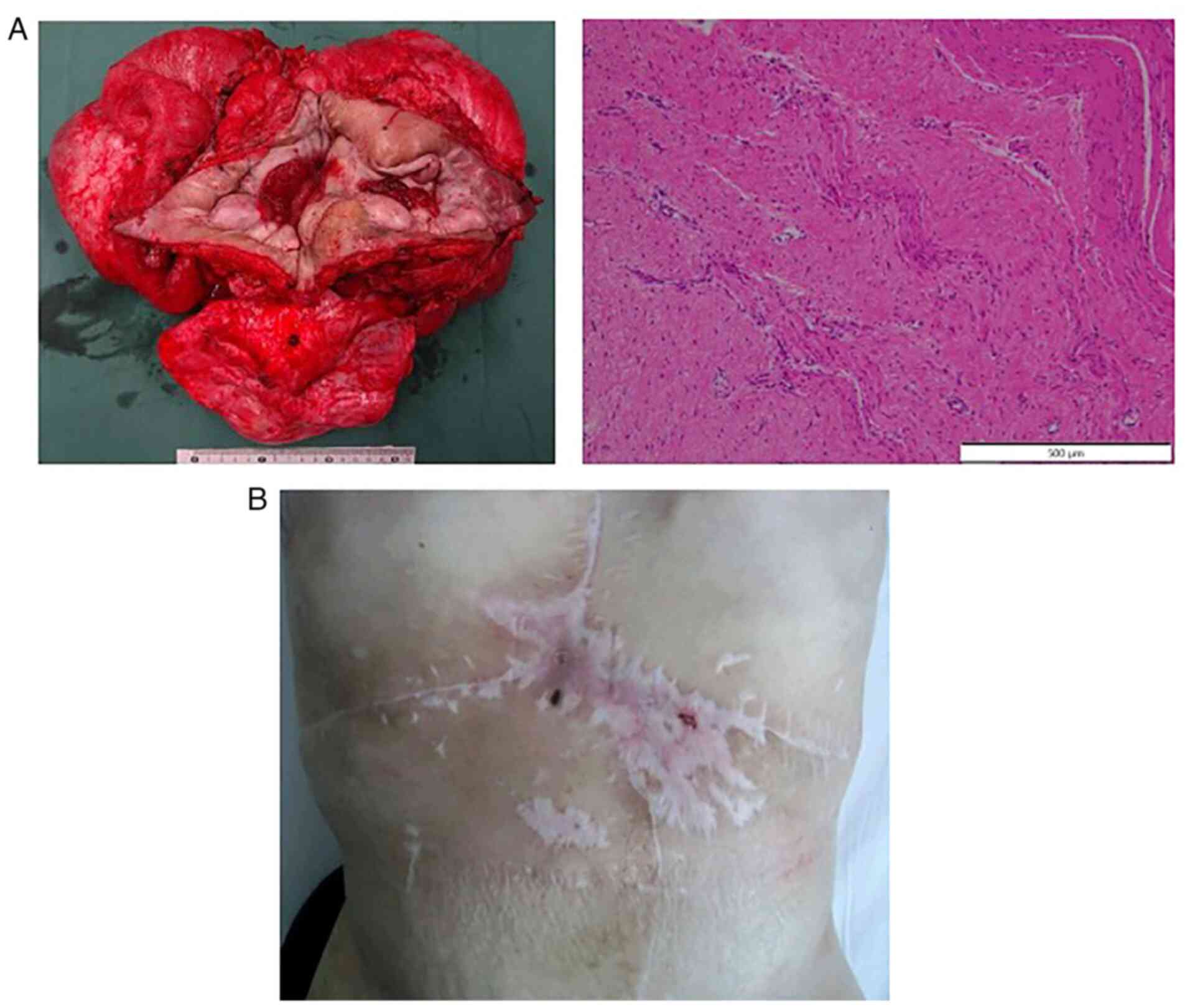
The tumor dimensions were 38x32 cm and it weighed approximately 6,000 g. Histologically, there were proliferating spindle cells with collagen fascicle formation continuing from the dermis to the muscular layer of the small intestine (Fig. 4A). In the tumor there was no necrosis, the cell density was low, and there were no malignant findings such as mitoses or atypical nuclei. The pathologic diagnosis was desmoid tumor, matching the preexisting diagnosis.

Figure 4

(A) The removed specimen, including the desmoid tumor and small intestine (left panel). Proliferation of spindle cells was observed. No malignant findings such as cell division or atypia were observed (right panel). (B) No tumors were visible through the abdominal wall at the time of discharge.

Since this case was severely symptomatic and the tumor diameter exceeded 20 cm, it was considered to be of stage IV in the desmoid tumor staging system.

Postoperative course

Enteral nutrition was started on the 11th postoperative day (POD), and oral intake was started on the 15th POD. There were no perioperative complications, oral intake gradually increased, and the patient was discharged on his own on the 135th POD. At the time of discharge, tube feeding was not necessary, and the number of defecations was 3 times a day with only oral intake. No tumor exposure was observed from the abdominal wall (Fig. 4B). After the operation, inflammation (CRP levels) was reduced and nutrition (albumin) was improved (Fig. 5). One year and 8 months after the operation, intestinal obstruction occurred due to an increase in intraperitoneal desmoid tumors. Reoperation was judged difficult, and the patient died 1 year and 10 months after the operation.

Figure 5

Time course graph for C-reactive protein (CRP) and albumin from the preoperative day until 312th postoperative day (POD).

Discussion

Desmoid tumors are benign monoclonal fibroblastic proliferations arising in musculoaponeurotic structures. They often cause various symptoms such as gastrointestinal tract obstruction, perforation, abscesses, and ureteral obstruction. There are currently no national or international guidelines for the management of desmoid tumors. The strategy of therapy which may be selected consists of surgery, pharmacotherapy or conservative treatment (follow-up). In some cases, the mass is considered unresectable and pharmacotherapy is selected (12).

In conclusion, in this case, the desmoid tumor prevented oral intake of food by the patient. To improve his symptoms, we performed a palliative operation which required some contrivances such as a balloon catheter in the SMA to avoid bleeding and reconstruction of the abdominal wall. Despite massive resection of the desmoid tumor and the small intestine, the patient was able to maintain his nutritional status by oral intake alone without tube feeding. His quality of life improved for the 20 months following the operation until an intestinal obstruction occurred 2 months prior to his death.

Acknowledgements

Not applicable.

Funding

Funding: No financial support was received.

Availability of data and materials

Further information regarding this case study is available from the corresponding author upon reasonable request.

Authors' contributions

YI drafted the manuscript. TM and HO supervised the writing of the case study. YI, KL, GM, KM, YF, and HO were the surgeons who operated on or attended the present patient. TY, SW, and DY prepared the histological micrographs and assisted in drafting the manuscript. All authors read and approved the final manuscript for publication.

Ethics approval and consent to participate

This retrospective study was performed according to the Declaration of Helsinki. The study has been approved by an Internal Board Committee of Moriguchi Keijinkai Hospital (Japan) and written informed consent was obtained from the patient.

Patient consent for publication

The patient provided written informed consent for publication of this case report and any accompanying images.

Competing interests

The authors declare that they have no competing interests.

References

1 

Ishida H, Yamaguchi T, Tanakaya K, Akagi K, Inoue Y, Kumamoto K, Shimodaira H, Sekine S, Tanaka T, Chino A, et al: Japanese society for cancer of the colon and rectum (JSCCR) guidelines 2016 for the clinical practice of hereditary colorectal cancer (Translated Version). J Anus Rectum Colon. 2 (Suppl I):S1–S51. 2018.PubMed/NCBI View Article : Google Scholar

2 

Sturt NJ, Gallagher MC, Bassett P, Philp CR, Neale KF, Tomlinson IP, Silver AR and Phillips RK: Evidence for genetic predisposition to desmoid tumours in familial adenomatous polyposis independent of the germline APC mutation. Gut. 53:1832–1836. 2004.PubMed/NCBI View Article : Google Scholar

3 

Iwama T, Tamura K, Morita T, Hirai T, Hasegawa H, Koizumi K, Shirouzu K, Sugihara K, Yamamura T, Muto T, et al: A clinical overview of familial adenomatous polyposis derived from the database of the polyposis registry of Japan. Int J Clin Oncol. 9:308–316. 2004.PubMed/NCBI View Article : Google Scholar

4 

Walter T, Zhenzhen Wang C, Guillaud O, Cotte E, Pasquer A, Vinet O, Poncet G, Ponchon T and Saurin JC: Management of desmoid tumours: A large national database of familial adenomatous patients shows a link to colectomy modalities and low efficacy of medical treatments. United European Gastroenterol J. 5:735–741. 2017.PubMed/NCBI View Article : Google Scholar

5 

Clark SK, Neale KF, Landgrebe JC and Phillips RK: Desmoid tumours complicating familial adenomatous polyposis. Br J Surg. 86:1185–1189. 1999.PubMed/NCBI View Article : Google Scholar

6 

Inoue Y, Ishida H, Ueno H, Kobayashi H, Yamaguchi T, Konishi T, Tomita N, Matsubara N, Ishida F, Hinoi T, et al: The treatment of desmoid tumors associated with familial adenomatous polyposis: The results of a Japanese multicenter observational study. Surg Today. 47:1259–1267. 2017.PubMed/NCBI View Article : Google Scholar

7 

Santos M, Rocha A, Martins V and Santos M: Desmoid tumours in familial adenomatous polyposis: Review of 17 patients from a portuguese tertiary center. J Clin Diagn Res. 10:PC01–PC05. 2016.PubMed/NCBI View Article : Google Scholar

8 

Nagata T, Demizu Y, Okumura T, Sekine S, Hashimoto N, Fuwa N, Okimoto T and Shimada Y: Carbon ion radiotherapy for desmoid tumor of the abdominal wall: A case report. World J Surg Oncol. 14(245)2016.PubMed/NCBI View Article : Google Scholar

9 

Nałęcz A, Dębski K, Dobosz M and Krauze Ml: Desmoid tumor of the mesentery in a patient after restorative proctocolectomy as a result of familial adenomatous polyposis-case reports. Pol Przegl Chir. 90:53–58. 2018.PubMed/NCBI View Article : Google Scholar

10 

Church J, Lynch C, Neary P, LaGuardia L and Elayi E: A desmoid tumor-staging system separates patients with intra-abdominal, familial adenomatous polyposis-associated desmoid disease by behavior and prognosis. Dis Colon Rectum. 51:897–901. 2008.PubMed/NCBI View Article : Google Scholar

11 

Sugrue JJ, Cohen SB, Marshall RM and Rilker AI: Palliative resection of a giant mesenteric desmoid tumor. Ochsner J. 15:468–472. 2015.PubMed/NCBI

12 

Xuereb S, Xuereb R, Buhagiar C, Gauci J and Magri C: A case report of desmoid tumour-a forgotten aspect of FAP? Int J Surg Rep. 30:122–125. 2017.PubMed/NCBI View Article : Google Scholar

Related Articles

  • Abstract
  • View
  • Download
  • Twitter
Copy and paste a formatted citation
Spandidos Publications style
Ichikawa Y, Lee K, Yokouchi T, Watanabe S, Yoshimura D, Mizojiri G, Maruyama K, Maeda T, Fujimori Y, Oka H, Oka H, et al: A successful operation for giant intra‑abdominal desmoid tumors associated with familial adenomatous polyposis: A case report. Mol Clin Oncol 16: 107, 2022.
APA
Ichikawa, Y., Lee, K., Yokouchi, T., Watanabe, S., Yoshimura, D., Mizojiri, G. ... Oka, H. (2022). A successful operation for giant intra‑abdominal desmoid tumors associated with familial adenomatous polyposis: A case report. Molecular and Clinical Oncology, 16, 107. https://doi.org/10.3892/mco.2022.2540
MLA
Ichikawa, Y., Lee, K., Yokouchi, T., Watanabe, S., Yoshimura, D., Mizojiri, G., Maruyama, K., Maeda, T., Fujimori, Y., Oka, H."A successful operation for giant intra‑abdominal desmoid tumors associated with familial adenomatous polyposis: A case report". Molecular and Clinical Oncology 16.6 (2022): 107.
Chicago
Ichikawa, Y., Lee, K., Yokouchi, T., Watanabe, S., Yoshimura, D., Mizojiri, G., Maruyama, K., Maeda, T., Fujimori, Y., Oka, H."A successful operation for giant intra‑abdominal desmoid tumors associated with familial adenomatous polyposis: A case report". Molecular and Clinical Oncology 16, no. 6 (2022): 107. https://doi.org/10.3892/mco.2022.2540
Copy and paste a formatted citation
x
Spandidos Publications style
Ichikawa Y, Lee K, Yokouchi T, Watanabe S, Yoshimura D, Mizojiri G, Maruyama K, Maeda T, Fujimori Y, Oka H, Oka H, et al: A successful operation for giant intra‑abdominal desmoid tumors associated with familial adenomatous polyposis: A case report. Mol Clin Oncol 16: 107, 2022.
APA
Ichikawa, Y., Lee, K., Yokouchi, T., Watanabe, S., Yoshimura, D., Mizojiri, G. ... Oka, H. (2022). A successful operation for giant intra‑abdominal desmoid tumors associated with familial adenomatous polyposis: A case report. Molecular and Clinical Oncology, 16, 107. https://doi.org/10.3892/mco.2022.2540
MLA
Ichikawa, Y., Lee, K., Yokouchi, T., Watanabe, S., Yoshimura, D., Mizojiri, G., Maruyama, K., Maeda, T., Fujimori, Y., Oka, H."A successful operation for giant intra‑abdominal desmoid tumors associated with familial adenomatous polyposis: A case report". Molecular and Clinical Oncology 16.6 (2022): 107.
Chicago
Ichikawa, Y., Lee, K., Yokouchi, T., Watanabe, S., Yoshimura, D., Mizojiri, G., Maruyama, K., Maeda, T., Fujimori, Y., Oka, H."A successful operation for giant intra‑abdominal desmoid tumors associated with familial adenomatous polyposis: A case report". Molecular and Clinical Oncology 16, no. 6 (2022): 107. https://doi.org/10.3892/mco.2022.2540
Follow us
  • Twitter
  • LinkedIn
  • Facebook
About
  • Spandidos Publications
  • Careers
  • Cookie Policy
  • Privacy Policy
How can we help?
  • Help
  • Live Chat
  • Contact
  • Email to our Support Team