Introduction
The organs of the head and neck region perform
essential functions in daily life such as speech and swallowing.
Therefore, at the treatment of head and neck cancers, their
preservation and restoration are important as well as eradication
of disease. Surgical treatment for advanced head and neck cancers
involves reconstructive surgery using appropriate free flaps to
address the defect caused by tumor resection. Reconstructive
surgery using the jejunum of a luminal organ is particularly
effective in preserving the ability to swallow (1-7),
but it does not allow normal oral intake in all patients. A small
number of patients may have difficulty in swallowing. Causes
include damage to the glossopharyngeal and vagus nerves due to
LRPLND (8-10),
nasopharyngeal reflux, and reduced swallowing pressure due to
resection of the pharynx (11,12),
tissue scarring after radiotherapy (13-15),
and stenosis of the jejuno-esophageal anastomosis (16,17).
In this study, we investigated the postoperative swallowing
dynamics of patients with head and neck cancers, who underwent
reconstructive surgery using a free jejunum flap. The causes of
their dysphagia were described with reference to current
literature.
Materials and methods
Forty-seven patients with advanced head and neck
cancers, who underwent reconstruction using free jejunum flap at
Nara Medical University between January 2010 and December 2019,
were retrospectively investigated. Table I shows the patients' backgrounds.
There were 42 males and 5 females with a median age of 68 years
(with a range of 44-86 years). The most common primary site was the
hypopharynx (33 cases), followed by the larynx and cervical
esophagus (5 cases each), and the mesopharynx (4 cases). Eleven
cases were classified as T2, 15 as T3, and 21 as T4, with locally
advanced cancers of T3 and T4 accounting for the majority. The
swallowing function was assessed using videofluorography from the
start of oral intake to discharge, as well as patients' diet form
at discharge. The swallowing assessment was performed by three head
and neck surgeons and one speech-language pathologist using the
Modified Barium Swallow Impairment profile scores (MBSImp) shown in
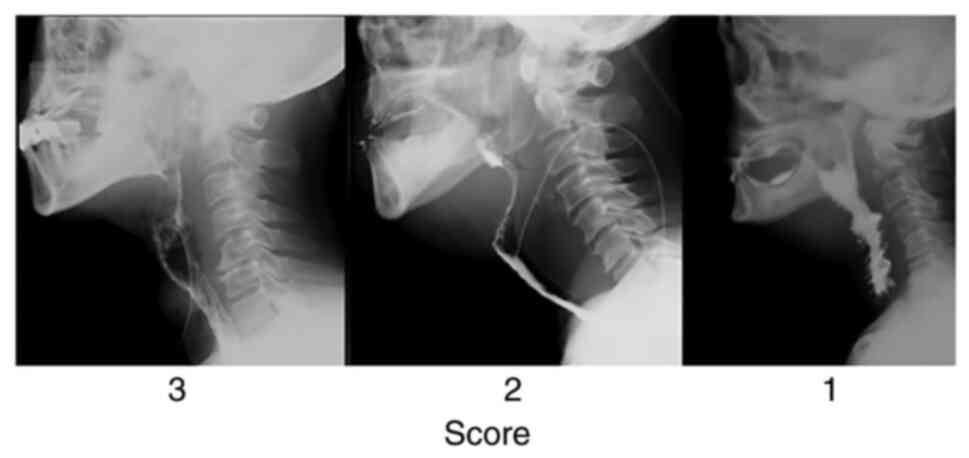
Table II. Residues could not be
assessed in laryngopharyngeal valleys and piriform sinuses
following total laryngopharyngectomy, so they were substituted with
pharyngeal residues, as shown in Fig.
1 (18). A uniform scoring
system was applied-3 points for good function, 1 point for poor,
and 2 points for the range between those two ratings. Factors that
may reduce postoperative swallowing function were also examined,
such as the presence or absence of LRPLN dissection, the extent of
the cephalic resection into the nasopharynx, preoperative
radiotherapy, and incidence of stenosis due to jejuno-esophageal
anastomosis.
 | Table IPatients's characteristics. |
Table I
Patients's characteristics.
| Characteristic | Category | Frequency, n |
|---|
| Sex | Female | 5 |
| | Male | 42 |
| Median age, years
(range) | | 68 (44-86) |
| Primary site | Oropharynx | 4 |
| | Hypopharynx | 33 |
| | Larynx | 5 |
| | Cervical
esophagus | 5 |
| T classification | T2 | 11 |
| | T3 | 15 |
| | T4 | 21 |
| Rouvière lymph | + | 6 |
| node dissection | - | 41 |
| Nasopharyngeal | + | 4 |
| incision | - | 43 |
| Preoperative | + | 11 |
| radiotherapy | - | 36 |
| Method of
anastomosis | Instrumental | 12 |
| | Manual | 35 |
| Table IISwallowing assessment (extracted and
modified from MBSimp). |
Table II
Swallowing assessment (extracted and
modified from MBSimp).
| Parameter | Score given |
|---|
| Oral pharyngeal
residue | |
|
None or in
small quantities | 3 |
|
Medium | 2 |
|
Large
quantities | 1 |
| Pharyngeal
contractions | |
|
Front and
rear touch and air space disappears | 3 |
|
Not
very | 2 |
|
Not seen at
all | 1 |
| Elevation of the soft
palate | |
|
Contact
between the soft palate and the posterior wall of the pharynx | 3 |
|
Not
very | 2 |
|
Reflux of
contrast medium into the nasal cavity | 1 |
StatMate V statistical software (ATMS Co., Ltd.) was
used to perform statistical analysis. The Mann-Whitney test was
used to identify significant differences between the two groups,
and the Kruskal-Wallis test was used to evaluate significant
differences between the multiple groups. P-value of <0.05 was
considered statistically significant for both tests.
Results
The median length of hospitalization was 31 days
(ranged from 14 to 90 days), and the median time from the start of
oral intake to discharge was 17 days (ranged from 5 to 60 days),
with 39 patients (83%) discharged within 4 weeks after resuming
oral intake. Postoperative complication appeared in only one
patient (flap necrosis). The remaining 46 patients had no
postoperative complications on jejunal free flaps. The
videofluorography results were assessed and pharyngeal residues of
the contrast medium were measured. Table III displays the scoring: 1, 2, 3
points in 9, 25, and 13 cases respectively. Soft palate elevation
was observed with 1, 2, and 3 points in 4, 11, and 32 cases
respectively. Pharyngeal constriction was assessed at 1, 2, and 3
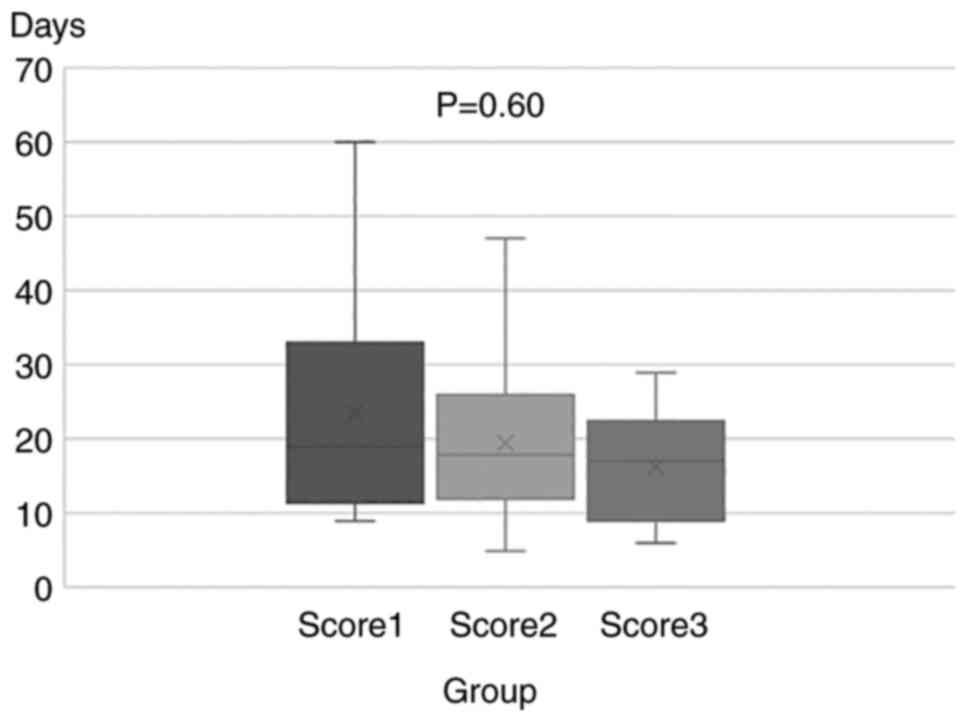
points in 6, 25, and 16 cases respectively. The duration from
resumption of oral intake to discharge was shown in Fig. 2. There was no association between
the passage of contrast medium through the free jejunum flap and
the time from the resumption of oral intake to discharge. The diet
form at the time of discharge consisted of plain food in 7 cases,
soft food in 19 cases, chunky food in 15 cases, mixer food in 3
cases, jellied food in 2 cases, and tube feeding in 1 case. Of the
47 patients, 41 (87%) were able to consume at least 1 chopped
meal.
| Table IIIDistribution of scores for each
swallowing function. |
Table III
Distribution of scores for each
swallowing function.
| | Score, n |
|---|
| Pharyngeal
residue | 3 | 2 | 1 |
| Oral pharyngeal
residue | 13 | 25 | 9 |
| Pharyngeal
contractions | 16 | 25 | 6 |
| Elevation of the soft
palate | 32 | 11 | 4 |
Evaluation of the swallowing function after
reconstriction surgery
The degree of dysphagia between patients with and
without LRPLND, preoperative radiotherapy, nasopharyngeal
resection, and the method of jejuno-esophageal anastomosis
(hand-sewn vs. stapled) was investigated. There were 6 and 41
patients in the LRPLND and non-LRPLND group, respectively. Eleven
patients had received preoperative radiotherapy and 36 had no
history of radiation before surgery. Stapled jejuno-esophageal
anastomosis was performed in 12 cases and hand-sewn in 35 cases.
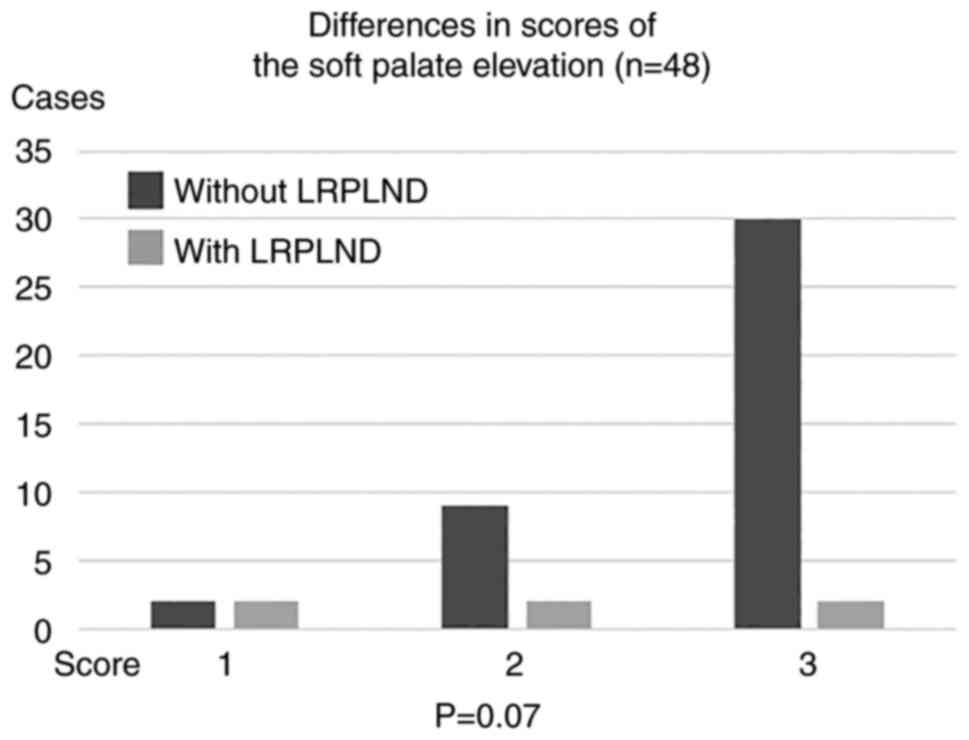
Fig. 3 shows the differences in
dysphagia between patients with and without dissection of the
Rouviere lymph nodes. There were no significant differences in any
of the scores, but the dissection group tended to have a lower
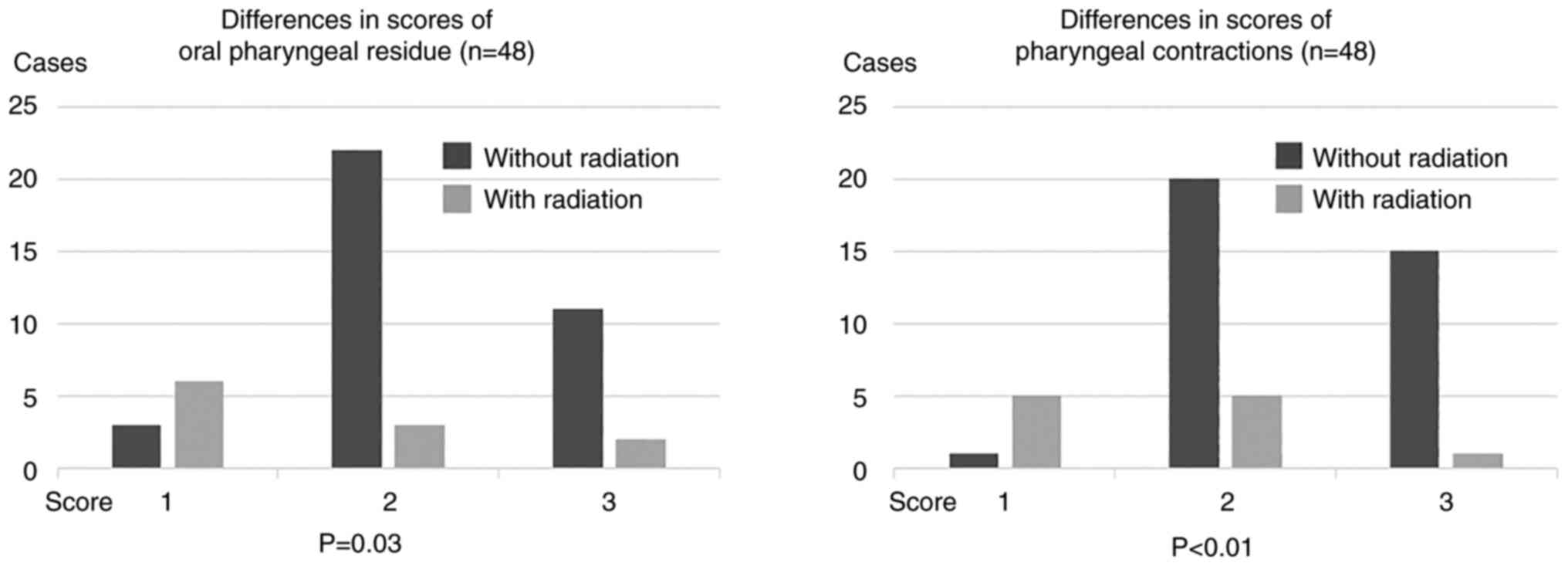
score for soft palate elevation (P=0.070). Fig. 4 shows the differences in dysphagia
with and without preoperative radiotherapy. There was a significant
difference in the scores of oral pharyngeal residues (P=0.03) and
pharyngeal contraction (P=0.005) between patients with and those
without preoperative radiotherapy. Patients who received
preoperative radiotherapy had significantly worse oropharyngeal
residual and pharyngeal constriction scores than those who did not.
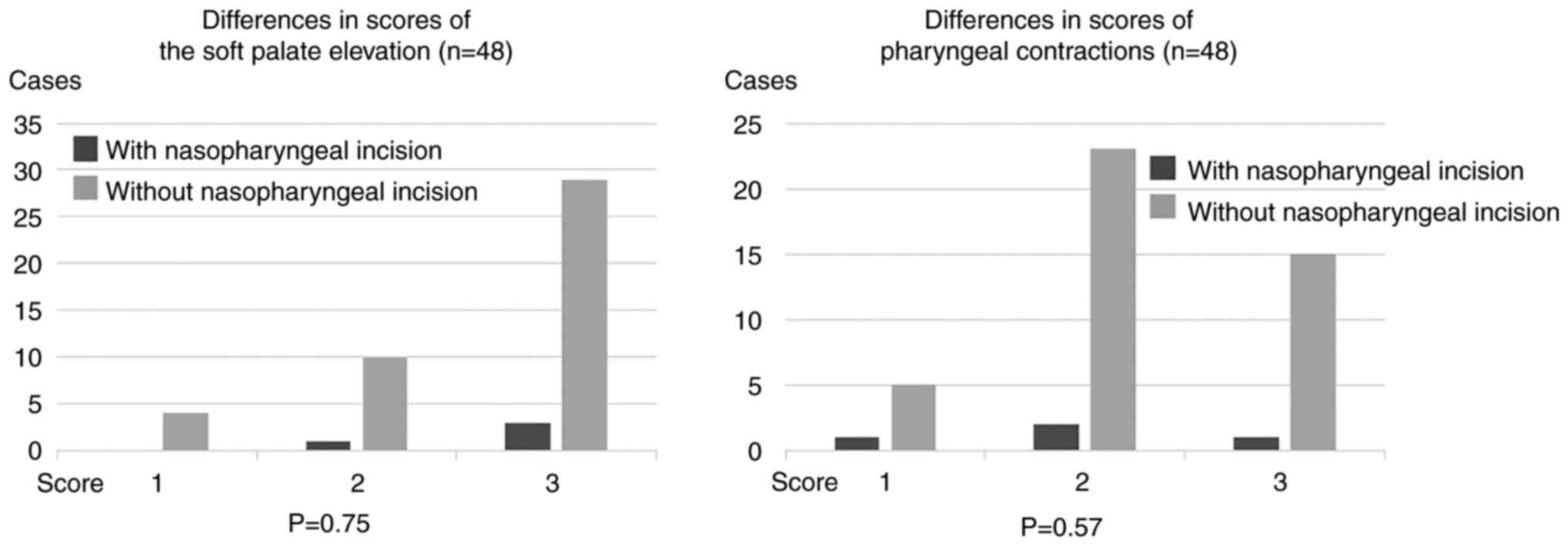
Fig. 5 shows the differences in
dysphagia due to nasopharyngeal incision. There were no significant
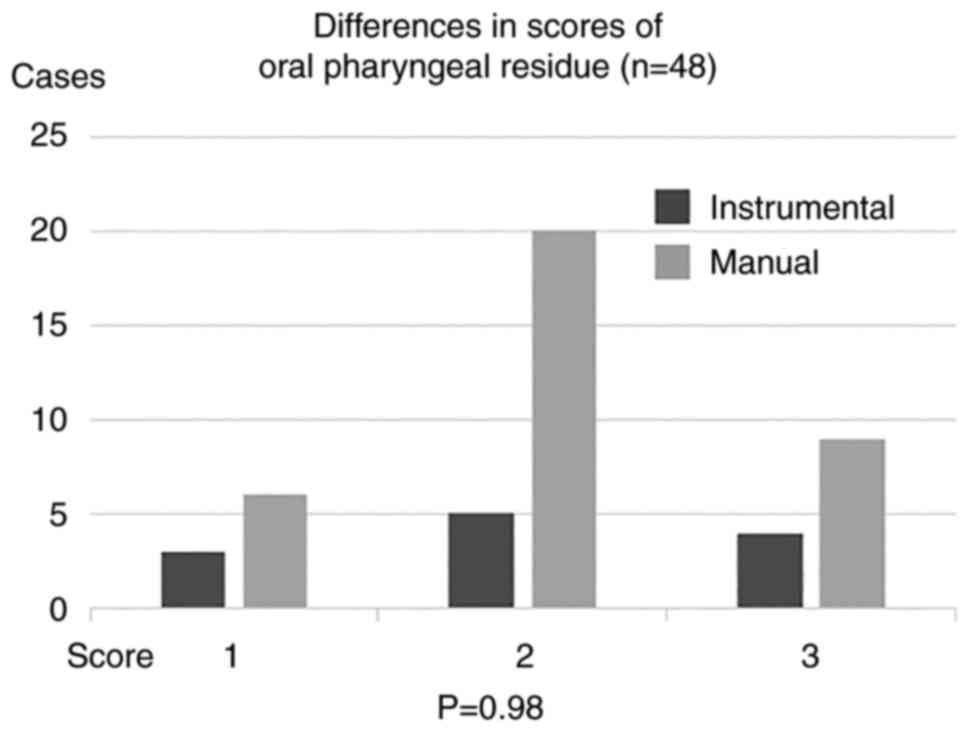
differences in any of the scores. Fig.
6 shows the differences in dysphagia according to the method of
anastomosis of the lower end of the jejunum. There were no
significant differences in any of the scores.
Discussion
Surgical treatment of advanced head and neck
carcinoma often involves reconstructive surgery using free flaps to
compensate for the defects. The free jejunum flap is a luminal
organ flap, which is not only relatively easy to use for
reconstruction of the upper digestive tract but is also effective
in preserving swallowing function (1-7).
However, post-operatively, not all patients can eat orally, and
some number of patients actually have dysphagia due to various
factors. In this study, we investigated the postoperative
swallowing dynamics of patients with head and neck cancers who
underwent reconstructive surgery using a free jejunum flap at our
institution.
The results showed that the median time from the
start of oral intake to discharge was 17 days (with a range of 5-60
days), and 39 patients (83%) were discharged within 4 weeks after
resuming oral intake. This is a relatively good outcome. At
discharge, 7 patients had taken an ordinary diet, 19 were consuming
a soft diet, 15 were eating a blended diet, 3 patients were
consuming a mixed diet, 2 were on a jellied food diet, and 1
patient remained on tube feeding. In other words, although this is
a good result, 13% of the patients still had some degree of
dysphagia. This motivated us to investigate all 47 patient records
to evaluate swallowing function. The time elapsed from resumption
of oral intake to discharge was calculated for each of the
patients. The result showed no association with the passage of
contrast medium through the free jejunum flap. A good passage of
contrast would mean an auspicious resumption of good oral intake.
The duration of hospitalization, however, depends not only on the
patient's swallowing function but also on the condition of the
wound and psychosocial factors. Furthermore, swallowing function at
the time of videofluorography a week after the operation possibly
lowered because of dysfunction of the free jejunal flap as a food
passage due to postoperative edematous change.
In this study, we examined whether four factors,
that is, LRPLND, preoperative radiotherapy, nasopharyngeal
incision, and the method of jejuno-esophageal anastomosis
(hand-sewn or stapled) may cause postoperative dysphagia or not.
The swallowing scores for these four factors were evaluated. There
was no significant difference in scores between patients with and
without LRPLND, however the patients in the dissection group tended
to show lower scores for soft palate elevation. There were
significant differences in both the pharyngeal residual and
contraction scores between patients with and without preoperative
radiotherapy. On the other hand, extended resection to the
nasopharynx and the method of jejuno-esophageal anastomosis did not
affect the swallowing scores. Although there were not significant
difference, LRPLND may cause to damage important cranial nerves
involved in swallowing, such as the glossopharyngeal and vagus
nerves. Cutting off these nerves is rare, however, careful. Careful
surgical manipulation is necessary to lower the chances of
transient paralysis, a possible adverse event associated with
performing lymph node dissection. LRPLNs are usually approached
through the neck, and some reports of peroral LRPLND with no
postoperative dysphagia were recently described (19,20).
Radiotherapy to the head and neck region causes cell depletion,
inflammation, and hypoplasia in the early stages and fibrosis,
changes in the microvasculature, and tissue atrophy in the late
stages, resulting in dysphagia during and after treatment (13). As postoperative thing is,
therefore, more likely to occur in cases of salvage surgery after
chemoradiotherapy, significant differences were found in the
present study. The same dysphagia is likely to occur when resecting
area extends to the nasopharynx. Inadequate swallowing pressure due
to inadequate closure of the soft palate may lead to nasopharyngeal
reflux and inadequate feeding through the free jejunum flap due to
reduced swallowing pressure. Previous reports of surgical teams
using various innovations to prevent such dysphagia exist, such as
placing a longitudinal incision in the free jejunum flap according
to the defect or using part of it as a patch (11,12).
This procedure, which is called, velopharyngeal
reconstruction is employed whenever the nasopharyngeal space is
open to the oropharynx due to tumor resection. This is possibly the
reason why the nasopharyngeal incision did not affect swallowing.
Several reports have discussed the anastomosis between the jejunum
and the esophagus (16,17). Since in these reports evaluation
was done in the immediate postoperative videofluorography, it was
inferred that the postoperative edema and other factors obscured
the postoperative status of swallowing. However, it is widely
reported that from the point of long-term prognosis, the incidence
of jejuno-esophageal anastomotic stenosis is overwhelmingly higher
in patients with instrumented anastomoses than in those with
hand-sewn anastomoses. Therefore, had-seen anastomoses is
recommended. General surgeons at our institution until 2014
employed stapled anastomosis. After 2015, our head and neck
surgeons switched from the method to hand-sewn anastomosis. Since
then, there has been no incidence of postoperative anastomotic
stenosis. Another factor that may prevent anastomotic stricture is
the blood flow at the esophageal margin of the anastomosis.
Avoiding unnecessary dissection of the esophagus from the
tracheobronchial fold, preserving the thyroid gland, omitting
unnecessary paratracheal dissection, and reducing the field of
postoperative radiation therapy may be important factors in
maintaining esophageal blood flow. Even though the prevention of
recurrence is a priority, as stomal recurrence can be fatal, the
cautionary notes described above should be strongly emphasized.
Extensive resection of advanced head and neck
cancers severely impairs patients' ability to speak and swallow.
Head and neck surgeons should focus not only on cures but also on
the preservation of function. Even in patients undergoing free
jejunal flap reconstruction, any and every effort should be made to
optimize patient quality of life by developing and employing
effective interventions for maintaining the ability to eat and
swallow. This study focused on items related to surgery and did not
evaluate nutrition support team intervention, nutritional guidance
after discharge, or continued swallowing rehabilitation. Since
these elements are necessary for long-term maintenance of
swallowing function, this is an issue to be considered in the
future. Futhermore, in this study, the total number of cases is
relatively small. As more cases occur, they should be studied
thoroughly, further investigations are necessary to assess the
swallowing function after free jejunal reconstruction.
Acknowledgements
Not applicable.
Funding
Funding: No funding was received.
Availability of data and materials
The datasets used and/or analyzed during the current
study are available from the corresponding author on reasonable
request.
Authors' contributions
HA, HU, TM, IO and TKit conceived and designed the
current study. HA, HU, TM, IO, TKim, SA, KU, MS, AT and TKit
acquired the data. HA, HU and TM confirmed the authenticity of all
the raw data. HA, TM and IO analyzed and interpreted the data. HA,
TM and TKit drafted the manuscript. HA, HU, TM, IO and TKit
reviewed and edited the manuscript. All authors have accepted their
responsibility for the entire content of this manuscript and
approved submission. All authors read and approved the final
manuscript.
Ethics approval and consent to
participate
This study was approved by the Ethics Committee of
Nara Medical University (approval no. 2995; Kashihara, Japan).
Patient consent for publication
The images in Fig.
1 belong to the patients, and written consent to use them for
publication was obtained from all patients at the time of
surgery.
Competing interests
The authors declare that they have no competing
interests.
References
|
1
|
Sharp DA, Theile DR, Cook R and Coman WB:
Long-term functional speech and swallowing outcomes following
pharyngolaryngectomy with free jejunal flap reconstruction. Ann
Plast Surg. 64:743–746. 2010.PubMed/NCBI View Article : Google Scholar
|
|
2
|
Chan YW, Ng RW, Liu LH, Chung HP and Wei
WI: Reconstruction of circumferential pharyngeal defects after
tumour resection: Reference or preference. J Plast Reconstr Aesthet
Surg. 64:1022–1028. 2011.PubMed/NCBI View Article : Google Scholar
|
|
3
|
Pegan A, Rašić I, Košec A, Solter D, Vagić
D, Bedeković V and Ivkić M: Type II hypopharyngeal defect
reconstruction-a single institution experience. Acta Clin Croat.
57:673–680. 2018.PubMed/NCBI View Article : Google Scholar
|
|
4
|
Denewer A, Khater A, Hafez MT, Hussein O,
Roshdy S, Shahatto F, Elnahas W, Kotb S and Mowafy K:
Pharyngoesophageal reconstruction after resection of hypopharyngeal
carcinoma: A new algorithm after analysis of 142 cases. World J
Surg Oncol. 12(182)2014.PubMed/NCBI View Article : Google Scholar
|
|
5
|
Perez-Smith D, Wagels M and Theile DR:
Jejunal free flap reconstruction of the pharyngolaryngectomy
defect: 368 Consecutive cases. J Plast Reconstr Aesthet Surg.
66:9–15. 2013.PubMed/NCBI View Article : Google Scholar
|
|
6
|
Disa JJ, Pusic AL, Hidalgo DA and Cordeiro
PG: Microvascular reconstruction of the hypopharynx: Defect
classification, treatment algorithm, and functional outcome based
on 165 consecutive cases. Plast Reconstr Surg. 111:652–660,
661-663. 2003.PubMed/NCBI View Article : Google Scholar
|
|
7
|
Benazzo M, Occhini A, Rossi V, Aresi G and
Alessiani M: Jejunum free flap in hypopharynx reconstruction: Case
series. BMC Cancer. 2(13)2002.PubMed/NCBI View Article : Google Scholar
|
|
8
|
Togashi T, Sugitani I, Toda K, Kawabata K
and Takahashi S: Surgical management of retropharyngeal nodes
metastases from papillary thyroid carcinoma. World J Surg.
38:2831–2837. 2014.PubMed/NCBI View Article : Google Scholar
|
|
9
|
Otsuki N, Nishikawa T, Iwae S, Saito M,
Mohri M and Nibu K: Retropharyngeal node metastasis from papillary
thyroid carcinoma. Head Neck. 29:508–511. 2007.PubMed/NCBI View Article : Google Scholar
|
|
10
|
Hartl DM, Leboulleux S, Vélayoudom-Céphise
FL, Mirghani H, Déandréis D and Schlumberger M: Management of
retropharyngeal node metastases from thyroid carcinoma. World J
Surg. 39:1274–1281. 2015.PubMed/NCBI View Article : Google Scholar
|
|
11
|
Nakatsuka T, Harii K, Takushima A,
Yoshimura K, Ichioka S, Sugasawa M, Ichimura K, Seto Y and Nagawa
H: Prefabricated free jejunal transfer: A new reconstructive
technique for high pharyngeal defects. Plast Reconstr Surg.
103:458–464. 1999.PubMed/NCBI View Article : Google Scholar
|
|
12
|
Kimata Y, Uchiyama K, Sakuraba M, Ebihara
S, Nakatsuka T and Harii K: Simple reconstruction of large
pharyngeal defects with free jejunal transfer. Laryngoscope.
110:1230–1233. 2000.PubMed/NCBI View Article : Google Scholar
|
|
13
|
King SN, Dunlap NE, Tennant PA and Pitts
T: Pathophysiology of radiation-induced dysphagia in head and neck
cancer. Dysphagia. 31:339–351. 2016.PubMed/NCBI View Article : Google Scholar
|
|
14
|
Sassler AM, Esclamado RM and Wolf GT:
Surgery after organ preservation therapy. Analysis of wound
complications. Arch Otolaryngol Head Neck Surg. 121:162–165.
1995.PubMed/NCBI View Article : Google Scholar
|
|
15
|
Dubsky PC, Stift A, Rath T and Kornfehl J:
Salvage surgery for recurrent carcinoma of the hypopharynx and
reconstruction using jejunal free tissue transfer and pectoralis
major muscle pedicled flap. Arch Otolaryngol Head Neck Surg.
133:551–555. 2007.PubMed/NCBI View Article : Google Scholar
|
|
16
|
Liu QX, Qiu Y, Deng XF, Min JX and Dai JG:
Comparison of outcomes following end-to-end hand-sewn and
mechanical oesophagogastric anastomosis after oesophagectomy for
carcinoma: A prospective randomized controlled trial. Eur J
Cardiothorac Surg. 47:e118–e123. 2015.PubMed/NCBI View Article : Google Scholar
|
|
17
|
Luechakiettisak P and Kasetsunthorn S:
Comparison of hand-sewn and stapled in esophagogastric anastomosis
after esophageal cancer resection: A prospective randomized study.
J Med Assoc Thai. 91:681–685. 2008.PubMed/NCBI
|
|
18
|
Beall J, Hill EG, Armeson K, Garand KLF,
Davidson KH and Martin-Harris B: Classification of physiologic
swallowing impairment severity: A latent class analysis of modified
barium swallow impairment profile scores. Am J Speech Lang Pathol.
29:1001–1011. 2020.PubMed/NCBI View Article : Google Scholar
|
|
19
|
Tanaka Y, Tomifuji M, Suzuki H, Yamashita
T, Araki K and Shiotani A: Transoral videolaryngoscopic surgery
with a navigation system for excision of a metastatic
retropharyngeal lymph node. ORL J Otorhinolaryngol Relat Spec.
76:357–363. 2014.PubMed/NCBI View Article : Google Scholar
|
|
20
|
Fujiwara K, Fukuhara T, Koyama S, Donishi
R, Kataoka H, Kitano H and Takeuchi H: Ultrasound-guided transoral
videolaryngoscopic surgery for retropharyngeal lymph node
metastasis of papillary thyroid cancer. Case Rep Oncol. 10:649–655.
2017.PubMed/NCBI View Article : Google Scholar
|