Spandidos Publications Logo
  • About
    • About Spandidos
    • Aims and Scopes
    • Abstracting and Indexing
    • Editorial Policies
    • Reprints and Permissions
    • Job Opportunities
    • Terms and Conditions
    • Contact
  • Journals
    • All Journals
    • Oncology Letters
      • Oncology Letters
      • Information for Authors
      • Editorial Policies
      • Editorial Board
      • Aims and Scope
      • Abstracting and Indexing
      • Bibliographic Information
      • Archive
    • International Journal of Oncology
      • International Journal of Oncology
      • Information for Authors
      • Editorial Policies
      • Editorial Board
      • Aims and Scope
      • Abstracting and Indexing
      • Bibliographic Information
      • Archive
    • Molecular and Clinical Oncology
      • Molecular and Clinical Oncology
      • Information for Authors
      • Editorial Policies
      • Editorial Board
      • Aims and Scope
      • Abstracting and Indexing
      • Bibliographic Information
      • Archive
    • Experimental and Therapeutic Medicine
      • Experimental and Therapeutic Medicine
      • Information for Authors
      • Editorial Policies
      • Editorial Board
      • Aims and Scope
      • Abstracting and Indexing
      • Bibliographic Information
      • Archive
    • International Journal of Molecular Medicine
      • International Journal of Molecular Medicine
      • Information for Authors
      • Editorial Policies
      • Editorial Board
      • Aims and Scope
      • Abstracting and Indexing
      • Bibliographic Information
      • Archive
    • Biomedical Reports
      • Biomedical Reports
      • Information for Authors
      • Editorial Policies
      • Editorial Board
      • Aims and Scope
      • Abstracting and Indexing
      • Bibliographic Information
      • Archive
    • Oncology Reports
      • Oncology Reports
      • Information for Authors
      • Editorial Policies
      • Editorial Board
      • Aims and Scope
      • Abstracting and Indexing
      • Bibliographic Information
      • Archive
    • Molecular Medicine Reports
      • Molecular Medicine Reports
      • Information for Authors
      • Editorial Policies
      • Editorial Board
      • Aims and Scope
      • Abstracting and Indexing
      • Bibliographic Information
      • Archive
    • World Academy of Sciences Journal
      • World Academy of Sciences Journal
      • Information for Authors
      • Editorial Policies
      • Editorial Board
      • Aims and Scope
      • Abstracting and Indexing
      • Bibliographic Information
      • Archive
    • International Journal of Functional Nutrition
      • International Journal of Functional Nutrition
      • Information for Authors
      • Editorial Policies
      • Editorial Board
      • Aims and Scope
      • Abstracting and Indexing
      • Bibliographic Information
      • Archive
    • International Journal of Epigenetics
      • International Journal of Epigenetics
      • Information for Authors
      • Editorial Policies
      • Editorial Board
      • Aims and Scope
      • Abstracting and Indexing
      • Bibliographic Information
      • Archive
    • Medicine International
      • Medicine International
      • Information for Authors
      • Editorial Policies
      • Editorial Board
      • Aims and Scope
      • Abstracting and Indexing
      • Bibliographic Information
      • Archive
  • Articles
  • Information
    • Information for Authors
    • Information for Reviewers
    • Information for Librarians
    • Information for Advertisers
    • Conferences
  • Language Editing
Spandidos Publications Logo
  • About
    • About Spandidos
    • Aims and Scopes
    • Abstracting and Indexing
    • Editorial Policies
    • Reprints and Permissions
    • Job Opportunities
    • Terms and Conditions
    • Contact
  • Journals
    • All Journals
    • Biomedical Reports
      • Information for Authors
      • Editorial Policies
      • Editorial Board
      • Aims and Scope
      • Abstracting and Indexing
      • Bibliographic Information
      • Archive
    • Experimental and Therapeutic Medicine
      • Information for Authors
      • Editorial Policies
      • Editorial Board
      • Aims and Scope
      • Abstracting and Indexing
      • Bibliographic Information
      • Archive
    • International Journal of Epigenetics
      • Information for Authors
      • Editorial Policies
      • Editorial Board
      • Aims and Scope
      • Abstracting and Indexing
      • Bibliographic Information
      • Archive
    • International Journal of Functional Nutrition
      • Information for Authors
      • Editorial Policies
      • Editorial Board
      • Aims and Scope
      • Abstracting and Indexing
      • Bibliographic Information
      • Archive
    • International Journal of Molecular Medicine
      • Information for Authors
      • Editorial Policies
      • Editorial Board
      • Aims and Scope
      • Abstracting and Indexing
      • Bibliographic Information
      • Archive
    • International Journal of Oncology
      • Information for Authors
      • Editorial Policies
      • Editorial Board
      • Aims and Scope
      • Abstracting and Indexing
      • Bibliographic Information
      • Archive
    • Medicine International
      • Information for Authors
      • Editorial Policies
      • Editorial Board
      • Aims and Scope
      • Abstracting and Indexing
      • Bibliographic Information
      • Archive
    • Molecular and Clinical Oncology
      • Information for Authors
      • Editorial Policies
      • Editorial Board
      • Aims and Scope
      • Abstracting and Indexing
      • Bibliographic Information
      • Archive
    • Molecular Medicine Reports
      • Information for Authors
      • Editorial Policies
      • Editorial Board
      • Aims and Scope
      • Abstracting and Indexing
      • Bibliographic Information
      • Archive
    • Oncology Letters
      • Information for Authors
      • Editorial Policies
      • Editorial Board
      • Aims and Scope
      • Abstracting and Indexing
      • Bibliographic Information
      • Archive
    • Oncology Reports
      • Information for Authors
      • Editorial Policies
      • Editorial Board
      • Aims and Scope
      • Abstracting and Indexing
      • Bibliographic Information
      • Archive
    • World Academy of Sciences Journal
      • Information for Authors
      • Editorial Policies
      • Editorial Board
      • Aims and Scope
      • Abstracting and Indexing
      • Bibliographic Information
      • Archive
  • Articles
  • Information
    • For Authors
    • For Reviewers
    • For Librarians
    • For Advertisers
    • Conferences
  • Language Editing
Login Register Submit
  • This site uses cookies
  • You can change your cookie settings at any time by following the instructions in our Cookie Policy. To find out more, you may read our Privacy Policy.

    I agree
Search articles by DOI, keyword, author or affiliation
Search
Advanced Search
presentation
Molecular and Clinical Oncology
Join Editorial Board Propose a Special Issue
Print ISSN: 2049-9450 Online ISSN: 2049-9469
Journal Cover
August-2025 Volume 23 Issue 2

Full Size Image

Sign up for eToc alerts
Recommend to Library

Journals

International Journal of Molecular Medicine

International Journal of Molecular Medicine

International Journal of Molecular Medicine is an international journal devoted to molecular mechanisms of human disease.

International Journal of Oncology

International Journal of Oncology

International Journal of Oncology is an international journal devoted to oncology research and cancer treatment.

Molecular Medicine Reports

Molecular Medicine Reports

Covers molecular medicine topics such as pharmacology, pathology, genetics, neuroscience, infectious diseases, molecular cardiology, and molecular surgery.

Oncology Reports

Oncology Reports

Oncology Reports is an international journal devoted to fundamental and applied research in Oncology.

Experimental and Therapeutic Medicine

Experimental and Therapeutic Medicine

Experimental and Therapeutic Medicine is an international journal devoted to laboratory and clinical medicine.

Oncology Letters

Oncology Letters

Oncology Letters is an international journal devoted to Experimental and Clinical Oncology.

Biomedical Reports

Biomedical Reports

Explores a wide range of biological and medical fields, including pharmacology, genetics, microbiology, neuroscience, and molecular cardiology.

Molecular and Clinical Oncology

Molecular and Clinical Oncology

International journal addressing all aspects of oncology research, from tumorigenesis and oncogenes to chemotherapy and metastasis.

World Academy of Sciences Journal

World Academy of Sciences Journal

Multidisciplinary open-access journal spanning biochemistry, genetics, neuroscience, environmental health, and synthetic biology.

International Journal of Functional Nutrition

International Journal of Functional Nutrition

Open-access journal combining biochemistry, pharmacology, immunology, and genetics to advance health through functional nutrition.

International Journal of Epigenetics

International Journal of Epigenetics

Publishes open-access research on using epigenetics to advance understanding and treatment of human disease.

Medicine International

Medicine International

An International Open Access Journal Devoted to General Medicine.

Journal Cover
August-2025 Volume 23 Issue 2

Full Size Image

Sign up for eToc alerts
Recommend to Library

  • Article
  • Citations
    • Cite This Article
    • Download Citation
    • Create Citation Alert
    • Remove Citation Alert
    • Cited By
  • Similar Articles
    • Related Articles (in Spandidos Publications)
    • Similar Articles (Google Scholar)
    • Similar Articles (PubMed)
  • Download PDF
  • Download XML
  • View XML
Case Report Open Access

Extended progression‑free survival after combination treatment with anlotinib and S‑1 in refractory advanced esophageal cancer: A case report

  • Authors:
    • Jinsong Yang
    • Cui Liu
    • Li Liu
    • Kunyu Yang
  • View Affiliations / Copyright

    Affiliations: Cancer Center, Union Hospital, Tongji Medical College, Huazhong University of Science and Technology, Wuhan, Hubei 430022, P.R. China, Department of Pathology, Union Hospital, Tongji Medical College, Huazhong University of Science and Technology, Wuhan, Hubei 430022, P.R. China
    Copyright: © Yang et al. This is an open access article distributed under the terms of Creative Commons Attribution License.
  • Article Number: 69
    |
    Published online on: June 4, 2025
       https://doi.org/10.3892/mco.2025.2864
  • Expand metrics +
Metrics: Total Views: 0 (Spandidos Publications: | PMC Statistics: )
Metrics: Total PDF Downloads: 0 (Spandidos Publications: | PMC Statistics: )
Cited By (CrossRef): 0 citations Loading Articles...

This article is mentioned in:


Abstract

The rates of survival are low in patients with refractory advanced esophageal cancer in whom chemotherapy, radiotherapy and immunotherapy have failed. In the present report, the case of a 59‑year‑old male with dysphagia and paraneoplastic leukemoid reaction who was diagnosed with esophageal squamous cell cancer with multiple bone and left adrenal gland metastases, is described. Tumor progression continued after multiline chemotherapy with paclitaxel, platinum and irinotecan; immunotherapy with camrelizumab; and radiotherapy. Furthermore, the patient experienced grade 3 hematologic toxicities and immune‑induced myocarditis. As fourth‑line therapy, anlotinib was administered in combination with S‑1. Thereafter, the patient's progression‑free survival was 16.7 months, indicating that anlotinib combined with S‑1 may be effective in refractory advanced esophageal cancer.

Introduction

Esophageal cancer, a leading global cause of cancer-related mortality, accounts for over 600,000 annual diagnoses and 540,000 deaths worldwide. Significant epidemiological disparities exist, with squamous cell carcinoma predominating in Asian and sub-Saharan African populations, while adenocarcinomas prevail in Western nations. Although contemporary multimodal approaches combining surgery, chemoradiotherapy, and emerging immunotherapies have advanced treatment paradigms, five-year survival rates remain below 30%, primarily attributed to frequent late-stage presentation and molecular complexity. Critical clinical barriers persist, including the absence of reliable early detection methods, therapeutic resistance, frequent post-treatment recurrence, and metastatic dissemination.

Overall survival (OS) in patients with advanced or metastatic esophageal squamous cell cancer (ESCC) is generally poor after first-line therapy, and there is no effective treatment after tumor progression. The median progression-free survival (PFS) in these patients is ~7 months after first-line immunotherapy plus chemotherapy (1), while PFS is only 2 months after second-line immunotherapy alone (2). The management of later-line therapies for advanced esophageal cancer requires highly individualized approaches, tailored to the patient's performance status, tumor burden, and history of prior treatment. In this report, the case of a patient with advanced ESCC who exhibited a lengthy PFS after fourth-line therapy with anlotinib combined with S-1 after failure of treatment with platinum-based chemotherapy, radiotherapy and immunotherapy, is presented.

Case presentation

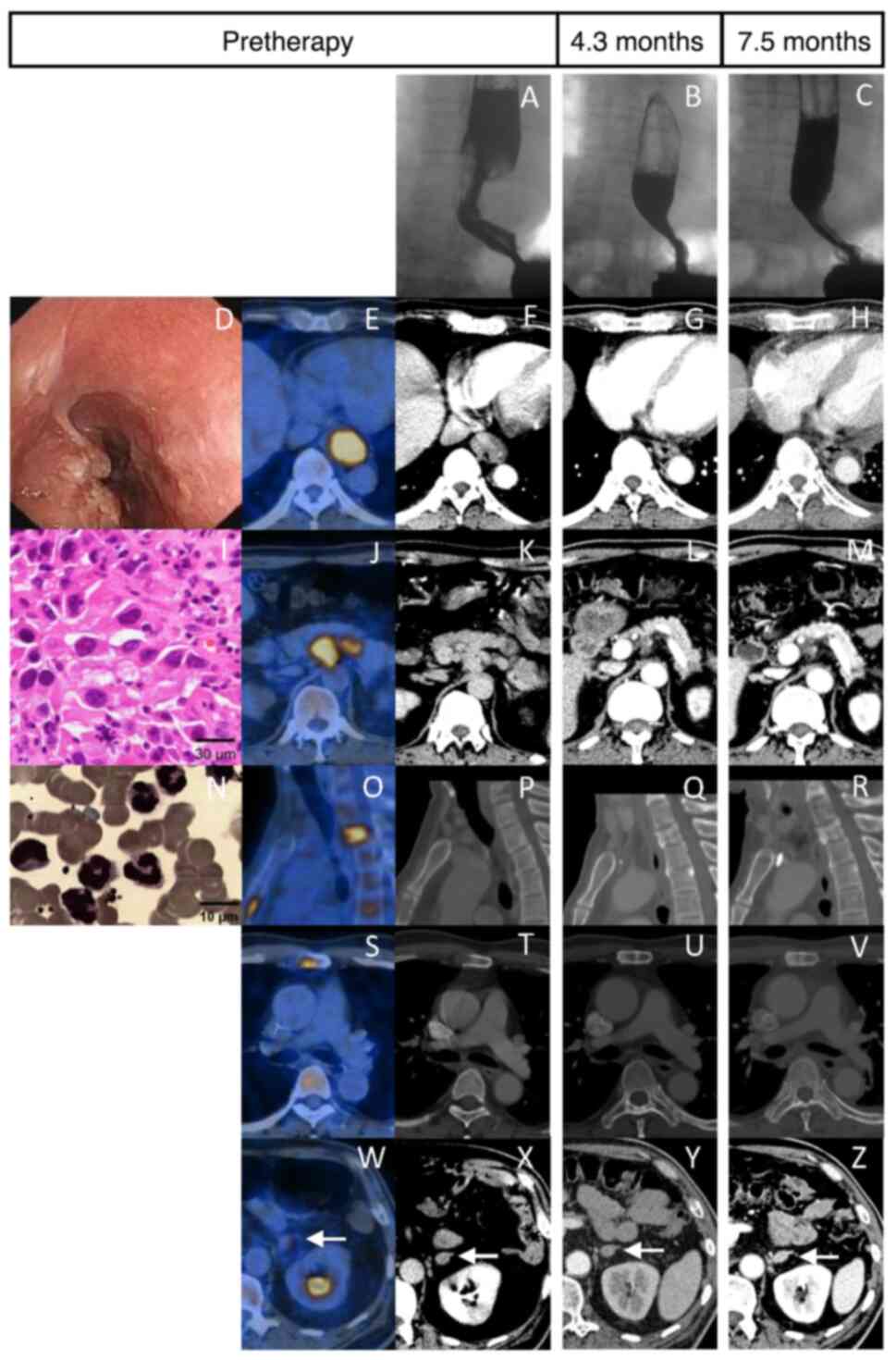
A 59-year-old male was admitted to Union Hospital, Tongji Medical College, Huazhong University of Science and Technology (Wuhan, China) in September 2017, with dysphagia for 1 month. He had a medical history of hypertension and coronary atherosclerotic heart disease, as well as a personal history of alcohol consumption and smoking. The white blood cell (WBC) count was 17.39x10⁹/l, while a barium X-ray examination revealed an 8-cm stenosis in the lower esophagus (Fig. 1A). A gastroscopy identified an ulcerous esophageal mass 38-43 cm from the incisors (Fig. 1D), which was biopsied and confirmed as ESCC with poor differentiation (Fig. 1I). A PET scan showed high [18F] fluorodeoxyglucose avidity at multiple sites [lower esophagus, maximal standardized uptake value (SUVmax)=16.3; celiac lymph nodes, SUVmax=8.0-11.6; second thoracic vertebra and sternum, SUVmax=5.0-10.2; left adrenal gland, SUVmax=4.4] (Fig. 1E, J, O, S and W). Thus, the diagnosis was ESCC with multiple metastases (cT2N2M1 according to AJCC 7th edition). Despite multiple intravenous antibiotics administered over a period of >20 days to combat suspected infection, the WBC count reached 20.45x10⁹/l. Moreover, bone marrow cytology indicated active proliferation of nucleated cells and a high granulocyte ratio with normal cell morphology (Fig. 1N). Due to the fact that the positive rate and score of neutrophil alkaline phosphatase in peripheral blood smear were 87% and 347, respectively, leukocytosis was considered a paraneoplastic leukemoid reaction (PLR). Consequently, six cycles of paclitaxel and cisplatin were administered as first-line therapy, and leukocytosis resolved quickly after 1 week. Meanwhile, intensity-modulated radiotherapy was delivered to the esophageal tumor and metastatic celiac nodes (60 Gy/30 F) and the second thoracic vertebra (40 Gy/20 F). The patient exhibited a partial response 4.3 months after diagnosis based on the Response Evaluation Criteria in Solid Tumors version 1.1 (Fig. 1B, G, L, Q, U and Y).

Figure 1

Radiographic (A-C, E-H, J-M, O-Z), endoscopic (D), pathologic (I) and bone marrow cytologic (N) characteristics at diagnosis, 4.3 and 7.5 months.

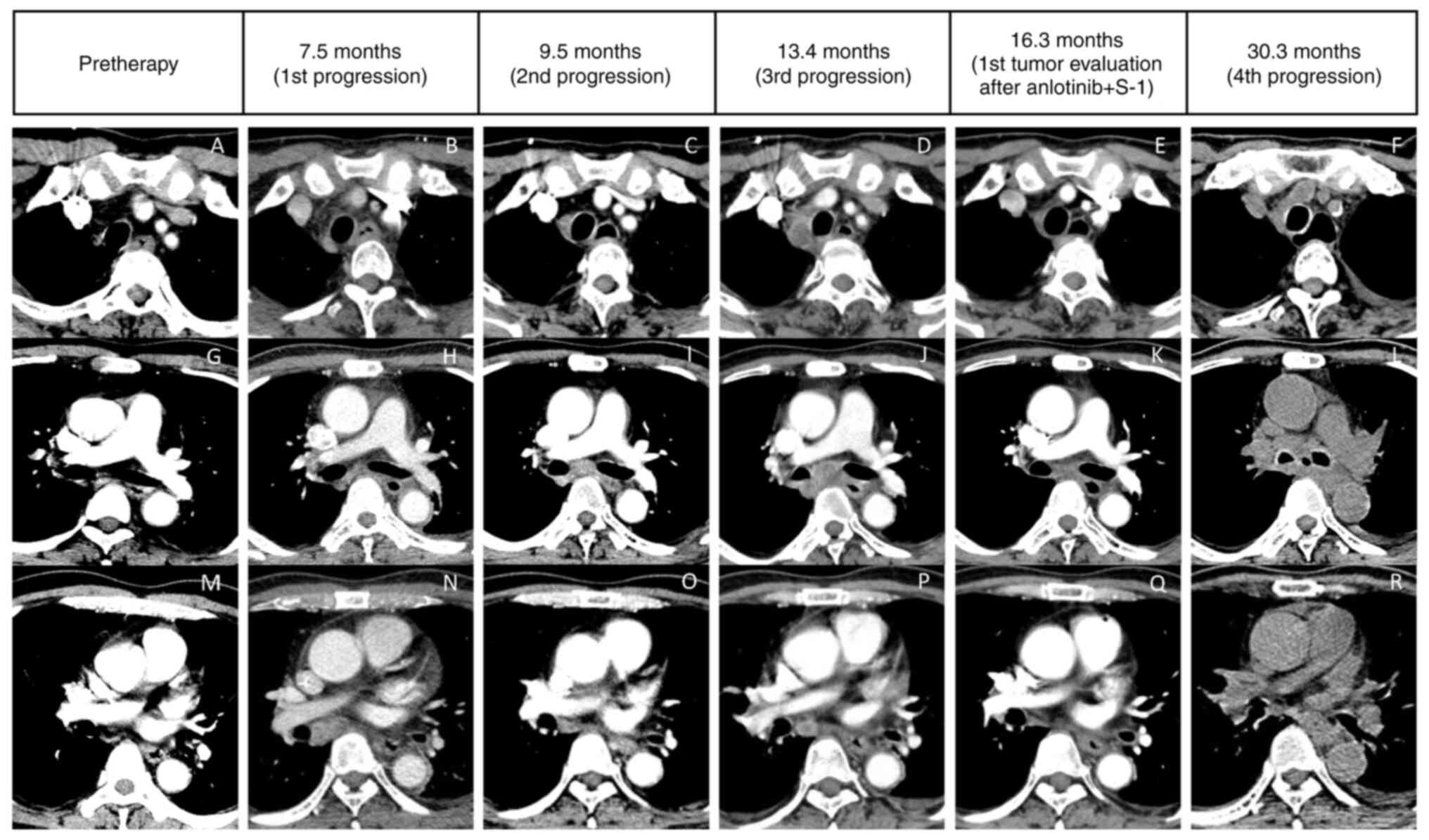
After ~7.5 months, chest computed tomography (CT) revealed a mild compression fracture of the second thoracic vertebra (Fig. 1R) and a marked enlargement of the lymph node in the medial right bronchus intermedius (Fig. 2N), indicating progressed disease. The patient received camrelizumab as second-line monotherapy. In the routine follow-up after two cycles, the levels of troponin I (731.8 pg/ml), alanine aminotransferase (110 U/l), aspartate aminotransferase (203 U/l) and creatine kinase (>300 U/l) were found to be elevated, in combination with muscle soreness in the lower extremities and hoarseness without chest pain. Emergency coronary arteriography revealed no obvious abnormality, and the patient was diagnosed with immune-induced myocarditis, myositis and hepatitis. Although camrelizumab was stopped and the blood indices returned to normal after corticosteroid therapy, the tumor continued to progress (new subcarinal node metastasis) (Fig. 2I).

Figure 2

Serial images of upper paratracheal (A-F), subcarinal (G-L), and medial right bronchus intermedius (M-R) node metastases.

Third-line therapy included two cycles of irinotecan and nedaplatin; however, the patient was unable to tolerate it due to thrombocytopenia (grade 3), leukopenia (grade 2), anemia (grade 2) and weakness (grade 1), and the tumor progressed after 4 months (upper paratracheal and subcarinal node metastases) (Fig. 2D and J).

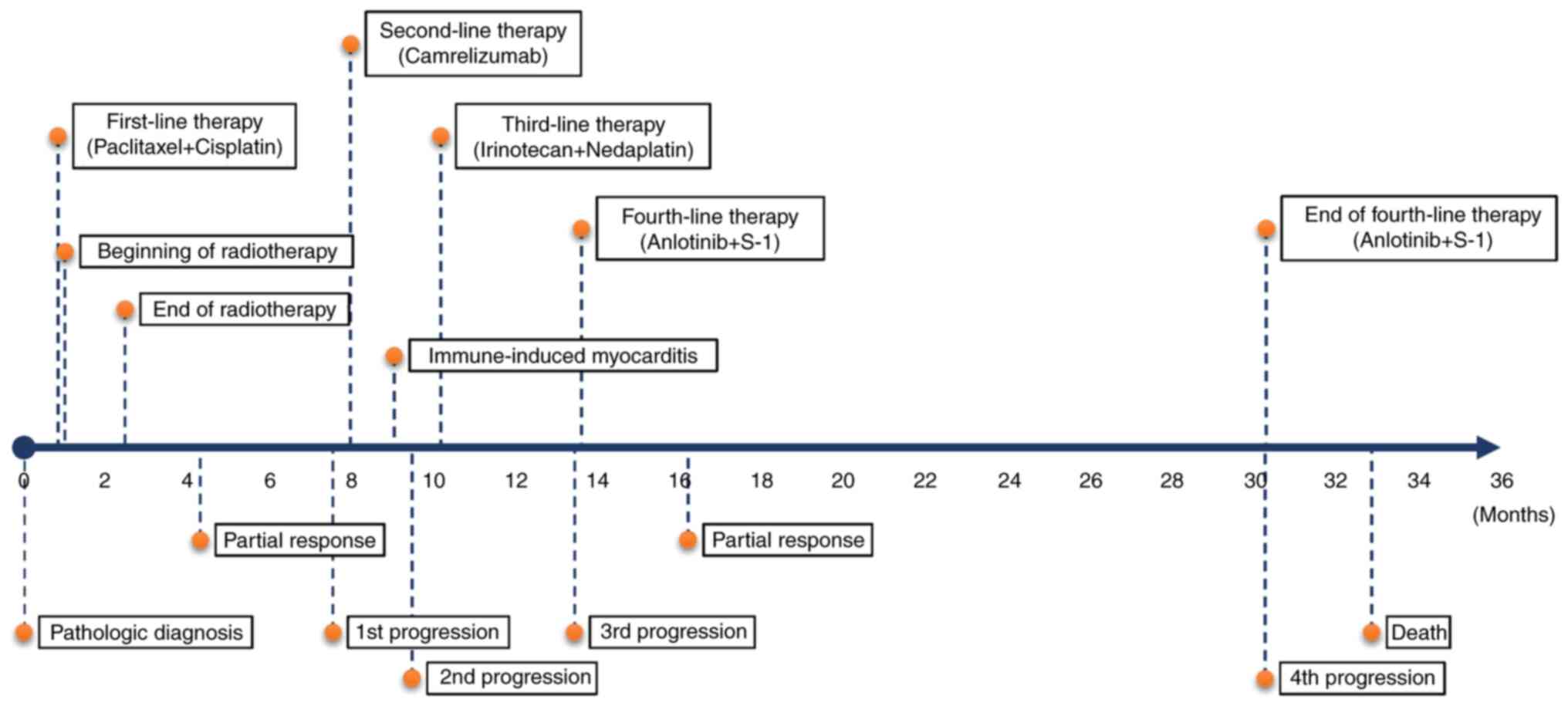
Anlotinib (12 mg, once daily for 14 days, followed by 7 days off) and S-1 (60 mg, twice daily for 14 days, followed by 7 days off) were administered as fourth-line therapy, and this treatment reduced the upper paratracheal and subcarinal node metastases after 2.9 months (Fig. 2E and K), whereas the other lesions remained stable. Afterward, the patient underwent tumor response assessment every two cycles via contrast-enhanced CT and esophageal radiography. Anorexia (grade 2), skin pigmentation (grade 2), hand-foot syndrome (grade 2), hypertension (grade 1) and weakness (grade 1) were the main toxicities. The patient received combination treatment with anlotinib and S-1 until dry cough and chest distress were aggravated after 16.7 months. Chest CT revealed the progression of subcarinal node metastases, which had invaded the left main bronchus (Fig. 2L). Eventually, the patient succumbed to dyspnea and pulmonary infection. The PFS after administration of anlotinib and S-1 was 16.7 months, while the OS was 32.9 months from the pathologic diagnosis of ESCC (Fig. 3).

Figure 3

Timeline of the main events.

Discussion

A PLR is a hematological paraneoplastic syndrome induced by multiple solid tumors that are characterized by leukocytosis >20,000-50,000/µl when infection, hematopoietic growth factors, corticosteroids and leukemia are excluded. In most patients, PLRs are generally associated with a large tumor burden and a poor survival time of #x003C;1 year (3). The patient in the present case report exhibited an OS of 32.9 months, indicating that effective therapy could improve survival for patients with PLR.

Anlotinib is an oral tyrosine kinase inhibitor that targets vascular endothelial growth factor receptors 1-3, fibroblast growth factor receptors 1-4, platelet-derived growth factor receptors α and β, Ret and c-Kit (4). The effectiveness of anlotinib has been confirmed in multiple solid tumors (5). In previously treated advanced or metastatic ESCC, anlotinib improved median PFS (3.02 vs. 1.41 months) with tolerable adverse events (incidence of grades 3-4: 37% vs. 11%) compared with placebo (6). In patients with advanced ESCC, the combination of anlotinib with nedaplatin and raltitrexed as fourth-line therapy resulted in a PFS of 9 months (7). In a phase II trial involving patients with stage IV non-small cell lung cancer, the combination of anlotinib with S-1 in the third- or later-line treatment exhibited promising antitumor outcome and manageable toxicity (8). Patients with ESCC in whom first-line therapy had failed generally showed a poor performance score, poor nutrition status and poor tolerance to subsequent therapy. As a result, high efficacy and mild toxicity are important aspects when selecting a drug in this setting. Both anlotinib and S-1 meet this criterion with different toxicity profile. The patient in the present case report had a satisfactory PFS of 16.7 months and mild toxicities after fourth-line therapy, indicating that anlotinib plus S-1 is a rational combination for previously treated advanced ESCC, especially in patients intolerant of immunotherapy.

In conclusion, the combination of anlotinib with S-1 may be a competitive choice for treating patients with advanced ESCC who are resistant to platinum-based chemotherapy, radiotherapy and immunotherapy.

Acknowledgements

Not applicable.

Funding

Funding: No funding was received.

Availability of data and materials

The data generated in the present study may be requested from the corresponding author.

Authors' contributions

JY conceptualized the study, performed data curation and visualization, conducted formal analysis and investigation, wrote the original draft, and wrote, reviewed and edited the manuscript. CL performed data curation and visualization and conducted investigation. LL supervised the study, provided resources, and wrote, reviewed and edited the manuscript. KY conceptualized and supervised the study, provided resources, and wrote, reviewed and edited the manuscript. JY and CL confirm the authenticity of all the raw data. All authors read and approved the final version of the manuscript.

Ethics approval and consent to participate

The present study was approved [approval no. 2017(82)] by the Ethics Committee of Union Hospital, Tongji Medical College, Huazhong University of Science and Technology (Wuhan, China). Written informed consent to participate was obtained from the patient.

Patient consent for publication

Due to the patient's death before the completion of the present study, written informed consent for publication was obtained from his family.

Competing interests

The authors declare that they have no competing interests.

References

1 

Luo H, Lu J, Bai Y, Mao T, Wang J, Fan Q, Zhang Y, Zhao K, Chen Z, Gao S, et al: Effect of camrelizumab vs placebo added to chemotherapy on survival and progression-free survival in patients with advanced or metastatic esophageal squamous cell carcinoma: The ESCORT-1st randomized clinical trial. JAMA. 326:916–925. 2021.PubMed/NCBI View Article : Google Scholar

2 

Huang J, Xu J, Chen Y, Zhuang W, Zhang Y, Chen Z, Chen J, Zhang H, Niu Z, Fan Q, et al: Camrelizumab versus investigator's choice of chemotherapy as second-line therapy for advanced or metastatic oesophageal squamous cell carcinoma (ESCORT): A multicentre, randomised, open-label, phase 3 study. Lancet Oncol. 21:832–842. 2020.PubMed/NCBI View Article : Google Scholar

3 

Granger JM and Kontoyiannis DP: Etiology and outcome of extreme leukocytosis in 758 nonhematologic cancer patients: A retrospective, single-institution study. Cancer. 115:3919–3923. 2009.PubMed/NCBI View Article : Google Scholar

4 

Syed YY: Anlotinib: First global approval. Drugs. 78:1057–1062. 2018.PubMed/NCBI View Article : Google Scholar

5 

Shen G, Zheng F, Ren D, Du F, Dong Q, Wang Z, Zhao F, Ahmad R and Zhao J: Anlotinib: A novel multi-targeting tyrosine kinase inhibitor in clinical development. J Hematol Oncol. 11(120)2018.PubMed/NCBI View Article : Google Scholar

6 

Huang J, Xiao J, Fang W, Lu P, Fan Q, Shu Y, Feng J, Zhang S, Ba Y, Zhao Y, et al: Anlotinib for previously treated advanced or metastatic esophageal squamous cell carcinoma: A double-blind randomized phase 2 trial. Cancer Med. 10:1681–1689. 2021.PubMed/NCBI View Article : Google Scholar

7 

Yang D, Xu F, Lai X, Li Y, Gao H, Xu Y, Chen R and Ma D: Combined treatment with anlotinib and chemotherapy for advanced esophageal squamous cell carcinoma improved patient survival: A case report. Am J Transl Res. 12:6578–6583. 2020.PubMed/NCBI

8 

Xiang M, Yang X, Ren S, Du H, Geng L, Yuan L, Wen Y, Lin B, Li J, Zhang Y, et al: Anlotinib combined with S-1 in third- or later-line stage IV non-small cell lung cancer treatment: A phase II clinical trial. Oncologist. 26:e2130–e2135. 2021.PubMed/NCBI View Article : Google Scholar

Related Articles

  • Abstract
  • View
  • Download
  • Twitter
Copy and paste a formatted citation
Spandidos Publications style
Yang J, Liu C, Liu L and Yang K: Extended progression‑free survival after combination treatment with anlotinib and S‑1 in refractory advanced esophageal cancer: A case report. Mol Clin Oncol 23: 69, 2025.
APA
Yang, J., Liu, C., Liu, L., & Yang, K. (2025). Extended progression‑free survival after combination treatment with anlotinib and S‑1 in refractory advanced esophageal cancer: A case report. Molecular and Clinical Oncology, 23, 69. https://doi.org/10.3892/mco.2025.2864
MLA
Yang, J., Liu, C., Liu, L., Yang, K."Extended progression‑free survival after combination treatment with anlotinib and S‑1 in refractory advanced esophageal cancer: A case report". Molecular and Clinical Oncology 23.2 (2025): 69.
Chicago
Yang, J., Liu, C., Liu, L., Yang, K."Extended progression‑free survival after combination treatment with anlotinib and S‑1 in refractory advanced esophageal cancer: A case report". Molecular and Clinical Oncology 23, no. 2 (2025): 69. https://doi.org/10.3892/mco.2025.2864
Copy and paste a formatted citation
x
Spandidos Publications style
Yang J, Liu C, Liu L and Yang K: Extended progression‑free survival after combination treatment with anlotinib and S‑1 in refractory advanced esophageal cancer: A case report. Mol Clin Oncol 23: 69, 2025.
APA
Yang, J., Liu, C., Liu, L., & Yang, K. (2025). Extended progression‑free survival after combination treatment with anlotinib and S‑1 in refractory advanced esophageal cancer: A case report. Molecular and Clinical Oncology, 23, 69. https://doi.org/10.3892/mco.2025.2864
MLA
Yang, J., Liu, C., Liu, L., Yang, K."Extended progression‑free survival after combination treatment with anlotinib and S‑1 in refractory advanced esophageal cancer: A case report". Molecular and Clinical Oncology 23.2 (2025): 69.
Chicago
Yang, J., Liu, C., Liu, L., Yang, K."Extended progression‑free survival after combination treatment with anlotinib and S‑1 in refractory advanced esophageal cancer: A case report". Molecular and Clinical Oncology 23, no. 2 (2025): 69. https://doi.org/10.3892/mco.2025.2864
Follow us
  • Twitter
  • LinkedIn
  • Facebook
About
  • Spandidos Publications
  • Careers
  • Cookie Policy
  • Privacy Policy
How can we help?
  • Help
  • Live Chat
  • Contact
  • Email to our Support Team