Spandidos Publications Logo
  • About
    • About Spandidos
    • Aims and Scopes
    • Abstracting and Indexing
    • Editorial Policies
    • Reprints and Permissions
    • Job Opportunities
    • Terms and Conditions
    • Contact
  • Journals
    • All Journals
    • Oncology Letters
      • Oncology Letters
      • Information for Authors
      • Editorial Policies
      • Editorial Board
      • Aims and Scope
      • Abstracting and Indexing
      • Bibliographic Information
      • Archive
    • International Journal of Oncology
      • International Journal of Oncology
      • Information for Authors
      • Editorial Policies
      • Editorial Board
      • Aims and Scope
      • Abstracting and Indexing
      • Bibliographic Information
      • Archive
    • Molecular and Clinical Oncology
      • Molecular and Clinical Oncology
      • Information for Authors
      • Editorial Policies
      • Editorial Board
      • Aims and Scope
      • Abstracting and Indexing
      • Bibliographic Information
      • Archive
    • Experimental and Therapeutic Medicine
      • Experimental and Therapeutic Medicine
      • Information for Authors
      • Editorial Policies
      • Editorial Board
      • Aims and Scope
      • Abstracting and Indexing
      • Bibliographic Information
      • Archive
    • International Journal of Molecular Medicine
      • International Journal of Molecular Medicine
      • Information for Authors
      • Editorial Policies
      • Editorial Board
      • Aims and Scope
      • Abstracting and Indexing
      • Bibliographic Information
      • Archive
    • Biomedical Reports
      • Biomedical Reports
      • Information for Authors
      • Editorial Policies
      • Editorial Board
      • Aims and Scope
      • Abstracting and Indexing
      • Bibliographic Information
      • Archive
    • Oncology Reports
      • Oncology Reports
      • Information for Authors
      • Editorial Policies
      • Editorial Board
      • Aims and Scope
      • Abstracting and Indexing
      • Bibliographic Information
      • Archive
    • Molecular Medicine Reports
      • Molecular Medicine Reports
      • Information for Authors
      • Editorial Policies
      • Editorial Board
      • Aims and Scope
      • Abstracting and Indexing
      • Bibliographic Information
      • Archive
    • World Academy of Sciences Journal
      • World Academy of Sciences Journal
      • Information for Authors
      • Editorial Policies
      • Editorial Board
      • Aims and Scope
      • Abstracting and Indexing
      • Bibliographic Information
      • Archive
    • International Journal of Functional Nutrition
      • International Journal of Functional Nutrition
      • Information for Authors
      • Editorial Policies
      • Editorial Board
      • Aims and Scope
      • Abstracting and Indexing
      • Bibliographic Information
      • Archive
    • International Journal of Epigenetics
      • International Journal of Epigenetics
      • Information for Authors
      • Editorial Policies
      • Editorial Board
      • Aims and Scope
      • Abstracting and Indexing
      • Bibliographic Information
      • Archive
    • Medicine International
      • Medicine International
      • Information for Authors
      • Editorial Policies
      • Editorial Board
      • Aims and Scope
      • Abstracting and Indexing
      • Bibliographic Information
      • Archive
  • Articles
  • Information
    • Information for Authors
    • Information for Reviewers
    • Information for Librarians
    • Information for Advertisers
    • Conferences
  • Language Editing
Spandidos Publications Logo
  • About
    • About Spandidos
    • Aims and Scopes
    • Abstracting and Indexing
    • Editorial Policies
    • Reprints and Permissions
    • Job Opportunities
    • Terms and Conditions
    • Contact
  • Journals
    • All Journals
    • Biomedical Reports
      • Information for Authors
      • Editorial Policies
      • Editorial Board
      • Aims and Scope
      • Abstracting and Indexing
      • Bibliographic Information
      • Archive
    • Experimental and Therapeutic Medicine
      • Information for Authors
      • Editorial Policies
      • Editorial Board
      • Aims and Scope
      • Abstracting and Indexing
      • Bibliographic Information
      • Archive
    • International Journal of Epigenetics
      • Information for Authors
      • Editorial Policies
      • Editorial Board
      • Aims and Scope
      • Abstracting and Indexing
      • Bibliographic Information
      • Archive
    • International Journal of Functional Nutrition
      • Information for Authors
      • Editorial Policies
      • Editorial Board
      • Aims and Scope
      • Abstracting and Indexing
      • Bibliographic Information
      • Archive
    • International Journal of Molecular Medicine
      • Information for Authors
      • Editorial Policies
      • Editorial Board
      • Aims and Scope
      • Abstracting and Indexing
      • Bibliographic Information
      • Archive
    • International Journal of Oncology
      • Information for Authors
      • Editorial Policies
      • Editorial Board
      • Aims and Scope
      • Abstracting and Indexing
      • Bibliographic Information
      • Archive
    • Medicine International
      • Information for Authors
      • Editorial Policies
      • Editorial Board
      • Aims and Scope
      • Abstracting and Indexing
      • Bibliographic Information
      • Archive
    • Molecular and Clinical Oncology
      • Information for Authors
      • Editorial Policies
      • Editorial Board
      • Aims and Scope
      • Abstracting and Indexing
      • Bibliographic Information
      • Archive
    • Molecular Medicine Reports
      • Information for Authors
      • Editorial Policies
      • Editorial Board
      • Aims and Scope
      • Abstracting and Indexing
      • Bibliographic Information
      • Archive
    • Oncology Letters
      • Information for Authors
      • Editorial Policies
      • Editorial Board
      • Aims and Scope
      • Abstracting and Indexing
      • Bibliographic Information
      • Archive
    • Oncology Reports
      • Information for Authors
      • Editorial Policies
      • Editorial Board
      • Aims and Scope
      • Abstracting and Indexing
      • Bibliographic Information
      • Archive
    • World Academy of Sciences Journal
      • Information for Authors
      • Editorial Policies
      • Editorial Board
      • Aims and Scope
      • Abstracting and Indexing
      • Bibliographic Information
      • Archive
  • Articles
  • Information
    • For Authors
    • For Reviewers
    • For Librarians
    • For Advertisers
    • Conferences
  • Language Editing
Login Register Submit
  • This site uses cookies
  • You can change your cookie settings at any time by following the instructions in our Cookie Policy. To find out more, you may read our Privacy Policy.

    I agree
Search articles by DOI, keyword, author or affiliation
Search
Advanced Search
presentation
Molecular and Clinical Oncology
Join Editorial Board Propose a Special Issue
Print ISSN: 2049-9450 Online ISSN: 2049-9469
Journal Cover
October-2025 Volume 23 Issue 4

Full Size Image

Sign up for eToc alerts
Recommend to Library

Journals

International Journal of Molecular Medicine

International Journal of Molecular Medicine

International Journal of Molecular Medicine is an international journal devoted to molecular mechanisms of human disease.

International Journal of Oncology

International Journal of Oncology

International Journal of Oncology is an international journal devoted to oncology research and cancer treatment.

Molecular Medicine Reports

Molecular Medicine Reports

Covers molecular medicine topics such as pharmacology, pathology, genetics, neuroscience, infectious diseases, molecular cardiology, and molecular surgery.

Oncology Reports

Oncology Reports

Oncology Reports is an international journal devoted to fundamental and applied research in Oncology.

Experimental and Therapeutic Medicine

Experimental and Therapeutic Medicine

Experimental and Therapeutic Medicine is an international journal devoted to laboratory and clinical medicine.

Oncology Letters

Oncology Letters

Oncology Letters is an international journal devoted to Experimental and Clinical Oncology.

Biomedical Reports

Biomedical Reports

Explores a wide range of biological and medical fields, including pharmacology, genetics, microbiology, neuroscience, and molecular cardiology.

Molecular and Clinical Oncology

Molecular and Clinical Oncology

International journal addressing all aspects of oncology research, from tumorigenesis and oncogenes to chemotherapy and metastasis.

World Academy of Sciences Journal

World Academy of Sciences Journal

Multidisciplinary open-access journal spanning biochemistry, genetics, neuroscience, environmental health, and synthetic biology.

International Journal of Functional Nutrition

International Journal of Functional Nutrition

Open-access journal combining biochemistry, pharmacology, immunology, and genetics to advance health through functional nutrition.

International Journal of Epigenetics

International Journal of Epigenetics

Publishes open-access research on using epigenetics to advance understanding and treatment of human disease.

Medicine International

Medicine International

An International Open Access Journal Devoted to General Medicine.

Journal Cover
October-2025 Volume 23 Issue 4

Full Size Image

Sign up for eToc alerts
Recommend to Library

  • Article
  • Citations
    • Cite This Article
    • Download Citation
    • Create Citation Alert
    • Remove Citation Alert
    • Cited By
  • Similar Articles
    • Related Articles (in Spandidos Publications)
    • Similar Articles (Google Scholar)
    • Similar Articles (PubMed)
  • Download PDF
  • Download XML
  • View XML

  • Supplementary Files
    • Supplementary_Data1.pdf
    • Supplementary_Data2.pdf
Article Open Access

SMC2 as a potential prognostic biomarker in lung adenocarcinoma and its correlation with immune microenvironment

  • Authors:
    • Fuqiang Zheng
    • Yu Li
    • Huiguo Chen
    • You Peng
    • Xiaocai Tian
  • View Affiliations / Copyright

    Affiliations: Department of Oncology, Hunan Provincial People's Hospital/First Affiliated Hospital of Hunan Normal University, Changsha, Hunan 410000, P.R. China, Department of Thoracic surgery, Hunan Provincial People's Hospital/First Affiliated Hospital of Hunan Normal University, Changsha, Hunan 410000, P.R. China, Department of Geriatric, Hunan Provincial People's Hospital/First Affiliated Hospital of Hunan Normal University, Changsha, Hunan 410000, P.R. China
    Copyright: © Zheng et al. This is an open access article distributed under the terms of Creative Commons Attribution License.
  • Article Number: 93
    |
    Published online on: August 12, 2025
       https://doi.org/10.3892/mco.2025.2888
  • Expand metrics +
Metrics: Total Views: 0 (Spandidos Publications: | PMC Statistics: )
Metrics: Total PDF Downloads: 0 (Spandidos Publications: | PMC Statistics: )
Cited By (CrossRef): 0 citations Loading Articles...

This article is mentioned in:


Abstract

Structural maintenance of chromosome 2 (SMC2) has been recognized to play an important role in a variety of cancers, but its function in lung adenocarcinoma (LUAD) remains poorly understood. Our research utilized various databases and analytical tools such as The Cancer Genome Atlas, TIMER 2.0, TISIDB, cBioportal, Gene Ontology, Gene Set Enrichment Analysis (GSEA) and Kyoto Encyclopedia of Genes and Genomes, for analyzing SMC2 expression, prognosis significance, immune features and gene alterations in LUAD. In addition, quantitative polymerase chain reaction and immunohistochemistry were used to detect SMC2 expression in LUAD. The clinical data of 70 patients with LUAD in Hunan Provincial People's Hospital were analyzed. SMC2 was markedly upregulated in LUAD cell lines and tissues and was strongly correlated with adverse clinicopathological features and prognosis. The enrichment analysis suggested that SMC2 might be involved in the regulation of LUAD cell cycle. The TIMER algorithm and single‑sample GSEA algorithm showed that SMC2 was associated with suppressive immune cells (for example, B cells) in LUAD. In addition, SMC2 may interact with the expression of poor prognostic molecules to promote LUAD progression. Evidence from the TISIDB database revealed that SMC2 is positively associated with immunosuppressive genes. However, it is inversely associated with chemokines and receptors. Also, as predicted by the tumor immune dysfunction and exclusion algorithm, patients with high SMC2 expression responded poorly to immunotherapy. These findings suggest that SMC2 is associated with the malignant progression of LUAD and therefore may be a potential target for improving outcomes in LUAD in the foreseeable future.
View Figures

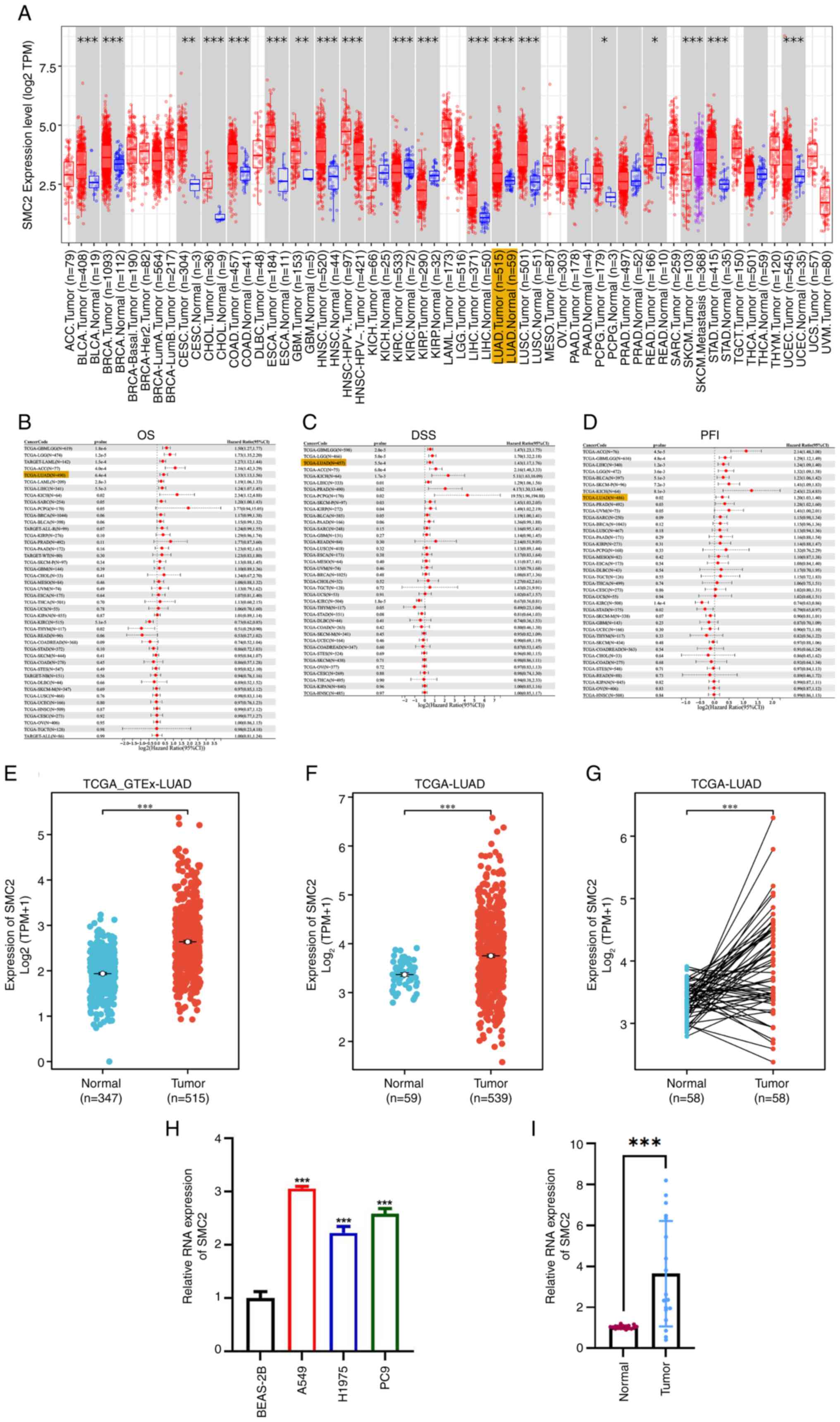
Figure 1

SMC2 mRNA expression in pan-cancer as
well as in LUAD tissue samples and LUAD cell lines. (A) The
expression of SMC2 mRNA is upregulated in a variety of cancer
tissues. (B-D) The influence of upregulated SMC2 expression on OS,
DSS and PFI in human tumor patients. (E-G) RNA sequencing data from
TCGA and GTEx databases revealed that SMC2 expression was
upregulated in LUAD samples. (H) SMC2 expression was upregulated in
LUAD cell lines (A549, H1975 and PC9) relative to human bronchial
epithelioid cells (BEAS-2B). (I) Reverse transcription-quantitative
PCR validation of SMC2 expression in LUAD tissues collected at
Hunan Provincial People's Hospital. *P<0.05,
**P<0.01 and ***P<0.001. SMC2,
structural maintenance of chromosomes 2; LUAD, lung adenocarcinoma;
OS, overall survival; DSS, disease-specific survival; PFI,
progression-free interval; TCGA, The Cancer Genome Atlas.

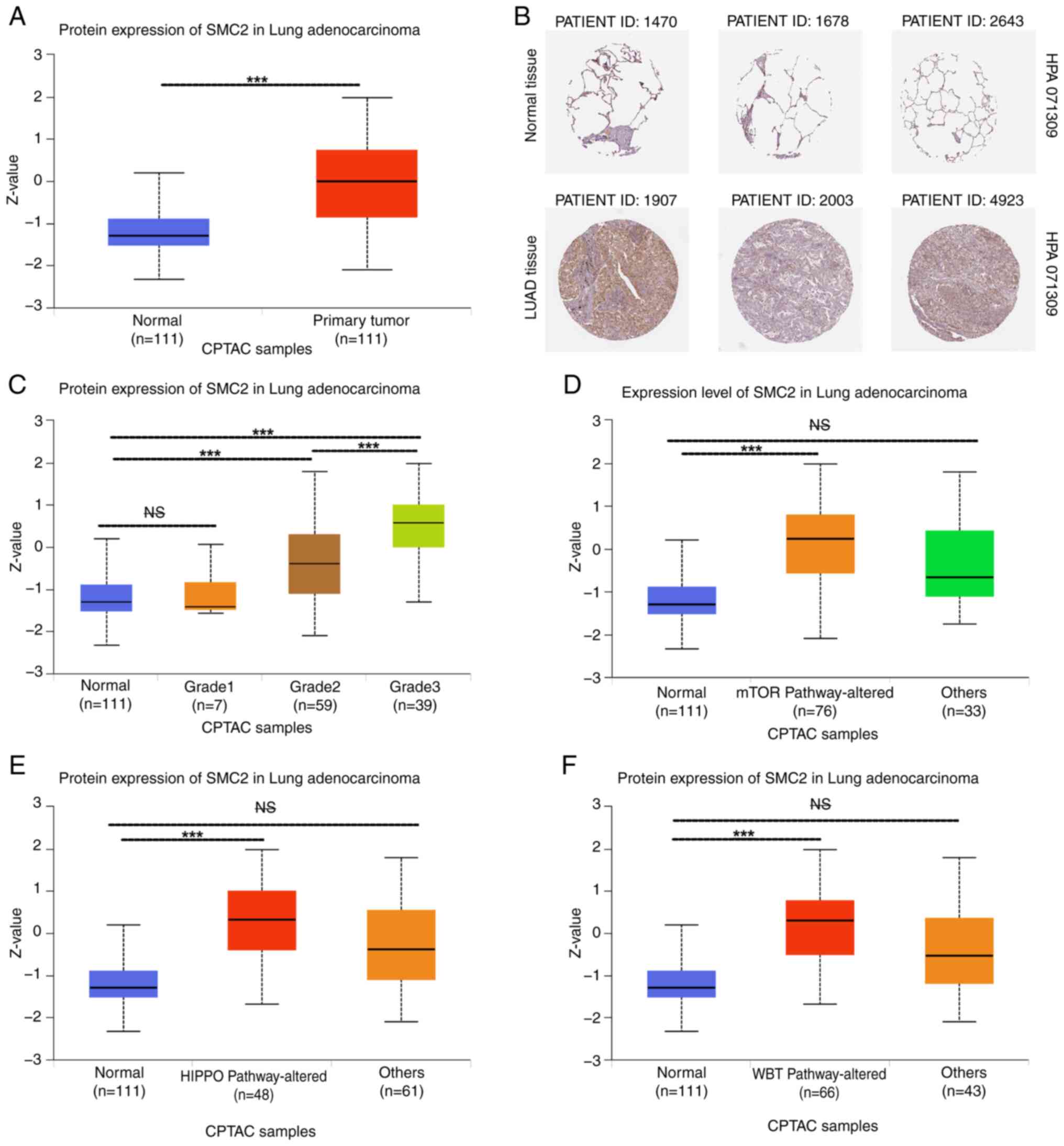
Figure 2

Changes in the expression level of
SMC2 in LUAD tissues and pathology grading as well as alterations
in signaling pathways. (A) SMC2 protein expression was higher in
LUAD tissues than normal tissues. (B) Immunohistochemical staining
showing SMC2 expression in LUAD tissues and normal lung tissues.
(C) SMC2 protein expression in pathological G2 and G3 stages was
higher than that in normal group. (D-F) SMC2 protein expression
levels were higher in the mTOR and HIPPO and WNT pathway alteration
groups than in the normal group. ***P<0.001. SMC2,
structural maintenance of chromosomes 2. LUAD, lung adenocarcinoma;
NS, no significance.

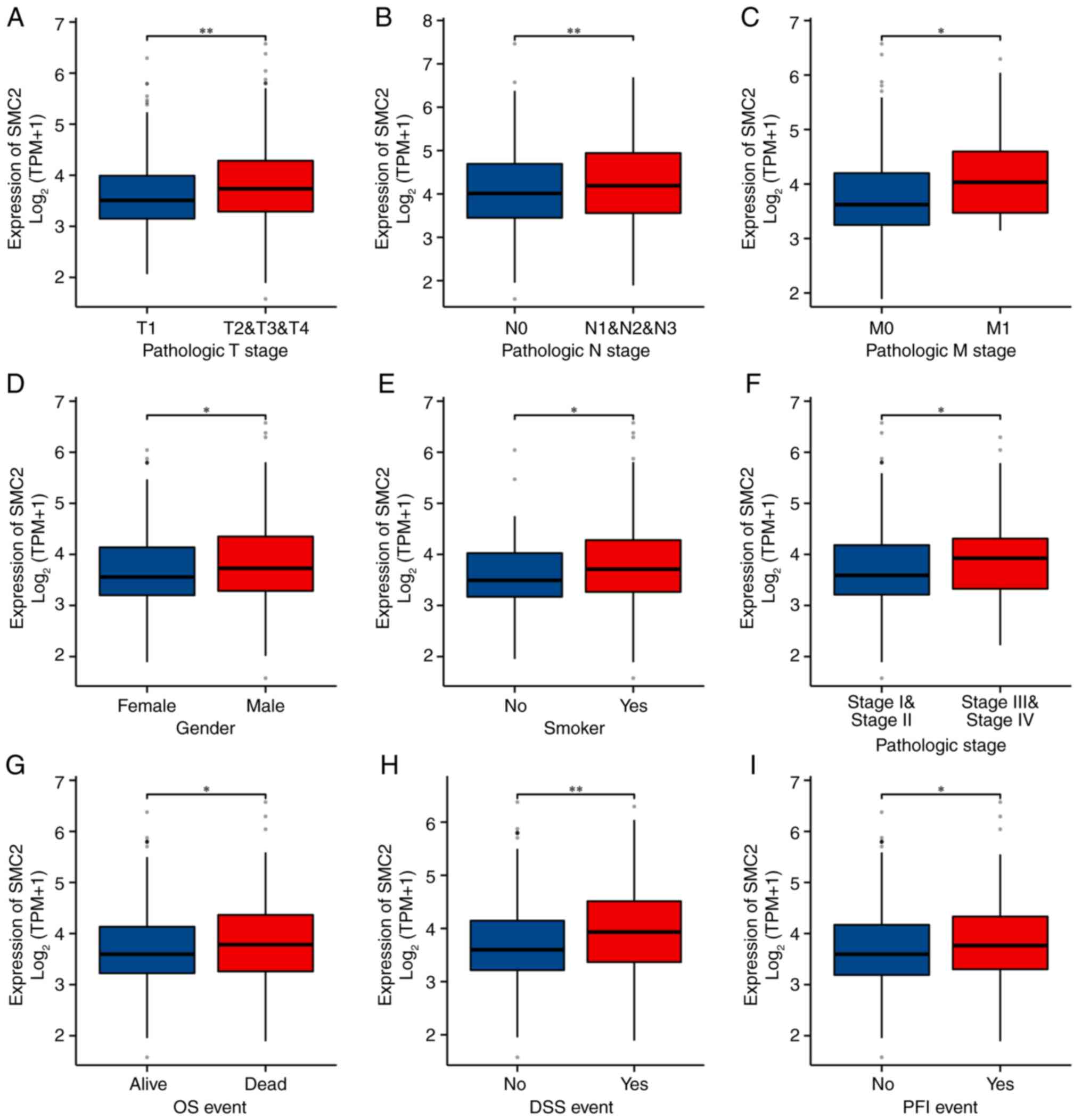
Figure 3

Relationship between SMC2 mRNA
expression and clinicopathologic features. Expression was
upregulated in (A) T2-T4 stage, (B) N1-N3 stage, (C) distant
metastasis, (D) gender, (E) smoker, (F) high pathologic stage and
(G) OS fatal events, as well as (H and I) in patients with DSS/PFI
events. *P<0.05 and **P<0.01. SMC2,
structural maintenance of chromosomes 2; OS, overall survival; DSS,
disease-specific survival; PFI, progression-free interval.

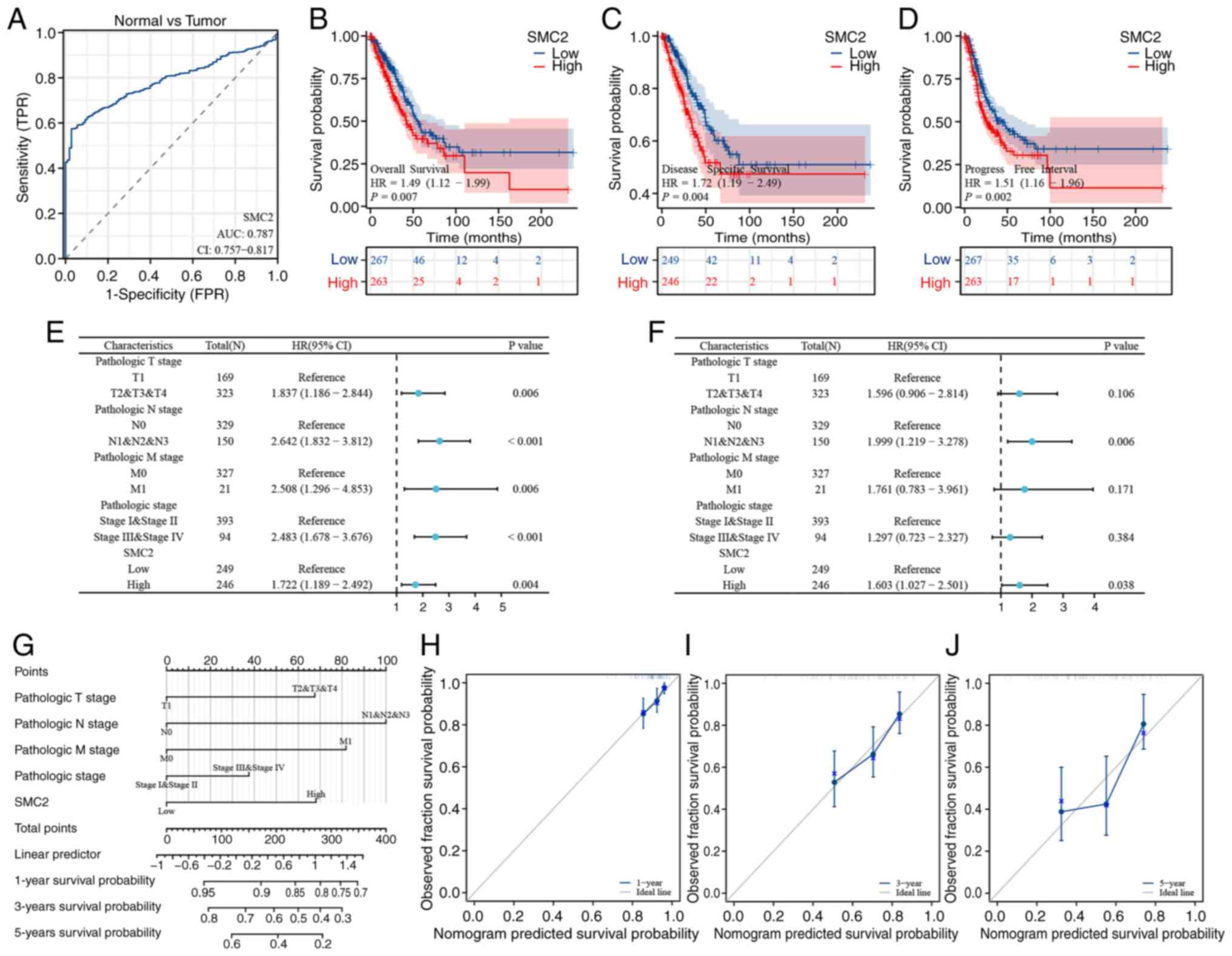
Figure 4

Analysis of the diagnostic and
prognostic value of SMC2 in LUAD. (A) Receiver Operating
Characteristic curves of SMC2 expression in normal and tumor
tissues; the AUC value was 0.787. Kaplan-Meier analysis revealed
that patients with LUAD with upregulated SMC2 expression had worse
(B) OS, (C) DSS and (D) PFI. (E) Univariate and (F) multivariate
COX regression analyses identified SMC2 as an independent
prognostic factor in patients with LUAD. (G-J) A nomogram and its
calibration curve was constructed according to the independent
prognostic factors of LUAD. SMC2, structural maintenance of
chromosomes 2; LUAD, lung adenocarcinoma; AUC, area under the
curve; OS, overall survival; DSS, disease-specific survival; PFI,
progression-free interval.

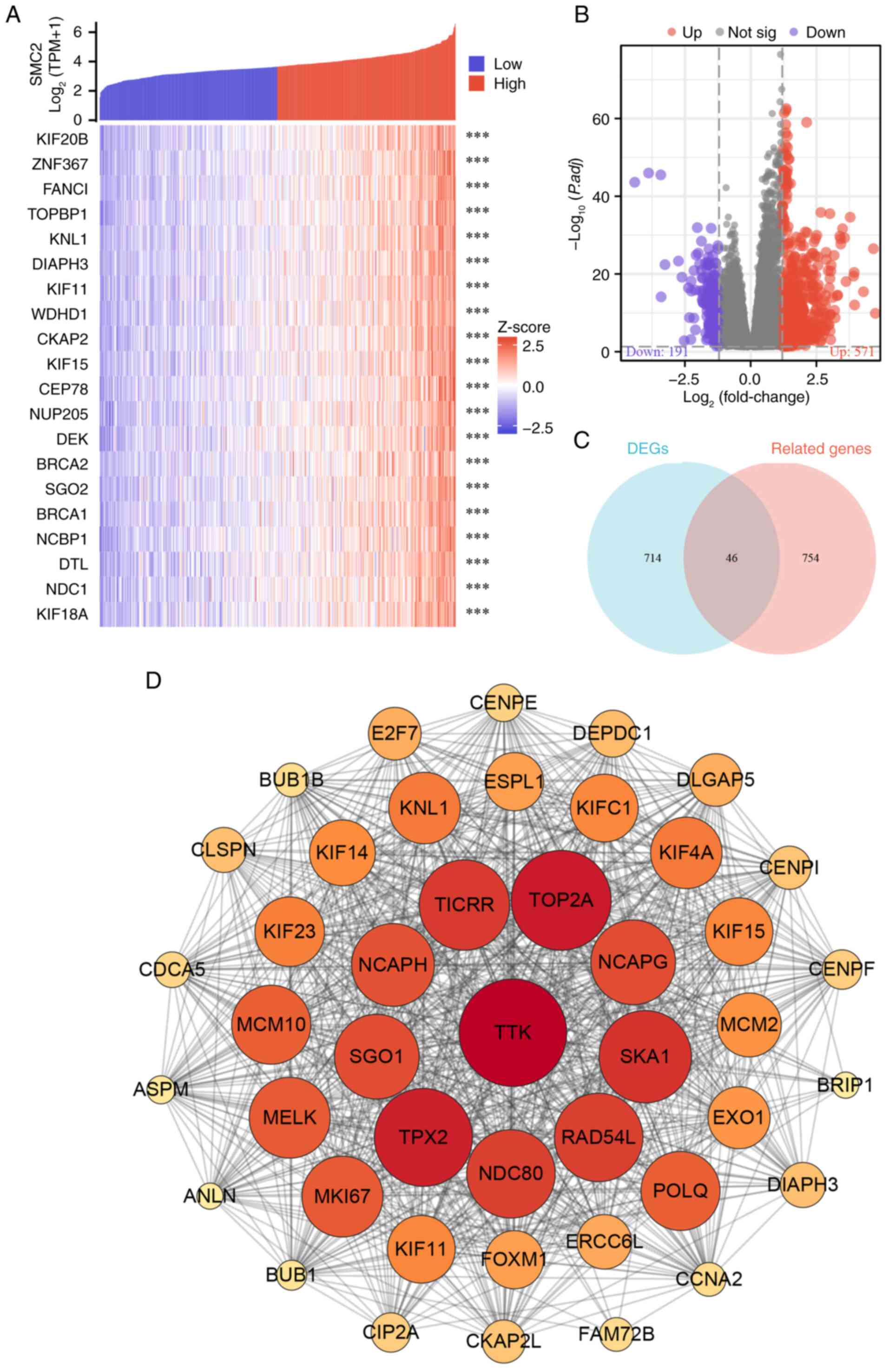
Figure 5

SMC2-related gene analysis, PPI
network construction. (A) The top 20 genes most related to SMC2.
(B) Volcano map showing DEGs in LUAD. (C) The intersection of
related genes in SMC2 with DEGs in LUAD. (D) PPI network of DEGs
correlated with SMC2. ***P<0.001. SMC2, structural
maintenance of chromosomes 2; PPI, protein-protein interaction;
DEGs, differentially expressed genes; LUAD, lung
adenocarcinoma.

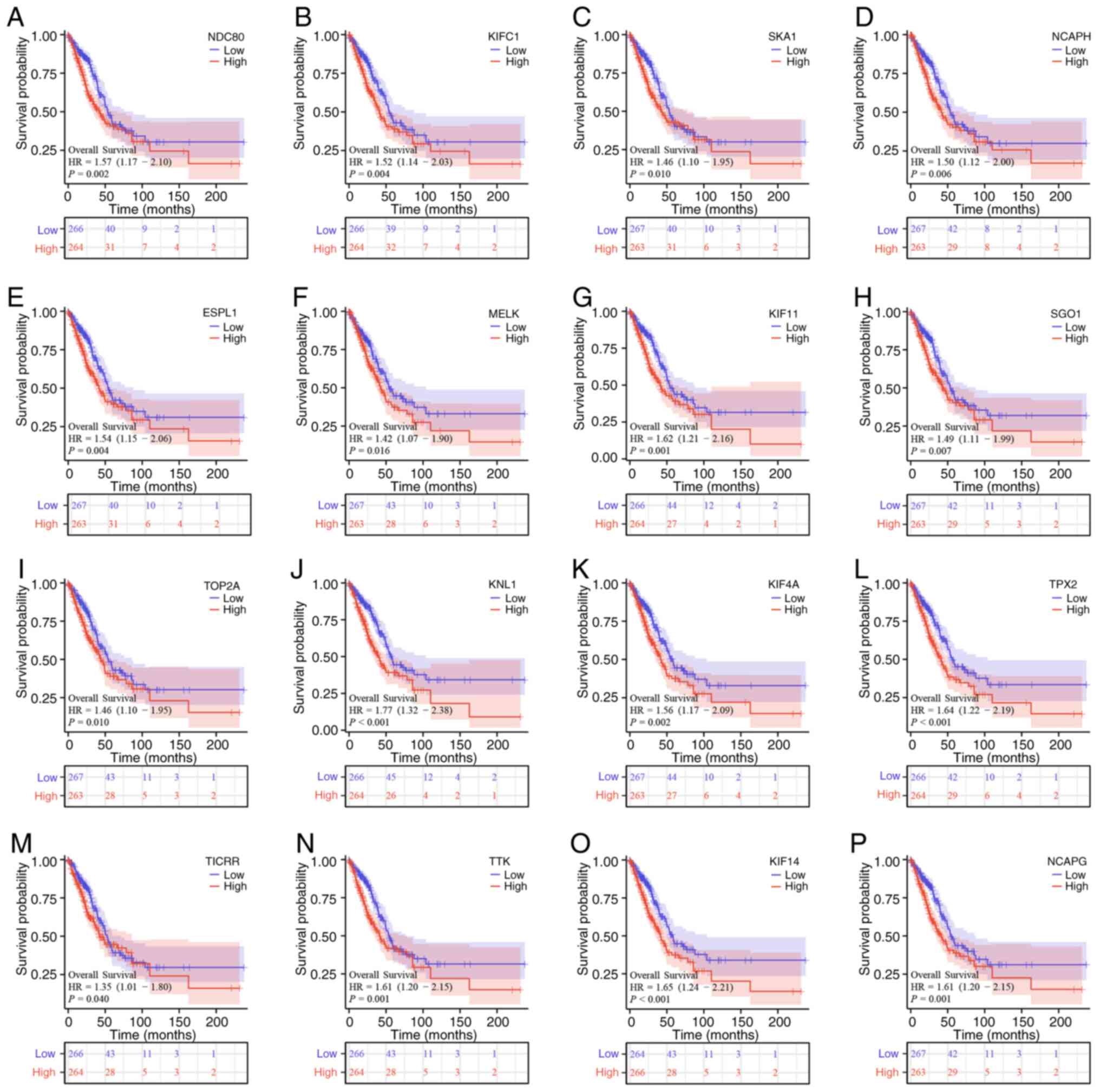
Figure 6

Kaplan-Meier analysis to explore the
effect of hub gene expression on overall survival in patients with
lung adenocarcinoma. (A) NDC80. (B) KIFC1. (C) SKA1. (D) NCAPH. (E)
ESPL1. (F) MELK. (G) KIF11. (H) SGO1. (I) TOP2A. (J) KNL1. (K)
KIF4A. (L) TPX2. (M) TICRR. (N) TTK. (O) KIF14. (P) NCAPG. SMC2,
structural maintenance of chromosomes 2; HR, hazard ratio.

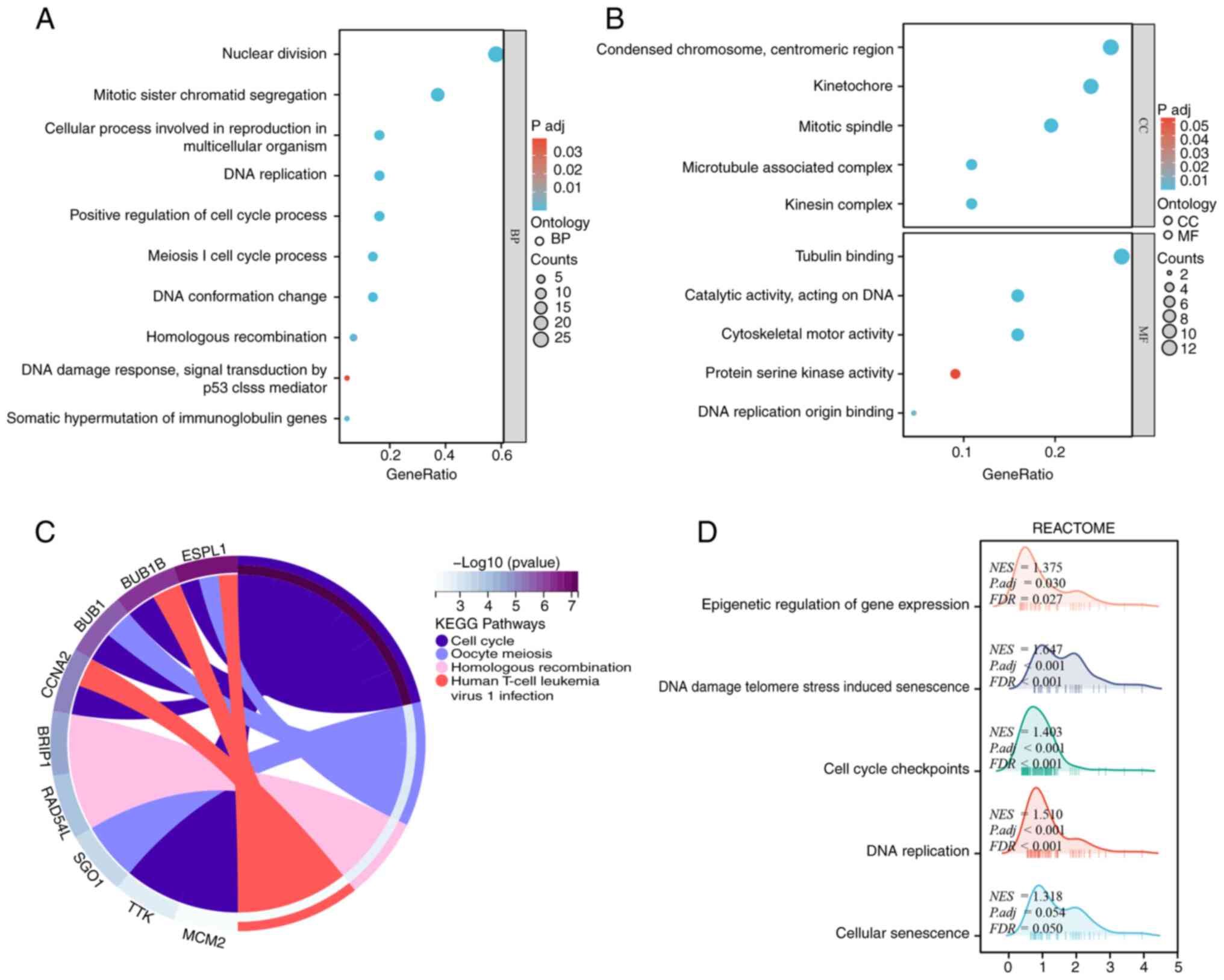
Figure 7

GO and KEGG analysis based on
SMC2-related differential genes as well as GSEA. (A) GO analysis:
biological processes. (B) GO analysis: molecular functions and
cellular composition. (C) KEGG analysis: KEGG analysis based on
SMC2-related differential genes. (D) Enrichment plots by GSEA. GO,
Gene Ontology; KEGG, Kyoto Encyclopedia of Genes and Genomes; SMC2,
structural maintenance of chromosomes 2; GSEA, Gene Set Enrichment
Analysis.

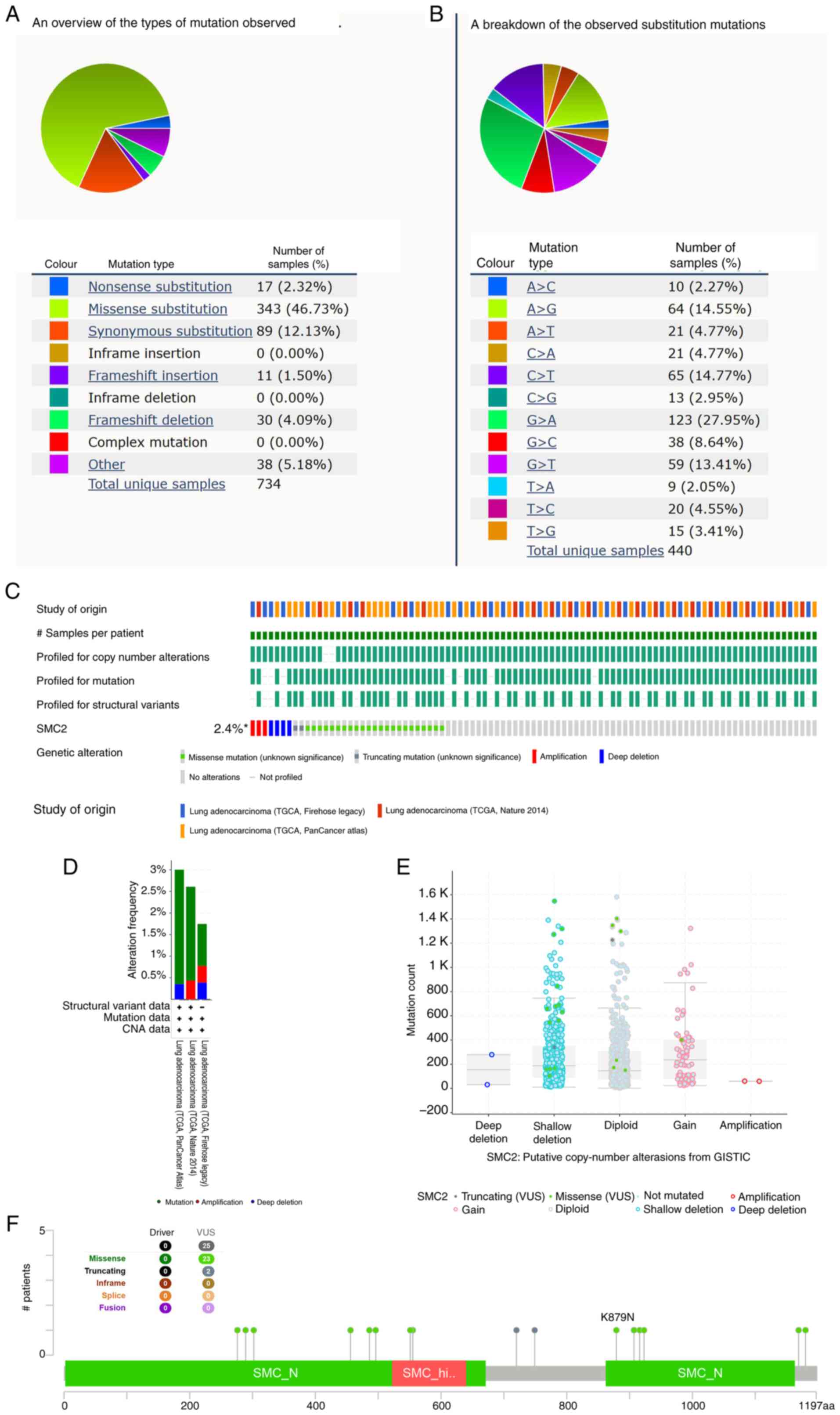
Figure 8

Mutations in SMC2 in patients with
LUAD. (A and B) Distribution of different types of SMC2 mutations
in cancers (in the COSMIC database). (C) Summary of OncoPrint
visualization of SMC2 changes (in the cBioPortal database). (D)
Summary of SMC2 alterations in LUAD from TCGA, Firehose Legacy;
TCGA, Nature 2014 and TCGA, PanCancer Atlas. (E) Relationship
between SMC2 gene alterations and SMC2 expression levels. (F)
Schematic representation of SMC2 mutations. SMC2, structural
maintenance of chromosomes 2; LUAD, lung adenocarcinoma; TCGA, The
Cancer Genome Atlas.

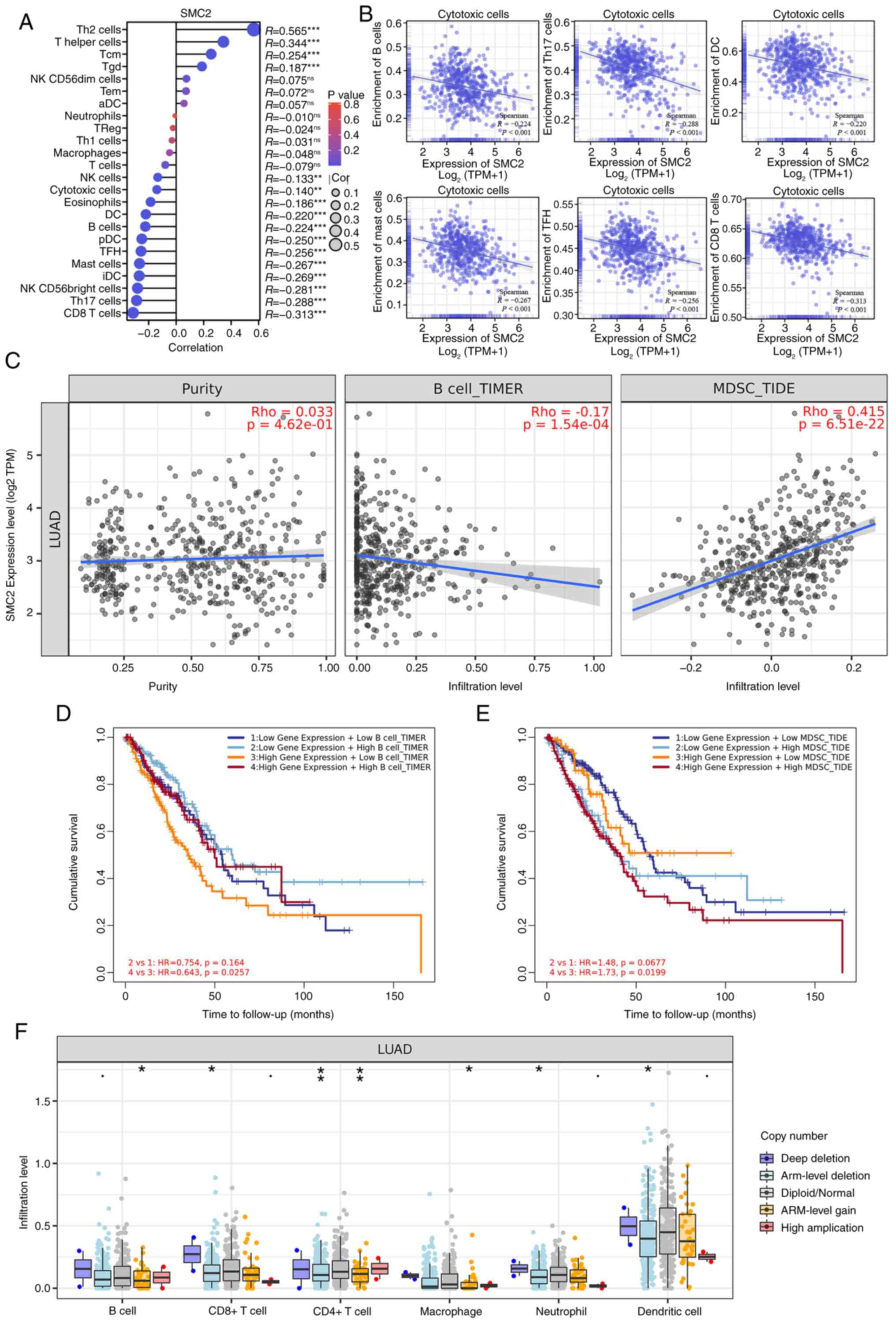
Figure 9

Correlation of SMC2 mRNA expression
with TILs in LUAD. (A) The ssGSEA-based algorithm shows the TILs
associated with SMC2. (B) The expression level of SMC2 is
negatively correlated with the enrichment of CD8+ T
cells, Th 17 cells, mast cells, DC, TFH cells and B cells. (C)
Demonstration of B cells and MDSC associated with SMC2 using TIMER-
and TIDE-based algorithms. (D) Low enrichment of activated B cells
correlates with poor overall survival. (E) Enrichment of MDSC is
associated with poor OS. (F) Changes in SMC2 immune subpopulation
infiltration in different copy number states.
*P<0.05, **P<0.01 and
***P<0.001. SMC2, structural maintenance of
chromosomes 2; TILs, tumor-infiltrating lymphocytes; LUAD, lung
adenocarcinoma; ssGSEA, single-sample gene set enrichment analysis;
DC, dendritic cells; TFH, T follicular helper; MDSC,
myeloid-derived suppressor cells; TIDE, tumor immune dysfunction
and exclusion.

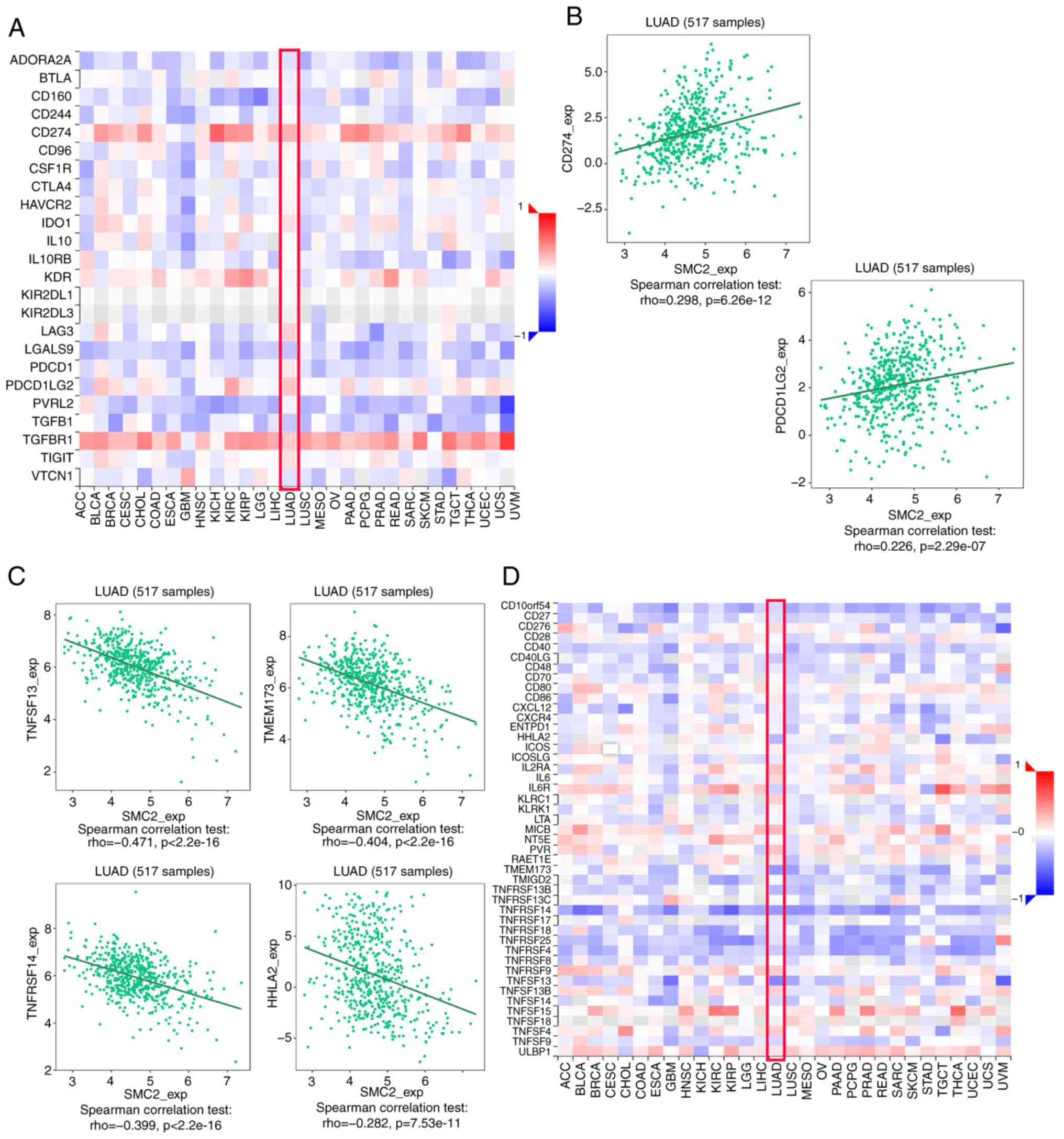
Figure 10

Correlation analysis of SMC2
expression with immuno-inhibitors and immuno-stimulators. (A) A
heatmap analysis of the correlation between SMC2 and tumor
immuno-inhibitors. (B) SMC2 expression in LUAD was positively
associated with immuno-inhibitors CD274 and PDCD1LG2. (C) SMC2
expression in LUAD was negatively correlated with the
immuno-stimulators TNFSF13, TMEM173, TNFRSF14 and HHLA2. (D) A
heatmap analysis of the correlation between SMC2 and tumor
immuno-stimulators. SMC2, structural maintenance of chromosomes 2;
LUAD, lung adenocarcinoma.

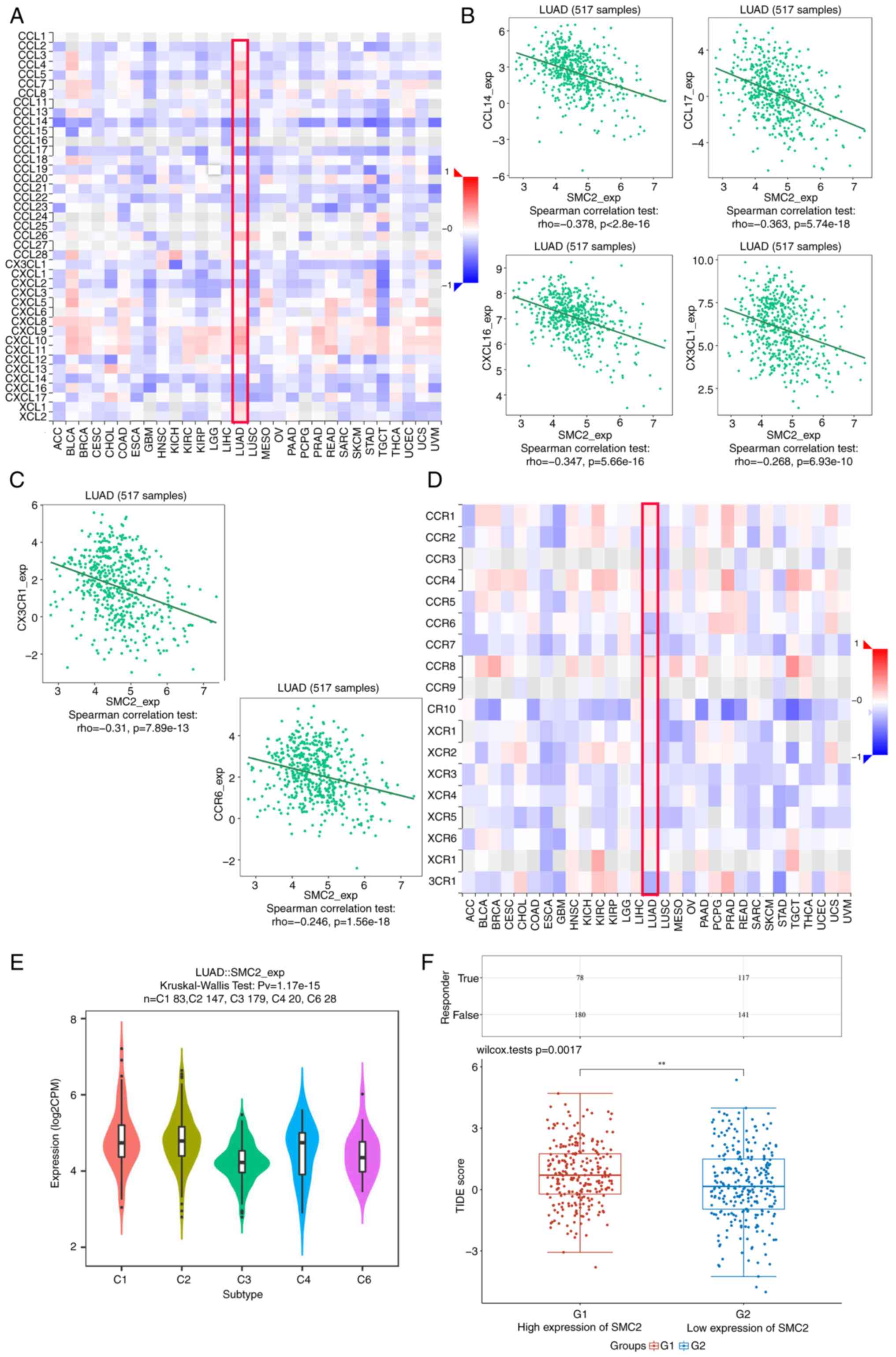
Figure 11

Correlation analysis of SMC2
expression with chemokines and receptors. (A) Heat map analysis of
the correlation between SMC2 and tumor chemokines. (B) SMC2
expression in LUAD was negatively correlated with chemokines CCL14,
CCL17, CXCL16 and CX3CL1. (C) SMC2 expression in LUAD was
negatively correlated with chemokine receptors CX3CR1 and CCR6. (D)
Heat map analysis of the correlation between SMC2 and tumor
chemokine receptors. (E) Relationship between SMC2 mRNA expression
and LUAD immune subtypes. (F) Based on the prediction of TIDE
algorithm, it was shown that patients with high SMC2 expression had
a lower response rate to immunotherapy. **P<0.01.
SMC2, structural maintenance of chromosomes 2. LUAD, lung
adenocarcinoma. TIDE, tumor immune dysfunction and exclusion.
View References

1 

Siegel RL, Miller KD and Jemal A: Cancer statistics, 2020. CA Cancer J Clin. 70:7–30. 2020.PubMed/NCBI View Article : Google Scholar

2 

Denisenko TV, Budkevich IN and Zhivotovsky B: Cell death-based treatment of lung adenocarcinoma. Cell Death Dis. 9(117)2018.PubMed/NCBI View Article : Google Scholar

3 

Kim HC, Jung CY, Cho DG, Jeon JH, Lee JE, Ahn JS, Kim SJ, Kim Y, Kim YC, Kim JE, et al: Clinical characteristics and prognostic factors of lung cancer in Korea: A pilot study of data from the Korean nationwide lung cancer registry. Tuberc Respir Dis (Seoul). 82:118–125. 2019.PubMed/NCBI View Article : Google Scholar

4 

Herbst RS, Morgensztern D and Boshoff C: The biology and management of non-small cell lung cancer. Nature. 553:446–454. 2018.PubMed/NCBI View Article : Google Scholar

5 

Hirano T: At the heart of the chromosome: SMC proteins in action. Nat Rev Mol Cell Biol. 7:311–322. 2006.PubMed/NCBI View Article : Google Scholar

6 

Zhao H, Shu L, Qin S, Lyu F, Liu F, Lin E, Xia S, Wang B, Wang M, Shan F, et al: Extensive mutual influences of SMC complexes shape 3D genome folding. Nature. 640:543–553. 2025.PubMed/NCBI View Article : Google Scholar

7 

Dávalos V, Súarez-López L, Castaño J, Messent A, Abasolo I, Fernandez Y, Guerra-Moreno A, Espín E, Armengol M, Musulen E, et al: Human SMC2 protein, a core subunit of human condensin complex, is a novel transcriptional target of the WNT signaling pathway and a new therapeutic target. J Biol Chem. 287:43472–43481. 2012.PubMed/NCBI View Article : Google Scholar

8 

Hudson DF, Marshall KM and Earnshaw WC: Condensin: Architect of mitotic chromosomes. Chromosome Res. 17:131–144. 2009.PubMed/NCBI View Article : Google Scholar

9 

Paliulis LV and Nicklas RB: Micromanipulation of chromosomes reveals that cohesion release during cell division is gradual and does not require tension. Curr Biol. 14:2124–2129. 2004.PubMed/NCBI View Article : Google Scholar

10 

Murakami-Tonami Y, Kishida S, Takeuchi I, Katou Y, Maris JM, Ichikawa H, Kondo Y, Sekido Y, Shirahige K, Murakami H and Kadomatsu K: Inactivation of SMC2 shows a synergistic lethal response in MYCN-amplified neuroblastoma cells. Cell Cycle. 13:1115–1131. 2014.PubMed/NCBI View Article : Google Scholar

11 

Badea L, Herlea V, Dima SO, Dumitrascu T and Popescu I: Combined gene expression analysis of whole-tissue and microdissected pancreatic ductal adenocarcinoma identifies genes specifically overexpressed in tumor epithelia. Hepatogastroenterology. 55:2016–2027. 2008.PubMed/NCBI

12 

Yadav S, Kowolik CM, Lin M, Zuro D, Hui SK, Riggs AD and Horne DA: SMC1A is associated with radioresistance in prostate cancer and acts by regulating epithelial-mesenchymal transition and cancer stem-like properties. Mol Carcinog. 58:113–125. 2019.PubMed/NCBI View Article : Google Scholar

13 

Kraft B, Lombard J, Kirsch M, Wuchter P, Bugert P, Hielscher T, Blank N and Krämer A: SMC3 protein levels impact on karyotype and outcome in acute myeloid leukemia. Leukemia. 33:795–799. 2019.PubMed/NCBI View Article : Google Scholar

14 

Jiang L, Zhou J, Zhong D, Zhou Y, Zhang W, Wu W, Zhao Z, Wang W, Xu W, He L, et al: Overexpression of SMC4 activates TGFβ/Smad signaling and promotes aggressive phenotype in glioma cells. Oncogenesis. 6(e301)2017.PubMed/NCBI View Article : Google Scholar

15 

Tomczak K, Czerwińska P and Wiznerowicz M: The cancer genome atlas (TCGA): An immeasurable source of knowledge. Contemp Oncol (Pozn). 19:A68–A77. 2015.PubMed/NCBI View Article : Google Scholar

16 

GTEx Consortium. Human genomics. The genotype-tissue expression (GTEx) pilot analysis: Multitissue gene regulation in humans. Science. 348:648–660. 2015.PubMed/NCBI View Article : Google Scholar

17 

Livak KJ and Schmittgen TD: Analysis of relative gene expression data using real-time quantitative PCR and the 2(-Delta Delta C(T)) method. Methods. 25:402–408. 2001.PubMed/NCBI View Article : Google Scholar

18 

Chandrashekar DS, Karthikeyan SK, Korla PK, Patel H, Shovon AR, Athar M, Netto GJ, Qin ZS, Kumar S, Manne U, et al: UALCAN: An update to the integrated cancer data analysis platform. Neoplasia. 25:18–27. 2022.PubMed/NCBI View Article : Google Scholar

19 

Asplund A, Edqvist PH, Schwenk JM and Pontén F: Antibodies for profiling the human proteome-The human protein atlas as a resource for cancer research. Proteomics. 12:2067–2077. 2012.PubMed/NCBI View Article : Google Scholar

20 

Szklarczyk D, Gable AL, Nastou KC, Lyon D, Kirsch R, Pyysalo S, Doncheva NT, Legeay M, Fang T, Bork P, et al: The STRING database in 2021: Customizable protein-protein networks, and functional characterization of user-uploaded gene/measurement sets. Nucleic Acids Res. 49:D605–D612. 2021.PubMed/NCBI View Article : Google Scholar

21 

Canzler S and Hackermüller J: multiGSEA: A GSEA-based pathway enrichment analysis for multi-omics data. BMC Bioinformatics. 21(561)2020.PubMed/NCBI View Article : Google Scholar

22 

Bamford S, Dawson E, Forbes S, Clements J, Pettett R, Dogan A, Flanagan A, Teague J, Futreal PA, Stratton MR and Wooster R: The COSMIC (Catalogue of Somatic Mutations in Cancer) database and website. Br J Cancer. 91:355–358. 2004.PubMed/NCBI View Article : Google Scholar

23 

Cerami E, Gao J, Dogrusoz U, Gross BE, Sumer SO, Aksoy BA, Jacobsen A, Byrne CJ, Heuer ML, Larsson E, et al: The cBio cancer genomics portal: An open platform for exploring multidimensional cancer genomics data. Cancer Discov. 2:401–404. 2012.PubMed/NCBI View Article : Google Scholar

24 

Gao J, Aksoy BA, Dogrusoz U, Dresdner G, Gross B, Sumer SO, Sun Y, Jacobsen A, Sinha R, Larsson E, et al: Integrative analysis of complex cancer genomics and clinical profiles using the cBioPortal. Sci Signal. 6(pl1)2013.PubMed/NCBI View Article : Google Scholar

25 

Li T, Fu J, Zeng Z, Cohen D, Li J, Chen Q, Li B and Liu XS: TIMER2.0 for analysis of tumor-infiltrating immune cells. Nucleic Acids Res. 48:W509–W514. 2020.PubMed/NCBI View Article : Google Scholar

26 

Ru B, Wong CN, Tong Y, Zhong JY, Zhong SSW, Wu WC, Chu KC, Wong CY, Lau CY, Chen I, et al: TISIDB: An integrated repository portal for tumor-immune system interactions. Bioinformatics. 35:4200–4202. 2019.PubMed/NCBI View Article : Google Scholar

27 

Chi A, He X, Hou L, Nguyen NP, Zhu G, Cameron RB and Lee JM: Classification of non-small cell lung cancer's tumor immune micro-environment and strategies to augment its response to immune checkpoint blockade. Cancers (Basel). 13(2924)2021.PubMed/NCBI View Article : Google Scholar

28 

Li J, Jie HB, Lei Y, Gildener-Leapman N, Trivedi S, Green T, Kane LP and Ferris RL: PD-1/SHP-2 inhibits Tc1/Th1 phenotypic responses and the activation of T cells in the tumor microenvironment. Cancer Res. 75:508–518. 2015.PubMed/NCBI View Article : Google Scholar

29 

Jiang P, Gu S, Pan D, Fu J, Sahu A, Hu X, Li Z, Traugh N, Bu X, Li B, et al: Signatures of T cell dysfunction and exclusion predict cancer immunotherapy response. Nat Med. 24:1550–1558. 2018.PubMed/NCBI View Article : Google Scholar

30 

Feng Y, Liu H, Duan B, Liu Z, Abbruzzese J, Walsh KM, Zhang X and Wei Q: Potential functional variants in SMC2 and TP53 in the AURORA pathway genes and risk of pancreatic cancer. Carcinogenesis. 40:521–528. 2019.PubMed/NCBI View Article : Google Scholar

31 

Yan W, Wang DD, Zhang HD, Huang J, Hou JC, Yang SJ, Zhang J, Lu L and Zhang Q: Expression profile and prognostic values of SMC family members in HCC. Medicine (Baltimore). 101(e31336)2022.PubMed/NCBI View Article : Google Scholar

32 

Nie H, Wang Y, Yang X, Liao Z, He X, Zhou J and Ou C: Clinical significance and integrative analysis of the SMC family in hepatocellular carcinoma. Front Med (Lausanne). 8(727965)2021.PubMed/NCBI View Article : Google Scholar

33 

Je EM, Yoo NJ and Lee SH: Mutational and expressional analysis of SMC2 gene in gastric and colorectal cancers with microsatellite instability. APMIS. 122:499–504. 2014.PubMed/NCBI View Article : Google Scholar

34 

Xu Y, Wang S, Xu B, Lin H, Zhan N, Ren J, Song W, Han R, Cheng L, Zhang M and Zhang X: AURKA, TOP2A and MELK are the key genes identified by WGCNA for the pathogenesis of lung adenocarcinoma. Oncol Lett. 25(238)2023.PubMed/NCBI View Article : Google Scholar

35 

Li C, Meng J and Zhang T: NCAPH is a prognostic biomarker and associated with immune infiltrates in lung adenocarcinoma. Sci Rep. 12(9578)2022.PubMed/NCBI View Article : Google Scholar

36 

Chen C, Guo Q, Song Y, Xu G and Liu L: SKA1/2/3 serves as a biomarker for poor prognosis in human lung adenocarcinoma. Transl Lung Cancer Res. 9:218–231. 2020.PubMed/NCBI View Article : Google Scholar

37 

Zhou F, Wang M, Aibaidula M, Zhang Z, Aihemaiti A, Aili R, Chen H, Dong S, Wei W and Maimaitiaili A: TPX2 promotes metastasis and serves as a marker of poor prognosis in non-small cell lung cancer. Med Sci Monit. 26(e925147)2020.PubMed/NCBI View Article : Google Scholar

38 

Ricciuti B, Arbour KC, Lin JJ, Vajdi A, Vokes N, Hong L, Zhang J, Tolstorukov MY, Li YY, Spurr LF, et al: Diminished efficacy of programmed death-(Ligand)1 inhibition in STK11- and KEAP1-mutant lung adenocarcinoma is affected by KRAS mutation status. J Thorac Oncol. 17:399–410. 2022.PubMed/NCBI View Article : Google Scholar

39 

Wohlhieter CA, Richards AL, Uddin F, Hulton CH, Quintanal-Villalonga À, Martin A, de Stanchina E, Bhanot U, Asher M, Shah NS, et al: Concurrent mutations in STK11 and KEAP1 promote ferroptosis protection and SCD1 dependence in lung cancer. Cell Rep. 33(108444)2020.PubMed/NCBI View Article : Google Scholar

40 

Thadani R, Kamenz J, Heeger S, Muñoz S and Uhlmann F: Cell-Cycle regulation of dynamic chromosome association of the condensin complex. Cell Rep. 23:2308–2317. 2018.PubMed/NCBI View Article : Google Scholar

41 

Wang M, Chang M, Li C, Chen Q, Hou Z, Xing B and Lin J: Tumor-microenvironment-activated reactive oxygen species amplifier for enzymatic cascade cancer starvation/chemodynamic/immunotherapy. Adv Mater. 34(e2106010)2022.PubMed/NCBI View Article : Google Scholar

42 

Slack FJ and Chinnaiyan AM: The role of non-coding RNAs in oncology. Cell. 179:1033–1055. 2019.PubMed/NCBI View Article : Google Scholar

43 

Shao MM, Zhai K, Huang ZY, Yi FS, Zheng SC, Liu YL, Qiao X, Chen QY, Wang Z and Shi HZ: Characterization of the alternative splicing landscape in lung adenocarcinoma reveals novel prognosis signature associated with B cells. PLoS One. 18(e0279018)2023.PubMed/NCBI View Article : Google Scholar

44 

van der Leun AM, Thommen DS and Schumacher TN: CD8(+) T cell states in human cancer: Insights from single-cell analysis. Nat Rev Cancer. 20:218–232. 2020.PubMed/NCBI View Article : Google Scholar

45 

Wang Y, Li Y, Jiang X, Gu Y, Zheng H, Wang X, Zhang H, Wu J and Cheng Y: OPA1 supports mitochondrial dynamics and immune evasion to CD8(+) T cell in lung adenocarcinoma. PeerJ. 10(e14543)2022.PubMed/NCBI View Article : Google Scholar

46 

Guo Z, Liang H, Xu Y, Liu L, Ren X, Zhang S, Wei S and Xu P: The role of circulating T Follicular helper cells and regulatory cells in non-small cell lung cancer patients. Scand J Immunol. 86:107–112. 2017.PubMed/NCBI View Article : Google Scholar

47 

Kalathil SG and Thanavala Y: Importance of myeloid derived suppressor cells in cancer from a biomarker perspective. Cell Immunol. 361(104280)2021.PubMed/NCBI View Article : Google Scholar

48 

Nagarsheth N, Wicha MS and Zou W: Chemokines in the cancer microenvironment and their relevance in cancer immunotherapy. Nat Rev Immunol. 17:559–572. 2017.PubMed/NCBI View Article : Google Scholar

49 

Islam SA and Luster AD: T cell homing to epithelial barriers in allergic disease. Nat Med. 18:705–715. 2012.PubMed/NCBI View Article : Google Scholar

50 

Zlotnik A and Yoshie O: The chemokine superfamily revisited. Immunity. 36:705–716. 2012.PubMed/NCBI View Article : Google Scholar

51 

Matsukawa A, Hogaboam CM, Lukacs NW, Lincoln PM, Evanoff HL and Kunkel SL: Pivotal role of the CC chemokine, macrophage-derived chemokine, in the innate immune response. J Immunol. 164:5362–5368. 2000.PubMed/NCBI View Article : Google Scholar

52 

Xing J, Zhang C, Yang X, Wang S, Wang Z, Li X and Yu E: CXCR5+CD8+ T cells infiltrate the colorectal tumors and nearby lymph nodes, and are associated with enhanced IgG response in B cells. Exp Cell Res. 356:57–63. 2017.PubMed/NCBI View Article : Google Scholar

53 

Ness TL, Ewing JL, Hogaboam CM and Kunkel SL: CCR4 is a key modulator of innate immune responses. J Immunol. 177:7531–7539. 2006.PubMed/NCBI View Article : Google Scholar

Related Articles

  • Abstract
  • View
  • Download
  • Twitter
Copy and paste a formatted citation
Spandidos Publications style
Zheng F, Li Y, Chen H, Peng Y and Tian X: SMC2 as a potential prognostic biomarker in lung adenocarcinoma and its correlation with immune microenvironment. Mol Clin Oncol 23: 93, 2025.
APA
Zheng, F., Li, Y., Chen, H., Peng, Y., & Tian, X. (2025). SMC2 as a potential prognostic biomarker in lung adenocarcinoma and its correlation with immune microenvironment. Molecular and Clinical Oncology, 23, 93. https://doi.org/10.3892/mco.2025.2888
MLA
Zheng, F., Li, Y., Chen, H., Peng, Y., Tian, X."SMC2 as a potential prognostic biomarker in lung adenocarcinoma and its correlation with immune microenvironment". Molecular and Clinical Oncology 23.4 (2025): 93.
Chicago
Zheng, F., Li, Y., Chen, H., Peng, Y., Tian, X."SMC2 as a potential prognostic biomarker in lung adenocarcinoma and its correlation with immune microenvironment". Molecular and Clinical Oncology 23, no. 4 (2025): 93. https://doi.org/10.3892/mco.2025.2888
Copy and paste a formatted citation
x
Spandidos Publications style
Zheng F, Li Y, Chen H, Peng Y and Tian X: SMC2 as a potential prognostic biomarker in lung adenocarcinoma and its correlation with immune microenvironment. Mol Clin Oncol 23: 93, 2025.
APA
Zheng, F., Li, Y., Chen, H., Peng, Y., & Tian, X. (2025). SMC2 as a potential prognostic biomarker in lung adenocarcinoma and its correlation with immune microenvironment. Molecular and Clinical Oncology, 23, 93. https://doi.org/10.3892/mco.2025.2888
MLA
Zheng, F., Li, Y., Chen, H., Peng, Y., Tian, X."SMC2 as a potential prognostic biomarker in lung adenocarcinoma and its correlation with immune microenvironment". Molecular and Clinical Oncology 23.4 (2025): 93.
Chicago
Zheng, F., Li, Y., Chen, H., Peng, Y., Tian, X."SMC2 as a potential prognostic biomarker in lung adenocarcinoma and its correlation with immune microenvironment". Molecular and Clinical Oncology 23, no. 4 (2025): 93. https://doi.org/10.3892/mco.2025.2888
Follow us
  • Twitter
  • LinkedIn
  • Facebook
About
  • Spandidos Publications
  • Careers
  • Cookie Policy
  • Privacy Policy
How can we help?
  • Help
  • Live Chat
  • Contact
  • Email to our Support Team